
Yash Highvoltage: The SME Riding Power Infra
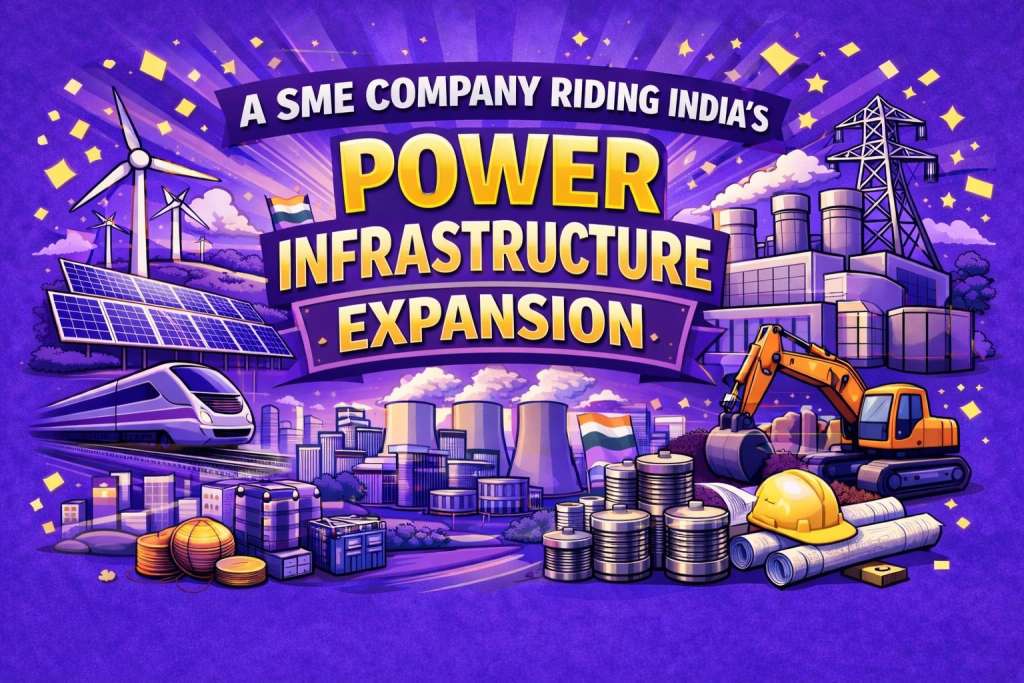
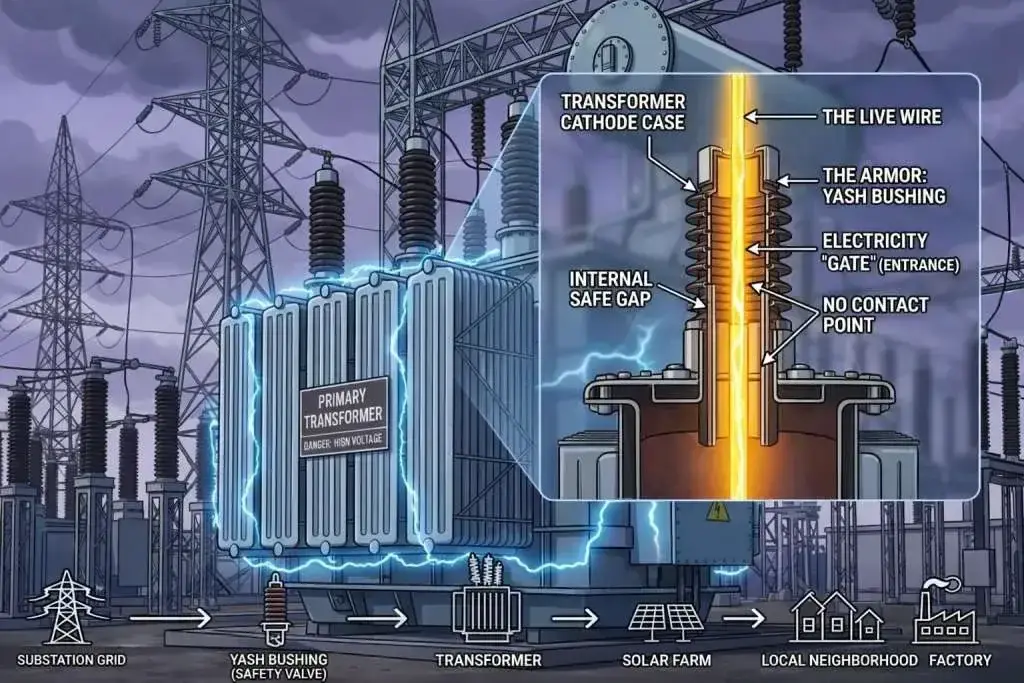
Think of the power grid like a high-speed highway. Electricity doesn't just "show up" at your house; it has to pass through these massive metal hubs called transformers.
Here’s the catch: a transformer is basically a giant steel box pulsing with enough power to fry anything it touches. If the live wires carrying that electricity even graze the metal frame, it’s game over, sparks, fires, and a total blackout.
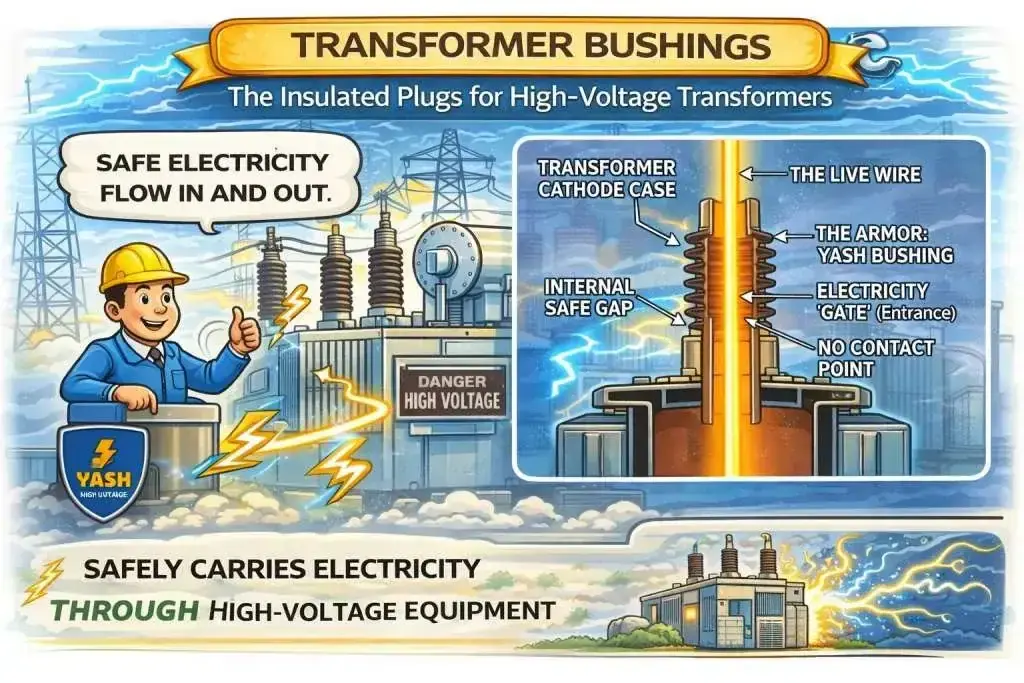
They built a specialised part called a transformer bushing. You can think of it like a tough protective sleeve placed around the wire. Its job is to let electricity pass safely in and out of the transformer while keeping it completely separated from the metal body of the equipment.
It’s the kind of component most people never notice because it quietly does its work in the background. But if a bushing stops working, the transformer itself can fail. When that happens, power supply to nearby homes, factories, or even large solar projects connected to that transformer can be interrupted.
Yash High Voltage prevents the entire system from shorting out even though they don't generate the electricity. They build the "safety valves" that keep the lights on and the grid operating correctly.
Why is the Sector Growing?
The power grid can be compared to an enormous nationwide plumbing network. Transmission lines and transformers carry electricity rather than water through pipes.
India is currently in the process of updating this whole system. A bigger, more contemporary network that can supply electricity to more homes, factories, and expanding cities is replacing outdated infrastructure.
For companies like Yash High Voltage, this shift creates a big opportunity. They don’t produce electricity themselves, but they make important components used inside transformers, the equipment that helps power move safely through the grid without disruptions.
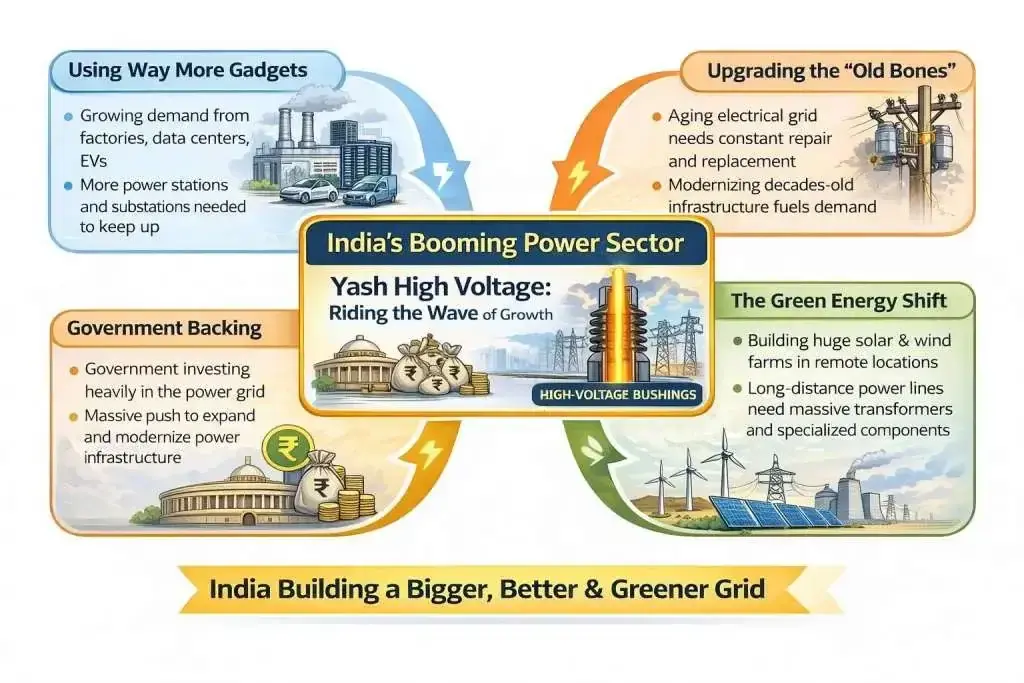
Here is why the sector and Yash High Voltage’s business, as well, is booming:
1. We’re Using Way More Gadgets
India is growing fast. India’s need for electricity is increasing as more factories are being built, data centers continue to expand, and electric vehicles slowly become more common. To meet this growing demand, the country has to keep adding more power plants, transmission lines, and substations so the grid can handle the extra load.2. Upgrading the "Old Bones."
A lot of India’s electrical gear was put underground or on poles decades ago. Since it has been in place for many years, a large portion of the current power infrastructure is gradually deteriorating. Over time, parts of the power grid need to be upgraded and replaced, much like an older car needs to have its parts changed in order to continue operating efficiently. There is a constant need for businesses that provide these parts because of the constant need to update and repair equipment.3. The Green Energy Shift
We’re building massive solar farms in deserts and wind turbines on the coast. The problem? Most people don't live in the desert. You have to "ship" that green energy across the country through long-distance power lines. You can’t do that without massive transformers at both ends, and those transformers can't function without the specific high-voltage sleeves (bushings) that Yash specializes in.4. Government Backing
The government is pouring money into the power sector because a country can't grow if the lights keep flickering. They are laying down thousands of miles of new transmission lines. Since Yash is a key "ingredient" in the equipment used for these projects, they’re basically riding the wave of this massive national building spree.Here is where Yash High Voltage, A SME of the voltage industry steps in. Yash High Voltage produces parts that support the power system's safe and dependable operation, but it does not produce electricity. These components are crucial to the proper operation of transformers and the ability of electricity to flow through the grid without causing equipment damage.
However, more than one company is contributing to the expansion of power infrastructure. Increased investment in the power sector is being driven by the industry's growing demand for electricity, the growth of renewable energy sources, and the requirement for more robust transmission networks.
For a deeper look at why this entire segment is gaining momentum, you can explore our analysis on Why Power Sector Stocks are Booming – Data & Trend Analysis.
The Bottom Line
In simple terms: India is building a bigger, better, and greener power grid. Because Yash High Voltage makes a "must-have" part for that grid, they are in the right place at the right time. As long as India keeps growing and the lights stay on, there’s a massive, long-term need for what they do.
Why should we study Yash High Voltage?
In the Indian stock market, especially in the SME segment, sharp rallies are not uncommon. A newly listed company can attract attention very quickly, and its stock price may move up rapidly for a while. But in many cases, these moves are short-lived. Once the excitement fades, the stock often cools off as well.However, now and then, a company comes along where the story is a little different.
These are the businesses where the rise in the stock price is not just about short-term trading activity. Instead, it reflects something happening within the company itself — improving sales, better profitability, or strong demand for the products it makes. Over time, these are the companies that end up rewarding early investors the most.
Yash High Voltage is one such SME company that has drawn attention in the market over the past few years.
The stock delivered remarkable returns in a relatively short span of time, making it one of the notable performers in the SME space. Naturally, when a stock moves this sharply, investors start asking questions and looking more closely at the business behind it.
But the most important question is not simply how much the stock has risen.
The real question is what caused the move. Was it mainly driven by market excitement and speculative trading, which is often seen in smaller stocks? Or did the company’s business actually grow in a meaningful way during this period?
That distinction matters a lot. Many stocks experience temporary rallies, but only a few manage to sustain their growth and continue creating wealth over the long run.
Understanding stories like this becomes even more valuable when viewed through the lens of long-term wealth creation. If you're interested in how investors identify companies capable of delivering extraordinary returns, our guide on:
The Multibagger Framework: A Step-by-Step Guide to Finding 10x Stocks breaks down the exact process many successful investors follow.
This is what makes Yash High Voltage an interesting case to study. By looking at the company’s business model, the industry it operates in, and the growth it has delivered, we can try to understand what really drove the stock’s strong performance.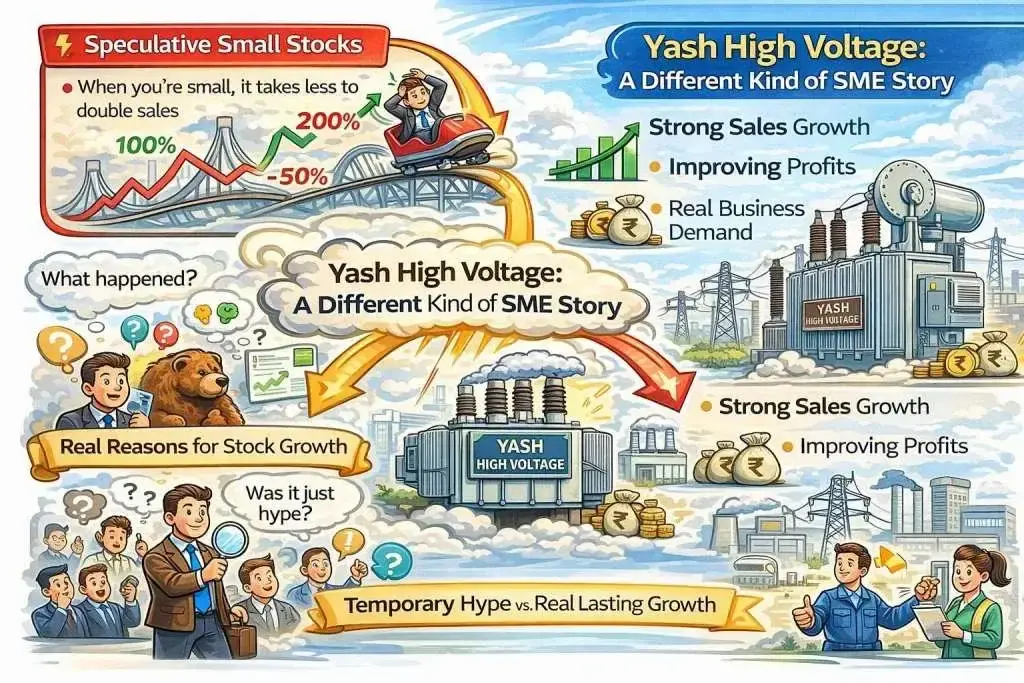
How Does Yash High Voltage Make Money? (Revenue Sources and Mechanisms)
Think of Yash High Voltage not as a factory churning out gadgets for the masses, but as a high-stakes engineering boutique. They don't sell to your local hardware store; they build the heavy-duty "nervous system" components that keep a country’s power grid from melting down.To understand their revenue, you have to look at the massive infrastructure that brings electricity to your home.
The Bread and Butter: Transformer Bushings
The company’s bank account is primarily fueled by a very specific, high-tech component: transformer bushings. If a power transformer is like a giant battery for a city, the bushings are the critical "plugs" that allow high-voltage electricity to enter and exit the unit safely. Without them, the raw power would jump through the air (arcing) or destroy the equipment.Because these parts are so specialized, the revenue model isn't about high-frequency sales. It’s about precision and reliability.
- B2B Partnerships: Their main customers are the giants of the energy world : transformer manufacturers and utility companies. When a new power plant or substation is built, Yash is there to supply the essential hardware.
- The "Niche" Advantage: Because these components have to survive extreme electrical loads without failing, the barrier to entry is high. You can’t just "start" making these in a garage; you need specialized engineering that commands a premium price.
- Maintenance & Upgrades: Power grids are aging. A significant portion of their business comes from providing replacement parts or custom-engineered solutions for older substations that need a refresh to handle modern energy demands.
The "Build-to-Order" Reality
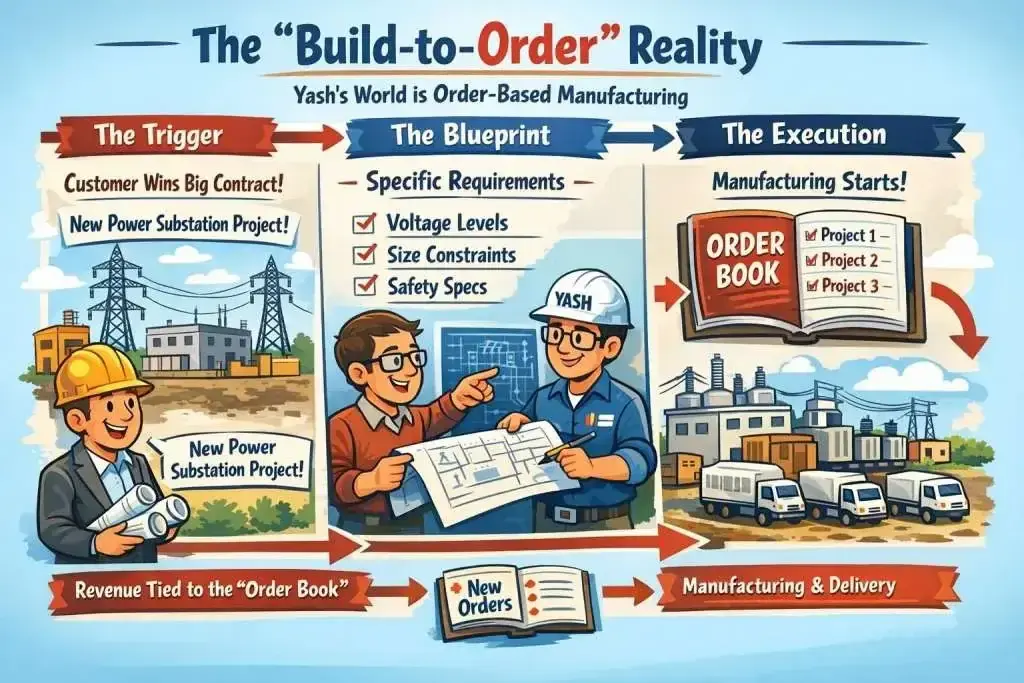
Unlike a company making smartphones or lightbulbs, Yash doesn't have a warehouse full of finished products waiting for a buyer. Their world is Order-Based.- The Trigger: A customer wins a massive contract to build a power substation or a transmission line.
- The Blueprint: They approach Yash with very specific technical requirements: voltage levels, size constraints, and safety tolerances.
- The Execution: Only once the specs are locked in does Yash begin manufacturing. This means their revenue is tied directly to their "Order Book," the pipeline of confirmed projects they are currently building for.
When new orders come in, they are added to the company’s order book. The manufacturing and delivery of those products then takes place over the next few months, depending on the size and complexity of the order.
Who is Writing the Checks? (Customer Base)
The company doesn't sell to the general public. Instead, they occupy a vital spot in the supply chain for Energy Titans. Their customer base generally falls into four buckets:Since these customers work on large infrastructure projects, purchases are usually made through technical approvals, vendor qualification, and project tenders.
Their revenue doesn’t flow in a steady stream like a retail store; it moves in "waves" dictated by massive infrastructure projects. Here is how a project turns into a paycheck:
1. Riding the "Infrastructure Wave."
Think of Yash as a high-end subcontractor for the world’s biggest construction jobs. They don’t just sell parts; they fulfill project milestones.
- The Multiplier Effect: When a government or a big company green-lights a new power substation, they don’t just need one transformer—they need several, and each of those transformers needs a bunch of high-voltage bushings. So, the minute a project gets the go-ahead, Yash sees a flood of orders all at once.
- The Link to the Grid: Because of this, Yash’s bank account is a mirror of the economy. If the country is building data centers, green energy farms, or new cities, Yash is busy. If infrastructure spending slows down, the phone stops ringing.
2. The Journey from "Order" to "Cash."
In this industry, there is a significant gap between saying "yes" to a deal and actually getting paid. It’s a marathon, not a sprint.
The Execution Cycle looks like this:
The Order Inflow: A customer places an order based on a specific project. This goes into the "Order Book", essentially a crystal ball that tells the company how much money they expect to make in the coming months.
The Precision Build: Because these are high-voltage components, "good enough" doesn't exist. Manufacturing takes weeks or even months. Every unit has to undergo grueling stress tests to ensure it won’t explode or fail under thousands of volts.
The Handover: Revenue isn't usually "real" until the product is boxed up, shipped, and most importantly, accepted by the customer. 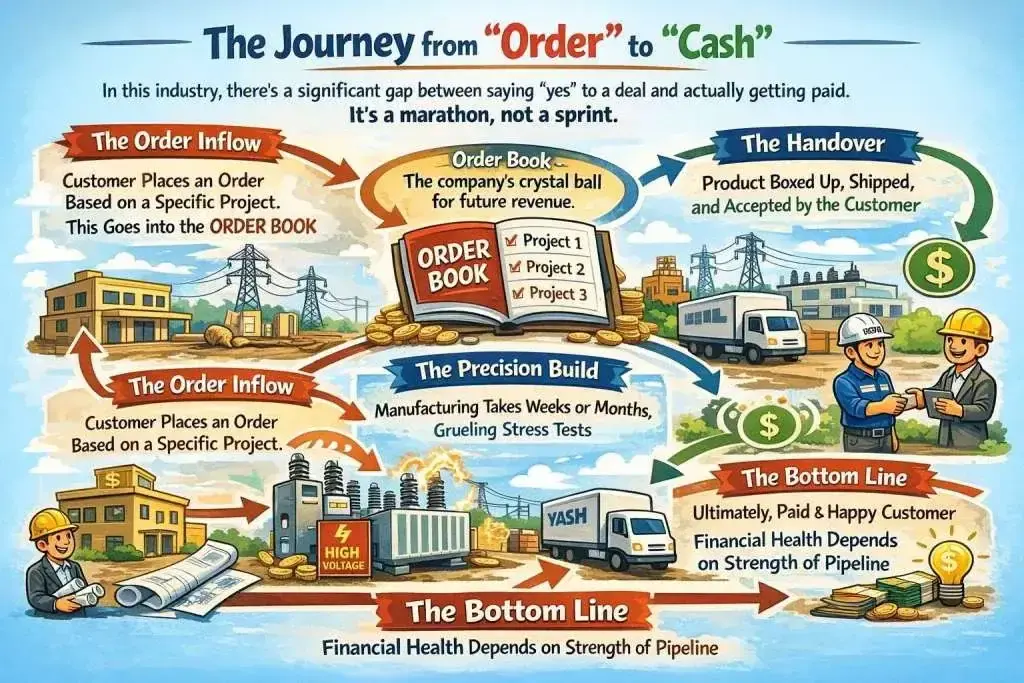
The Bottom Line
Yash’s financial health isn't measured by daily sales, but by the strength of their pipeline and their ability to move specialized parts through a rigorous testing phase and onto a project site.
3. Business Margins
In this industry, profits aren't just about numbers; they’re about high-stakes reliability. Because Yash builds "mission-critical" parts, they avoid the "price wars" that plague basic manufacturing.
Here’s why their margins stay healthy:
- Trust over Price: If a $10 million transformer fails because of a cheap part, it’s a disaster. Customers pay a premium for peace of mind and engineering precision, not just raw materials.
- The "Certification" Moat: You can't just start making high-voltage bushings in a garage. It takes years of audits, safety certifications, and technical approvals to become a "vetted" supplier. Yash is deep in the Power business, and they are incredibly hard to replace.
- Engineering vs. Commodity: Unlike companies selling simple wires or bolts, Yash operates in a technical niche. High entry barriers mean fewer competitors, which keeps profit margins from being squeezed.
They don't compete on being the cheapest; they win by being the most trusted.
Financial Performance
Revenue Growth
One of the first things to examine is the company’s revenue trend. Over the past few years, Yash High Voltage has gradually increased its sales, suggesting that the company has been receiving more orders and delivering more products to its customers.In businesses like this, rising revenue usually points to a few underlying factors: stronger demand for the company’s products, a higher number of infrastructure projects, or deeper relationships with existing customers.
Higher demand for transformer components
- Expansion of power infrastructure projects
- Stronger relationships with customers, such as transformer manufacturers and EPC companies
When sales grow consistently, it often means the company is successfully participating in the broader growth of the power equipment sector. If plotted on a chart, the revenue trend over the past few years would show a clear upward trajectory, indicating that the business itself has been expanding.
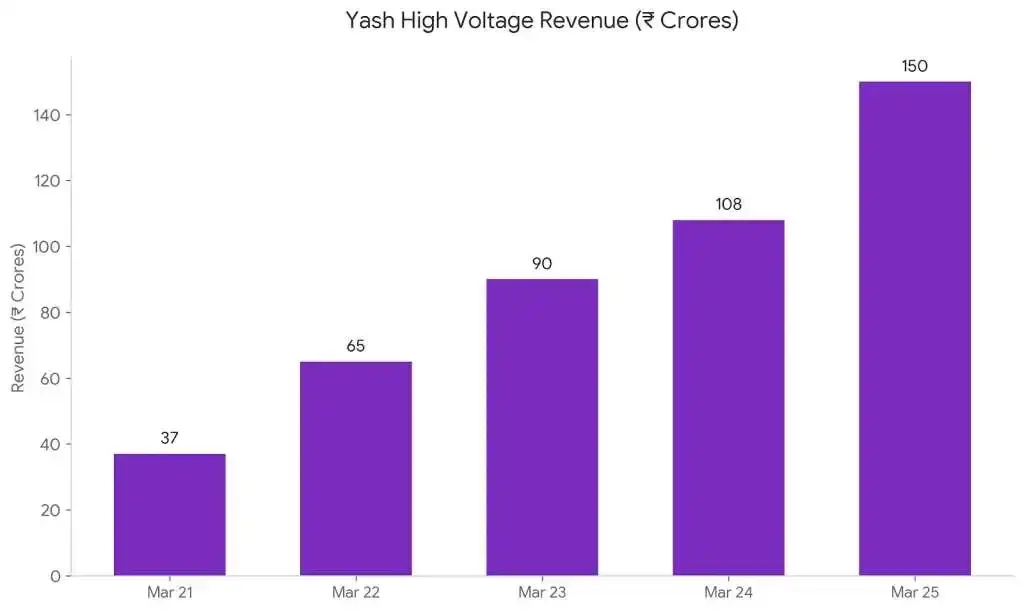
Yash High Voltage’s revenue has grown sharply over the past few years, from ₹37 Cr to ₹150 Cr, an increase of about 305% in just four years. Such consistent growth usually signals a healthy order book rather than a one-time increase in demand. The ₹42 Cr jump between 2024 and 2025, in particular, suggests the company may have expanded capacity or secured a few large orders during that period. Reaching the ₹150 Cr revenue level also puts the company at an interesting stage, where scale could start supporting better margins and attracting more attention from investors.
Profit Growth
Revenue going up is a good sign, but it doesn’t tell the whole story. What really matters is whether the company is able to turn those sales into actual profits.
For Yash High Voltage, profits have increased along with revenue over the past few years. There are usually a few reasons why profits improve in a business like this. One reason can be higher production volumes, where making and selling more units helps spread fixed costs. Another factor can be better operational efficiency, as processes improve with scale. In some cases, companies may also benefit from stable or slightly better pricing, especially when they operate in a specialized segment. When revenue and profits move up together, it generally suggests that the business is becoming stronger over time, rather than growing in a way that puts pressure on profitability.
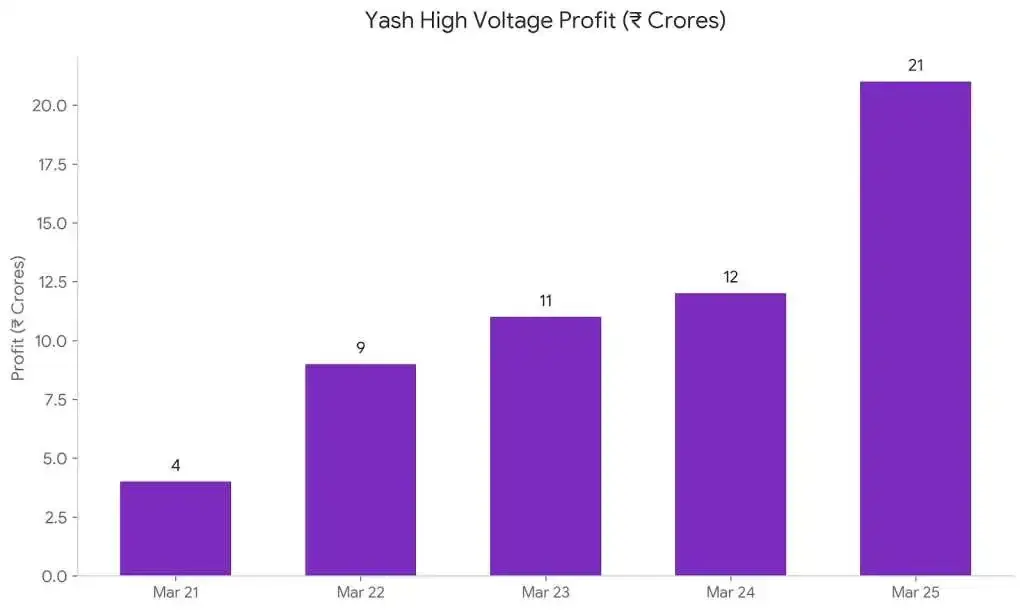
Yash High Voltage really knocked it out of the park, going from ₹4 Cr to ₹21 Cr in profit over just four years. They aren't just moving more product; they’ve actually figured out how to keep costs low while scaling up, which is usually the hard part. The huge spike between 2024 and 2025 suggests they’ve either got their act together operationally or landed a much better deal. They’re past the point of just being a small startup now and are looking like a company that’s ready for the big leagues.
Why the Stock Created Massive Returns?
Small Base Effect
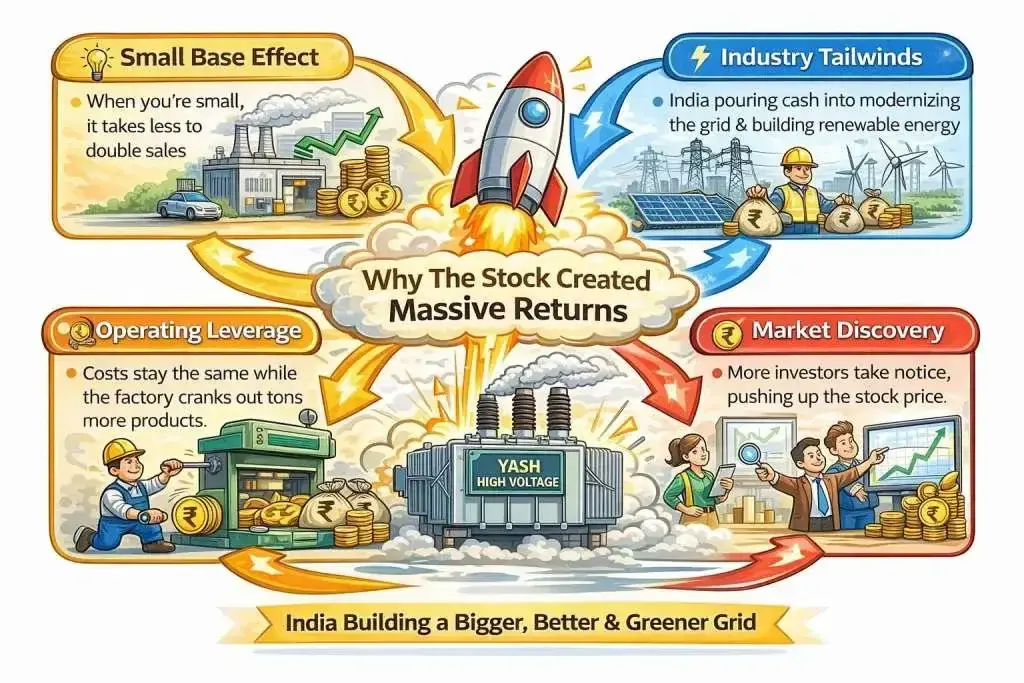
When a stock takes off like a rocket in such a short window, it’s rarely down to just one thing. It usually takes a "perfect storm" of factors hitting all at once: explosive business growth, the industry finally catching a tailwind, and investors suddenly piling in.For Yash High Voltage, that massive wealth creation didn't happen by accident; it’s the result of a few major drivers firing on all cylinders at the exact same time.
In fact, many of the biggest wealth creators in the market started from a similar phase where small businesses quietly scaled up before the broader market noticed them. If you're curious about real-world examples, you can explore our research on
Top Multibagger Stocks of the Last 10 Years – What We Can Learn.
Industry Tailwinds
Another big reason the stock is crushing is simply that the power sector is having a massive moment right now.India has been pouring money into its electrical grid like crazy, between the explosion in renewable energy and the desperate need to modernize everything. All that new infrastructure needs transformers, and since those transformers can't run without the specialized parts Yash High Voltage makes, the company basically got swept up in a massive wave of demand. In plain English: they were in the right place at the right time. When the entire industry is growing this fast, it creates a "rising tide" that makes it much easier for a solid business to scale up and grab more market share.
Operating Leverage
Manufacturing businesses have a cool trick up their sleeve called operating leverage. Essentially, once you’ve already paid for the big stuff like the factory, the heavy machinery, and the core team, your basic costs stay pretty much the same whether you're making a little or a lot.Once Yash High Voltage started cranking out more units and running that factory closer to full speed, those fixed costs got spread thin. This is where the magic happens: your profits start growing way faster than your sales. If they kept their overhead steady while doubling production, their margins would have naturally widened. For anyone watching the stock, that kind of efficiency is a huge green flag. It shows the company isn't just getting bigger, it's getting smarter and more profitable with every new order.
Market Discovery and Valuation Expansion
Finally, there is the factor of market discovery. In the early stages, many SME companies remain under the radar of most investors. Their stocks may trade with limited attention and relatively modest valuations. But when a company starts showing consistent revenue growth, improving profits, and strong industry prospects, investors begin to take notice.As more market participants discover the story, demand for the stock increases. This can lead to valuation expansion, where investors are willing to pay a higher price for every rupee of earnings.
Key Takeaways for Investors
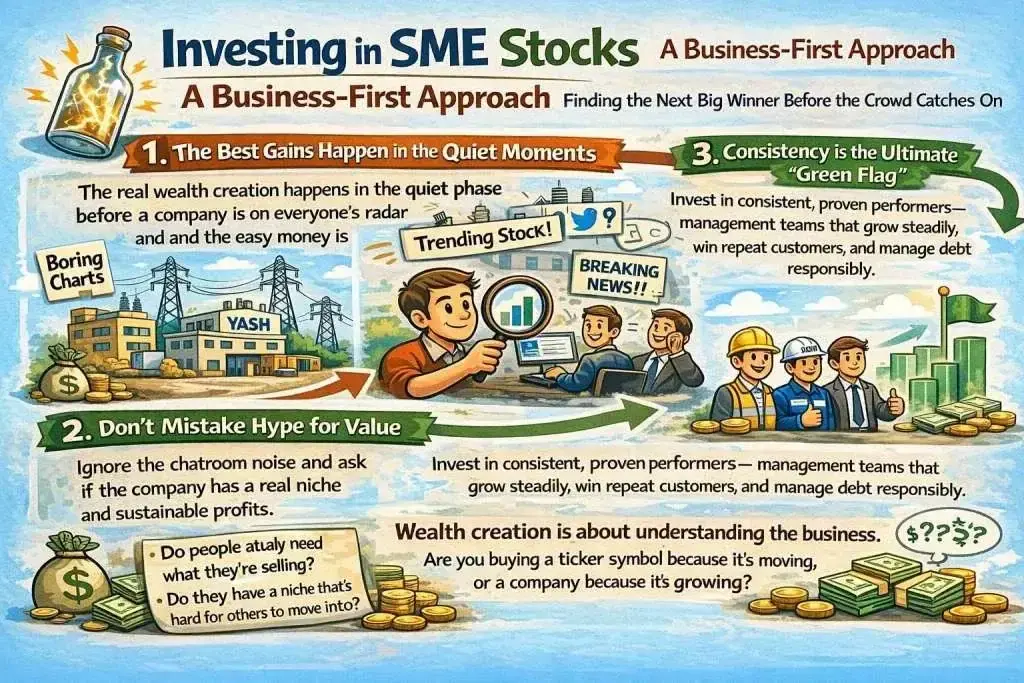
Stories like Yash High Voltage also highlight an important reality of the SME space: smaller companies can generate exceptional returns, but they also come with higher risks. Investors who want to explore this segment should first understand the dynamics of smaller businesses through our guide on Investing in Small Cap and Micro Cap Stocks in India.Investing in the stock market, especially when you’re looking at SME (Small and Medium Enterprise) stocks, often feels like trying to catch lightning in a bottle. The story of Yash High Voltage is a perfect example of why the "get rich quick" mindset usually misses the mark, while a "business-first" approach actually pays off.
Here’s the reality of what it takes to find the next big winner before the rest of the world catches on.
1. The Best Gains Happen in the Quiet Moments
By the time a stock is trending on X (Twitter) or being discussed on every financial news channel, the "easy money" has usually been made.Real wealth creation happens in that awkward, quiet phase where a company is too small for big analysts to care about. At this stage, liquidity is low, and the charts look boring. But if you look under the hood and see revenue climbing and order books filling up, you’re seeing the foundation of a breakout. The goal isn't to join the crowd; it’s to arrive before they even know there’s a party.
2. Don't Mistake Hype for Value
In the SME world, it’s easy to get swept up in "momentum." We see a stock hitting upper circuits and want in. But without a solid business backing it up, those rallies are just houses of cards.If you want to know if a company will actually last, ignore the chatroom noise and ask:
- Do people actually need what they’re selling?
- Do they have a niche that’s hard for others to move into?
- Are they actually keeping the cash they make?
Eventually, the "story" fades and the math takes over. Only the companies with strong fundamentals stay standing when the hype dies down.
3. Consistency is the Ultimate "Green Flag."
Anyone can have one lucky year. Maybe they landed one big contract or benefited from a temporary price spike in their industry. That doesn't make it a great investment.The real winners are the "boring" executors—the management teams that quietly expand capacity, win over repeat customers, and manage their debt year after year. When a company proves it can handle growth without crashing, the market stops treating it like a gamble and starts treating it like an asset. Trust is earned in increments, but it’s rewarded in multiples.
The Bottom Line
Wealth creation isn't about being a "trader" who's fast enough to click a button; it’s about being an investor who understands the business. It’s easy to chase whatever is green on your screen today. It’s much harder and much more profitable to find the businesses that are quietly doing the work today to become the leaders of tomorrow.
Food for thought: Are you buying a ticker symbol because it’s moving, or are you buying a company because it’s growing?
Explore our Products
Research Framework

Emerging Titans
Combination of quantitative analysis, industry tailwinds, and management assessment - SPRINT investment philosophy

Tiny Titans
Heavy emphasis on scuttlebutt research, plant visits, and early on-ground signals
Conclusion
Patience is probably the most underrated advantage an investor can have, especially in the SME space. A lot of people enter the market hoping to find a stock that doubles quickly, but real wealth rarely works like that. More often, it comes from spotting small businesses that are steadily getting better long before the broader market starts paying attention. When revenue keeps growing, order books slowly expand, and management keeps executing well, the share price eventually reflects that progress. The real challenge is staying focused on the business itself rather than getting distracted by the constant noise of the market.Interestingly, many great companies don’t look exciting at the beginning. In fact, they can look quite boring. The charts move slowly, trading volumes are thin, and hardly anyone is talking about them online. But underneath that quiet surface, the business might actually be strengthening. Customers may be coming back again and again, the company might be adding capacity, and its position in a niche market could be getting stronger. These quiet developments are often the early signals that long-term investors learn to watch for.
That’s why it’s so important not to confuse hype with real value. Markets are always full of short-term excitement momentum runs, trending stocks, and stories that sound great for a few weeks. But those stories don’t always last. What tends to last is a company that solves a real problem, builds a strong position in its industry, and steadily turns growth into real cash. When the excitement fades, it’s usually the companies with solid fundamentals that continue moving forward.
Consistency is what slowly builds trust with investors. When management proves year after year that they can grow the business responsibly, manage their debt wisely, and deliver projects successfully, the market begins to see the company differently. What once looked like a risky small-cap business starts to feel like a dependable long-term compounder. And that shift in perception is often where the biggest wealth creation begins.
Over long periods of time, the real power behind wealth creation is not just picking the right stock but allowing time to do the heavy lifting. To know more, read our article on:
The Power of Compound Interest: How to Create Wealth in the Stock Market
Comment “Volt” to know as well as share insights about the Voltage Industry. We would love to hear your thoughts.
In the end, successful investing isn’t really about predicting which stock will move next. It’s about understanding the business behind the ticker. The investors who do well over time are usually the ones who are willing to dig deeper, ignore short-term noise, and stay patient while the company keeps improving. Because while markets often chase headlines, real wealth is usually built quietly by businesses that keep doing the right things year after year.
FAQs
Who are the main competitors of Yash High Voltage?
+Yash High voltage competes with larger players such as Crompton Greaves Consumer Electricals, Greaves Cotton, Hitachi Energy India, and HPL Electric & Power in the power equipment space. However, the scale difference is significant. Yash High voltage has a market capitalization of around ₹1,332 crore, while the median market cap of its peers stands at roughly ₹16,101 crore. This highlights how early-stage and relatively smaller the company is compared to established industry players. At the same time, the gap also suggests potential room for growth if the company continues expanding its order book and execution capabilities.
What are the four types of voltages?
- Low Voltage: 1000 volts or less.
- Medium Voltage: greater than 1000 volts and less than 100 kV.
- High Voltage: greater than 100 kV and equal to or less than 230 kV.
- Extra-High Voltage: greater than 230 kV but less than 1000 kV.
- Ultra-High Voltage: equal to or greater than 1000 kV.
Who is the owner of Yash High Voltage?
+Keyur Shah is the founder, Managing Director, and Chairman of Yash Highvoltage Limited. As of early 2026, he is the primary owner, holding a significant promoter stake (57.94% as of March 2026) in the company, which he took over in 2008 and established as a leader in transformer bushings.
What is the Future of the Voltage Industry in India?
The voltage industry in India is poised for substantial growth, driven by an urgent need to upgrade power infrastructure, integrate renewable energy, and support rapid industrialization and urbanization. The market is transitioning towards smarter, more sustainable solutions, with a strong focus on high-voltage (HV) transmission and "make in India" initiatives for electrical components

High growth stock specialist, Value Educator
Shashank Mahajan is an equity research professional with over 12 years of experience in identifying high-potential SME and micro-cap stocks at an early stage. He follows a rigorous scuttlebutt research–driven approach, combining on-ground insights with deep financial analysis. Shashank specializes in uncovering under-researched and under-owned companies with strong management quality and long-term growth potential. Through disciplined research and early identification, he focuses on spotting tomorrow’s market leaders before they enter the mainstream investor radar.
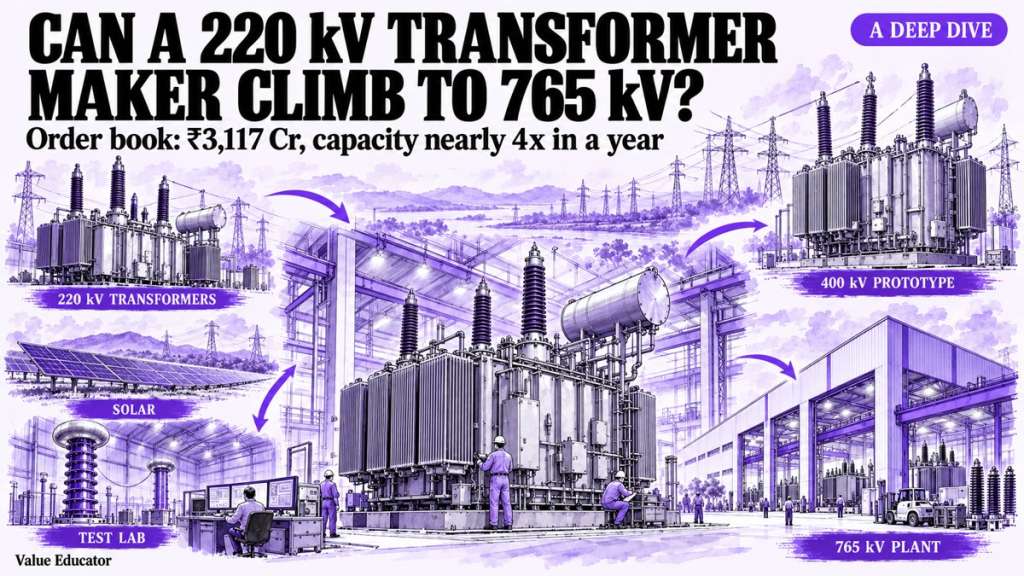
Atlanta Electricals: Capacity Nearly Quadrupled in a Year
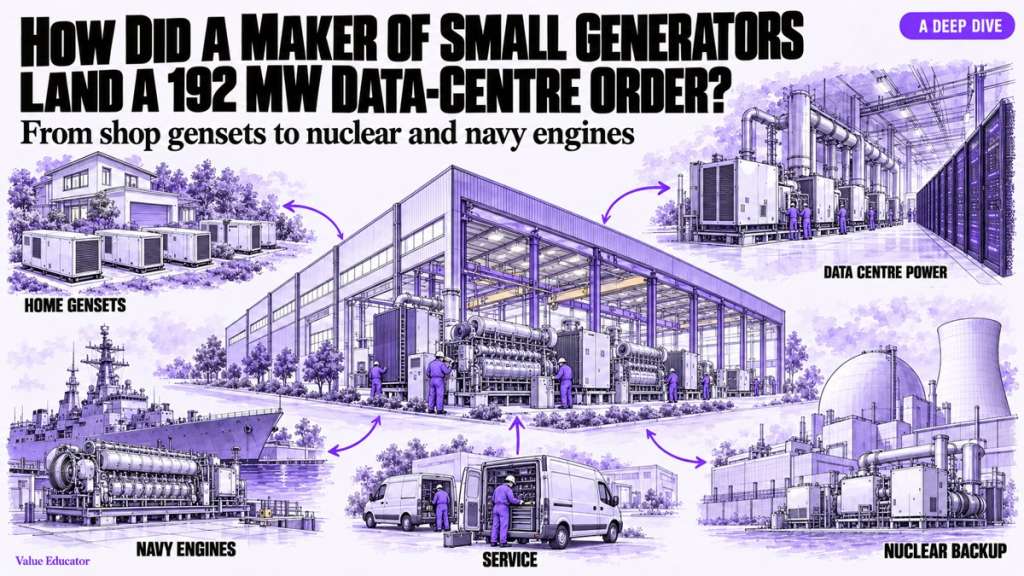
Kirloskar Oil Engines: Data Centres, Nuclear and the Navy
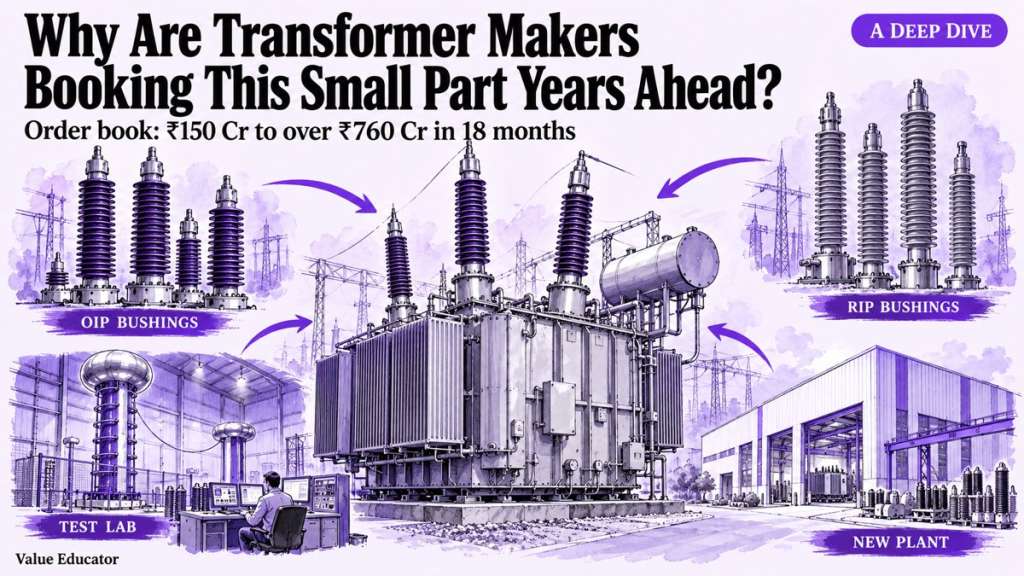
Yash Highvoltage: Bushing Maker With ₹760 Cr of Orders
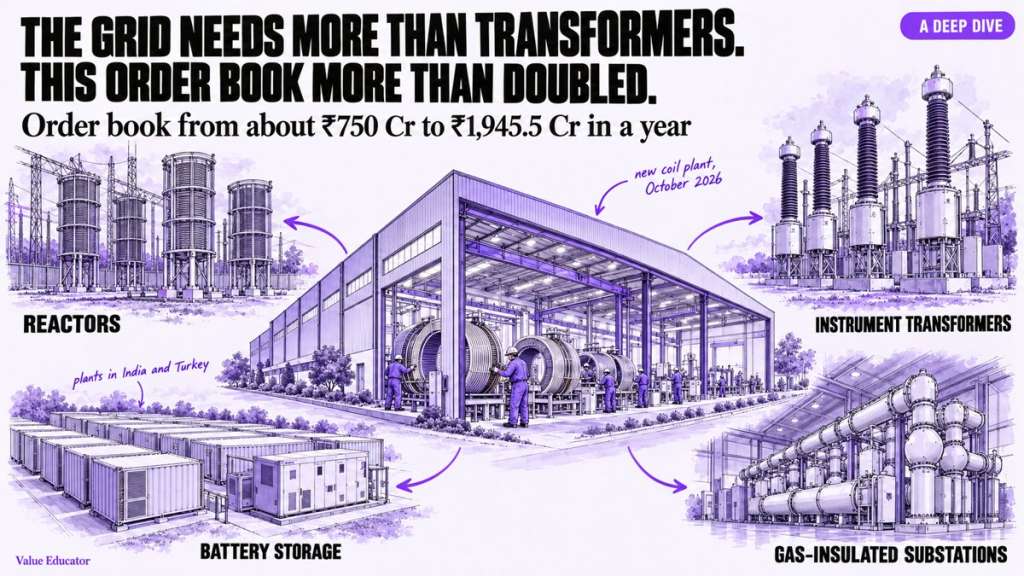
Quality Power: Reactor Maker With a ₹1,945.5 Cr Order Book
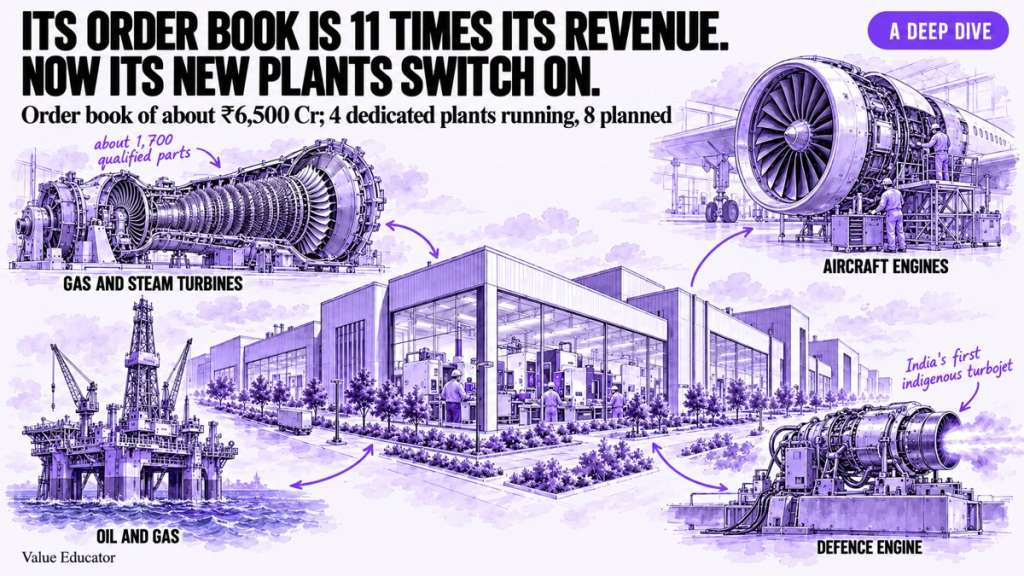
Azad Engineering: Turbine Blades, Jet Engines and Orders
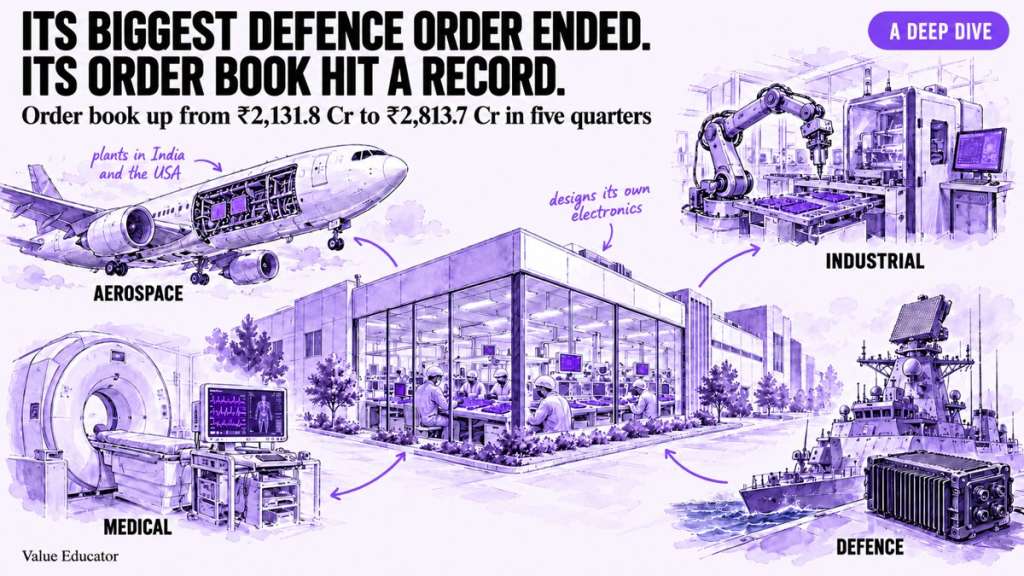
Cyient DLM: Aircraft Electronics and a Record Order Book
Explore our Products
Research Framework
Emerging Titans
Combination of quantitative analysis, industry tailwinds, and management assessment - SPRINT investment philosophy
Tiny Titans
Heavy emphasis on scuttlebutt research, plant visits, and early on-ground signals



Modern Warfare to Multibaggers
Key Trends. Strategic Shifts. Opportunities Ahead.
Don't Miss This Exclusive Webinar!
Join Value Educator to decode the key trends shaping India's defence sector and learn how to identify tomorrow's potential leaders in the space.
- In-depth research on India's defence sector
- Live Q&A session
- Actionable takeaways for long-term investors

 Orders
 Subscription
 Share with friends


Required Details
₹23999.00
(12 month subscription)
As per SEBI regulations, all users are mandated to complete the KYC that is validated for 1 year. Post payment, you will be redirected to the KYC screen


No comments yet. Be the first to comment!