
Glenmark: The USD 700 Mn Cancer Deal and Its Brands
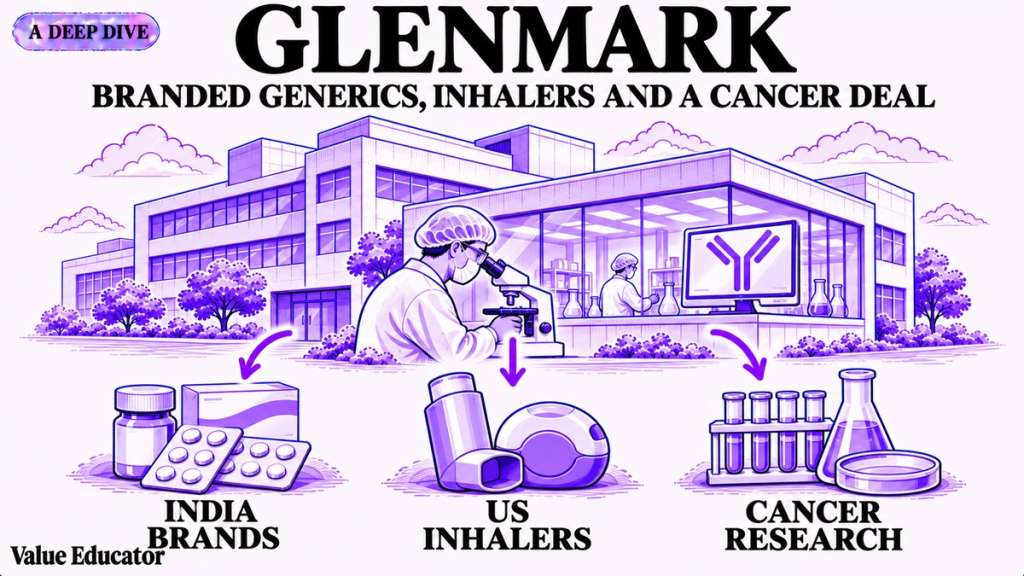
In September 2025, an Indian drugmaker received USD 700 million in a single payment. The money was for a cancer medicine that was still in its first stage of human testing. The buyer, the US drug company AbbVie, also agreed to pay up to USD 1.225 billion more if the medicine passes its later trials, wins approval and sells, plus a share of every sale after that.
To see why that payment was unusual, it helps to know how most Indian drug companies earn their money. Most of them make generics, which are copies of medicines whose patents have expired. A generic sells at a fraction of the original price, so profits depend on making it cheaply and launching it early. In India and many emerging markets, companies also sell copies under their own brand names, backed by sales teams that visit doctors. These are called branded generics, and the brand lets the company keep a better price.
Discovering a new medicine is a different business altogether. A company has to find a new molecule, test it on animals and then run three stages of trials on people. Most molecules fail somewhere along that path, and the ones that succeed can take ten years or more. That is why few Indian companies try it. Those that do usually out-license their molecules, which means they sell the rights to a larger company in return for an upfront payment, milestone payments as the medicine clears each stage, and a royalty, a share of the sales.
That drugmaker is Glenmark Pharmaceuticals Ltd (NSE: GLENMARK). It was founded in 1977 and has about 17,000 employees, 11 manufacturing sites and a presence in more than 80 countries. In FY26 its revenue from operations was ₹16,982.5 Cr, up 27.5%, a jump helped by the AbbVie money.

That AbbVie payment did more than lift one year's profit. It cleared all of Glenmark's debt. It also left the company with a hard comparison: every quarter of FY27 is measured against a year that held a one-time payment.
Glenmark in five numbers
- Q2 FY27 revenue of ₹4,247.3 Cr, down 29.8% as reported but up about 20% like-for-like
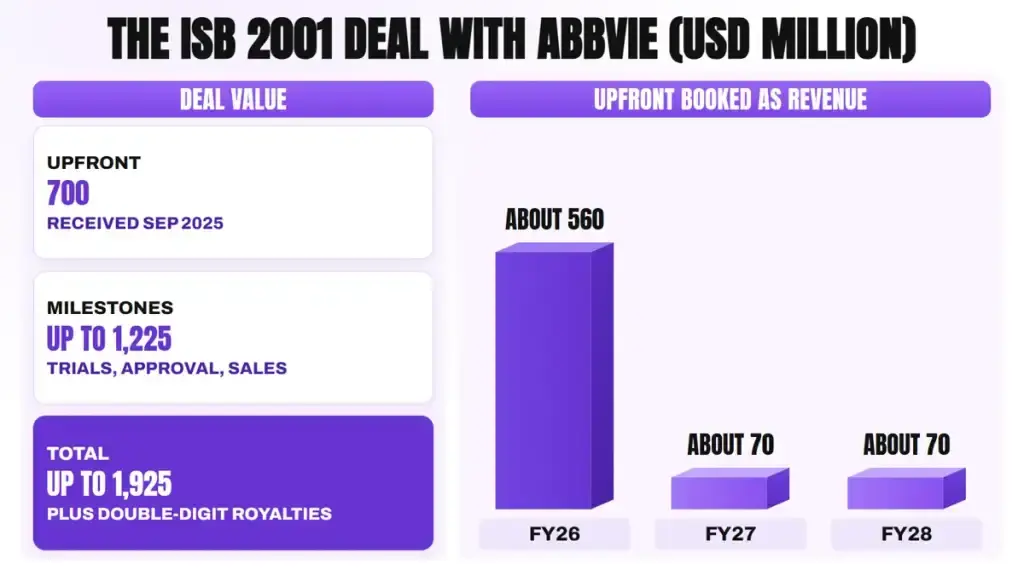
- An upfront payment of USD 700 million from AbbVie, in a deal worth up to USD 1.925 billion before royalties
- India secondary sales growth of 16.7% in Q2 FY27, against 13.8% for the Indian pharma market
- Net cash of ₹424 Cr in September 2026, after zero gross debt in March 2026
- FY27 revenue guidance of ₹17,000-18,000 Cr at an EBITDA margin of 21-22%
So a company that built its name on skin creams and cough syrups in India now has a cancer molecule partnered with AbbVie. How does that show up in its numbers today? Let's first understand the company, and then look at the latest quarter.
Glenmark Pharmaceuticals: Company Overview
Glenmark Pharmaceuticals Ltd was founded in 1977 by Gracias Saldanha and is headquartered in Mumbai. It is a research-led drug company that sells branded medicines in India and emerging markets, generics in the US and Europe, and its own global brands such as the RYALTRIS nasal spray. Its focus areas are skin, respiratory and cancer medicines. It runs 11 manufacturing sites and six R&D centres, sells in more than 80 countries and had 16,946 permanent employees in FY26. Its innovation arm, Ichnos Glenmark Innovation (IGI), develops antibodies for cancer from New York, Switzerland and Mumbai. Glenn Saldanha is the Chairman and Managing Director, and Anurag Mantri is the Executive Director and Global CFO. Revenue from operations was ₹16,982.5 Cr in FY26, and the company held net cash of ₹424 Cr in September 2026. Read this How to Analyse a Mid-Cap Company
"The stock market is a device for transferring money from the impatient to the patient."
— Warren Buffett
Glenmark spent more than two decades on drug discovery before one molecule paid off. In a business where a new medicine takes ten years or more, patience is part of the model.
The Quarter Revenue Fell 29.8% but Grew About 20%
Let's look at Q2 FY27, the July to September quarter of 2026, which the company reported on 5 November 2026. Revenue from operations was ₹4,247.3 Cr, down 29.8% from ₹6,046.9 Cr a year ago. On a like-for-like basis, which leaves out one-time items in both years, the company says revenue grew about 20%.
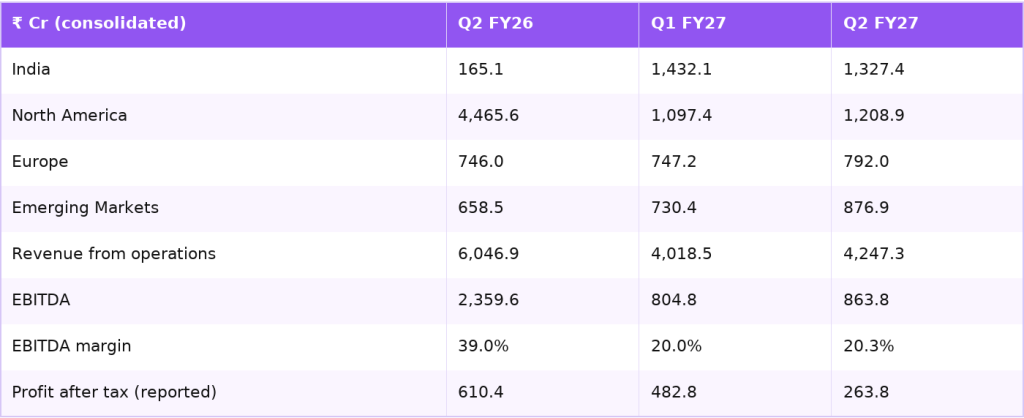
As we can see, the year-ago quarter was not a normal one. Two one-time events sat inside it, and they pulled in opposite directions. One was the AbbVie deal. Glenmark booked about USD 525 million of the upfront payment as revenue in that quarter, which the company estimated at about ₹4,500 Cr. That one payment was about 74% of the quarter's revenue.
The other was a fall in India. When the government announced changes to GST in August 2025, Glenmark's distributors cut the stock they held and postponed orders. Glenmark sells through a three-tier distribution chain, more layers than most peers, so the cut hit it harder. India revenue for that quarter fell to just ₹165.1 Cr. So Q2 FY26 had a very high North America number and a very low India number, and both distort this year's growth rates.
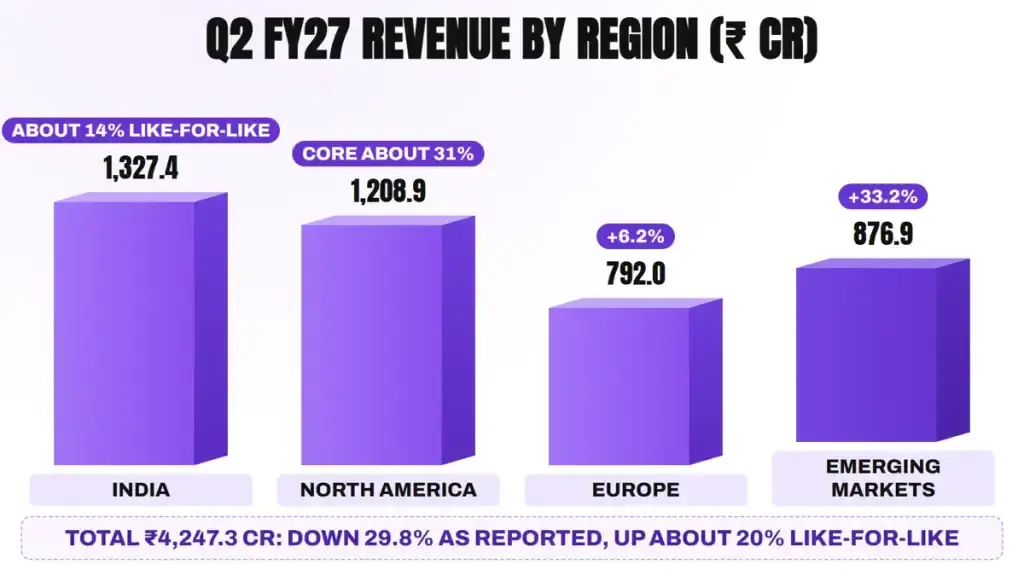
Now let's look past those two events, region by region. India revenue was ₹1,327.4 Cr, about 14% higher like-for-like. North America was ₹1,208.9 Cr, and its core business, without the AbbVie income, grew about 31%. Europe grew 6.2% to ₹792.0 Cr. Emerging markets grew fastest, by 33.2% to ₹876.9 Cr. Against Q1 FY27, total revenue was up about 5.7%.
Margins were steadier than revenue. The EBITDA margin was 20.3%, against 20.0% in Q1 FY27. Without the spending of its innovation arm, management says the core business earned a 21% margin. The 39.0% margin of Q2 FY26 is not a fair comparison, because almost all of the AbbVie revenue went straight to profit. Read this EBITDA Explained: Uses and Limits
Profit is where the quarter looks weakest. Reported profit after tax was ₹263.8 Cr, about 56.8% lower than a year ago. The company booked an exceptional item in the quarter, which it says is fully provided for. Before that item, adjusted profit after tax was ₹485.2 Cr, an 11.4% margin. Separately, in US price-fixing lawsuits against its US arm, Glenmark agreed a settlement of about USD 15.28 million with the insurer Humana, without admitting any wrongdoing; the full amount is provided for in its accounts.
That same pattern shows in the first half. H1 FY27 revenue was ₹8,265.8 Cr, down 11.2% as reported but up about 18% like-for-like. EBITDA for the half was about ₹1,668.6 Cr, a margin of about 20.2%.
Where the Cash Went in the First Half
Now let's look at cash, because the first half used more of it than it earned. In the first half, Glenmark added about 1,100 people to its sales teams in India and emerging markets, mostly for its new cancer medicines. It also paid out about ₹520 Cr of legal settlements, many of them booked as costs in earlier years, and spent about ₹337 Cr on capex. As a result, operating cash generation was negative for the half. Read this Cash Flow Statement Explained
That spending shows on the balance sheet. Gross debt was about ₹866.5 Cr in September 2026, against zero in March, while cash stood at about ₹1,290 Cr. Net cash was ₹424 Cr, down from about ₹1,176.3 Cr in March. Net working capital was 110-115 days, within the company's guidance.
What the cash outlook says: management expects ₹700-800 Cr of cash generation in H2 FY27, enough to repay the gross debt by March 2027 and end the year with about ₹1,200 Cr of cash. The first half had the hiring, the settlements and the capex. The second half has to show the payback.
How Glenmark Spent 26 Years Building an Innovation Arm
Now that we have seen the quarter, let's go back and see how a branded-generics company came to own a cancer molecule like this. Gracias Saldanha laid the foundation of Glenmark in 1977. In 1979 it launched Candid cream, still one of its best-known skin brands. In 2000 Glenn Saldanha became managing director and CEO, and the company listed on the NSE and BSE at a market value of about USD 40 million.
Glenmark started its own drug discovery work around the same time. In 2000 it set up a research centre in Navi Mumbai for new chemical molecules, and in 2004 it signed its first out-licensing deal, with Forest Laboratories, for USD 35 million in upfront and milestone payments. In 2011 it licensed its first biological molecule, GBR 500, to Sanofi for USD 55 million in upfront and milestone payments. Since 2004 it has signed more than 16 out-licensing deals.
"Know what you own, and know why you own it."
— Peter Lynch
Glenmark is three businesses in one: brands, generics and drug discovery. Knowing which one drives a given quarter is the first step to reading its numbers.
Each deal brought in money, but the research cost money every year too. Management itself says that, to keep funding this work, its margins and balance sheet were under constant stress from high debt. In 2019 the company put its research into a separate company, Ichnos Sciences, now Ichnos Glenmark Innovation, or IGI. It is based in New York, with research labs in Switzerland and a hub in Mumbai. In the same year it spun off its API business, the arm that makes the active ingredients of medicines, as Glenmark Life Sciences.

That table shows us the hard years. In FY23 and FY24, revenue barely moved, and the EBITDA margin fell from 18.9% to 10.1%. Glenmark sold 75% of Glenmark Life Sciences to Nirma Ltd in FY24, and that year ended with a reported loss of ₹1,830.8 Cr, after exceptional items of ₹901.0 Cr. FY23 figures are restated and FY24 shows continuing operations, so they are not fully comparable with earlier years.

After those years, the recovery came in two steps. In FY25 the margin rose back to 17.7% as the base business recovered. In FY26 it rose to 26.9%, mostly because of the AbbVie revenue, and profit after tax reached ₹1,362.0 Cr. Net debt of ₹489.0 Cr in March 2025 turned into net cash of ₹1,176.3 Cr in March 2026.
The ISB 2001 Deal With AbbVie
Now let's look at ISB 2001 and the AbbVie deal behind that turnaround. ISB 2001 is a trispecific T-cell engager for multiple myeloma, a cancer of the plasma cells in the bone marrow. It is an antibody with three arms. Two of them grab two markers on the cancer cell, called CD38 and BCMA, and the third grabs the patient's own T cells, the immune cells that kill infected or abnormal cells. So the medicine pulls a killer cell right up against the cancer cell. IGI built it on its own BEAT platform, a method for making antibodies with more than two arms that can still be manufactured at scale.
The US FDA gave ISB 2001 orphan drug status in July 2023 and fast track status in April 2025, which can speed up its review. IGI and AbbVie announced the licensing deal in July 2025, and the upfront payment came in September 2025 after the US competition regulator cleared it.
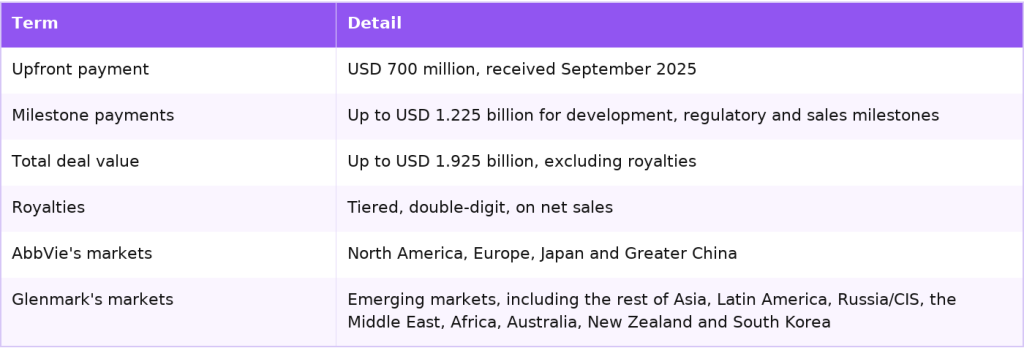
As that table shows, Glenmark books the upfront payment as revenue over three years. Glenmark booked USD 525 million in Q2 FY26 and planned to book about USD 35 million more in H2 FY26, about USD 560 million in all. It expects to book about USD 70 million in each of FY27 and FY28. That is why, in the company's words, North America revenue this year still "includes deferred out-licensing income recognition for ISB 2001".
The trial behind that deal has kept moving. More than 170 patients have now been dosed in the first-stage TRIgnite-1 study, 42 in the dose-finding part and more than 130 in the expansion part. AbbVie has also started a combined phase 1/2 study with other myeloma medicines. Updated data from the first study has been accepted for an oral presentation at the 2026 annual meeting of the American Society of Hematology, or ASH.
Where did the money go? About USD 210-225 million was set aside for IGI, enough to fund it for about three years. The rest went to the parent, which used it to repay all its debt. IGI now spends about USD 70 million a year, and Glenmark has said it will not put fresh money into IGI. IGI's next molecule, ISB 2301, targets solid tumours, and IGI plans to file to start human trials of it by the end of 2026.
"The ISB 2001 deal clearly vindicates our years of investment in innovation. With this deal and with the receipt of $700 million, we are able to pay down all our debt and be net cash positive." - Glenn Saldanha, Chairman and Managing Director, November 2025
Four Regions, Three Kinds of Business
Now let's split the business by region, because each one earns money differently. Glenmark reports one segment, pharmaceuticals, but it shows revenue by region every quarter. The table below adds what each region sells. Read this Segment-Wise Revenue Analysis Explained

That FY26 split is distorted because the AbbVie income is counted in North America. Without it, the branded markets carry more weight. Management expects more than 60% of FY27 revenue to come from branded markets and branded products, and it wants that share to keep rising.
India and Consumer Care
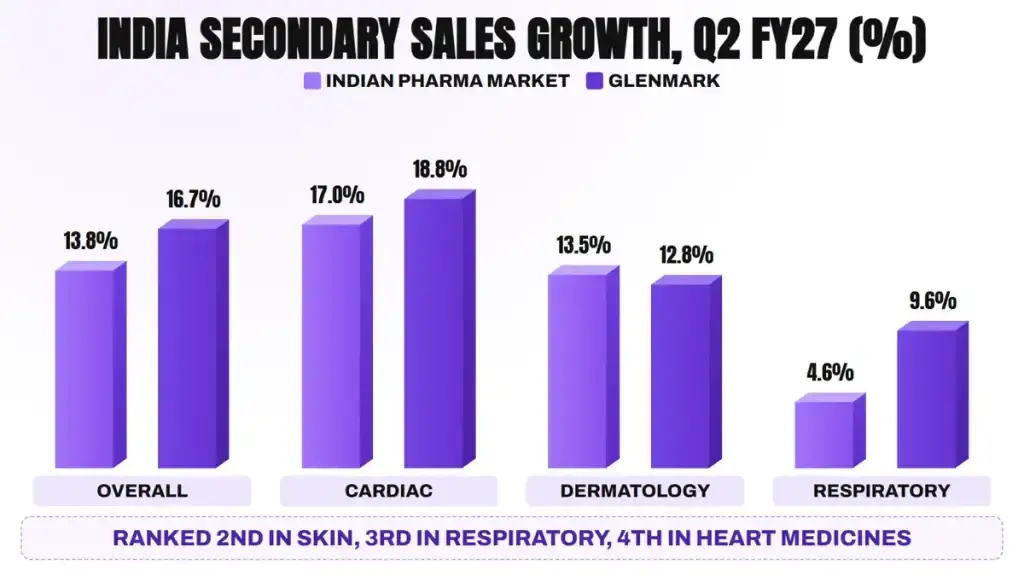
Let's start with India, the home market and the base of the branded business. Glenmark ranks 13th in the Indian pharma market, with a 2.4% share. In its main therapies it ranks higher: second in skin medicines, third in respiratory and fourth in heart medicines. It has 11 brands in the market's top 300.
What matters most here is secondary sales, the sales from chemists to patients, because they show real demand rather than stock moving to distributors. Glenmark's secondary sales grew 16.7% in Q2 FY27, against 13.8% for the market. Over the twelve months to September 2026 they grew 15.7%, against 12.1%. Heart medicines grew 18.8%, respiratory 9.6% and skin 12.8%. Diabetes is the weak spot, down 4.2% while that market grew 17.7%.
The new launches are adding to this. In cancer, Glenmark sells TEVIMBRA and BRUKINSA, two medicines licensed from BeOne, and it has moved into the top 10 companies in the Indian cancer market. In respiratory it launched NEBZMART GFB, the world's first three-in-one medicine for COPD given through a nebuliser, which management expects to reach about ₹70-80 Cr of sales in its first year. In diabetes it launched GLIPIQ, a semaglutide injection.
Glenmark also runs a consumer arm, Glenmark Consumer Care, with brands such as Candid powder, La Shield and Scalpe. Its Q2 FY27 sales were ₹125.2 Cr, up 46.5%, and Candid powder holds about 60% of its category. Management expects the India business to grow 12-15% a year.
North America, Inhalers and Injectables
Next, let's look at North America, the largest region by revenue. Here Glenmark sells generics, and the money is in the products that are hard to copy. It has 229 generic products approved for sale in the US and 51 more waiting for approval, 25 of them Paragraph IV filings, where Glenmark challenges a brand's patent to launch early.
The most important new line is respiratory. Inhalers and nasal sprays are hard to copy because the device has to deliver the same dose to the lungs as the original. In 2026 Glenmark got the first approval for a generic of Flovent HFA 44 mcg, an asthma inhaler, with 180 days of exclusivity as the first approved applicant. It is the only generic on the market and had about a 22% share. It has also launched a generic fluticasone nasal spray and filed for generics of Flovent 110 mcg and the Atrovent inhaler, which management expects to launch by March 2027.
Injectables are the second line. Glenmark sells 20 injectable products made by partners, such as sugammadex, which it launched this quarter. Its own injectable plant at Monroe, North Carolina, passed its US FDA inspection with a VAI outcome in November 2025, which means the issues found did not need regulatory action. Monroe relaunched fulvestrant in Q1 FY27, and management hopes for three or four more Monroe products in FY28.
Glenmark also sells RYALTRIS, its own nasal spray brand, in the US now, through its own sales team. Management expects about USD 15-20 million of US sales from it this year.
Europe, Moving From Generics to Brands
Now let's move to Europe, where the business is slowly changing shape. Glenmark sells directly in five major European markets. Branded products were about 20% of its European revenue in FY21 and about 35% in FY26, by the company's own estimates.
Two brands lead that shift. RYALTRIS is sold partly through Menarini and partly through Glenmark's own teams. WINLEVI, an acne cream licensed from Cosmo, launched in the UK in FY26 and in the Nordics, Central and Eastern Europe and Spain in Q1 FY27. It already covers about 40% of the UK market through formulary listings.
Still, the generic side is a drag. Q2 FY27 revenue grew 6.2%, with Western Europe strong and parts of Central and Eastern Europe soft. Management expects European generics to grow at a low single-digit rate for the next few years.
Emerging Markets and RYALTRIS
Next, let's look at emerging markets, the fastest-growing region this quarter. Glenmark sells skin and respiratory brands in Russia and the CIS, Latin America, the Middle East and Africa, and Asia-Pacific. In Russia it ranks sixth among skin medicine companies. Q2 FY27 revenue grew 33.2%, and management expects at least 15-20% growth a year from this region for the next few years.
RYALTRIS sits at the centre of this region and of the branded plan. It is a nasal spray for allergic rhinitis that combines a steroid with an antihistamine in one spray. It is now sold in 58 markets, with filings in more than 90 countries, and it launched in Brazil in Q2 FY27. Its sales grew more than 40% in H1 FY27, and management expects about USD 130-140 million of sales this year. It holds more than 20% share in about 10 to 15 markets, in a global steroid nasal spray market of about USD 3.5 billion.
The New Cancer Medicines
Finally, let's look at the newest line, cancer medicines licensed from partner companies for India and emerging markets. These are not Glenmark's discoveries. It pays partners for the rights and uses its own sales teams to sell them.
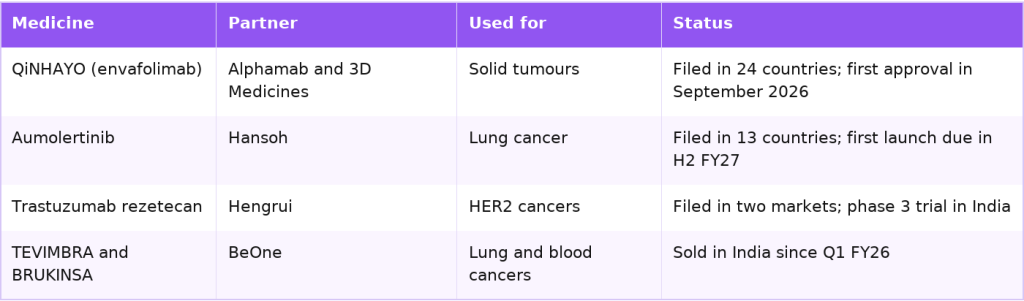
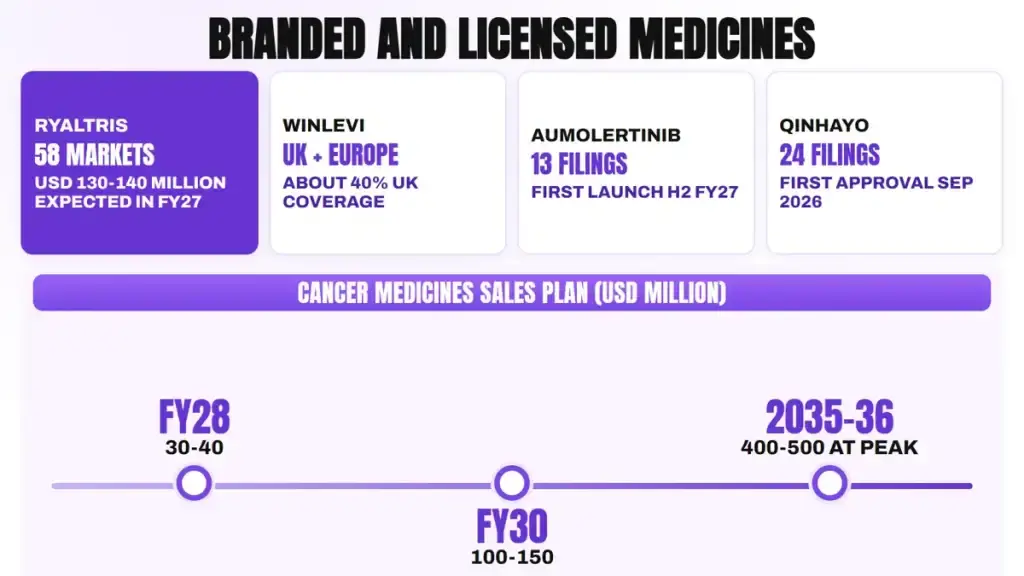
Management expects about USD 30-40 million of sales from these cancer medicines in FY28, rising to USD 100-150 million by FY30. At peak, around 2035-36, it puts the franchise at USD 400-500 million, without ISB 2001. It also expects an EBITDA margin of 30-40% on these products, well above the company average.
Why Glenmark's Moat Is Its Brands and Hard-to-Copy Products
Now that we have seen every region, let's understand the moat. Glenmark has three kinds of advantage, and each one is hard to copy for a different reason.
Let's start with its branded franchise. In India and emerging markets, doctors prescribe by brand. Glenmark has spent decades building skin and respiratory brands, and it has 11 brands with sales above ₹100 Cr each. A new competitor can copy the molecule, but it cannot copy the trust doctors place in a brand they have used for years. Read this Economic Moat Explained That is why Glenmark's India business has grown about 1.5 times as fast as the market over the last three years.
Complex generics are the next advantage. A tablet can be copied by many factories. An inhaler cannot, because the generic must prove it delivers the same dose to the lungs, through device testing and often clinical studies. That is why Glenmark is the only generic seller of Flovent 44 mcg today, and why a few such products each year can matter more than dozens of simple tablets.
"In business, I look for economic castles protected by unbreachable moats."
— Warren Buffett
For a drugmaker, the moat is built from brands doctors trust and products that are hard to copy, each earned over years.
Then comes the BEAT platform. IGI has shown that its method can make antibodies with three or more arms that work in patients. A large company paid USD 700 million upfront to use one of them. Glenmark is now targeting one new filing to start human trials every year from FY27.
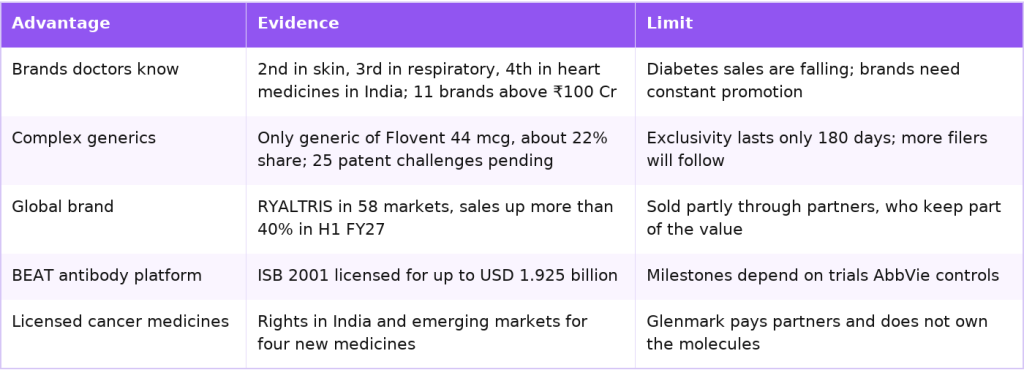
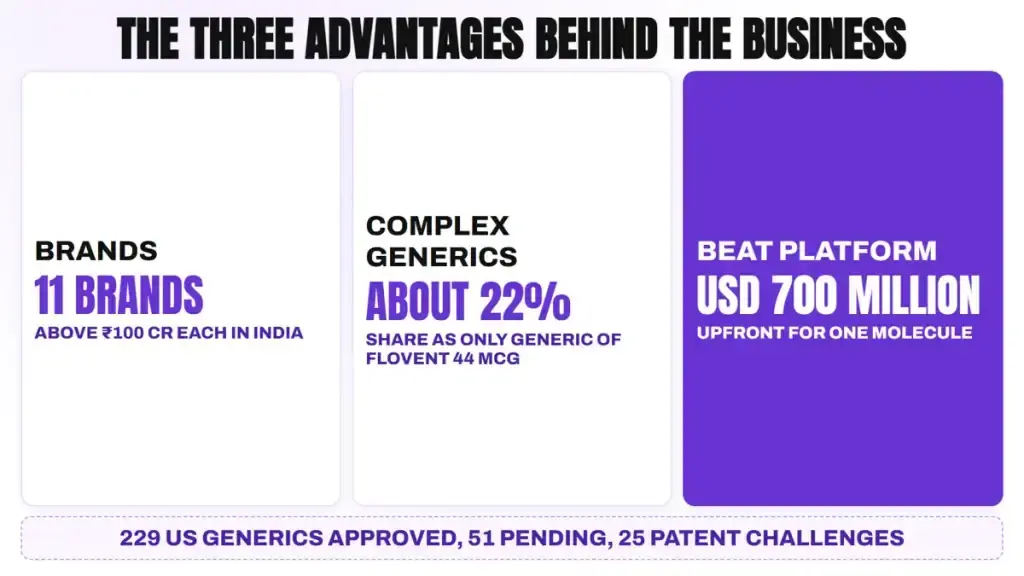
That table shows us why the moat has limits. The branded business is the steadiest part, and it is also where most of the new spending has gone. The question for the next two years is whether that spending lifts margins, as it is supposed to.
Financials: Five Years of Income, Net Worth and Earnings
One year can mislead in a company with large one-time items, so let's look at five full years together. Total income here includes other income. FY23 figures are restated and FY24 shows continuing operations after the sale of Glenmark Life Sciences.
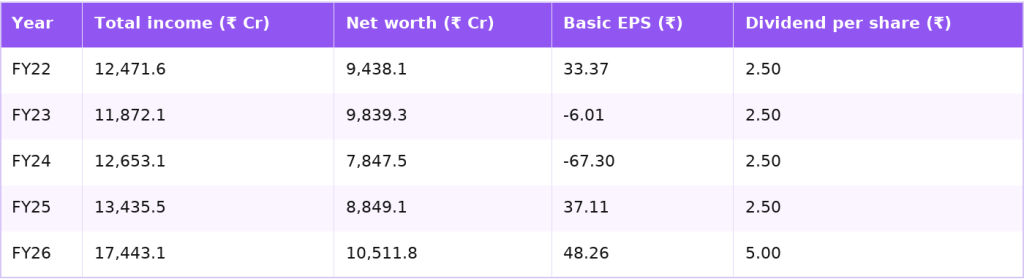
Total income grew about 1.4 times in four years, from about ₹12,471.6 Cr in FY22 to about ₹17,443.1 Cr in FY26, and most of that came in the last year, when the AbbVie payment was booked. In FY23 and FY24 the company reported losses per share, and net worth fell to about ₹7,847.5 Cr in FY24 after large exceptional items.
Since then the balance sheet has rebuilt. Net worth rose to about ₹10,511.8 Cr in FY26, and the company moved from net debt of about ₹3,188.5 Cr in FY23 to net cash of about ₹1,176.3 Cr in March 2026. The dividend doubled to ₹5 a share in FY26. R&D spending was about ₹1,000 Cr in FY26, and capital spending about ₹1,100 Cr.
"In the short run, the market is a voting machine but in the long run, it is a weighing machine."
— Benjamin Graham
Glenmark's five-year table shows why: one licensing deal moved FY26 sharply, but the years that follow will show what the branded business earns on its own.
What FY27 and FY28 Could Look Like on Management's Numbers
So where does Glenmark go from here? After its FY26 results, management guided FY27 revenue of ₹17,000-18,000 Cr at an EBITDA margin of 21-22%. In November 2026 it said it was on track to deliver that guidance.
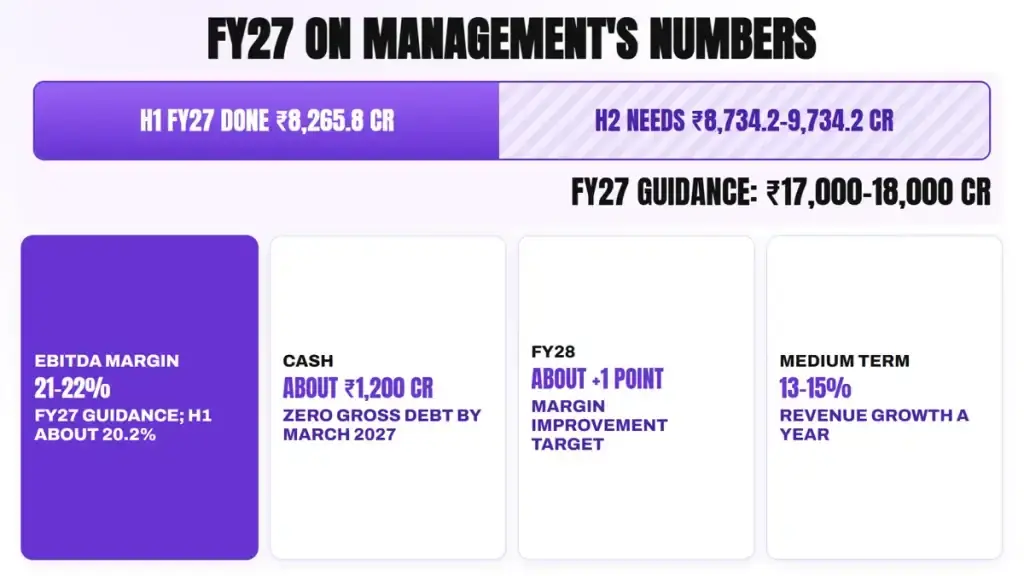
Now let's put that guidance against the first half. H1 FY27 revenue was ₹8,265.8 Cr. To reach ₹17,000 Cr, the second half needs about ₹8,734.2 Cr, about 13.9% more than the ₹7,671.2 Cr of H2 FY26. To reach ₹18,000 Cr it needs about ₹9,734.2 Cr, about 26.9% more. The H1 EBITDA margin was about 20.2%, so H2 needs a margin of over 22% to bring the full year into the 21-22% range.
That second-half step-up depends on the payback from the H1 hiring, which management says starts in H2. It also depends on US launches already lined up and on aumolertinib, the first of the new cancer launches, due in H2 FY27.
Beyond FY27, the plan from the June 2026 investor day is revenue growth of 13-15% a year over the medium term. For FY28 it targets an EBITDA margin about 1 percentage point higher, from operating leverage, and it keeps a target of a return on capital employed above 23%. Management has also said R&D will stay at about 7-8% of revenue.
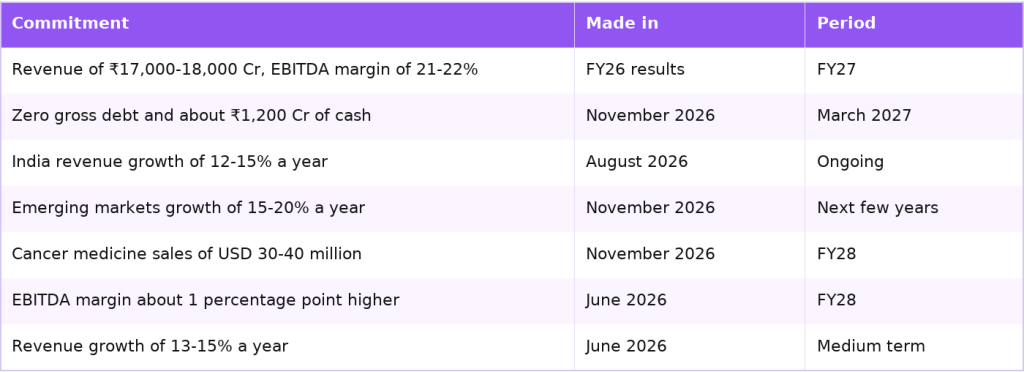
Those commitments are easier to judge against the past. So let's check what management said before against what it delivered.

That record shows us a clear pattern. Debt and revenue-growth targets have been met. But margin targets have been set high and then lowered, because the company keeps choosing to spend on sales teams and new launches. That makes the H2 FY27 margin the number to watch.
Key Risks
Now let's look at what could go wrong for Glenmark, because the first half has already shown some of these risks.
- Margin targets keep slipping: management once aimed for 23% by FY27 and about 23% from H2 FY26. H1 FY27 came in at about 20.2%, and the full year needs a much stronger second half.
- Cash burn: operating cash was negative in H1 FY27, net cash fell to ₹424 Cr from about ₹1,176.3 Cr, and gross debt came back to about ₹866.5 Cr. The plan depends on ₹700-800 Cr of H2 cash generation.
- US legal cases: Glenmark's US arm still faces price-fixing and antitrust lawsuits. It settled several Zetia cases, for USD 7 million in February 2025 and USD 11 million in November 2025, and agreed about USD 15.28 million with Humana in 2026. Management says the big cases are settled but expects smaller payments "quarters and years" ahead.
- US FDA status: in early 2026 management said its Goa and Indore plants were under warning letters. Goa has since received a VAI outcome, but much of the US pipeline still runs through two plants and contract makers.
- Short exclusivity in US generics: the Flovent 44 mcg exclusivity lasts 180 days, after which other generics can enter and prices can fall.
- The AbbVie money fades: booked licensing income falls from about USD 560 million in FY26 to about USD 70 million a year. Further milestones depend on trials and decisions AbbVie controls.
- IGI setbacks: BioCryst returned the rights to ISB 830 from November 2026 after buying Astria, so IGI must find a new partner or fund it itself.
- Diabetes and Europe: diabetes sales in India fell 4.2% in Q2 FY27 while that market grew 17.7%, and European generics face low growth.
- Currency and geopolitics: Glenmark earns in roubles, euros, dollars and many emerging-market currencies, and management named supply chain and freight costs from geopolitical events as a pressure on margins.
"I think most of our big cases have been settled, right? Now, going forward, we anticipate there will be some possible small amounts which will go out as we go forward." - Glenn Saldanha, Chairman and Managing Director, November 2026
"All I want to know is where I'm going to die, so I'll never go there."
— Charlie Munger
For Glenmark, the places to avoid are clear from the list above: margins that keep missing targets, legal costs in the US and cash spent ahead of results. The tracking list below shows how to see which way each one goes.
Explore our Products
Research Framework

Emerging Titans
Combination of quantitative analysis, industry tailwinds, and management assessment - SPRINT investment philosophy

Tiny Titans
Heavy emphasis on scuttlebutt research, plant visits, and early on-ground signals
What to Track Next
If you follow Glenmark, these are the signals that will show where it goes next.
- H2 FY27 revenue against the ₹17,000-18,000 Cr guidance, and the EBITDA margin against 21-22%
- Operating cash flow in H2, and whether gross debt is back to zero by March 2027
- The updated ISB 2001 data at ASH in 2026, and any AbbVie milestone payment
- Market share of Flovent 44 mcg after its 180-day exclusivity, and the launches of Flovent 110 mcg and the Atrovent generic
- India secondary sales growth against the market, and whether diabetes sales recover
- The first launch of aumolertinib in H2 FY27 and RYALTRIS sales against USD 130-140 million
Members can read our full Research Desk report on Glenmark Pharmaceuticals, with its detailed scorecard and section-by-section analysis.
Conclusion
Let's put it all together. Glenmark spent more than two decades on drug discovery before one molecule, ISB 2001, brought in USD 700 million upfront and cleared its debt. Underneath that deal, its branded business in India and emerging markets is growing faster than its markets, and its US business is moving towards inhalers and injectables. The cautious thread is the first half of FY27, when margins stayed near 20% and cash went out faster than it came in. The second half will show which thread is stronger.
Still, the AbbVie money was a one-time lift, and FY27 is the first test of the business without it. What happens next depends on whether the H1 hiring turns into a stronger second-half margin, whether the new inhalers and cancer medicines sell as planned, and whether ISB 2001 keeps moving through AbbVie's trials.
FAQs
What does Glenmark Pharmaceuticals do?
+Glenmark is a research-led drug company. It sells branded medicines in India and emerging markets, generics in the US and Europe, and its own global brands such as RYALTRIS. Its innovation arm, IGI, develops cancer antibodies. FY26 revenue from operations was ₹16,982.5 Cr.
What is Glenmark's deal with AbbVie?
+In 2025 IGI licensed ISB 2001, a trispecific antibody for multiple myeloma, to AbbVie for an upfront payment of USD 700 million and up to USD 1.225 billion in milestones, a total of up to USD 1.925 billion, plus tiered double-digit royalties. Glenmark keeps the rights in emerging markets.
Why did Glenmark's Q2 FY27 revenue fall?
+Q2 FY26 included about USD 525 million of the AbbVie upfront payment, so the year-ago base was unusually high. Reported revenue fell 29.8% to ₹4,247.3 Cr, but like-for-like revenue grew about 20%, with India up about 14% and the US core business up about 31%.
What is RYALTRIS?
+RYALTRIS is Glenmark's own nasal spray for allergic rhinitis. It is sold in 58 markets, its sales grew more than 40% in H1 FY27, and management expects about USD 130-140 million of sales in FY27.
What is Glenmark's FY27 guidance?
+Management guided FY27 revenue of ₹17,000-18,000 Cr at an EBITDA margin of 21-22%. H1 FY27 revenue was ₹8,265.8 Cr at a margin of about 20.2%, so the second half needs to be stronger. It also expects zero gross debt and about ₹1,200 Cr of cash by March 2027.
What are the main risks for Glenmark?
+The main risks are margins that have fallen short of earlier targets, negative operating cash flow in H1 FY27, US antitrust and price-fixing lawsuits, the US FDA status of some plants, short exclusivity on new US generics, and the fall in AbbVie licensing income after FY26.

High growth stock specialist, Value Educator
Shashank Mahajan is an equity research professional with over 12 years of experience in identifying high-potential SME and micro-cap stocks at an early stage. He follows a rigorous scuttlebutt research–driven approach, combining on-ground insights with deep financial analysis. Shashank specializes in uncovering under-researched and under-owned companies with strong management quality and long-term growth potential. Through disciplined research and early identification, he focuses on spotting tomorrow’s market leaders before they enter the mainstream investor radar.
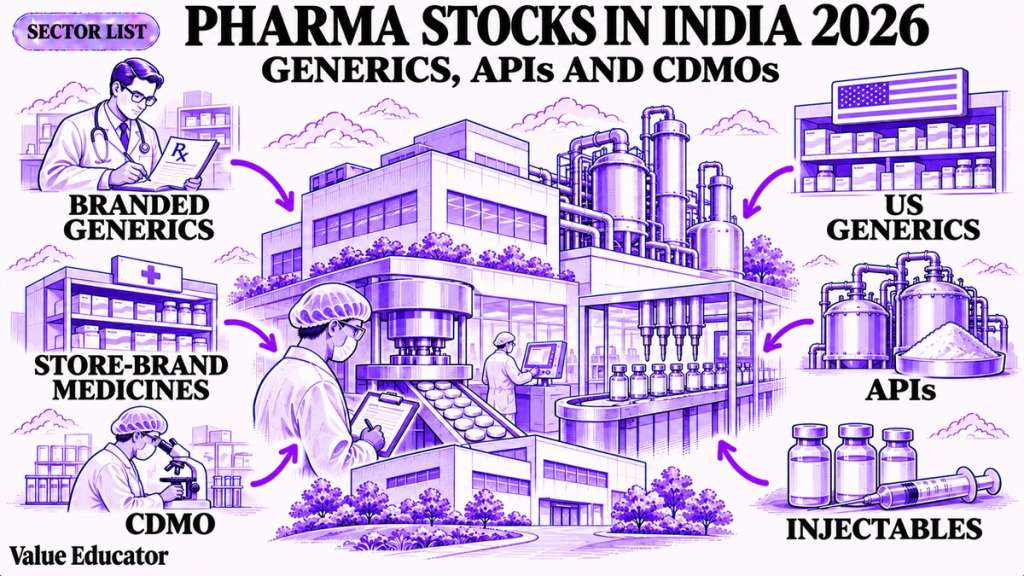
Pharma Stocks in India 2026: Generics, APIs and CDMOs
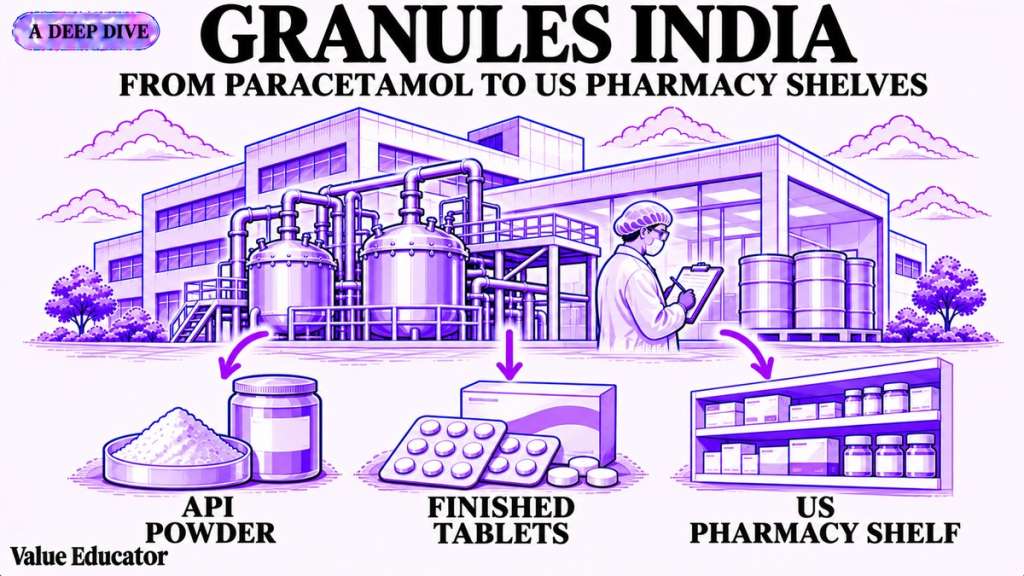
Granules India: From Paracetamol to a 65% Gross Margin
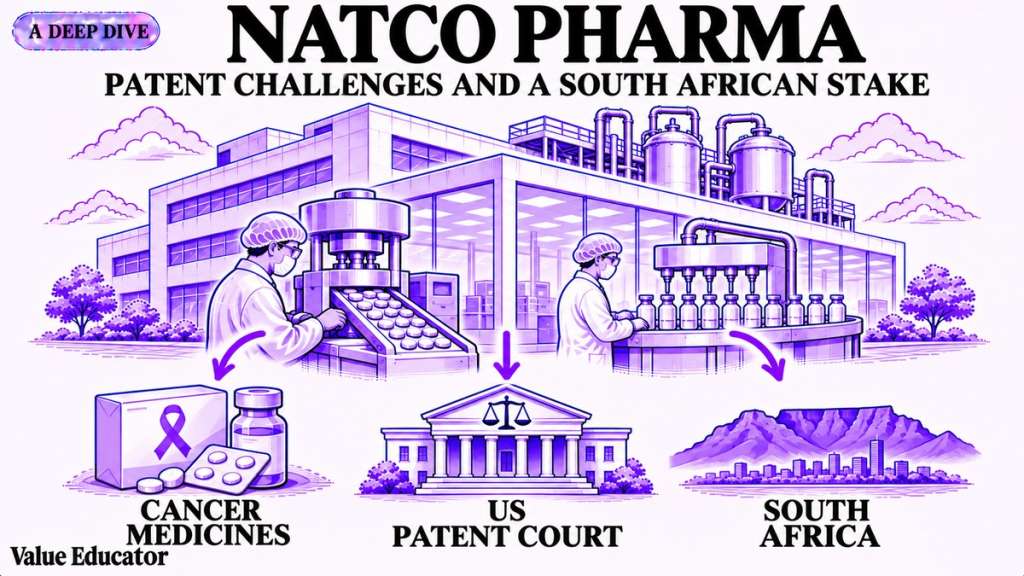
Natco Pharma: After Revlimid, 29 Patent Challenges
Shilpa Medicare: Cancer APIs, Films and Biosimilars
Alembic Pharma: US Plants Pay Back, Margin Hits 22.2%
Supriya Lifescience: APIs, Ambernath and a 22% Margin
Explore our Products
Research Framework
Emerging Titans
Combination of quantitative analysis, industry tailwinds, and management assessment - SPRINT investment philosophy
Tiny Titans
Heavy emphasis on scuttlebutt research, plant visits, and early on-ground signals



Modern Warfare to Multibaggers
Key Trends. Strategic Shifts. Opportunities Ahead.
Don't Miss This Exclusive Webinar!
Join Value Educator to decode the key trends shaping India's defence sector and learn how to identify tomorrow's potential leaders in the space.
- In-depth research on India's defence sector
- Live Q&A session
- Actionable takeaways for long-term investors

 Orders
 Subscription
 Share with friends


Required Details
₹23999.00
(12 month subscription)
As per SEBI regulations, all users are mandated to complete the KYC that is validated for 1 year. Post payment, you will be redirected to the KYC screen


No comments yet. Be the first to comment!