
The Electrical Leader Compounding Quietly
The Wire Nobody Notices, Until the Lights Go Out.
Consider the last occasion when your city lost power in a storm. Not the short glare. The actual type - when a whole neighborhood is blacked out an hour or two, and you find yourself thinking how much of life nowadays is reliant on a single strand of electricity that runs silently through the power plant to your house.
The question now arises: what conducts that electricity over hundreds of kilometers? It's not a switch. It's not a transformer. You have power running to your phone or in your hospital before electricity gets into the equipment, before it powers your device, it goes through one of the things most people do not even consider, a conductor. A bare aluminum wire, hanging between steel towers through the mountains and rivers, and carrying gigawatts of power without making a sound.
And if you want to know who makes those conductors for much of the world, the answer brings you to a quietly remarkable company in Mumbai, one with roots going back to India's earliest days of electrification, exporting to over 140 countries, sitting at the center of the biggest infrastructure build-out of our generation.
The company is Apar Industries.
Founded in 1958 by Dharmsinh Dadubhai Desai, a Gandhian industrialist who believed deeply that business could serve national development, Apar began as Power Cables Pvt. Ltd. with starting capital of less than Rs. 1 lakh. At the time, independent India was in the early stages of building its power grid. Nehru's industrial ambitions needed transmission infrastructure, and Desai saw the opportunity clearly. Not the glamorous kind. The foundational, unsexy, essential kind: supplying the physical backbone of electrification.
Sixty-six years later, what began as a small conductor manufacturer has grown into the world's largest aluminum and alloy conductor manufacturer, the third-largest transformer oil producer globally, and India's largest exporter of specialty and renewable cables. Its products power grids from California to Queensland, Germany to Saudi Arabia.
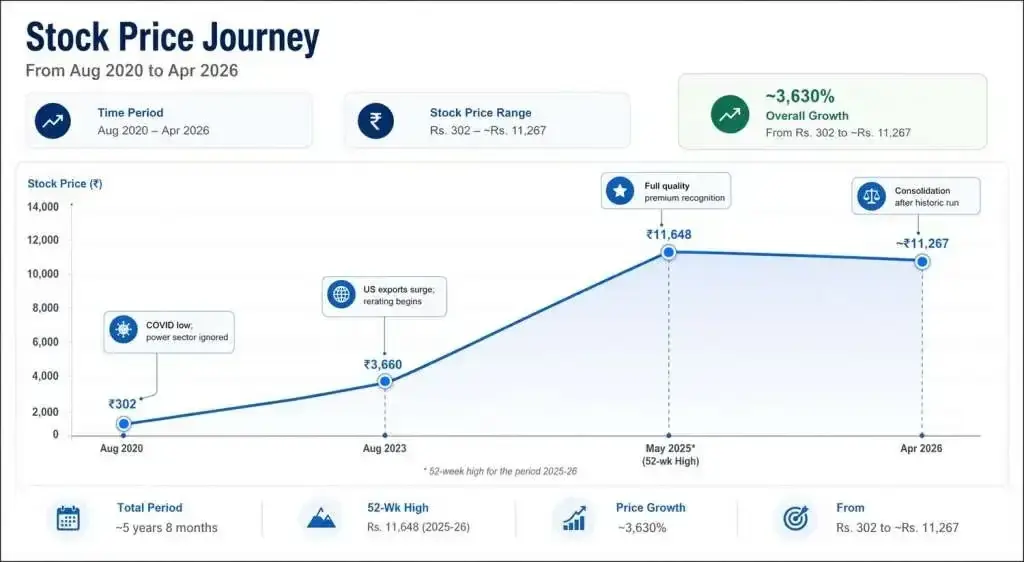
Over the next five years until the beginning of 2025, Apar has given stock a more than 2,000-percent return. The stock trading at Rs. 302 in August 2020 has now crossed Rs. 11,000 in early 2026. An investor who quietly bought and held, while the world chased tech stocks and the pandemic rally, would have turned every lakh into more than twenty lakhs.
But here's what makes Apar interesting as a long-term study, not just a good trade: those returns weren't manufactured through financial engineering. They were compounded over a few years slowly, then suddenly, through operational excellence, shrewd capacity expansion, a deliberate shift toward premium products, and the growing force of one structural mega-trend that is only now approaching its most powerful phase.
Why the Power Sector in India is in the midst of its largest decade ever.
This is where the vast majority of people fail when they are rejoicing about the revolution in the field of renewable energy in India: it is not a complete task to produce clean electricity.
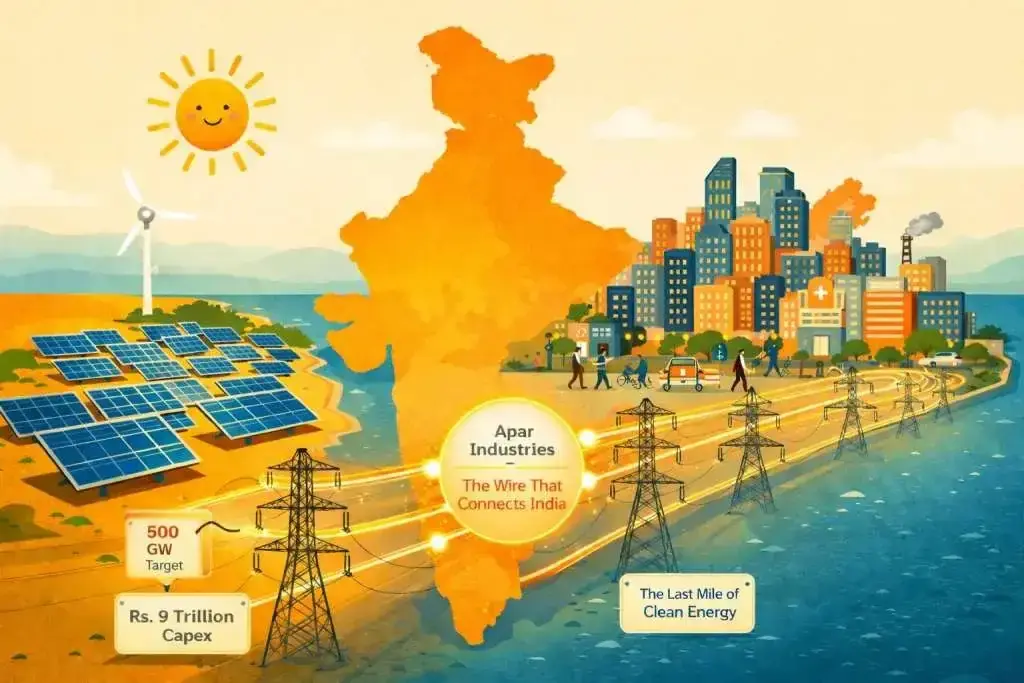
Solar energy is generated in the Thar Desert. The greatest wind is along the west coast. However, the industrial demand of India is concentrated in Maharashtra, Gujarat and Tamil Nadu. Its population, which requires power in their homes, hospitals, and small enterprises, is distributed all over the subcontinent. Thousands of kilometres of new transmission lines are needed to connect generation to consumption, and the lines must be made with conductors of very particular technical specifications.
By 2030, India has established a non-fossil fuel capacity of 500 GW. By 2024, approximately 200 GW will be installed. It will increase renewable capacity by more than six times in six years. To do so, the government has invested a Rs. 9 trillion (~$108 billion) transmission capex pipeline up to FY32. PowerGrid Corporation is sanctioning projects of thousands of crores each quarter. Distribution networks are being enhanced by state governments. Dedicated transmission corridors are being bid on by private utilities.
Structural, government-mandated, demand on conductors, cables, and transformers is here, and here to stay. However, there is a second driver of demand, which practically no one discusses: reconductoring.
The current transmission system in India was designed to transmit coal-fired baseload power, constant, predictable electricity. Green energy is not continuous. It is sunny in the daytime and windy at night. Dealing with this variability means it is necessary to upgrade current lines to support extremely higher power than they were originally intended to support. The solution: Instead of replacing the old conductor on the same towers with a new, high-performance conductor, the HTLS conductor, which carries 1.5x to 2x more electricity but does not require new towers or new land, a better wire.
Who is the manufacturer of those HTLS conductors? You can guess.
India's Power Sector opportunity
T&D market: ~$28 billion in FY24 → projected $38 billion by FY30Government transmission capex: Rs. 9 trillion (~$108B) through FY32
Renewable capacity target: 500 GW by 2030, from ~200 GW today
Domestic cable market: ~$21 billion in FY25, growing at ~9% CAGR through FY31.
Data centres, 5G rollout, railway electrification adding further cable demand.
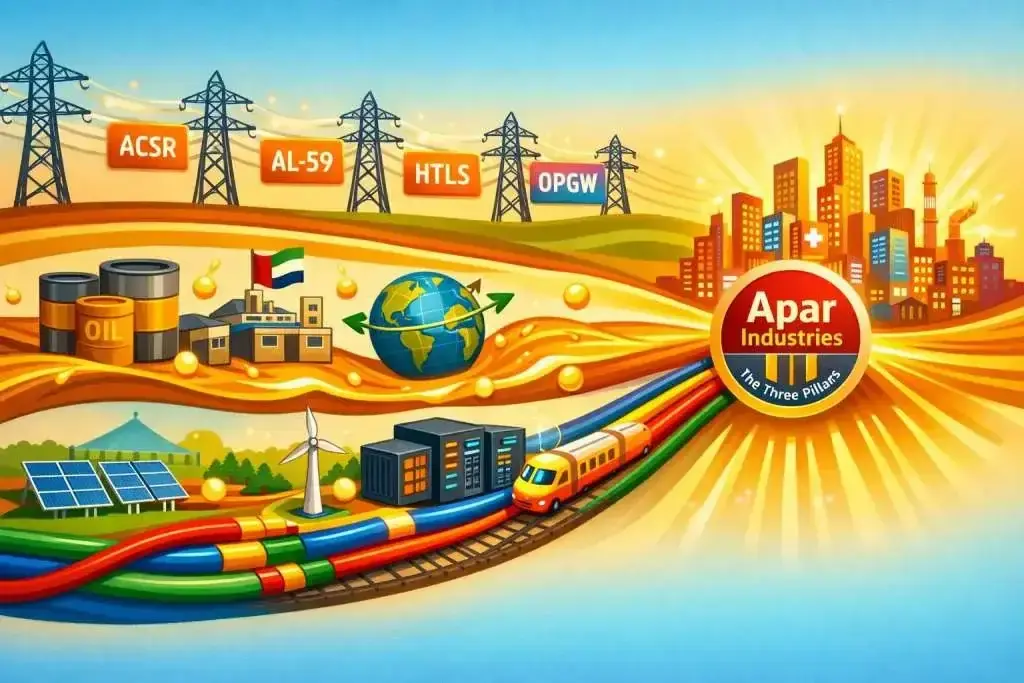
Apar’s Industries three divisions.
Apar operates three businesses which are similar yet related. It is important to know the whole of each of them, in order to know the reason why Apar industries is not merely a cyclical manufacturer, but assimilates the marks of a real long-term compounder.
1. Conductors - The Crown Jewel (49% of FY25 Revenue)
This is the heart of Apar. Its conductor division is the largest producer of aluminium and alloy conductors in the world, and has a current installed capacity of 444,607 metric tonnes per annum as of March 2025.
But this is the true tale - it is not the number of tonnes Apar makes. It's concerning what kinds. Imagine a conductor as a spectrum. Basic ACSR (Aluminium Conductor Steel Reinforced) wires are at the bottom. They are made by everyone, the margins are low and competition is intense. Climb the ladder and you will find AL-59 conductors-- better grade, more current per kilogram, aluminium alloy which is under more and more stipulation by the Central Electricity Authority as the interstate transmission conductor. At the high end lie HTLS (High Temperature Low Sag) conductors - designed to work at temperatures as high as 250C instead of 75C with traditional wire, which means that the lines can carry almost twice as much power with the current towers.
HTLS conductors are the only viable solution when targeting the massive opportunity of reconductoring existing lines without having to construct new towers, which is the case with the reconductoring projects. Apar has done more than 165 such turnkey projects, which will provide in excess of 63,000 circuit kilometres. It also was a record in the world: 800 circuit km of ACCC conductor installed within only 7.5 months.
Next, there is OPGW - Optical Ground Wire. These are conduits which also act as a ground wire and carry fiber optic communication links along transmission paths. OPGW demand is increasing rapidly as utilities develop smarter grids. In one year, Apar installed the most OPGW per any EPC in the world: 6,265 kilometres.
This change to high-quality products is directly evident in one figure: EBITDA per metric tonne. A decade back, Apar made Rs. 10-15,000 per tonne commodity conductors. It was making Rs. by Q1 FY26. 43,688 per tonne - an annual improvement of 13 %. The proportion of premium products in conductor revenues is now 46% of the total, and the management aims to achieve 50%+.
The conductor order book at September 2025 was at Rs. 7,168 crore - approximately 7-8 months of conductor revenue already contracted. That's rare earnings visibility for a manufacturing business.
2. Transformer & Specialty Oils (TSO) - The Recurring Revenue Anchor (26% of Revenue)
Apar joined the transformer oil business in 1969 with technical expertise of Sun Oil Company (USA). Presently, TSO division is the third-largest manufacturer of transformer oil in the globe with a market share of 60 percent domestic power transformer and a range of 500 grades.
Here is a simple thing about this business: everywhere there are transformers (in a substation serving a solar farm in Gujarat or a data centre in Singapore) transformer oil is needed, and that oil must be maintained and ultimately replaced as it decays. Transformer oil demand is continuous and predictable unlike conductors which are project-based and lumpy. It is the recurring revenue machine that is used to level the cyclical nature of the conductor business.
On the high-end, Apar produces natural ester oils 99 per cent biodegradable, which are in growing demand as the world becomes more and more environmentally conscious. It also maintains a port-based manufacturing plant in Hamriyah, Sharjah (UAE) that was commissioned in FY18 and is used to access the Middle East and African markets. And there is a brand and manufacturing partnership with ENI S.p.A of Italy in automotive lubricants - providing global viability to the division.
TSO revenue increased 5% in FY25 to Rs. 5,087 crore and transformer oil increased by 14%. EBITDA per kiloliter increased to Rs. 7,004 in Q1 FY26. Consistent, stable, and very defensive.
3. Cables - The Fastest-Growing Division (25% of Revenue)
The most active growth driver of Apar today is the cables business which was formed following the acquisition of Uniflex Cables in the year 2008. It exports and produces the largest number of specialty and renewable cables in India with 8% of the organised market.
The drivers of demand in this case are wide-ranging and strong: solar farm cables, wind project cables, catenary cables, railway electrification cables, high-density data centre cables, telecom cables, and power cables. They are all served by Apar. Key clients are Suzlon Energy, Sterling and Wilson, Adani Group, Waree Renewables and Larsen and Toubro.
FY25 domestic cable revenues increased by 43.1%. Overall cable revenue was at Rs. 4,945 crore up 28.1% year-on-year. Cable revenues increased by 36% in Q1 FY26. The June 2025 cable order book was at Rs. 1,653 crore. Apar invested Rs. New cable capacity of 1,300 crore in FY26 and facilities will go live by June 2026.
Financial Story: What the Numbers Actually Tell You.
Before diving into the numbers, one important piece of context: Apar's revenue line can be misleading on its own. Because aluminum, the primary raw material for conductors, can swing 20-30% in price in a year, revenues can look inflated or deflated purely based on commodity moves. The right metrics to track are EBITDA per metric tons, volume growth, and absolute profit. Management consistently points investors toward these.
With that said, here is the financial record:
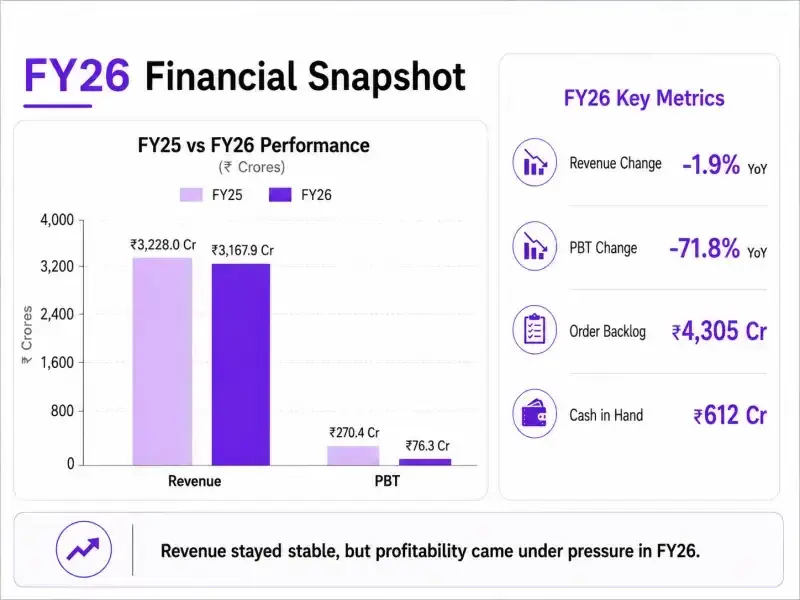
The five-year average ROCE of approximately 35.95% is among the highest in Indian manufacturing. A business generating 30%+ ROCE on a sustained basis is compounding the intrinsic value of every rupee of capital at a rate that far exceeds any fixed deposit or bond. The five-year profit CAGR of ~35-40% versus revenue CAGR of ~20% is the hallmark of operating leverage, as fixed costs get spread over larger volumes, incremental revenue falls disproportionately to the bottom line.
In August 2025, Care Edge Ratings (CARE Ratings) reaffirmed Apar's credit rating at CARE AA-; Stable, among the highest for any Indian manufacturer, citing significant growth in scale, improving profitability, premiumization of the product mix, healthy order book, and strong liquidity. Crucially, the company had cash and liquid investments of Rs. 896 crore as of March 2025 against term debt repayment of just Rs. 140 crores for FY26. The balance sheet is nearly debt-free in the long-term sense: net debt-to-equity of just 0.07.
The rating upgrade journey tells its own story: CARE A; Positive in December 2022 → CARE A+; Stable in September 2023 → CARE AA-; Stable in September 2024. Three notches in two years, each one reflecting the pace of business improvement beneath the surface.
Apar Industries — Key Metrics at a Glance (FY25 / Recent)
• Revenue (FY25): Rs. 18,586 crore | 5-Year Revenue CAGR: ~20%
• PAT (FY25): Rs. 821 crore | 5-Year Profit CAGR: ~35-40%
• ROCE (5-Year Average): ~35.95% | ROE (5-Year Average): ~21.8%
• Credit Rating: CARE AA-; Stable (August 2025)
• Net Debt-to-Equity: ~0.07 | Cash & Liquid Investments: Rs. 896 crore
• Conductor Order Book (Sep 2025): Rs. 7,168 crore
• Cable Order Book (Jun 2025): Rs. 1,653 crore
• 9M FY26 Revenue: ~Rs. 16,299 crore (+21.9% YoY)
• Market Cap (April 2026): ~Rs. 39,000 crore | P/E: ~40-48x trailing
Read more on margins here, Operating Profit Margin vs Net Profit Margin: Which Tells the True Story?
The Moat: Why Apar Is Hard to Displace.
Apar has been generating exceptional returns for over a decade. So why haven't competitors simply copied it and driven margins down? The answer is a combination of moats that are far deeper than they first appear.
66 Years of Customer Approvals
To supply conductors to a major utility company PowerGrid, a US transmission operator, a European state utility, a manufacturer must go through a rigorous vendor qualification process: laboratory testing, field trials, engineering audits, and years of supply history. Once approved, utilities almost never switch suppliers, because a conductor failure means a transmission line going down and millions of customers affected.
Apar's 66-year history means it has accumulated approvals across 140+ countries. Long-standing relationships with Kalpataru Projects, KEC International, Indian Railways, and state utilities are not easily disrupted. Even if a competitor built a world-class HTLS facility tomorrow, it would still face years of qualification before competing for the same customers. Trust built over six decades is not a thing you can replicate with capex.
The Engineering Moat in Premium Products
HTLS conductors, ACCC conductors, OPGW, these aren't commodities. They require understanding how different aluminium alloys behave under thermal stress, how composite cores interact with conductor strands, and how optical fibers integrate into a ground wire without compromising electrical properties. This knowledge is accumulated over years of research, field experience, and iteration. Over 165 completed reconductoring projects and world-record OPGW installations don't happen overnight. That field experience is a moat that compounds with every project.
The 500-Grade Oil Franchise
In transformer oils, Apar holds a 60% domestic market share in power transformers with over 500 product grades, each formulated for specific transformer types and environmental conditions. A new oil formulation for a specific application requires years of testing and customer approval. That 500-grade portfolio represents decades of accumulated product development. No competitor is anywhere close to replicating it in the near term.
Know why does finding a moat of business helps us become more confident in the story of any business, Economic Moat Explained: Why Some Companies Stay Dominant for Decades

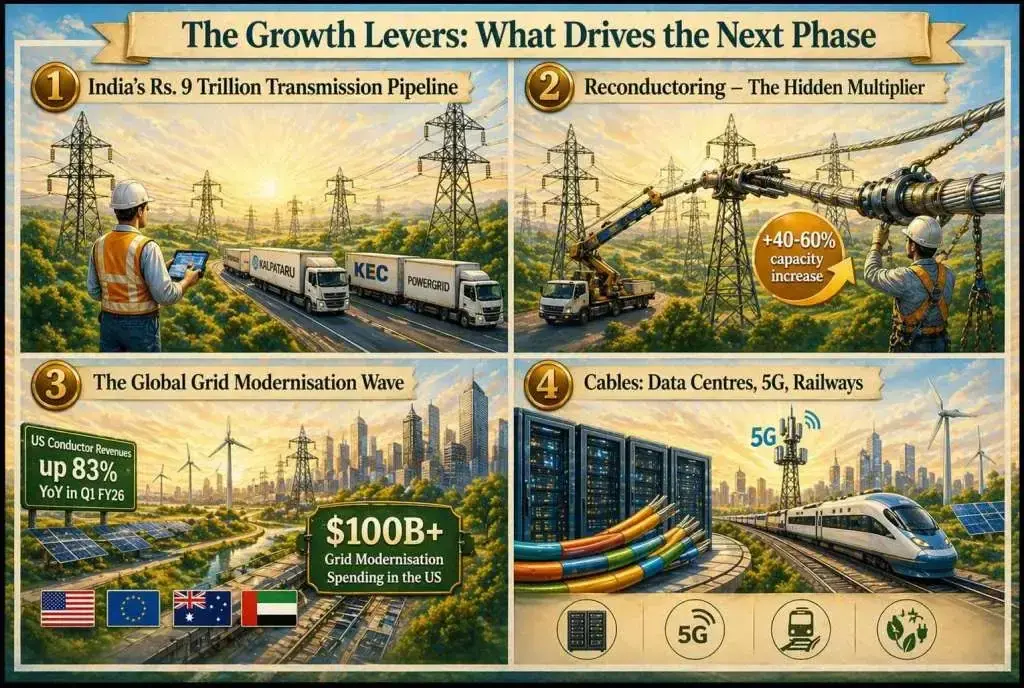
The Growth Levers: What Drives the Next Phase
1. India's Rs. 9 Trillion Transmission Pipeline
Every rupee of India's transmission investment flows through Apar's customers Kalpataru, KEC, PowerGrid. As a supplier to virtually every major EPC contractor in India, the conductor business is essentially a direct pass-through on domestic transmission capex. If transmission investment grows at 15% per annum through FY32, conductor demand follows at a similar rate. This is structural, policy-backed demand.
2. Reconductoring - The Hidden Multiplier
Every kilometre of India's existing transmission network is a potential reconductoring project. HTLS conductors increase line capacity by 40-60% without new towers or land acquisition, faster, cheaper, and simpler than building new lines. The government is actively promoting reconductoring as a grid upgrade strategy. Apar, with 165+ completed projects and world-record execution credentials, is the natural partner of choice.
3. The Global Grid Modernisation Wave
The US grid faces the same challenge as India's: integrating massive volumes of wind and solar capacity onto a network designed for coal. In Q1 FY26, US conductor revenues were up 83% year-on-year, driven by America's $100B+ grid modernisation spending from the Infrastructure Act and Inflation Reduction Act. Europe, Australia, and the Middle East are all running similar programmes. Apar's presence in 140+ countries with a US subsidiary (CEMA Wires & Cables LLC), a Brazil subsidiary, and a Singapore hub gives it the commercial infrastructure to pursue all of them.
4. Cables: Data Centres, 5G, Railways
India is experiencing the initial phases of a data centre boom that is fuelled by AI workloads, cloud services, and digital infrastructure. The data centres are incredibly cable-driven - each rack of servers, cooling system, and network switch is powered and networked by a maze of power and data cables. Add 5G deployment, electrifying the railways, and connecting renewable energy, and the cable business has a demand curve stretching well into the 2030s. The Rs. This belief is precisely manifested in 1,300 crore FY26 capex.
Learn to find a company's growth potential here, Segment-Wise Revenue Analysis: How to Find a Company's True Growth Engine
The Management: A Family That Thinks in Decades
Apar is a third-generation family business. Kushal N. Desai (Chairman and MD) and his brother Chaitanya N. Desai (Managing Director) are grandsons of founder Dharmsinh Desai. Kushal is a University of Pennsylvania electrical engineering graduate and a Wharton alumnus, before taking the helm at Apar, he co-founded APAR Infotech, which listed on NASDAQ in 2004 and operated in 13 countries. Both have nearly three decades of industrial experience.
What distinguishes Apar's management culture is discipline. The willingness to invest in decade-long capability, the UAE facility, premium product R&D, Rs. 1,300 crore in cable capex while maintaining near-zero long-term debt. A business doesn't generate 35.95% average ROCE with minimal leverage by accident. It requires constant attention to capital allocation, pricing discipline, and the refusal to chase volume at the expense of margins.
CareEdge Ratings specifically cited the "long-standing experience of promoters" as a key rating strength, noting that the promoter group has been in the conductor business for over six decades. That's not a line item in a credit report. It's the distillation of what generational commitment to a business actually produces.
Learn here why management and promoter details impact our investment decision, High Promoter Holding Stocks in India: What It Signals for Investors
The Stock Return Story: How 2,000% Returns Get Built
A 2,000% return in five years naturally attracts skepticism. Was it a bubble? A one-time boom? A story that's already over? In Apar's case, the returns were almost entirely justified by fundamental improvement, and the story may not be nearly as finished as late-arriving cynics assume.
In August 2020, Apar traded at roughly Rs. 302. Market cap: approximately Rs. 1,200 crore. At that price, you were buying the world's largest aluminium conductor manufacturer, the third-largest global transformer oil producer, and India's largest renewable cable maker, generating Rs. 8,000+ crore in revenue, for less than the cost of a decent Mumbai flat. Why is it so cheap? Because nobody was paying attention. The power sector was out of favour. US export volumes were subdued. And Apar's story, three segments, complex revenue structure, no consumer-facing brand, didn't lend itself to the simple narratives that catch retail attention.
Then between FY21 and FY24, four things happened simultaneously: India's power sector capex accelerated dramatically, driven by the renewable energy push. US grid modernisation spending surged, creating a massive export windfall for premium conductors. The shift toward HTLS and OPGW began to meaningfully lift per-tonne economics. Profits more than quadrupled as operating leverage converted volume growth into disproportionate earnings improvement. When the market finally noticed, through analyst initiations and quarterly results beating expectations, the stock rerated from sub-10x earnings in 2020 to a premium reflecting the recognition of a high-quality global compounder.
The Risks: What Could Disappoint Even a Good Story.
No investment thesis is complete without an honest look at what could go wrong.
1. Working Capital Intensity
Apar's raw material cost is 79.30% of total operating income. Most raw materials are imported and financed through LC-backed acceptances (supplier credit), which stood at Rs. 4,079 crore as of March 2025. These grow with the scale of the business. Working capital limit utilisation ran at ~75% of non-fund-based limits through May 2025. As volumes grow, watch whether this intensity worsens, if LC acceptances grow faster than revenue, liquidity can get stretched.
2. Chinese Competition in Non-US Markets
Chinese conductor manufacturers are re-engaging aggressively in global infrastructure markets that are Latin America, Africa, Southeast Asia, with cost-competitive commodity products. This was a real headwind in FY25, contributing to export revenues declining 19%. Apar's response, focus on premium HTLS and ACCC where Chinese manufacturers have limited capability, is strategically correct, but the pressure on commodity grades is persistent.
3. Commodity and Currency Volatility
Aluminium and copper prices can swing 20-30% in a year. The TSO segment faces exposure to crude oil via base oil. Apar hedges fixed-price contracts at LME rates on order receipt, but can't always pass through the entire increase, particularly in competitive export markets. The FY25 compression in EBITDA per tonne, from Rs. 42,141 to Rs. 36,683, demonstrated how external factors can temporarily pressure margins even when the underlying business is healthy.
4. Valuation, Quality Is Already Priced In
At ~Rs. 11,267 per share (April 2026), Apar trades at roughly 40-48x trailing P/E. That's not cheap. It prices in continued strong earnings growth at 15-20% annually. The broader capital goods sector trades at 60-75x, which makes Apar look reasonable in context, but absolute valuations at 40-48x leave limited margin for error. If US export volumes soften again or cable margin expansion disappoints, de-rating to 25-30x P/E is possible, implying meaningful downside.
Key Metrics to Monitor Quarterly:
• Conductor EBITDA per MT: Target Rs. 40,000+; current ~Rs. 43,688 (Q1 FY26)
• Premium product mix: Target >50%; currently ~44-46%
• US conductor export revenue: The highest-margin export market — watch quarterly trend
• New conductor order inflows: Rs. 2,000+ crore per quarter is healthy
• Cable EBITDA margin: Target 12-13%; currently ~10%
• LC acceptances vs. revenue: Should grow in line with revenue, not faster
Explore our Products
Research Framework

Emerging Titans
Combination of quantitative analysis, industry tailwinds, and management assessment - SPRINT investment philosophy

Tiny Titans
Heavy emphasis on scuttlebutt research, plant visits, and early on-ground signals
Putting It All Together
There is a type of business that long-term investors learn to love over time, though it rarely announces itself loudly. It operates in an industry that sounds unglamorous at first, wires and oils and cables, but sits at the intersection of every important structural trend shaping the next two decades. It is run by a management team compounding capital for three generations without ever becoming headline news. It is conservatively financed while most peers carry leverage. And it is quietly, methodically moving up the value chain, from commodity to premium, from domestic to global.
The numbers are compelling: five-year average ROCE of 35.95%, profit CAGR of ~35-40%, a conductor order book of Rs. 7,168 crore providing multi-quarter visibility, a cable business growing 30%+ into structurally driven markets, a transformer oil franchise with 60% domestic market share, and a CARE AA- credit rating that institutional investors take seriously.
The macro tailwind is as strong as any in the Indian market. India must more than double renewable capacity by 2030. The Rs. 9 trillion transmission pipeline is committed. Every kilometre of new transmission line, every reconductoring project on an ageing grid, every renewable energy connection, all of them need conductors. For premium conductors, Apar is the world's largest manufacturer.
The risks are real: valuations at 40-48x require continued execution, Chinese competition is a persistent headwind in commodity grades, and working capital intensity is a structural complexity that must be managed carefully.
But zoom out, and the picture is clear. This is a world-class business in a structural growth market, run by a family team with a six-decade track record of capital allocation discipline, compounding returns in a way that most Indian manufacturers simply cannot match.
The electrical wire that nobody notices, strung silently between towers carrying the power that runs civilization, that's what Apar makes. And the business that makes it has been quietly compounding through every macro storm, market cycle, and technology shift for more than six decades.
India's energy transition is only beginning. The transmission lines are yet to be built. The old conductors are yet to be replaced. The data centres are yet to be wired.
If this analysis added value, comment "CONDUCTOR" and share your view, is Apar Industries a buy, a hold, or a wait at current levels? The best investment insights come from the conversation.
Similarly now you can learn about metals market here, Why FIIs Are Pouring? 11,526 Crore into Metal Stocks – Top Picks for 2026
Frequently Asked Questions (FAQs)
What exactly does Apar Industries make?
+Apar makes three things: aluminium and alloy conductors (the bare wires strung between transmission towers), transformer and specialty oils (lubricants used inside transformers worldwide), and power/telecom cables (insulated wires for solar farms, data centres, railways, and buildings). It sells to utilities, EPC contractors, and industrial companies across 140+ countries.
Is this a commodity business or a quality compounder?
+It's transitioning from the former to the latter. Basic ACSR conductors are commodity products with thin margins and intense competition. HTLS conductors, OPGW, and natural ester oils are technically sophisticated products where engineering capability and approvals matter far more than price. Apar's explicit strategy is to grow premium products to 50%+ of mix — deliberately moving away from being a commodity business.
How does Apar benefit from India's renewable energy push?
+In three ways. First, every new renewable project needs transmission infrastructure to connect to the grid — new conductors and cables. Second, integrating large volumes of variable renewable power requires upgrading existing lines with HTLS reconductoring, Apar's premium product. Third, solar farms and wind projects themselves need specialty cables for internal wiring. Apar plays all three angles simultaneously.
What should I watch to track Apar's performance quarterly?
+Three numbers matter most: EBITDA per metric tonne in conductors (target Rs. 40,000+), new conductor order inflows (Rs. 2,000+ crore per quarter is healthy), and cable segment EBITDA margins (target expansion toward 12-13% as new capacity ramps up). If all three trend well for 3-4 consecutive quarters, the investment thesis is intact.
Is it too late to invest after a 2,000% run?
+The easy money has been made. Buying at current levels requires conviction that Apar can compound earnings at 15-20% annually for the next 5-7 years. Given the structural tailwinds, domestic transmission capex, global grid modernisation, cable scaling, that's a reasonable but not risk-free assumption. Track quarterly metrics rather than assuming the historic return trajectory continues automatically. Patience and discipline, not price chasing, is the right posture.

High growth stock specialist, Value Educator
Shashank Mahajan is an equity research professional with over 12 years of experience in identifying high-potential SME and micro-cap stocks at an early stage. He follows a rigorous scuttlebutt research–driven approach, combining on-ground insights with deep financial analysis. Shashank specializes in uncovering under-researched and under-owned companies with strong management quality and long-term growth potential. Through disciplined research and early identification, he focuses on spotting tomorrow’s market leaders before they enter the mainstream investor radar.
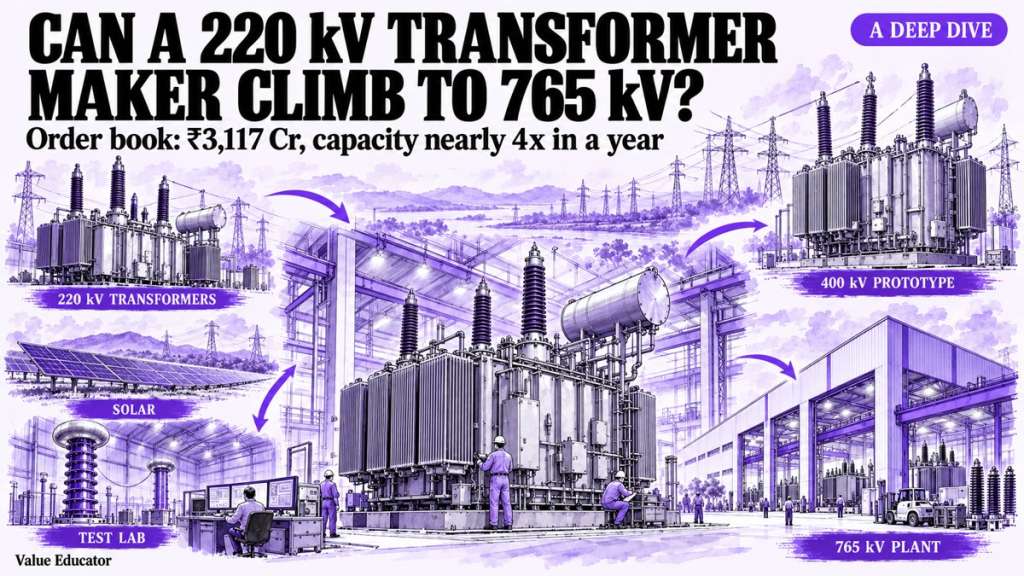
Atlanta Electricals: Capacity Nearly Quadrupled in a Year
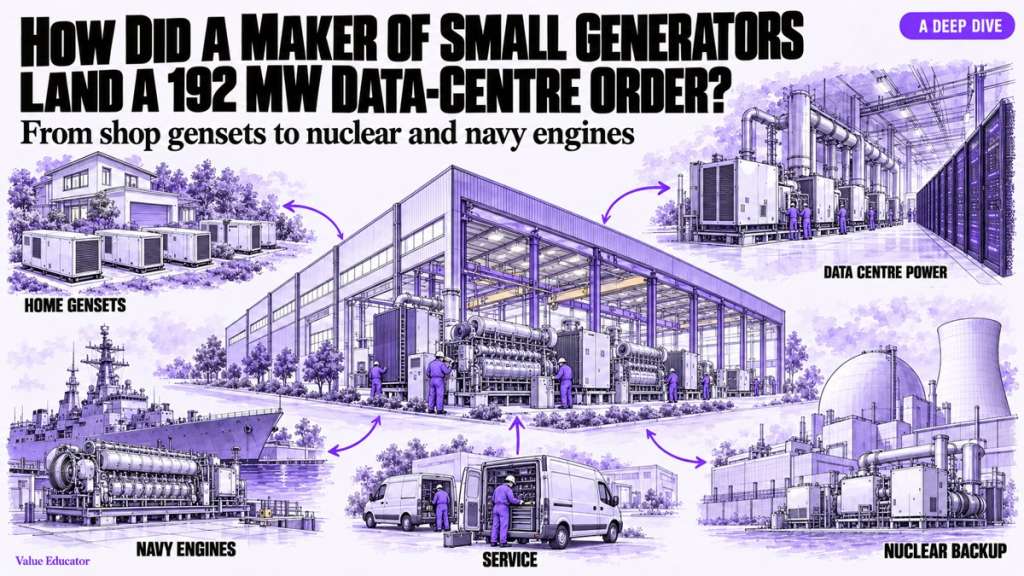
Kirloskar Oil Engines: Data Centres, Nuclear and the Navy
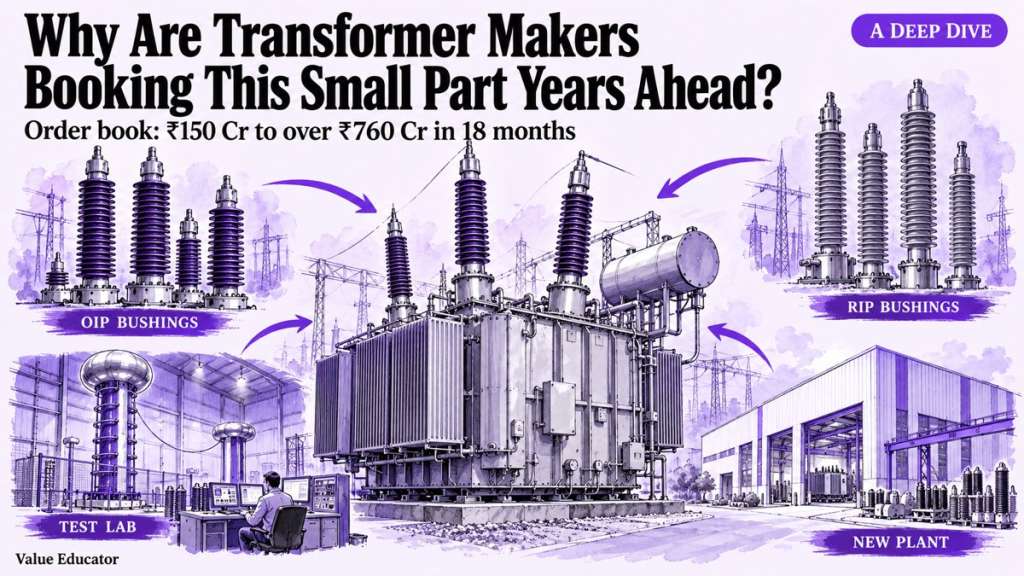
Yash Highvoltage: Bushing Maker With ₹760 Cr of Orders
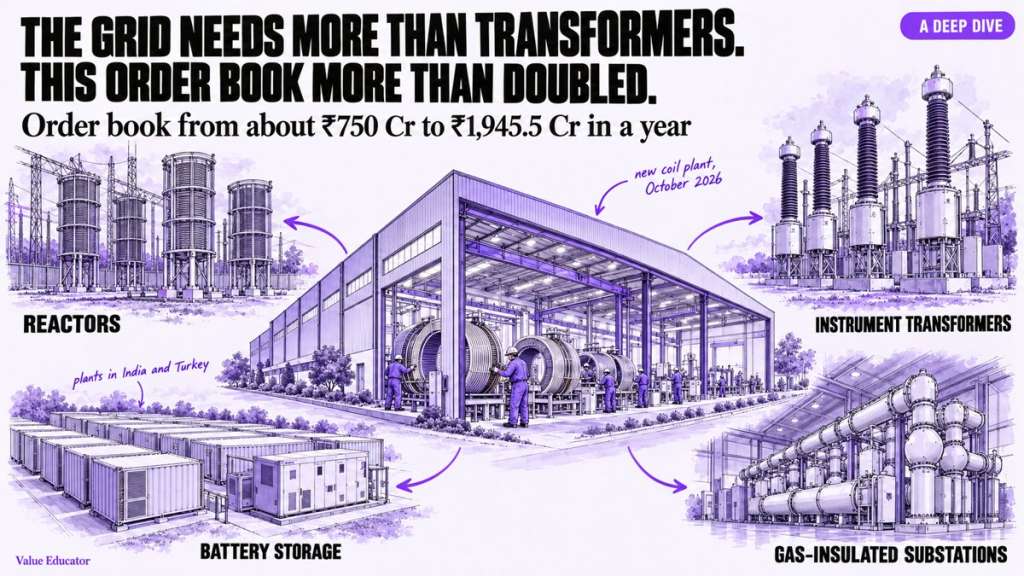
Quality Power: Reactor Maker With a ₹1,945.5 Cr Order Book
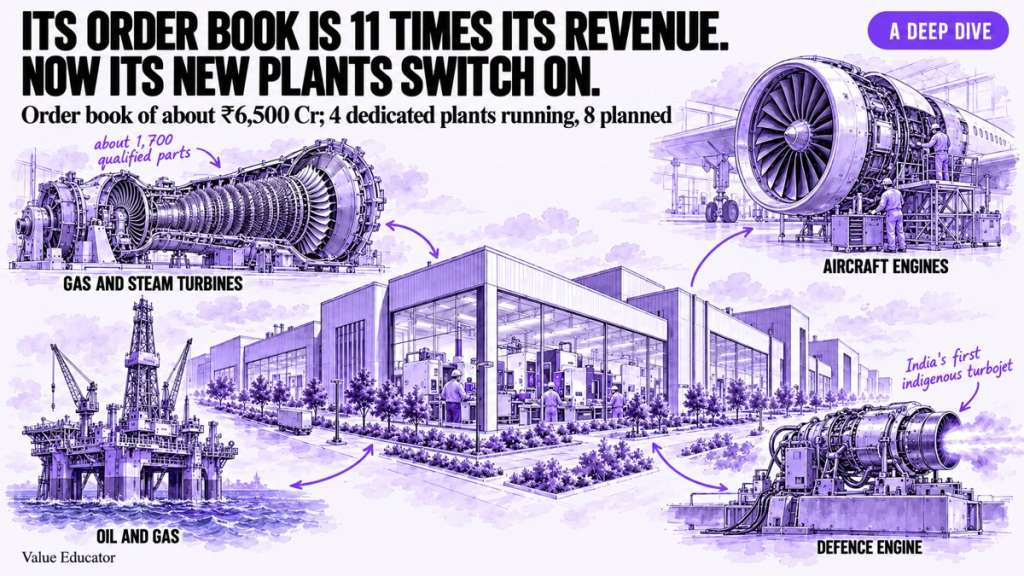
Azad Engineering: Turbine Blades, Jet Engines and Orders
Cyient DLM: Aircraft Electronics and a Record Order Book
Explore our Products
Research Framework
Emerging Titans
Combination of quantitative analysis, industry tailwinds, and management assessment - SPRINT investment philosophy
Tiny Titans
Heavy emphasis on scuttlebutt research, plant visits, and early on-ground signals



Modern Warfare to Multibaggers
Key Trends. Strategic Shifts. Opportunities Ahead.
Don't Miss This Exclusive Webinar!
Join Value Educator to decode the key trends shaping India's defence sector and learn how to identify tomorrow's potential leaders in the space.
- In-depth research on India's defence sector
- Live Q&A session
- Actionable takeaways for long-term investors

 Orders
 Subscription
 Share with friends


Required Details
₹23999.00
(12 month subscription)
As per SEBI regulations, all users are mandated to complete the KYC that is validated for 1 year. Post payment, you will be redirected to the KYC screen


No comments yet. Be the first to comment!