
HBL Engineering: Energy Infrastructure Play

It’s not the flashy, mass‑market stuff. It’s the behind‑the‑scenes systems: the batteries that keep transmission lines stable, the power electronics that make sure data centers never blink, the backup systems that keep telecom towers alive during outages, and the high‑reliability tech that keeps EV charging hubs running smoothly. As India expands its grid, strengthens pipelines, modernizes railway safety, and gears up for an AI‑ready digital economy, a small group of specialized engineering companies has become absolutely essential.
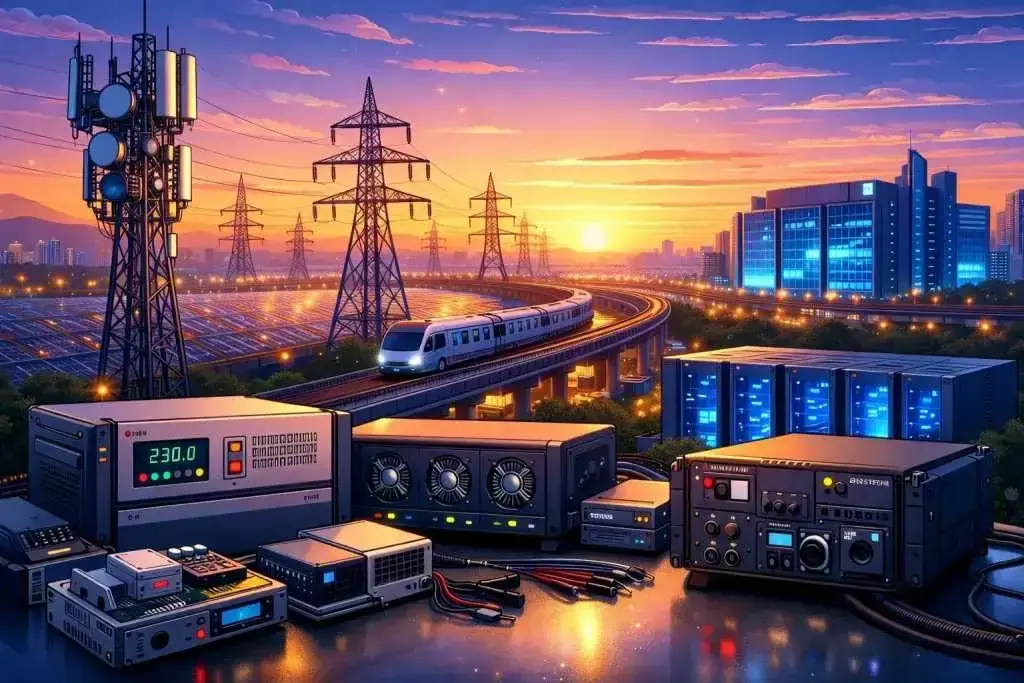
And among that group is one research‑driven enterprise that has built a reputation for stepping in exactly where India has had long technology gaps, therefore has placed itself in creating indigenous, engineering‑intensive solutions that quietly support some of the country’s most mission-critical infrastructure. That company is HBL Engineering Ltd.
About the company:
If you take a step back and look at how India’s industrial and defence capabilities have evolved over the past few decades, you’ll notice that some of the most meaningful progress wasn’t driven by massive global collaborations, it came from a handful of homegrown engineering outfits that quietly set out to build what nobody else was building. It began its commercial journey in 1977, an outcome of Dr. A. J. Prasad's simple idea: instead of depending on foreign suppliers, India should build its own advanced technologies through sustained, indigenous R&D. This philosophy is at the core of the organisation.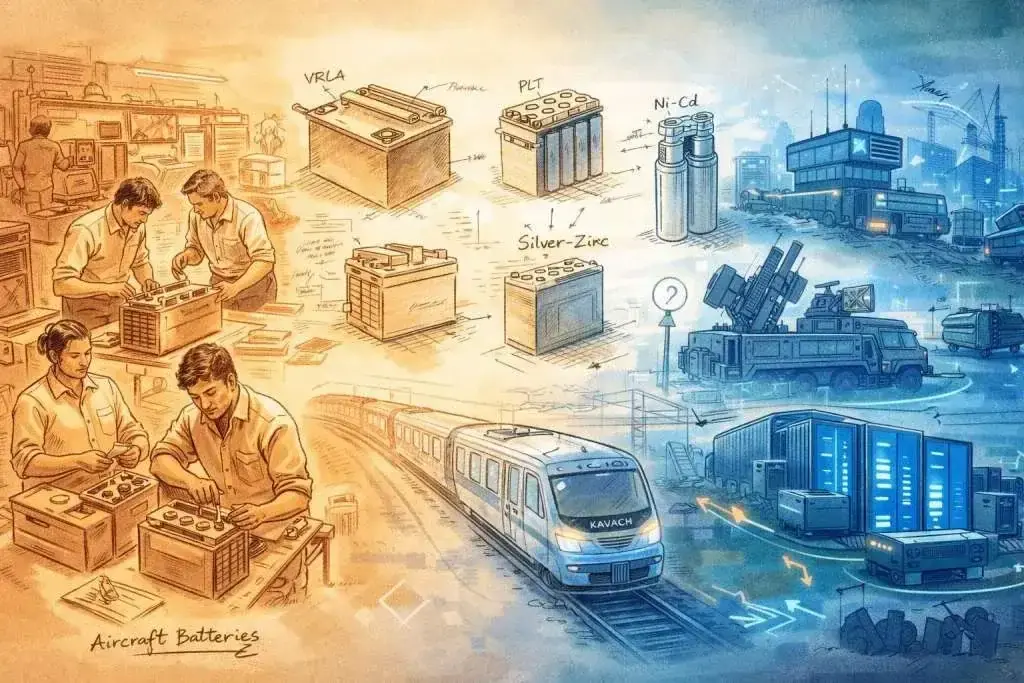
If you take a step back and look at how India’s industrial and defence capabilities have evolved over the past few decades, you’ll notice that some of the most meaningful progress wasn’t driven by massive global collaborations, it came from a handful of homegrown engineering outfits that quietly set out to build what nobody else was building. It began its commercial journey in 1977, an outcome of Dr. A. J. Prasad's simple idea: instead of depending on foreign suppliers, India should build its own advanced technologies through sustained, indigenous R&D. This philosophy is at the core of the organisation.
Operating from its headquarters in Hyderabad’s Banjara Hills, the company has come a long way from its early days as a specialised battery maker. Back then, it focused on chemistries that served only the most demanding applications, from lead‑acid VRLA batteries for telecom and UPS, to Pure Lead Thin Plate (PLT) batteries for data centres and heavy defence platforms, to Nickel‑Cadmium systems trusted by oil & gas networks and power transmission grids, and even silver‑zinc batteries built specifically for naval torpedoes. Its first-ever product, interestingly, powered aircraft for the Indian Air Force, a fitting start for a business built around reliability, I must say!
As the years progressed, it didn’t stay confined to batteries. By the early 2000s, it began expanding into what it calls “engineering‑intensive domains” in areas like railway electronics, defence systems, niche power electronics, and mobility technologies. This includes pioneering work on Kavach, India’s Train Collision Avoidance System, as well as advanced electronic fuzes, armoured‑vehicle communication systems, heavy electric drivetrains, and containerised energy‑storage and EV‑charging solutions.
In late 2024, the company formally embraced this broader identity by adopting the name it carries today, a name that finally reflects the depth and ambition of the engineering ecosystem it has built.
What it actually does:
Industrial Batteries: The Core Engine Behind HBL’s Business
When you look at HBL’s business mix, the Industrial Batteries segment is truly the workhorse of the company. It contributes about 70% of the total revenue, making it the backbone of the entire organisation. But what makes this segment interesting is that HBL doesn’t play in the crowded, low‑margin battery markets. Instead, it focuses on niche, engineering-heavy applications where performance and reliability matter far more than scale and that’s exactly why the company has stayed a market leader for so long.
Where the Revenue Comes From
Think of all the places in modern India where power backup simply cannot fail, that’s where HBL’s batteries show up.
Telecom & 5G ExpansionTelecom & 5G Expansion: As telecom companies expand their networks and upgrade sites for 5G, HBL supplies batteries for these towers. There’s also regular replacement demand that keeps the segment active. The only shift happening now is that many players, including BSNL and private tower operators, are moving from traditional lead‑acid batteries toward lithium‑ion systems.
Data Centers: With India’s data center capacity expected to cross 4,000 MW, HBL’s Pure Lead Thin Plate (PLT) batteries are in high demand. These batteries can deliver high power quickly and safely which is a must for critical digital infrastructure.
Infrastructure and Energy Projects: Projects like Indradhanush Gas Grid Limited (IGGL) pipeline in the Northeast and FGD (Flue Gas Desulfurization) plants in thermal power stations demand for HBL’s Nickel‑Cadmium (Ni‑Cd) batteries. These batteries are known for their long life and reliability.
Railway Modernization: As Indian Railways rolls out more LHB coaches, Metro systems across 23 cities, and upgrades signaling systems, HBL’s batteries are used for train lighting, signaling, and station systems.
Exports: Around 40% of all Ni‑Cd battery sales come from exports. HBL now supplies to new OEM and EPC clients across the Middle East, Africa, APAC, and Europe, making exports a major growth engine.
Defence and Aerospace: high-value vertical for HBL Engineering Limited
When you look at HBL’s defence and aerospace business, the first thing that stands out is how different it is from the usual defence manufacturing story. Unlike many defence products that are bought once and last decades, batteries fall under “revenue items”, meaning they have a fixed life and need to be replaced regularly. This creates a steady, recurring stream of demand every year, especially from the military, where reliability is non‑negotiable.
What Drives Revenue in Defence
Here’s where the segment gets really interesting:
a) Recurring Replacement Demand
Military batteries don’t last forever, and because they are used in critical systems, replacement happens on a predictable cycle. This gives HBL a stable base of revenue that grows over time.
b) Electronic Fuzes,The Next Big Growth Engine
One of the most exciting areas is electronic fuzes. HBL is the only company in India with 100% indigenization for these fuzes, which are used in grenades, artillery shells, rockets, and missiles. The company expects this to become its second‑largest business by FY30, which is a big deal considering how tightly controlled and high‑value this market is.
c) Specialized Propulsion Batteries
HBL also supplies extremely high‑barrier batteries used in:
- Submarines (Kilo, Scorpene, Shishumar classes)
- Torpedoes (Light Weight and Heavy Weight)
- Missiles (Agni Prime, Akash)
These are not easy markets to enter, a company needs years of testing, approvals, and trust.
d) Push for Indigenization
With India actively promoting “Atmanirbhar Bharat” and issuing “Positive Indigenisation Lists,” defence buyers now prefer domestic suppliers. This shift strongly benefits HBL, whose products are already developed in-house.
e) Exports to Global Defence Majors
Defence exports are another important contributor. HBL supplies products to major global players like Bombardier (for aircraft) and Israel Aerospace Industries (IAI) for UAV applications.
Who the Customers Are:
The company doesn’t sell to mass markets, instead it sells to institutions where reliability and long-term trust matter most.
Indian Defence Forces
The Indian Army, Indian Navy, and Indian Air Force are long-standing customers.
MoD Research Labs
HBL works closely with key defence labs such as:
DRDO
ASL (Advanced Systems Laboratory)
DRDL (Defence Research & Development Laboratory)
NSTL (Naval Science & Technological Laboratory)
These are long-cycle relationships built over decades.
Indian Defence OEMs:
The company supplies to HAL (Bengaluru & Kanpur) for aircraft like Tejas and for helicopters.
Global System Integrators:
International clients include heavyweights such as
- Boeing (USA)
- IAI & ELBI (Israel)
Industrial Electronics: HBL’s Fastest‑Growing, High‑Tech Growth Engine
If the batteries business is HBL’s steady workhorse, then the Industrial Electronics segment is the company’s breakout star, the one that has quietly taken shape over nearly two decades of patient R&D and is now scaling just as India enters a massive infrastructure upgrade cycle. This segment is split into two big areas: Railway Signaling Electronics and Electric Mobility, and together they represent some of the most exciting long‑term opportunities in India’s engineering landscape.
What Drives Revenue in This Segment
What Drives Revenue in This Segment
Kavach: The Big Driver:
The biggest revenue engine is Kavach, India’s Train Collision Avoidance System. HBL earns from both onboard locomotive units and the trackside equipment needed for deployment. The company received an order from Chittaranjan Locomotive Works (CLW) covering 2,200 locomotives.
Railway Modernization Budgets:
The Indian government has been aggressive in upgrading its rail infrastructure, including a ₹2.40 lakh crore allocation in the Union Budget 2023‑24. This supports the demand for TCAS (Kavach), high‑speed systems, and modern trainsets such as Vande Bharat. Centralized Signaling & Efficiency Needs, As rail traffic increases, Indian Railways need smarter tools to reduce congestion. That’s where HBL’s Train Management Systems (TMS) and Centralized Train Control (CTC) come in — helping operators manage train movements far more efficiently.
Electric Heavy Trucks:
On the mobility side, HBL has developed Electric Drive Trains (EDT) for niche 35‑ton and 55‑ton trucks. Revenue here comes from the strong TCO advantage over diesel, and from fleet operators adopting cleaner mobility solutions due to tightening ESG norms.
Regulatory Milestones:
A big enabler for growth is regulatory approval. The latest one, Kavach Version 4.0 from RDSO, allows protection for trains running up to 160 kmph, opening bigger opportunities with high‑speed networks.
Who the Customers Are
This segment operates in high‑barrier B2G and B2B spaces, where reliability and certification are everything.
Indian Railways & Metro Rail
HBL supplies across multiple zones such as Eastern, West Central, and Western Railways, and works with production units like ICF and CLW.
Global Railway OEMs
International system integrators like Siemens Rail, Alstom, and Hitachi also source components for their projects.
EPC & Consortium Partners
HBL often works in consortium arrangements, such as its partnership with Shivakriti International, and supplies Kavach systems to EPC firms like Ashoka Buildcon.
Heavy Commercial Vehicle Operators
For electric drivetrains, the company focuses on direct fleet operators in niche markets instead of competing for high‑volume commercial truck contracts.
Industrial & Telecom Clients
HBL’s industrial chargers and power‑electronics systems are used by state entities like BSNL and private telecom networks such as Indus Towers.
Learn to analyse a company’s segmental revenue here, Segment-Wise Revenue Analysis: How to Find a Company's True Growth Engine
Why This Company Has Proven to Be a Solid, High‑Credibility Business
When you look at this company’s journey, one thing becomes obvious very quickly: it hasn’t grown by chasing trends or copying existing products. Instead, it has consistently built a reputation by stepping into places where India had technology gaps and then filling those gaps with in‑house solutions that were often the first of their kind in the country. That approach has led to some pretty remarkable milestones over the years.
A Track Record Built on Breakthrough Projects
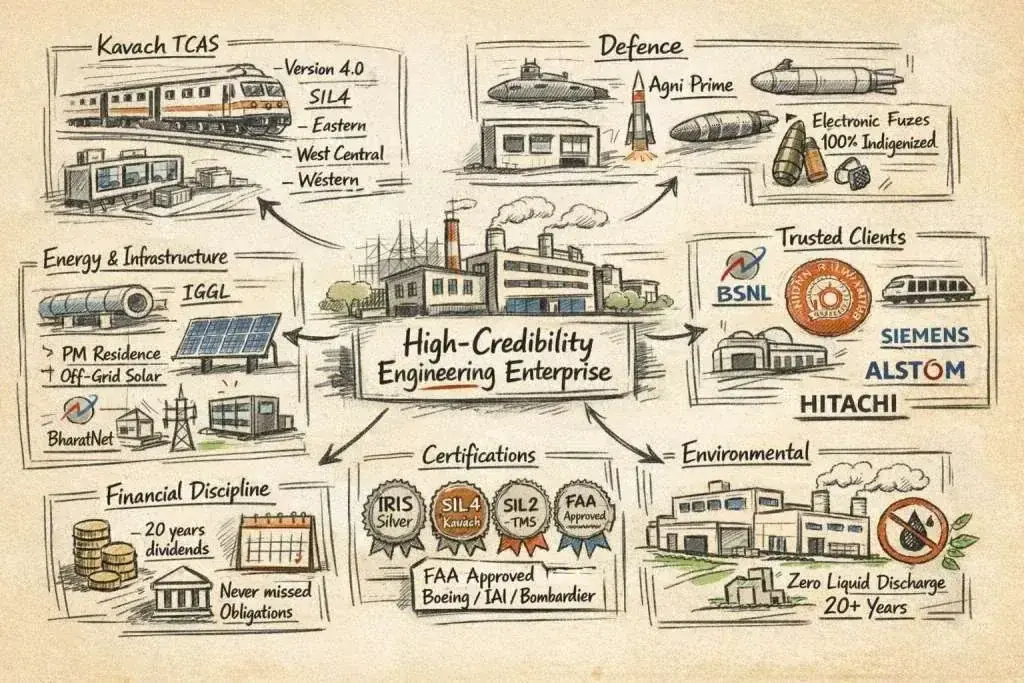
In the railway sector, the company has done things most Indian firms never even attempted. It was the first to develop and offer Kavach, the Train Collision Avoidance System, and also the first to complete Milestone, across major railway zones like Eastern, West Central, and Western Railways. More recently, it became the first OEM to demonstrate and receive certification for Kavach Version 4.0, which is a major step forward for India’s high‑speed network.
It didn’t stop there. The company also built India’s first privately developed Train Management System (TMS), and today, four out of the six TMS installations in the entire country are theirs.
On the defence side, the achievements are equally impressive. It has delivered thermal batteries for the Agni Prime missile, supplied propulsion batteries for Kilo and Scorpene class submarines, and secured approvals for Shishumar-class submarine batteries. It is also the only Indian company with full indigenization of electronic fuzes, used in everything from grenades to artillery shells.
And in energy and infrastructure, the company has taken on landmark assignments like supplying ₹31 crore worth of batteries for the IGGL pipeline, executing off‑grid solar PV systems at the Prime Minister’s Residence, and supplying VRLA batteries for the nationwide Bharat Net program.
Proof That the Company Has Delivered: Consistently
What really convinces investors, though, is the company’s long-term reliability. It has maintained deep relationships with clients like BSNL, Indian Railways, and Indus Towers, along with global players such as Siemens Rail, Alstom, and Hitachi.
On the quality front, it became the first in India to earn the Silver certification under the International Railway Industry Standard (IRIS). Its safety systems are certified at the highest global levels, including SIL4 for Kavach and SIL2 for TMS. It is also approved by international giants like Boeing (FAA-approved), IAI, and Bombardier.
Financially, the discipline is equally strong. The company has never missed a bank obligation, has paid dividends for 20 consecutive years, and holds the position as the world’s second‑largest manufacturer of Nickel‑Cadmium batteries.
On top of all that, every one of its manufacturing sites has operated with zero liquid discharge for over two decades, earning multiple environmental awards along the way.
Where HBL Stands Against Its Peers And how Its Position Is Unique
One of the most interesting things about HBL is that it doesn’t compete the way most industrial companies do. Instead of entering crowded markets, it deliberately picks niche segments where the barriers to entry are sky‑high and very few Indian companies even attempt to participate. This strategy is a big reason why the company consistently finds itself in a #1 or #2 position across almost everything it makes.
Industrial Batteries: Competing With the Best
In Nickel‑Cadmium (Ni‑Cd) batteries, HBL is already the world’s second‑largest manufacturer, and within India, it has only one competitor which is a foreign-owned operation. Globally, it goes up against well‑known multinational brands, but HBL positions itself as a value alternative priced about 20% lower, which helps it win serious commercial and export business.
When it comes to lead‑acid and lithium‑ion, the Indian market is led by giants like Exide and Amara Raja, both investing heavily in lithium cell manufacturing. Even Reliance is exploring large lithium projects. HBL doesn’t try to beat them on volume but it focuses on specialized, engineering‑heavy applications where it has long held an advantage.
Industrial Electronics: A Market Where Few Can Compete
In railway signaling electronics, HBL’s pioneering work on Kavach put it ahead from day one. Although five companies were originally approved to deliver the system, by late 2025 only two, including HBL, qualified for the advanced Version 4.0.
For Train Management Systems (TMS) and Centralized Train Control (CTC), the competition is almost entirely foreign. Bombardier and Alstom installed the first two TMS systems in India, but HBL installed the next four, making it the most experienced Indian player in this space.
Defence: A Segment With Almost No Real Peers
In defence electronics, the company often operates in markets where there simply aren’t many Indian competitors. It is the only Indian supplier for several types of electronic fuzes, and while private players like Adani Defence and Reliance Infra are expanding ammunition capabilities, HBL protects its technological lead by even declining to sell its specialized batteries to Bharat Electronics Limited (BEL) to avoid giving away its internal know‑how.
A Company With Very Few True Peers
If there's one way to sum up HBL’s competitive position, it’s this: Most companies don’t compete with HBL because they can’t.The company intentionally targets markets that are:
- too small or specialized for big corporations, and
- too technologically demanding for smaller firms.
This “sweet spot” strategy has allowed HBL to build an unmatched track record, maintain leadership positions, and operate with limited direct competition, a rare advantage in Indian manufacturing and engineering.
To know how a builds its position within the business environment, read more here Economic Moat Explained: Why Some Companies Stay Dominant for Decades
Management & Leadership: A Rare Blend of Vision, Experience, and Future‑Ready Planning
One of the reasons HBL has been able to build such a strong niche in India’s engineering landscape is the way it has been led. It’s an entrepreneur‑managed company, but supported by a growing team of seasoned professionals, a mix that has helped it stay innovative while slowly transitioning into a more scalable, structured organization.
A Founder Who Built the DNA of the Company
At the center of this story is Dr. A. J. Prasad, who has guided the company since it began operations in 1977. He isn’t just a businessman, he’s a technologist with a B.Tech from IIT Kharagpur, an MS from MIT, and a Doctorate from Columbia University. Even today, he remains hands-on, especially in product development and international markets, which explains why HBL has always focused on solving engineering problems most others avoid.
A Family That Supports the Vision, The next generation plays a meaningful but balanced role:
- Mrs. Kavita Prasad Aluru, Dr. Prasad’s daughter, contributes as a Non‑Executive Director with a strong background in corporate finance and internal controls.
- Mr. MSS Srinath, his son‑in‑law, is an Executive Director with over 25 years of experience in business and administration.
- Deeksha Mikkilineni, granddaughter of the founder, is serving as a Non‑Executive Director.
Professional Leadership Taking Center Stage
In recent years, the company has been deliberately strengthening its professional management bench:
- Mr. Sairam Edara (CFO): A CPA (USA), CA, and law graduate, appointed in 2023, bringing global financial expertise.
- Mr. GBS Naidu (Company Secretary): Over 31 years of experience in manufacturing and infrastructure compliance.
- Mr. MVV Vidyasagar (President – Electronics Group): A veteran with 37 years of experience, now driving one of HBL’s most important growth engines: railway electronics.
What investors should be interested in is knowing that this change reflects the company's moving from a founder centric structure to a more systematic, professionalized framework.
A Thoughtful Succession Plan for the Future
What stands out most is how clearly the company has planned for leadership beyond the founder’s tenure. Instead of searching for a “new Dr. Prasad,” the company is transitioning into a virtual holding company model.
- Each of the nine divisions will eventually have its own management team and its own CEO.
- Decision‑making will be decentralized, avoiding delays from a central office.
- The family will remain involved at the Board level, guiding culture, vision, and long‑term strategy, not day‑to‑day operations.
Dr. Prasad has openly stated that he plans to stay for at least the next five years, ensuring that the company’s core philosophy of developing indigenous solutions to fill technology gaps: becomes a permanent part of HBL’s operating system before he steps back
If you want to learn how knowing about management and promoter details is beneficial for investing, read here High Promoter Holding Stocks in India: What It Signals for Investors
Company’s performance on paper:
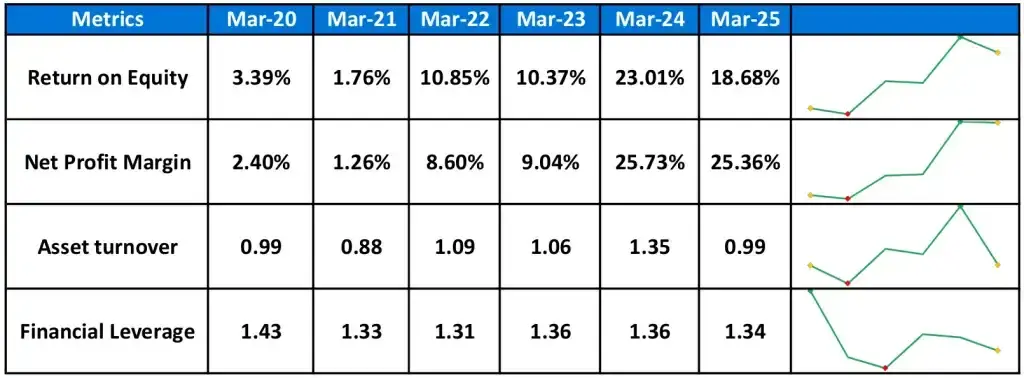
Over the past five years, HBL’s financial performance has undergone a meaningful transformation, with the company demonstrating clear improvements. The most striking change has been the expansion in net profit margins, from low single digits to the range of 20% powered by a stronger product mix, better cost discipline, and the growing contribution of high-value electronics and defence systems.
Alongside this, HBL’s asset turnover has shown a more stable but improving trend: efficiency improved steadily through FY22 to FY24 as revenue scaled faster than the asset base, before normalising in FY25.
Importantly, all of this progress has been built on top of a stable and conservative capital structure as financial leverage has remained virtually unchanged throughout the period, justifying the fact that HBL’s improved ROE is the result of genuine operational performance rather than higher borrowing.
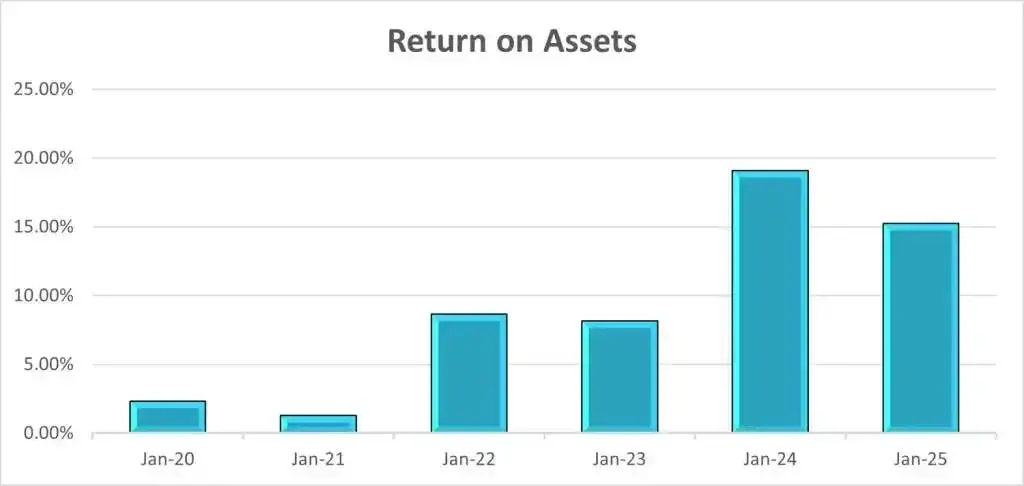
HBL’s Return on Assets tells a really encouraging story about how much stronger and more efficient the business has become over the past few years. Back in FY20 and FY21, ROA was quite modest at 2.32% and 1.28%, but that quickly began to change.
By FY22, it jumped to 8.66%, a clear sign that the company’s operations were starting to scale in the right direction. The momentum continued into FY23 at 8.13%, and then came a standout year in FY24, where ROA surged to 19.05% thanks to a richer product mix and contributions from higher‑margin electronics and defence segments.
FY25 eased to 15.24%, but still reflects a very healthy level of efficiency. Altogether, this trend shows a company that has learned how to get far more out of every asset it owns, and is now consistently turning that into real value.
Let us now compare the company’s performance compared to its peers:
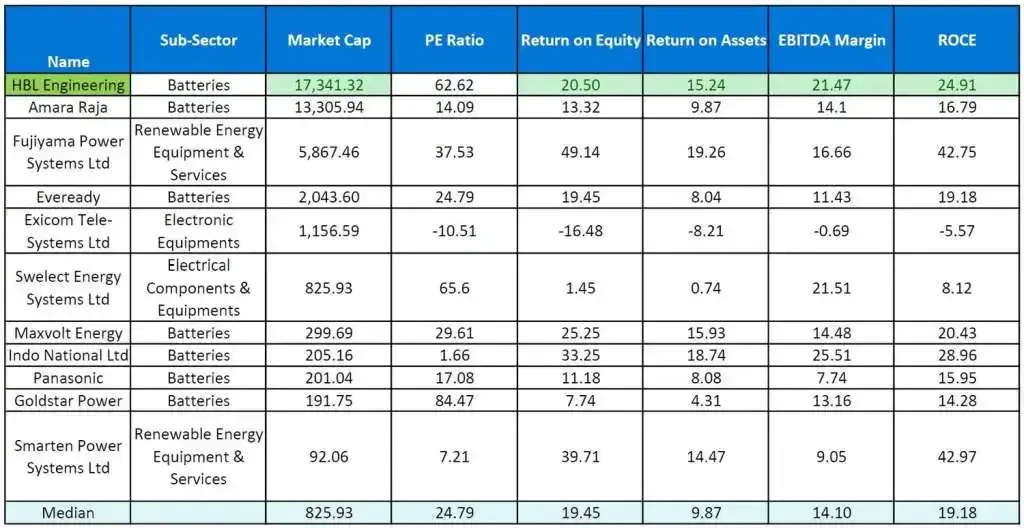
Learn to assess the performance of a company here, Operating Profit Margin vs Net Profit Margin: Which Tells the True Story?
Conclusion: The next time you see a Vande Bharat train or a 5G tower, remember there’s a good chance HBL’s "quiet revolution" is what’s keeping it running.
It is clear that HBL Power has moved far beyond its origins as a traditional industrial battery manufacturer. By consistently stepping into high-barrier technical niches, whether that is securing our national railways with the Kavach system or powering mission-critical defense platforms, the company has carved out a unique "sweet spot" in India’s engineering landscape. They aren't just selling components; they are providing the specialized brainpower that keeps our most vital infrastructure from blinking.
What makes this journey truly compelling for any observer is the financial transformation accompanying this technological shift. With profit margins expanding into the 20% range and a leadership transition moving toward a professionalized, decentralized model, HBL is positioning itself as a cornerstone of India’s self-reliant future. As the country gears up for massive infrastructure upgrades, from 5G rollouts to high-speed rail, HBL is no longer just a participant in the growth, it is an essential enabler.
I’m curious, what’s your take on this shift? Do you feel that specialized engineering companies like HBL are the real hidden gems powering India’s infrastructure boom?
If you derived any new insights from this deep dive into India’s energy infrastructure, let me know in the comments! Drop the word "Battery" below if you enjoyed the read.
Similarly learn about an interesting power equipment company here, The Industrial Power Equipment Company Benefiting from India’s Capex Cycle.
Explore our Products
Research Framework

Emerging Titans
Combination of quantitative analysis, industry tailwinds, and management assessment - SPRINT investment philosophy

Tiny Titans
Heavy emphasis on scuttlebutt research, plant visits, and early on-ground signals
FAQs
What does HBL Power actually do?
+While HBL started as a battery manufacturer, it has evolved into a specialized engineering company. It provides critical power backup and electronic systems for high-stakes sectors like Indian Railways (safety systems), Defence (missile and submarine batteries), and Data Centers.
What is "Kavach" and why is it important for HBL?
+Kavach is India’s indigenous Train Collision Avoidance System. HBL was a pioneer in developing this technology. It is a major growth driver for the company as Indian Railways works to install this safety system across thousands of kilometers of tracks and locomotives.
Does HBL only make batteries for the Indian market?
+No. HBL is a global player and is currently the world’s second-largest manufacturer of Nickel-Cadmium batteries. About 40% of their Nickel-Cadmium sales come from exports to markets in the Middle East, Europe, and America.
How is HBL involved in India’s Defence sector?
+HBL provides specialized "revenue items"—products that need regular replacement, such as batteries for submarines, torpedoes, and missiles. They are also the only Indian company to fully indigenize electronic fuzes used in artillery and grenades.
What makes HBL different from other battery companies?
+Unlike mass-market brands that focus on cars or home inverters, HBL focuses on "high-barrier" niches. They take on complex engineering projects that are too technical for small firms and too specialized for giant corporations, giving them a unique competitive advantage.

High growth stock specialist, Value Educator
Shashank Mahajan is an equity research professional with over 12 years of experience in identifying high-potential SME and micro-cap stocks at an early stage. He follows a rigorous scuttlebutt research–driven approach, combining on-ground insights with deep financial analysis. Shashank specializes in uncovering under-researched and under-owned companies with strong management quality and long-term growth potential. Through disciplined research and early identification, he focuses on spotting tomorrow’s market leaders before they enter the mainstream investor radar.
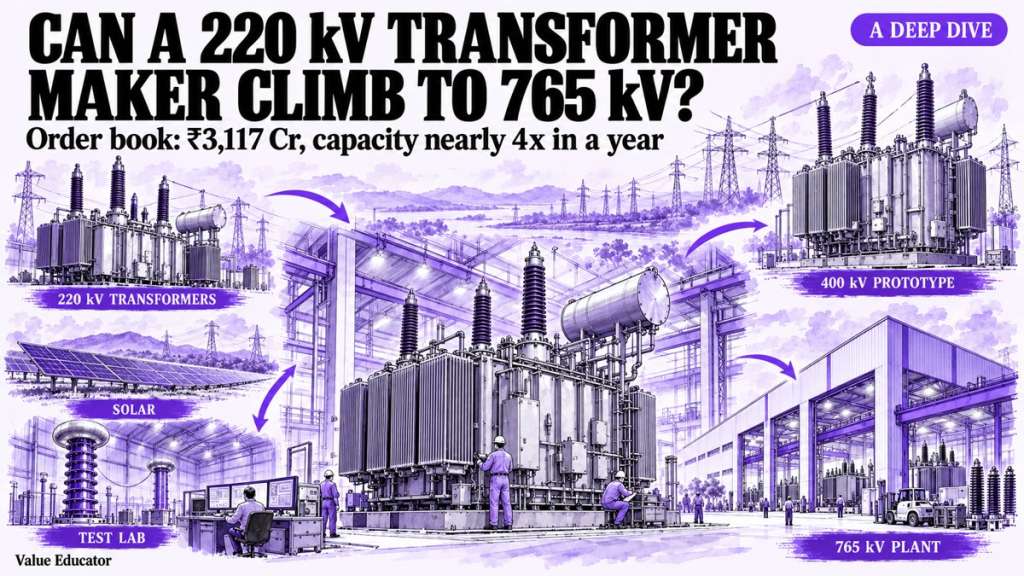
Atlanta Electricals: Capacity Nearly Quadrupled in a Year
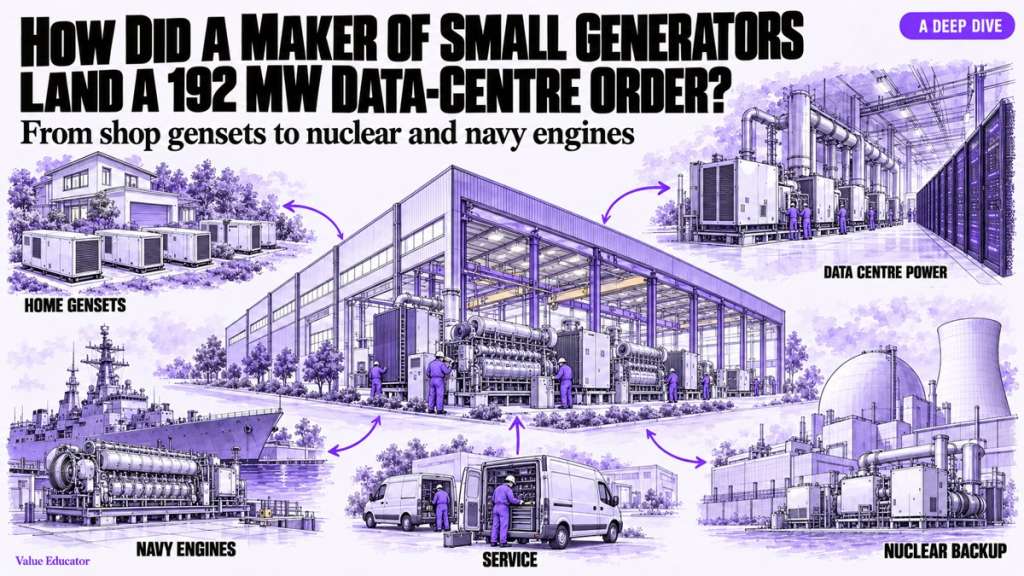
Kirloskar Oil Engines: Data Centres, Nuclear and the Navy
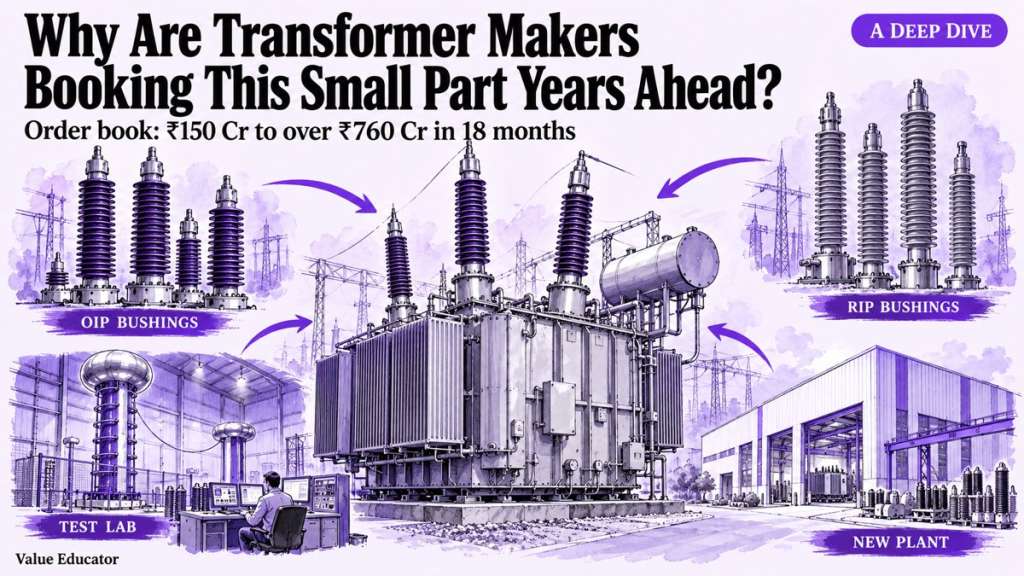
Yash Highvoltage: Bushing Maker With ₹760 Cr of Orders
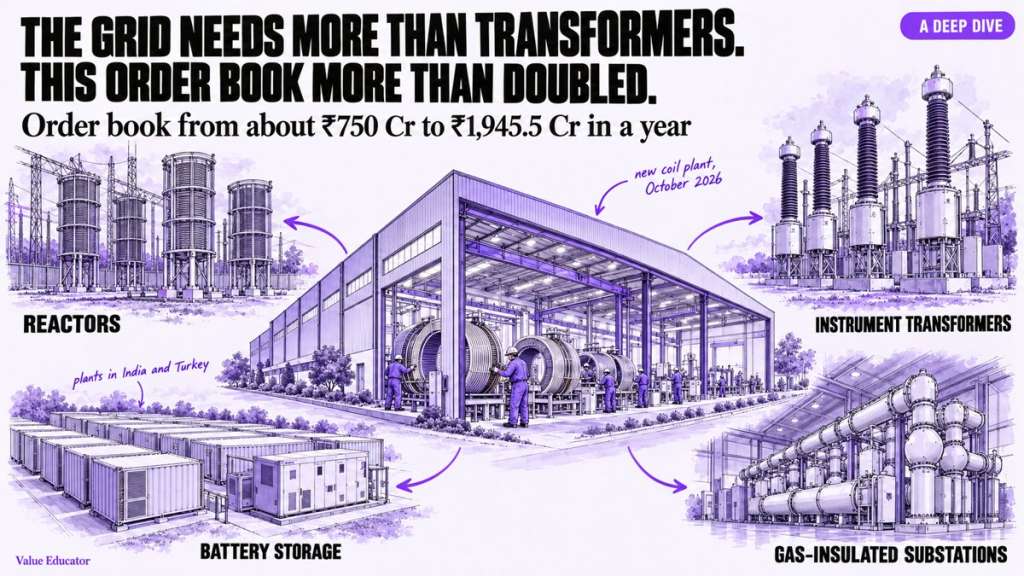
Quality Power: Reactor Maker With a ₹1,945.5 Cr Order Book
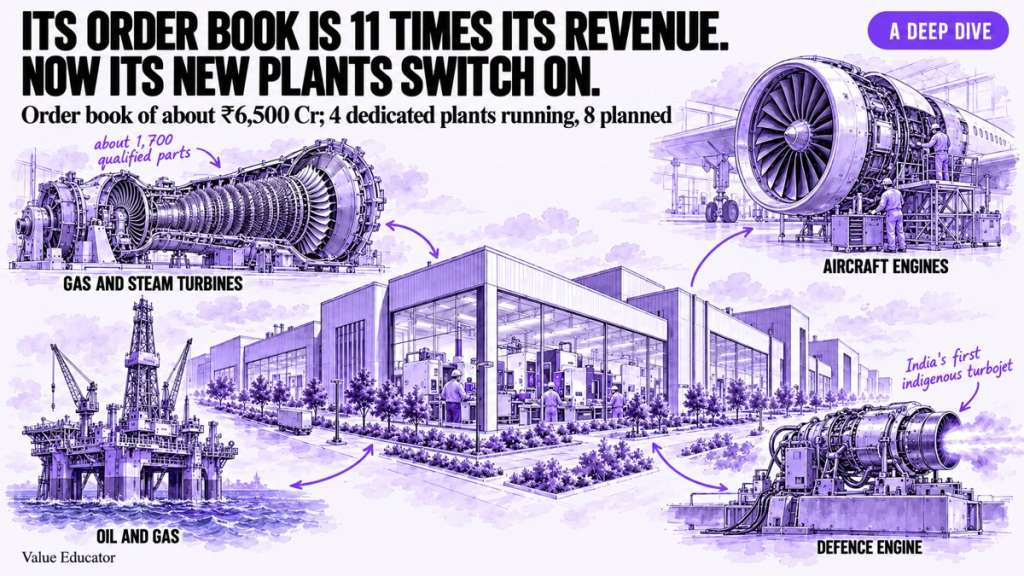
Azad Engineering: Turbine Blades, Jet Engines and Orders
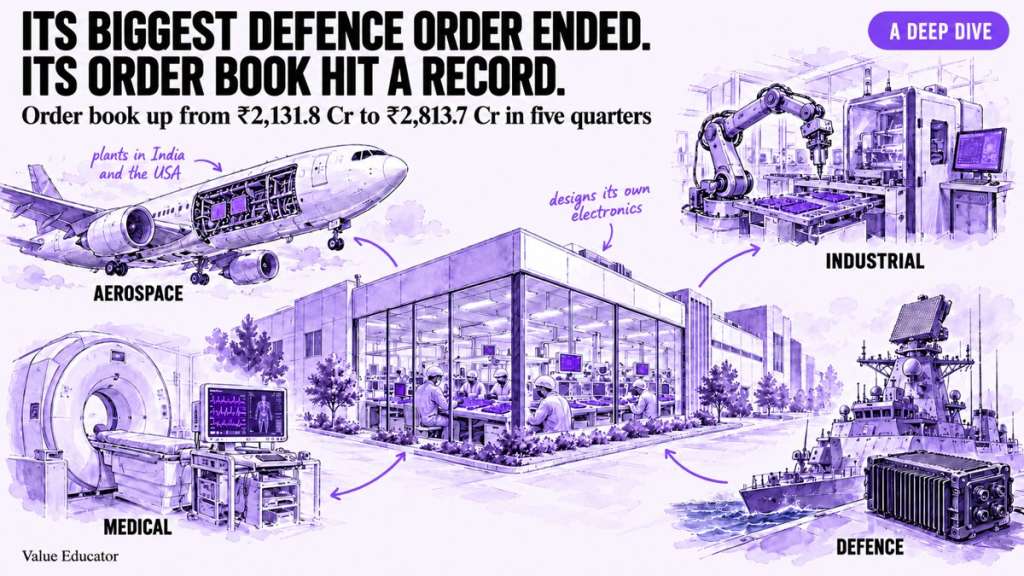
Cyient DLM: Aircraft Electronics and a Record Order Book
Explore our Products
Research Framework
Emerging Titans
Combination of quantitative analysis, industry tailwinds, and management assessment - SPRINT investment philosophy
Tiny Titans
Heavy emphasis on scuttlebutt research, plant visits, and early on-ground signals



Modern Warfare to Multibaggers
Key Trends. Strategic Shifts. Opportunities Ahead.
Don't Miss This Exclusive Webinar!
Join Value Educator to decode the key trends shaping India's defence sector and learn how to identify tomorrow's potential leaders in the space.
- In-depth research on India's defence sector
- Live Q&A session
- Actionable takeaways for long-term investors

 Orders
 Subscription
 Share with friends


Required Details
₹23999.00
(12 month subscription)
As per SEBI regulations, all users are mandated to complete the KYC that is validated for 1 year. Post payment, you will be redirected to the KYC screen


No comments yet. Be the first to comment!