
What Are Penny Stocks? Pros and Cons
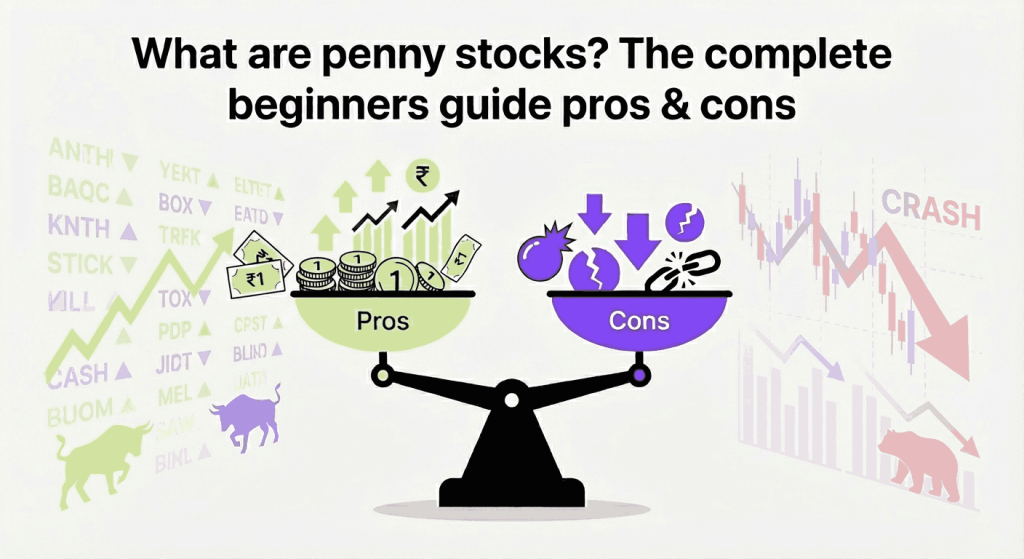
Penny Stocks in India: Small Prices, Big Dreams, Brutal Risks
In the early 2000s, Rakesh Jhunjhunwala bought shares of Titan Company at prices that worked out to roughly ₹3–₹5 after adjusting for later stock splits and bonus issues. At the time, Titan was largely known for watches and eyewear, operating in low-margin segments with weak profitability, which kept investor confidence low, due to which most investors ignored it. Jhunjhunwala didn’t buy it because it was cheap, he bought it because he recognised the long-term potential, especially as Titan began building value through its jewellery business, which eventually transformed the company’s scale, margins, and market position.
“Price is what you pay, value is what you get.” – Warren Buffett
Two decades later, Titan became one of India’s most successful companies. That “penny-like” stock turned into a wealth-creating machine.
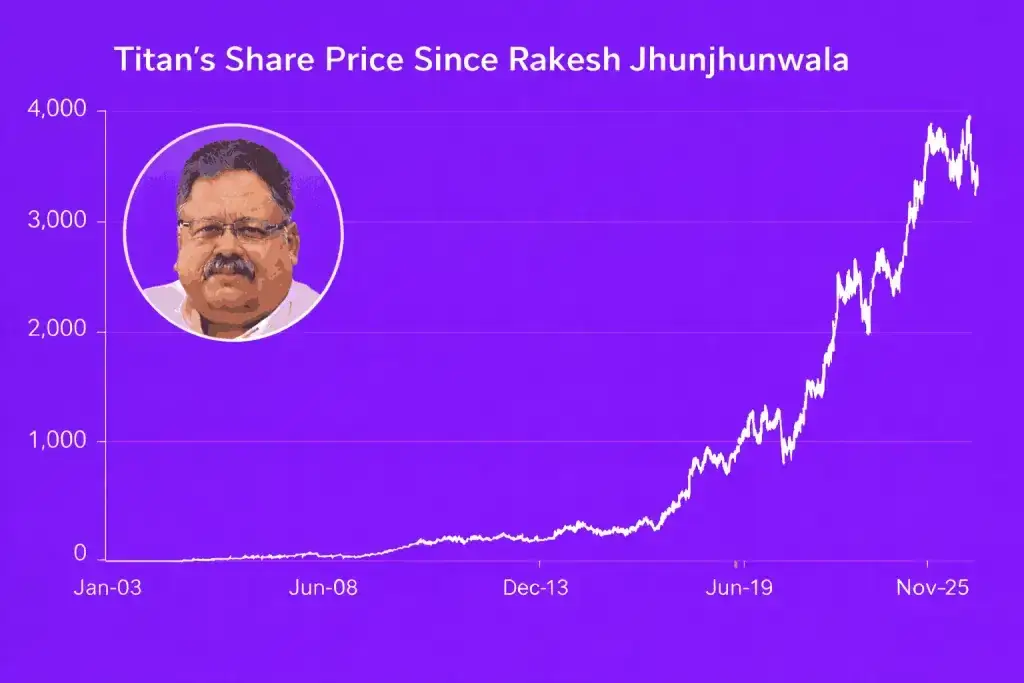
Most beginners hear this story and conclude the wrong lesson: “Penny stocks can make me rich too.” But the real lesson is: Great investors don’t buy penny stocks. They buy great businesses, some of which start small.
For every Titan, there were hundreds of ₹5 stocks that never survived, they didn’t become multibagger, they didn’t recover, they simply disappeared. Beginners don’t lose money in penny stocks because they lack luck. They lose money because they confuse low price with high potential.
If penny stocks are so cheap and accessible, why do they behave so differently from normal stocks and why do they hurt investors so badly when things go wrong? Let’s understand them in detail
What Exactly Is a Penny Stock and Why Does the Market Treat It Differently?
In simple terms, a penny stock is the share of a very small company, often with a fragile business model, limited profits, or an unstable past. In India, there is no strict legal definition, but stocks trading at very low prices, usually below ₹10–₹20, are commonly referred to as penny stocks. These companies are small not just in price, but in scale. They typically have limited customers, weak cash flows, low trading volumes, and almost no institutional or analyst interest. The low price reflects low confidence, not opportunity.
It’s important to distinguish between companies that start small and those that become penny stocks after destruction. Some quality businesses begin life at low prices because they are early-stage or ignored, while others fall into penny-stock territory after losing 90–99% of their value due to broken models. Companies like Kingfisher Airlines and Reliance Communications didn’t start as penny stocks; they became penny stocks after debt, poor execution, and governance failures wiped out value. This is why price alone is misleading. A ₹5 stock with a ₹5,000-crore market cap is very different from a ₹5 stock with a ₹300-crore market cap.
“It’s far better to buy a wonderful company at a fair price than a fair company at a wonderful price.” – Warren Buffett
Penny vs Micro cap stocks
Penny stocks are also often confused with micro-cap stocks, but they are not the same. Penny stocks are defined mainly by very low prices and fragile businesses, while micro-cap stocks are defined by company size, not price.
A micro-cap company may trade at ₹200 and still operate a real, growing business. Penny stocks, on the other hand, amplify risk. With low confidence and liquidity, even small news can cause violent price swings. This is why the market treats them differently and why beginners need to be extra careful.
Learn key differences here: Penny Stocks vs Small Caps – What’s the Difference and Which Is Better?
Once you begin to see penny stocks as fragile businesses rather than cheap opportunities, your entire approach changes and that naturally raises the next question: if they are so risky, why do they attract so many beginners in the first place?
The Hidden Reality Behind Penny Stocks
The most dangerous thing about penny stocks isn’t their price, it’s how harmless they appear. A ₹5 or ₹10 share feels easy to buy, easy to hold, and easy to ignore if it falls a little, but that comfort is misleading.
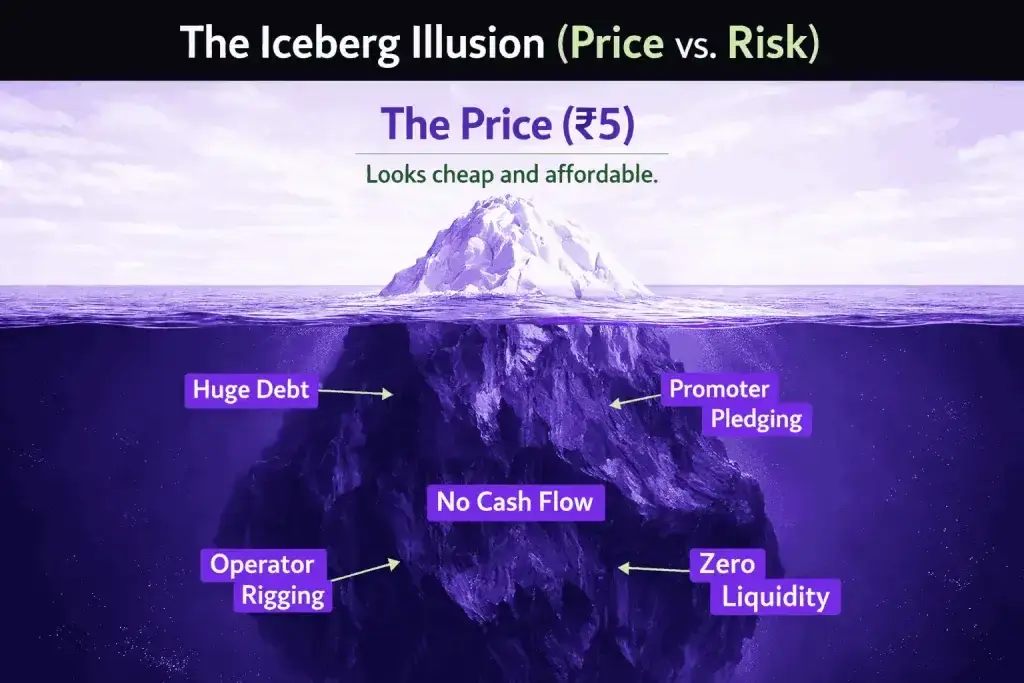
What truly sets penny stocks apart is how they behave when trust is missing. With limited buyers, sellers, and institutional participation, prices react sharply to even small developments.
A rumor, a social-media post, a promoter pledge, or a regulatory notice can push prices up dramatically or collapse them just as fast. Large companies have depth and liquidity; penny stocks don’t. When sentiment turns negative, exits vanish quickly, and investors are often forced to watch losses grow without the ability to sell.
For example, during the 2020–2021 market rally, several Indian stocks trading below ₹10 surged multiple times within months on hype and trading volume alone. Tata Teleservices (Maharashtra) rallied on turnaround hopes and the belief that the Tata Group would revive the business, Urja Global jumped on EV and solar buzz despite weak earnings, and Brightcom Group soared on impressive profit numbers that later raised regulatory and governance concerns. When the excitement faded and volumes dried up, many of these stocks fell 60–80%, trapping late entrants. The shares were cheap, but the businesses hadn’t changed, and the market eventually corrected the mismatch.
If most penny stocks fail, how do you separate the few that deserve attention from the many that should be avoided altogether?
How to Evaluate Penny Stocks: A 5-Step Checklist
“The stock market is filled with individuals who know the price of everything, but the value of nothing.” – Philip Fisher
A checklist won’t help you find the next multibagger, but it will protect you from permanent damage. Penny stocks are risky by nature, so evaluation is not about predicting big wins, it’s about filtering out obvious losers. This 5-step checklist is written in simple terms, the same way a cautious Indian investor should think, and each step is backed by one stock that succeeded and one that failed to prove why the step matters.

Step 1: Business Fundamentals – Real Business or Just on Paper?
The first and most basic check is whether the company actually has a real operating business today, no plans, no promises, but real activity that earns money. Many penny stocks look attractive on price but exist only as shell companies with minimal operations. If there is no real business, there is no foundation for long-term survival.
A classic contrast is Titan Company. In the early 2000s, Titan traded at modest prices with a market value of just a few thousand crores, yet it had real products, in-house manufacturing, a growing retail network, and the backing of the Tata Group. As brands like Tanishq and Titan Watches scaled and profitability improved, the business compounded steadily, eventually becoming a market leader with a market capitalization running into lakhs of crores. In contrast, Kingfisher Airlines slipped into penny stock territory as losses mounted and debt crossed ₹9,000 crore. Once flights were grounded and operations stopped, there was no business left to recover. The stock didn’t turn around; rather it disappeared, wiping out shareholder value permanently.
Step 2: Financial Direction – Improving or Deteriorating?
In penny stocks, perfection is rare, but direction matters enormously. The key question is not whether the company is highly profitable today, but whether its financial health is moving in the right direction. Look at revenue, profits, and cash flow over the last few years. Even small, consistent improvement signals that the business is stabilising. A company that is slowly fixing its problems has a fighting chance whereas one that is deteriorating does not.
A classic contrast is Avanti Feeds. Once a low-priced and under-followed stock, Avanti showed steady execution as revenues grew from under ₹500 crore to over ₹4,000 crore over a decade, with profits compounding alongside exports growth. As earnings became consistent, the stock delivered strong long-term wealth creation. In contrast, Reliance Communications stayed “cheap” for years as revenues declined and debt ballooned beyond ₹45,000 crore. The business never stabilised, bankruptcy followed, and shareholders were left with permanent losses.
Step 3: Management & Governance – Trust Matters More Than Price
In the world of penny stocks and small-caps, the quality of the management team isn't just part of the analysis, it is the single most important factor.
Here is the harsh reality: Small companies in India are often tightly controlled by their promoters. Unlike large-cap companies where there are many checks and balances, in a penny stock, the promoter is often "King." If the promoter decides to siphon off money or make decisions that only benefit their family, minority shareholders (like you) are left holding the bag with zero protection.
Therefore, before you look at the profit margins or the flashy business idea, you must look at the people running the show. If the management is honest and disciplined, even an average business can survive and grow. If the management is corrupt, even the best business model will eventually go to zero.
A classic contrast is Bajaj Finance, once a low priced stock, Bajaj Finance built trust through strong governance, disciplined risk management, and consistent execution. Over time, its loan book expanded from a few thousand crores to over ₹3 lakh crore, and the company became one of India’s most valuable financial firms, creating massive shareholder wealth. In contrast, Satyam Computer Services collapsed overnight in 2009 after a major accounting fraud came to light. Despite being a respected IT company, the governance failure wiped out nearly ₹14,000 crore in shareholder value, proving that without trust, even large businesses can fail instantly.
Step 4: Liquidity & Exit Risk – Can You Sell When It Matters?
Liquidity answers a question most investors avoid asking: what happens if things go wrong tomorrow? Penny stocks often trade in very low volumes, which means buying is easy but selling can be impossible. When sentiment turns negative, buyers disappear quickly. A falling price without buyers traps investors, regardless of how confident they feel about the company. Beginners usually focus on upside and ignore exit planning.
A classic contrast is Suzlon Energy, even during extreme volatility, when the stock fell from over ₹400 in 2008 to single digits and later recovered sharply, Suzlon continued to see high daily trading volumes, allowing investors to enter and exit when needed. Liquidity gave investors flexibility, even when the business was under stress. In contrast, Deccan Chronicle Holdings saw trading volumes dry up as losses mounted and debt crossed ₹4,000 crore. Long before the business failed, liquidity disappeared. Shareholders were trapped with falling prices and no meaningful exit.
Step 5: Price Logic – Cheap for a Reason or an Opportunity?
Some stocks are cheap due to temporary problems: industry slowdowns, short-term losses, or cyclical pressure. Others are cheap because the business model is broken, debt is unmanageable, or trust has been lost. The market is very good at separating the two but most investors aren’t.
This step requires brutal honesty. If you don’t know exactly why a stock is cheap and what will drive improvement, your decision is based on hope, not on analysis. Penny stocks that recover usually do so because a real problem gets fixed. Stocks that remain cheap usually stay cheap or disappear.
A classic contrast is Eicher Motors. Eicher’s turnaround came when it exited non-core segments and focused almost entirely on Royal Enfield motorcycles and the Volvo joint venture, sharply improving execution and margins. As volumes and profitability scaled, the stock moved from double-digit prices in the early 2000s to becoming a multi-lakh-crore market-cap company, creating massive long-term wealth. In contrast, DHFL was cheap because the business itself was broken. Poor asset-liability management, rising bad loans, and excessive leverage eroded trust. No turnaround came, and shareholders suffered near-total losses.
Learn How to evaluate penny stocks in detail: 7 Things Beginners Must Check Before Buying Penny Stocks
If penny stocks are this risky, why do experienced investors still study them and how do few even manage to turn small beginnings into massive wealth?
The Upside of Penny Stocks – When Small Fish Grow Big
Explore our Products
Research Framework

Emerging Titans
Combination of quantitative analysis, industry tailwinds, and management assessment - SPRINT investment philosophy

Tiny Titans
Heavy emphasis on scuttlebutt research, plant visits, and early on-ground signals
Penny stocks are risky, but dismissing them entirely would be incomplete. Some of India’s most respected companies began their market journey as ignored, low-priced stocks, trading quietly while the business slowly strengthened underneath.
Let’s look at the real positives, backed by distinct Indian turnaround stories that prove why penny stocks continue to attract serious long-term investors.
1. Early Entry Into Future Industry Leaders
One major advantage of penny stocks is the opportunity to enter a business before its potential becomes obvious to the wider market. When companies are small, earnings are volatile and visibility is low. Institutional investors usually stay away at this stage. Stock prices often reflect doubt rather than possibility. Investors who focus on business fundamentals instead of popularity can benefit when the company scales and perceptions change.
A classic Indian example is Bajaj Finance. In 2008–09, it was largely seen as a vehicle financier, trading at adjusted prices of roughly ₹4–₹10 and ignored by the market. The turning point came when management pivoted to consumer durable financing and pioneered the No-Cost EMI model, using technology and data to scale quickly. As this segment exploded, Bajaj Finance created an entirely new market, expanded its loan book into lakhs of crores, and became one of India’s most powerful long-term compounders.
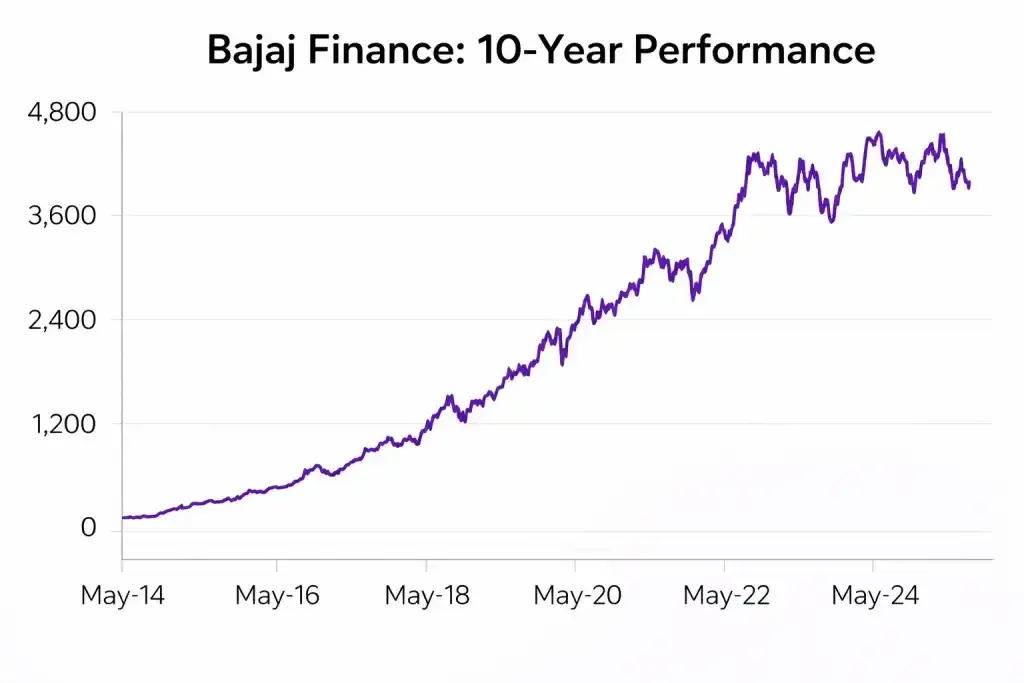
2. Massive Wealth Creation Through Long-Term Compounding
Penny stocks that survive and grow don’t just deliver one-time returns, they compound wealth over long periods. When a company starts from a small base, even modest improvements in revenue and margins can create a powerful compounding effect. The market initially prices such businesses cautiously. As consistency builds year after year, valuations expand. In this process, time becomes the biggest ally, not timing.
A strong Indian example is Havells India. In the early 2000s, Havells was a small, under-followed stock with revenues of under ₹500 crore. The turning point came after the 2007 acquisition of Crabtree, which gave it access to premium products and global distribution. Over the next decade, revenues grew beyond ₹16,000 crore, margins improved steadily, and cash flows strengthened. As the business compounded, the stock followed, turning Havells into a large-cap wealth creator, not through hype, but through execution.
3. Re-Rating When Business Quality Improves
Penny stocks often trade at low valuations because the market doubts their business quality. Issues like weak governance, high debt, or inconsistent execution keep investor confidence low. When a company begins to fix these problems like improving transparency, strengthening operations, and delivering consistent results the perception changes. Markets respond quickly when trust returns, and valuations expand faster than the business itself.
A strong example is Garware Hi-Tech Films. For years, it traded at modest valuations as the market viewed it as just another packaging films player. The turning point came when Garware shifted focus from commodity BOPP/BOPET films to high-margin specialty films like solar control and paint protection films. While peers remained stuck in cyclical commodity segments, Garware’s EBITDA margins expanded to 25%+, and revenues crossed ₹1,500 crore. As earnings became more stable and less cyclical, the market re-rated the stock, rewarding investors who spotted the quality shift early.
4. Benefiting From Sectoral Tailwinds
Small companies often benefit disproportionately when their sector enters a strong growth phase. With expectations already low, even moderate improvement in demand or execution can drive sharp gains in earnings. Sector tailwinds act as a multiplier for smaller businesses. Growth reflects faster in profits compared to large, mature companies. This can lead to rapid stock re-rating.
A strong Indian example is Relaxo Footwears. When organised retail expanded and branded footwear demand rose across India, the footwear sector entered a sustained growth phase. Relaxo was already positioned to benefit, with manufacturing capacity exceeding 30 crore pairs annually and a heavy focus on in-house production, keeping costs low. Because expectations were low and the base was small, sector tailwinds translated quickly into higher profits, pushing revenues beyond ₹3,000 crore and driving a sharp market re-rating.
5. Low Starting Base Creates Asymmetric Returns
The most attractive feature of penny stocks is asymmetry. When you invest a small, controlled amount, the downside is limited. At the same time, the upside remains open-ended. Starting from a very low base, even moderate improvement in the business can lead to outsized returns.
A classic Indian example is APL Apollo Tubes. In its early years, APL Apollo was a small, under-followed steel pipes company operating in a fragmented market. The turning point came when it shifted to structural steel tubes, aggressively expanded capacity, and reduced working capital cycles from ~90 days to under 30 days through better distributor-led models.
Asset-light expansion and scale pushed volumes from under 1 million tonnes to over 4 million tonnes, while ROCE improved sharply. As efficiency and scale compounded, the stock delivered classic asymmetric returns, turning a small base into an industry leadership story.
Read more: How to Identify Genuine Penny Stocks Before They Become Multibaggers
But for every success story, there’s a quieter question most investors avoid: where exactly do penny stocks go wrong, and why do so many never recover?
The Downsides of Penny Stocks – Where Most Investors Go Wrong
Penny stocks may look exciting on the surface, but their downsides are real, structural, and often irreversible. Most beginners don’t lose money because they chose the “wrong stock”, they lose money because they underestimated the risks that come with small, fragile businesses. Below are five biggest downsides of investing in penny stocks, explained clearly with a relevant Indian example.
“Risk means more things can happen than will happen.” – Howard Marks
1. Permanent Capital Loss
The biggest risk with penny stocks is not short-term volatility, but permanent capital loss. Many companies that fall into penny-stock territory are already fighting for survival. When the underlying business collapses, the stock doesn’t recover, it vanishes. There is no rebound once operations stop. Losses become final.
A classic Indian example is Reliance Communications. The stock traded at penny levels for years, keeping investor hopes of a turnaround alive. Rising debt, intense competition, and poor execution continued to weaken the business. Eventually, bankruptcy followed. Shareholders were left with near-total losses.
2. Extreme Price Manipulation and Hype Cycles
Penny stocks are especially vulnerable to price manipulation and hype-driven trading. Low trading volumes make it easy for operators to push prices up quickly. Rumors, tips, and social media messages create artificial excitement. Once prices rise, early promoters exit silently, while late retail investors are left holding the stock.
A clear Indian example is Vakrangee. During its hype phase, the stock witnessed sharp price movements driven largely by sentiment. Retail participation surged on optimistic narratives. When governance concerns and regulatory scrutiny emerged, the stock collapsed. Many late entrants suffered heavy losses.
3. Illiquidity & Exit Risk
Buying a penny stock is usually easy, but selling it at the right time is much harder. These stocks often trade in very low volumes. When sentiment turns negative, buyers disappear quickly. Prices may keep falling without any trades happening. Investors are left stuck with losses and no exit.
A strong Indian example is Ruchi Soya Industries before its insolvency resolution. As the company’s financial troubles deepened, trading volumes dried up. Investors watched the stock decline but struggled to exit positions. Liquidity vanished long before the business failed. Many shareholders were trapped as the stock collapsed.
4. Poor Governance and Low Transparency
Small companies often suffer from weak governance and poor disclosure standards. Delayed financial results, frequent auditor changes, vague business updates, and heavy promoter share pledging are common warning signs. These issues reduce investor trust and make risk hard to assess.
A clear Indian example is PC Jewellers. Once a popular retail stock, it slipped into penny territory as debt rose and governance concerns emerged. Delays in disclosures and questions around promoter actions eroded confidence. As scrutiny increased, the stock collapsed sharply. Retail investors were left with steep losses.
5. Emotional Traps – Hope Replaces Discipline
Penny stocks strongly exploit investor psychology, especially among beginners. The low share price creates false confidence and encourages over-buying. Many investors start averaging down instead of reassessing risk. Losses are ignored in the hope of a sudden turnaround. Discipline slowly gives way to emotional decision-making.
A classic Indian example is Yes Bank. When the stock fell into low-price territory, retail participation surged. Many investors kept averaging down, believing the bank was “too big to fail.” Expectations of a sharp recovery stayed high. The outcome never matched that hope.
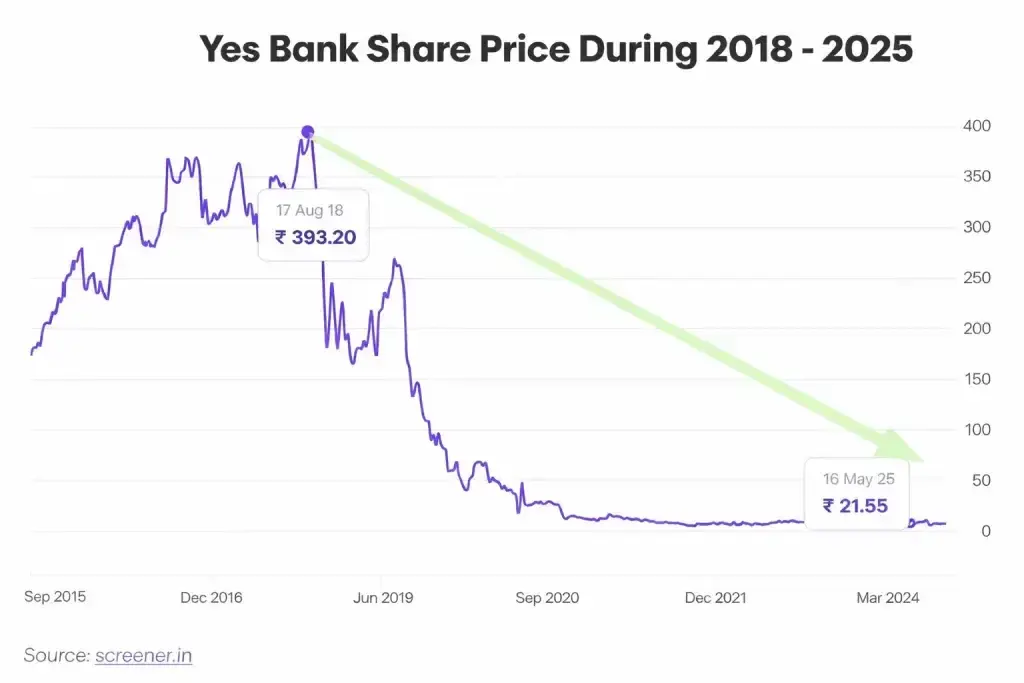
After seeing both the promise and the pitfalls, what should a beginner actually take away from penny stocks?
Conclusion – Price Isn’t Value
“You can’t predict, but you can prepare.” – Howard Marks
Most investors lose money in penny stocks not because of bad luck, but because they lack a repeatable decision framework. Stories inspire, but rules protect capital. If this guide changed how you view penny stocks, comment “DISCIPLINE” below. Like the post to support research-driven investing, share it with investors who value process over tips, and comment with one rule you follow before buying any stock. Calm analysis always outperforms urgency.
FAQs ( Frequently Asked Questions )
Should beginners invest in penny stocks?
+How much of my portfolio should be in penny stocks?
+Is a low share price a good buying signal?
+How long should I hold a penny stock?
+How can I avoid hype-driven penny stocks?
+What’s the safest way to approach penny stocks?
+
High growth stock specialist, Value Educator
Shashank Mahajan is an equity research professional with over 12 years of experience in identifying high-potential SME and micro-cap stocks at an early stage. He follows a rigorous scuttlebutt research–driven approach, combining on-ground insights with deep financial analysis. Shashank specializes in uncovering under-researched and under-owned companies with strong management quality and long-term growth potential. Through disciplined research and early identification, he focuses on spotting tomorrow’s market leaders before they enter the mainstream investor radar.

Zen Technologies: Why Revenue Fell After Its Biggest Win

Data Patterns: India's Radar Designer and Its Waiting Orders

KSH International: The Wire Inside India's Transformers

Krishna Defence: The Steel Behind India's Warship Hulls

PNG Jewellers: A 194-Year-Old Name Goes National

Axiscades: From Services to Missile and Radar Electronics
Explore our Products
Research Framework
Emerging Titans
Combination of quantitative analysis, industry tailwinds, and management assessment - SPRINT investment philosophy
Tiny Titans
Heavy emphasis on scuttlebutt research, plant visits, and early on-ground signals


 Orders
 Subscription
 Share with friends
 Logout


Required Details
₹23999.00
(12 month subscription)
As per SEBI regulations, all users are mandated to complete the KYC that is validated for 1 year. Post payment, you will be redirected to the KYC screen


No comments yet. Be the first to comment!