
7 Early Signals of a Multibagger

Why Most Retail Investors Miss Multibagger Stocks
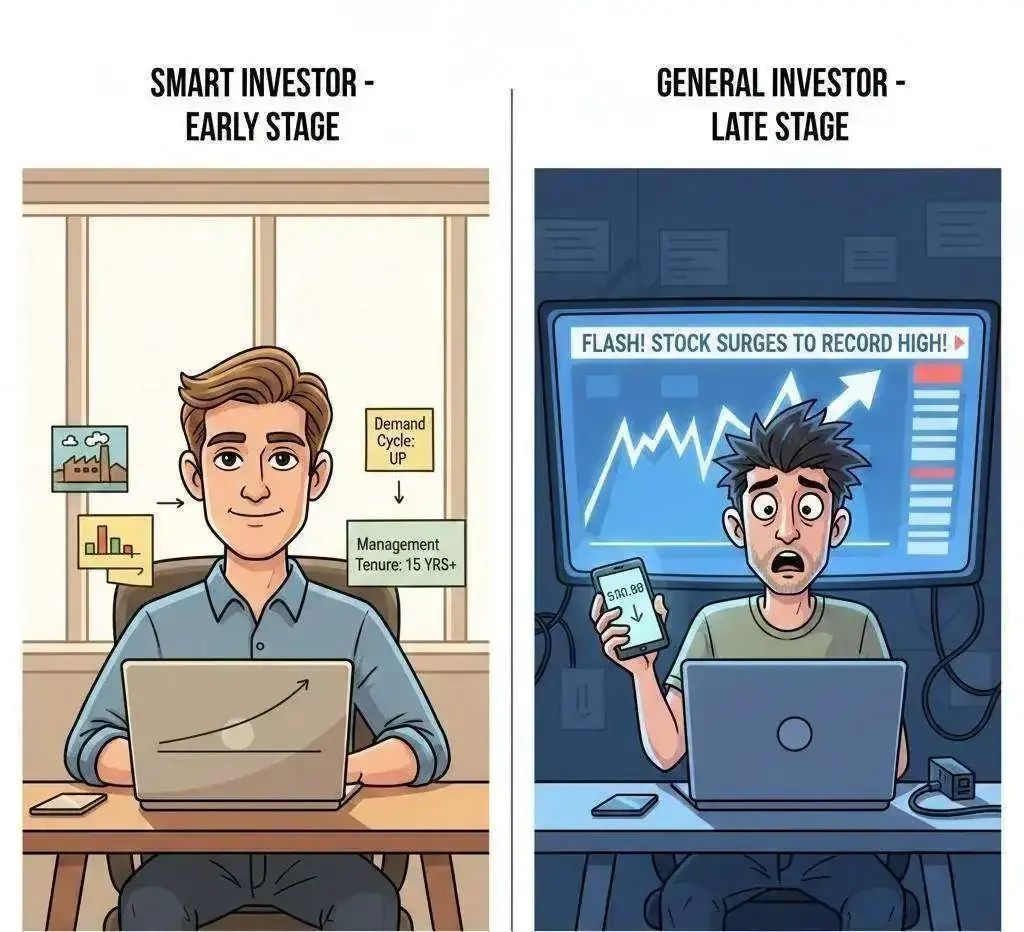
Most retail investors only hear about a multibagger after it has already jumped 200–500%. Once it hits the headlines, the real opportunity is gone—the stock already made its silent move when nobody was paying attention.

The hard truth? Multibaggers often appear unimpressive at first. They’re not trending, they don’t draw much interest, and few people see them as businesses with big potential ahead.
This guide highlights early signals that matter long before a stock becomes a multibagger—not just the usual “high ROE, low debt” checklist. In fact, during phases of heavy expansion, a company’s ROE or ROCE can temporarily fall, and that isn’t always a negative sign. Businesses investing in new plants, technology, or distribution often show weaker returns in the short term as they build the foundation for future growth.
But the reverse is also true: low or negative ROE/ROCE doesn’t automatically mean the company is on the path to becoming a multibagger. Only a small fraction of businesses convert expansion-related dips into strong, sustained profitability. Most never generate meaningful returns from the capital they deploy.
That’s why this guide focuses on deeper, structural clues—because understanding why the numbers look weak matters far more than the numbers themselves.
Read more: Common Traits of Every Multibagger Stock – Data-Based Study
Multibagger Stocks Explained Simply: How Small Companies Turn into 10x Winners
A multibagger is a stock that grows 5x or 10x over the years. It’s just like the Chinese bamboo tree—nothing seems to happen for a long time, but the real growth is happening underground. And when the foundation is ready, it shoots up fast. That’s how strong businesses work: quiet buildup first, explosive growth later.
Early Signs of Multibaggers: Why Most Clues Go Unnoticed
Early signals never shout; they whisper from inside the business. You won’t find them in headlines or trending screeners. They hide in product choices, tight operational discipline, improving customer patterns, or quiet changes in management behavior.
Sometimes, the earliest shift begins when the second generation steps in. New leadership is often more dynamic, tech-savvy, and aggressive about scaling. Look at how Varun Berry transformed Britannia with sharper execution, or how the new generation at Poly Medicure pushed global expansion. These subtle management transitions often unlock fresh energy inside a business long before the numbers show it.
The same applies at the industry level—spotting a capex cycle turning, a replacement wave building, or a demand trend forming long before it hits the mainstream. That’s where real early clues live.
Scuttlebutt Research: How Talking to Industry Insiders Reveals Hidden Winners
Another powerful source is scuttlebutt research: talking to suppliers, distributors, competitors, or even customers. These informal insights often reveal operational strengths, emerging trends, or management quality that filings alone cannot capture.
This idea traces back to Philip Fisher’s scuttlebutt theory in Common Stocks and Uncommon Profits. Fisher famously dug into companies by speaking with everyone around the business—workers, clients, ex-employees, and even rivals. One of his classic examples came from visiting multiple suppliers of a tech firm and discovering they all praised the company’s efficiency and long-term vision. That validation from outsiders gave Fisher confidence long before Wall Street noticed the stock.
Most people miss these shifts because they don’t dig deep. But when you combine filings, industry data, and scuttlebutt research, you join the small group that identifies potential multibaggers years before the crowd notices.
Focus Today — 7 New, Rare Early Signals
Now let’s move to what truly matters: the seven quiet indicators elite investors track before a stock becomes a multibagger.
These aren’t generic fundamentals — they’re deeper, business-level signals that whisper long before the rally begins
Check out: Top Multibagger Stocks of the Last 10 Years – What We Can Learn
Signal 1: The Inconvenient Advantage: Moats That Are Hard to Copy
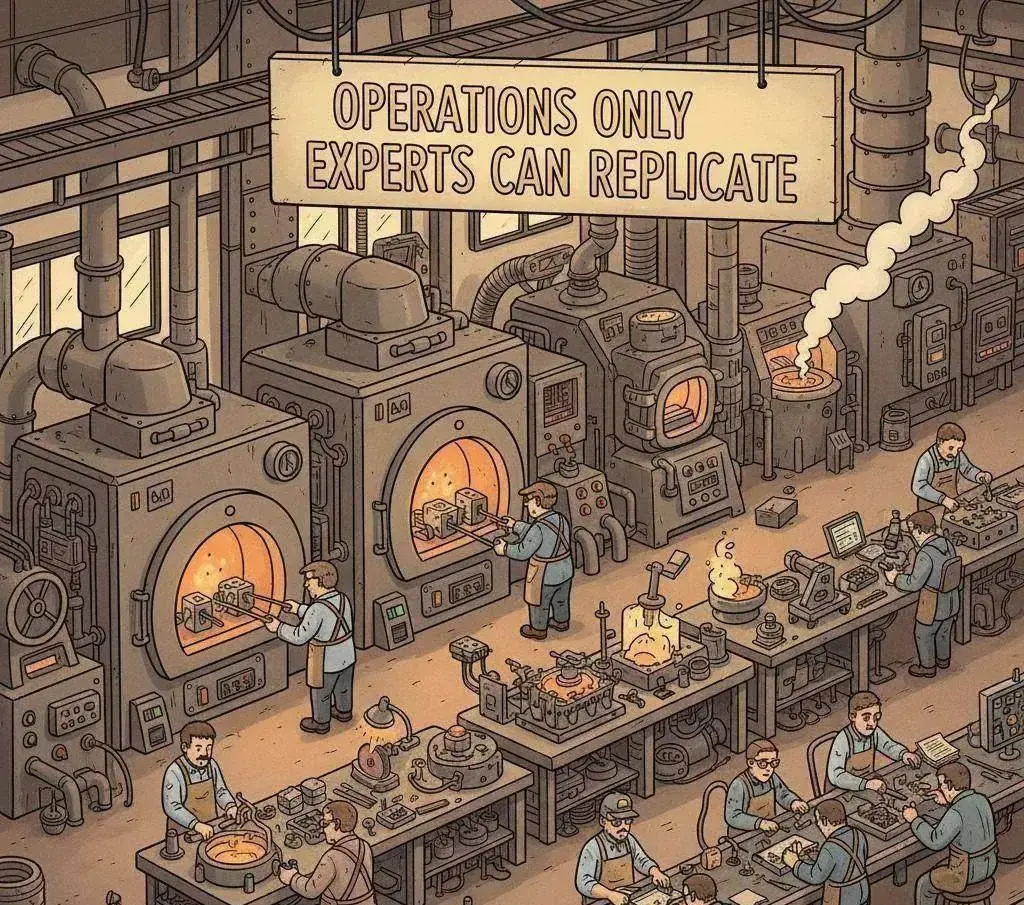
Some companies build their moat by doing the work others simply don’t want to touch. AIA Engineering is the perfect example. Its business looks simple from the outside—making high-chrome wear parts for cutters and grinders—but behind the scenes, it’s a marathon of metallurgy precision, heat-treatment expertise, and labour-intensive processes that take decades to master.
Unlike capex-heavy industries, AIA’s edge comes from operational skill, not money. Every mining or cement client needs custom alloy compositions and long testing cycles, making switching almost impossible. That’s why AIA quietly scaled to 440,000 TPA and now exports to 120+ countries, maintaining margin stability in a space competitors avoid because it’s “too hard.”
You see the same pattern in Deepak Nitrite. The company deliberately operates in hazardous, compliance-heavy chemical intermediates where mistakes are costly. Their biggest moat moment came with the phenol–acetone project: a ₹1,400–1,600 crore capex that ran from 2015 to 2018, sitting as a massive CWIP for years with zero revenue contribution.
Most competitors didn’t touch phenol because of explosion risk, pollution norms, and the need for deep process control. But once Deepak cracked it and commissioned India’s first large-scale domestic capacity, CWIP converted into a fully operational asset, transforming the company’s revenue mix and margins almost overnight. The “hard work” phase became a multi-year competitive advantage—low imports, high domestic demand, and virtually no domestic challengers.
“The bigger the obstacle, the bigger the opportunity.” — Peter Thiel
When a business thrives in a domain that’s messy, complex, risky, or simply unpleasant, competition stays low, customer stickiness remains high, and margins stay protected. These “inconvenient advantages” often appear years before a stock becomes a multibagger.
Signal 2: Replacement Cycle Alignment: Riding Predictable Demand Waves
Some of the biggest multibaggers didn’t grow because demand suddenly appeared—they grew because they were exactly where the replacement cycle was about to turn.
SJS Enterprises is a perfect example from the auto-components space. As India’s vehicle base grew and aged, the demand for replacement decals, emblems, overlay panels, 3D badges, and cosmetic trims started rising steadily. These are small-ticket items but have a surprisingly predictable replacement and refresh cycle: two-wheeler and passenger vehicle owners often upgrade or replace these aesthetic parts during servicing, accidental repairs, or customization.
SJS was right at the centre of this shift. With deep OEM relationships, a premium product portfolio, and a strong aftermarket network, the company benefited as both the vehicle stock aged and OEMs increased the share of premium, high-ASP decorative parts in new models. This created a double tailwind—aftermarket replacement demand rising, and new vehicle models requiring more sophisticated trims. As volumes climbed, SJS enjoyed better operating leverage and margin expansion.
You see the same silent pattern elsewhere: paint companies benefit from repaint cycles every 5–7 years, and industrial machinery firms see spikes when capex revives.
“Success usually comes to those who are too busy to be looking for it.” — Henry David Thoreau
When a business aligns naturally with a predictable replacement or refresh cycle, revenues become stable, growth becomes visible, and valuations rise quietly over time—creating a long, smooth runway for future multibaggers.
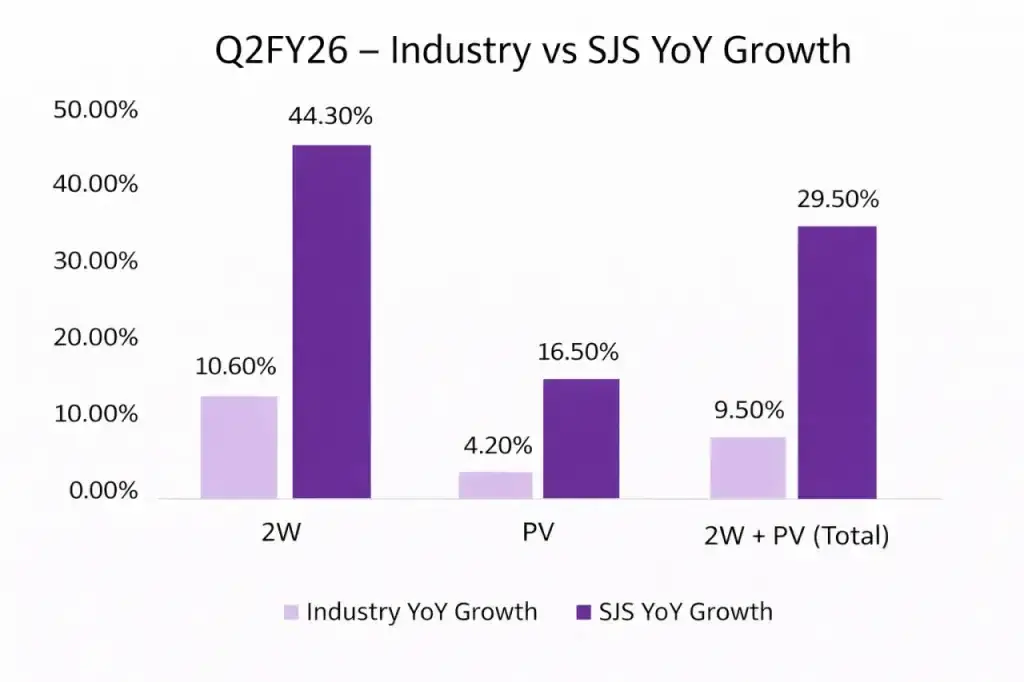
Note: The “Replacement-Ready Pool” is an estimate of vehicles over 10 years old that are more likely to require replacement parts or servicing. It is an approximation meant to indicate the underlying replacement demand trend rather than precise figures.
Signal 3: From Commodity to Value-Added Products: Where Profits Leap Faster Than Revenue
The biggest profit explosions usually happen when a company shifts away from mass, low-margin products and starts selling specialized, high-margin ones. Garware Hi-Tech Films is a textbook case. For years, it made basic polyester films—steady but boring. Then it moved aggressively into high-end automotive, paint protection, and solar control films. These products carried far higher margins, so even moderate revenue growth translated into disproportionately higher profits.
As Garware climbed the value chain, profits began rising much faster than sales, catching the market’s attention and leading to a sharp rerating. This transition—from commodity to specialty—is one of the clearest early signals of multibagger potential.
“Price is what you pay; value is what you get.” — Warren Buffett
When a company creates value through specialization, earnings compound faster, valuations expand, and wealth creation follows.
Read more: The Multibagger Framework: A Step-by-Step Guide to Finding 10x Stocks
Signal 4: Long-Term Revenue Contracts: Predictable Cash Flow Creates Stability
Some of the most reliable growth stories come from companies that can predict their revenue years in advance. When a business secures long-term agreements, it reduces cash flow volatility and gives management the confidence to invest, expand, and execute with clarity.
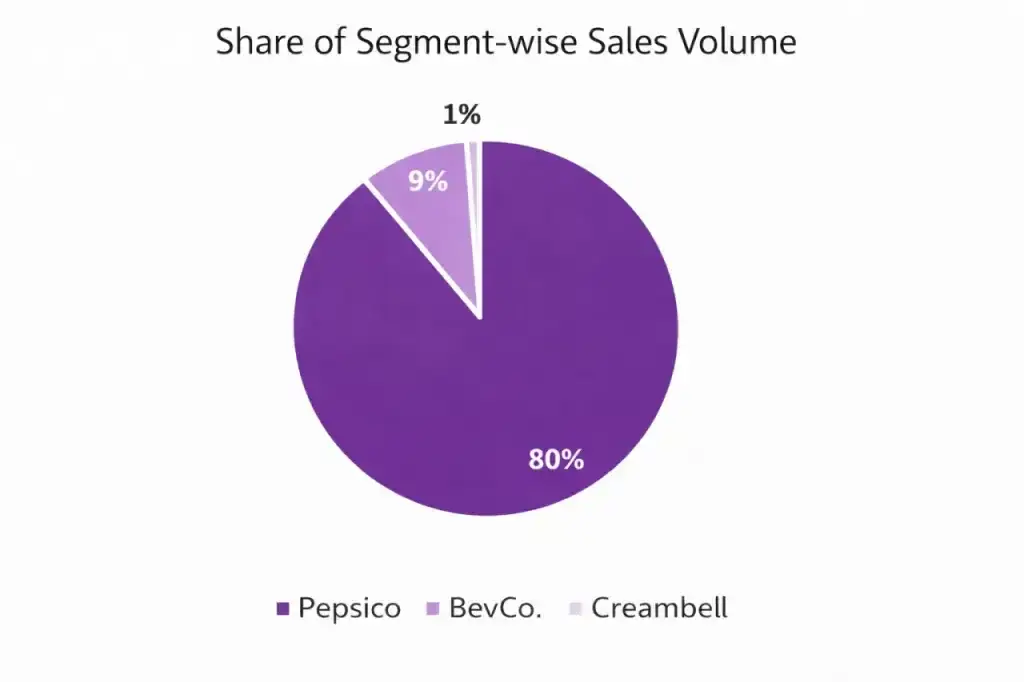
Varun Beverages exemplifies a strong moat and execution. As one of PepsiCo’s largest global franchise bottlers, it holds long-term exclusive bottling and distribution rights across India and select international markets. This ensures competitors can’t easily enter, retailers prefer their products, and cash flows stay predictable.
Beyond brand power, Varun built a precise distribution machine—investing in chillers, rural reach, and faster deliveries. The ratio of coolers per outlet improved steadily, boosting volume per store. In new territories, field teams mapped outlets, competitors, and placement opportunities, ensuring new capacity ran at high utilization from day one.
This blend of contractual strength and hyperlocal execution transformed Varun from a regional bottler into one of India’s most consistent compounders, scaling volumes, improving margins, and outpacing most FMCG beverage players.
Similarly, companies like ACE Ltd — India’s leading construction and material‑handling equipment manufacturer that recently reported record revenues of ~₹3,420 cr in FY25 with strong margin expansion and double‑digit growth across its core crane and material‑handling segments — benefit from long‑term supply relationships and revenue visibility with infrastructure, mining, industrial and government clients.
“Revenue visibility is the first step to sustainable value creation.” — Adapted from Charlie Munger
By securing dependable income streams through long-lasting partnerships, these companies convert stability into a strategic advantage—an early, underappreciated signal of future multibagger potential.
Signal 5: Internal Metrics Obsession: Operational Discipline That Compounds Profits
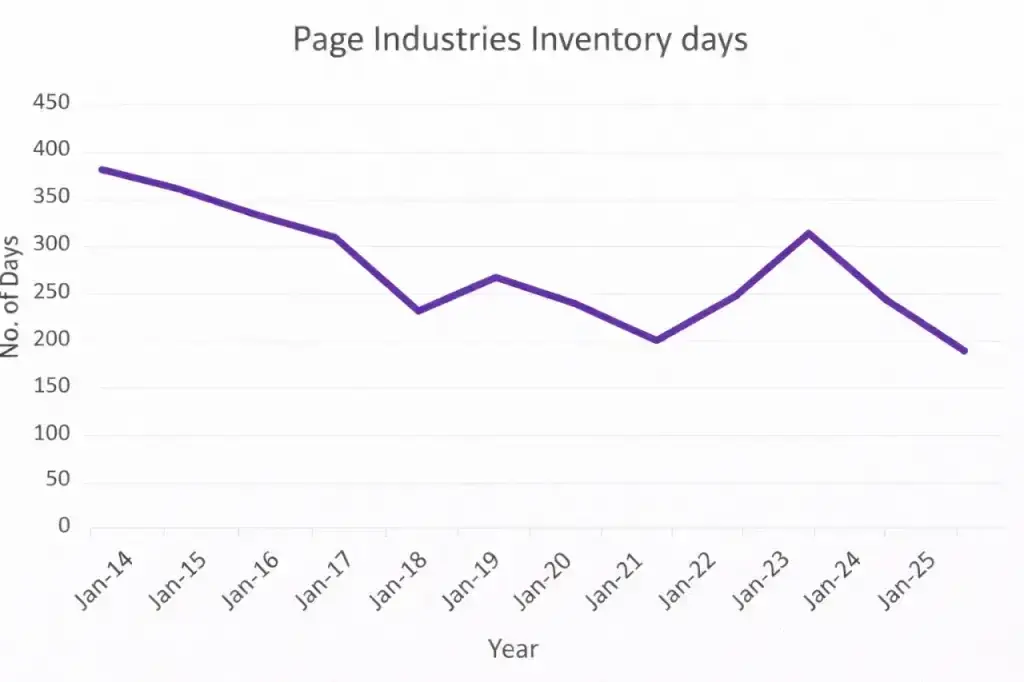
The best multibaggers sweat the small stuff. They don’t just chase revenue—they obsess over the operational levers that quietly expand profitability. Page Industries (Jockey) is a classic example: instead of flooding distributors with excess stock, they keep inventory days tight so products move quickly and cash isn’t stuck in warehouses. When inventory cycles shorten, working capital frees up, margins strengthen, and profit growth begins outpacing topline growth.
APL Apollo follows the same playbook. It has pushed its Cash Conversion Cycle close to zero using real-time production tracking, automated inventory planning, SAP/ERP integration, IoT dashboards, and sharper receivable controls. This tech-enabled discipline accelerates inventory rotation, cuts idle stock, and speeds up cash collection—drastically lowering the working capital needed to run the business.
With the cash cycle tightening, borrowings have fallen to negligible levels, especially against a ₹20,000+ crore revenue base. The result is a clean, low-leverage balance sheet where assets and liabilities sit near 1:1, reducing financial risk and boosting return metrics.
In simple terms:
Better tech → faster cash cycle → lower working capital → minimal debt → stronger balance sheet → higher profitability.
As John Wooden said, “When you control the little things, the big things take care of themselves.”
That mindset is exactly what separates ordinary companies from future compounders. Incremental improvements—leaner inventory, smarter forecasting, tighter incentives—stack over time. Investors who spot this discipline early often catch the inflection point where profit acceleration begins long before revenue growth shows it, making operational excellence one of the clearest early markers of a multibagger.
Signal 6: Pre-Demand Capex Advantage: Building Capacity Before Market Growth
Some companies don’t wait for demand—they create their own runway. By investing in capacity ahead of the market, they’re ready to scale as soon as opportunity arrives, often leaving competitors scrambling.
Ather Energy is a prime example. Between 2018–2025, while EV adoption in India was still under 6%, Ather invested heavily in manufacturing plants in Hosur, TN, and planned a new integrated facility in Maharashtra (Factory 3.0) to boost production to ~1.4 million E2Ws annually. They also expanded retail and charging infrastructure, setting up hundreds of experience centers and Ather Grid chargers. When the EV market accelerated, Ather could meet demand immediately, gain market share, and improve margins without paying premium costs.
Similarly, Balaji Amines expanded its methylamines, ethylamines, and derivative plants during the 2021-22 period, commissioning new capacities that supported stronger volumes and a broader product mix.
The company reported a significant jump in revenue and operating profitability in FY2022 as these facilities stabilised — for instance, revenue growth of over 65% and an EBITDA increase of around 36% over the prior year.
During this run-up, the stock’s price rose sharply from pre-pandemic levels into late 2021 as investors priced in higher utilisation and export potential, with the share chart showing a multi-fold rise into its all-time highs above ₹5,000.
However, as the market subsequently re-rated and conditions normalised, the share price softened, trading around ₹1,100–₹1,200 by late 2025, illustrating that while early capacity expansion and utilisation improvement can create strong momentum, valuation and execution realities later influence stock outcomes.
“Luck is what happens when preparation meets opportunity.” — Seneca
By anticipating demand and building ahead, these companies turn foresight into fast, profitable growth—a classic early signal that a stock could become a multibagger.

Signal 7: Ultra-Stable Leadership: Long-Term Management That Drives Consistent Returns
Some companies grow quietly year after year, not through flashy moves but because their leadership stays rock-solid. Long-tenured teams ensure consistent decisions, flawless execution, and a strategy that doesn’t constantly shift.
Asian Paints owes much of its consistency to Harpal Singh, who guided the company through multiple cycles, focusing on brand innovation, efficient distribution, and premiumization. Page Industries benefits from Sunder P. Vasudevan and his senior team, maintaining a decade-long focus on distributor ROI, operational discipline, and strategic expansion.
Bajaj Finance’s transformation began when the company shifted from a traditional auto finance player to a fully diversified, tech-led lending powerhouse under Sanjiv Bajaj—introducing advanced risk models, digital underwriting, and cross-selling engines that dramatically accelerated profitable growth.
HDFC Bank under Aditya Puri underwent a similar inflection when Puri built India’s most disciplined lending culture, combining conservative risk management with aggressive branch expansion—creating a stable, high-quality growth engine that compounded consistently for over two decades.
“The secret of success is constancy to purpose.” — Benjamin Disraeli

When leadership knows the business inside out and stays committed, profits and performance compound steadily. Stability at the top isn’t glamorous, but it quietly turns operational excellence into a multibagger—often long before the market notices.
Check out: How to Analyze a Mid-Cap Company – A Complete, Practical Framework
While these early signals help you spot potential multibaggers in the wild, you still need a structured way to judge whether a company can sustain that growth. That’s where the Sprint Framework comes in — it connects these signals into a clear, repeatable method for evaluating long-term wealth creators.
The Sprint Framework: Spotting Multibaggers Before the Market Notices
These seven signals map neatly to the Sprint framework:
- Signals 1 & 3 → strong moat (S)
- Signal 5 → profit engines & internal execution (P & I)
- Signals 2 & 4 → resilient growth (R)
- Signal 6 → new sector tailwinds (N)
- Signal 7 → trusted long-term management (T)
Together, they help you spot companies where strategy, execution, and growth align—often before the market notices.
This structured view makes it easier to see how the best companies quietly stack advantage after advantage long before the market catches on. And that leads us to the real insight behind multibaggers — they don’t announce themselves with loud headlines. They build silently, steadily, and underneath the surface.
Why Multibaggers Whisper Before They Roar: Understanding Silent Growth
Most investors miss multibaggers not because they can’t find ideas, but because they don’t know what to look for in the early stages of business transformation. True multibaggers rarely reveal themselves through flashy ratios or short-term earnings spikes — they emerge quietly, through structural shifts in moats, product mix, operating discipline, capacity building, and leadership stability. By the time the numbers look perfect, the opportunity is usually gone.
The real edge lies in recognising these silent, business-level signals — profit engines improving beneath the surface, working capital tightening, mix shifting toward value-added products, revenue visibility strengthening, and management execution becoming repeatable. These are not predictions — they are probability markers that tell you when a company is compounding internally long before price follows externally.
If this guide helped you understand multibagger signals more clearly, comment “SIGNALS” below.
Like the post if you want more research-led company-analysis frameworks, share it with investors who value business fundamentals over stock tips, and tell me in the comments — which early signal do you personally track first when studying a potential long-term winner?
Multibaggers are not discovered through excitement — they are understood through process, patience, and quiet observation.
Explore our Products
Research Framework

Emerging Titans
Combination of quantitative analysis, industry tailwinds, and management assessment - SPRINT investment philosophy

Tiny Titans
Heavy emphasis on scuttlebutt research, plant visits, and early on-ground signals
FAQs ( Frequently Asked Questions )
How to identify multibagger stocks?
+- Growing industry: The company must be in a sector with long-term demand tailwinds. No industry growth = no big stock returns.
- Strong moat: It should have something competitors can’t easily copy — brand, cost advantage, distribution, or technical expertise.
- Improving business numbers: Look for steady improvement in margins, ROE, ROCE, and cash flow over many years, not one-time spikes.
- Pre-growth investment: Great companies expand capacity or distribution before demand explodes, so profits jump when volumes rise.
- Quality management: Low debt, sensible capital allocation, and consistent execution are non-negotiable.
Real multibaggers are created when earnings grow quietly first and stock prices follow later.
How to find multibagger stocks using AI?
+How to use AI to find potential multibaggers (in short):
- Use AI as a screener, not a predictor
Let AI scan thousands of companies to find those with multi-year growth in sales, EBITDA, and profits, along with rising ROE/ROCE and stable margins. - Filter out weak balance sheets
Tell AI to exclude companies that rely on high debt, frequent equity dilution, or unstable cash flows. - Scan management signals
Use AI on annual reports and concall transcripts to detect phrases like capacity expansion, new products, export growth, order book visibility, backward integration — these are early growth triggers. - Look for inflection points
AI should flag companies where capacity utilisation is rising, working capital is improving, or product mix is shifting to higher-margin segments. - Do human verification
AI gives you a shortlist. You then check industry tailwinds, competitive moat, and management quality to decide if it’s truly a long-term compounder.
AI finds the signals — you provide the judgement.
How to find good stocks using a screener?
+What is the best screener query for strong long-term companies?
+Why is management stability crucial in identifying multibaggers?
+How does shifting from commodity to value-added products signal potential multibaggers?
+
High growth stock specialist, Value Educator
Shashank Mahajan is an equity research professional with over 12 years of experience in identifying high-potential SME and micro-cap stocks at an early stage. He follows a rigorous scuttlebutt research–driven approach, combining on-ground insights with deep financial analysis. Shashank specializes in uncovering under-researched and under-owned companies with strong management quality and long-term growth potential. Through disciplined research and early identification, he focuses on spotting tomorrow’s market leaders before they enter the mainstream investor radar.

Atlanta Electricals: Capacity Nearly Quadrupled in a Year

Kirloskar Oil Engines: Data Centres, Nuclear and the Navy

Yash Highvoltage: Bushing Maker With ₹760 Cr of Orders
Quality Power: Reactor Maker With a ₹1,945.5 Cr Order Book

Azad Engineering: Turbine Blades, Jet Engines and Orders

Cyient DLM: Aircraft Electronics and a Record Order Book
Explore our Products
Research Framework
Emerging Titans
Combination of quantitative analysis, industry tailwinds, and management assessment - SPRINT investment philosophy
Tiny Titans
Heavy emphasis on scuttlebutt research, plant visits, and early on-ground signals


 Orders
 Subscription
 Share with friends


Required Details
₹23999.00
(12 month subscription)
As per SEBI regulations, all users are mandated to complete the KYC that is validated for 1 year. Post payment, you will be redirected to the KYC screen


Another indicator of a multi-bagger is very low liquidity. One simply cannot buy enough stock without pushing up its proce steeply. That is because this is not a speculative stock, and most share holders hold on to their stock because of their conviction that it is a good stock