
Atlanta Electricals: Capacity Nearly Quadrupled in a Year
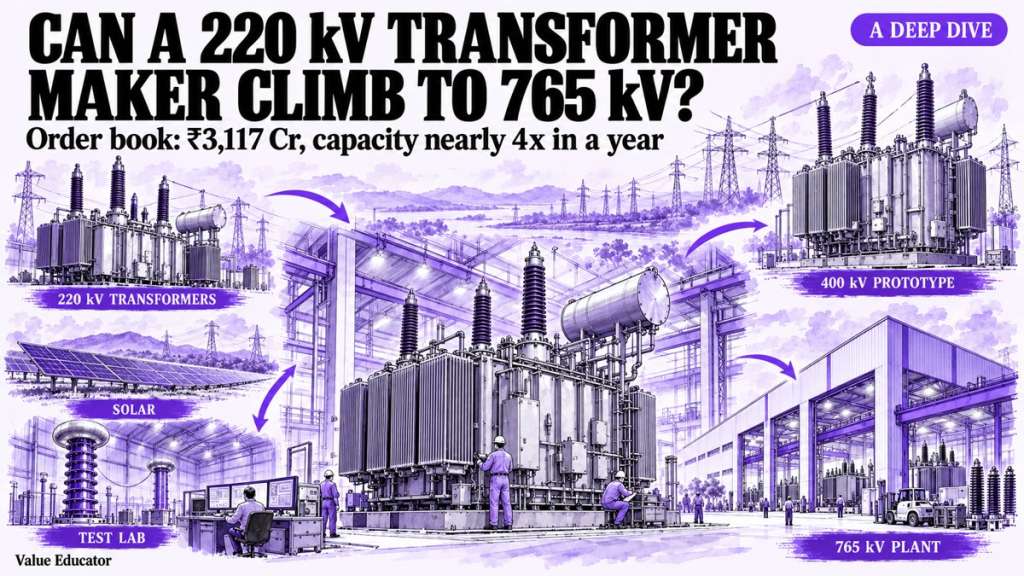
In the April to June quarter of 2026, a transformer maker from Anand in Gujarat booked ₹972.42 Cr of new orders, the most it has ever won in a single quarter. Two state utilities, in Rajasthan and Punjab, gave it orders of ₹291.68 Cr and ₹285.15 Cr. Its order book reached ₹3,116.63 Cr at the end of June, against revenue of ₹1,851.52 Cr in the whole of FY26.
Orders like these are coming because India is building its grid at a pace it has not seen before. Management lists the reasons: new transmission lines, renewable plants that must be connected to the grid, battery storage, industrial and railway electrification, and data centres. Every new solar park, transmission line and substation needs transformers, and the country has set a target of 500 GW of non-fossil power capacity by 2030. Management told investors in July 2026 that it saw a multi-year investment cycle, not a short upturn.
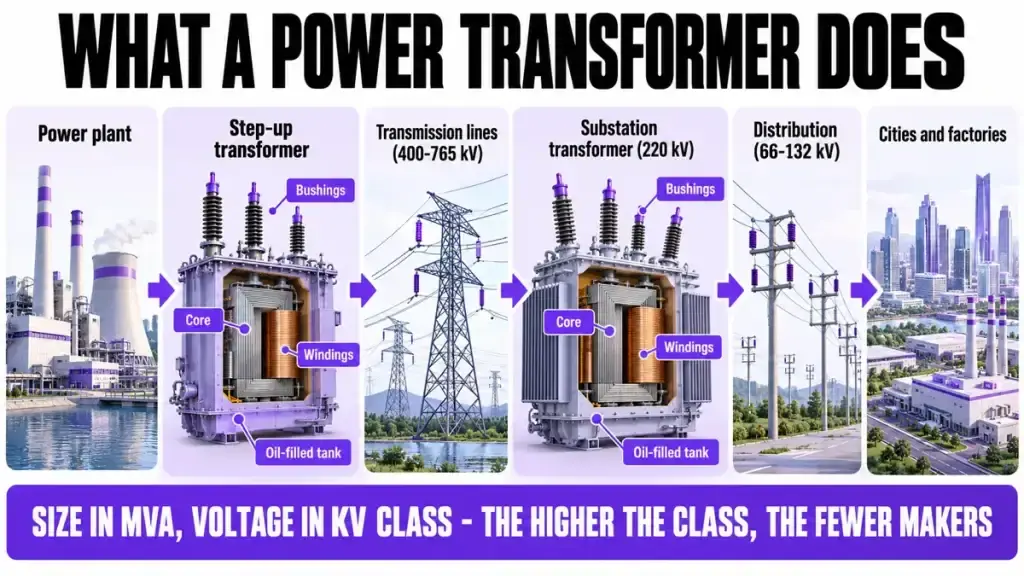
A power transformer is a large machine that steps voltage up or down as electricity moves from power plants to transmission lines and on to cities. Its size is measured in MVA (mega-volt-amperes), a unit of electrical capacity, and its kV class is the highest voltage it handles, from 66 kV on local networks to 765 kV on the national grid. The higher the kV class, the harder the transformer is to build and the fewer companies can make it.
That company is Atlanta Electricals Ltd (NSE: ATLANTAELE). It makes power, auto, inverter-duty, generator and furnace transformers, from 5 MVA at 11 kV up to 500 MVA at 765 kV. It listed on the stock exchanges in September 2025, and it now runs five plants with a combined capacity of 63,060 MVA.
Its last year was a year of building. In FY26, Atlanta started a new plant at Vadod, bought a second large plant at Ankhi from its Chinese joint-venture partner, and repaid all its term loans. Revenue grew 48.8% to ₹1,851.5 Cr, with an EBITDA margin of 18.6%.
Atlanta Electricals in five numbers
- Q1 FY27 revenue of ₹466.33 Cr, up 48% from a year ago
- An order book of ₹3,116.63 Cr at the end of June 2026
- Installed capacity of 63,060 MVA across five plants
- FY26 EBITDA margin of 18.6%, against 15.6% in FY25
- About ₹2,400 Cr of orders due for execution in FY27
So how does a company that made mostly 220 kV transformers move up to the 400 kV and 765 kV classes? Let's first understand the company, and then look at the latest quarter.
Atlanta Electricals: Company Overview
Atlanta Electricals Ltd was set up in 1988 in Anand, Gujarat, and began making 33 kV and 66 kV power transformers in 1992. It is run by the Patel family: Niral Patel, the chairman and managing director, has over 22 years in transformer making, and A K Mathur is chief executive. It makes power, auto, inverter-duty, generator and furnace transformers from 5 MVA at 11 kV up to 500 MVA at 765 kV, sold mainly to state transmission utilities and renewable-energy developers. Its five plants, three older units at Anand and Bengaluru plus the new Vadod and Ankhi plants, have a combined capacity of 63,060 MVA. It employed 505 people in June 2026 and listed on the stock exchanges in September 2025. In FY26, consolidated revenue was ₹1,851.52 Cr, all term loans were repaid, and the debt-to-equity ratio fell to 0.05. Read this The Silent Gatekeeper of India's Power Grid
"Time is the friend of the wonderful business, the enemy of the mediocre."
— Warren Buffett
Atlanta took close to three decades to climb from 33 kV to 220 kV. The next few years will show whether that slow build turns into an edge in the 400 kV and 765 kV classes.
A Quarter Driven by New Capacity
Let's look at Q1 FY27, the April to June quarter. Revenue rose 48% to ₹466.33 Cr from ₹315.11 Cr a year ago, as new capacity came in. Management said the growth came almost entirely from volume, as the new Vadod and Ankhi plants added output, with no material change in prices or product mix.
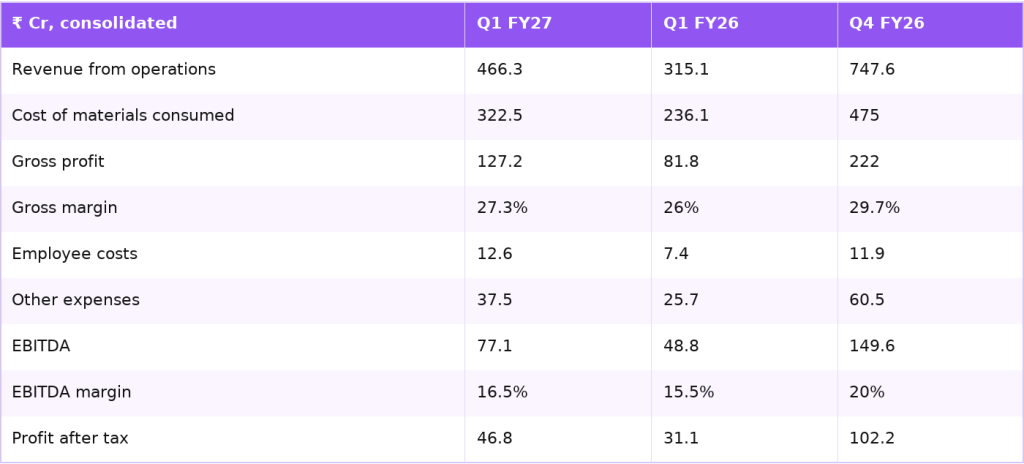
Profit grew faster than revenue. Gross profit rose 55.5% to ₹127.20 Cr, EBITDA rose 58.1% to ₹77.10 Cr and profit after tax rose 50.4% to ₹46.84 Cr. Read this How to Read a Profit & Loss Statement The gross margin improved to 27.3% from 26%, which management linked to better operating efficiency and more 220 kV transformers in the mix.
That quarter looks smaller next to the March quarter, and it usually does. Utilities float most of their tenders early in the financial year and take most deliveries late, when they spend their yearly budgets. So revenue was 37.6% lower than in Q4 FY26, and the EBITDA margin was 16.5% against about 20% in that quarter.
Why Q1 always looks smaller: utilities tender early and take delivery late in the year. In FY26, the EBITDA margin started at 15.48% in Q1 and reached 20% in Q4. Q1 FY27 began at 16.50%, higher than either of the last two first quarters.
Those plants also show up in the volumes. Atlanta sold 4,381 MVA of transformers in the quarter, against 3,605 MVA a year earlier. Of the Q1 FY27 total, 1,520 MVA came from Vadod and 320 MVA from Ankhi. For comparison, the company produced about 13,000 MVA in the March quarter, which tells you how much of the year's work still lies in the second half.
That volume is the clearest sign of the new plants at work. Atlanta did not raise prices to grow; it shipped more transformers from more factory space, and the new plants are still far from full.
Its working capital rose with the ramp-up. Net working capital stood at 72 days at the end of June, with inventory at 105 days, receivables at 88 days and payables at 110 days. Management said it buys raw material job by job, for orders due in the coming quarter, rather than betting on commodity prices.
The Order Book Behind the Plants
Now let's look at the orders that will fill those plants. The order book rose 25% in three months, to ₹3,116.63 Cr at the end of June 2026 from ₹2,493 Cr in March. A year earlier, it stood at ₹1,584 Cr.

Two state utilities gave the largest orders. Rajasthan's RVPNL ordered ₹291.68 Cr of 160 MVA, 50 MVA and 31.5 MVA power transformers, and Punjab's PSTCL ordered 23 transformers of 160 MVA, 220/66 kV, worth ₹285.15 Cr. After the quarter, in August 2026, Andhra Pradesh's APTRANSCO issued a letter of intent for 12 auto transformers of 160 MVA, 220/132 kV, worth ₹193.92 Cr including GST.
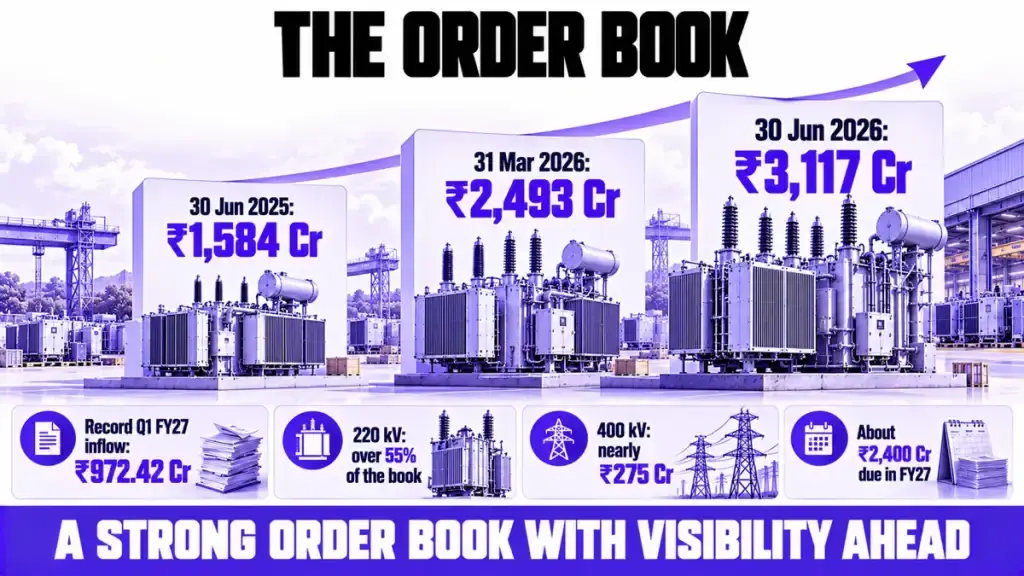
Those orders are moving up the voltage scale. Transformers of 220 kV now make up over 55% of the order book, and 400 kV transformers and reactors account for nearly ₹275 Cr. Management expects about ₹2,400 Cr of the June order book to be executed within FY27.
That book is large next to what Atlanta has delivered so far. The June 2026 order book of ₹3,116.63 Cr is about 1.7 times FY26 revenue of ₹1,851.52 Cr, by our arithmetic. The March quarter alone brought revenue of ₹747.62 Cr and profit after tax of ₹102.2 Cr, which shows how much of the year's work lands at the end.
That pipeline should keep growing in the next two quarters. Management says order booking usually peaks between Q2 and the middle of Q3. It also said that Q1 FY27 brought its highest order inflow in at least two to two and a half years, with no sign of prices easing despite new capacity across the industry.
FY26 Was the Building Year
Now let's turn to FY26, the year Atlanta spent building. Revenue grew 48.8% to ₹1,851.5 Cr, ahead of the 40% growth management had targeted. EBITDA rose to ₹344.4 Cr, and the EBITDA margin improved to 18.6% from 15.6%.
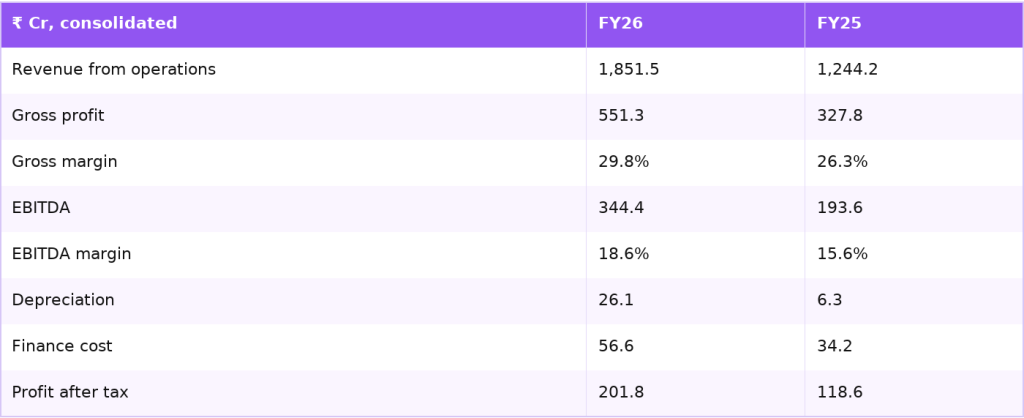
That margin gain came from mix and buying. Transformers of 220 kV made up nearly 52% of FY26 revenue, and the gross margin rose to 29.8% from 26.3%. Depreciation rose to ₹26.1 Cr from ₹6.3 Cr as the new plants came into use.
Its cash improved too. Operating cash flow was ₹184.33 Cr in FY26 against ₹83.58 Cr in FY25, and net working capital was 64 days. Read this Cash Flow Statement Explained The debt-to-equity ratio was 0.05 against 0.40 a year earlier, after the IPO money and internal cash cleared the term loans.
That IPO money went where it was promised. Of the ₹400 Cr raised through new shares, ₹395.46 Cr had been used by March 2026. It went as ₹79.12 Cr to repay the Vadod term loan, ₹210 Cr for working capital, ₹85 Cr to repay the loan taken for the Ankhi plant and ₹21.31 Cr for issue expenses. The monitoring agency has reported no change from the stated purposes.
Its banks have backed the growth as well. Bank facilities rose from about ₹910 Cr to ₹1,320 Cr during FY26, mostly for the guarantees that utilities ask for, and CRISIL kept its long-term rating at A/Stable.
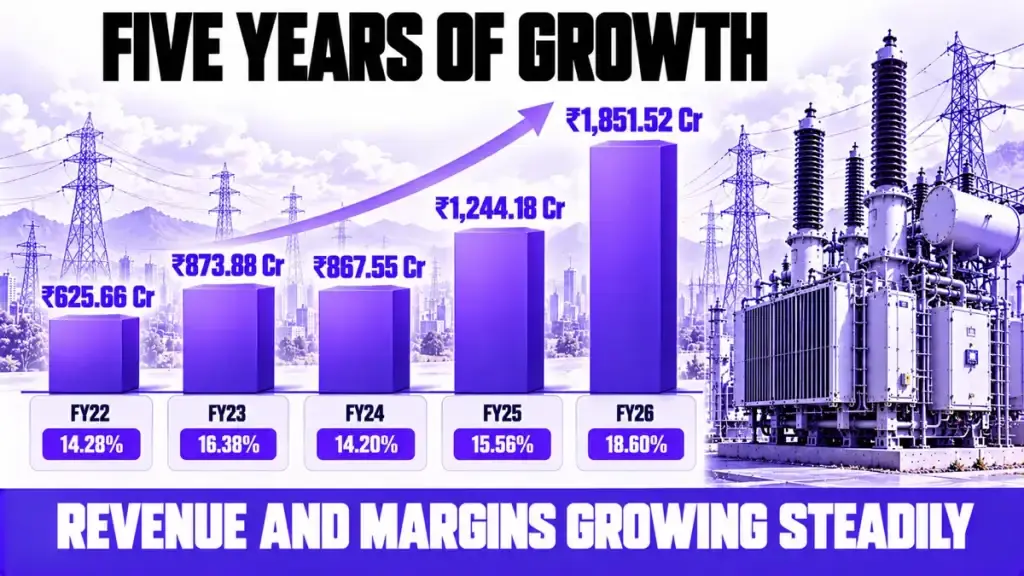
That climb has come in steps over five years, and so has the margin. The EBITDA margin was 14.28% in FY22, 16.38% in FY23, 14.20% in FY24 and 15.56% in FY25, before the jump to 18.60% in FY26. You can see that FY26 was the first year the new plants and the richer 220 kV mix came together.
Those same years show the revenue path. Revenue rose from ₹625.66 Cr in FY22 to ₹873.88 Cr in FY23, stayed at ₹867.55 Cr in FY24 while the old plants were full, then rose to ₹1,244.18 Cr in FY25 and ₹1,851.52 Cr in FY26. Profit after tax rose from ₹55.30 Cr to ₹201.77 Cr over the same years.
From Anand to the National Grid
That climb began in 1988, so let's go back to where Atlanta started. The company was set up as Atlanta Electricals Pvt. Ltd. in 1988 in Anand, Gujarat, and started making 33 kV and 66 kV power transformers in 1992.
Its early record was built one voltage class at a time. In 2010, it supplied 14 power transformers of 6.3 MVA to Leh, designed to work at altitudes of over 3,000 metres. It began supplying 132/66 kV, 50 MVA transformers to utilities in 2011 and 220/66 kV, 100 MVA units in 2014.
That progress reached 220 kV by 2018. That year, it supplied its first 160 MVA, 220/66 kV power transformer and a 150 MVA, 220/132 kV auto transformer to GETCO, Gujarat's transmission utility. In 2024, it passed a dynamic short-circuit test on a 160 MVA, 220/66 kV transformer, one of the toughest tests a transformer must survive.
Its biggest changes came in 2025. Atlanta bought the plant at Ankhi from Baoding Tianwei Baobian Electric (BTW), one of the world's largest transformer makers, which had owned 90% of their joint venture. It used its right of first refusal and outbid CG Power and Transformers & Rectifiers for the plant, at an enterprise value of about ₹260 Cr, including about ₹80 Cr of BTW's debt.
That purchase gave Atlanta a plant it could not have built quickly itself. The Ankhi plant has 15,780 MVA of capacity, and Atlanta first used it to make 220 kV units for its existing orders while it prepares for 765 kV.
That plant has a record of its own. As Atlanta Trafo, it has already supplied 400 kV and 765 kV transformers to PGCIL, GETCO and the Telangana utility, and its building can be upgraded to 1,200 kV within the existing structure. In the same year, the new Vadod plant started production in July and the company listed in September.
Those years also brought customers and plants.
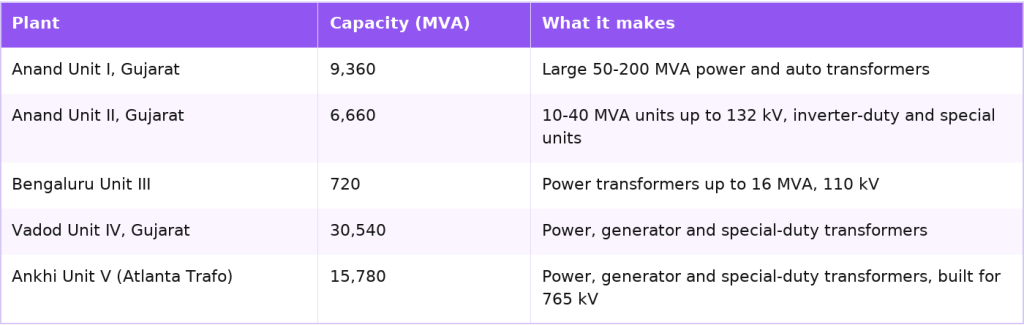
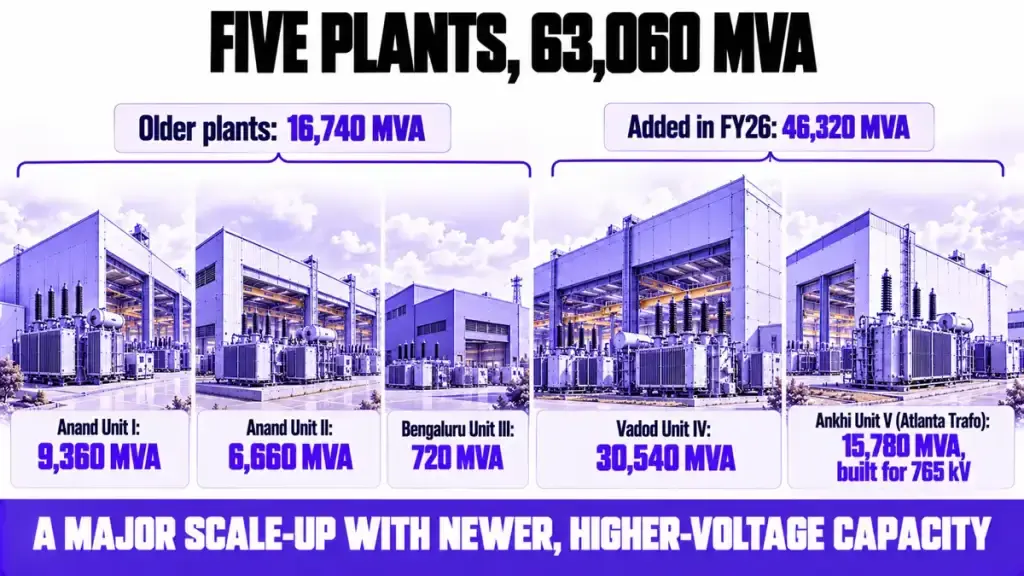
That table shows how much FY26 changed the company. The three older plants together have 16,740 MVA of capacity, by our arithmetic, while Vadod and Ankhi add 46,320 MVA. Atlanta employed 505 people in June 2026, including 37 transformer design specialists who engineered its 400 kV units in-house.
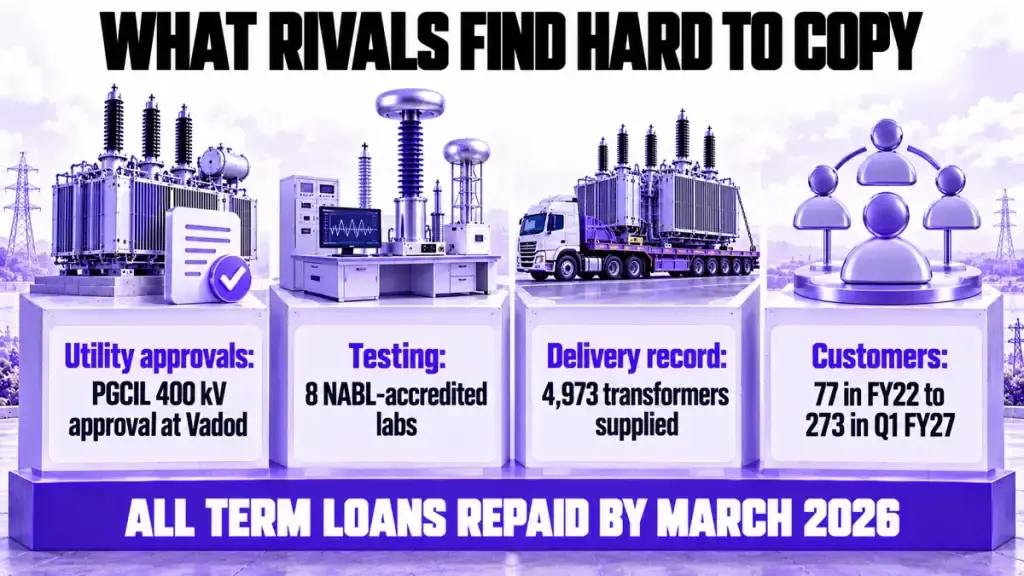
Those plants have also widened the customer list, and the list matters as much as the plants. A transformer maker that sells to only a few utilities depends on their budgets each year, so a wider base makes the business steadier. Atlanta served 77 customers in FY22 and 273 by Q1 FY27, across 19 states and 3 union territories. It has supplied 4,973 transformers so far.
"FY26 was the year in which we built the platform. The next few years will be about converting that platform into sustainable performance." - Niral Patel, Atlanta Electricals, AGM speech, September 2026
That platform is run by the Patel family. Niral Patel, the chairman and managing director, has over 22 years in transformer making, and Tanmay Patel and Amish Patel are whole-time directors. A K Mathur is chief executive, Mehul Mehta chief financial officer and Anand Sharma chief operating officer.
Transformers by Voltage Class
Now let's see what Atlanta sells, and the market it sells into. The global transformer market is put at USD 58.9 billion in 2023, rising to USD 91.3 billion by 2029, or about 6.90% a year. In India, transmission and distribution made up 42.86% of power transformer demand in FY25, industry 28.57% and renewable energy 9.52%.
Within that market, Atlanta reports one segment, transformers, but the products differ by type and by voltage class, and the voltage class decides both the competition and the margin.

By market, transmission and distribution gave about 66% of Q1 FY27 revenue and renewable energy about 19%. Thermal power and other industry made up the rest.
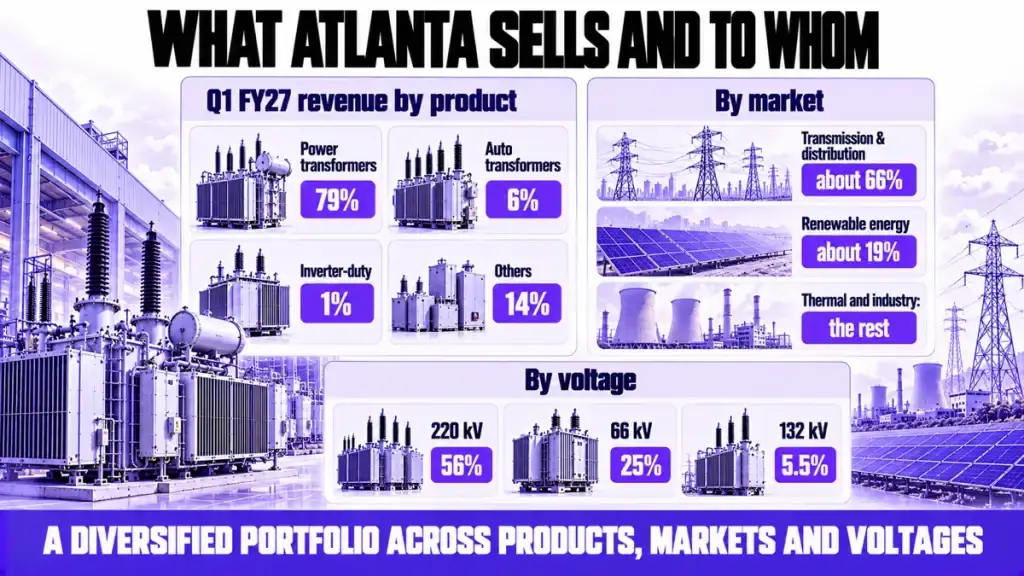
By voltage, 220 kV transformers gave 56% of Q1 FY27 revenue, 66 kV units 25% and 132 kV units about 5.5%. Management describes this as an industry where the higher the voltage class, the thinner the competition.
That mix also tells us who pays the bills. State transmission utilities are the largest buyers, and they buy through open tenders, so Atlanta must win most of its work on price and delivery time. Renewable developers and industrial buyers make up most of the rest.
That demand is broad, but not every new market has reached Atlanta yet. Management lists data centres and battery storage among its next opportunities, yet its order book in July 2026 had no data-centre orders. For now, you should think of Atlanta as a utility and renewable-energy supplier first.
66 kV and 132 kV Transformers
Let's start with the smaller classes. Transformers of 66 kV and 132 kV serve state distribution networks, factories and solar plants, and they are where Atlanta built its name over three decades. Together they gave 30.5% of Q1 FY27 revenue, by our arithmetic.
This end of the market has more makers. Management's plan to protect margins here is to build exports, so that its lower kV classes can sell into markets where it faces less price competition. It said it still sees shortages in the 132 kV class and margins holding up today.
220 kV Transformers
Next, let's look at 220 kV, the class that now drives the business. These are the large units that state transmission utilities use in their main substations, and they gave 56% of Q1 FY27 revenue and over 55% of the order book.
Atlanta's older plants were built mainly for this class. Anand Unit I can make transformers of 50-200 MVA, and the new Vadod and Ankhi plants also make 220 kV units today. All of the record orders booked in Q1 FY27 were for 220 kV and below.
400 kV and 765 kV Transformers
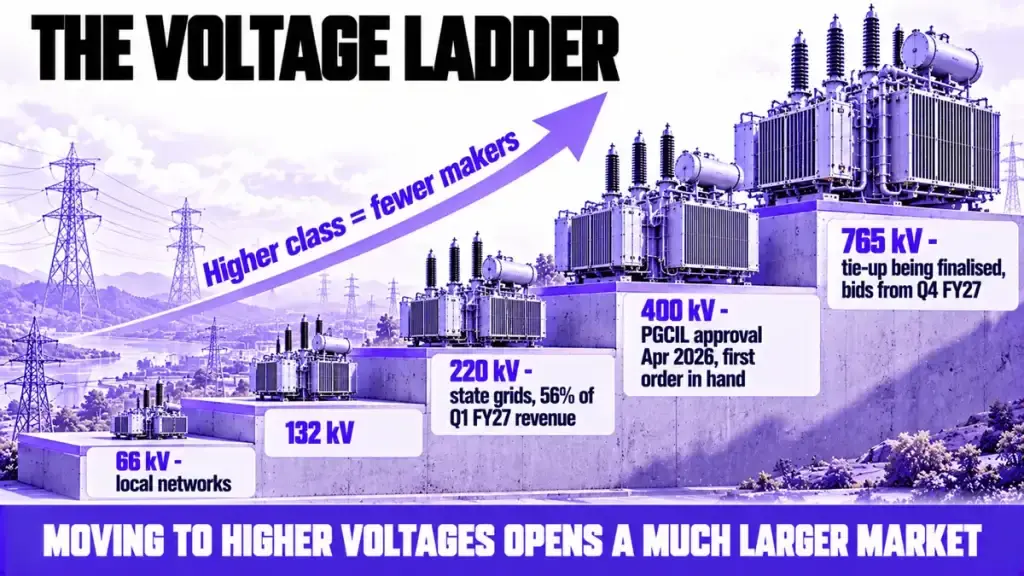
Now we come to the classes Atlanta has never made before. Transformers of 400 kV and 765 kV sit on the national grid, carry the largest power flows and are usually ordered by PGCIL. They are also much larger orders, with execution lead times of about 18 to 24 months.
Here, Atlanta has already taken the first steps. Its Vadod plant received PGCIL approval on 2 April 2026 to make transformers up to 400 kV, about two years after groundbreaking, subject to a short-circuit test. It has its first 400 kV order, for 315 MVA units, and engineering for them is complete.
That test is the real hurdle. A short-circuit test checks whether a transformer can survive the huge forces of a fault on the grid without its windings moving or breaking. Utilities insist on it before they trust a new design, and it is done at an outside laboratory, one unit at a time.
"It takes 20 years to build a reputation and five minutes to ruin it."
— Warren Buffett
For Atlanta, the first 400 kV unit carries that weight. A pass opens the national grid to it, and a failure would set the plan back by a long way.
The test comes next. Management expected the first 400 kV unit to be ready for its short-circuit test at the end of the September quarter, and then to execute the rest of the order within FY27. It expects meaningful 400 kV revenue from FY28.
Beyond 400 kV, Atlanta is finalising a technology partner for 765 kV. Management expects to pay a one-time fee of USD 3-5 million and a royalty of 2-4% on 765 kV products for three to four years. It plans to make its first 765 kV transformer, auto transformer and reactor at Ankhi, and expects to start bidding for 765 kV orders in the last quarter of FY27.
Those classes should also pay better. Management has said a 765 kV transformer would earn a margin around 200 basis points higher than today's mix, though it will know the real figure only after its first units are built and tested.
Inverter-Duty and Green Transformers
Beyond the grid classes, let's look at the smaller lines. Atlanta also makes inverter-duty transformers, which connect solar and battery plants to the grid. They were only 1% of Q1 FY27 revenue, but management says supply is short across all ranges, including these.
That is why it is building a dedicated plant. Unit VI, for inverter-duty transformers, will add about 5,000 MVA of capacity, and management aims to start it before the end of calendar 2026. It will serve solar plants, battery storage and EV charging.
Its green transformers are a smaller line with a useful edge. They use natural or synthetic ester oils instead of mineral oil, which makes them safer against fire. When mineral oil ran short in FY26, Atlanta switched to producing these units and kept its deliveries going.
Exports
Finally, let's look at exports, the newest piece. Atlanta received its first sizeable export order in FY26, and had no export revenue in Q1 FY27. It aims for exports of about 15% of revenue within three years, mainly in Europe and Africa and, to some extent, the United States.
Management expects to book more export orders in FY27, with revenue from them from FY28. It sees exports as a way to keep margins steady if the domestic market ends up with too much capacity a few years from now.
Why Utility Qualification Is Hard to Copy
Now that we have seen each product, let's look at what keeps Atlanta in the game against much larger rivals. It starts with qualification. A utility will not let a new maker bid for its large transformers until it has approved the plant, the design and often a short-circuit test, and each approval covers one voltage class at a time.
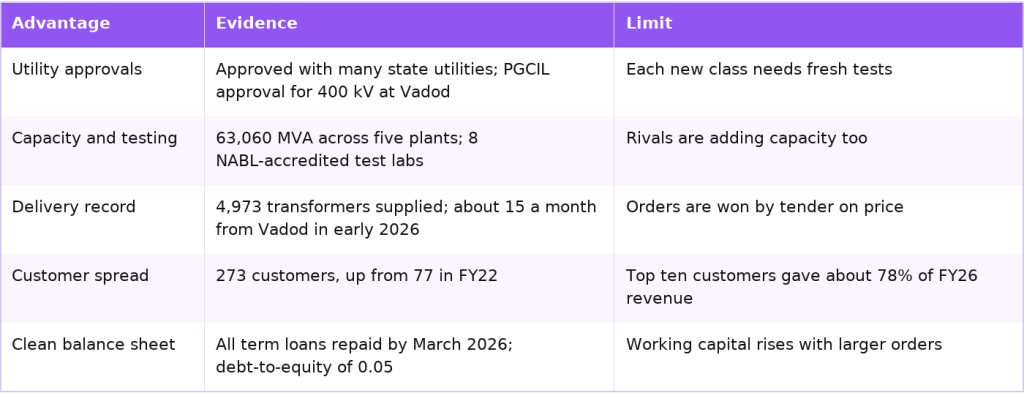
That approval process takes years, and it shows in Atlanta's own record. The company spent close to three decades moving from 33 kV to 220 kV, and it passed a dynamic short-circuit test on a 160 MVA unit only in 2024. A new entrant would have to go through the same steps, class by class. Read this Economic Moat Explained
Its plants are the second layer. Atlanta tests transformers in its own labs, up to 500 MVA and 765 kV, and it can make the largest units at two plants now. Its older plants ran at 98.28% of capacity in FY26, up from 61.28% in FY22, which is why the new capacity was needed.
Those plants also give it speed. The Vadod plant cost about ₹200 Cr and produced about ₹495 Cr of revenue in its first seven months. In each of the last three months of FY26, it dispatched about 15 transformers.
"We have therefore consciously prioritised quality and validation over short-term order-book growth." - Niral Patel, Atlanta Electricals, AGM speech, September 2026
Its suppliers are spread out, which keeps it from depending on any one of them. The top ten suppliers gave 69.14% of raw materials in FY26, with none above 17.87%, and 86.08% of purchases came from Indian suppliers.
Its rivals are large, which is where the limit lies. Global groups and Indian companies such as CG Power and Transformers & Rectifiers are adding capacity, and analysts put the new capacity due within months at almost 60,000 MVA. Atlanta's answer is to move up to 400 kV and 765 kV, where fewer companies can compete.
That competition could also come from abroad. In 2026, the government allowed some Chinese power-equipment makers with Indian plants to bid in public-sector tenders. Management said only one of them makes transformers in India, that it had not yet seen it bid, and that it had seen no change in pricing or bidding so far. We think this is worth watching over the next few tenders.
Financials: Atlanta's Five-Year Climb
We have seen FY26 next to FY25. Now let's look at five years together, including how much of the profit turned into cash.
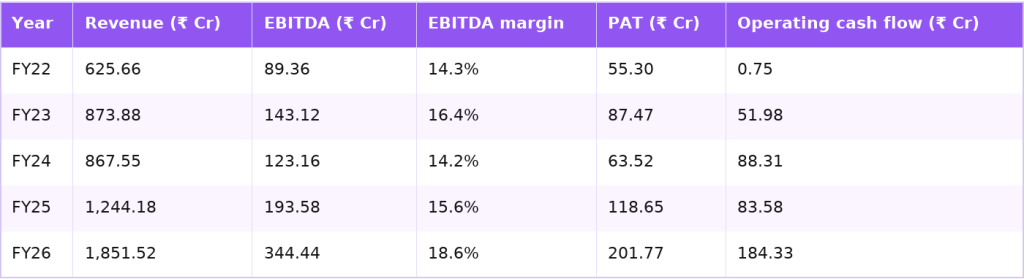
Revenue grew about 3 times in four years, from ₹625.66 Cr in FY22 to ₹1,851.52 Cr in FY26, or about 31% a year by our arithmetic. EBITDA grew about 3.9 times and profit after tax about 3.6 times, because the margin rose from 14.3% to 18.6%. FY24 was the only flat year, when the older plants were already close to full.
Cash has lagged profit. Over the five years, operating cash flow added up to about ₹409 Cr against about ₹527 Cr of profit after tax, or roughly 78%, by our arithmetic. In FY22, operating cash flow was only ₹0.75 Cr. The gap is working capital: net working capital rose from 48 days in FY22 to 64 days in FY26, because a transformer maker buys material and builds for months before a utility pays.
Debt has gone the other way. The debt-to-equity ratio fell from 0.97 in FY22 to 0.05 in FY26, after the IPO money and internal cash cleared the term loans. FY26 was also the first year operating cash flow passed ₹180 Cr.
"Over the long term, it's hard for a stock to earn a much better return than the business which underlies it earns."
— Charlie Munger
For Atlanta, the business has earned well in FY26. The test now is whether cash flow keeps pace with profit as larger, higher-voltage orders tie up more working capital.
What the Next Two Years Look Like on Management's Numbers
So what could all of this add up to for you as a reader following Atlanta? Management has kept its aim of about 40% revenue growth a year for three years from listing. Applied to FY26 revenue of ₹1,851.52 Cr, that would mean FY27 revenue of about ₹2,592 Cr, by our arithmetic.
That aim is backed by the order book. About ₹2,400 Cr of the June 2026 order book is due in FY27, and Q1 FY27 already brought ₹466.33 Cr of revenue. Order booking usually peaks in Q2 and early Q3, so more orders could still be delivered within the year.
That growth will come from filling the new plants. Vadod ran at about 39% of its nameplate capacity in FY26, and management expects about 65% in FY27, then full use as higher-voltage production ramps up. You can see what that means in volume: Vadod produced 6,960 MVA in its first seven months, and the older plants already run close to full.
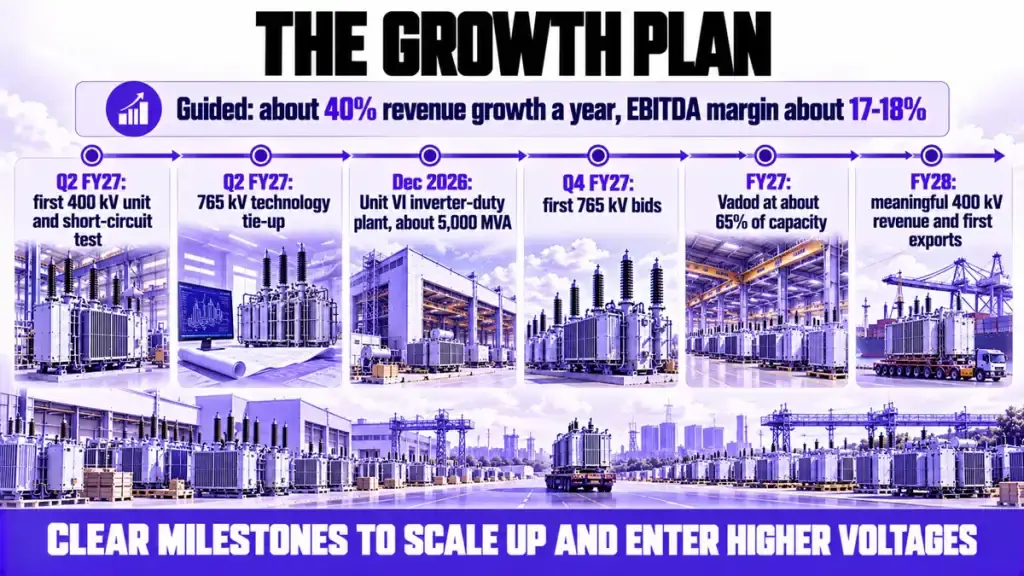
That plan follows a simple rule the chairman set out at the AGM in September 2026: prototype, validate and then scale. He said the company had chosen quality and validation over short-term growth in its order book, because its name in the 400 kV and 765 kV classes will depend on its first few units.
Its margins are guided to stay steady. Management expects an EBITDA margin of about 17-18% in FY27. It said 400 kV and 765 kV units should earn better margins, but the technology fee and new-product costs will use up part of that gain at first.
Its capital plan is modest next to FY26. The chairman listed six priorities for FY27 at the AGM. The first three are to prove the 400 kV and 765 kV products, raise the use of the new capacity and start Unit VI. The other three are to build the tank and radiator plant, grow exports and enter new markets such as battery storage and data centres. Unit VI for inverter-duty transformers is due by December 2026. A robotic tank and radiator plant near Vadod will make parts that are 4-5% of a transformer's cost, and the company had invested ₹15-20 Cr in it by July 2026.
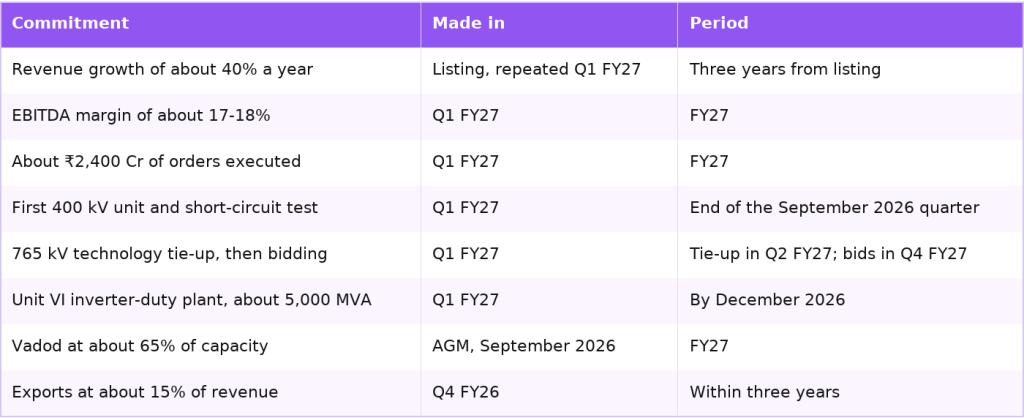
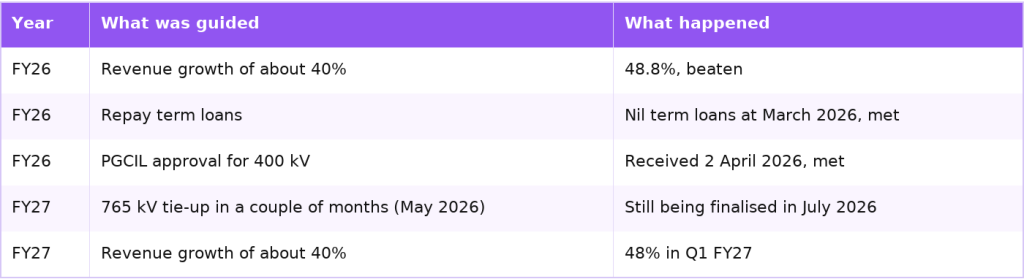
These commitments come with a short record we can check. In its first year as a listed company, Atlanta beat its growth target, repaid its term loans and won the 400 kV approval on time. The 765 kV tie-up has taken longer than first expected.
"Behind every stock is a company. Find out what it's doing."
— Peter Lynch
For Atlanta, finding out means checking each promise in the table above against what the next few quarters deliver.
Key Risks
No business grows in a straight line, so let's look at what could go wrong for Atlanta.
- Few, large customers: state utilities give 70-80% of orders, and the top ten customers gave about 78% of FY26 revenue. Utilities can delay tenders and pay late when their budgets are tight.
- New-product tests: the 400 kV unit must pass its short-circuit test, and the 765 kV plan depends on a technology partner and government approvals. A failed test or a delayed tie-up would push back the larger orders.
- More capacity in the industry: rivals are adding plants, and new capacity of almost 60,000 MVA is due within months. Management has seen no price pressure so far, but tenders are won on price.
- Input costs and supply: raw material prices are rising, and management expects that to continue. Most orders carry price-variation clauses, but not all, and the industry faced shortages of bushings and mineral oil in FY26.
- Raw material rules: India's trade regulator has started an anti-dumping probe into imports of CRGO steel, the special steel used in transformer cores, with a decision expected by March 2027. Management sees no short-term effect, but duties could raise costs later.
- Working capital: inventory rose to 105 days in June 2026, and larger, higher-voltage orders will need more working capital as the business grows.
- Quality scrutiny: in April 2026, a Bihar distribution company debarred Atlanta over one observation during a post-test inspection. The order was withdrawn in August 2026 after an appeal, but it shows how closely utilities watch every unit.
- Promoter control and seasonality: the Patel family held 94.36% before the IPO and remains in control. Revenue is lumpy within the year, with Q1 FY27 revenue 37.6% below Q4 FY26.
"Only when the tide goes out do you discover who's been swimming naked."
— Warren Buffett
Today the whole transformer industry is short of capacity. If the new plants across the industry catch up with demand, prices and order wins will show which makers are truly strong.
Explore our Products
Research Framework

Emerging Titans
Combination of quantitative analysis, industry tailwinds, and management assessment - SPRINT investment philosophy

Tiny Titans
Heavy emphasis on scuttlebutt research, plant visits, and early on-ground signals
What to Track Next
If you follow Atlanta, these are the signals that will show whether the plan is on track.
- Q2 FY27 results (July to September quarter, not yet filed), including order inflow in the peak booking season
- The short-circuit test result on the first 400 kV, 315 MVA transformer
- The 765 kV technology tie-up and the first 765 kV bids
- Vadod's output moving towards about 65% of capacity in FY27
- Unit VI starting by December 2026
- The first export revenue, expected from FY28
Conclusion
Let's step back and put it all together. Atlanta spent three decades moving up from 33 kV to 220 kV transformers, then in a single year nearly quadrupled its capacity, bought a plant built for 765 kV and cleared its term loans. It now holds an order book of ₹3,116.63 Cr and earns an EBITDA margin in the high teens.
So the next two years will test whether it can fill those plants and pass into the top voltage classes. The 220 kV orders from state utilities are strong today, and they give it about ₹2,400 Cr of work for FY27. If the 400 kV test passes and the 765 kV tie-up closes, Atlanta could keep growing near the 40% a year it has guided. If the tests slip or new industry capacity squeezes prices, growth will lean more heavily on 220 kV orders and on how quickly exports build. The next two quarters, with the 400 kV short-circuit test and the peak season for new orders, will show which path Atlanta is on.
FAQs
What does Atlanta Electricals do?
+Atlanta Electricals is a transformer maker from Anand, Gujarat, set up in 1988. It makes power, auto, inverter-duty, generator and furnace transformers from 5 MVA at 11 kV up to 500 MVA at 765 kV. It runs five plants with a combined capacity of 63,060 MVA.
How big is Atlanta Electricals' order book?
+The order book was ₹3,116.63 Cr at the end of June 2026, up from ₹2,493 Cr in March and ₹1,584 Cr a year earlier. Q1 FY27 brought a record ₹972.42 Cr of new orders, and management expects about ₹2,400 Cr of the book to be executed in FY27.
How did Atlanta Electricals perform in FY26 and Q1 FY27?
+FY26 revenue grew 48.8% to ₹1,851.5 Cr, with an EBITDA margin of 18.6% and profit after tax of ₹201.77 Cr. In Q1 FY27, revenue rose 48% to ₹466.33 Cr and profit after tax rose 50.4% to ₹46.84 Cr.
What are Atlanta Electricals' plans for 400 kV and 765 kV transformers?
+Its Vadod plant received PGCIL approval on 2 April 2026 to make transformers up to 400 kV, and it has a first 400 kV order for 315 MVA units, subject to a short-circuit test. For 765 kV, it is finalising a technology partner and plans to start bidding in the last quarter of FY27.
What is Atlanta Electricals' guidance?
+Management aims for about 40% revenue growth a year for three years from listing and an EBITDA margin of about 17-18% in FY27. It expects Vadod to run at about 65% of capacity in FY27 and exports to reach about 15% of revenue within three years.
What are the main risks for Atlanta Electricals?
+The main risks are dependence on state utilities, the 400 kV short-circuit test and the 765 kV tie-up, new industry capacity of almost 60,000 MVA, rising raw material costs and higher working capital. The top ten customers gave about 78% of FY26 revenue, and revenue is lumpy within the year.

High growth stock specialist, Value Educator
Shashank Mahajan is an equity research professional with over 12 years of experience in identifying high-potential SME and micro-cap stocks at an early stage. He follows a rigorous scuttlebutt research–driven approach, combining on-ground insights with deep financial analysis. Shashank specializes in uncovering under-researched and under-owned companies with strong management quality and long-term growth potential. Through disciplined research and early identification, he focuses on spotting tomorrow’s market leaders before they enter the mainstream investor radar.
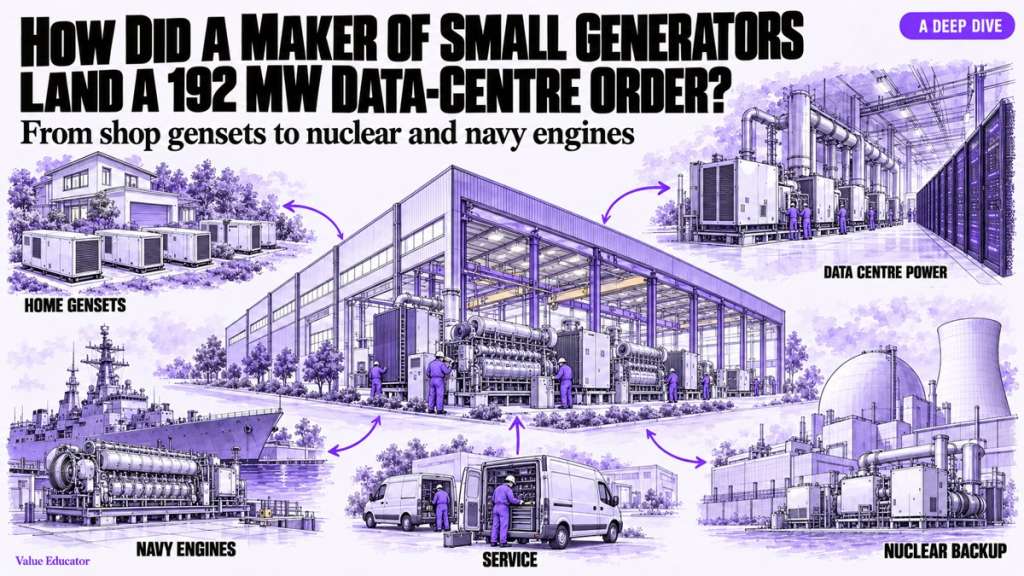
Kirloskar Oil Engines: Data Centres, Nuclear and the Navy
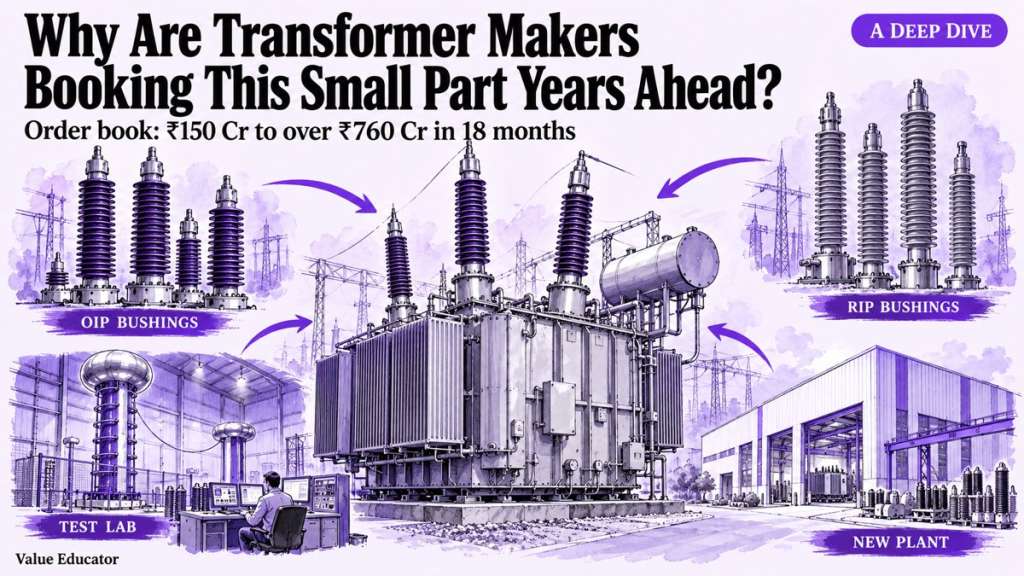
Yash Highvoltage: Bushing Maker With ₹760 Cr of Orders
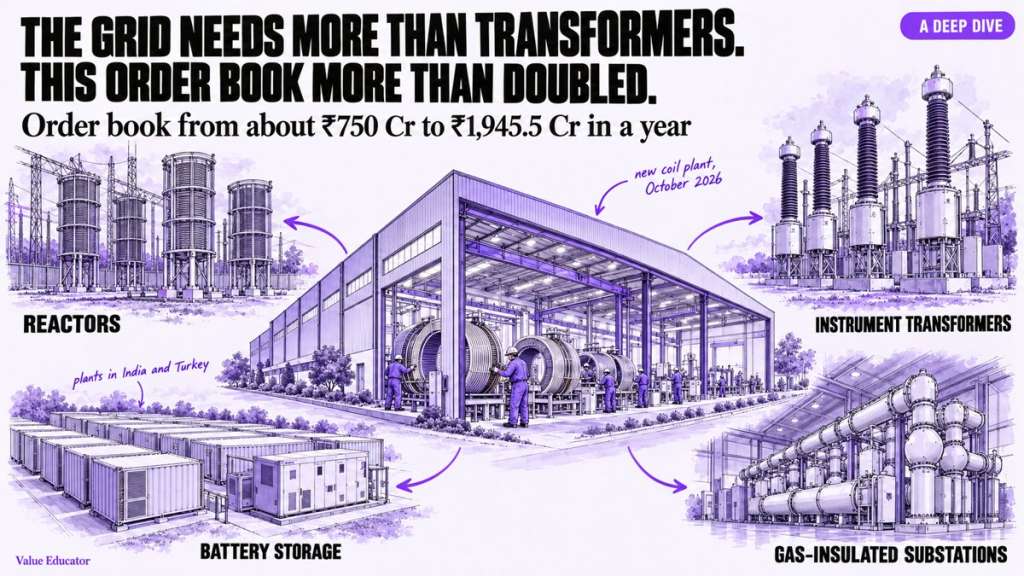
Quality Power: Reactor Maker With a ₹1,945.5 Cr Order Book
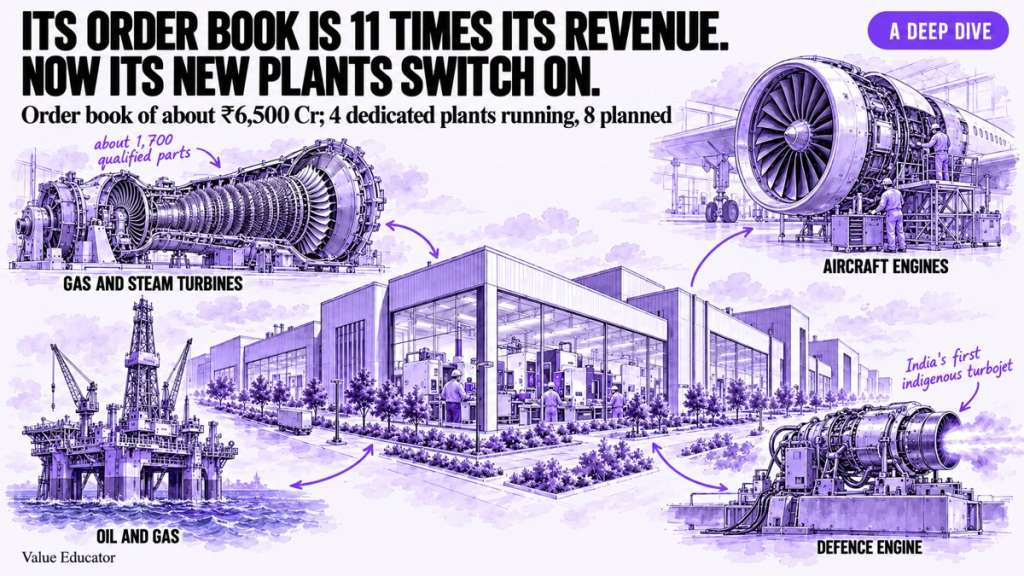
Azad Engineering: Turbine Blades, Jet Engines and Orders
Cyient DLM: Aircraft Electronics and a Record Order Book

Zen Technologies: Revenue Fell After a Big Win
Explore our Products
Research Framework
Emerging Titans
Combination of quantitative analysis, industry tailwinds, and management assessment - SPRINT investment philosophy
Tiny Titans
Heavy emphasis on scuttlebutt research, plant visits, and early on-ground signals


 Orders
 Subscription
 Share with friends


Required Details
₹23999.00
(12 month subscription)
As per SEBI regulations, all users are mandated to complete the KYC that is validated for 1 year. Post payment, you will be redirected to the KYC screen


No comments yet. Be the first to comment!