
Cold Chain: Protecting Value With Refrigeration

India is one of the world’s major producers of food, dairy products, medicines, seafood, frozen products and fresh groceries.
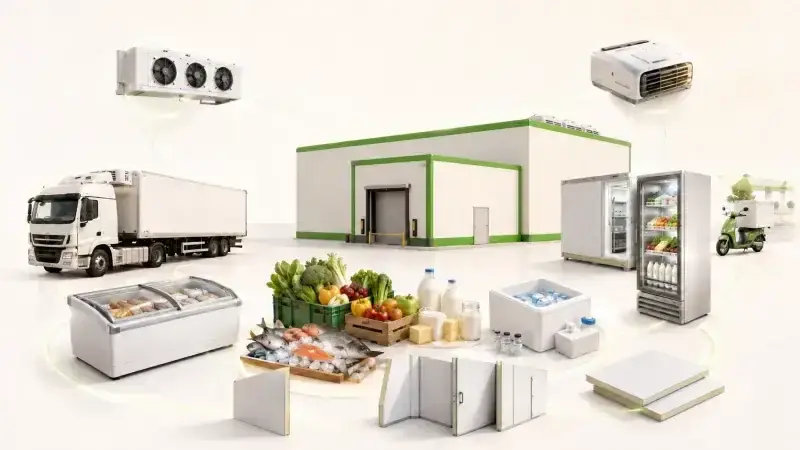
Perishable products can rapidly lose value if they are not refrigerated. The dairy industry needs to be properly chilled, the fresh produce sector must be able to store products under control if it is going to be chilled, medicines must be kept within safe temperature bands and modern food-service operations must have cold-chain infrastructure to provide a degree of consistency. This is where refrigeration goes from being merely a machine to infrastructure.
Temperature control is crucial for ensuring product quality in various industries, including food, dairy, pharmaceuticals, and the hospitality sector and quick commerce.
Organized cold chain infrastructure is required to meet the demand as India is growing.
An increased amount of food is being processed. Consumption of dairy products is increasing. There are more medicines that need to be kept at a certain temperature. Dark stores are becoming more integral to more quick commerce platforms. There is a growing demand for reliable refrigeration in more restaurants, hotels and retail chains. Increased quality preservation is required amongst more exporters.
This is where our company is working.
On the surface, it could be just a refrigerator manufacturing company. However, there is a more fascinating narrative behind it: a company that experienced solid revenue growth, entered new markets of product, made investments to build future capacity, took margin pressure at close range and geared up for the next step in scale.
What Does the Company Actually Do?
The company operates in the commercial and industrial refrigeration solutions space.
In simple words, the company makes and supplies cooling solutions used by businesses that need controlled temperature.
The company’s product portfolio includes cold rooms, commercial refrigeration products, industrial refrigeration systems, transport refrigeration, ammonia-based systems, PUF panels, continuous panels, commercial freezers, chest freezers and visi coolers.
These products are used across various sectors such as dairy, food processing, agriculture, pharmaceuticals, healthcare, hospitality, retail, quick service restaurants, quick commerce, seafood, logistics and cold storage. The company is not dependent on only one type of cooling product. It is into a wide range of products that are required in various sectors.
This wide product basket gives the company multiple routes for growth.
That is why Ice Make should not be seen only as a freezer company or only as a cold room company. It is trying to position itself as an integrated refrigeration and cold-chain solutions provider.
The company we are about to discuss today is ICE Make Refrigeration ltd.
Segment-Wise Revenue Analysis: How to Find a Company's True Growth Engine
Why Cold Chain Matters in India
India has a huge food and agriculture economy. A large amount of perishable goods produced can go to waste because of poor storage, temperature control, logistics and lack of access to proper cold-chain infrastructure. It could affect farmers, food processors, retailers, exporters and consumers.
Cold-chain infrastructure helps solve this issue.
It makes fruits, vegetables, dairy, seafood, medicines and frozen products to remain usable for a longer period improving their shelf life. It reduces wastage. It helps farmers sell at better prices. It helps food companies maintain quality. It helps pharma and healthcare companies protect sensitive products.
This is why refrigeration is not just about cooling. It is about preserving value.
In India, the long-term demand drivers are visible. Food processing is growing. Organized retail is expanding. Quick commerce is creating more demand for stores and temperature-controlled supply chains. Pharma and healthcare require stricter storage standards. Dairy and ice cream consumption continue to support refrigeration demand.
For a company like Ice Make, this creates a broad opportunity.
The more organized India’s food, retail, healthcare and logistics ecosystem becomes, the more important reliable refrigeration solutions can become.
FY26 Financial Performance
FY26 was a strong year for the company in terms of growth, but the numbers also show that the business was in an investment phase.
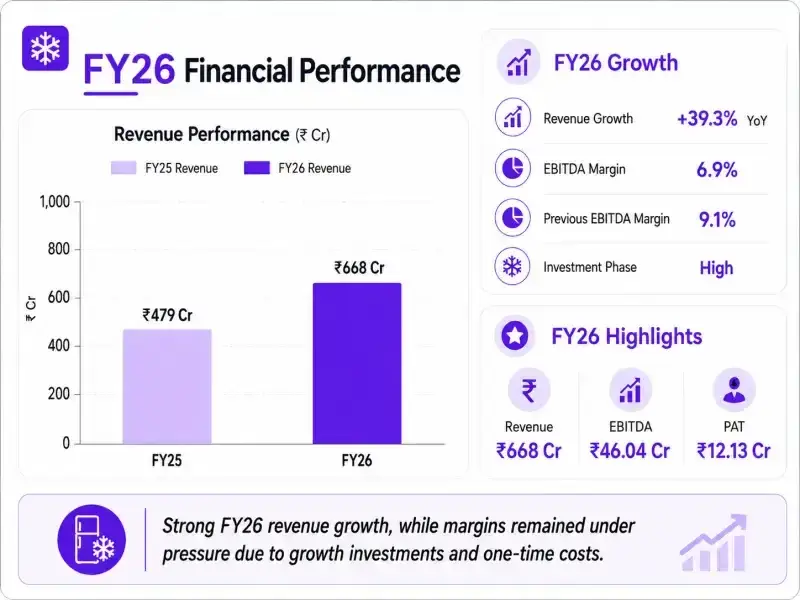
The company delivered strong growth and reported its highest revenue performance. Consolidated revenue for FY26 was ₹668 crore, compared to FY25 which was at ₹479 crore. The company grew its revenue by approximately 39.3% year-on-year. That is a strong growth number.
It shows that demand remained healthy across the company’s key business areas. The growth was supported by cold rooms, commercial refrigeration, new product categories, regional expansion, and better execution in the second half of the year.
However, the story was not only positive.
Profitability came under pressure during FY26. EBITDA for the year stood at around ₹46.04 crore, with EBITDA margin near 6.9%, compared with around 9.1% in the previous year. Profit after tax for FY26 was near ₹12.13 crore.
This shows that revenue grew but profit did not grow at the same pace.
For investors, this is important.
A company can grow revenue quickly, but if margins fall, the quality of growth must be examined carefully. In Ice Make’s case, management explained that the margin pressure was largely because the company invested heavily in future growth capabilities.
These included investments in manufacturing infrastructure, channel expansion, leadership capabilities, product development, warehouse network, technology, systems, brand building, market development and organizational strengthening. The company also incurred around ₹4 crore of one-time expenses linked to regulatory and employee-related provisions.
So FY26 should be understood properly.
It was not a year where margins fell only because the business became weak. It was a year where the company chose to invest for scale, even though those investments reduced near-term profitability.
The key investor question is whether these investments can translate into better revenue, better utilization and better margins in FY27 and beyond.
The Shift Toward a Broader Refrigeration Platform
One of the most important parts of the FY26 story was the performance of new product categories.
Management highlighted strong traction in chest freezers, visi coolers and continuous panels. These new decisions are important because they can help the company move beyond its traditional product and capture a wider refrigeration opportunity.
Commercial freezers, chest freezers and visi coolers can help the company expand deeper into retail, ice cream, dairy, quick commerce and distribution-led businesses.
This matters because newer verticals can increase the company’s addressable market.
A company with only cold rooms has one type of opportunity.
A company with cold rooms, freezers, panels, transport refrigeration and industrial refrigeration has a much broader opportunity.
That is the direction Ice Make is trying to move toward.
In FY26, these new businesses were still in the scale-up phase. That means margins were not fully mature. The company had to invest in distribution, customer acquisition, channel incentives, pricing strategy, brand acceptance and market development. This is why FY26 margins were under pressure.
But if these new categories scale well, they can become meaningful contributors over the next few years.
Segment Mix
Cold rooms remain the company’s core business.
This segment continues to support revenue because demand comes from dairy, food processing, pharma, agriculture, e-commerce, QSR, hospitality and cold storage users. Cold rooms are also strongly linked to India’s cold-chain infrastructure theme.
But the business mix is gradually becoming wider.
The company also operates in industrial refrigeration, traditional commercial refrigeration, transport refrigeration, ammonia and industrial projects, continuous panels and commercial freezers.
This diversification matters because every segment has a different demand cycle.
Each segment connects to a different growth driver.
Cold rooms support storage, food processing, dairy and pharma demand. Commercial refrigeration serves retail, HoReCa, ice cream, beverages and consumption-led categories. Transport refrigeration supports temperature-controlled logistics.
Ammonia and industrial refrigeration cater to larger industrial cooling requirements, while continuous panels support insulated infrastructure and cold-chain construction. Commercial freezers and visi coolers help the company participate in retail expansion, brand penetration and last-mile consumption growth.
A wider segment mix can reduce dependence on one category.
However, diversification also brings execution challenges. Newer verticals need distribution, pricing discipline, customer trust, after-sales service, working capital control and scale.
So the segment mix is promising, but investors must track whether these newer businesses improve profitability as they mature.
Why FY26 Margins Were Lower
Many investors may look at FY26 and ask one direct question.
If revenue grew nearly 39%, why did profitability remain weak? The answer lies in the company’s investment phase.
FY26 was the first full year of operations for some of the newly launched verticals. In such a phase, companies often spend more on dealer networks, brand-building, market entry, discounts, product acceptance, warehouse expansion, team building and service infrastructure.
These costs appear immediately in the profit and loss statement.
But the benefits come later, if the business scales.
That is exactly what happened in Ice Make’s case. The company expanded its distribution network, invested in market development, strengthened its leadership team, added systems and built operating capabilities for larger scale.
There were also one-time expenses of around ₹4 crore. If these are normalized, the underlying EBITDA margin would have been closer to 7%.
This tells us that FY26 margin pressure was partly structural to the investment phase and partly affected by one-time costs.
The good news is that management expects margins to improve in FY27.
The company has taken price increases of around 10–11% across multiple product lines and expects EBITDA margin to move toward 8.0–8.5% in FY27. Better utilization, operating leverage and normalization of one-time expenses can support this recovery. So FY26 was a margin reset year.
FY27 will show whether the reset was temporary or whether profitability remains a challenge.
Revenue Ambition
Management has mentioned about generating revenue of ₹1,000 crore by FY28. This is a key target as it reflects the company's scale ambition.
The company is already on the path to progress significantly, with its revenue growing from approximately ₹480 crore in FY25 to approximately ₹668 crore in FY26. For FY27, the management has guided for revenue of the range of ₹830-850 crore. This would ensure that the company moves in the right direction towards reaching the ₹1,000 crore target. However, investors should not pay attention to the headline figure.
Beyond Revenue Growth: 10 Mid-Cap Stocks Where Profits Compound
Running at a revenue of ₹1000 crore is not sufficient. More important, however, is if the company can achieve that scale with improved margins, limited debt, more efficient use of capital and improved return ratios.
Value is created through profitable growth.
The company has also demonstrated its ability to scale revenue. The next hurdle is to transform scale into better earnings quality. That's why FY27 and FY28 are crucial years.
“The greatest investment reward comes to those who find the occasional company that can grow in sales and profits far more than industry as a whole.” Philip Fisher
Order Book
One positive factor in the company’s story is the order book.
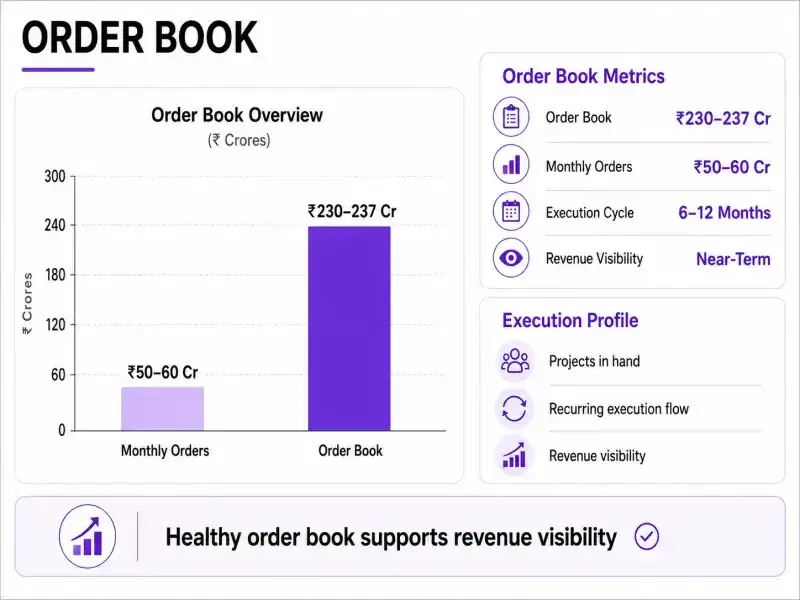
As of the FY26 commentary, management indicated a healthy order book of around ₹230–237 crore. This provides revenue visibility for the coming quarters.
Order book matters because it shows that demand is not only theoretical.
Customers are placing orders. Projects are moving. The company has work in hand. For refrigeration and cold-chain businesses, order books can include project-based orders as well as recurring monthly orders.
Management also indicated that the company receives and executes around ₹50–60 crore of orders each month on average, while project-based orders may have execution cycles of six months to one year.
This tells us that the business has both project visibility and recurring execution flow.
However, the order book must always be tracked carefully.
A strong order book is useful only if it converts into revenue on time, at acceptable margins, and without excessive working capital pressure.
That is the execution challenge.
Quick Commerce, Distribution and Brand Expansion
One of the important demand drivers for the company is India’s changing consumption pattern.
Consumers are buying more frozen foods, dairy products, beverages, fresh groceries, processed foods and ready-to-eat products. At the same time, QSR chains, hotels, restaurants, cloud kitchens, modern retail stores and quick commerce platforms are expanding their reach. This expansion needs reliable refrigeration.
Quick commerce needs attention because it depends heavily on dark stores, cold rooms, chillers, freezers and temperature-controlled storage. If a platform wants to deliver fresh products quickly, it needs the right cooling infrastructure. That is where companies supplying commercial refrigeration and cold-chain products can benefit.
For Ice Make, this opens a consumption-led opportunity beyond traditional industrial refrigeration. The company is not only serving large cold-chain projects; it is also building relevance in retail, institutional customers, quick commerce, food processing and commercial freezer categories.
But demand alone is not enough.
To capture this opportunity, the company also needs reach. That is why distribution and brand expansion become important. During FY26, the company invested in dealer networks, brand outlets, regional expansion, customer engagement and service infrastructure. These investments might affect near-term profitability, but they will also help create a wider market base for future growth.
The company has also been expanding across regions. While the western region remains an important market, management has highlighted growth across northern, southern and eastern regions. This is important because a stronger pan-India presence can reduce dependence on one location and support more balanced growth.
“Plans are only good intentions unless they immediately degenerate into hard work.” Peter Drucker
Why This Stock Is Worth Tracking
Ice Make Refrigeration is worth tracking because it operates in a structural growth area.
India needs more cold-chain infrastructure. Food processing needs better refrigeration. Dairy and ice cream need cold rooms and freezers. Pharma needs temperature-controlled systems. QSR and quick commerce need reliable cooling networks. Warehousing and logistics need insulated infrastructure.
The company has a wide product portfolio and is expanding beyond traditional segments into newer growth categories such as continuous panels, chest freezers and commercial freezers.
FY26 showed that the company can scale revenue strongly. The order book provides visibility. The ₹1,000 crore revenue ambition gives a clear growth roadmap. FY27 guidance suggests continued growth with margin recovery. But this is not a clean, risk-free story.
The issue here is profitability.
“Value investors thrive not by incurring high risk, but by deliberately avoiding or hedging the risks they identify.” Seth Klarman
Revenue growth is strong, but margins came under pressure in FY26. The company must now prove that its investments in new distribution and capacity can generate better operating leverage. If FY27 shows revenue growth plus margin improvement, the investment case becomes stronger but if revenue grows but margins remain weak, investors may need to reassess the quality of growth.
Key Risks Investors Should Not Ignore
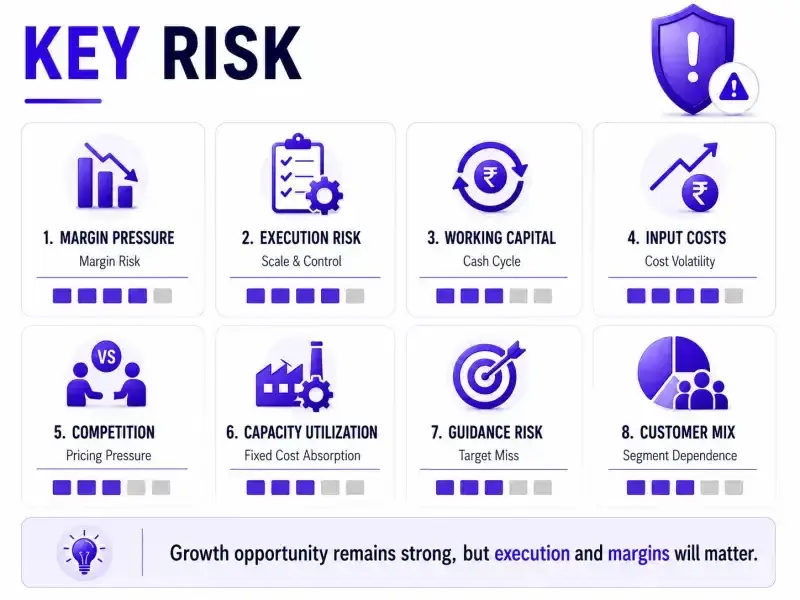
The first risk is margin pressure. FY26 showed that revenue growth alone was not enough. If new verticals take longer to scale or price increases do not fully offset costs, margins may again create difficulty for the management.
The second risk is execution risk. The company is expanding products, geographies, distribution and capacity. Managing all of this together requires strong systems, leadership and operational discipline.
The third risk is working capital risk. Project-based businesses and inventory-heavy product categories may require significant working capital. If receivables, inventory or project execution stretches, cash flows can be affected.
Inventory Turnover Explained: A Powerful Efficiency Signal Investors Ignore
The fourth risk is input cost volatility. Materials such as compressors, PUF chemicals, refrigeration components and imported parts can be sensitive to supply-chain disruption or price inflation. If cost rises, margins can be impacted.
The fifth risk is competition. Commercial freezers, cold rooms, panels and refrigeration products have competition from organized and unorganized players. The company may need to balance pricing, volume growth and profitability.
The sixth risk is capacity utilization. New verticals must scale sufficiently to absorb fixed costs. If utilization remains low, depreciation and finance costs can continue to pressure earnings.
The seventh risk is guidance risk. Management has guided for strong revenue growth and margin recovery. If FY27 revenue or EBITDA margin falls short, market expectations can reset.
The eighth risk is customer and segment concentration. Growth from quick commerce, food processing, dairy or specific projects is positive, but overdependence on a few categories can create volatility.
“Risk means more things can happen than will happen.” Howard Marks
Explore our Products
Research Framework

Emerging Titans
Combination of quantitative analysis, industry tailwinds, and management assessment - SPRINT investment philosophy

Tiny Titans
Heavy emphasis on scuttlebutt research, plant visits, and early on-ground signals
What Investors Should Track Going Forward
Investors should track revenue growth, but not in isolation.
The following are things that an investor should keep track of :
- EBITDA margin - FY26 margin pressure was explained as investment-led and partly one-time. FY27 should show whether margins recover toward management’s guidance.
- New vertical performance - Continuous panels, chest freezers, commercial freezers and visi coolers must scale with better margins.
- Order book conversion - A healthy order book is useful only when it converts into timely revenue and cash flows.
- Working capital - Inventory, receivables and project execution timelines will matter as the company scales.
- Price increases - Management has already taken price increases, so investors should watch whether these are accepted by the market and reflected in margins.
- Regional expansion - Growth in North, South and East can reduce dependence on the West and widen the company’s market opportunity.
- The ₹1,000 crore revenue roadmap - The target is attractive, but the quality of growth will matter more than just reaching the number.
“What gets measured gets managed.” Peter Drucker
Conclusion on the Stock
Ice Make Refrigeration is a company operating in a structural growth area: India’s cold-chain and refrigeration infrastructure.
FY26 showed strong demand and record revenue growth, but it also showed that growth comes with execution and margin challenges. The company invested heavily in new verticals, distribution, leadership, systems and market expansion. These investments reduced near-term profitability but may support future scale.
The stock has a good future outlook because the business is linked to areas such as food processing, dairy, pharma, QSR, quick commerce, cold storage, logistics and organized retail. The growth is visible and the company has a clear ambition to reach ₹1,000 crore revenue.
However, investors should not look at revenue growth in isolation. The real challenge will be whether the company can improve margins, control working capital, scale new verticals profitably and convert order books into strong cash flows.
In simple terms, Ice Make Refrigeration is a cold-chain growth company with strong revenue hold but FY27 will be important to prove margin recovery and earnings quality.
The Multibagger Framework: A Step-by-Step Guide to Finding 10x Stocks.
Want more such simple and data-backed stock stories? Comment “Growth Stories” and keep following our research articles.
FAQs
What does the company actually do?
+The company operates in the commercial and industrial refrigeration solutions space. It manufactures and supplies products such as cold rooms, commercial freezers, chest freezers, visi coolers, transport refrigeration systems, ammonia-based systems, PUF panels and continuous panels. These products are used across food processing, dairy, pharma, hospitality, retail, quick commerce, seafood, logistics and cold storage.
Why is cold-chain infrastructure important in India?
+Cold-chain infrastructure helps preserve temperature-sensitive products such as fruits, vegetables, dairy, seafood, medicines and frozen foods. It improves shelf life, reduces wastage and helps businesses maintain product quality. As India’s food processing, pharma, dairy, retail and quick commerce sectors grow, reliable refrigeration becomes increasingly important.
Why did profitability come under pressure in FY26?
+Profitability came under pressure because the company was in an investment phase. It spent on new verticals, distribution expansion, product development, warehouse network, leadership, technology systems, brand-building and market development. The company also had around ₹4 crore of one-time expenses. These costs affected near-term margins even though revenue growth remained strong.
What makes the stock worth tracking?
+The stock is worth tracking because the business is linked to long-term themes such as cold-chain infrastructure, food processing, dairy, pharma, QSR, quick commerce, logistics and organized retail. FY26 showed strong revenue growth, a healthy order book and a clear ₹1,000 crore revenue ambition. However, margin recovery and execution quality will be important to watch.
What should investors track going forward?
+Investors should track EBITDA margin recovery, new vertical performance, order book conversion, working capital, price increases, regional expansion and progress toward the ₹1,000 crore revenue roadmap. Revenue growth is important, but the quality of growth will depend on margins, cash flows and execution discipline.

High growth stock specialist, Value Educator
Shashank Mahajan is an equity research professional with over 12 years of experience in identifying high-potential SME and micro-cap stocks at an early stage. He follows a rigorous scuttlebutt research–driven approach, combining on-ground insights with deep financial analysis. Shashank specializes in uncovering under-researched and under-owned companies with strong management quality and long-term growth potential. Through disciplined research and early identification, he focuses on spotting tomorrow’s market leaders before they enter the mainstream investor radar.
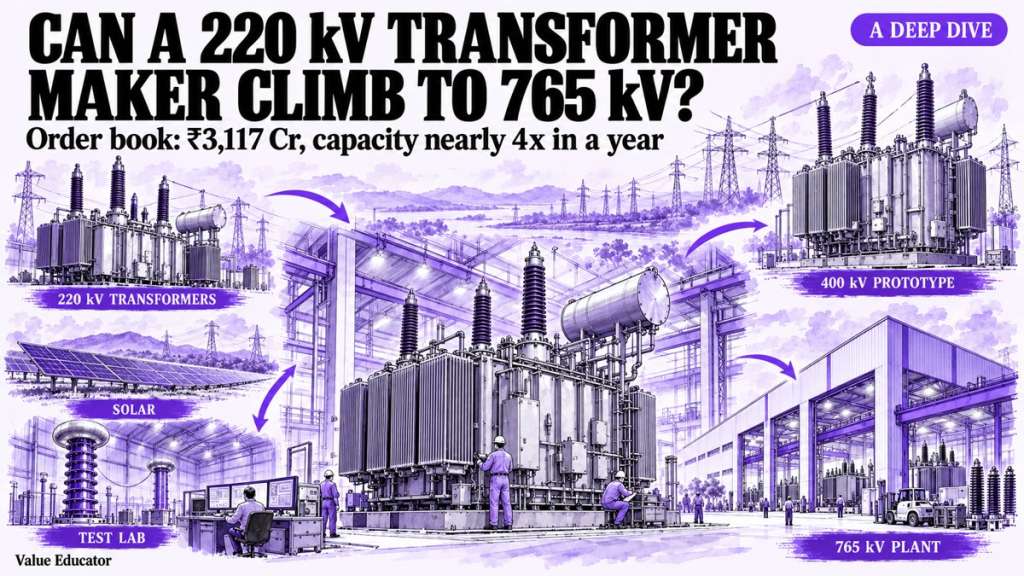
Atlanta Electricals: Capacity Nearly Quadrupled in a Year
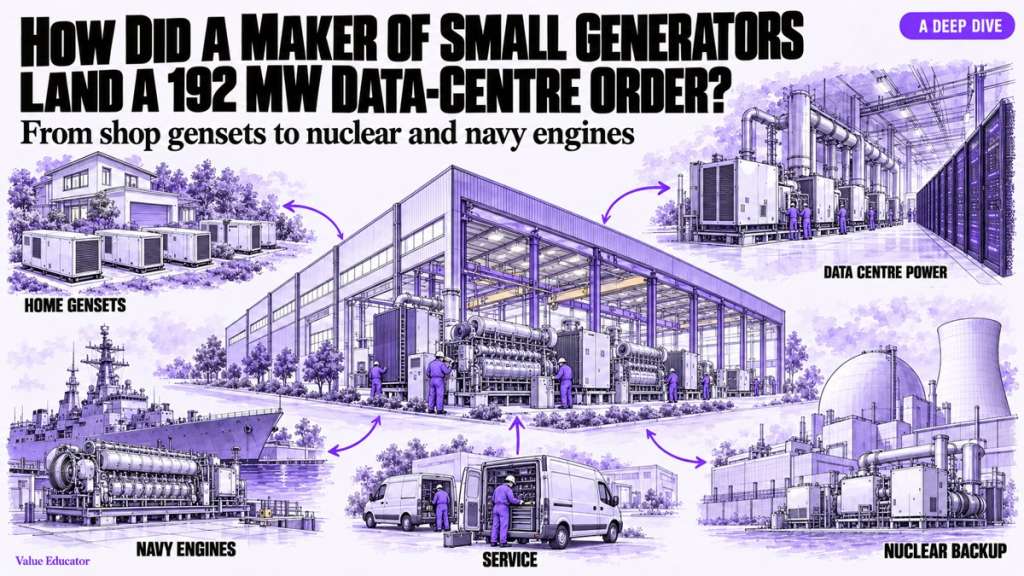
Kirloskar Oil Engines: Data Centres, Nuclear and the Navy
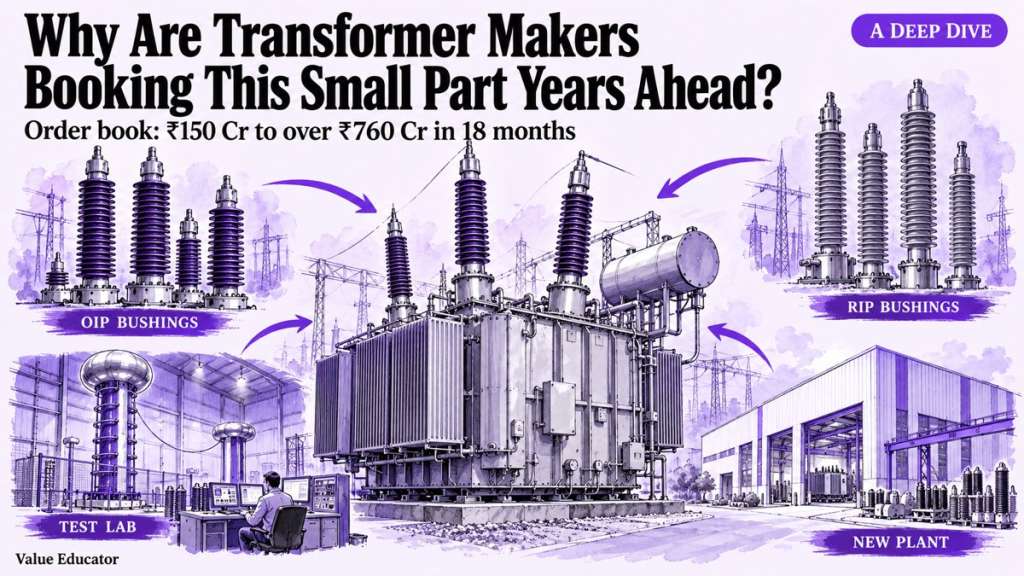
Yash Highvoltage: Bushing Maker With ₹760 Cr of Orders
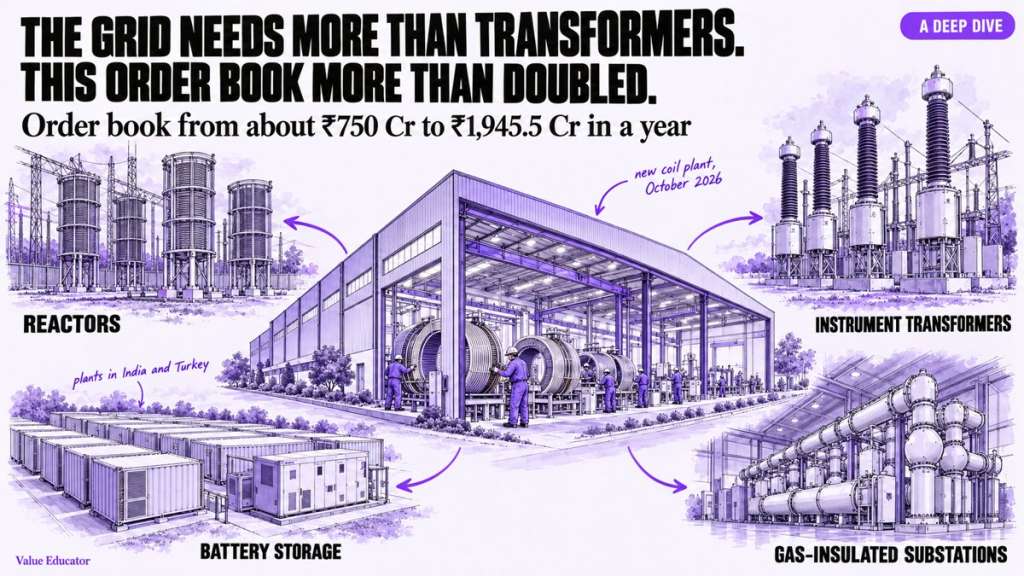
Quality Power: Reactor Maker With a ₹1,945.5 Cr Order Book

Azad Engineering: Turbine Blades, Jet Engines and Orders
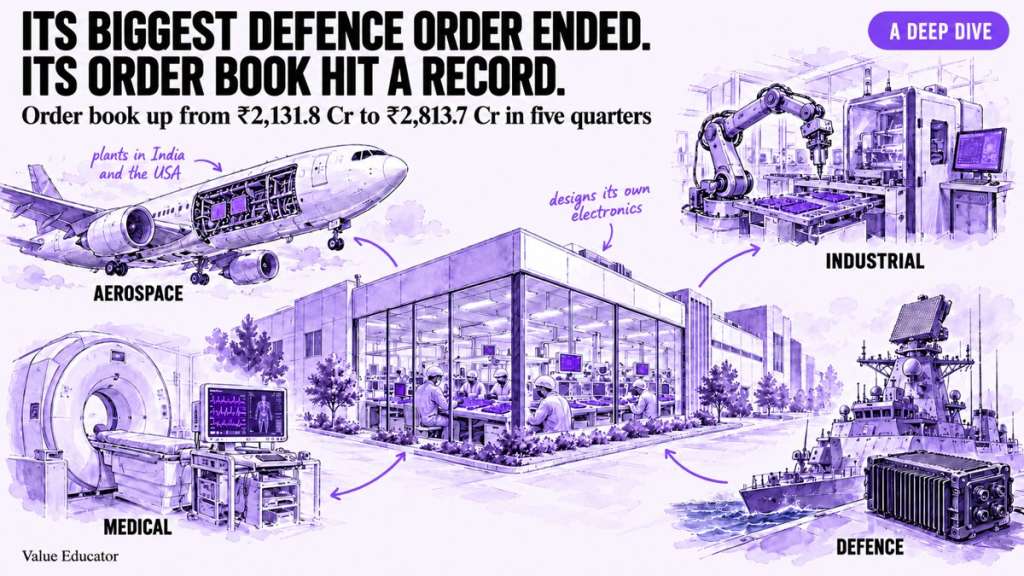
Cyient DLM: Aircraft Electronics and a Record Order Book
Explore our Products
Research Framework
Emerging Titans
Combination of quantitative analysis, industry tailwinds, and management assessment - SPRINT investment philosophy
Tiny Titans
Heavy emphasis on scuttlebutt research, plant visits, and early on-ground signals



Modern Warfare to Multibaggers
Key Trends. Strategic Shifts. Opportunities Ahead.
Don't Miss This Exclusive Webinar!
Join Value Educator to decode the key trends shaping India's defence sector and learn how to identify tomorrow's potential leaders in the space.
- In-depth research on India's defence sector
- Live Q&A session
- Actionable takeaways for long-term investors

 Orders
 Subscription
 Share with friends


Required Details
₹23999.00
(12 month subscription)
As per SEBI regulations, all users are mandated to complete the KYC that is validated for 1 year. Post payment, you will be redirected to the KYC screen


No comments yet. Be the first to comment!