
The Multibagger Framework: Finding 10x Stocks

In 2003, Titan wasn’t the powerhouse we know today. When Rakesh Jhunjhunwala began accumulating it, most investors dismissed the idea that it could ever become a future multibagger stock. “Who makes money selling watches?” they smirked. Yet this is exactly how most multibagger stocks first appear—quiet, unnoticed, and hiding in plain sight.

Jhunjhunwala wasn’t betting on watches. He was analysing a business quietly transforming behind the scenes: expanding retail presence, improving margins, and building a brand Indians were beginning to trust with jewellery. Titan never announced it was becoming a 10x stock—it whispered. Those whispers later compounded into one of India's greatest multibagger stocks.
The takeaway is simple: true multibagger stocks don’t demand attention; they evolve quietly through fundamental compounding. Once you learn to recognise these patterns with a structured framework, you can spot potential multibagger stocks long before the market wakes up.
“The big money is not in the buying and selling, but in the waiting.” — Charlie Munger
Read 10 Stock Market Terms Every Beginner Must Know Before Investing
What Is a Multibagger Stock?
A multibagger stock is a company whose share price multiplies several times over its original value, often delivering 5x, 10x, or even 50x returns. But that outcome is only the surface. At its core, a multibagger stock is a business that compounds earnings, margins, and competitive strength year after year. The market eventually rewards this compounding.Peter Lynch defined multibaggers as companies that “keep scoring.” The sustained increase in earnings, widening moats, and strong capital allocation ultimately push valuations higher. A multibagger stock grows because the underlying business keeps improving—not because of hype or momentum in stock price.
What Characteristics Should a Company Have to Become a Multibagger Stock? Inside the Multibagger Framework
A company does not become a multibagger by accident. It becomes one because certain long-term characteristics quietly compound in the background. When these ingredients come together, the stock price eventually reflects years of disciplined execution. Here are the traits commonly seen in companies that go on to become multibagger shares.
Why a Large & Expanding TAM Is Essential for Identifying Multibagger Stocks?
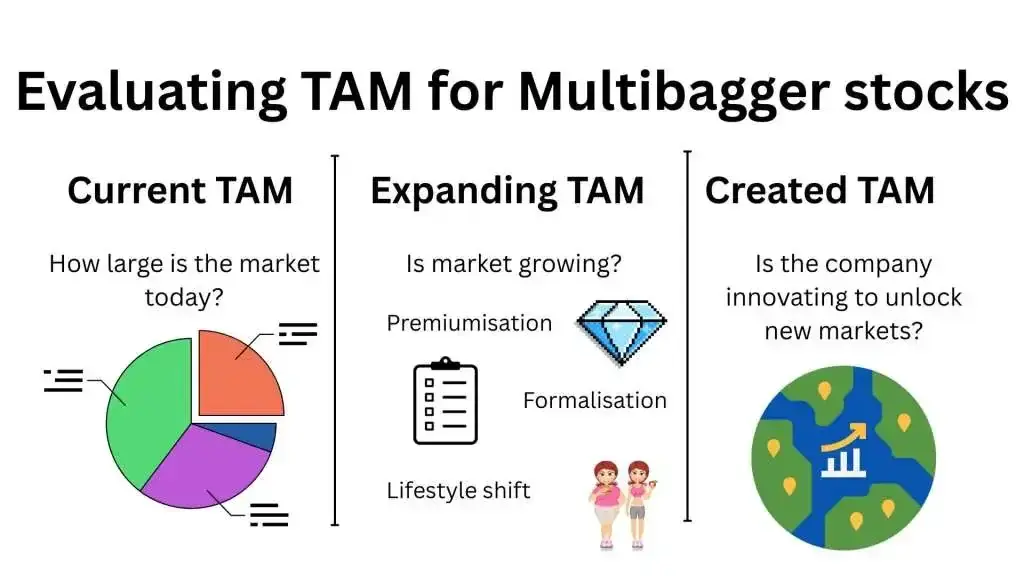
A company can only compound as fast as the market it operates in, which is why a large and expanding Total Addressable Market (TAM) is the first requirement for multibagger stocks.
What is TAM?
When the TAM grows consistently, the company gets a long runway to scale revenue, add new products, and gain market share. A stagnant TAM caps earnings growth and prevents valuation rerating, no matter how efficient the business is.
“Even the best management cannot grow a company beyond the limits of its industry.”— Michael Porter
This is why most successful multibagger shares come from sectors where demand rises year after year. APL Apollo is a perfect illustration: TAM expansion in urban construction and structural steel helped transform it from a micro-cap pipe seller into a 10x+ multibagger company.
How Strong Management and Smart Capital Allocation Create Multibagger Shares?
Behind every multibagger stock is a management team that converts opportunity into long-term compounding. Leadership decisions around strategy, execution discipline, and capital allocation directly influence earnings growth and future valuation rerating. Great managers deploy capital into high-ROI projects, maintain governance transparency, and deliver consistent results year after year.
These traits build investor trust and support a sustained PE ratio expansion as the business scales. HDFC Bank under Aditya Puri shows how management excellence turns potential into performance — disciplined lending and governance helped it compound for decades and become one of India’s most valuable companies.
“Return on capital tells you how good the business is. Reinvestment tells you how big it can become.”
— Charlie Munger
How Debt-Free, Clean Balance Sheets Help Create Multibagger Stocks?
A clean balance sheet gives a business freedom: freedom to invest in capacity, withstand downturns, and expand without relying on risky leverage. Low debt and strong cash flows also ensure that operational improvements translate directly into shareholder wealth creation.
Multibagger companies often share this pattern :- steady earnings growth funded internally, leading to strong ROCE and sustained valuation rerating. A healthy balance sheet also prevents dilution and reduces interest burdens, improving long-term compounding.
Shilchar Technologies is a textbook example, scaling capacity multiple times entirely through internal accruals, proving that balance sheet discipline is a core trait of future multibagger shares.
Also check out our article on : How to Read a Balance Sheet Like a Professional Investor
Even a strong company grows faster when tailwinds push the entire industry forward. Sector tailwinds, whether infrastructure spending, manufacturing revival, energy transition, or digitalisation, create a natural lift for businesses positioned in the right pockets.
“Cycles make companies fluctuate. Structure determines who survives and compounds.”
— Howard Marks
True multibagger stocks don’t just ride the cycle; they possess structural advantages like deep distribution, manufacturing efficiency, niche capabilities, or non-substitutable products.
These moats help them outperform peers and gain disproportionate market share as the industry expands. Action Construction Equipment (ACE) leveraged India’s infra cycle perfectly — strong local manufacturing and a wide dealer network helped it grow faster than the sector and evolve into a multibagger company.
How Buying at the Right Valuation Helps Create Multibagger Stocks?
Valuation comfort is one of the most important characteristics of multibagger shares because even a great company cannot deliver strong returns if bought at an inflated price.
The multibagger journey usually begins when fundamentals start improving while the market has yet to assign a fair valuation. This creates the sweet spot where the PE ratio is still low, the PEG ratio often sits below 1, and EV/EBITDA looks attractive relative to peers. Investors benefit from both earnings growth and valuation rerating as institutional participation increases later.
Many multibagger stocks — from KEI to APL Apollo — delivered their best returns during phases when growth accelerated but valuations were still playing catch-up.
Also check out are article on: Common Traits of Every Multibagger Stock – Data-Based Study
How to Identify Multibagger Stocks: The Complete Multibagger Blueprint and Research Framework
“Good investing is not about having the right answers, but about asking the right questions.”
— Joel Greenblatt
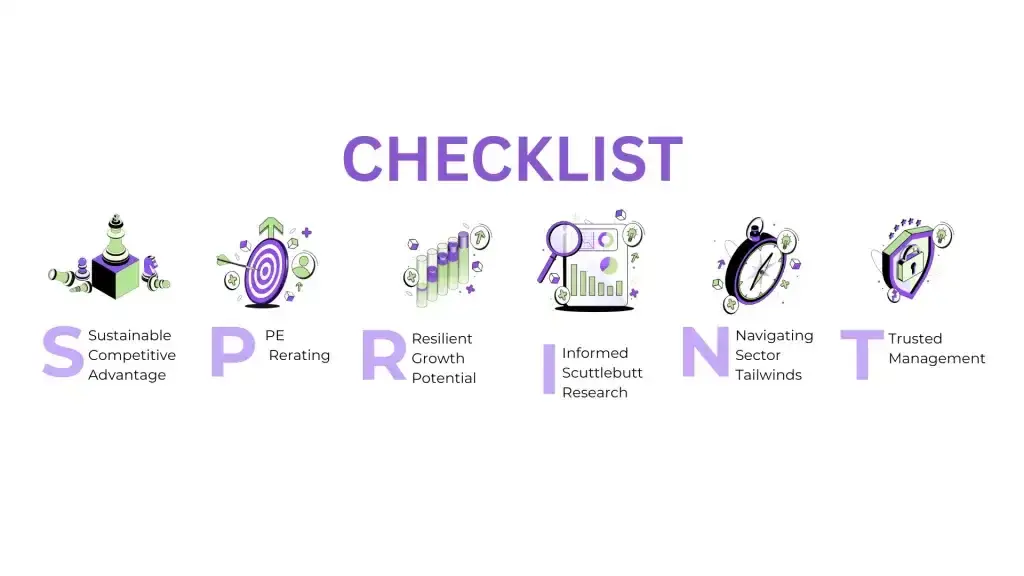
Over years of analyzing small and micro-cap stocks, we have distilled our approach into a philosophy we call SPRINT. It combines every critical aspect an investor should consider — from business quality and growth visibility to valuation and sector tailwinds — into a single, structured framework designed to spot potential multibaggers early. Let's dive in
S – Sustainable Competitive Advantage

Every multibagger begins with a company that has something distinct. Not just a good product or steady business, but a genuine edge over competitors. This could be niche products, regulatory barriers, specialised technology, or a distribution network competitors can’t easily match.
The key is sustainability.
A temporary edge doesn’t build a multibagger. A durable moat does.
For example
- Specialty chemical companies such as Aarti Industries or Navin Fluorine build moats through patented or proprietary chemistries.
- CDSL and MCX demonstrate regulatory moats where licenses, compliance structures, and government oversight make new competition nearly impossible.
- Nestlé shows how taste, brand trust, and decades-long consumer loyalty create a powerful brand moat.
- Clean Science and Technology Ltd. adds a process-technology moat with its proprietary vapour-phase manufacturing, enabling superior yields, lower costs, and high margins that competitors find extremely difficult to replicate.
When analysing a company, always start with:
What is its edge—and can it last?
P — PE Re-rating Potential
Every multibagger story has two engines: earnings growth and valuation expansion. And the irony is that most retail investors obsess over earnings but ignore the entry multiple.
The key is not buying “cheap” stocks — it’s buying stocks where the market is underestimating durability of growth. PEG < 1, PE below sector averages despite better ROCE, early cycle inflection, and improving governance are classic signs of re-rating potential. You don’t hunt for low multiples; you hunt for mispriced improvements.
What are the drivers of PE rerating?
- Earnings growth
- Sector Re-rating
- Change in investor perception
- Operating efficiency & product mix change
- Improved capital allocation
R — Resilient Growth

A multibagger rarely emerges from a company with erratic growth. It comes from businesses where top line, bottom line, and return ratios compound consistently — even through headwinds. Usually factors like:- diversified revenue streams, robust demand rivers, pricing power, strong business model, customer loyalty, innovation & R & D.
What investors should look for?
- 5–10 year revenue CAGR above industry averages
- Stable EBITDA margins even in raw material or demand volatility
- Strong order book or recurring revenue streams
- Working-capital discipline
A company that compounds earnings through cycles, not only during cycles, is far more likely to be a multibagger.
I — Informed Scuttlebutt

When most investors analyse a company, they stop at annual reports, earnings calls, and broker presentations, sector reports. But the truth is simple: by the time something appears in quarterly numbers, the market already knows it. Real alpha is generated by understanding what is happening on the ground before the data becomes visible.
“Numbers alone will not tell you what you need to know.” — Philip Fisher
That is where informed scuttlebutt becomes the sharpest edge in the multibagger-identification process.
Scuttlebutt isn’t gossip. It’s structured, disciplined, primary research — conversations and observations that help you separate narrative from truth. And it dramatically increases the probability of spotting inflection points early.
How to approach?
- Management interviews
- Visiting plants
- Competitive analysis
- Talk with customers, suppliers & employees
- Insights from industry efforts
At Value Educator, this has been one of our strong pillar while identifying stock. We have hosted 50+ managements, conducted several plant visits, spoken to industry experts to reach our thesis.
N — Navigating Sector Tailwinds

Sector tailwinds are like the wind behind a sailboat : they can accelerate growth effortlessly, but only if the company knows how to catch them.
The key is not just spotting a “hot sector,” but understanding which trends have staying power and which are fads. Look for industries where demand is structural, regulatory support is strong, or technological adoption is accelerating. Then zoom in on the company: does it occupy the high-impact part of the value chain? Can it scale faster than peers, maintain margins, and ride the tailwind sustainably?
Multibaggers aren’t just lucky; they’re strategically positioned to turn macro momentum into real, compounding results.
How to Navigate:
- Spot sectors with long-term structural growth, not just temporary hype.
- Assess policy, regulation, and technology drivers shaping the industry.
- Identify where the company sits in the value chain — upstream, downstream, or niche segments.
- Evaluate competitive advantages like scale, customer relationships, or specialized products.
- Ensure the company can convert tailwinds into sustainable growth and profits, not just fleeting revenue spikes.
T — Trustworthy Management

No framework is complete without assessing the most intangible — yet most decisive — factor: management quality. Even a strong business model collapses under poor governance, and an average business becomes extraordinary under prudent capital allocation.
When judging management, ask:
- Have they delivered on guidance? (Conservative guidance is often a green flag.)
- How do they allocate cash — dividends, capex, debt reduction, or acquisitions?
- Are related-party transactions transparent?
- Are there frequent auditor changes?
- Do they dilute equity frequently?
- What do past annual letters reveal about consistency of priorities?
Multibaggers rarely come from promoters who chase fads, gamble with leverage, or hide information.
Read On : Top SME Stocks That Created Millionaires in the Last 3 Years
Sprint in Action: Identifying Multibaggers Early
Over the years, the SPRINT framework has helped spot companies before the market realizes their true potential. By combining business quality, growth visibility, valuation, and sector tailwinds, it’s possible to uncover stories that can compound into multibaggers. Let’s look at a real-life example where this framework highlighted a hidden gem well ahead of the crowd.
Case Study: Garware Hi-Tech Films

Garware Hi-Tech Films is one of the clearest examples of how markets can misprice a business for years when they fail to recognise structural change. For a long time, Garware was clubbed with BOPP/BOPET film manufacturers—businesses whose margins tend to collapse whenever global capacity expands or crude prices fluctuate. On the surface, it appeared to be just another packaging film company. Beneath that surface, however, Garware was methodically exiting the commodity orbit and quietly building a global specialty film franchise.
In its early years, the company operated through two divisions: the Industrial Products Division (IPD) and the Consumer Products Division (CPD). IPD comprised a mix of basic and semi–value-added films, with significant overlap with commodity BOPP/BOPET categories. This was precisely the segment where the industry suffered the most—hit by chronic oversupply, aggressive price competition, and highly volatile spreads.
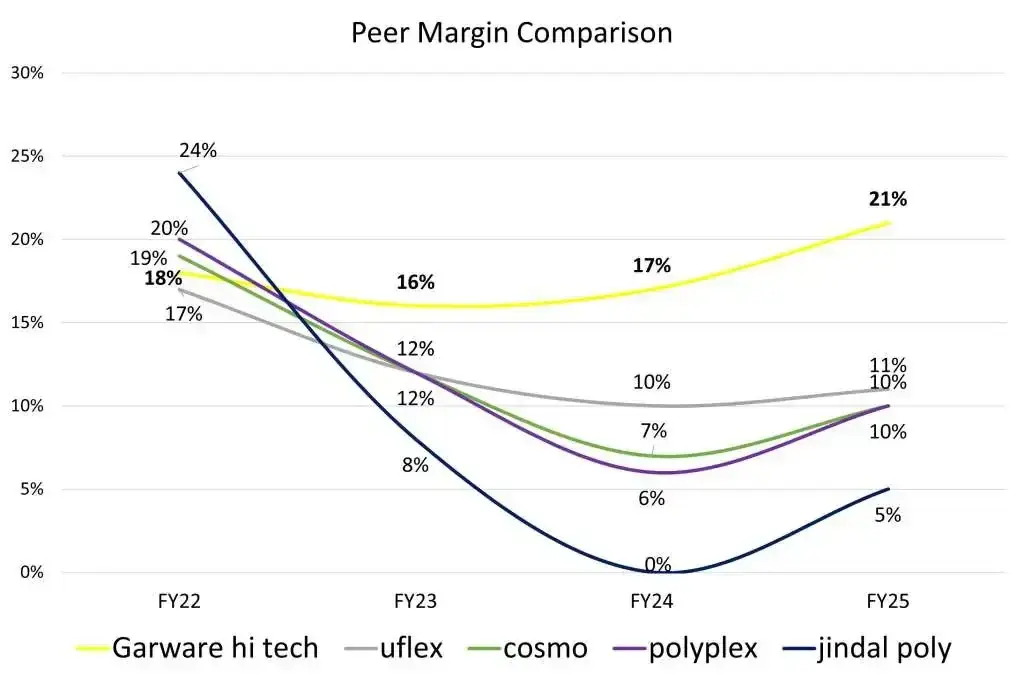
While peers experienced sharp margin contraction during the supply glut, Garware’s margin trajectory began to diverge. Its margins moved in the opposite direction, offering early evidence that a very different business model was taking shape. At a time when most competitors were focused on expanding BOPP/BOPET capacities, Garware’s management was quietly reallocating attention toward niche, high-entry-barrier products such as solar control films and paint protection films, where competitive intensity was far lower.
This strategic divergence was driven by the CPD business. Over the last decade, CPD evolved into the company’s core growth engine, built around technology-intensive, specialty films with meaningful entry barriers. The division focused on solar control films and paint protection films—products that required deep technical expertise rather than scale alone.
Solar control films had been manufactured by Garware for over 10–12 years and were initially sold in the domestic market. However, following the domestic ban in 2012, the company pivoted decisively toward exports. What appeared to be a setback at the time turned into a structural advantage. Today, the US and Europe contribute a significant portion of solar film revenues under the company’s “Global” brand.
Garware then expanded further into ultra-premium applications with Paint Protection Films (PPF), used in high-end automotive segments to protect vehicles from scratches and impact damage. This category has extremely limited global competition and depends heavily on technical capability. Garware’s moat here is its patented dyeing technology, which is held by only two players worldwide. Combined with full backward integration and India-led cost advantages, the company operates in a niche where scale, technology, and execution converge.
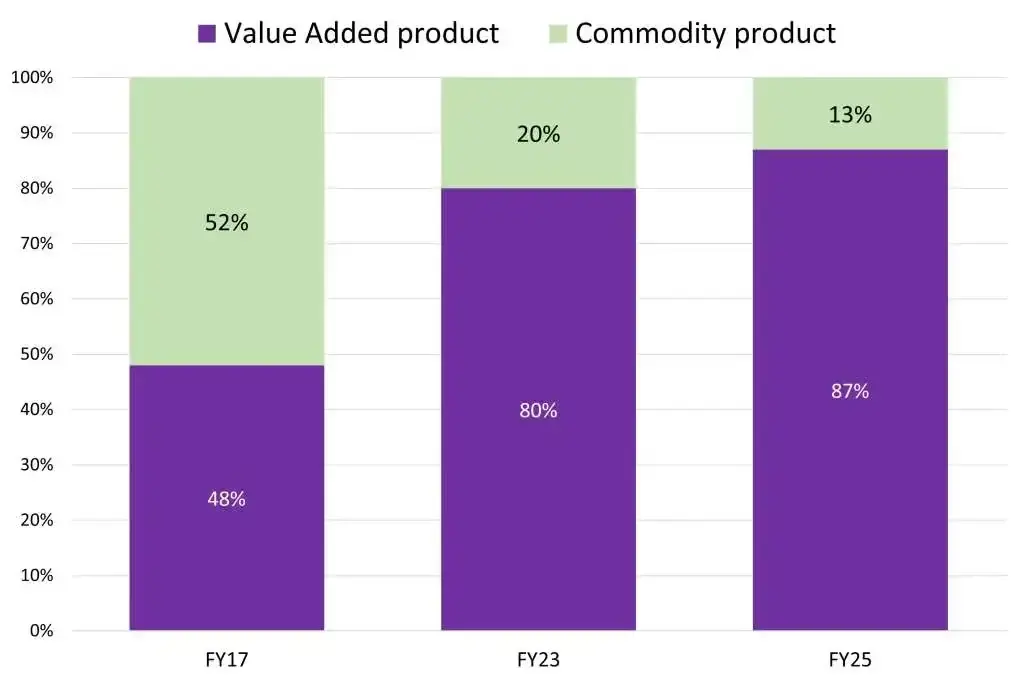
As CPD scaled up, Garware’s revenue mix underwent a structural transformation. Value-added products steadily increased their contribution, while commodity-linked segments shrank. This shift insulated Garware from the brutal BOPP/BOPET downcycle that severely impacted peers. With CPD growing rapidly, the company’s overall revenue composition experienced a complete reset.
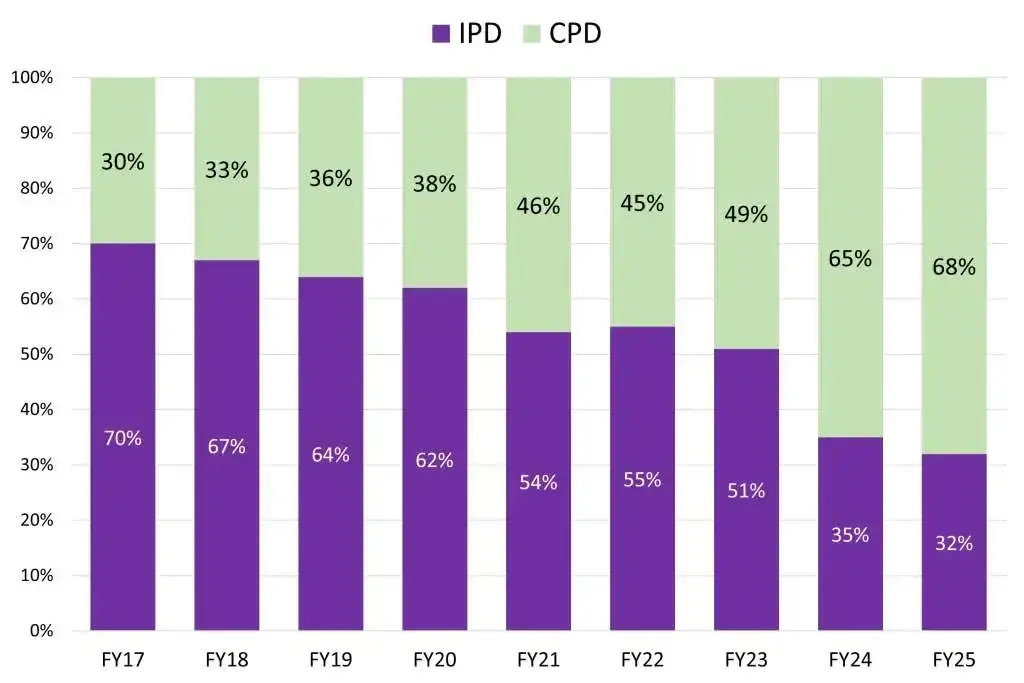
The visuals clearly reflect this transition, with CPD approaching nearly 70% of total revenue. This explains why Garware’s performance began to diverge sharply from the rest of the industry. Below graph show the shift from commodity products to value added products.
Despite this fundamental transformation, the stock continued to trade at single-digit P/E multiples for an extended period. The market continued to view Garware through a commodity lens. Product differentiation was complex, poorly understood, and further clouded by concerns around technology procurement from a promoter-owned entity and associated processing fees. As a result, valuations remained depressed even as business fundamentals improved materially.
The turning point came when quarterly performance began to consistently reflect the new reality: margins expanded even during an industry downturn, export traction strengthened, ROCE improved due to specialty film dominance, and revenue shifted decisively toward non-commodity segments. Once these signals became impossible to ignore, the market re-rated the stock.
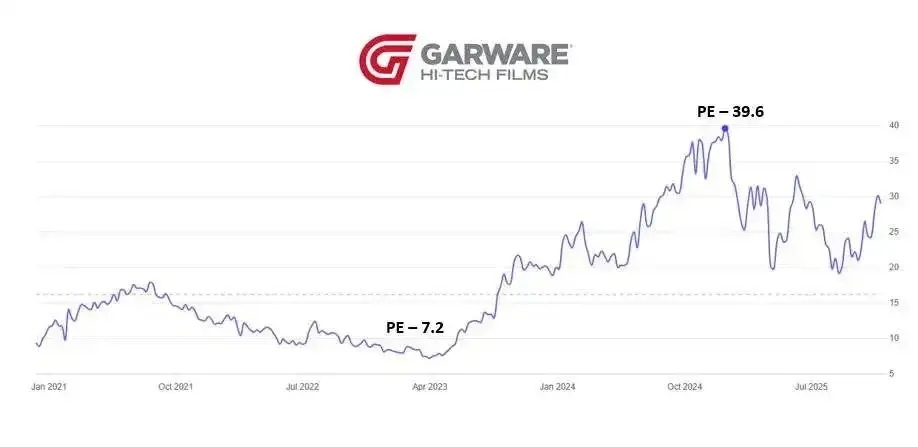
The re-rating captured a clear transition—from low single-digit valuation multiples to premium valuations—as investors finally recognised Garware as a specialty film manufacturer with a global franchise and a defensible technological moat.
When mapped against the SPRINT checklist:
- Competitive Advantage
- PE Re-rating
- Resilient Growth
- Trusted Management
- Informed Scuttlebutt
Garware ticks nearly every box. It stands as a textbook example of how a disciplined, fundamentals-driven framework can uncover multibagger opportunities well before the broader market catches on.
Common Mistakes to Avoid When Identifying Multibagger Stocks
Most investors chase multibagger stocks without evaluating the fundamentals that actually create long-term wealth. The biggest mistake is relying on past returns or price momentum and assuming the stock will continue compounding. A true multibagger share is backed by earnings visibility, strong cash flows, and a scalable business model — not just a sharp rally.Ignoring Valuation While Picking Multibagger Shares
Hot sectors, trending narratives, and social-media buzz often distract investors from real business performance. A company may sound exciting, but if margins, ROE, and balance-sheet strength don’t support the story, it rarely becomes a sustainable multibagger stock. Fundamentals must always lead to sentiment
Underestimating Management Quality
The most overlooked factor is leadership. Multibagger companies usually have disciplined management teams with a proven track record in capital allocation, expansion, and governance. Buying a “cheap” stock with weak management often results in capital erosion, not wealth creation.
Explore our Products
Research Framework

Emerging Titans
Combination of quantitative analysis, industry tailwinds, and management assessment - SPRINT investment philosophy

Tiny Titans
Heavy emphasis on scuttlebutt research, plant visits, and early on-ground signals
Conclusion
Most investors fail to find multibaggers not because of a lack of effort, but because they lack a repeatable process. Reading case studies is useful, but building a framework—and applying it consistently across cycles—is what separates long-term wealth creators from short-term participants.
Many investors focus on growth stories but completely overlook valuation. Even high-quality companies fail to deliver strong returns if bought at stretched P/E or PEG ratios. For a stock to become a multibagger, growth and valuation must move in sync — not in extremes.
Chasing Hype Instead of Fundamentals
SPRINT is not about prediction; it is about probability, discipline, and staying aligned with fundamentals while the market remains distracted.
If this framework added clarity to how you evaluate long-term compounding businesses, comment “SPRINT” below to show your support. Like the post to encourage more research-driven content, share it with investors who value process over tips, and comment with a framework or principle you personally follow when analysing companies.
The strongest investing insights are often sharpened through structured discussion.
FAQs ( Frequently Asked Questions )
What exactly is a multibagger stock?
+How long does it typically take for a stock to become a multibagger?
+How does PE re-rating contribute to multibagger returns?
+What role does valuation comfort play in identifying a multibagger?
+How does the SPRINT framework improve the odds of spotting future multibaggers?
+SPRINT brings structure:
- S identifies durable moat
- P captures valuation mispricing
- R filters for consistent compounding
- I provides early insights through primary checks
- N aligns company position with long-term tailwinds
- T tests governance and capital allocation
Can this framework be used for large-cap stocks?
+How to find multibagger stock using screener?
+Use Screener as a first-level filter to shortlist high-quality small and mid-caps. A simple multibagger screen could be:
- Debt-to-Equity < 1.5 AND
- 3-year Sales Growth > 15% AND
- Promoter Holding > 60% AND
- ROCE > 20% AND
- ROE > 15%.
This combination highlights clean balance sheets, strong profitability, and committed promoters—ideal starting points before applying deeper qualitative checks.

High growth stock specialist, Value Educator
Shashank Mahajan is an equity research professional with over 12 years of experience in identifying high-potential SME and micro-cap stocks at an early stage. He follows a rigorous scuttlebutt research–driven approach, combining on-ground insights with deep financial analysis. Shashank specializes in uncovering under-researched and under-owned companies with strong management quality and long-term growth potential. Through disciplined research and early identification, he focuses on spotting tomorrow’s market leaders before they enter the mainstream investor radar.

Zen Technologies: Revenue Fell After a Big Win




PNG Jewellers: A 194-Year-Old Name Goes National

Explore our Products
Research Framework
Emerging Titans
Combination of quantitative analysis, industry tailwinds, and management assessment - SPRINT investment philosophy
Tiny Titans
Heavy emphasis on scuttlebutt research, plant visits, and early on-ground signals


 Orders
 Subscription
 Share with friends


Required Details
₹23999.00
(12 month subscription)
As per SEBI regulations, all users are mandated to complete the KYC that is validated for 1 year. Post payment, you will be redirected to the KYC screen


No comments yet. Be the first to comment!