
Sansera: From Auto Parts to Aerospace, Chips
What if you woke up tomorrow morning, put the key in the ignition, hit the ignition button and nothing moved in your car?”
The battery is fully charged. There’s enough fuel.Electronic systems operating.
But still, the engine won't start. Now imagine that the cause isn't a huge problem with the engine, but the problem is a tiny precision component buried inside the engine.
The big things are usually the engine, gearbox, tyres, design and technology. But all of these have hundreds of precision engineered parts, and a single one that is unstable or fails to work to an extremely close tolerance can have an impact on the entire system.
Sansera Engineering produces highly engineered precision components for use in engines, powertrains and other key automotive systems for the leading global and Indian automobile manufacturers.
What connects a motorcycle, an aircraft and a semiconductor manufacturing machine?
They may look completely different, but somewhere inside each of them are components that have to be manufactured with extraordinary precision. A motorcycle cannot afford a component that fails after repeated use. An aircraft cannot compromise on the accuracy of a critical part. And semiconductor manufacturing equipment operates in an environment where even a tiny manufacturing error can become a serious problem. These components may not be visible to the final customer. But without them, the larger machine simply cannot work. And this is where an interesting manufacturing story is emerging in India. A company that spent more than four decades manufacturing precision components for the automotive industry is now moving into xEV, aerospace, defence and semiconductor equipment.
That company is Sansera Engineering.
But this is not simply a story about an auto-component company entering fashionable new sectors. The more interesting question is whether Sansera can take the engineering capabilities it has built over decades and use them to create a much more diversified business. Because if it succeeds, the Sansera of the future could look very different from the Sansera of the past.
Business Overview: What does Sansera Engineering actually do?
Before understanding where Sansera is going, we first need to understand what it does today. In simple terms, Sansera manufactures complex precision-forged and machined components. Think about a large machine such as a car engine. It contains hundreds of individual components, but some of them are extremely important to how the engine operates. These components need to be manufactured to precise specifications and need to perform consistently over a long period.Sansera operates in this part of the manufacturing chain. Its products are used across engine, transmission, suspension, chassis, driveline and braking applications. The company serves both automotive and non-automotive industries, including aerospace, defence, semiconductor equipment, industrial equipment, off-road vehicles and agricultural applications.
The important thing here is that Sansera is not selling a finished car or an aircraft. It is supplying the precision-engineered building blocks that go into those products. This distinction becomes important when looking at its long-term opportunity. A company that manufactures only one finished product can become dependent on the demand for that product. But a precision-engineering company can potentially use its manufacturing capabilities across multiple industries.
That is precisely what Sansera is trying to do.
The company has spent decades developing capabilities in forging, machining, engineering, automation and quality control. Now it is applying those capabilities beyond its traditional automotive market. The transition has already started.
In FY25, the Auto ICE business accounted for 73.6% of overall revenue, compared with 75.4% in FY24. So automotive ICE remains the dominant part of the business, but its share is gradually declining as other businesses become larger.
At the same time, Sansera's xEV and technology-agnostic businesses together contributed close to 15% of revenue in FY25 and grew 28.6% year-on-year. This gives us the first important part of the Sansera story. The company is not replacing its old business overnight. It is building new businesses alongside it. And that makes the transition easier to understand. The automotive business remains the foundation, while the newer businesses are being built as additional growth engines.
“Price is what you pay. Value is what you get.”— Warren Buffett
Company Overview: A 40-year-old business entering a new phase
Sansera Engineering was established in 1981.Over the following decades, the company built its capabilities around precision engineering and developed relationships with major automotive OEMs.
Its journey includes supplying components to companies such as Bajaj, Maruti Suzuki, Toyota, Royal Enfield and KTM, along with global customers including Daimler Group, Volkswagen Group, Volvo, BMW, Ferrari, Ducati and General Motors. This customer base is important because precision engineering is not necessarily a business where a customer changes suppliers casually. When a component is critical to the performance of a vehicle or machine, the customer needs confidence in the supplier's manufacturing process, quality systems and ability to deliver consistently.
Sansera has therefore spent years building something that is difficult to create overnight: customer relationships backed by manufacturing experience.
Today, the company has 17 integrated manufacturing facilities, including 16 in India and one in Sweden, and more than 575 research and engineering specialists. It serves customers across 27 countries. Its expansion has also been gradual rather than sudden.
The company entered aerospace with a dedicated facility and AS9100 certification, later expanded into heavy commercial vehicles through its Sweden acquisition, and more recently moved into semiconductor fab equipment and critical components.
For investors, this expansion is also part of a larger manufacturing opportunity emerging in India. Understanding the broader trend can help put Sansera's diversification into perspective through A SME Company Riding the Make in India Manufacturing Wave
That history tells us something about management's approach. Sansera has repeatedly taken its existing engineering capabilities and moved them into adjacent markets. The current diversification is therefore not completely disconnected from the company's past. It is an extension of what the company has been doing for decades.
Product Details: What exactly does Sansera manufacture?
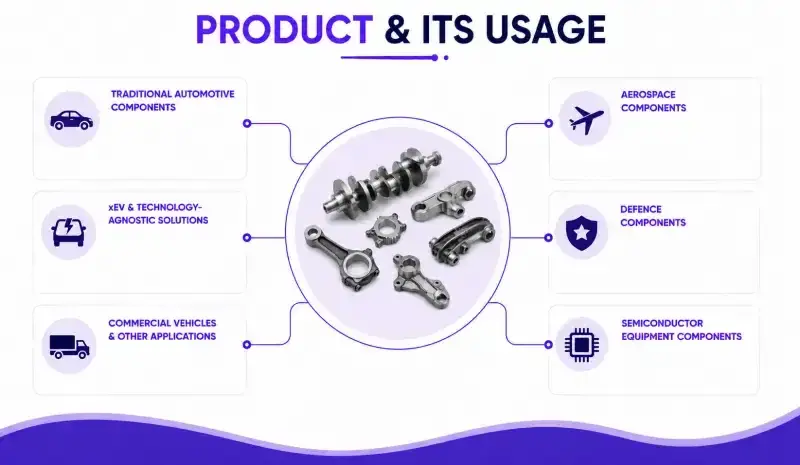
The easiest way to understand Sansera is to forget the company name for a moment and think about the products that it makes. In its traditional automotive business, Sansera manufactures components such as connecting rods, crankshafts, rocker arms, balancer shafts, flywheel decomp components and gear-shifter forks. These are not necessarily components that a consumer notices.When you buy a motorcycle, you are buying the motorcycle.
You are not thinking about the connecting rod or crankshaft inside it. But for the OEM, these components are critical.Sansera's traditional strength has been the ability to manufacture these kinds of complex parts at scale and with consistent quality. The company has also developed capabilities for aluminium-forged components, EV drivetrain components, braking assemblies, suspension and other applications. Its Annual Report highlights the development of products for passenger vehicles, battery-electric vehicle drivetrains, commercial vehicles and other applications.
This is where the term technology-agnostic becomes important. The automobile industry is changing from internal-combustion engines towards electric and hybrid platforms. A company heavily dependent on one specific ICE component could face a problem if that component becomes irrelevant.
Sansera's strategy is different.
It is developing products that can participate in newer vehicle architectures as well as existing platforms. The company's xEV and technology-agnostic businesses therefore provide a way to participate in the evolution of the automobile without relying entirely on the traditional ICE product mix.
Then there is the non-automotive side.
Sansera manufactures aerospace components, defence-related components and semiconductor equipment components, where precision and quality requirements can be significantly different from traditional automotive applications.
The semiconductor business is particularly notable because the company has had to develop specialised capabilities, including a Class 1,000 clean room and advanced machining processes.
So when we talk about Sansera's products, we are really talking about a broadening range of precision-engineered components serving increasingly diverse applications.
Sansera's Value Chain: Where does the company actually sit?
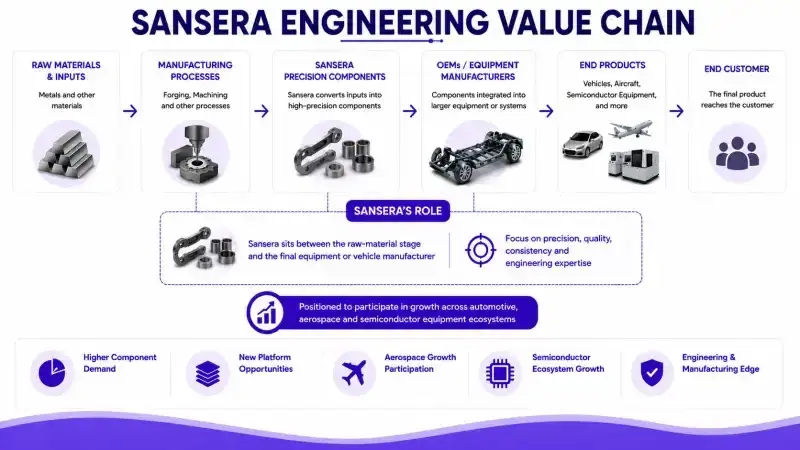
To understand Sansera's economics, it helps to look at where the company sits in the value chain.
At one end are raw materials and inputs such as metals and other materials required for manufacturing. These materials then go through manufacturing processes such as forging and machining. Sansera converts them into precision components. Those components are then supplied to OEMs or equipment manufacturers, where they become part of a larger product such as a vehicle, aircraft or semiconductor manufacturing machine.Finally, the end product reaches the customer.
So, in simplified terms, Sansera sits between the raw-material stage and the final equipment or vehicle manufacturer. This position is important because Sansera does not need to build the entire final product to participate in its growth. If an automobile manufacturer increases production, it can benefit through higher component demand. If a customer moves towards a new vehicle platform, Sansera can develop components for that platform. If aerospace production increases, the company can potentially participate through its aerospace components. And if semiconductor equipment manufacturing expands, qualified component suppliers can participate in that ecosystem.
But there is another important feature of this value chain.
The closer a component gets to being mission-critical and highly specialised, the more important quality, qualification and manufacturing consistency become.
This is why Sansera's engineering experience matters.
The company highlights its in-house expertise in machine-building and automation, which it says helps improve operational efficiency and optimise cost structures. In other words, the company is not simply buying standard machines and reselling components. It has developed manufacturing know-how around the machines, processes and products themselves. That capability becomes particularly relevant when it moves into more demanding areas.
“Superior investing requires second-level thinking—a way of thinking that’s different from that of others, more complex and more insightful.”
— Howard Marks
Growth Drivers: Where can the next phase of growth come from?
The first growth driver remains the automotive business.Sansera's Auto ICE business is still the largest contributor to revenue, and the company continues to see opportunities from domestic automotive OEMs. According to management, domestic automotive OEMs are undertaking large-scale capex and capacity expansion initiatives, creating opportunities for precision-engineering companies. This means the existing business should not be treated as an old business that Sansera is trying to escape. It remains an important foundation.
The second driver is the transition within automobiles itself.
Management has highlighted the accelerating adoption of EVs, particularly in the two-wheeler segment, as a long-term opportunity for its xEV and technology-agnostic offerings. The significance here is not that ICE suddenly disappears. Rather, Sansera is trying to ensure that as the architecture of vehicles changes, its addressable product opportunity changes with it.
The third driver is aerospace.
According to management, global aerospace order books remain at historically high levels, while India is increasingly being recognised as a strategic manufacturing and supply-chain hub. Sansera already has aerospace manufacturing capabilities and has secured significant customer programs.
The fourth driver is defence.
India's defence manufacturing ecosystem is expanding, and Sansera has been building capabilities to participate in this market.
The fifth and perhaps most interesting driver is semiconductor equipment.
Management has linked the semiconductor opportunity to India's Semiconductor Mission 2.0 and the broader global semiconductor cycle. Management also highlighted AI as a major driver of semiconductor demand and capital allocation across the global chip ecosystem. This is where Sansera's diversification story becomes particularly interesting. The company does not need to manufacture semiconductors itself. It needs to manufacture the precision components used by semiconductor equipment manufacturers. And that is a much closer fit with the capabilities Sansera has already developed.
The semiconductor opportunity: Why the qualification matters
There is a subtle but important difference between entering a new industry and actually becoming a supplier to it. A company can announce that it wants to enter semiconductors. That doesn't mean customers will immediately buy from it. Sansera has already crossed an important stage.
During FY25, the company won an order for high-precision and complex machine parts used in semiconductor fab equipment. It had to manufacture these parts using multi-tasking 5-axis machines and subsequently established a Class 1,000 clean room to support the business.
The Annual Report says the company subsequently entered mass production after an intensive qualification process. That qualification process is important because it creates a form of customer stickiness. Once a supplier has been qualified for a critical component, the customer has already spent time and resources validating its manufacturing process. Of course, this does not make Sansera immune from competition. But it does mean that the competitive equation is different from simply selling a standard commodity component. And this is one reason the semiconductor business could become strategically important even if it remains relatively small compared with the automotive business today.
Order Book and Capex: Is the opportunity actually visible?
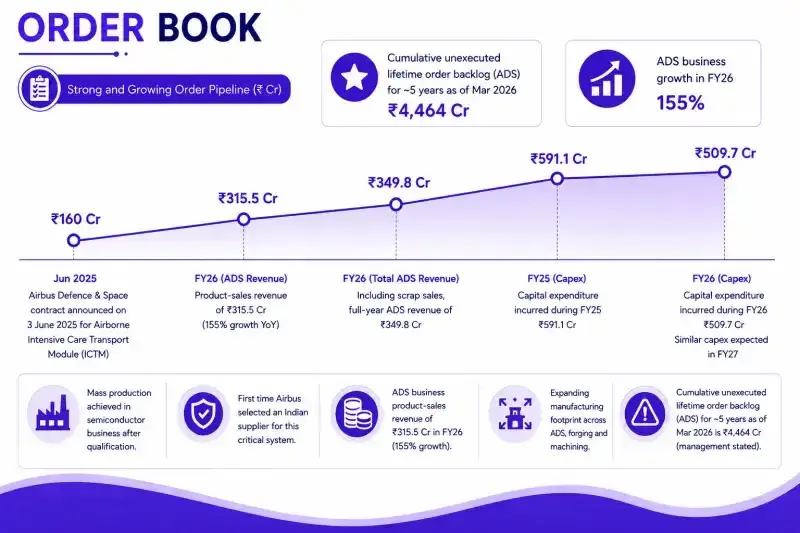
A good growth story needs more than an attractive industry. There needs to be some visibility of actual business. This is where Sansera's order pipeline and investment plans become important.The company has already secured the Airbus Defence and Space contract worth approximately ₹160 crore for the manufacture, supply and support of an Airborne Intensive Care Transport Module for light and medium transport aircraft. The Annual Report describes this as the first time Airbus selected an Indian supplier for this particular critical system.
On the semiconductor side, the company has moved into mass production following qualification.
And according to management, the ADS business delivered product-sales revenue of ₹315.5 crore in FY26, representing 155% growth during the year. Including scrap sales, management indicated full-year ADS revenue of around ₹349.8 crore.
According to management, the cumulative unexecuted lifetime order backlog for five years, particularly for the ADS business, stood at approximately ₹4,460 crore as of March 2026.
This number should be understood correctly. It is management's stated order visibility, not a guarantee that all of the amount will become revenue at the expected time. But it provides an indication of the potential scale of the opportunity. And that helps explain why Sansera is investing in capacity. During FY25, the company reported capital expenditure of approximately ₹591 crore, while capacity utilisation was around 65%.
The company has been expanding its manufacturing footprint through new and expanded facilities — additional aerospace and defence capacity, aluminium-forging capabilities, and the machining facility at Bidadi among them.
Management noted that Sansera incurred roughly ₹509.7 crore of capex during FY26, and expects to spend at a similar clip in FY27. That investment, they said, is meant to support expansion of ICE capabilities, new ADS facilities, and additional forging and machining capacity.
There's a point worth pausing on here. Sansera is investing heavily even as its existing facilities and newer businesses are still in growth mode. That's an opportunity, sure, but it's also a responsibility — the company now has to make sure the capital going out the door today actually turns into revenue and profit down the line.
Financials: is the business actually delivering?
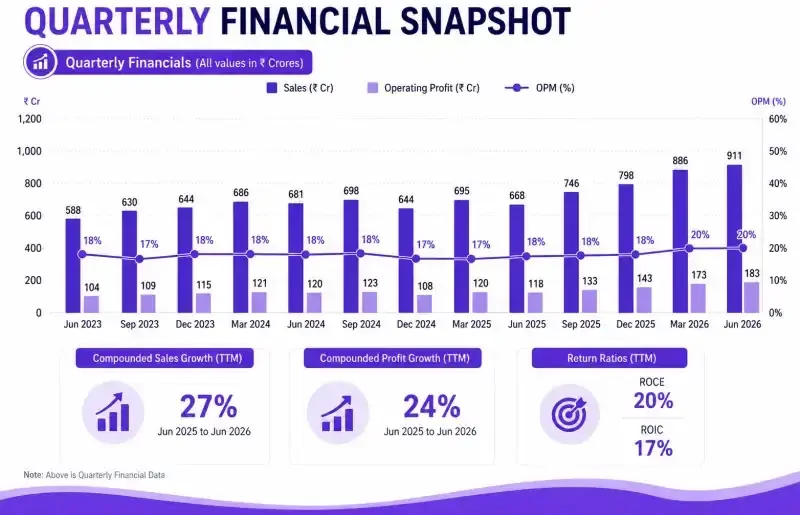
Now that we've got a handle on the business, the value chain, and where growth might come from, it's worth turning to the numbers. And honestly, this is where things get more interesting.Sansera's standalone revenue grew from around ₹836 crore in FY16 to ₹3,098 crore in FY26 — a decade of fairly substantial expansion. The more recent stretch tells an even sharper story: revenue rose from about ₹1,351 crore in FY21 to ₹3,098 crore in FY26, while operating profit climbed from roughly ₹247 crore to ₹566 crore and net profit went from ₹98 crore to ₹298 crore over the same window.
So this isn't just a top-line story. Profit has actually outpaced revenue growth over that period, and operating margins held steady at around 18% in both FY21 and FY26 — meaning the company managed to scale without letting profitability slip.
The most recent quarter adds another data point. For June 2026, revenue came in at approximately ₹911 crore versus ₹668 crore a year earlier, and operating profit rose from ₹118 crore to ₹183 crore, pushing margins up from around 18% to 20%. That's a meaningful signal — it suggests the recent growth isn't coming at the cost of profitability.
But there's another side to this. Sansera is, at its core, a manufacturing company, and manufacturing growth eats capital. Borrowings, rose to about ₹370 crore in FY26 from ₹238 crore in FY25. Meanwhile, the cash conversion cycle stretched slightly, from 106 to 108 days. Inventory days climbed from 145 to 170, and debtor days moved from 56 to 70.
None of this automatically points to trouble — growing manufacturing operations often do need more inventory and working capital just to keep up. But when a company is ramping up capex and pushing into new businesses at the same time, it's fair for investors to keep an eye on whether that growth is actually converting into cash, not just accounting profit.
That's really why revenue and PAT can't tell the whole story on their own. The next chapter of Sansera's growth should also be read through ROCE, working capital trends, and cash generation. ROCE, moved up to around 14% in FY26 from 13% in FY25 — a small improvement, but for a capital-intensive manufacturer, a rising ROCE alongside scale is a reasonably good sign that the diversification is creating value rather than just inflating the balance sheet.
Quality of earnings
It's worth briefly checking how operating cash flow lines up against reported PAT here. With inventory and receivables both stretching out in FY26, some of the reported profit growth is, in effect, tied up in working capital rather than sitting in the bank. That's not unusual for a business scaling into new product lines and geographies, but it's a gap worth watching — if cash conversion keeps lagging profit growth, it would be a flag rather than a footnote.
Key risks: what could go wrong
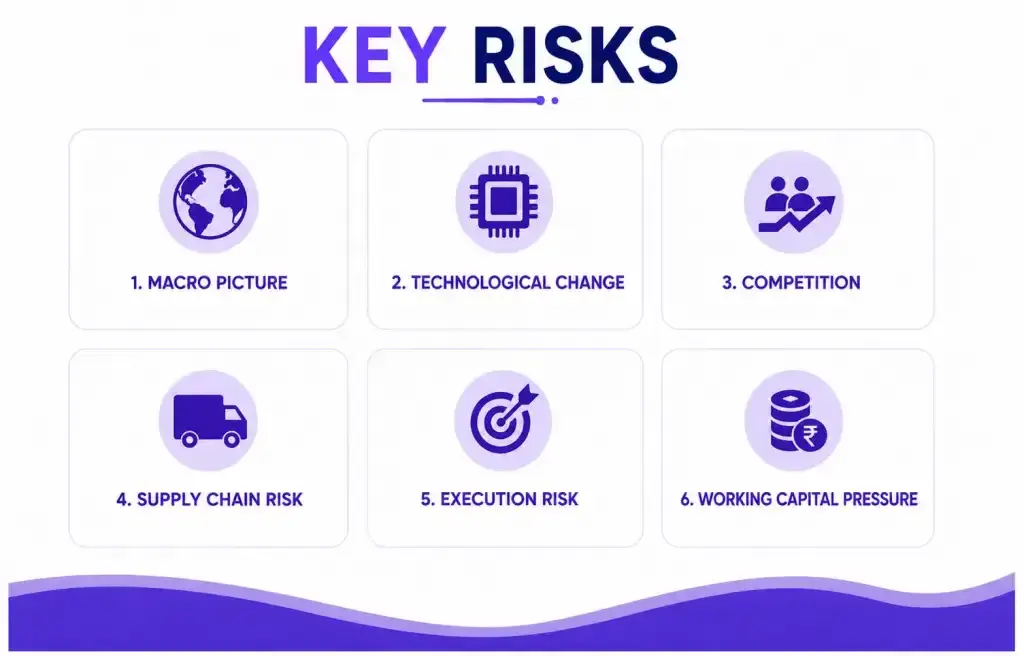
Every growth story has a flip side, and Sansera's Annual Report lays out a fairly candid list of risks alongside the opportunities.
Start with the macro picture. Sansera flags economic volatility, geopolitical unrest, and global trade tensions as risks to operational continuity and financial performance — and this matters more than it might for a purely domestic player, since Sansera has real international exposure. In FY25, about 31.6% of revenue came from outside India, with Europe contributing 18.3%, the US 9.2%, and other markets making up the remaining 4.1%.Then there's technological change. The auto industry doesn't stand still — customer preferences, new technologies, and shifting regulations can all reshape which components stay relevant, and Sansera itself calls out changing customer preferences, technological shifts, and regulatory change as market risks. This is part of why the company's diversification push matters, but it also means it has to keep investing in the right technologies, not just more capacity.
Competition is another one to watch. Sansera notes rising domestic and international competition as a risk to both its market position and its margins. Precision engineering does come with technical barriers to entry, but that doesn't mean the field stays closed forever.
Supply chain risk also gets a mention — supplier stability and price fluctuations are flagged as operational risks, which the company says it's managing through supplier monitoring, contingency planning, and a more diversified supplier base.
And then there's execution — arguably the risk that deserves the closest attention right now. Sansera is spending heavily on new capacity, entering new industries, qualifying new products, and expanding its footprint, all more or less at once. None of that happens automatically. A large order book doesn't turn into revenue by itself. A new factory doesn't become profitable just because it's built. A promising new industry doesn't become a successful business on its own. The company still has to execute on all three fronts.
The working-capital question ties back into this too. With inventory and debtor days both rising in FY26, it's worth watching whether Sansera's reported growth keeps converting into cash as the scale of investment increases.
Explore our Products
Research Framework

Emerging Titans
Combination of quantitative analysis, industry tailwinds, and management assessment - SPRINT investment philosophy

Tiny Titans
Heavy emphasis on scuttlebutt research, plant visits, and early on-ground signals
Conclusion: is Sansera becoming more than an auto-component company?
There are two ways to look at Sansera Engineering. One is to look at what it is today — and by that measure, it's still very much an automotive precision-engineering company. Auto ICE remains its biggest revenue contributor, and its longstanding products and customer relationships are still the foundation of the business.The other way is to look at where it's headed, and that's the more interesting story. Sansera is gradually pushing into xEV and technology-agnostic automotive applications while simultaneously building out aerospace, defence, and semiconductor equipment businesses. The semiconductor business has moved past qualification into mass production. Aerospace has landed programs with global names like Airbus Defence and Space. The ADS segment has grown quickly, and management pointed to a five-year cumulative unexecuted lifetime order backlog of roughly ₹4,460 crore as of March 2026.
All of this is happening alongside heavy continued capex — approximately ₹509.7 crore in FY26, according to management, with a similar level expected in FY27. So the Sansera story isn't really just about whether India's auto industry keeps growing anymore. It's about whether precision engineering itself can become a bigger opportunity for the company than any single industry it serves.
Which brings us to the real question: can Sansera take engineering capabilities built over more than 40 years and apply them successfully across industries that demand increasingly sophisticated manufacturing? The early signs suggest the transition is underway — but the harder test is still ahead.
Monitor list — what to track going forward
ROCE — ~14% in FY26 (up from 13% in FY25). Watch whether this keeps improving as new segments scale.
Inventory & debtor days — 170 and 70 days respectively in FY26 (up from 145 and 56). Watch for signs of stabilization or further stretch.
Cash conversion cycle — 108 days in FY26 (vs. 106 in FY25). Watch whether operating cash flow starts catching up with reported PAT.
ADS order backlog execution — ~₹4,460 crore cumulative unexecuted backlog as of March 2026. Watch conversion into actual revenue over coming years.
Capex vs. capacity utilization — ~₹509.7 crore in FY26, similar guided for FY27. Watch whether new capacity translates into proportionate revenue growth, or sits underutilized.
In our view, none of these numbers alone will settle the debate — but together, they're the clearest lens on whether Sansera's expansion beyond auto components is genuinely changing the company's economics, or simply adding scale without adding returns.
FAQs
What does Sansera Engineering do?
+Sansera Engineering manufactures precision-engineered and forged components used in automotive, aerospace, defence, semiconductor equipment, industrial machinery, and other applications. Its products are used in engines, transmissions, suspension, chassis, braking, and driveline systems.
How is Sansera Engineering expanding beyond the automotive industry?
+Sansera is leveraging its precision-engineering capabilities to expand into xEV, aerospace, defence, and semiconductor equipment. While automotive ICE remains its largest business, newer technology-focused segments are becoming increasingly important growth drivers
What is Sansera Engineering's opportunity in semiconductor equipment?
+Sansera manufactures high-precision components used in semiconductor fabrication equipment. The company established specialised capabilities, including advanced machining and a Class 1,000 clean room, and has moved into mass production after completing an intensive qualification process.
What are the major growth drivers for Sansera Engineering?
+Sansera's key growth drivers include continued automotive demand, the transition toward EV and technology-agnostic components, aerospace expansion, defence manufacturing, and the growing opportunity in semiconductor equipment.
What are the key risks facing Sansera Engineering?
+The major risks include economic and geopolitical volatility, technological changes in the automotive industry, increasing competition, supply-chain disruptions, rising working-capital requirements, and the challenge of successfully executing its large capex and diversification plans.

High growth stock specialist, Value Educator
Shashank Mahajan is an equity research professional with over 12 years of experience in identifying high-potential SME and micro-cap stocks at an early stage. He follows a rigorous scuttlebutt research–driven approach, combining on-ground insights with deep financial analysis. Shashank specializes in uncovering under-researched and under-owned companies with strong management quality and long-term growth potential. Through disciplined research and early identification, he focuses on spotting tomorrow’s market leaders before they enter the mainstream investor radar.
Atlanta Electricals: Capacity Nearly Quadrupled in a Year
Kirloskar Oil Engines: Data Centres, Nuclear and the Navy
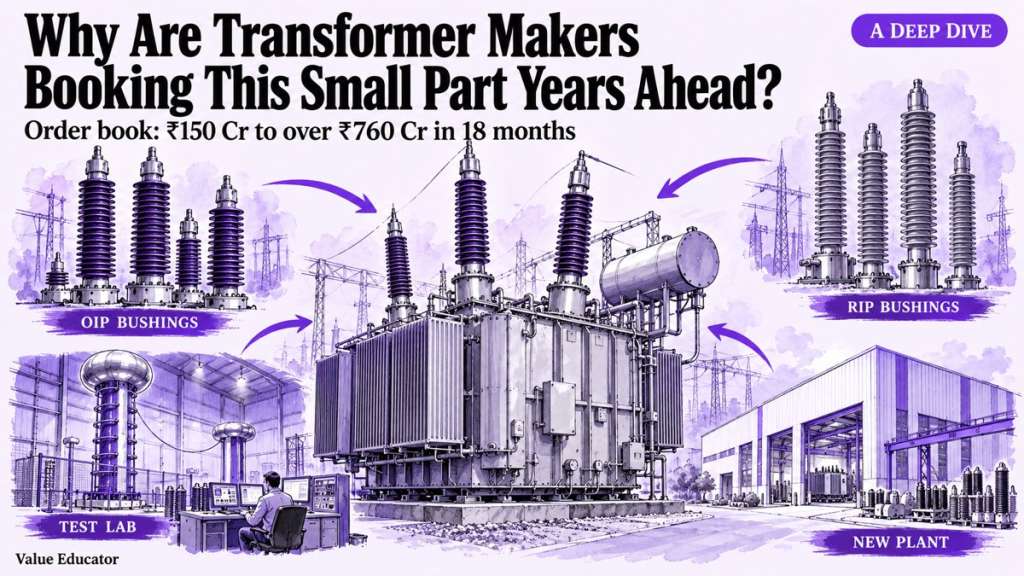
Yash Highvoltage: Bushing Maker With ₹760 Cr of Orders
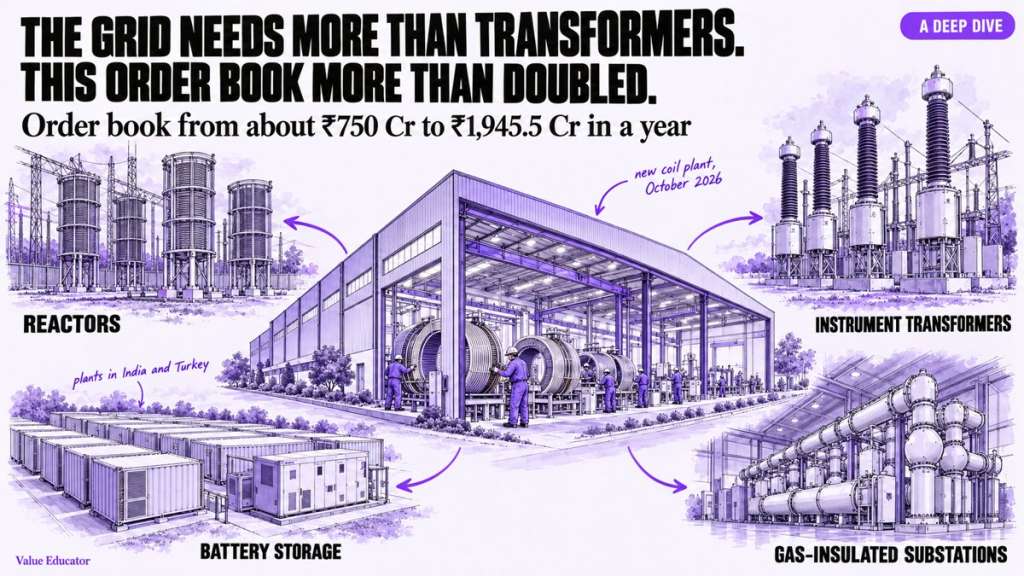
Quality Power: Reactor Maker With a ₹1,945.5 Cr Order Book
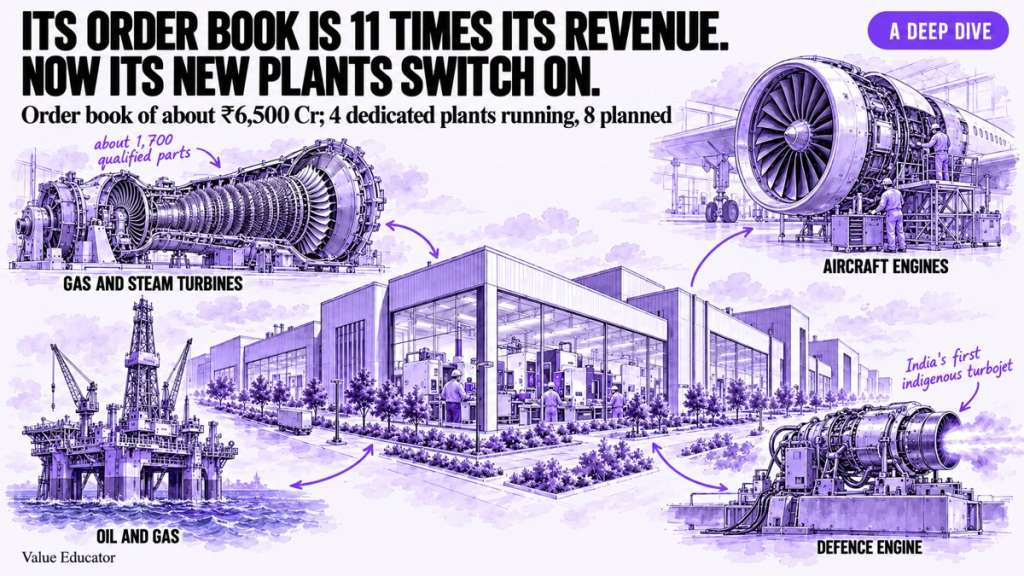
Azad Engineering: Turbine Blades, Jet Engines and Orders
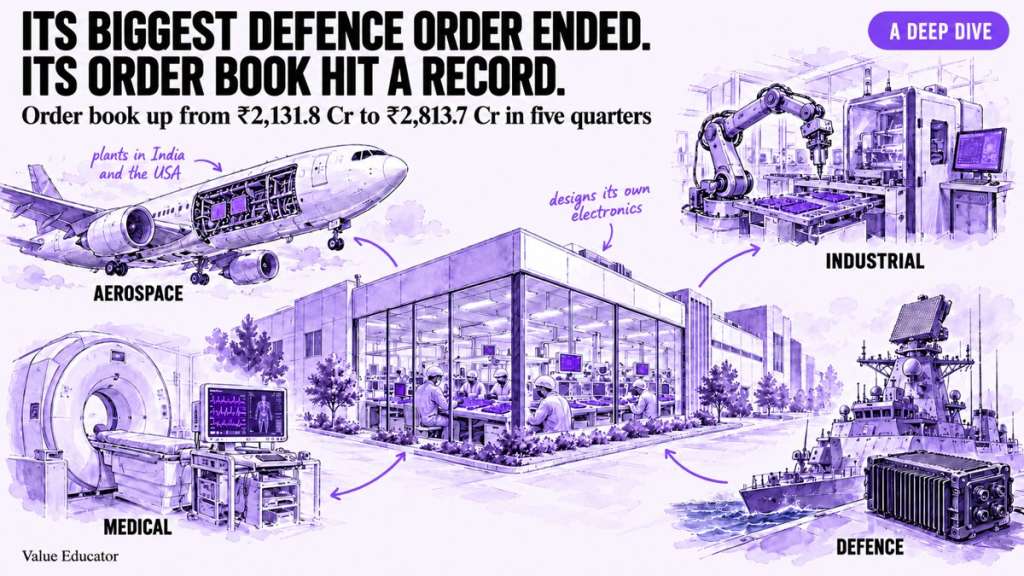
Cyient DLM: Aircraft Electronics and a Record Order Book
Explore our Products
Research Framework
Emerging Titans
Combination of quantitative analysis, industry tailwinds, and management assessment - SPRINT investment philosophy
Tiny Titans
Heavy emphasis on scuttlebutt research, plant visits, and early on-ground signals



Modern Warfare to Multibaggers
Key Trends. Strategic Shifts. Opportunities Ahead.
Don't Miss This Exclusive Webinar!
Join Value Educator to decode the key trends shaping India's defence sector and learn how to identify tomorrow's potential leaders in the space.
- In-depth research on India's defence sector
- Live Q&A session
- Actionable takeaways for long-term investors

 Orders
 Subscription
 Share with friends


Required Details
₹23999.00
(12 month subscription)
As per SEBI regulations, all users are mandated to complete the KYC that is validated for 1 year. Post payment, you will be redirected to the KYC screen


No comments yet. Be the first to comment!