
Micro-Caps That Could Lead 2026 Growth

2026 is shaping up to be one of the most important years for Indian investors, not because of a stock-market frenzy, but because India’s real economy is entering a powerful expansion phase. Railways, defence, manufacturing, and exports are all growing at the same time, a mix that shows up only a few times in a generation.
When waves like this hit, wealth is not created evenly. Big companies grow, but small, well-placed businesses can change their destiny. A ₹200-crore company riding the right demand cycle can multiply far faster than a ₹50,000-crore giant.

We’ve seen this before. Titan, Trent, Dixon, and Page Industries were once ignored stocks until the industries around them began to take off. Their success didn’t come from luck; it came from being in the right place before the market noticed.
If you want to see exactly how companies like Titan and Page Industries evolved from ignored stocks into wealth creators, this study on Top Multibagger Stocks of the Last 10 Years – What We Can Learn breaks down the common patterns behind their rise.
By the time those trends became obvious, the easy money was already gone. Profits had risen, valuations had followed, and late investors were left chasing.
India is now entering a similar phase. The 2026 cycle is not about chasing popular names. It is about finding small, real businesses sitting inside big national priorities while they are still under the radar.
Before looking at stocks, it’s worth understanding what the country itself is building and investing in , because that is where the next set of micro-cap opportunities will come from.
India’s Economic Shift: Why This Is Not Just Another Growth Year
As India heads toward 2026, growth feels different this time. Not louder. Just broader. The economy isn’t leaning on one pillar anymore. Investment is moving. Manufacturing is picking up. Exports are contributing. All of this is happening while the global backdrop remains uncertain. When growth comes from more than one place, it usually sticks around longer.
The biggest change is capital spending. Real money is being put to work. The government is spending, and private companies are spending too, on plants, machines, roads, and transport. This is not the old pattern where consumption did all the heavy lifting. India is still targeting around 6.5–7% GDP growth, but what matters now is how that growth is being built.
Railways make this visible. The FY 2025–26 budget is over ₹2 lakh crore. Tracks, safety systems, freight corridors, trains. That money doesn’t stop at one big contractor. It moves down the chain to many smaller suppliers making parts, electronics, and specialised equipment.
Defence shows the same pattern. More local sourcing. More domestic suppliers. Manufacturing is also benefiting as global companies look beyond China. New plants. New jobs. Alongside this, tax relief is helping consumption hold up.
Put together, this looks like a longer cycle. And in cycles like this, smaller, well-placed businesses tend to change the most.
“The big money is not in the buying and selling, but in the waiting.” - Charlie Munger
The Micro-Cap Filter: Where Opportunity Meets Risk
When a strong economic cycle begins, not every company benefits in the same way. Large firms may win big contracts, but because they are already massive, even a ₹1,000-crore order often barely changes the overall picture. For small companies, the effect is very different. One meaningful contract can lead to new hiring, new capacity, and a visible shift in the business. Growth shows up quickly.This is why, during periods like the one India is entering now, small and well-positioned companies often grow much faster than large ones. Their size allows them to convert opportunity into numbers far more efficiently. This is also why small companies dominate long-term wealth creation, something we explored in Common Traits of Every Multibagger Stock – Data-Based Study.
“Size is the enemy of performance.” - Warren Buffett
But this is also where reality matters. Small companies can grow fast, but they can fail just as fast. For every success story, many more quietly destroy capital. Micro-caps are fragile. Thin margins, limited cash, high borrowing, and little room for error mean even small shocks can cause damage. This is why blindly buying cheap small stocks is dangerous, as explained in Why Most Micro-Caps Destroy Investor Wealth and Why 95% Penny Stock Investors Lose Money (And How to Avoid It).
The real challenge is not whether to look at micro-caps; it is how to choose the right ones.
- Sector: That starts with the sector. If the industry itself has no tailwinds, even a well-run company will struggle. But when the sector is moving forward, railways, defence, exports, and infrastructure, the odds improve meaningfully.
- Proof: Next comes proof. Real customers paying real money. Order books, contracts, and rising sales matter far more than plans or presentations.
- Visibility: Then comes visibility. Growth should be visible in numbers, not promises.
“Risk comes from not knowing what you are doing.”- Warren Buffett - Balance sheet: Finally, the balance sheet must be strong enough to survive pressure. Debt-heavy businesses rarely get to enjoy the upside of a good cycle.
These filters don’t guarantee success, but they remove most bad risks. And in micro-caps, avoiding failure is half the job.
This is the same thinking used in A Fundamental Checklist: How to Research a Stock in 1 Hour, which helps separate real businesses from stories.
The 2026 Opportunity Map
Once you look at the market through a micro-cap lens, a pattern starts to become obvious. The strongest opportunities for 2026 are not coming from fashionable themes or short-term excitement. They are coming from areas where real money is being spent and where demand is being built year after year.Railways and infrastructure are where this shift really shows up. India is slowly changing how people travel and how goods move, and that pulls in a lot of work around tracks, trains, safety, repairs, and day-to-day operations. Because of that, companies linked to this space usually don’t depend on one big project. The work keeps coming, year after year.
Defence manufacturing is following a similar path. As more equipment is designed and built inside India, a large network of smaller suppliers is growing around the big defence companies and shipyards, creating room for well-run firms to expand.
Exports and logistics complete the picture. As Indian businesses ship more goods abroad, the need to move cargo efficiently keeps increasing. That steady demand quietly works in favour of companies handling freight and logistics.
These are not trends that disappear when market mood changes. They are backed by long-term spending and real demand. And when money flows into these parts of the economy, it doesn’t stop with one company it spreads through the entire supply chain. That is where the best opportunities usually show up.
Stock 1 – Airfloa Rail Technology
Indian Railways is no longer just about adding more trains. It is upgrading what those trains are moving toward safer, faster, and more comfortable coaches through Vande Bharat, modern LHB stock, and upcoming rapid-rail corridors. That shift is changing what Railways expects from its suppliers.
Older trains could be built using basic parts from many small vendors. The new generation of trains is different. They need finished interiors, automatic doors, fire-safe materials, and systems that must fit together perfectly. Because of this, Railways increasingly prefers companies that can deliver complete, integrated packages rather than just individual components.
Airfloa sits right at that point in the value chain. It supplies coach interiors, structural assemblies, doors, and integrated systems for Vande Bharat, LHB, metro, and rapid-rail projects exactly where India’s railway spending is now concentrated.
The scale of this opportunity is visible in its order book. By H1 FY26, Airfloa had about ₹455 crore of confirmed work, and management expects this to move toward ₹1,000 crore as more railway and rolling-stock projects are awarded. A backlog like that gives the company strong visibility into future revenue.
What makes this phase different is the type of work Airfloa is winning. It is no longer just supplying parts it is handling full packages from design and engineering to manufacturing and installation, which allows it to capture a larger share of every train that gets built.
In simple terms, India is not just buying more trains. It is buying more advanced ones and Airfloa is building what goes inside them.
Where Airfloa Sits in the Railway Value Chain
Airfloa is a specialised railway-engineering company with more than 27 years of operating history inside India’s rolling-stock ecosystem. Its role is to convert bare metal coach shells into finished, functional train interiors and structural systems.Because Airfloa controls design, fabrication, assembly, and installation, it acts as a single accountable supplier to coach factories and train manufacturers. This reduces coordination risk for Indian Railways and makes Airfloa a preferred partner as projects grow larger and more complex.
The financials already reflect this positioning. In H1 FY26, Airfloa generated ₹91 crore in revenue and over ₹12 crore in profit, while carrying a ₹455 crore order book. That means more than two years of revenue visibility at its current scale, directly tied to India’s railway upgrade cycle.
Airfloa is not a headline railway name. It is a critical systems supplier inside a massive national project, which is exactly where small companies quietly thrive.
Why This Can Become a Scale-Up Story
Airfloa does not need Indian Railways to grow dramatically. It only needs to keep winning its existing niche share of a very large and expanding system.The company is already approaching ₹300 crore in annual revenue, yet it has ₹455 crore of confirmed orders and management is targeting ₹1,000 crore by FY26-end. That means the next phase of growth is already locked into signed contracts.
More importantly, the mix of businesses is improving. Turnkey interior and systems contracts are higher value and higher margin than standalone component supply. As this mix increases, both revenue and profitability rise together.
When a company at this size moves from ₹300 crore to ₹500+ crore, it is not gradual; it is transformational. Fixed costs are absorbed, margins expand, and operating leverage kicks in.

That is how specialised railway suppliers quietly become mid-size industrial companies inside infrastructure booms.
What Can Go Wrong (Execution & Cash-Flow Risks)
Airfloa’s biggest risk is customer concentration. About ₹390 crore of its ₹455 crore order book comes from railway projects. Any delay in tenders, approvals, or execution can push revenue from one quarter to another.Working capital is another challenge. Government-linked railway contracts are milestone-based and often pay slowly. As Airfloa scales toward ₹500+ crore revenue, more cash will be tied up in inventories and receivables before it is collected.
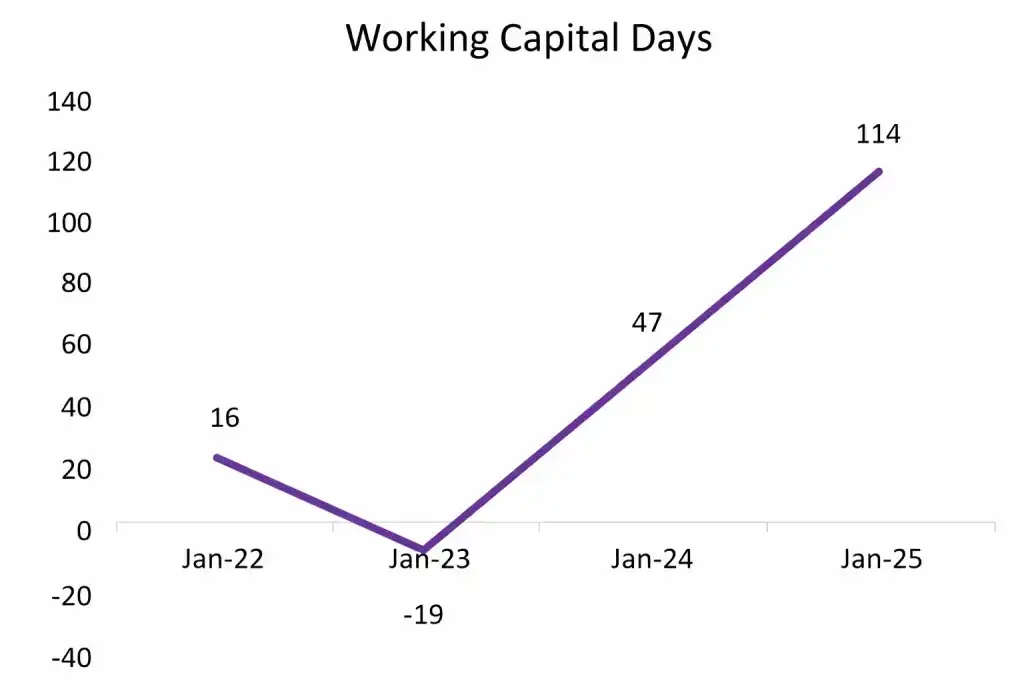
Finally, execution matters. The company is expanding capacity and entering defence-related work. Delays in hiring, plant ramp-ups, or project integration could temporarily slow delivery against its growing order pipeline. These risks explain why Airfloa remains a micro-cap. But they also explain why, if execution stays tight, the upside can be far larger than its current size suggests.
Now let’s move to a very different but equally powerful growth engine.
Stock 2 – Krishna Defence
India’s Defence Indigenisation Super-Cycle
For decades, India depended heavily on imports for critical defence materials, but that equation is now structurally changing as the country pushes to build more of its military hardware domestically, and this shift is showing up directly in company performance. Krishna Defence’s revenue rose from ₹1,064 million in FY24 to ₹1,949 million in FY25, an 83% jump, while profits more than doubled; the momentum continued into H1 FY26 with revenue up 28%, EBITDA up 53%, and margins touching 18%, a rarity in heavy engineering.
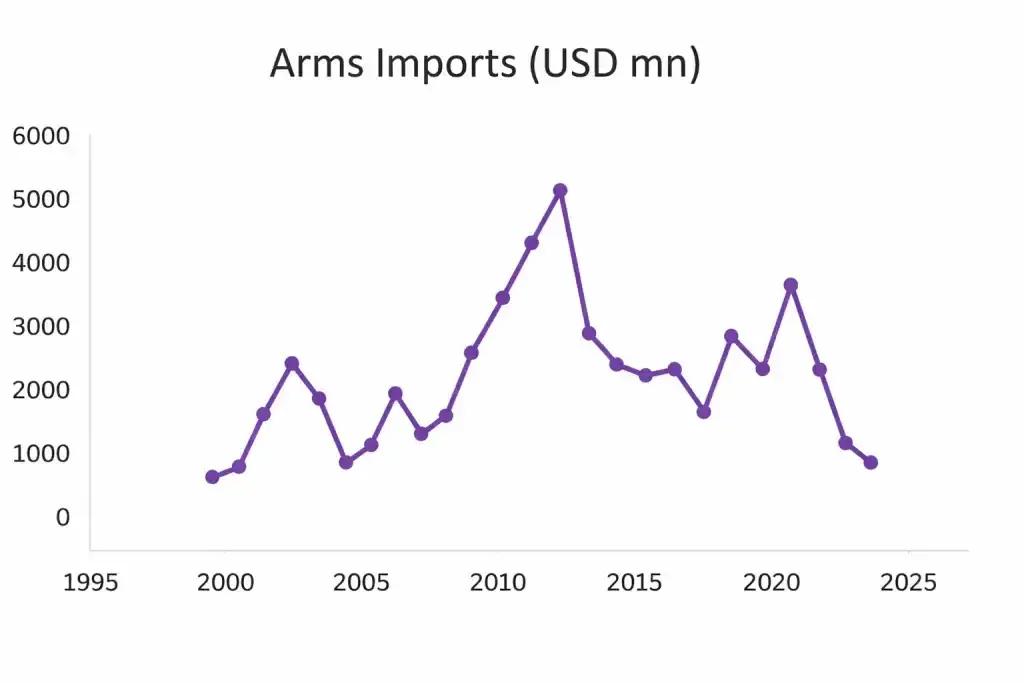 The driver is indigenisation: products that were once imported, shipbuilding bulb bars, specialised naval welding consumables, submarine ballast bricks, and armoured steel, are now being manufactured locally. But the real moat goes far beyond demand. Krishna’s evolution began decades earlier in dairy equipment, where it built deep capabilities in precision metal fabrication, process control, and servicing large institutions; capabilities that later translated into defence manufacturing. Its products sit deep inside mission-critical platforms where failure is unacceptable, requiring multi-year qualification cycles involving trials, metallurgical validation, stress testing, and repeated audits.
These approvals take years, not quarters, and once a supplier is validated, switching becomes operationally risky and economically irrational for defence customers. This creates near-irreversible entry barriers: competitors must replicate not just factories, but time, trust, and institutional credibility with no guarantee of success. As a result, competition remains limited, and vendor stickiness is high.
Over time, Krishna has become embedded within India’s defence manufacturing ecosystem, supplying the Navy, Army, Mazagon Dock, Cochin Shipyard, and GRSE, not through scale or marketing, but through decades of compliance, execution, and delivery under scrutiny. As India upgrades its naval, land, and underwater systems, suppliers already inside this approval loop are seeing a steady pipeline of work, and Krishna sits firmly within that flow. As Buffett put it, “Find a growing river and put your boat in it.”
Krishna’s Position Inside the Defence Supply Chain
Krishna does not build warships or fighter jets. It supplies the critical materials that those platforms are built from.Its products, bulb bars, welding wires, armoured steel profiles, submarine ballast systems, and defence-grade materials form the physical backbone of warships, submarines, and armoured vehicles. It does not compete with HAL or shipyards; it feeds them.
That positioning shows up clearly in the numbers. In FY25, Krishna generated ₹195 crore in revenue, with 92% coming from defence. In H1 FY26, it earned ₹156 million in net profit on ₹1,205 million in revenue, a 13% margin in heavy manufacturing. Its ₹196 crore order book gives direct visibility into upcoming defence programs.

In simple terms, Krishna is a pick-and-shovel supplier to India’s military build-out. Every new ship, tank, or underwater system requires exactly the products it makes.
Why This Can Become a Compounding Story
When a defence project is approved, money does not go to one company; it flows through hundreds of specialised suppliers. Krishna sits in that stream.That is why its revenue doubled in a single year. Management is guiding for 30–40% annual growth for the next 3–5 years, driven by new defence programs and expanding product lines. At that pace, a ₹200-crore business can become ₹600–800 crore far faster than most investors expect.
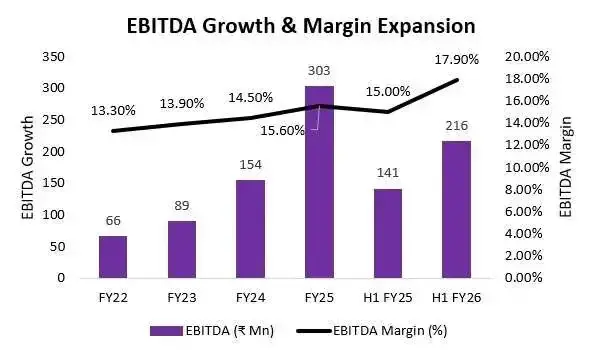
Krishna does not need India’s defence budget to explode. It only needs to keep winning a small share of a very large, growing supply chain, and that is how defence suppliers quietly become serious businesses.
What Can Go Wrong (Cycle & Cash-Flow Risks)
Defence manufacturing is not a smooth, linear business. Orders are inherently lumpy, approval cycles are long, and revenues arrive in phases tied to project milestones rather than quarters. Krishna’s sharp 83% growth in FY25 followed by a slower 28% growth in H1 FY26 already illustrates this pattern — not as a slowdown, but as the natural cadence of long-duration defence contracts where execution and billing stretch over years, not quarters. Quarter-on-quarter comparisons are largely meaningless in this ecosystem because products are manufactured, inspected, certified, and delivered over extended timelines before revenue is recognised.
Working capital is another structural challenge. Defence customers pay slowly, often only after multiple inspections and acceptance tests. As a result, higher revenue does not immediately translate into higher cash flows; instead, it locks capital into inventory and receivables. This makes balance-sheet discipline critical during growth phases. Customer concentration adds another layer of risk. Over 90% of revenue comes from defence, with a handful of shipyards and institutions driving most orders. Any delay in a large naval or defence project can temporarily affect cash flows, even if long-term demand remains intact.
Competition is also rising as more companies attempt to enter defence manufacturing. However, entry is not just about capacity — it requires specialised products, certifications, and years of approvals. Krishna’s edge lies in the difficulty of replicating these approvals and customer trust, but maintaining that edge demands continuous investment in quality, compliance, and process capability. These risks explain why defence stocks often look volatile on the surface — and also why companies that execute consistently within this system can quietly compound for many years.
Now, let’s move to a completely different engine of growth — global trade.
Stock 3 – Afcom Holdings
The High-Speed Global Trade Cycle
India’s exports and imports are rising, but what really matters is how they move. Electronics, pharmaceuticals, e-commerce parcels, and high-value manufactured goods cannot afford long delays at sea; they need fast, reliable air transport.India handled about 3.5 million tonnes of air cargo in FY24, and volumes are growing at 7–8% a year as exports and high-value manufacturing expand. Nearly 60% of this cargo is international, which shows how deeply India is now tied into global supply chains.

As a result, air freight is no longer a niche service. It is becoming a core part of India’s trade infrastructure, and that is the long-term wave Afcom is riding.
Afcom’s Position Inside the Global Cargo Network
Afcom is not a shipping line or a port operator. It is a dedicated air-cargo airline, flying freighter aircraft between India, Southeast Asia, and the Middle East, exactly where India’s export and import flows are growing fastest.It currently operates three Boeing 737-800 converted freighters, each carrying 22 tonnes per flight, giving it full control over capacity instead of relying on passenger airlines. Through partnerships with DHL, DSV, DB Schenker, Kuehne + Nagel, GEODIS, and airline tie-ups with Etihad, Turkish Airlines, and VietJet, Afcom is embedded in global logistics networks.
This positioning is already producing results. In FY25, revenue rose to ₹242 crore from ₹148 crore, EBITDA doubled to ₹72.6 crore, and net profit jumped 90% to ₹48.4 crore. Afcom is not just flying planes; it is running a profitable cargo network.
In simple terms, Afcom sells connectivity. As India trades more with ASEAN and the Middle East, its aircraft become the pipes through which high-value goods flow.
Why Afcom Can Compound as Volumes Rise
Air cargo has built-in operating leverage. Once a plane is flying, most costs, such as crew, lease, maintenance, and ground handling, are fixed. Every extra tonne loaded adds revenue with little extra cost.That is why Afcom’s profits surged when volumes increased. And the company is now expanding its fleet planning to add a fourth and fifth aircraft, and move to wide-body Boeing 777 freighters by FY27. Each new aircraft does not just add revenue; it opens new trade lanes and higher-volume routes.
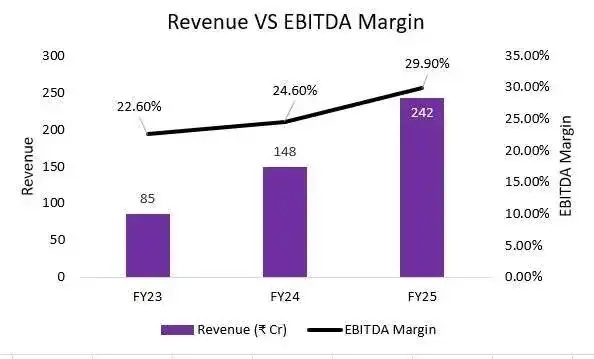
Afcom’s ASEAN hub strategy in Bangkok, Hanoi, and the Maldives further boosts aircraft utilisation, allowing the same planes to serve multiple countries. That is how small cargo airlines scale into serious networks.
Afcom does not need trade to explode. It only needs volumes to keep rising steadily because once planes are in the air, every extra shipment drops straight into profits.
What Can Go Wrong (Fuel, Competition & Trade Cycles)
The biggest risk is fuel cost, which can squeeze margins when prices spike. Competition is also rising, as large global cargo airlines and integrated logistics firms operate on the same routes. Finally, air cargo is tied to global trade cycles. Wars, tariffs, or recessions can slow volumes, especially on ASEAN and Middle East routes that Afcom depends on.These risks explain why air-cargo stocks are volatile. But they also explain why well-run operators with the right routes and partners can grow extremely fast when trade flows are strong, exactly the environment India is moving into. So the real question is not whether Afcom has risk, it is whether it is a real, structurally positioned business.
Explore our Products
Research Framework

Emerging Titans
Combination of quantitative analysis, industry tailwinds, and management assessment - SPRINT investment philosophy

Tiny Titans
Heavy emphasis on scuttlebutt research, plant visits, and early on-ground signals
Conclusion
Many people think micro-caps are just penny stocks that move on rumours and tips. That reputation exists because most small companies have no real business behind them. But Airfloa, Krishna Defence, and Afcom are different. Each of them sells to real customers inside powerful supply chains: Indian Railways, defence shipyards, and global logistics networks. Their revenue comes from signed contracts, long-term programs, and steady demand, not market hype.This matters because India’s 2026 growth cycle is being driven by real forces: railway upgrades, defence manufacturing, and rising global trade. Inside these systems, small, specialised companies often grow the fastest. These three sit right where that money is flowing, with visibility that stretches years ahead.
That does not make them risk-free, but it makes them real businesses, not lottery tickets. This is where patient tracking beats quick trades. If you’d like to see more research on companies riding these long-term cycles, comment “MICROCAP.”
FAQ
What kind of stocks can do well in 2026?
Companies tied to India’s big spending cycle railways, defence, and exports have the strongest tailwinds. The biggest upside usually comes from smaller suppliers inside these systems, not from already-large names.
What makes a micro-cap a potential multibagger?
Three things: a growing sector, visible business growth, and a small starting size. When a ₹300-crore company grows 30–40% for a few years, the change in scale can be dramatic.
How do you avoid bad micro-caps?
Focus on companies with real customers, order books, and steady cash flow. Avoid businesses that live on stories, not sales.
How should an investor approach this cycle?
+Pick a few strong businesses in the right sectors and track their orders, execution, and balance sheet. Big cycles reward patience, not constant trading.

High growth stock specialist, Value Educator
Shashank Mahajan is an equity research professional with over 12 years of experience in identifying high-potential SME and micro-cap stocks at an early stage. He follows a rigorous scuttlebutt research–driven approach, combining on-ground insights with deep financial analysis. Shashank specializes in uncovering under-researched and under-owned companies with strong management quality and long-term growth potential. Through disciplined research and early identification, he focuses on spotting tomorrow’s market leaders before they enter the mainstream investor radar.

Zen Technologies: Revenue Fell After a Big Win



PNG Jewellers: A 194-Year-Old Name Goes National
Explore our Products
Research Framework
Emerging Titans
Combination of quantitative analysis, industry tailwinds, and management assessment - SPRINT investment philosophy
Tiny Titans
Heavy emphasis on scuttlebutt research, plant visits, and early on-ground signals


 Orders
 Subscription
 Share with friends


Required Details
₹23999.00
(12 month subscription)
As per SEBI regulations, all users are mandated to complete the KYC that is validated for 1 year. Post payment, you will be redirected to the KYC screen


No comments yet. Be the first to comment!