
Jyoti CNC: Riding the Manufacturing Capex Cycle

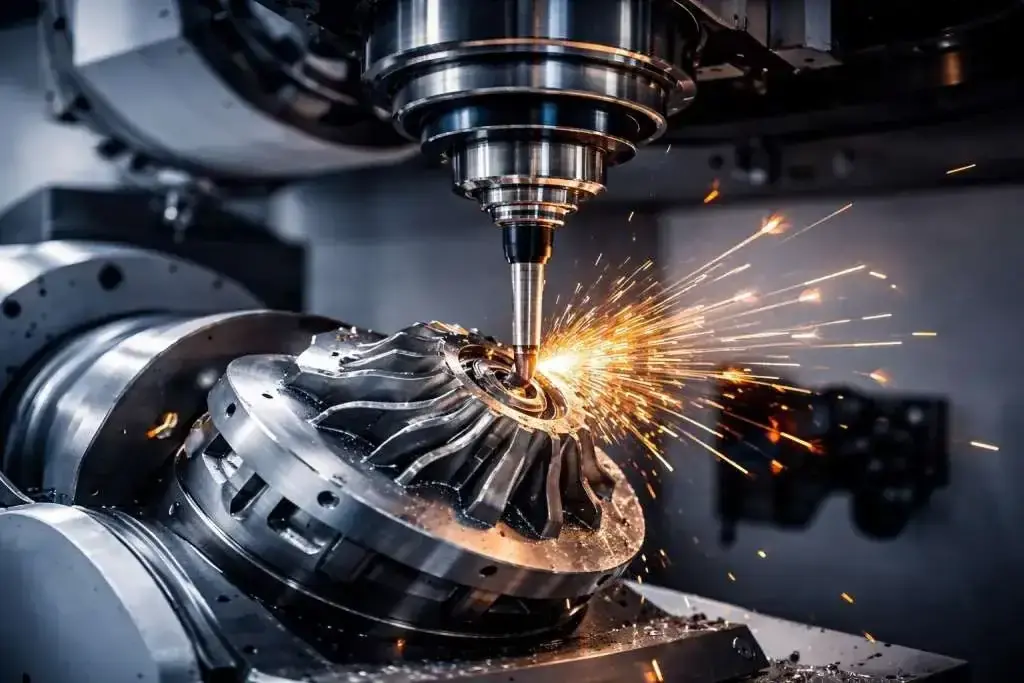
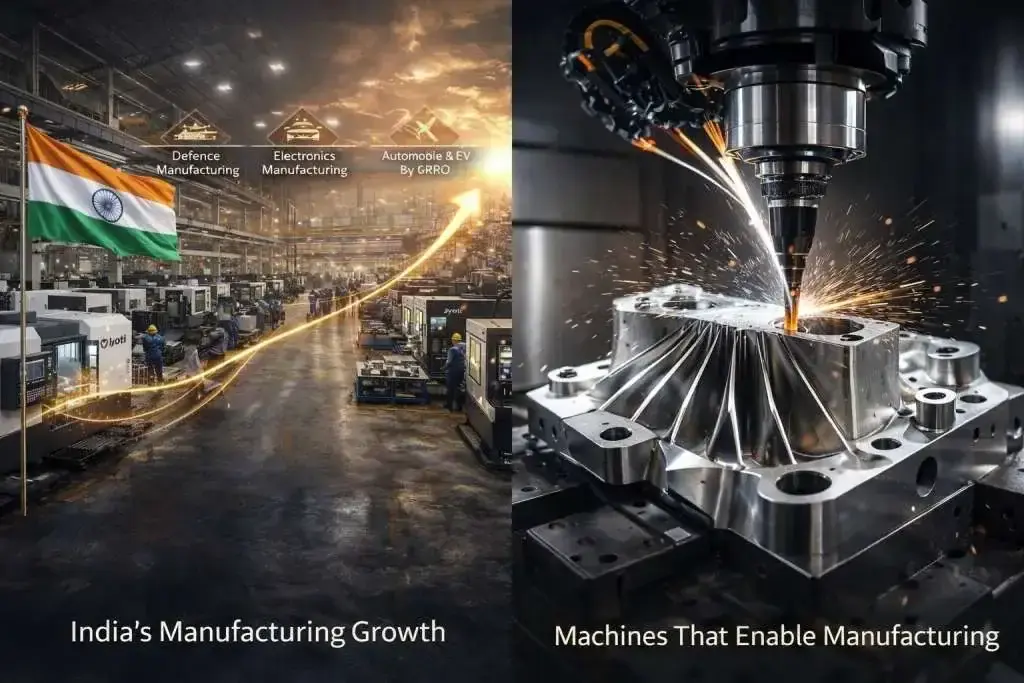
Walk into a factory building EV batteries or parts for satellites these days, and you won’t hear the old clang and crash of heavy machinery. Now it’s more like a constant, sharp whine—the kind that comes from CNC machines as they slice through metal with wild precision, all guided by code.
These machines really are the quiet backbone of modern manufacturing. But the real shift isn’t just in the technology itself—it’s about where all this action is happening.
India is currently passing through a massive transformation. Rather than purchasing a majority of the finished products, the country is beginning to make things themselves. And to work with complicated manufacturing, you will have to have certain serious equipment. That’s what’s changing: India’s not just consuming anymore—it’s making.
That is exactly where Jyoti CNC steps in, with European tech in its DNA and an order book worth ₹4,585 crore proving that India’s manufacturing dreams are becoming reality. We’ll explore every layer of this story—from shifting global supply chains and the mechanics of CNC machines to the numbers behind Jyoti’s growth. And beyond the optimism, we’ll also examine the risks and key questions investors should consider. For readers who want to understand how investors identify such opportunities, you can explore: How to Analyze a Mid Cap Company – Complete Framework.
India’s Manufacturing Revival: A Structural Shift in the Making
For nearly thirty years after liberalisation, India’s economy rode high on its services sector. Software, BPOs, and digital platforms didn’t just mint new millionaires—they lifted millions into the middle class and put India on the world stage as a serious intellectual hub. But manufacturing? That side of things never really took off, which is strange for a country as big as India. By 2023, manufacturing made up just 17% of India’s GDP. Just to compare, China was sitting at 28%, South Korea at 23% when they were at the same point in their growth.
So, why did India lag? Honestly, the basics just weren’t in place. Not enough industrial clusters, patchy supply chains, and infrastructure that left a lot to be desired. Logistics chewed through budgets, the power cut out all the time, and finding good workers? That was hard enough—keeping them was even harder. This was why when corporations in the world required new locations to manufacture their products, they simply bypassed them and went directly to China, Vietnam, and Bangladesh.
However, all this changed around 2020. COVID-19 struck, and everyone was all of a sudden worried of the danger of being this dependent on only a few nations. Chinese factories were closed down, and shipping containers were virtually wiped out, giving companies all over the world a wake-up call. They’d bet everything on one plan—and now that plan was falling apart. Whole industries—cars, electronics, you name it—ground to a halt, not because of their own mistakes, but because one critical part didn’t show up.
And if that wasn’t enough, geopolitics got messy. The US-China trade war, new export controls on chips, and growing worries about security made governments and big companies rethink their entire approach. The question stopped being, “Where’s the cheapest place to manufacture?” and became, “Where can we actually make things reliably, without getting caught in international crossfire?”
That’s when India stepped in.
The government launched the Production Linked Incentive (PLI) scheme, covering 14 industries—everything from smartphones and pharma to textiles and batteries. The plan was straightforward: pay companies to build stuff in India. Electronics really took off. By 2024, India’s smartphone production hit $44 billion, with exports shooting up sixfold in just three years. Big names like Foxconn, Pegatron, and Tata Electronics ramped up their India operations in a big way.
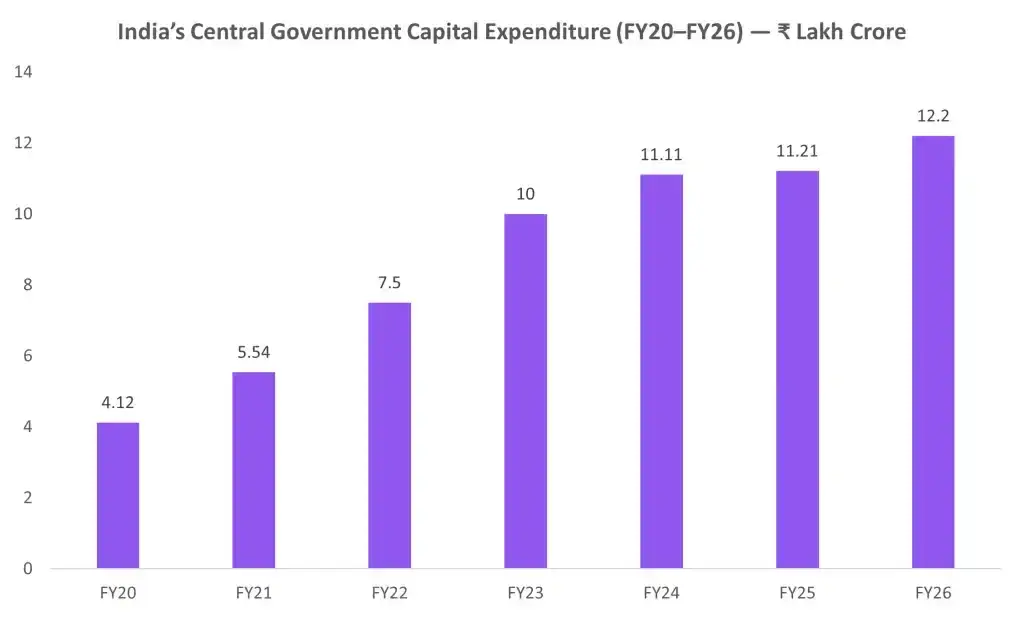
But it wasn’t just about PLI. The government also poured money into infrastructure—₹12.2 lakh crore in the FY26 budget, more than triple what it was five years ago. This money is going everywhere: roads, railways, ports, airports, industrial corridors, energy networks. Every rupee on infrastructure drives up demand for machines and factory equipment.
The defence sector shows just how much things are changing. India used to import most of its defence gear, but now the government’s pushing hard to make more of it at home. Defence contracts now require more local manufacturing, and new industrial corridors for defence have sprung up in Uttar Pradesh and Tamil Nadu. There’s even a target to hit ₹50,000 crore in defence exports by 2030. To get there, local manufacturers need to build everything—rifles, shells, fighter jet parts, even naval components.
None of this works without precision machining. And that means CNC machines.
Bottom line? Every ₹1 crore spent on new factories in aerospace, defence, or electronics directly boosts demand for precision machining equipment. India’s capital investment cycle is bigger than ever right now—and it’s still picking up speed.
CNC Machines: The Precision Infrastructure of Modern Industry
If you’re digging into any company in the machine tool world, you’ve got to get what CNC machines actually are, why people bother with them, and why building one isn’t exactly simple.
Here’s the deal: CNC means Computer Numerical Control. Sounds fancy, but really, it just means a computer’s running the machine instead of a person. You don’t have someone standing there twisting knobs or moving levers—everything is programmed in. The computer determines the direction of the tool movement, the speed of movement, the degree of angle, the level of pressure - all the details. The machine simply takes orders and pumps out the same parts without error, with no fuss.
Sounds easy, right? It is nuts, in reality, the engineering behind it. These machines cut and shape metal and raise multiple axes in the air, five or more, and rotate at an excess of 20,000 RPM. Tolerances of 2 to 5 microns, which is a tenth the thickness of a human hair, are being discussed. Maintaining that degree of accuracy and handling it under heat, vibration, and material stress? Some great stuff there, that.
The CNC machines are divided according to the job. Turning centers rotate the piece of work and hold the tool stationary - perfect for the production of shafts, bearings, or bolts. Vertical machining centers (VMCs) vertical machining centers are furnished with an upright spindle to perform milling, drilling, and intricate 3D geometry, i.e., the Swiss Army knives of manufacturing. Horizontal machining centers are used on large components that require heavy-duty work, which is why they are common in aerospace and heavy industry. Then there are five-axis machining centers, which are the actual high flyers. They can be moved using five axes simultaneously, allowing you to cut complex shapes on a single run. They are the solution to aircraft components, turbine blades, and even medical implants.
Frankly speaking, it is difficult to overestimate the importance of CNC machines in the world economy. Historians refer to machine tools as a “meta-technology, or the technology that drives all other technology. You can not manufacture jet engines, electric car motors, or even machines that make computer chips without machine tools. This is why the business is referred to as the mother machine industry by people; it is the industry that lies at the foundation of practically all other types of manufacturing.
The machine tool manufacturing of the world is concentrated in a few countries. The supply is produced by Germany, Japan, South Korea, and China alone. German companies, such as DMGMori, Trumpf, and Chiron, are reputed to be precise and reliable. The Japanese Japanese-Mazak, Fanuc, and Okuma are myths in the high-volume, high-precision industries such as the auto industry. These are not new entrants; these companies have created a brand over the decades, and their machines are going to fetch a high price in nearly every place.
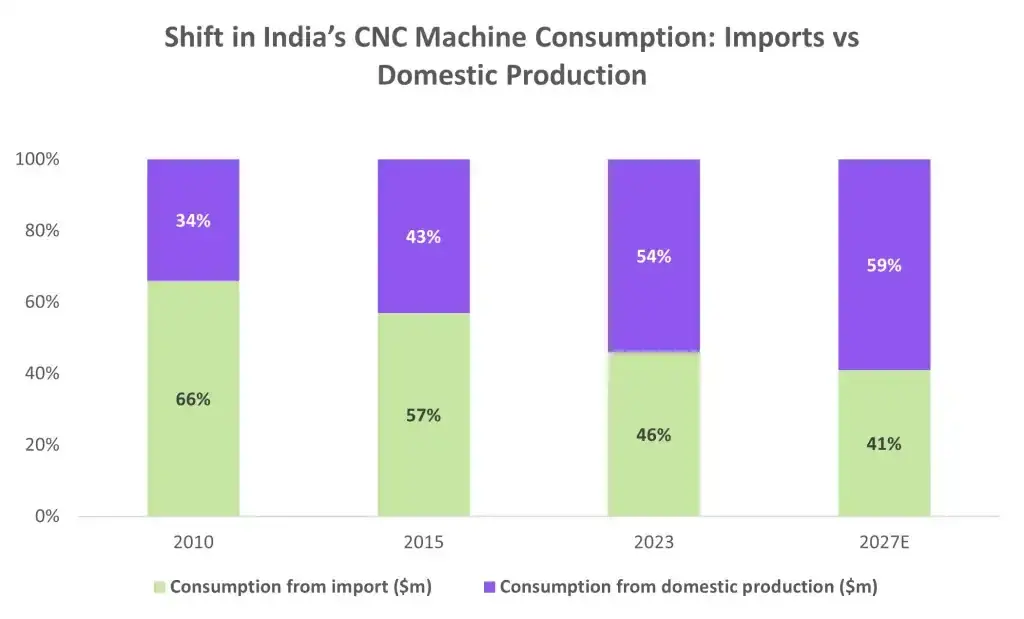
The market of CNC machines in India today is approximately 3.5 billion a year. The only catch, however, is that more than half the CNC machines that are operating in Indian factories are of foreign origin. That is a serious problem for a nation that desires to be a manufacturing giant in the whole world. When the Indian factories depend on the foreign suppliers of their main production equipment, then it is difficult to increase production quickly, more so in sensitive sectors such as the defense sector, as it all depends on the foreign supply chains, prices, and export regulations.
It is not only a clever business to develop a world-leading local machine-tool industry but a strategic necessity. That is why such companies as Jyoti CNC are receiving serious attention not only of investors, but also of any person who is concerned about the future of India as a powerful manufacturing country.
The Jyoti CNC Story — From Rajkot to the World
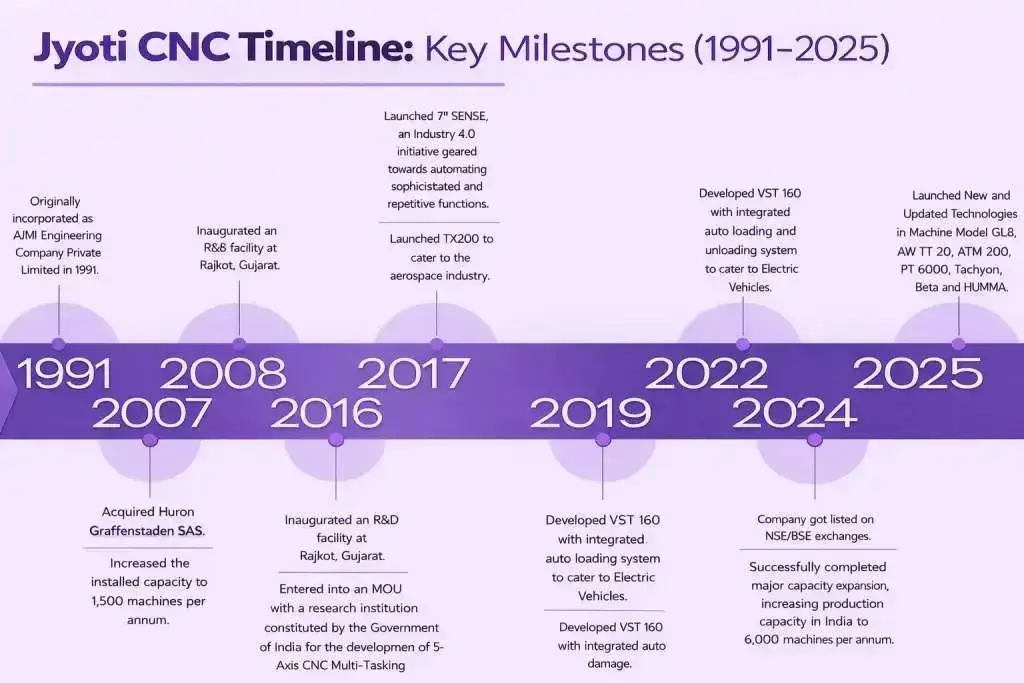
Jyoti CNC Automation Limited started in 1991, thanks to Parakramsinh G. Jadeja. He wasn’t a typical entrepreneur—no fancy business degree, no Silicon Valley pitch decks. He came straight from the factory floor, and honestly, that made all the difference.Jadeja did not go ahead and attempt to directly compete with the German or Japanese giants at a single stroke. Instead, Jyoti CNC chose to do a simple thing: just produce machines that the Indian manufacturers could actually work on, durable, easy to service, and actually work in real life. Initial clients were in such locations as automotive parts, general engineering, and tool-and-die shops. These individuals were concerned with longevity and quality of service, and not necessarily the slickest features.
Jyoti CNC continued to expand over the 90s and into the 2000s, at a gradual pace. They increased their product range, refined their engineering, and acquired a stable customer base throughout India. They invested in the Rajkot plant by pouring funds to add more muscle to production and equipment. They established strong distribution and service channels in the key industrial cities. And, perhaps, most critically, they began to invest in research and development. That is what finally enabled them to address more complex, high-value machines.
Their expansion was not glitzy, no huge capital rounds, no blockbuster acquisitions. Instead, they had acquired expertise the old-fashioned way; one machine and one customer at a time, resolving real problems as they appeared. That kind of know‑how? It’s hard to copy in a hurry.
The Huron Acquisition: European Precision, Indian Economics
Jyoti CNC made progress through the 2010s, but it kept running into a wall. The company just couldn’t crack the top tier of CNC machines—the kind used in aerospace, defense, and other jobs where precision has to be perfect. European and Japanese companies had pretty much cornered that market, and they’d been perfecting their machines for decades. Their technology, the stuff inside—the spindles, the thermal systems, the control software—was simply out of reach for Indian manufacturers at the time.
Everything changed when Jyoti CNC bought Huron Graffenstaden, a French company from Strasbourg that had been around forever. Huron was a big name in European aerospace, known for building milling machines that could handle the toughest, most exacting work. You needed reliability and precision? People turned to Huron.
The deal made sense for both sides. Jyoti CNC wanted cutting-edge tech and global credibility. Huron needed the cost savings and scale that Indian manufacturing could deliver. By teaming up, they created something new—a machine with European engineering standards, but at prices that could actually compete with Asian brands.
Blending these two worlds wasn’t easy. Different countries, different work styles, and a lot of technical hurdles. Still, they pulled it off. Over time, the Strasbourg plant became the group’s technology nerve center for high-precision machines, while Rajkot ramped up production and started building more advanced models. Engineers traveled back and forth, swapping ideas and expertise, and the whole group got sharper.
Now, Huron is still a go-to brand for European aerospace and precision engineering, but it also feeds its advanced tech into Jyoti CNC’s Indian lineup. This mix—European engineering pedigree with Indian manufacturing muscle—gives Jyoti CNC a real edge. You just don’t see that combination every day.
The Huron deal gave Jyoti CNC something you can’t buy off the shelf: a hundred years of European engineering know-how, fused with India’s cost advantage. That kind of blend is rare in the global machine tool world.
The Product Portfolio — What Jyoti CNC Actually Builds
If you really want to get a sense of where Jyoti CNC stands in the market—and how much money it can make—you have to look at the kinds of machines it builds. Their lineup covers pretty much every major CNC machine type, but the real story is how they’re pushing toward more advanced, higher-margin equipment.Let’s start at the base.
Jyoti CNC makes CNC turning centers. These are the workhorses that spin a piece of metal while a cutting tool shapes it into things like shafts, bolts, gears, and bearing housings. You’ll find these machines everywhere in the automotive world. India’s auto sector is massive, so there’s a huge market for this kind of equipment. But it’s a crowded space, and profits aren’t as juicy as they are in the high-tech segments.
Then there are the vertical machining centers, or VMCs. If you ask most people in the field, VMCs are the Swiss Army knives of CNC machining. They can do it all—drill, mill, tap, and sculpt complex surfaces in one go. That means they show up in everything from electronics and general engineering to aerospace. VMCs make up a big chunk of the global CNC market, and Jyoti CNC has options ranging from basic machines for small workshops up to super-precise models for demanding industries.
Now, when you get to horizontal machining centers, things get more specialized. These are built for tough jobs—big, heavy parts, often weighing several tons. Think aerospace, power plants, and heavy machinery. The engineering behind these machines is on a different level compared to VMCs, and the price tags (and profits) go up accordingly.
At the top of the pile are the five-axis and multi-axis machining centers. These aren’t your everyday machines—they can move the cutting tool along five different axes at once. That lets them tackle incredibly complex shapes, all in a single setup. Aerospace companies rely on these for tricky parts like engine casings and turbine blades, but they’re also popping up more and more in medical device manufacturing, motorsports, and advanced defense work.
What really sets Jyoti CNC apart is how determined they are to move up this ladder. They’re pouring resources into R&D, creating their own control systems and drive tech, and chasing the certifications they need to sell to top aerospace and defense contractors. This strategy isn’t just about bragging rights—it has a real impact on the bottom line. The difference in profit between entry-level and high-end CNC machines is huge, and the competition thins out as you climb higher. That’s where Jyoti CNC wants to be, and it’s where the real money—and long-term advantages—are found.
Below is an illustration of the types of CNC machines:
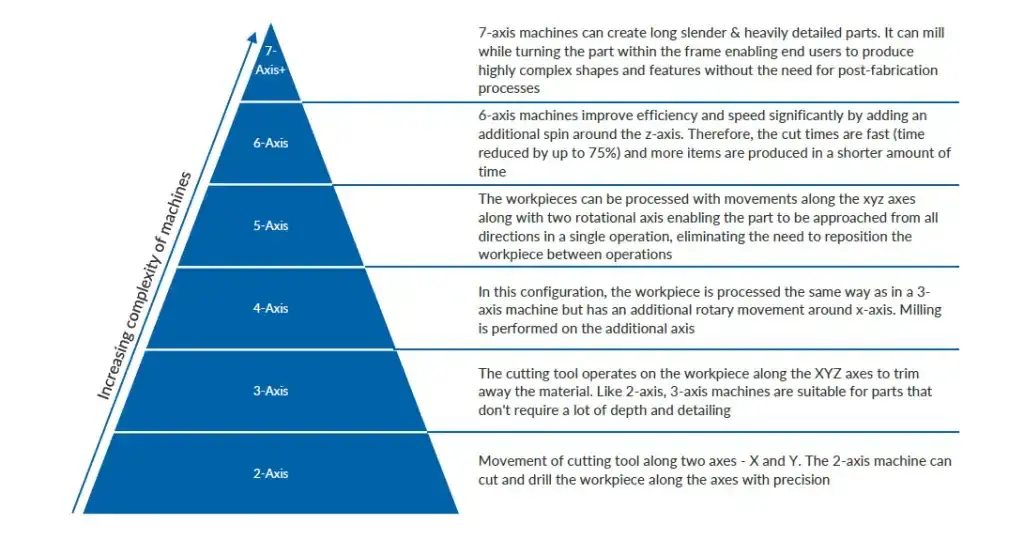
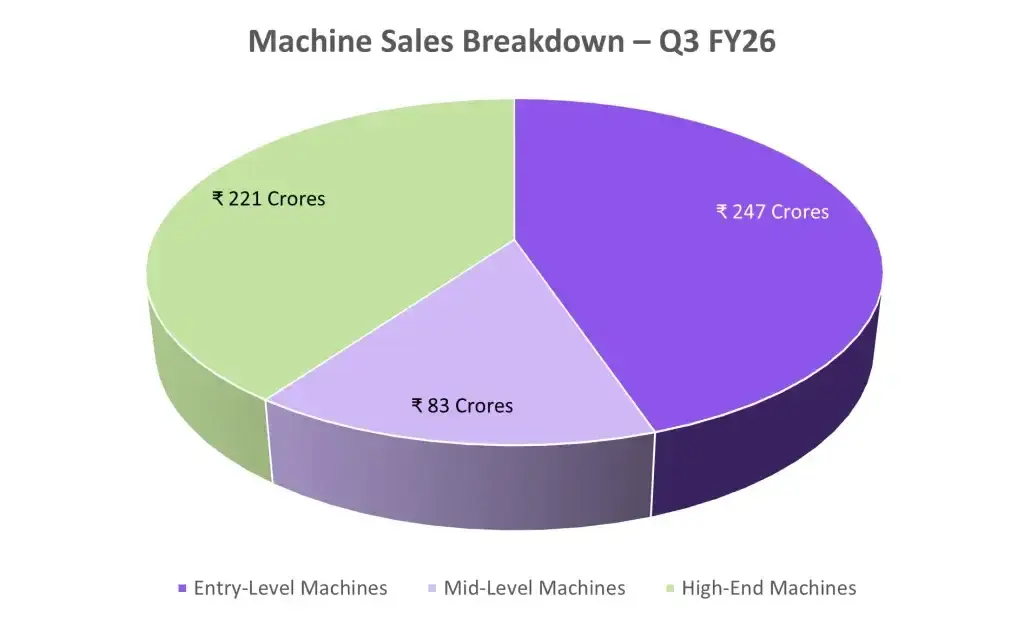
The management of JCAL classifies its CNC machines into three broad categories based on their selling price: Entry-level machines priced up to ₹50 lakh, mid-range machines priced between ₹50 lakh and ₹2 crore, and high-end machines priced above ₹2 crore (typically extending up to around ₹20 crore).
This segmentation is important because higher-end machines generally carry significantly better margins, given their technological complexity and specialized applications in sectors such as aerospace, defence, and advanced manufacturing. As a result, a shift in the sales mix toward high-end machines can meaningfully improve the company’s profitability.
Below is the segment-wise breakdown of machine sales for Q3 FY26:
The Financial Picture — Revenue, Margins, and What the Numbers Tell Us
Let’s start with the basics. Analyzing Jyoti CNC’s finances only makes sense if you understand the world they operate in. If you're learning how investors evaluate companies through financial statements, reading How to Read a Balance Sheet Like a Professional Investor can help you understand the numbers behind businesses like this.Machine tool companies don’t work like consumer brands or software outfits. They keep big inventories. Their production cycles drag on, and they need to keep pouring money into equipment. Plus, the money doesn’t roll in right after orders come in—it usually takes a while. If you don’t get these quirks, all the numbers can look a bit strange.
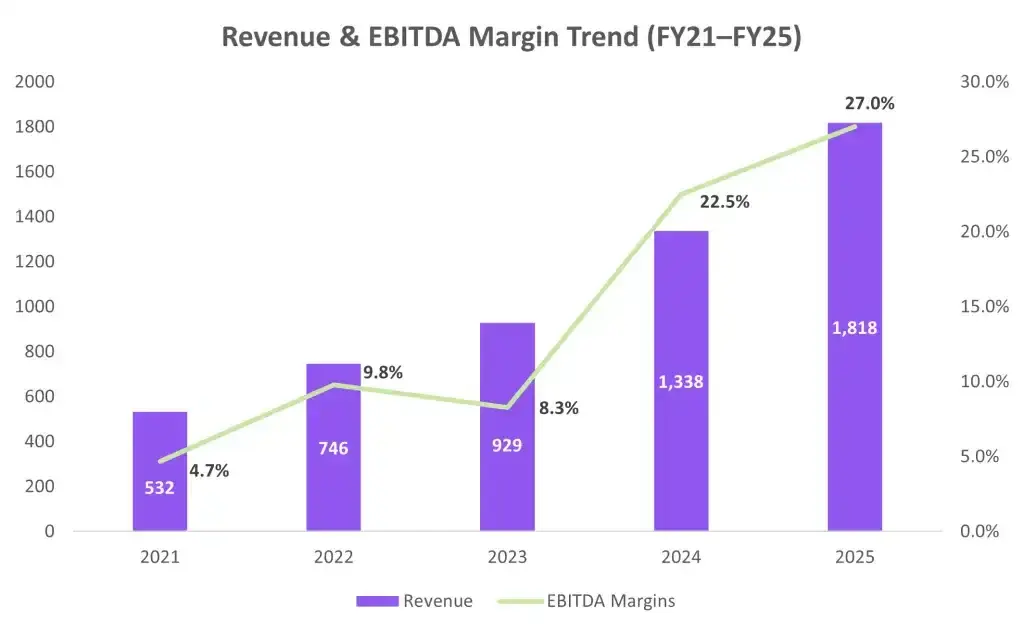
But once you have that in mind, Jyoti CNC’s recent numbers really stand out. In FY25, their revenue shot past ₹1,600 crore, which is a huge jump from where they were a few years back. Still, the real story isn’t just about hitting a big top-line number. The more interesting part is what’s behind that revenue and what it says about how solid the business actually is.
Here’s what’s happening: Jyoti CNC isn’t just selling more of the same old machines. They’re selling more expensive, higher-value machines—and making better profits on each one. As they’ve shifted toward making mid-range and high-end CNC machines, especially for customers in aerospace, defence, and precision engineering, the average amount they earn per machine has gone up a lot. One high-end five-axis machine can bring in as much (or more) revenue than several entry-level machines. And the margins are better, too. Plus, these bigger deals often mean tighter relationships with customers.
This shift is exactly why their margins look so much better now. Their EBITDA margin hit about 27% in FY25, which puts them in the same league as some of the top global machine tool makers—and way ahead of what they used to earn. Just for context, most capital goods companies in India run at 12–18% margins. Holding onto a 27% margin in this field is no small feat. It points to real pricing power, a product that stands out, major operating leverage, or maybe all of those.
High profitability combined with structural industry demand is often one of the early indicators investors look for when identifying potential long-term winners. Some of these patterns are discussed in: 7 Early Signals That a Stock Can Turn Multibagger.
A few things are driving these better margins. High-value machines have more pricing power because customers pay for precision and engineering, not just raw materials. As Jyoti CNC’s production volume grows, they’re able to spread their fixed costs over more units. That’s classic operating leverage. Plus, they’ve put money into making their manufacturing more efficient, which has pushed down costs per machine even as what they’re building gets more complicated.
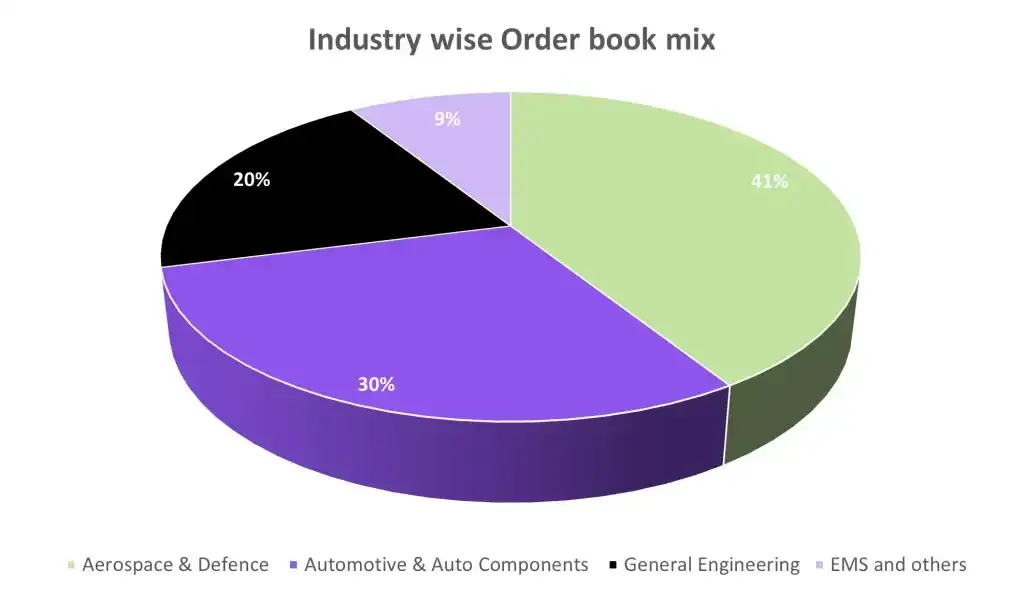
Looking ahead, the order book says a lot. Right now, Jyoti CNC has a backlog of about ₹4,500 crore. That’s almost two years’ worth of revenue, given their current pace. This isn’t just a big number—it’s telling, too. Around 40–41% of their orders come from aerospace and defence, which means they’ve broken into a customer group that pays well and tends to stick around. Automotive and auto components add more, and the rest comes from general engineering and electronics manufacturing. The key thing? No single sector dominates. That kind of diversity means the company isn’t exposed to the ups and downs of any one industry. It’s a built-in safety net.
Working Capital — The Hidden Complexity
No serious financial analysis of a machine tool company is complete without a candid look at working capital. This is where the business model's structural complexity becomes most visible — and where many otherwise promising capital goods companies get into trouble.Manufacturing a CNC machine is not like manufacturing a smartphone or a consumer appliance. The process begins with procuring high-value components — precision spindles, ball screws, linear guides, electronic controllers, servo motors, and large structural castings. Many of these components are sourced from specialised suppliers, and some critical components are imported from Europe or Japan with lead times that can stretch to 9–12 months. This means inventory must be committed to production long before a machine is sold, let alone paid for.
The manufacturing cycle itself adds further time. Entry-level machines may require 3–6 months from component procurement to final assembly and testing. Complex machines — large horizontal machining centers or sophisticated five-axis systems — can take 12–18 months to complete. During this entire period, significant capital is tied up in work-in-progress inventory, generating no cash flow but consuming working capital.
Customer payment terms in the machine tool industry typically involve advance payments, but also extended credit periods. Large orders — particularly from government defence organisations or aerospace prime contractors — may involve milestone-based payment schedules that do not always align neatly with production costs.
Historically, Jyoti CNC's operating cycle exceeded 200 days. This means that from the moment cash was spent on components to the moment cash was collected from customers, more than six months elapsed. In a rapidly growing business, this creates a structural need for working capital financing. Growth, paradoxically, can be a strain on cash flow in capital goods businesses even when it is profitable.
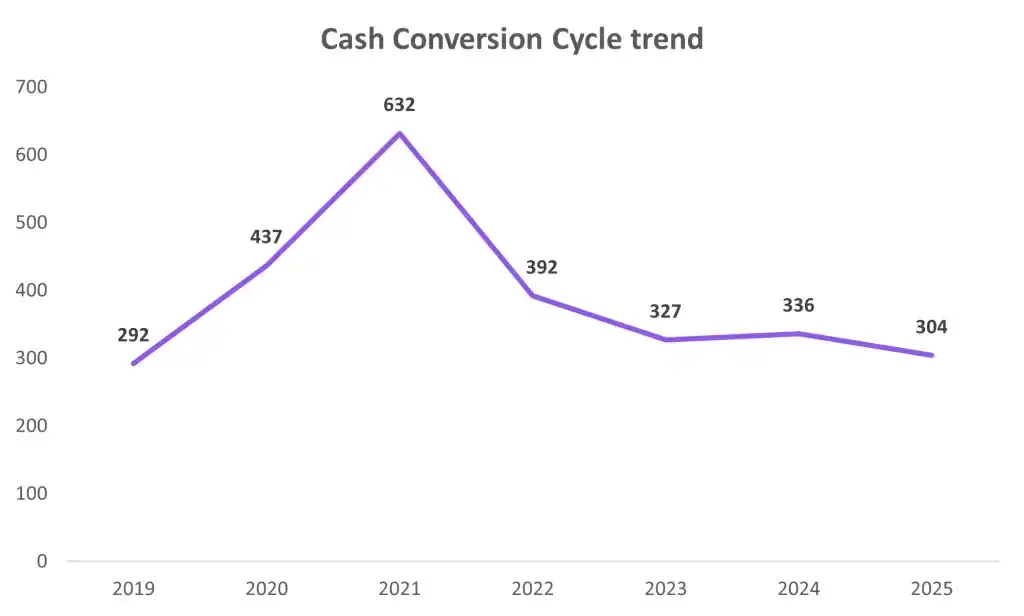
The company has been working to improve its working capital management through better production planning, inventory optimisation, and supply chain efficiency initiatives. These efforts have gradually reduced the pressure, though the business will always require meaningful working capital support relative to its revenue scale. Investors evaluating Jyoti CNC should track the operating cycle trend carefully — improvement in this metric is a strong signal of operational maturity, while deterioration can quickly erode financial returns.
The Capacity Expansion — Building for the Next Decade
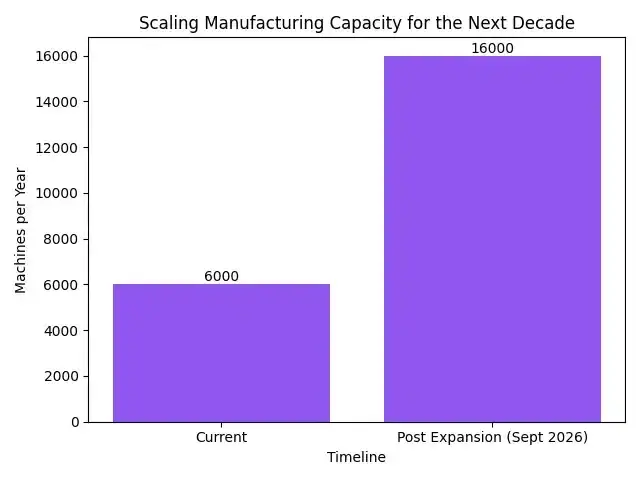
Perhaps the most consequential strategic decision Jyoti CNC has made in recent years is its plan to dramatically expand manufacturing capacity. Understanding the scale, rationale, and execution challenges of this expansion is essential to evaluating the company's medium-term prospects.The company's existing manufacturing infrastructure in Rajkot, Gujarat, had an annual capacity of approximately 6,000 machines. By the mid-2020s, rising order intake was pushing utilisation to high levels. When a factory operates near its capacity ceiling, the ability to take on new orders becomes constrained — not because demand is lacking, but because production cannot keep pace. This creates a difficult strategic dilemma: turn away orders and risk losing customers to competitors, or commit to an expensive expansion with the associated execution risk.
Jyoti CNC chose expansion ambitiously. The plan is to increase annual production capacity to approximately 16,000 machines by Sept 26, representing a near-tripling of output capability. This would make Jyoti CNC one of the largest CNC machine manufacturers in India by production volume, and among the larger ones in Asia outside of China and Japan.
The expansion involves significant capital investment in new manufacturing infrastructure, including machine shop facilities, assembly areas, testing infrastructure, and support utilities. The company is also investing in building a domestic supply chain for key components, including establishing or expanding its captive foundry operations for machine frame castings. Vertical integration in castings is particularly important because machine frame quality directly affects the precision and reliability of finished machines — vibration absorption, thermal stability, and structural rigidity all depend critically on casting quality.
The capacity expansion also creates room to pursue opportunities in newer demand segments. Electronics manufacturing — particularly the precision tooling required for printed circuit board production, connector manufacturing, and semiconductor packaging — is an emerging growth area that requires dedicated machine types. As India's electronics manufacturing ecosystem scales, the demand for specialised machining solutions will grow alongside it. Similarly, India's ambitions in semiconductor fabrication, while still early-stage, will require advanced machining capabilities that represent a future growth frontier.
Execution risk is real and should not be underestimated. Large manufacturing expansions can face delays, cost overruns, quality ramp-up challenges, and the operational complexity of running a dramatically larger organisation. The transition from a 6,000-machine-per-year operation to a 16,000-machine-per-year operation is not merely a quantitative change — it requires more sophisticated management systems, supply chain coordination, workforce development, and quality control infrastructure. The company's management will need to demonstrate that it can scale operations without compromising the precision standards that define its brand.
The Demand Landscape — Aerospace, Defence, Auto, and Electronics
Jyoti CNC's order book is not a random collection of diverse customers. It reflects a deliberate prioritisation of the segments where demand for precision CNC machines is most structural, most durable, and most difficult for customers to source domestically. Examining each of these segments in depth reveals why the company's growth story has legs beyond the current upcycle.Aerospace and defence is the most strategically significant demand driver, accounting for 40–41% of the current order backlog. This concentration reflects several reinforcing trends. The Indian government's push to indigenise defence procurement has created sustained demand for domestic manufacturers capable of producing military-grade components. The Defence Acquisition Procedure's indigenisation requirements mean that defence primes and tier-1 suppliers increasingly need access to domestic precision machining capabilities — they cannot simply import the components they need. This creates a captive domestic market that is both large and growing, with government policy as the structural support.
At the same time, India's civilian aerospace sector is expanding. IndiGo, Air India, and other carriers have placed large aircraft orders, creating maintenance, repair, and overhaul (MRO) demand as well as opportunities in localised component manufacturing. Airbus and Boeing have both been expanding their supplier relationships in India, seeking to diversify their supply chains. Producing aerospace-grade components requires machines that can meet AS9100 quality standards — machines that are both technically capable and certified for aviation applications. Jyoti CNC's investments in precision engineering and its association with Huron's aerospace heritage position it to address this demand.
The automotive sector contributes another major slice of demand, and the transition to electric vehicles does not diminish this as much as some assume. While EV powertrains have fewer components than internal combustion engines — there is no engine block, no pistons, no exhaust system — they introduce new machining requirements. Battery enclosures must be precision-machined. Motor housings require tight tolerances. Power electronics housings, suspension components, and structural body parts all need machining. As India's auto sector transitions, the absolute volume of machining requirements may evolve, but it does not disappear. Jyoti CNC's relationships with automotive OEMs and tier-1 suppliers provide a durable revenue base even through this transition.
Electronics manufacturing is the fastest-growing demand segment, albeit from a smaller base. India's ambitions to become a major global electronics manufacturing hub — not just in smartphones but in semiconductors, defence electronics, and industrial control systems — require a precision machining ecosystem that does not currently exist at scale domestically. Producing semiconductor packaging equipment, precision connectors, printed circuit board components, and advanced electronics assemblies demands CNC machines with different specifications than traditional metalworking applications. This segment represents a future growth opportunity that is still in its early stages.
The Competitive Position — How Jyoti CNC Stacks Up
Any investment or business analysis that fails to honestly examine competitive dynamics is incomplete. The machine tool industry is not a protected domestic market — it is a globally contested sector where German, Japanese, South Korean, and Chinese manufacturers compete aggressively for the same customers. Understanding where Jyoti CNC sits in this competitive landscape requires acknowledging both its genuine strengths and its real limitations.On the strength side, cost competitiveness is probably the most straightforward advantage. Manufacturing CNC machines in India — with Indian labour costs, Indian material costs, and the operational leverage of a large domestic facility — allows Jyoti CNC to price its machines below what European or Japanese competitors typically charge for equivalent specification machines. In a price-sensitive market like India, particularly in the mid-range segment, this cost advantage is meaningful. It allows the company to win business that would otherwise go to imported machines, and it makes its products attractive to customers in other emerging markets as well.
The Huron integration provides a second, more qualitatively important advantage: access to European engineering standards and the credibility they carry with sophisticated customers. When Jyoti CNC bids for aerospace component manufacturing contracts, it can point to Huron's heritage and its experience supplying European aerospace customers. This credibility is difficult to manufacture and takes years to build — it is a genuine competitive moat in the premium segment.
Local presence and service capability represent a third structural advantage in the domestic market. CNC machines are not commodities that a customer buys and forgets. They are complex capital investments that require installation, training, ongoing maintenance, calibration, spare parts supply, and application engineering support. Foreign competitors serving India from Europe or Japan face inherent disadvantages in delivering this kind of service cost-effectively. A domestic manufacturer with a strong service network has a structural advantage in customer retention and satisfaction.
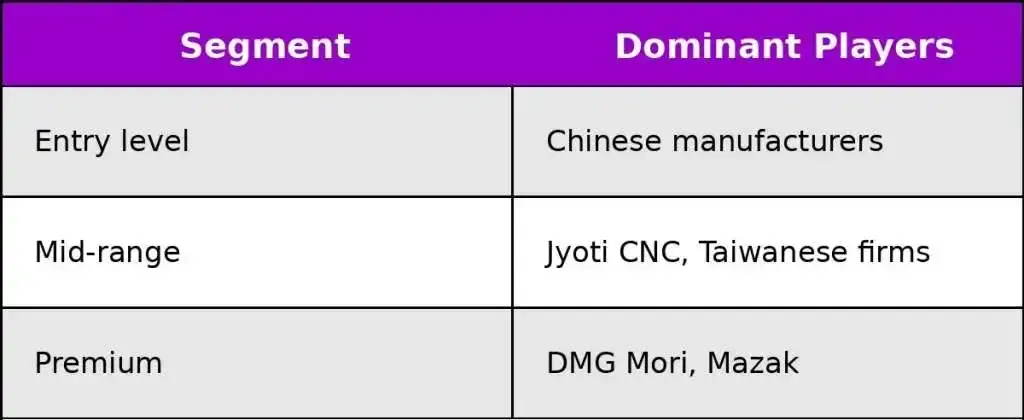
The competitive challenges are equally real. In the highest end of the market — sophisticated five-axis machines for critical aerospace structures, turbine blade machining systems, or precision medical equipment — German manufacturers like DMG Mori and Mazak still occupy a dominant position built on decades of engineering refinement. Indian aerospace primes and their global customers often have specific machine approvals embedded in their quality systems — changing approved machines requires extensive re-qualification that creates switching costs but also creates barriers to new entrants, displacing incumbents. Jyoti CNC is working toward these approvals, but progress in this segment requires patience and consistent technical delivery.
Chinese machine tool manufacturers represent a different competitive threat — primarily in the entry-level and lower mid-range segments. Chinese machines have improved in quality over the past decade while maintaining aggressive price competitiveness. To the extent that Jyoti CNC's growth strategy depends on its mid-range segment, the competitive pressure from Chinese manufacturers warrants monitoring.
The net assessment is one of a company that has established a defensible and growing position in the mid-range and increasingly in the upper mid-range segments of the Indian market, with a credible but still-developing presence in the premium segment. The path toward displacing European and Japanese leaders in the very highest-precision applications remains long, though the Huron integration has meaningfully shortened it.
Below is an illustration of the Global Machine Tool Competitive Landscape:
Risks, Challenges, and What Could Go Wrong
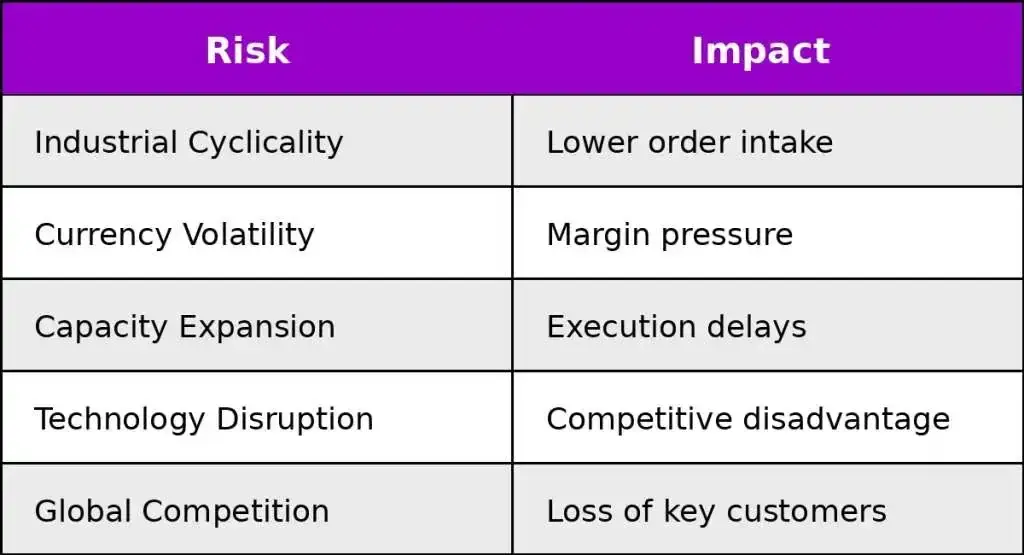
Intellectual honesty demands that any thorough analysis of a company's prospects spend as much time on the risks as on the opportunities. Jyoti CNC's story is compelling, but it is not risk-free. Several factors could undermine or delay the realisation of its growth potential, and investors or business observers should weigh these carefully.Cyclicality is an inherent structural risk in the capital goods sector. Demand for machine tools is not a smooth, linear curve — it tends to rise and fall with broader industrial investment cycles. When manufacturing companies are confident about the future and expanding capacity, they invest heavily in new equipment. When confidence falters — as it did during the 2008 financial crisis, the COVID-19 shock, and various industrial downturns — capital equipment spending is often among the first expenditures to be cut or deferred. India's current manufacturing upcycle has been robust, but cycles do not last forever. A slowdown in industrial investment — whether triggered by global economic weakness, domestic policy shifts, or sector-specific downturns — would reduce order intake and potentially affect revenue and margins.
Capital goods companies often move in cycles along with broader market conditions, which is why long-term investors must learn how to handle volatility. A useful perspective on this is explained in: Bull Market vs Bear Market – How Investors Should React.
Foreign currency exposure presents a more immediate operational risk. A meaningful proportion of critical CNC machine components — particularly electronic controllers, servo drives, precision bearings, and some specialty alloys — are imported. When the Indian rupee weakens against the euro or the yen, input costs rise automatically. If the company cannot pass these cost increases through to customers quickly enough — which is often difficult mid-order in a project business — margins can compress. Active currency hedging can partially manage this risk, but it cannot eliminate it entirely.
Execution risk around the capacity expansion is perhaps the most company-specific risk to monitor. Tripling production capacity in a capital equipment business is operationally complex. New manufacturing facilities must be designed, equipped, and commissioned. New supply chain relationships must be established and tested. Hundreds of new workers and engineers must be hired and trained. Quality control systems must be extended to cover higher volumes without compromising the precision standards the business is built on. History shows that large manufacturing expansions frequently encounter delays and cost overruns. The question for Jyoti CNC is not whether any of these challenges will arise — some inevitably will — but whether management has the depth and discipline to navigate them without losing strategic momentum.
Technological obsolescence is a longer-term but structurally significant risk. The machine tool industry is not immune to disruptive innovation. Additive manufacturing (3D printing) is gradually entering segments of the precision manufacturing market that were previously exclusively served by CNC machining. Artificial intelligence and machine learning are being integrated into machine control systems, and manufacturers who fall behind in software capability may find their machines at a disadvantage, even if the mechanical engineering is excellent. Maintaining technological relevance requires continuous investment in R&D — an investment that consumes capital and management attention, but that cannot be deferred without strategic consequences.
Finally, the company operates in a competitive global market where well-capitalised foreign manufacturers actively pursue Indian customers. Losing key customer relationships — particularly in the high-value aerospace and defence segments — to a competitor willing to offer better terms, superior technology, or more attractive financing could materially affect both revenue and the composition of the order book. Customer relationship management in capital equipment businesses is not a soft skill; it is a core strategic competency.
The Long-Term Investment and Industry Thesis
Having examined the business from multiple angles — the macroeconomic context, the technology, the history, the financials, the competitive dynamics, and the risks — it is worth synthesising what all of this implies for how Jyoti CNC should be thought about over a longer time horizon.For investors evaluating businesses riding large economic trends like manufacturing expansion, frameworks for identifying high-growth companies become extremely useful. One such approach is explained in The Multibagger Framework: A Step-by-Step Guide to Finding 10x Stocks.
The structural case begins with India's manufacturing trajectory. The country is attempting to increase its manufacturing share of GDP from approximately 17% today toward 25% over the coming decade — a change that would imply the creation of hundreds of billions of dollars of additional manufacturing output. That ambition is backed by genuine policy commitment, favourable demographics, a growing domestic consumer market, and geopolitical tailwinds from global supply chain diversification. If even a fraction of this ambition is realised, the demand for capital goods — including precision machining equipment — will grow substantially.
Within this context, Jyoti CNC occupies a position that is simultaneously unique and scalable. It is one of the very few Indian machine tool manufacturers with a credible claim to competing in the premium segment of the market. Its combination of domestic manufacturing economics and European technology integration through Huron is genuinely differentiated. Its 10% domestic market share provides a meaningful base from which to grow, and its ₹4,500+ crore order book provides near-term visibility.
The financial trajectory — revenue at ₹1,600 crore in FY25, EBITDA margins at approximately 27%, and an order book representing two years of visibility — represents a business that has already crossed an important maturity threshold. These are not the financials of a company still searching for its market. They are the financials of a company that has found its market and is now scaling into it.
The capacity expansion, if executed successfully, extends the growth runway significantly. Moving from 6,000 to 16,000 machines per year capacity creates the operational infrastructure to serve a much larger market. At current order intake trends and assuming steady realization per machine, the implied revenue potential at full capacity utilisation is substantially higher than today's numbers. Capital goods companies that successfully navigate capacity expansions often see a meaningful re-rating in how markets value them, as revenue visibility and operating leverage improve simultaneously.
The talent dimension deserves emphasis. The company's plan to train and deploy more than 1,000 engineers represents an investment in the human capital that ultimately determines whether machine quality standards can be sustained as volume scales. Precision manufacturing is not an industry where you can simply hire bodies and expect quality to follow. The institutional knowledge that comes from a team of experienced engineers — understanding how specific machine designs behave over time, what failure modes to watch for, how to achieve consistent tolerances across production runs — is built over years, not months. Jyoti CNC's investment in this dimension of capability-building is a quiet but important signal.
Zooming out further still, there is something worth noting about where this company sits within the industrial ecosystem. It does not make consumer products. It does not depend on advertising spend, fashion trends, or consumer sentiment surveys. It makes the machines that enable manufacturing — the tools that every other manufacturing sector must have before it can produce anything. That upstream position within the value chain gives it a kind of economic leverage that is structurally unusual. When India builds new defence factories, those factories need machines. When India builds new electronics manufacturing clusters, those clusters need machines. When India scales its aerospace MRO and component manufacturing ecosystem, that ecosystem needs machines. Jyoti CNC participates in all of these growth stories simultaneously, and it does so without needing to bet on any single one.
Explore our Products
Research Framework

Emerging Titans
Combination of quantitative analysis, industry tailwinds, and management assessment - SPRINT investment philosophy

Tiny Titans
Heavy emphasis on scuttlebutt research, plant visits, and early on-ground signals
Conclusion: The Bigger Picture — Machines That Build India
There is a phrase that engineers sometimes use when they want to explain why the machine tool industry matters: 'before you can build anything, you need to build the machine that builds it.' It is a deceptively simple observation that contains a profound economic truth.India's manufacturing aspirations — the aircraft components, the electric vehicle drivetrains, the satellite systems, the defence platforms, the semiconductor packages — cannot materialise out of ambition alone. They require factories. Those factories require equipment. That equipment, if it is to be produced domestically rather than imported indefinitely, requires companies willing to do the slow, unglamorous, technically demanding work of building world-class machine tools in India.
Jyoti CNC has been doing that work for over three decades. It started with modest machines for local customers, built technical capability through patient engineering investment, integrated European technology through the Huron acquisition, and now finds itself at the intersection of the most significant manufacturing upcycle in India's modern economic history.
The company is not without its challenges. Working capital complexity, execution risk on the capacity expansion, competitive pressure from global machine tool giants, and the ever-present risk of industrial cyclicality all demand careful management and sustained operational discipline. None of these challenges are fatal. Most of them are characteristic of any serious industrial company attempting to scale in a competitive global market.
What makes Jyoti CNC worth watching — whether from an investment perspective, an industrial policy perspective, or simply from the perspective of understanding how modern economies develop — is the nature of the opportunity it is pursuing. It is not chasing a fashion trend or a short-term demand spike. It is positioning itself as critical industrial infrastructure in a country that is committing, with increasing seriousness and increasing resources, to becoming a global manufacturing powerhouse.
That is a long game. And it is exactly the kind of long game where patient, technically serious companies — companies built on engineering depth rather than financial engineering — tend to win.
Jyoti CNC's machines will never be famous. They will never be advertised on television or celebrated on social media. But the aircraft components, the defence systems, and the electric vehicle parts that India increasingly produces at world-class standards will carry within them the invisible work of these machines — and of the engineers and founders who built them.
In the story of India's industrial transformation, the precision CNC machine manufacturer from Rajkot may turn out to be one of the quiet heroes. If you found this longform read interesting, comment “MANUFACTURING” if you believe India’s manufacturing boom is only just beginning.
Frequently Asked Questions (FAQs)
Who are the largest global manufacturers of CNC machines?
+The global CNC machine industry is dominated by companies from Germany, Japan, China, and South Korea. Leading players include DMG Mori, Mazak, Okuma Corporation, and Trumpf, which have built decades of engineering expertise and global distribution networks.
How long does a typical CNC machine last in a factory?
+High-quality CNC machines typically operate for 15–25 years, depending on maintenance, workload intensity, and technological upgrades. Many factories periodically retrofit older machines with new controllers and software to extend their useful life.
What makes aerospace machining more demanding than other industries?
+Aerospace components must meet extremely tight tolerances and safety standards. Parts such as turbine blades or structural aircraft components often require multi-axis machining, specialized alloys, and rigorous certification processes, making them among the most technically demanding products to manufacture.
Do CNC machine manufacturers generate revenue after selling the machine?
+Yes. A significant portion of long-term revenue comes from after-sales services, including maintenance contracts, spare parts, software upgrades, tooling support, and application engineering. For many machine tool companies, this recurring service revenue can become a stable income stream.
Why do factories often buy multiple machines from the same manufacturer?
+Once a factory integrates a specific brand of CNC machines, switching becomes difficult due to operator training, software compatibility, spare parts availability, and production workflow standardization. This often leads to long-term relationships between manufacturers and customers.
Why is the machine tool industry often considered a barometer of industrial growth?
+Machine tool demand typically rises before large manufacturing expansions begin. When companies invest in new factories or production lines, purchasing machine tools is often the first step, making the sector an early indicator of industrial investment cycles.

High growth stock specialist, Value Educator
Shashank Mahajan is an equity research professional with over 12 years of experience in identifying high-potential SME and micro-cap stocks at an early stage. He follows a rigorous scuttlebutt research–driven approach, combining on-ground insights with deep financial analysis. Shashank specializes in uncovering under-researched and under-owned companies with strong management quality and long-term growth potential. Through disciplined research and early identification, he focuses on spotting tomorrow’s market leaders before they enter the mainstream investor radar.
Atlanta Electricals: Capacity Nearly Quadrupled in a Year
Kirloskar Oil Engines: Data Centres, Nuclear and the Navy
Yash Highvoltage: Bushing Maker With ₹760 Cr of Orders
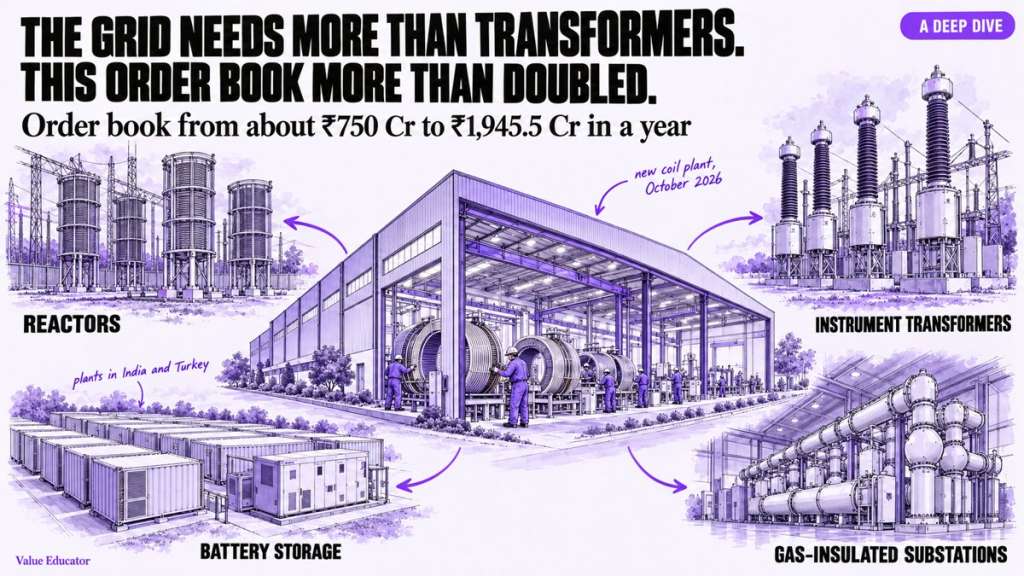
Quality Power: Reactor Maker With a ₹1,945.5 Cr Order Book
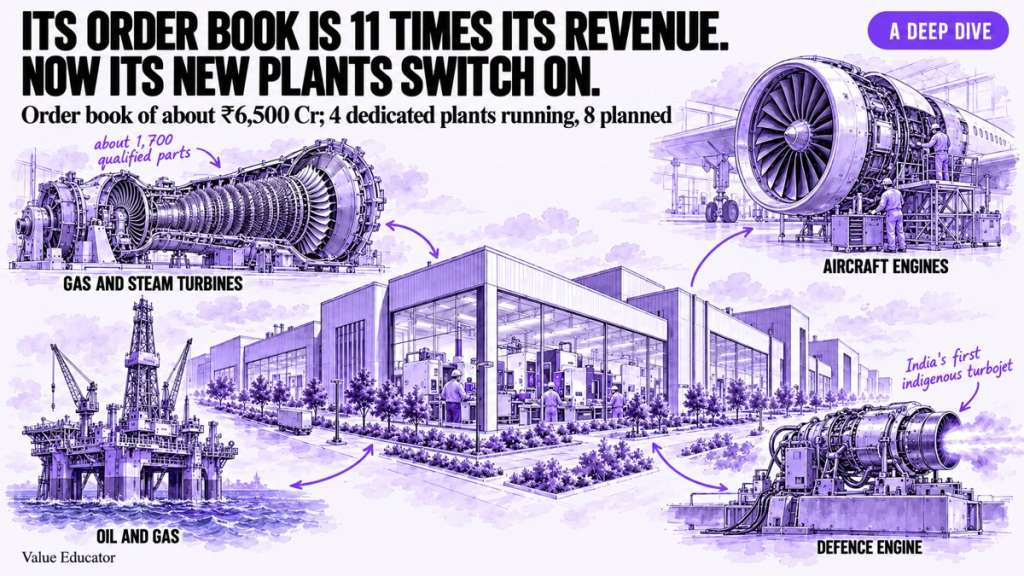
Azad Engineering: Turbine Blades, Jet Engines and Orders
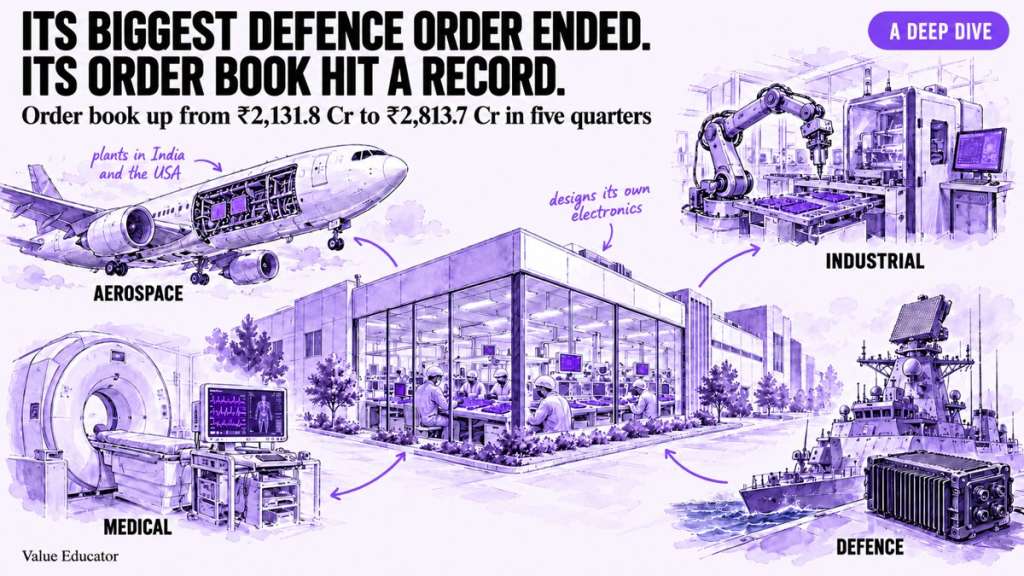
Cyient DLM: Aircraft Electronics and a Record Order Book
Explore our Products
Research Framework
Emerging Titans
Combination of quantitative analysis, industry tailwinds, and management assessment - SPRINT investment philosophy
Tiny Titans
Heavy emphasis on scuttlebutt research, plant visits, and early on-ground signals



Modern Warfare to Multibaggers
Key Trends. Strategic Shifts. Opportunities Ahead.
Don't Miss This Exclusive Webinar!
Join Value Educator to decode the key trends shaping India's defence sector and learn how to identify tomorrow's potential leaders in the space.
- In-depth research on India's defence sector
- Live Q&A session
- Actionable takeaways for long-term investors

 Orders
 Subscription
 Share with friends


Required Details
₹23999.00
(12 month subscription)
As per SEBI regulations, all users are mandated to complete the KYC that is validated for 1 year. Post payment, you will be redirected to the KYC screen


No comments yet. Be the first to comment!