
Ratnamani Metals: Pipes for Critical Industry
For much of the last two decades, the world's manufacturing race was defined by one simple objective: produce more.
Factories became larger. Production lines became faster. Supply chains stretched across continents. Success was measured by output, scale and cost. Companies that could manufacture more products at lower prices generally enjoyed the greatest competitive advantage.
That equation is beginning to change.
Today, some of the world's most advanced industrial facilities are discovering that producing more is no longer their biggest challenge. Producing without interruption is! That shift is what Ratnamani Metals & Tubes is built for.
A modern oil refinery processes hundreds of thousands of barrels of crude oil every single day. A petrochemical complex operates around the clock because shutting it down is both technically complex and financially expensive. Semiconductor fabrication plants manufacture chips inside ultra-clean environments where even microscopic contamination can destroy an entire production batch. Pharmaceutical facilities follow tightly controlled processes where consistency matters as much as capacity.
For businesses operating at this scale, profitability is no longer determined only by how much they produce. It is increasingly determined by how reliably they continue producing.
That subtle shift is quietly changing how industrial projects are designed.
Twenty years ago, procurement teams often focused on minimising upfront project costs. Today, engineers spend just as much time evaluating lifecycle reliability, maintenance requirements and operational risk.
For investors, understanding how engineering decisions eventually translate into financial performance starts with knowing how to read a company's financial statements. Our guide on Cash Flow Statement Explained: The Most Honest Financial Report explains why cash flows often reveal more than reported profits.
Saving a few lakhs during construction means little if a critical component forces a shutdown that costs crores in lost production later.
In other words, modern industry has reached a point where the cost of failure is often greater than the cost of construction.
This change is influencing decisions across sectors.
Oil refiners are investing in equipment capable of handling heavier and more corrosive crude oil. Chemical manufacturers require materials that can safely transport increasingly aggressive process fluids. LNG infrastructure demands components capable of operating under cryogenic conditions. Nuclear power plants function under some of the strictest engineering standards in the world, while emerging industries such as green hydrogen are introducing entirely new material challenges that conventional industrial equipment was never designed to handle.
Although these industries appear unrelated, they all share one common reality.
Every one of them depends on moving liquids and gases continuously, safely and efficiently.
At first glance, the solution appears surprisingly ordinary.
A pipe.
Yet what looks like a simple steel cylinder is often one of the most heavily engineered components inside an industrial facility. Its metallurgy determines how it reacts with corrosive chemicals. Its dimensional accuracy influences system performance. Its weld quality affects structural integrity. Its surface finish can determine whether pharmaceutical products remain contamination-free. In many applications, a single manufacturing defect hidden inside a pipe can compromise equipment worth hundreds or even thousands of times its own value.
The industrial piping industry has therefore undergone a quiet transformation of its own.
Customers are no longer purchasing steel.
They are purchasing confidence.
Confidence that a refinery will continue operating without unexpected shutdowns.
Confidence that a chemical plant can safely handle aggressive media for decades.
Confidence that a nuclear facility meets some of the world's highest engineering standards.
Confidence that an LNG terminal will continue operating under extreme conditions where failure is simply unacceptable.
This shift has gradually separated specialised engineering companies from commodity steel manufacturers. One competes primarily on price. The other competes on precision, process knowledge, certifications and decades of accumulated manufacturing experience.
It is within this second category that Ratnamani Metals & Tubes Limited has quietly built its business.
Rather than producing energy, chemicals or pharmaceuticals, Ratnamani manufactures the specialised piping solutions that allow these industries to operate reliably. As India's industrial economy becomes more sophisticated and capital-intensive, businesses like Ratnamani are not simply supplying infrastructure—they are helping reduce the costliest risk modern industry faces: operational failure.
Understanding why that matters requires looking beyond the finished product and into the engineering ecosystem that turns an apparently ordinary pipe into one of the most critical components inside a modern industrial facility.
"Know what you own, and know why you own it." — Peter Lynch
The Engineering Behind a Pipe Is Far More Complex Than It Appears
To most people, a pipe is simply a hollow steel cylinder used to move liquids from one place to another. In reality, industrial pipes are among the most critical engineering components inside a refinery, power plant, chemical factory or pharmaceutical facility.
Their job isn't just to transport fluids - it's to do so safely, continuously and reliably for decades under conditions that often involve extreme pressure, high temperatures and highly corrosive chemicals. As industries have become more sophisticated, the engineering behind these products has evolved just as rapidly.
This is where Ratnamani operates.
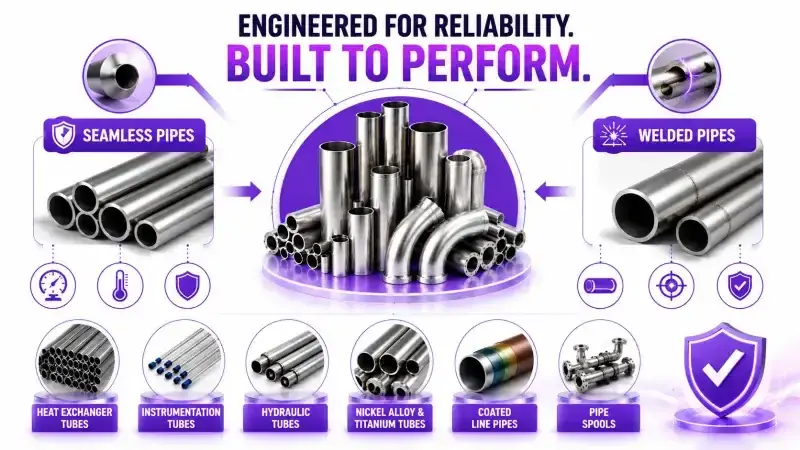
Rather than manufacturing generic steel pipes, the company produces specialised piping solutions designed for different industrial environments. Every product begins with one question: what conditions will this pipe operate under? The answer determines everything from the material and manufacturing process to the quality tests it must pass before reaching the customer.
The industrial piping universe is broadly divided into two primary structural categories, each engineered for distinct mechanical regimes.
• Seamless Pipes – Built for Critical Applications
One of Ratnamani's flagship products is seamless pipes and tubes. Unlike conventional pipes, they are manufactured from a solid steel billet that is pierced and rolled into a hollow tube, eliminating the need for a welded joint.
The absence of a weld makes seamless pipes particularly suitable for high-pressure and high-temperature applications where structural integrity is paramount. They are widely used in oil refineries, petrochemical complexes, power plants, fertiliser units and heat exchangers, where even a minor failure can result in significant operational losses.
• Welded Pipes – The Right Solution for Different Needs
Not every industrial application requires seamless construction. For larger diameters and many process industries, welded pipes offer an efficient and cost-effective solution. They produced through methods like Electric Resistance Welding (ERW) and Submerged Arc Welding (SAW). Formed from flat-rolled steel plates or continuous coils, these pipes are shaped into cylinders and joined along the seam.
Modern welding technologies have significantly improved their quality, making them suitable for sectors such as water infrastructure, food processing, pharmaceuticals, desalination and chemical manufacturing. The choice between seamless and welded pipes is therefore not about which product is superior, but which is best suited to a customer's specific operating conditions.
Ratnamani's business extends well beyond conventional pipes. Its portfolio includes heat exchanger tubes, instrumentation tubes, hydraulic tubes, nickel alloy and titanium tubes, coated line pipes and pipe spools—products designed for highly specialised industrial applications.
For example, heat exchanger tubes improve energy efficiency inside refineries and power plants, while instrumentation tubes enable accurate monitoring of industrial processes. Pipe spools, on the other hand, are factory-fabricated assemblies that significantly reduce installation time and improve quality at project sites.
These products highlight an important aspect of Ratnamani's business. The company isn't simply processing steel into finished products; it is developing engineered solutions for customers whose operations depend on reliability, precision and long service life.
As industrial projects become more complex, this ability to solve engineering challenges rather than merely supply materials is what increasingly differentiates Ratnamani from a conventional steel manufacturer.
How Industrial Evolution Changed the Piping Business
The industries that rely on these pipes, however, have undergone a dramatic transformation.
Thirty or forty years ago, most industrial facilities were designed around one primary objective: increasing production capacity. Refineries processed relatively simpler crude oil, power plants generated electricity using conventional technologies, and chemical manufacturers produced a narrower range of products. Engineering standards were undoubtedly rigorous, but the complexity of industrial operations was significantly lower than it is today.
Over the past two decades, that landscape has changed completely.
Modern industrial facilities are no longer judged only by how much they produce. They are expected to operate more efficiently, consume less energy, minimise emissions, handle increasingly complex raw materials and remain operational for decades with minimal unplanned downtime. Governments have tightened environmental regulations, customers demand higher quality standards and global competition has forced manufacturers to improve productivity without compromising reliability.
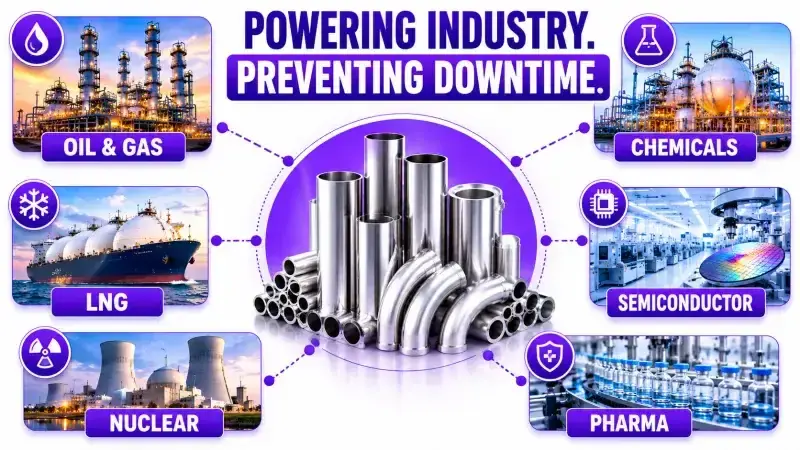
As a result, almost every component inside an industrial plant has evolved - including pipes.
Consider the oil and gas industry.
Refineries today process a much wider variety of crude oils than they did in the past. Many refineries now handle heavier and more sulphur-rich crude, which exposes equipment to far more corrosive operating conditions. This has increased the demand for specialised stainless steel and alloy piping capable of resisting corrosion over long periods without compromising safety.
The same trend is visible in the chemical industry.As manufacturers move towards speciality chemicals and higher-value products, processing conditions become more demanding. Pipes are expected to transport aggressive acids, alkalis and solvents under varying temperatures and pressures. Materials that were perfectly adequate twenty years ago are often no longer suitable for these applications, encouraging customers to adopt higher-grade metallurgy and more sophisticated engineering solutions.
Power generation tells a similar story.Modern thermal power plants operate at higher temperatures and pressures to improve fuel efficiency and reduce emissions. Nuclear power plants impose even stricter engineering requirements because component failure can have serious operational and safety implications. In both cases, specialised tubes and pipes are no longer optional—they are fundamental to plant design.
Pharmaceutical manufacturers require contamination-free stainless steel tubing that meets stringent hygiene standards. Semiconductor fabrication plants depend on ultra-high-purity piping systems because microscopic contamination can affect chip production. LNG terminals transport natural gas at cryogenic temperatures approaching –162°C, demanding materials capable of maintaining their mechanical properties under extreme conditions.
These changes have fundamentally altered customer expectations.
Industrial buyers are no longer purchasing pipes simply because they need to connect two pieces of equipment. They are purchasing products that must perform reliably under conditions where failure is exceptionally costly. Consequently, procurement decisions increasingly revolve around engineering capability, manufacturing quality, international certifications and proven execution rather than the lowest purchase price.
This shift has gradually separated the industry into two distinct categories.
At one end are manufacturers competing primarily on production volume and pricing, supplying relatively standard products for less demanding applications.
At the other are companies focused on specialised engineering, advanced metallurgy and critical industrial applications where technical expertise carries significantly greater value than manufacturing scale.
Ratnamani has deliberately positioned itself within this second category.
Instead of chasing every opportunity within the broader steel market, it has steadily built capabilities in products where engineering complexity creates higher entry barriers and stronger customer relationships.
One of the best ways to identify businesses with durable competitive advantages is by understanding the concept of an economic moat. Read Economic Moat Explained: Why Some Companies Stay Dominant for Decades to learn more.
That strategic choice has allowed the company to participate in industries where trust, technical approvals and execution capability often matter far more than the price of steel itself.
Understanding this evolution is essential because it changes the way investors should view the company. Ratnamani is not simply benefiting from higher industrial activity; it is benefiting from the growing sophistication of industrial infrastructure itself. As factories, refineries and energy projects become more complex, the demand for specialised engineering solutions is likely to increase alongside them. In that sense, the company's future depends not just on how much India builds, but on how advanced those industrial assets become.
"The stock market is filled with individuals who know the price of everything, but the value of nothing." — Philip Fisher
Emerging Growth Triggers: Hydrogen, Nuclear, LNG, and Clean-Rooms
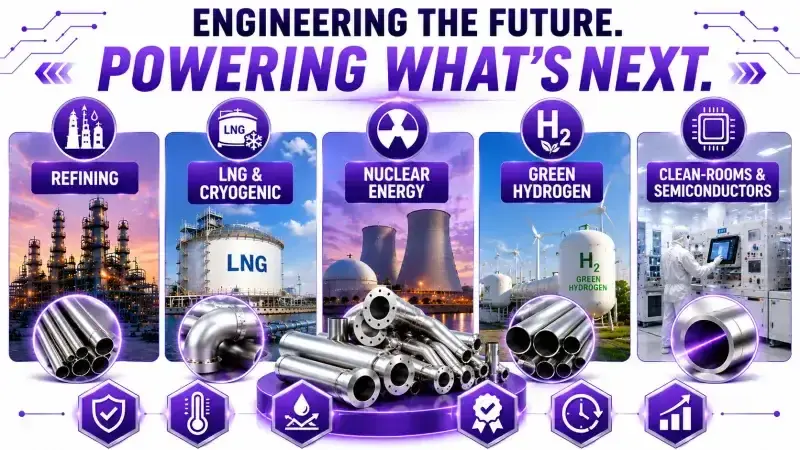
Several key sectors are driving this demand:
Refineries and Heavy Crude Processing
Global refining dynamics are evolving as supplies of premium light-sweet crude become increasingly constrained, prompting many sophisticated refineries to process heavier, sour crude oils that are cheaper to procure but significantly more challenging to refine. These crudes contain higher levels of sulphur, naphthenic acids and other corrosive compounds that accelerate material degradation, particularly under high temperature operating conditions. As a result, conventional carbon steel piping is often inadequate for critical process units such as hydrocrackers, delayed cokers and hydrodesulphurisation units. Refineries are therefore increasingly adopting high-performance chrome-moly alloy steels, austenitic stainless steels and duplex stainless steels that offer superior corrosion resistance, mechanical strength and longer service life. This shift is steadily increasing the engineering complexity and the value of piping systems required for every tonne of refining capacity.
The Green Hydrogen Frontier
As India advances its National Green Hydrogen Mission, transport and storage infrastructure faces a distinct physical challenge known as hydrogen embrittlement.
The growth of domestic active pharmaceutical ingredient (API) manufacturing and semiconductor fabrication facilities in India has introduced demand driven by internal surface purity. In semiconductor fabs, process gases and ultra-pure water must travel through piping networks with zero microscopic particulate contamination, as micro-particles can damage silicon wafers during production. These applications utilize Ultra-High Purity (UHP) stainless steel tubing featuring internal electropolishing - a process that uses electrochemical baths to smooth interior surfaces to a mirror finish with low surface roughness.
Why Ratnamani Competes on Engineering, Not Steel
Yet that perception changes the moment one asks a simple question.
If pipes are merely steel products, why don't industrial companies simply buy the cheapest one available?
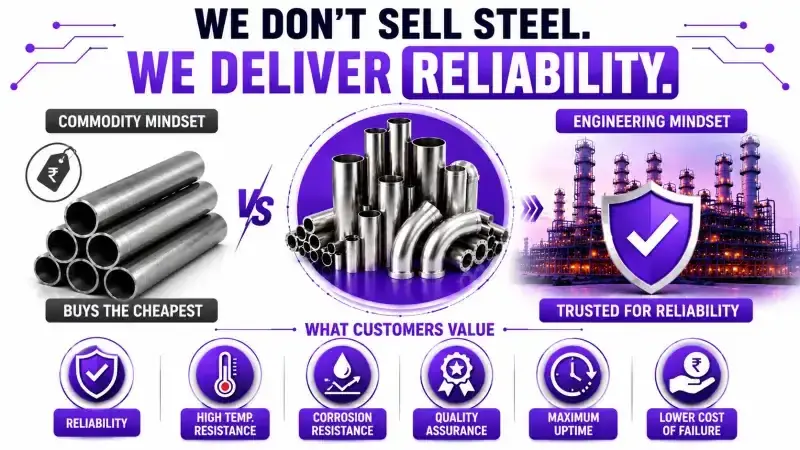
Imagine a refinery that has required an investment of ₹25,000 crore and is expected to operate continuously for the next thirty years. Every hour, thousands of tonnes of crude oil move through reactors, heat exchangers, distillation columns and storage systems before eventually emerging as petrol, diesel, aviation fuel and petrochemical feedstock. The entire process depends upon an intricate network of pipes transporting fluids under varying temperatures and pressures.
Now imagine that one critical pipe fails unexpectedly.
The pipe itself may cost only a few lakhs. Yet replacing it is rarely as simple as removing one component and installing another. Production may need to be stopped, systems depressurised, maintenance teams mobilised and safety inspections completed before operations can resume. During that period, the refinery is not merely replacing a pipe - it is losing valuable production, delaying customer deliveries and incurring substantial restart costs.
Suddenly, the economics of the purchase change completely.
The customer is no longer comparing the cost of two pipes.
They are comparing the cost of reliability against the cost of failure.
This is precisely why Ratnamani's business cannot be understood through the lens of commodity steel manufacturing.
The company is not selling metal.
It is selling confidence.
Confidence that a refinery will continue operating without interruption.
Confidence that a chemical plant can safely transport highly corrosive fluids.
Confidence that a pharmaceutical facility will maintain product purity throughout its manufacturing process.
Confidence that a power station can continue generating electricity under demanding operating conditions year after year.
In commodity manufacturing, the primary barrier to entry is capital—a competitor with sufficient funding can build a factory and compete on volume. In specialized industrial manufacturing, capital alone does not guarantee market entry. The real competitive barrier lies in technical qualifications, rigorous testing infrastructure, and accumulated process knowledge.
For a new market entrant, this creates a significant hurdle: you cannot secure major project orders without an established track record, and you cannot build a track record without winning orders. Ratnamani's empanelment across hundreds of domestic and international approval lists forms a structural moat developed over three decades.
Over time, this accumulated process knowledge becomes an intangible asset - one that competitors cannot easily replicate simply by investing in new machinery.
Furthermore, because component failure carries high costs, specialized pipe manufacturing requires testing infrastructure that rivals the cost of the primary production machinery. Every meter of critical pipe passes through multi-stage Non-Destructive Testing (NDT) procedures:
In industries where downtime can cost crores of rupees per day, that confidence becomes significantly more valuable than marginal savings on procurement.
Another notable feature of Ratnamani's strategy has been its gradual shift towards higher value-added products.
Instead of focusing only on standard pipes, the company has expanded into products such as heat exchanger tubes, instrumentation tubes, nickel alloy tubes and pipe spools. These products involve greater engineering complexity, command better margins and face relatively lower competition than conventional steel products.
This evolution reflects an important strategic shift. Rather than asking, "How much steel can we process?" the company increasingly asks, "How much value can we create from every tonne of steel?"
That approach has enabled Ratnamani to differentiate itself from businesses competing purely on production volumes.
"Price is what you pay. Value is what you get." — Warren Buffett
The Numbers Reinforce the Business Story
For companies operating in engineering-driven industries, financial performance is often the clearest reflection of business quality. Revenue may fluctuate from year to year depending on project execution cycles, but over the long term, healthy margins, disciplined capital allocation and strong profitability usually indicate that a company is creating value beyond the underlying commodity it processes.
Ratnamani's recent financial performance broadly supports this narrative.
Unlike a commodity steel manufacturer, where profitability is largely dictated by fluctuations in steel prices, Ratnamani's earnings are increasingly influenced by its product mix, engineering capabilities and participation in high-value industrial projects. This distinction became particularly evident during FY26.
The company reported revenue of ₹4,494 crore in FY26, compared with ₹5,186 crore in FY25. At first glance, the decline in sales may appear concerning. However, looking at revenue alone tells only half the story.
Despite lower sales, the company's profitability remained broadly in line with the previous year, highlighting the resilience of its business model. Revenue alone rarely tells the complete story. Investors should also understand why profitability matters by reading Operating Profit Margin vs Net Profit Margin: Which Tells the True Story?
This suggests that Ratnamani was able to offset lower volumes through a better product mix, improved operational efficiency and a greater contribution from specialised, higher-margin products. In engineering businesses, this is often a more meaningful indicator than revenue growth itself because it demonstrates the company's ability to create greater value from every tonne of steel processed.
This improvement is clearly visible in the company's margins.
EBITDA margin expanded to 16.86% in FY26 from 15.88% in FY25, representing a 6.18% year-on-year improvement. While the increase may appear modest in absolute terms, margin expansion in industrial manufacturing is rarely accidental. It usually reflects a combination of favourable product mix, better capacity utilisation, improved execution and stronger pricing power in specialised products.
The trend was equally visible at the bottom line.
Net Profit Margin increased to 11.89% in FY26 from 10.44% in FY25, representing a 13.89% year-on-year improvement. The fact that net margins expanded even in a year of lower revenue indicates that the business was not merely growing through higher volumes but through better quality earnings. This is an important distinction because long-term wealth creators are often characterised by their ability to improve profitability even during periods when revenue growth temporarily moderates.
Another encouraging indicator is the company's order pipeline.
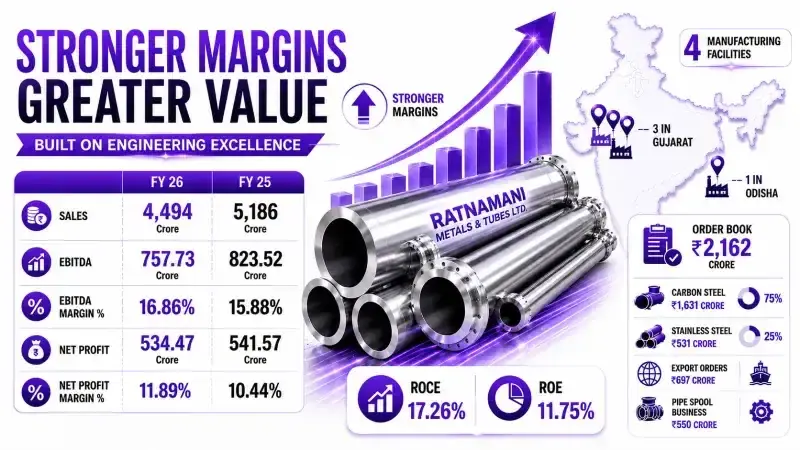
Another positive indicator is Ratnamani's order book of ₹2,162 crore as of 1 May 2026, which provides healthy revenue visibility. The order book is well diversified, with ₹1,631 crore from the Carbon Steel business and ₹531 crore from the Stainless Steel business, reflecting balanced demand across both large infrastructure projects and specialised industrial applications.
The company's growing global presence is equally evident, with export orders contributing ₹697 crore, highlighting its ability to meet stringent international quality standards. Meanwhile, the Pipe Spool business accounts for ₹550 crore of the order book, signalling Ratnamani's gradual move towards higher value-added engineering solutions. Unlike conventional pipes, pipe spools involve greater engineering complexity and help customers reduce project execution time, making them a more profitable and strategically important segment for the company.
Industrial customers typically award large contracts only after detailed engineering evaluations, factory audits and qualification processes. Therefore, a healthy order book suggests that Ratnamani continues to be trusted for mission-critical applications across industries such as oil & gas, petrochemicals, water infrastructure, power and industrial engineering.
Equally important is management's confidence in the business.
The management has guided for EBITDA margins in the range of 16% to 18% going forward. While actual margins will naturally fluctuate depending on product mix, raw material prices and project execution, this guidance indicates management's confidence that the company's gradual shift towards higher value-added products and specialised engineering solutions can continue supporting healthy profitability.
From an investor's perspective, this is perhaps the most encouraging aspect of Ratnamani's financial profile. The business is no longer solely dependent on increasing production volumes to drive earnings.When evaluating industrial companies, it's equally important to understand whether growth is backed by healthy operations or excessive borrowing. Our article Interest Coverage Ratio: Can the Company Pay Its Debt Bills? explains one of the most important debt metrics investors should monitor.
Instead, it is steadily improving the value it extracts from every tonne of steel by expanding into specialised products where engineering expertise, customer approvals and manufacturing precision command higher realisations.
It is not competing to become the largest steel processor in the country. It is competing to become one of the most trusted engineering partners for industries where reliability is worth far more than the cost of the material itself. As India's industrial infrastructure becomes more sophisticated and global demand for specialised piping solutions continues to expand, these financial characteristics suggest that the company's competitive advantages are increasingly translating into sustainable economic value rather than simply higher production volumes.
"The big money is not in the buying or the selling, but in the waiting." — Charlie Munger
How Ratnamani Actually Makes Money
What separates exceptional businesses from ordinary ones is where they create value during that process.
For a commodity steel manufacturer, value creation is relatively straightforward. Steel is purchased, processed into standard products and sold in large volumes. Since customers generally perceive little difference between suppliers, competition revolves around price, production efficiency and scale. Margins remain thin because one manufacturer's product can usually be substituted with another's.
Ratnamani operates under a very different economic model.
Although steel remains its primary raw material, the company does not earn superior returns simply because it buys steel cheaply or manufactures it more efficiently. Instead, it creates value by solving increasingly complex engineering problems for customers operating mission-critical industrial assets.
This distinction becomes evident when examining the nature of its orders.
Unlike consumer businesses that manufacture standardised products for inventory, a significant portion of Ratnamani's production is linked to specific industrial projects. Whether it is a refinery expansion, a cross-country gas pipeline, a petrochemical complex or a desalination plant, customers rarely purchase products directly from a catalogue. Instead, each order is accompanied by detailed engineering specifications defining the material grade, operating pressure, temperature range, dimensional tolerances, testing procedures and international standards that must be satisfied.
In many cases, the manufacturing process effectively begins after the order is received.
Engineers review technical drawings, manufacturing schedules are prepared, raw materials are sourced according to customer specifications and production is planned around project timelines. This makes the business far more customised than conventional manufacturing and explains why customer relationships often extend well beyond a single transaction.
"Time is the friend of the wonderful business, the enemy of the mediocre." — Warren Buffett
Explore our Products
Research Framework

Emerging Titans
Combination of quantitative analysis, industry tailwinds, and management assessment - SPRINT investment philosophy

Tiny Titans
Heavy emphasis on scuttlebutt research, plant visits, and early on-ground signals
Conclusion
Ratnamani Metals & Tubes has quietly positioned itself at the core of this transformation. It is not a generic commodity steel processor, nor is it simply a pipe fabricator competing on price. It is a high-precision engineering partner participating in the most risk-sensitive layer of industrial capital expenditure.
For investors, the fundamental takeaway is straightforward. Ratnamani's investment case does not rely on speculative commodity cycles or chasing short-term volume spikes. It rests on high capital efficiency, strong pricing power derived from technical entry barriers, and a near-zero net debt balance sheet that consistently compounds cash flows through disciplined execution.
If India's manufacturing and energy security ambitions continue translating into ground-level capital expenditure, specialized companies like Ratnamani remain primary structural beneficiaries. The company's long-term value creation will depend on maintaining its metallurgical edge, expanding into high-value alloys, and prudently allocating capital as project scales multiply.
The story, therefore, is not merely about a steel tube manufacturer.
It is about the invisible, zero-failure infrastructure that allows a modern industrial economy to operate without interruption.
And in that story, Ratnamani Metals & Tubes has quietly built a role that is far more critical than most investors realize.
If you'd like to evaluate businesses like Ratnamani using a structured investment process, explore our guide A Fundamental Checklist: How to Research a Stock in 1 Hour, which walks through the key factors every investor should analyze before investing.
FAQs
What does Ratnamani Metals & Tubes actually do?
+Ratnamani manufactures specialised stainless steel and carbon steel pipes, tubes and engineered piping solutions used in critical industries such as oil & gas, petrochemicals, power, water infrastructure, pharmaceuticals and LNG.
Why don't customers simply buy the cheapest pipes?
+In industries like refineries and power plants, a pipe failure can cause production losses worth crores. Customers therefore prioritise quality, reliability, certifications and engineering expertise over price.
What are the biggest growth drivers for Ratnamani?
+The company is expected to benefit from rising investments in oil & gas, LNG infrastructure, nuclear power, green hydrogen, speciality chemicals, water projects and India's manufacturing expansion.
Why did Ratnamani's margins improve despite lower revenue in FY26?
+Although FY26 revenue declined, the company improved its EBITDA and net profit margins through a better product mix, higher value-added products and improved operational efficiency.
Why is Ratnamani considered an engineering company rather than a commodity steel company?
+Ratnamani competes through engineering capabilities, specialised manufacturing, customer approvals and decades of process expertise rather than simply processing steel. This gives it stronger pricing power and higher entry barriers than a typical commodity manufacturer.

High growth stock specialist, Value Educator
Shashank Mahajan is an equity research professional with over 12 years of experience in identifying high-potential SME and micro-cap stocks at an early stage. He follows a rigorous scuttlebutt research–driven approach, combining on-ground insights with deep financial analysis. Shashank specializes in uncovering under-researched and under-owned companies with strong management quality and long-term growth potential. Through disciplined research and early identification, he focuses on spotting tomorrow’s market leaders before they enter the mainstream investor radar.
Atlanta Electricals: Capacity Nearly Quadrupled in a Year
Kirloskar Oil Engines: Data Centres, Nuclear and the Navy
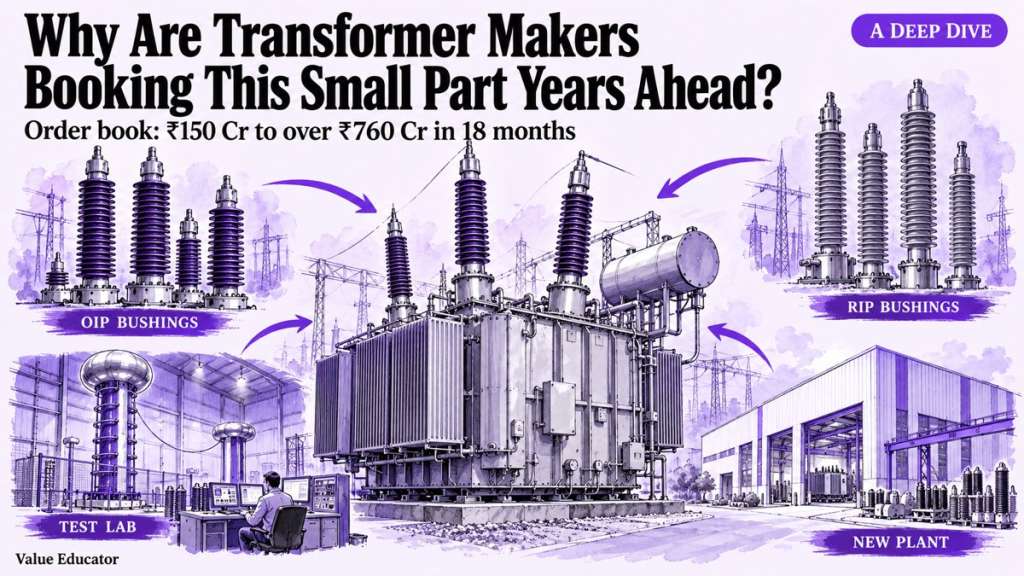
Yash Highvoltage: Bushing Maker With ₹760 Cr of Orders
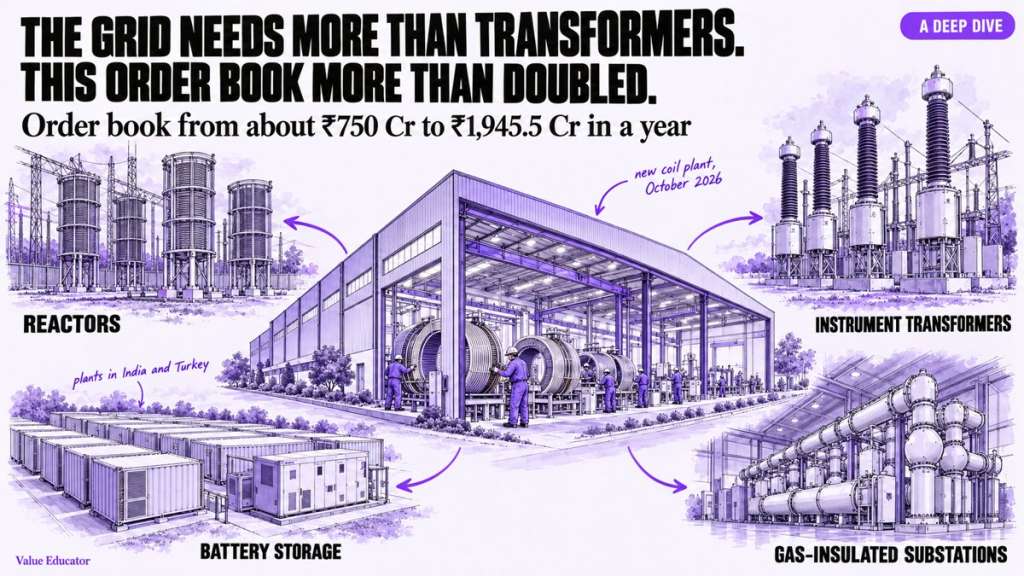
Quality Power: Reactor Maker With a ₹1,945.5 Cr Order Book
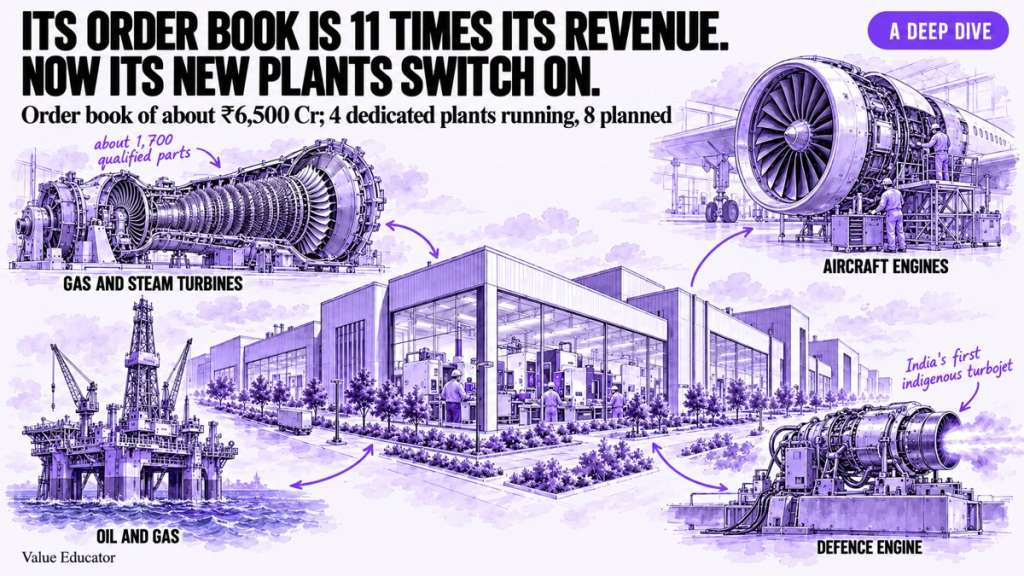
Azad Engineering: Turbine Blades, Jet Engines and Orders
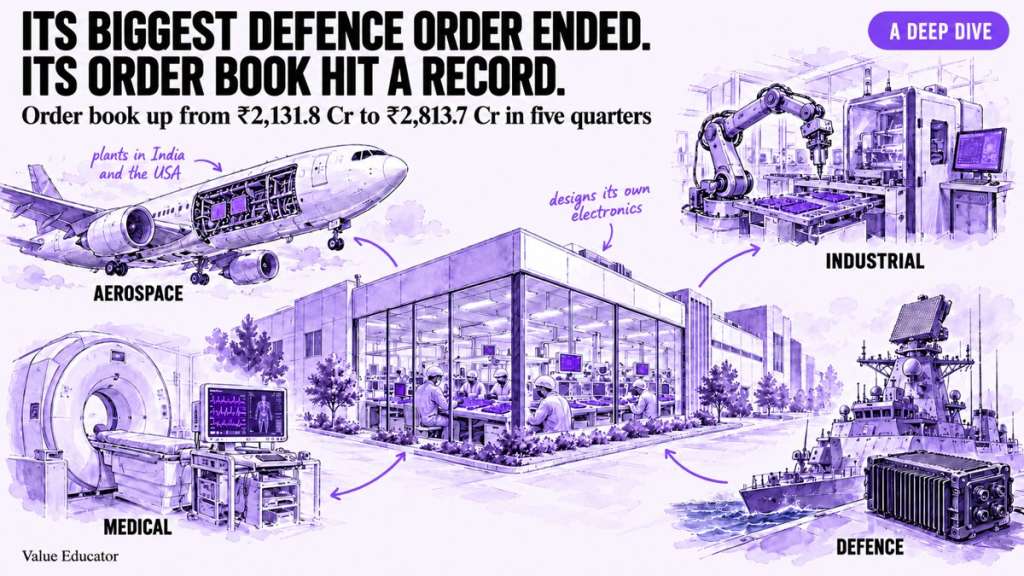
Cyient DLM: Aircraft Electronics and a Record Order Book
Explore our Products
Research Framework
Emerging Titans
Combination of quantitative analysis, industry tailwinds, and management assessment - SPRINT investment philosophy
Tiny Titans
Heavy emphasis on scuttlebutt research, plant visits, and early on-ground signals



Modern Warfare to Multibaggers
Key Trends. Strategic Shifts. Opportunities Ahead.
Don't Miss This Exclusive Webinar!
Join Value Educator to decode the key trends shaping India's defence sector and learn how to identify tomorrow's potential leaders in the space.
- In-depth research on India's defence sector
- Live Q&A session
- Actionable takeaways for long-term investors

 Orders
 Subscription
 Share with friends


Required Details
₹23999.00
(12 month subscription)
As per SEBI regulations, all users are mandated to complete the KYC that is validated for 1 year. Post payment, you will be redirected to the KYC screen


No comments yet. Be the first to comment!