
Danish Power: Riding Transmission Growth
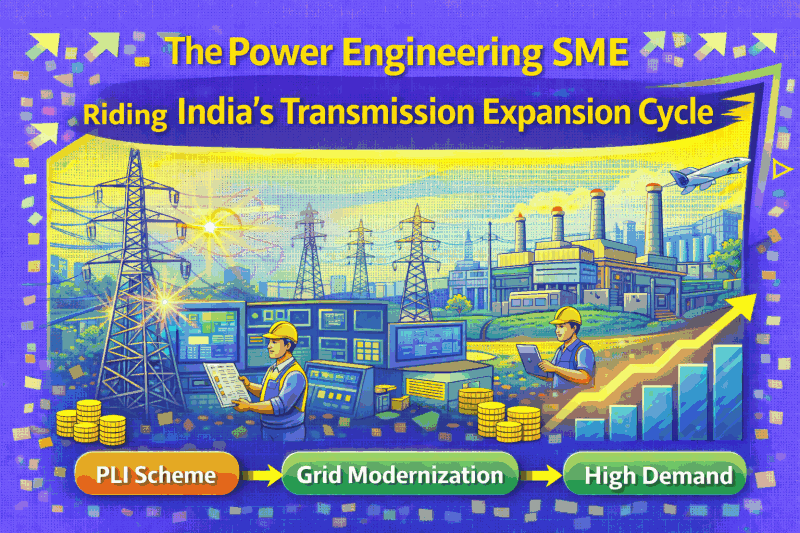
Imagine a school that has just unveiled a brand‑new, state‑of‑the‑art playground packed with shiny swings, tall slides, and everything kids dream of. Everyone’s excited to rush out and play. But there’s a catch: the school forgot to build enough pathways from the classrooms to the playground. So only a handful of children can get there, the hallways get clogged, and most of the playground sits empty even though it’s ready to use.
India’s power sector is going through something similar right now. We’re adding renewable energy projects at a remarkable pace, our own version of shiny new playgrounds but the transmission network, the system of “pathways” needed to move this power across the country, isn’t growing fast enough. Because of this mismatch, a lot of clean energy ends up stranded or underutilised, even when we have the technology and the ambition to use it.
Here we will dive into how this gap emerged, why it matters for India’s energy future, and how a company like Danish Power Ltd is stepping up to help close this crucial link in the chain.
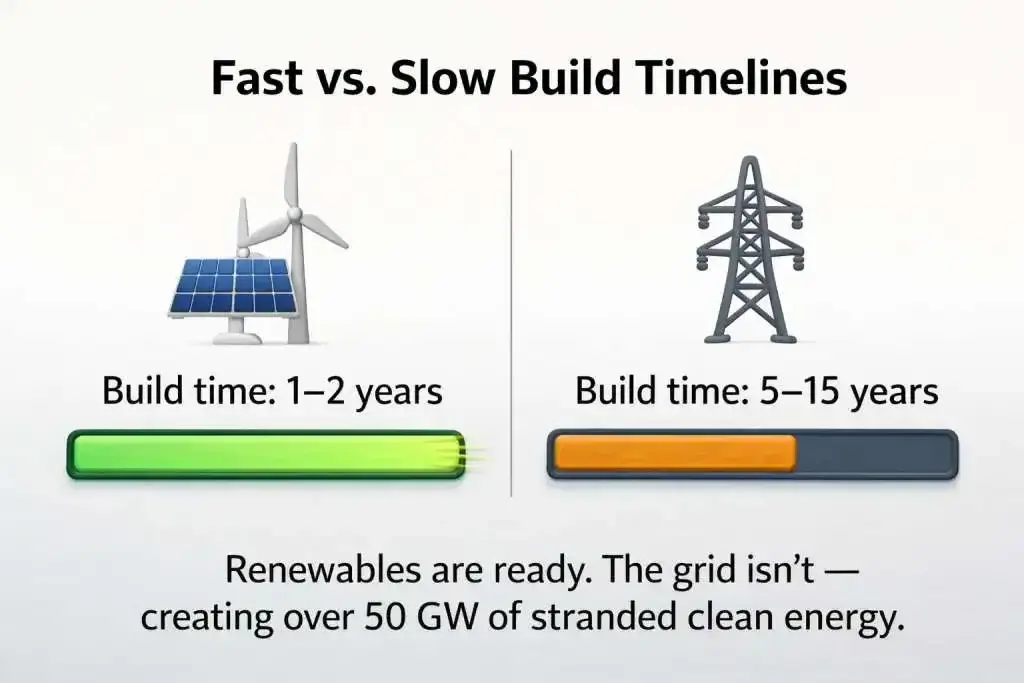
India’s push toward clean energy is moving incredibly fast. Solar parks and wind farms are being set up in just one or two years. But the power grid that’s supposed to carry all this electricity isn’t expanding at the same speed. Building transmission lines and substations is a much slower process, it can take anywhere from five to fifteen years before they’re ready. As a result, new renewable projects are coming up quickly, while the infrastructure needed to deliver that power is still trying to catch up.That difference alone explains why the country is facing a growing gap between how much renewable energy it can generate and how much it can actually deliver.
The numbers paint the picture clearly. In FY2025, India managed to add only 8,830 ckm of transmission lines even though the target was 15,253 ckm. Transformer expansion has also been slow; only 30% of the capacity needed by FY2027 has been created so far. Because the grid isn’t expanding fast enough, more than 50 GW of renewable energy capacity is now sitting idle across the country, fully built but unable to evacuate power due to missing or delayed transmission corridors.
All of this points to a deeper issue: a planning system that moves slowly in a sector that’s moving faster every year. The government is trying to address this through initiatives like the Green Energy Corridor, the new GNA framework, and a huge ₹9.15 lakh crore investment plan. But the real test lies in execution, how quickly these policies can turn into actual infrastructure on the ground to support India’s 2030 clean-energy goals.
India is entering a new phase, firstly where the grid itself is becoming the centre of attention and investment. As transmission projects accelerate, demand is increasing through the value chain: tower manufacturing, fabrication, testing, installation, and last‑mile execution. And this is exactly where companies like Danish Power Ltd come in, playing a crucial role in helping India build the transmission backbone it now urgently needs.
Danish Power’s Pivotal Role in India’s Transmission Expansion Cycle
As India pushes to expand its transmission network and finally close the gap between renewable generation and grid capacity, companies that combine engineering strength with speed and scalability are becoming crucial. Danish Power Limited is one of those companies quietly but significantly shaping this transition.
Today, Danish Power holds about 10–11% of India’s solar transformer market, and its equipment already supports nearly 14 GW of solar installations across the world.
The company is doubling its annual manufacturing capacity to more than 10,000 MVA by the end of 2025, a move that couldn’t come at a better time. Transmission projects across the country are running behind schedule largely because of supply shortages and long delivery lead times for transformers and high‑voltage equipment.
Even more importantly, Danish is moving up the voltage ladder. Its investment into 220 kV Extra High Voltage (EHV) capability positions the company right at the heart of India’s transmission build‑out, where the need is greatest. As renewable power flows from remote solar and wind zones to demand centres, India needs far more 132 kV, 220 kV, and 400 kV corridors. Companies that can supply reliable EHV transformers are exactly what the transmission cycle has been missing.
In essence, Danish Power is not just manufacturing transformers; it’s helping build the backbone of India’s future energy system. Its expanding capacity, higher‑voltage capabilities, and sustainability‑focused innovations directly support India’s mission of reaching 500 GW of non‑fossil energy by 2030. At a time when the country’s transmission infrastructure needs reliability, speed, and scale, Danish Power has become one of the pivotal players enabling that growth.
Read more: NTPC vs JSW Energy – Which Power Stock is Better for 2026?
India’s Power Transmission Landscape: A Macro Overview
India’s push to expand its transmission network is being driven by a mix of bold climate goals and the way our everyday energy use is changing.
As India achieves its goal of installing 500 GW of renewable energy by 2030, one of the biggest challenges is simply getting that power to where people live. Most of the new solar and wind capacity are located far from the region where it is actually consumed. At the same time, the country’s electricity needs are rising much faster than they used to. Hotter summers have pushed more households to rely on air‑conditioners, big tech firms are setting up energy‑intensive data centres across major cities, and everyday life is steadily becoming more electric, from charging an EV to ensuring every family has reliable access to power. All of this is putting fresh pressure on a grid that was never designed for this scale of change.
Add an ageing grid that’s overdue for upgrades and big government programs like the Green Energy Corridor, and the picture becomes clear: India needs a massive buildout of high‑voltage lines and substations. Without it, a lot of our clean energy will stay stuck in the very places it’s generated out in the sun‑drenched plains and windy hinterlands, never making it to the people who actually need it.
Structural Constraints in India’s Power Transmission Cycle
A major challenge in understanding India’s power transmission system is what many experts describe as the “paradox of underutilisation.” On the surface, parts of the grid look heavily congested where developers struggle to evacuate renewable power, and states like Rajasthan report gigawatts of stranded capacity. Nearly 71% of India’s Inter‑State Transmission System corridors run at below 30% utilisation. Solar output peaks for just a few hours in the afternoon, while electricity demand typically spikes in the evening.
Rajasthan illustrates this structural mismatch perfectly. The state’s high-capacity transmission lines are built to handle the full output of its massive solar parks. Around noon, these corridors get packed, forcing nearly 8 GW of renewable capacity to sit stranded or curtailed because the grid can’t take more power at that moment. But as soon as the sun sets, those same lines are barely used not because demand falls, but because generation simply isn’t available. Without adequate storage to shift afternoon solar into the evening peak, the infrastructure swings between overload and underuse on the same day.
This isn’t just a technical problem; it reflects deeper issues in planning and design. India’s transmission system was never built for such a sharp, time‑bound surge in generation. To tackle this, policymakers are now leaning into more flexible and dynamic approaches. The General Network Access (GNA) reforms, for example, divide transmission availability into solar and non‑solar hours to better match how power flows actually behave. On the ground, companies like Danish Power are enabling this shift by supplying the inverter‑duty transformers, protection systems, and substation automation equipment needed for grids that must handle rapid swings in renewable output and eventually integrate large‑scale storage.
In short, the structural constraints in India’s transmission cycle aren’t just about a shortage of lines; they stem from a deeper misalignment between when renewable power is produced and when the country actually needs it. Fixing this will require smarter regulation, better technology, and more adaptive planning to ensure India’s clean energy doesn’t get stuck in the very places it’s generated.
Why EPC Players Rely So Heavily on Danish Power Ltd
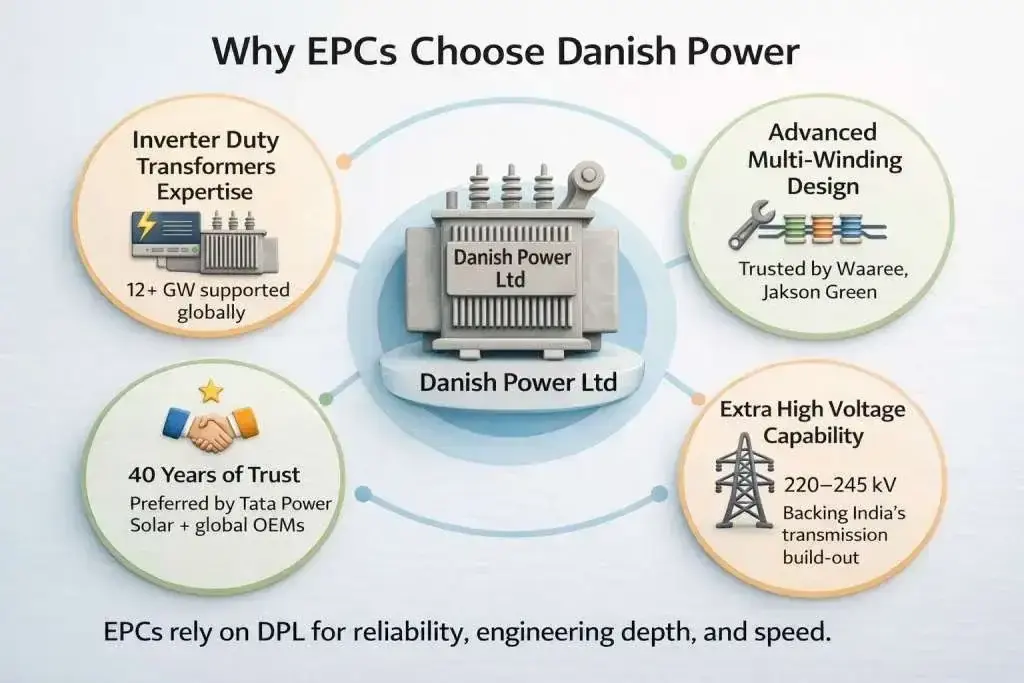
EPC players across India’s renewable energy and transmission sectors are increasingly turning to Danish Power Limited (DPL) because the company has become a reliable, engineering‑driven anchor in projects where delays or equipment issues can derail entire timelines. One of the biggest reasons for this reliance is DPL’s strong expertise in Inverter Duty Transformers (IDTs)—equipment specifically designed for the fluctuating output of solar and wind projects. These transformers are essential for smooth grid integration, and DPL’s experience in this area has already supported over 12 GW of renewable installations worldwide, giving EPC developers confidence that the company knows how to handle the complexities of large-scale green power.
Major renewable developers such as Waaree Renewable Technologies and Jakson Green regularly work with DPL because many utility‑scale solar projects require multi‑winding transformers, allowing multiple inverters to connect efficiently to a single unit. These are technically challenging to design, especially for harsh climates and variable power flows, but DPL’s engineering teams have built deep experience here—making the company a dependable supplier for demanding EPC requirements.
DPL’s importance goes beyond renewable plants. The company is increasingly contributing to India’s transmission build‑out, thanks to its upgraded capability to manufacture Extra High Voltage (EHV) transformers up to 245 kV. This puts DPL in a position to support higher‑capacity transmission projects, which are essential for moving large volumes of renewable electricity across states. Alongside transformers, DPL also provides Substation Automation Systems that help improve monitoring and reliability—features highly valued by global firms like ABB India and Siemens, who frequently source from DPL as part of their India operations.
Trust also plays a major role. Companies like Tata Power Solar Systems Ltd view DPL’s 40‑year industry legacy and its “once a customer, always a customer” approach as clear signals of long-term stability.
Danish Power Ltd
Founding Story & Positioning:
Danish Power Limited’s story goes back to July 1985, when Mr. Dinesh Talwar and the late Mrs. Shashi Talwar set up a small workshop in Jaipur. Back then, the company was just making LT panels and battery chargers.In 1995 Danish Power built its first 3.15 MVA power transformer, an important step up from its earlier products. It marked the moment the company moved from being a small electrical unit to a power equipment player. A few years later in 2001, the team earned its first export order to Oman, which was a milestone achievement.
Shivam Talwar joined the business and took a bold bet around 2011–12. They shifted early into renewables, long before clean energy became the mainstream opportunity it is today. They began designing Inverter Duty Transformers (IDTs) specifically for solar and wind farms, at a time when only a handful of companies in India were doing this. That early move paid off: today, Danish Power’s transformers support more than 12 GW of solar installations across the globe.
In October 2021, Daanish Power got listed on the SME IPO, raising ₹197.9 crore. The IPO was oversubscribed 123 times, a sign of how much trust investors had in the company’s journey and direction.
Core Expertise:
DPL utilizes advanced transformer design software to enhance design and material efficiency. The company manages core processes of transformer manufacturing inhouse and is also stepping up by backward integration into vertical material manufacturing, i.e by adding sheet metal fabrication, which overcomes bottlenecks for transformer tanks. DPL operates a NABL-accredited in-house testing laboratory equipped with impulse testing systems and partial discharge testers for high-voltage validation up to the 245 kV class.A side, you might be wondering what a transformer actually is?
Let me explain, imagine a solar park in Rajasthan (where Danish Power is based) providing energy to a data center or a home in a distant city. This journey consists of five critical steps:
1. Generation: The Energy Factory
The process begins at a generation site. In India, this energy comes from a mix of sources, including thermal (240 GW), wind (51.3 GW), and solar (110.9 GW). In our Rajasthan example, solar panels capture sunlight and convert it into low-voltage electricity.
2. Stepping Up: The "Packaging" Stage
Electricity produced by solar panels cannot travel long distances at low voltage because most of it would be lost as heat. This is where Danish Power’s Inverter Duty Transformers (IDTs) play a vital role. These specialized units take the power from the solar inverters and "step up" the voltage to a level where it can be efficiently injected into the grid. For larger distances, Extra High Voltage (EHV) Power Transformers (up to 220 kV) boost the energy even further to prepare it for the "highway".3. Transmission: The Electrical Highway
Once "stepped up," the electricity enters the Transmission Network. Think of this as a high-speed highway that moves massive amounts of power across regions. India’s grid is fully interconnected, with an inter-regional capacity of over 120 GW, allowing power from sunny Rajasthan to reach high-demand zones like the Northern or Western regions. During this journey, Independent System Operators (ISO) act as "traffic controllers," balancing supply and demand in real-time to prevent blackouts.4. Distribution: The Local Roads
As the electricity nears its destination (like a city), it must be made safe for use. It enters a substation where Control Relay Panels and Substation Automation Systems manage the flow. Here, Distribution Transformers (typically up to 5 MVA) "step down" the high-voltage power back to lower, safer levels. These units are the final link that moves electricity from the high-speed highway onto the "local roads" that lead to buildings.5. Consumption: The End User
Finally, the power reaches the consumer. This could be a data center (a major new demand driver), an industrial factory, or a residential home using an air conditioner. In India, the "electrification of everything" has pushed per capita consumption to 1,538 kWh, as more people use electric vehicles and modern appliances.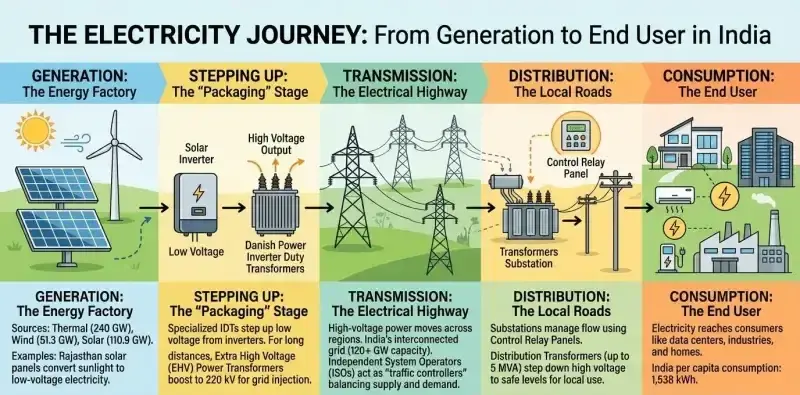
Unique Value Proposition
Engineering-Heavy Solutions: DPL focuses on sophisticated engineered products rather than standardized, labor-intensive units. This includes specialized multi-winding transformers (up to 20 MVA) and ester fluid-filled transformers, which offer fire-safe and sustainable alternatives to traditional oil units.Faster Turnaround Time: By integrating backward into sheet metal fabrication, DPL has reduced dependence on external vendors for long-lead-time components. Additionally, the adoption of Vacuum Change Drying Oven technology has accelerated delivery timelines.
Partnerships & Certifications: DPL maintains long-standing relationships with global leaders such as ABB, Siemens, Tata Power Solar, and Waaree. It was the first in India to receive a BIS license for natural/synthetic organic ester liquid-immersed distribution transformers. The company also holds ISO 9001, 14001, and 45001 certifications. Being a debt-free company, it enables agile decision-making and allows DPL to offer competitive pricing.
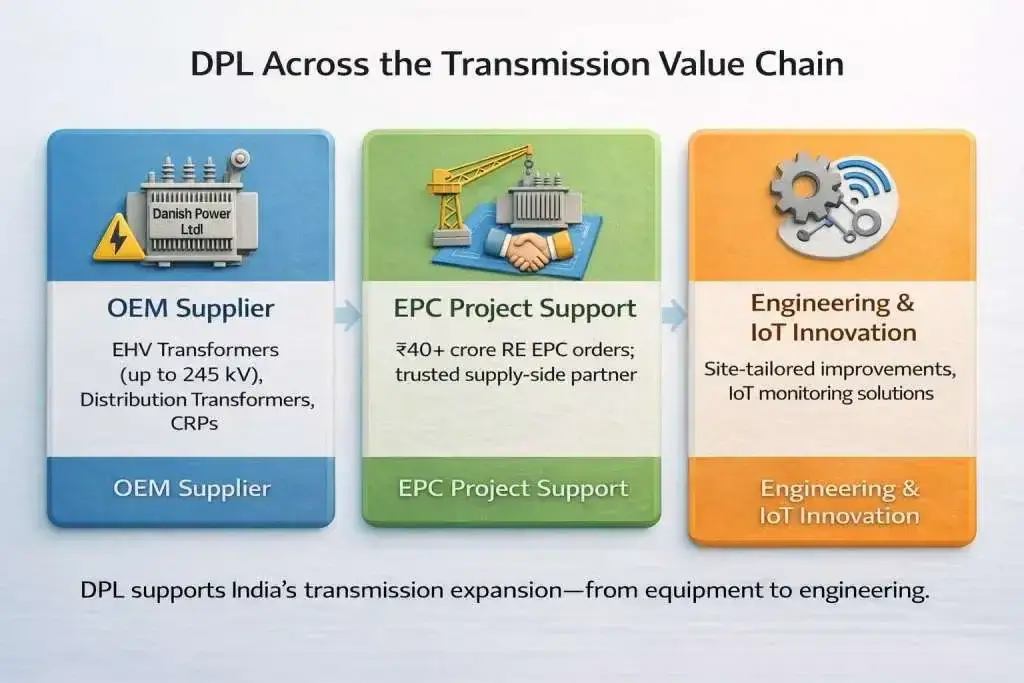
How Danish Power Fits into the Transmission Value Chain
OEM Supplier: DPL functions primarily as an Original Equipment Manufacturer (OEM), providing a diversified portfolio that includes Extra High Voltage (EHV) Power Transformers (up to 100 MVA, 245 kV), distribution transformers, and Control Relay Panels suitable for substations up to 400 kV.
EPC Subcontractor Support: The company acts as a critical equipment provider to Renewable Energy Developers and EPC players. It recently secured multiple renewable EPC orders totaling over ₹40 crore, highlighting its role as a trusted supply-side partner for large infrastructure projects.
Specialist Engineering Partner: DPL works closely with clients to implement small improvements and innovations tailored to specific site performance requirements. This includes the launch of IoT-enabled monitoring solutions to optimize transformer performance and extend equipment life cycles.
Riding the Transmission Expansion Cycle: Growth Tailwinds for Danish Power
Danish Power Limited (DPL) is strategically positioned to ride the massive wave of India's transmission expansion, with its recent scaling and technical upgrades aligning perfectly with the country's grid modernization needs.A. Project Order Book Trends
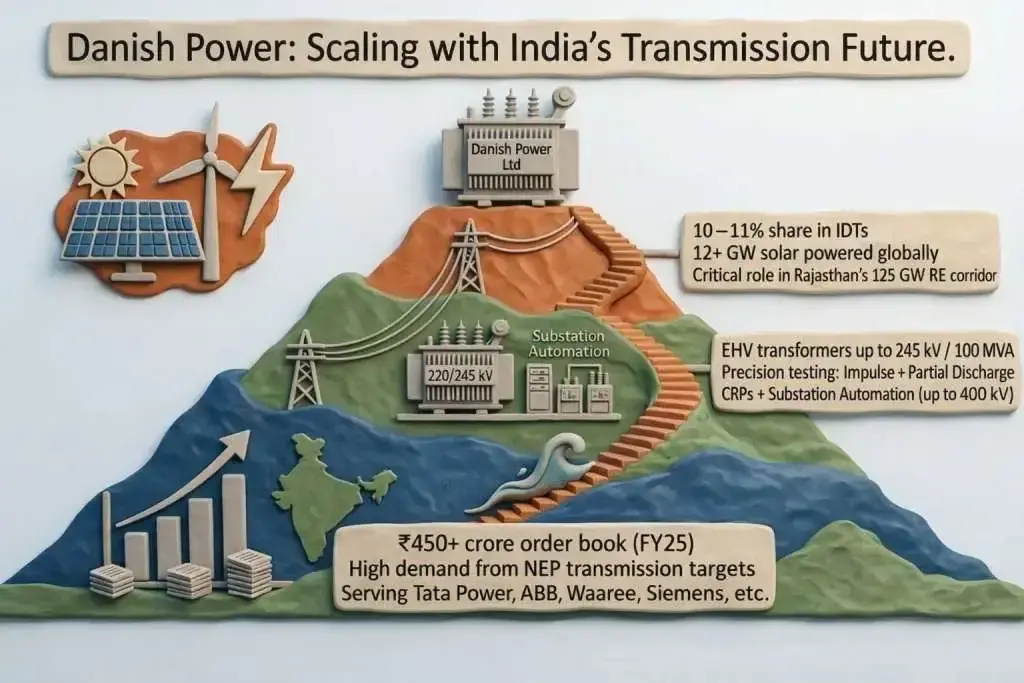
Danish Power is experiencing a robust surge in its order book, which stood at over ₹450 crore at the end of FY25 and continues to grow with a healthy inquiry pipeline. This momentum is driven by a critical infrastructure gap; while the National Electricity Plan (NEP) targets a massive 776,330 MVA increase in transformer capacity by FY27, only 30% had been achieved by FY25, creating a high-priority "leftover" demand for manufacturers. Although DPL focuses heavily on the private sector, which accounts for 90% of its business due to more reliable payment cycles, it serves industry giants like Tata Power, ABB India, and Waaree, who are the primary contractors for large-scale utility and transmission projects. The company is currently targeting the execution of ₹600+ crore worth of projects over the next 10 months, reflecting a sharp trajectory toward its post-expansion peak revenue potential of over ₹750 crore.
B. Increasing Complexity of Transmission Projects
As the Indian grid shifts toward higher efficiency and inter-regional stability, project complexity has increased, creating a lucrative entry barrier that DPL is now crossing. The company has successfully upgraded its technical capabilities to manufacture Extra High Voltage (EHV) Power Transformers in the 220 kV/245 kV voltage class with ratings up to 100 MVA. To meet the demand for precision and reliability in these higher voltage segments, DPL has moved away from labor-heavy methods toward engineering-heavy solutions, employing advanced transformer design optimization software and high-voltage testing systems like Impulse Testing and Partial Discharge Testers. Furthermore, DPL now provides Control Relay Panels and Substation Automation Systems suitable for substations up to 400 kV, facilitating the transition toward "intelligent" grid infrastructure.
C. Renewable Energy Integration: The Catalytic Force
Renewable energy integration serves as the primary catalyst for DPL’s growth, as the company commands a dominant 10% to 11% market share in the domestic Inverter Duty Transformer (IDT) segment. With India aiming for 500 GW of non-fossil capacity by 2030, the development of new solar and wind corridors is essential, particularly in Rajasthan, where DPL’s Jaipur-based facilities provide a critical logistical advantage for the state's 125 GW clean energy target. DPL’s track record includes powering over 12 GW of solar projects worldwide, and it has recently pioneered high-efficiency, sustainable solutions such as ester fluid-filled transformers. As the industry moves toward complex hybrid and potentially offshore wind integration—which requires sophisticated evacuation networks to handle variable loads—DPL is already ramping up its annual capacity to 11,000 MVA to remain a core supplier for these evolving energy corridors.Operational & Financial Strengths of Danish Power Ltd
A. Capabilities That Enable Scale
Plant Capacity: DPL operates two modern manufacturing plants in Jaipur covering over 100,000 sq. ft. As of September 2025, the company had an annual transformer manufacturing capacity of 4,681 MVA. Following its successful IPO, the company is executing a plan to more than double this capacity to over 11,000 MVA. This includes a 2,500 MVA expansion that went live in October 2025, with another 2,500 MVA to be accomplished by December 2025.Technology Adoption: The company has shifted from a 33 kV focus to the Extra High Voltage (EHV) segment, recently upgrading its facility to manufacture transformers up to the 220 kV voltage class with ratings up to 100 MVA. DPL is a pioneer in sustainable tech, being the first in India to receive a BIS license for ester (biodegradable fluid) filled transformers. Furthermore, they have adopted advanced transformer design optimization software and automated Vacuum Change Drying Ovens to improve insulation life and accelerate delivery timelines.
R&D and Testing Facilities: DPL operates a NABL-accredited in-house testing laboratory, which was the first of its kind for a transformer manufacturer in Rajasthan. They have invested in high-end quality assurance equipment, including Impulse Testing Systems and Partial Discharge Testers, enabling them to validate products up to the 245 kV class internally.
B. Financial Discipline and Capital Efficiency
Asset-Heavy but Debt-Free: While the transformer manufacturing business is asset-intensive requiring significant investments in specialized machinery and plant infrastructure, DPL maintains an exceptionally strong financial risk profile. As of March 31, 2025, the company was estimated to have no term debt on its books. DPL describes itself as a debt-free company, which allows for agile decision-making and competitive pricing.Working Capital Cycle: The operations are noted as working capital-intensive, with gross current assets projected in the range of 120-130 days as of March 2025. This is driven by inventory levels of 70-80 days and receivables of 50-60 days. However, management has shown discipline; in H1 FY26, they dramatically reduced short-term borrowings from ₹32.14 Cr to ₹1.78 Cr through effective fund management.
Historical Margin Profile: DPL has seen a steady upward trajectory in profitability. The EBITDA margin improved from 9.03% in FY23 to 20.87% in FY25. Similarly, the PAT margin grew from 4.60% in FY23 to 13.50% in FY25. Management aims to sustain these operating margins in the 19-20% range even as they scale into higher voltage segments.
C. Client Mix & Repeat Orders
Private Sector Dominance: Approximately 90% of DPL's business is derived from the private sector. Management intentionally limits exposure to government-owned utilities (discoms) to avoid potential payment delays and long cycles.Diverse Revenue Base: The company maintains low concentration risk, with no single customer contributing more than 15-20% of overall revenue.
Anchor Customers for Stability: DPL's clientele includes global and domestic industry leaders such as Tata Power (specifically Tata Power Solar Systems Ltd), ABB India, Siemens, Torrent Power, Waaree Renewable Technologies, and Jakson Green. The company's philosophy of "once a customer, always a customer" has fostered long-term partnerships and a strong reliance on significant repeat orders to fill its ₹405 crore+ order book.
Read More: A SME Company Riding India’s Power Infrastructure Expansion
Industry Growth Forecasts
The Indian power and distribution transformer market is projected to grow from USD 4.50 billion in 2025 to USD 6.37 billion by 2031, maintaining a CAGR of 5.81%. This growth is anchored by the National Electricity Plan (NEP) 2023–2032, which has a massive budget outlay of ₹9.15 lakh crore. A critical demand driver is the existing infrastructure gap: the NEP targets a 776,330 MVA increase in transformer capacity by FY27, yet only 30% of this was achieved by FY25, leaving a high-priority "leftover" target to be met in the coming years. Nationally, electricity demand is expected to rise at an average annual rate of 6.4% through 2030, driven by cooling needs, industrial expansion, and the rise of power-hungry data centers.
Targeted Growth: Management aims to increase the export contribution to total revenue from the current 8–10% to 30% within the next two years
Key Markets: The company already has an installation base in 33+ countries, with a strong focus on Africa (including Nigeria, Kenya, Ghana, and Ethiopia) and South Asia/SAARC (Nepal, Bhutan, Bangladesh, and Sri Lanka).
Strategic Advantage: By leveraging established relationships with global EPC players and enhancing product certifications to meet varied international standards, DPL is positioning itself to capture the high-margin replacement cycles in developed nations and new electrification projects in emerging economies.
Strategic Advantage: By leveraging established relationships with global EPC players and enhancing product certifications to meet varied international standards, DPL is positioning itself to capture the high-margin replacement cycles in developed nations and new electrification projects in emerging economies.
Opportunities in Offshore Wind, Grid Stability, and HVDC
As India moves toward higher complexity in its transmission network, DPL is evolving its technology to match:
Grid Stability: India’s shift toward integration and reliability has led to new guidelines requiring Automatic Weather Stations at RE sites and better forecasting. DPL’s Substation Automation Systems and Control Relay Panels suitable for up to 400 kV substations are designed to support these "intelligent" grid requirements.
EHV Transition: To support larger transmission corridors and the evacuation of offshore wind (which requires robust onshore networks), DPL has upgraded its capabilities to manufacture Extra High Voltage (EHV) Power Transformers in the 220 kV class with ratings up to 100 MVA.
Flexibility: The industry is increasingly adopting Dynamic Transformer Rating (DTR) and battery storage to manage congestion. DPL’s development of specialized multi-winding and ester-filled transformers aligns with the need for fire-safe, flexible infrastructure in concentrated load centers like data centers.
Forward Integration: The company is moving into high-value services, including Substation Automation (SCADA) and the launch of IoT-enabled monitoring solutions. These digital tools will enable predictive maintenance and extend the lifecycle of grid assets, shifting DPL from a mere equipment supplier to a specialized engineering partner.
Read more: How GDP Growth Impacts Corporate Earnings and Stock Markets
Explore our Products
Research Framework

Emerging Titans
Combination of quantitative analysis, industry tailwinds, and management assessment - SPRINT investment philosophy

Tiny Titans
Heavy emphasis on scuttlebutt research, plant visits, and early on-ground signals
Conclusion: Building the Backbone of India’s Clean Energy Future
In conclusion, Danish Power Limited (DPL) serves as a compelling case study of how a specialized, engineering-driven SME can successfully leverage a massive national capex cycle to achieve rapid scale. By strategically pivoting to the renewable energy sector over a decade ago, the company has transitioned from a workshop producing basic panels to a critical "backbone" provider for India's electrical grid. DPL now commands a dominant 10% to 11% market share in the domestic solar transformer segment, a position fortified by its proven track record of powering nearly 14 GW of solar installations worldwide.
The company’s ability to outperform broader industrial peers stems from its focus on engineering-heavy solutions and operational agility. Unlike more generalized manufacturers, DPL’s investment in Extra High Voltage (220 kV) capabilities and its proactive backward integration into sheet metal fabrication allow it to solve the industry’s most persistent bottlenecks: long equipment lead times and precision quality requirements. Furthermore, its debt-free balance sheet and high capacity utilization—reaching 96% in FY25 provide the financial discipline necessary to sustain growth even as it doubles its manufacturing capacity to over 11,000 MVA.
As India faces a stark infrastructure gap—where only 30% of National Electricity Plan transformer targets have been met as of 2025—the demand for DPL’s products is no longer merely cyclical but structural. The combination of 50 GW of stranded renewable capacity, the surge in power-hungry data centers, and an aggressive push toward 500 GW of non-fossil energy by 2030 creates a perfect storm of growth tailwinds. For Danish Power, this represents a historic inflection point; by aligning its expansion with the country’s urgent need for grid stability and green energy evacuation, the company is not just riding the transmission cycle—it is actively closing the link that will define India’s energy future.
If you gained insights into the power sector, then comment “DPL” in the comments, and share the knowledge with your friends.
If you would like to read about the defence sector also, I highly recommend reading here: Missile & Ammunition Stocks: Solar Industries, BDL & Others (2026 Outlook)
FAQs
What is the "Transmission Mismatch," and how does it create a structural tailwind for Danish Power?
+India faces a significant infrastructure gap: renewable plants take 1–2 years to build, while the transmission lines to evacuate that power take 5–15 years. This has left over 50 GW of capacity "stranded." For investors, this means the demand for transmission equipment is no longer cyclical but structural. As the government accelerates its ₹9.15 lakh crore grid expansion to bridge this gap, DPL—with its 11% market share in solar transformers—is perfectly positioned to capture this "catch-up" demand.
How is Danish Power moving up the value chain to increase its margins?
+DPL is strategically shifting from low-voltage distribution into the 220 kV/245 kV Extra High Voltage (EHV) segment. These high-capacity transformers are technically complex and carry higher entry barriers and better margins. By expanding into EHV and "intelligent" grid solutions (IoT-enabled monitoring and Substation Automation), DPL is evolving from a component manufacturer into a specialized engineering partner for large-scale utility projects.
What specific "moats" protect DPL from competition and project delays?
+DPL’s competitive advantage lies in its operational agility and technical depth. Unlike many peers, DPL is backward-integrated into sheet metal fabrication, which significantly reduces lead times for transformer tanks. Furthermore, their in-house, NABL-accredited testing lab (capable of impulse testing up to 245 kV) ensures faster quality validation. This allows DPL to deliver high-spec equipment more reliably than manufacturers who depend on external vendors.
How does DPL’s financial profile mitigate execution risk for investors?
+In an asset-heavy industry, DPL maintains a rare debt-free balance sheet. This financial discipline provides a massive advantage: it allows the company to offer competitive pricing, fund its capacity expansion (doubling to 11,000+ MVA) through internal accruals/IPO proceeds, and pivot quickly to new technologies without the burden of high interest costs. For investors, this translates to lower solvency risk and higher agility during Capex cycles.
Why do Tier-1 EPC players like Tata Power and ABB maintain long-term repeat business with DPL?
+Reliability is the primary currency in power infrastructure. DPL’s "once a customer, always a customer" philosophy is backed by a 40-year legacy and an installation base across 33+ countries. Major EPCs rely on DPL because their transformers—specifically their specialized Inverter Duty Transformers (IDTs)—are proven to handle the harsh harmonic fluctuations of renewable energy, reducing the risk of grid failure and liquidated damages for the contractors.

High growth stock specialist, Value Educator
Shashank Mahajan is an equity research professional with over 12 years of experience in identifying high-potential SME and micro-cap stocks at an early stage. He follows a rigorous scuttlebutt research–driven approach, combining on-ground insights with deep financial analysis. Shashank specializes in uncovering under-researched and under-owned companies with strong management quality and long-term growth potential. Through disciplined research and early identification, he focuses on spotting tomorrow’s market leaders before they enter the mainstream investor radar.
Atlanta Electricals: Capacity Nearly Quadrupled in a Year
Kirloskar Oil Engines: Data Centres, Nuclear and the Navy
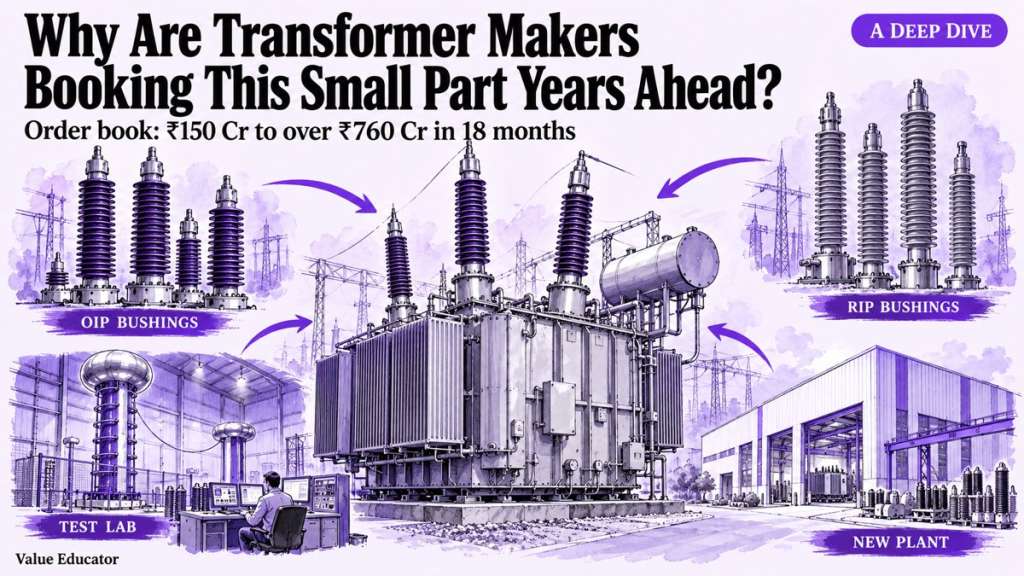
Yash Highvoltage: Bushing Maker With ₹760 Cr of Orders
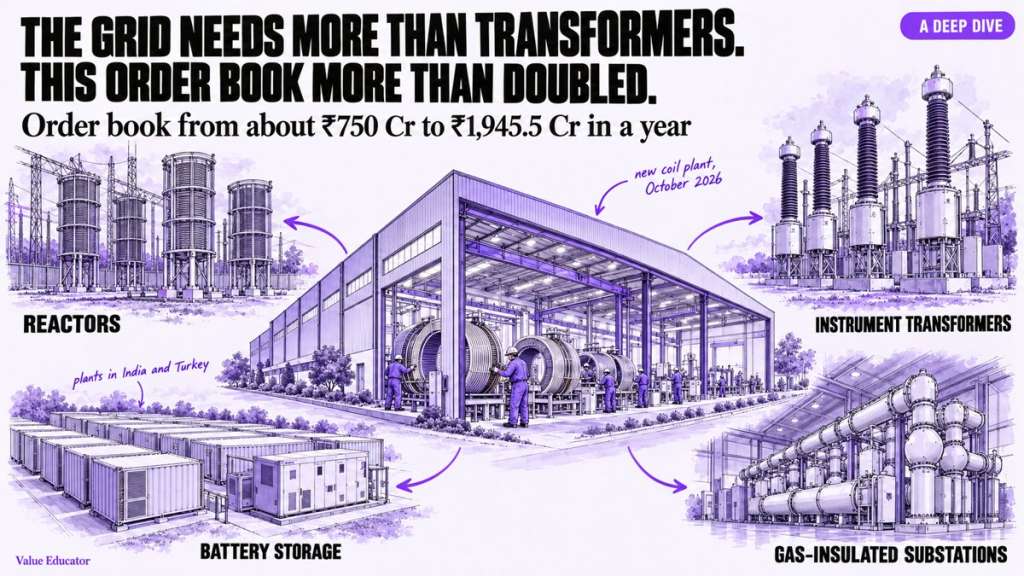
Quality Power: Reactor Maker With a ₹1,945.5 Cr Order Book
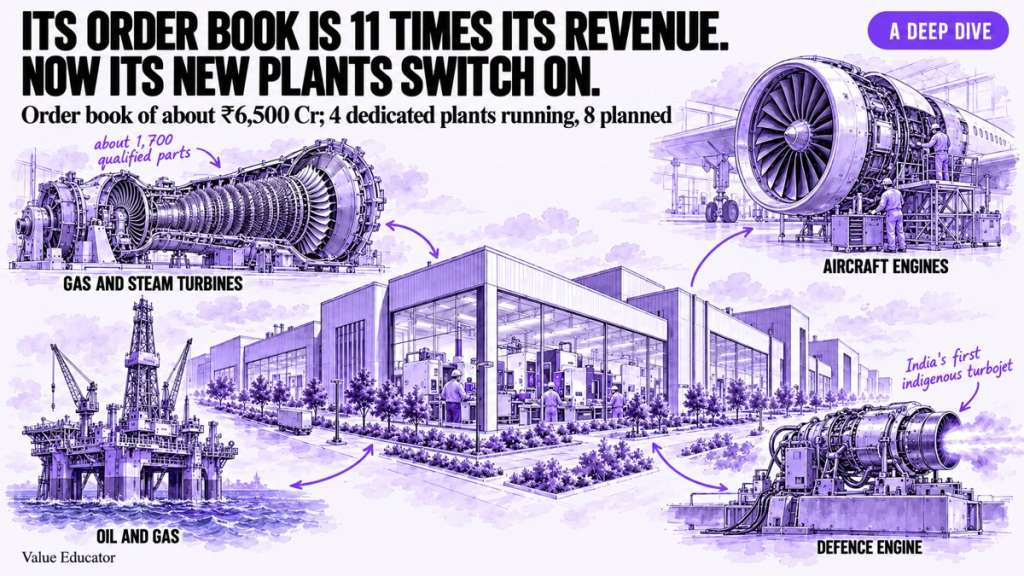
Azad Engineering: Turbine Blades, Jet Engines and Orders
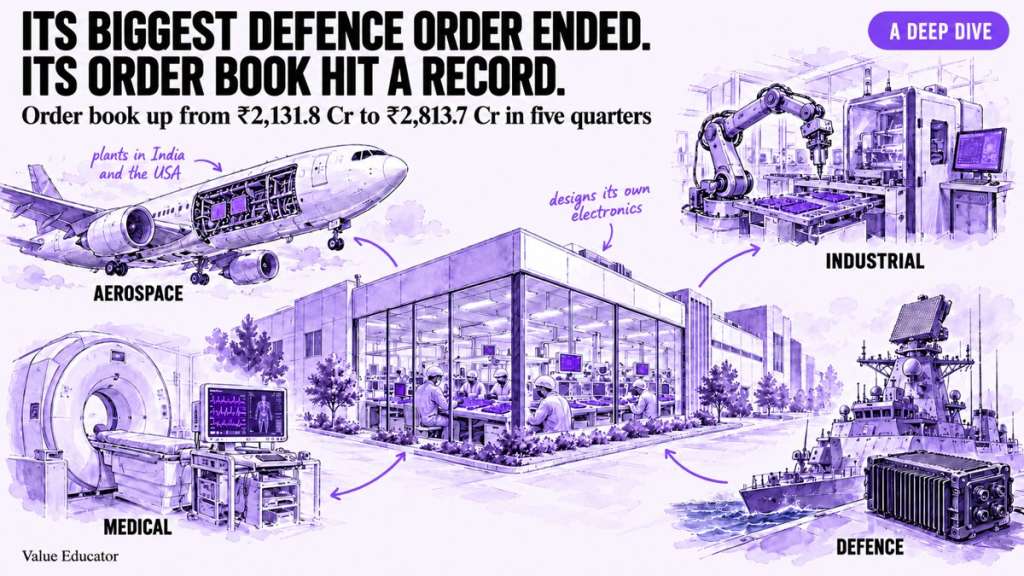
Cyient DLM: Aircraft Electronics and a Record Order Book
Explore our Products
Research Framework
Emerging Titans
Combination of quantitative analysis, industry tailwinds, and management assessment - SPRINT investment philosophy
Tiny Titans
Heavy emphasis on scuttlebutt research, plant visits, and early on-ground signals



Modern Warfare to Multibaggers
Key Trends. Strategic Shifts. Opportunities Ahead.
Don't Miss This Exclusive Webinar!
Join Value Educator to decode the key trends shaping India's defence sector and learn how to identify tomorrow's potential leaders in the space.
- In-depth research on India's defence sector
- Live Q&A session
- Actionable takeaways for long-term investors

 Orders
 Subscription
 Share with friends


Required Details
₹23999.00
(12 month subscription)
As per SEBI regulations, all users are mandated to complete the KYC that is validated for 1 year. Post payment, you will be redirected to the KYC screen


No comments yet. Be the first to comment!