
Z-Tech India: A Public Park SME Monopoly

The Forgotten Parks of India
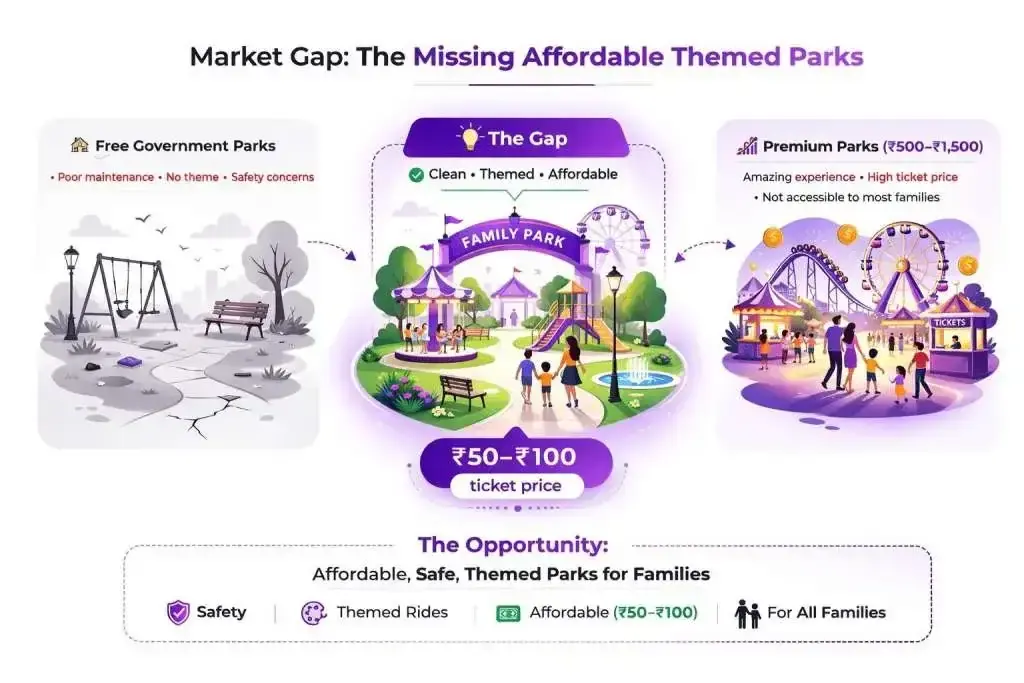
Picture a Sunday afternoon in any Indian city. If you are a middle-class family looking for a safe, clean, themed outdoor experience, your options are surprisingly limited. On one end of the spectrum sit the government parks, which are overgrown, poorly maintained, with broken benches and rusty swings.
They are free, but most families avoid them. On the other end are premium amusement parks like Wonderla, Essel World, or Imagica. Brilliant experiences, but at ₹500 to ₹1,500 per person, a family of four is spending ₹2,000–6,000 before food and travel. That is not a casual Sunday option for most of India.
Here is the uncomfortable truth: India has a massive public parks problem. Urban populations are booming. Cities are getting denser. The need for clean, safe, affordable green spaces has never been greater. Yet the middle ground between a decrepit government park and an expensive theme park is almost empty.
If you’re interested in how urbanisation shapes economic trends, read: Monsoon & Stock Market: Analyzing the Impact of Agriculture on Indian Economy
That gap of ₹50 to ₹100 affordable family outing is exactly where Z-Tech planted its flag.
“The best businesses are often built in the spaces where everyone else sees nothing.” — Peter Thiel
And what makes this story even more fascinating is how they found a way to build these parks for almost nothing.
Enter Z-Tech: The Unlikely Park Builder
Z-Tech (India) Limited was incorporated in 1994 in Delhi. For most of its early life, it was a quiet geotechnical solutions company, i.e., the kind of business that stabilises soil and provides ground engineering for construction projects. Not exactly a headline-grabbing business. The company ticked along, stayed debt-free, and built a solid reputation with government clients.
Then, around 2019–2020, something shifted. The management saw an opportunity that nobody else was looking at. Indian municipalities were sitting on thousands of acres of underutilised land. They had waste and scrap materials piling up with no organised disposal. And they desperately needed public amenities to justify their budgets and win political goodwill.
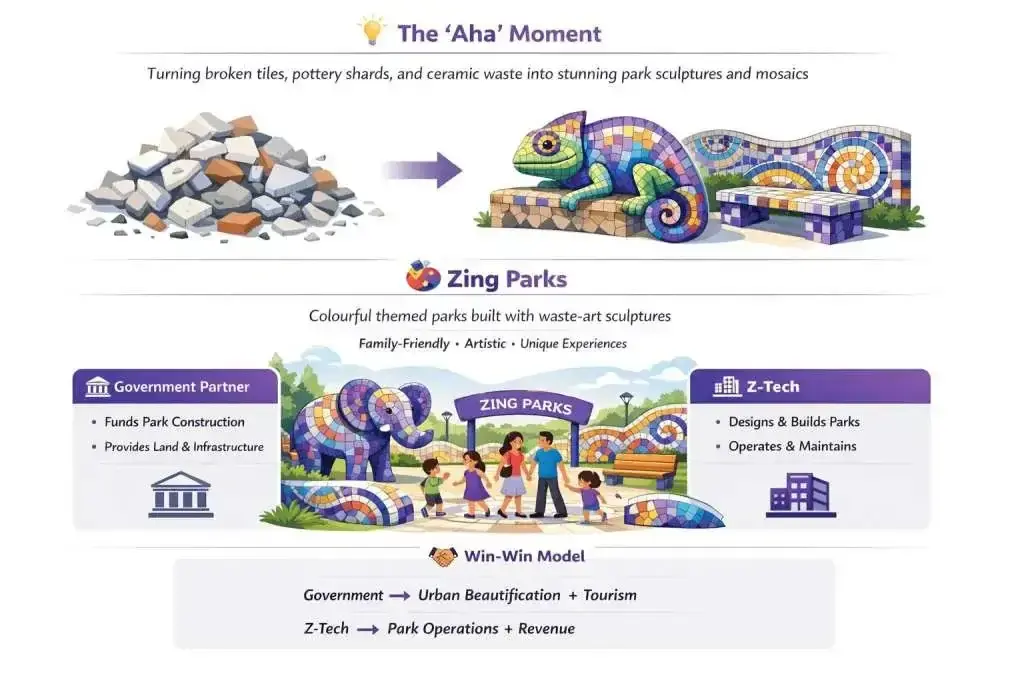
Z-Tech's answer was elegant: What if we use that waste to build beautiful parks, on that free government land, with the government's own money, and then simply operate them for decades in exchange for a share of the ticket revenue?
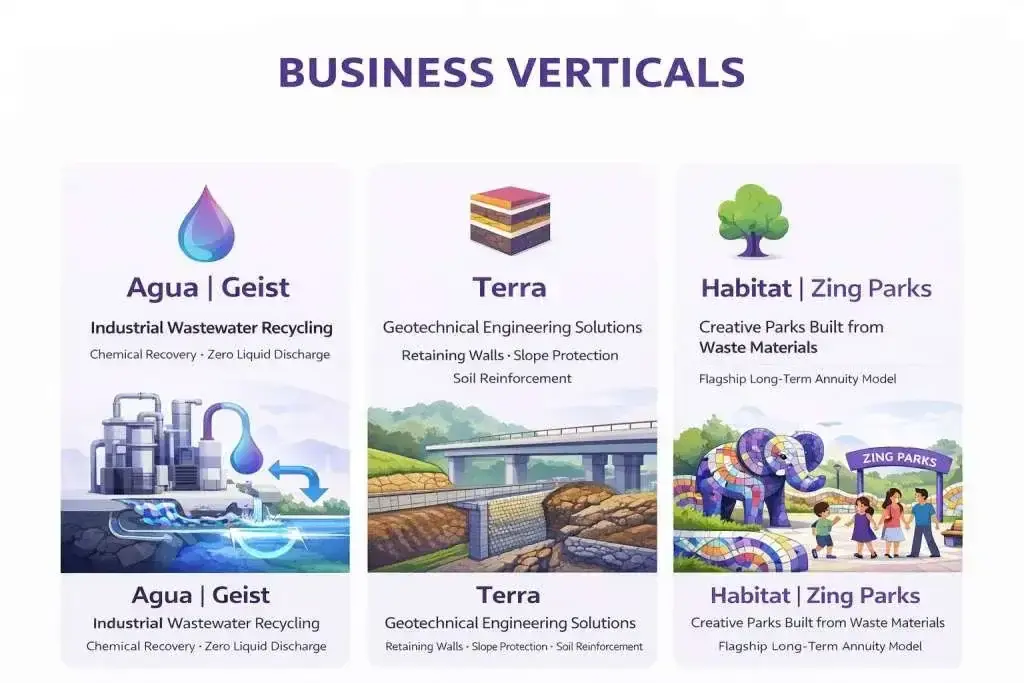
Today, Z-Tech operates three business segments. The flagship parks business (Zing Parks) is where the magic happens. Then there is Terra, their original geotechnical and civil engineering arm. And finally Agua, which is a water and wastewater management division. The parks business is the jewel of this story, but the geotech business funds the journey while parks ramp up. Let's understand them in detail.
The Business Verticals That Create Impact
1. Agua | Geist
Water is the quiet engine behind every factory floor. But once it’s used, it often leaves the plant carrying chemicals and waste, treated as something to simply get rid of. Z-Tech looked at that stream and saw a possibility. What if the same water could be used again?Think of Geist as a second chance for industrial water. In a traditional factory, water checks in, gets contaminated, and checks out. Geist changes the exit strategy. It intercepts that wastewater, filters out the impurities, and reclaims useful chemicals for later use.
The result is water that’s clean enough to re-enter the production line immediately. This process, known as Zero Liquid Discharge, transforms a straight line into a loop. It means factories stop thirsty withdrawals from the environment and start treating waste like the asset it actually is.
2. Terra
You can’t build a future on shaky ground.
While other sectors look at what goes inside a factory, Terra looks at what’s underneath it. This division specializes in geotechnical engineering—the science of keeping the ground stable.
From hydraulic systems to rockfall protection, Terra provides the muscle needed to hold up highways and dams. They don't just fight gravity; they engineer around it. By understanding how soil and rock naturally interact, Terra ensures that our infrastructure is safe, durable, and compatible with the environment it sits on.
3. Habitat
Now, let us understand Z-Tech's flagship business vertical that we are interested in with a simple story. Imagine a municipality in Lucknow. They have a 5-acre plot of land sitting unused.They have a pile of broken tiles, old pottery, and construction debris. They want to give their citizens a new park. But they do not have the expertise to build a beautiful themed experience.
Z-Tech walks in and says:
We will design this park, use your waste materials as our primary building material, build it with minimal out-of-pocket cost, and then operate it for the next 20 to 50 years. You keep 5 to 60 percent of ticket revenues. We keep the rest.' The municipality gets a world-class park for almost free.
Z-Tech gets a long-term income stream with no land cost and almost no raw material cost.
The Four Pillars of the Model
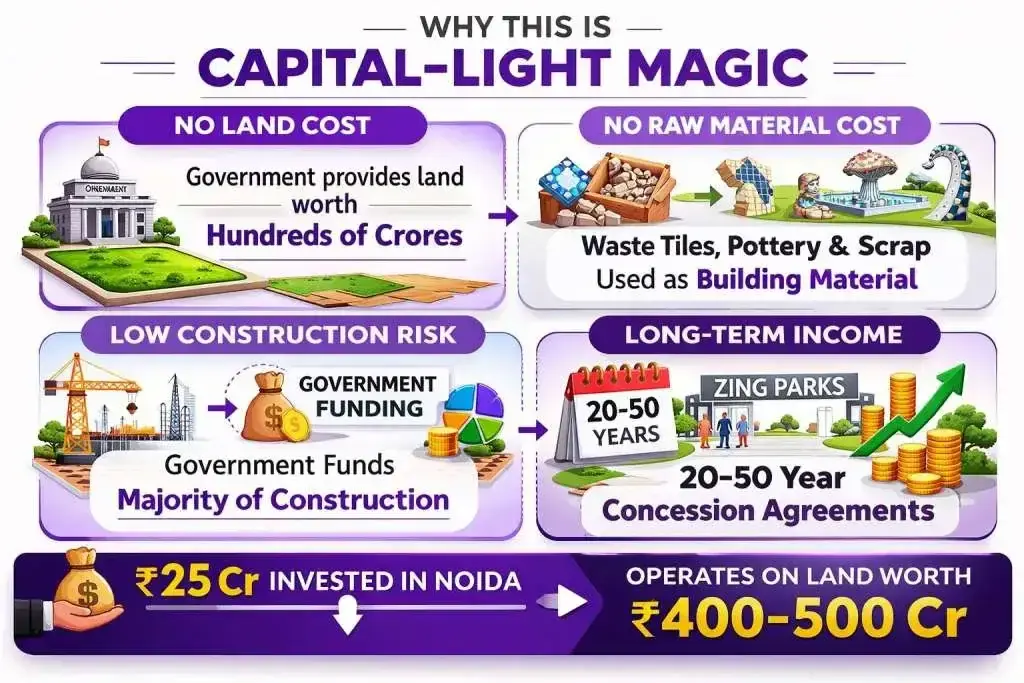
• The government provides the land. Z-Tech never buys land. The land is provided by the municipal body or government agency under a concession agreement. In Noida, the land Z-Tech operates on is worth ₹400–500 crore. Z-Tech's total investment in that site? Roughly ₹25 crore.
• Waste is the raw material. Broken ceramic tiles, mosaic pieces, old pottery, etc. These are donated or provided by the government at zero cost. Z-Tech's artisans transform them into beautiful park sculptures, benches, pathways, and installations. What looks like expensive art is actually garbage, reimagined.
• The government funds most of the construction capex. The municipality typically pays 70–90 percent of the park construction cost. Z-Tech contributes a smaller share, giving them skin in the game while keeping capital requirements low.
• Z-Tech earns a revenue share. The concession agreements typically run for 20 to 50 years. Z-Tech captures 40 to 95 percent of ticket revenue, event revenue, and increasingly F&B and sports revenue. The Noida Jungle Trail, their flagship, gives Z-Tech a 94 percent revenue share.
This is not just clever. It is structurally difficult to replicate. A new competitor cannot simply copy this model without years of government relationships, a track record of delivering quality parks, and the specialized artistic expertise to transform waste into beauty. Z-Tech has spent years building exactly these moats.
Key Industry Trends Powering the Three Verticals
Industrial Wastewater Management
India is industrializing fast, but that growth comes with a massive water bill. The market for treatment technology is already huge—valued at ₹8,364 crore this year—and it’s on track to hit ₹14,013 crore by 2029.
The drivers are easy to spot: the government is tightening the screws on pollution, and there’s a massive push to get safe water to every household. But the real "crunch" is coming in 2030, when our water needs are expected to outpace our supply by two to one. In that kind of environment, being able to recycle and reuse every drop of water isn't just smart—it's survival.
Geotechnical Engineering and Geosynthetics
You can’t build a world-class transportation network on shaky soil. As India’s infrastructure expansion hits its stride, the demand for smart geosynthetic solutions is skyrocketing. We're looking at a market projected to reach ₹15,523.8 crore over the next decade.
The driver behind this 8.4% growth rate is simple: every new highway, runway, and rail line needs a stable foundation. Whether it’s reinforcing soil or stopping erosion in its tracks, geotechnical engineering has moved from a niche specialty to a core requirement. It’s the hidden engineering that ensures our long-term investments don't just look good but stay durable for decades to come.
Creative Parks and Experiential Leisure
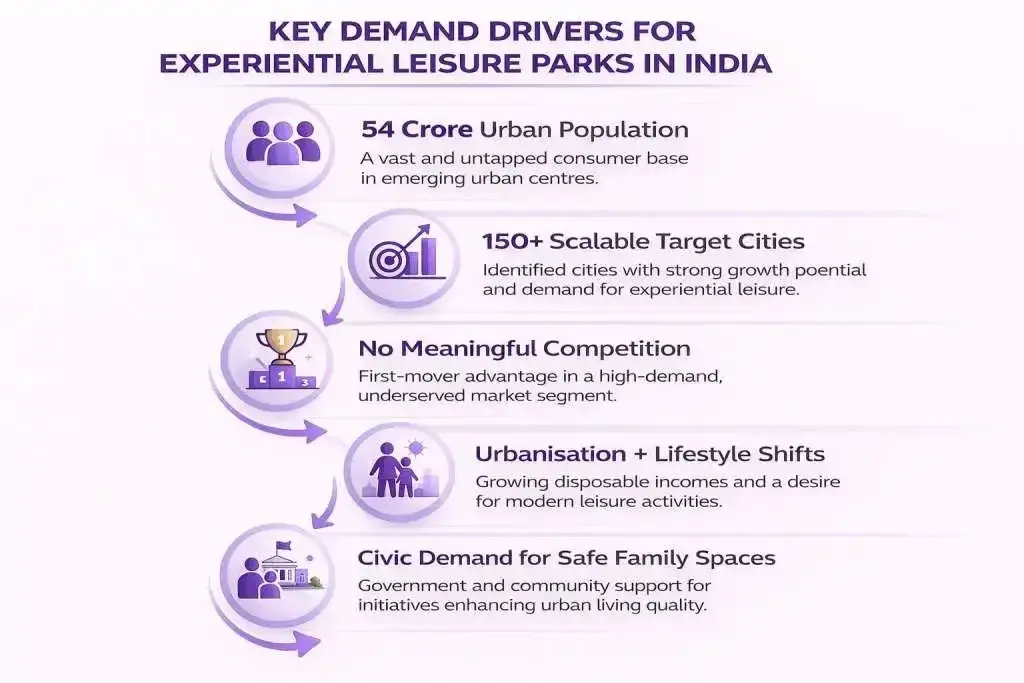
India’s urban explosion has created a strange paradox: we have 54 crore city-dwellers, but almost nowhere for them to relax. In the rapidly growing Tier-2 and Tier-3 markets, the "leisure gap" is glaring. Families are stuck between poorly maintained public spaces and high-end amusement parks that charge anywhere from ₹500 to ₹1,500 per person.
This isn't just a social issue; it’s a massive business opportunity. We’ve identified over 150 cities where rising incomes and changing lifestyles are driving a need for "experiential" fun. Families want safe, affordable places to spend time together. This creates the perfect opportunity for creative parks designed for the needs and budgets of India’s growing middle class.
If you want to understand how early-stage companies become multibaggers, read: How to Identify Genuine Penny Stocks Before They Become Multibaggers.
Porter’s 5 Forces: Why the Sustainable Public Park Industry Is Structurally Attractive
The sustainable public park development sector remains nascent, structurally attractive, and largely devoid of organized competition.
Threat of New Entrants — LOW
Requires strong government relationships, execution track record, and a healthy balance sheet. Z-Tech’s ₹100Cr raise provides a meaningful financial moat. Tenders frequently go uncontested – evidencing very low competitive interest.
Competitive Rivalry — LOW
No organized national-level competitor in sustainable scrap-art public parks. Wonderla and theme parks operate in a different price tier. Local players lack scale, technology, and government relationships.Bargaining Power of Buyers — MEDIUM
Government clients have leverage in tendering, but often become repeat customers given Z-Tech’s execution quality. Consumers (ticket buyers) have no bargaining power – price is set by Z-Tech.
Bargaining Power of Suppliers — VERY LOW
Raw materials are waste, provided free by governments. Labour is the main cost input. No import dependency, no commodity price risk, unlike most recyclers/infrastructure firms.
Threat of Substitutes — LOW–MEDIUM
In Tier-1 cities, movies compete with malls, restaurants, and other leisure options. In Tier-2/3 cities—Z-Tech’s core market—there are few alternatives. Even a small town like Khurja draws 25,000–30,000 visitors monthly, with affordable ₹50–150 tickets attracting all income groups.
The Numbers Behind The Different Parks
Let us look at what a single Zing Park actually earns. The Khurja park in a Tier-3 town in Uttar Pradesh serves as Z-Tech’s proof of concept for smaller cities. It draws 25,000–30,000 visitors each month, and with an average ticket price of ₹75, generates roughly ₹19–22 lakh in monthly gross revenue. Z-Tech's 50 percent share comes to ₹9–11 lakh per month.
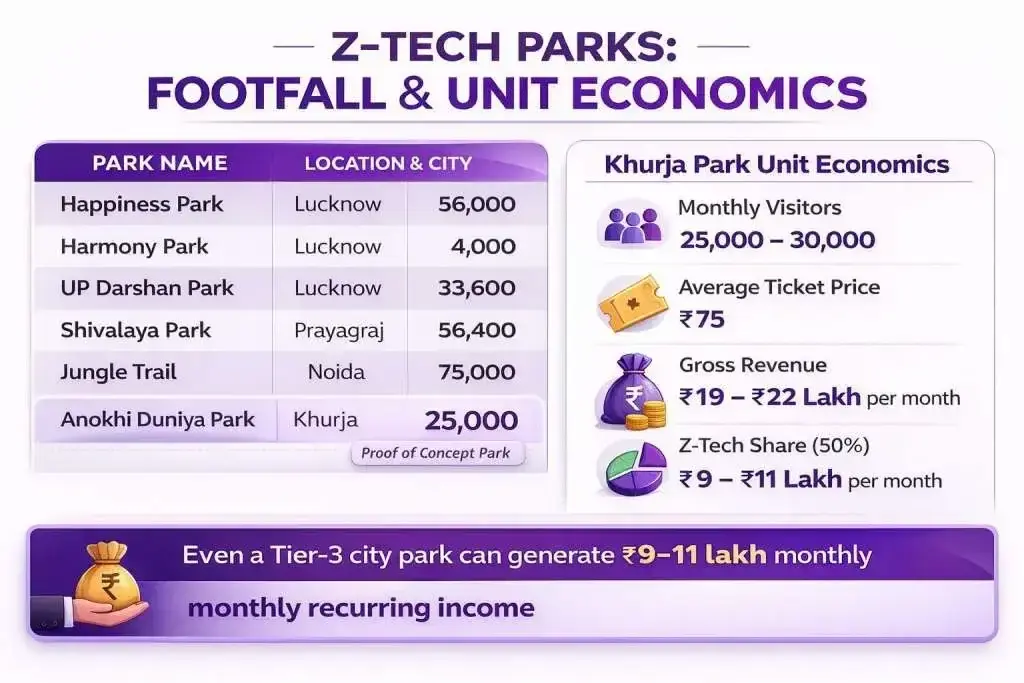
Take a look at the Noida Jungle Trail. It’s their flagship park, and it’s a powerhouse. We’re talking 50,000 to 60,000 people walking through the gates every single month. Because Z-Tech keeps a massive 94% share of the revenue, that one park alone pulls in between ₹80 lakh and ₹1 crore monthly—like clockwork. This kind of reliable, steady cash flow isn't just a win; it’s the exact blueprint they plan to roll out across 100 more parks.
Reading the Financial Story
Z-Tech is technically a small player, but its growth tells a much bigger story.
The company landed on the NSE Emerge platform after a ₹100 crore private placement in FY25, but the real eye-opener is how fast they are scaling. In the last three months of 2025 alone, revenue shot up 74% to hit ₹42 crore.
To put their momentum in perspective: in just nine months of this year, they’ve already brought in ₹97 crore—surpassing what they did in the entire previous financial year. Even more impressive? They’re doing all this while staying almost entirely debt-free and keeping profit margins at a healthy 27–30%.

To learn how to analyze emerging businesses like this, read: How to Analyze a Mid-Cap Company – A Complete Practical Framework
The Five-Year Journey:
Financial Snapshot:
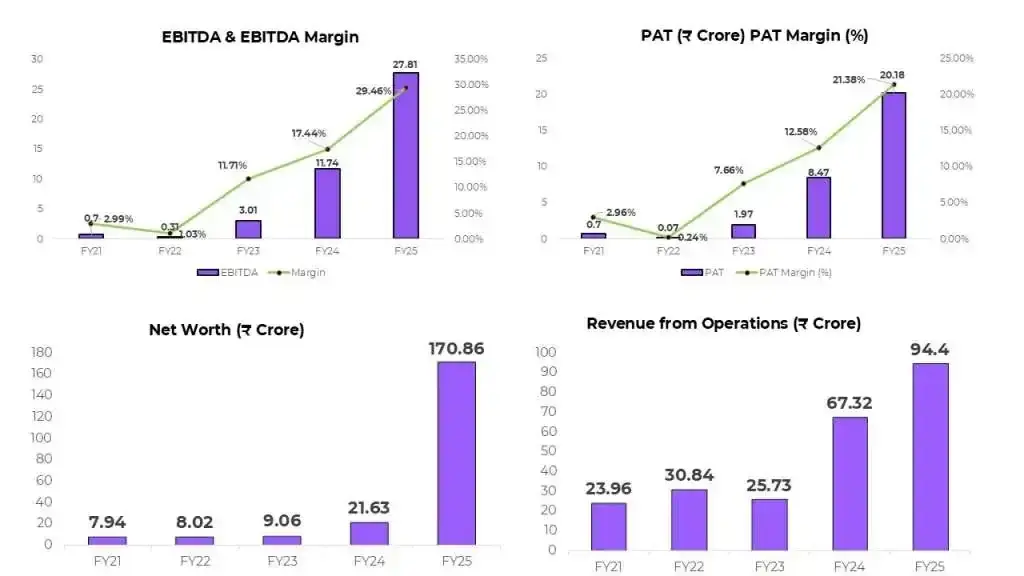
The numbers are in, and they tell a clear story: we are scaling up and leaning in.
Looking back at FY21, revenue was ₹23.96 crore. By FY25, that figure hit ₹94.40 crore. But what’s even more impressive is how profitability outpaced our growth. EBITDA margins went from a thin 2.99% to a robust 29.46% in that same period. Essentially, for every rupee of revenue, the company keeps much more of it as profit thanks to better operating leverage.
Profit After Tax (PAT) also increased significantly, reaching ₹20.18 crore in FY25. This shift reflects the company’s transition from an early-stage growth phase to a more profitable operating stage. The improvement has been supported by a considerably stronger balance sheet, with net worth rising from ₹7.94 crore to ₹170.86 crore. This stronger capital base positions the company to support the next phase of expansion and project execution.
Key Ratios:
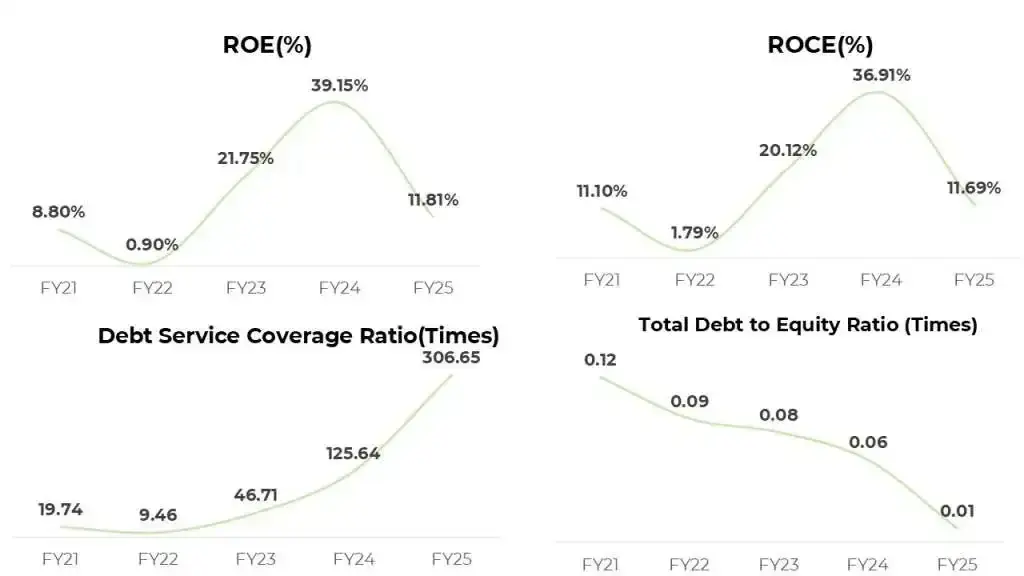
Note: ROCE dipped in FY25 because the company raised ₹100 crore through a private placement, massively expanding its equity base. This is a 'good dip'; the capital is being deployed into parks that will generate returns for the next 50 years. Watch ROCE recover sharply as parks open and recurring revenue grows.
Revenue Concentration That Reflects Strategic Focus
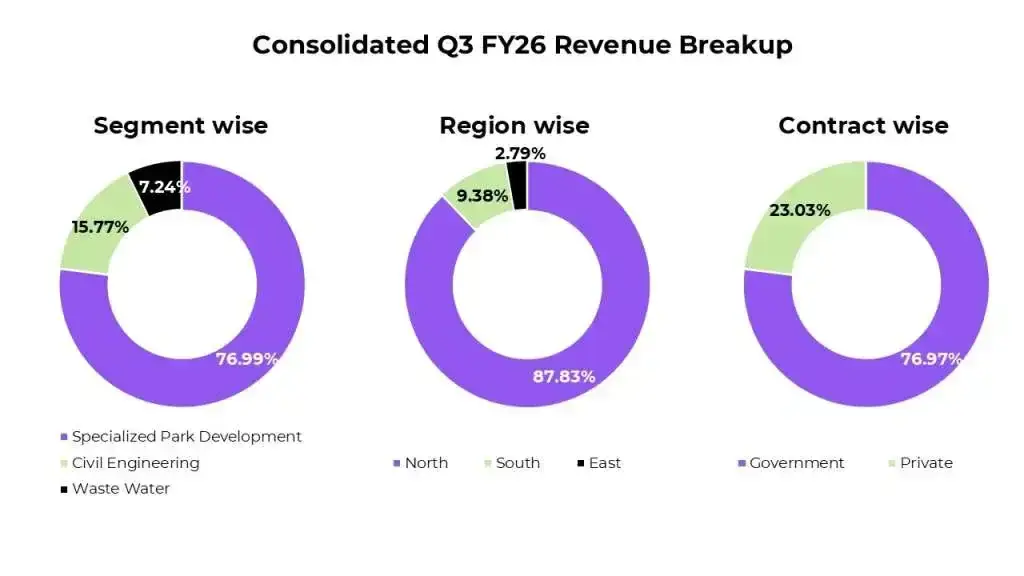
The Q3 FY26 revenue mix tells a clear story of where the business is finding its momentum. Nearly 77% of revenue comes from Specialized Park Development, highlighting the company’s strong positioning in this niche segment, while Civil Engineering and Waste Water projects contribute smaller but complementary streams that diversify the portfolio.
When you look at the company’s footprint, it’s clear that they have a stronghold in the North. Nearly 88% of their business happens there, reflecting years of building trust in that region. However, the exciting part is seeing first real contributions come in from the South and East—it's the start of a much broader expansion.
It’s a similar story with their revenue sources. The government is still the main breadwinner, accounting for about 77% of what they do. For a large-scale infrastructure firm, that’s like their bread and butter. But the company is also building a "second engine" in the private sector. What you’re seeing is a company that knows its strengths but is also laying the groundwork for a more balanced future.
The Road to 100 Parks
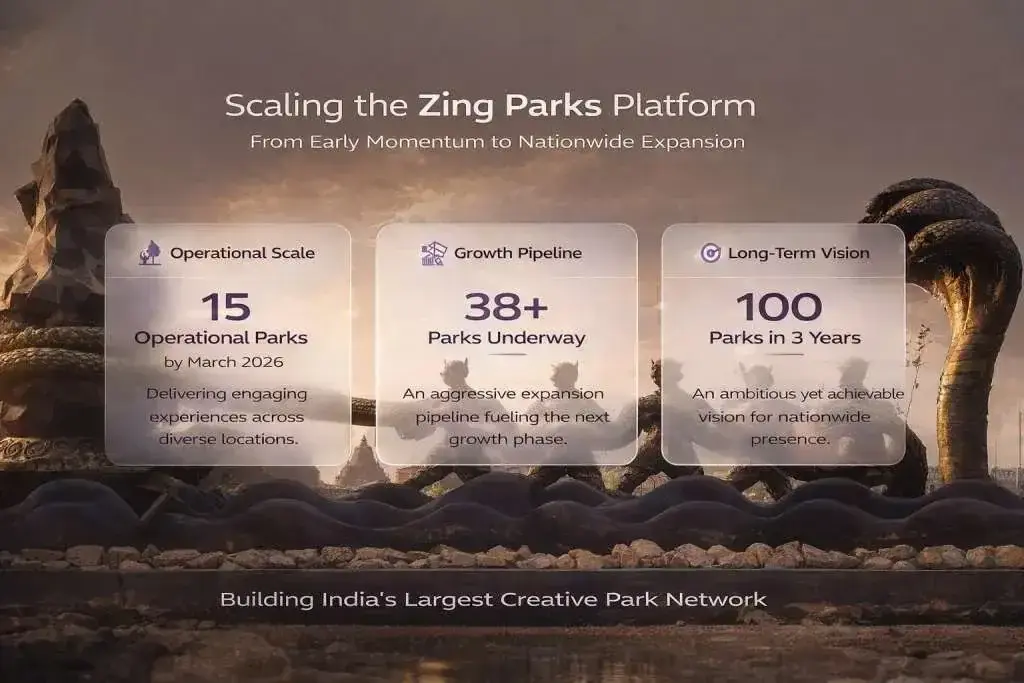
The management team at Z-Tech is clear-eyed about what the next three to five years need to look like. The current order book stands at approximately ₹227 crore, ₹77 crore in ongoing park projects, and ₹149 crore in geotechnical work. But the real prize is the 100-park target.
As of the Q3 FY26 earnings call (February 2026), only 2 parks were made operational in the first nine months of the year, against a target of 15 by March 2026. This sounds like a miss, but context matters enormously here.
“The essence of strategy is choosing what not to do.” — Michael Porter
Seven more parks are under advanced construction with a target of 15 operational parks by April 1, 2026. If management achieves this, FY27 becomes the year where recurring revenue starts to become visible and meaningful, the company targets 25–30 percent recurring revenue by end of FY27.
The Revenue Timeline
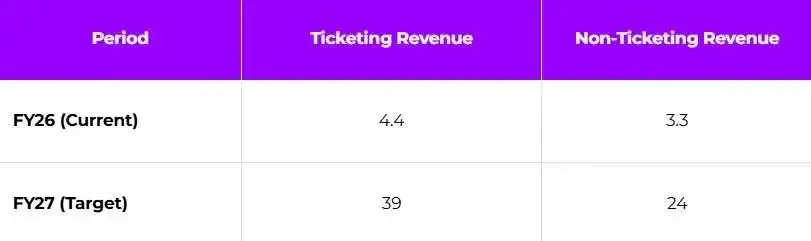
all figs. are in Rs.CroreWith the expansion of the park portfolio and concerted marketing efforts, the coming year will see a push in maximizing the revenue potential of Zing parks. Focused efforts to be targeted at F&B expansion, sports & recreation activities, and events-based revenue streams.
Beyond India, Z-Tech has begun exploring international markets. Management received inquiries from more than 15 countries in Q3 FY26 alone. An Expression of Interest has been submitted for a park project in Ghana, and conversations are ongoing across Southeast Asia, the Middle East, and parts of Europe. International contracts, if won, would fundamentally re-rate the company's story from 'Indian small-cap' to 'global sustainable parks platform.
The Valuation Story
Here is where the Z-Tech investment case becomes genuinely interesting and where most of the market is getting it wrong today.
Right now, the market values Z-Tech primarily as an EPC (Engineering, Procurement, and Construction) contractor. EPC companies, because their revenue is lumpy and dependent on winning new orders, typically trade at 12 to 15 times earnings. That is broadly fair for a company where revenue resets every year.
But Z-Tech is in the middle of a fundamental transformation. As parks open and recurring ticket revenue builds, the company is transitioning from an EPC model to a consumer-facing annuity model.
Think about how the market values annuity businesses. Phoenix Mills (mall operator) trades at 40 times earnings. Wonderla Holidays (amusement park) trades at 55 times. Even conservative recurring-income businesses command 30+ times multiples.
If you're new to equity investing and valuation thinking, start here: How to Start Investing in the Stock Market with just ₹1,000
The Re-Rating Opportunity
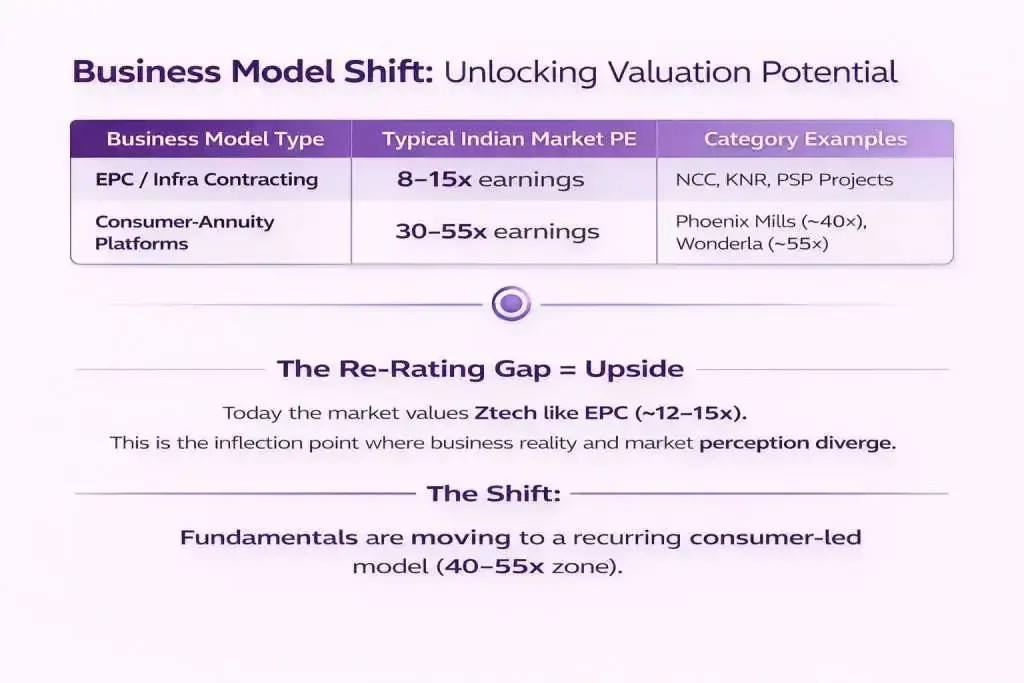
“Businesses that generate recurring revenue are valued not for what they earn today, but for how predictable tomorrow’s earnings are.” — Howard Marks'
What Could Go Wrong?
No investment thesis is complete without an honest assessment of risks. While Z-Tech’s business model appears compelling, investors should remain aware of certain structural and execution-related vulnerabilities.High-Alert Risks:
Risk 1: Dependence on Government Contracts
Approximately 76.97% of Z-Tech’s revenue is derived from government clients, making public sector partnerships the backbone of the business.Advantage: Government contracts typically provide long-term project visibility and stable demand.
Risk: Payment cycles can be slow, and administrative or political changes may delay approvals, payments, or project execution.
Context: Z-Tech has secured repeat mandates from several authorities, such as MCD, PCMC (now on their fourth project), and the Lucknow Development Authority indicating strong working relationships and execution credibility within government bodies.
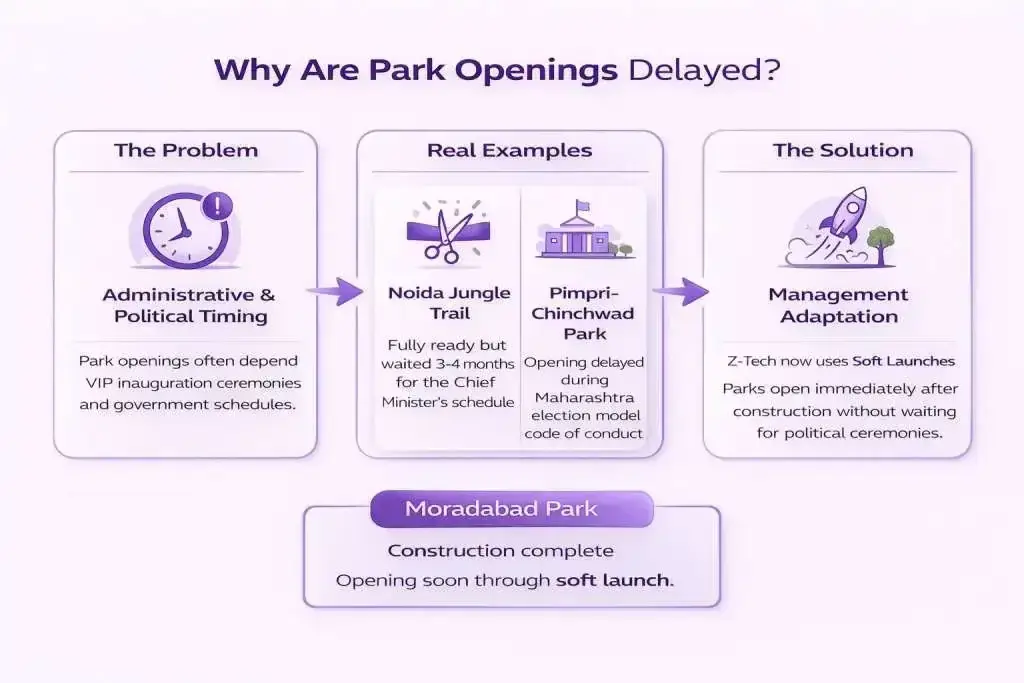
Risk 2: Project Timeline and Inauguration Delays
Execution timelines can sometimes be affected by ceremonial and administrative processes.In several instances, park openings have been delayed by three to four months due to the scheduling of official inaugurations by state leadership.
This creates temporary delays in revenue recognition despite the asset being operationally ready.
Management Response: The company has started adopting “soft launches”, allowing parks to begin operations before formal inauguration ceremonies.
Key Monitor: If the company fails to reach 15 operational parks by June 2026 (allowing for a modest execution buffer), it would raise concerns about rollout momentum.
Medium-Alert Risks:
Risk 3: Geographic Concentration
Z-Tech currently derives 87.83% of its revenue from North India, while South India contributes only 9.38%.Different states have varying priorities in urban development and waste management initiatives.
Southern municipal bodies may adopt different procurement models or project structures.
Mitigation: Management has indicated that two to three projects in South India are currently in the pipeline, which could gradually diversify the revenue base.
Risk 4: Footfall Sustainability
New park launches often experience an initial spike in visitors driven by curiosity, which tends to moderate over the following months.Industry experience suggests footfall may decline by roughly 30–40% during months three to six before stabilising.
Z-Tech’s revenue model requires a consistent monthly footfall of approximately 20,000–30,000 visitors per park.
Mitigation: The company continues to introduce new installations, seasonal events, food and beverage options, and sports attractions, including activities such as pickleball, paddle courts, and box cricket (as seen in the Noida park), to encourage repeat visits and maintain engagement.
Explore our Products
Research Framework

Emerging Titans
Combination of quantitative analysis, industry tailwinds, and management assessment - SPRINT investment philosophy

Tiny Titans
Heavy emphasis on scuttlebutt research, plant visits, and early on-ground signals
The Road Ahead: Expanding with Innovation and Purpose
As the company looks ahead, its strategy is centered on building momentum through thoughtful expansion and long-term capability building. The first priority is geographical growth, with a focus on entering untapped markets across MENA and South Asia. By carefully expanding into new regions and diversifying its geographic footprint, the company aims to unlock new opportunities while reducing dependence on any single market.
At the same time, research and development remain a key pillar of the growth strategy. Continued investment in R&D is expected to drive innovation, strengthen technological capabilities, and open the door to attractive acquisition opportunities, all while maintaining financial and operational discipline.
Equally important is the investment in people and organizational culture. By focusing on workplace vitality and strengthening its human capital strategy, the company aims to build a motivated and capable workforce that can sustain long-term growth.
Underlying all these initiatives is a broader commitment to creating greater good through sustainable operations. By continuously leveraging research, innovation, and its existing asset base, the company seeks to expand revenues and margins while ensuring that growth remains responsible and sustainable.
Before investing in emerging companies, it helps to define your goals clearly. See: How to Set Clear Financial Goals Before Buying Your First Stock.
Conclusion
Z Tech’s story highlights how powerful business opportunities often emerge from overlooked problems. In this case, the problem is simple yet widespread. India’s cities lack clean, affordable recreational spaces that families can enjoy regularly. By combining government land, recycled materials, and long-term operating rights, the company has built a model that attempts to solve that problem while creating a recurring revenue stream.
What makes the story particularly interesting is the shift taking place within the business itself. Historically, Z Tech looked like a traditional engineering contractor whose growth depended on constantly winning new projects. As more parks become operational, the business gradually begins to resemble an annuity-style leisure platform where ticketing, events, and on-site activities create predictable cash flows over long periods.
If the company succeeds in scaling its park network and stabilising footfall across locations, the nature of its earnings could change significantly over the next few years. That shift is what investors will be watching closely.
For now, the company remains small, execution driven, and heavily linked to government partnerships, but it also sits at the intersection of urbanisation, sustainability, and experiential leisure.
Whether Z Tech ultimately becomes a niche infrastructure contractor or evolves into a scalable leisure platform will depend on execution.
The next phase of park openings and recurring revenue visibility will likely determine how the market views this story.
If you liked this analysis, comment “PARKS” and let me know your thoughts on Z-Tech’s unique park business model.
FAQs
What does Z-Tech do?
+Z-Tech (India) Limited is a sustainability-focused infrastructure company that develops themed public parks using recycled materials under long-term concession agreements with government bodies. Alongside its park development business through the Zing Parks platform, the company also operates in geotechnical engineering and industrial water and wastewater treatment solutions.
What is the history of Z-Tech?
+Z-Tech (India) Limited was incorporated in 1994 in Delhi and initially focused on geotechnical engineering and ground stabilization solutions for infrastructure projects. Over time, the company expanded into environmental engineering and public infrastructure development. In recent years, management introduced the Zing Parks initiative, which uses waste materials and government land to build sustainable recreational parks that generate long-term recurring revenue.
Does Z-Tech have any competitors?
+Direct competitors in the sustainable scrap-art public park development space are limited because the model requires government partnerships, specialized artistic capabilities, and long-term concession agreements. While traditional amusement park operators such as Wonderla or Imagica compete for leisure spending, they operate in a very different price segment and business model.
What industries does Z-Tech serve?
+Z-Tech operates across three main sectors. These include public infrastructure through park development, geotechnical engineering for infrastructure projects such as highways and dams, and industrial water and wastewater treatment through its environmental technology vertical. Together, these segments position the company across sustainability, urban development, and infrastructure services.
Who are Z-Tech’s main customers?
+Z-Tech’s primary customers are government and municipal authorities, which partner with the company to develop and operate themed public parks under concession or public–private partnership models. These clients typically provide land and waste materials while Z-Tech designs, builds, and operates the parks.

High growth stock specialist, Value Educator
Shashank Mahajan is an equity research professional with over 12 years of experience in identifying high-potential SME and micro-cap stocks at an early stage. He follows a rigorous scuttlebutt research–driven approach, combining on-ground insights with deep financial analysis. Shashank specializes in uncovering under-researched and under-owned companies with strong management quality and long-term growth potential. Through disciplined research and early identification, he focuses on spotting tomorrow’s market leaders before they enter the mainstream investor radar.
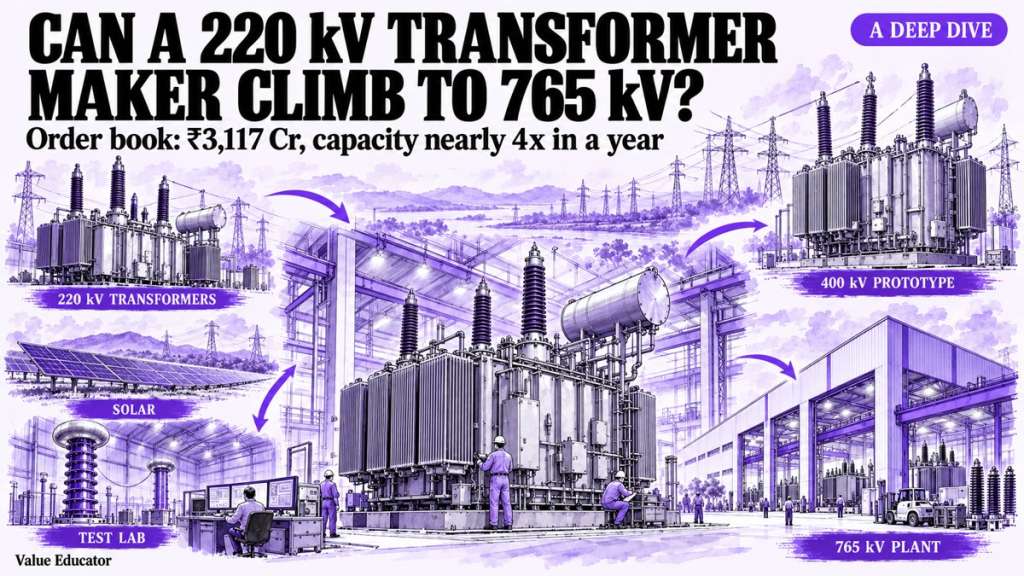
Atlanta Electricals: Capacity Nearly Quadrupled in a Year
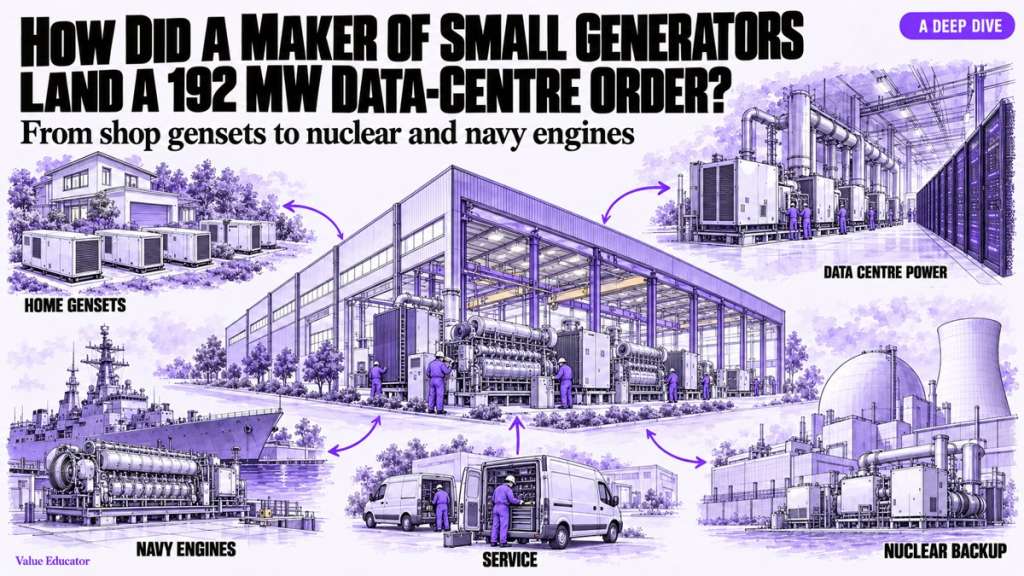
Kirloskar Oil Engines: Data Centres, Nuclear and the Navy
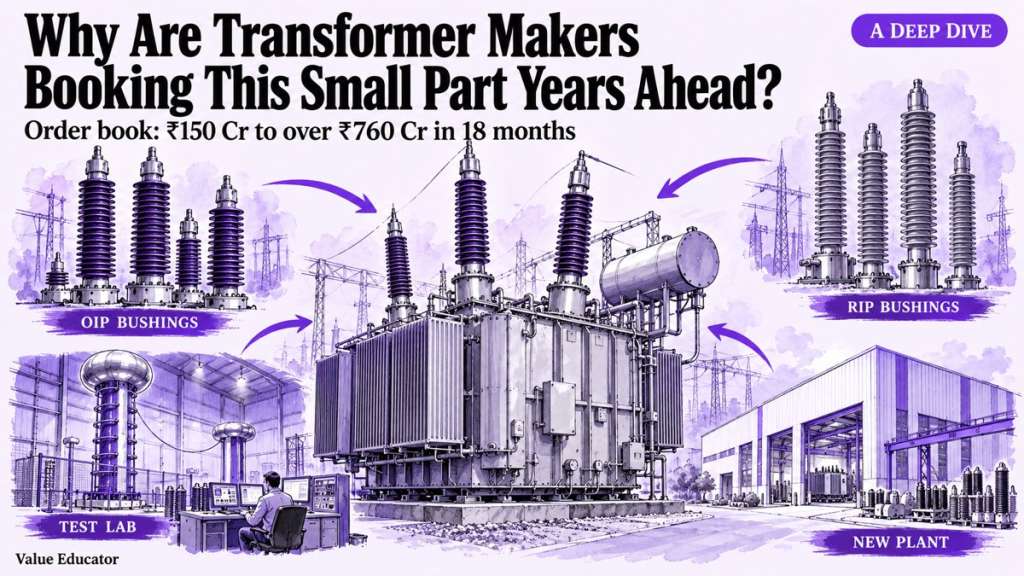
Yash Highvoltage: Bushing Maker With ₹760 Cr of Orders
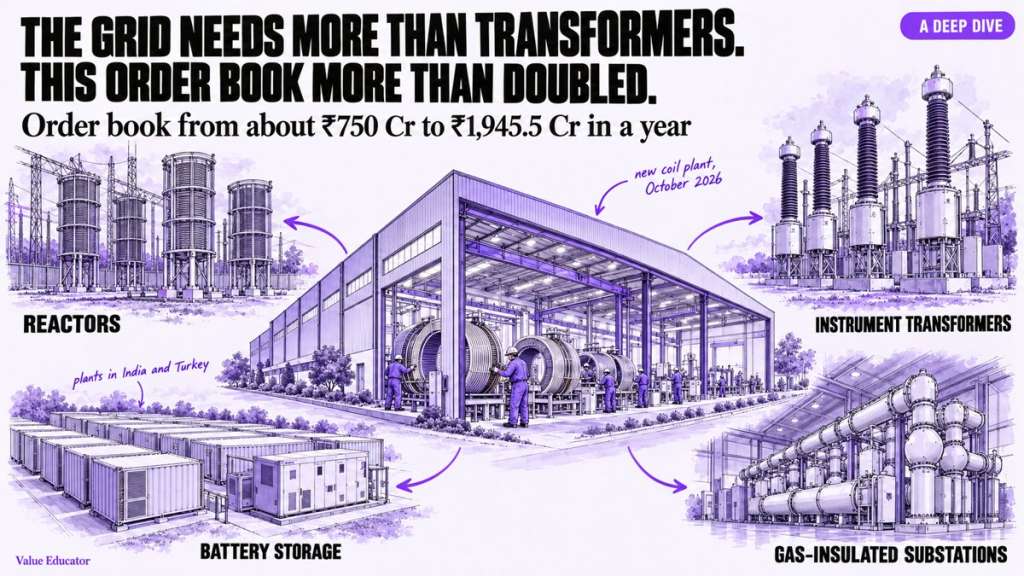
Quality Power: Reactor Maker With a ₹1,945.5 Cr Order Book
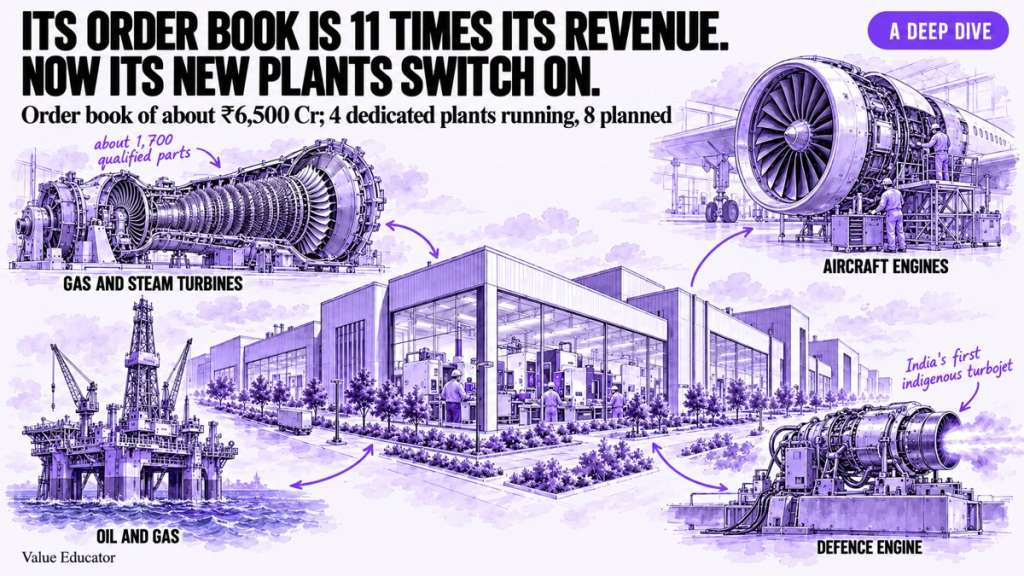
Azad Engineering: Turbine Blades, Jet Engines and Orders
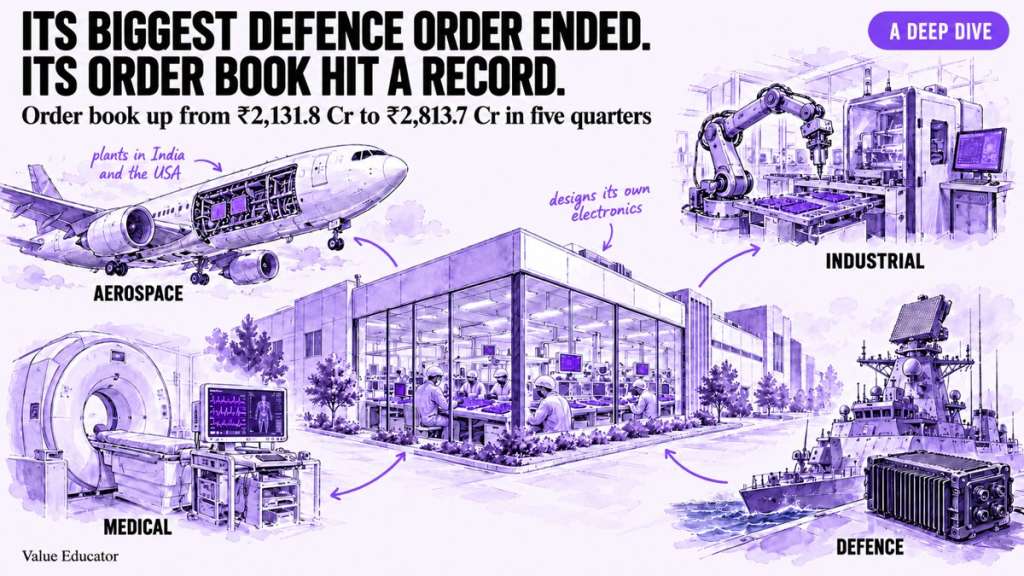
Cyient DLM: Aircraft Electronics and a Record Order Book
Explore our Products
Research Framework
Emerging Titans
Combination of quantitative analysis, industry tailwinds, and management assessment - SPRINT investment philosophy
Tiny Titans
Heavy emphasis on scuttlebutt research, plant visits, and early on-ground signals



Modern Warfare to Multibaggers
Key Trends. Strategic Shifts. Opportunities Ahead.
Don't Miss This Exclusive Webinar!
Join Value Educator to decode the key trends shaping India's defence sector and learn how to identify tomorrow's potential leaders in the space.
- In-depth research on India's defence sector
- Live Q&A session
- Actionable takeaways for long-term investors

 Orders
 Subscription
 Share with friends


Required Details
₹23999.00
(12 month subscription)
As per SEBI regulations, all users are mandated to complete the KYC that is validated for 1 year. Post payment, you will be redirected to the KYC screen


No comments yet. Be the first to comment!