
Undervalued Stocks by P/E, P/B and ROE

Most investors look for undervalued stocks because they want certainty. A low PE feels safe. A cheap PB feels logical. A high ROE feels like proof that the business is sound. Numbers offer comfort when outcomes are uncertain.
As Howard Marks puts it,
“The biggest investing errors come not from factors that are informational or analytical, but from those that are psychological.”
That comfort is also why many “undervalued” stocks never reward patience. They look cheap for a reason, and they stay that way while time quietly passes.

Real undervaluation rarely feels reassuring. It appears when numbers look weak for a while, headlines turn cautious, and confidence fades — even as the business underneath begins to repair itself. This is the phase that tests patience, creates doubt, and feels easy to ignore. It is also where long-term returns usually take shape.
What follows is a look at two very different undervaluation stories. One where low valuation reflects short-term pain and temporary pressure on fundamentals, as seen in CSB Bank. And another where low valuation exists simply because steady quality remains under-followed and unnoticed, as in Shilchar Technologies.
This is not a stock-tips list. There are no quick conclusions here. What follows is a framework-driven way to think about valuation versus reality — where PE, PB, and ROE are tools to ask better questions, not shortcuts to easy answers.
What “Undervalued” Actually Means
Before looking at any stock, the thinking needs to be anchored — because most valuation mistakes don’t come from bad math. They come from bad assumptions. A low PE does not automatically mean a stock is undervalued. A low PB does not mean the business is broken. And a high ROE, on its own, does not guarantee long-term quality. Numbers are records of what has already happened. They say very little about what is changing.Valuation only starts to matter when it is paired with context. You have to ask whether earnings reflect normalised conditions or a temporary distortion. Whether the issue hurting the business is short-term or structural. Whether the balance sheet has the strength to absorb weak phases. And whether management intent is aligned with long-term value creation rather than short-term appearances. Without these filters, ratios feel analytical — but remain shallow.
True undervaluation exists only when the price reflects fear, while the business reflects progress. When the market reacts to visible pain, headlines, and recent numbers, it quietly misses what is improving underneath.
This distinction echoes Warren Buffett’s timeless reminder:
“Price is what you pay. Value is what you get.”
If you want to go deeper into how investors traditionally define value — and where that definition often breaks down — you can read our What is Value Investing? Complete Guide for Beginners.
With that framework in mind, let’s look at the first case — a bank where valuation collapsed much faster than fundamentals: CSB Bank.
CSB Bank — Low PB, Temporary Pain, Optionality Story
Why CSB Looks Cheap on Paper
At first glance, CSB Bank looks like a classic valuation trap. The stock has sharply de-rated on a Price-to-Book basis, even though the business itself has continued to grow. The balance sheet has expanded faster than the industry, capital adequacy remains strong, and credit costs have stayed under control. Yet valuation has compressed meaningfully from historical levels, where the bank once traded above 3x book.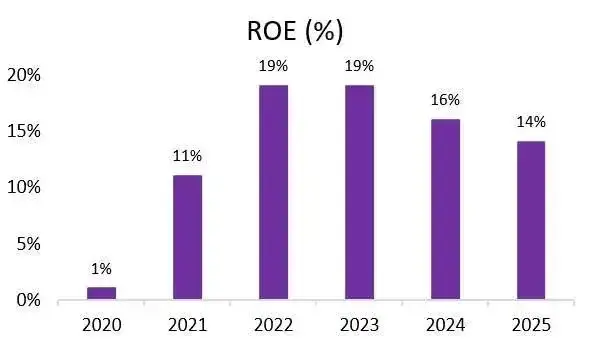
That gap between fundamentals and valuation tells you one thing clearly: the market is not questioning growth — it is pricing fear.
The harder part for investors is not spotting this gap, but sitting through it. When nothing dramatic is happening quarter after quarter, doubt replaces conviction. Cheap stocks test patience long before they reward it.
Charlie Munger captured this discomfort perfectly:
“The big money is not in the buying or the selling, but in the waiting.”
This phase is less about intelligence and more about emotional discipline. If you struggle during periods when prices move sideways and headlines stay negative, our article on How to Stay Emotionally Strong During Market Crash may help.
The real question, therefore, is not why the stock looks cheap, but what kind of damage the market believes has occurred. Is this permanent impairment, or is it temporary compression that looks ugly in the numbers but is reversible with time?
Understanding whether this fear is justified requires structured analysis, not surface-level ratios. We’ve broken that process down step by step in our guide on How to Analyze a Mid-Cap Company - Complete Framework.
What Actually Went Wrong (Facts, Not Emotion)
The answer lies almost entirely in margins. CSB’s Net Interest Margin compressed from around 4.13% to roughly the mid-3.5% range over recent quarters. For a bank, margin compression is like oxygen loss — even if the balance sheet grows, profitability feels suffocated.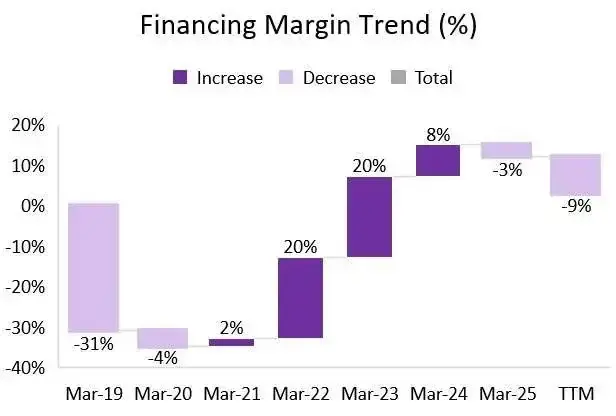
Margins compressed as funding costs rose — a timing issue, not a loan book problem.
Crucially, this compression was not driven by asset-quality deterioration. It came from the liability side. Liquidity tightened across the system, forcing banks to rely more on higher-cost wholesale deposits. CSB also carried excess low-yield liquidity for a few quarters and faced negative carry during the interest-rate transition phase. In simple terms, money became expensive before loan yields could fully reprice.
Management has repeatedly clarified in earnings calls that this was a funding and timing issue — not a loan-book problem. That distinction matters more than any ratio.
Macro Link: Why This Phase Is Likely Temporary
Margin pain rarely exists in isolation. It moves with the interest-rate cycle. India is now closer to a peak-rate or early rate-cut environment than a tightening phase, and system liquidity has already begun to normalise. This matters because margin pressure created by funding stress tends to reverse once rates stabilise.As conditions ease, three things usually happen for banks like CSB Bank. The cost of funds softens first. Negative carry reduces as excess liquidity starts earning better yields. And incremental loan yields begin to improve with a lag. Importantly, banks are typically re-rated before margins fully recover — not after. Markets price direction, not confirmation.
Seen through this lens, the current NIM compression looks cyclical rather than structural. It reflects timing and macro conditions, not a permanent loss of earning power.
Asset Quality: The Silent Strength
This is where the market’s fear narrative begins to weaken. Despite all the noise around margins, CSB’s asset quality has remained resilient. Credit costs are still below 1%. Slippages have appeared, but they are manageable and largely concentrated in personal loans — an industry-wide issue rather than a bank-specific breakdown.There is no evidence of large corporate loan stress or sudden balance-sheet shocks. Provision coverage has steadily improved, and the bank continues to carry additional buffers above regulatory requirements. This quiet consistency matters more than quarterly fluctuations.
If asset quality were genuinely deteriorating, the valuation collapse would be justified. But credit discipline has remained intact — quietly and without drawing attention. That is often how strength looks before confidence returns.
Operating Leverage & the Scale Story
The most under-appreciated part of CSB Bank’s story lies in operating leverage. Over the last few years, the bank has transitioned from being largely Kerala-focused to building a pan-India branch network. That expansion phase naturally pushed the cost-to-income ratio higher, making near-term profitability look weaker than the underlying progress.Now, scale benefits are beginning to surface. The bank is operating in a 27–30% growth phase, and management has guided toward cost-to-income improving to around ~60% in the near term, with an aspirational glide path toward ~50% over the longer run. This is the uncomfortable middle phase — where costs are already incurred, but benefits are not yet fully visible.
For banks, every percentage-point reduction in cost-to-income directly lifts ROE. This is how banking franchises compound in reality — not through excitement or sudden re-rating, but through operating leverage quietly kicking in while most investors lose interest.
Management Intent & Skin in the Game
Rating stories fail without management credibility. CSB scores well on this front. The promoter has consistently demonstrated long-term commitment, and the presence of patient investors like Manish Pabrai reinforces alignment rather than short-termism. More importantly, management communication has remained measured even during weaker phases.Management has articulated a clear aspiration of mid-teen ROA and ROE over time. A simple math anchor helps frame this. At roughly 15% ROE, CSB’s profit potential moves toward ₹680–690 crore. The current valuation does not price this outcome. That gap is not a promise — it is optionality, available only if execution continues and patience holds.
Risk Factors (What Could Go Wrong)
The opportunity in CSB Bank exists because the market is pricing near-term pain. That also means the risks are visible — and need to be acknowledged clearly.The primary risk lies in margins. If system liquidity remains tight for longer than expected, funding costs may stay elevated and Net Interest Margins could remain under pressure. In that scenario, the recovery in profitability would be slower, delaying any meaningful re-rating.
A second risk comes from the retail book. While current slippages are manageable and largely industry-wide, a sharper deterioration in retail asset quality could push credit costs higher and keep ROE stuck below 10% for longer.
There is also execution risk. Operating leverage works both ways. If scale benefits fail to materialise as planned, cost-to-income may remain elevated, limiting the improvement in returns.
If these risks play out together, valuation may not re-rate meaningfully, and the stock could drift toward ~1.5x book. Returns in such a scenario would be driven more by time and earnings grind than by valuation expansion.
Being explicit about these risks does not weaken the thesis — it strengthens it. Good investments are not built on certainty. They are built on understanding what can go wrong and judging whether the downside is survivable.
CSB Bank remains a case where valuation reflects near-term pain, not a broken business.
The next stock is different. There, valuation reflects lack of attention — not stress.
Shilchar Technologies Ltd— Sub-20 PE, Quiet Quality
Why Shilchar Even Appears in This List
At a time when most quality industrial companies trade at rich multiples, Shilchar Technologies quietly sits at a sub-20 PE. That, by itself, would normally raise suspicion. But unlike many stocks that look cheap, this valuation is not the result of collapsing earnings, balance-sheet stress, or a fading business model.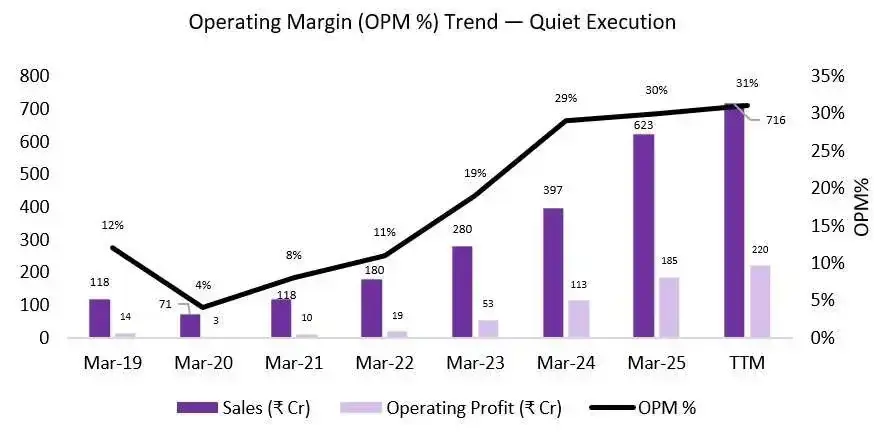
Shilchar combines a strong ROE profile, a clean and largely debt-free balance sheet, and a long record of consistent execution. There is no cyclical collapse here, no sharp earnings drawdown, and no rescue narrative waiting to play out. This is an under-followed compounder — not because the business is weak, but because it is steady, predictable, and largely invisible.
Markets tend to reward drama before discipline. Businesses that improve quietly often remain ignored until the numbers become too obvious to dismiss.
That bias is why Peter Lynch once observed:
“The stock market is filled with individuals who know the price of everything, but the value of nothing.”
Business Snapshot
Shilchar manufactures power and distribution transformers, supplying critical equipment used across power transmission, renewable energy projects, and industrial capex. Its products sit at an unglamorous but essential point in the energy value chain, converting, stepping up, and distributing electricity reliably.The company serves domestic utilities, renewable energy developers, and industrial customers, while also maintaining a meaningful export presence across multiple geographies. This mix reduces dependence on any single cycle and provides stability across demand phases. Nothing here looks exciting on the surface, and that is precisely why it tends to be overlooked.
Macro Tailwind: The Power Capex Cycle
The real strength in Shilchar’s story comes from the macro backdrop. India’s power demand is rising structurally, not cyclically. Renewable capacity additions continue to accelerate, grid strengthening has become unavoidable, and power infrastructure is entering a multi-year investment phase.We’ve explored this broader theme in detail — including policy, capex cycles, and demand visibility — in our article on Power Sector Stocks in India 2026: List by Value Chain
Transformers are non-discretionary assets. They are required whether demand grows quickly or slowly, and they operate on long replacement cycles. Importantly, transformer manufacturing is capacity-constrained — meaningful additions take time, approvals, and execution discipline.
The key insight is simple but powerful: this is not a one-year capex cycle driven by sentiment. It is a long-duration infrastructure requirement driven by energy transition and grid modernisation. Shilchar sits directly in that path, doing essential work without attracting much attention.
Why Valuation Hasn’t Expanded Yet
If the business quality is visible, why hasn’t valuation followed? The answer lies more in perception than performance.Shilchar is still viewed through an SME or microcap lens by many institutions. Liquidity remains limited, sell-side coverage is thin, and the company does not lend itself to flashy narratives. There are no dramatic turnarounds, no sudden margin spikes, and no aggressive guidance theatrics to attract short-term attention.
What exists instead is steadier — and easier to overlook. Earnings visibility has improved, order book strength remains healthy, and operating metrics have stayed stable across the cycle. Valuation has not expanded because attention has not arrived, not because fundamentals have weakened.
Markets usually notice quiet progress late, after the numbers leave little room for doubt.
ROE Quality vs ROE Hype
This is where Shilchar clearly separates itself from many optically cheap industrial names. Its ROE is driven by execution, capacity utilisation, and operating discipline. It is not inflated by leverage, accounting optics, or one-off margin spikes.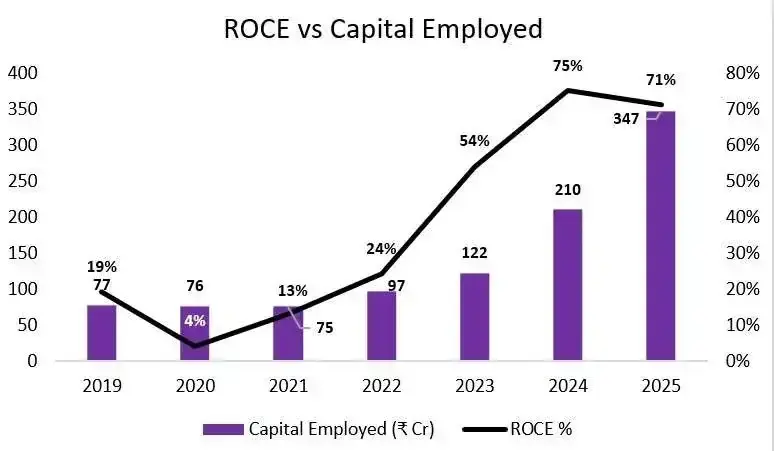
Expansion has largely been funded through internal accruals. Profitability metrics have remained strong, and balance-sheet strength has been preserved even as capacity has scaled. This matters because ROE earned without financial stress tends to endure.
That is what makes a sub-20 PE meaningful here. The multiple reflects neglect, not deception.
Risk Factors (Do Not Ignore These)
This is not a risk-free story. Execution delays can affect delivery timelines. Raw material price volatility can pressure margins in the short term. Customer concentration and working-capital cycles require continuous monitoring as the business scales.However, the balance sheet provides a cushion. Low leverage and internal funding capacity allow the company to absorb volatility without compromising long-term plans. These are real risks — but they are manageable, not existential.
Shilchar Technologies is undervalued not because something is broken, but because something is boring.
And in markets, boring quality often compounds quietly before it gets noticed.
CSB Bank is cheap because the market is pricing fear from temporary pain.
Shilchar is cheap because the market hasn’t bothered to look closely yet.
Two very different reasons. One common lesson.
Closing Section: Two Stocks, One Lesson
CSB Bank and Shilchar Technologies show why undervaluation is never a single idea. CSB looks cheap because near-term numbers reflect fear from temporary pain. Shilchar looks cheap because steady execution has gone largely unnoticed. The businesses are different, but the lesson is the same.PE, PB, and ROE do not tell you what to buy. They tell you where to look more carefully. They point to situations where the market may be misreading time, discomfort, or boredom. Real returns are not created by spotting low ratios early. They come from understanding why a stock is cheap — and whether that reason is likely to change.

Howard Marks often summed this up simply:
“Markets reward patience far more than intelligence.”
Valuation works best when it feels uncomfortable. When a stock feels obviously cheap, the opportunity is usually already gone.
Before you move on, pause and apply this framework once.
Look at a stock you already own — or one that currently looks “cheap” on PE, PB, or ROE. Ask a single question: Is the market pricing temporary pain, quiet progress, or something permanently broken?
If you want to go deeper into spotting that difference early, our Multibagger Framework: A Step-by-Step Guide to Finding 10x Stocks breaks down how long-term wealth is actually built — not by chasing ratios, but by tracking change.
Explore our Products
Research Framework

Emerging Titans
Combination of quantitative analysis, industry tailwinds, and management assessment - SPRINT investment philosophy

Tiny Titans
Heavy emphasis on scuttlebutt research, plant visits, and early on-ground signals
FAQs
What are fundamentally strong but undervalued stocks in India?
+Fundamentally strong but undervalued stocks are businesses where the balance sheet, cash flows, and execution remain intact, but the market price reflects fear, neglect, or temporary stress. These stocks usually look uncomfortable — numbers may appear weak for a period, headlines may be cautious, and sentiment may be low.
What makes them interesting is not that they are cheap, but why they are cheap. Strength shows up in resilience: the ability to survive weak phases without damaging the core business. Undervaluation exists only when price reflects anxiety, while fundamentals quietly stabilise or improve.
How do you identify undervalued stocks using PE, PB, and ROE?
+PE, PB, and ROE are not answers — they are filters.
A low PE tells you earnings are not being trusted.
A low PB tells you returns on capital are under question.
A high ROE tells you the business has earned well — at least historically.
The real work begins after that. You have to understand whether earnings are normalised or distorted, whether problems are temporary or structural, and whether returns are supported by execution or leverage. These ratios help you decide where to investigate, not what to buy.
Are low PE, high ROE stocks always good for long-term investing?
+No. Some of the worst long-term investments look excellent on PE and ROE screens for short periods.
High ROE can come from cycles, leverage, or one good year. Low PE can reflect permanent damage rather than opportunity. Long-term investing works when returns are supported by predictability, balance-sheet strength, and repeatable execution, not just attractive ratios at one point in time.
The question is not whether ROE is high today, but whether it can survive when conditions turn less favourable.
Why do fundamentally strong stocks remain undervalued for years?
+Because markets are impatient, improvement is usually slow.
Businesses fix themselves gradually — costs come down quietly, balance sheets heal slowly, and trust rebuilds over time. None of this creates excitement. As a result, valuations often stay compressed long after fundamentals begin improving.
This is where most investors lose interest. Undervaluation tests patience more than intelligence. Stocks are often re-rated only after the improvement becomes obvious — by which point much of the opportunity has already passed.
How should long-term investors approach undervalued stocks?
+By treating them as investigations, not bets.
Start with valuation signals, but spend most of your time understanding the reason behind them. Track whether the issue hurting the stock is changing, stabilising, or worsening. Watch balance sheets more than prices. Look for consistency rather than excitement.
Long-term returns rarely come from being early on cheap stocks. They come from being patient while the gap between perception and reality slowly closes.

High growth stock specialist, Value Educator
Shashank Mahajan is an equity research professional with over 12 years of experience in identifying high-potential SME and micro-cap stocks at an early stage. He follows a rigorous scuttlebutt research–driven approach, combining on-ground insights with deep financial analysis. Shashank specializes in uncovering under-researched and under-owned companies with strong management quality and long-term growth potential. Through disciplined research and early identification, he focuses on spotting tomorrow’s market leaders before they enter the mainstream investor radar.

Glenmark: The USD 700 Mn Cancer Deal and Its Brands

Pharma Stocks in India 2026: Generics, APIs and CDMOs

Granules India: From Paracetamol to a 65% Gross Margin

Natco Pharma: After Revlimid, 29 Patent Challenges

Shilpa Medicare: Cancer APIs, Films and Biosimilars

Alembic Pharma: US Plants Pay Back, Margin Hits 22.2%
Explore our Products
Research Framework
Emerging Titans
Combination of quantitative analysis, industry tailwinds, and management assessment - SPRINT investment philosophy
Tiny Titans
Heavy emphasis on scuttlebutt research, plant visits, and early on-ground signals



Modern Warfare to Multibaggers
Key Trends. Strategic Shifts. Opportunities Ahead.
Today at 7:00 PM IST. Room opens 30 minutes before.
Don't Miss This Exclusive Webinar!
Join Value Educator to decode the key trends shaping India's defence sector and learn how to identify tomorrow's potential leaders in the space.
- In-depth research on India's defence sector
- Live Q&A session
- Actionable takeaways for long-term investors

 Orders
 Subscription
 Share with friends


Required Details
₹23999.00
(12 month subscription)
As per SEBI regulations, all users are mandated to complete the KYC that is validated for 1 year. Post payment, you will be redirected to the KYC screen


No comments yet. Be the first to comment!