
Gravita India: Recycling for the Battery Age

The Global Recycling Opportunity
In the background of global growth, a quiet transformation is reducing the very idea of waste. A redesign is being undertaken across factory floors, in government corridors, investment boardrooms, and so on: a transformation of a linear take-make-dispose economy into a circular one, whereby material goes back into the production cycle as reused, processed, and reintroduced material. This transformation is not a style or policy trial- it is motivated by the cruel arithmetic of resource shortage, energy prices and compliance responsibility.
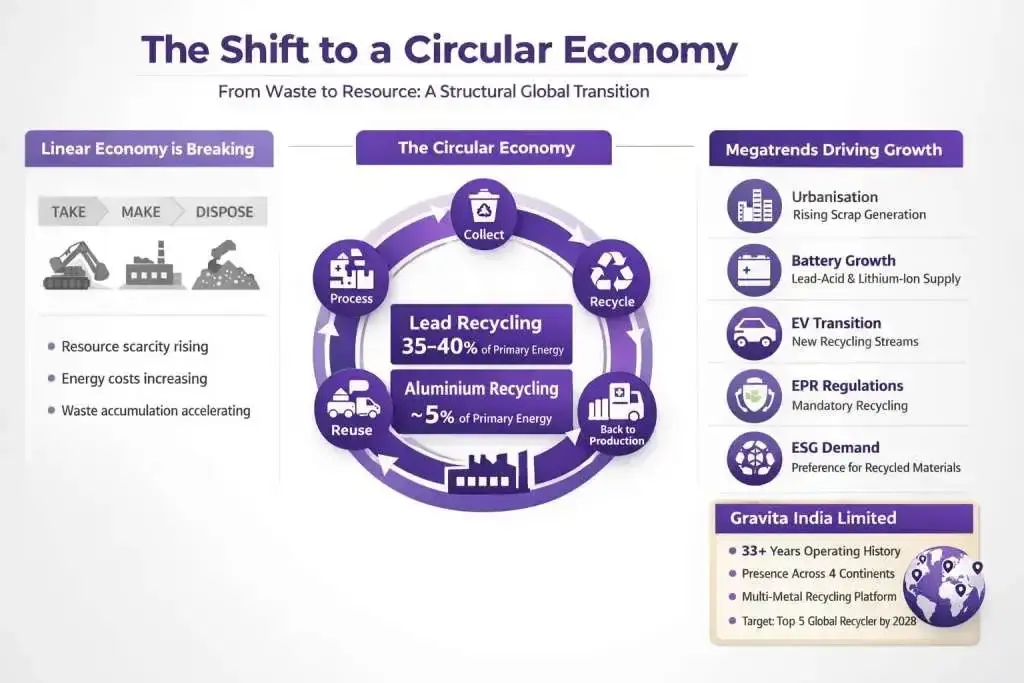
Just take the economics of energy. Primary lead is created by using lead ore, which requires 35-40 %. of the energy used to create the recycled lead. Recycled aluminium requires only an estimated 5 % of the primary energy. These efficiency benefits are directly reflected in a cost benefit to the recyclers as well as an environmental benefit that is gaining growing policy rewards by governments. The economic argument in favor of recycling becomes better each year as the industrial economies grow bigger, and the resources available grow smaller.
A number of megatrends are coming together to enhance this opportunity. First, a tsunami of post-consumer scrap, used batteries, old cars and trucks, plastic wrappings and aluminium castings is being produced in developing nations in large scale, and the local recycling facilities cannot keep up. Second, the spread of lead-acid batteries in automotive and industrial is also offering self-regenerating recyclable feedstock around the globe. Third, the emergence of EVs is also pushing off part of the lead-acid market, and forming a whole new type of lithium-ion battery waste that will require recovery and recycling in large quantities. Fourth, Extended Producer Responsibility (EPR) systems in Asia, Europe, and the Americas are mandating manufacturers to assume responsibility of how their products should be disposed at the end of their useful life. And fifth, an increasing trend among OEMs and institutional purchasers toward sustainably-sourced materials is generating demand pull on recycled inputs as an ESG measure.
If you want to understand how macro forces reshape markets, read: Why Power Sector Stocks are Booming – Data & Trend Analysis
Into this megatrend, one Indian company has quietly built one of the most sophisticated multi-metal recycling platforms in the developing world, Gravita India Limited, a Jaipur-based recycler with 33 years of operational history, operations across 4 continents, and an ambitious roadmap to become one of the top five global recycling companies by 2028.
The Origin Story of Gravita
The story Gravita starts in 1992, Jaipur, Rajasthan. A first-generation entrepreneur who has a realistic idea of material flows is Rajat Agrawal, who began his business as a small lead recycling company. The company was not glamorous but possessed a structural rationale that Agrawal initially appreciated, namely that as so long as industrial economies relied on lead-acid batteries, someone had to collect used ones and recycle them, and whoever developed the best net of doing so would have a sustainable and repeatable business.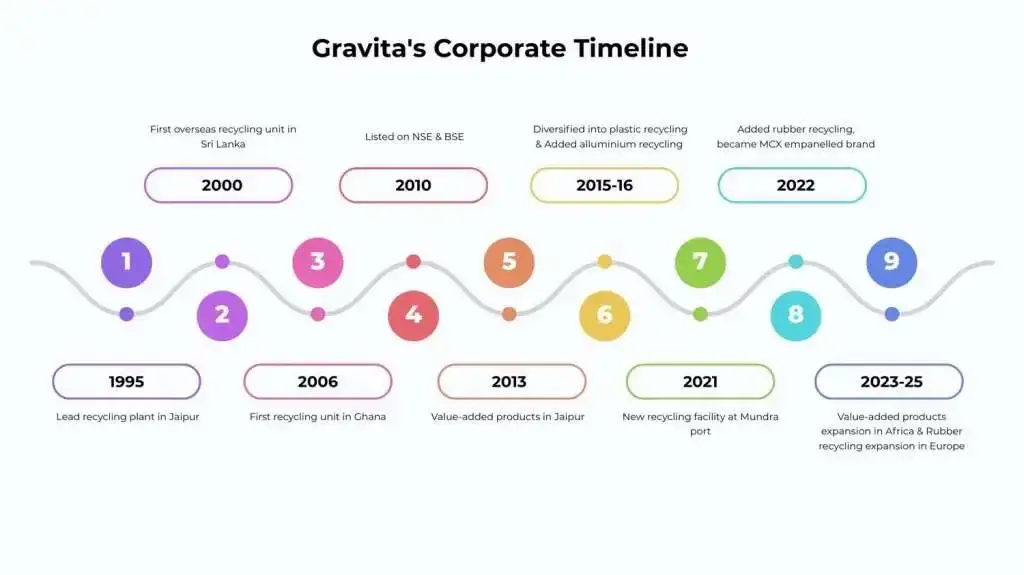
The initial years were devoted to the mastering of the basics, metallurgy, scraps acquisition, quality assurance and customer relations with battery manufacturers. By 1995 a lead recycling plant had been created in Jaipur. In 2000, the company achieved a milestone when it set up its first overseas recycling plant in Sri Lanka, which would eventually turn into a strategic motto: go where the scrap is. Ghana came second in 2006, allowing Gravita to get first-mover advantage in West Africa, an unconquered continent with many informal scrap streams and little organised recycling capacity. In 2010 the company was listed on the NSE and the BSE making available capital markets and visibility.
The next ten years was marked by a planned vertical and geographic diversification carried out by Gravita. In 2013, value-added products, such as customised alloys, lead oxide, lead sheets, were launched, which shifted the company to the value chain. In 2015, 2016 and 2022 it introduced plastic, aluminium and rubber recycling. Processing plants were set up in Senegal, Tanzania, Mozambique, Togo and Dominican Republic.
In 2021, a new plant at Mundra port (Gujarat) was commissioned to receive imported scrap. The company has launched 2023 value-added products of African operations. The latest case is the establishment of rubber recycling operation in Romania in the year 2025 under the Gravita Europe S.R.L- the first entry of the company into the European market. Reflecting on the fact 33 years later in 2025, Gravita has 13 manufacturing plants and 4 recycling verticals in 4 continents
The Business Model
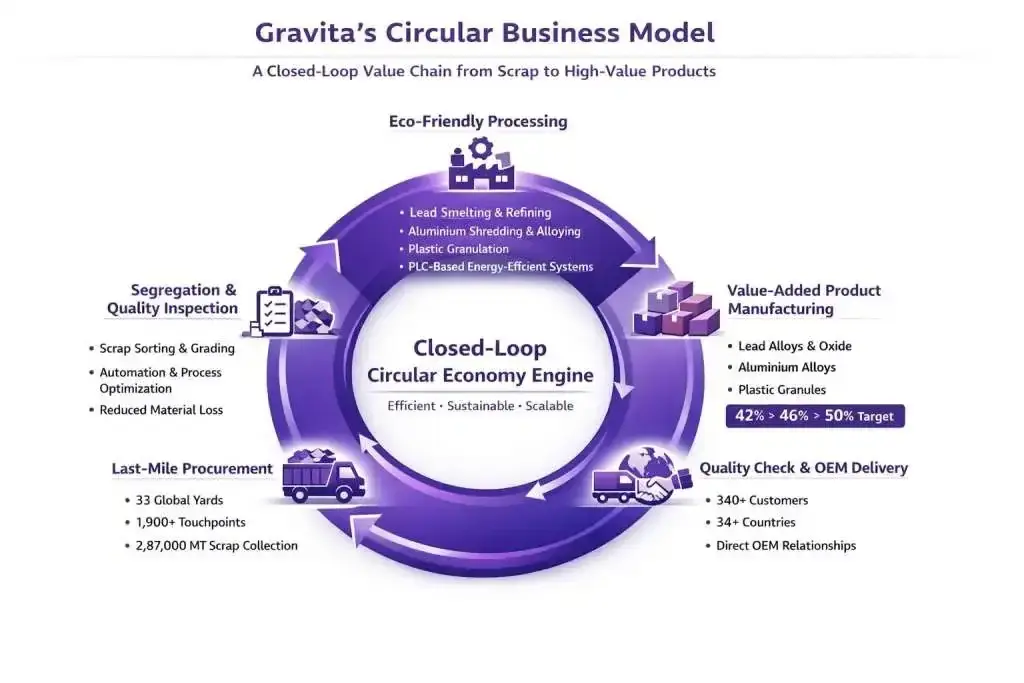
Gravita operates what it calls a Sustainable Circular Business Model — a five-step value chain that begins with scrap collection and ends with the delivery of high-quality, customised recycled products to OEM customers.
The cycle begins with last-mile procurement. Gravita's global network of 33 own yards, over 1,900 touch points across five geographies, and approximately 2,87,000 MT of annual scrap collection capability ensures it has adequate feedstock at competitive prices. Battery collectors, automotive dealers, scrap aggregators, and OEM buyback programmes all feed into this procurement funnel.
Scrap is then segregated, sorted, and subjected to rigorous quality inspection. This step is critical — inconsistent input quality leads to processing inefficiency and output variability. Gravita's in-house project division continuously works to improve segregation processes, introduce automation, and reduce material loss during sorting.
Processing is where Gravita's technical moat is most visible. The company operates ISO 14001:2015 certified smelting and refining furnaces for lead, shredding and alloying lines for aluminium, and granulation systems for plastic. PLC-based control and monitoring systems enable precise, energy-efficient, and consistent processing. The in-house project division also designs and builds the company's own recycling equipment, maintaining a proprietary process technology edge that is shared with third-party clients through the Turnkey Solutions business.
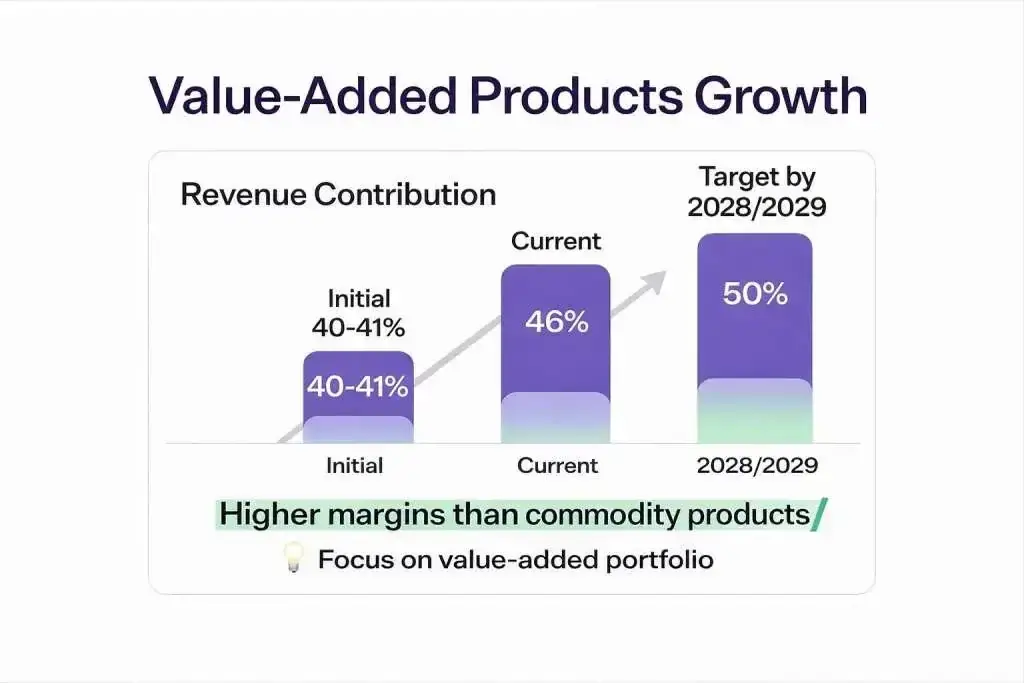
The fourth step is value-added product manufacturing. Rather than selling commodity metal ingots, Gravita produces customised lead alloys to OEM specifications, lead oxide for battery manufacturing, aluminium alloys for die casting, and plastic granules for specific packaging and industrial applications. This step is where margins are earned and differentiated. The value-added product share of revenue has risen from 42% in FY22 to 46% in FY25 and is targeted at 50% by FY28.
To understand how value chains drive profitability, read: How to Read a Balance Sheet Like a Professional Investor
The final step is quality-checked delivery to a diversified customer base of 340+ clients across 34+ countries. By selling directly to OEMs — battery makers like Amara Raja and Exide, cable companies, auto-component manufacturers — rather than through intermediaries, Gravita captures higher realisations and builds sticky, long-term relationships.
Understanding the Business
Gravita's business can be understood through four primary recycling verticals, each at a different stage of scale, maturity, and margin profile, plus a high-value Turnkey Solutions division that is often underappreciated by the market.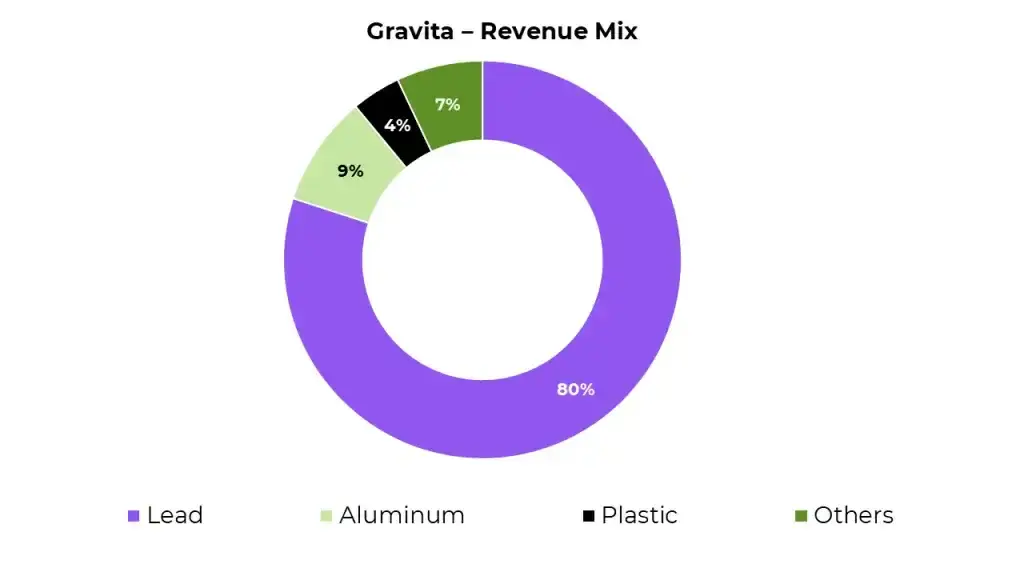
Lead Recycling — The Anchor
Lead is Gravita's oldest, largest, and most profitable segment. The feedstock is spent lead-acid batteries (SLABs), collected from automotive OEMs, battery retailers, and institutional clients through the company's procurement network. These are smelted and refined to produce secondary lead, which is then sold as ingots, customised alloys, lead oxide (used in new battery manufacturing), red lead (used in industrial applications), and lead sheets (for radiation shielding and construction). Lead volumes in Q3 FY26 stood at approximately 46,269 metric tonnes, with consistent year-on-year and sequential growth. Lead processing margins in Q3 FY26 were Rs 23,000 per MT.Aluminium Recycling — High Margin, Near-Term Growth
Aluminium is Gravita's second segment and arguably its highest potential margin business. The company processes aluminium scrap — from automotive castings, cables, and industrial sources — into customised die-casting aluminium alloys (primarily ADC-12 grade) supplied to automotive and engineering OEMs. Aluminium volumes were approximately 3,500 MT in Q3 FY26, temporarily pressured as scrap aggregators withheld inventory during a period of rising aluminium prices. Aluminium processing margins were Rs 14,215 per MT in Q3 FY26. A significant catalyst — MCX aluminium alloy trading approval — is awaited to enable domestic hedging and accelerate domestic scale-up.Plastic Recycling — Patient Capital Building Value
Plastic recycling is the youngest and most strategically interesting of Gravita's established verticals. The company processes plastic scrap into granules and customised compound materials. Q3 FY26 saw a sharp 55% sequential volume rebound to approximately 3,160 MT. The management's strategy here is deliberate: targeting primary packaging applications (which command far better margins than secondary packaging), working with customers like Asian Paints (for recycled plastic buckets) and battery manufacturers (for battery box PP granules), and developing product qualifications over time. Plastic EBITDA per MT was Rs 10,462 in Q3 FY26. This is a slow-build, high-payoff segment.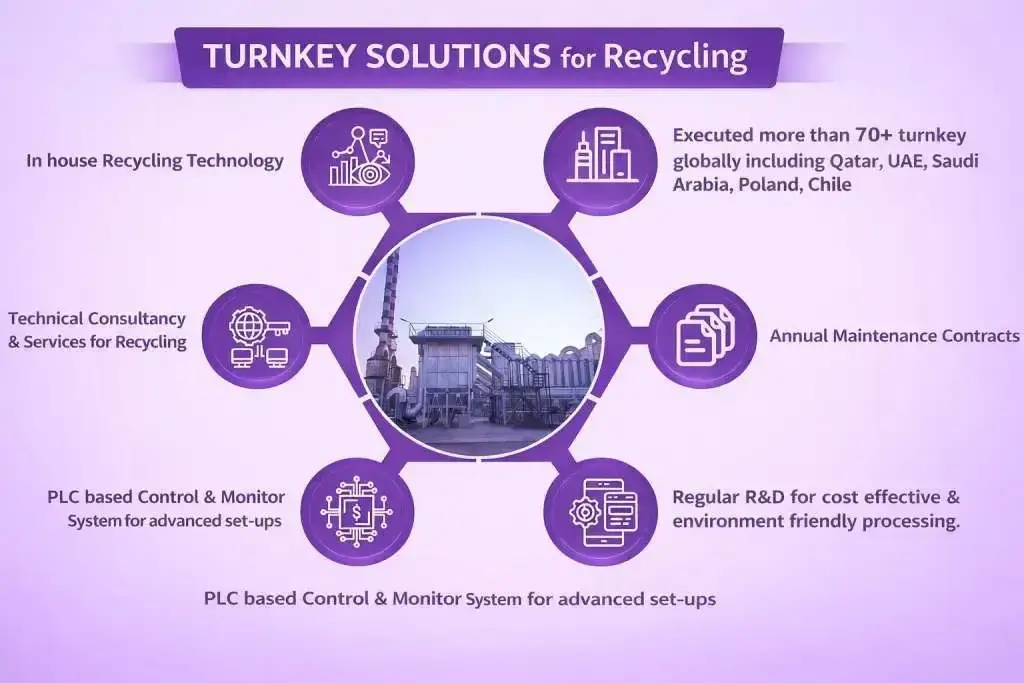
Rubber Recycling and Turnkey Solutions — Optionality
Rubber recycling is Gravita's newest revenue-generating vertical, with a facility in Romania now live and Mundra commissioning expected in Q1 FY27. The Turnkey Solutions division is a unique differentiator — Gravita has executed over 70 turnkey recycling projects globally across countries like Qatar, UAE, Saudi Arabia, Poland, and Chile. This business earns fee income, deepens technical expertise, generates global relationships, and positions Gravita as a knowledge leader in recycling technology rather than just a volume processor.Industry Tailwinds
The macro environment for organised recyclers in India has rarely been as favourable as it is today. A convergence of regulatory reform, structural scrap generation growth, and market formalisation is creating a durable structural tailwind that will compound over the next several years.
Recycling Market Formalisation in India.
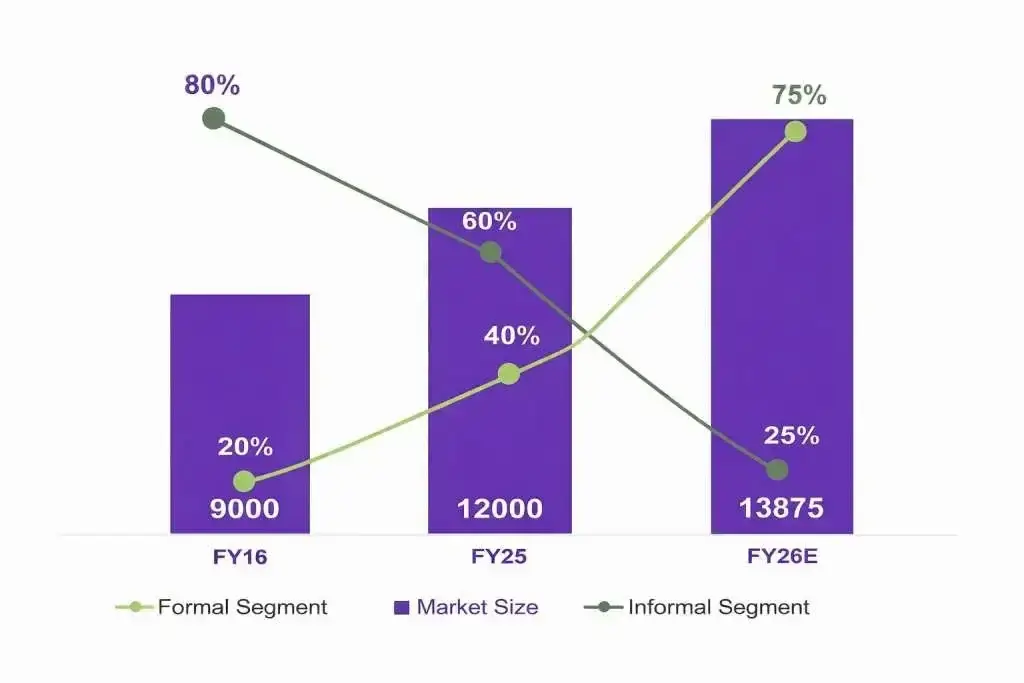
The recycling industry in India is traditionally an informal industry; small unregistered firms that compete by regulatory non-conformance, tax evasion, and low cost. This advantage is systematically deconstructing through three policy interventions. The Battery Waste Management Rules (BWMR) and Extended Producer Responsibility (EPR) system enforce the collection and recycling of battery wastes by the producers. The introduction of the Goods and Services Tax (GST) has introduced scrap transactions as a part of the formal tax base, and this has done away with the cost arbitrage informal players were enjoying. And the Vehicle scrappage Policy is making end-of-life vehicles be directed to the registered dismantlers, and their scrap is channeled to organised scrap recyclers.The resultant impact is a radical market change. The management forecasts that the formal sector has seen its share of the lead recycling market in India increase to 40 % of the market as of FY25 in comparison to about 20 % of the market as of FY16 and this is set to increase by 75 % by FY26E. The overall market has also grown by 3 times up to now (Rs 9,000 crore FY16 and to Rs 12,000 crore FY25 respectively) to be estimated at Rs 13,875 crore by FY26E. To the organised players such as Gravita this is a compounding effect twice: an expanding total market and a share of it that is deposited in the formal channels is increasing.
Battery Demand as a Structural Scrap Generator
Any lead-acid battery that is offered in the market today provides a recycling opportunity 3-5 years in the future. The vehicle population of India is surging at an alarming rate - the sales of cars, two-wheelers, commercial vehicles are all increasing and consequent installed base of lead-acid batteries are also increasing accordingly. This move towards the bigger and more specific batteries used in SUVs and the commercial vehicles is adding to the lead content and consequently raising the scrap value per unit collected. The EPR system establishes a financial and regulatory incentive that makes battery manufacturers interested in sending spent batteries to certified recyclers so that the supply lines can be more predictable and trackable by organised participants.EPR Tightening — Catalysts Ahead
During the 3rd quarterly financial year 2026 earnings call, CEO Yogesh Malhotra mentioned that NITI Aayog had recently provided suggestions to enhance the EPR portal, connect it to the GSTN database and tighten collection regulations under the BWMR. The changes are likely to be introduced through April 1, 2026. Tighter enforcement will reduce leakage to the unorganised sector, increase scrap going through the formal channels, and increase the collection rates on the formal sector. The pan-Indian procurement network that Gravita has, its ILA accreditation, and its OEM relations place the company at the core of all the incremental percentage points of formalisation.“The best way to predict the future is to create it.” — Peter Drucker
Global Procurement Network and Supply Chain
If there is one capability that sets Gravita apart from every peer in the Indian recycling space, it is the depth and global reach of its scrap procurement network. This network represents more than three decades of relationship-building, capital deployment, and local market knowledge — and it would take any new entrant years and hundreds of crores to replicate, if they could replicate it at all.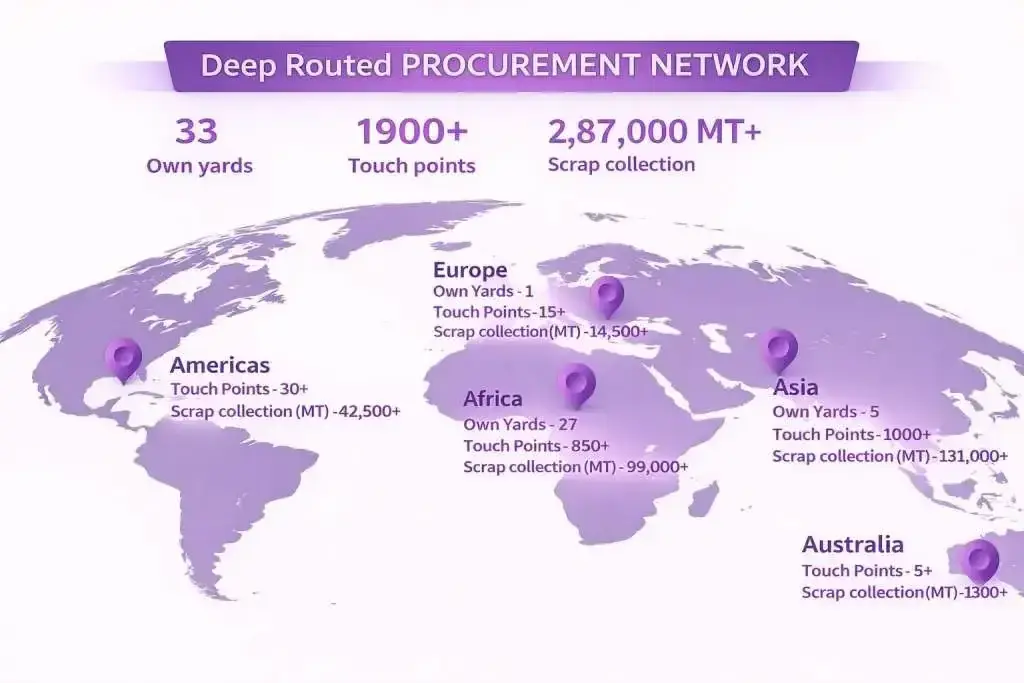
The strategic logic of this global network is elegant: by establishing recycling plants close to sources of scrap generation — particularly in Africa and developing Asia, where scrap is abundant but organised recycling is scarce — Gravita simultaneously reduces logistics costs, secures supply at prices below those available in developed markets, and builds the kind of local knowledge and trust that takes years to develop.
This global footprint also creates operational flexibility that the company actively exploits. When domestic Indian scrap prices are elevated — as they were in Q3 FY26 for aluminium — Gravita can shift sourcing to imported material. When import costs are high, it leans on domestic procurement. In Q3 FY26, the procurement mix was 25% domestic and 75% imported, driven by arbitrage opportunities from African plants; management expects this to normalise to approximately 45% domestic and 55% imported as new Indian capacity comes online.
On the customer side, Gravita's sales network spans 34+ countries, 340+ customers, and approximately 2,03,000 MT of annual product delivery. The Asia-Pacific region (15 countries, 285+ customers) and the Middle East (8 countries, 30+ customers) are the most significant export markets. The company sells approximately 70% directly to OEMs and 30% to traders — a deliberate strategy to maximise price realisation and relationship stickiness.
Barriers to Entry: A Multi-Layered Moat
The recycling industry is not easy to enter, not because of one single hurdle, but because of a combination of structural barriers that reinforce each other. As illustrated above, Gravita's competitive position rests on several structural advantages that interact and reinforce each other, creating a moat that deepens with scale.
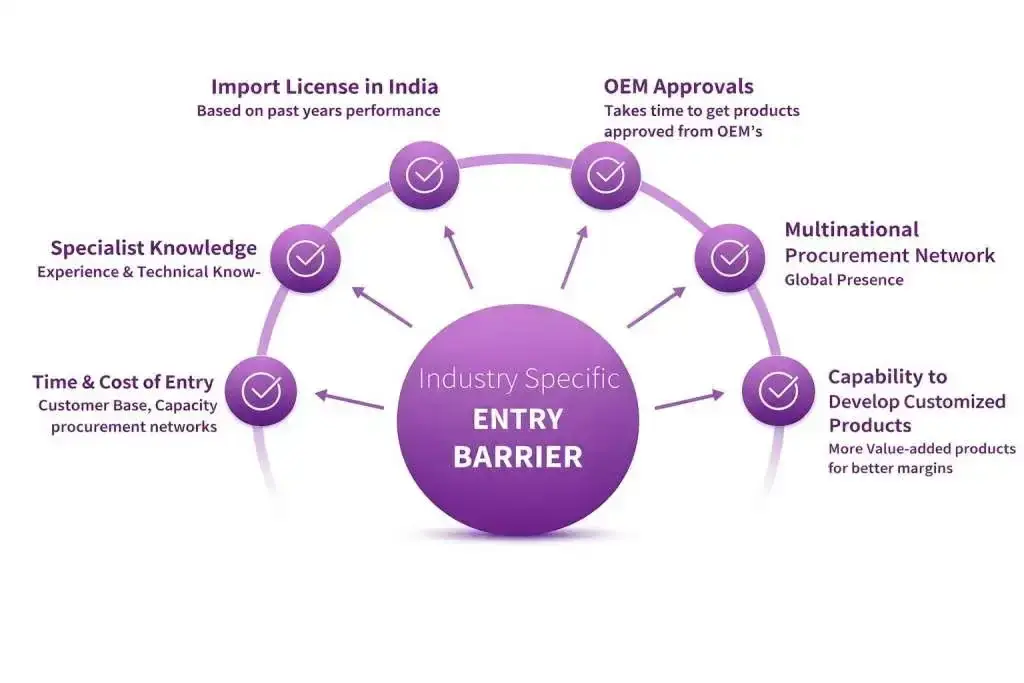
Time & Cost of Entry
Building a recycling business requires far more than setting up capacity. It involves simultaneously developing procurement channels, establishing customer relationships, and achieving operational efficiency.Over the years, Gravita has built:
- A diversified customer base
- Scaled multi-location capacities
- Deep procurement linkages
This ecosystem takes years to develop. Even with capital, new entrants struggle to replicate the same level of integration, utilization, and trust.
Specialist Knowledge
Recycling is a process-driven industry where margins depend on efficiency and consistency. Gravita’s long operating history has enabled it to build deep technical expertise across metals and materials.This includes process optimization, yield improvement, and the ability to handle varying scrap quality. Such knowledge is not easily transferable—it is built over time through execution and learning curves.
Import License in India
Access to raw material, especially imported scrap, is tightly regulated in India. Import licenses are not easily granted and are typically linked to compliance track record and operational history.This creates a structural advantage for established players. Gravita, with its long-standing presence and regulatory compliance, is better positioned to secure and sustain these licenses, ensuring steady raw material access.
Multinational Procurement Flexibility
The ability to source scrap from multiple geographies simultaneously — and to shift procurement between them based on relative price — provides Gravita a procurement cost advantage that pure domestic recyclers cannot match. Africa is a particularly important low-cost sourcing region, and Gravita's long-standing presence there (17+ own yards across five African countries) gives it preferential access.OEM Relationships and Approvals
Getting approved as a supplier to an OEM is a significant and time-consuming barrier to entry. Gravita's partner list includes Exide, Amara Raja, Luminous, Tata Batteries, Livguard, Panasonic, Clarios, Asian Paints, Honda Trading, Toyota Tsusho, TVS, Philips, KEC, Trafigura, Glencore, and Thyssenkrupp, among others. These relationships create captive demand, provide pricing stability, and create switching costs for customers who have invested in qualifying Gravita's products for their manufacturing processes.“The strongest moat is built not in years, but in decades.” — Warren Buffett
Capability to Develop Customized Products
The business is gradually moving beyond basic recycling toward value-added solutions.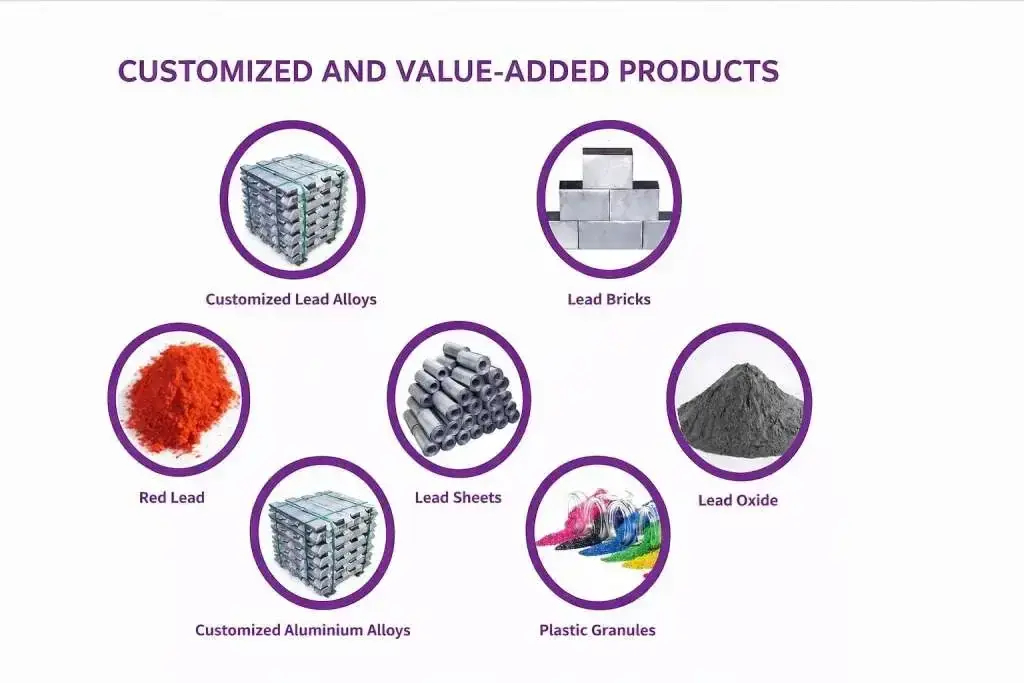
Gravita’s ability to develop customised products enables:
- Higher margins
- Stronger customer relationships
- Differentiation from commoditized players
This capability depends on technical expertise, customer collaboration, and process control. It positions the company as a solutions provider rather than just a recycler.
To understand how strong businesses create durable advantages, read: What is Value Investing? Complete Guide for Beginners.
The Back-to-Back Hedging Mechanism
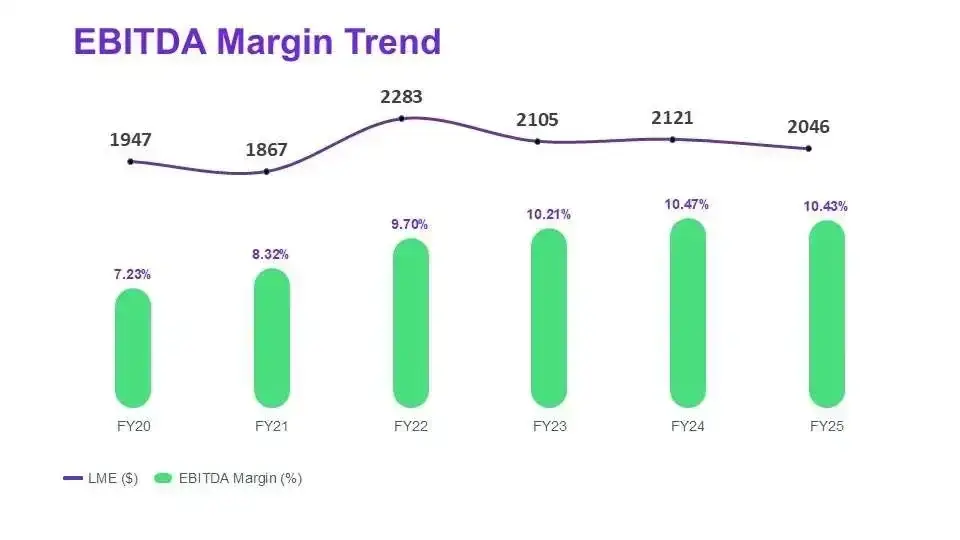
Operating in metals markets means navigating violent commodity price swings. Lead prices on the LME have ranged from under USD 1,800/MT to over USD 2,400/MT in recent years. Aluminium has been similarly volatile. For most recyclers, this commodity exposure is a source of earnings instability. For Gravita, it is effectively neutralised through a sophisticated back-to-back hedging model, operational since June 2016 for pricing and June 2019 for core inventory.
The mechanism works by pricing scrap purchased at the same day's LME rate as the finished product sold. Forward contracts on the LME exchange balance the quantity until final sale. Core inventory is hedged by taking a forward contact on the exchange. The result is that Gravita earns a processing spread — the difference between the scrap purchase price and the finished product sale price, both marked to the same day's LME — and is not exposed to directional metal price moves. As CEO Malhotra explained in the Q3 FY26 call: 'We buy scrap at a discount over LME prices. When prices increase, the absolute price of scrap increases, but the percentage of the scrap remains the same. So the margin between the selling price and the buying price remains intact.
This model has delivered consistent EBITDA margins of 9–10%+ across commodity cycles, as illustrated in the chart below.
Financial Growth Story
Gravita's financial performance over the past five years represents one of the more compelling compounding stories in India's mid-cap manufacturing landscape. The numbers tell a story not just of growth but of improving quality, margins expanding, returns improving, and capital being deployed with increasing efficiency.
Revenue has compounded at approximately 23% annually over five years, growing from Rs 1,410 crore in FY21 to Rs 3,869 crore in FY25. This growth has been operationally broad-based: the India business grew from contributing 33% of revenue in FY21 to 32% in FY25 (with a higher absolute base), while overseas operations have maintained the majority contribution at 68%, reflecting the company's global footprint. In the nine months of FY26, the company delivered 9% year-on-year revenue growth, 15% EBITDA growth, and 32% PAT growth — confirming that margin and profit are outpacing top-line growth.
The profitability trajectory is even more striking. PAT has grown from Rs 52 crore in FY21 to Rs 312 crore in FY25, a five-year CAGR of 57%. This acceleration in profit growth relative to revenue growth reflects three forces working simultaneously: product mix improving toward higher-margin value-added products (from 42% to 46% of revenue), operating leverage from scale, and the stabilising effect of the hedging model on margin consistency.
EBITDA margins have expanded from approximately 7.2% in FY21 to 10.4% in FY25, with Q3 FY26 achieving an adjusted EBITDA margin of 11.41% a new high. Q3 FY26 EBITDA per metric tonne stood at Rs 23,000 for lead, Rs 14,215 for aluminium, and Rs 10,462 for plastic, reflecting the per-unit economics of each segment.
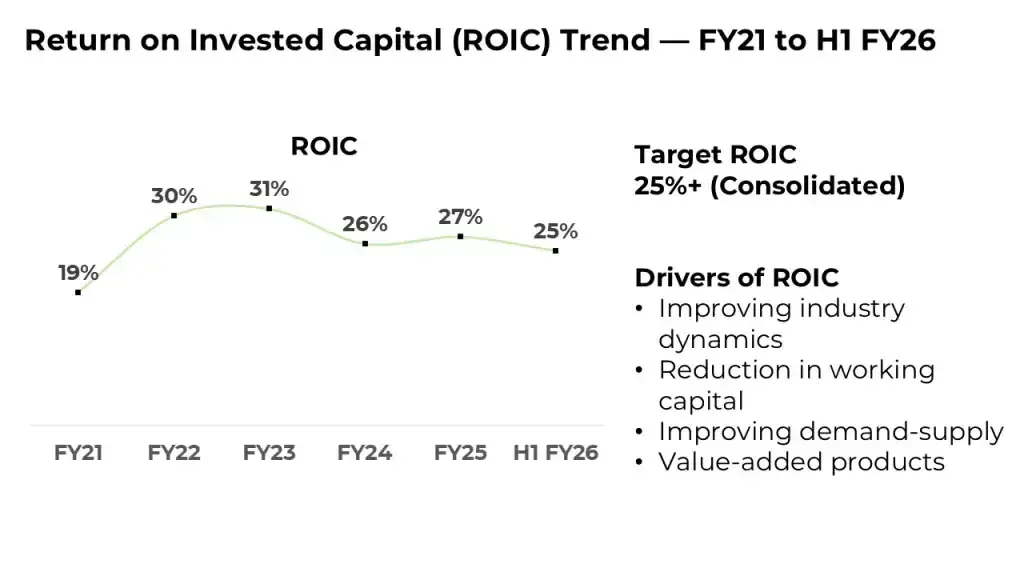
Return on Invested Capital (ROIC) has been the most informative metric of Gravita's capital quality. ROIC has expanded from 19% in FY21 to 27% in FY25 (declining marginally to 25% in H1 FY26 as capital was deployed ahead of capacity expansion). The company targets 25%+ consolidated ROIC on a sustained basis, backed by four drivers: improving industry dynamics, reducing working capital intensity, value-added product mix improvement, and demand-supply tightening in the scrap market. Capital employed has grown from Rs 544 crore in FY21 to Rs 2,375 crore in FY25, reflecting the significant physical infrastructure being built.
Capital Allocation and Management Strategy
One of the more reassuring aspects of investing in Gravita is the clarity and discipline of its capital allocation framework. The company has articulated — and delivered on — a simple, non-negotiable investment filter: every new project, vertical, or geographic expansion must meet a 25% ROCE threshold. This is not a wish list aspiration; it is a binding constraint that shapes the investment pipeline and prevents capital from being deployed on marginal returns.The total CAPEX plan through FY28 amounts to approximately Rs 1,225 crore. Of this, roughly Rs 850 crore is allocated toward strengthening and expanding existing businesses: lead capacity expansion at Mundra (80,000 MT, targeted Q4 FY26) and Jaipur (45,000 MT, targeted Q4 FY26); aluminium and plastic capacity additions (FY27); and geographic expansion across existing markets. The remaining Rs 375 crore is earmarked for entry into new recycling verticals — lithium-ion, steel, paper, and rubber — where early mover positioning carries strategic value.
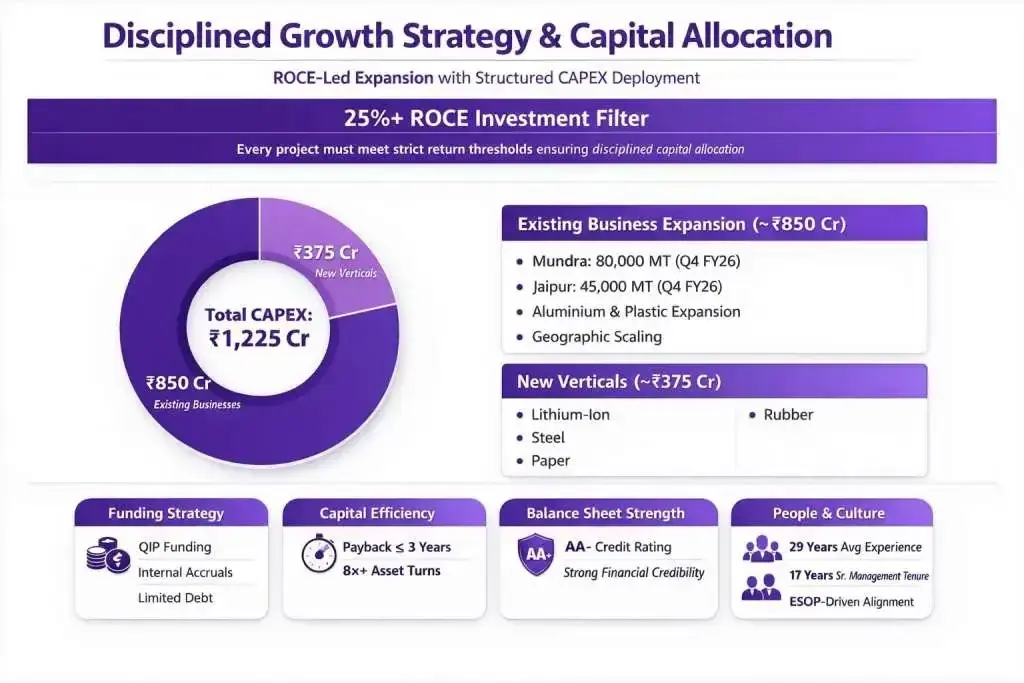
The funding plan is thoughtfully structured. The QIP conducted in a prior year provides initial liquidity. Internal accruals are expected to fund a significant portion of the Rs 1,200 crore in growth CAPEX needed over the next two to three years. The company may take on limited additional debt as required for working capital, estimated at around Rs 1,500 crore as the scale expands. Payback periods for new projects are capped at three years, and the company maintains 8+ asset turns — metrics that confirm capital remains deployed productively rather than lying idle.
For a broader perspective on identifying high-quality capital allocators, read: Top Undervalued Stocks in India Based on PE, PB & ROE
Beyond CAPEX, Gravita's approach to people management reflects a similar long-term orientation. The management team averages 29 years of experience in diversified industries. Average employee tenure at Gravita is 17 years for senior management and 5 years overall — unusually high for a manufacturing company, suggesting a culture of retention and institutional knowledge. Four rounds of ESOPs have been completed, aligning key talent with long-term value creation. All 100% of employees are covered under incentive schemes. The company's AA- credit rating from ICRA and India Ratings provides further comfort on financial credibility.
Here are a few insights from the recent concall.
Addressing Execution Delays with Transparency
Management acknowledged delays in commissioning certain capacities, particularly at the Phagi and Mundra facilities, where operating licenses were pending due to administrative factors. Importantly, these were not positioned as structural bottlenecks but as procedural delays, with approvals expected in the near term.What stood out was the proactive nature of this disclosure. Instead of deflecting or downplaying the issue, management addressed it upfront and provided clarity on timelines. This reflects a level of execution transparency that is often underappreciated but critical in capital-intensive businesses.
Prioritizing Margins Over Revenue
A key discussion point during the call was the relatively muted revenue performance in the quarter despite steady operational progress. Management clarified that this was a conscious outcome of strategic decisions rather than a demand issue.During the quarter, the company adjusted its procurement strategy by routing scrap through India to benefit from arbitrage opportunities. This shift improved EBITDA per tonne but came at the cost of reported consolidated revenue. The procurement mix moved significantly toward imports compared to its usual structure, reflecting this tactical decision.
The underlying message was clear. Management is willing to sacrifice short-term revenue visibility in order to protect profitability and margin quality. This approach indicates a disciplined capital allocation mindset, where value creation takes precedence over headline growth.
Aluminium: Awaiting a Structural Trigger
Another important theme was the company’s stance on aluminium recycling in India. Currently, Gravita’s ability to scale domestic aluminium operations is constrained by the absence of a reliable hedging mechanism.Management highlighted that aluminium alloys such as ADC-12 are not actively traded on exchanges, making price risk management difficult. However, with the potential introduction of aluminium alloy contracts on MCX, this constraint could be resolved.
Once such a mechanism is in place, the company has indicated a clear intent to scale domestic aluminium recycling meaningfully. This creates a potential near-term trigger, where regulatory developments could unlock a new growth lever.
Lithium-Ion Recycling: Moving Closer to Reality
Gravita’s entry into lithium-ion battery recycling is approaching commercialization. At the time of the call, the facility had already received its Consent to Establish and was awaiting the final Consent to Operate.This development is strategically significant. Lithium-ion recycling sits at the intersection of electric mobility and resource security, making it one of the fastest-growing segments globally. Gravita’s early move into this space positions it well to participate in a high-growth, high-margin opportunity.
Exploring Copper as the Next Frontier
Beyond current expansions, management also indicated that the company is evaluating opportunities in copper recycling. While still at an exploratory stage, the interest reflects a broader strategic direction.Copper is becoming increasingly critical due to its role in electrification, renewable energy, and digital infrastructure. Even without a defined timeline, this optionality adds another layer to Gravita’s long-term growth narrative.
Growth Strategy and Expansion Plans
Gravita's Vision 2029 is the company's most ambitious and clearly articulated strategic roadmap to date. It commits to specific, measurable targets across volume, profitability, returns, sustainability, and diversification — with a detailed CAPEX and execution plan underlying each.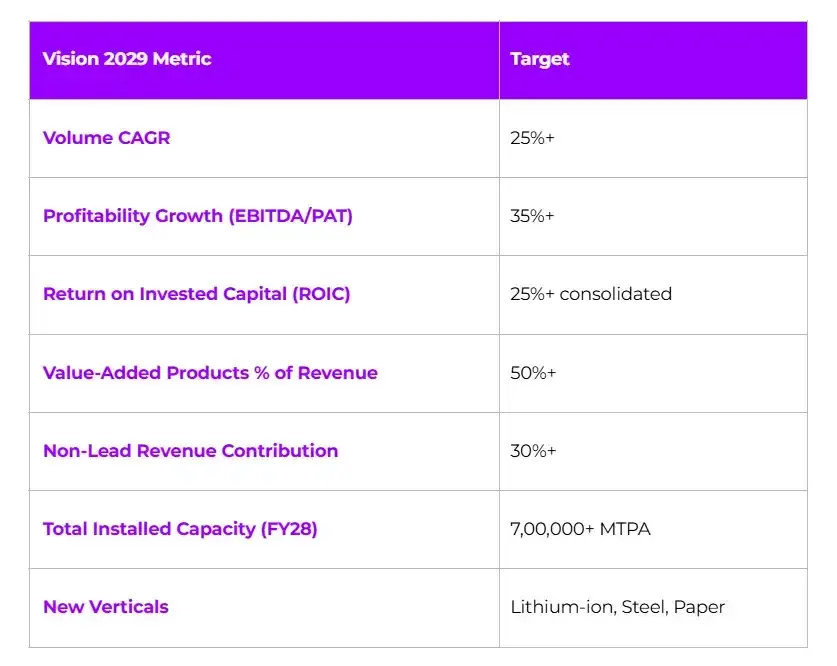
The capacity expansion roadmap is the most concrete proof point. Total installed capacity is planned to grow from approximately 3,33,659 MT in FY25 to 7,03,659 MT by FY28 — more than doubling production capability. Within this, lead remains the largest component (growing from ~2,00,000 MT to ~3,00,000 MT), while new verticals — rubber, lithium-ion, steel, paper — together contribute the incremental 2,50,000+ MT of new capacity.
On the geographic front, Gravita is strengthening its European presence through the Romania facility. The company's holding in Gravita Europe S.R.L is being increased from 80% to 95% through an additional investment by step-down subsidiary Gravita Netherlands BV, reflecting growing confidence in the European opportunity. Romania provides both a scrap sourcing base (European tyre and plastic scrap) and a market access point within the EU regulatory framework.
India's Mundra facility is becoming a strategic hub. Located at Gujarat's major port, it is uniquely positioned to receive imported scrap at low logistics cost, process it, and serve both domestic and export markets. The Mundra lead capacity expansion of 80,000 MT is targeted for completion by Q4 FY26, unlocking significant incremental volumes in the coming year.
Risks
No investment thesis is complete without a clear-eyed view of the risks. Gravita, for all its structural advantages, faces several genuine challenges that investors should weigh carefully.Execution Risk on Simultaneous Expansion
Vision 2029 requires Gravita to more than double its capacity while simultaneously entering four new verticals (lithium-ion, steel, paper, rubber). The Q3 FY26 call itself acknowledged delays in administrative approvals at Mundra and Phagi — a reminder that even well-laid plans encounter friction. Sustained delays in commissioning would push volume ramp-ups and associated earnings into future quarters, potentially creating a gap between guidance and delivery that erodes investor confidence.Regulatory Dependency
Gravita's business model is deeply entwined with the regulatory environment. The EPR and BWMR tailwinds are powerful precisely because they are regulatory mandates. Any reversal, implementation delay, or administrative dilution of these norms could slow the formalisation tailwind. Import license renewals, environmental clearances, and consent to operate approvals are all subject to government timelines and can create uncertainty around specific projects.Aluminium Hedging Constraint
The current inability to hedge ADC-12 aluminium alloy on any exchange creates a structural risk in the aluminium segment. When aluminium prices rise sharply, scrap aggregators withhold material, compressing Gravita's processing volumes and creating earnings variability. This dynamic played out visibly in Q3 FY26. Until MCX aluminium trading is approved, this risk will persist and will constrain the company's willingness to scale domestic aluminium capacity aggressively.Working Capital and Funding Requirements
As Gravita scales from Rs 3,869 crore in FY25 revenue toward its Vision 2029 targets, working capital requirements grow significantly. Management has estimated approximately Rs 1,500 crore in incremental working capital needs over the next 2–3 years. While the AA- credit rating and QIP proceeds provide a sound financing base, any deterioration in the receivables cycle, a sharp rise in scrap prices (which increases inventory financing requirements), or tighter credit markets could create liquidity pressure.Geopolitical and Currency Risk
With 68% of capital employed overseas and operations across Africa, the Americas, and Europe, Gravita carries meaningful geopolitical exposure. Africa, while attractive for scrap sourcing, carries currency control risks, political instability, and varying environmental enforcement. A deterioration in the operating environment in any major African country (Ghana, Senegal, Tanzania) could disrupt procurement flows and earnings from overseas subsidiaries.To understand how investor behavior impacts long-term returns, read: What is DII Buying? How Mutual Funds Impact Share Prices
“The big money is not in the buying and selling, but in the waiting.” — Charlie Munger
Explore our Products
Research Framework

Emerging Titans
Combination of quantitative analysis, industry tailwinds, and management assessment - SPRINT investment philosophy

Tiny Titans
Heavy emphasis on scuttlebutt research, plant visits, and early on-ground signals
Conclusion — The Compounder in the Circular Economy
Gravita India Limited is a rare business: one where the commercial opportunity, the regulatory tailwind, the environmental mandate, and the management execution capability all point unambiguously in the same direction. The company has spent 33 years building something genuinely difficult to replicate — a globally integrated, multi-metal recycling platform with deep procurement networks, OEM relationships, proprietary processing technology, and a proven financial framework built on return-focused capital allocation.The financial evidence is compelling. A 23% revenue CAGR and a 57% PAT CAGR over five years, ROIC consistently above 25%, EBITDA margins expanding from 7% to 11%+, an AA- credit rating, and 14 consecutive years of dividend payments — these are the metrics of a well-run, high-quality compounder, not a speculative growth story. The Vision 2029 targets (7 lakh MT capacity, 25%+ volume CAGR, 35%+ profitability growth, 50% value-added products) are ambitious but anchored in existing capabilities and a funded, detailed investment roadmap.
The risks deserve respect. Execution across multiple simultaneous capacity expansions and new verticals, regulatory dependency, aluminium hedging constraints, working capital intensity, and geopolitical exposure in Africa are all real considerations. But these are the challenges of a high-quality growth business operating at scale in complex markets — not existential threats to the underlying business model.
Perhaps the most compelling aspect of the Gravita story is its alignment with where the world is structurally heading. The circular economy is not a trend or a policy fashion — it is an inevitability driven by resource constraints, climate accountability, regulatory pressure, and economic logic. Every battery recycled, every tonne of aluminium recovered, every kilogram of plastic granulated represents a step toward a world that extracts less and reuses more. Gravita's tagline — 'We Recycle to Save Environment' — is not just marketing; for the long-term investor, it is a thesis about which businesses will matter most in the decade ahead.
For a serious investor with a 3–5 year horizon, Gravita offers a compelling combination: a structurally growing market, a formidable competitive position built over three decades, a management team with skin in the game and a proven record of disciplined execution, and multiple near-term catalysts that could accelerate both earnings and valuation. The circular economy is the future. Gravita is already in it.
Look at your portfolio today is it positioned for structural shifts like sustainability and circular economy, or is it still anchored to traditional growth cycles
Comment “RECYCLING” if you believe themes like resource efficiency and circular economy will define the next decade of investing
FAQs
Who is the CEO of Gravita India Limited?
+Yogesh Malhotra is the CEO of Gravita India Limited.
What is the PE ratio of Gravita India?
+The current PE ratio of Gravita is approximately 27.9.
What is the history of Gravita India?
+Gravita was founded in 1992 in Jaipur as a lead recycling company and has since expanded into multi-metal recycling with global operations.
Where is the headquarters of Gravita India?
+The company is headquartered in Jaipur, Rajasthan, India.
What is the future plan of Gravita India?
+Gravita aims to expand capacity, increase value-added products, enter new segments like lithium-ion recycling, and become a top global recycling player by 2028–2029.

High growth stock specialist, Value Educator
Shashank Mahajan is an equity research professional with over 12 years of experience in identifying high-potential SME and micro-cap stocks at an early stage. He follows a rigorous scuttlebutt research–driven approach, combining on-ground insights with deep financial analysis. Shashank specializes in uncovering under-researched and under-owned companies with strong management quality and long-term growth potential. Through disciplined research and early identification, he focuses on spotting tomorrow’s market leaders before they enter the mainstream investor radar.

Zen Technologies: Revenue Fell After a Big Win



PNG Jewellers: A 194-Year-Old Name Goes National
Explore our Products
Research Framework
Emerging Titans
Combination of quantitative analysis, industry tailwinds, and management assessment - SPRINT investment philosophy
Tiny Titans
Heavy emphasis on scuttlebutt research, plant visits, and early on-ground signals


 Orders
 Subscription
 Share with friends


Required Details
₹23999.00
(12 month subscription)
As per SEBI regulations, all users are mandated to complete the KYC that is validated for 1 year. Post payment, you will be redirected to the KYC screen


No comments yet. Be the first to comment!