
Top 10 Metal Stocks for 2026: FIIs Turn Bullish
The question that remains to be addressed is, Will the next phases of infrastructure investment, the development of renewables and expansion of manufacturing establish another "cycle" for the metals/mining industries? Why are more and more global investors interested in metals/mining in India?
India’s growth story is now becoming the story of steel, aluminum, copper, and zinc. From railway and road networks to power infrastructure and electric vehicles, metals are at the heart of India’s growth story in the next decade. And as these sectors grow, the requirement for industrial metals could rise significantly.
Legendary investor Peter Lynch once said, “The real money in investing is made by anticipating the next big trend.”
Lets first understand why the FIIs are turning bullish on metal stocks?

Development in Infrastructure
India is considerably increasing investments in many sectors up to 2021, including highways, railways, port projects, housing and urban development. Due to the scale of these projects, they will require a large amount of raw materials, thus providing a strong and sustained source of demand for users of major industrial metals such as steel and aluminium.
Supply Shortages in China
China is the largest producer of metals worldwide, especially steel. Any reduction in capacity or capacity restrictions in China will tighten supplies of metals globally, which may boost metal prices, and consequently increase the profitability of Indian producers using metals.Increased Demand for EVs and Renewable Energy
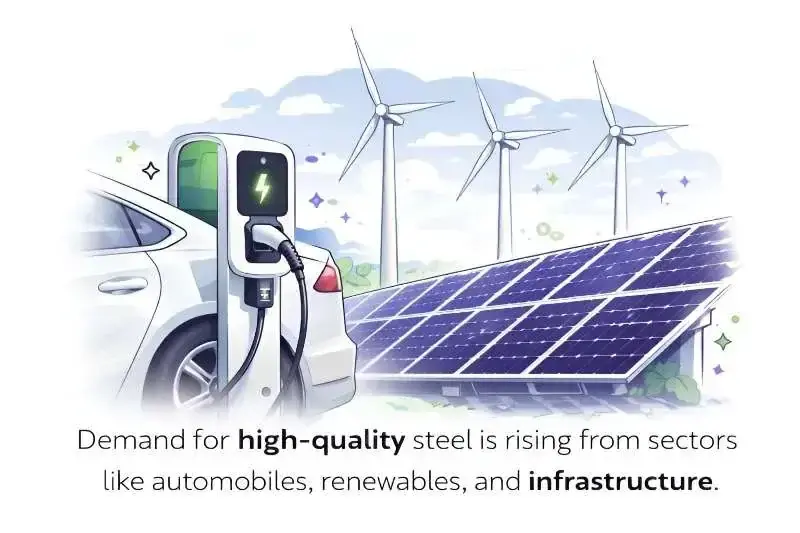
With an increase in electric vehicle use, the demand for metals such as Copper, Aluminium and High Performance steel has increased dramatically due to Solar and Wind energy resources being relied upon more than ever before. These metals will be major raw materials in creating the infrastructure supporting these three technologies (batteries, electric, and renewable energy).Strong Growth in Consumption in India
Projected continued growth in steel consumption in India is anticipated to continue to support the steel manufacturers through the expansion of manufacturing and growth in government-led capital expenditures. Many analysts believe demand for steel will increase approximately 8% to 10% annually, providing a long-term foundation for metal companies operating in India.If you are interested in knowing about penny stocks and understanding how they work, then read our article: What are penny stocks? The complete beginner's guide: pros & cons
This article presents 10 Indian metal stocks that have been receiving attention and strong fundamentals, as well as increases in institutional interest for 2026, due to their growth plans.
1. JSW Steel
Established in 1982, JSW Steel Limited is among the biggest steel-producing companies in India, as well as being the flagship organisation of the JSW Group. This company has burgeoned massively over the years through both organic growth and acquisitions, so it is now considered one of the leaders in the world of steel production.
JSW Steel manufactures numerous kinds of flat and long steel products for the construction sector, the infrastructure sector, the automotive sector, the appliance sector, and the energy sector. By diversifying its product portfolio, this business can meet its customers’ needs in India as well as customers outside of the country.
To become more accurate at trading and investing, read our article on: Common Mistakes Every Small-Cap Investor Makes (And How to Avoid Them).
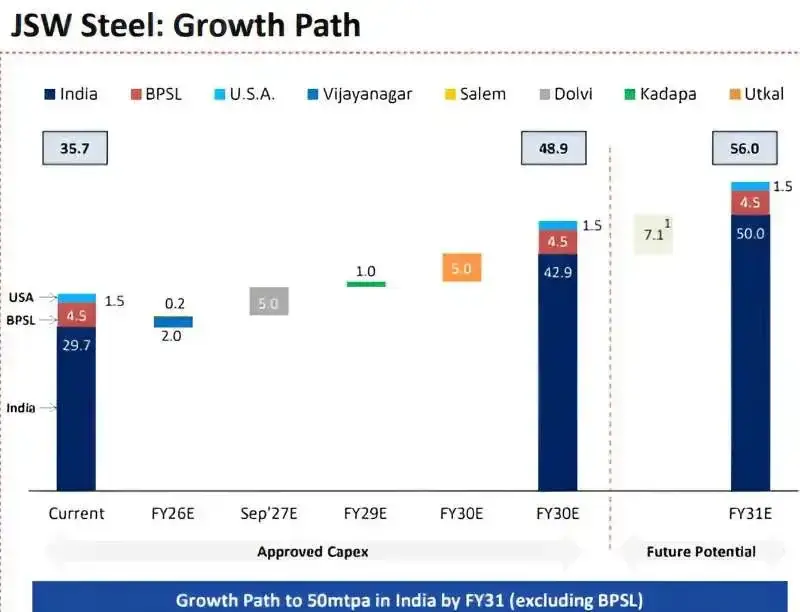
Current steel production capacities: Approximately 29 million to 30 million tonnes of steel annually. JSW Steel is expanding its Production Capacity aggressively. Security plans increase production capacity to approx 38 million tonnes in the future; over 50 million tonnes in the long term. Expansion of JSWS’ Steel Capacity will include: multiple brownfield and greenfield projects.
Current expansions underway for the company consist of revisions to the Vijayanagar facility, extending Dolvi, and capacity improvements to the BPSL plant situated in Odisha. Investments are also made in logistics; specifically, a slurry pipeline that has an expected capacity of 30 MTPA is being installed in Odisha to enhance raw material transportation.
Sustainability initiatives will continue to have a key focus for JSW Steel (JSW), including large renewable energy procurement (2.5 GW) and investing in extremely energy-efficient steel production methods. Sourcing of renewable energy for operations is an important commitment to reduce carbon emissions, along with achieving long-term financial cost efficiencies.
As of December 2025, JSW Steel has seen a continued strong presence of Foreign Institutional Investors (FIIs) who hold approximately 25.38% of shares in the company, representing a marginal quarterly change and reflecting stable foreign investor confidence in the company.
While some FIIs have booked profits during the last several quarters, the overall level of FII ownership in JSW Steel has remained within a narrow range of 25% to 26%, indicating continued consistent institutional interest over the long term.
The stock has demonstrated both strong and volatile price movement recently, supported by the improvement in domestic steel demand and policy support for the sector, thereby maintaining a positive investor outlook for the medium-term future.
In the future, JSW has the potential to gain market share due to India's growth in steel consumption caused by increased demand for infrastructure, urbanization, and increased production from the manufacturing sector. Increases in operational efficiencies due to future capacity expansions are thought to solidify JSW's competitive advantages.
From an investor perspective, JSW Steel gives investors access to the long-term future demand for steel in India, however investment returns are considered cyclical and directly tied to globalised pricing structures of steel, iron ore, and coking coal, and overall economic conditions.
2) Tata Steel
Tata Steel was founded in1907 and is one of the world's major producers of steel. Tata Steel is part of the Tata Group's operations, which have locations all over the world.
Tata Steel produces many types of products, including flat steel, long steel, automotive steel, specialty alloys, and others. These products are used in several different industries, including building and construction, automotive manufacturing, engineering, infrastructure development, and consumer goods manufacturing, among other examples.
Tata Steel has several large integrated production facilities located throughout India; the two largest are the flagship Jamshedpur facility and the rapidly growing Kalinganagar facility located in Odisha state. Both of these production sites have very well-developed connections to raw materials and have a high degree of operational efficiency.
As part of its long-range plan for future growth, Tata Steel is expanding domestically with greater production capacity through the Kalinganagar expansion project as well as through various debottlenecking projects at its existing facilities. Together, these actions will result in significant increases to Tata Steel's total crude steel production capacity within India over the next several years.
With an increase in infrastructure development, significant increases in manufacturing capabilities, and ongoing urbanization, Tata Steel views India as its largest market opportunity for future growth as steel demand increases.
One thing that strengthens the market position of Tata Steel is its investment in the addition and enhancement of production capacity. Investors in Tata Steel will benefit from a long-term increase in demand for steel in India and continued volatility of the global commodities cycle; therefore, potential investors should look closely at issues such as steel pricing, raw material costs, and changing conditions surrounding Tata Steel's European operations in light of recent developments in Tata Steel's business. Robin Powell historically.
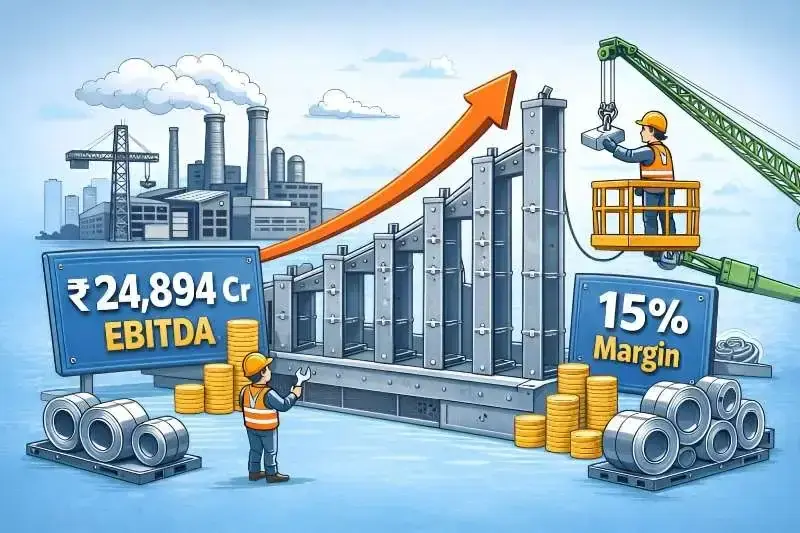
Globally, Tata Steel produces only 35 million tons of raw steel per year using its diverse manufacturing networks. It has numerous production facilities around the world, including locations in India, Europe and Southeast Asia. Major production sites for Tata Steel include three integrated facilities located throughout India: Jamshedpur, Kalinganagar, Meramandali (all within the domestic production volume of approximately 26 million tons), which are well supported by integrated backward production using steel from own mining operations located at Noamundi and Joda.
With steel-producing plants located in IJmuiden (Netherlands), Port Talbot (U.K.), and many downstream manufacturing facilities throughout Europe, Tata Steel is a major player in the industry. The company has also established long steel operations in Japan and Southeast Asia, specifically in Thailand, where it produces long steel products.
In India, Tata Steel has outlined a capacity expansion strategy, which sets the company up for domestic growth with plans to increase total capacity to approximately 40 million tons by 2030. Specifically, this will be accomplished through the expansion of the Kalinganagar facility's current capacity of 3 million tons to 8 million tons, along with investments in recycling and low-carbon technologies to help lead the industry's worldwide shift away from conventional steelmaking to "greener" processes.
Foreign Institutional Investors (FIIs) hold around 17.5–18% stake in Tata Steel, with a slight increase in recent quarters, reflecting renewed institutional interest after improving quarterly performance.
The gradual rise in FII participation indicates growing confidence in the company’s recovery and long-term demand outlook for the steel sector.
Recently, the stock has shown periods of recovery and consolidation, supported by improving domestic steel demand and capacity expansion plans, keeping medium-term expectations constructive.
3) Hindalco Industries
Many people believe that aluminium quietly supports the activity of worldwide industries. Aluminium appears in various ways, including beverage cans, food packaging, electric cars, and renewable energy-related infrastructure. Being the world's biggest integrated aluminium maker, Hindalco Industries is, above all else, the best in the industry.
Operating in all facets of metal production - from aluminium and copper production through high-value products like foil, sheet, and extrusions - Hindalco is an Aditya Birla Group company. Hindalco has the largest globally-rolled-up-manufacturer (Novelis) and is also the largest recycler in the world, thereby making it a strong player in the market.
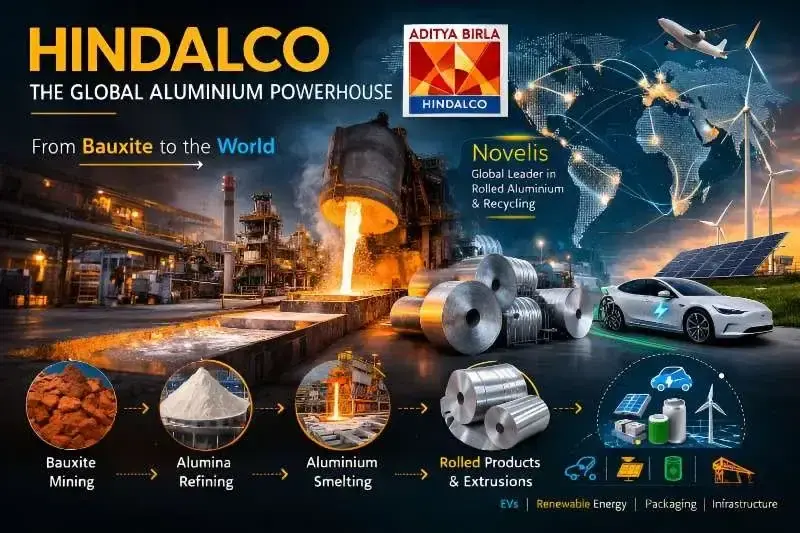
At first glance, the quarterly results appear as though Hindalco Industries was weak. The number reflects a consolidated profit after tax of ₹2,049 Crores, down 45% year-over-year; however, the major reason for this is due to one-time extraordinary loss associated with the fire of the Novelis Oswego plant.
If you take the extraordinary item out of the equation, the company has done quite well on a year-over-year basis, with an adjusted profit before tax of approximately ₹4,051 Crores or 8% increase year-over-year. In addition to the profit before tax, the company generated excellent results from operations with an EBITDA of ₹8,762 Crores, or an increase of approximately 6% year-over-year.
The country's aluminium industry is one of the leading sectors in the Economy. Upstream aluminium earnings before interest, taxes, depreciation, and amortization (EBITDA) increased for the period ended September from last year by 14% to INR 4832 million; with EBITDA/tonne rising to approximately $1572, and margins reaching around 45%. This performance places Hindalco amongst the lowest cost producers of aluminium in the world.
In addition, the company has been progressively moving up the aluminium value chain. The Shipments volume for its downstream aluminium companies was up 9% year on year, to 108,000 tonnes for the period ended September 2020, and EBITDA for downstream aluminium was up 55% year on year, to INR 233 million, driven by improved product mix and more value-driven products.
Curious about what market cap actually means when it comes to stocks? Read our article on: What is Market Capitalization? Large, Mid, Small Cap Explained with Examples
On a global basis, the Novelis segment continues to be a very important global growth engine for the company. Despite the disruption at the Oswego plant, adjusted EBITDA was approximately $436 million for the quarter ended September 30, translating into approximately $495 per tonne; thus demonstrating strong underlying profitability when excluding temporary disruptions.
In the foreseeable future, the Company’s future will be affected to a degree by the expected recovery of the Oswego plant in the next fiscal year, as well as the beginning of operations at the very large US Bay Minette aluminium production facility.
Foreign Institutional Investors (FIIs) hold a strong stake of around 32.3% in Hindalco Industries, with their ownership gradually increasing over the past year, reflecting sustained global institutional confidence in the company’s aluminium and copper business.
The steady rise in FII participation suggests positive expectations around Hindalco’s global operations, especially through its subsidiary Novelis and improving metal demand cycles.
Recently, the stock has shown periods of consolidation after a strong rally, as investors track global commodity prices and earnings momentum, while long-term sentiment around the metal cycle remains constructive.
Long-term demand for aluminium will remain extremely strong as demand for electric vehicles, renewable energy infrastructure, and sustainable packaging all contribute to the growth of the aluminium industry. As a result, with its low-cost upstream operations in India and high-value downstream presence all over the world, Hindalco is well-positioned to benefit from these trends.
Investors will likely experience some volatility over this period due to metal prices and capital expenditures; however, if execution remains consistent and the global aluminium market continues to grow, Hindalco Industries may very well continue to be one of the largest players in the worldwide metals industry.
4) Vedanta Limited
Vedanta Limited is one of the few companies in India that provides its investors with a diverse range of opportunities related to natural resources. In addition to providing a variety of natural resources such as copper and aluminium, they also provide valuable natural resources such as oil and gas.
The company achieved one of its highest revenue numbers during the quarter of 2023-2024. The company generated approximately ₹45,899 crores in revenue, and about 19% of revenue was attributed to the same quarter last year. The company's approximate EBITDA this quarter was approximately ₹15,171 crores, which is approximately a 34% increase when compared to EBITDA for the same quarter of the prior year.
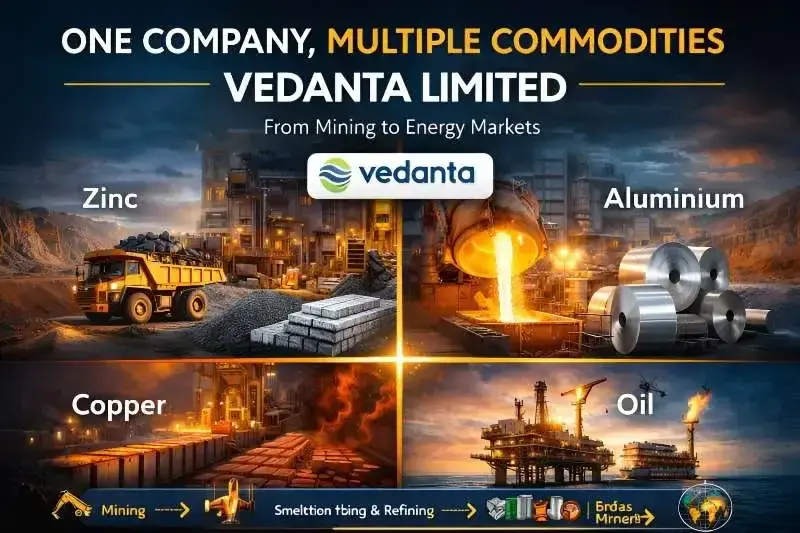
Their EBITDA margin for this quarter was approximately 41%, a record high for the company. This increase in the EBITDA margin reflects strong commodity prices and enhanced operational efficiencies within the company.
The profitability of the company followed a similar trend to that of the EBITDA. The net profit for the quarter was approximately ₹7,807 crores, an approximate increase of about 60% from the same quarter last year; this was the highest quarterly net profit the company has reported to date. To date, the company's revenues have exceeded ₹1.2 lakhs crores, and EBITDA has exceeded ₹37,529 crores; therefore, the company is well positioned to achieve an annual record EBITDA of over $6 billion.
The company continues to be a major player in the global zinc market, maintaining its status as one of the most profitable mining companies and achieving record levels in both mined and refined metal production. Production costs per tonne fell to approximately $940—five year lows. Vedanta expects the completion of growth projects and future production expansions at major facilities to increase these outputs.
Additionally, the company’s oil/metals segment is being watched closely by capital markets. It currently produces approximately 85,000 barrels of oil equivalent daily. They intend to gradually increase production from this level to approximately 90,000 barrels per day over the next year and eventually reach 150,000 barrels per day through the drilling of new wells and enhanced recovery techniques.
Future opportunities will be determined by the success of commodity price cycles and the ability to execute expansion strategies. In addition, new oil projects, lower aluminium production costs and higher zinc production capacity will also provide support for ongoing earnings and future growth.
Investors can gain access to a variety of global commodities in one company by investing in Vedanta Limited. However, this company is impacted by the same economic fluctuations as all companies that produce commodities, which means investors are also impacted by changes in commodity prices. Provided that the demand for metal globally continues to be strong and the proposed demerger generates the expected value, Vedanta Limited is likely to be one of the most highly tracked resource companies in India in the near future.
Foreign Institutional Investors (FIIs) hold around 12.15% stake in Vedanta Ltd as of Dec 2025, with their ownership increasing from about 11.08% in the previous quarter, indicating a gradual pickup in foreign institutional interest.
The rise in FII participation suggests improving investor sentiment, especially as the company moves ahead with its restructuring and value-unlocking initiatives.
Recently, the stock has shown strong momentum and investor interest, supported by high dividend payouts and expectations that the planned demerger could unlock value across its different business segments.
5) Hindustan Zinc
Few companies dominate a commodity the way Hindustan Zinc Limited dominates zinc in India. Incorporated in 1966 and headquartered in Udaipur’s Zinc City, the company today controls nearly 75 percent of India’s zinc market. Globally, it is the second largest integrated zinc producer and the third largest silver producer with an annual silver capacity of around 800 metric tons.
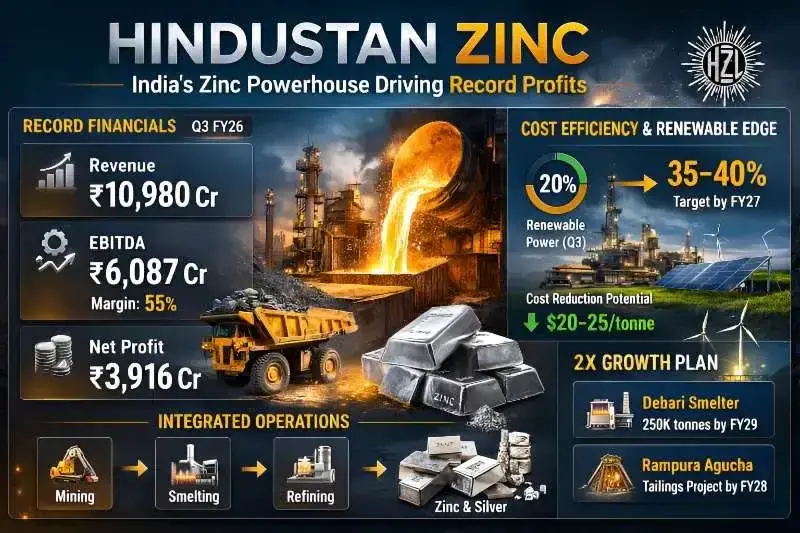
The company just delivered one of the strongest quarters in its history. Revenue in Q3 FY26 reached ₹10,980 crore, while EBITDA surged to ₹6,087 crore with margins touching an impressive 55 percent. Net profit stood at ₹3,916 crore, making it the highest quarterly profit the company has ever reported.
The nine-month numbers tell an equally strong story. Revenue crossed ₹27,300 crore while EBITDA reached ₹14,415 crore and net profit touched ₹8,799 crore. Strong free cash flow of ₹7,225 crore has pushed the company into a net cash position of ₹329 crore, a sharp turnaround from net debt just a quarter earlier.
Production levels continue to remain robust. Mined metal reached 276 thousand tonnes in Q3 and 799 thousand tonnes for the first nine months, a record for the company. Refined metal production also remained strong at 270 thousand tonnes in the quarter as operational efficiency across smelters improved.
Silver is now becoming an increasingly important profit driver. The precious metal portfolio contributed nearly 44 percent of the company’s profits, helped by a sharp rally in silver prices and rising production levels. Saleable silver output stood at 158 tonnes in Q3 and 451 tonnes for the first nine months, with FY26 guidance maintained at around 680 tonnes.
Cost control has been another highlight. The Zinc cost of production fell to about $940 per tonne in the quarter, the lowest level in five years. Management expects the long-term cost band to remain around $950 to $1,000 per tonne, supported by higher domestic coal usage, better byproduct realization, and operational improvements.
Renewable energy is also quietly becoming a structural advantage. Renewable power contributed nearly 20 percent of the company’s energy mix in Q3 and could reach 35 to 40 percent by FY27. Over time, this shift could reduce production costs by roughly $20 to $25 per tonne while improving sustainability metrics.
Growth projects are now moving from planning to execution. The company has started groundwork for a new 250 thousand tonne integrated zinc smelter at Debari expected to be completed by FY29. Another major project is the Rampura Agucha tailings reprocessing plant, which could come online by FY28.
These projects form part of Hindustan Zinc’s broader “2x growth” strategy. If executed successfully, the expansion could significantly increase lead production from around 200 thousand tonnes to nearly 400 thousand tonnes, which in turn could lift silver output to as much as 1,300 to 1,400 tonnes annually.
Curious to find what debt signifies for a company and how it can impact your long-term returns? Read our article: What is Debt to Equity Ratio? Why it Matters for Small Cap Investing.
Looking ahead, the outlook for zinc and silver remains supportive. Zinc prices have remained firm around $3,300 per tonne due to tight global supply, while silver has witnessed a strong rally driven by industrial demand and its growing importance in renewable energy and electronics.
Foreign Institutional Investors (FIIs) hold a relatively small stake of about 1.5% in Hindustan Zinc, with their participation remaining largely stable in recent quarters.
The low FII ownership is mainly due to the company’s high promoter holding by Vedanta and significant Government of India stake, which limits the free float available for large institutional investors.
Recently, the stock has shown periods of strong momentum followed by consolidation, supported by robust profitability and high dividend payouts, while investors closely track global zinc and silver price trends.
For investors, Hindustan Zinc Limited offers exposure to both industrial metals and precious metals through a single company. Strong cash flows, low production costs, and expansion projects could support long-term growth.
However, like all commodity businesses, performance will remain closely linked to global metal prices. If zinc supply remains tight and silver demand continues to strengthen, Hindustan Zinc could remain one of the most profitable mining companies in the country over the coming decade.
6) National Aluminium Company
Incorporated in 1981, National Aluminium Company Limited (NALCO) is a Navratna Central Public Sector Enterprise under the Ministry of Mines. The company manufactures and sells alumina and aluminium while operating one of India’s largest integrated Bauxite–Alumina–Aluminium–Power complexes.
NALCO is among the largest primary aluminium producers in Asia with operations spanning bauxite mining, alumina refining, aluminium smelting, and captive power generation. This fully integrated structure helps the company maintain control over raw materials and operating costs.
The company has reported strong operational momentum during the current financial year, with management highlighting record physical and financial performance up to the third quarter. Higher production volumes and improved operational efficiencies have supported profitability.

During the first nine months of the year, income grew by around 13 percent while expenditure increased at a slower pace of about 6 percent. Alumina production rose nearly 20 percent while aluminium metal output also recorded steady growth.
Despite softer global alumina prices during the year, higher aluminium prices and increased sales volumes supported overall revenue growth. Management attributed the performance mainly to higher throughput and better techno-economic efficiencies across operations.
Currently, NALCO operates around 4.6 million tonnes per annum of alumina refining capacity and roughly 4.6 lakh tonnes of aluminium smelting capacity, supported by large captive bauxite mines and power generation facilities. This scale allows the company to remain competitive in the global aluminium market.
Alongside its core business, NALCO is also exploring opportunities in critical and rare earth minerals. The company is studying the extraction of rare earth elements and gallium from red mud and process streams through pilot projects with research institutions, which could create new strategic value pools in the future.
Foreign Institutional Investors (FIIs) hold around 19.6–19.7% stake in National Aluminium Company (NALCO) as of Dec 2025, marking a noticeable rise from about 16% in the previous quarter, indicating increasing global institutional interest in the company.
The rising FII participation reflects improving confidence in the aluminium cycle and the company’s strong position as a government-backed integrated producer.
Recently, the stock has shown periods of strong rallies followed by consolidation, supported by improving aluminium prices, solid profitability, and expectations around expansion and infrastructure-driven metal demand.
Looking ahead, NALCO is expanding capacity with a new alumina refinery expected to begin commissioning soon, while long-term plans include adding around 0.5 million tonnes of additional aluminium smelting capacity. These expansions could strengthen the company’s production base as global aluminium demand grows.
For investors, NALCO’s integrated cost structure, strong balance sheet, and capacity expansion plans make it a notable player in India’s aluminium sector. However, as a commodity business, its performance remains closely linked to global aluminium and alumina price cycles, which investors should carefully evaluate before allocating capital.
7) Nmdc Ltd
Founded in 1958, NMDC Limited is a government-owned mining company under the Ministry of Steel and one of India’s largest iron ore producers. The company is primarily engaged in the exploration and production of iron ore along with diamond mining, sponge iron production, and wind power generation.
Explore our Products
Research Framework

Emerging Titans
Combination of quantitative analysis, industry tailwinds, and management assessment - SPRINT investment philosophy

Tiny Titans
Heavy emphasis on scuttlebutt research, plant visits, and early on-ground signals
Over the decades, NMDC has developed expertise in the exploration of a wide range of minerals, including copper, rock phosphate, limestone, magnesite, diamond, and tungsten. However, its core strength remains the production of high-grade iron ore with an iron content of around 64 percent.
The company operates some of India’s largest iron ore mining complexes, particularly in the mineral-rich states of Chhattisgarh and Karnataka. Its high-grade ore is widely used by domestic steel producers, making NMDC a critical supplier to India’s steel industry.
Foreign Institutional Investors (FIIs) hold around 13.4–13.5% stake in NMDC Ltd as of Dec 2025, showing a gradual increase from about 11.7% a year earlier, indicating improving institutional confidence in the company.
The steady rise in FII ownership reflects positive expectations around India’s steel demand cycle, as NMDC remains a key supplier of iron ore to the domestic steel industry.
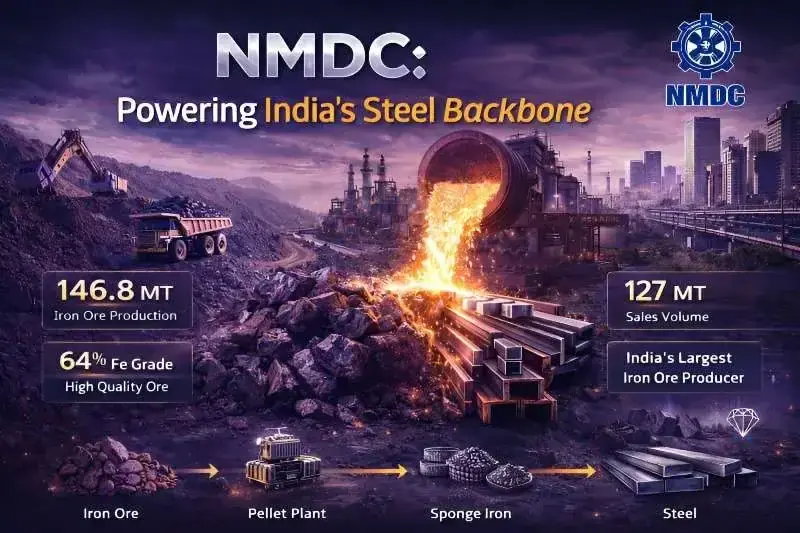
Operationally, NMDC has delivered strong physical performance in FY26 with record production and sales volumes. The company reported around 146.8 million tonnes of production and 127 million tonnes of sales, marking a healthy growth compared to the previous year’s levels.
These numbers also surpass the company’s earlier best performance levels, reflecting stronger demand from the steel sector and improved mining efficiency. Consistent production growth remains a key driver of revenue and operating performance for the company.
Beyond iron ore mining, NMDC is gradually expanding into value-added segments such as pellet production and sponge iron manufacturing. These initiatives aim to move the company further along the steel value chain while improving long-term profitability.
Looking ahead, NMDC is working on expanding its mining capacity and improving logistics infrastructure to support higher output levels. With India targeting significant growth in steel production over the coming decade, demand for iron ore is expected to remain structurally strong.
For investors, NMDC offers exposure to India’s steel and infrastructure growth through a large, low-cost iron ore resource base. However, as a commodity-linked business, its earnings remain sensitive to global iron ore prices and steel demand cycles, which investors should carefully evaluate before investing.
Passionate about the defence sector and planning to invest? Read our article on: How to Invest in Defence Stocks to upgrade your understanding.
8) Jindal Steel
Jindal Steel & Power Limited is one of India’s leading steel producers with a significant presence across steel manufacturing and mining. The company operates globally through subsidiaries across regions, including Africa and Australia, while maintaining a strong focus on the Indian steel market.
The company offers a diversified portfolio of steel products such as plates and coils, TMT rebars, wire rods, track rails, and structural steel products, including beams, channels, and angles. These products cater to key sectors like infrastructure, construction, railways, and heavy engineering.
During Q3 FY26, the steel industry continued to face pressure from global supply dynamics, particularly from China, where demand has been declining faster than production. This imbalance led to record Chinese steel exports, which weighed on global steel prices, including in India.
Foreign Institutional Investors (FIIs) hold around 9.0–9.1% stake in Jindal Steel & Power as of Dec 2025, remaining relatively stable over the past year, which suggests a more measured institutional stance compared to some other metal players.
The relatively moderate FII ownership indicates that while global investors are participating, conviction is still building, with flows likely tied to visibility on steel demand, exports, and margin sustainability.
Despite these headwinds, the Indian steel market showed some improvement with exports rising sharply and imports declining significantly. India briefly turned into a net steel exporter during the quarter, while safeguard duties on certain steel imports are expected to protect domestic producers over the coming years.
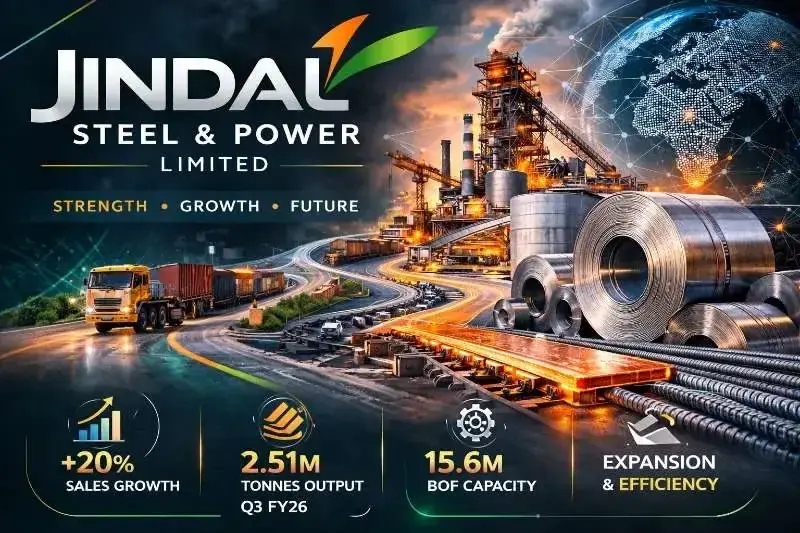
Operationally, Jindal Steel reported strong production momentum in Q3 FY26 with steel output reaching about 2.51 million tonnes, driven by the ramp-up of new blast furnace capacity at its Angul facility. Sales volumes also grew by over 20 percent sequentially as the company increased market penetration.
The company is also progressing with key expansion projects, including the commissioning of a 3 million tonne BOF steelmaking unit at Angul, which is expected to raise total steelmaking capacity to around 15.6 million tonnes. Additionally, infrastructure projects like the slurry pipeline are nearing completion and could significantly reduce logistics costs.
Looking ahead, management expects stronger performance supported by improving domestic steel demand and a recovery in prices since late 2025. The ramp-up of new blast furnace capacity and higher utilization levels could further support production growth in the coming quarters.
For investors, Jindal Steel’s ongoing capacity expansion and focus on operational efficiency position it as an important player in India’s growing steel industry. However, like most steel companies, its earnings remain closely tied to global commodity cycles and raw material costs, which investors should consider before allocating capital.
9) Steel Authority of India
Steel Authority of India Limited (SAIL) is one of India’s largest steel producers and a Maharatna Central Public Sector Enterprise. The company operates five integrated steel plants and three special steel plants, mainly located in the eastern and central regions of India close to key raw material sources.
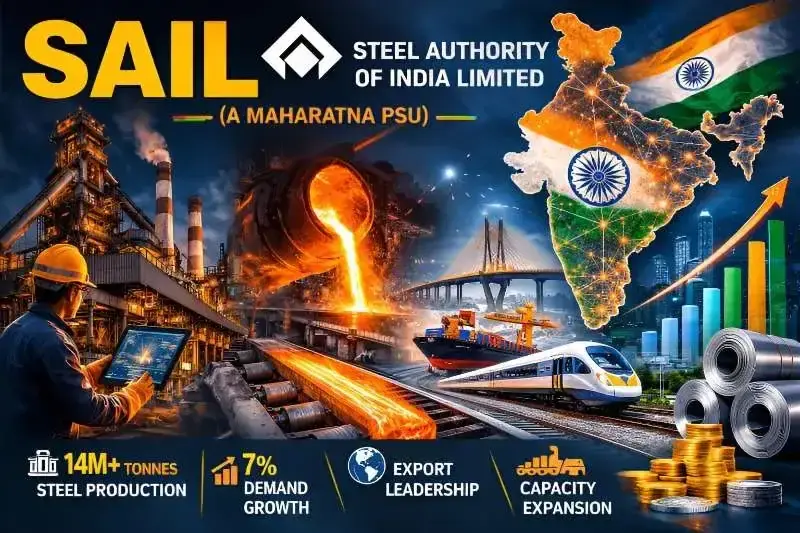
SAIL manufactures a wide range of steel products, including flat and long steel used in infrastructure, railways, engineering, and construction. Its integrated operations and strong domestic presence make it a critical supplier to India’s growing steel ecosystem.
The global economic environment remains volatile, but management believes inflation is stabilizing and global growth could remain around 3.3 percent in 2026. In India, the economic outlook remains strong with GDP growth expectations around 7 percent, supporting long-term steel demand.
Domestic steel consumption continues to expand steadily, rising about 7 percent year-on-year during the first nine months of FY26. India’s trade balance also improved significantly, with exports increasing sharply while imports declined, helping the country return to being a net steel exporter.
Operationally, SAIL reported crude steel production of around 14.35 million tonnes in the first nine months of FY26, slightly higher than the previous year. Steel sales volumes reached around 14.6 million tonnes, supported by strong demand and deliberate inventory reduction strategies.
Financially, revenue grew about 9 percent year-on-year to nearly ₹80,000 crore, while profit after tax rose sharply due to operational efficiencies, inventory liquidation, and better cost management. The company also reduced its debt by nearly ₹5,000 crore during the period, improving its balance sheet.
Looking ahead, SAIL is undertaking major capacity expansion projects including the large IISCO steel plant expansion, which is expected to significantly enhance production capacity by the end of the decade. Additional projects, such as new mills and debottlenecking initiatives, are aimed at improving efficiency and reducing semi-finished steel output.
For investors, SAIL provides exposure to India’s long-term infrastructure and steel demand growth. However, profitability remains sensitive to steel price cycles and raw material costs such as coking coal, which investors should monitor closely before considering an investment.
Foreign Institutional Investors (FIIs) hold around 4.5% stake in Steel Authority of India Limited as of Dec 2025, with their ownership rising from about 3.76% in the previous quarter, indicating a gradual pickup in foreign institutional interest.
The increase in FII participation suggests improving sentiment toward the domestic steel cycle and expectations of stronger demand from infrastructure and manufacturing sectors. Recently, the stock has shown periods of rally followed by consolidation, as investors track steel prices, government spending on infrastructure, and sector profitability trends.
10) Hindustan Copper
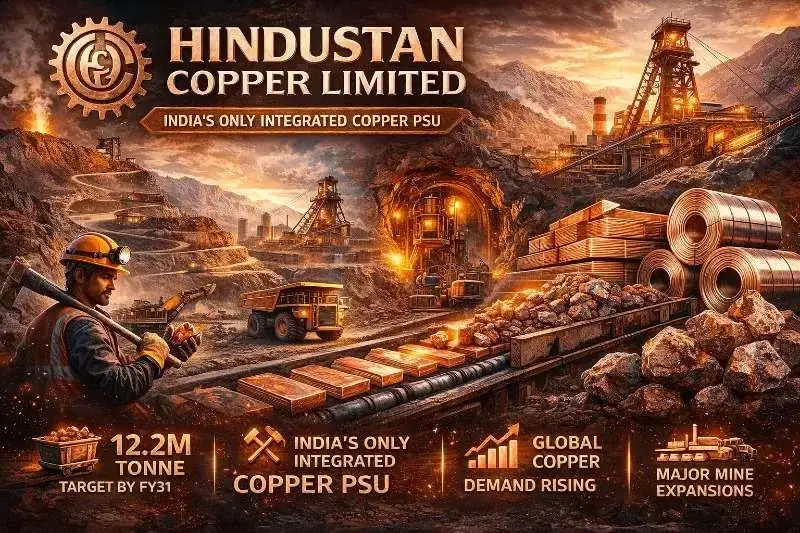
Incorporated in 1967, Hindustan Copper Limited is India’s only vertically integrated copper-producing public sector company. The firm is involved in the entire copper value chain, from mining ore to processing and producing saleable copper products.
HCL operates several mining complexes across states, including Madhya Pradesh, Rajasthan, and Jharkhand. Key assets include the Malanjkhand Copper Project, the Khetri Copper Complex, and the Indian Copper Complex near Ghatsila.
The company has laid out an ambitious long-term plan to increase ore production to around 12.2 million tonnes per annum by FY31. This expansion will come from ramping up output across Malanjkhand, Rajasthan mines, and the revival of Jharkhand operations.
At Malanjkhand, currently the largest copper mine in India, output is expected to gradually increase from about 2.9 million tonnes toward 5 million tonnes annually. The major bottleneck remains the installation of imported shaft winders required for underground mine expansion.
Meanwhile, in Jharkhand, operations at Surda have restarted and new production is expected soon from Kendadih after environmental clearances. Rakha, which will be operated through an MDO partnership, is expected to become a major contributor with a long-term capacity target of around 3 million tonnes of ore production.
HCL estimates that once its expansion plans are completed, ore production across mines could generate around 80–90 thousand tonnes of metal concentrate annually. The company also plans new concentrator plants and processing upgrades to support higher output.
Foreign Institutional Investors (FIIs) hold a relatively low stake, around 3.2–3.3% in Hindustan Copper Ltd as of Dec 2025, with their ownership showing a gradual rise over the past few quarters. The increasing FII participation reflects growing global interest in copper, driven by expectations of higher demand from electrification, renewable energy, and EV supply chains.
Recently, the stock has seen strong rallies followed by sharp consolidations, as investors track global copper price movements and the company’s expansion plans to increase domestic copper production.
Looking ahead, demand for copper is expected to remain strong globally due to electrification, renewable energy systems, and electric vehicles. As India’s only integrated copper miner, Hindustan Copper is well-positioned to benefit from this structural demand shift.
For investors, the company’s long-term growth depends on the successful execution of mine expansions and production ramp-ups. While rising copper demand provides a strong tailwind, operational challenges such as underground mining complexities and project timelines remain key factors to watch.
Conclusion
Choosing the right metal stock ultimately depends on an investor’s financial goals, risk tolerance, and conviction in the long-term outlook of the metals sector.
Metal companies operate in a cyclical industry, where profitability often fluctuates with global prices, industrial demand, and macroeconomic conditions. Factors such as interest rates, infrastructure spending, raw material costs, and geopolitical developments can significantly influence the sector’s performance.
For long-term investors, understanding these cycles and evaluating a company’s balance sheet strength, cost efficiency, and expansion strategy becomes crucial. Businesses that combine scale, operational discipline, and strong raw-material integration often tend to navigate these cycles better than others.
If this analysis helped you understand the metal sector a little better, comment “METALS” below.
We would also love to know which metal company you personally have the strongest conviction in and why. If you want to understand the metal sector in more depth and begin your investing journey with clarity, feel free to get in touch with us anytime
FAQs
What makes the metal sector cyclical?
+The metal industry is considered cyclical because its performance largely depends on economic activity. When infrastructure, construction, and manufacturing demand rises, metal prices and company earnings tend to grow. During economic slowdowns, demand weakens and prices often fall.
Why do steel prices fluctuate so much?
+Steel prices are influenced by multiple global factors such as raw material costs, industrial demand, supply levels, and trade policies. Changes in iron ore and coking coal prices, along with geopolitical tensions and global economic conditions, can significantly impact steel prices.
How important is capacity expansion for steel companies?
+Capacity expansion allows steel companies to increase production and capture growing demand from sectors like infrastructure, automobiles, and construction. However, expansion must be supported by strong demand and efficient cost management to ensure long term profitability.
Why do investors track raw material integration in steel companies?
+Steel production depends heavily on raw materials such as iron ore and coal. Companies that own captive mines or have strong supply agreements often enjoy better cost control and more stable margins compared to those fully dependent on external suppliers.
Should investors look at the commodity cycle before investing in metal stocks?
+Yes, understanding the commodity cycle is important because metal company profits often rise and fall with global prices. Investors who track demand trends, supply conditions, and economic cycles are usually better positioned to make informed investment decisions.

High growth stock specialist, Value Educator
Shashank Mahajan is an equity research professional with over 12 years of experience in identifying high-potential SME and micro-cap stocks at an early stage. He follows a rigorous scuttlebutt research–driven approach, combining on-ground insights with deep financial analysis. Shashank specializes in uncovering under-researched and under-owned companies with strong management quality and long-term growth potential. Through disciplined research and early identification, he focuses on spotting tomorrow’s market leaders before they enter the mainstream investor radar.

Zen Technologies: Why Revenue Fell After Its Biggest Win

Data Patterns: India's Radar Designer and Its Waiting Orders

KSH International: The Wire Inside India's Transformers

Krishna Defence: The Steel Behind India's Warship Hulls

PNG Jewellers: A 194-Year-Old Name Goes National

Axiscades: From Services to Missile and Radar Electronics
Explore our Products
Research Framework
Emerging Titans
Combination of quantitative analysis, industry tailwinds, and management assessment - SPRINT investment philosophy
Tiny Titans
Heavy emphasis on scuttlebutt research, plant visits, and early on-ground signals


 Orders
 Subscription
 Share with friends
 Logout


Required Details
₹23999.00
(12 month subscription)
As per SEBI regulations, all users are mandated to complete the KYC that is validated for 1 year. Post payment, you will be redirected to the KYC screen


No comments yet. Be the first to comment!