
Sathlokhar: The SME Riding Make in India

A Deep Dive Into an Emerging EPC Growth Story
Most market success stories become obvious only after the rally has already happened. When a company’s stock rises sharply, explanations usually follow quickly: a strong sector tailwind, aggressive expansion, or a sudden surge in investor attention.
But the businesses that compound shareholder value over long periods rarely begin with headlines.
You can explore how such businesses fit into a long-term investing framework in our guide: The Multibagger Framework: A Step-by-Step Guide to Finding 10x Stocks.
They usually start quietly — executing projects, building relationships, and strengthening operating capabilities long before the broader market notices.
Sathlokhar Synergys E&C Global Ltd represents one such case.
At first glance, it appears to be another engineering and construction contractor in India’s crowded infrastructure ecosystem. Yet a closer look reveals a business that has scaled revenue rapidly, built relationships with global manufacturing clients, and assembled a substantial order pipeline within a relatively short operating history.
“Patience is the most underrated asset in investing.”
— Howard Marks
Understanding whether such growth reflects durable execution strength or merely cyclical industry momentum requires examining the business beneath the surface — how it generates revenue, how it deploys capital, and how management approaches expansion.
That is precisely why Sathlokhar Synergys deserves a closer look.
Why Sathlokhar Deserves a Closer Look
In India’s SME market, rapid stock price movements are rarely difficult to find. Liquidity waves, trending sectors, and bursts of investor excitement can quickly pull smaller companies into the spotlight. For a while, prices move fast, and the story around the business becomes louder. But when that excitement settles, many of those companies reveal a familiar reality — the growth looked impressive for a moment, yet it was not always built on a strong and lasting foundation.Much rarer is the company that grows quietly without drawing much attention. Instead of focusing on visibility, it spends years strengthening its operations, taking on more projects, and gradually improving its ability to execute larger and more complex work. That kind of progress usually happens slowly, built through consistent delivery rather than market hype.
That type of growth usually happens away from market attention, built gradually through completed contracts, repeat client relationships, and operational credibility earned on project sites rather than trading screens.
Sathlokhar Synergys belongs to that quieter category.
Over the years, the company has gradually carved out its place in the industrial construction space. It has taken on projects from well-known manufacturing clients, stepped into different areas of infrastructure development, and slowly expanded its presence across multiple regions. Rather than depending on one large project or focusing on a single niche, the company has worked to build experience across a variety of industrial projects — including factories, warehouses, and institutional facilities.
This approach matters because infrastructure contracting is not an industry where stories or narratives can carry a business for long.
What really matters is showing up, getting projects done on time, and actually meeting what clients expect. You have to hit deadlines, nail the engineering specs, and prove you’re reliable—flashy marketing doesn’t win trust here. In this kind of work, credibility builds up little by little.
For a company that began operations only a little over a decade ago, Sathlokhar’s trajectory reflects an organisation that has been gradually moving from being a regional contractor to becoming a broader EPC execution platform. This shift is not only about adding more contracts to the order book. It also reflects the company’s effort to gradually strengthen its organisation so it can take on larger projects while maintaining the same level of execution on the ground.
That is what makes the company’s progress worth paying attention to.
In the infrastructure business, headline growth rarely tells the entire story. Revenue can go up, and order books can look great, but that’s not where the real challenge is. What really matters is how well the company finishes its projects, how smart it is with its money, and which jobs it decides to take on. In the long run, these are the things that set apart businesses that just get bigger from those that actually create something lasting.

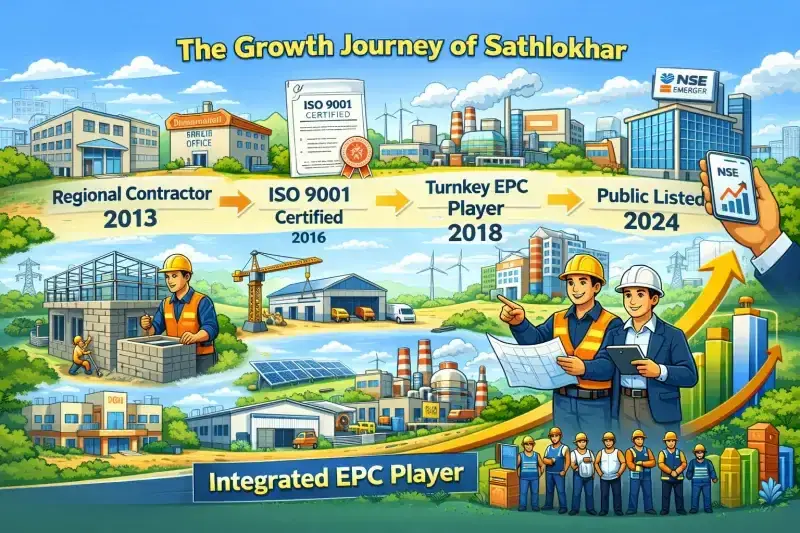
The Growth Journey of Sathlokhar: From a Regional Contractor to an Integrated EPC Player
Every infrastructure company has a starting point. For Sathlokhar, that story began in 2013, when the company was incorporated in Chennai as a turnkey Engineering, Procurement, and Construction (EPC) contractor focused on industrial and infrastructure projects. In its early days, the company was simply a small construction firm taking on projects and building experience one job at a time. Over the years, things slowly changed. New capabilities were added, the scale of projects increased, and the scope of work widened. Today, Sathlokhar runs as an EPC contractor, jumping into a mix of sectors and regions—a big leap from where it all began.The Early Foundations (2013–2016)
In the early days—2013 to 2016—the company focused on sharpening its skills and carving out a spot in the construction scene. 2015 really changed things. They got their Electrical Contractor (EA) License, and that opened the door for some serious work in both high-tension and low-tension electrical projects. Not too long after, they finished their first major civil project for the Dinamalar Office in Chennai. That was a big milestone.Things kept picking up. In 2016, Sathlokhar earned the ISO 9001 certification, showing they were serious about quality and running projects in a structured way.
Entering Turnkey Industrial EPC (2017–2018)
Then came the shift into turnkey industrial EPC. By 2017, the company was moving past smaller jobs and started landing full turnkey EPC assignments. Delivering their first industrial turnkey project for Kemin Industries South Asia Pvt Ltd really changed things. Suddenly, Sathlokhar wasn’t just a civil contractor—they could handle whole projects, end to end.Around this time, they realized strong engineering skills were key if they wanted to stay competitive. So in 2018, they set up Archivo Infra Inc., their in-house design and architectural arm. This let them take on design-build EPC projects and play a bigger role beyond just execution.
The Shift Toward Vertical Integration (2023)
By 2023, Sathlokhar took things up a notch and launched Sathlokhar Industries Private Limited. With this new arm, they focused on pre-engineered buildings and steel fabrication, but here’s the big change—they stopped outsourcing and brought all the structural fabrication under their own roof. That shift really paid off. Now, they hit deadlines more easily, keep a close eye on quality, and control costs better. The plant turns out about 300 metric tonnes every month, so fast-moving projects aren’t an issue anymore.All these moves changed the company’s role. They’re no longer just contractors. Sathlokhar now runs with a fully integrated approach—design, fabrication, and execution all happening under one roof.
Entering Public Markets (2024)
In August 2024, the company reached another milestone when Sathlokhar converted into a public limited entity and got listed on the NSE Emerge platform. The listing was not just about raising capital. It also marked a move toward stronger governance practices, greater transparency, and wider visibility among institutional participants.For many mid-sized EPC companies, getting listed in the public markets can mark a meaningful turning point. It often helps strengthen the company’s balance sheet while also improving its credibility when competing for new projects. In many cases, being publicly listed can also make it easier for such companies to pursue larger project opportunities that may have been harder to access earlier.
Scaling Operations (FY25 and Beyond)
By FY25, Sathlokhar had begun operating at a significantly larger scale. The company crossed ₹401 crore in revenue as project activity increased across industrial, logistics, commercial, and infrastructure segments. As the years passed, the company’s journey moved well beyond its early beginnings. Its operations gradually expanded across five states in India, and with that expansion came a wider variety of projects.Sathlokhar began with a pretty tight scope, but over time, their work expanded to cover everything from manufacturing plants and big warehouses to institutional campuses, solar projects, and commercial buildings. Now, they’ve got a team of over 3,000 people working on various projects. By bringing design, PEB fabrication, civil work, MEP installations, and interior finishing under one roof, Sathlokhar keeps projects running smoothly and avoids a lot of the usual headaches.
What Sathlokhar Actually Builds
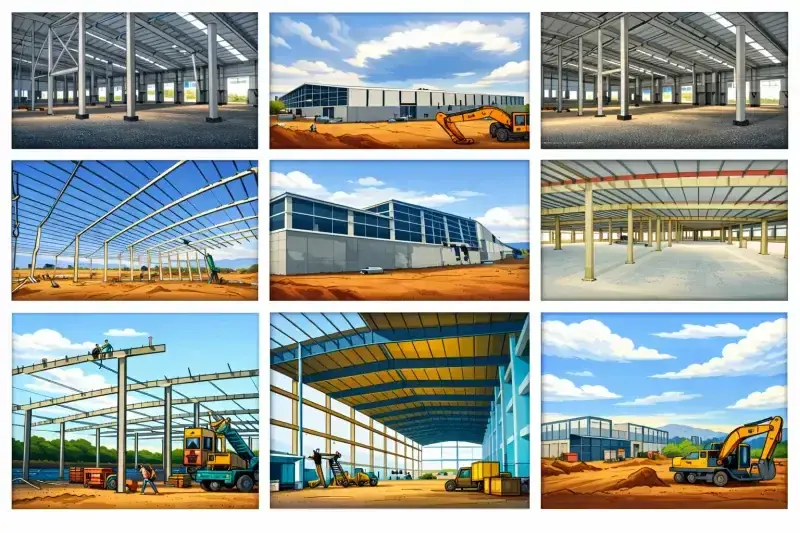
Sathlokhar Synergys takes on construction projects from start to finish as an EPC turnkey contractor. They don’t just handle one piece of the puzzle—they’re in charge of everything, from engineering and procurement to actually building the thing. You usually see traditional civil contractors working on just one part of a project, but EPC contractors like Sathlokhar Synergys run the whole show, managing every stage and making sure it all comes together.Sathlokhar functions as a one-stop infrastructure execution platform, covering a wide range of capabilities, including:
• Civil construction
• Pre-engineered buildings (PEB)
• Mechanical, electrical, and plumbing systems (MEP)
• Solar installations
• Interior and finishing works
• Industrial infrastructure development
These services are deployed across multiple sectors, including:
• Manufacturing facilities
• Industrial warehouses
• Commercial buildings
• Healthcare infrastructure
• Institutional buildings
• Utility infrastructure
The company runs on an integrated project delivery model, bringing all the different construction parts together under one contract. With this setup, clients get their projects done faster, deal with fewer vendors, and have a much better sense of what everything will cost. That kind of control and speed really matters, especially with big industrial jobs.
Understanding Sathlokhar’s Revenue Engine
Revenue generation in EPC businesses follows a very different rhythm compared with traditional product companies. Instead of selling finished products repeatedly, EPC contractors earn revenue by executing large projects over time. The business is therefore tied not to unit sales, but to the physical progress of construction itself.When a company like Sathlokhar secures a project, revenue is not recognised all at once. Revenue gets recorded bit by bit as each phase of a project wraps up. Usually, things kick off with engineering design and planning. Then comes buying all the construction materials, followed by the main building work and any mechanical or electrical installations. It all finishes up with commissioning and handing the project over to the client.
Since that's how these projects work, EPC companies see their revenue grow along with the project’s progress, not from quick sales or short-term deals.
In practical terms, three operating variables usually determine how quickly an EPC contractor scales. The first is order inflow—the value of new contracts secured during a period. Next up is the order book. This shows all the confirmed work Sathlokhar still needs to finish. Then there’s execution velocity—basically, how fast and smoothly projects move from start to finish.
Together, these three elements form the economic engine of the EPC business model.
Looking at FY26, Sathlokhar’s order book sat at about ₹1,397 crore, with a bid pipeline close to ₹16,105 crore. That’s a big number and tells you the company’s out there chasing lots of industrial and infrastructure deals.
But let’s be real—just having a massive pipeline doesn’t mean all of it turns into actual revenue.
In EPC contracting, projects under bid represent possibilities rather than certainty. Management says that usually only 12% to 15% of bids actually turn into real orders. It just shows how tough it is to win projects in the infrastructure world.
Price isn’t the whole story. When clients choose a contractor, they don’t just chase the lowest bid. They want someone who shows up, knows their stuff, and actually follows through. In the end, it’s all about trust—who’s kept their word before, who’s built real relationships. A company like Sathlokhar? They don’t win by just stacking up potential projects. What counts is landing the job and getting it done right, just like they said they would.
Order Book Structure & Client Base
If you want to judge how credible an EPC contractor is, just look at who their clients are. Big infrastructure projects, especially the kind that major industrial companies commission, aren’t simple gigs. They demand strict engineering, serious safety standards, and work that actually gets done on time. That’s why established manufacturers don’t just hand out contracts to anyone—they go with teams they trust to deliver, every time.Sathlokhar’s track record says a lot. The company has worked with names like Reliance Consumer Products, Toyota Kirloskar Motor, Komatsu India, and Pou Chen Group from Taiwan, to name a few. Landing jobs with these multinationals isn’t easy; their vendor selection is tough, and they don’t take risks with construction partners.
One project that really stands out from FY26: Sathlokhar took on a civil and pre-engineered building job for the CAMPA Cola plant, worth about ₹338 crore, for Reliance Consumer Products. That’s not a small win. Pulling off projects at this scale shows they can manage the kind of complex, industrial work that needs a tight grip on civil construction, structural engineering, and mechanical systems—all running smoothly together.
Teaming up with big industrial clients isn’t just about landing bigger contracts or boosting the bottom line. It’s a stamp of credibility. These companies demand exact specs, full safety compliance, and no excuses on deadlines. So, when Sathlokhar wins and delivers on these jobs, it’s a clear sign they’re operating at a higher level, not just chasing work by undercutting on price.
At the same time, Sathlokhar’s been busy expanding its reach, not just sticking to one part of the map. Right now, you’ll find their projects in Tamil Nadu, Andhra Pradesh, Karnataka, and Maharashtra. They’ve even stepped outside India, starting their first overseas EPC project in Sri Lanka.
This move to spread out helps them avoid being tied to just one market. It opens up more opportunities and keeps the business steady, even when project demand shifts from one region to another. In the long run, that kind of diversification gives the company a real edge in an industry where things can change fast.
International Expansion – First Overseas EPC Order
One of the notable milestones for Sathlokhar during FY26 was the company’s first. The company just scored a ₹35.59 crore project with Ceylon Beverage International in Sri Lanka. They’re taking care of all the mechanical and electrical work for a new beverage manufacturing plant. It’s not their biggest project ever, but it matters a lot. Landing international EPC contracts like this boosts their reputation and opens doors to bigger cross-border infrastructure deals in the future.For Sathlokhar, this marks the early stage of a potential international execution capability.

Industry Context – Why EPC Demand Is Rising
“The best businesses are often those riding a powerful industry wave.”
For EPC contractors, growth rarely happens in isolation.
Sector cycles often play a major role in stock performance. To understand how market trends influence businesses, you may find our guide useful: Bull Market vs Bear Market – How Investors Should React.
Their fortunes rise and fall with the bigger swings of the economy—especially when it comes to manufacturing, infrastructure, and industrial growth. Whenever companies start building new factories, warehouses, or logistics parks, EPC contractors are usually first in line to get involved.
Lately, India’s industrial landscape has been changing in some pretty big ways. After years of playing it safe, private companies are finally starting to spend again. Manufacturing firms are ramping up production, global supply chains are shifting, and more multinational companies are giving India a serious look as a manufacturing base. Each of these changes means one thing: more building. Factories, industrial parks, logistics centers—they’re all popping up to meet the new demand.
The boom in e-commerce and organized retail is pushing the need for bigger, better warehouses all over the country. You see new logistics facilities, cold storage units, and distribution hubs going up faster than ever before.
Digital infrastructure is catching up, too. Data centers, cloud facilities, and tech campuses are popping up everywhere to keep pace with India’s digital growth.
Energy’s not far behind. Renewable projects, battery storage, and solar manufacturing—these are fueling another round of construction, stretching across many states.
Just look at industrial leasing: it hit over 32 million square feet in the first half of 2025 alone. That says a lot about the strength of manufacturing and logistics right now.
Put all this together, and it’s clear the construction world is changing fast. For EPC contractors who know how to tackle complex projects and get things done, this is a real shot to grow.
The companies that can combine engineering capability with reliable execution are likely to find themselves at the centre of India’s next industrial expansion cycle.
Big changes in the industry are opening up a long runway for EPC contractors in India. But here’s the thing—just because there’s more work out there doesn’t mean everyone gets a slice of the pie. These projects are huge, deadlines are tight, and mistakes can cost a lot. Not every contractor is set up to handle that kind of pressure or risk.
In the world of infrastructure construction, winning projects comes down to a few key things: solid engineering skills, a good reputation with clients, and the muscle to finish jobs on time. The contractors who pull this off—who can tackle tough projects and keep costs in check—end up reaping the real rewards as the industry grows.
This is where Sathlokhar’s operating model becomes particularly relevant.
How Sathlokhar Is Positioning Itself to Capture the EPC Opportunity
Over the last ten years, Sathlokhar has steadily put together a fully integrated EPC platform to keep up with the rising need for industrial and infrastructure construction. Instead of sticking to one area, they work across a bunch of different segments—civil works, pre-engineered buildings, MEP systems, solar EPC, and even interior fit-outs.This setup lets Sathlokhar take on all kinds of industrial projects and gives them tighter control over schedules and quality. You see it all the time in the EPC world—when design, engineering, fabrication, and on-site work get split up, things tend to slow down. Costs can spiral. Teams end up out of sync. Sathlokhar’s approach aims to cut through all that mess.
By integrating several of these capabilities under one operational structure, Sathlokhar attempts to reduce such bottlenecks while improving project delivery efficiency.
As the management philosophy of many infrastructure builders suggests, success in construction rarely depends on speed alone—it depends on coordination.
Henry Ford once remarked, “Coming together is a beginning; keeping together is progress; working together is success.”
In many ways, the EPC business mirrors this idea. Large construction projects require the seamless integration of multiple disciplines—from engineering design and structural fabrication to mechanical systems and final commissioning.
Sathlokhar’s strategy reflects this principle by bringing together several stages of the construction value chain within a single delivery platform.
A key element of this model is the company’s in-house design and engineering capabilities, supported by its architectural arm, Archivo Infra. By participating in the design phase of projects, the company is able to align engineering decisions with execution realities, reducing the risk of costly mid-project modifications.
Complementing this design capability is Sathlokhar’s dedicated pre-engineered building (PEB) and steel fabrication unit, which allows the company to control a critical component of industrial construction. Structural steel fabrication is often a major source of supply chain delays in EPC projects. Having an internal fabrication facility provides greater flexibility in managing project timelines and material availability.
As the legendary management thinker Peter Drucker once observed,
“Efficiency is doing things right; effectiveness is doing the right things.”
For EPC companies, effectiveness often comes from designing an operating model that minimises external dependencies while maintaining quality control. Sathlokhar’s vertically integrated structure appears designed with this objective in mind.
The company’s services cover a pretty wide range of industrial infrastructure projects. We’re talking about everything from manufacturing plants and logistics warehouses to commercial buildings, schools, and even renewable energy sites. Over the years, Sathlokhar has started putting itself forward as a contractor that can handle all these different pieces under one roof. As India keeps ramping up its industrial and infrastructure growth, this kind of approach looks more and more important.
Strategic Interpretation
At its current stage, Sathlokhar Synergys represents an emerging EPC growth platform rather than a fully established infrastructure giant.
The company has demonstrated:
• Rapid revenue scaling
• Growing order book visibility
• Increasing client credibility
• Early international expansion
However, infrastructure contracting remains an execution-intensive industry, where long-term value creation depends more on operational discipline than headline growth.
Many multibagger companies share certain common characteristics. Our research article 7 Powerful Traits of Every Multibagger Stock – A Data-Based Study explores these patterns.
In the years ahead, the key variables to monitor will be:
• Order book quality
• Project execution efficiency
• Margin stability
• Working capital management
Because in EPC businesses, growth attracts attention.
Execution determines survival.
Strategic positioning and industry opportunity provide the backdrop for Sathlokhar’s growth story. However, in infrastructure businesses, narratives alone rarely sustain investor confidence for long.
What ultimately determines durability is how the strategy translates into financial outcomes — whether revenue growth is supported by stable margins, whether projects convert into consistent cash flows, and whether expansion is achieved without stretching the balance sheet.
In other words, the real test of any EPC platform lies not in the scale of its order book, but in the quality of its financial behaviour over time.
Reading Sathlokhar’s Financial Trajectory
Financial Acceleration: From ₹87 Crore to Over ₹400 CroreIf the operational story explains how Sathlokhar participates in India’s infrastructure expansion, the financial trajectory reveals how quickly that participation translates into measurable growth.
Over the past few years, the company’s financial performance reflects a business that has moved from a relatively small regional contractor to a rapidly scaling EPC execution platform.
In FY23, Sathlokhar reported total income of ₹87.16 crore. Within just one year, revenue expanded sharply to ₹247.32 crore in FY24, followed by another year of strong growth to ₹401.83 crore in FY25.
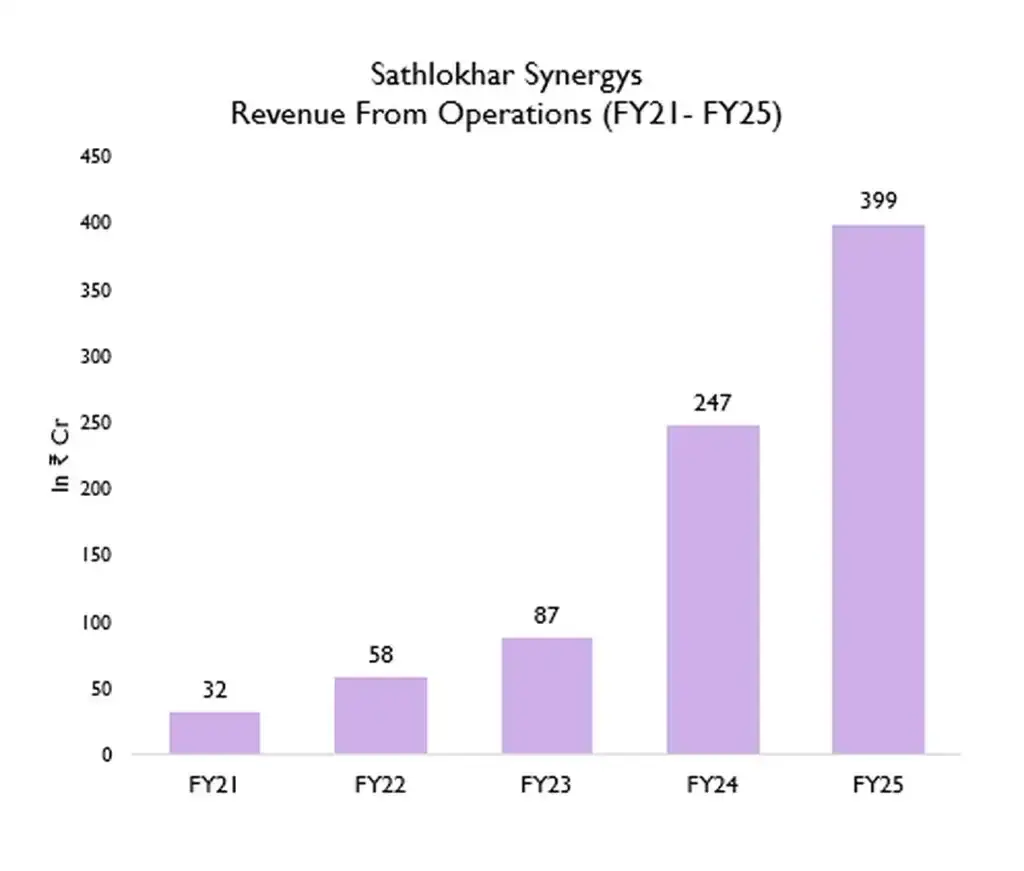
This represents a revenue expansion of more than 4.6 times in just two financial years, a pace of scaling that is relatively uncommon in the infrastructure contracting industry, where growth is often constrained by execution capacity and working capital requirements.
However, revenue growth alone rarely tells the full story in EPC businesses.
What often matters just as much is whether profitability expands alongside scale. In many construction companies, aggressive bidding or project delays can compress margins even when revenue grows.
Sathlokhar’s profitability trajectory suggests a somewhat different pattern.
EBITDA increased from ₹8.36 crore in FY23 to ₹35.93 crore in FY24 and further to ₹59.94 crore in FY25.
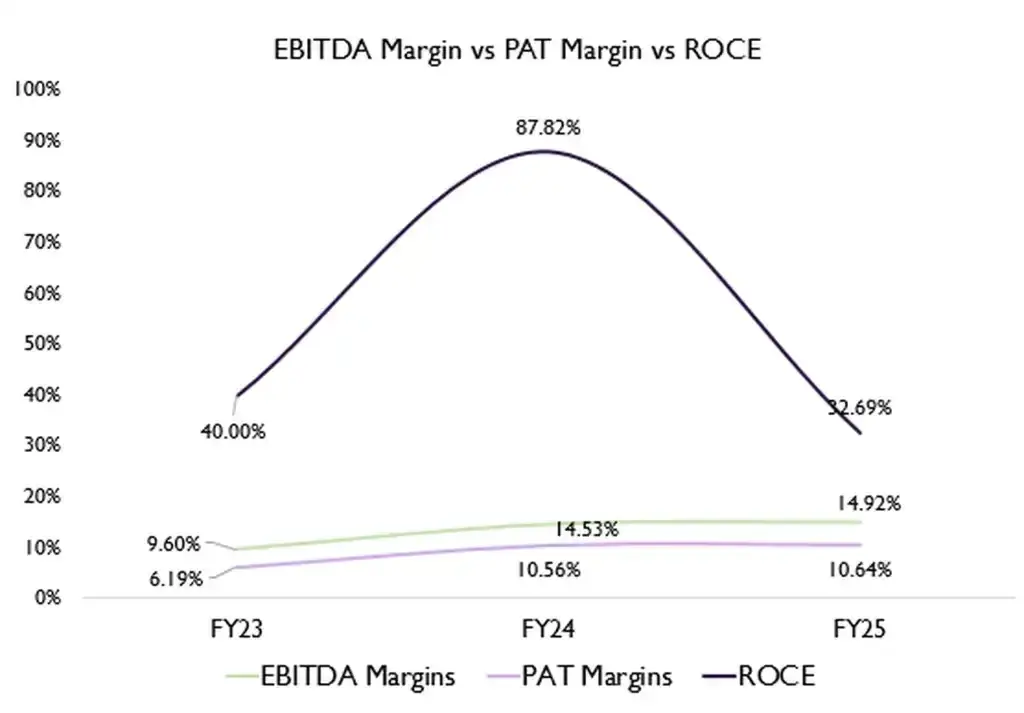
At the same time, net profit rose from ₹5.40 crore in FY23 to ₹26.13 crore in FY24 and ₹42.77 crore in FY25.
Importantly, this expansion was accompanied by an improvement in operating margins. EBITDA margins increased from approximately 9.6% in FY23 to nearly 14.9% by FY25, while PAT margins expanded from about 6.2% to over 10.6% during the same period.
Margin expansion during a rapid growth phase often suggests that a company is scaling execution without relying purely on low-margin contracts to win projects.
The momentum has continued into the current financial year. During the first half of FY26, Sathlokhar reported total income of ₹250.21 crore, along with EBITDA of ₹38.99 crore and net profit of ₹27.98 crore.
This implies that within just six months, the company has already achieved more than 60% of its FY25 revenue, indicating continued execution acceleration.
Beyond profitability, the balance sheet structure also offers insight into the company’s current financial position.
Metrics such as leverage and capital efficiency play a major role in evaluating companies. We explain these concepts in detail in What is Debt-to-Equity Ratio? Why It Matters for Small Cap Investing.
As of the latest reported period, Sathlokhar maintains a debt-to-equity ratio of approximately 0.05 times, indicating relatively low financial leverage compared with many infrastructure contractors. At the same time, return on equity and return on capital employed both stand near 24.8%, suggesting that the company has been able to generate strong returns on the capital deployed in the business.
Another important feature of the company’s financial profile is execution efficiency relative to asset base. The business currently reports a fixed asset turnover ratio exceeding 43 times, highlighting the asset-light nature of its EPC execution model.
Large order books can generate optimism.
But consistent project delivery is what ultimately converts those orders into revenue, profits, and long-term shareholder value.
Where Sathlokhar Stands Today
Sathlokhar’s sharp increase in revenue and profitability has been driven primarily by its ability to scale project execution while expanding its order book with larger industrial contracts. As Sathlokhar landed projects from big manufacturing and infrastructure clients, work really picked up. More jobs moved into the active phase, so revenue started coming in faster. At the same time, the company tightened up how it runs things—pulling civil works, PEB fabrication, and MEP services all under one roof. That made it easier to manage projects and get things done efficiently. With bigger contracts rolling in, better control, and a sharper focus on execution, Sathlokhar managed to boost both its revenue and margins at the same time. In EPC businesses, such growth usually reflects not just demand, but a contractor’s growing credibility and ability to deliver projects reliably.In many ways, Sathlokhar’s journey reflects how durable businesses are often built in the infrastructure sector — not through sudden breakthroughs, but through consistent execution. Sathlokhar started out as a small regional contractor, but now it’s picking up speed as a growing EPC platform. What’s fueled that climb? Finished projects, stronger client ties, and a sharper, more robust way of running things. With India pouring more money into industry and infrastructure, there’s a lot on the table for EPC players who know what they’re doing. For Sathlokhar, the real test is sticking to what got them here—delivering on time, keeping a close eye on capital, and turning their steady flow of new work into long-term financial wins. In the world of infrastructure, you don’t make your mark with splashy headlines.
If you enjoy studying emerging SME companies, you may also like our deep dive on Top SME Stocks That Created Millionaires in the Last 3 Years – Krishna Defence.
You do it with concrete, steel, and projects that last for years after the ribbon-cutting.
If you found this analysis useful, comment “EPC” and share your thoughts on Sathlokhar’s growing EPC execution story.
Explore our Products
Research Framework

Emerging Titans
Combination of quantitative analysis, industry tailwinds, and management assessment - SPRINT investment philosophy

Tiny Titans
Heavy emphasis on scuttlebutt research, plant visits, and early on-ground signals
FAQs
What does Sathlokhar Synergys do?
+Sathlokhar Synergys E&C Global Limited is an engineering and construction company that provides EPC services for industrial buildings, warehouses, factories, and infrastructure projects. The company focuses on designing, building, and delivering turnkey construction solutions for manufacturing and logistics clients.
What are the risks of investing in Sathlokhar?
+Key risks include dependence on project orders, delays in execution, and fluctuations in construction costs, such as steel and cement. Like many SME companies, the stock may also experience higher price volatility and lower liquidity compared to larger listed firms.
What exchanges is Sathlokhar listed on?
+Sathlokhar Synergys E&C Global Limited is listed on the NSE SME platform (NSE Emerge).
Are SME stocks risky?
+SME stocks generally carry higher risk because the companies are smaller, have shorter operating histories, and their shares tend to be less liquid. As a result, their prices can be more volatile compared to large or mid-cap stocks.
Is it difficult to sell SME shares?
+Selling SME shares can sometimes be difficult because trading volumes are lower than those of main-board stocks. This lower liquidity may make it harder to quickly buy or sell large quantities of shares without affecting the price.

High growth stock specialist, Value Educator
Shashank Mahajan is an equity research professional with over 12 years of experience in identifying high-potential SME and micro-cap stocks at an early stage. He follows a rigorous scuttlebutt research–driven approach, combining on-ground insights with deep financial analysis. Shashank specializes in uncovering under-researched and under-owned companies with strong management quality and long-term growth potential. Through disciplined research and early identification, he focuses on spotting tomorrow’s market leaders before they enter the mainstream investor radar.
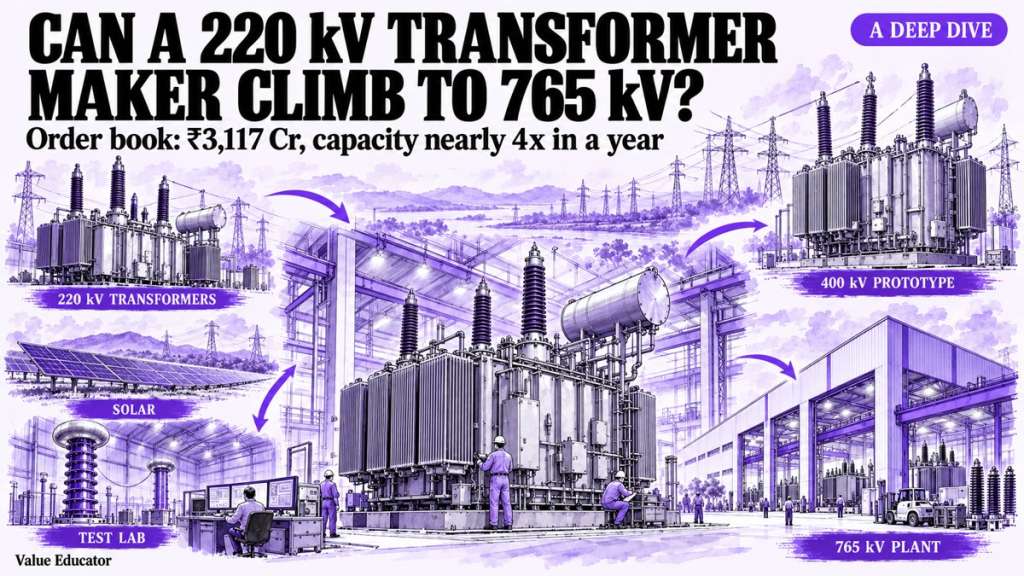
Atlanta Electricals: Capacity Nearly Quadrupled in a Year
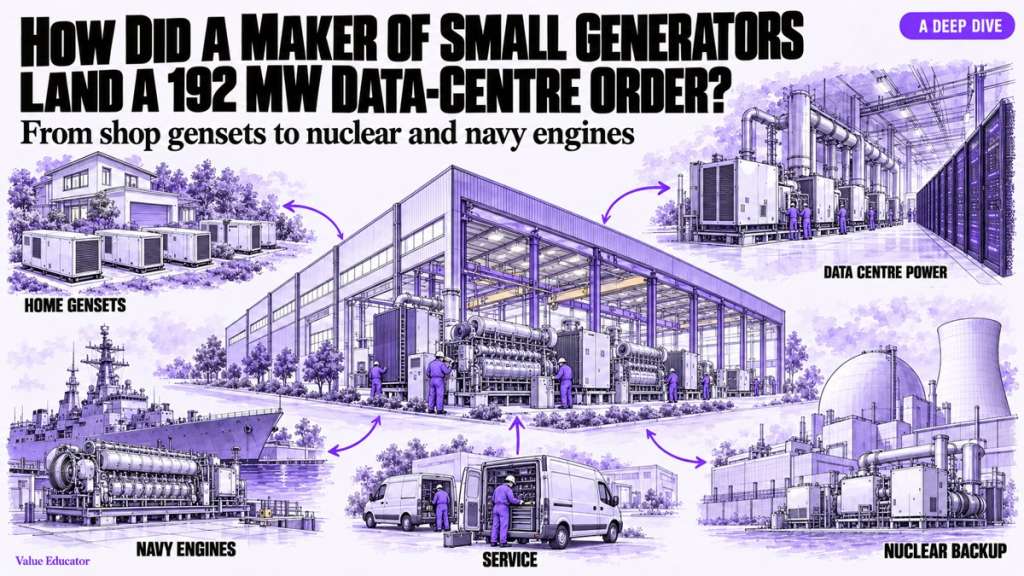
Kirloskar Oil Engines: Data Centres, Nuclear and the Navy
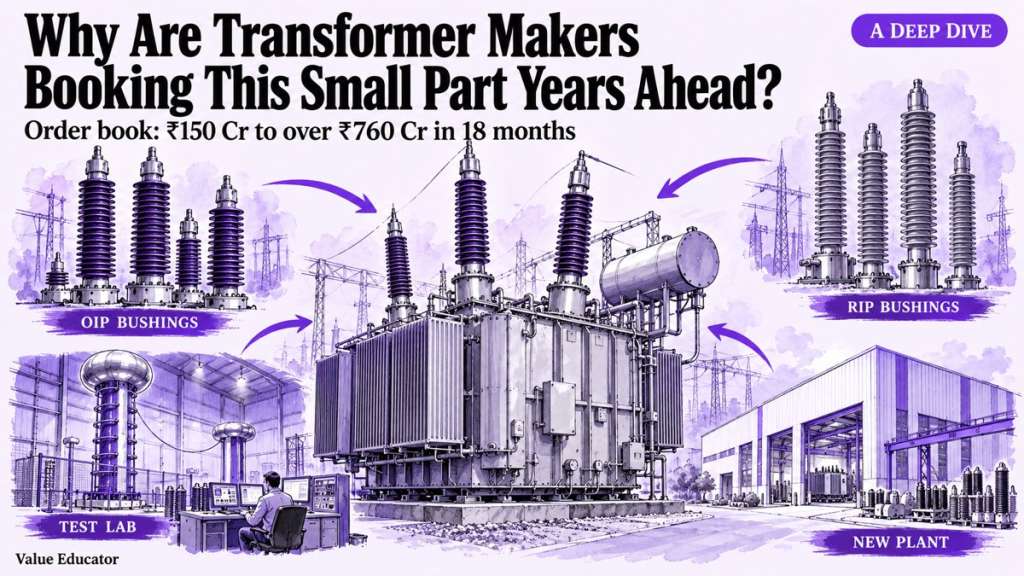
Yash Highvoltage: Bushing Maker With ₹760 Cr of Orders
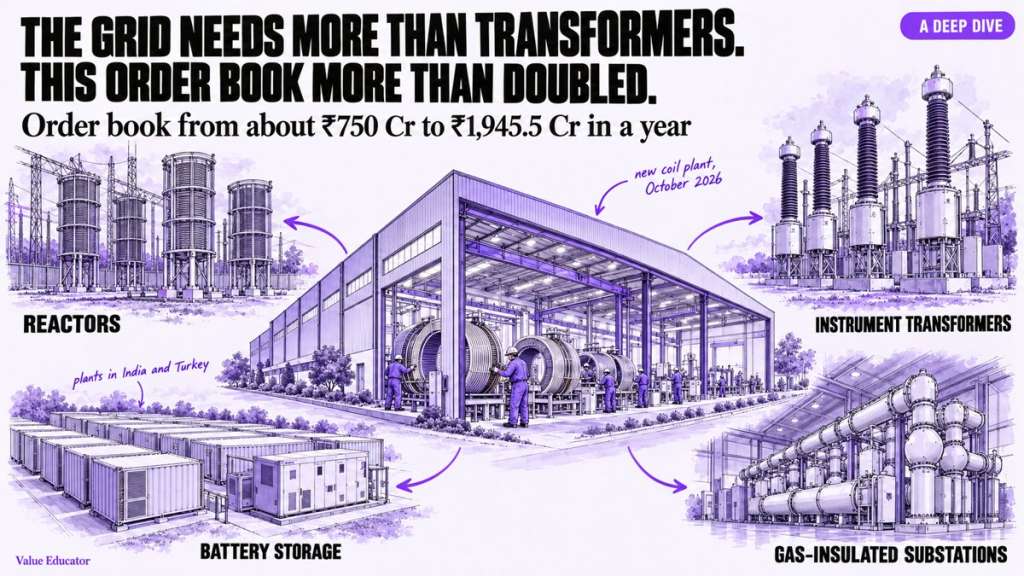
Quality Power: Reactor Maker With a ₹1,945.5 Cr Order Book
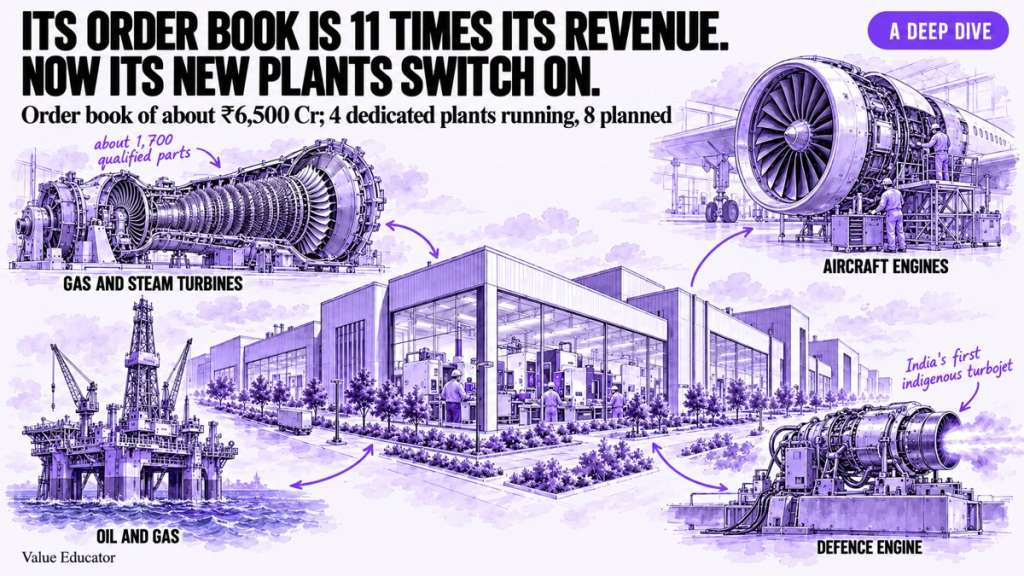
Azad Engineering: Turbine Blades, Jet Engines and Orders
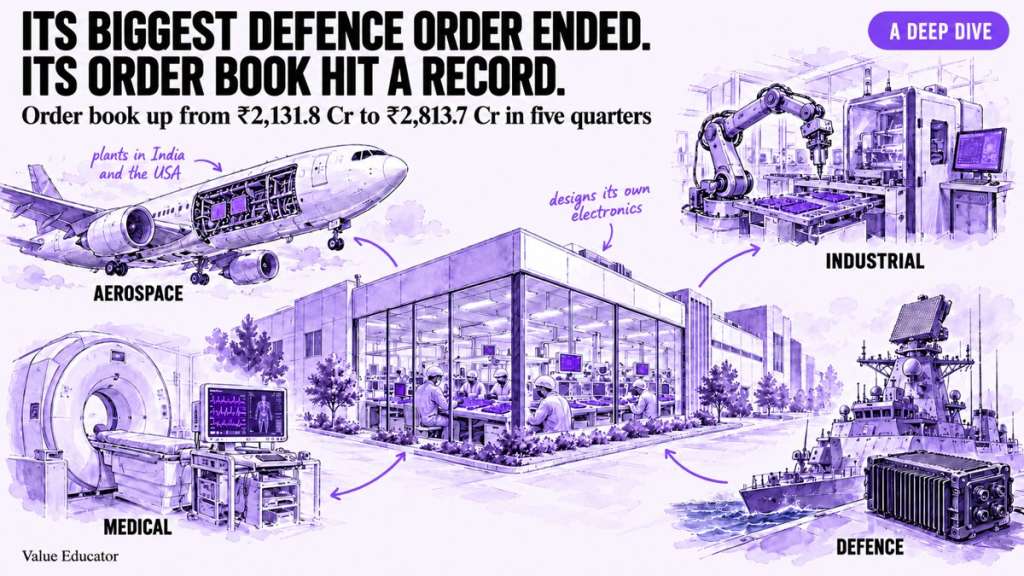
Cyient DLM: Aircraft Electronics and a Record Order Book
Explore our Products
Research Framework
Emerging Titans
Combination of quantitative analysis, industry tailwinds, and management assessment - SPRINT investment philosophy
Tiny Titans
Heavy emphasis on scuttlebutt research, plant visits, and early on-ground signals



Modern Warfare to Multibaggers
Key Trends. Strategic Shifts. Opportunities Ahead.
Don't Miss This Exclusive Webinar!
Join Value Educator to decode the key trends shaping India's defence sector and learn how to identify tomorrow's potential leaders in the space.
- In-depth research on India's defence sector
- Live Q&A session
- Actionable takeaways for long-term investors

 Orders
 Subscription
 Share with friends


Required Details
₹23999.00
(12 month subscription)
As per SEBI regulations, all users are mandated to complete the KYC that is validated for 1 year. Post payment, you will be redirected to the KYC screen


No comments yet. Be the first to comment!