
Bull vs Bear Market: How to React
Do you remember November 2021? The hype was electric. It was the era of the "New Age" tech IPO. You couldn’t open a newspaper or a WhatsApp group without hearing about the digital revolution.
At the center of it all was Paytm. It was priced at ₹2,150. Analysts were shouting buy ratings from the rooftops. If you were a retail investor, you probably felt that missing this IPO was a sin. It wasn't just a stock; it was a ticket to the future.
Then came the listing. And then the slide. And then the crash.
If you bought into the euphoria and held on all the way down to ₹450, watching 75% of your capital evaporate, you learned the most expensive lesson Dalal Street has to offer.
Also read our article on: A Beginner's Guide to the Indian Stock Market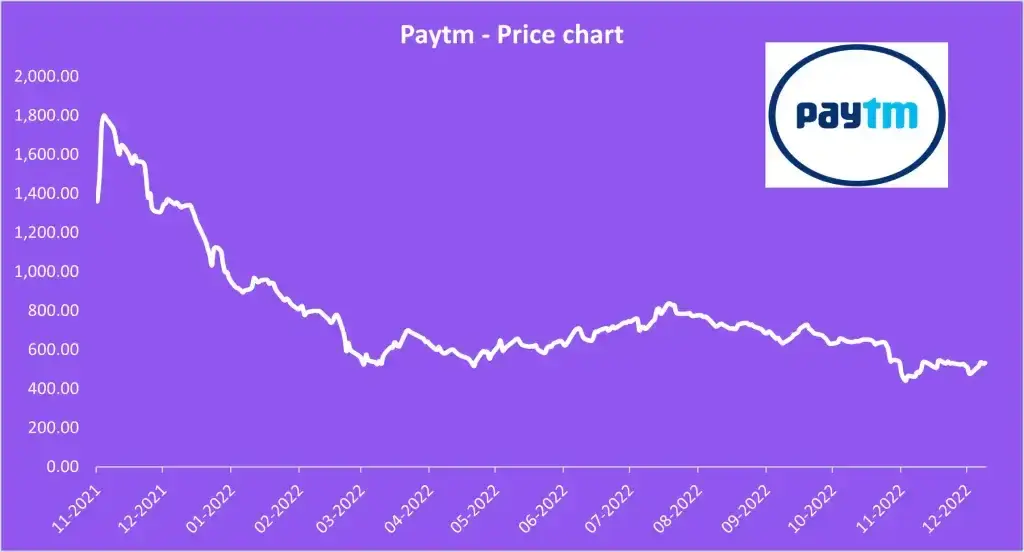
In his brilliant chronicle of the Indian markets, Bulls, Bears and Other Beasts, Santosh Nair describes the market not as a machine, but as a living, breathing jungle. It is a place where "Lalas" (old-school savvy traders) and "Bacchas" (naive newcomers) fight for survival.
Think of the market as a constant fight between two forces: the 'Bull' (Teji), which makes things go up with excitement and belief, and the 'Bear' (Mandi), which drags things down with worry and uncertainty. Dalal Street is always ruled by one of them—and the real skill is knowing who’s in charge right now.
If you learn to change your behavior with the ruling beast, markets can quietly build you generational wealth. If you don’t, the same market can turn your story into a warning others learn from.
Meeting the Players: Teji and Mandi
Let’s strip away the CNBC jargon. You don’t need to be a technical analyst to know the difference. You need to feel the "Hawa" (the wind).
A Bull Market in India feels like a wedding party. The Sensex is hitting fresh all-time highs. Your uncle is giving you stock tips at family dinners. The chai-tapri talk shifts from cricket to Nifty targets. Technically, it’s a 20% rise from the lows, but emotionally, it feels like "easy money."
A Bear Market feels like a funeral. It’s a drop of 20% or more. The TV anchors look grim. Foreign Institutional Investors (FIIs) are selling thousands of crores every day. The prevailing sentiment is that India's growth story is over.

Santosh Nair has written extensively about how these cycles repeat from the Harshad Mehta boom of 1992 to the Dot-com bust of 2000, and the Great Financial Crisis of 2008. The dates change, the tickers change, but human psychology remains the same.
The mistake most retail investors make isn't "timing" the market; it's using a Bull Market strategy in a Bear Market world.
Navigating the Bull Market (The Teji Phase)
When the Nifty is rallying, the biggest risk to your portfolio is your own ego.
In a raging Bull Market, a rising tide lifts all boats—even the ones with holes in them. In 2020 and 2021, you could have bought the flimsiest penny stocks and doubled your money. It is easy to confuse a lucky streak with financial brilliance.
The most dangerous trap here is FOMO (Fear Of Missing Out). When you see your colleague making 50% returns on a random PSU stock or a small-cap chemical company, the urge to dump your boring HDFC Bank or TCS to chase the "momentum" is overwhelming.

Resist this.
Your strategy during a Bull run should be "Optimism with a Seatbelt." Follow the points listed below strictly to ensure a smooth navigation through the bull market phase:
Beware the "Kachra" Rally
In his book Bulls, Bears, and Other Beasts, Nair describes how, at the peak of every cycle, the "Z-category" or junk stocks start flying. This is the operator's playground. When companies with no profits and dubious governance start hitting Upper Circuits daily, the end is near. Stick to quality. Don't chase garbage just because it's flying.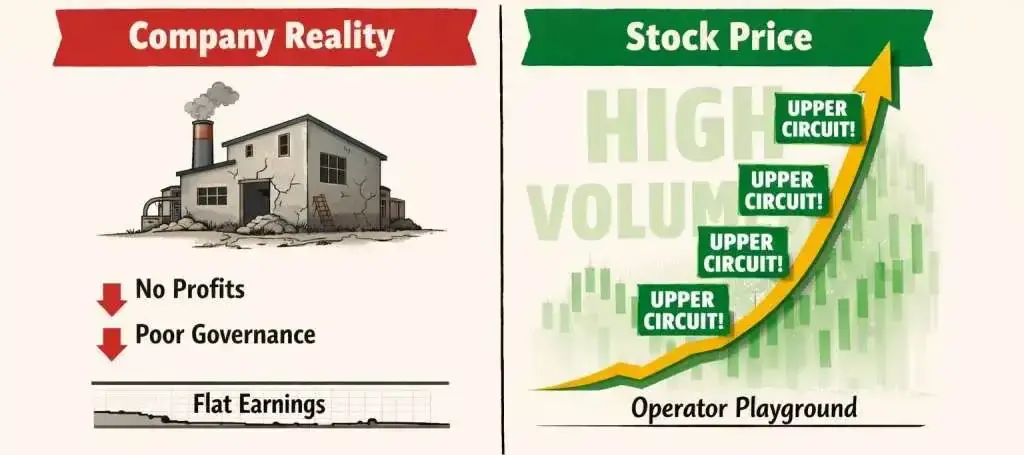
Also read our article on: Why 95% Penny Stock Investors Lose Money (And How to Avoid It)
Book Partial Profits (The "Ghar Ki Lakshmi" Rule)
There is an old Indian trading saying: Profit is only profit when it is in your bank account. Until then, it is just pixels on a screen. If a mid-cap stock has run up 4 times in a year, don't get greedy. Sell your initial capital. Take the principal amount out and let the profit ride. If the market turns, you haven't lost a single rupee of your own hard-earned money.
Avoid Leverage
In a Bull market, your broker will offer you "Margin Trade Funding" (MTF). They will say, "Pay ₹25,000 and buy stocks worth ₹1 Lakh." It sounds great when stocks are going up. But when the cycle turns—and it always does—leverage will wipe you out faster than you can say "Stop Loss."
How to Handle the Bear (The "2008 Crash" Phase)
Bear markets are psychologically brutal. Opening your Kite or Groww app feels like getting punched in the stomach. The portfolio is red. Your friends are telling you to sell everything and buy gold or FD.
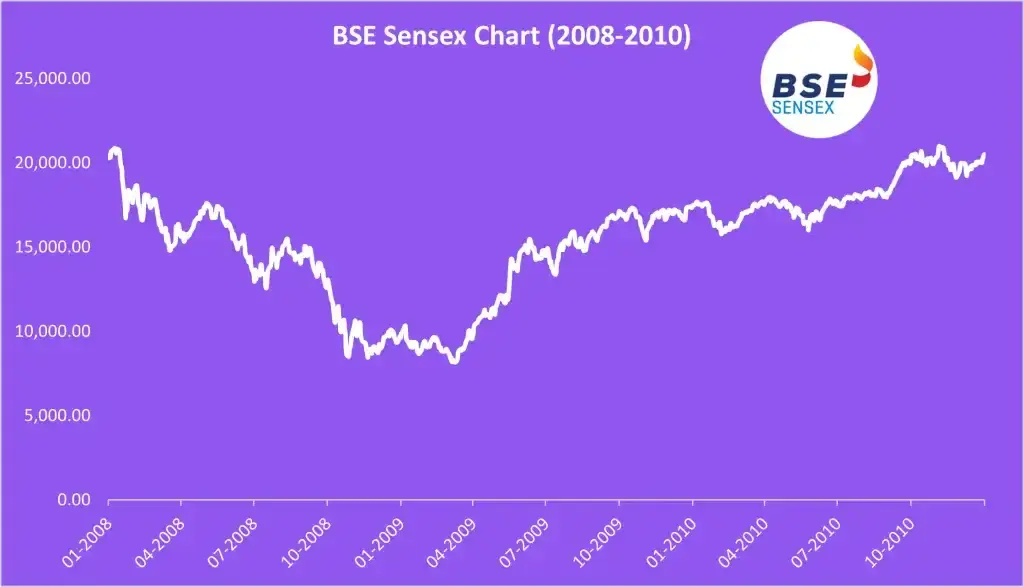
Remember the 2008 crash? The market tanked from 21,000 to about 8,000. It was scary! But guess what?
The smart people who actually bought shares then made a ton of money over the next ten years.
The strategy here changes from "Profit Taking" to "Accumulation."
The SIP Shield
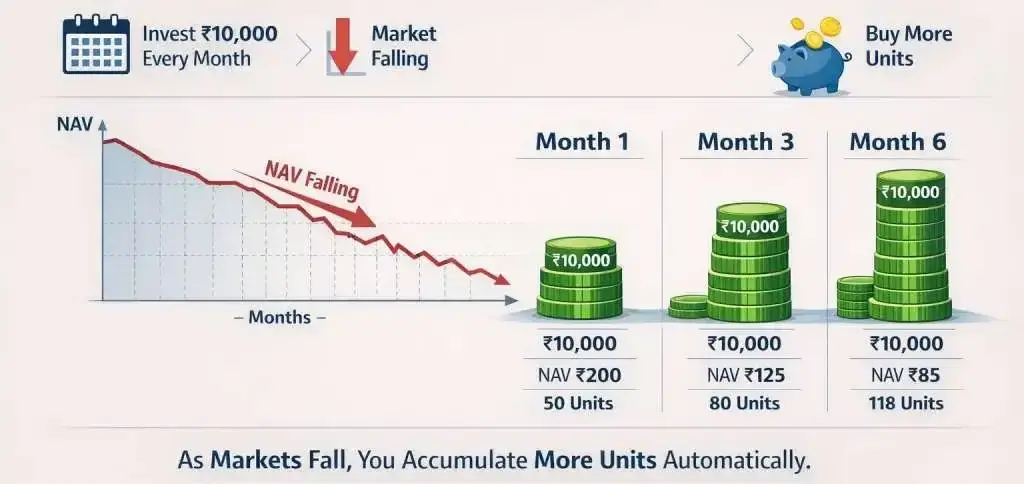
When the market falls, your monthly SIP installment buys more units of the Mutual Fund. You are buying cheap. This is Rupee Cost Averaging. You aren't trying to guess the bottom; you are just slowly building a position while the rest of the world is panicking.
You can also refer to our article on: The Power of Compound Interest: How to Create Wealth in the Stock Market
The Flight to Quality
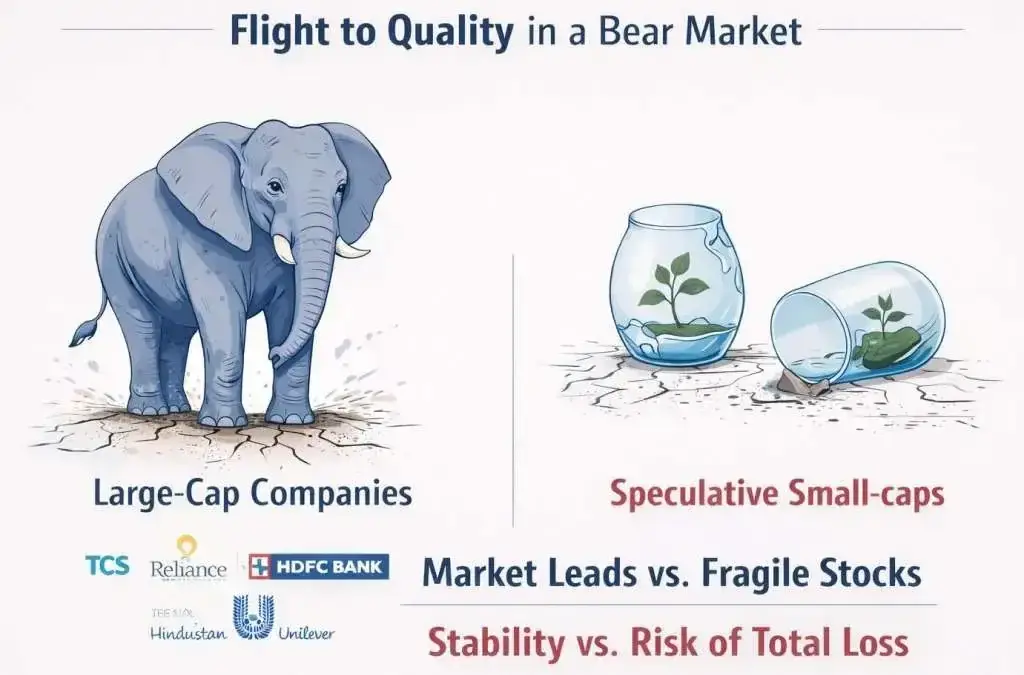
In a Bear market, hype dies. Cash flow is King.When the market's having a bad day, forget the trendy stocks and focus on the big players—the reliable companies. Think TCS, Reliance, HDFC Bank, and Hindustan Unilever.
These companies have survived all sorts of tough times. While their stock might drop 20–30% when things get rough, they aren't going anywhere. They survive. And in the market, survival is everything. The speculative small-cap stock you heard about on Telegram might never recover, but the Elephants will eventually stand up.
Stop Looking at the Screen
Santosh Nair, in his book, recounts how, during the 2008 crash, traders at the BSE stared at their screens in disbelief, paralyzed by fear.The best thing you can do during a downturn is to stop checking your portfolio every hour. It serves no purpose other than to spike your cortisol. If you believe in the India Story for the next 10 years, a 6-month correction is just a blip.

The Transition: Catching the Falling Knife
The hardest phase in any market cycle is not the Bull or the Bear. It’s the transition.
This is the phase where nothing is obvious. Prices are still high, optimism is loud, and yet something underneath starts breaking. Most investors don’t lose money because they bought at the wrong time. They lose money because they refused to accept that the environment had changed.
So how do you know when the Bull is dying?
It rarely ends quietly.
At market tops, euphoria turns into arrogance. In 2008, it was the Reliance Power IPO—an issue so hyped that people believed losses were impossible. In 2021, it was the wave of new-age tech IPOs, where profit didn’t matter, and valuation was dismissed as “old school thinking.”
That’s usually your signal.
When stock market conversations move out of business channels and into weddings, barber shops, and cab rides, the Bull is already exhausted.
When everyone around you sounds confident, when risk feels invisible, and when caution is mocked, the market is closer to the peak than the beginning. Tops are formed not on bad news, but on unquestioned optimism.
Now flip the question.
How do you know when the Bear is done?
Bear markets don’t end with hope. They end with disgust.
This phase is called capitulation. Prices have already fallen a lot, but the real damage happens emotionally. Even long-term investors stop defending the market. People don’t talk about “recoveries” anymore. They talk about betrayal.
You hear statements like:
“Stock market is a scam.”
“Only insiders make money.”
“I’m never investing again.”
That’s usually the bottom.
Not because prices suddenly look attractive, but because belief has collapsed. Nobody wants to buy. Nobody wants to talk about equities. Silence replaces debate, and fear replaces analysis.
Ironically, this is also when risk is the lowest.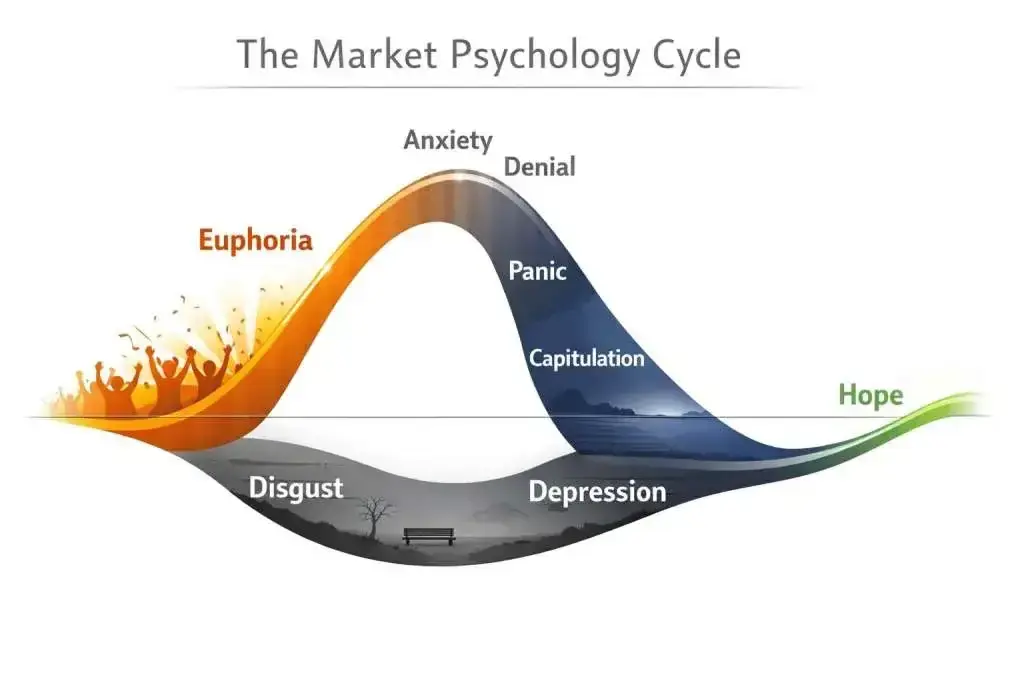
Catching a falling knife is dangerous if you’re chasing price.
It becomes sensible when you’re observing behaviour.
Market tops are noisy, whereas Market bottoms are quiet.
You can also read our article on: The Multibagger Framework: A Step-by-Step Guide to Finding 10x Stocks
And the transition between the two is where discipline matters more than intelligence.
Explore our Products
Research Framework

Emerging Titans
Combination of quantitative analysis, industry tailwinds, and management assessment - SPRINT investment philosophy

Tiny Titans
Heavy emphasis on scuttlebutt research, plant visits, and early on-ground signals
Conclusion - The Long Game: Bhav Bhagwan Che
There’s a Gujarati line investors love to throw around — Bhav Bhagwan Che: Price is God. It sounds dramatic, but it’s mostly a reminder to stay in your lane. The market doesn’t owe you an explanation, and it definitely doesn’t care if you think it’s being irrational.When markets are rising, people usually overestimate their own performance. Portfolios look good, confidence goes up, and suddenly everyone has a theory. That’s fine, but it’s also when basic things like rebalancing get ignored, and risk quietly piles up.
When markets fall, the opposite happens. Fear replaces logic. People stop SIPs, delay decisions, and wait for “clarity” that only arrives after prices have already moved. Ironically, those boring monthly investments made during uncomfortable times often end up doing most of the work later.
Both phases matter. One makes you feel good. The other helps you buy right. You don’t need to predict either. You just need to survive them.
Indian markets have been written off many times — after scams, policy mistakes, and global crises. Each time, it felt final. Each time it wasn’t.
There’s no heroic ending to this. No secret trick. Just showing up, month after month, and not doing anything stupid when emotions are running high.
That’s it. That’s the game.
If this article changed how you look at bull markets, bear markets, or your own reactions inside them, Comment “DISCIPLINE".
Frequently asked questions (FAQ)
“If markets move in cycles anyway, why do I still mess it up every time?”
+Because knowing something intellectually doesn’t mean you can live through it emotionally. Bull markets flatter your ego. Bear markets attack your patience. Most mistakes happen not because investors lack information, but because they react at the worst possible moment.
“Why does investing feel easy in bull markets and unbearable in bear markets?”
+Because bull markets reward participation, while bear markets demand conviction. In rising markets, even bad decisions get rescued. In falling markets, even good decisions look foolish for a while. That discomfort is the cost of long-term returns.
“Everyone talks about SIPs during crashes. Why do they still feel so hard to continue?”
+Because SIPs force you to act when there’s no emotional payoff. There’s no applause for buying during panic. No immediate reward. The benefit only shows up years later — which is exactly why most people don’t stick to it.
“How do I know if I’m being cautious or just scared?”
+Caution is planned. Fear is reactive. Rebalancing, staggered buying, and reducing leverage are cautious actions. Selling everything, stopping investments, or waiting endlessly for certainty are fear-driven ones. The difference usually becomes obvious only in hindsight.
“Why do market tops feel noisy and market bottoms feel quiet?”
+At the top, confidence is contagious. Everyone wants to talk, advise, and predict. At the bottom, people are tired — not just financially, but mentally. Silence replaces debate. That emotional exhaustion often matters more than any valuation metric.
“Why does the transition phase hurt more than the crash itself?”
+Because it messes with certainty. Prices haven’t fallen enough to look attractive, but the story has started cracking. Investors keep waiting for clarity while the ground quietly shifts. Most losses come from denial, not panic.
“Do good companies really recover, or is that just optimism?”
+Not all of them. But businesses with cash flows, strong balance sheets, and pricing power usually do. The market may punish them temporarily, but it rarely ignores them forever. Survival is underrated in investing.
“What’s the hardest habit to build as a retail investor?”
+Doing nothing — on purpose. Not checking prices obsessively. Not reacting to every headline. Not changing strategy every six months. Boring behaviour sounds easy until you try it during chaos.
“So what does ‘playing the long game’ actually mean?
+It means accepting that discomfort is part of the process. Those returns come from staying invested, not staying clever. And that the market rewards those who outlast cycles, not those who predict them.
If this article resonated, this read will sharpen your investing edge
Refer to our article on: How to Read a Balance Sheet Like a Professional Investor

High growth stock specialist, Value Educator
Shashank Mahajan is an equity research professional with over 12 years of experience in identifying high-potential SME and micro-cap stocks at an early stage. He follows a rigorous scuttlebutt research–driven approach, combining on-ground insights with deep financial analysis. Shashank specializes in uncovering under-researched and under-owned companies with strong management quality and long-term growth potential. Through disciplined research and early identification, he focuses on spotting tomorrow’s market leaders before they enter the mainstream investor radar.

Atlanta Electricals: Capacity Nearly Quadrupled in a Year

Kirloskar Oil Engines: Data Centres, Nuclear and the Navy

Yash Highvoltage: Bushing Maker With ₹760 Cr of Orders

Quality Power: Reactor Maker With a ₹1,945.5 Cr Order Book

Azad Engineering: Turbine Blades, Jet Engines and Orders

Cyient DLM: Aircraft Electronics and a Record Order Book
Explore our Products
Research Framework
Emerging Titans
Combination of quantitative analysis, industry tailwinds, and management assessment - SPRINT investment philosophy
Tiny Titans
Heavy emphasis on scuttlebutt research, plant visits, and early on-ground signals



Modern Warfare to Multibaggers
Key Trends. Strategic Shifts. Opportunities Ahead.
Don't Miss This Exclusive Webinar!
Join Value Educator to decode the key trends shaping India's defence sector and learn how to identify tomorrow's potential leaders in the space.
- In-depth research on India's defence sector
- Live Q&A session
- Actionable takeaways for long-term investors

 Orders
 Subscription
 Share with friends


Required Details
₹23999.00
(12 month subscription)
As per SEBI regulations, all users are mandated to complete the KYC that is validated for 1 year. Post payment, you will be redirected to the KYC screen


No comments yet. Be the first to comment!