
Dynamatic Technologies: Airbus Doors, Flap Beams and Pumps

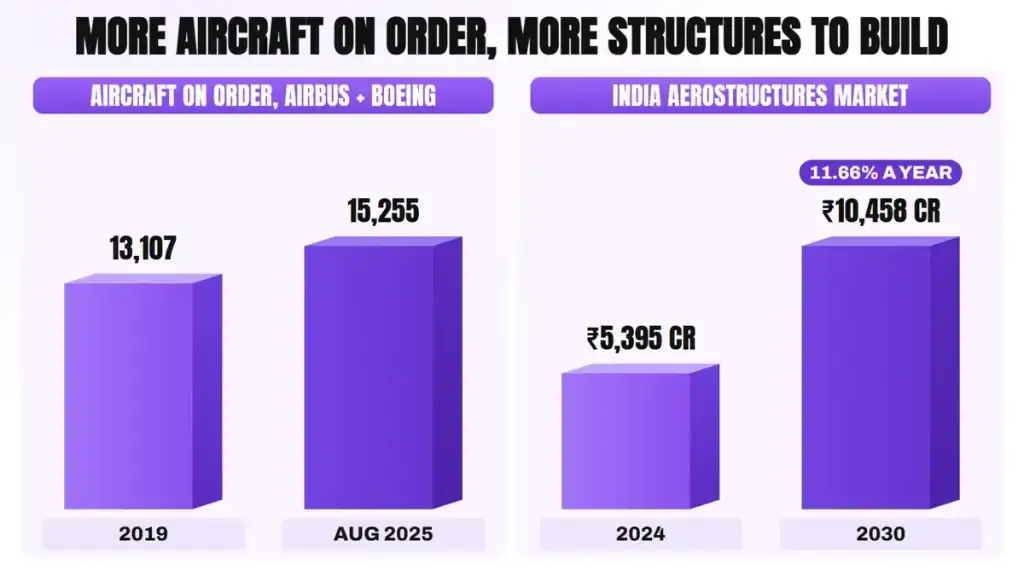
Airlines around the world have ordered far more aircraft than the makers can build. The order backlog of the large aircraft makers grew from 13,107 aircraft in 2019 to 15,255 by August 2025. So Airbus and Boeing want to raise their monthly build rates to clear that queue. Each extra aircraft needs a full set of metal structures, made to the same standard as the last one. That is where suppliers come in.
Those metal structures have a name. Aerostructures means the load-bearing body of an aircraft: the wings, fuselage sections, doors, flaps and the beams that hold them. In India, the aerostructures market was worth ₹5,395 Cr in 2024 and is expected to reach ₹10,458 Cr by 2030, growth of 11.66% a year. That is the largest of the component groups in the same estimate, ahead of landing systems and engines.
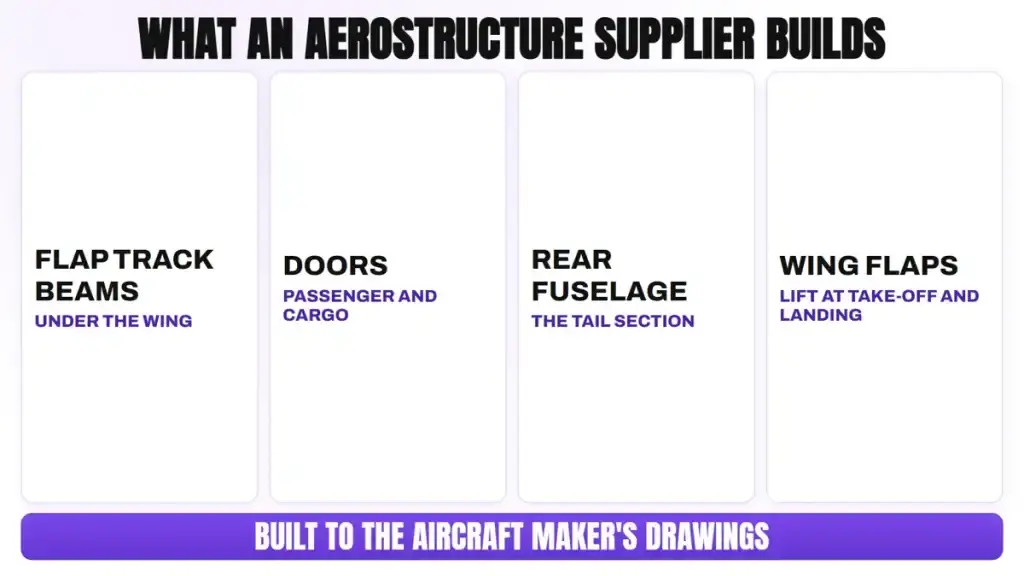
That market works in a particular way. An aircraft maker such as Airbus designs the aircraft and assembles it, but it buys most structures from approved suppliers. Most of these suppliers work on a build to print basis, which means the aircraft maker hands over the drawings and the supplier makes the part exactly to them. A supplier is paid per ship-set, the full set of a part for one aircraft. Once a part is approved for a programme, the supplier can keep making it for as long as the aircraft is in production. Airbus alone plans to deliver over 1,000 aircraft to Indian carriers in the coming years.
One Bengaluru company has been part of that supply line for years, and you may know it better for its tractor pumps. Dynamatic Technologies Ltd (NSE: DYNAMATECH), founded in 1973, makes aircraft structures, hydraulic gear pumps and metal castings. Its aerospace arm has delivered over 9,000 aircraft sets of single-aisle flap track beams to date. A flap track beam is the steel or titanium rail under the wing along which the flap slides out at take-off and landing. In Q2 FY27, aerospace gave 47% of the company's revenue.
That aerospace work is now moving to larger pieces. In FY26 the company readied its first complete ship-set of all eight doors for the Airbus A220, with over 99% Indian value added. It also signed to build the complete rear fuselage of Dassault's Falcon 6X business jet. Its other two businesses, tractor pumps in Bengaluru and iron castings in Germany, add steady but slower revenue.
Dynamatic Technologies in five numbers
- Q2 FY27 revenue of about ₹453 Cr, up 15.4% from a year ago
- Aerospace revenue up 18.1% in Q2 FY27, at 47% of the total
- Over 9,000 aircraft sets of single-aisle flap track beams delivered for Airbus
- All eight Airbus A220 doors made in Bengaluru, with over 99% Indian value added
- Hydraulics EBITDA up 123.3% in its highest-ever revenue quarter
So how did a pump maker turn into a builder of aircraft doors, and what did the latest quarter show? Let's first understand the company, and then look at the quarter.
Dynamatic Technologies: Company Overview
Dynamatic Technologies Ltd was founded in 1973 and listed through a public issue in 1974. It is based at Dynamatic Aerotropolis in the KIADB Aerospace Park near Bengaluru airport, and is run by its CEO and Managing Director, Udayant Malhoutra, whose promoter group held 41.5% of the shares in September 2026. It has three businesses: aircraft structures for Airbus, Boeing, Dassault, Bell, Deutsche Aircraft and HAL; hydraulic gear pumps for tractor and machine makers; and iron castings from its foundry in Germany. It has 8 facilities in Bengaluru, Swindon and Bristol in the UK, and Schwarzenberg in Germany, and the Indian parent had 860 permanent employees in March 2026. Group revenue was ₹1,621.34 Cr in FY26, and net debt was about ₹512 Cr in September 2026. Read this Best Defence Stocks in India for 2026
"Time is the friend of the wonderful company, the enemy of the mediocre."
— Warren Buffett
Dynamatic spent years earning approvals from aircraft makers before the larger work arrived. Whether time now works for it depends on how fast the new programmes turn into profit.
The Quarter Where All Three Businesses Grew
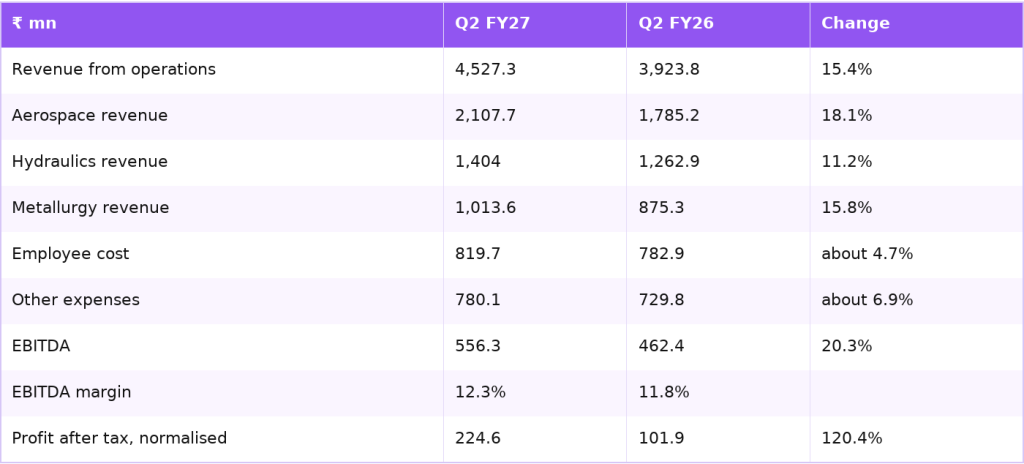
Let's look at Q2 FY27, the July to September quarter of 2026. Revenue was about ₹453 Cr, up 15.4% from about ₹392 Cr a year ago. All three businesses grew. Aerospace rose 18.1%, hydraulics 11.2% and metallurgy, the German castings business, 15.8%.
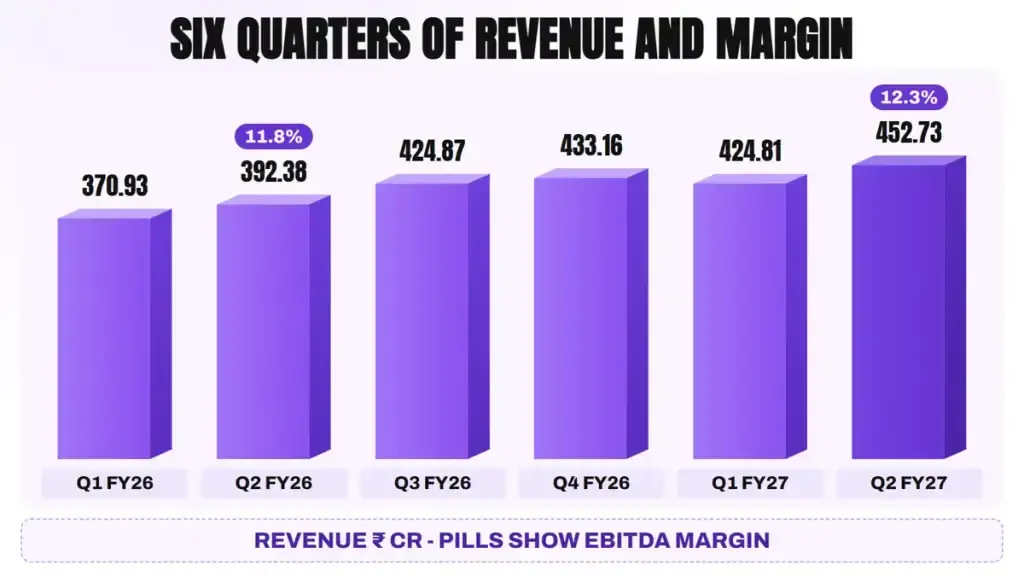
That revenue was the largest of the last eight quarters. It moved from ₹370.93 Cr in Q1 FY26 to ₹392.38 Cr, ₹424.87 Cr, ₹433.16 Cr, ₹424.81 Cr and now ₹452.73 Cr. That quarter was also 6.6% above Q1 FY27.
Then there is profit, which grew much faster than revenue. The cost lines show you why. Employee cost rose only about 4.7% and other expenses about 6.9%, while revenue rose 15.4%. So the fixed costs of the plants, from salaries to power and upkeep, were spread over a much larger base of sales than a year ago. Read this How to Read a Profit & Loss Statement EBITDA rose 20.3% to about ₹56 Cr, and the margin moved up by 51 basis points to 12.3%.
That gain carried down to profit. Normalised profit after tax was ₹22.46 Cr, against ₹10.19 Cr a year ago, an increase of 120.4%. The year-ago profit is shown before a one-off charge of ₹6.88 Cr, so the comparison is like for like. It also paid less tax in the quarter, at about ₹2.7 Cr.
That pattern holds for the half year as well, and the numbers are larger. H1 FY27 revenue was about ₹878 Cr, up 15%. EBITDA was about ₹111 Cr, up 31.8%, and the margin was 12.6% against 11% a year earlier. Its normalised profit for the half was ₹43.25 Cr, up 106.3%.
That growth also had help from the rupee, which you should keep in mind. It matters. About 70% of FY26 revenue came from customers outside India, billed in euros, pounds and dollars. In Q2 FY27, the rupee's move added about ₹28 Cr to revenue against a year ago. At constant exchange rates, revenue grew 8.13%.
That direction is clear in management's own results statement.
"The Company remains focused on scaling high-value aerospace programs, deepening relationships with global OEMs and expanding its capabilities in defence and unmanned technologies to support long-term growth." - Udayant Malhoutra, CEO and Managing Director, Q2 FY27 results
That growth is funded partly by borrowing. At the end of September 2026, total debt was about ₹591 Cr and cash was about ₹78 Cr, so net debt was about ₹512 Cr. That is 2.5 times the last twelve months' EBITDA of about ₹209 Cr. Read this Debt to Equity Ratio Explained Even so, India Ratings affirmed the company's bank loans at IND A with a stable outlook in October 2026. The board also declared a second interim dividend of ₹2 a share for FY27, after ₹3 in August.
That borrowing is paying for new work. In H1 FY27 the company spent about ₹33 Cr on plant and intangible assets. Intangible assets under development rose to about ₹52 Cr in September 2026, from about ₹35 Cr in March. These are design and development costs that the company carries on its balance sheet until a product is ready, and they cover new aircraft parts, pump designs and drones.
Those plans are backed by a stable owner. The promoter group held 41.5% of the shares in September 2026, the same as in March. Domestic funds held 9.1% and alternative investment funds 7.8%.
The Programmes Behind the Aerospace Growth
So which programmes are behind the aerospace number? It does not publish an order book. We have to read the programmes instead. Its aircraft work comes from long programme contracts, where the value depends on how many aircraft the maker builds. The best guide is the list of programmes and how far each has moved.
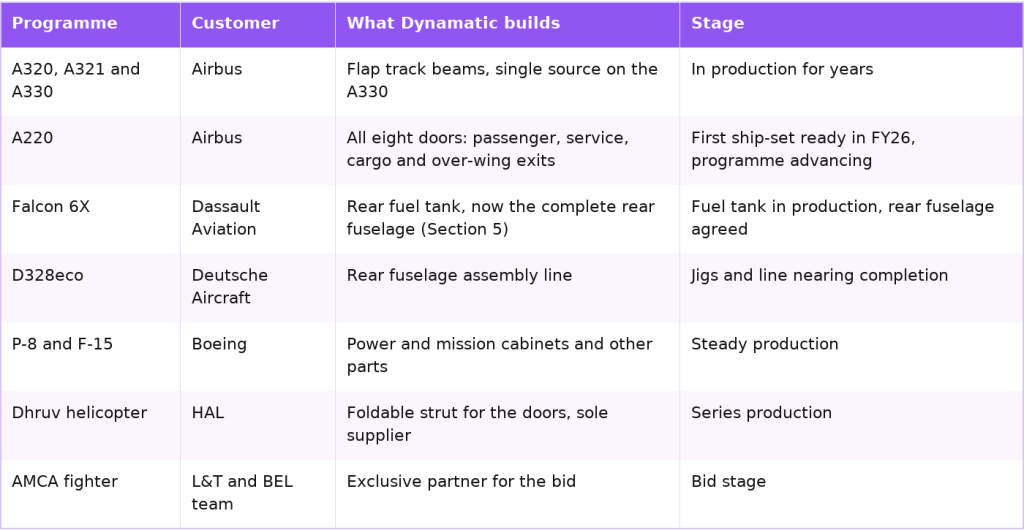
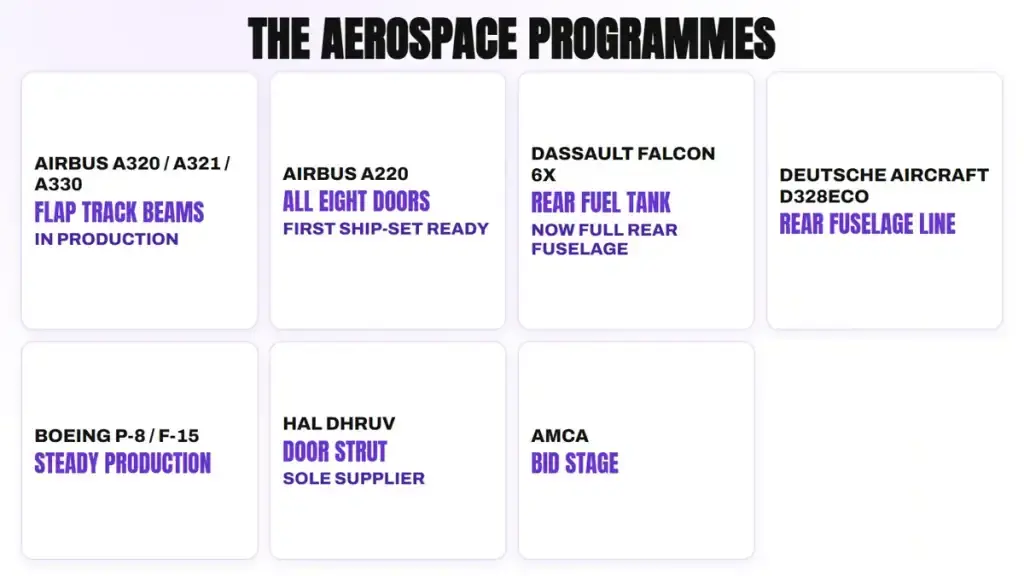
Those programmes are moving in steps. The flap track beams have run for years. Then the A220 doors and the Falcon 6X rear fuselage are the newest and largest pieces of work. So the beams give a steady base, and the new assemblies add the growth.
How Aerospace Grew From a Third to Almost Half
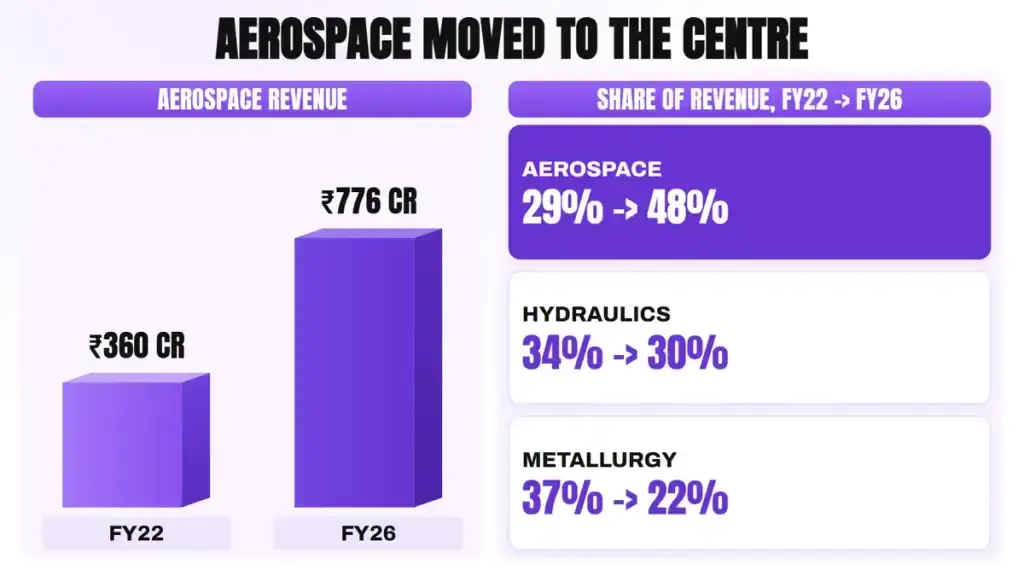
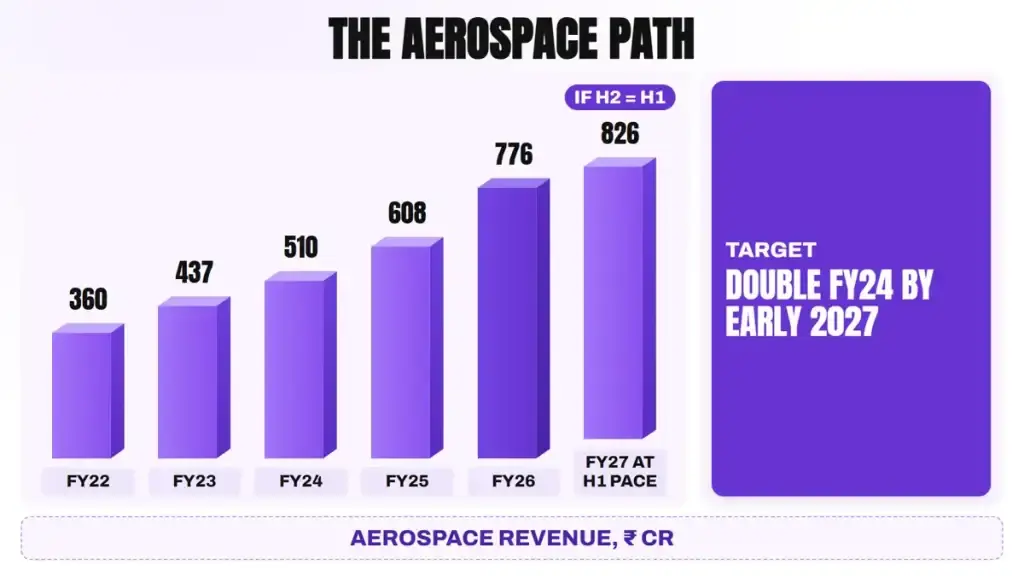
To see how the company got here, let's go back four years. In FY22, aerospace gave 29% of revenue, about ₹360 Cr. Metallurgy was larger, at 37%, and hydraulics gave 34%.
After that, aerospace revenue grew every year. By FY26 it reached about ₹776 Cr, more than twice its FY22 level, and its share rose to 48%. Group revenue reached about ₹1,621 Cr in FY26, up 15.5%.
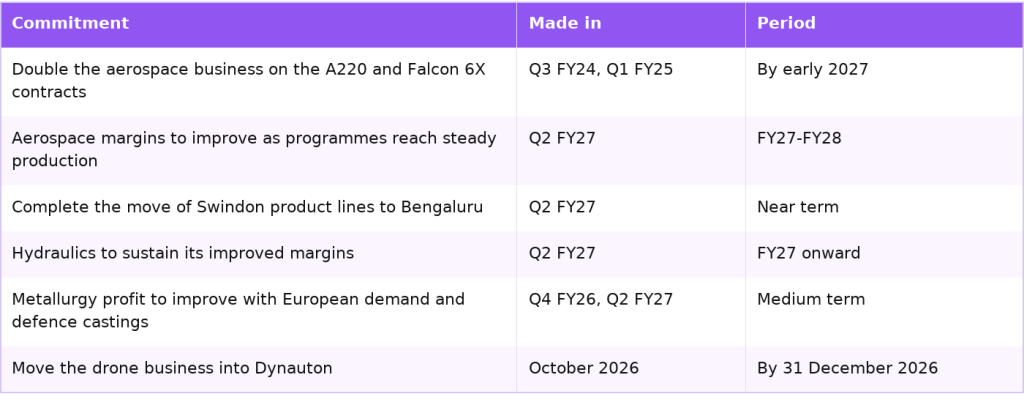
That climb really began in early 2024. In the quarter ended December 2023, the company contracted to make all variants of the A220 doors and structures for the Falcon 6X. We come back to the size of that target later. It also said the plants could absorb most of this work with little new fixed capital.
That capacity came from a new site. The aerospace business had moved to Dynamatic Aerotropolis, a campus in the KIADB Aerospace Park near Bengaluru airport. A new subsidiary, Dynamatic Manufacturing Ltd, started making sheet-metal and detail parts for the larger assemblies. Two years after it began, it makes over 2,50,000 detail parts a year for Airbus, Dassault, Bell and other customers.
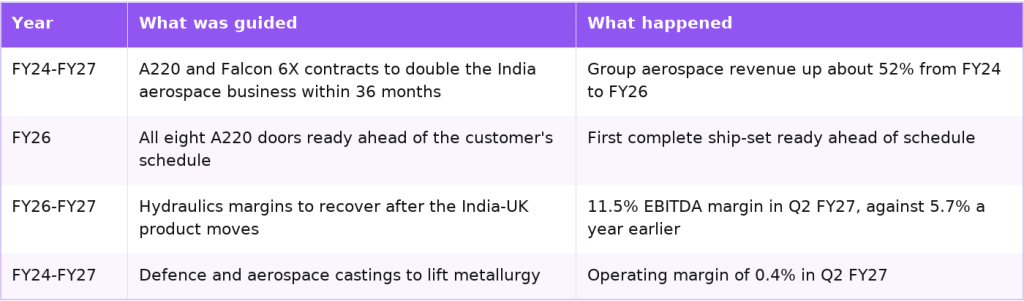
Then the programmes started to ship one by one. The Falcon 6X rear fuel tank went into commercial production. A rear fuselage assembly line for Deutsche Aircraft's 40-seat D328eco regional turboprop was built at the Bengaluru campus. In FY26 the first full set of A220 doors was ready ahead of schedule, and Dassault widened the work to the complete rear fuselage.
That climb also brought in new partners. Hutchinson, a French maker of composite parts, signed an agreement with the company in March 2026. Dynamatic will give Hutchinson its first composite parts work package, and Hutchinson will give Dynamatic a first multi-year contract for metal parts. In FY26, the L&T and BEL team picked Dynamatic as its exclusive partner for India's fifth-generation AMCA fighter bid.
Three Businesses With Three Kinds of Customers
Now let's see how the three businesses differ. Dynamatic reports aerospace, hydraulics and metallurgy as separate segments. In H1 FY27, aerospace gave 47% of revenue, hydraulics 29% and metallurgy 24%.
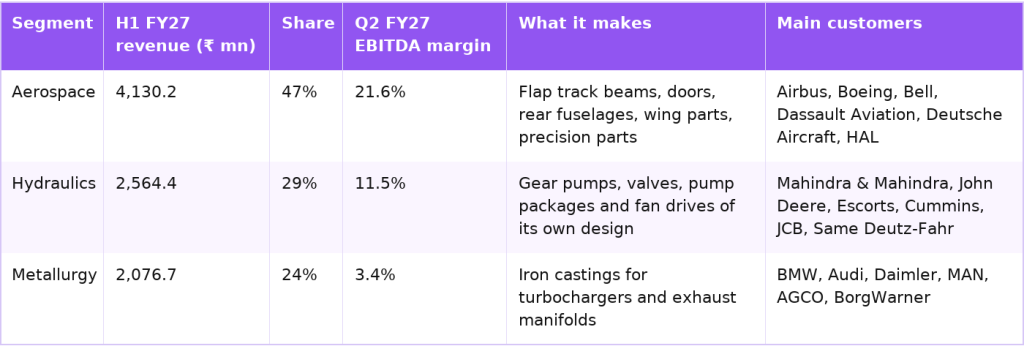
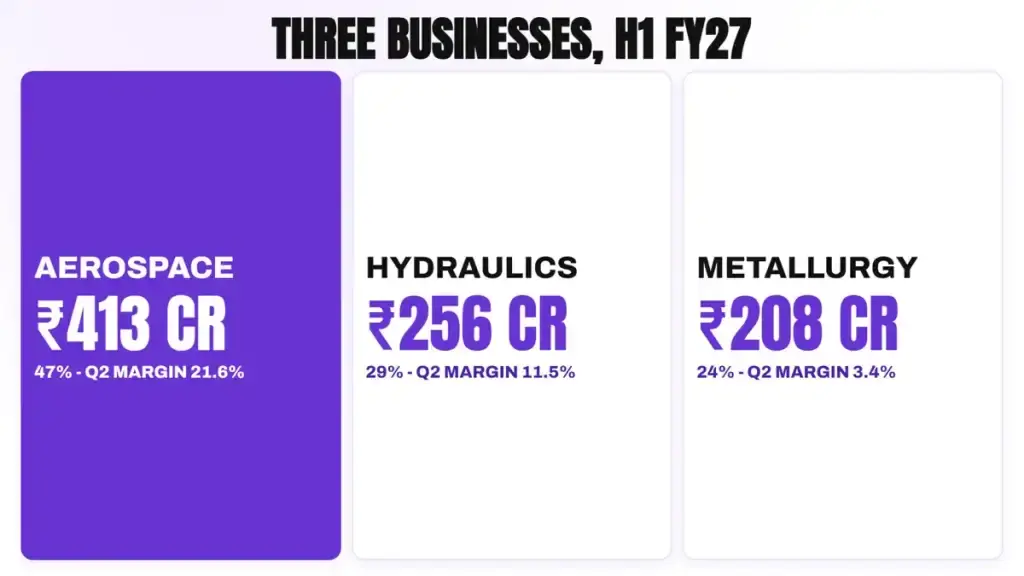
These three businesses earn in different ways, as you can see from the table. Read this Segment-Wise Revenue Analysis Explained Aerospace builds to the aircraft maker's drawings under long programme contracts. By contrast, hydraulics sells pumps of its own design, so the company owns the product and its intellectual property. Then metallurgy casts complex iron parts for European car, truck and tractor makers, mainly through its German foundry.
Aerospace, the Largest Business
Let's start with aerospace, the business that now leads the group. The aircraft makers it serves have long queues. In February 2025, the A320 family alone had 7,188 aircraft on order. Each of those aircraft needs a set of flap track beams, the part Dynamatic has made for Airbus for years.
That programme is where the company built its record. It has supplied over 9,000 A320 flap track beams to Airbus through Spirit AeroSystems, the US structures maker. Airbus has since redesigned the beam with fewer parts and a shorter build cycle, and the new design is already in over 1,000 aircraft. It helped develop the tooling and assembly process for it. It is also the single-source maker of the A330 flap track beams, the long-range model.
That beam work now sits beside larger assemblies. The A220 is the smallest jet in the Airbus range. Dynamatic makes all eight of its doors, from the main passenger doors to the over-wing emergency exits. With its Indian partner suppliers, the company says it reached over 99% Indian value added on these doors.
Why the A220 doors matter: a door is much more than a panel. Each one carries its own frame, hinges, locks and seals, and an aircraft cannot be handed to an airline until every door is fitted. By taking all eight doors, Dynamatic moved from one part per wing to a full set of assemblies on every A220 that Airbus builds.
Those customers are spread across the world, and that shapes the business. In FY26, customers in Europe outside the UK gave ₹561.34 Cr of group revenue. The UK gave ₹309.59 Cr, the USA ₹151.19 Cr and Canada ₹80.43 Cr. India gave ₹488.02 Cr, and much of the Indian parent's own output also leaves the country as finished parts.
These larger pieces of work now show in the numbers. Aerospace revenue was about ₹211 Cr in Q2 FY27, up 18.1% and 4.2% above Q1 FY27. That growth came from component and detail-part work and from Airbus programmes. For H1 FY27, aerospace revenue was about ₹413 Cr, up 17.5%, with an EBITDA margin of 22.7%.
That margin makes aerospace the profit engine of the group. In FY26, aerospace revenue was ₹775.61 Cr, up 27.6%, and its EBITDA was ₹177.55 Cr. Its segment profit before interest and tax was ₹132.39 Cr, against ₹21.46 Cr for hydraulics. So almost all of the group's segment profit now comes from building aircraft parts.
Beyond civil aircraft, defence is the other half of this business. India's defence budget for 2026-27 is ₹7.85 lakh Cr, up 15.19%, and the government targets ₹3 lakh Cr of defence manufacturing by FY29. Dynamatic is an approved supplier to HAL and BEL. It is the sole supplier of the foldable door strut for HAL's Dhruv helicopter, which has CEMILAC approval for series production. It also designed complex machined beams and frames for BEL.
Its largest defence bet is the AMCA, India's planned fifth-generation fighter. L&T and BEL bid as a team for the prototype stage, with Dynamatic as their exclusive partner for complex aerostructures and sub-systems. Management also expects higher defence budgets and more local production to add to visibility over the medium term. India's defence exports reached ₹38,424 crore in FY26, and Indian defence products now go to more than 80 countries, which widens the market for suppliers like Dynamatic.
Hydraulics, the Pump Business
Next, let's look at hydraulics, the business the company started with. India's farm machinery market was about $19.65 Bn in 2026 and is expected to reach $29.27 Bn by 2031, growth of 8.28% a year. Tractors were about 40% of that market in 2025. Farm mechanisation in India is around 47%, below countries such as China and Brazil.
Every tractor needs a hydraulic gear pump to lift and lower its implements. That is the product. Dynamatic makes nearly one million pumps a year in three Bengaluru plants and has led the gear-pump market for over 50 years. It holds about 70% of India's organised tractor market. It owns the design for every hydraulic product it sells.
Its customers include most Indian tractor makers and several global ones. Mahindra & Mahindra, Escorts, Eicher and John Deere buy pumps for tractors, and JCB, Cummins and Terex buy for construction and industrial machines. The company is also developing heavy-duty cast iron pumps for construction equipment, a market of about $9.24 Bn in India in 2026. Some of these pumps will move into production in the coming years, for global machine makers and for the spare-parts market.
That range has already lifted the full-year numbers. In FY26, hydraulics revenue was ₹487.38 Cr, up 6.41%, and its EBITDA rose 48.53% to ₹35.87 Cr. The margin moved from 5.3% to 7.4% over the year, before the stronger Q2 FY27.
That demand showed up clearly in the latest quarter, the best this business has had. Hydraulics revenue was about ₹140 Cr in Q2 FY27, its highest-ever quarter, up 11.2% from a year ago and 21% from Q1. The company also had its highest-ever month of pump sales. Its EBITDA more than doubled, up 123.3%, and the margin was 11.5% against 5.7% a year earlier.
That margin came from a change in the UK. The company had a second pump plant in Swindon, England, serving European and US machine makers. From September 2025, it moved specific Swindon product lines and their design rights to Bengaluru and kept select lines in the UK. So far, management says the transfer will be completed in the near term, and it expects the segment to keep its improved margins.
Metallurgy, the German Foundry
Now let's turn to metallurgy, which gave 24% of H1 FY27 revenue. This business is Eisenwerk Erla, an iron foundry in Schwarzenberg, Germany, which Dynamatic owns fully. It casts complex iron and steel parts such as turbocharger housings and exhaust manifolds, where the metal must take high heat.
Its customers are some of Europe's best-known vehicle and engine makers. They include BMW, Audi, Daimler Truck, MAN, AGCO-Fendt, BorgWarner, Rolls-Royce and Liebherr. The foundry is also casting more parts for farm and road-building machines and for stationary and sports engines.
That business is now recovering. Slowly, but clearly. Metallurgy revenue was about ₹101 Cr in Q2 FY27, up 15.8%, helped by higher volumes from a few customers and two years of cost cuts. Its EBITDA was about ₹3.5 Cr, against a loss of about ₹1.5 Cr a year ago. At the operating level, the segment earned about ₹38 lakh in Q2 FY27, after a loss of about ₹5 Cr in Q2 FY26.
Beyond vehicles, the company wants this foundry to make more defence and aerospace castings. Germany and the wider EU are raising defence spending, and management sees that as an opening for the foundry. For now, cars and trucks still drive most of its sales, so the shift will take time.
Drones in a Company of Their Own
Finally, let's look at the newest business, unmanned systems. These drones and counter-drone systems sit under Dynauton, a company formed in April 2026. Its products include the Kaatil loitering munition, the Kavaa surveillance drone, the Cheel vertical take-off drone and the Patang tethered drone. A loitering munition is a drone that circles over an area and then strikes a chosen target.
Alongside its drones, the company also builds a counter-drone range. It includes radio direction-finding, detection radars and electro-optic sensors. In April 2026, Dynauton signed an agreement with Aerodata AG of Germany to develop an unmanned surveillance aircraft for India.
In October 2026, the board approved moving the drone business into Dynauton as a running business for ₹29.18 Cr. Dynamatic will also buy 74,90,000 new Dynauton shares at ₹50 each, about ₹37.45 Cr. After a founder subscription and shares for an employee trust, Dynamatic will own about 83.33% of Dynauton. This move is due by 31 December 2026. Dynauton had no revenue in FY26, so for now we should treat this business as one that is still at the trial stage of its development.
Why Dynamatic Is Hard to Copy as an Approved Aerostructure Supplier
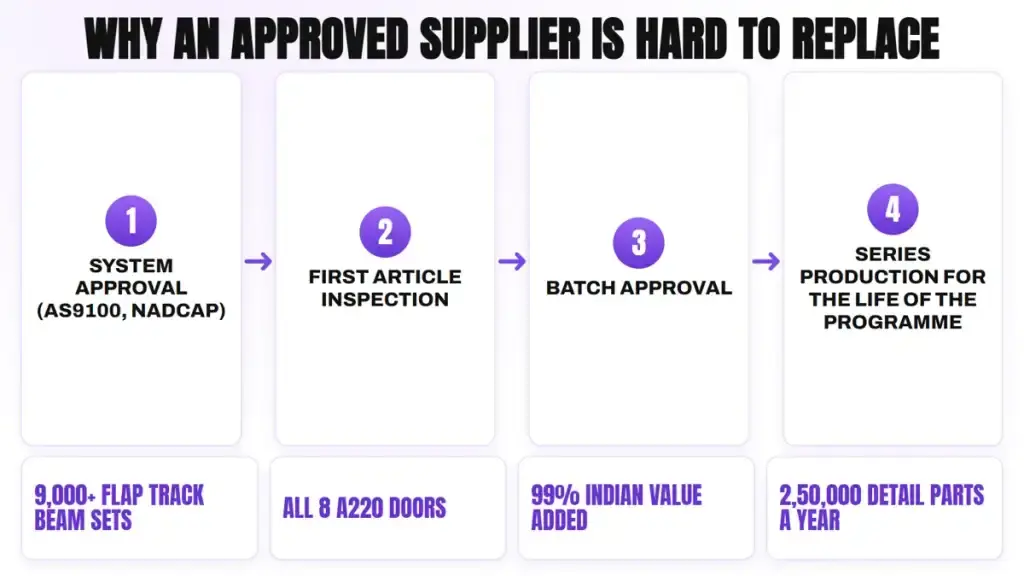
Now that we have seen all three businesses, let's understand what keeps customers with Dynamatic. It starts with qualification. An aircraft maker checks a new supplier's systems, then its first parts, then its batches, before it lets that supplier build a flight part. Each new part also needs a first article inspection, a full check of the first piece against every drawing.
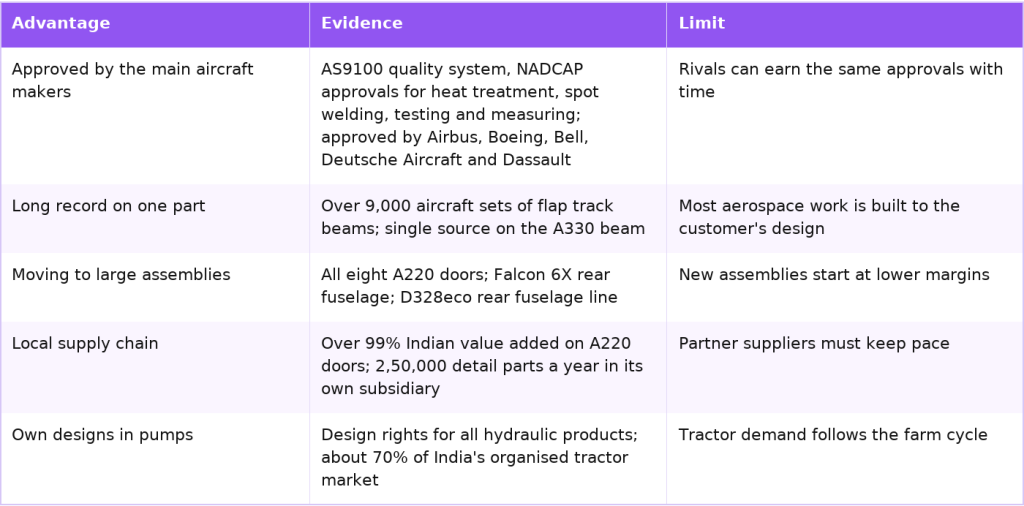
That qualification takes years. Management says so in its own words.
"Aerospace and defence programs require years of industrialisation, compliance verification, and process stabilisation." - Udayant Malhoutra, CEO and Managing Director, FY26 annual report
That time is what protects a supplier once it is approved. A part made for an aircraft programme is checked and frozen into the aircraft maker's records. If Airbus moved the flap track beam to another supplier, it would have to repeat the approval cycle and put its own delivery dates at stake. So aircraft makers tend to keep a proven supplier for the life of a programme and add new parts to it. Read this Economic Moat Explained That is cheaper and safer for them. It also means a supplier's early years on a programme decide much of its next decade, because the parts it wins first are the parts it is likely to keep making for as long as that aircraft stays in production.
That is how Dynamatic got its larger work. Step by step. The flap track beam record came first, then Airbus gave it all eight A220 doors. Dassault began with the Falcon 6X rear fuel tank and then widened the work to the complete rear fuselage. Each step used the approvals and the trust the company already had with that customer.
"The first rule of compounding: never interrupt it unnecessarily."
— Charlie Munger
For an aerostructure supplier, each approval is the base for the next part. A delivery slip on one programme could interrupt that chain with the same customer.
Those approvals are backed by process tools that help it hold that position. It launched AI-assisted first article inspection for the A220 aft service door, which it says was an industry first for an aerostructure maker. Its design team built a drilling support frame for the A330 flap track beam that cut errors and improved deliveries. These are the details an aircraft maker checks before it hands over the next part.
Its cost base adds a second layer, and it is one that a supplier based only in Europe or only in India would find hard to match. Dynamatic offers multi-axis machining from the UK and sheet-metal parts and assembly from India. That mix also gives customers offset credits and two cost models to choose from. Its Bristol plant makes high-precision airframe parts, while the Bengaluru campus handles the larger assemblies.
Beyond aerospace, the hydraulics business has its own moat, of a different kind. Here the company owns the pump designs and runs its own heat treatment of gears. A tractor maker that has designed a model around one pump is slow to change it. That is why the company still holds about 70% of the organised tractor market after five decades.
Financials: Five Years of Revenue, Margins and Cash
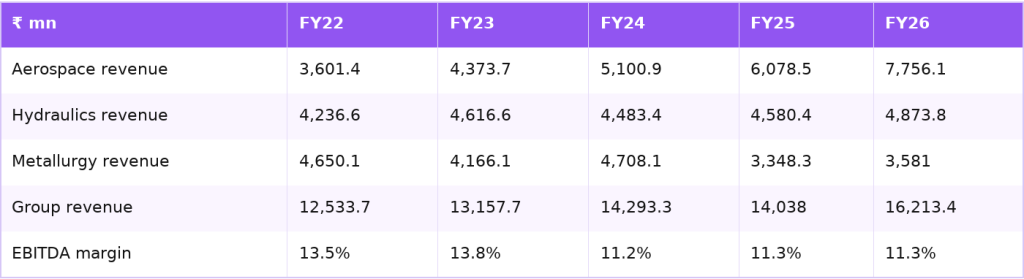
One good quarter says little in a business with long aircraft programmes, so let's look at five full years together. These are consolidated figures from the annual reports and presentations.
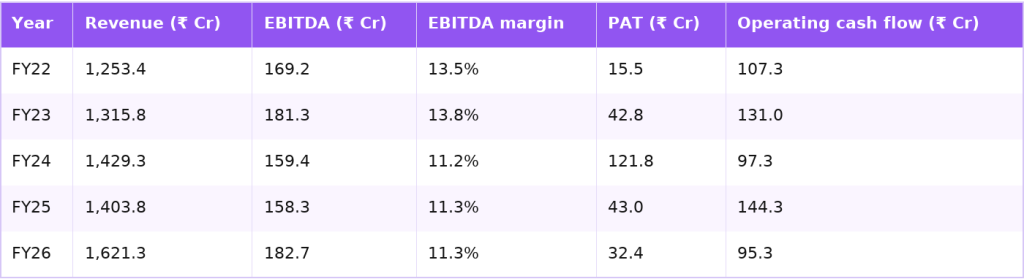
Revenue grew from about ₹1,253 Cr in FY22 to about ₹1,621 Cr in FY26, but the group margin stayed between 11% and 14%. The reason is the mix: aerospace earns an EBITDA margin above 20%, while the pump and casting businesses earn much less, so the group margin rises only as aerospace becomes a larger share.
Profit after tax has been uneven. FY24 profit of about ₹122 Cr included a one-time gain from the sale of wind-farm land, and FY26 profit of about ₹32 Cr was after ₹27.57 Cr of one-off charges for the new labour codes and UK job cuts. Cash flow is steadier: over the five years, operating cash flow added up to about ₹575 Cr, more than twice the reported profit of about ₹256 Cr, because depreciation and interest are large non-cash or financing items in this business.
Debt is the number to watch. Total borrowings were about ₹529 Cr in March 2026 and about ₹591 Cr in September 2026, as the company built stock and spent on new programmes, and net debt was about 2.5 times EBITDA. Return on net worth was 4.1% in FY26, so the new programmes need to lift profit, not only revenue.
"Experience is what you got when you didn't get what you wanted."
— Howard Marks
Dynamatic's last five years taught that lesson twice: the German foundry slipped to a loss and the UK pump plant needed a costly move. The aerospace programmes now have to carry the profit that those businesses did not.
What the Next Two Years Could Look Like on Management's Numbers
So what could all of this add up to for a reader following Dynamatic? Management does not give revenue or margin guidance in numbers. It holds no earnings calls, so the best guide is what it has said in its presentations, and what has happened since.
"The person that turns over the most rocks wins the game."
— Peter Lynch
With no calls and no order book, the rocks to turn over at Dynamatic are its presentations, segment notes and exchange filings.
That makes the one clear target, set in early 2024, the place to start. Management expected the A220 door and Falcon 6X contracts to double the India aerospace business within 36 months. In August 2024 it said again that large orders could double the aerospace business within 30 months. Both point to early 2027.
Since then, the numbers give us a useful check on how far the company has come against that aim, two and a half years into the 36 months. Group aerospace revenue rose from about ₹510 Cr in FY24 to about ₹776 Cr in FY26, an increase of about 52%. Then H1 FY27 added about ₹413 Cr. If the second half matches the first, which is a simple way to test the target rather than a forecast, FY27 aerospace revenue would be about ₹826 Cr. That is about 1.62 times the FY24 level.
For you as a reader, the margin path matters as much as revenue. Management expects aerospace margins to improve as the newer programmes reach steady production. It also expects hydraulics to sustain its improved margins now that the UK restructuring is done. For metallurgy, it expects a steady improvement in profit over the medium term as European demand recovers.
These commitments come with a record we can check. Its programme milestones have mostly been met. That is a good sign, but the larger aim is still open. For example, the Falcon 6X fuel tank reached commercial production, and the first A220 ship-set was ready ahead of schedule. Also, hydraulics margins have recovered, as management said they would after the UK changes.
Key Risks
No business grows in a straight line, so let's look at what could go wrong for Dynamatic.
- Aerospace margins slipped: the aerospace EBITDA margin was 21.6% in Q2 FY27, against 26.8% a year earlier and 23.8% in Q1 FY27, because of the mix of projects. Aerospace EBITDA fell 4.9% even as revenue rose 18.1%. New assemblies such as the A220 doors start at lower margins, and the recovery depends on reaching steady production.
- Growth helped by the rupee: at constant exchange rates, Q2 FY27 revenue grew 8.13%, not 15.4%. A stronger rupee would cut reported growth, because about 70% of revenue is billed abroad.
- Cash tied up in stock: inventories rose to about ₹492 Cr in September 2026 from about ₹412 Cr in March. Operating cash flow in H1 FY27 was about ₹30 Cr, against about ₹52 Cr a year earlier, as the inventory build took about ₹87 Cr.
- Debt and interest: net debt was about ₹512 Cr, 2.5 times EBITDA, and operating profit covered interest 2.3 times in Q2 FY27. Return on net worth was only 4.1% in FY26, and return on capital employed 7.4%.
- Few large customers: four customers gave about 61.6% of the parent company's FY26 revenue. The largest customer gave about 14.1% of group revenue. A cut in one programme's build rate would show quickly.
- Metallurgy is still thin: the German foundry made a segment loss of about ₹11 Cr in FY26, and its operating margin was only 0.4% in Q2 FY27. European car and truck demand is still soft.
- Related-party drone deal: the drone business moves to Dynauton for ₹29.18 Cr, and the promoter and CEO will hold about 5.56% of Dynauton at the same price as the company. Dynauton had no revenue in FY26, and the drones have yet to win operational contracts.
- One-off charges and tax claims: FY26 profit was cut by ₹27.57 Cr of one-off charges for the new labour codes and UK job cuts. Tax claims not accepted by the group stood at ₹15.63 Cr in March 2026, mostly indirect tax, and a transfer-pricing order for the year 2023-24 is still being assessed.
"Show me the incentive and I will show you the outcome."
— Charlie Munger
That is why the Dynauton deal is worth watching: the drone business moves to a subsidiary in which the promoter will also hold shares, so the terms and the results of that subsidiary matter to every shareholder.
Explore our Products
Research Framework

Emerging Titans
Combination of quantitative analysis, industry tailwinds, and management assessment - SPRINT investment philosophy

Tiny Titans
Heavy emphasis on scuttlebutt research, plant visits, and early on-ground signals
What to Track Next
If you follow Dynamatic, these are the signals that will show whether the plan is on track.
- The aerospace EBITDA margin moving back towards the 23.8% of Q1 FY27 as the A220 doors and Falcon 6X reach steady production
- Aerospace revenue in FY27 against the target to double the business from FY24
- First deliveries of the complete Falcon 6X rear fuselage and the D328eco rear fuselage
- The investor meeting on 19 November 2026 and the Q3 FY27 results
- Completion of the Dynauton move by 31 December 2026 and its first operational drone contract
- Net debt moving below 2.5 times EBITDA as the inventory build eases
Conclusion
Let's step back and put it all together. Dynamatic spent years earning approvals from Airbus, Boeing and Dassault, first on one part and then on whole assemblies. Aerospace has grown from 29% of revenue in FY22 to 47% now, and the pump business has just had its best quarter.
So the next two years will show whether that scale also brings margin. The Q3 FY27 results and the investor meeting on 19 November 2026 are the next checks: the aerospace margin, the inventory build and net debt will show which way the business is moving. The new programmes need to reach steady production, and the German foundry needs to earn more than it does today. If both happen, aerospace could carry the group to higher returns; if they take longer, the company will still be a qualified builder with a long queue of aircraft to supply, but with thinner margins and more debt.
FAQs
What does Dynamatic Technologies do?
+Dynamatic Technologies is a Bengaluru company founded in 1973 with three businesses. Its aerospace arm builds aircraft structures such as flap track beams and doors for Airbus, Boeing, Dassault and others, its hydraulics arm makes gear pumps for tractors and machines, and its German foundry makes iron castings. In H1 FY27, aerospace gave 47% of revenue, hydraulics 29% and metallurgy 24%.
What did Dynamatic Technologies report for Q2 FY27?
+Revenue was ₹452.73 Cr, up 15.4% from a year ago, and EBITDA rose 20.3% with a margin of 12.3%. Normalised profit after tax was ₹22.46 Cr, against ₹10.19 Cr a year earlier. At constant exchange rates, revenue grew 8.13%.
What does Dynamatic make for Airbus?
+It has delivered over 9,000 aircraft sets of single-aisle flap track beams, the rails along which the wing flaps slide out, and is the single-source maker of the A330 flap track beams. In FY26 it readied its first complete ship-set of all eight A220 doors, with over 99% Indian value added.
Does Dynamatic Technologies have an order book?
+The company does not publish an order book. Its aircraft work comes from long programme contracts whose value depends on how many aircraft the maker builds. Management said in early 2024 that the A220 door and Falcon 6X contracts were expected to double its India aerospace business within 36 months.
How did the hydraulics business do in Q2 FY27?
+Hydraulics had its highest-ever quarterly revenue, about ₹140 Cr, up 11.2% from a year ago and 21% from Q1 FY27. Its EBITDA rose 123.3% and the margin was 11.5%, against 5.7% a year earlier, after specific product lines moved from Swindon in the UK to Bengaluru.
What are the main risks for Dynamatic Technologies?
+The aerospace margin was 21.6% in Q2 FY27 against 26.8% a year earlier, and about 70% of revenue is billed abroad, so currency moves change reported growth. Net debt was about ₹512 Cr, 2.5 times EBITDA, and four customers gave about 61.6% of the parent company's FY26 revenue. The German foundry and the related-party drone subsidiary are the other points to watch.

High growth stock specialist, Value Educator
Shashank Mahajan is an equity research professional with over 12 years of experience in identifying high-potential SME and micro-cap stocks at an early stage. He follows a rigorous scuttlebutt research–driven approach, combining on-ground insights with deep financial analysis. Shashank specializes in uncovering under-researched and under-owned companies with strong management quality and long-term growth potential. Through disciplined research and early identification, he focuses on spotting tomorrow’s market leaders before they enter the mainstream investor radar.
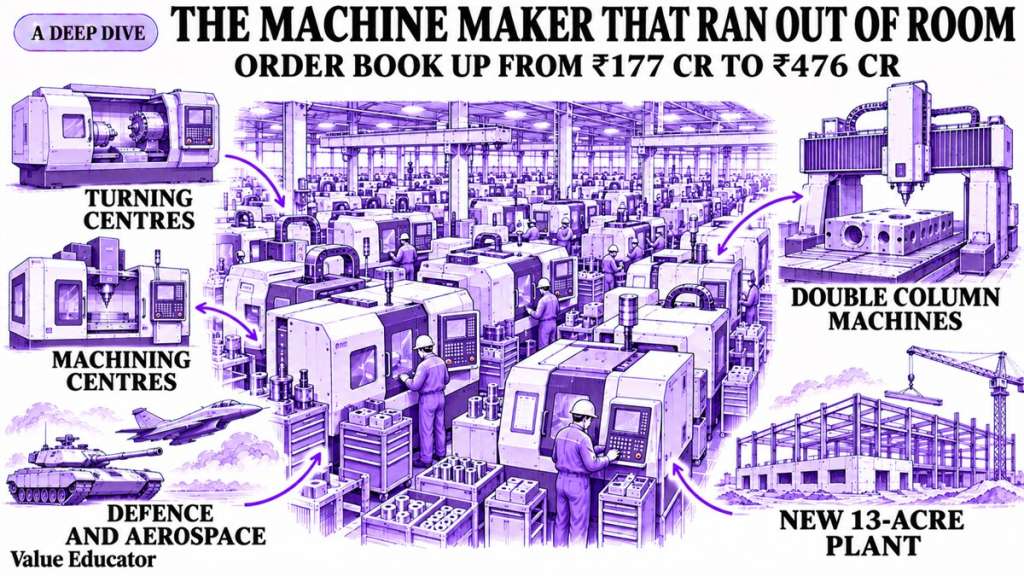
Macpower CNC: A Rajkot Machine Maker With ₹476 Cr of Orders
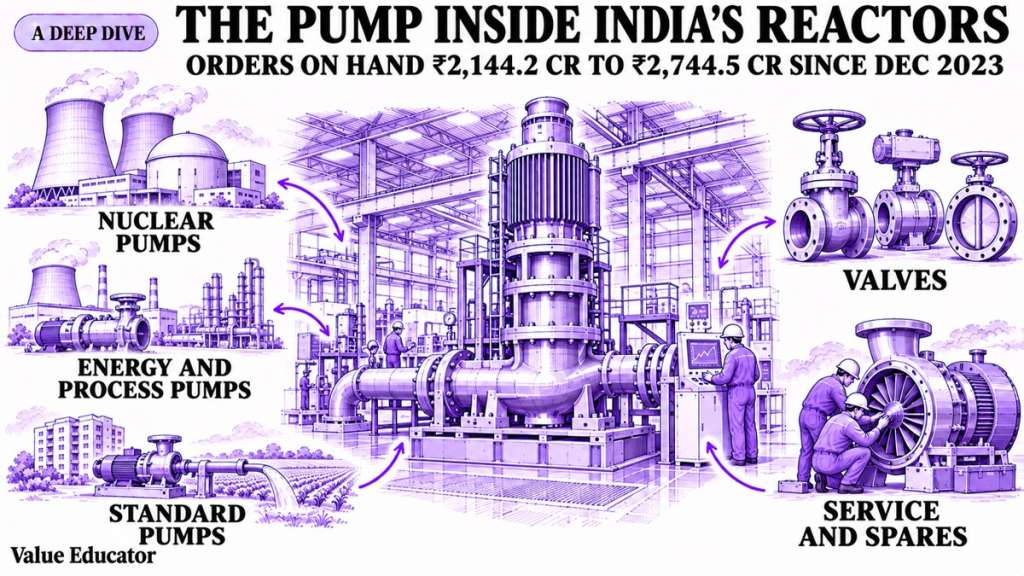
KSB: The Pune Pump Maker With ₹1,235 Cr of Reactor Orders

Kilburn Engineering: The Dryer Maker With ₹470 Cr of Orders

Rossell Techsys: Boeing and Lockheed Wiring From Bengaluru
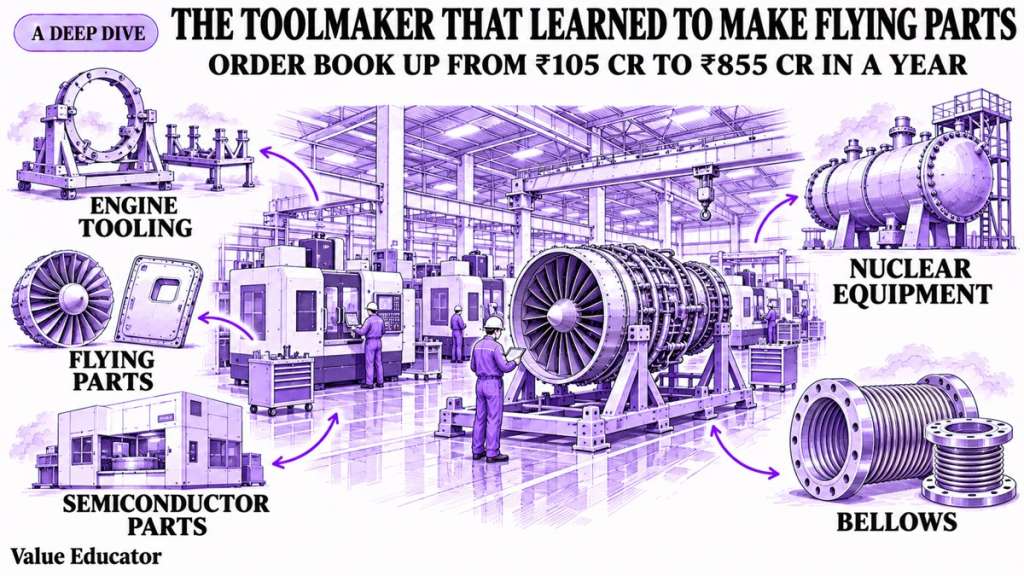
Unimech Aerospace: From Engine Tools to Flying Parts
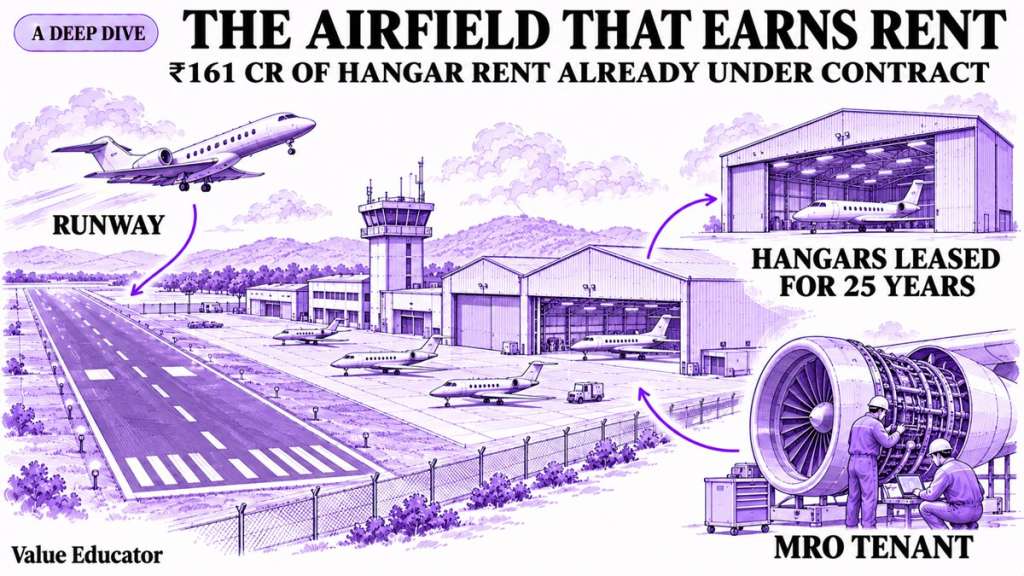
Taneja Aerospace: The Airfield With ₹161 Cr of Rent Signed
Explore our Products
Research Framework
Emerging Titans
Combination of quantitative analysis, industry tailwinds, and management assessment - SPRINT investment philosophy
Tiny Titans
Heavy emphasis on scuttlebutt research, plant visits, and early on-ground signals



Modern Warfare to Multibaggers
Key Trends. Strategic Shifts. Opportunities Ahead.
Don't Miss This Exclusive Webinar!
Join Value Educator to decode the key trends shaping India's defence sector and learn how to identify tomorrow's potential leaders in the space.
- In-depth research on India's defence sector
- Live Q&A session
- Actionable takeaways for long-term investors

 Orders
 Subscription
 Share with friends


Required Details
₹23999.00
(12 month subscription)
As per SEBI regulations, all users are mandated to complete the KYC that is validated for 1 year. Post payment, you will be redirected to the KYC screen


No comments yet. Be the first to comment!