
Aeroflex: Riding the AI Data Centre Cooling Boom
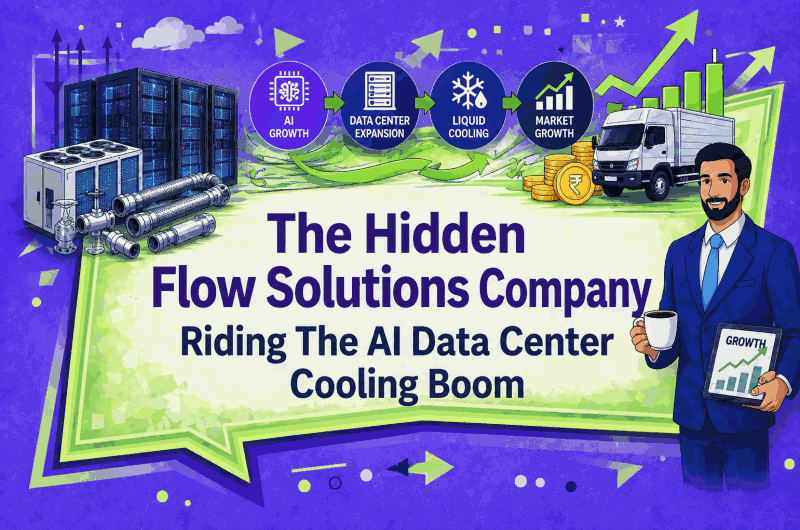
Think about how many times you interact with artificial intelligence during a normal day.
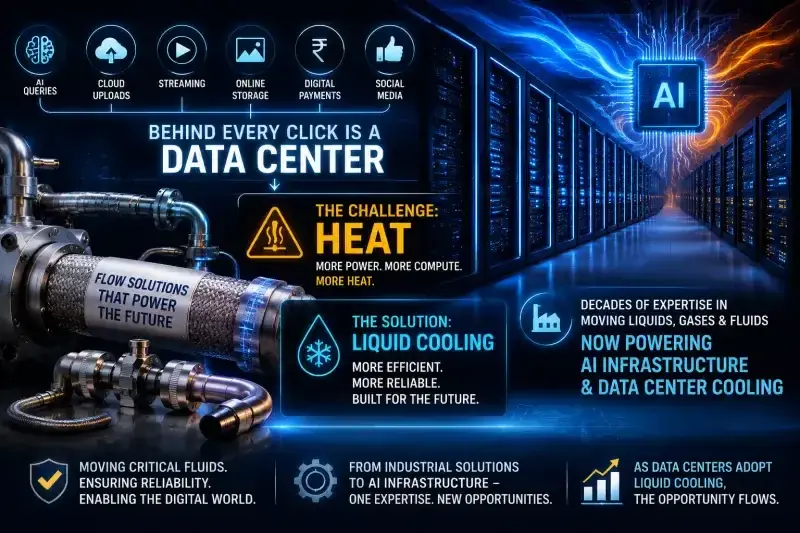
You ask ChatGPT a question. You upload a file to the cloud. You stream a video. You store photographs online. You use digital payment applications. You open social media platforms.
Most people see software. Most people see applications. Most people see screens. But very few people think about the physical infrastructure that makes all of this possible.
Because behind every AI query, every cloud application, every streaming service, and every digital platform sits a data center. And inside every data center sits one increasingly important challenge.
Heat. A lot of heat.
As computing power increases, servers generate enormous amounts of heat. The more powerful the chips become, the more difficult they become to cool.
For years, traditional air-cooling systems were sufficient. But AI is changing the equation. Modern AI workloads consume significantly higher power, generate higher temperatures, and push data center operators to search for more efficient cooling technologies.
This is where liquid cooling starts becoming important.
And this is where a company that spent nearly three decades building expertise in moving liquids, gases, and industrial fluids safely through critical systems suddenly starts becoming very interesting.
Because this is no longer just a story about industrial hoses. It is a story about data centers. It is a story about AI infrastructure.
For most of its history, the company operated in a niche segment of the industrial manufacturing ecosystem. It wasn't a company that regularly appeared in discussions around artificial intelligence. It wasn't viewed as a data center play. And it certainly wasn't considered part of the global AI infrastructure story.
But as data centers increasingly adopt liquid cooling technologies, the company's decades of expertise in flow solutions may be finding a new and potentially significant application. That company is Aeroflex Industries Ltd.
“The stock market is a device for transferring money from the impatient to the patient.” - Warren Buffett
The Infrastructure Behind Artificial Intelligence
Whenever a new technology becomes popular, most people focus on the companies that are directly visible. During the internet boom, investors focused on websites. During the smartphone boom, investors focused on handset manufacturers. And today, during the artificial intelligence boom, most attention is directed toward AI models, semiconductor companies, and cloud providers.
But history often shows that some of the biggest opportunities emerge in the supporting infrastructure that enables these technologies to scale. Artificial intelligence is no different.
This idea of investing in businesses that quietly sit behind major industry trends is discussed further in The Hidden Micro-Cap Stocks That Could Lead India’s 2026 Growth Cycle, where we explore how supporting infrastructure companies often benefit from long-term structural changes.
Behind every AI application sits a vast network of data centers filled with servers, networking equipment, power systems, and cooling infrastructure. These facilities operate continuously and must maintain precise operating conditions to ensure reliability and performance.
As computing requirements increase, data centers are becoming more complex. Higher rack densities, greater power consumption, and more powerful processors are forcing operators to rethink how critical infrastructure is designed and deployed.
This shift is creating demand not only for computing hardware but also for the engineering systems that keep that hardware operating efficiently. And one of the most important parts of that infrastructure is the movement and management of fluids.
Because whether it is an industrial plant, an energy facility, or a modern data center, every system ultimately depends on moving something safely, efficiently, and reliably from one place to another. This is where Aeroflex's existing expertise starts becoming relevant.
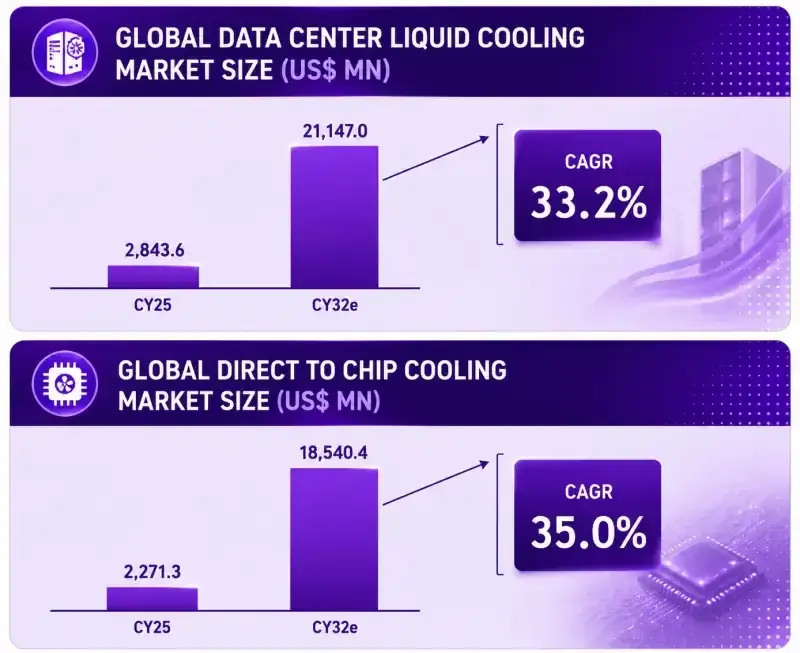
According to industry data presented by the company, the global data center liquid cooling market is expected to grow from approximately US$2.8 billion in CY25 to over US$21 billion by CY32, representing a CAGR of more than 33%. The direct-to-chip cooling market is expected to grow at a similar pace.
In simple terms, AI is creating more heat. And the world needs better ways to remove that heat.
Why A Flow Solutions Company Fits Naturally Into This Trend
At first glance, industrial flow solutions and artificial intelligence may appear completely unrelated. One sounds like a traditional manufacturing business. The other sounds like a cutting-edge technology trend.
But if you look deeper, the connection becomes surprisingly obvious. Liquid cooling systems work by moving coolant through a network of pipes, hoses, fittings, connectors, valves, and assemblies.
The objective is simple. Transfer heat away from high-performance computing equipment efficiently and safely. That means reliability becomes critical. Any leakage can create operational risks. Any failure can result in downtime. Any inefficiency can increase operating costs.
This is precisely where decades of experience in fluid movement systems become valuable. The same engineering expertise required to move industrial liquids and gases safely can also be applied to moving coolant through advanced data center cooling systems.
And that capability forms the foundation of the company's expansion into AI infrastructure.
How Aeroflex Makes Money Today
At first glance, Aeroflex may appear to be a simple industrial products company. But that description only tells part of the story. In reality, the business operates across multiple categories of flow solutions that are used in industries where reliability, safety, and performance are critical.
The company's core product is stainless steel flexible hoses. These hoses are designed to transfer liquids, gases, steam, chemicals, and other industrial media in environments where traditional piping systems may not be practical. They are used across a wide range of industries including oil & gas, chemicals, steel, power, fire protection, pharmaceuticals, food processing, and infrastructure applications.
Think of them as highly engineered connectors. Their job is simple. Allow fluids to move safely while accommodating vibration, pressure changes, thermal expansion, and movement within industrial systems.
But supplying a hose is only part of the value chain. Customers increasingly require complete solutions rather than individual components. This is why Aeroflex has gradually expanded beyond standalone hoses into assemblies, fittings, and integrated flow systems.
An assembly combines multiple components into a ready-to-install solution. Instead of sourcing individual parts from different suppliers and assembling them on-site, customers receive a pre-engineered system that can be deployed immediately. This not only improves convenience for customers but also allows the company to capture a larger share of the value chain.
Over time, Aeroflex has also expanded into metal bellows and expansion joints. These products help industrial systems absorb movement, vibration, pressure fluctuations, and thermal expansion. They play an important role in ensuring that critical infrastructure operates safely and efficiently over long periods of time. Although they often remain invisible to end users, they are essential components in many industrial installations.
The company has also strengthened its presence in composite hoses and interlock hoses. These specialised products are designed for demanding applications involving chemicals, fuels, cryogenic media, and hazardous materials. Such applications require high levels of engineering precision, quality control, and reliability.
This is one reason why customers often prefer established suppliers with proven track records. When failure can result in safety risks or operational disruptions, reliability becomes more important than price alone.
What makes the business particularly interesting is that all these products revolve around a common capability. The movement and management of fluids.
Whether the customer is operating a refinery, a chemical plant, a pharmaceutical facility, an energy project, or a modern data center, the underlying requirement remains surprisingly similar.
Move liquids or gases safely. Control pressure. Ensure reliability. Minimize downtime.
And this is where the story begins to evolve. Because management is no longer limiting itself to traditional industrial applications. Instead, it is increasingly focusing on a product category that sits at the intersection of flow solutions, thermal management, and AI infrastructure.
A business that could potentially become one of the company's most important growth drivers over the coming years.
“The big money is not in the buying or the selling, but in the waiting.” — Charlie Munger
The New Business That Could Change The Growth Profile
Most industrial companies grow by selling more of the products they already manufacture. Sometimes they enter adjacent product categories. Sometimes they expand into new geographies. But every once in a while, a company finds itself positioned at the intersection of an entirely new industry trend.
This is where Aeroflex's liquid cooling business begins to stand out.
The company has developed skid assemblies designed for data center liquid cooling applications. While the core business remains rooted in industrial flow solutions, these skid systems are aimed at a very different customer problem. Not moving industrial fluids. Managing heat inside modern computing infrastructure.
To understand why this matters, imagine a large AI data center. Thousands of servers operate continuously. Power consumption increases. Heat generation rises. And maintaining optimal operating temperatures becomes critical.
Liquid cooling systems help solve this problem by circulating coolant through specialised infrastructure designed to transfer heat away from high-performance computing equipment.
The skid assembly acts as an important part of that system. It integrates multiple components into a ready-to-deploy cooling solution that can be installed within data center infrastructure.
Rather than supplying individual components, the company is increasingly participating at a systems level. And that distinction is important.
In manufacturing, companies that move from components to integrated systems often capture a larger share of the value chain. They become more deeply embedded within customer projects. And they typically create stronger long-term relationships.
Investors looking to identify similar business transformations may find our framework useful in How to Analyze a Mid-Cap Company – A Complete, Practical Framework, where we discuss how value-chain expansion can influence long-term growth.
The early numbers already indicate that this business is beginning to gain traction. During FY26, the company sold 617 skid assemblies and generated approximately ₹21.2 crore in revenue from this segment. While this remains a relatively small portion of overall revenue today, management clearly views it as a significant long-term opportunity.
What makes the story even more interesting is the scale of investment taking place behind the scenes.
Management has already expanded skid manufacturing capacity from approximately 2,000 units to 6,000 units annually. More importantly, it is targeting a further increase to around 15,000 units by the second quarter of FY27.
This level of expansion is difficult to ignore. Companies rarely triple capacity unless they believe future demand could justify it. And management's confidence appears to be linked directly to the long-term growth outlook for liquid cooling infrastructure.
Of course, investors should recognise that this opportunity is still in its early stages. The liquid cooling business has not yet transformed the company's financial profile. The traditional flow solutions business continues to remain the primary contributor. But the direction of travel is becoming increasingly clear.
Management is preparing not just for the industries it serves today. It is preparing for industries that may look very different from those that built the company over the past three decades.
And this preparation extends beyond a single product category. Because the company is simultaneously investing in capacity, automation, and manufacturing capabilities that could support the next phase of growth.
Why Management Is Expanding So Aggressively
Whenever a company announces a major capacity expansion, investors naturally ask an important question. Why build capacity before the demand fully arrives? After all, idle capacity creates costs. Unused factories generate no revenue. And excessive expansion can sometimes destroy shareholder value.
This is precisely why Aeroflex's recent manufacturing investments deserve closer attention.
Management appears to believe that the opportunity emerging in liquid cooling infrastructure could be significantly larger than what current revenue numbers suggest. And rather than waiting for demand to fully materialise, the company is building capabilities in advance.
The strategy extends beyond simply adding production capacity. Management is simultaneously investing in automation, process improvements, and manufacturing infrastructure designed to support higher volumes and more complex products.
One example is the installation of robotic welding systems. In industries where product quality, precision, and consistency are critical, automation can play an important role in improving manufacturing efficiency. It can reduce variability, increase throughput, and help maintain quality standards as production scales.
The company has also invested in an annealing facility. While this may sound like a technical manufacturing upgrade, its significance is straightforward. Annealing improves the properties of metal components by enhancing flexibility, durability, and performance under demanding operating conditions. For products designed to operate in critical industrial environments, these capabilities can become an important competitive advantage.
Taken together, these investments suggest that management is not simply preparing for incremental growth. It is preparing for a different scale of business. The expansion of skid manufacturing capacity from 2,000 units to 6,000 units, with plans to reach 15,000 units, is one part of that strategy. The supporting investments in automation and manufacturing infrastructure are the other parts. Both are being built simultaneously.
This matters because scaling production is often much harder than developing a product. Many companies successfully create new products. Far fewer companies successfully manufacture them at scale while maintaining quality, delivery timelines, and profitability.
Management appears to recognise this challenge. And instead of reacting to future demand, it is attempting to build the manufacturing foundation ahead of time.
“Someone is sitting in the shade today because someone planted a tree a long time ago.” — Warren Buffett
Whether that demand ultimately arrives at the pace management expects remains to be seen. But the scale of current investments provides a useful indication of how management views the opportunity ahead.
And that opportunity is closely linked to one of the fastest-growing segments within modern digital infrastructure. Data center liquid cooling.
A Business Built Long Before AI Became Popular
One of the easiest mistakes investors can make is viewing Aeroflex purely as an AI infrastructure story. After all, the liquid cooling opportunity is what attracts attention today. It is new. It is exciting. And it is closely linked to one of the fastest-growing technology trends in the world.
But the reality is that the company was built long before artificial intelligence became a major investment theme. For nearly three decades, Aeroflex has been supplying flow solutions across a wide range of industrial applications.
Its products are used in industries such as oil & gas, chemicals, steel, power, pharmaceuticals, food processing, marine, and infrastructure.
Over the years, the company has built relationships across more than 90 countries and established itself as a specialised manufacturer within a niche segment of the industrial products market.
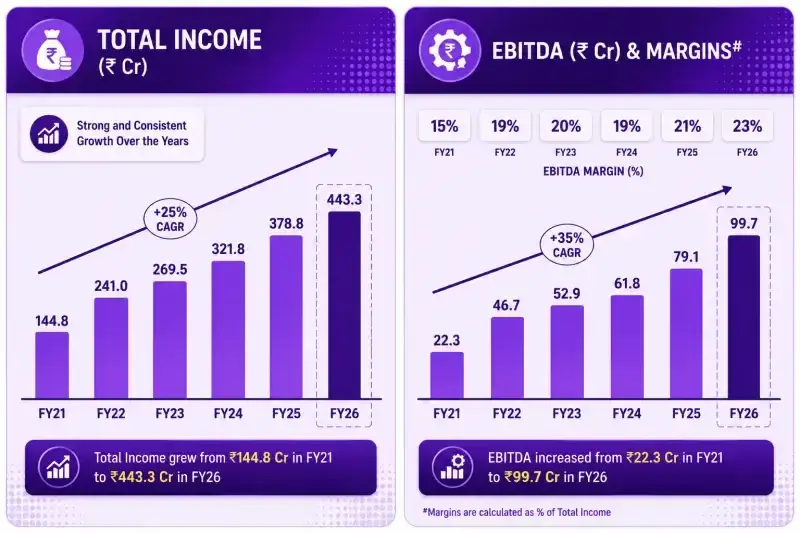
This existing business remains the foundation of everything management is attempting to build today. During FY26, the company reported revenue of approximately ₹443 crore, EBITDA of around ₹100 crore, and profit after tax of approximately ₹55 crore.
These numbers are important because they remind investors that Aeroflex is not a pre-revenue technology story. Nor is it a business dependent on a single future opportunity. The company already operates a profitable manufacturing platform with established customers, export relationships, and proven execution capabilities.
In many ways, this existing business is what gives management the flexibility to invest in new opportunities such as liquid cooling without fundamentally changing the financial profile of the company.
And while the current business continues to perform well, management is also taking steps to strengthen its competitive position through acquisitions and product expansion.
One of the most important steps in that direction came through the acquisition of Hyd-Air Engineering.
The Hyd-Air Acquisition And What It Changes
Most acquisitions are presented as growth opportunities. But the best acquisitions often do something more important. They strengthen a company's position within an existing value chain. They deepen customer relationships. They expand technical capabilities. And they create opportunities that may not have existed before.
This appears to be the strategic logic behind the acquisition of Hyd-Air Engineering.
Hyd-Air operates in specialised flow control products including valves and related engineering solutions. While the products may appear different from Aeroflex's traditional hose business, they serve many of the same industrial ecosystems.
This is important because customers rarely purchase a single product in isolation. Industrial facilities require complete flow management solutions. They require hoses. They require fittings. They require valves. They require pressure control systems. And they often prefer dealing with suppliers capable of providing multiple solutions under one roof.
From management's perspective, the acquisition helps broaden the company's product offering while creating opportunities for cross-selling across its existing customer base.
Rather than entering an entirely new industry, Aeroflex is expanding deeper into an ecosystem it already understands. This reduces execution risk while increasing the company's relevance to customers.
It also reflects a broader pattern that appears throughout the company's strategy. Whether it is liquid cooling, skid assemblies, bellows, fittings, or valves, management is not making random diversification bets. Instead, it is gradually building a larger flow solutions platform.
Each product category strengthens the overall ecosystem. Each capability expands the addressable market. And each addition potentially increases the company's share of customer spending.
Viewed through that lens, the acquisition becomes more than a simple transaction. It becomes another step in management's effort to transform Aeroflex from a product manufacturer into a broader engineering solutions company.
This type of gradual capability building often creates durable competitive advantages over time. We explore this concept in greater detail in Economic Moat Explained: Why Some Companies Stay Dominant for Decades.
“We are what we repeatedly do. Excellence, then, is not an act but a habit.” — Aristotle
A Balance Sheet Built For Growth
Growth opportunities are exciting. New products are exciting. New markets are exciting.
But eventually, every expansion story runs into the same question. How will the company fund it?
Manufacturing expansion requires capital. Automation requires capital. Acquisitions require capital. And entering new industries often requires years of investment before meaningful revenues begin to appear.
This is where balance sheet strength becomes important. Because even the most attractive opportunities can become difficult to pursue if a company lacks the financial flexibility to support them.
Fortunately, Aeroflex appears to be approaching this phase of growth from a position of financial strength. The company remains virtually debt-free and continues to generate healthy cash flows from its existing operations.
Balance sheet quality often determines whether a company can successfully execute expansion plans. For a deeper understanding of this aspect, read How to Read a Balance Sheet Like a Professional Investor.
Management reported cash and cash equivalents of approximately ₹70 crore, providing a meaningful liquidity buffer while simultaneously supporting ongoing investments across the business.
This matters for a simple reason. Management does not need to choose between protecting the core business and investing for the future. It can pursue both simultaneously. The existing flow solutions business continues to generate revenue and profitability. That cash generation helps fund capacity expansion. It supports automation initiatives. It provides flexibility for acquisitions such as Hyd-Air. And it allows management to pursue emerging opportunities within liquid cooling infrastructure without placing significant pressure on the balance sheet.
Strong balance sheets often receive less attention during periods of rapid growth. Investors naturally focus on revenue. They focus on margins. They focus on future opportunities. But balance sheet strength frequently determines whether a company can fully capture those opportunities when they appear.
In Aeroflex's case, financial flexibility may become an important competitive advantage. Because management is not simply operating within established industrial markets. It is simultaneously preparing for opportunities that could evolve over the next decade.
And when companies begin positioning themselves for future growth, investors should always ask an important question. What could go right?
Because while the liquid cooling opportunity attracts most of the attention today, there are several different factors that could shape Aeroflex's future over the coming years.
What Could Drive The Next Phase Of Growth?
Most investment stories depend on a single catalyst. One new product. One major contract. One regulatory change. One breakthrough opportunity.
Aeroflex's growth story appears somewhat different.
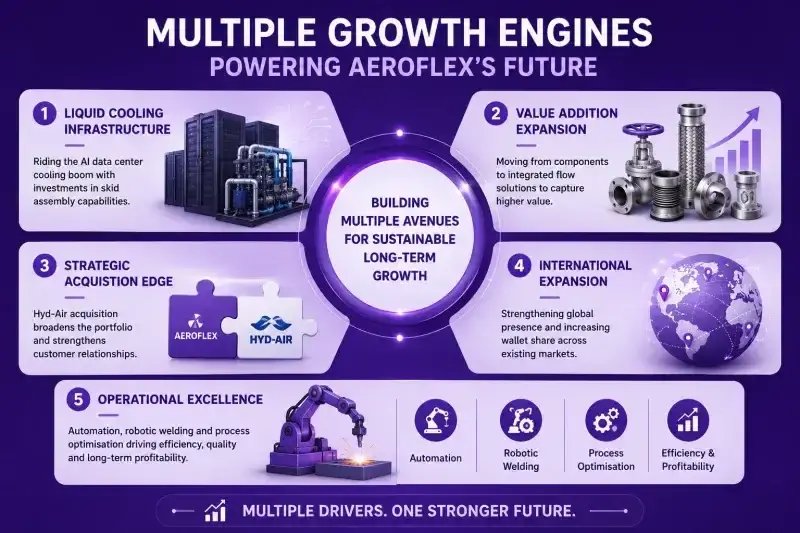
Management is building multiple avenues for future expansion rather than relying on a single outcome. The most visible opportunity is clearly liquid cooling infrastructure. If adoption accelerates across global data centers, the company's skid assembly business could scale significantly from its current base.
The investments already being made suggest management expects this market to remain attractive for many years.
A second growth driver could come from increasing value addition within the existing business. Over time, companies that move from components to integrated solutions often capture a larger share of customer spending. The company's expansion into assemblies, bellows, valves, and broader flow management solutions reflects this strategy.
The Hyd-Air acquisition could also become increasingly important. Beyond expanding the product portfolio, it provides opportunities to deepen customer relationships and strengthen the company's position within existing industrial ecosystems.
International expansion remains another important factor. The company already serves customers across multiple global markets. As manufacturing capabilities expand and the product portfolio broadens, management may be able to increase its share of business within existing customer accounts.
Finally, operational improvements could create additional benefits. Automation, robotic welding, process optimisation, and manufacturing efficiencies may not receive the same attention as new growth opportunities. Yet over long periods, they often contribute meaningfully to profitability and competitiveness.
Together, these drivers create an interesting dynamic. The future of the business does not depend entirely on one outcome. Instead, management appears to be building multiple growth engines that could contribute to the company's evolution over time.
What Could Go Wrong?
Every investment story looks attractive when viewed through the lens of opportunity. But successful investing often requires spending equal time thinking about risks.
Aeroflex is no exception.
While the long-term opportunity appears promising, there are several factors investors should continue monitoring closely.
The first risk relates to adoption. Much of the excitement surrounding the company's newer growth initiatives is linked to liquid cooling infrastructure and data center expansion. While industry growth projections are encouraging, actual adoption may not always follow projected timelines. Technology transitions often take longer than expected. Customer qualification cycles can be lengthy. And large infrastructure deployments rarely happen in a perfectly straight line.
The second risk is execution. Management is simultaneously expanding manufacturing capacity, increasing automation, integrating acquisitions, and pursuing new business opportunities. Each initiative creates potential upside. But it also increases operational complexity. Scaling a business successfully is often far more challenging than building one.
Another important risk involves capacity utilisation.
The company is investing aggressively in future growth opportunities. If demand develops slower than anticipated, utilisation levels may remain below expectations for a period of time. When that happens, profitability can come under pressure as fixed costs are spread across lower production volumes.
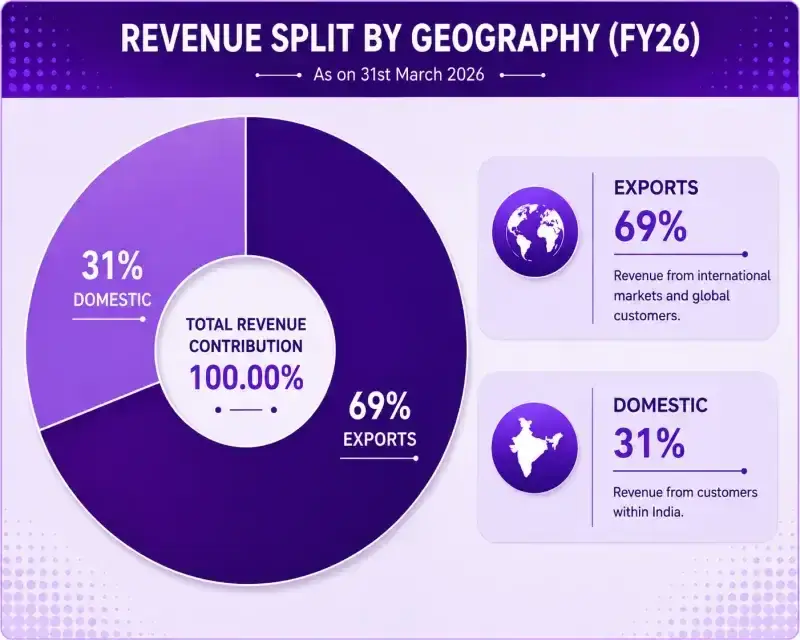
Investors should also remember that Aeroflex remains a globally exposed business. A significant portion of revenue comes from international markets. This provides diversification and access to larger opportunities.
But it also exposes the company to factors beyond its control, including global economic slowdowns, industrial spending cycles, and changes in customer demand across export markets.
Finally, there is valuation risk. Sometimes a strong business can become a poor investment if expectations move too far ahead of reality. As investors become increasingly excited about themes such as AI infrastructure and liquid cooling, expectations can rise rapidly.
The challenge is ensuring that future execution ultimately justifies those expectations. None of these risks necessarily invalidate the investment thesis. But they do highlight an important reality. The future is never certain.
And the ultimate outcome will depend not just on the size of the opportunity, but on management's ability to execute consistently over time.
The Bigger Question
For most of its history, Aeroflex operated within a relatively specialised corner of the industrial manufacturing ecosystem. It manufactured products that most consumers would never see. It served industries that rarely attracted mainstream investor attention. And it quietly built expertise in something that sounds remarkably simple. Moving fluids safely and reliably.
Today, management appears to be leveraging that expertise in a very different direction. Not by abandoning its traditional business. But by extending its capabilities into adjacent opportunities. Liquid cooling, Skid assemblies, Flow control systems, Expanded engineering solutions. And potentially, infrastructure linked to one of the most important technology trends of the next decade.
This is what makes the story interesting. The company is not attempting a complete reinvention. It is not making a radical pivot into an unfamiliar industry. Instead, it is applying existing capabilities to new applications where demand appears to be growing rapidly.
Whether this strategy ultimately succeeds remains to be seen. The opportunities are real. But so are the challenges. Execution will matter. Customer adoption will matter.
And management's ability to scale new businesses while protecting the strength of the existing business will matter.
The next chapter of Aeroflex's story has not yet been written.
But management appears determined to ensure that the company participates in opportunities far larger than the markets that originally built it.
“The future belongs to those who see possibilities before they become obvious.” — John Sculley
Ultimately, stories like this remind investors that some of the biggest winners are often identified long before the market fully recognises their potential. If you're interested in finding similar opportunities, you may enjoy reading The Multibagger Framework: A Step-by-Step Guide to Finding 10x Stocks.
Explore our Products
Research Framework

Emerging Titans
Combination of quantitative analysis, industry tailwinds, and management assessment - SPRINT investment philosophy

Tiny Titans
Heavy emphasis on scuttlebutt research, plant visits, and early on-ground signals
Conclusion
Most investors will probably continue to associate Aeroflex with industrial hoses and flow solutions. And that is understandable. After all, those products remain the foundation of the business. They generate the revenue. They generate the cash flows. And they provide the platform upon which future growth initiatives are being built.
But the more interesting story may lie beyond the traditional industrial markets. It may lie inside data centers. It may lie within liquid cooling infrastructure. And it may lie in the growing need for engineering solutions capable of supporting increasingly complex computing environments.
For nearly three decades, Aeroflex helped industries move liquids, gases, and critical materials safely through industrial systems. Today, that same expertise is being applied to a different challenge. Managing heat inside the infrastructure powering artificial intelligence.
Whether this opportunity ultimately becomes a meaningful contributor to the business remains uncertain. But one thing is already clear. Management is not simply preparing for the industries that exist today. It is positioning the company for industries that could define the next decade.
If you enjoyed this deep dive and would like us to analyze more such interesting companies, feel free to like this article and comment "Data Centre" below. Your feedback helps us understand which sectors, industries, and businesses you would like us to explore in future deep dives.
FAQs
Why is liquid cooling becoming important for data centers?
+As artificial intelligence workloads become more powerful, servers generate significantly more heat than traditional computing systems. Conventional air-cooling methods become less effective at higher rack densities and power levels. Liquid cooling helps remove heat more efficiently, making it an increasingly important part of modern data center infrastructure.
What is a skid assembly and why does it matter?
+A skid assembly is an integrated system that combines multiple components into a ready-to-deploy solution. In data center cooling applications, these systems help circulate coolant and manage heat efficiently. Instead of supplying individual parts, manufacturers providing skid assemblies participate at a higher level of the value chain and become more deeply embedded in customer projects.
Why are industrial flow solutions relevant to artificial intelligence infrastructure?
+At first glance, industrial flow solutions and artificial intelligence appear unrelated. However, modern liquid cooling systems rely on pipes, hoses, fittings, valves, and assemblies to move coolant safely through computing infrastructure. Companies with decades of experience in fluid movement systems can potentially apply those capabilities to data center cooling applications.
Why is manufacturing capacity being expanded so aggressively?
+Management appears to believe that future demand could be significantly larger than current revenue levels suggest. This is reflected in the expansion of skid manufacturing capacity from approximately 2,000 units to 6,000 units annually, with plans to further increase capacity to around 15,000 units. Alongside capacity additions, the company is also investing in automation, robotic welding, and manufacturing infrastructure to prepare for future growth.
Why is the acquisition of a flow-control business strategically important?
+Industrial customers rarely purchase a single product in isolation. They often require hoses, fittings, valves, pressure-control systems, and other flow-management solutions together. By expanding into complementary products, the company can offer a broader solution portfolio, strengthen customer relationships, increase cross-selling opportunities, and potentially capture a larger share of customer spending over time.

High growth stock specialist, Value Educator
Shashank Mahajan is an equity research professional with over 12 years of experience in identifying high-potential SME and micro-cap stocks at an early stage. He follows a rigorous scuttlebutt research–driven approach, combining on-ground insights with deep financial analysis. Shashank specializes in uncovering under-researched and under-owned companies with strong management quality and long-term growth potential. Through disciplined research and early identification, he focuses on spotting tomorrow’s market leaders before they enter the mainstream investor radar.
Atlanta Electricals: Capacity Nearly Quadrupled in a Year
Kirloskar Oil Engines: Data Centres, Nuclear and the Navy
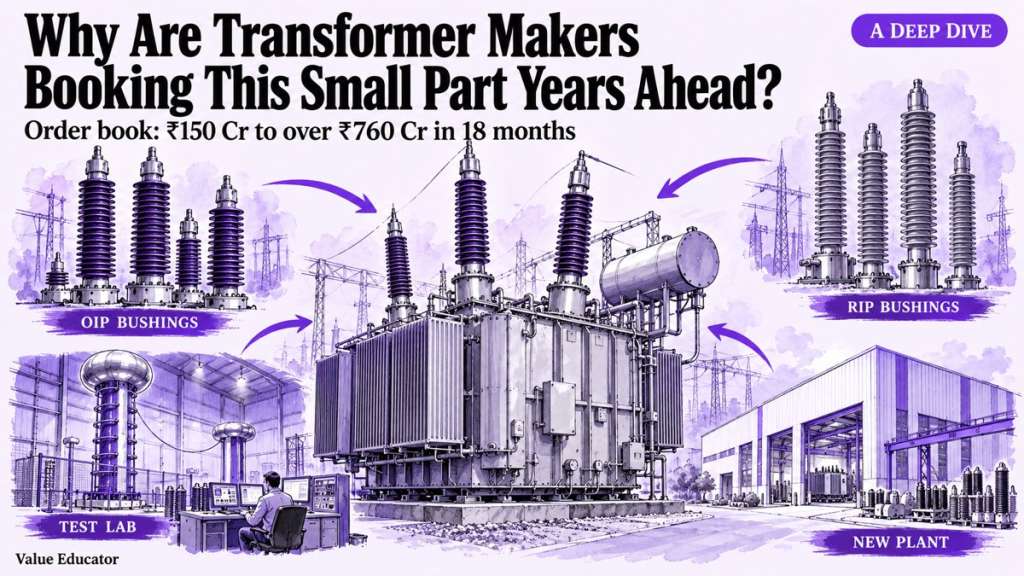
Yash Highvoltage: Bushing Maker With ₹760 Cr of Orders
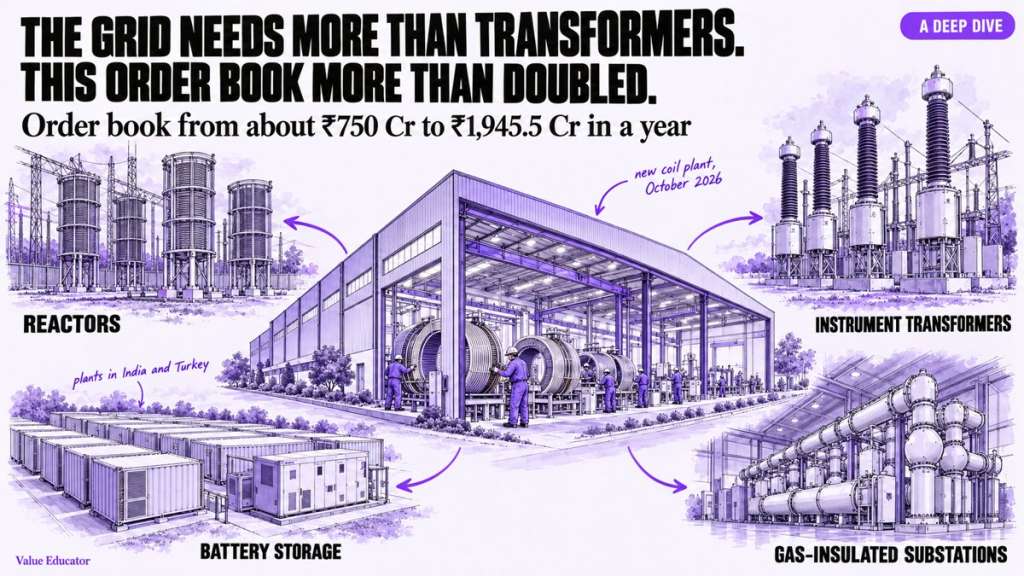
Quality Power: Reactor Maker With a ₹1,945.5 Cr Order Book
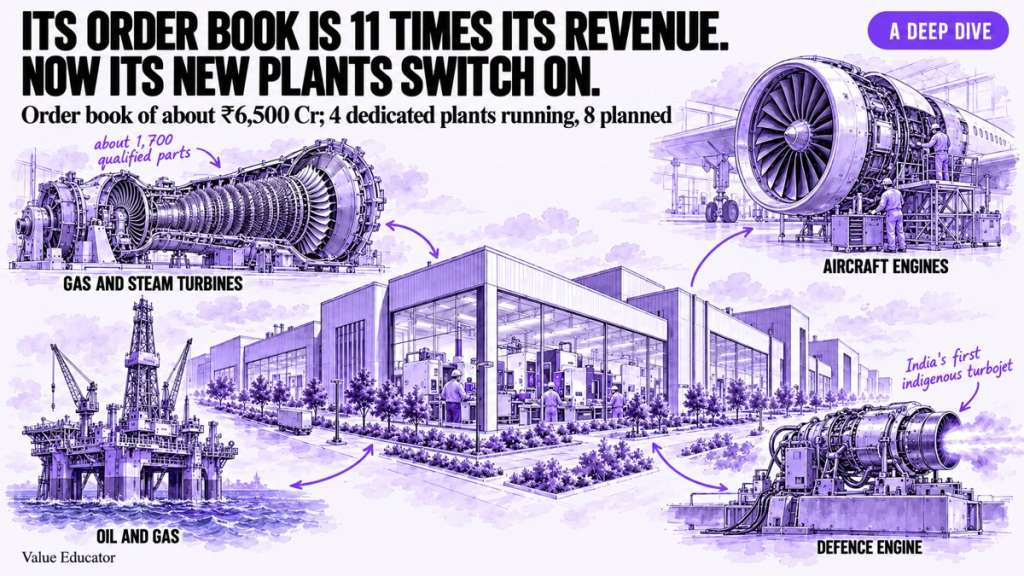
Azad Engineering: Turbine Blades, Jet Engines and Orders
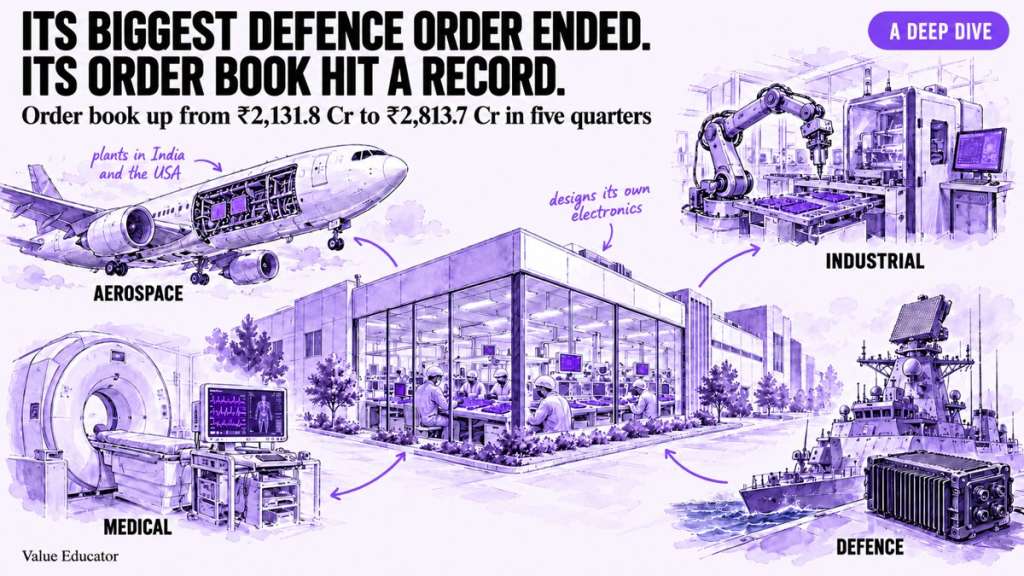
Cyient DLM: Aircraft Electronics and a Record Order Book
Explore our Products
Research Framework
Emerging Titans
Combination of quantitative analysis, industry tailwinds, and management assessment - SPRINT investment philosophy
Tiny Titans
Heavy emphasis on scuttlebutt research, plant visits, and early on-ground signals



Modern Warfare to Multibaggers
Key Trends. Strategic Shifts. Opportunities Ahead.
Don't Miss This Exclusive Webinar!
Join Value Educator to decode the key trends shaping India's defence sector and learn how to identify tomorrow's potential leaders in the space.
- In-depth research on India's defence sector
- Live Q&A session
- Actionable takeaways for long-term investors

 Orders
 Subscription
 Share with friends


Required Details
₹23999.00
(12 month subscription)
As per SEBI regulations, all users are mandated to complete the KYC that is validated for 1 year. Post payment, you will be redirected to the KYC screen


No comments yet. Be the first to comment!