
Shivalik Bimetal: The Quiet EV Supplier

There are two kinds of wealth creation in markets.
The first kind is loud. It comes with headlines, CEO interviews, social media debates, and valuation arguments on prime-time television. It happens in companies that sell visible products — cars, smartphones, consumer brands.
The second kind is almost silent.
It happens in component manufacturers. In niche engineering firms. In businesses that operate within systems rather than on their surfaces.
Over the last three years, while investors debated the future of Tesla and tracked electric vehicle penetration numbers for Tata Motors, a lesser-known Indian engineering company quietly multiplied shareholder wealth.
It did not build cars. It did not make batteries. And neither did it operate charging stations.
Instead, it built the electrical backbone inside these systems.
To understand why it created millionaires — and whether the story still has legs — we need to step away from stock charts and examine something more fundamental: Current. Heat. Metal. And physics.
You can explore how such businesses fit into a long-term investing framework in our guide on: The Multibagger Framework: A Step-by-Step Guide to Finding 10x Stocks.
1. The Physics of Electrification
Electrification sounds glamorous when discussed in macro terms. Renewable energy targets. EV penetration rates. Smart grid modernization. Data center expansion.But every one of these transitions rests on the same foundation: electrical control.
Electricity must be generated, transmitted, measured, regulated, and protected. Every time current flows through a circuit, it must be monitored. Every time the temperature rises beyond safe limits, a mechanism must intervene.
These interventions happen through components: Small components. Often worth a few hundred rupees. Yet mission-critical.
Consider electric vehicles: A typical internal combustion engine vehicle relies on mechanical systems for performance regulation. An electric vehicle, however, depends on electrical current flow management.
Inside every EV sits a Battery Management System (BMS).
The BMS constantly monitors voltage, current, and temperature across cells. It ensures safe charging and discharging. It prevents overheating. It optimizes performance.
And at the heart of current measurement inside a BMS lies a shunt resistor. A shunt resistor measures electrical current by creating a small, precise voltage drop proportional to the current flowing through it.

In an internal combustion vehicle, you may find one such component.
In an EV, you may find eight to sixteen times more.
Now scale that across millions of vehicles.
India alone recorded more than two million EV sales in FY25. Globally, EV penetration continues to rise. Battery capacities are increasing. Power density is improving.
All of that increases the precision requirement of the current measurement. And that is where metallurgy becomes destiny.
2. The Billion-Rupee Welding Problem
To manufacture reliable shunt resistors, two metals must be joined — typically copper and a specialized resistive alloy.At first glance, this may sound trivial. In practice, it is a formidable engineering challenge.
The joint must satisfy several conditions simultaneously:
- It must conduct electricity efficiently.
- It must withstand heat.
- It must maintain structural integrity under vibration.
- It must not introduce measurement error.
Traditional welding methods struggle here.
When two dissimilar metals are joined using conventional processes, microscopic inconsistencies form at the joint. Under high current conditions, even minor imperfections create localized heating, and that heat reduces efficiency. Over time, it alters electrical resistance and, in extreme cases, it can compromise safety.
For automotive electronics — where precision determines battery performance and thermal stability — this is unacceptable.
The solution lies in Electron Beam Welding (EBW).
EBW uses a focused beam of high-velocity electrons to create extremely deep and clean welds in a vacuum environment. The process produces precise metallurgical bonding with minimal contamination.
But this technology is far from easy to implement.
Electron beam welding machines are expensive.
The process requires tight vacuum control.
And, the Scaling production demands decades of metallurgical expertise.
Globally, only a handful of companies possess industrial-scale EB welding capability for strip production.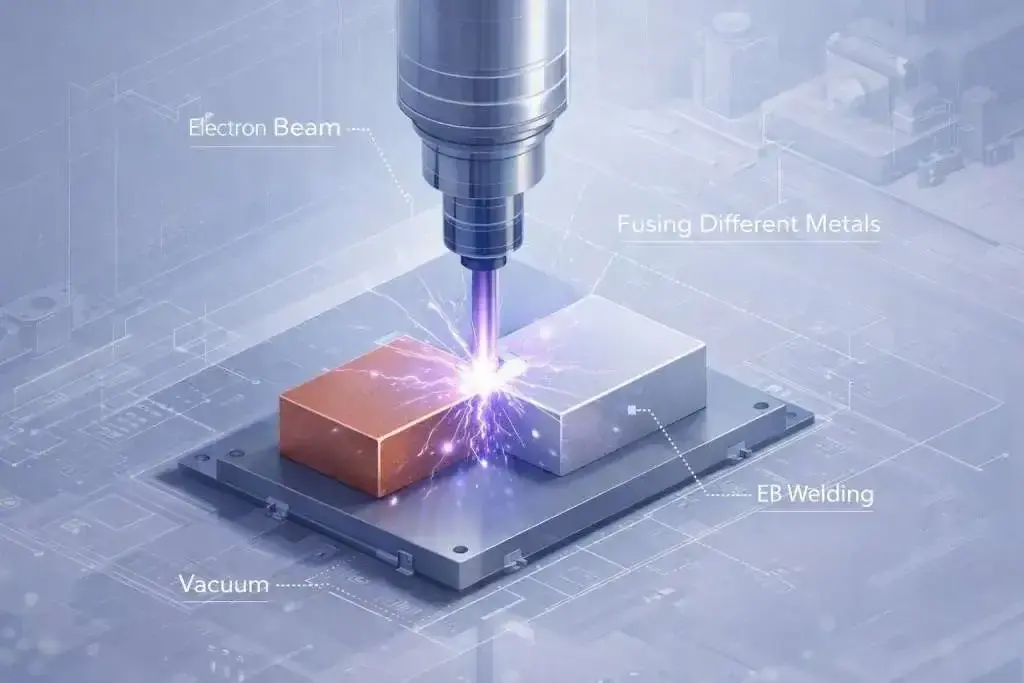
One of them is Shivalik Bimetal Controls Ltd, which is our “Stock X” and the point of discussion for this read.
Over the past decade, the company quietly built what is widely regarded as the largest strip electron beam welding capacity in the world.
But the real strategic advantage was not just the capacity.
Instead of importing these highly specialized machines at enormous cost, the company assembled many of them in-house, dramatically reducing capital expenditure.
This was not simply a clever engineering decision. It created a structural moat.
A moat that sits deep inside the electrical architecture of electric vehicles, smart meters, circuit protection systems, and renewable energy infrastructure.
And it is this invisible position — inside the flow of electricity itself — that turned a quiet component manufacturer into one of the market’s most powerful wealth-creation stories.
3. Reinvention After Collapse
Shivalik’s present strength is best understood through its past vulnerability.Founded in 1984, the company originally served the cathode ray tube (CRT) industry. At the time, CRT televisions were not just common — they were the backbone of the global consumer electronics market. Nearly every household television set relied on this bulky glass-tube technology.
For manufacturers supplying components to this ecosystem, the opportunity was immense. Demand was stable, volumes were large, and the technology cycle moved slowly. Companies that positioned themselves within this value chain enjoyed decades of predictable growth.
For years, the business operated comfortably inside this system.
Then the Screen Revolution Arrived
The stability did not last forever.
By the late 2000s and early 2010s, LED and LCD technologies began replacing CRT televisions at a breathtaking pace. What had once been a slow-moving industry suddenly experienced one of the most dramatic technology transitions in consumer electronics history.
Flat screens were thinner. They consumed less power. And, they offered sharper images.
And most importantly, they were the future.
Within a few years, CRT televisions virtually disappeared from global markets.
When the Core Market Collapsed
For companies deeply tied to the CRT supply chain, this shift was brutal.
Demand for CRT components collapsed almost overnight. The industry that had supported decades of stable revenues began shrinking year after year.
The impact was visible in Shivalik’s financials.
Margins compressed sharply as legacy businesses deteriorated and scale advantages disappeared. Gross margins — once supported by stable demand — slipped significantly, falling to around 41%–42%.
What had once been a dependable industry suddenly became a declining one.
And the company faced a difficult reality:
reinvent itself… or slowly fade with the technology it once served.
Instead of choosing to slowly fade, Shivalik pivoted. It focused on what it knew best — precision metal joining.
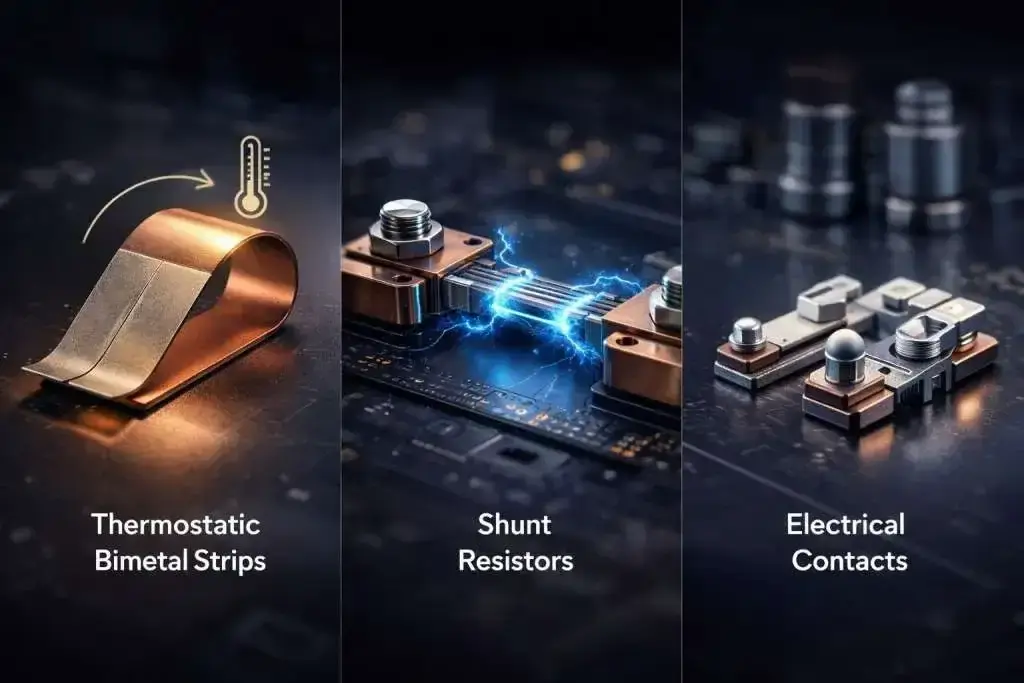
Over time, it developed three key verticals:
- Thermostatic bimetal strips
- Shunt resistors
- And Electrical contacts
Its products now serve switchgear, electric vehicles, smart meters, energy storage, automotive electronics, industrial systems, and more
The pivot was not opportunistic. It was technological.
4. The Three Revenue Engines
Thermostatic Bimetals
Thermostatic bimetals are bonded strips made of two metals with different thermal expansion rates. When temperature changes, the strip bends predictably. This bending activates switches in circuit breakers and protective devices.As per the latest numbers, Switchgear accounted for roughly 80% of this segment’s exposure. Whereas, Appliances and metering applications contributed the rest.
Shivalik commands around 80% domestic share in bimetals and close to 18–20% globally. The moat here is not patents. It is process mastery, cost efficiency, and decades-long credibility.
Bimetals provide stability and steady cash flow to the company.
Shunt Resistors
Shunts are the growth engine. They contribute approximately half of the company's revenueAccording to the latest Investor Conference Call, Automotive accounts for roughly 60% of this segment, and Energy meters contribute around 35%.
Historically, Shivalik supplied welded strips. Over time, it transitioned toward supplying finished, calibrated precision components.
That transition changed the economics of the business.
Even when volumes remained flat, realizations increased due to mix improvement and value-added products.
Margins in this segment operate in the 20–25% range. This is the engine that powered earnings compounding.
Electrical Contacts
Electrical contacts are used in switches, relays, and smart meters.Margins here are lower than shunts but benefit directly from smart meter expansion and switchgear growth. Capacity expansion in this vertical could unlock incremental growth.
The annual report for FY24-25 shows the revenue mix of the company:
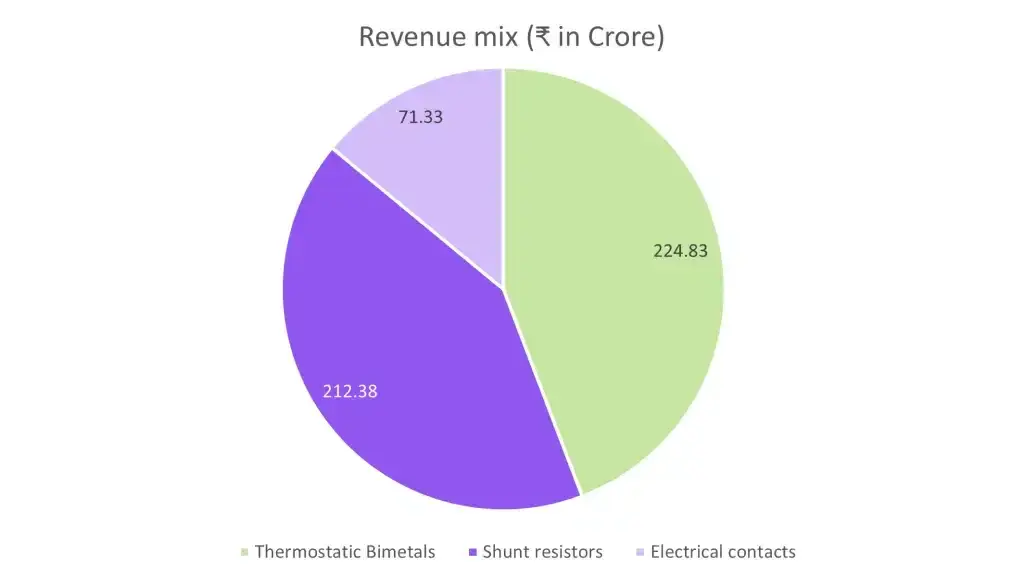
For investors analyzing segment-driven businesses like this, understanding segment-wise revenue analysis can reveal the real growth engine inside a company.
Read more about this in our guide on:
Segment-Wise Revenue Analysis: How to Find a Company's True Growth Engine
5. The Structural Demand Landscape
India’s domestic energy output rose nearly 10% in FY24, and rural electrification has crossed 99%. The next phase involves grid modernization, EV charging infrastructure, and renewable integration.With the global electrical equipment market standing at US$1.85 trillion and India’s electrical and electronics market projected to nearly double by 2030, these factors together form structural tailwinds for the company
Smart metering alone represents a massive opportunity for the company. The government targets the installation of 250 million smart meters by FY28, and each smart meter offers roughly ₹150 revenue opportunity to Shivalik across shunts and contacts.
Electric vehicles add another powerful tailwind. The EV segment is projected to account for 16.7% of global light vehicle sales by 2025, highlighting the accelerating shift toward electrification. The company has also entered EV busbar manufacturing. In the upcoming sections, we will examine how moving from simple part manufacturing to complete component solutions is expected to support margin expansion, as guided by management.
As renewable energy expands, the need for switchgear systems — which manage and protect the flow of electricity — continues to rise. IMARC estimates the global switchgear market at US$116.9 billion in 2024, expected to reach US$172.3 billion by 2033. For Shivalik, this growth directly translates into opportunity, as switchgear systems rely on thermostatic bimetals and electrical contacts, two of the company’s key product segments.
After analysing these factors, it becomes clear that the company’s demand is not driven by discretionary consumption, but by structural, infrastructure-led demand.
Sectors benefiting from structural demand cycles—such as electrification and power infrastructure—often appear in themes like “Top Power Sector Stocks”.
To learn more, read our article on: Power Sector Stocks in India 2026: List by Value Chain
6. Marquee Customer Base
In the world of high-stakes manufacturing, your customer list is your resume. You don't get to work with the titans of industry by having a good sales pitch; you get there by proving—year after year—that your components won't fail when the stakes are high.Shivalik Bimetal isn't just a supplier; it has become a "quiet partner" to the companies that literally power our modern world.
The Approval of Industrial Giants
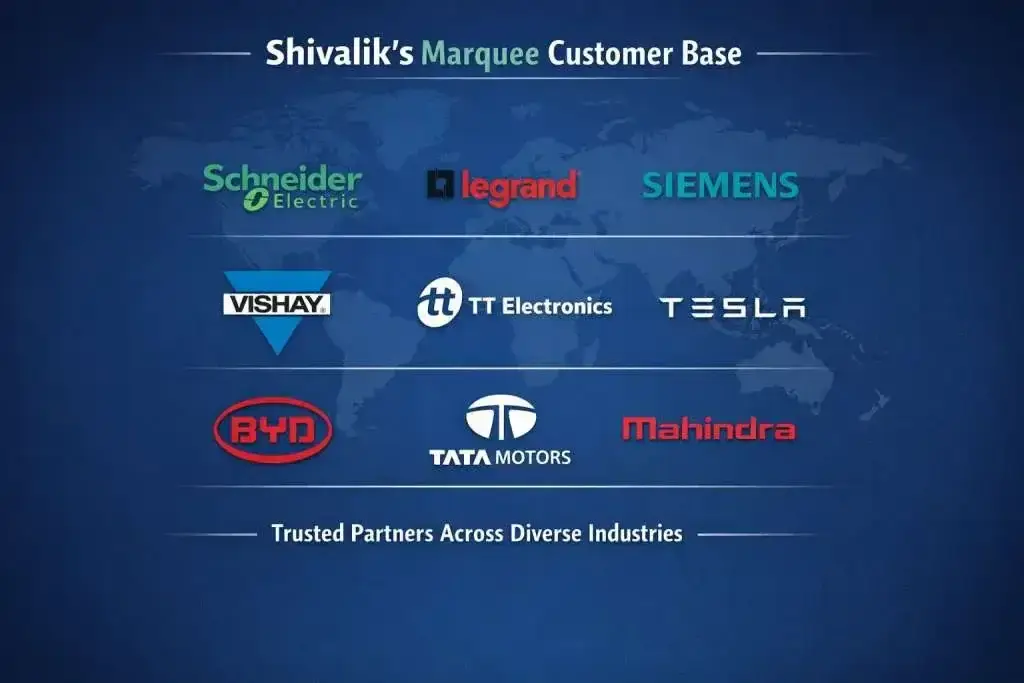
Schneider, Legrand, and Siemens are the invisible guardians of modern infrastructure. Whether in homes or factories, these companies ensure reliability in high-stakes environments where failure could cost millions in USD or endanger lives.For over a decade, Shivalik has been their "go-to" for the bimetals that act as the brain of their switchgear. The relationship with Schneider is particularly telling: over the last five years, Schneider didn't just keep buying—they doubled their reliance on Shivalik. In the world of global sourcing, that’s the ultimate compliment. It’s Schneider saying, "We trust you enough to make you a pillar of our global supply chain."
Inside the Machines Powering the EV Era
If you peek under the hood of a Tesla, a BYD, or a Tata Nexon EV, you won’t see Shivalik’s logo. But look closer at the Battery Management System (BMS)—the computer that keeps the battery from overheating—and you’ll find Shivalik’s DNA.By partnering with "Tier-1" giants like Vishay and TT Electronics, Shivalik has quietly plugged itself into the heart of the global EV race. They are the "supplier to the suppliers," providing the precision shunts that allow these cars to measure every millivolt of energy. Whether it’s a Mahindra SUV in Mumbai or a Tesla in California, Shivalik is likely the silent observer making sure the energy flows safely.
The "Boring" Advantage: Why They Stay
Why do these global giants stick with a medium-sized Indian firm? It comes down to three very human traits:- They listen: Instead of selling a "catalog" product, Shivalik’s engineers sit down with client teams to co-create custom solutions.
- They show up: In a world of broken supply chains, Shivalik has built a reputation for being the "reliable neighbor" who always delivers on time.
- They grow together: Shivalik’s customers aren't just sitting still. Schneider and Vishay are currently pumping over USD 1.5 billion (₹13,000+ Crore) into new factories. As these giants build bigger "houses," they are inviting Shivalik to provide the "bricks."
Safety in Numbers
Despite these heavyweight partnerships, Shivalik has been smart about its independence. No single customer—not even Schneider—holds the keys to the company’s future, with no one client making up more than 10% of their bimetal revenue.This creates a beautiful "Safety Net." Shivalik gets the prestige and stability of working with the world’s best, without the risk of being held hostage by any one of them. It is a masterclass in building a diversified, high-trust ecosystem that compounds quietly in the background.
7. Moving up the value chain
For Shivalik Bimetal Controls, the first phase of compounding was built on mastering precision metal joining and riding structural electrification tailwinds.The second phase is about something more powerful: Moving up the value chain
1. From Strip Supplier to Precision Component Maker
For years, Shivalik primarily supplied welded metal strips to global Tier-1 suppliers.These strips were then processed further into finished components.
The economics of that model are simple:
- Volume driven
- Moderate margins
- Customer dependent
But something changed over the last 3–4 years.
Instead of selling welded strips alone, Shivalik began supplying finished, calibrated precision components. Smaller parts. Higher value addition. Longer qualification cycles.
The financial impact was visible.
Even in quarters where volume remained flat or slightly negative, realizations improved by double digits. Gross margins expanded. EBITDA margins climbed toward the mid-20% zone.
This was not commodity metal pricing.
It was mix improvement.
Management commentary over recent quarters repeatedly emphasizes this shift: a growing proportion of revenue now comes from precision components rather than raw strips.
Today, only about one-third of output is supplied in strip form, with the majority moving toward component-level supply.
That subtle shift matters enormously.
Because strip supply is capacity-dependent, whereas Precision component supply is qualification-dependent.
And, Qualification creates stickiness.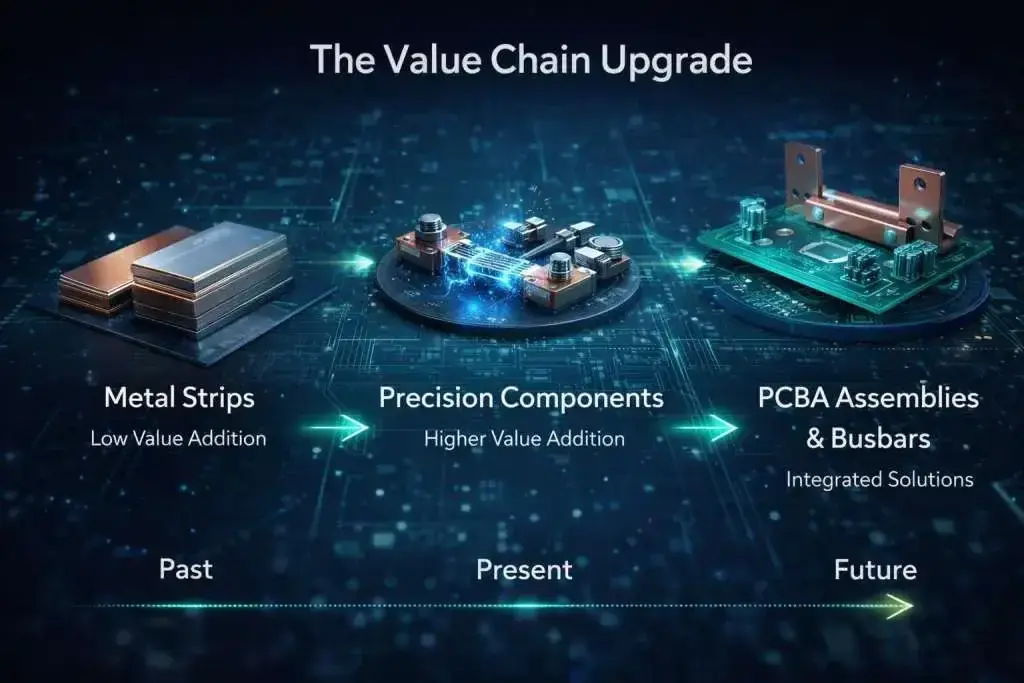
2. Forward Integration: The PCBA Opportunity
The next logical extension of this strategy is forward integration into PCB-mounted assemblies (PCBA).Instead of supplying standalone shunt resistors, Shivalik is developing calibrated assemblies mounted directly onto printed circuit boards.
Why does this matter?
Because the economic stack expands.
A standalone shunt resistor may carry a certain value.
A PCB-mounted calibrated assembly carries several times that value.
It also carries deeper integration into the customer’s product architecture.
Qualification cycles for automotive-grade PCBA can take 12–15 months. But once approved, switching suppliers becomes expensive and operationally risky.
This is where stickiness turns into durability.
Management has indicated that forward integration could unlock roughly ₹150 crore of incremental revenue potential over the medium term.
Initial revenue contributions may begin modestly, but scale builds over time.
3. The Busbar Thesis: Bigger Topline, Different Economics
If PCBA is incremental, busbars are transformational.In EVs, busbars are rigid conductors that distribute high current within battery packs and power modules. Connectors ensure continuity between modules.
These components are mission-critical.
Unlike commoditized wiring, EV busbars require:
- Precision welding
- High conductivity
- Thermal stability
- Structural robustness
Electron Beam Welding is particularly suited for such applications.
Here is where Shivalik’s core competence becomes strategically powerful.
It already possesses deep EB welding expertise.
Applying that capability to busbars and connectors is not diversification — it is adjacency.|
The economics differ from shunt resistors.
Margins may be slightly lower than core resistor margins. However, revenue per vehicle increases dramatically.
For a high-value EV two-wheeler, total assembly value supplied by Shivalik could range between ₹2,000 and ₹3,000 per vehicle, including 60-65% material cost.
In four-wheelers, the value potential increases further to more than ₹5,000 per vehicle
Even if value addition margins are modestly lower, the sheer revenue base per vehicle expands significantly.
Management has set up a new assembly facility in Pune to support this vertical. Over a three-year ramp, the potential scale could become meaningful relative to current revenues.
The opportunity size is not theoretical.
India’s EV two-wheeler market alone runs into millions of units annually.
Even modest penetration into leading OEM platforms can move the needle materially.
4. Smart Meter Localization: The Hidden Multiplier
One of the most misunderstood aspects of Shivalik’s growth narrative lies in smart meter localization.India has ambitious plans to install 250 million smart meters over the coming years.
But the real growth trigger is not just installation numbers.
It is component localization.
Earlier, many relays and metering components were imported, particularly from China.
As localization increases and the government intensifies its focus on import substitution, domestic suppliers stand to benefit from greater pricing power and improved volume visibility.
Shivalik estimates that each smart meter offers roughly ₹150 in revenue potential through shunts and contacts. Based on the planned rollout of smart meters, this translates into an overall revenue opportunity of about ₹3,750 crore for the company.
If relay manufacturing increasingly localizes within India, the addressable opportunity expands further.
Management has expressed confidence in capturing a meaningful share of domestic smart meter components over the next several years.
This is not a one-year story. It is a multi-year structural tailwind tied to government policy and grid modernization.
5. Margin Sustainability: Structural or Cyclical?
One of the most critical questions in evaluating any multibagger is whether margin expansion is sustainable.Shivalik’s recent EBITDA margins have remained in the 20–23% range, with management indicating that they aim to sustain margins around 23–25% going forward.
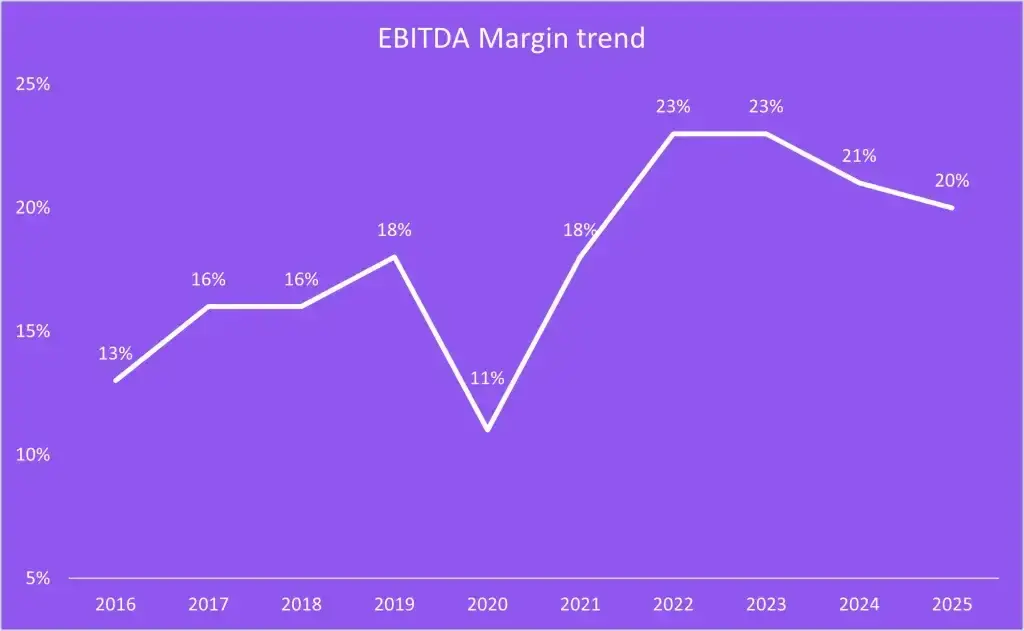
The sustainability argument rests on several pillars: First, raw material costs are largely pass-through. Copper and alloy price fluctuations do not materially compress margins over sustained periods.
Second, the value-add mix is increasing. Precision components and assemblies command better realization than strip supply.
Third, operating leverage remains underutilized. With capacity utilization low in core segments, incremental revenue can expand margins further.
Fourth, technological differentiation through EB welding reduces pricing pressure relative to commoditized metal suppliers.
However, forward integration into busbars and assemblies may carry slightly lower percentage margins than core shunts.
The trade-off is important.
Percentage margins may normalize slightly. The absolute profit pool expands.
For long-term compounding, absolute profit growth matters more than headline margin numbers.
6. Geographic Diversification
Export markets have long been a meaningful pillar of Shivalik’s growth story. For many years, the United States was one of the company’s most important markets—particularly for shunt resistors and bimetal products used across industrial and automotive applications.However, recent geopolitical developments and tariff changes introduced temporary friction into that relationship. Tariffs made it significantly more expensive to export raw metal strips into the U.S., putting pressure on a business model that historically relied on supplying semi-finished materials to international partners.
America (60%) is the major market for Shivalik, and hence any slowdown directly impacts Shivalik’s revenue, which was witnessed in FY24
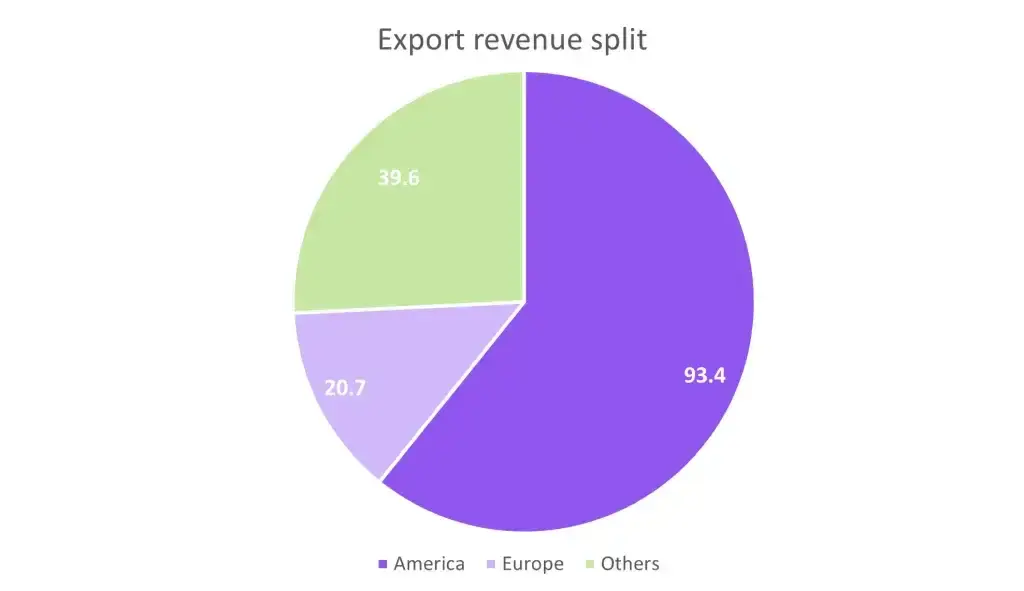
Instead of responding with price cuts to defend volumes, the company took a more strategic route. Together with partners such as Vishay, Shivalik began shifting the product mix away from raw strips and toward finished precision components and assemblies. In simple terms, rather than exporting basic metal inputs, the company started exporting higher-value finished parts.
This shift serves two purposes. First, finished components are less exposed to tariff disadvantages compared with raw material exports. Second, they carry significantly higher value addition, which improves realizations and strengthens customer stickiness.
At the same time, the company has been actively expanding its geographic footprint beyond the U.S. Markets. Asia, Japan, and other regions are gradually becoming more important, helping reduce dependence on any single export destination.
Export volumes may fluctuate from quarter to quarter, but the underlying demand for electrification components remains global. As electrification spreads across transportation, smart grids, and renewable energy infrastructure, the need for current sensing and protection systems continues to grow across regions.
With the ongoing product mix shift and improving demand from U.S. customers in thermostatic bimetals and shunts, management expects a gradual recovery and improvement in business from the American market over time.
In the long run, this broader geographic presence does more than expand revenue—it reduces concentration risk and helps insulate the company from region-specific economic or policy shocks.
7. Working Capital Discipline
In manufacturing businesses, growth often demands more capital. But growth without cash discipline can quietly erode value. Shivalik has taken several practical steps to ensure that expansion does not stretch its balance sheet.Historically, the company has maintained working capital days in the range of 100–120 days, with a cash conversion cycle of around 195 days. As the business scales and moves further up the value chain, improving this cycle becomes increasingly important.
To address this, management is focusing on two key levers: inventory and receivables.
On the inventory side, the company is localizing suppliers. By developing three to four domestic vendors, lead times are expected to shorten significantly. Shorter supply chains mean the company can hold less inventory, which gradually reduces inventory days.
On the receivables side, Shivalik has entered into tripartite arrangements with financial institutions. For customers with payment terms beyond 90 days, a bank pays the company upfront, while the bank collects the payment later from the customer. This allows Shivalik to convert receivables into cash faster without changing customer payment terms.
Together, these initiatives help tighten the working capital cycle. Faster cash conversion ultimately means stronger free cash flow, allowing the company to fund capex internally while avoiding excessive debt or dilution.
8. Why Entry Is Hard
Theoretically, precision metal components do not appear impregnable.In practice, entry barriers are meaningful.
Electron-beam welding infrastructure is capital-intensive, and process mastery takes years.
Automotive and smart meter qualification cycles are long and stringent.
Switching suppliers mid-program introduces risk for OEMs.
Furthermore, Shivalik’s components typically represent a small fraction of total system cost — often around 1% or less.
For large OEMs, backward integration into such components is rarely economical.
The incentive to outsource to a specialized, proven supplier remains strong. That creates a quiet but durable moat.
9. The Second Growth Curve
Many small-cap multibaggers exhibit an initial growth curve driven by demand tailwinds.The second growth curve determines whether compounding sustains.
For Shivalik, the first curve was driven by:
- EV penetration
- Switchgear growth
- Smart meter adoption
- Mix improvement
The second curve is being built on:
- Forward integration into PCBA
- Busbar and connector expansion
- Deeper OEM integration
- Geographic diversification
- Operating leverage
If executed well, the business transitions from component supplier to sub-assembly partner.
That shift deepens customer relationships. It increases switching costs. It broadens revenue per platform.
8. The Moat in the Machine: Why Shivalik Wins the Long Game
Now that we’ve seen how Shivalik makes money and how it is moving up the value chain, the million-dollar question for any serious investor is: Is this wealth creation durable? Or is it just a flash in the pan?To answer that, we need to look beyond the balance sheet and understand the competitive battlefield. At first glance, Shivalik operates in crowded industries—electrical parts, auto components, and metal processing. But that’s a surface-level view.
The reality is that Shivalik isn't just a "metal company." It is a specialist in precision electron beam-welded current measurement. And in that specific arena, the competition thins out dramatically.
1. A Tiny Pond with Big Barriers
Globally, only a handful of manufacturers have mastered the art of welding different metal strips with the precision required for modern EVs. Shivalik stands out because it has:The world’s largest capacity for electron beam-welded strips.
In-house machine building, which keeps costs low and trade secrets safe.
Deep relationships with Tier-1 giants that take years to build.
This combination creates a powerful defensive moat. For an automotive giant like Tesla or Tata Motors, Shivalik’s component might cost 1% of the total system. If they switch suppliers to save pennies, they risk a failure in a safety-critical part. The risk-to-reward ratio for switching is terrible, which is exactly why customers stay sticky.
2. Practical Magic: The "Boring" Barrier to Entry
On paper, welding metal strips sounds easy. In practice, making a shunt resistor that can survive the vibration, heat, and electrical stress of an EV for 15 years is incredibly hard.Regulatory approvals for these parts can take 12 to 18 months. That’s a lifetime in the business world. Once Shivalik is "designed in" to a vehicle platform, they are essentially locked in for the life of that model. Competitors can’t just walk in and steal the business overnight.
3. Riding the Megatrends (Not Just Cycles)
Every business has ups and downs. Shivalik has faced headwinds recently with U.S. market softness and inventory corrections. But the structural demand for its products is undeniable.Electrification of Transport: More EVs mean more shunts.
Smart Grids: Modernizing the world’s power lines requires millions of new meters.
Renewable Energy: Solar and wind farms need precise current measurement.
These aren't just trends; they are multi-decade shifts in how the world uses energy. Shivalik’s revenue is diversified across all these sectors, meaning a slowdown in one (like auto sales) can be offset by growth in another (like smart meters).

4. The Discipline of Capital Allocation and Capital Expenditure
Perhaps the most underrated strength of Shivalik is its capital allocation. In a world where small-cap companies often chase "diworsification" (buying unrelated businesses), Shivalik has stayed laser-focused.They have deployed roughly ₹75 crore into expanding capacity and forward integration—sticking to what they know best. They are net debt-free and generate strong internal cash. This financial discipline is the hallmark of a company built to last, not just to pump its stock price.
5. The Verdict: A Structural Compounder
Zoom out 10 or 15 years. Will the world need fewer current measurement devices? No.EVs will be everywhere.
Data centers (driven by AI) will need massive power management.
Smart cities will require millions of sensors.
All these future technologies rely on the fundamental physics of current sensing and protection. Shivalik sits squarely at this foundation layer. As long as the world electrifies, the need for their precision engineering doesn't just survive—it becomes critical. This is the definition of a long-term compounder.
The Boredom Arbitrage: Why Most Miss Shivalik
In investing, arbitrage usually describes a price gap between the same asset in two different markets. But sometimes the gap is psychological rather than geographical. What could be called “boredom arbitrage” is the difference between a company’s true economic value and the level of excitement investors attach to it.This phenomenon helps explain why a company like Shivalik Bimetal managed to stay under the radar for so long despite strong growth and improving fundamentals.
One reason is what can be described as the “shiny object” bias. Investors are naturally attracted to stories they can easily visualize—artificial intelligence, space technology, electric vehicle brands, or consumer apps they interact with every day. Companies like Tesla or Zomato generate constant discussion because their products are visible and part of daily life. In contrast, very few people encounter a shunt resistor in their everyday routine. Because of this, the brain subconsciously classifies such businesses as “boring industrials,” and markets often assign them lower attention and sometimes lower valuations.
Another factor is complexity. Many investors intuitively understand businesses that sell coffee, smartphones, or cars. But concepts like electron beam welding of dissimilar metals or specialized bimetal components are far less intuitive. This technical barrier acts as a natural filter. The result is that short-term speculative capital often stays away, while investors who take the time to understand the technology can quietly accumulate positions and benefit from long periods of compounding.
There is also the industrial time horizon to consider. Wealth creation in engineering-driven sectors rarely arrives through sudden viral moments or dramatic quarterly announcements. Instead, it unfolds through years of incremental improvements in materials science, manufacturing precision, and global supply chain integration. Companies like Shivalik gradually embed themselves deeper into critical industrial systems—especially those tied to electrification—while the broader market remains distracted by more glamorous stories.
This is where the arbitrage lies: in recognizing that the market’s lack of excitement about a business does not necessarily reflect its economic importance. Investors willing to tolerate the “boring years” can sometimes capture extraordinary long-term value as structural trends—such as global electrification—quietly play out in the background.
Many small-cap and micro-cap companies operate in such overlooked niches. Investors interested in this space may also explore:
Micro-Cap Investing: The High-Risk, High-Reward Path to Wealth.
Explore our Products
Research Framework

Emerging Titans
Combination of quantitative analysis, industry tailwinds, and management assessment - SPRINT investment philosophy

Tiny Titans
Heavy emphasis on scuttlebutt research, plant visits, and early on-ground signals
Conclusion: From Invisible Components to Indispensable Infrastructure
The story of Shivalik Bimetal Controls is not merely about manufacturing; it is a masterclass in adaptation and engineering resilience.From the collapse of the CRT market to becoming a critical partner in the global electrification ecosystem, the company has proven that longevity lies in mastering the fundamentals—Current, Heat, and Metal.
While the market often chases the "loud" wealth creators—the EV brands and consumer giants—Shivalik has quietly cemented itself as the silent backbone of this revolution. By securing a technological moat through Electron Beam Welding, dominating the niche of shunt resistors, and aggressively moving up the value chain into PCBA and busbars, Shivalik has transformed from a simple component supplier into a strategic sub-assembly partner.
As India accelerates toward its targets of 250 million smart meters and higher EV penetration, Shivalik’s role shifts from optional to inevitable. The company’s journey underscores a powerful investment truth: Real compounding happens not where the noise is loudest, but where the engineering is hardest.
If you're interested in learning how to build a long-term investing strategy around such businesses, explore our guide on: Asset Allocation 101: The Key to Reducing Risk and Smoothing Returns
For stakeholders and investors alike, Shivalik represents the difference between cyclical growth and structural evolution. As the world electrifies, the current must flow, be measured, and be protected—and Shivalik is positioned right at the source.
We believe the most powerful stories in Indian manufacturing are the ones quietly building the future. Does Shivalik’s strategy of "moving up the value chain" resonate with your view on long-term wealth creation?
👉Comment the word "MOAT" below if you believe that engineering precision is the ultimate competitive advantage. We’d love to hear your thoughts!
FAQs
How large is the global market for current sensing components?
+Current sensing components such as shunt resistors are used across multiple industries, including electric vehicles, industrial automation, renewable energy systems, and power electronics. As electrification accelerates globally, demand for accurate current monitoring is expected to grow alongside EV adoption, battery storage, and grid modernization.
What role do Tier-1 suppliers play in the EV supply chain?
+In the automotive ecosystem, Tier-1 suppliers provide major subsystems or components directly to vehicle manufacturers (OEMs). Companies like Vishay or TT Electronics integrate smaller components into larger electronic modules that eventually go into vehicles.
Component manufacturers that supply these Tier-1 companies indirectly become part of the global automotive supply chain.
Why are small components often critical in high-technology systems?
+Many advanced systems depend on the precision control of electrical current and temperature. Even small deviations can lead to overheating, reduced efficiency, or system failure.
Because of this, components that appear inexpensive can actually be critical to system reliability, which is why manufacturers prioritize precision and consistency over price.
How does localization benefit domestic component manufacturers?
+When governments push for local manufacturing of critical components, it reduces reliance on imports and strengthens domestic supply chains.
For local suppliers, this often leads to higher order visibility, reduced competition from imports, and stronger long-term partnerships with domestic OEMs.
How does electrification influence demand for precision electrical components?
+Electrification increases the number of electronic control systems in devices and infrastructure. From EV batteries to smart grids and industrial automation, these systems require accurate current sensing, circuit protection, and thermal control, all of which rely on specialized electrical components.
Why do niche industrial companies often compound wealth quietly?
+Unlike consumer brands, industrial component companies rarely attract public attention because their products are embedded inside larger systems rather than sold directly to consumers. However, if they occupy a critical position in supply chains, they can benefit from long-term demand while facing relatively limited competition.
How can investors approach research in niche manufacturing sectors?
+Understanding these companies usually requires looking beyond headlines and focusing on:
- Technology capabilities
- Position in the supply chain
- Customer relationships
- Industry demand drivers
By studying these elements, investors can better evaluate whether a business is benefiting from structural industry trends rather than short-term market cycles

High growth stock specialist, Value Educator
Shashank Mahajan is an equity research professional with over 12 years of experience in identifying high-potential SME and micro-cap stocks at an early stage. He follows a rigorous scuttlebutt research–driven approach, combining on-ground insights with deep financial analysis. Shashank specializes in uncovering under-researched and under-owned companies with strong management quality and long-term growth potential. Through disciplined research and early identification, he focuses on spotting tomorrow’s market leaders before they enter the mainstream investor radar.

Glenmark: The USD 700 Mn Cancer Deal and Its Brands

Pharma Stocks in India 2026: Generics, APIs and CDMOs

Granules India: From Paracetamol to a 65% Gross Margin

Natco Pharma: After Revlimid, 29 Patent Challenges

Shilpa Medicare: Cancer APIs, Films and Biosimilars

Alembic Pharma: US Plants Pay Back, Margin Hits 22.2%
Explore our Products
Research Framework
Emerging Titans
Combination of quantitative analysis, industry tailwinds, and management assessment - SPRINT investment philosophy
Tiny Titans
Heavy emphasis on scuttlebutt research, plant visits, and early on-ground signals



Modern Warfare to Multibaggers
Key Trends. Strategic Shifts. Opportunities Ahead.
Today at 7:00 PM IST. Room opens 30 minutes before.
Don't Miss This Exclusive Webinar!
Join Value Educator to decode the key trends shaping India's defence sector and learn how to identify tomorrow's potential leaders in the space.
- In-depth research on India's defence sector
- Live Q&A session
- Actionable takeaways for long-term investors

 Orders
 Subscription
 Share with friends


Required Details
₹23999.00
(12 month subscription)
As per SEBI regulations, all users are mandated to complete the KYC that is validated for 1 year. Post payment, you will be redirected to the KYC screen


No comments yet. Be the first to comment!