
Bondada: The Hidden Infrastructure Story
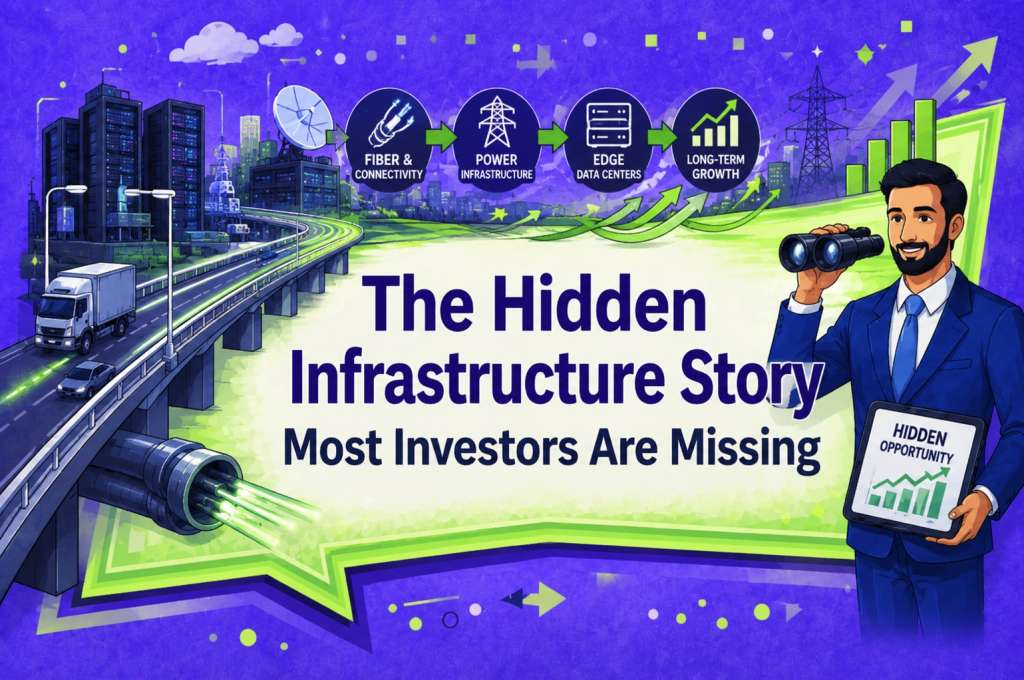
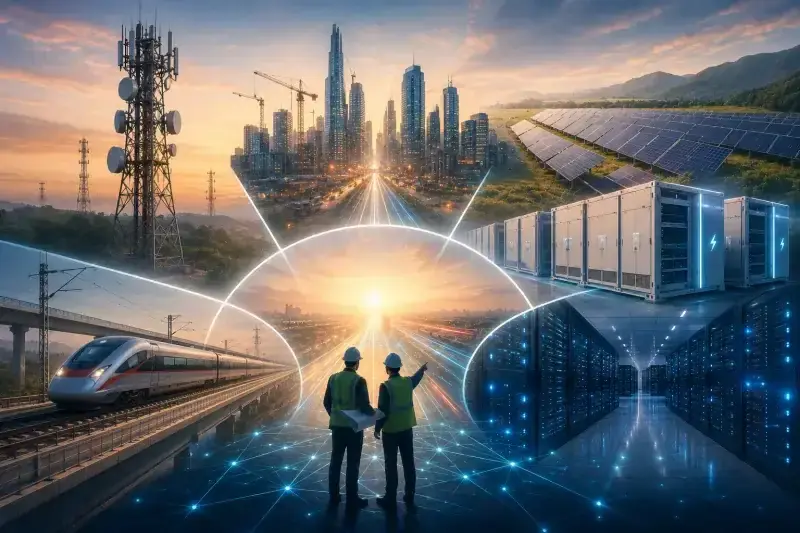
Stop for a moment and reflect on the past couple of years. The Internet has been made faster. Network coverage is expanding and new mobile towers have sprung up in areas where there was little or no coverage in the past. Large-scale solar farms are being installed throughout the country. Data centers are emerging to fuel India's Digital Economy. Old railroads are being updated. So, too is battery storage becoming the next big energy transition piece.On the surface, they appear to be very distinct narratives.Oh no, Telecom has nothing to do with solar. Railways have nothing to do with solar. Data centers don't have anything to do with railroads. Data centers don't have anything to do with battery storage, that's for sure. Or do they?
If you dig a little deeper, you'll see one thread thread up the entire story.Without the infrastructure, none of these industries can grow.So someone first has to construct the towers before the mobile network can expand. It is only through the efforts of someone to design and build a solar park that it can produce electricity. Someone must install and integrate a battery storage system for it to help the grid. In order for a data center to be brought online, somebody has to build the infrastructure that powers it.India's next decade will not just be about eating. It will be shaped by what it is made from. Many of these themes have an underlying company that most investors still consider a telecom contractor.
'Behind every stock is a company. Find out what it's doing.'-Peter Lynch
The company is Bondada Engineering. However, the actual story is not about telecom towers.
It is a company that began in the telecom infrastructure space and is trying to become a player at the crossroads of some of the largest growth areas in India – renewable energy and battery storage, railways, data centers and defence.
It is a very easy question. Will Bondada be just another EPC Contractor?Or is it just quietly laying the groundwork for India's next ten years of development?India's Next 10 years will be a decade of building, not a decade of consumption.
India's Next Decade Will Be Built, Not Consumed
India's growth narrative for years has been consumption. The surge in smartphones, houses, cars, and financial products being bought led to lots of possibilities for businesses in all industries.However, the next ten years are likely to be dominated by even more powerful forces: infrastructure. The growing Indian economy is leading to a surge in electricity demand, with significant investments being made in power generation, transmission lines and the development of renewable sources of energy. Concurrently, the digital economy is driving demand for telecom networks, fiber connections, and data centers to support millions of users and businesses.Railways are one of the largest modernization projects, and battery storage systems are increasingly playing a key role in the clean energy transition.India's upcoming decade won't be one of consumption, but of construction. Any country on a significant infrastructure cycle is usually the biggest benefactor of the companies facilitating the creation of that ecosystem'Prior to Bondada linking up with solar power or battery storage or data centres, the company was a telecom infrastructure outfit.
'The big money is not in the buying and selling, but in the waiting' - charlie munger
Investors who want to understand how infrastructure spending creates long-term wealth should also read "Steel Demand Boom: 5 Stocks Benefiting from India's Infrastructure Push", which explores another side of India's massive buildout cycle
The company has been doing the work that most people don't see, for years. It set up telecom towers, laid optical fibre networks, and maintained critical telecom infrastructure throughout the country. On the surface it might be a rather mundane project. After all, telecom towers are more than just a business with high growth potential, they're utility infrastructure. However, what Bondada was constructing were not merely the towers.As a project was completed, the company was gaining experience in executing projects, establishing large customer relationships, training manpower, and understanding how to handle complex infrastructure projects in various geographies.
Over time, these abilities grew exponentially. Subsequently, Bondada deployed over 13,000 telecom towers, laid over 4,300Km of fiber optic cable and established a significant O&M presence in India.That was the experience that would eventually be the basis for all that followed. If you understand how to approach infrastructure projects at scale, it is easier to build the adjacent projects than it is to start from scratch.
Inside Bondada: The Business Model Driving Its Rapid Expansion
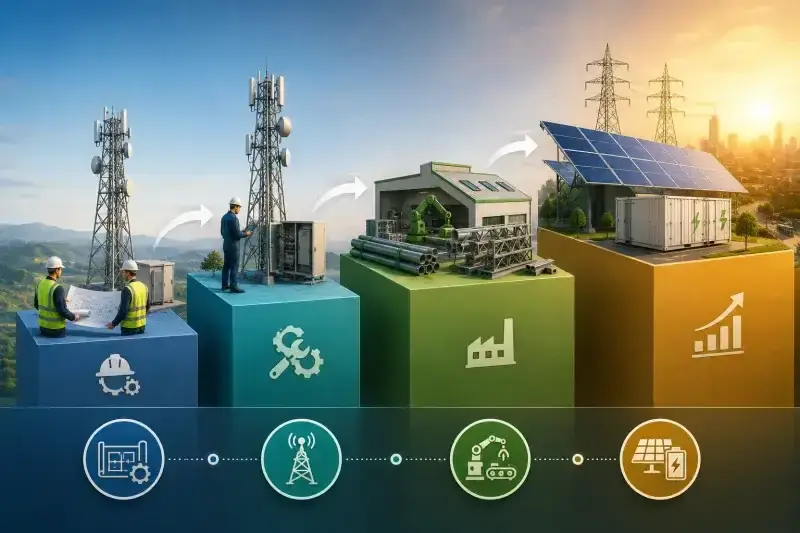
To understand where Bondada is headed, we first need to understand how its business model has evolved over time. Most infrastructure companies operate in a single part of the value chain. They either build projects, manufacture products, or maintain assets. Bondada, however, has gradually expanded across multiple layers of the infrastructure ecosystem.
The first layer is EPC, where the company designs, procures, and builds infrastructure projects such as telecom networks and solar plants. This is where Bondada built its execution track record. Once a project is completed, the opportunity doesn't necessarily end. Through its O&M business, Bondada continues to operate and maintain infrastructure assets, creating a more stable stream of revenue.The company has also expanded into manufacturing, producing telecom towers, poles, solar mounting structures, and other infrastructure-related products. This not only adds another revenue stream but also gives it greater control over project execution. But perhaps the most important shift is happening now.
From Execution to Value Creation
Instead of only building assets for others, Bondada is gradually moving towards owning infrastructure assets through businesses such as Solar IPP and BESS. In this model, the company can earn recurring cash flows over many years rather than relying solely on one-time project revenues. In simple terms, Bondada's journey has been moving from building infrastructure, to maintaining infrastructure, to manufacturing infrastructure, and now, increasingly, to owning infrastructure itself. Bondada seems to be a Solar EPC company on a first glance.The company is successful in the acquisition of the job, in the construction of the infrastructure, in the delivery of the infrastructure to the customer and in the collection of the payment. This is the way most EPC businesses do business.However, upon closer examination of the company's recent actions, a rather different story emerges. Bondada has been gradually upgrading its value chain over the years. It began with EPC (Execution, Procurement and Construction) which has revenue dependency with project execution. It then grew into O&M services, with the ability to generate revenue after a project is finished. The next stage was production, where the company could gain a bigger share of the value added in the infrastructure sector.
The most interesting part is now.Bondada is on a pathway of asset building and now owns assets through Solar IPP and BESS BOO projects. What does this mean? Each increment in the value chain transaction stream typically offers more predictable cash flows, and in many cases, higher valuations. EPC contractor income can only be generated through the construction of a project. Once a project is commissioned, an asset owner can continue to receive cash flows for many years.
'This ability to move up the value chain is often a sign of a durable competitive advantage. For a deeper understanding, read "Economic Moat Explained: Why Some Companies Stay Dominant for Decades."'
Try to think about it this way. It's possible to earn revenue from a solar plant when constructed for others. That solar plant can earn you profits for as long as 40 years.That's the metamorphosis that Bondada is seeking to undergo. And if management goes off without a hitch, the future company may be vastly different from the EPC contractor investors know now.
Solar: Powering Revenue and Expansion
Today, solar is one business that is driving growth at Bondada. Indeed, the solar business has become the biggest and largest revenue stream of the company. The opportunity is not too hard to comprehend. As India is progressing toward a more digital economy, cities are expanding, and industries are growing, the demand for electricity is still on the rise in India. That demand can't be met at a reasonable price or with resources that are sustainable by using traditional methods.
Therefore, renewable energy is no longer an alternative, but a requirement.This is seen in India's ambitious target of renewable energy, the rapid procurement of utility scale solar projects and the contribution of the government and private players in the sector. And, every solar project requires a designer, a purchaser of equipment and a contractor to construct it. That's where Bondada can help.
The company's Solar EPC business assists developers and utilities on transforming project plans to a solar power plant. Revenue is generated during the execution of the these projects and commissioning. However, what is of great interest is the amount of demand to come. In terms of visibility, the management has identified a huge pipeline of solar opportunities, especially in Andhra Pradesh, that extends several years in the future. In many ways, solar is not only Bondada's biggest business now. It's the engine powering the company's expansion into new markets like Solar IPP, battery storage, data centers and other infrastructure markets.
Solar IPP: Building Long-Term Value
Solar EPC is what's growing Bondada today, but perhaps there's a more interesting opportunity out there.
The difference between building and owning an asset must be understood In an EPC business, Bondada assists the customer to construct the Solar plant. The revenue cycle is mostly over after the project is finished and turned over.On the other hand, an IPP model operates in a very different fashion. In this scenario the company creates and is responsible for the solar asset. It's getting paid not just while building, but also during the years of electricity production and for decades through long-term power purchase agreement sales, which yield long-term cash flows.
Imagine this. EPC is similar to building a house for someone else and collecting the rent afterwards.
IPP is the same as buying the building and renting it out annually. That's why many investors may be missing out on one of the most significant changes happening within Bondada. The company is slowly transitioning from infrastructure provider to infrastructure owner. Management believes Solar IPP will be contributing meaningfully from FY28 and would like it to become a meaningful contributor of the business over time.That brings a key discovery. EPC creates revenue.
IPP is a wealth generator for the long-term.The shift would have a long-term impact on the quality and reliability of Bondada's income, potentially revolutionizing its financial future.One consequence of the growth of solar power is the obvious problem.The sun doesn't shine 24 hours a day.Electricity demand persists well into the night after the sun has set, while solar plants produce electricity at the time of the day's peak. This leaves a time lag between the generation of power and its consumption.
'If you don't find a way to make money while you sleep, you will work until you die.' -Warren Buffett
Businesses that generate recurring cash flows often create far greater shareholder wealth over time. To understand why, read "The Power of Compound Interest: How to Create Wealth in the Stock Market."
The Strategic Shift into BESS
Here is where Battery Energy Storage Systems (BESS) fit in. BESS can be thought of as a large rechargeable battery. It can store excess electricity when production is high and release it when demand is high or when the sun isn't shining. As India takes charge of its renewable energy growth in an aggressive manner, storage is no longer an option, but a necessity. Indeed, though solar has seen a significant increase in development, battery storage is in a much more nascent phase than it will need to be in the coming decade in India.
This is Bondada's value-added to BESS. It would be easy to mistake it for another diversification move on the surface. However, in reality, it's all much more strategic.Bondada is already very active in the solar sector. However, with growth in renewable energy, solar power and storage are becoming an ever closer bond.That is, Bondada is not going to BESS for the latest industry fad. It's coming because the utility of solar is increasingly reliant on storage. BESS is not a new business by itself either for a company that is already working on solar infrastructure construction. It's a logical extension of what it already knows.
Data Centres: An unexpected Opportunity
There is no other industry that has attracted as much interest in recent years as AI. However, beneath all of these artificial models, cloud applications, video streams, and digital transactions is a tangible aspect of infrastructure that is frequently overlooked: data centers. The number of data centers is increasing fast as businesses shift more workloads to the cloud and AI is adopted. Data centers are also highly infrastructure-demanding and quite unlike most digital businesses. They need land, power systems, cooling systems, connectivity and maintenance.
It's at this point that Bondada's story gets interesting. The company already has a presence in this ecosystem with data center O&M services and has a head start in an area that's anticipated to be a great investment for the next few years. The opportunity today could be not quite as large as solar. However, it offers Bondada something valuable: and access.
That begs a question. Can the company then, after being able to run and maintain data centre infrastructure successfully today, tomorrow also be able to take on larger opportunities, such as data centre construction and EPC projects? The outcome is yet to be determined.However, in an increasingly AI- and cloud- and digital-driven world, it is a watch to be done.Most of the focus for investors on Bondada's future is on solar and batteries. There is another possibility, though, that's quietly developing in the background: railways.
India is in the middle of one of the biggest railway modernization programmes in history. More emphasis is placed on enhancing the safety, communications and digital services of the network, as well as track expansion.
Kavach is one of the most important initiatives, an indigenous train collision avoidance system that must be rolled out throughout the railway lines that involve the deployment of a great amount of telecom and safety infrastructure.This is where Bondada's experience comes into play.The company has expertise in telecom networks, fibre deployment and infrastructure execution, which can be practically leveraged in railway projects as well. It may be that today railways are a small factor of the business.However, this area could gradually become a significant revenue stream in the years to come, if the investments in railway safety, communication and infrastructure continue to increase. It might not be solar or AI. However, the most intriguing opportunities can be the ones that are right in front of you.
Defence: Small Today, Big Optionality
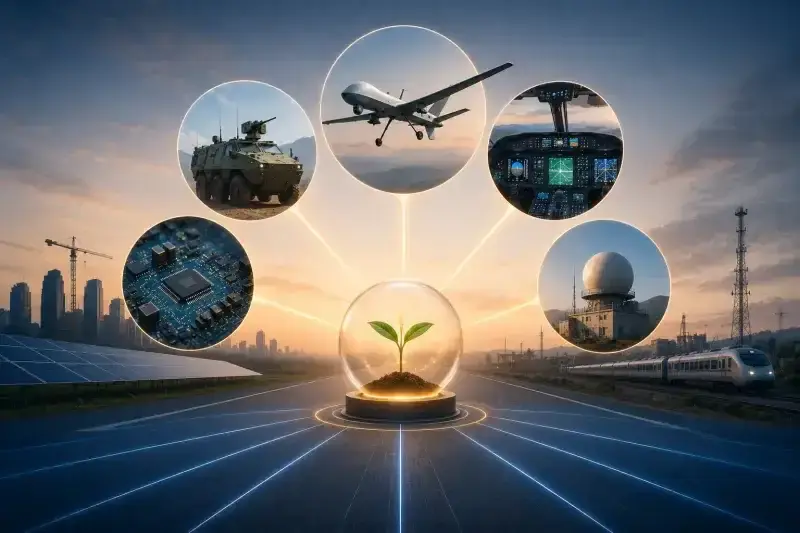
Compared to solar, battery storage, or even railways, Bondada's defence business is still in its early stages.At the moment, it contributes very little to the overall business. But what makes it interesting is not its current size—it's the optionality it creates.
The company is exploring opportunities across areas such as UAVs, land systems, electronics, avionics, and defence infrastructure. These are segments expected to benefit from India's long-term push towards defence modernization and greater domestic manufacturing.Importantly, investors should avoid viewing defence as a major earnings driver today. Instead, it is better seen as a future opportunity that management is positioning itself for while the core business continues to be driven by solar and infrastructure projects.
Whether this segment becomes meaningful remains to be seen. But if Bondada can successfully build capabilities and relationships in the sector, defence could eventually become another growth lever alongside its existing infrastructure businesses. For now, it remains small But it is an option worth keeping an eye on.
The Moat Most Investors Are Missing
Investors tend to associate the term "moat" with brands, or proprietary technology or patents.
The moat at Bondada is quite different. In the infrastructure business, it's not always about the best technology. In most cases it is defined by the individual(s) who can be trusted to consistently complete projects on time, manage large workforces, coordinate multiple stakeholders and provide results across multiple geographies.That's where Bondada's telecom and infrastructure experience comes in handy.
The company's presence on more than 13,000 telecom towers, laying fibre networks, maintaining infrastructure assets and working with big private players and PSUs has made it trustworthy and credible to execute projects in a short period.
These relationships can be used as a competitive advantage. Large customers and Government entities like working with contractors who can successfully deliver projects on a larger scale. Bondada has also gained experience in various segments of the infrastructure industry, including telecom, solar, battery storage, railways and data centers, over time.The outcome is a capability you can easily take for granted, but hard to duplicate.
The moat is not a product of Bondada.It's about being able to undertake infrastructure projects again and again in a sector, develop a long-term relationship with that sector, and leverage those connections towards adjacent opportunities. That could be more important than it sounds in a business where execution is key.
'Escape competition through authenticity'- Naval Ravikant
Many investors mistakenly believe moats only come from brands or patents. Learn how execution, scale, and relationships create competitive advantages in "Economic Moat Explained: Why Some Companies Stay Dominant for Decades."
Financial Performance
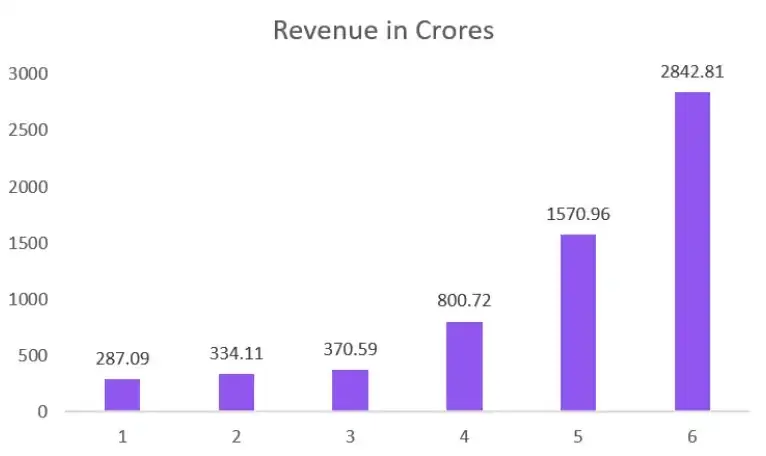
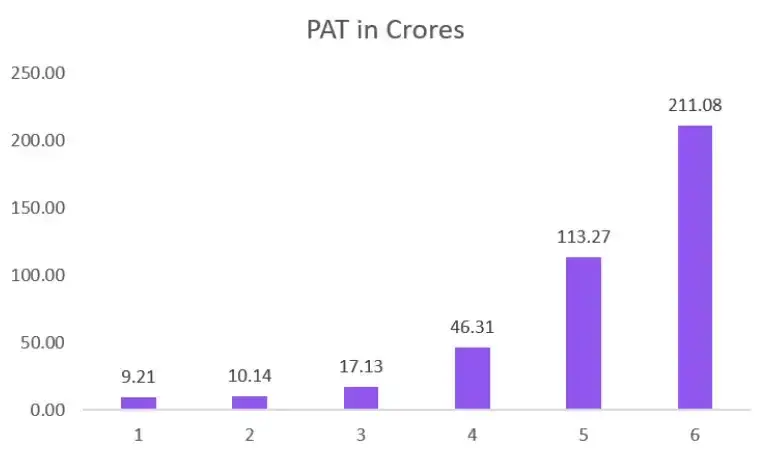
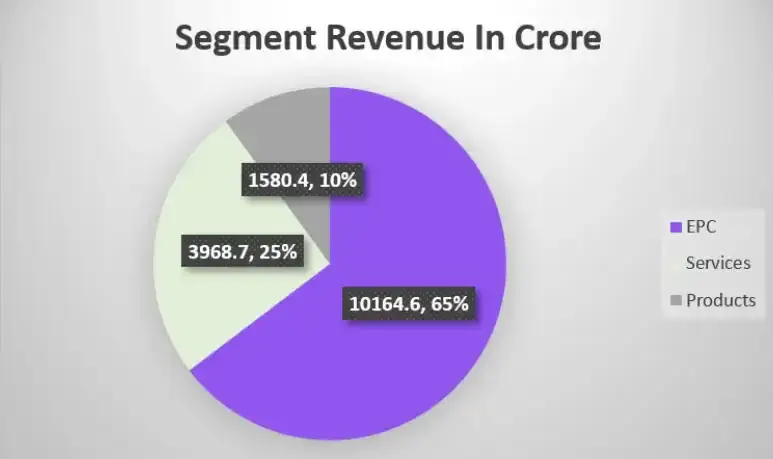
So much time has been invested in comprehending Bondada's strategy, the next question is easy to come up with. Are the financials the actual results of this change?The response has been so far "yes. In the past few years, Bondada has shifted its focus from a telecom-centric infrastructure player to a company that is now driven by its growth engine being solar. Consequently, its top-line has been growing at a strong pace, fuelled by the rapid growth of its solar EPC business.
Today the company's revenues are nearly 80% from solar, reflecting the dramatic shift in the business mix. Revenue growth is not enough to generate shareholder value. The key is if it can help increase profitability.Fortunately, Bondada has been able to increase its size at the same time as increasing its earnings. The company has been maintaining growth of revenue at 58% on YOY over the past 5 years, with PAT steadily rising from 9.21 Crore to 211.08 Crore over last 5 years as execution capabilities and size of projects have improved.Also, company became cash flow positive in FY26 with a CFO of 125 Crore.
But, perhaps more importantly, how the earning power may develop. The bulk of the business is still based on EPC revenues today. However, Solar IPP, BESS BOO, products and Data Center O&M businesses will continue to contribute significantly more to management, as they tend to provide higher margins and more stable cash flows compared to traditional EPC contracts. Return ratios are also a sign of the quality of growth. Even though it is a capital-intensive sector, Bondada has not taken any debt and has consistently achieved ROCE above 20%, showing that management has been able generate good returns on its capital investments on the creation and growth of the business.
Next up for any EPC company is the order book – one of the most vital metrics. Project wins are critical to infrastructure companies, unlike consumer business. That is the reason why order visibility is crucial. At present, Bondada has a solar project pipeline of around ₹9,000 crore, an order book of ₹850 crore for BESS, a ₹228 crore pipeline of orders in the railway sector for O&M, telecom O&M and manufacturing. The two make a visual impact that goes far beyond the next few quarters.It is to be expected that expansion in infrastructure firms is never a cake walk.
Working capital is needed for large projects. Materials need to be ordered, employees need to be paid, and work needs to be done before customers pay. Management has said that they expect their major PSU customers (NTPC, NLC, MAHAGENCO) to have working capital cycles of about 85-90 days, which is a key parameter to watch in the future.The numbers are interesting when combined. It's not the same small telecom company anymore. The businesses are becoming more and more indicative of an enterprise that has a large project pipeline, revenues that are becoming more profitable, high return ratios, and a larger proportion of recurring businesses that may provide recurring cash flows someday, as India's infrastructure continues to be built.
This highlights one of the biggest realities of infrastructure businesses. If you'd like to understand why cash requirements matter so much, read "Capital-Intensive Businesses Explained: Risks, Economics, and Investor Insights."
Bondada used to be a small telecom firm but has now grown into something much bigger. The figures also reflect more and more a business that is engaging in far more significant infrastructure opportunities than it did in the past. It's at this point that it's worthwhile to take a step back and take a look at the big picture.
The majority of investors continue to focus on the two biggest aspects of Bondada's operations: telecom and solar. But it's not surprising. After all, those segments have played a big part in the growth of the company up to now.
But this isn't necessarily the management's vision for the future. Looking at the company's recent actions, one could begin to see a trend. Bondada was empowered with execution power by Telecom. Solar gave a big run up. As part of the natural extension of renewable energy, battery storage is being added. Railways are an additional infrastructure opportunity. Data Centers offer exposure to digital economy. And, defence opens the door to a whole new market. Each one of these can be treated as a stand-alone company.
When taken together, they resemble puzzle pieces of a larger puzzle.What management is constructing is not a telecom business, a solar firm or even a battery storage firm. It's working to create an infrastructure platform. A platform that can utilize the same execution, relationships, project management know-how and labor of the same people for a variety of industries that may see major investments in the coming 10 years. But it remains to be seen whether this vision will come to pass. However, this is Bondada's true story.It's not the tale of a telecom company transitioning to solar. But the tale of a business attempting to get itself into the right spot where India's next big infrastructure push is likely to be.
Challenges on the road ahead
No investment story is complete without understanding what could go wrong. And while Bondada's growth opportunities are exciting, investors should also pay close attention to the risks. To begin with, EPC is a highly competitive business. Winning projects often comes down to pricing, and aggressive bidding can put pressure on margins. Even a strong execution track record does not completely eliminate competitive intensity.Execution itself is another risk. Large infrastructure projects involve multiple stakeholders, regulatory approvals, land availability, logistics, and supply chains. Delays in any part of the process can impact project timelines and profitability.
Working capital is equally important. Infrastructure companies often need to spend money long before they receive payments from customers. If receivables rise too quickly, growth can place pressure on cash flows even when revenues are growing. There is also the issue of customer concentration. A meaningful portion of business comes from large clients and government entities. Losing a major customer or facing delays in payments can impact growth and cash generation.
Some of Bondada's newer opportunities carry their own risks as well.The solar sector remains influenced by government policies and tender activity, while the BESS business is still heavily dependent on imported battery cells, particularly from China. Any disruption in supply chains or pricing can affect project economics. Perhaps the biggest risk, however, is success itself.
The company is simultaneously pursuing opportunities in solar, storage, railways, data centers, defence, products, and asset ownership. While this creates multiple growth avenues, it also increases execution complexity.
The key question investors should keep asking is whether Bondada is expanding into adjacent opportunities or spreading itself too thin. Because in infrastructure, opportunities are rarely the constraint. Execution usually is.
"You can't predict. You can prepare." -Howard Marks
Explore our Products
Research Framework

Emerging Titans
Combination of quantitative analysis, industry tailwinds, and management assessment - SPRINT investment philosophy

Tiny Titans
Heavy emphasis on scuttlebutt research, plant visits, and early on-ground signals
What Happens Next ?
For most of its history, Bondada was paid to build infrastructure.Telecom towers laid the foundation. Years of execution helped the company develop relationships, capabilities, and credibility in the infrastructure ecosystem. As opportunities emerged, the company expanded into solar, turning it into the primary growth engine of the business. Today, another transition is underway.Battery storage could create recurring cash flows. Data centers offer exposure to India's digital infrastructure buildout. Railways provide access to a long-term modernization cycle. Defence adds an element of optionality.Individually, each opportunity may seem small or uncertain. But together, they point toward a larger ambition.Bondada is no longer trying to be just a telecom contractor or a solar EPC company. It is attempting to position itself at the intersection of multiple infrastructure themes that could shape India's next decade.Whether it ultimately becomes just another EPC contractor or evolves into a diversified infrastructure platform remains to be seen.
But one thing is clear. The story of Bondada is no longer just about the projects it builds.
It is increasingly about the platform it is trying to become.
Want to explore such companies in India's Infrastructure shift comment EPC below.
FAQs
Why are some investors calling infrastructure the biggest opportunity of the next decade?
+For years, India's growth story was driven by consumption—smartphones, cars, homes, and financial products. But the next decade is increasingly becoming a story of construction. The country needs massive investments in renewable energy, transmission networks, battery storage, railways, telecom infrastructure, and data centers. Every one of these sectors requires physical infrastructure before growth can happen.
What is the hidden link connecting telecom, solar, railways, data centers, and battery storage?
+At first glance, these industries appear unrelated. But they all depend on one common factor: infrastructure execution. Before a mobile network expands, someone must build towers. Before a solar plant generates electricity, someone must construct it. Before data centers operate, someone must build the supporting infrastructure
Why can infrastructure execution become a competitive advantage?
+Large infrastructure projects require project management expertise, skilled manpower, customer relationships, supply chain management, and execution capability across different geographies. These capabilities are difficult to build and often take years to develop
What does it mean to move up the infrastructure value chain?
+Infrastructure companies typically evolve through multiple stages:
Building projects (EPC)
Maintaining projects (O&M)
Manufacturing infrastructure components
Owning infrastructure assets
Each step generally increases value capture and can improve profitability and earnings visibility
Why is asset ownership considered more attractive than pure EPC?
+An EPC company earns revenue while building a project. Once construction is complete, the revenue largely ends. Asset ownership allows a company to continue earning cash flows from that asset for decades, creating recurring income and potentially higher valuations.

High growth stock specialist, Value Educator
Shashank Mahajan is an equity research professional with over 12 years of experience in identifying high-potential SME and micro-cap stocks at an early stage. He follows a rigorous scuttlebutt research–driven approach, combining on-ground insights with deep financial analysis. Shashank specializes in uncovering under-researched and under-owned companies with strong management quality and long-term growth potential. Through disciplined research and early identification, he focuses on spotting tomorrow’s market leaders before they enter the mainstream investor radar.

Glenmark: The USD 700 Mn Cancer Deal and Its Brands
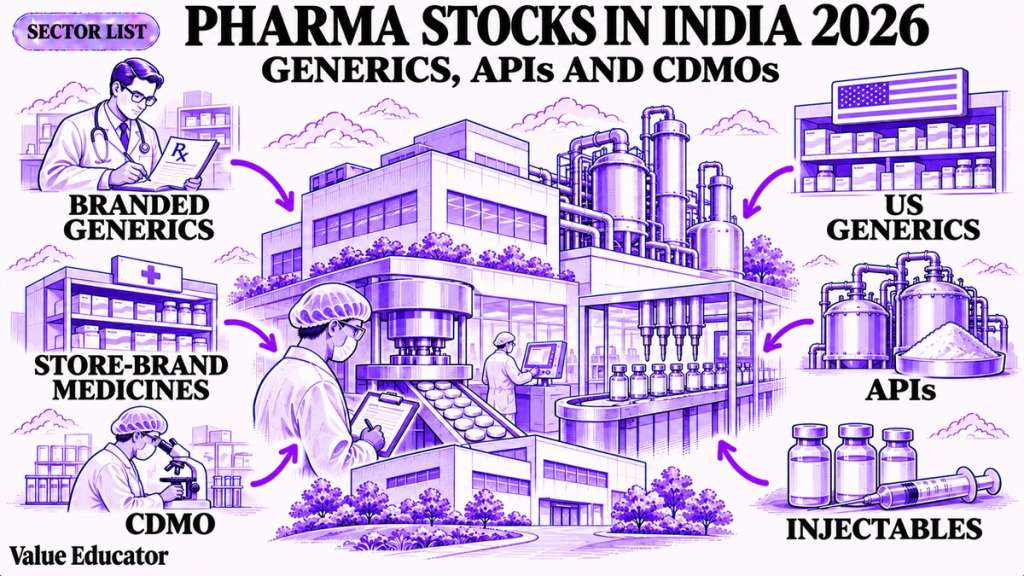
Pharma Stocks in India 2026: Generics, APIs and CDMOs
Granules India: From Paracetamol to a 65% Gross Margin

Natco Pharma: After Revlimid, 29 Patent Challenges

Shilpa Medicare: Cancer APIs, Films and Biosimilars

Alembic Pharma: US Plants Pay Back, Margin Hits 22.2%
Explore our Products
Research Framework
Emerging Titans
Combination of quantitative analysis, industry tailwinds, and management assessment - SPRINT investment philosophy
Tiny Titans
Heavy emphasis on scuttlebutt research, plant visits, and early on-ground signals



India's Aerospace Opportunity
Global Demand. Supply Bottlenecks. Opportunities Ahead.
Don't Miss This Exclusive Webinar!
Join Value Educator to decode the key trends shaping India's aerospace sector and learn how to identify tomorrow's potential leaders in the space.
- How the aircraft value chain works, layer by layer
- Indian companies supplying global aircraft makers
- A framework to judge any aerospace company

 Orders
 Subscription
 Share with friends


Required Details
₹23999.00
(12 month subscription)
As per SEBI regulations, all users are mandated to complete the KYC that is validated for 1 year. Post payment, you will be redirected to the KYC screen


No comments yet. Be the first to comment!