
Jeena Sikho Lifecare: The Ayurveda SME

Ayurveda has been a way of life for decades, besides being a system of medicine in India. It is grounded in balancing body, mind and spirit, it is preventive, not curative, lifestyles and not prescriptions, long term wellness not a short cut. Ayurveda continues to have a role in India within the health ecosystem, whether in home-grown medicine (kadha and haldi doodh) or more conventional medicine (Panchakarma).
This old science has undergone a powerful resurgence during the last years. The growing cost of healthcare, the growing count of lifestyle diseases and the increasing awareness of the side effects of modern medicine have propelled many Indians, especially the younger and urbanized consumers towards natural and holistic products. Ayurveda is no longer the monopoly of traditional healers; it is a scaled and systematized industry and it also is attractive to entrepreneurs, investors and capital markets.
Can a 3,000-year-old healing system be developed into a contemporary, lucrative and scalable enterprise?
A new breed of businesses are trying just that; implementing integration of ancient Ayurvedic knowledge with the current healthcare systems, organized clinical support systems and branded product lines. These companies do not merely sell medicines but are also creating integrated ecosystems which incorporate consultation, treatment and long-term wellness management.
One of these new entrants has been able to silently establish a national presence, with hospitals, clinics, and an expanding product line, and has established itself at the nexus of healthcare services and consumer wellness.
It was founded in 2009 and incorporated in 2017 by Acharya Manish Ji, and has a network of over 115 healthcare centers in 23 states and has approximately 1,600 beds in operation with a solid pipeline of further growth. It possesses a model which combines scalable healthcare delivery and a high margin portfolio of over 330 Ayurvedic products, some of which have chronic and lifestyle-related focus. It has also given priority to quality and credibility and some of its facilities have been accredited by NABH under its renowned brand Shuddhi.
The company also achieved a milestone in August 2025 when it was listed in the main boards of the major stock exchanges in India- signifying their transformation into a niche healthcare player to a more recognizable listed company.
The firm we will be dissecting here is Jeena Sikho Lifecare Limited (JSLL) and in this article we will be dissecting its business model, growth drivers, risks and what it means to the retail investors with the up and coming Ayurveda opportunity in India.

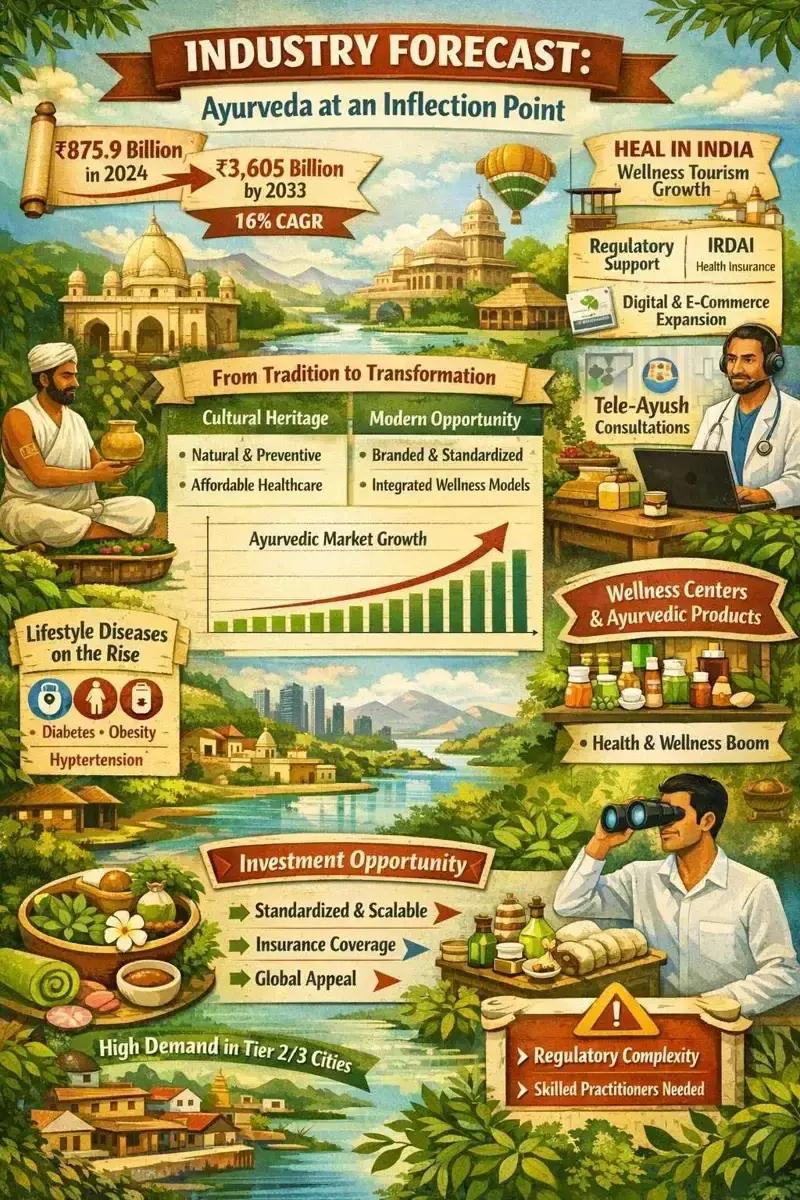
Industry Forecast: Ayurveda at an Inflection point
The Ayurvedic sector in India has entered a stage of resurgence and structural development, out of the conventionally fragmented ecosystem, into a scalable and structured, and investment-relevant opportunity. What was previously a practitioner dominated field is currently becoming branded and more standardized. Ayurveda is attracting traction due to the growth of consumer awareness, favorable environment in regulations, and augmented involvement among institutions.
In essence, Ayurveda still enjoys the advantages of its strong cultural heritage- as a first line of healthcare option by millions of people- and at the same time, its natural, preventive, and chemical-free approach resonates with the current trends of natural products and preventive medicine.
Market-wise, the size of this opportunity is starting to become more and more apparent. In 2024, the Indian Ayurvedic products market was estimated to have reached ₹875.9 billion and is forecasted to reach about ₹3,605.0 billion in 2033, which means a positive CAGR of more than 16. Notably, the organized segment is now spearheading this growth, with standardized products, improved quality management, and improved brand recall contributing to consumer trust. Geographically, North India remains to be the most dominant in consumption and growth, as the region is very sensitive to the use of traditional medicine.
There are a number of structural drivers that support this positive hope. The increased cases of lifestyle diseases like diabetes, hypertension, and obesity are driving the consumer towards solutions which focus on the causes and not the symptoms, which Ayurveda inherently fits. Meanwhile, the cost of out-of-pocket healthcare and access are high in Tier 2/3 cities, which means that Ayurveda is a more affordable and accessible option.
Ayurveda is also taken into mainstream consumer behavior, which has changed significantly after the COVID, where immunity, preventive health, and long-term wellness have become the priorities. Alongside this demand-side change is high levels of government support via the Ministry of AYUSH, such as the National AYUSH Mission, creation of more than 12,500 Health and Wellness Centres. Efforts like the Heal in India program are also making the country a traditional medicine and wellness tourism destination in the world.
One of the most significant regulatory changes that have boosted the industry is that of AYUSH treatments being included in the health insurance coverage required by IRDAI. This can greatly enhance the affordability and can lead to increased patient volumes among the organized players. Moreover, the increased use of digital platforms, telemedicine (Tele-Ayush), and e-commerce is increasing the scope of Ayurvedic consultations and products outside of urban centers, and even reaching other countries.
Simultaneously, the industry is also experiencing the rise of so-called integrated business models, where businesses are integrating consultation, treatment, and product sales in a single ecosystem. Not only does this improve patient outcomes, but also generates several revenue streams and increased customer lifetime value, which makes the business model more appealing from an investor perspective. Similarly, other segments such as wellness tourism, already worth USD 19 billion, are also on the rise as the global consumer is becoming more interested in authentic, traditional healing experiences in India. It is also evident that there is a transition of episodic treatment to ongoing wellness programs based on prevention, nutrition, and lifestyle conformity.
Nevertheless, these robust tailwinds are not the only things that are favorable to the industry. It still has a longstanding credibility and awareness gap, especially with no standardized, evidence-based protocols in smaller players. The complexity of regulations: It can make compliance difficult as a result of numerous governing bodies, including AYUSH, NABH, and more. In addition, there is a lack of skilled Ayurvedic practitioners in the sector, and this may limit the growth unless this is controlled in the near future.
All in all, the Ayurvedic business is at a strategic point of cultural heritage and contemporary consumerism, alongside healthcare applicability and FMCG-type levels of scale. As an investor, it is a movement towards a lower visibility, fragmented segment, to a structured, high-growth opportunity, especially by companies that can earn trust by doing good, scale by having well-organized infrastructure, and capture value by generating built-in healthcare ecosystems.
Read on metals industry here, Top 10 Metal Stocks in India for 2026: Why FIIs Are Turning Bullish on the Sector.
Know about Inflation here,
Inflation Explained: The Silent Destroyer of Wealth.
Products & Services: Construction of an Ayurveda Ecosystem
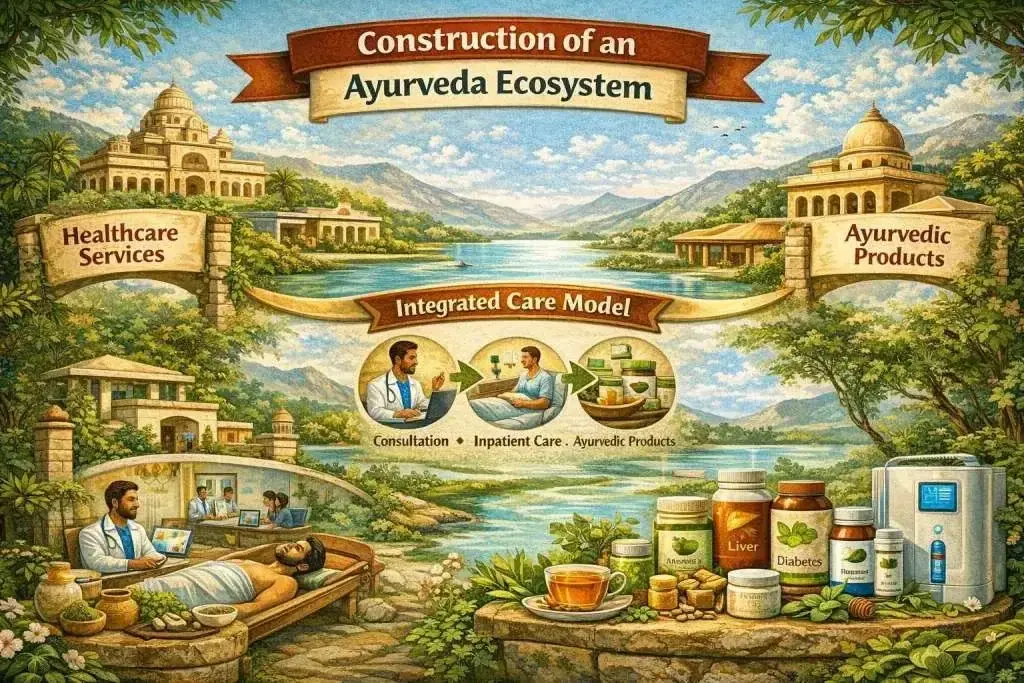
The core of the business is a dual-vertical approach, integrating healthcare services (treatment) with Ayurvedic products (consumption), which enables the company to own the entire patient experience. Such a combined strategy is essential, as it enhances both revenue diversification and customer lifetime value with an opportunity to engage with the customer repeatedly.
Healthcare Services
Services segment is the core of the operations, as it is expected to generate almost 54 percent of total revenue in FY25. The company has a hub-and-spoke design with big hospitals as the main hubs with a broad system of clinics and day-care centres. It has an established physical presence in the organized Ayurveda space, with an approximate physical presence of 50 hospitals with approximately 1,600 beds and more than 65 clinics in 23 states as of FY25.
The in-patient (IPD) business is aimed at curing chronic and lifestyle illnesses with organized treatments like Panchakarma, yoga, and naturopathy, with 24/7 medical care. The scope of treatment has expanded to more serious ailments than the usual wellness such as kidney diseases, liver problems, and cancer support services- signifying a shift toward more value-based healthcare services. In conjunction with this is the out-patient (OPD) and day-care component, which allows consultation, diagnosis, and same-day treatments to enhance the utilization of assets and throughput of the patients.
Another interesting new feature of the model is the growing presence of digital consultations, where more than 1 lakh video consultations were targeted by FY25 with the help of an extensive infrastructure of call centres that will stimulate patient acquisition, follow-ups, and cross-selling. It has also enhanced its service by having diagnostic collaborations so that people are able to access highly developed tests like MRI and CT scans- which is a significant move towards modernizing Ayurveda and its traditional diagnostics.
In addition to the core treatment, the company is also venturing into the specialized wellness segments such as fertility assistance (Ayurvedic IVF method), mental health and obesity management. A consistent 72-hour health camp also serves as a patient acquisition funnel with a significant percentage of the patients becoming part of long-term treatment plans- which demonstrates a systematic way of scaling up demand.
Ayurvedic Products
The Ayurvedic product line is the second business pillar, contributing approximately 46% of the revenue but with much greater profitability, with gross margins estimated to be 85 to 90 percent. The company has more than 330 SKUs, both chronic disease management and preventive wellness.
The core product range covers condition specific formulations in kidney, liver, diabetes, blood pressure and joint health- segments which have high and repeated demand pools. These are coupled with OTC products and wellness kits, both aimed at detoxification, immunity, and nutritional supplementation, which is more of an overall shift towards preventive healthcare.
The company has also expanded into related lines, such as herbal FMCG products, including teas, honey, and chyawanprash and also new products like alkaline water devices. This is the growth of pure medicine to everyday wellness products, which can assist in enhancing brand stickiness and creates a broader market to address. Noteworthy, the asset-light character of this segment, where production is usually outsourced, fosters scalability and effectiveness in capital.
Integrated Care Model = Critical Point of Difference
The difference between the models is that both verticals are closely integrated. The common patient experience can start with consultation (clinic or online), proceed to treatment or hospitalization when necessary, and end with a long-term use of recommended Ayurvedic products. This forms a self-feedback ecosystem in which services will push product sales and vice versa.
Also, value-added features like loyalty schemes, insurance arrangements and cashless treatment plans enhance affordability and retention making the offering more affordable to a broader population. The increasing numbers of NABH-approved facilities by the company also bolster its credibility in a business where trust is one of the major differentiating factors.
Customer Groups, Customer Acquisition, Customer Strategy.
One of the foundations of the growth of the company is not only what it offers, but its capacity to identify, attract and retain customers in a wide range of customers. The company has created an organized, multi-channel acquisition engine that will transform awareness into long-term patient relationships, as opposed to traditional healthcare providers who heavily rely on passive footfall.
Read an interesting article on Union Budget Analysis: What Actually Matters for Investors, to expand your knowledge.
Customer Segments, Acquisition & Channel Strategy
One of the pillars of the company development is not only what it offers, but its ability to identify, attract and retain customers within a wide array of customers. The company has developed a multi-channel acquisition engine to transform awareness into long-lasting patient relationships, unlike the traditional healthcare providers which are mainly dependent on passive footfall.
What Are the Customers?
The company caters to a broad and expanding customer base, cutting across both medical need and wellness aspiration
Patients with Chronic Diseases (Core Segment)
The major target audience involves patients with lifestyle and chronic illnesses like kidney diseases, liver diseases, diabetes, and hypertension as well as supporting cancer patients. One interesting point is that a significant share of these patients usually turns to Ayurvedic treatment, having already been disappointed in conventional (allopathic) treatment, which is why this is a high-intent segment with considerable purchasing power of alternative solutions.
Preventive & Wellness Consumers
The population of people who want to get detoxified, build immunity, and correct their lifestyles, even without active disease, has a gradually increasing segment. This wellness-first category, although smaller nowadays, is growing at an unbelievable pace with the growing popularity of preventative healthcare.
Younger Demographic
The revival of interest among younger consumers is also helping the company as they are more and more inclined to natural treatments, free of side effects and holistic lifestyle.
Mass Market (OTC Consumers)
The company also exploits the larger Indian population by catering to their common problems such as digestion, immunity and overall well being through its product range, particularly health kits and daily formulations.
Institutional Customers
This covers corporate workers and government beneficiaries, facilitated by tie-ups with insurance companies and empanelment on schemes like CGHS- increasing access to a better organized and reimbursed customer base.
Customer Acquisition Strategy: Constructing a “Care Funnel”
The acquisition strategy the company operates on is a “Robust Care Funnel” where awareness is transformed into consultations, treatments, and ultimately long-term engagement.
Omni-channel Media Presence
It has a robust digital presence on social media, such as YouTube, Facebook, Instagram, and so on, where it educates and reaches audiences in large numbers. This is supported by the traditional media like TV, radio, print and regional advertising, which will guarantee visibility in both the urban and semi-urban markets.
Call Centre-Led Conversion Engine
An 800-seat call centre serves as a hub to lead conversion, processing patient calls, appointments and follow ups. This direct engagement model assists in closing the gap between the awareness and the actual treatment uptake.
On-Ground-Acquisition, Health Camps
Frequent health camps of 72 hours can be considered as an effective offline acquisition channel. These camps do not just develop trust among communities but also aid in screening patients in need of additional care and a significant number of them move on to hospital care.
Footfall Strategic Hooks
Programs like the provision of free first diagnosis tests (via collaborations) serve as good points of entry, reduce entry barriers to first-time users, and improve conversion rates.
Referral & Loyalty Programs
The Jeena Sikho Health Card gives the existing patients an incentive to refer new patients to the institution, which forms a word-of-mouth engine of growth. This referral-based acquisition can be especially potent in the healthcare field, where credibility is of utmost importance.
Channel Strategy: Integrated & Scalable
The channel strategy of the company is aimed at developing a patient experience that is smooth in terms of physical, digital, and product touchpoints.
Physical Channels
Diagnosis, treatment, and therapy is offered in the hospitals (hubs) and the clinics (spokes).
Online Channels
Teleconsultations and social media channels are not limited by geography.
Direct-to-Consumer (D2C)
Products sold by use of clinics, call centres and remote channels, which allows recurring revenue.
Outreach Channels
Health camps and media engagement are awareness drivers of the top-of-funnel.
This multi-channel strategy will make sure that the company will not rely on one channel, but will have a diversified acquisition and distribution chain which will be more resilient and scalable.
read about an interesting power sector investment idea here, The Power Engineering SME Riding India’s Transmission Expansion Cycle.
Competitive Positioning & Moat
In such a fragmented and diversified sector as Ayurveda, it is essential to comprehend where the company is in relation to its competitors, and how it is differentiating itself, to the investors. Interestingly, the company does not position itself against its competitors in overcrowded markets but adheres to its Blue Ocean strategy, forming a new demand in underpenetrated segments instead of competing for the market share within the conventional categories.
The Competitive Landscape
The firm has to work within a multi-layered competitive landscape, both in modern healthcare and traditional medicine:
Allopathic Healthcare (Indirect yet Massive Competition)
The biggest threat is the ₹7 lakh crore hospital sector and 2 lakh crore pharmaceutical market of India. Nonetheless, instead of direct competition the company positions itself as an option with chronic and lifestyle diseases, whereby a large percentage of patients resort to Ayurveda because they are disillusioned with standard care.
Organized Ayurvedic Players
Well-known product brands such as Patanjali Ayurved, Dabur, Zandu, and Baidyanath dominate the product segment, especially in OTC products and Ayurvedic products in the form of FMCG. The advantages of these players include scale, distribution, and brand recall.
Unorganized Sector
Most of Ayurveda continues to be practiced in local circles and informally, as well as through free health information on the internet. Although this segment is not standardized it is very accessible and price competitive.
Differentiation, Going Beyond Wellness to Treatment
What is unique about the company is that it tries to position Ayurveda in a treatment-oriented healthcare rather than in a wellness-oriented positioning.
Integrated Treatment Approach
The company uses modern diagnostics (MRI, CT scans, etc.) with Ayurvedic and naturopathic treatment, unlike traditional Ayurvedic centres, where treatment was focused on symptoms. This hybrid model is a solution to the gap between Ayurveda philosophy and credibility of modern medicine.
Proprietary Solutions vs Classical Products
The firm is based on proprietary kits and condition-specific formulations, unlike many competitors who use classical formulations or symptomatic relief products, which are aimed at end-to-end solutions of chronic ailments and metabolic health.
Education-Led Care Model
One of its strategic pillars is to position itself as a platform driven by education in the field of healthcare. In addition to the sale of medicines, the company focuses on diet, lifestyle, and behavior change, motivating patients to implement preventive measures- in line with its long-term wellness philosophy.
Niche Clinical Verticals
The company is also establishing itself in some of the relatively unexplored markets like fertility support (Ayurvedic IVF), sexual wellness.
Key Competitive Advantages
In terms of the investor perspective, the moat of the given company is developed on the basis of a mixture of clinical credibility, scalable operations, and integrated delivery:
Concentrate on Scientific Proving
The company is investing in evidence-based research in a field where many have claimed that there is no standardization, the company has already submitted hundreds of research papers to prove its treatment protocols. This may be a major point of distinction to create long-term trust.
Asset-Light, High-Return Model
The company enjoys a relatively capital-light model by exploiting leased infrastructure, partnerships, and franchise-led growth, which translates to good return ratios (reported ROCE of ~71%). This allows quick expansion in contrast to conventional hospital chains.
Good Accreditation and Quality emphasis
Many of its facilities became NABH-accredited, which is noteworthy in Ayurveda where official quality standards are yet to be developed. This increases credibility particularly among the urban and institutional customers.
Integrated Care Funnel
Its multi-channel acquisition engine, encompassing digital platforms, mass media, health camps, and a large call centre, forms a stable delivery of patients, enhancing the brand presence and conversion efficiency.
Early Move on Insurance Integration: The company is one of the pioneers of this allowing cashless Ayurvedic treatments, by collaborating with insurance companies and government schemes such as CGHS. This enhances affordability as well as increases access to a more formal and scalable patient base.
Explore our Products
Research Framework

Emerging Titans
Combination of quantitative analysis, industry tailwinds, and management assessment - SPRINT investment philosophy

Tiny Titans
Heavy emphasis on scuttlebutt research, plant visits, and early on-ground signals
Financial Analysis: Growth, Profitability & Capital Efficiency
Financially, the company is a unique hybrid structure. The company is a unique hybrid structure, combining the growth-like features of a healthcare platform with the margins of a consumer products company. It has had a good execution in scale and profitability over recent years, which means that its integrated model is converting into financial performance.
Revenue Growth; Stable and Quickening
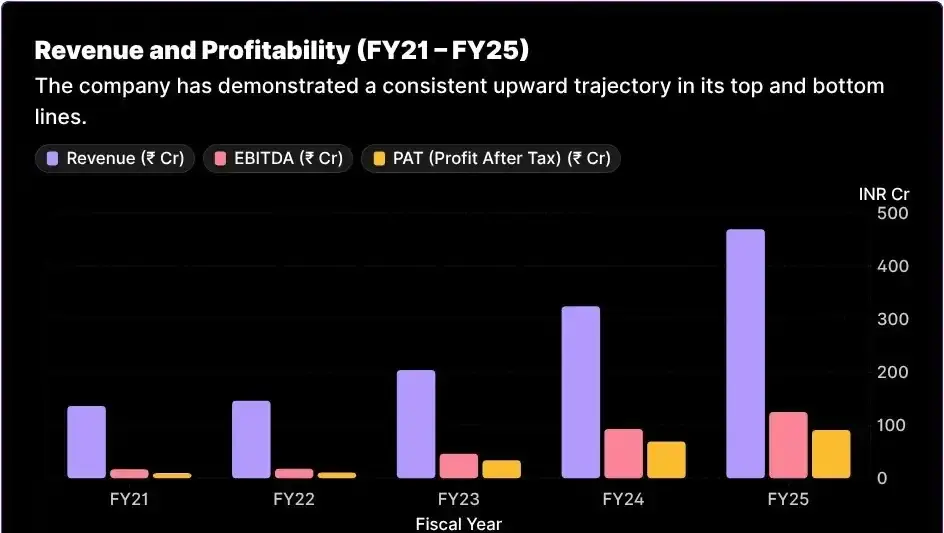
The company has been registering strong top-line growth with the revenue generated by the company in terms of operations to about 469 crore in FY25, which is a growth of about 45% over a year. In the longer-term, it has had a multi-year CAGR of more than 40, which highlights the momentum of demand. This has been spurred by a mix of reasons including the further development of its hospital and clinic system, increased patient flow and better conversion rates, and an increasing contribution of its higher margin product line. Remarkably, its growth path cannot be considered as the one that is purely volume-based, yet it indicates the enhancement of monetization per patient due to its integrated treatment and product ecosystem.
Profitability; Structurally High Margins
The business characteristic is the high and structurally better profitability. The firm has continued to record EBITDA margins of over 45, as it aims at achieving PAT margins of 20-25, recent performance has been even stronger at about 30. As an example, the company achieved a PAT of around 66.7 crore in Q3 FY26. Such margins are impressive compared to the normal hospital chains, which usually have much lower EBITDA margins, and most consumer healthcare businesses. This profitability is largely due to the high-margin Ayurvedic product segment with gross margins of about 8590, and rising operating leverage with the increasing scale of the services business.
Business Mix: A Self-Reinforcing Growth Flywheel
The dual nature of revenue of the company is a key determinant of the financial picture of this company. Healthcare services contribute about 54 percent of revenue, aiding in gaining consumer confidence and facilitating acquisition, whereas product sales contribute about 46 percent of revenue, which has a disproportionate effect on profitability. This forms a self reinforcing flywheel as inflow of patients results in prescriptions of products that brings in repeat revenue and thus allows reinvestment into further expansion. With more product penetration the company can scale the revenue but does not have to match the increase in costs, which increases the overall efficiency.
Return Ratios: High Capital Efficiency
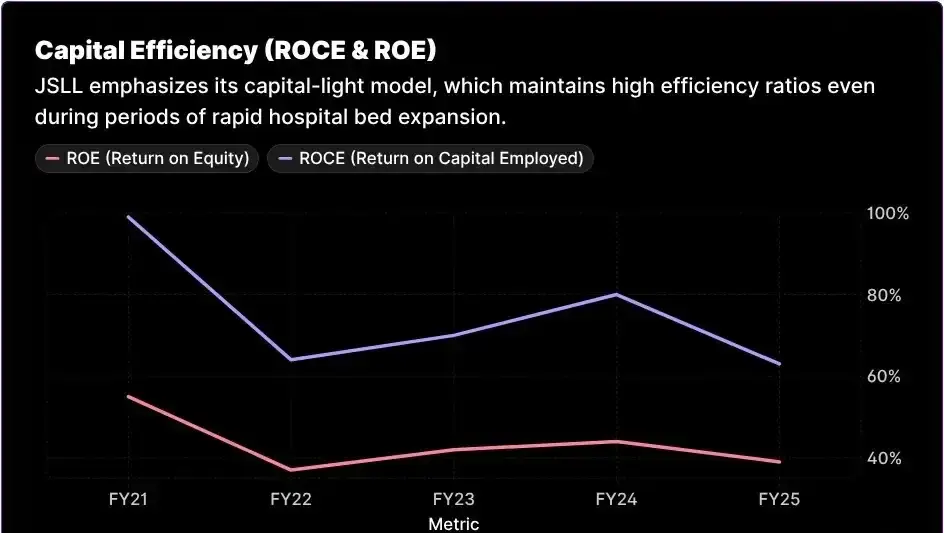
Among the most interesting elements of the company financials is the outstanding return ratios. It has recorded an average ROCE of approximately 71% and ROE of approximately 39% in FY25, which has made it one of the more capital-efficient enterprises within the healthcare industry. This is especially significant when it is contrasted with traditional hospital chains which are very capital-intensive and yield fairly small returns. The company has been able to sustain such high returns due to asset-light expansion model such as leased infrastructure, franchise-based expansion, and outsourced manufacturing in its product segment, coupled with a favorable product mix.
Earnings Quality & Shareholder Returns
The quality and conversion in the company are good in terms of earnings profile. It has a current EPS of approximately ₹5.37 in Q3 FY26, which is steadily increasing shareholder value. High PAT margins imply that a large part of the revenue is being converted into profits and the company has been able to maintain a healthy level of profits even when the company is undergoing aggressive expansion. This is an indication of tight cost control and strong underlying unit economics.
Operating Leverage & Scalability
The company is currently in the high-growth stage; it is still investing in the development of its infrastructure, strong brand, and digital capabilities. But as its chain of hospitals and clinics mature, it will enjoy the benefit of operating leverage. The fixed costs like infrastructure and manpower can be distributed across a greater number of patients and revenues will increase more rapidly than costs. In the long term, such a dynamic may result in an increase in margin and a greater increase in profitability as scale grows.
Cost Structure & Strategic Investments
The cost structure of the company is mainly influenced by the cost of employees, marketing and advertising expenses, and cost of the facilities. A large part of its plan incorporates high investments in brand development and customer acquisition in the form of an effective presence in both television and online media and the running of a huge call centre infrastructure. These investments might put a strain on the margins in the short run and are meant to establish a sustainable demand engine and an excellent brand recall, which can pay off in the long run.
Key Financial Risks
Although the company has good financial figures, it has some risks which investors ought to watch keenly. These encompass its sustainability of high margin profile, especially due to increasing intensity of competition, and its reliance on sustained patient acquisition which requires sustained marketing spending. Also, the scaling risk of hospital infrastructure and regulatory control in the AYUSH sphere would have an effect on the operations in the long run.
Operational Metrics: Scaling the Healthcare Platform
In addition to financial performance, the metrics of the operations of the company offer a better understanding of the efficiency of its scaling in the healthcare ecosystem in terms of infrastructure, volumes of patients, and human capital. The company has shown a rate of fast growth and the improvements in utilization trends in the last three years.
Expanding Infrastructure & Reach
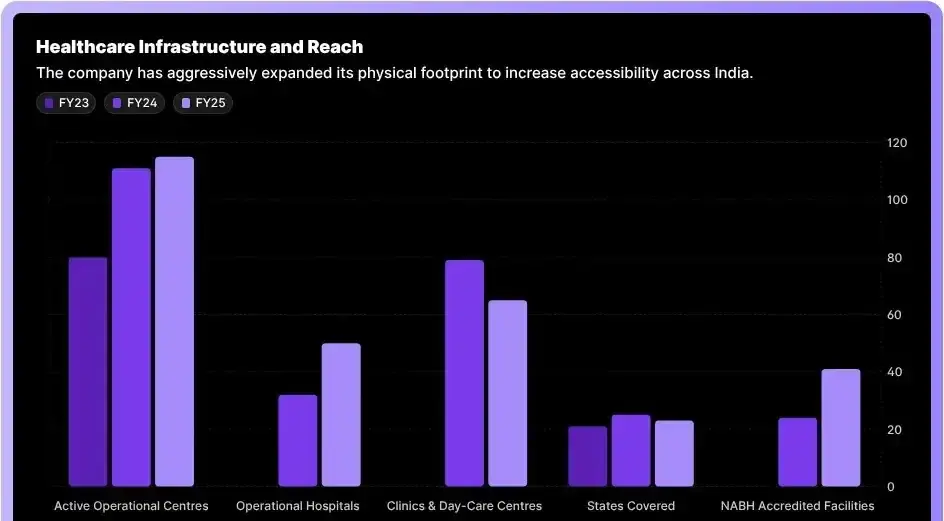
The company has greatly expanded its physical presence with active operational centres expanding to 80 in FY23 to 115 in FY25. This growth has been fueled by its scaling of its hospital network where operational hospitals are growing to 50 in FY25 in addition to a network of 65 clinics and day-care centres spread across 23 states.
Notably, it has not only focused on the expansion but also quality and standardization, and the number of NABH-accredited facilities has grown to 41, enhancing the credibility in an otherwise divided Ayurveda market.
Bed Capacity & Utilization: Early Signs of Operating Leverage
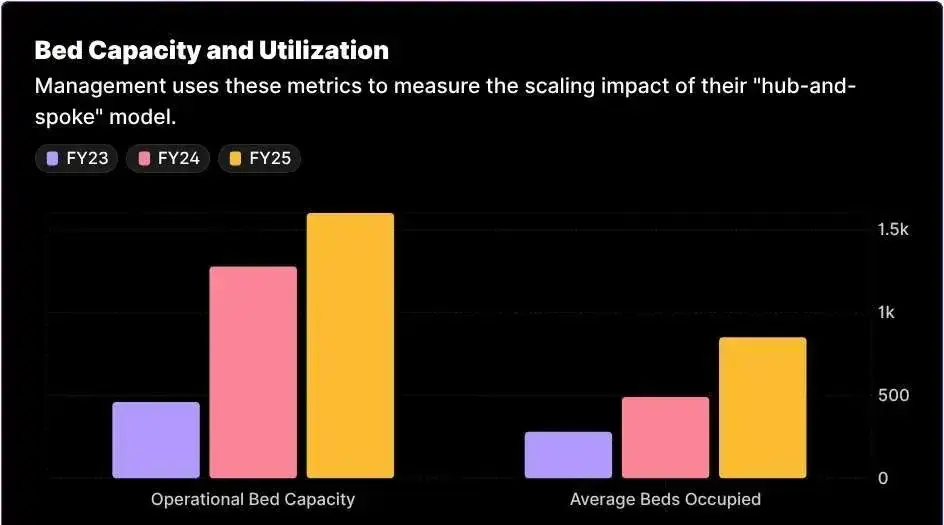
One of the main indicators of the hub-and-spoke model of the company is the bed capacity and utilization.
Operational beds rose dramatically to 1,600 (FY25) than 460 (FY23).
The average occupied beds increased between 280 and 850 between the same period.
Although occupancy dropped to 38% in FY24, the majority of this was because of the introduction of a large number of beds later in the year. Occupancy at FY25 was already at the level of about 53, which means a slow stabilization of the occupancy with the maturity of new facilities.
Simultaneously, the Average Revenue Per Bed (ARPB) rose to ₹6,100 in FY23 to ₹8,200 in FY25 indicating improved monetization and pricing power.
This occupancy growth and improving ARPB are early signs of operating leverage, which may enable margin growth in the future.
Patient Volumes: Good Funnel Conversion
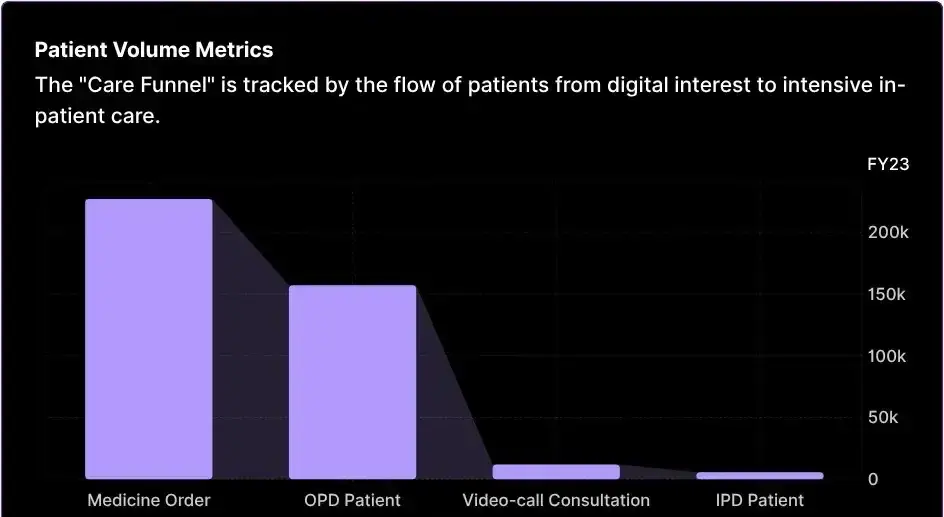
The funnel of care of the company, i.e. its awareness to treatment, is illustrated in its patient metrics:
IPD (hospital) patients increased ~4x from 5,728 (FY23) to 24,578 (FY25)
There was an increase in the number of patients in OPDs by 1.57 lakh to 3.37 lakh.
Video consultations exploded almost 9-fold, reaching 1 lakh in FY25.
The number of orders increased by more than 2 times to 4.43 lakh orders in medicine.
This rapid expansion in all touchpoints indicates its multi-channel acquisition model effectiveness, and more acceptance of its integrated care model.
Human Capital: Acquiring Clinical Depth
The company has been growing its workforce to facilitate this growth:
The number of certified Ayurveda doctors rose to 481.
Healthcare staff was increased to 659.
Total employees reached ~3,764 in FY25
The company has also developed an 800-seat call centre which is very important in dealing with patient inquiries, consultations, and follow ups- serving as a pillar to its acquisition and retention engine
Credibility & Research Focus
The company has sought to establish scientific credibility in an industry that is often accused of being unstandardized with 370 research papers that 17 of which are already published. Although it is still in its early stages, such emphasis on validation may be significant in building long-term trust and differentiation.
Conclusion: A Scalable Ayurveda Play with Execution Dependency
Jeena Sikho Lifecare Limited is a fascinating case study of how a traditional healthcare system such as Ayurveda can be redesigned to become a modern scalable business venture. The company has been able to ensure the convergence point between healthcare services and consumer wellness in India, two massive and rising opportunities in India by integrating clinical infrastructure and a high-margin product portfolio.
The wider industry tail winds are evidently in its favour. The formalization and growth in the Ayurveda industry is attributed to rising lifestyle ailments, rising popularity of natural and preventive care, favorable government regulations and the rising acceptance of insurance. The integrated care ecosystem approach of the company (consultation, treatment, consumption of products) represented in this landscape offers a differentiated means of capturing value along the lifecycle of the patients.
The company is in a high-growth, scale-up phase operationally, with a rapidly growing infrastructure, patient volumes, and workforce. Although this has resulted in short-term changes in measures like occupancy, there are signs of operating leverage and increasing monetization. On the financial front, it is remarkable how the company has achieved high growth in revenue, margins and exceptional capital efficiency (high ROCE and ROE) particularly when compared to the traditional healthcare businesses.
Nonetheless, just like any new form of business, implementation is paramount. To maintain high growth will require the company to:
Continuous patient acquisition with minimal marketing expense, Enhance use of its growing infrastructure, Keep on gaining clinical credibility and trust, and Manage changing regulatory environments in the AYUSH.
To retail investors, the company provides a structural growth sector that is favorable in long-term demand drivers, yet is subject to scalability, competition, and standardization in the industry.
Jeena Sikho Lifecare is in a way not only a bet on a single company, it is a bet on the mainstreaming of Ayurveda as an organized and scalable healthcare industry in India. Provided the company performs well on its integrated model and retains financial discipline, it can transform itself into a high-growth and high-return healthcare platform in the long run. Comment “Ayush” if this article improved your sense of Ayurvedic business.
Similarly read about an interesting Healthcare service SME here, The Healthcare Services SME Riding India’s Medical Tourism Boom
Frequently Asked Questions (FAQ)
What is Jeena Sikho's core business model?
+Jeena Sikho operates through a dual-vertical approach that integrates healthcare services (treatment) with Ayurvedic products (consumption). This "integrated care ecosystem" covers the entire patient experience, starting from consultation (online or physical) to in-patient treatment and long-term use of recommended Ayurvedic products.
How does the company differentiate itself from traditional Ayurvedic practitioners?
+JSLL positions itself as a treatment-oriented healthcare provider rather than just a wellness brand. It uses modern diagnostics (like MRI and CT scans) alongside traditional treatments and focuses on "scientific proving" by investing in evidence-based research. Additionally, many of its 115 healthcare centers are NABH-accredited, which adds a layer of clinical credibility.
What are the primary financial drivers for JSLL?
+The company benefits from a high-margin product line (estimated gross margins of 85-90%) and a capital-efficient, "asset-light" expansion model that utilizes leased infrastructure and franchise growth. In FY25, healthcare services generated about 54% of revenue, while product sales accounted for the remaining 46%.
What kind of ailments does Jeena Sikho treat?
+While it addresses general wellness, the company's core focus is on chronic and lifestyle-related illnesses such as kidney diseases, liver problems, diabetes, and hypertension. It has also expanded into specialized clinical areas like fertility assistance (Ayurvedic IVF), mental health, and obesity management.
What are the key risks associated with the company’s growth?
+Future success depends on maintaining high patient acquisition with manageable marketing costs and navigating a complex regulatory environment governed by bodies like the Ministry of AYUSH. Other risks include intense competition from both organized Ayurvedic players (like Patanjali and Dabur) and the massive allopathic healthcare sector.

High growth stock specialist, Value Educator
Shashank Mahajan is an equity research professional with over 12 years of experience in identifying high-potential SME and micro-cap stocks at an early stage. He follows a rigorous scuttlebutt research–driven approach, combining on-ground insights with deep financial analysis. Shashank specializes in uncovering under-researched and under-owned companies with strong management quality and long-term growth potential. Through disciplined research and early identification, he focuses on spotting tomorrow’s market leaders before they enter the mainstream investor radar.

Atlanta Electricals: Capacity Nearly Quadrupled in a Year

Kirloskar Oil Engines: Data Centres, Nuclear and the Navy

Yash Highvoltage: Bushing Maker With ₹760 Cr of Orders

Quality Power: Reactor Maker With a ₹1,945.5 Cr Order Book

Azad Engineering: Turbine Blades, Jet Engines and Orders

Cyient DLM: Aircraft Electronics and a Record Order Book
Explore our Products
Research Framework
Emerging Titans
Combination of quantitative analysis, industry tailwinds, and management assessment - SPRINT investment philosophy
Tiny Titans
Heavy emphasis on scuttlebutt research, plant visits, and early on-ground signals



Modern Warfare to Multibaggers
Key Trends. Strategic Shifts. Opportunities Ahead.
Don't Miss This Exclusive Webinar!
Join Value Educator to decode the key trends shaping India's defence sector and learn how to identify tomorrow's potential leaders in the space.
- In-depth research on India's defence sector
- Live Q&A session
- Actionable takeaways for long-term investors

 Orders
 Subscription
 Share with friends


Required Details
₹23999.00
(12 month subscription)
As per SEBI regulations, all users are mandated to complete the KYC that is validated for 1 year. Post payment, you will be redirected to the KYC screen


No comments yet. Be the first to comment!