
UniHealth: The SME Riding Medical Tourism

The Healthcare Opportunity
A Picture Worth a Thousand Numbers
Consider a hospital located at the center of Kampala, Uganda, where an Indian spine surgeon visits the hospital every six weeks to do surgery that none of the local hospitals can provide. Think about African patients who used to be forced to travel to India, Thailand, or South Africa to get tertiary care in these countries; now they walk into a world-class operating theatre within the city. And envisage the same network which has created that hospital now humbly erecting its first in Navi Mumbai and Nashik, to serve the wide underserved Maharashtra belt. This is a case of UniHealth Hospitals Limited, which is a listed company.
The Macro Case — India
Healthcare is not only a social necessity, but one of the most long-term investment themes nowadays. The government in India has set aside nearly Rs. Public health spending is set at 2.5 percent of the GDP with 99,858 crore being allocated to healthcare in the FY26 Union budget. By 2030, the country requires more than 3 million new hospital beds. The hospital market will have a CAGR of 8 per cent and is projected to grow to US 193.59 billion by 2032, with a market worth of US 98.98 billion as of 2023. In 2024, the medical tourism business was worth US$7.69 billion, and it is expected to exceed US14.31 billion in 2029 alone.
The Macro Case — Africa
Sub-Saharan Africa bears 24 percent of the disease burden in the world at less than 1 percent of the world spending on health. The African healthcare market is worth US 259 billion, and US30 billion worth of infrastructure investment is required. The half of healthcare expenditure is already distributed among the private providers. A competing operator of Indian origin, who enters this space can experience a lack of competition, high price power, and actual clinical impact, which is a trifecta.UniHealth is a small-cap firm that has been slowly creeping around the intersection of the two opportunities. It was set up in 2010 in Mumbai and now has hospitals in Uganda, India and Tanzania, a healthcare consultancy with more than 1,300 beds in projects, distributing pharmaceutical products throughout East Africa, and enables medical tourism between Africa and India. It is in its initial chapters, but the structure of an engaging mid-cap healthcare platform can already be traced.
This reinforces the importance of Asset Allocation 101: The Key to Reducing Risk and Smoothing Returns.
The Origin Story
From Medical Tourism to Hospital Operator (2010–2017)
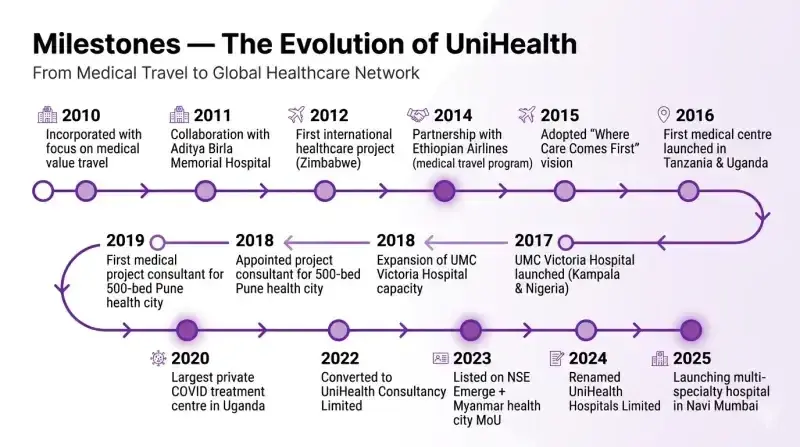
UniHealth was not established as a hospital company. The company was founded in 2010 when Dr. Akshay Parmar and Dr. Anurag Shah, who attended KJ Somaiya Medical College, Mumbai, integrated the company and their initial business was to help facilitate medical value travel. In 2011, it entered a partnership with Aditya Birla Memorial Hospital to service international patients only. By 2014, it had partnered with Ethiopian Air to operate a special medical travel programme, to serve patients across the African continent.The transition to the operator occurred slowly. In 2016, the company opened its first Unihealth Medical Centre in Mwanza, Tanzania, a dialysis-based centre, and another one in Kampala, Uganda. Next, in 2017, the breakthrough occurred: the UMC Victoria Hospital in Kampala, which is a full multi-specialty tertiary care hospital, was commissioned, and soon after, UMC Zhahir Hospital in Kano, Nigeria. The company was not merely linking patients to hospitals anymore, it was operating them.
The Pandemic Test and the Distribution Pivot (2019–2022)
The COVID-19 pandemic instead of stalling the company showed the resilience of the operations. UMC Victoria Hospital made the biggest private-sector treatment centre in Uganda to treat COVID-19-related cases - a step that strengthened institutional trust and established its relationship with the Ugandan government and Defence Forces. The firm also shifted to pharmaceutical and medical consumable distribution in this time, developing a new source of revenue, which utilised the logistics expertise it already had in India and Africa.The Listing and the India Entry (2023–2025)
The company listed on NSE Emerge in September 2023 — providing access to public capital and a mandate for formal disclosure and governance. It was renamed from Unihealth Consultancy Limited to Unihealth Hospitals Limited in 2024, reflecting an unambiguous strategic shift. The India entry finally arrived in October 2025 with the soft launch of its 52-bed hospital in Navi Mumbai, the first of a planned network of five-plus hospitals across Western India.Understanding the Business
Vertical 1 — Hospitals & Medical Centres (90% of Revenue)
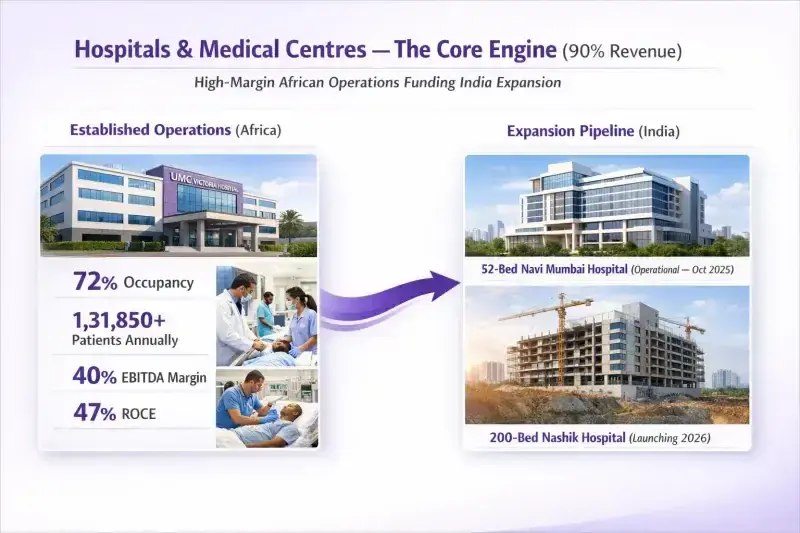
The dominant engine is the hospital business, contributing approximately 90% of consolidated revenues in H1 FY26. The flagship is UMC Victoria Hospital in Kampala — a 120-bed multi-specialty tertiary care facility offering orthopedics and spine surgery, IVF and fertility care, nephrology, neurosurgery, oncology, diagnostics, and intensive care. It currently operates at approximately 72% occupancy and treats over 1,31,850 patients annually. The Ugandan unit achieved an EBITDA margin of approximately 40% in FY25 and a return on capital employed of nearly 47%.
In India, the network is just beginning. The 52-bed Navi Mumbai hospital — with ICUs, a cardiac catheterisation lab, two modular OTs, and comprehensive diagnostics — went live in October 2025. The 200-bed Nashik hospital, equipped with robotic OTs, a neuro-catheterisation lab, NICUs, and a full specialty range, is expected to be commissioned in early 2026.
Vertical 2 — Healthcare Consultancy (High-Margin Engine)
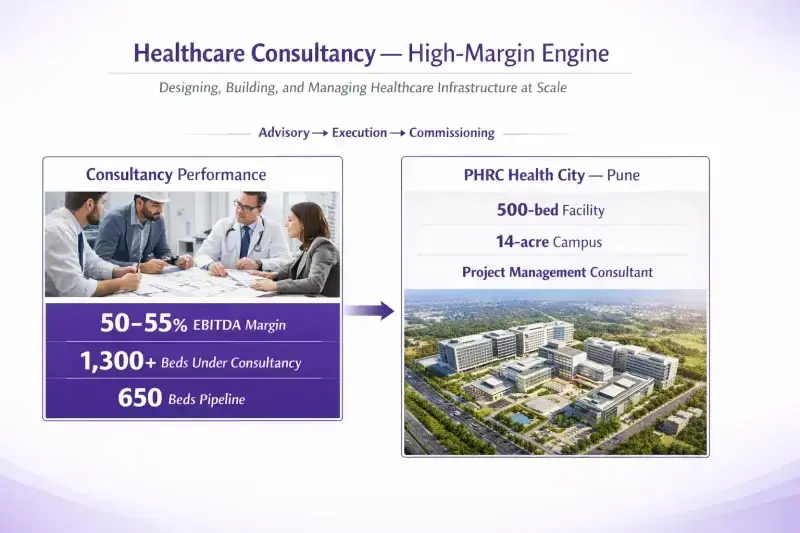
UniHealth earns high-margin fees — approximately 50-55% at the EBITDA level — by advising on hospital design, planning, procurement, and management. The consultancy currently covers over 1,300 beds across India and Africa, with a further 600-650 beds in early-stage pipeline discussions. Revenue is milestone-linked: initial retainers are modest, with larger tranches tied to project commissioning. The company is project management consultant for PHRC Health City in Pune — a 500-bed facility across 14 acres — since concept stage.
Vertical 3 — Pharmaceutical Distribution
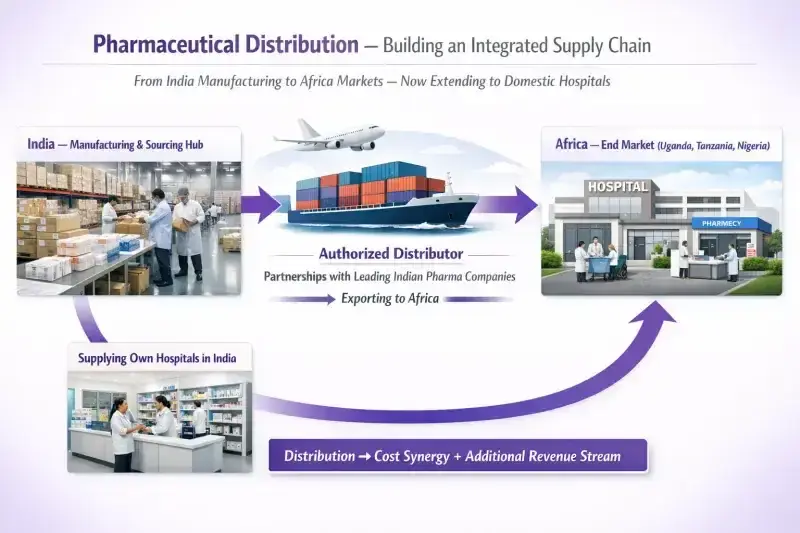
The company acts as an authorised distributor of Indian-manufactured medical and pharmaceutical products to Uganda, Tanzania, and Nigeria, partnering with Reliance Lifesciences, Levram Lifesciences, Fixderma India, and others. Opportunities are now being explored to extend the same supply chain to serve UMC's own Indian hospital facilities — creating a cost-reduction synergy for the hospitals and an incremental revenue stream for the distribution business.
Vertical 4 — Medical Value Travel

UniHealth's roots lie in medical value travel facilitation. It has existing relationships with 50-plus leading Indian tertiary care hospitals, and now possesses its own Indian facilities to route African patients into. This intra-network referral model eliminates referral fees entirely, allows international patient tariffs (materially higher margins than domestic rates), and creates a captive revenue stream. Management expects this flywheel to contribute meaningfully within 12-24 months of India operations commencing.
This aligns with the principles in What is an Investment Philosophy? How to Find Yours.
Industry Context
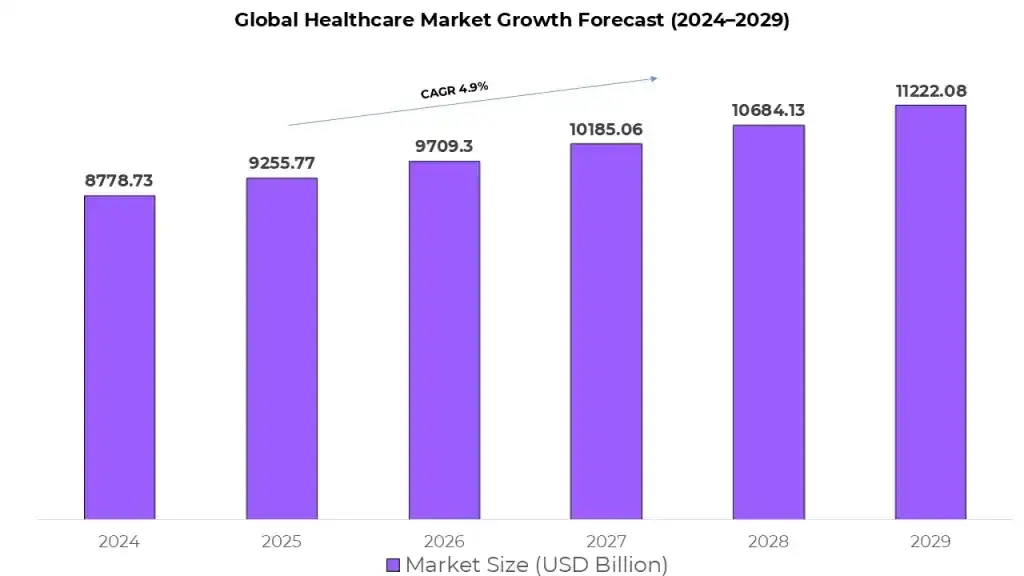
The international healthcare market is gradually emerging as one of the most influential long term opportunities. It will increase steadily, with a 4.9% CAGR, to $11.22 trillion by 2029, a predictable growth, not volatile, compared to the 8.37 trillion of 2023 and the 8.78 trillion of 2024.
It is not necessarily size that matters in this growth, but progress. Healthcare has become more effective and ever essential since medical innovation has enhanced the survival of heart attacks by 70 percent and minimized cancer deaths by 33 percent.
Meanwhile, adoption is growing at a high rate. It is projected that by 2027 the system will have 1.6 billion users and the penetration will be increased to close to 20 percent with the help of an average revenue per user of approximately $50.
This is eventually a cumulative global demand narrative fueled by improved performance, increased access and continuously improving monetisation.
India — Policy, Beds, and Medical Tourism
The government has invested in Rs. In the FY26 budget, the healthcare sector is allocated 99,858 crore, and enhanced Ayushman Bharat and broadened digital health drives. India will need more than 3 million new hospital beds by 2030 - an infra-structural gap that offers sustained opportunity to organised capital-efficient operators in cities yet to be penetrated. Medical tourism is an industry with US dollar turnover of 7.69 billion in 2024, expected to grow almost to 14.31 billion in 2029, with African patients in the country seeking cheap tertiary care.
Africa — Infrastructure Gap and Private Capital
Sub-Saharan Africa accounts for 24% of global disease burden while contributing less than 1% of global health expenditure. The region's healthcare market is valued at US$259 billion, with US$30 billion of infrastructure investment needed. Setting up a comparable hospital in Africa costs approximately US$100,000 per bed versus around Rs. 1 crore per bed in India — making it a structurally lower capital intensity environment. Fifty percent of African healthcare spending already flows to private providers, validating the commercial model.
Regulatory Tailwinds — Uganda Tax Holiday
In a particularly valuable development, Uganda granted UMC's hospital unit a 10-year income tax holiday effective July 1, 2024, running through June 2034. This means the company's most profitable operating unit will pay no income tax for the next nine years — significantly enhancing post-tax cash generation and providing internal funding capacity for the Indian expansion.
How UMC Makes Money

Revenue Generation — Uganda
In Uganda, the primary revenue driver is inpatient care at UMC Victoria Hospital. The hospital is the preferred healthcare partner of the Uganda People's Defence Forces (Ministry of Defense), which accounts for approximately Rs. 82 crore of the company's Rs. 112 crore trade receivables as of September 30, 2025. This is sovereign receivables with a nine to thirteen-month payment cycle and no historical credit loss. Beyond the Defence Forces, the hospital serves private-pay and insurance patients across a wide specialty range.
The ARPOB Story — Scaling Revenue Without Adding Beds
What is particularly instructive is how Uganda has scaled revenues without adding beds. The facility remained at 120 beds throughout H1 FY26, yet ARPOB jumped from approximately Rs. 24,000-25,000 in H1 FY25 to over Rs. 40,000 in H1 FY26. Three drivers explain this: the addition of IVF services (entirely cash-pay, no insurance), expanded ICU capacity (higher billing rates), and more frequent visits by Indian specialists for surgical camps — including a spine surgeon who flew in every six weeks. This is the operating leverage of a mature hospital business.A classic example of compounding, explained in The Rule of 72: The Simple Math Behind Doubling Your Money.
"The cost of manpower which accounts for almost one-third of total costs, does not change drastically with increased occupancy or addition of super specialties."
— Dr. Akshay Parmar, Managing Director
Revenue Generation — India (Targeted)
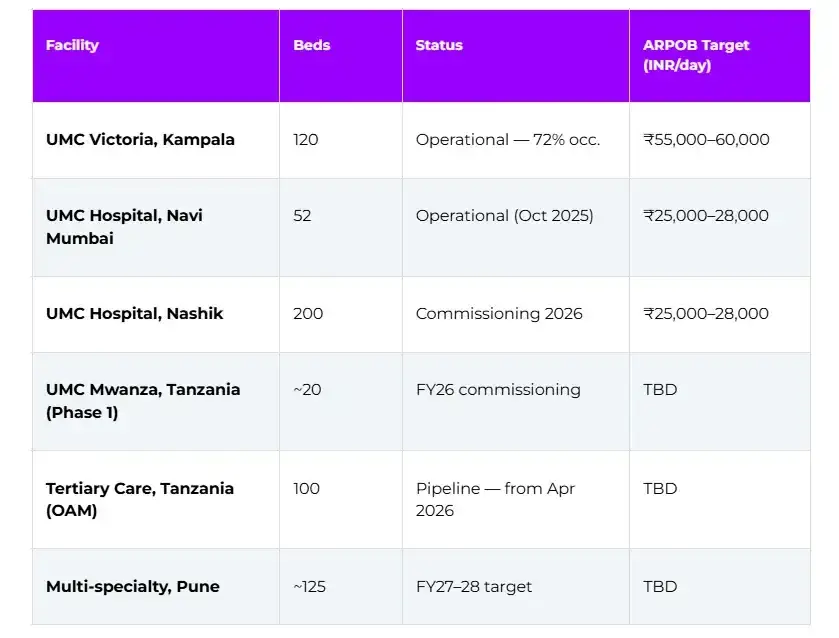
In India, management targets Navi Mumbai to achieve 60-70% occupancy in FY27 — around 30 occupied beds on a daily basis — with an ARPOB of Rs. 25,000-28,000. This translates to revenues exceeding Rs. 30 crore in the first full year. Nashik, being a 200-bed facility, is expected to reach ~50% occupancy from Q2 FY27, with 85-100 beds occupied daily, targeting revenues of approximately Rs. 100 crore. Combined internal target for FY27: at least Rs. 125 crore in India top-line.The Operating Leverage Explained
Management articulated the economics clearly: once a hospital passes breakeven, incremental revenue carries an expense ratio below 50% — the only meaningful variable cost is inventory (medicines and consumables). Fixed costs — staff, infrastructure, management overhead — remain largely unchanged. This means that as occupancy and ARPOB rise together, the marginal EBITDA on each additional rupee of revenue is very high, rapidly compressing into the headline margin.Hospital Network & Expansion Strategy

Current Operational Footprint
The active operational base consists of 120 beds at UMC Victoria Hospital in Kampala (72% occupancy) and 52 beds at the new Navi Mumbai hospital (soft-launched October 2025). The Ugandan unit is debt-free as of September 30, 2025, with full financial agility for expansion. Navi Mumbai is fully equipped and accepting patients across all specialties.
India — The 'Golden Triangle of Maharashtra'
The India strategy follows a deliberate geographic sequencing: Navi Mumbai (operational), Nashik (commissioning early 2026), and Pune (next financial year, targeting a 125-bed tertiary care facility). All Indian properties are on long-term lease — an asset-light approach that limits upfront capital intensity to equipment, fit-out, and working capital. Management intends to scale to 500-plus beds in India within the Maharashtra cluster over the next 24-36 months.
Africa — Deepening Uganda, Entering Tanzania
Within Uganda, the strategy is super-specialty deepening rather than bed addition: ophthalmology services are being added imminently, cardiology and cardiac surgery are targeted for Q2 FY27, and IVF services are already contributing. In Tanzania, the Mwanza secondary care hospital is expected to be operational by end-FY26. In advanced discussions is the operational management takeover of a 100-bed tertiary care hospital in Tanzania — which management hopes to activate from April 2026. Over 2-3 years, the Africa plan targets 400-plus additional beds.
Expansion by the Numbers
The Financial Growth Story
H1 FY26 Headline Performance

Multi-Year Earnings Trajectory
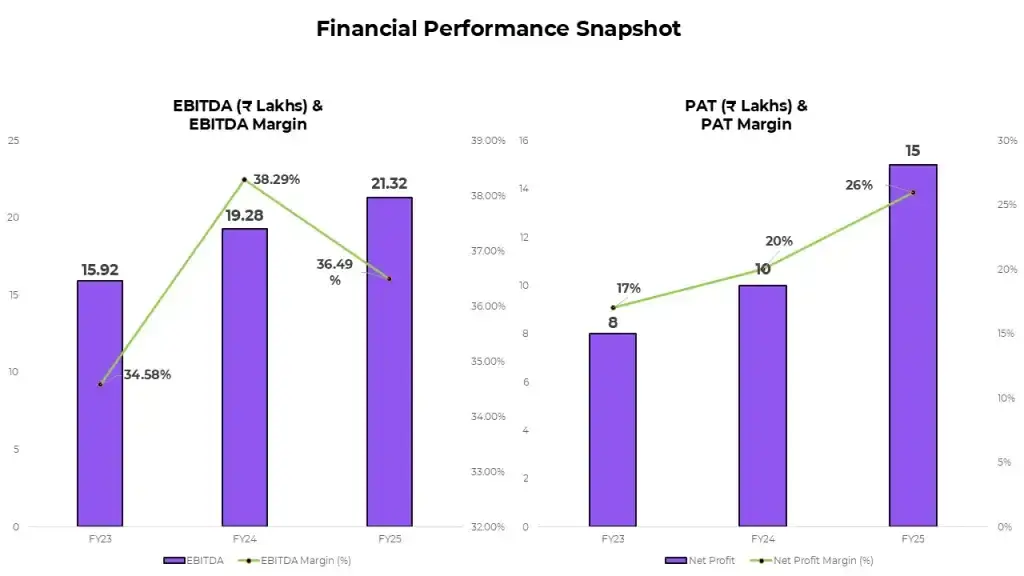
Total income grew from Rs. 46 crore in FY23 to Rs. 58 crore in FY25, and has already reached Rs. 70 crore in just H1 FY26 alone. More significantly, EBITDA has grown from Rs. 15.9 crore in FY23 to Rs. 21.3 crore in FY25, and Rs. 35 crore in H1 FY26 — reflecting accelerating margin expansion. The EBITDA margin has moved from 34.6% in FY23 to 36.5% in FY25 to 49.8% in H1 FY26.
Consolidated Key Ratios
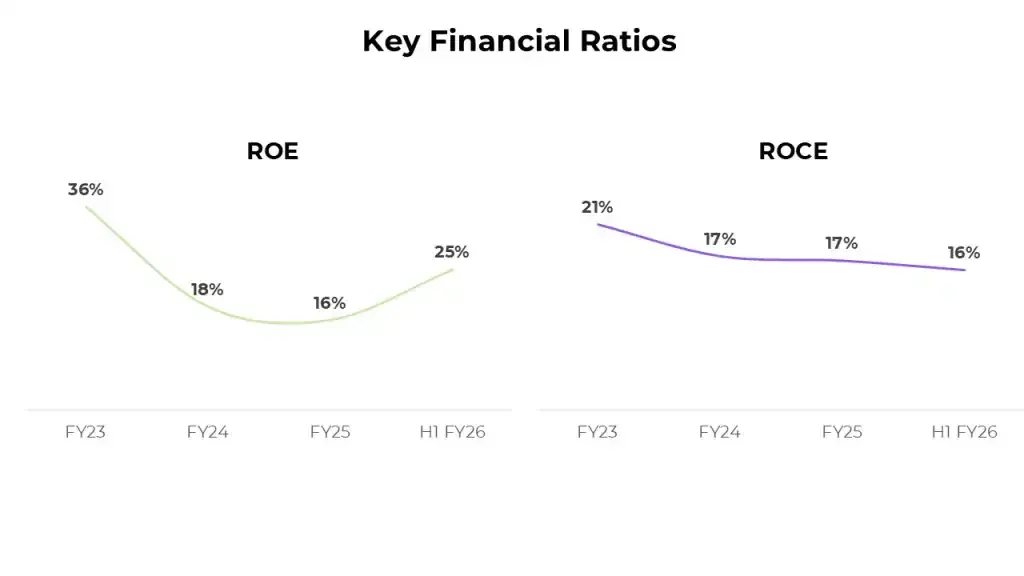
From leverage to strength, the balance sheet has undergone a sharp transformation.
Debt has been rapidly reduced (1.43x → 0.06x), while interest coverage has expanded significantly (3.25x → 26.01x), indicating strong financial resilience.
Profitability has scaled, though return ratios saw interim moderation.
ROE declined from elevated levels before recovering to 25% in H1 FY26, while ROCE has remained stable in the mid-teens, reflecting disciplined capital deployment during expansion.
Explore our Products
Research Framework

Emerging Titans
Combination of quantitative analysis, industry tailwinds, and management assessment - SPRINT investment philosophy

Tiny Titans
Heavy emphasis on scuttlebutt research, plant visits, and early on-ground signals
Overall, the company is transitioning into a low-debt, high-efficiency healthcare platform with improving earnings visibility.
For valuation context, refer to The P/E Ratio Decoded: Trailing vs. Forward, and What is a "Good" P/E?.
Competitive Advantage
First-Mover Advantage in Africa
There is no comparable Indian-origin peer with a similar presence in East African healthcare. Building a credible hospital operation in Uganda or Tanzania requires navigating complex regulatory environments, cultivating an institutional client base, earning sovereign trust (UMC is the preferred partner for the Ugandan Defence Forces), and surviving years of working capital intensity. A new entrant attempting to replicate this would face a 5-10 year runway just to reach operational maturity.The Integrated India-Africa Network — A Structural Differentiation
UniHealth started as a medical value travel company and retains that institutional DNA. It has relationships with 50-plus Indian tertiary care hospitals, and now possesses its own India facilities to route African patients into. Because it is an intra-network referral with no external fee payable, international patient tariffs flow almost entirely to the bottom line. Neither a pure-India hospital nor a pure-Africa operator can replicate this flywheel.
Design-Build-Operate (DBO) Capability
UniHealth has an in-house team of architects, planners, interior designers, and project managers. This allows it to earn consultancy fees from the planning stage, execute construction and equipping, and then run the completed facility — capturing value across the entire healthcare project lifecycle. The PHRC Health City in Pune exemplifies this: UniHealth has been involved since the concept stage and may eventually operate the completed facility.
Dual-Promoter Presence — Mumbai and Kampala
Dr. Akshay Parmar is based in Mumbai, overseeing the India expansion. Dr. Anurag Shah relocated to Kampala in 2017 and is based there full-time, managing the Uganda operations. This split-base leadership allows simultaneous, on-the-ground execution in both geographies — a structural management advantage for a cross-border company that would be difficult to replicate through management secondments.
Uganda Tax Holiday Through June 2034
The 10-year income tax holiday on Uganda hospital revenues, running from July 2024, means the most profitable unit of the group will not pay income tax for nine more years. This enhances post-tax cash generation and provides a structural funding cushion for India expansion without requiring equity dilution.This is essentially reflected in What is an Economic Moat? Why It's the Key to a Company's Long-Term Success explains.
Management Insights

We had the privilege of interacting with the Founder & Managing Director of UniHealth, Dr. Akshay Parmar, in a face-to-face discussion as part of our Beyond the Numbers series, offering direct insight into how the business is being shaped beyond the reported numbers. The full, detailed conversation is available on YouTube.
The H1 FY26 concall, along with our in-person interaction with the Managing Director, highlighted a few important strategic shifts within the business.
The immediate priority is clear: extract higher value from existing assets before pursuing aggressive expansion. Uganda remains central to this strategy. With occupancy already strong, the focus has shifted to ARPOB expansion through higher-value specialties such as cardiology, cardiac surgery, ophthalmology, and IVF. This is not volume-led growth — it is driven by pricing power and case-mix optimisation, directly supporting margin expansion.
In India, the approach signals discipline over speed. Rather than a phased rollout, hospitals are being launched fully equipped from Day 1, ensuring clinical readiness and doctor confidence. While this may moderate early ramp-up, it establishes a stronger foundation for quality-led scaling.
Management has also been explicit about the near-term trade-off: margins will compress before they expand. As new hospitals ramp up, consolidated EBITDA is expected to remain under pressure in the short term. However, mature assets such as Uganda continue to generate strong profitability, while India is expected to scale from mid-teen margins toward 20%+ over time.
The most strategic lever lies in Medical Value Travel (MVT) — a structurally underappreciated flywheel. By routing African patients into its own Indian hospitals, the company captures international tariffs without referral leakage, converting patient flow directly into incremental EBITDA. With strong air connectivity and an integrated network, this could evolve into a meaningful high-margin growth driver over the next 12–24 months.
In essence, the story is shifting from building hospitals to optimising economics — and then scaling with a structurally stronger foundation.
Growth Strategy & Future Plans
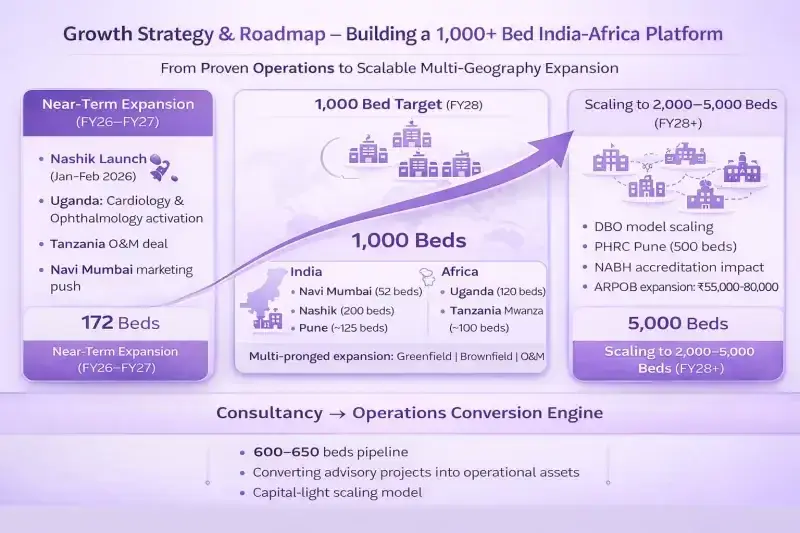
Near-Term (FY26–FY27)
The immediate priorities are: commissioning Nashik (January-February 2026), activating ophthalmology and cardiology in Uganda, executing the Tanzania OAM deal, and launching the 'UMC Health Mahotsav' marketing campaign in Navi Mumbai. FY27 is the first full year for both Indian hospitals, with a combined revenue target of Rs. 125 crore. Medical value travel inflows from Africa are also expected to begin.Medium-Term (FY27–FY28) — The 1,000-Bed Target
By end-FY28, the target is 1,000 operational beds across India and Africa. The India leg will include Navi Mumbai (52 beds), Nashik (200 beds), and Pune (~125 beds). The Africa leg will include Uganda (120 beds, with super-specialty deepening), Tanzania Mwanza (secondary care), and the potential Tanzania 100-bed OAM. The expansion will be multi-pronged — greenfield, brownfield, and O&M — using the least capital-intensive approach appropriate to each opportunity.Long-Term (FY28 and Beyond) — 2,000 to 5,000 Beds
Management has signalled that once the 1,000-bed milestone is achieved, the next five-year plan will target 2,000 to 5,000 beds — leveraging the proven DBO model at greater scale. The PHRC Health City in Pune (500 beds across 14 acres, currently in early construction) could become an O&M opportunity when commissioned in 3-5 years. As NABH accreditation for premium super-specialties is obtained in India (a 2.5-year process), the ability to move ARPOB toward Rs. 55,000-80,000 in India will also open up.
The Consultancy Pipeline — Converting Projects to Operations
The consultancy vertical is actively exploring 600-650 beds in new project discussions. As these projects achieve financial closure and proceed to commissioning, UniHealth is positioned to convert consultancy relationships into operational management agreements — a capital-light way to add operational beds without greenfield risk.Risk Factors
1. Geographic Concentration — HIGH
Uganda contributes ~90% of hospital revenues. Political instability, regulatory changes, or currency depreciation in Uganda could materially impact earnings. The Ugandan Shilling moved 3.55% versus INR in FY25 alone.2. Receivables Concentration — HIGH
₹82 crore out of ₹112 crore trade receivables are from the Ugandan Ministry of Defence, with a 9–13 month payment cycle. While there is no historical bad debt, this concentration creates working capital strain.
3. New Facility Ramp-Up — MEDIUM
Nashik is a 200-bed greenfield facility in a city with no prior UMC brand presence. Achieving 50%+ occupancy within 2–3 quarters depends on successful doctor empanelment, marketing, and patient inflow — none of which are guaranteed.4. Statutory Approval Delays — MEDIUM
The Navi Mumbai facility was delayed by ~3 months due to regulatory approvals. Healthcare licensing in India is complex, and obtaining NABH accreditation for advanced super-specialties can take 2.5+ years, delaying ARPOB improvement.5. Margin Compression (Transition Phase) — MEDIUM
Near-term expansion into India is expected to compress consolidated EBITDA margins, as new facilities operate below breakeven during ramp-up. Investors should be prepared for an 18–24 month margin trough.
6. Multi-Jurisdictional Compliance — LOW
Operating across India, Uganda, Tanzania, and via Mauritius-based holding structures introduces governance and compliance complexity. Scaling operations will require strong management bandwidth.Conclusion — The Investment Narrative in One Paragraph
UniHealth Hospitals Limited is a small-cap healthcare company with a genuinely differentiated business model — an integrated India-Africa platform built over fifteen years, anchored by a profitable, 72%-occupied hospital in Uganda and now entering India with two facilities in Maharashtra. The financial performance in H1 FY26 — 55% revenue growth, EBITDA doubling, net profit tripling — reflects the operating leverage of a maturing Africa business, amplified by a Uganda tax holiday that effectively makes its most profitable unit tax-free for nine more years.The near-term investment thesis is straightforward: ARPOB expansion in Uganda (from Rs. 40,000 to Rs. 55,000-60,000), the commissioning and ramp-up of Indian hospitals (combined Rs. 125 crore+ target in FY27), and the activation of medical value travel within the network. The longer-term thesis is more ambitious — a 1,000-bed India-Africa platform by FY28, targeting margins that converge toward 25-30% in India as facilities mature, supported by a consultancy engine that converts hospital design relationships into operating contracts.
The risks are real — geographic concentration in Uganda, receivables intensity from the Ministry of Defence, new facility ramp-up uncertainty, and multi-jurisdictional regulatory complexity. These are not trivial. But they are known, manageable, and actively being addressed through the very geographic diversification that the Indian hospitals represent.
For a long-term investor willing to hold through two to three years of expansion-phase margin compression, and comfortable with the small-cap liquidity profile, UniHealth presents an opportunity to participate in the early innings of a cross-border healthcare platform that has no obvious Indian-origin peer. The building blocks are in place. The next 24 months will tell us whether management can execute the scale-up.
Want more breakdowns like this? Comment “Hospitals” and I’ll keep digging deeper.
FAQs
Is Unihealth a tertiary hospital?
+Yes, UniHealth operates multi-specialty tertiary care hospitals that provide advanced treatments such as neurosurgery, IVF, oncology, and critical care.
What are Unihealth's benefits?
+UniHealth combines strong positioning in underserved African markets with a high-margin hospital model, supported by operating leverage and a tax-efficient structure in Uganda. Its integrated platform across hospitals, consultancy, distribution, and medical value travel creates multiple revenue streams, while its expansion into India provides a scalable long-term growth opportunity.
What is the share price of Unihealth Hospitals Ltd?
+The share price is approximately ₹391 at the time of posting.
What does it mean if a hospital is a tertiary hospital?
+A tertiary hospital provides advanced and specialized medical care, including complex surgeries, intensive care, and super-specialty treatments, typically through referrals from primary or secondary healthcare providers.
Who founded Unihealth?
+UniHealth was founded by Dr. Akshay Parmar and Dr. Anurag Shah, who initially started with medical value travel before expanding into hospital operations.

High growth stock specialist, Value Educator
Shashank Mahajan is an equity research professional with over 12 years of experience in identifying high-potential SME and micro-cap stocks at an early stage. He follows a rigorous scuttlebutt research–driven approach, combining on-ground insights with deep financial analysis. Shashank specializes in uncovering under-researched and under-owned companies with strong management quality and long-term growth potential. Through disciplined research and early identification, he focuses on spotting tomorrow’s market leaders before they enter the mainstream investor radar.

Zen Technologies: Why Revenue Fell After Its Biggest Win

Data Patterns: India's Radar Designer and Its Waiting Orders

KSH International: The Wire Inside India's Transformers

Krishna Defence: The Steel Behind India's Warship Hulls

PNG Jewellers: A 194-Year-Old Name Goes National
Axiscades: From Services to Missile and Radar Electronics
Explore our Products
Research Framework
Emerging Titans
Combination of quantitative analysis, industry tailwinds, and management assessment - SPRINT investment philosophy
Tiny Titans
Heavy emphasis on scuttlebutt research, plant visits, and early on-ground signals


 Orders
 Subscription
 Share with friends
 Logout


Required Details
₹23999.00
(12 month subscription)
As per SEBI regulations, all users are mandated to complete the KYC that is validated for 1 year. Post payment, you will be redirected to the KYC screen


No comments yet. Be the first to comment!