
Khazanchi Jewellers: A Fast-Growing SME

In India, gold means much more than its price. Families buy a little over time, hold onto it for years, and eventually pass it on.
You’ll usually see it come out during weddings, festivals, and big life moments. For many people, it isn’t just jewellery, it’s a way to keep savings, a safety net, and something that reflects status as well.
“Gold is money. Everything else is credit.” — J. P. Morgan
This deep cultural connection is what makes India one of the world's largest gold consumers. Every year, enormous quantities of gold flow into the country, not driven by necessity, but by trust, a belief that gold holds value in a way few financial assets can.
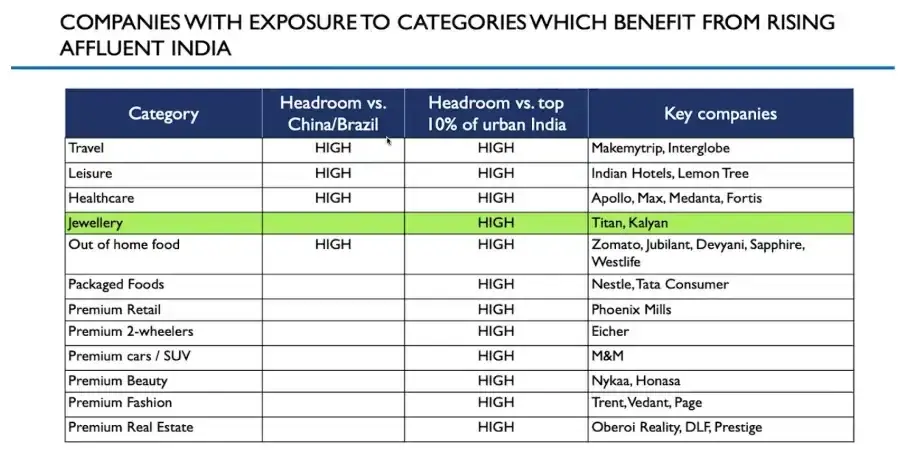
And this is where the jewellery industry becomes interesting.
If you’re new to how industries like this fit into the broader market, understanding the basics is essential → A Beginner's Guide to Investing in the Indian Stock Market (2026 Edition)
Unlike most consumer businesses, jewellery companies don’t scale easily. They are capital-intensive, heavily dependent on inventory, and operate on thin margins where fluctuations in gold prices can change everything. Growth is usually slow and predictable, built store by store, city by city.
Jewellery is a classic example of a capital-heavy business, where growth requires continuous reinvestment → Capital-Intensive Businesses Explained: Risks, Economics, and Investor Insights
“The business world is always changing, but the laws of economics remain constant.” — Warren Buffett
Which is why, when a company in this space starts growing unusually fast, it stands out.
Because in jewellery, rapid growth is rarely straightforward.
A smaller regional player has been moving ahead quietly, growing faster than expected and slowly expanding its reach. The way it’s building the business feels a bit different from the usual jewellery companies.
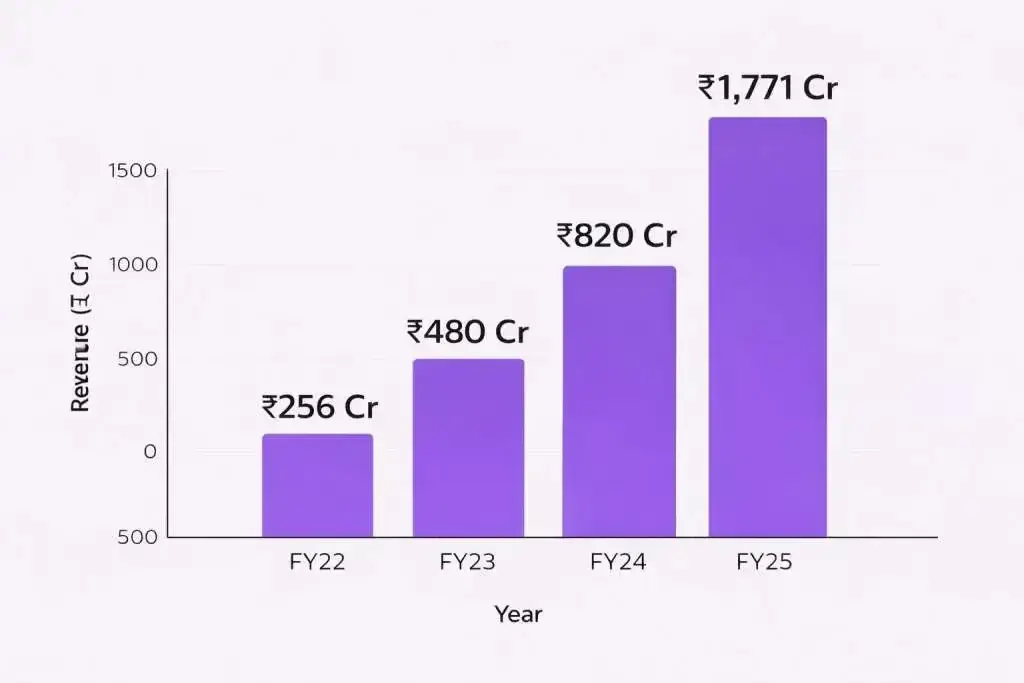
At first, it looks like any other player in the space. But when you spend some time understanding it, you realise the model isn’t the same.
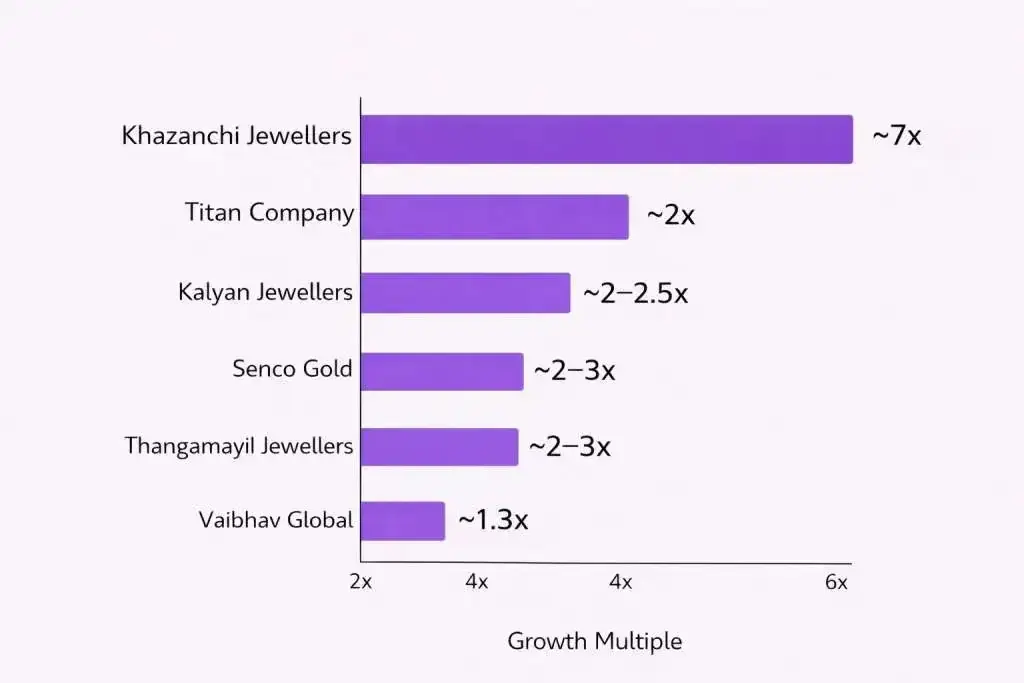
And this is where the difference becomes clear.
While most organised jewellery players scale 2–3x over a few years, the company has grown nearly 7x, making it a clear outlier in the sector.
A distribution network.
A design-driven engine.
And a gradual shift toward becoming a brand.
This is where the story gets interesting.
And it leads to a company called Khazanchi Jewellers Limited.
India’s Jewellery Market: A Structural Tailwind
To get the opportunity to understand, begin with the market.
The Indian jewelry industry is approximately 85 billion and is likely to reach 130 billion in 2030. However, it is not only the size that is buzzing; it is the manner in which the demand rolls.
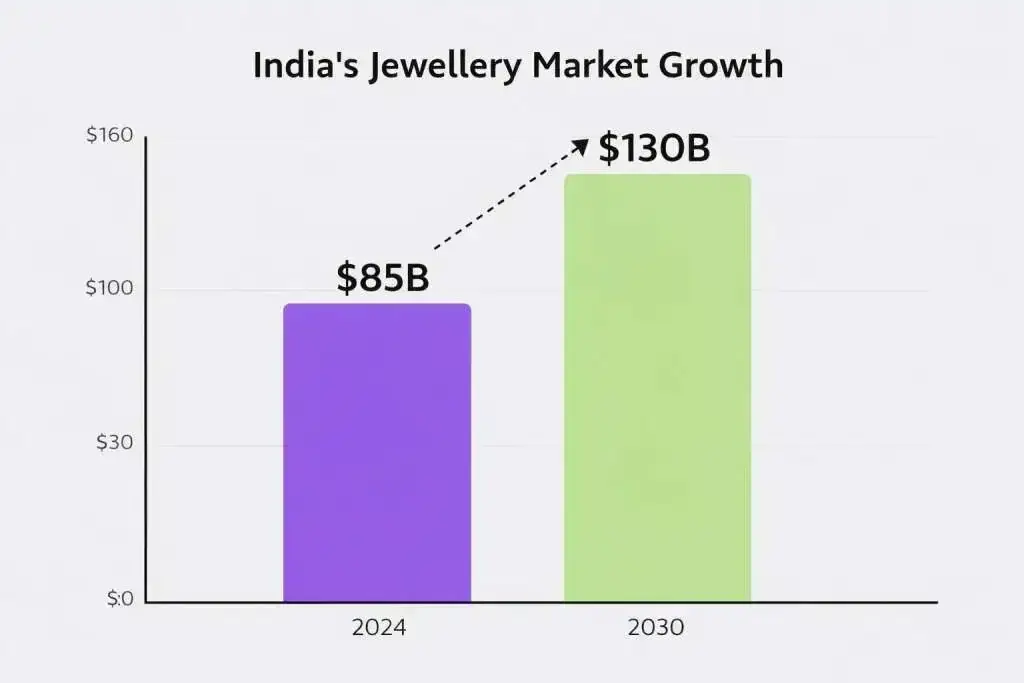
Wedding-related customer purchases nearly represent half of all jewelry purchases in India. And then, on top of this, gold has a more in-depth connection with Indian households with the nation possessing more than 25,000 tonnes of household gold- just because generations of people continued to hoard it.
Nearly half of all jewellery purchases in India are linked to weddings. Beyond that, gold continues to play a much deeper role in Indian households. The country is estimated to hold over 25,000 tonnes of private gold, much of it accumulated over generations.
This is what sets the sector apart.
In India, gold jewellery isn’t just a discretionary buy. It plays multiple roles at once: part culture, part savings, part tradition.
People don’t buy it only to wear. They buy it to hold its value, pass it down within the family, and use it for important life occasions.
And that changes the economics of the industry.
Because demand isn’t purely cyclical or trend-driven, it is deeply embedded in behaviour, which is why, even over long periods, the jewellery sector tends to show a level of resilience that most discretionary industries struggle to match.
Company Origins Built in Chennai’s Jewellery Trading Hub
The company’s story begins in a market where gold isn’t just bought and sold; it’s part of a wider ecosystem shaped by buyers, sellers, and long-standing traditions.
Founded in 1971, the business started in Sowcarpet, Chennai, one of India’s oldest and busiest jewellery trading hubs. This is not your typical retail location. Sowcarpet operates as a dense network of wholesalers, traders, and manufacturers, where jewellery moves in volume long before it reaches showroom displays.

The company’s early years were rooted in this environment. Instead of starting as a consumer-facing brand, it built its foundation as a wholesale supplier, catering to retailers and buyers across the region.
That origin matters more than it seems.
Because it shaped how the business thinks, grows, and operates even today. Unlike traditional jewellery brands that are built around retail expansion, this company evolved from the supply side of the market.
And that’s why, even today, it doesn’t function like a typical jewellery retailer.
At its core, it works more like a hybrid part distributor, part retailer, linking supply and demand across different layers of the jewellery ecosystem.
Business Model: Bullion, Retail, and Wholesale.
It looks like another jewellery shop, at first sight, where pretty things are displayed, people are walking around the store, and sales are going on in the office. But scratch the surface, and you will realize that it is far more strata than a regular jewelry store.
The company does not confine itself to a single mode of earning. Rather, it has been distributed among three game plans: wholesale, retail, and bullion, which contribute individually to the entire picture.
Wholesale is the backbone. A good part of the volume is there. The company delivers its jewelry to a massive base of retailers, and therefore, its expansion is not confined to its stores. It’s all about relationships. Orders are likely to continue after a retailer has begun making purchases with them. That facilitates the scaling process without the need to make a lot of investment in new showrooms.
In combining that, the retail aspect indicates that the company can be moving toward a consumer-facing brand. Its own showrooms will enable it to capture higher margins, establish direct contact with customers, and determine the manner in which its products are displayed. Retail has been capturing an increasing share over time, and this is an obvious push into enhancing profitability and brand strength.
The third one is a bullion trading that involves dealing with gold coins and bars. This division contributes significantly to the revenue but operates at slim margins. It contributes to the increase in the top-line; however, due to low margins, the profitability may appear somewhat unimpressive despite increasing revenue.
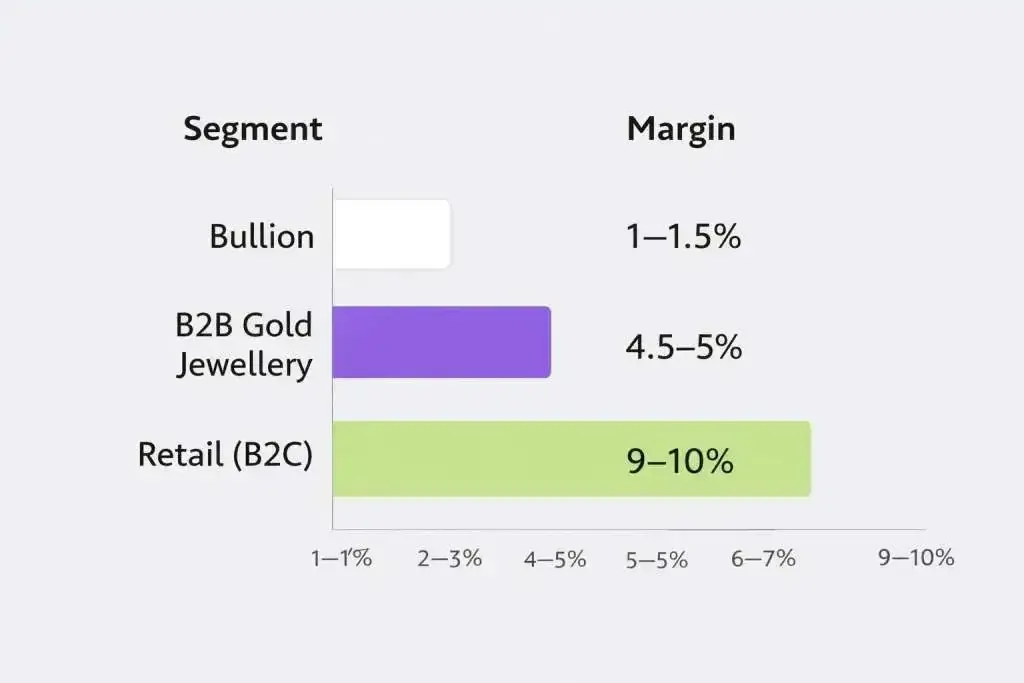
Put together, this is not a straightforward jewellery business. It’s a hybrid model combining the scale of wholesale, the margin potential of retail, and the volume boost from bullion.
And that’s the real insight: while retail may represent the future of the business, wholesale is still the engine powering it today.
The Distribution Engine
Its distribution network is the actual strength of the business, and it is one of those aspects that are forgotten. The company has, over the years, been hooked to more than 1,000 jewelry stores throughout India. And it is not a one-time thing but a long-term association where they will replenish the shelves day in and day out.
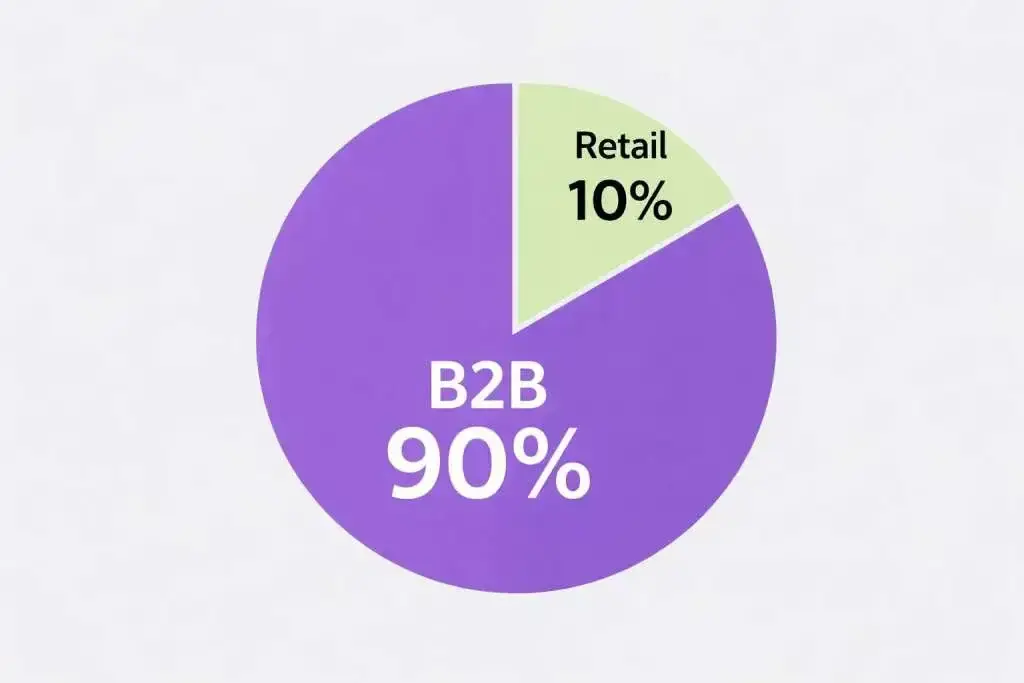
That flips the whole game. The company does not operate on a demand engine but rather a built-in demand engine, as opposed to counting the number of people walking into a store. The retailers on the network continue to make orders, and this provides the business with a steady flow of cash that does not depend on random walk-ins or hype only.
And it provides the company with an almost internal perspective of what most retailers do not. Wholesale deals are nice sticky-things too, though, the retailers keep going back there to get new designs, good prices and guaranteed that the goods will get there in time. The demand is not a one-time affair, so it is not made out of artificial relationships.
“It’s far better to buy a wonderful company at a fair price than a fair company at a wonderful price.” — Warren Buffett
Besides, this network diversifies the cash flow. You do not have to rely on one location or one showroom to bring in all the revenue - the sales are divided among a group of customers and at various locations, so you are not so vulnerable when one of the locations goes slow.
Consider this layer of distribution to be the business backbone. Shoppers can not see it but it is the driving force that makes jewelry move through the hands of the maker to the buyer. To the company it is a good foundation that can expand without the necessity of introducing more brick and mortar outlets. That is the reason why this engine is so valuable - retail creates brand, distribution creates scale.
Order Book Visibility Trade Exhibitions
Another subtle but important driver of the business comes from something most investors rarely focus on: trade exhibitions.
In the jewellery industry, exhibitions are not just marketing events. They function as active marketplaces where wholesalers and retailers come together, evaluate designs, and place bulk orders. For companies operating on the supply side, these events act as key revenue-generating platforms.
At one such exhibition, the company secured an order book of approximately ₹55–60 crore. On the surface, this may seem like a one-off number. But the implication is far more meaningful.
It provides forward visibility.
Retail is largely a waiting game; you don’t really know how many customers will walk in. Wholesale works differently. At exhibitions, companies sit across the table from buyers and lock in orders on the spot.
So before the actual selling season even begins, they already have visibility on a good part of their sales. That makes planning a lot smoother, whether it’s production, inventory, or cash flow.
In essence, exhibitions convert demand into pre-booked sales.
For a business built on distribution, this becomes a powerful advantage. It not only supports consistent revenue flow but also strengthens relationships with retailers who rely on these platforms to source new designs and inventory.
And this is where the model stands out.
Because while most investors focus on store expansion or revenue growth, a significant part of the company’s momentum is quietly being built through these structured, relationship-driven order pipelines.
Product Strategy Shift From Gold to Diamonds
A slight adjustment is occurring in the biz that may not be immediately noticeable, however, it may radically alter the way the company will be making in the long run.
They traditionally have been all about jewellery made of gold. Gold attracts the volume, though it also has its limits. Prices are determined in the global markets, margins are kept low and one cannot do much more than the design and making costs to be unique.
The company has initiated a new brand to come out of such fixations with a new line called the Vajraa Diamonds by Khazanchi.
It is not only a new product. It’s a strategic shift. Gold does not run in the same manner as diamonds. The cost of gold is fairly normal, but with diamonds, you can charge more due to the design, brand and the hype. That would translate to increased margins, increased brand and improved premium position in the market.
Plainly gold is primarily a commodity. Diamonds are more of a branded value added gig.
This relocation is important since it reversed the mechanism of growth. Instead of simply pursuing larger figures, the company can promote prices and margins by making some adjustments to its product mix. A small increase in diamond pieces would dramatically increase profits in the future.
And that’s the big takeaway. The company is not simply expanding but it is redefining its portfolio. A volume-based business of gold hustle to a more value-oriented jewelry mix.
Temple Jewellery Focus: A Cultural Moat
The temple jewellery is one area of the business that is usually neglected especially in South India.It does not simply have to do with the appearance. It is all about culture at Temple jewellery. The designs are direct out of temples and gods and old pattern and people tend to purchase them during weddings or large family parties.

This is to say that the demand curve is completely different. Temple jewellery is purchased on special occasions, mostly weddings as an everyday person does not give much thought to price. This niche buyer does not just go out to shop with the aim of getting the best price; he or she is in search of quality craftsmanship, authenticity, as well as cultural significance. That difference matters.
The cost to make, the complexity of the design and the value attributed to the jewellery of the temples are greater since the amount of the earns is greater, yet it uses the same base, and it is still gold. That provides some cushioning to the otherwise slim margins in the jewellery business.
This segment is in a manner a niche within the bigger market.
It is more difficult to imitate, over-designed and it is also closely attached to the local preferences particularly in South India. That is an in-built advantage to a firm located at Chennai.
That’s the key takeaway. The jewellery biz is mostly a commodity market but the temple jewellery introduces differentiation and pricing power to the biz providing a slight moat but a solid moat nonetheless.
Design Library: A Hidden Competitive Advantage
One of the most overlooked strengths of the business lies in its extensive design library. The company maintains a catalogue of over 5 lakh jewellery designs, a scale that is not easy to replicate.
At first glance, this might seem like a simple operational detail. But in the jewellery industry, demand is not driven by gold alone; it is driven by design. Customer preferences shift constantly. Trends evolve. Regional tastes differ. And what sells in one season may not work in the next.
This is where a large design library becomes powerful.
Advantages like design depth and distribution networks often create long-term competitive advantages → Economic Moat Explained: Why Some Companies Stay Dominant for Decades
It allows the company to:
- Launch new collections faster,
- offer customised designs to retail partners
- Respond quickly to changing consumer trends
In the wholesale segment, this is especially a key differentiator. Retailers prefer suppliers who can provide variety, freshness, and flexibility, all of which are enabled by a deep design repository.
Over time, this creates a subtle but meaningful advantage. While competitors can source gold, building and maintaining such a vast, usable design database requires years of iteration, customer feedback, and design expertise.
And that’s really what it comes down to. On the surface, the business may look commoditised. But in reality, consistently getting the designs right makes a big difference. It brings repeat orders, helps inventory move faster, and keeps retailers coming back. It may not be visible in financial statements. But it shows up in business quality.
Gold Volume Growth: The Real Demand Signal
In the jewellery business, revenue numbers can often be misleading.
Why?
Because gold prices fluctuate. If gold prices rise, revenue can increase even without any real growth in demand. That’s why smart investors look beyond revenue and focus on volume because volume tells you what’s actually happening on the ground.
Gold Sales Volume Trend:
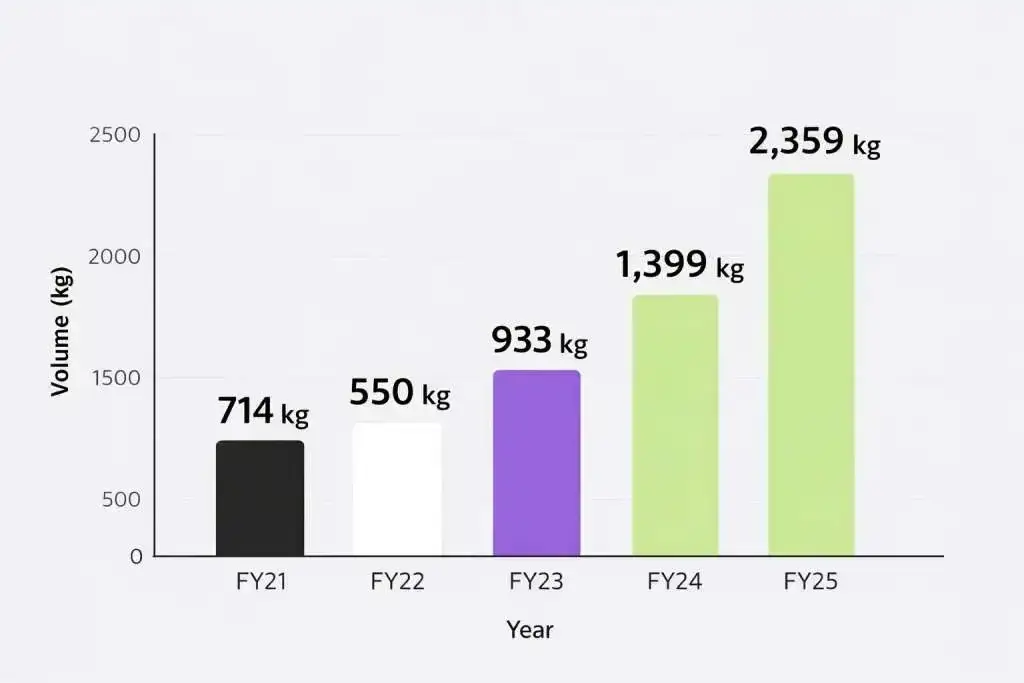
This is not incremental growth; it’s a sharp scale-up.
From FY21 to FY25, volumes have more than tripled.
And that changes the entire interpretation of the business.
This isn’t just price-led growth.
It’s a real demand expansion.
More customers.
More orders.
Higher throughput across the distribution network.
It also validates multiple things at once:
- stronger retailer relationships
- increasing market penetration
- improving product-market fit
And importantly, volume growth tends to be more sustainable than price-driven growth.
Because it reflects underlying consumption rather than just commodity cycles.
And that’s the key insight.
In a sector where headline numbers can often mislead, volume growth is a clean signal of business momentum, and in this case, it points toward genuine scale expansion rather than optical growth.
Bullion Business Revenue Booster, Margin Diluter
Alongside jewellery, the company also operates in the bullion segment, selling:
- gold coins
- gold bars
At first glance, this looks like a natural extension of the business.
But economically, bullion behaves very differently from jewellery.
Bullion trading is largely a low-margin, high-volume business. There is minimal value addition, no design, no branding, no making charges. The product is essentially gold in its purest tradable form.
So what does it do for the business?
It boosts turnover significantly. Large volumes of bullion sales can inflate the top line and create the appearance of rapid scale.
But there’s a trade-off.
Because margins in bullion are extremely thin, this segment tends to pull down overall profitability metrics, especially EBITDA margins.
And that explains an important financial characteristic.
Why the company can report:
- high revenue growth
- but relatively modest margins
It’s not necessarily a weakness; it’s a mixed issue.
And that’s the key insight.
To truly understand the business, investors need to separate:
- volume-driven bullion revenue
from - value-added jewellery revenue
Because while bullion drives scale, it is the jewellery segment that ultimately drives profitability and long-term value creation.
Retail Expansion Strategy Moving Closer to the Customer
So far, the business has been built on distribution, supplying jewellery to retailers, scaling through relationships, and driving volume across a wide network.
But distribution, by design, keeps you one step removed from the end customer.
And that’s where the next phase of growth begins to take shape.
Currently, the company operates a relatively small retail presence, with a showroom of around 1,200 square feet. In the context of jewellery retail, this is modest enough to establish presence, but not enough to fully express the brand.
That is now changing.
The company is in the process of developing a significantly larger flagship store, expanding to nearly 10,000 square feet. This is not just a capacity increase. It is a strategic shift.

Because in jewellery, store size is not just about space, it’s about perception.
A larger showroom allows for:
a wider display of designs
better in-store experience
stronger brand positioning
It transforms the business from a supplier into a destination.
And that distinction matters.
In wholesale, growth is driven by volume and relationships. Margins are thinner, and pricing power is limited. But in retail, the equation changes. The business moves closer to the consumer, where branding, experience, and trust begin to play a much larger role.
This is where profitability improves.
Retail jewellery typically operates at margins that are two to three times higher than wholesale. Not because the product is fundamentally different, but because the value perception is.
Customers are not just buying gold.
They are buying design, trust, and experience.
And that allows the company to capture a greater share of the value chain.
But there’s a deeper layer to this transition.
By expanding its retail footprint, the company is not just chasing higher margins it is building a brand.
A brand that customers recognise.
A brand that retailers respect.
A brand that can eventually stand on its own, independent of the wholesale network.
And that’s the key insight.
Distribution builds scale.
But retail builds identity.
And for a company that has already mastered the supply side of the business, this gradual move toward retail could define the next phase of its evolution from a regional distributor to a recognised jewellery brand.
Digital Customer Lock-In Turning Savings into Future Sales
In a business where demand is often tied to life events, timing becomes unpredictable.
Customers don’t buy jewellery every month. They buy during weddings, festivals, or specific milestones. Which means for most jewellery retailers, demand is episodic; it comes in bursts, not as a steady stream.
And that creates a challenge.
How do you make demand more predictable?
This is where the company’s digital initiative starts to play a quiet but important role.
It has introduced a Jewellery Purchase Plan App built around a simple idea: instead of waiting for customers to buy, bring them into the system early.
The model is familiar, but powerful.
Customers enrol in a gold savings scheme, contributing small amounts regularly through instalments. Over time, this accumulated value can be redeemed against future jewellery purchases.
On the surface, it looks like a savings product.
But structurally, it does something much more strategic.
It converts uncertain, one-time buyers into committed future customers.
Because once a customer starts contributing to the plan, the purchase decision is no longer “if” it becomes “when.”
This changes the demand equation entirely.
Instead of relying only on walk-in sales or seasonal spikes, the company begins to build a pipeline of pre-committed demand customers who are already financially and psychologically invested in making a purchase.
In many ways, this works like a combination of:
customer acquisition
customer retention
and embedded financing
All rolled into one.
It also strengthens the relationship between the customer and the brand. Over the duration of the savings plan, the company remains continuously engaged with the customer not just at the point of sale, but throughout the journey leading up to it.
And that has long-term implications.
Because in a market where trust and familiarity play a critical role, repeated engagement can be more valuable than one-time transactions.
That’s the key insight.
The app is not just a digital feature.
It is a demand-locking mechanism.
One that quietly builds a future revenue pipeline, turning today’s small instalments into tomorrow’s assured sales.
Inventory Economics Where the Real Money Gets Locked
If there is one concept that truly defines a jewellery business, it is this: inventory.
Unlike most consumer businesses, where inventory is a small operational requirement, in jewellery, it is the business itself.
Every necklace, every bangle, every coin sitting in the showroom or warehouse is not just a product waiting to be sold; it is capital, locked in physical form.
In such , trackingbusinesses how efficiently inventory moves becomes critical → Inventory Turnover Explained: A Powerful Efficiency Signal Investors Ignore
“The biggest investment risk is not the volatility of prices, but whether you will suffer a permanent loss of capital.” — Howard Marks
As of FY25, the company is carrying inventory worth approximately ₹257 crore. And this isn’t a temporary build-up. In jewellery businesses, inventory typically forms the majority of the balance sheet.
That changes how you need to think about the business.
Because here, inventory plays a dual role.
On one side, it is necessary to offer variety, fulfil orders, and keep the distribution engine running. Without sufficient inventory, the business simply cannot operate at scale.
But on the other side, it behaves like a financial asset.
Gold, unlike most inventory, holds intrinsic value. It does not become obsolete. It does not lose relevance with time. In many cases, it can even appreciate depending on market prices.
And that creates an interesting dynamic.
The company is not just holding products.
It is holding wealth in the form of gold.
But this comes with a trade-off.
Because while gold preserves value, it does not generate cash on its own.
Until that inventory is sold, the capital remains tied up. It cannot be reinvested, it cannot be used to expand aggressively, and it does not contribute to cash flows.
This is why jewellery businesses often appear profitable on paper, but struggle with cash generation.
A significant portion of their earnings is constantly being reinvested back into inventory just to sustain and grow operations.
And that’s the key insight.
In jewellery, growth is not just about selling more.
It is about continuously funding more inventory.
Because the more you grow, the more gold you need to hold.
And that makes inventory not just an operational necessity, but the very core of how capital flows through the business.
Cash Conversion Cycle: Why Profits Don’t Turn Into Cash
At this point, the business can start to look slightly confusing. Revenue is growing. Profits are rising. But when you look at operating cash flow, it appears surprisingly weak. And this is where one of the most important concepts in understanding jewellery companies comes in: the cash conversion cycle.
This is why serious investors always focus on cash flow, not just profits → Cash Flow Statement Explained: The Most Honest Financial Report
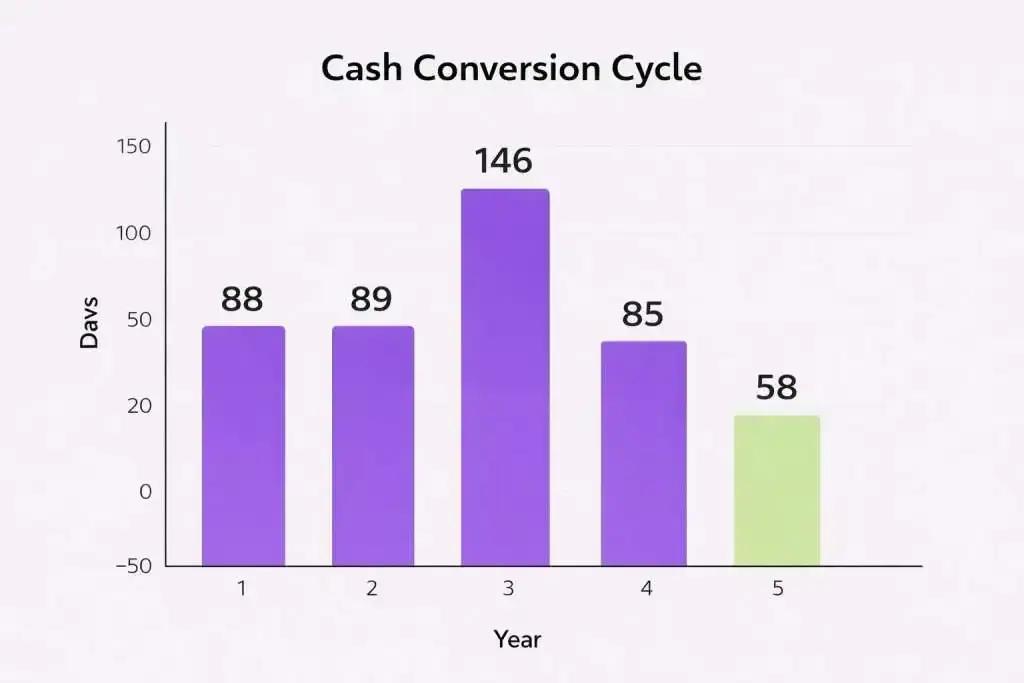
In simple terms, the cash conversion cycle measures how long it takes for a company to convert its investments in inventory and receivables back into cash. In most businesses, this cycle is relatively short. In jewellery, it is not. Because capital gets locked at multiple stages.
First, in inventory, gold needs to be purchased upfront, held in stock, and converted into finished jewellery before it can be sold. As we’ve already seen, this alone ties up a significant portion of capital.
Then comes receivables. In the wholesale segment, the company supplies jewellery to retailers, who may not always pay immediately. Credit cycles are common, which means cash inflow is delayed even after a sale is recorded.
So while revenue gets recognised, the cash doesn’t arrive at the same time. And that creates a gap. A gap between accounting profits and actual cash generation.
This is why operating cash flow can often look weak, not because the business isn’t profitable, but because the cash is still moving through the system.
It is either:
sitting in inventory
or waiting to be collected from customers
And until that cycle completes, it doesn’t show up as cash in the bank. This can be counterintuitive, especially for investors used to asset-light businesses where profits quickly translate into cash. But in jewellery, the model works differently. Growth itself demands more working capital. More sales require more inventory. More wholesale business leads to higher receivables.
So as the company expands, cash gets continuously reinvested back into the operating cycle.
And that’s the key insight. Weak operating cash flow, in isolation, is not necessarily a red flag in jewellery businesses. It is often a reflection of how the model functions, particularly for wholesalers. The real question is not whether cash flow looks weak today. It is whether the company can efficiently manage its working capital cycle as it scales.
Why Operating Cash Flow Looks Minimal Growth Consumes Cash First
By now, the pattern becomes clearer. The business is growing. Profits are increasing. But cash flow still looks underwhelming. At first glance, this can feel like a red flag. But in this case, it’s largely a reflection of how the business is evolving. Because growth, especially in a jewellery business, does not come free. It consumes cash before it generates it. There are three key forces at play here. The first is inventory build-up.
As the company scales, it needs to hold more gold not just to support existing demand, but to prepare for future growth. More designs, more stock, more variety. Every incremental expansion requires additional capital to be locked into inventory.
The second is the shift toward retail.
Unlike wholesale, retail expansion is upfront heavy. Setting up larger showrooms, improving store experience, and maintaining higher display inventory all require significant investment. The move toward a flagship store is not just a strategic shift; it is also a capital commitment.
The third is working capital for B2B clients.
The wholesale network, while powerful, operates on credit cycles. Supplying retailers often means waiting to receive payments, which stretches the cash conversion cycle further. As the network grows, so does the capital tied up in receivables.
When you combine these three, the picture becomes more intuitive.
Cash is constantly being deployed back into the business:
into inventory
into expansion
into supporting the distribution network
Which is why profits don’t immediately translate into cash. This doesn’t mean the business is weak. It means the business is reinvesting aggressively to sustain growth.
But it does introduce an important discipline for investors. Because in a model like this, one metric becomes critical inventory turnover. How quickly the company can convert its inventory back into sales will determine how efficiently it can recycle capital and improve cash flows over time.
And that’s the key insight. In high-growth jewellery businesses, cash flow often lags profit. The real signal to watch is not just earnings but how efficiently those earnings are being cycled back into the business.
Capital Efficiency: Making Heavy Capital Work Hard
At this point, a natural question emerges.
If the business requires so much capital to be locked in inventory and tied up in receivables, how efficient can it really be?
Typically, capital-heavy businesses generate lower returns.
But this is where the company begins to stand out.
Despite carrying large inventory levels, it delivers a Return on Capital Employed (ROCE) of around 21.7%, a level considered strong, especially in the jewellery industry.
At first glance, this suggests strong capital efficiency.
But there’s an important nuance that changes how this should be interpreted.
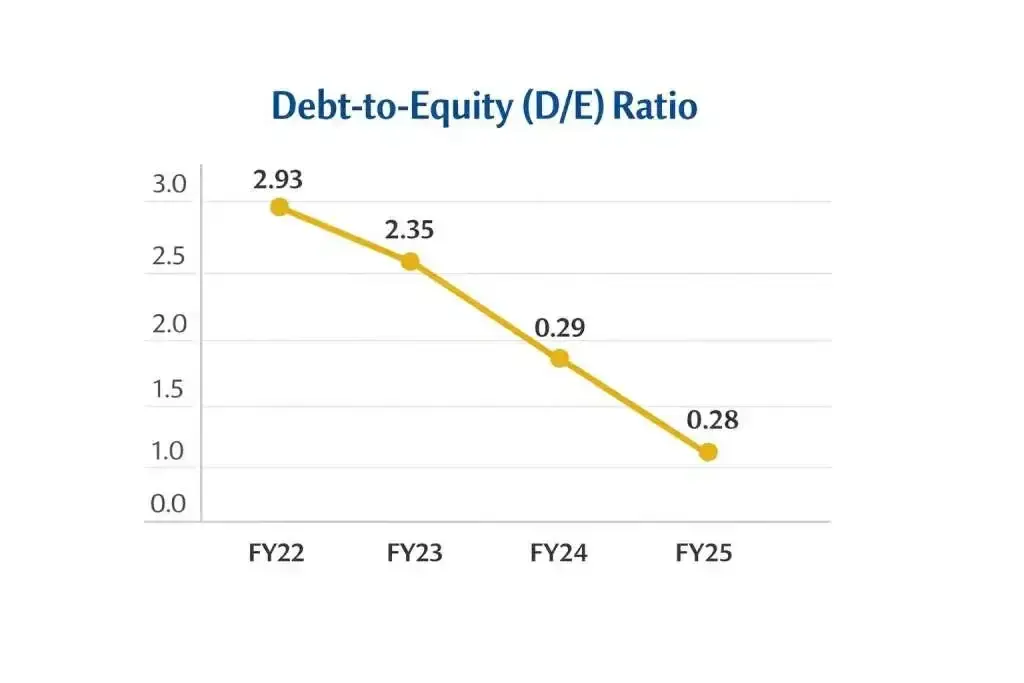
The sharp decline in leverage is not purely operational.
It is largely driven by equity infusion from the IPO.
In other words, the balance sheet didn’t improve because debt was reduced organically.
It improved because equity increased significantly.
So while leverage looks significantly lower on paper, it doesn’t yet reflect a structurally lighter business model.
And that tells you something important.
It’s not just about how much capital is used.
It’s about how efficiently that capital is rotated.
In this case, two key factors are driving that efficiency.
The first is sales velocity.
The company can move inventory relatively quickly through its system. Jewellery doesn’t sit idle for long periods. Designs are continuously flowing through the distribution network, converting stock into sales at a steady pace.
This speed of movement is critical.
Even in a capital-intensive business, faster turnover can significantly improve returns. The second factor is the wholesale distribution model.
Unlike pure retail players that depend on store footfall, the company operates with a built-in demand network. Its relationships with a large base of retailers ensure consistent order flow, which helps keep inventory moving and reduces the risk of capital getting stuck for extended periods.
In simple terms, the business is not just holding inventory. It is cycling. And that makes all the difference. Because high inventory with slow movement destroys returns, but high inventory with fast turnover can still generate strong capital efficiency.
That’s the key insight. The company’s strength doesn’t come from being asset-light. It comes from using heavy assets efficiently. As long as it maintains this balance between scale and speed, it can continue to generate healthy returns, even within the constraints of a capital-intensive industry.
Promoter Ownership Skin in the Game, but at a Cost
In businesses like this, numbers tell you how the company is performing. But ownership tells you how it is likely to behave. And here, the signal is quite clear. The promoters hold approximately 74.5% of the company, a significant stake, especially for a listed SME.
At one level, this is reassuring.
Because high promoter ownership typically means strong alignment with long-term outcomes. When promoters own a large portion of the business, their wealth is directly tied to its performance. Decisions tend to be more patient, more measured, and more focused on sustained growth rather than short-term optics.
It also brings a certain level of control.
Strategic decisions, whether it’s expanding into retail, investing in inventory, or shifting product mix, can be executed with clarity and continuity, without excessive external pressure.
In many ways, it allows the company to think long-term. But there is another side to this. High promoter holding also means a relatively small portion of shares is available in the market. And that affects liquidity.
In SME stocks, especially, a lower free float can lead to:
limited trading volumes
Higher price volatility
difficulty in entering or exiting large positions
So while the business itself may be growing steadily, the stock can behave differently, sometimes moving sharply due to the limited supply of shares rather than the underlying fundamentals.
And that’s the key insight. High promoter ownership is a double-edged signal. It indicates strong commitment and alignment on the one hand.
But on the other hand, it can reduce liquidity and increase volatility, something investors need to be mindful of, especially in smaller listed companies.
Geographic Risk Growth Still Tied to One Region
So far, the business shows strong momentum. But when you look a little deeper, one concentration risk becomes hard to ignore. A significant portion of the company’s revenue, near to 71%, still comes from Tamil Nadu. At one level, this makes sense.
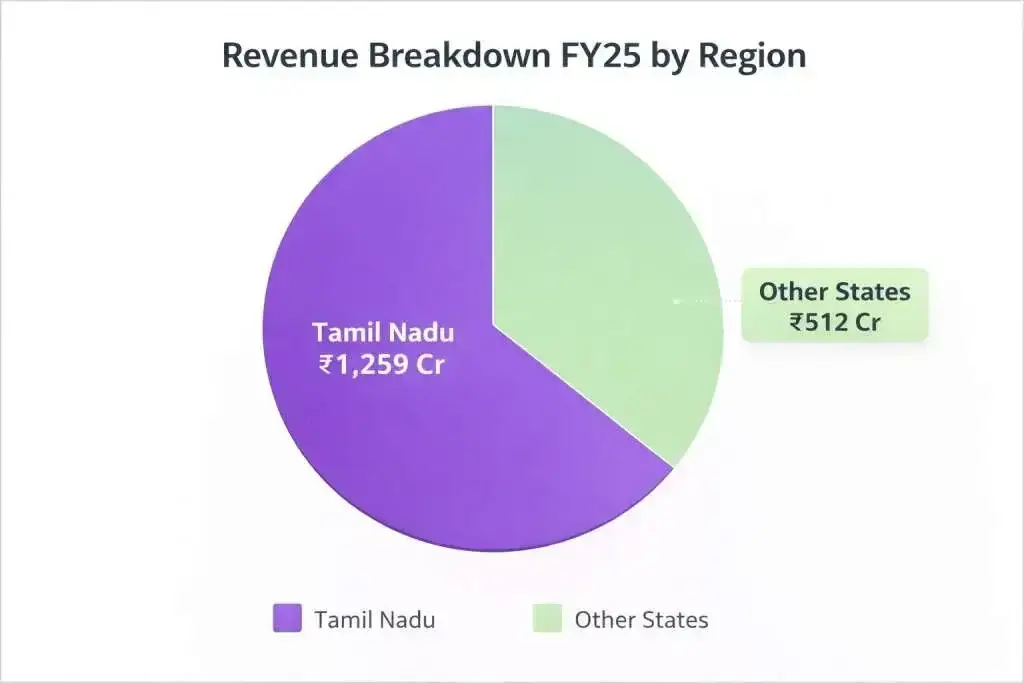
In fact, this regional focus has likely been a strength so far.
It has allowed the company to:
build strong local relationships
understand customer preferences deeply
scale efficiently within a familiar market
But as the business grows, this concentration starts to matter. Because dependence on a single region creates limits, any slowdown in regional demand, changes in local competition, or shifts in consumer behaviour can disproportionately impact overall performance.
More importantly, it caps the next phase of growth. For the company to evolve from a regional player into a national brand, it has to step beyond its current geography.
That means:
entering new states
adapting to different design preferences
building distribution networks outside South India
competing with established regional players in other markets
And this is not easy in jewellery. Because tastes are highly local.
What sells in Tamil Nadu may not work in North or West India. Design, weight preferences, and buying behaviour can vary significantly across regions.
So expansion is not just about opening new markets. It’s about relearning the customer. And that’s the key insight. So far, geography has been a strength. But going forward, diversification will become a necessity.
Because the real test of scale will not be how well the company performs in its home market, but how successfully it can replicate that success across the rest of India.
Structural Tailwinds: Why the Wind Is at the Industry’s Back
Zoom out from the company for a moment, and the bigger picture becomes clearer. Because sometimes, businesses don’t just grow on their own strength. They grow because the environment around them is pushing them forward. And in this case, the jewellery industry in India has multiple long-term tailwinds working in its favour. The first is rising disposable income.
As incomes grow, consumption patterns shift. Jewellery moves beyond necessity and becomes a form of aspiration, something people buy not just for tradition, but for lifestyle and status. This naturally expands demand over time.
The second is the expansion of the wedding market.
Weddings in India are not just events; they are large-scale economic activities. Jewellery sits at the centre of this ecosystem, often accounting for a significant portion of spending. As the scale and spending power of weddings increase, so does the demand for jewellery.
Then comes the shift toward organised retail.
For decades, the jewellery market has been dominated by small, unorganised players. But this is gradually changing. Consumers today are placing greater emphasis on:
Trust
Transparency
Hallmarking
Design consistency
And this is where organised players gain an advantage.
They are better positioned to offer standardised quality, wider design choices, and stronger brand assurance, all of which matter more as consumers become more informed.
Finally, there is gold itself. Unlike most consumer products, gold carries a dual identity. It is both:
consumption product
a store of wealth
This gives it a unique position in Indian households. People don’t just buy gold to spend. They buy it to save, to secure, and to preserve value over time. And that creates a demand base that is far more resilient than typical discretionary spending. When you put all these factors together, the picture becomes clear.
The industry is not just growing. It is being structurally supported. And that’s the key insight. In the long run, companies don’t just benefit from what they do right. They benefit from being in the right place at the right time. And for organised jewellery players, the broader industry tailwinds are steadily turning in their favour.
Key Risks Investors Must Watch Where the Story Can Break
Every strong growth story comes with its own set of vulnerabilities. And in businesses like this, risks don’t always show up in the headline numbers. They build quietly beneath the surface. The first and most obvious one is gold price volatility.
Since gold is the core raw material, sharp price movements can affect demand, inventory valuation, and margins. Rising prices can slow purchases. Falling prices can lead to inventory losses. In both cases, it introduces uncertainty into an otherwise steady business.
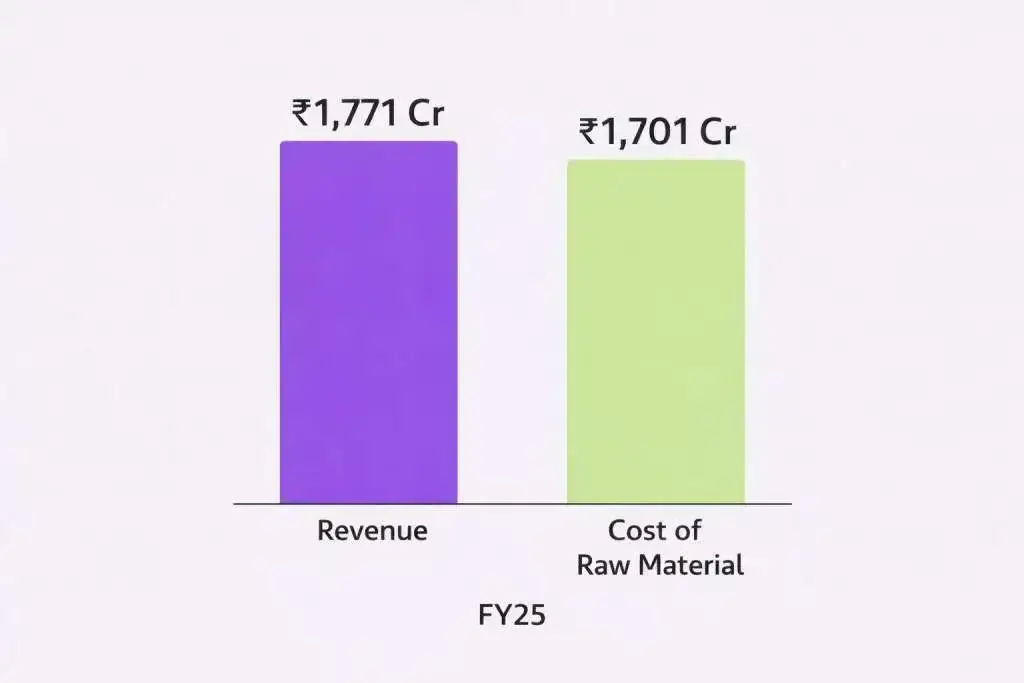
The second is working capital intensity.
As we’ve already seen, a large portion of capital is tied up in inventory and receivables. This means the business constantly needs liquidity to keep operations running smoothly. If growth accelerates too quickly, the need for working capital rises along with it, and that can put pressure on cash flows.
Then comes regional concentration.
A significant share of revenue still comes from a single geography. While this has supported growth so far, it also means the business is exposed to local demand cycles, competition, and economic conditions within that region.
Another important factor is thin operating margins.
Jewellery, especially gold-based, is inherently a low-margin business. Even small changes in costs, pricing, or product mix can have a meaningful impact on profitability. This leaves very little room for error.
And that’s what ties all these risks together. Each one may seem manageable individually. But combined, they can influence how stable or fragile the growth actually is. That’s the key insight. In businesses like this, success is not just about capturing opportunity. It’s about managing constraints.
Because over the long run, companies that navigate these risks well are the ones that turn growth into durability, and those that don’t often struggle despite strong beginnings.
Explore our Products
Research Framework

Emerging Titans
Combination of quantitative analysis, industry tailwinds, and management assessment - SPRINT investment philosophy

Tiny Titans
Heavy emphasis on scuttlebutt research, plant visits, and early on-ground signals
The Big Investor Question: What Does This Become?
At this point, the numbers, the model, and the strategy start to connect. But the real question lies ahead. Because this is no longer just about how the business has grown, it’s about what it can become. The company today sits at an interesting intersection, with a strong wholesale backbone,
an expanding retail presence, and early moves toward premiumisation through diamonds and branding. Each of these pieces works. But the future depends on how well they come together. Because scaling a wholesale business is one thing. Building a national consumer brand is another. Relationships and distribution drive one. The other is based on trust, recall, and a consistent customer experience. And that transition is where most jewellery businesses are tested. It requires:
expanding beyond regional strongholds
adapting to diverse customer preferences
Investing in brand, not just inventory
balancing growth with capital efficiency
So the real question is not about growth alone. It’s about evolution. As India’s jewellery market continues to formalise, and organised players gain share, can Khazanchi move beyond being a high-volume regional distributor and successfully transform into a trusted, nationally recognised jewellery brand? Because the answer to that question will ultimately determine whether this remains a good business or becomes a great one.
Conclusion: The Bigger Picture
Step back, and the jewellery business starts to look very different from the surface.It is not just about selling ornaments. It operates at the intersection of three powerful forces:
commodity markets, where gold prices shape economics
cultural consumption, where demand is driven by tradition and emotion
retail branding, where trust and perception define long-term value
And very few businesses manage to balance all three effectively. Because succeeding in this industry is not just about scale. It’s about control.
Control over distribution, how efficiently products reach the market
Control over design determines how well the business adapts to changing tastes
Control over customer relationships builds trust over time
These are the levers that separate average players from enduring ones. And this is where the story now stands. The company has already built scale through its wholesale engine. It is gradually strengthening its design and product mix. And it is beginning to step into the world of retail branding. But the next phase will be more demanding. Because moving from wholesale scale to brand power is not just an expansion. It’s a transformation. And how well it executes this shift will define what the business ultimately becomes. That’s the bigger picture.
“Play long-term games with long-term people.” — Naval Ravikant
If you found this breakdown useful, comment “gold” for more deep-dive analyses like this.
FAQs
How do you identify the most trusted jeweller?
+To identify the most trusted jeweller, you should not rely on opinions but on observable business signals. Trust in jewellery comes from consistency in quality, transparency, and long-term customer relationships. A trusted player is usually able to sell products at a premium while still maintaining strong demand, which indicates that customers value the brand beyond just the gold price.
In simple terms: Trust = pricing power + repeat customers + transparency
If customers repeatedly buy from the same brand for weddings and major life events, it is a strong indicator of trust.
Why do some jewellers appear cheaper than others?
+Jewellery pricing can be broken into three parts: gold price, making charges, and brand premium. Since gold prices are largely standard across the market, the difference in pricing usually comes from making charges and brand positioning.
A jeweller may appear cheaper because it operates on lower margins, has better sourcing efficiency, or does not charge a strong brand premium. On the other hand, premium jewellers charge higher prices due to better design, store experience, and brand trust.
In simple terms: Cheap = low margin or efficiency-driven
Expensive = brand + experience + trust
How do you decide which jewellery stock is better?
+There is no single “best” jewellery stock. Instead, companies should be classified based on their business model. Some are brand-driven with high margins and stable growth, others focus on aggressive retail expansion, and some operate on a distribution or wholesale model with high volumes but lower margins.
The right choice depends on what you are looking for as an investor, whether it is stability, growth, or an early-stage opportunity.
In simple terms: Brand-led = stable, high margin
Retail-led = growth + execution risk
Wholesale-led = scale, lower margin
How do you evaluate if a jewellery company can become a strong brand?
+To evaluate brand potential, you need to see whether the company is moving closer to the end customer. A strong brand is built through direct customer interaction, control over pricing, and a superior buying experience.
If a company is shifting from wholesale to retail, investing in larger stores, and introducing higher-margin products like diamonds, it indicates a transition toward brand-building. However, this transition is difficult because it requires trust, consistency, and understanding of customer preferences across regions.
In simple terms: Distribution builds scale, and Retail builds brand
Why do jewellery companies show profits but weak cash flow?
+In jewellery businesses, profits often do not convert into cash because a large amount of capital is tied up in inventory and receivables. Gold has to be purchased upfront and held as inventory, and in wholesale models, payments from customers may come with delays.
As the business grows, it requires even more inventory and working capital, which means cash keeps getting reinvested back into the business instead of appearing as free cash flow.
In simple terms, Profit is recorded when a sale happens, whereas Cash comes later
So: Growth consumes cash before generating it

High growth stock specialist, Value Educator
Shashank Mahajan is an equity research professional with over 12 years of experience in identifying high-potential SME and micro-cap stocks at an early stage. He follows a rigorous scuttlebutt research–driven approach, combining on-ground insights with deep financial analysis. Shashank specializes in uncovering under-researched and under-owned companies with strong management quality and long-term growth potential. Through disciplined research and early identification, he focuses on spotting tomorrow’s market leaders before they enter the mainstream investor radar.

Zen Technologies: Revenue Fell After a Big Win




PNG Jewellers: A 194-Year-Old Name Goes National

Explore our Products
Research Framework
Emerging Titans
Combination of quantitative analysis, industry tailwinds, and management assessment - SPRINT investment philosophy
Tiny Titans
Heavy emphasis on scuttlebutt research, plant visits, and early on-ground signals


 Orders
 Subscription
 Share with friends


Required Details
₹23999.00
(12 month subscription)
As per SEBI regulations, all users are mandated to complete the KYC that is validated for 1 year. Post payment, you will be redirected to the KYC screen


No comments yet. Be the first to comment!