
Circuit Filters Explained

It was a regular Monday at 9:20 AM. Markets had just opened, and everything looked fine. By 9:25 AM, it wasn't. Your trading app froze. Prices stopped moving. Orders remained "pending." WhatsApp groups exploded: "Bhai, NSE down hai kya?" "What's happening yaar?" "Should I sell everything?" For a first-time investor, it feels like the system has broken. Markets are supposed to be free, continuous, always moving, na? So why would they suddenly shut themselves down? Is there a panic button pressed? Did something go horribly wrong? The answer is counterintuitive.
When the market "freezes," it is not failing. Yes, it protects the system. But honestly? It's protecting YOUR money even more. That pause, which feels alarming in the moment, is actually one of the most important safety features built into Indian markets. It exists for one reason: to slow down fear before fear destroys rational decision-making.
“When the market stops, it is not a failure of the system but it is a pause between panic and regret.”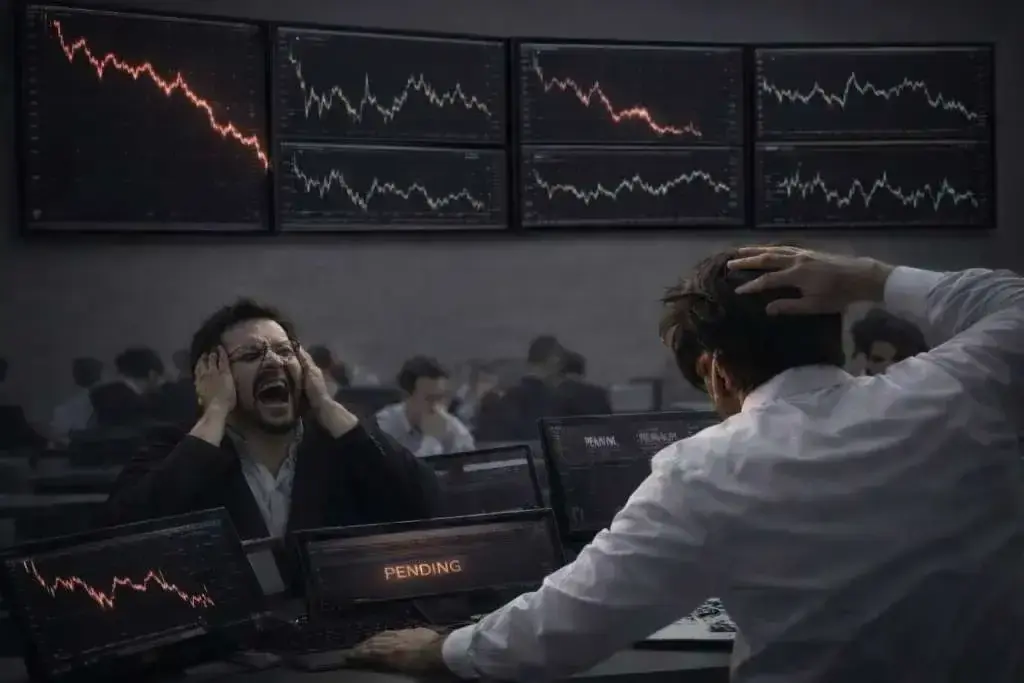
If you are completely new to investing, it helps to first understand how markets function at a basic level — you can start with A Beginner’s Guide to the Indian Stock Market.
You see, in investing, speed is not always your friend. Sometimes, the market stops so that you don't make a mistake you'll regret for years to come. And that mechanism has a name: Circuit filters.
What exactly are circuit filters?
In simple terms, circuit filters are automatic safety brakes built into the stock market. They temporarily stop trading when prices move too sharply within a short period of time. If markets fall or rise too fast beyond a predefined percentage, trading is paused. This pause is not random. The exchange has already set the rules. When those limits are hit, the system engages automatically.It's like pulling the emergency chain in a train. You're not cancelling the journey, just preventing an accident. Or a power cut during a voltage surge – inconvenient for a few minutes, but necessary to prevent bigger damage. The purpose is not to "control" the market. It is to control the speed at which fear or euphoria spreads.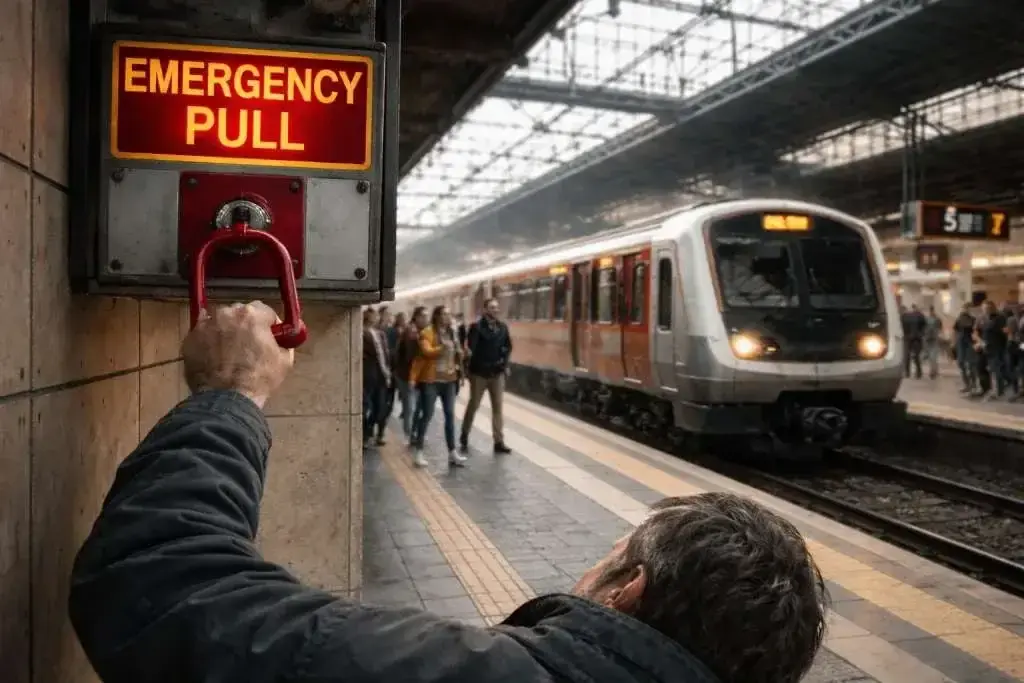
Many beginners assume that circuit filters prevent losses, protect prices from falling, or guarantee stability. They do not. Circuit filters do not eliminate risk. They do not stop a bad company from falling. What they do is far more practical: They slow down panic so that decisions are not made in seconds under emotional pressure.
In investing, losses often happen because of reaction speed, not just because of bad news. Circuit filters are designed to reduce that speed. They are not a shield against risk. They are a buffer against chaos.
Who decides when the market should stop?
The decision is not taken by a trader, a broker, or a government official at the moment. There's a regulatory body that sets all the rules, named SEBI (Securities and Exchange Board of India).They decide the percentage limits for circuit breakers and price bands for individual stocks. But SEBI doesn't monitor every tick itself. That job falls to the exchanges: NSE and BSE. They're the ones watching prices in real time and triggering halts when limits are crossed.
Why This Matters
It is important to understand what does not happen. No one manually "decides" to stop the market. No discretionary intervention is made in the heat of volatility. No special treatment is given to particular stocks or investors. The rules are pre-decided, publicly disclosed, applied uniformly, and automatically executed. This is what makes the system credible. Trading doesn't stop because someone "feels" the market is falling too fast. It stops because hard numbers or actual percentages have been breached.
The bottom line is that the market doesn't halt simply because the regulator got scared. It halts because the rule said so.
How Circuit Filters Actually Work in India?
Circuit filters in India operate mainly at two levels. Both are rule-based and automatically triggered.
Market-Wide Circuit Limits (Index-Based)
Market-wide circuits activate when the Nifty 50 or the Sensex moves too fast in either direction. SEBI has three levels: hit 10%, 15%, or 20%, and boom — halt. Applies to both crashes and rallies.Since circuit breakers are based on index movement, you should clearly understand what these indices actually represent — read Power Sector Stocks in India 2026: List by Value Chain
Here's what happens at each level. If the index moves 10%, trading gets halted temporarily. How long? That depends on what time it happened. At 15%, there's another halt, and this one's usually longer than the first. But if we hit 20%? That's it. Trading stops for the entire day. The market shuts down completely.
Time-Based Rules (Important for Beginners)
Now here's something many beginners don't realise — the timing of the halt matters just as much as the trigger itself. SEBI doesn't treat a 10 AM crash the same way as a 2:50 PM crash. The time period of the halt depends on when it happens during the trading day.If the circuit gets triggered before 1:00 PM, you're looking at a 45-minute halt for both 10% and 15% moves. Hit 20%? The market will be closed. Between 1:00 PM and 2:30 PM, a 10% move gets you a 15-minute pause, while 15% still means 45 minutes. And again, 20% shuts everything down. But if it happens after 2:30 PM — close to market closing time — there's no halt at 10%. At 15%, just a brief pause. At 20%, trading stops for the day as usual.
Makes sense when you think about it. If panic hits at 10 AM, there's the whole day ahead, so SEBI gives a longer break. But if it's already 2:45 PM? Only 15 minutes of trading left anyway, so a shorter halt does the job.
Stock-Specific Circuit Limits
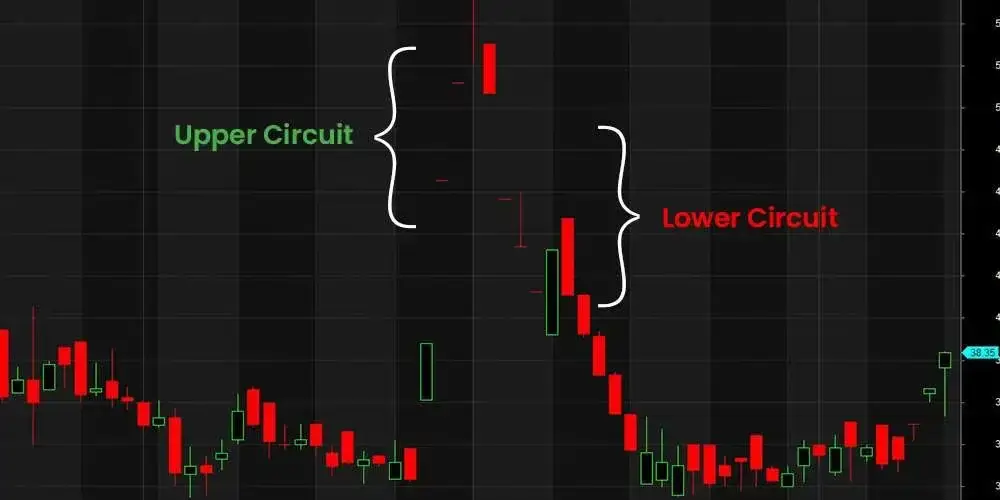
Apart from index-level halts, individual stocks also have their own daily price bands. These are typically set at 2%, 5%, 10%, or 20%. What this means is simple — if a stock moves up or down by its designated limit, trading in that particular stock stops for the day. The stock gets frozen. You can't buy it, you can't sell it. It stays locked until the next trading session, unless the exchange decides to revise the band, which is rare but can happen.
Ever wondered why small and mid-cap stocks have stricter bands?
Smaller companies usually have lower liquidity, concentrated shareholding, and are more prone to price manipulation. Because of this, they are often placed in 2% or 5% bands. This reduces artificial price spikes, "operator-driven" momentum traps, and sudden collapses in thinly traded counters.
How does this protect retail investors?
Circuit filters reduce two major risks:
- Operator-Driven Spikes: In illiquid stocks, a few large orders can push prices sharply. Tight bands prevent extreme intraday manipulation.
- Illiquid Panic Selling: During fear-driven events, everyone may try to sell at once. Price bands prevent total price collapse within minutes.
Take Vakrangee Limited Shares as an Example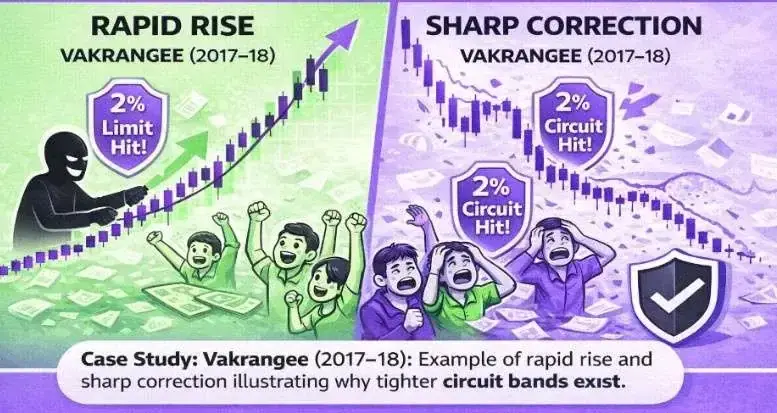
Therefore, market-wide circuits protect the entire system. Stock-specific circuits protect individual counters. Together, they do not eliminate volatility but regulate the speed of volatility.
The Psychology Behind Circuit Filters: Why do we need them?
Financial markets are not driven by numbers alone. They are driven by human behaviour. Behavioural finance has repeatedly shown that investors do not react purely to data, but they react to emotion, especially fear, and fear spreads faster than information.Managing emotions during volatility is a critical investing skill, which is explained in detail in Defence Stocks in India 2026: List by Segment and Order Book
When prices start falling sharply, investors assume someone else knows something. Social media amplifies uncertainty. News headlines become more dramatic. Selling accelerates not because fundamentals changed, but because others are selling. This is called herd behaviour.
People do not want to be the last person holding a falling stock. So they sell because others are selling. The original reason becomes secondary. Momentum replaces analysis.
A useful way to frame it: "Markets fall not because of bad news alone, but because of how fast fear travels." Speed magnifies emotion, and emotion in turn distorts judgment.
“The investor’s chief problem and even his worst enemy is likely to be himself.” - Ben Graham
Why Circuit Filters Exist at a Psychological Level
Circuit filters acknowledge a simple truth: Humans under stress do not make optimal financial decisions.
When trading is halted, the panic loop is interrupted. Information has time to circulate. Institutional desks reassess risk. Retail investors get breathing space. It becomes a cooling-off period for emotions.
The goal is not to prevent markets from falling. The goal is to prevent markets from collapsing purely because panic outpaced rational thinking.
In essence, circuit filters allow logic to catch up with fear, and in volatile markets, that pause can be the difference between disciplined investing and irreversible mistakes.
Real-World Example – March 2020 – The COVID Crash
March 2020 was one of the most volatile periods in Indian market history. As COVID-19 cases began spreading globally, uncertainty escalated rapidly. Lockdowns were announced. Economic activity halted. No one knew how deep or how long the crisis would last.
What Happened That Day?
On March 13, 2020, the Nifty 50 and BSE Sensex fell more than 10% shortly after market open. A market-wide lower circuit was triggered. Trading was halted temporarily. It was one of the rare instances in Indian history where this mechanism was activated. The halt did not mean the crisis disappeared. It meant the market paused before continuing price discovery.
What did retail investors feel?
For first-time investors, it was overwhelming. Shock at seeing double-digit declines. Fear that the system was collapsing. Confusion about whether to exit immediately. News channels are amplifying worst-case scenarios. It felt like the financial world was breaking.What Circuit filters achieved?
The trading halt did three important things:
- Prevented complete disorder: Without a pause, algorithmic selling and panic orders could have intensified the fall dramatically within minutes.
- Allowed information to circulate: Investors had time to understand lockdown measures, global central bank responses, and fiscal policy announcements.
- Spread price discovery over days instead of minutes: The market eventually fell further in subsequent sessions — but in a structured, orderly manner.
The circuit did not stop the volatility. It slowed its speed.
What happened after?
In hindsight, something remarkable occurred. After the March 2020 bottom, Indian markets began recovering within weeks. Liquidity measures by global central banks stabilized sentiment. By late 2020 and 2021, indices had not only recovered but moved to new highs. Investors who exited in panic locked in permanent losses. Investors who stayed disciplined participated in the recovery.
Events like March 2020 are classic examples of how bear markets behave differently from normal phases — see Bull Market vs Bear Market – How Investors Should React.
“The real key to making money in stocks is not to get scared out of them.” - Peter Lynch
The Core Lesson
Circuit filters did not destroy wealth. Panic selling did. The market halt was not the cause of losses. Emotional decisions made during extreme uncertainty were. March 2020 demonstrated a critical principle: Markets can fall sharply. But disorderly collapse is far more dangerous than structured decline. Circuit filters exist to prevent the former, not to eliminate the latter.
Why Are Circuit Filters Actually Good for Long-Term Investors?
At first glance, a market halt feels restrictive. It feels like control. But for long-term investors, circuit filters are often protective rather than limiting. They are designed to stabilize price discovery — not to interfere with investment strategy.
“The stock market is a device for transferring money from the impatient to the patient.” - Warren Buffett
How Circuit Filters Actually Help Long-Term Investors
They Stop You From Selling at Terrible Prices: When panic hits, nobody wants to buy. The gap between what buyers offer and sellers want becomes massive. Orders execute at distressed prices. A trading halt interrupts that spiral. It reduces the probability that investors sell purely because prices are collapsing rapidly within seconds. It does not guarantee fair value. But it reduces extreme dislocation.
They Give You Time to Reassess Fundamentals: When volatility spikes, the critical question is: Has the business changed, or has sentiment changed? Circuit filters create space to answer that question. Earnings power does not change in five minutes. Competitive advantage does not disappear in ten minutes. Balance sheets do not collapse intraday. The pause allows logic to re-enter the process.
Of course, not every investor approaches the market the same way. How you experience a circuit halt depends entirely on your investing style.
A Contrast: Two Types of Investors
The short-term trader watches price ticks constantly, reacts to every percentage move, feels urgency during volatility, and interprets a halt as a threat. For this investor, a circuit is frustrating.
The long-term investor focuses on business quality, thinks in years not hours, evaluates intrinsic value instead of intraday volatility, and uses declines to reassess rather than panic. For this investor, a circuit is neutral — sometimes even helpful. Because investment theses are not built on five-minute price movements.
If circuit filters worry you deeply, you may be watching the market too closely. Long-term investing is about business fundamentals, capital allocation, and earnings growth. Circuit filters only affect the speed of trading — not the long-term value of a company. They are designed to reduce emotional overreaction. And for disciplined investors, reduced emotional speed is rarely a disadvantage.
Common Myths Indian Investors Believe About Circuits
A lot of the panic is just because people believe the wrong things about circuits. Let me tackle three common myths here.
“Markets are like women. Always commanding, mysterious, unpredictable, and volatile.” - Rakesh Jhunjhunwala
Myth 1: If a stock or the market hits a circuit, something is seriously wrong
A circuit activates when prices move beyond a predefined percentage in a short time. It does not mean the company has collapsed, fraud has been discovered, or the economy has permanently broken. It simply means price movement exceeded a preset limit. In fact, during events like March 2020, circuits were triggered due to uncertainty and global panic — not because every company suddenly became worthless. A falling stock price doesn't mean the company is going bankrupt.
Myth 2: Big players manipulate circuits
No institution, trader, or broker can "decide" to trigger a circuit. The system monitors price movement continuously. The moment that percentage is hit, the system freezes trading on its own. Nobody can override it. Nobody gets special treatment. Large institutional investors operate under the same rules. When a market-wide circuit hits, everyone stops trading — retail, domestic institutions, foreign investors alike. Circuits are not a tool for manipulation. They are a boundary that even large players cannot cross.
Myth 3: If my stock hits a lower circuit, I’ll lose all my money
A lower circuit means the stock has fallen to its daily price limit, and trading for that session is restricted or halted. That doesn't mean the business is dead. What matters is — will it keep making money? Is its balance sheet still strong? Does your original reason for buying still make sense? If yes to all three, then a price drop is just noise — not a real loss. Circuit filters do not destroy wealth. Poor business quality and emotional reactions do. Understanding this distinction reduces unnecessary fear and improves decision-making during volatile periods.
What You Should (and Shouldn’t) Do When a Circuit Hits?
When a circuit filter is triggered, the most important variable is not the market. It is your response. Volatility compresses time. Decisions feel urgent. That urgency is often artificial. Here is a disciplined framework.
What Not to Do?
Don't Hit the Panic Button Without Knowing Why: Just because a stock crashed doesn't mean it's dead. Before you sell, figure out what actually happened. Did the company cut its earnings forecast? Has leverage increased materially? Has regulatory action been taken? If you do not know the reason, you are reacting to price, not information. Selling without clarity converts temporary volatility into permanent loss.
Don't Just Hit 'Buy at Market Price: When the market's going crazy, there aren't enough buyers and sellers. The gap between buying and selling prices becomes huge. Market orders can execute at unfavourable prices. If you must transact, understand the order type. Do not allow urgency to override price discipline.
What To Do Instead?
Go to the Source: Look at what NSE or BSE actually published. Check what the company filed officially. Don't just trust that screenshot someone forwarded in your WhatsApp group. Price moves faster than verified information. Your job is to catch up with facts — not rumours.
Check Whether Fundamentals Have Changed: Ask structured questions: Has revenue visibility deteriorated? Has the balance sheet strength weakened? Has the competitive position changed? If the answer is "no," then the move may be sentiment-driven.
Revisit Your Original Investment Thesis: Go back to why you bought the stock. Was it long-term earnings growth? Was it valuation comfort? Was it a structural industry advantage? If the core thesis remains intact, volatility alone does not invalidate it.
Circuit filters create a pause. That pause is your opportunity to think. Most investment mistakes occur not because markets move, but because investors react without structure. When a circuit hits, the objective is not speed. It is clarity. Respond to information, not to movement.
A Simple Mental Framework for Retail Investors
When a circuit filter is triggered, it feels dramatic. Prices freeze. Orders pause. News spreads faster than verified information. For beginner investors, this feels like chaos. Professional investors interpret it differently. They treat it as a structure.
How Professionals View Circuit Filters
Institutional investors do not see circuit filters as market failure. They see them as part of the system's architecture. They view circuits as market stability tools designed to prevent disorderly price discovery, liquidity management mechanisms that temporarily contain forced flows, and volatility dampeners during extreme information shocks.
Most importantly, institutions build risk frameworks assuming that circuits can occur during stress events, liquidity can temporarily disappear, and bid-ask spreads can widen sharply. Position sizing, leverage, and hedging strategies are structured with this in mind. In other words, they plan for temporary illiquidity in advance.
Professional investors do not primarily fear volatility. They fear being trapped without liquidity. And circuit filters are part of how liquidity stress is managed at the system level.
How Retail Investors Should Think
Don't just think "Should I sell right now?" Ask better questions. Did the company's core business get weaker? Is it going to make less money five years from now? Or is this simply fear moving faster than information?
If nothing fundamental changed, what you're seeing is fear — not facts. Just temporary chaos, not permanent damage. Not permanent value destruction.
In such situations, circuit filters are noise, not signals. They are pauses inserted into a fast-moving emotional environment. The market has slowed down. Use that time deliberately.
Explore our Products
Research Framework

Emerging Titans
Combination of quantitative analysis, industry tailwinds, and management assessment - SPRINT investment philosophy

Tiny Titans
Heavy emphasis on scuttlebutt research, plant visits, and early on-ground signals
Conclusion: The Market Didn’t Freeze — It Protected You
Before you react to a market freeze, understand what is actually happening. Circuit filters are not signals to rush, panic, or guess. They are reminders that successful investing is built on patience, structure, clear thinking and not speed.
Ultimately, how you react during market stress depends on understanding your own risk tolerance — read How to Set Clear Financial Goals Before Buying Your First Stock
Understanding how circuit filters operate helps you to view them as protective pauses rather than as obstacles. They allow you to analyse your investing thesis, reevaluate the fundamentals, and react to facts rather than fear.
Markets will always move and there will always be volatility. However, these unexpected pauses stop being alarming and begin to serve as chances for critical thinking when you approach investment with discipline and a long-term perspective.
Wealth is rarely destroyed by volatility itself. It is usually damaged by emotional decisions taken in moments of uncertainty. Circuit filters exist to slow that moment down and give rational judgment a chance to catch up.
“The big money is not in the buying and selling, but in the waiting.” — Charlie Munger
If this article helped you understand why markets sometimes freeze and how circuit filters actually protect investors, comment “DISCIPLINE” below. Share it with someone who thinks a trading halt means something has gone wrong.
Because in investing, the market doesn’t pause to scare you — it pauses to help you think.
FAQs
How will I know that a circuit filter has been triggered?
+You will usually notice a few clear signs. Prices on your trading app stop updating, new orders remain unexecuted or stay pending, and the exchange displays a trading halt notification. Additionally, the majority of brokers provide signals like "Stock in upper/lower circuit" or "Trading paused due to market-wide circuit." Therefore, your application has not crashed if your screen appears to be frozen. It merely indicates that a circuit filter has been activated, causing the exchange to temporarily halt trade.
What happens to my pending orders when a circuit hits?
+Your pending orders do not disappear when a circuit filter is triggered. They remain in the system unless you choose to cancel them yourself. Execution will resume only after trading starts again. If the stock continues to remain locked in upper or lower circuit, the orders may stay unexecuted for the rest of the trading day. This is why placing orders without understanding liquidity conditions can be risky during highly volatile phases.
Can a stock stay in a lower circuit for many days continuously?
+Why can’t exchanges just widen the limits instead of stopping trading?
+Because widening limits during panic can actually increase risk instead of reducing it. Larger price ranges may draw aggressive speculative trading when emotions are high, algorithms may increase volatility, and individual investors may be trapped in extremely rapid price movements. The market is forced to slow down and progressively reevaluate information via narrow restrictions and periodic halts, which helps minimize abrupt price collapses.

High growth stock specialist, Value Educator
Shashank Mahajan is an equity research professional with over 12 years of experience in identifying high-potential SME and micro-cap stocks at an early stage. He follows a rigorous scuttlebutt research–driven approach, combining on-ground insights with deep financial analysis. Shashank specializes in uncovering under-researched and under-owned companies with strong management quality and long-term growth potential. Through disciplined research and early identification, he focuses on spotting tomorrow’s market leaders before they enter the mainstream investor radar.

Glenmark: The USD 700 Mn Cancer Deal and Its Brands

Pharma Stocks in India 2026: Generics, APIs and CDMOs

Granules India: From Paracetamol to a 65% Gross Margin

Natco Pharma: After Revlimid, 29 Patent Challenges

Shilpa Medicare: Cancer APIs, Films and Biosimilars

Alembic Pharma: US Plants Pay Back, Margin Hits 22.2%
Explore our Products
Research Framework
Emerging Titans
Combination of quantitative analysis, industry tailwinds, and management assessment - SPRINT investment philosophy
Tiny Titans
Heavy emphasis on scuttlebutt research, plant visits, and early on-ground signals



Modern Warfare to Multibaggers
Key Trends. Strategic Shifts. Opportunities Ahead.
Today at 7:00 PM IST. Room opens 30 minutes before.
Don't Miss This Exclusive Webinar!
Join Value Educator to decode the key trends shaping India's defence sector and learn how to identify tomorrow's potential leaders in the space.
- In-depth research on India's defence sector
- Live Q&A session
- Actionable takeaways for long-term investors

 Orders
 Subscription
 Share with friends


Required Details
₹23999.00
(12 month subscription)
As per SEBI regulations, all users are mandated to complete the KYC that is validated for 1 year. Post payment, you will be redirected to the KYC screen


No comments yet. Be the first to comment!