
How to Invest in G-Secs and Bonds

Everyone wants to double their money, but no one talks about the fear of losing half of it. We chase the next “multibagger” stock, track hot tips, and celebrate short-term gains, while quietly ignoring a huge asset class that is designed to do one thing exceptionally well, protect what we already have. Bonds rarely make headlines, but they play a crucial role in helping investors sleep peacefully at night.
Now imagine lending money to a borrower who cannot default because they run the country, or to a well-established company that forms the backbone of the economy. You are not speculating on future prices or betting on market mood swings. You are entering into a clear agreement where returns, timelines, and repayments are defined from day one. This is not about excitement or bragging rights. It is about stability, predictability, and protecting your hard-earned capital so that wealth building becomes a long-term process, not a stressful gamble.
What Are Bonds and G-Secs? (The Simple Truth)
A bond is simply a loan that you provide to a large organization instead of a bank. When you purchase a bond, you become the lender, and the entity you invest in becomes the borrower of the bond.
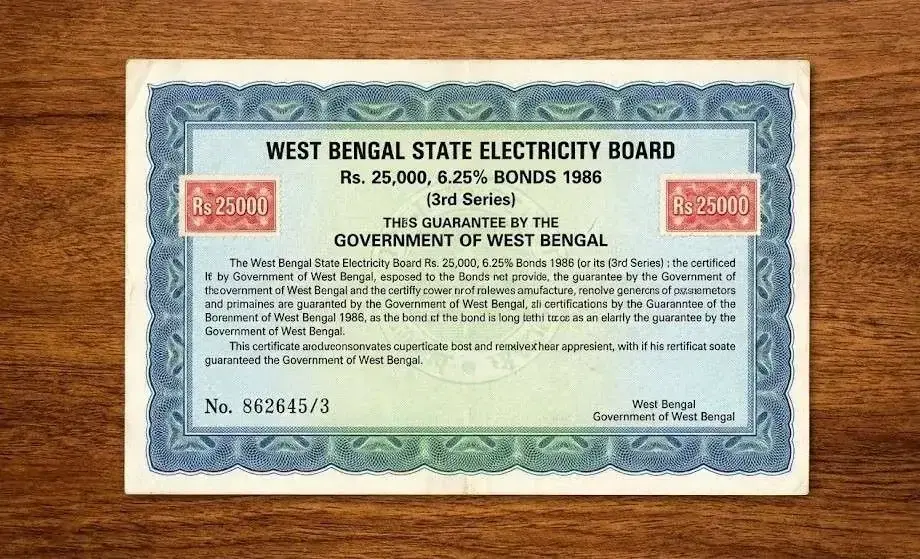
There are primarily two types: "Corporate Bonds," where you lend to companies like Adani or Reliance to fund their business, and "Government Bonds," where you lend to the government of a country. In exchange for your money, they give you a legal contract promising to pay you a fixed interest rate regularly and return your entire principal amount on a specific future date.
Government Securities, or "G-Secs," are the safest version of this loan because your borrower is the Government of the country. Unlike a company that can go bankrupt if its products don't sell, the government has the unique power to collect taxes and print money to repay its debts. This creates what we call a "Sovereign Guarantee", the highest level of financial safety available in the country. When you buy a G-Sec, you aren't guessing if the borrower will survive; you are securing your future with the backing of the entire nation.
The scale of this safety is massive; as of late 2024, the Indian government bond market was valued at over ₹105 trillion. For regular investors, these bonds have recently offered reliable returns of around 6.7% to 6.8% on 10-year loans. Accessibility has also exploded, with the RBI's "Retail Direct" platform now allowing common citizens to open accounts directly. Over 3 lakh Indians have already signed up to lend directly to the government, bypassing middlemen entirely.
You now know that bonds are not mysterious products; they are simple loans with legal promises. But not all borrowers are equal, and choosing the wrong one can change everything. Next, let’s explore the bond market menu and see who deserves your trust.
Read more: What are Sovereign Gold Bonds (SGBs)? A Smarter Way to Own Gold
The Bond Market Menu: Choosing Your Borrower
Now that you understand the basics, it is time to look at the menu. Not all bonds are the same; some are for short-term savings, while others are for long-term monthly income. To choose the right safety net for your money, you need to know exactly who you are lending to and how they will pay you back. Let’s break down the different types available in India to find the perfect fit for you.

1. Corporate Bonds (High Yield, Moderate Risk): When you buy a Corporate Bond, you are acting like a bank for private companies like Tata, Reliance, or HDFC. They borrow your money to expand their business, and because they carry a higher risk than the government, they must pay you higher interest to attract you.
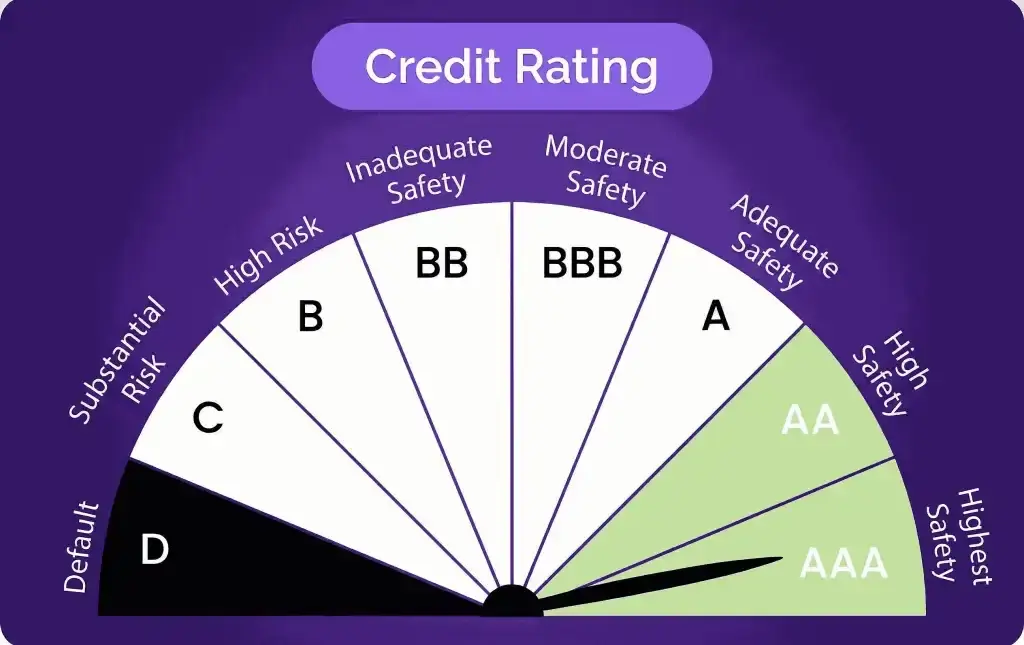
To stay safe, you don't need to analyze balance sheets; you simply look at the "Credit Rating" given by agencies like CRISIL or ICRA. A "AAA" rating is the gold standard, offering near-perfect safety, while lower ratings offer higher returns but come with the risk that the company might struggle to pay you back.
2. G-Secs: Dated Securities (The Monthly Salary): If you want to create your own pension, this is the tool to use. These are long-term loans where you give money to the Central Government for anywhere from 5 to 40 years. In exchange, they treat you like an employee: they pay you a fixed salary (interest) every six months, without fail.
This is exactly why retirees and cautious parents love them. It doesn't matter if the stock market crashes tomorrow; your interest payment arrives on schedule. You lock in your rate today, sit back, and get your full principal back when the tenure ends.
3. G-Secs: Treasury Bills (The Short-Term Savings): Treasury Bills, or "T-Bills," are the government's way of borrowing for the short term—less than a year. They are a bit unique because they don't pay regular interest. Instead, they work on a simple discount logic.
Imagine buying a ₹100 note for just ₹98. You pay ₹98 today, wait for 91 days, and the government gives you back the full ₹100. That ₹2 difference is your profit. It is the perfect place to park emergency cash that you might need soon. It beats leaving money idle in a savings account, and unlike a Fixed Deposit, you don't have to lock it away for years.
4. State Development Loans (The Hidden Gem): Most people only look at Central Government bonds, but State Governments (like Maharashtra or Tamil Nadu) also issue bonds called State Development Loans (SDLs). These are practically just as safe because they are managed by the RBI and carry a Sovereign Guarantee, meaning a state cannot simply "default" on you.
The secret advantage is that SDLs often offer slightly higher interest rates than Central Government bonds to attract investors. They are an excellent way to squeeze out a little extra return while keeping the same supreme safety of a government-backed promise.
Read more: Portfolio Rebalancing – Why and When You Should Adjust Your Portfolio
You’ve seen that bonds serve different purposes: income, parking cash, or long-term safety. But understanding options is not enough; real safety is tested only when things go wrong. Let’s compare how corporate bonds and G-Secs behave during financial stress.
The Safety Test: Corporate Bonds vs Government Bonds
To understand safety, we must look at what happens when things go wrong. A few years ago, many Indian investors poured money into "AAA-rated" bonds from massive companies like IL&FS and DHFL, chasing slightly higher interest rates. On paper, these companies looked very strong and trustworthy.
But when their businesses faced a cash crunch, they defaulted, and thousands of retail investors saw their "safe" savings get stuck or wiped out. This proves a harsh reality: a corporate bond is only as safe as the company’s ability to sell its products. If the business fails, your money can disappear with it.
Now, contrast this with Government Securities (G-Secs) during the exact same period. While the corporate bond market was panicking and freezing up, the Government of India continued to pay every single rupee of interest to its lenders on time. Even during the peak of the COVID-19 crisis, when the economy halted, G-Sec investors didn't lose a night of sleep.
Why? Because the government cannot "go out of business." They have the unique power to collect taxes and print money to honor their debts, providing a safety net that no private company can match.
The lesson from these real-world events is simple: never risk your life savings just to earn an extra 1% or 2% in returns. Corporate bonds have their place for investors who can handle some risk, but they are not a replacement for guaranteed safety. G-Secs might appear boring because they offer moderate returns, but they offer the one thing money can't buy: certainty.
In the world of safe investing, the "Return OF Capital" (getting your money back) is always more important than the "Return ON Capital" (the interest you earn).
The difference is now clear: companies can fail, governments do not disappear. This is why safety investing is about discipline, not excitement. Now let’s put this wisdom into a practical checklist you can use before investing even one rupee.
The 5-Point Safety Checklist: Look Before You Leap
Before you click "Buy" on any bond, you need to run it through a strict mental filter. Just like you wouldn't buy a car without checking the engine, you shouldn't lend your money without checking the terms. Use these five simple pointers to ensure the bond fits your personal risk profile and financial goals.
1. The "Who" Test (Borrower Quality): The first question is always: Who am I lending to? If it is the Government of India (G-Sec), your safety score is 100/100 because they have a Sovereign Guarantee. If it is a company, you must check their "Credit Rating" given by agencies like CRISIL or ICRA. Always look for "AAA" or "AA+" ratings. If a company has a low rating (like "B" or "C") but offers you a high interest rate, run the other way. They are paying you more because they are risky.
2. The Time Match (Tenure vs. Goal): Never buy a bond just because the interest rate looks good; buy it because the timeline matches your life. If you need money for your child's school fees in 3 years, do not lock it into a 10-year G-Sec. While you can sell bonds early, market prices fluctuate, and you might be forced to sell at a loss if interest rates have changed. Always match the bond's maturity date to when you actually need the cash back.
3. The "Real" Return (Post-Tax Income): Don't be fooled by the headline interest rate. If a Corporate Bond offers 8% and a Tax-Free Bond offers 6%, the 8% might actually be lower after you pay taxes. Interest from most bonds and G-Secs is added to your income and taxed at your slab rate (which could be 30%). Always calculate what you will actually keep in your pocket after the taxman takes his share. For high earners, a lower interest rate that is tax-efficient often beats a high taxable rate.
4. The Emergency Exit (Liquidity): Ask yourself: If I need this money tomorrow, can I get it out? Government bonds (G-Secs) are generally easy to sell because millions of people trade them. However, some Corporate Bonds are "illiquid," meaning there might be no buyers when you want to sell. If you are unsure about your future cash needs, stick to G-Secs or T-Bills, or better yet, use a Debt Mutual Fund where the fund manager guarantees you can withdraw your money within days.
5. The Inflation Reality Check: Your investment must grow faster than the price of milk and petrol. If a bond pays you 6% interest but inflation is running at 7%, you are technically becoming poorer every year in terms of purchasing power. While G-Secs offer safety, ensure the interest rate provides a "real positive return" over inflation. If safety is your only goal, this matters less, but if wealth growth is the goal, ensure the bond beats inflation by at least 1-2%
Read: I have rps 50,000 to invest. How to build a diversified portfolio
You now have a filter that protects you from bad decisions and emotional mistakes. But knowledge without execution creates zero results. Let’s move from theory to action and see exactly how you can invest in bonds today.
How to Invest in Bonds (The Action Plan)
Gone are the days when you had to visit a bank branch or fill out endless paperwork to lend money to the government. Today, investing in G-Secs is entirely digital, paperless, and can be done from your smartphone in minutes. Whether you are a do-it-yourself investor or someone who prefers expert help, there is a simple path for you. Here are the four best ways to buy safety in India.
Method 1: The Direct Path (RBI Retail Direct)
This is the "official" VIP route opened by the Reserve Bank of India for common citizens. It allows you to open a specialized "Retail Direct Gilt Account" (RDG) directly with the RBI, free of charge. Think of it as bypassing all middlemen and shaking hands directly with the government. You simply register on their website using your PAN and bank details, and you can bid for new bond issues every week without paying any brokerage fees.
For example, if the government announces a new 10-year bond auction on a Friday, you can log in to the RBI Retail Direct portal, place a bid for ₹10,000, and the bonds will be credited to your account. This is the best method for long-term investors who want to buy and hold until maturity, as it eliminates intermediary costs and gives you the highest level of direct safety.
Method 2: The "Stock Market" Shortcut (Zerodha, Groww, Upstox)
If you already trade stocks, this is your path of least resistance. You don’t need to open a new account or fill out fresh KYC forms. Modern brokers have integrated government bonds directly into their apps, allowing you to buy a G-Sec exactly like you would buy a share of Infosys or Tata Motors.
It is incredibly convenient for managing "lazy cash." Let’s say you have ₹20,000 sitting idle in your trading account. Instead of letting it sleep there earning nothing, you can simply search for "G-SEC" or a specific ticker (like "718GS2033") in your app. With a few clicks, you can park that money in a Treasury Bill (T-Bill) for 91 days. It stays safe, earns better returns than a savings account, and remains visible right next to your stock portfolio.
Method 3: The "Autopilot" Mode (Gilt Mutual Funds)
If the idea of tracking bond auctions or maturity dates sounds like a headache, let an expert handle it. "Gilt Funds" are mutual funds where a professional manager does all the heavy lifting: buying, selling, and managing a portfolio of government bonds on your behalf.
This is the most accessible method for small investors because it is the only one that allows SIPs (Systematic Investment Plans). You can start lending to the government with as little as ₹500 a month. For example, schemes like the SBI Magnum Gilt Fund or ICICI Prudential Gilt Fund give you a tiny slice of a massive bond portfolio. While you pay a small management fee, you gain high flexibility: unlike individual bonds, you can redeem your units and get your money back into your bank account within 24–48 hours.
Method 4: The Hybrid Solution (G-Sec ETFs)
If you are comfortable using a stock trading app, this might be your favorite option. A G-Sec ETF (Exchange Traded Fund) mixes the DNA of a bond with the speed of a stock. It is a basket of government securities that is listed on the stock exchange, meaning its price changes live on your screen, second by second.
Unlike a mutual fund where you get the price at the end of the day, here you can buy or sell instantly during market hours. It offers total transparency and usually comes with lower fees than mutual funds. Popular examples in India include the Nippon India Nifty 10 yr G-Sec ETF or the Bharat Bond ETF series. You simply buy one unit like you would buy a share of Reliance, and just like that, you own a piece of the government’s debt without any paperwork or lock-in periods.

Read more: How to start Investing in Stock Market with just ₹1,000
Explore our Products
Research Framework

Emerging Titans
Combination of quantitative analysis, industry tailwinds, and management assessment - SPRINT investment philosophy

Tiny Titans
Heavy emphasis on scuttlebutt research, plant visits, and early on-ground signals
Conclusion:
We have traveled from the fear of losing money to the confidence of lending directly to the nation. You now understand that G-Secs are not just financial instruments; they are contracts of trust with the Government of India. You have seen the menu, compared the options, and realized that "boring" investments are often the most powerful tools for long-term survival. Safety is no longer a guess for you; it is a clear, actionable choice. You now possess the knowledge to build a fortress around your wealth, ensuring that no matter how volatile the stock market gets, your hard-earned capital remains secure and steady.
Now, it is time to stop overthinking and start acting. Wealth is not built by reading articles alone; it is built by taking small, consistent steps today. Do not let analysis paralysis hold you back from securing your financial future. If this guide helped you find clarity, please like this content, subscribe for more honest financial truths, and share it with someone who needs to protect their money. To prove you are ready to take action and stop procrastinating, comment the word "SECURE" below, and let’s build a community that values peace of mind over panic.
FAQs ( Frequently Asked Questions )
Are G-Secs completely risk-free?
+G-Secs have zero default risk because they are backed by the Government of India, which can tax and print money to repay debt. However, they are not free from price risk if sold before maturity. If you hold them till maturity, you will receive full principal and interest as promised.
What is the minimum amount needed to invest in G-Secs?
+You can invest in G-Secs with as little as ₹10,000 through RBI Retail Direct or even lower via ETFs and mutual funds. This makes them accessible to small investors and beginners. Unlike earlier times, you no longer need large capital or institutional access.
How do I choose between Corporate Bonds and G-Secs?
+If safety is your top priority, choose G-Secs because they carry sovereign guarantee. Corporate bonds offer higher returns but depend on company performance and credit quality. Always balance risk and return based on your financial goal and time horizon.
What credit rating should I look for in corporate bonds?
+Always prefer bonds rated AAA or AA+ by agencies like CRISIL, ICRA, or CARE. These indicate a strong ability to repay interest and principal. Avoid lower-rated bonds offering high yields, as they signal financial stress and default probability.
How are bond returns taxed in India?
+Interest from most bonds and G-Secs is taxed as per your income tax slab rate. Capital gains may apply if sold before maturity. Always compare post-tax returns rather than headline yield when choosing between instruments.

High growth stock specialist, Value Educator
Shashank Mahajan is an equity research professional with over 12 years of experience in identifying high-potential SME and micro-cap stocks at an early stage. He follows a rigorous scuttlebutt research–driven approach, combining on-ground insights with deep financial analysis. Shashank specializes in uncovering under-researched and under-owned companies with strong management quality and long-term growth potential. Through disciplined research and early identification, he focuses on spotting tomorrow’s market leaders before they enter the mainstream investor radar.

Zen Technologies: Revenue Fell After a Big Win




PNG Jewellers: A 194-Year-Old Name Goes National

Explore our Products
Research Framework
Emerging Titans
Combination of quantitative analysis, industry tailwinds, and management assessment - SPRINT investment philosophy
Tiny Titans
Heavy emphasis on scuttlebutt research, plant visits, and early on-ground signals


 Orders
 Subscription
 Share with friends
 Logout


Required Details
₹23999.00
(12 month subscription)
As per SEBI regulations, all users are mandated to complete the KYC that is validated for 1 year. Post payment, you will be redirected to the KYC screen


No comments yet. Be the first to comment!