
Set Financial Goals Before Your First Stock

Imagine entering into a Mumbai taxi and telling the driver, "Drive fast!". The driver naturally asks, "Where to, sir?". You reply, "I don’t know, Just drive fast!". You will definitely move quickly, but you'll end up lost, frustrated, and with a very high meter bill.
Most beginners treat the stock market just like this taxi ride. They first ask, "Which stock will give me 50% returns?" (drive fast!) before asking the most important question, "Why am I investing this money?" (where to?).
However, some start by deciding where they want the taxi to take them or, just like that, where they want their money to take them: a comfortable retirement, a home, their children’s education, or simple financial peace of mind.
Only after deciding the destination do they choose the right investments to get there.
What Is Goal Based Investing?
Simply, goal-based investing is a simple but powerful shift in the way you think about investing.
Instead of planning your investment around return numbers like “Which stock can give 20%?”, you plan your money around real life goals. Therefore, returns are important, but the goal always comes first.
A Simple Illustration (The Kitchen Jars):
Now picture your grandmother’s kitchen. She never kept all her money in one spot, and she didn't spend it without thinking either .
Instead, she usually had different jars or containers for different purposes.
- One jar for daily household expenses like milk, vegetables, and groceries.
- One jar for festivals and special occasions like Diwali shopping or gifts.
- One hidden jar kept strictly aside for emergencies.
Each jar had a clear purpose. Most importantly, she would never use emergency money for daily expenses. No matter how tempting it was.
That natural discipline of assigning money to specific needs is exactly what goal-based investing is all about.
How Does This Apply to the Stock Market?
In investing, these “jars” are replaced by what we can call time buckets.
You divide your money based on when you need it and what you're saving it for.
For example:
- Money needed in the next 6 months (Rent/School Fees) → Safe Bucket (Fixed Deposits/Liquid Funds)
- Money needed after 15 years (Retirement) → Growth Bucket (Stocks/Equity)
Each bucket has a clear purpose and a suitable investment choice. This prevents you from taking short-term money into risky investments and helps you stay calm during market ups and downs.

Key idea: The time you have decides the risk you take.
Now let’s see why goal-based investing matters so much in India, where most families manage education expenses, home loans, weddings, and retirement all at the same time, with limited room for error.
Why Does India Need This?
Now imagine Covid 19 in March 2020, when the stock market crashed. Thousands of Indian investors panicked and rushed to sell their investments. Many exited after losing 30–40% of their money.
Just one year later, the same markets were touching new highs. The money was not destroyed by the market. It was destroyed by panic. Because the stock market is not driven only by numbers—it is strongly driven by human emotions.
If market changes stress you out, try reading "How to Stay Emotionally Strong During a Market Crash."
“The stock market is a device for transferring money from the impatient to the patient.” — Warren Buffett.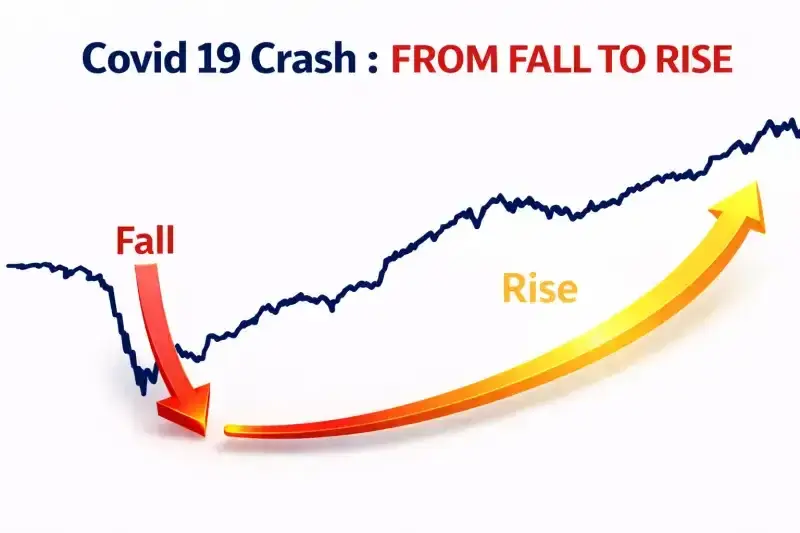
In India, market swings are pretty normal. The Sensex often jumps around because of global fights, elections, inflation updates, or new government rules. These quick ups and downs just come with investing.
For beginner investors, these movements can feel frightening. When investments have no clear purpose, every market fall feels like a personal mistake.
But when money is linked to a long-term financial goal, the mindset changes. Instead of reacting to today’s market movement, you start focusing on the bigger picture.
Short-term volatility no longer controls your decisions. This is where financial goals work like an anchor.
Just like how an anchor keeps the boat steady, your financial goals keep you steady when the market shakes.
Without clear goals, fear starts driving investment decisions.
With goals, logic leads the way.
But just noting down goals won't do. To set proper financial goals, you need to understand the actual things that impact them..
Key Factors that Influence your Goals
Simply saying “I want to be rich” is not a financial goal—it is just a wish.
Real financial goals are shaped by three simple but powerful factors.
Time Horizon (The "When").
Time horizon is the most important factor while setting financial goals.
For short-term goals (0–3 years), protecting your money matters more than earning high returns. The stock market is too unpredictable over such short timeframes.
Take Anjali’s example. She was saving ₹2 lakhs for her brother’s wedding scheduled for next year. Wanting quick growth, she invested this money in stocks. A sudden market correction of 10% reduced her savings to ₹1.8 lakhs.
Now she was left with only two choices — either cut wedding expenses or borrow money.
The stress did not come from the market. It came from using long-term risk assets for a short-term goal.
For things you need soon, safer choices such as FDs or liquid mutual funds make more sense.
But for long-term goals (7 years or more), things are quite different.
Here, beating inflation becomes the priority. Short-term market ups and downs are normal—and even helpful over time. With a long investment horizon, volatility allows money to compound and grow meaningfully.
Inflation – The Silent Wealth Eroder
Many people plan their financial goals using today’s prices, without considering how costs rise over time.
Take Aman’s example, In 2014, he checked college fees and found that a good course cost around ₹10 lakhs. He decided to save exactly ₹10 lakhs for his child’s education.Twelve years later, when the time finally came, the same education cost nearly ₹18–20 lakhs. Aman had saved diligently—but for the wrong amount. He planned for today’s cost, not tomorrow’s reality.
This is why smart goal planning always accounts for inflation. Your financial goals should be based on what they will cost in the future, not what they cost today.
Long-term goals ultimately rely on the power of compounding rather than timing. This idea is explored further in “Mastering Money: The Power of Compound Interest: How to Create Wealth in the Stock Market
”Priority – Needs before Wants
Not all financial goals carry the same importance. Some goals are really important and you can't ignore them like retirement, your kids' schooling, and emergency money. These goals need to be protected with safer assets..Other goals are things you want, like holidays, fancy stuff, or home upgrades. For these, you can take a bit more risk, because if they get delayed, your future money plans won't get messed up..
The rule is simple:
Never gamble with your needs.
Only take risks with your wants.
Once you get these three things—time, inflation, and what matters most—setting goals becomes easy and organized.
Instead of guessing where to invest, you now have a logical foundation. To turn this understanding into action, let’s bring everything together into a simple system called the G.P.S. Framework for Financial Goals.
The "G.P.S." Framework for Goals

Just like a GPS needs the right address to get you somewhere, your money needs a clear plan to grow the right way.
This is where the G.P.S. Framework comes in:
- G — Goal Name
- P — Period (Time Left)
- S — Sum (Target Amount)
Put together, these three things change loose thoughts into solid, real money plans..
G – Goal Name (Be Specific)
The first step is to know exactly why you're investing. Loose goals like "saving for later" or "making more money" don't feel important and won't keep you focused. Instead, the G.P.S. framework focuses on naming each goal with clarity and purpose—for example, “Down payment for a 2BHK in Pune” or “My Retirement Fund.”
When money is linked to a specific life goal, it becomes much harder to spend it impulsively. For example, if you set aside ₹4,000 every month for your daughter’s education, a tempting online sale makes you pause and think, “This money is for her future.” That single thought often stops unnecessary spending.
This clarity creates accountability and emotional discipline. Each investment isn't just money in the stock market anymore—it shows you're moving closer to something important in your life.
By separating goals and naming them clearly, investors start treating their money with intention, not convenience.
P – Period (Time Left).
After you know your goal clearly, the next thing is to work out when you'll actually need that money.
The time horizon plays a critical role in determining how much risk you can realistically take. The G.P.S. framework simplifies this decision by converting time into clear investment signals:
- Less than 3 years —Red light for stocks, where capital preservation becomes the priority.
- 3 to 7 years — Yellow light, where balanced or hybrid approaches make sense.
- More than 7 years — Green light for equities, where long-term growth can be fully utilized
By aligning investment choices with time, the framework helps avoid one of the most common investing mistakes—taking long-term risks with short-term money.
This ensures that market volatility works in your favour, not against your financial goals.
S – Sum (The Target Number)
With the goal and time period in place, the final step is to calculate the exact amount required.
Instead of investing randomly, the G.P.S. framework encourages you to estimate the future value of each goal.
Once you know the target amount, you figure out backwards how much you need to put in regularly to hit that number within your time frame.
This step turns dreams into measurable plans.
Investing becomes purposeful, consistent, and structured. No longer dependent on market moods, tips, or guesswork.
If you’re starting with limited capital, a practical example is explained in “I Have ₹50,000: How to Build a Portfolio That Can Survive Market Cycles.”
The G.P.S. framework treats investing as a process—not a lottery ticket.
Once your financial GPS is ready, the next thing is figuring out where to invest. This means picking options and methods that fit each goal's time and priority.
Just like you pack differently for a two-day trip compared to a month-long holiday. Same way, you need to invest based on what you want and when you need it.
Mapping Goals to Assets

1) The "Carry-On" Bag (Short Term)
Short-term money you set aside works as the stable base for everything you invest in.
A stable base like fixed deposits and good bonds keeps your money protected and ready whenever you need it. Don't expect huge earnings. That's not their job. Their job is safety, not making you richer.
By putting short-term money into low-risk, easy-to-withdraw options, investors keep what they need soon safe from market jumps and drops.
This part of the portfolio works as a financial buffer—providing certainty, flexibility, and peace of mind when the money is needed the most.
2) The "Checked Luggage" (Medium Term)
Your medium term investment assets try to grow your money while keeping some safety in place.
Here, assets like hybrid funds or a few carefully chosen large-cap stocks can work well here. They let your money grow through stocks, while the debt keeps you steady when the market shakes.
Think of hybrid funds as the balanced approach to investing. They put your money into both stocks and bonds, so when one's having a rough patch, the other can help cushion the blow. It's like not putting all your eggs in one basket.
Big, well-established companies usually don't lose as much value during market downturns as smaller companies do. They have a strong competitive advantage that they have proven overtime and financially also they are sound.
These assets work as a team to build wealth gradually and protect against sudden market declines.
3) The "Cargo Ship" (Long Term)
The goal with long-term investing is to grow your wealth by staying invested in stocks and letting your returns compound over time.
Putting money into a mix of stocks, including smaller and mid-sized companies, helps you tap into businesses that have room to grow significantly over time.
Despite the possibility of short-term volatility, hanging onto these investments for years allows the market to adjust.
You may prevent overinvesting in one area while still taking advantage of wider market expansion by spreading your money over several industries, different-sized businesses, and different geographical areas.
Smaller companies tend to be more volatile, but they often grow faster when the economy is doing well, which balances nicely with the steadier performance of larger stocks.
This segment is deliberately built to absorb interim market swings in pursuit of superior long-term outcomes.
It serves as the primary compounding engine of the portfolio—driving meaningful capital appreciation over decades.
Now, To understand how mismatching assets with financial timelines plays out in the real world, consider Rahul’s situation.
Real-World Example
Case Study: A Classic Asset Allocation Mistake: Rahul’s Wedding Fund
Rahul was planning his wedding, scheduled about 18 months away. Over the years, he had carefully saved ₹5 lakhs specifically for this purpose. As the wedding date came closer, he wanted to “grow” this money instead of letting it sit in low-return options.
Around this time, Rahul began hearing success stories from friends and social media about small-cap stocks delivering very high returns. Some people even claimed their investments had doubled in a short period.
Under the impression that greater risk would result in faster growth, Rahul put all of his wedding money into a basket of small-cap companies after reading these stories.
What Rahul overlooked was a core principle of disciplined investing:
the behaviour of an asset must match the goal’s time horizon.
Small-cap stocks are meant for long-term growth goals. They work best when given many years to compound. In the short term, however, they are highly volatile and can fall sharply during market corrections.
Unfortunately, just a few months before Rahul’s wedding, the market entered a correction phase. Small-cap stocks were hit the hardest, falling by nearly 20%.
By that time Rahul needed money for his wedding expenses. The value of his portfolio had dropped from ₹5 lakhs to around ₹4 lakhs.
Rahul could not afford to wait for recovery, therefore he had to sell at a loss in order to fulfill his obligations.
What Went Wrong?
Rahul used a long-term growth vehicle for a short-term financial journey..
Instead of placing his wedding fund in stable, liquid options like fixed deposits or liquid mutual funds designed to preserve capital. He exposed it to market volatility meant for long-term wealth creation.
This directly violated the principles highlighted in both the G.P.S. framework and disciplined asset allocation:
- The period of the goal was short, but the assets chosen required a long time horizon.
- The Carry-On allocation (capital preservation) was completely ignored.
- Risk was taken with money meant for an essential, non-negotiable need.
The Key Lesson
Seeking the maximum returns is not the goal of investing.
It is about matching the right asset to the right purpose and right time frame.
For short-term goals, you need something steady that you can quickly turn into cash.
If you're investing for the long term, you need to be patient and comfortable with some volatility along the way.
When these are mixed up, even well-meaning investment decisions can lead to stress, poor timing, and forced losses.
Rahul’s experience clearly shows why structured systems like the G.P.S. framework and disciplined asset allocation exist. Not to limit returns, but to ensure your money works efficiently, without putting real-life goals at risk.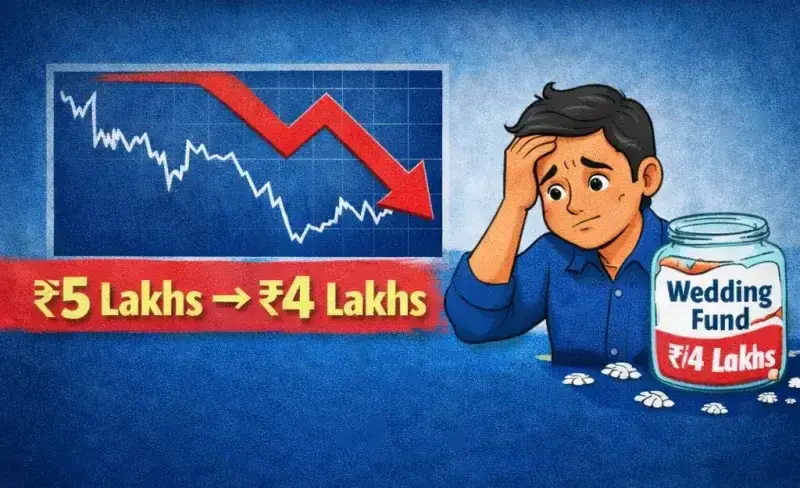
Good investing is not about making money quickly, but about making money safely.” — Benjamin Graham
Rahul isn't alone in this. It's a mistake a lot of investors make chasing returns without thinking about their actual goals first. When you don't have a clear plan that matches your money to your timeline and priorities, even if you're good at saving, you can end up putting it in the wrong places. This directly leads to some of the most common goal-setting mistakes seen in personal finance.
Explore our Products
Research Framework

Emerging Titans
Combination of quantitative analysis, industry tailwinds, and management assessment - SPRINT investment philosophy

Tiny Titans
Heavy emphasis on scuttlebutt research, plant visits, and early on-ground signals
Common Goal-Setting Mistakes
1) Vague Aspirations
Wanting to “be rich someday” may sound good, but it doesn’t really tell you what you’re working toward or how you’ll get there. It’s simply too vague to guide real decisions.
If you invest without a goal, a time frame, or a target amount, you’re basically moving without knowing where you’re headed. That kind of lack of clarity makes asset choices confusing and progress nearly impossible to measure.
When markets turn volatile, investors without clear goals are much more likely to panic and sell, simply because they don’t have a clear destination guiding their decisions.
2) Mismatched Horizons
One of the most dangerous investing mistakes is using long-term risk assets to fund short-term financial needs.
A common example is investing emergency savings or near term money in the stock market to “earn extra return.” Even though stocks could do well in good times, they might fall rapidly in times of market uncertainty or recession.
When market downturns and financial stress coexist, the danger increases significantly. For instance, losing a job during a recession while stock portfolios are simultaneously decreasing
In such situations, investors are often forced to sell at a loss precisely when stability and liquidity are needed the most.
3) Ignoring the "boring" goals
A lot of investors put aspirational goals ahead of necessities like renovating their house, purchasing a fancy car, or taking a vacation.
Essentials like emergency funds, health insurance, and basic savings buffers are often postponed because they seem boring or less rewarding.
However, these “boring” goals form the financial safety net that protects every other plan. Without securing them first, even a single unexpected expense can derail years of careful investing.
4) Underestimating the True Cost of Goals
Setting target amounts without taking inflation, growing healthcare, education, or future lifestyle changes into consideration is another typical error.
For example, saving ₹10 lakh today for a child’s education may sound sufficient. However, the real amount needed may be significantly greater over the next ten to fifteen years.
When goals are not adjusted for future cost increases, investors often end up with underfunded plans, leading to last-minute financial stress.
5) Chasing Returns Instead of Following the Plan
Many investors abandon their structured goals when they hear about high-performing stocks, trending sectors, or quick-profit opportunities.
Instead of sticking to asset allocations aligned with their financial objectives, they redirect money toward whatever is currently delivering high returns.
This behaviour often leads to buying risky assets at market peaks while ignoring disciplined investing principles. Over time, it increases portfolio volatility and reduces the likelihood of achieving long-term financial goals.
6) Treating All Goals as One Big Pool of Money
Investors lose understanding of the ultimate use of every rupee when every investment is combined into a single pool without being divided into several categories.
Short-term needs, medium-term purchases, and long-term wealth creation end up invested in the same assets, leading to mismatched risk exposure.
By not assigning specific investments to specific goals, people unknowingly expose critical funds to unnecessary market volatility.
When you look at all these mistakes together, a clear picture emerges — leading us to the conclusion.
Conclusion– Investing With Direction, Not Guesswork
Decide why you are investing at all before you think about which stocks to purchase. Having clear financial goals serves as a financial GPS. They keep you focused on the important things in life, disciplined at market highs, and composed during market crashes.
You may stop responding emotionally and begin investing with certainty when you identify your objectives, give them a time horizon, account for inflation, and match them with the correct investments.
There will always be movements in the stock market. However, when you have a well-defined strategy in place, these fluctuations stop to be scary and begin to work to your advantage.
Wealth is ultimately created by investing with purpose, patience, and direction rather than by betting about the next big thing in stocks.
If this article helped you understand how to set clear financial goals before buying your first stock, comment “GOALS” below. Like the post to support simple, practical investing education, share it with friends who are just starting their investment journey, and comment on one financial goal you’re currently working toward.
Investing without goals is like driving without a destination. Set your goals first — the right stocks will follow.
For readers ready to move forward, “7 Things Beginners Must Check Before Buying Any Stock” can serve as a simple next step.
FAQs
Should I wait to have a lot of money to set goals?
+No. You can start with ₹500. The habit of tagging your money to a purpose is more important than the amount
What if I don't have a specific goal yet?
+Select a general goal such as "Financial Freedom" or "Future Security." Give it a 10 year or longer investment horizon.
How do I know how much to invest for each goal?
+You may start by calculating how much money you will need in the future and when the need is expected to come up. Once that is figured out, decide how much you should invest each month or year by taking a look at your time period and estimating returns. At this point, perfection is not necessary.
Why not just chase the highest returns
+Because high returns come with high risk. If you chase 50% returns with your rent money, you might end up homeless. Match the risk to the goal.
What happens if markets fall just before I need the money?
+This is why you shouldn’t stay fully invested in risky assets till the last moment. Slowly shift funds from stocks to safer alternatives, such as debt funds or fixed deposits, as your objective draws near. This lessens the effect of unexpected market falls and helps safeguard the money you've saved for that particular objective.

High growth stock specialist, Value Educator
Shashank Mahajan is an equity research professional with over 12 years of experience in identifying high-potential SME and micro-cap stocks at an early stage. He follows a rigorous scuttlebutt research–driven approach, combining on-ground insights with deep financial analysis. Shashank specializes in uncovering under-researched and under-owned companies with strong management quality and long-term growth potential. Through disciplined research and early identification, he focuses on spotting tomorrow’s market leaders before they enter the mainstream investor radar.

Zen Technologies: Why Revenue Fell After Its Biggest Win

Data Patterns: India's Radar Designer and Its Waiting Orders

KSH International: The Wire Inside India's Transformers

Krishna Defence: The Steel Behind India's Warship Hulls

PNG Jewellers: A 194-Year-Old Name Goes National

Axiscades: From Services to Missile and Radar Electronics
Explore our Products
Research Framework
Emerging Titans
Combination of quantitative analysis, industry tailwinds, and management assessment - SPRINT investment philosophy
Tiny Titans
Heavy emphasis on scuttlebutt research, plant visits, and early on-ground signals


 Orders
 Subscription
 Share with friends
 Logout


Required Details
₹23999.00
(12 month subscription)
As per SEBI regulations, all users are mandated to complete the KYC that is validated for 1 year. Post payment, you will be redirected to the KYC screen


No comments yet. Be the first to comment!