
What Is an Investment Philosophy?

Two intelligent investors look at the same stock on the same day. The market crashes 8%. One buys more. The other sells immediately.
A company posts strong results. One holds for 10 years. The other books profit in three days.
Both are educated. Both follow markets. Here, both think they are being rational. So how is it possible for two persons to have the same scenario and do very different actions? The answer is simple. The difference is not intelligence. It is an investment philosophy.
Every investing decision you make, like buy, sell, hold, or ignore it, comes from what you believe about risk, time, and opportunity. These beliefs are your investment philosophy. When two people have different beliefs, they make different decisions. Both can be right for themselves. But only if they actually know what they believe in the first place.
The real problem starts when you have no philosophy at all. Because then something else makes your decisions for you. Emotion. Fear. A WhatsApp forward. A falling price. You are no longer investing. You are just reacting. And reacting with your money is one of the most expensive things you can do.
“The investor’s chief problem and even his worst enemy is likely to be himself.” — Benjamin Graham
If you are completely new to investing and want to understand how the Indian stock market actually works, start with A Beginner’s Guide to the Indian Stock Market.
What is an Investment Philosophy?
An investment philosophy is the personal rulebook you operate from when money is involved. It’s like a compass. It does not tell you the exact route, but it keeps you moving in a consistent direction. It answers some very basic questions, such as why are you investing, what kind of assets do you want to buy, when do you buy or sell, and how do you handle risk when markets get rough.
It is also important to understand the difference between philosophy and strategy. Philosophy is your foundation, for example, what you believe about markets and wealth creation. Strategy is how you act on that belief. For example, if you believe that good businesses held for a long time create wealth, your strategy might be to buy quality stocks and never touch them for 10 years. Philosophy comes first. The strategy simply follows from it.
If you don't have a strong philosophy, your choices will fluctuate based on the market and your feelings. You become a long-term investor one day. The next day, you are panic-selling because the Sensex fell 1000 points. That inconsistency is what destroys returns for most beginners. A philosophy does not guarantee you will never make mistakes. But it gives you a structure to come back to when things get confusing, and in investing, things will always get confusing.
Why Investment Philosophy Matters More Than Stock Selection
Most beginners spend the majority of their time trying to find the right stock. They read annual reports, watch YouTube videos, follow analysts on Twitter, and spend hours screening for the perfect pick. And while stock selection does matter, it is actually not the most important thing. What matters more is the philosophy behind the selection. Here is why stocks change. Markets change. Companies go through cycles. But a well-built philosophy remains constant. It helps your decisions when markets test your emotions.
During Covid in March 2020. The market crashed nearly 40% within weeks. Millions of Indian retail investors panicked and sold everything. But investors who had a clear philosophy and who believed that good businesses recover and that volatility is temporary, stayed put or even bought more. Those investors made extraordinary returns over the next two years. The ones who sold locked in permanent losses. Same market. Same stocks. Completely different outcomes. The only difference was philosophy.
Market cycles test every philosophy differently — learn how to navigate them in Bull Market vs Bear Market – How Investors Should React.
A clear investment philosophy also quietly does something most people underestimate: it reduces emotional stress. When you know why you own something and what your rules are, every market crash does not feel like an emergency. You do not need to check your portfolio every hour. You do not need to react to every piece of news on CNBC or Zee Business. Your philosophy acts like a filter. It tells you what is relevant to your decisions and what is just noise. Without that filter, everything feels urgent. Every red day feels like a disaster. Every hot tip feels like an opportunity you cannot miss. Philosophy brings stillness to a world that is designed to keep you anxious and reacting.
If you struggle with panic during corrections, read How to Stay Emotionally Strong During Market Crash.
“The most important quality for an investor is temperament, not intellect.” — Benjamin Graham
Indian Market Context — Why Philosophy Matters Even More
Indian markets are exciting. Sometimes too exciting. And that excitement is exactly what makes a clear investment philosophy not just useful but absolutely necessary.
The Indian market has some unique characteristics that make emotional investing very dangerous.
- Small and mid-cap stocks in India can swing 10 to 20 per cent in a single week based on a single news headline or a viral social media post.
- Retail herd behaviour is extremely common. When a sector like railways or defence starts trending, millions of retail investors pile in together, often right at the peak.
- IPO and SME excitement regularly pushes valuations to absurd levels. Many investors applied for Zomato, Paytm, and several SME IPOs purely because everyone around them was doing it without ever reading the business model.
- News-driven price swings are constant. A single budget announcement, an RBI policy change, or even a rumour on a WhatsApp group can move stocks significantly within hours.
Without a philosophy, here is what typically happens
A beginner investor sees railway stocks trending on social media in early 2024. Everyone is talking about India's infrastructure push. The stocks are up 200 to 300 percent already. They invest at the peak, driven purely by the narrative. When the sector cools down, they are stuck holding losses with no framework to decide whether to hold, average down, or exit.
With a philosophy, the same situation looks completely different
An investor with a clear framework asks a few simple questions before acting. Does this company fit my criteria? Is the valuation reasonable relative to earnings? Does this fit my holding period? If the answers do not align with their philosophy, they simply do not invest, no matter how loud the noise around them gets. And if it does fit, they invest with conviction and are not shaken out by the first correction.
Indian markets will always have the next hot sector, the next big IPO, the next viral multibagger story. Philosophy is what separates investors who build wealth quietly from those who keep chasing and never arrive.
In the short run, the market is a voting machine, but in the long run, it is a weighing machine.” — Benjamin Graham
The Most Common Investment Philosophies
There isn’t one universally correct way to invest. Different philosophies exist because investors see markets differently and believe different things about risk, time, and opportunity. The goal isn’t to choose the “best” philosophy. It’s to find one that genuinely fits who you are. The five most common approaches every beginner should know.
Value Investing
At its core, value investing rests on the assumption that the market occasionally gets things wrong. Strong businesses sometimes trade at unjustifiably low prices, and investors with patience try to benefit from that mispricing. They pay close attention to valuation metrics like P/E and P/B, and rarely buy without a comfortable margin of safety. Warren Buffett remains the most recognised face of this style. Warren Buffett’s investment in Coca-Cola illustrates the power of conviction. He began buying in 1988, not because it was fashionable, but because he understood the business. He then did the harder thing: he held on. Over decades, compounding did the heavy lifting.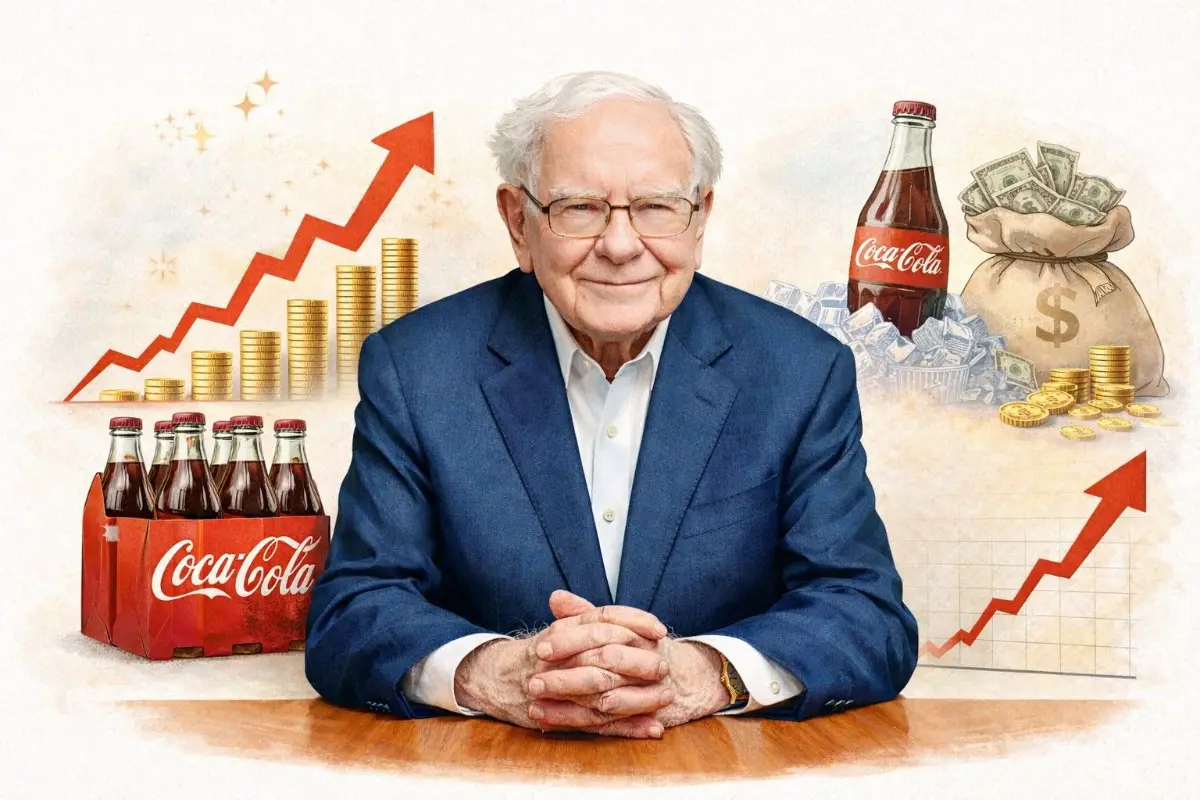
If value investing resonates with you, explore it further in: What is Value Investing? Complete Guide for Beginners.
Growth Investing
Growth investors are comfortable paying what may seem like a premium today if they believe the company’s future expansion will be substantial. Their underlying assumption is that sustained earnings growth over time will eventually make today’s valuation look reasonable. Think about investors who bought Titan, Asian Paints, or Bajaj Finance early. These stocks looked expensive at almost every point in their journey. However, those who persisted and recognized the growth narrative received tremendous benefits. Conviction and the capacity to withstand brief fluctuations without losing hope are requirements for growth investment. Rakesh Jhunjhunwala is a prime example. Rakesh Jhunjhunwala’s investment in Titan is a classic growth example. He bought early when the company was scaling its jewellery business, held through volatility, and stayed invested as earnings compounded for years despite the stock often looking expensive.
Quality Investing
Quality investing sits somewhere between value and growth. The underlying principle is that quality compounds. Paying a fair price for a structurally strong franchise often creates more long-term value than chasing statistically cheap stocks with fragile economics. HDFC Bank is a relevant Indian case with sustained ROE, disciplined risk management, and steady growth drove wealth creation over time. It was never the cheapest stock in the market. But its consistency, governance, and business strength made it one of the best long-term holdings you could have owned.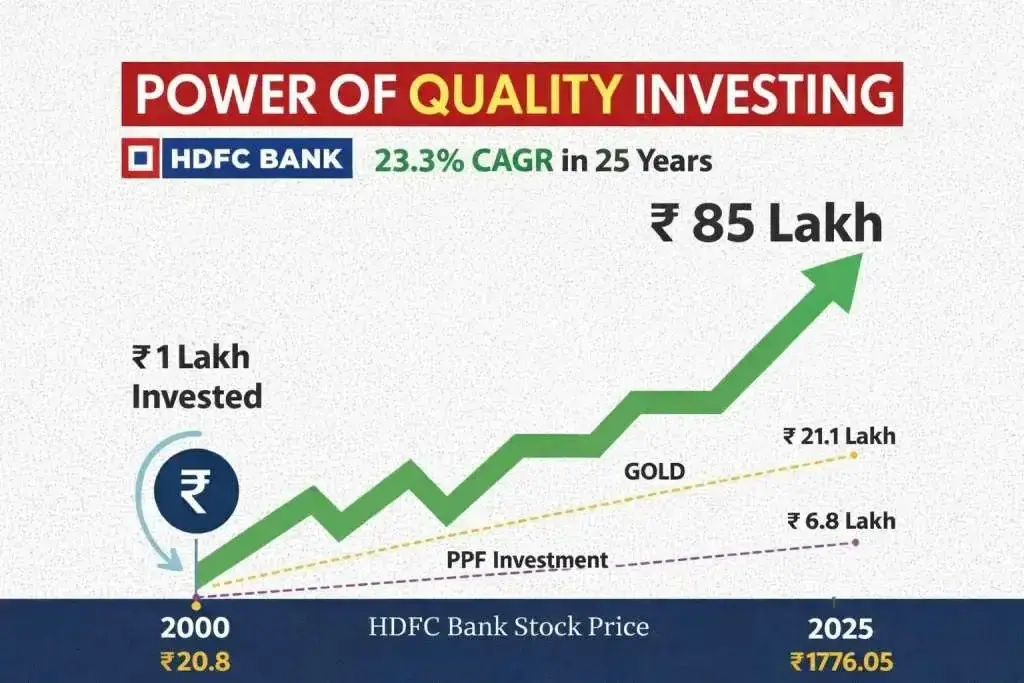
Momentum Investing
Momentum investing works differently from the others. It does not focus much on the business fundamentals. Instead, it focuses on price movement. The belief is that stocks that are rising tend to keep rising, at least for some time. Momentum investors use charts, technical indicators, and price strength to make decisions. This approach works largely on market psychology. It requires strict discipline and quick decision-making because trends can reverse quickly. It requires discipline and fast action, as trends do not last forever. Many traders in India use this method, but it is not passive investing. It requires constant tracking and clear exit strategies.
Passive or Index Investing
Passive investing is the simplest philosophy of all. The belief is that consistently beating the market is very difficult, so the smarter move is to just own the entire market at a low cost. This is done through index funds or ETFs that track indices like Nifty 50 or Sensex. You do not pick stocks. You do not time the market. You simply invest regularly and hold for the long term. Studies have shown that over long periods, most active fund managers fail to beat the index. This strategy might be the most useful and profitable technique for newcomers to the stock market to become involved in the market if they do not want to actively investigate and evaluate stocks.It’s not like one is right and the other is wrong. Any of these approaches can produce results, but only when practiced with discipline. The decision isn’t about superiority. It’s about compatibility with who you are, how long you plan to stay invested, and how you respond to risk. Because the best investment philosophy is simply the one you can follow consistently, especially when markets get difficult.
Why Beginners Struggle to Build a Clear Investment Philosophy
In India’s stock market today, beginners are not confused because of a lack of opportunity but because of excess noise, as YouTube videos promise multibaggers, Twitter threads highlight breakout charts, and WhatsApp groups circulate “sure-shot” tips, creating an environment where strategies multiply faster than understanding.
Some stock market guru says buy the dip, another says wait for confirmation. One insists on long-term investing, while another showcases quick trading gains, and the beginner tries to combine all of them without realising that each approach is built on a different philosophy about time, risk, and behaviour.
Fear of missing out makes things worse, especially during sharp rallies in sectors like PSUs or railways, where investors jump in late, expecting fast profits while claiming to be long-term investors, only to panic during corrections because their expectations do not match their approach.
Many switch styles every few months, such as value in a crash, growth in a bull run, momentum in a rally, or copy famous investors without copying their temperament, mistaking one lucky trade for skill, and overcomplicating their framework with too many indicators and no clear hierarchy.
The real problem is simple: confusion happens when expectations don’t match philosophy. If you expect quick returns but follow long-term value investing, frustration is inevitable. If you trade momentum but expect stability, stress is guaranteed. Clarity comes not from having more information, but from alignment & when your time horizon, risk tolerance, and daily behaviour all point in the same direction.
How to Define and Build Your Investment Philosophy
Before you copy Warren Buffett, chase momentum, or blindly buy index funds, pause. Your investment philosophy is not something you borrow from someone else. It is usually something you discover about yourself. Ask yourself these simple but powerful questions.
What is your time horizon?
This one question changes everything. Someone thinking in weeks will panic the moment their portfolio turns red. Someone thinking in ten years will see that same dip as an opportunity. If you had invested in Asian Paints in 2010 and held till today, you would have made over 15x returns. But only if you did not sell during every market crash in between. Be specific about your horizon. "Long term" means nothing. "I will not touch this money for seven years" means everything.
How do you react to losses?
Everyone believes they can handle risk until the market falls 25% and their portfolio is bleeding red every single day. That is when the truth comes out. Ask yourself honestly — if your Rs 1 lakh investment becomes Rs 70,000 tomorrow, what do you do?
- If you can stay calm and even look for more opportunities, then you have a high risk tolerance.
- But if you lose sleep and feel the urge to exit immediately, then you have a low risk tolerance.
Neither is wrong. But knowing this defines your entire risk framework.
To understand your personal comfort with volatility in more depth, read How to Set Clear Financial Goals Before Buying Your First Stock
What excites you more — Business analysis or Price movement?
- If reading annual reports, understanding how a company makes money, and analysing return on equity sounds interesting to you, then value, growth, or quality investing will suit you naturally.
- If charts, price breakouts, and market trends excite you more than balance sheets, then momentum or technical investing may be your style.
- If, honestly, neither excites you and you just want steady returns without the effort, then a simple Nifty 50 index fund is probably your best friend.
Once you have answered all of these honestly, write them down in two or three simple sentences. Something like: I invest in high-quality Indian businesses and hold them for five to ten years, or I only sell if the business fundamentals change. That one statement becomes your filter for every decision. When markets get noisy, you stop asking what everyone else is doing and start asking: Does this fit my philosophy? That is where real discipline begins.
“Risk comes from not knowing what you’re doing.” — Warren Buffett
How to Know You Have Found the Right Investment Philosophy
You will know you have found the right investment philosophy not because your returns suddenly become extraordinary, but because your behaviour becomes stable.
The first sign is calmness during volatility. When markets correct sharply, whether it is a mid-cap sell-off or a sudden global shock, you do not feel the urge to act immediately. Instead of reacting to price movement, you evaluate whether the underlying business has changed. Volatility may still feel uncomfortable, but it does not feel threatening.
The second sign is clarity about ownership. You understand exactly why you own a stock. You can explain the business model, the growth driver, or the valuation logic in a few simple sentences. If someone asks you why you invested in a company, your answer is based on reasoning, not because “everyone is buying it.”
The third sign is the absence of constant FOMO. When a sector rallies, whether it is defence, PSU banks, or small-cap stocks, you do not feel forced to abandon your framework just because others are posting profits online. You may observe opportunities, but you do not feel emotionally pressured to participate in everything.
Finally, making decisions becomes easier. You do not debate endlessly between styles. You do not switch identities every few months. When a stock fits your philosophy, the decision is straightforward. When it does not, you let it pass without regret.
The right philosophy does not eliminate uncertainty. It reduces confusion. And in investing, reduced confusion often leads to better long-term outcomes.
Case Study: Same Stock, Different Philosophy — Titan (2015 Onwards)
In 2015, two investors decided to buy Titan, a company that many already considered expensive at the time. Both invest ₹1 lakh. Same stock. Same entry year. Same opportunity. But their philosophies are very different.
Investor A's philosophy is clearly growth-oriented. He thinks that in a nation like India, scalable business ideas combined with strong consumer brands may compound profits for decades. He is aware of Titan's growing market share in jewellery, brand power, and long-term consumption trajectory. His time horizon is 7–10 years. He accepts volatility as part of equity investing.
Titan did not move in a straight line from 2015 to 2023. There are corrections of 20–30%. In 2018, the broader market corrected sharply. In March 2020, during Covid, the stock fell heavily along with the entire market. News headlines scream panic. Retail investors rush to exit.
Investor A feels uncomfortable, but he asks one question each time: “Has the long-term growth story changed?” The answer remains no. He holds. In some corrections, he even adds more.
Over time, Titan compounds. Revenues grow. Market share expands. The stock multiplies several times over the decade. His ₹1 lakh investment became many times larger not because he timed perfectly, but because he stayed consistent with his philosophy.
“The big money is not in the buying and selling, but in the waiting.” — Charlie Munger
Now look at Investor B. Investor B also bought Titan in 2015, but he does not have a defined philosophy. He buys because he heard it is a “good company.”
When the stock corrects 20%, he becomes anxious. When the broader market falls in 2018, he exits to “protect capital.” After the recovery starts, he buys back at a higher price because the trend looks strong again. During Covid, he panics and exits near the bottom, convinced that luxury consumption will collapse permanently.
He keeps reacting to price movements and news cycles. Over the same period, he enters and exits multiple times, pays taxes, misses strong recovery rallies, and never fully participates in long-term compounding. At the end of several years, his returns are mediocre despite choosing the same stock as Investor A.
What was the difference?
The difference was philosophy.
Investor A had a defined belief system about growth, time horizon, and volatility. Investor B had opinions, but no framework. When volatility arrived, Investor A filtered noise through his philosophy. Investor B reacted to it. This is the core lesson.
A strong investment philosophy does not eliminate market risk, but it eliminates behavioural mistakes. Over long periods, controlling your own behaviour often has a bigger impact on returns than selecting the ideal stock.
Explore our Products
Research Framework

Emerging Titans
Combination of quantitative analysis, industry tailwinds, and management assessment - SPRINT investment philosophy

Tiny Titans
Heavy emphasis on scuttlebutt research, plant visits, and early on-ground signals
Conclusion
Markets do not reward randomness. They reward consistency, discipline, and alignment between what you believe and how you behave when money is at stake. As we have seen, two investors can buy the same stock at the same time and still end up with completely different outcomes. Not because one was smarter, but because one had a clear investment philosophy and the other did not. The difference was not stock selection. It was clarity.
Having a clear philosophy makes volatility easier to control. Without one, every drop feels dangerous, and every rise feels like you’re falling behind. With it, volatility becomes part of the journey rather than a trigger for impulsive decisions.
You don’t need the most complex system or whatever strategy is trending right now. What you need is an approach that fits your personality, your time frame, and the level of risk you can genuinely tolerate, like something you can stick with in rising markets and in falling ones. In the long run, your philosophy shapes your behaviour, and your behaviour shapes your results far more than any single stock.
If this article helped you understand why your investing results are shaped more by your philosophy than by any single stock, comment “CLARITY” below. Share it with someone who keeps changing strategies every few months and wonders why consistency never shows up in their returns.
Because in investing, success rarely comes from finding the perfect stock. It comes from finding a philosophy you can actually follow.
FAQs
How do I know if I am truly a long-term investor or just saying it?
+Calling yourself a long-term investor is easy during a bull run. The real test comes when your portfolio is down 20 or 30 percent, and every instinct tells you to act. If that drawdown has you checking prices every hour or selling businesses that haven't actually broken down, then your behavior and your stated philosophy are not matching. A genuine long-term investor knows the difference between a price falling and a business deteriorating. They set a holding period; they actually mean, whether seven years or ten, and accept that corrections are not accidents. They are part of the deal.
Can I combine multiple investment philosophies?
+Yes, you can combine multiple investment philosophies, but only if they are clearly segmented with defined capital allocation and non-overlapping rules. Most beginners confuse opportunistic switching with diversification, like buying value in crashes, chasing momentum in rallies, and still claiming to be long-term investors. That creates behavioral inconsistency. A structured framework would solve this problem, for example, 60% allocated to long-term quality/growth with a 5–10 year holding rule, 20% to value opportunities with strict margin-of-safety criteria, and 20% to momentum with predefined stop-loss and position sizing discipline. Each bucket must operate independently. The moment you apply short-term trading rules to long-term holdings or long-term patience to momentum trades, discipline collapses and returns deteriorate.
What if my philosophy underperforms for 2–3 years?
+Two or three years of underperformance does not mean your philosophy is broken. Every style goes through stretches where it simply does not fit the market environment. Value gets left behind in liquidity-driven rallies. Growth struggles when valuations compress. Momentum goes quiet in sideways markets. That is not failure; that is how cycles work. The real question to ask yourself is whether your reasoning was flawed to begin with, or whether the market just is not rewarding your approach right now. If the logic still holds and your time horizon has not changed, sitting with discomfort is part of the process. Abandoning a sound strategy at its weakest point is one of the most expensive mistakes an investor can make.
How much should Indian market volatility influence my philosophy?
+Indian market volatility should meaningfully shape your investment philosophy because it is a structural feature, not a temporary anomaly. High retail participation, narrative-driven sector rallies (PSUs, railways, defence), IPO excesses, and rapid news-based price swings regularly create 20–30% drawdowns and valuation overshooting in both directions. Your framework must assume such swings will occur. If your temperament cannot tolerate that level of fluctuation, the adjustment should be structural, such as higher allocation to index funds, reduced exposure to small- and mid-caps, and predefined asset allocation bands with disciplined rebalancing. A philosophy that ignores local market volatility will eventually fail behaviorally. Your approach must be aligned not just with your personality, but with the structural characteristics of the market in which you operate.
How do I practically write my investment philosophy?
+Writing your investment philosophy does not have to be complicated. In fact, if it takes more than two or three sentences, it probably needs more thinking, not more writing. Cover three things: what you invest in, how long you plan to hold it, and what would actually make you sell. That is it. Something like, I invest in large-cap Indian businesses with strong competitive advantages and hold for at least seven years. I only sell if the business fundamentals deteriorate, not because the price dropped. Or seventy percent in index funds, thirty percent in high-ROE stocks, rebalanced once a year with no reactions to short-term noise. It does not need to sound impressive. It needs to sound like you. Because if you cannot explain your own framework in a few clear sentences, your decisions will quietly default to whatever the market is doing that day.

High growth stock specialist, Value Educator
Shashank Mahajan is an equity research professional with over 12 years of experience in identifying high-potential SME and micro-cap stocks at an early stage. He follows a rigorous scuttlebutt research–driven approach, combining on-ground insights with deep financial analysis. Shashank specializes in uncovering under-researched and under-owned companies with strong management quality and long-term growth potential. Through disciplined research and early identification, he focuses on spotting tomorrow’s market leaders before they enter the mainstream investor radar.

Glenmark: The USD 700 Mn Cancer Deal and Its Brands

Pharma Stocks in India 2026: Generics, APIs and CDMOs

Granules India: From Paracetamol to a 65% Gross Margin

Natco Pharma: After Revlimid, 29 Patent Challenges

Shilpa Medicare: Cancer APIs, Films and Biosimilars

Alembic Pharma: US Plants Pay Back, Margin Hits 22.2%
Explore our Products
Research Framework
Emerging Titans
Combination of quantitative analysis, industry tailwinds, and management assessment - SPRINT investment philosophy
Tiny Titans
Heavy emphasis on scuttlebutt research, plant visits, and early on-ground signals



Modern Warfare to Multibaggers
Key Trends. Strategic Shifts. Opportunities Ahead.
Today at 7:00 PM IST. Room opens 30 minutes before.
Don't Miss This Exclusive Webinar!
Join Value Educator to decode the key trends shaping India's defence sector and learn how to identify tomorrow's potential leaders in the space.
- In-depth research on India's defence sector
- Live Q&A session
- Actionable takeaways for long-term investors

 Orders
 Subscription
 Share with friends


Required Details
₹23999.00
(12 month subscription)
As per SEBI regulations, all users are mandated to complete the KYC that is validated for 1 year. Post payment, you will be redirected to the KYC screen


No comments yet. Be the first to comment!