
The Margin of Safety Mindset

Imagine buying a house worth ₹1 crore for ₹70 lakh. Even if you slightly misjudge its condition, overestimate the area’s future development, or underestimate repair expenses, the lower price you paid gives you breathing room and reduces the chances of losing money. Now imagine paying ₹1.1 crore for that same house. In that case, even a small mistake in judgment about its quality, its resale value, or hidden costs can quickly turn into a financial loss. That simple difference explains the idea of the Margin of Safety.
In the stock market, many people do not think this way. They buy because prices are going up, because the news sounds positive, or because others seem to be making money, and their decisions are based on price movement rather than real value. This is speculation, where the goal is to guess short-term price changes rather than to understand what a company is truly worth. Disciplined investing takes a different approach and begins with a simple question: What is this business actually worth based on the money it can earn over time?
“Price is what you pay. Value is what you get.” – Warren Buffett
Every stock means owning a small part of a real company that makes money, pays its bills, and tries to grow over time, and people try to figure out what that company is worth based on how much money it may earn in the future. But these estimates depend on guesses about how fast the company will grow, how much profit it will make, how tough the competition will be, and how the economy will perform, and all of these things can change, which means the true value is only an estimate, while the market price is exact at that moment.
This difference between an uncertain estimate and a fixed price creates risk, which is why the Margin of Safety is important: if a stock thought to be worth ₹1,000 is selling for ₹700, the gap is not just about making more money but about staying safe, because even if your estimate is a little wrong, paying a lower price reduces the chances of losing money permanently when things do not go as planned.
“The essence of investment management is the management of risks, not the management of returns.” – Benjamin Graham
This principle, first explained clearly by Benjamin Graham and later practiced with great discipline by Warren Buffett, forms the foundation of value investing because it shifts the focus away from trying to predict the future and toward protecting your money from mistakes and unexpected problems.
If you are new to this concept, you can first understand the basics of value investing in detail here - “What is Value Investing? Complete Guide for Beginners”
The Beginning of Margin of Safety Thinking
The idea of Margin of Safety was first clearly explained by Benjamin Graham in his famous book The Intelligent Investor. His core idea was simple: Buy something for much less than what it is worth. He described it as buying $1 for 50 cents. The goal was not to predict the future perfectly, but to protect yourself if your estimate turned out to be wrong.For example, Graham often bought companies that were trading below the value of the cash and assets they already owned. In simple terms, it was like buying a business for less than the money sitting in its bank account. Even if the business did not grow much, the low price itself provided safety.

Warren Buffett initially followed Benjamin Graham’s “cigar-butt” approach, which meant buying very cheap companies that were struggling but still had a little value left, like finding a discarded cigar with one last puff remaining. These businesses were not great, but they were so inexpensive that even a small improvement could lead to profit. In the early days, Buffett invested in Berkshire Hathaway not because the textile business was strong, but because the market price was below the company’s asset value. The numbers made sense, even if the business did not.
Buffett eventually came to the conclusion that it was not a good idea to continuously purchase poor companies, even if they were inexpensive. He gradually shifted his approach, choosing to invest in strong businesses that could keep growing over long periods. Coca-Cola was one such case, as he was drawn to it because people around the world continued to buy its products year after year. In this case, the safety did not come only from a low price, but from the company’s ability to consistently earn money year after year.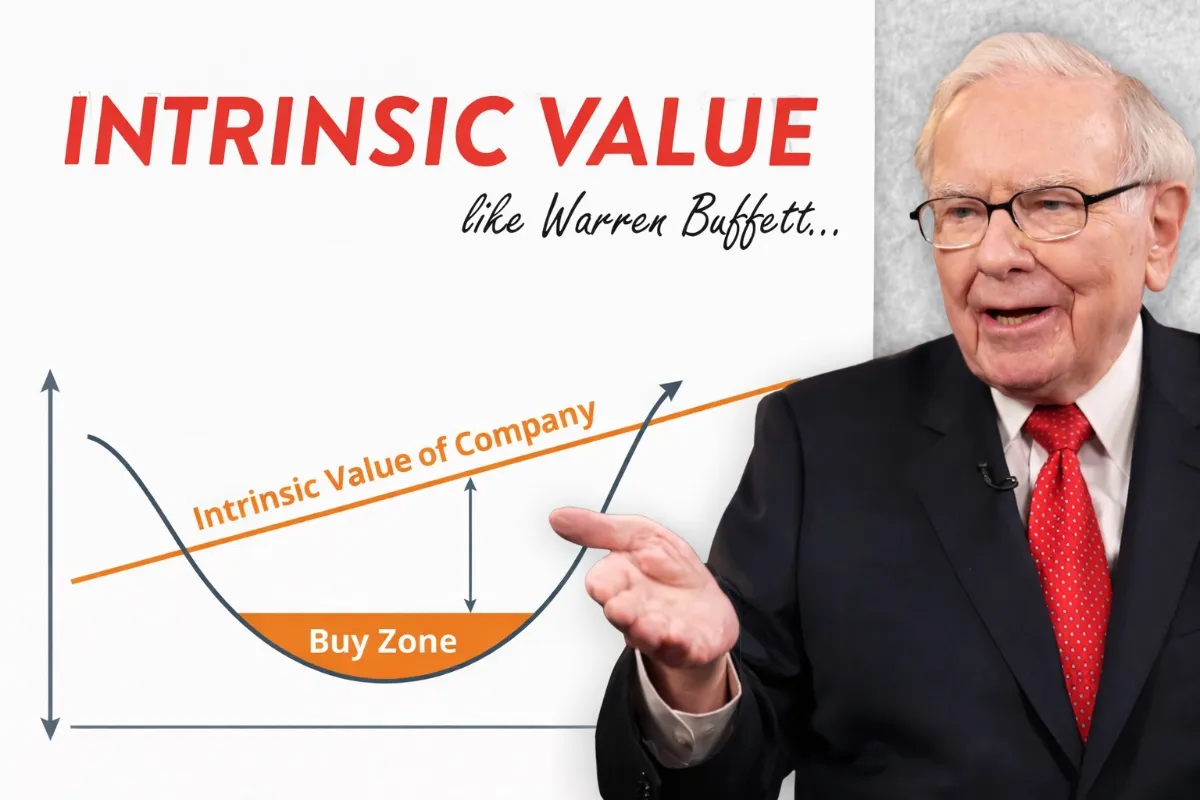
In both cases, the idea was the same: buy with protection in mind. Graham focused mainly on low prices. Buffett added another layer of safety by choosing strong businesses that could survive tough times.
What Margin of Safety Really Means
At its simplest, Margin of Safety means buying something for less than what you believe it is worth. If you think a company is worth more than the price shown in the market, the difference between the two is your safety cushion. In short, when the value is higher than the price, that gap becomes your protection.
It can be shown in a simple way. This formula gives the safety as a percentage. It shows how much cheaper you are buying compared to what you think the business is worth.
For example, if you believe a stock is worth ₹1,000 and you buy it at ₹800, you have a 20% cushion. That is a reasonable level of protection. If you buy it at ₹700, your cushion becomes 30%, which gives you stronger safety. If the discount is 40% or even 50%, your protection becomes even larger.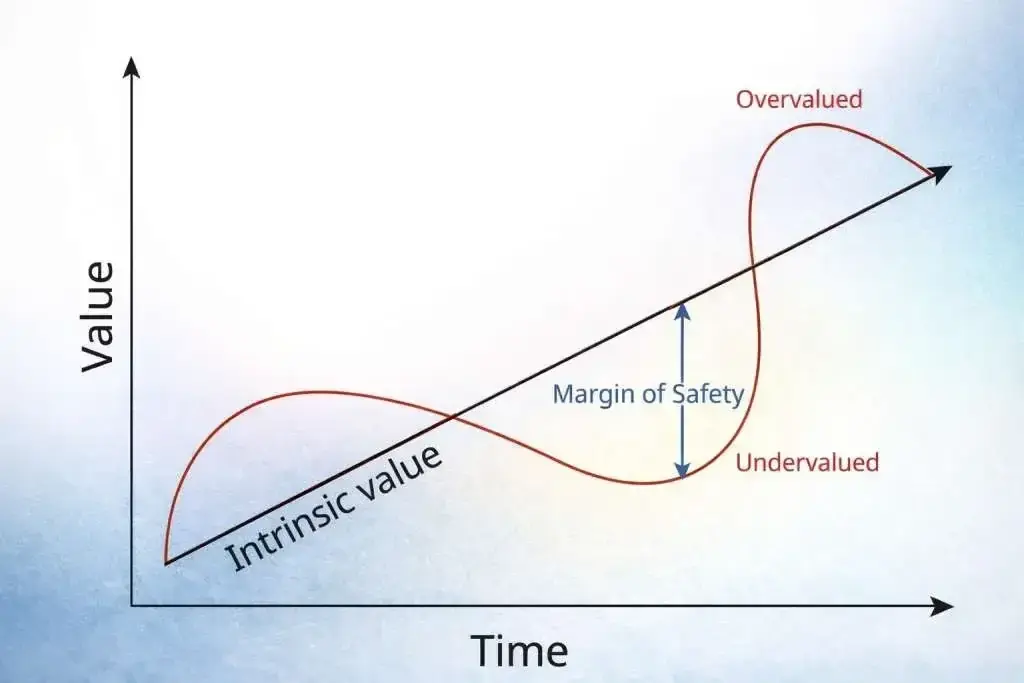
The bigger the percentage, the more room you have if your estimate is slightly wrong. The aim is not just to make more money, but to protect yourself from losing money if things do not go exactly as planned.
Understanding Margin of Safety is only the first step. To apply it properly, you must first know what the business is actually worth. That means learning how investors estimate the true value of a company in the first place.
How to Calculate a Company’s True Value
After understanding the idea of buying with a safety cushion, the next step is figuring out what a business is truly worth. Investors use different ways to estimate this, but the basic goal is simple: How much money can this company make in the future, and what is that worth today?
Looking at Future Cash (DCF Method)
One common method is called Discounted Cash Flow, or DCF. The idea is straightforward: A company is worth the money it can generate over time. So investors try to estimate how much cash the business may produce each year in the future.
But there is an important point, money you receive 10 years from now is not as valuable as money you have today. So future money must be adjusted to today’s value. In simple terms, we are adding up all the future cash the company may earn, but reducing it slightly because it comes later and involves risk.
The main idea is that we are estimating future money and adjusting it for time and risk. The difficulty is that future cash and risk levels are only estimates, so small changes in assumptions can change the final value a lot.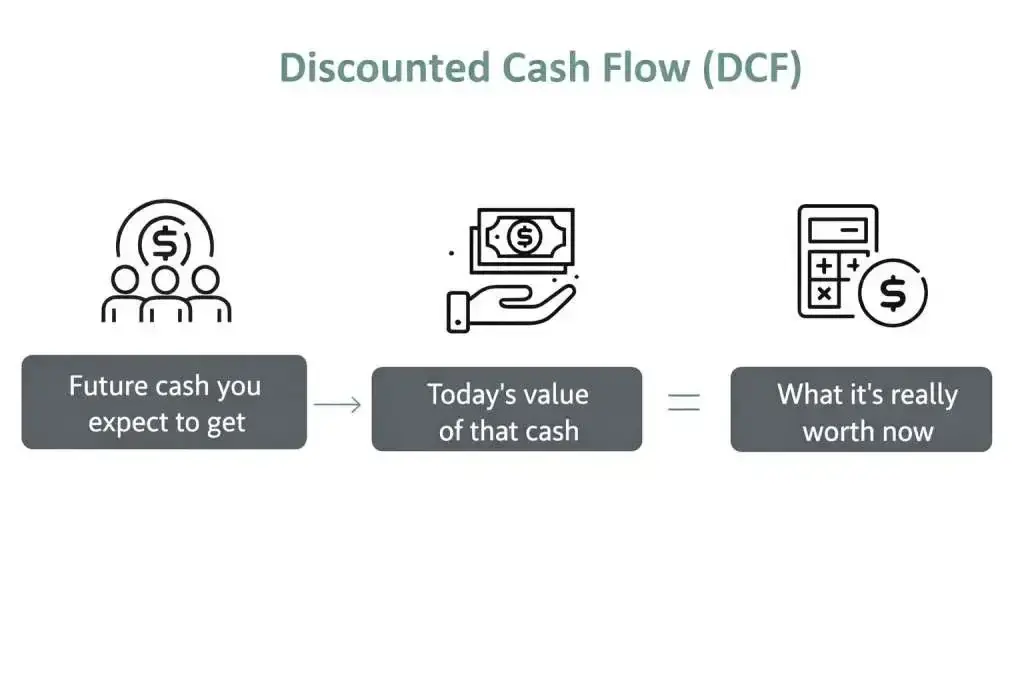
Comparing With Similar Companies
Another easier way is comparison. Instead of calculating everything from scratch, investors compare the company with other similar businesses.
Investors often use the P/E ratio to compare valuation across companies - “The P/E Ratio Decoded: Trailing vs. Forward, and What is a ‘Good’ P/E?”
For example, they may look at how much people are paying for each rupee of profit. If other companies in the same space are valued at a certain price, and this one is available at a lower valuation despite showing solid growth, it could be seen as fairly priced.
Some also compare the overall company value with its operating earnings and check how it stands compared to others in the same industry. In simple terms, this method asks: Are we paying more or less than what is normal for this type of business?
Both methods attempt to determine a company's value. However, both are never precise since they rely on presumptions and comparisons. That is exactly why the Margin of Safety becomes so important.
Now that we understand how investors estimate what a business is worth, the next step is to see how the Margin of Safety works in real numbers. A simple example will make the idea much clearer.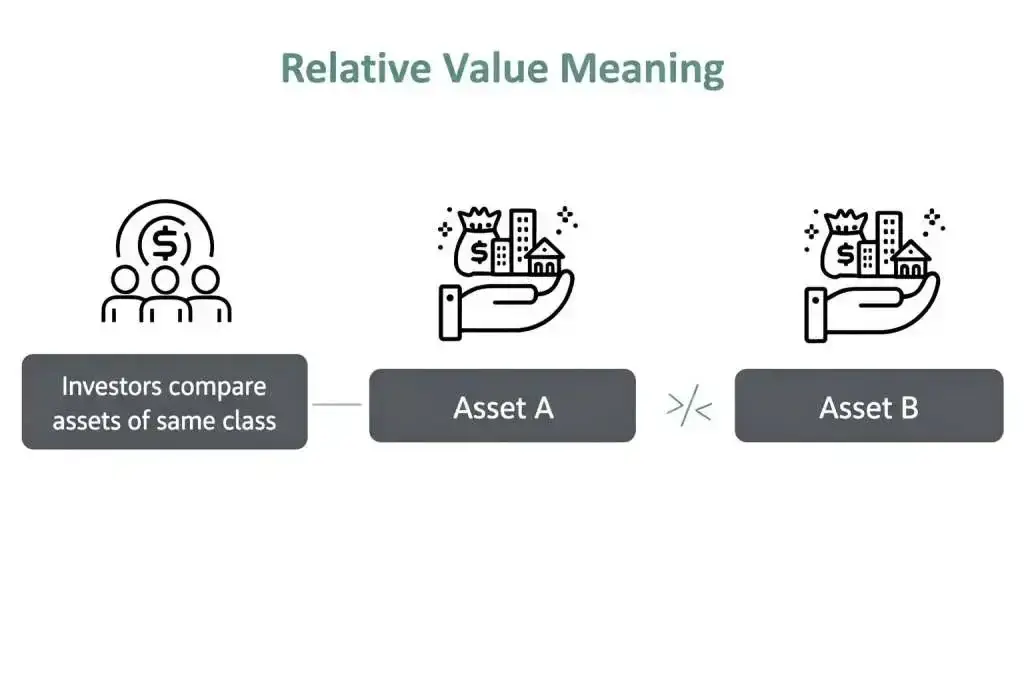
How Margin of Safety Differs Across Businesses
Cyclical Businesses
Some businesses go through ups and downs depending on the economy. Companies operating in commodities, whether steel, cement, oil, or metals, are exposed to economic cycles. Their earnings expand in favorable environments and compress during slowdowns.
Because their earnings can change quickly, investors usually demand a larger Margin of Safety before buying them. Sometimes, they prefer buying these companies when their market price is even lower than what it would cost to build the same factories and assets from scratch. In simple terms, it is like buying a working factory for less than what it would cost to construct a new one. The extra discount helps protect against future downturns.
Secular Compounders
Some companies manage to grow year after year despite economic slowdown. These are often strong brands or businesses with loyal customers and consistent demand. They may sell everyday products or services that people continue using regardless of short-term economic changes.
Read more about compounidng in our article: The Power of Compound Interest: How to Create Wealth in the Stock Market
In such businesses, the Margin of Safety may not come only from a very low price. Instead, it can come from the company’s ability to keep earning and growing over a long period. Because their earnings are more stable and predictable, investors may accept a smaller discount, trusting that steady growth itself provides some protection.
Highly Leveraged Firms
Some companies borrow heavily to run or expand their operations. While borrowing can increase profits in good times, it also increases risk. If sales drop or conditions worsen, debt payments still have to be made.
In these businesses, the Margin of Safety becomes very thin because debt reduces flexibility. Even a small decline in earnings can create serious financial trouble. For such companies, investors usually demand a much larger discount to compensate for the higher risk.
These examples make one thing clear: Margin of Safety is not a fixed percentage. The amount of protection an investor needs depends on how stable and predictable the business is, as well as the strength of its financial position.
Is Margin of Safety Only for Value Investors?
A common misunderstanding is that Margin of Safety applies only to “cheap” stocks. Many people believe it is useful only when buying companies that look undervalued based on low prices. But this is not true. Margin of Safety is not about buying low-quality businesses at very low prices, but it is about reducing risk, no matter what type of company you are buying.
In growth investing, the safety may come from a different place. Instead of relying only on a big discount in price, it can come from underestimating how much the company can grow in the future. If a business has a long runway to expand, meaning it can keep increasing sales and profits for many years, then steady future growth itself can create protection.
For example, imagine buying a strong company with a trusted brand and loyal customers at a reasonable price. You may not be getting a huge discount like 40% or 50%, but if the business can continue growing for 10–15 years, the long-term growth can justify the price you paid. Here, safety does not depend solely on paying a very low price. It rests on owning a business that can endure and perform over time.
In simple terms, value investors often look for safety in price, while growth investors may find safety in quality and long-term growth. But in both cases, the goal remains the same. Reduce the chance of permanent loss and increase the odds of steady returns over time.
What Creates a Margin of Safety?
Margin of Safety does not come from only one place. While many people think it simply means buying at a low price, in reality, it can be created in several different ways.
Price-Based Margin of Safety
This is the most straightforward form. You believe a company is worth ₹1,000, but you buy it at ₹700. The lower price itself gives you protection. Even if your estimate is slightly wrong, the discount acts as a cushion. This is the classic approach followed by early value investors.
Business-Quality Margin of Safety
The margin of safety does not always depend on buying cheaply. It can stem from structural strengths such as brand equity, habitual usage, and consistent demand. That allows the company to withstand economic pressure. Their stability reduces risk.
Balance Sheet Strength
Low leverage and strong liquidity provide breathing space. A temporary fall in sales does not immediately threaten survival. Strong finances act like a safety net.
Management Integrity
Trustworthy and capable management adds another layer of protection. Leaders who allocate money wisely, avoid reckless expansion, and act in the interest of shareholders reduce the risk of major mistakes. Poor management, on the other hand, can destroy value even in a good business.
Industry Structure
Not all industries behave the same way. Businesses serving basic needs with relatively limited competition usually carry less uncertainty. On the other hand, fast-changing or highly competitive sectors demand a larger buffer.
In essence, Margin of Safety is not just about buying cheaply. It can arise from business strength, financial discipline, capable management, or operating in a stable industry. The more of these elements that exist together, the greater the protection.
The concept becomes clearer when we look at actual episodes from market history. Real examples show how investors have applied Margin of Safety in varying environments.
Two Paths to Margin of Safety: Deep Value and Quality
Case 1: Deep Value Opportunity
A classic real-life example of deep value investing can be seen in the early investments of Warren Buffett during his partnership years.
One well-known case was the Sanborn Map Company in the 1950s. The company’s main business, publishing detailed maps, was declining, and the market had largely lost interest in it. The stock price remained depressed because investors focused only on the weak operating business.
However, when Buffett studied the company more closely, he discovered that Sanborn owned a large portfolio of investment securities, stocks, and bonds that were worth more than the entire market value of the company. In simple terms, investors could buy the whole company for less than the value of the investments it already owned, and the map business came almost “free.”
Even though the operating business was struggling, the asset value provided strong protection. Eventually, actions were taken to unlock that value, and investors benefited.
In this case, the Margin of Safety did not come from growth or future excitement. It came from buying assets at a significant discount, which reduced the risk of permanent loss even if the business itself did not improve dramatically.
Case 2: Quality at a Discount
A well-known example of buying quality at a discount is American Express during the 1963–64 “Salad Oil Scandal.”
At that time, American Express was involved in a fraud case linked to a commodities company. The news created panic in the market, and the stock price fell sharply. Many investors assumed the company’s reputation was permanently damaged and rushed to sell.
However, Warren Buffett studied the situation carefully. He observed that customers were still using American Express cards, merchants were still accepting them, and the core business remained strong. The problem was serious but temporary. The long-term earning power of the company had not collapsed.
Buffett bought shares when fear had pushed the price down. Over time, as confidence returned and the business continued operating normally, the stock recovered significantly.
In this case, the Margin of Safety did not come from buying a weak company cheaply. It came from buying a strong company during a temporary panic, when the price fell, but the underlying business remained solid.
Although Margin of Safety is a valuable principle, it is frequently misapplied. Before depending on it, investors should recognize the common errors that arise in practice.
Common Errors in Using Margin of Safety
One of the most common mistakes is assuming that a low price automatically means safety. Many investors see a stock trading at a low valuation multiple and believe it is cheap. But a stock can be low-priced for a reason. If profits are falling or the business is weakening, a low price does not provide protection. True Margin of Safety comes from buying below real value, not just buying something that looks cheap on the surface.
Another common error is paying attention only to the price while overlooking the condition of the business. If revenue is falling for structural reasons, customers are drifting away, or the company’s competitive edge is eroding, its intrinsic value may be declining. In that case, the apparent “discount” may simply reflect reality. A falling business cannot provide lasting safety.
Next is overestimating the true value of business. Margin of Safety depends on estimating what a company is worth, but if that estimate is too optimistic, the cushion may not exist at all. Investors sometimes assume high future growth or stable profits without enough evidence. If the true value is lower than expected, the supposed “discount” disappears. Being overly confident in your calculations can remove the very protection you are trying to build.
Moreover, some businesses face deeper, long-term risks such as technological change, strong new competitors, heavy debt, or industry disruption. These risks are not temporary; rather, they can permanently damage earnings power. If such structural problems are ignored, the investment may carry far more risk than it appears. In these situations, a small discount is not enough to provide safety.
Understanding the theory and the common mistakes is important, but the real value lies in applying the concept correctly. The next step is to look at a simple and practical framework that investors can follow in real situations.
Practical Framework for Investors
Below is a simple step-by-step framework that investors can follow.
Understand the Business Clearly
Before looking at numbers, understand how the company makes money. What does it sell? Who are its customers? What are its major costs? Is demand steady or highly unpredictable? If you cannot explain in simple words how the business earns money and why customers choose it, estimating value becomes guesswork.
“Investing is most intelligent when it is most businesslike.” – Benjamin Graham
Estimate Value Conservatively
The next step is to estimate the company’s value, but with restraint. Use conservative growth expectations, average profit margins, and practical assumptions. It is safer to err on the conservative side than to assume flawless execution. Cautious estimates make the margin of safety more dependable.
Consider Worst-Case Scenarios
Ask yourself what could go wrong. What if growth slows? What if profits decline? What if the economy weakens? Think about downside possibilities before investing. If the company can survive tough conditions without permanent damage, the risk reduces significantly.
Demand a Meaningful Discount
Once you have an estimated value, do not buy at any price. Wait for a clear gap between value and market price. Many investors prefer at least a 25–30% discount to build a reasonable cushion. The exact number may vary, but the idea remains the same: buy with room for error.
Monitor the Investment Regularly
Buying with Margin of Safety does not mean ignoring the stock forever. Keep tracking whether the business is performing as expected. If the original reasons for investing change, reassess your estimate. Safety depends on facts, not hope.
Margin of Safety is not something you calculate once and forget. It is a structured approach. Study the company, value it conservatively, consider what could go wrong, require a price buffer, and remain attentive over time.
Explore our Products
Research Framework

Emerging Titans
Combination of quantitative analysis, industry tailwinds, and management assessment - SPRINT investment philosophy

Tiny Titans
Heavy emphasis on scuttlebutt research, plant visits, and early on-ground signals
Conclusion
At its core, investing involves uncertainty. Margin of Safety is therefore not optional; rather, it is structural risk management. Since forecasts can fail and conditions can shift, a protective buffer is essential.
It compensates for forecasting mistakes because future growth and profits can turn out differently than planned. It protects against economic ups and downs, which are unavoidable over time. It also guards against human errors such as overconfidence, fear, and emotional decision-making. In short, it accepts that being slightly wrong is normal.
When you invest with a Margin of Safety, you are not trying to predict the future with precision. Instead, you are improving your odds. You are choosing situations where potential upside reasonably exceeds the downside. This moves investing away from speculation and toward disciplined, probability-based decision-making, where longevity and gradual progress take priority over bold predictions.
“Rule No. 1: Never lose money. Rule No. 2: Never forget Rule No. 1.” – Warren Buffett
If this article helped you understand why paying the right price matters more than chasing rising prices, comment “SAFETY” below. Share it with someone who believes investing is only about finding the next fast-moving stock.
Because in investing, success does not come from predicting perfectly, but rather it comes from protecting yourself when you are wrong.
FAQs
How long should I wait for the market to offer a Margin of Safety
+Margin of Safety often requires patience. Durable businesses often sustain valuation premiums across cycles. Meaningful margins of safety typically arise during episodic corrections, sector dislocations, or transitory company-specific setbacks. Waiting is part of the discipline.
Can a stock ever be “too cheap” to ignore?
+Yes. At times, a stock appears very cheap because the underlying business has suffered lasting damage. If customers are disappearing, technology has become obsolete, or debt levels are unsustainable, the discount may simply reflect those realities. A low price by itself does not ensure protection.
How do I know if my intrinsic value estimate is realistic?
+A practical way to reduce errors is to stay conservative with forecasts, compare the company with peers, and resist building aggressive growth scenarios. Looking at how the business has performed in the past can ground expectations.
Does Margin of Safety work in bull markets?
+Elevated market conditions compress available discounts. Nevertheless, selective opportunities can arise from sector dislocations, brief corrections, or transitory company-specific issues. The framework holds, even if opportunity frequency decreases.
How many stocks should I buy if I am using Margin of Safety?
+Diversification complements the margin of safety. Valuation errors are inevitable. Holding multiple quality positions mitigates single-asset exposure. The cushion lowers downside risk but cannot eliminate uncertainty.

High growth stock specialist, Value Educator
Shashank Mahajan is an equity research professional with over 12 years of experience in identifying high-potential SME and micro-cap stocks at an early stage. He follows a rigorous scuttlebutt research–driven approach, combining on-ground insights with deep financial analysis. Shashank specializes in uncovering under-researched and under-owned companies with strong management quality and long-term growth potential. Through disciplined research and early identification, he focuses on spotting tomorrow’s market leaders before they enter the mainstream investor radar.

Atlanta Electricals: Capacity Nearly Quadrupled in a Year

Kirloskar Oil Engines: Data Centres, Nuclear and the Navy

Yash Highvoltage: Bushing Maker With ₹760 Cr of Orders

Quality Power: Reactor Maker With a ₹1,945.5 Cr Order Book

Azad Engineering: Turbine Blades, Jet Engines and Orders

Cyient DLM: Aircraft Electronics and a Record Order Book
Explore our Products
Research Framework
Emerging Titans
Combination of quantitative analysis, industry tailwinds, and management assessment - SPRINT investment philosophy
Tiny Titans
Heavy emphasis on scuttlebutt research, plant visits, and early on-ground signals



Modern Warfare to Multibaggers
Key Trends. Strategic Shifts. Opportunities Ahead.
Don't Miss This Exclusive Webinar!
Join Value Educator to decode the key trends shaping India's defence sector and learn how to identify tomorrow's potential leaders in the space.
- In-depth research on India's defence sector
- Live Q&A session
- Actionable takeaways for long-term investors

 Orders
 Subscription
 Share with friends


Required Details
₹23999.00
(12 month subscription)
As per SEBI regulations, all users are mandated to complete the KYC that is validated for 1 year. Post payment, you will be redirected to the KYC screen


No comments yet. Be the first to comment!