
Tips Music: Riding the Streaming Boom
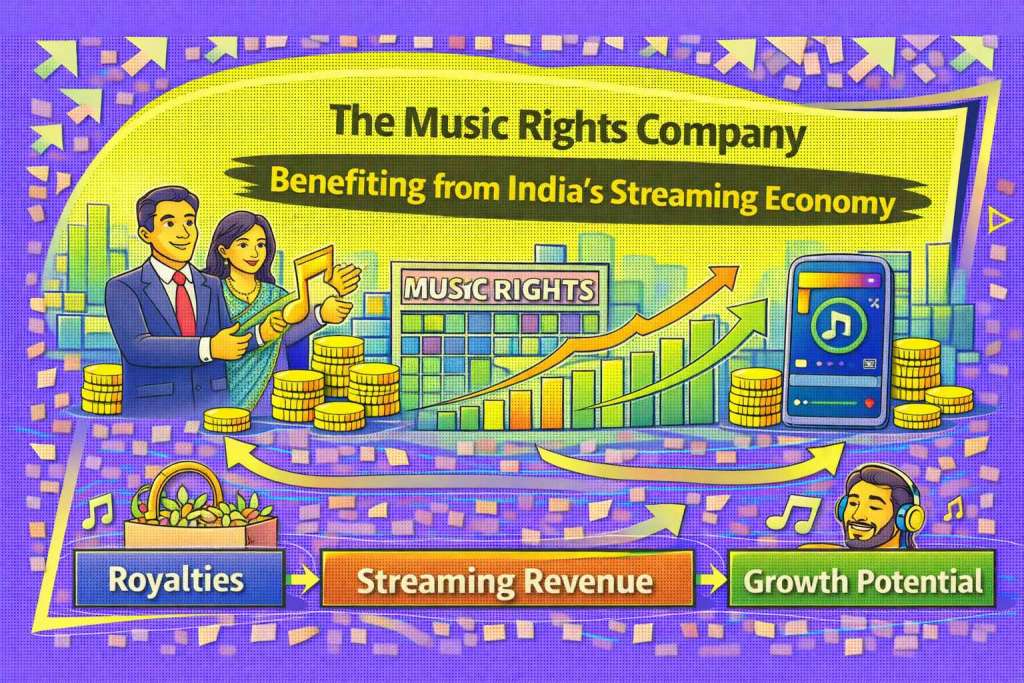
It’s late. Someone’s lying in bed, aimlessly scrolling through Instagram. Suddenly, an old Bollywood song pops up on a reel, something from 15 or maybe even 20 years ago. Somehow, it feels brand new. Within days, that same tune is everywhere. Thousands of creators latch onto the audio, and soon, millions of reels use it. The views rack up fast. Millions turn into hundreds of millions before you know it.

Most people don’t notice what’s really happening behind the scenes. Every single stream, whether it’s a YouTube view, an Instagram reel, or a song playing in a coffee shop or at a wedding, quietly sends a bit of money to someone. These tiny payments add royalties, ad money, and licensing fees dripping in day after day. And here’s the thing: it’s usually not the singers or actors who get the biggest slice. The real winners are the companies that own the rights to the music.
In today’s digital world, owning a music catalogue is like holding a golden ticket. Create a song once, and it keeps earning for years, sometimes long after anyone remembers the movie it came from. For investors, this is a big deal. Intellectual property like this can give companies an edge that lasts for decades. We dig deeper into that idea in Economic Moat Explained: Why Some Companies Stay Dominant for Decades.
Warren Buffett put it best: “If you don’t find a way to make money while you sleep, you will work until you die.” Music catalogues might be one of the few things that actually let you do that.
India’s streaming economy is booming. YouTube, Spotify, and Instagram, these platforms drive billions of plays every day, and the value of music rights has quietly shot up. One company riding this wave is Tips Music. In recent years, Tips has morphed into a digital royalty powerhouse, making money from its huge trove of Bollywood hits across streaming services, short-form apps, TV, public performances, and licensing deals.
All of this brings up a big question for investors. With digital consumption exploding and old songs constantly going viral again, is owning music rights turning into one of the smartest bets for the next decade? This article takes a closer look at Tips Music’s business, how it makes money, what’s driving its growth, and the risks it faces. We’ll also dig into the shifting landscape of the music rights industry. By the end, you’ll get a clearer sense of how music catalogues are becoming long-term digital assets and where Tips Music stands in this changing world.
How Music Makes Money - And How That’s Changed
Not so long ago, the music business was pretty straightforward. Artists and labels made a song, pressed it onto cassettes or CDs, and shipped those out to stores. The more copies you sold, the more money you made. That was it. Once those sales dried up, the song’s moment in the spotlight was basically over.
Music worked a lot like any other product back then: you created it, you sold it, and then people moved on.
But things look completely different now. The digital world has flipped everything. Music lives on streaming platforms, pops up in memes and viral videos, and finds new life through social media and digital licensing. A song isn’t tied to a physical album anymore - or to one moment in time. Playlists, algorithms, and trend cycles can yank an old track back into the limelight.Something released twenty years ago can suddenly blow up on Instagram or YouTube, pulling in millions of new listeners and, just as importantly, bringing in new money.
These days, music acts less like a one-and-done product and more like a digital asset with real staying power. Jay-Z nailed it when he said, 'Music is intellectual property. Once you own it, it can pay you forever.”
Platforms like YouTube, Spotify, and Apple Music pay out based on how much people actually listen. Short-form video apps help songs get discovered all over again. Advertisers keep the whole machine running by buying up digital ad space around this content.
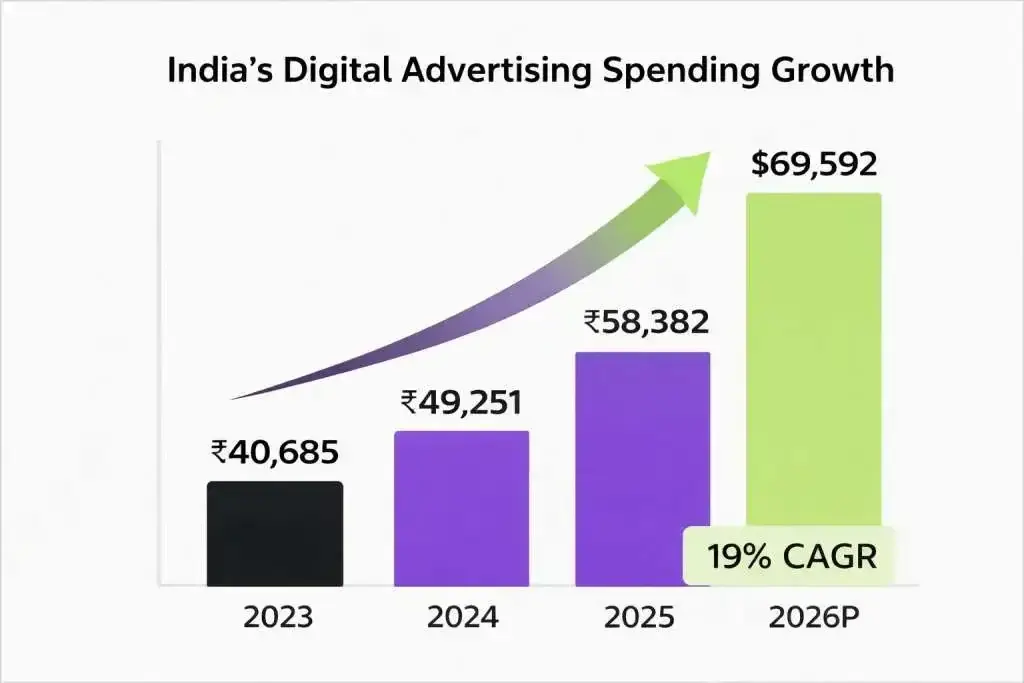
And you can see how big this has become just by looking at digital ad spending. In India, for example, digital advertising hit ₹49,251 crore in 2024, up from ₹40,685 crore the year before. It’s growing fast - about 19% a year between 2024 and 2026. Online video and social media get the biggest piece of that pie, making them some of the hottest spots for advertisers.
For music companies, all this matters. Every time a song gets streamed, featured in a reel, or played on an ad-supported app, the rights holders get a cut through royalties and licensing. What used to be a single sale now turns into a steady stream of income, tied to how people actually use and share music online.
This shift has changed everything for the business. Song catalogs have become long-term moneymakers, able to earn across all kinds of platforms, year after year.
How Tips Music Turns Songs into Long-Term Assets
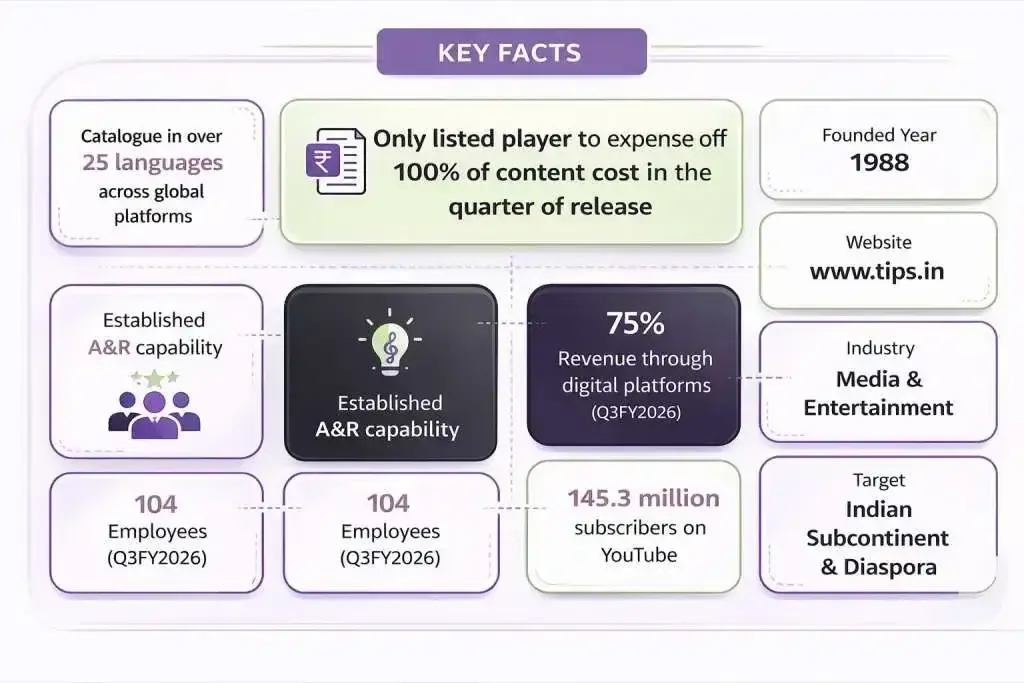
Tips Music isn’t your typical music company. They don’t deal in CDs or physical albums anymore. Instead, they focus on owning music rights and turning those rights into money.
A big turning point for Tips came when they split their film and music businesses. They used to run both under one roof, but then they spun off the film side. After that, the listed company zeroed in on music rights and catalogue monetisation. This shift made it easier for investors to judge Tips by its music library, how well it makes money from digital platforms, and the royalties it collects.
Over time, Tips grew a massive library of songs, both from films and outside the film world, and in several languages. A lot of their best-known tracks come from Bollywood movies in the 1990s and early 2000s - an era packed with unforgettable Hindi songs. Tracks like “Jeene Laga Hoon” from Ramaiya Vastavaiya, “Soldier Soldier” from Soldier, and “Chunnari Chunnari” from Biwi No.1 still pull in listeners. You see them everywhere - streaming platforms, Instagram Reels, YouTube Shorts, or just people using them in their own videos.
Sometimes a song that came out twenty years ago suddenly explodes on social media, racking up millions of new plays in days. That’s the power of having a deep catalogue.
Their business model is pretty simple: pick up or create music rights, then license those rights wherever people want music. This approach brings in money from all sorts of places:
- Streaming platforms like YouTube, Spotify, and Apple Music.
- Ad revenue from YouTube when people stream their songs.
- Short-form video apps, where their tracks show up in reels, shorts, and user-made videos.
- TV channels and entertainment shows that license music for broadcasting.
- Public performance - think restaurants, weddings, clubs, or anywhere people gather and play music.
- Synchronization licensing, which means letting films, ads, web series, or other video projects use their songs.
So, at the end of the day, Tips Music isn’t in the business of selling music licenses or intellectual property outright. They own the rights, and they keep finding new ways to put those songs to work.
Once a company owns the rights to a song, that track basically becomes a money-making machine. They can keep cashing in on it - streaming, ads, social media, live performances - you name it. And this isn’t just a short-term thing; some songs keep earning for decades after they drop.
This whole rights-first approach is how companies like Tips Music set up steady, recurring revenue. Instead of stressing over every new release, they let their catalogue do a lot of the heavy lifting.
Still, you can’t just coast on old hits forever. Music companies need a constant flow of new songs so tomorrow’s classics keep filling up the catalogue. Tips handles this by teaming up with Tips Films, their film production arm. By making movies or snapping up music rights from fresh projects, they always have new material to add.
Lately, management has been talking about several new films in the pipeline - Bollywood projects with big names like Varun Dhawan and David Dhawan, plus plenty of collaborations with top composers and artists. Every new movie soundtrack is a shot at another long-term asset - one that’ll keep racking up streams and licensing money even years after the film fades from the spotlight.
Management usually aims to release around 15 to 20 new songs every quarter, though that depends on how film production is going.
So, Tips Music’s whole game plan is pretty simple: make the most of what they already own, but never stop adding to the collection. And honestly, in a world where a random 20-year-old track can blow up overnight on Instagram or YouTube, hanging on to a deep catalogue is worth way more than it might seem.
In the end, what really sets a music rights company apart isn’t how many songs it pumps out each year. It’s the lasting value of the songs it already owns.
The Power of Music Catalogues
These days, some of the most valuable things in the music industry aren’t brand-new hits - they’re the old favorites sitting in music catalogues. A song might get recorded just once, but it doesn’t really age. Its commercial life can stretch on for decades.
Music isn’t like a gadget or a pair of shoes that fades out after launch. Songs have this knack for popping up again, catching the attention of a whole new crowd years later. Think about that track everyone played in the late '90s - it can suddenly go viral today, not because someone re-released it, but because it shows up on a streaming platform or blows up on social media.
YouTube, Instagram Reels, and YouTube Shorts have totally changed how people stumble upon old music. Just one nostalgic Bollywood song in a viral reel, and suddenly millions are listening, adding it to their playlists, and pushing it up the streaming charts. What’s wild is that this all happens on its own. Someone uses a retro song in a reel. The video takes off.housands more jump in and use the same audio. Streaming numbers explode. This loop keeps repeating, especially since nostalgia is such a big thing online.
Tips Music is a great example. Songs they released decades ago still pull in huge engagement, thanks to social media and streaming. Some of these tracks rack up hundreds of millions - sometimes even billions - of views and plays across different platforms.
For music labels, this is huge. Every stream, every reel, every time a song gets played in a café or a TV show, it brings in a tiny payment to whoever owns the rights. Sure, each payment is small, but when you add up all those streams across the world, it turns into serious money.
There’s another reason why catalogues are such a big deal: music rights last a long time. In India, copyright laws protect musical works for 60 years after the creator dies. Even if the artist or lyricist keeps getting a cut, the label that owns the recording can keep earning from that song for decades.
So, a hit song doesn’t just make money for a moment - it can keep paying out for fifty years or more. That’s why music execs everywhere see catalogues as goldmines for the long haul. Lucian Grainge from Universal Music Group called them “one of the most durable and long-term intellectual property assets in the entertainment industry.”
People call this whole process catalogue monetisation - the art of squeezing income out of a library of music, over and over. For companies like Tips Music, their catalogue is basically a digital royalty machine. Songs from years ago keep earning on streaming platforms, social media, TV, and even in public places.
And as the digital world grows, so do the ways to keep these songs making money.
Financial Performance: Five Years of Growth
The transformation of Tips Music from a traditional music label into a digital royalty business becomes clearer when we look at its financial performance over the past few years.
Over the last five years, the company has delivered strong and consistent growth in both revenue and profits, reflecting the rising monetisation of its music catalogue across digital platforms.
For readers new to financial analysis, learning how companies report revenue and profit growth is essential. Our guide on How to Read a Profit & Loss Statement (P&L) in 10 Minutes: A Practical Investor’s Guide explains how investors interpret these numbers.
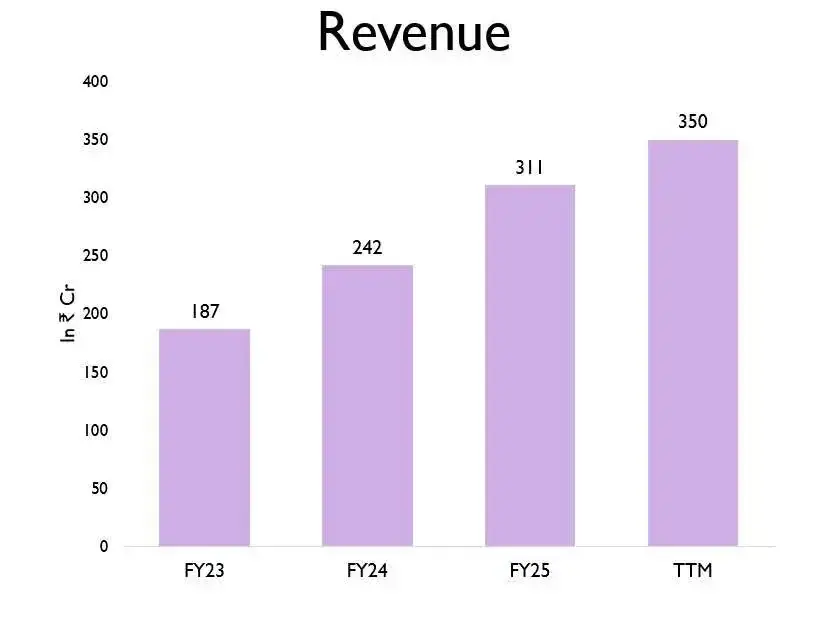
Back in FY2021, revenue hovered around ₹90 crore. That was a tough time - everyone was still figuring out the pandemic, and advertising had slowed down. But things changed fast. As people started streaming more music and spending more time on social media, the company’s revenue shot up.
By FY2022, revenue climbed to ₹135.6 crore, and profit after tax reached ₹64.5 crore. The next year? Even better. Revenue jumped to about ₹186 crore in FY2023, thanks to more streaming and better catalogue monetisation.
The pace didn’t slow down in FY2024. Revenue broke past ₹240 crore, and profits surged as digital monetisation kept improving.
Then, in FY2025, Tips Music hit ₹310.7 crore in revenue and ₹166.6 crore in profit after tax. That’s about triple the revenue and almost four times the profit compared to FY2021.
What really stands out here is how the music rights business works. Once a catalogue starts pulling in digital streams at scale, revenue takes off - and it grows a lot faster than costs.
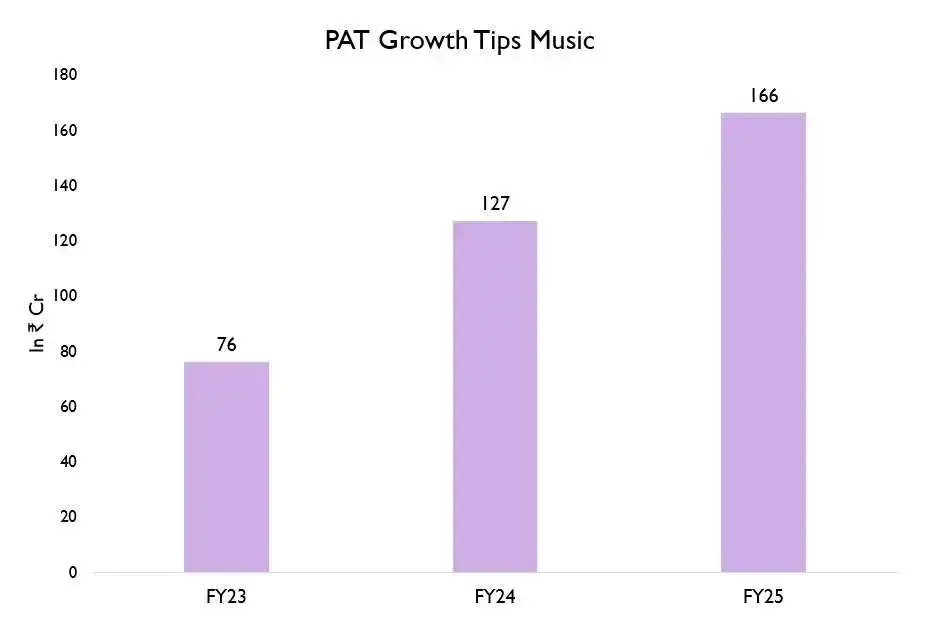
The company’s profits really tell the story. In FY2025, the net profit margin shot past 50% - that’s almost unheard of for a media company. The latest numbers back this up. In Q3 FY2026, they pulled in ₹94.29 crore in revenue, with operating EBITDA at ₹74.5 crore. That’s an EBITDA margin close to 79%. Profit after tax came in at ₹58.7 crore, which means a PAT margin of around 62%. Those are huge margins, and it’s all thanks to how lean their business is.
Here’s why: once they make or buy a song, getting it out digitally barely costs anything. Doesn’t matter if a track gets a few thousand streams or hundreds of millions - the extra cost is tiny. So when streaming takes off, almost all that extra money ends up as profit.
Plus, a big chunk of Tips Music’s income comes from songs they already own. They don’t have to spend much to keep earning from these tracks, but they keep pulling in royalties from streaming services, social media, and licensing deals.
But while the revenue growth story is impressive, the real strength of the business lies in its extraordinary profitability.
Tips Music vs Other Music Labels
Tips Music has carved out a solid spot for itself, building its business around a strong music catalogue. But it’s not alone - India’s music rights industry is packed with some big names.
Analysts like to size up companies by comparing them to others in the same field. It’s a standard move called Comparable Company Analysis, or just “Comps” for short.
Read more on: Comparable Company Analysis (Comps): A Relative Valuation Method
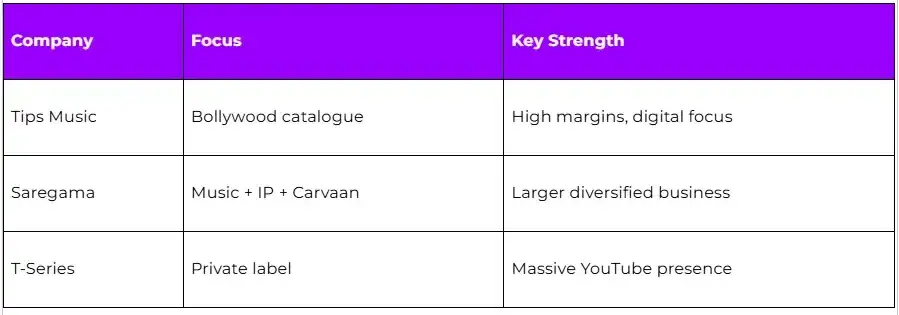
Take Saregama India, for example. It’s probably Tips Music’s closest rival on the stock market, and they’ve got their own massive collection of Hindi and regional songs. Still, these two don’t play by the same rules.
Tips Music leans hard into Bollywood film music and digital platforms. Most of its money comes from streaming services and YouTube ads. Saregama takes a broader approach - it’s not just about music rights. They’re into film production and even sell their own hardware, like the Carvaan music player.
Meanwhile, private giants like T-Series still rule the game in terms of sheer catalogue size and YouTube numbers. Global players like Universal Music Group and Sony Music India also have a presence, mostly by bringing international artists into the Indian market.
So, what makes Tips Music stand out? It’s their laser-focused catalogue strategy and their nail-in-the-coffin digital distribution. These choices keep their operating margins much higher than a lot of old-school media companies.
Why This Is a High-Margin Business
Tips Music pulls off those unusually high margins for a reason. Once you get into the music rights business, it all makes sense pretty quickly.
Here’s the thing: most industries need to spend more money to make more money. They hire more people, buy more materials, all that. Music doesn’t really work that way anymore. The big costs - writing, recording, or buying the rights to a song - hit up front. Once that’s done, the track can live forever online, and sending it out to more listeners barely costs a thing.
Picture it. Whether a song hits one million streams or a billion, the digital distribution cost is almost identical. You could play that song on YouTube, Spotify, Instagram, Apple Music, whatever - the platforms change, but the extra cost for each new listener is tiny.
It’s nothing like selling physical stuff. Back in the day, music labels had to press CDs, ship them out, keep them in stock, all that hassle. Now, most people just stream music, and digital platforms handle the heavy lifting. So, as more people listen, the label’s revenue just keeps growing, but their expenses barely budge.
That’s why Tips Music’s numbers look the way they do. The model is built for big margins. Once a catalog takes off online, almost every extra rupee goes straight to the bottom line.
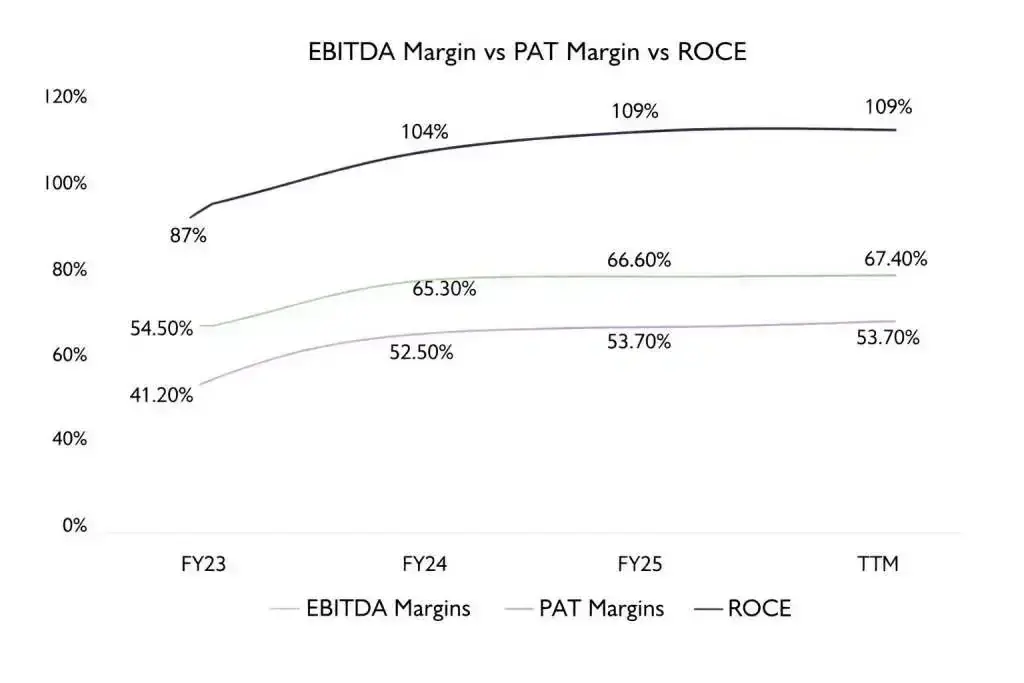
Lately, the company’s EBITDA margins have hovered between 70% and 80%. Just last quarter, they hit 79%, and profit after tax came in at about 62%. You don’t see numbers like these in most industries, but they’re popping up more often among companies with valuable digital intellectual property.
Strong margins like these usually mean better long-term returns for shareholders. Investors watch metrics like return on equity for this very reason - you can dig into that in our guide on Return on Equity (ROE) Explained: A Step-by-Step Guide for Investors if you’re curious.
So, why does this business model scale so well? It’s mostly the nature of digital media. Naval Ravikant put it best: “Code and media are permissionless leverage - they scale without proportional increases in effort.” That’s spot on. The company doesn’t own factories or big distribution networks. Instead, their real assets are music rights and other intellectual property, which they can monetize across many platforms simultaneously.
With more people streaming music, watching short-form videos, and licensing digital content, this kind of scalability only gets stronger. Once a music catalogue takes off, revenue shoots up while costs hardly budge. That’s really the secret behind Tips Music’s unusually high margins.
Why the Company Returns So Much Cash
One aspect of Tips Music that often stands out to investors is its consistent return of cash to shareholders.
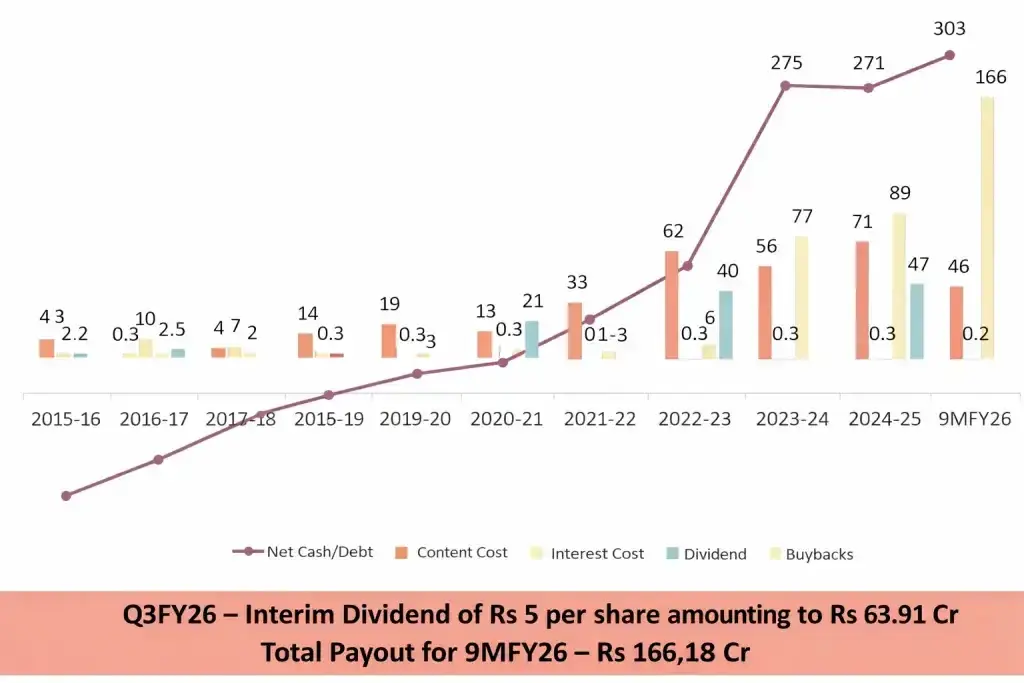
Over the past few years, the company has regularly distributed capital through a combination of dividends and share buybacks. In FY2025 alone, Tips Music returned about ₹136 crore to shareholders, despite continuing to invest in new music content. Even after these payouts, the company maintained a strong cash balance of over ₹270 crore on its balance sheet.
Source: Investor presentation Tips Music Jan 2026
More recently, management reiterated its commitment to rewarding shareholders. In FY2026, the board approved dividends totaling ₹166 crore, effectively returning 100% of the previous year’s profit after tax to shareholders.
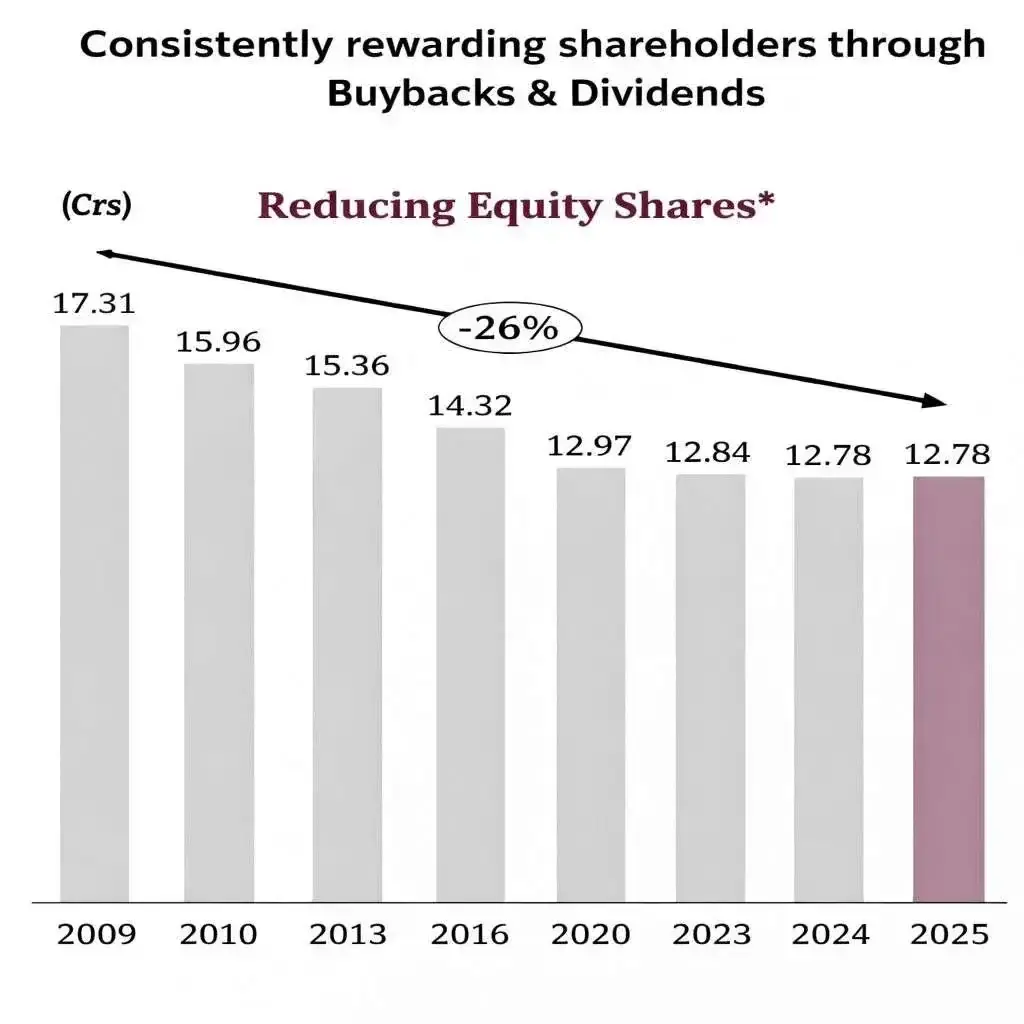
Source: Investor presentation Tips Music Jan 2026
When you see those big payouts, it’s easy to wonder if Tips Music has run out of ways to grow. But honestly, the story’s a bit more interesting than that.
Tips Music’s business just throws off a lot of free cash. Once they buy the rights to a song and put it out on digital platforms, it doesn’t cost much to keep making money from it. Streaming and licensing dollars just keep rolling in, and after covering the basics, there’s still plenty left over.
The company doesn’t just throw money at every new album, either. Management likes to keep things disciplined. They buy music rights upfront, but only when the numbers make sense. Instead of chasing every single new release, they pick their projects carefully, always thinking about the long-term value of the catalogue.
For music companies, buying content is usually a big expense. Tips Music, though, sticks to projects where the long-term payoff looks solid. Songs can keep earning money for years - sometimes decades - on streaming, social media, and through licenses. The team works hard to make sure they’re not overpaying for content, always weighing the cost against what those songs might earn down the road.
Because the best opportunities to buy new music don’t show up every day, the company often ends up with extra cash between those big purchases. When that happens, giving some back to shareholders just makes sense.
So, the big payouts aren’t a sign that growth is drying up. They’re a result of strong cash flow, a business that doesn’t need to own a ton of physical stuff, and a management team that’s picky about where it puts money. As Tips Music keeps growing its catalogue and finding new ways to make money from the songs it already owns, this balance - between investing for growth and rewarding shareholders - pretty much defines how the company runs its finances.
Platform Ecosystem and Global Distribution
Music catalogues are more valuable than ever, and the main reason comes down to how easy it is to get songs out there these days. Back in the day, a track’s success depended on record stores, radio DJs, or maybe a TV spot if you got lucky. Now, music flies around the world in seconds, streaming on platforms like Spotify, Apple Music, YouTube, and popping up on social media everywhere you look.
Tips Music takes full advantage of this. They put their songs on all the big platforms. YouTube is still a giant for music discovery and ad revenue. Spotify and Apple Music handle the subscription side, while Instagram and Facebook - through reels and user videos - help songs spread like wildfire. Each platform pays out in its own way, whether that’s streaming royalties, ad money, or licensing deals. It all adds up.
Lately, social media really drives things. If a song catches fire on Instagram reels or in a viral video, streams on other platforms tend to spike too. One hit video can send a song shooting up the charts everywhere else. It’s all connected now.
Tips isn’t stopping with streaming, either. In January 2026, they announced a deal with B4U TV, a global channel that’s all about Bollywood. Now, their music will play on B4U’s channels, reaching fans in countries where Bollywood is huge. It’s another way to get their songs in front of more people.
For a company like Tips, owning music rights means nothing if nobody hears the music. The more places their songs live, the more chances people have to discover, stream, license, and enjoy them - and the more the company earns. This web of platforms doesn’t just grow their audience; it turns their catalogue into a living, breathing digital asset that keeps bringing in revenue around the clock.
The Short-Form Video Revolution
A huge shift has hit the music industry lately, and it didn’t come from where you’d expect. Short-form video apps - think Instagram Reels, YouTube Shorts, and TikTok - are now fueling how people discover new music. Gone are the days when you’d hunt down songs on Spotify or Apple Music. Now, music just finds you as you swipe through videos.
Here’s how it usually goes: someone picks a track for their reel. That video catches on. Suddenly, everyone’s using the same song. Within days, you’ll hear that track in thousands - sometimes hundreds of thousands - of videos. That’s all it takes to throw a song back into the spotlight.
This viral loop flipped the old way of breaking hits on its head. A song that was almost forgotten can get a second life, all because it became the background to a trending video. And once it’s everywhere, people start searching for it. They look it up on YouTube, Spotify, Apple Music - streams go up, and just like that, the song’s riding a new wave of popularity.
For music labels, this dynamic can create a powerful feedback cycle:
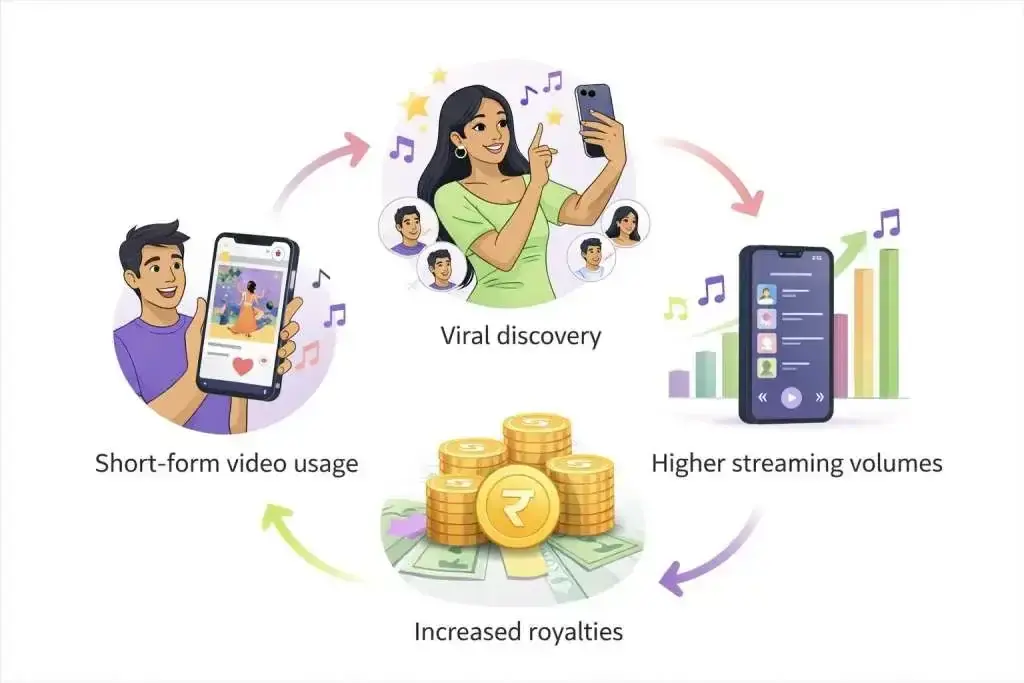
Celebrity amplification speeds things up, no question. When a famous actor or influencer drops a song into a reel or story, that track can blow up overnight. Millions of people scroll through these posts, so one celebrity video can set off a chain reaction - suddenly, everyone’s making their own clips with the same song. Before you know it, the track’s trending everywhere and streams start piling up.
Tips Music knows this game well. Their library is jam-packed with Bollywood hits from the '90s and early 2000s - songs that just about everyone recognizes, no matter their age. These days, a lot of younger folks stumble across those tunes for the first time through viral videos, not old movie soundtracks. It’s kind of wild: tracks that once lived in films now pop up in dance trends, comedy skits, travel diaries, you name it.
Short videos are the way people find music now. Social platforms don’t just shape what goes viral - they decide it. That’s a huge deal for companies like Tips Music. Suddenly, their old catalog isn’t just collecting dust; it’s catching new life and racking up streams all over again.
New Monetisation Channels
Streaming still brings in most of the money for music companies, but new ways to make money from music catalogs are popping up all the time. It just makes sense - music shows up everywhere now. You hear it on social media, in stores, in ads, even in AI-generated content.
Public performance rights are a big piece of the puzzle. Any time a song plays in a restaurant, hotel, club, mall, or at an event, the people who own those rights get paid royalties. With India’s entertainment and hospitality sectors booming, music played in public spaces has turned into a steady income stream for music labels.
Another major moneymaker is sync licensing. That’s when music gets used in movies, ads, web series, TV shows, or digital content. If a brand features a song in a commercial or a production company sticks a track in a film or an OTT series, the rights holder collects a licensing fee.
But there’s more. Digital platforms have changed the game. Social media - think Instagram, Facebook, YouTube - has become a huge channel for music, especially with the rise of reels and short videos. When users pick songs for their videos, these platforms share ad revenue with music labels.
AI is the next frontier. As generative AI tools start using music to train models or create new tracks, the big music labels are already working out licensing deals. They want to make sure rights holders get paid when their music powers AI creations. Sure, AI-related revenue is still pretty new, but it’s clear that technology keeps opening up fresh ways to cash in on music.
For companies like Tips Music, this all adds up. One song catalog can make money in all sorts of ways: streaming, advertising, licensing, public performances, and, soon enough, AI-driven applications. With so many different income streams, music companies have more options than ever. They’re finding new ways to profit from their catalogs that just weren’t possible ten years ago.
Growth Drivers Ahead
Looking ahead, a few big trends are set to shape how the music industry grows - and companies like Tips Music stand to gain a lot from them. One big thing driving change is the steady move toward paid music subscriptions. India, for all its massive music audience, still has way fewer paying subscribers compared to other countries. But as streaming platforms push people to switch from free to paid plans, the money earned from each listener goes up. That’s a real game-changer.
Then there’s digital advertising. It’s booming in India and plays a huge role in how music gets monetized, especially on platforms like YouTube and across social media. In 2024, digital ad spending hit ₹49,251 crore, up from ₹40,685 crore last year. And it’s not slowing down anytime soon - industry experts see it growing at about 19% per year through 2026.
Online video and social media ads are growing the fastest, and both depend a lot on music-driven content. So, as brands spend more on these platforms, more money flows to the music distributed there.
Streaming platforms themselves are reaching even more people every year. With cheaper smartphones, low-cost mobile data, and better internet, millions of new users are jumping online. And honestly, music is usually one of the first things people check out when they get online. So, streaming isn’t just a trend - it’s here to stay.
Finally, there’s just the sheer amount of music people in India listen to. Social media keeps people glued for hours, and music is everywhere - reels, shorts, videos, you name it. Every time someone interacts with music online, it opens the door to new ways for them to discover songs and for companies to make money.
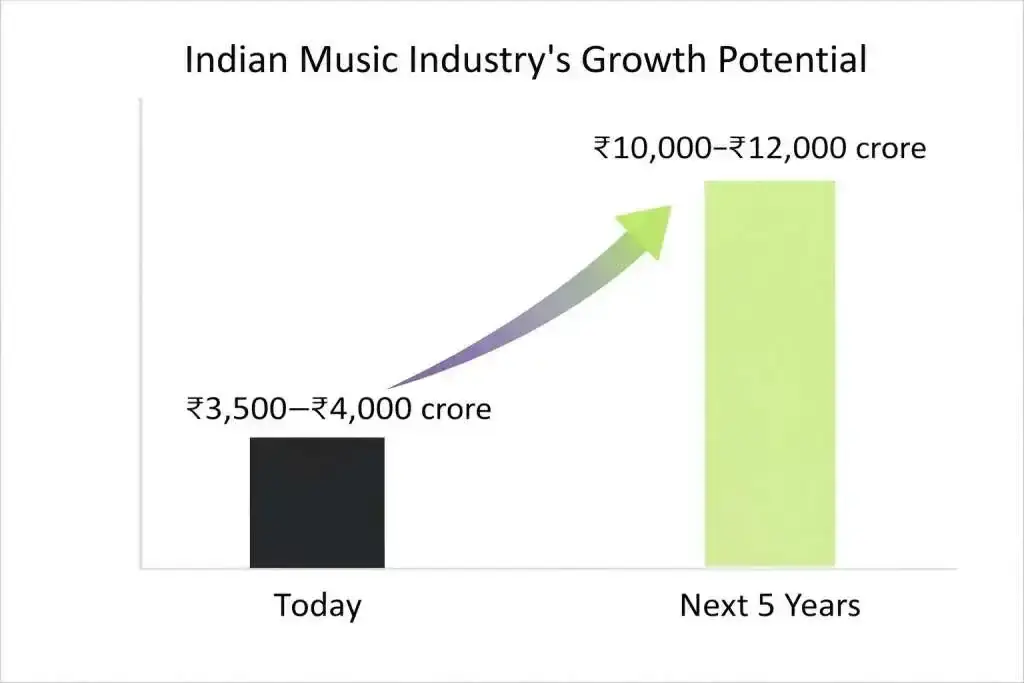
All these trends really show the industry is gearing up for a big leap. Right now, the Indian music industry sits at about ₹3,500–₹4,000 crore, but people expect it to hit somewhere between ₹10,000 and ₹12,000 crore in the next five years. Streaming is catching on fast, digital ads are growing, and new ways to make money are popping up everywhere.
For companies like Tips Music, which already own a ton of music rights, this boom means a lot. They'll see more streams, more demand for licensing, and plenty of fresh ways to cash in across digital platforms.
Risks Investors Should Know
The digital music industry looks like it’s on the rise, but there are real risks that come with it too. Take Tips Music, for example. They rely heavily on digital platforms like YouTube, Spotify, and social media for most of their income. If any of these platforms decide to change their revenue-sharing deals, licensing agreements, or even their basic policies, it directly affects how much money music companies and rights holders actually make. It’s a big risk they can’t ignore.
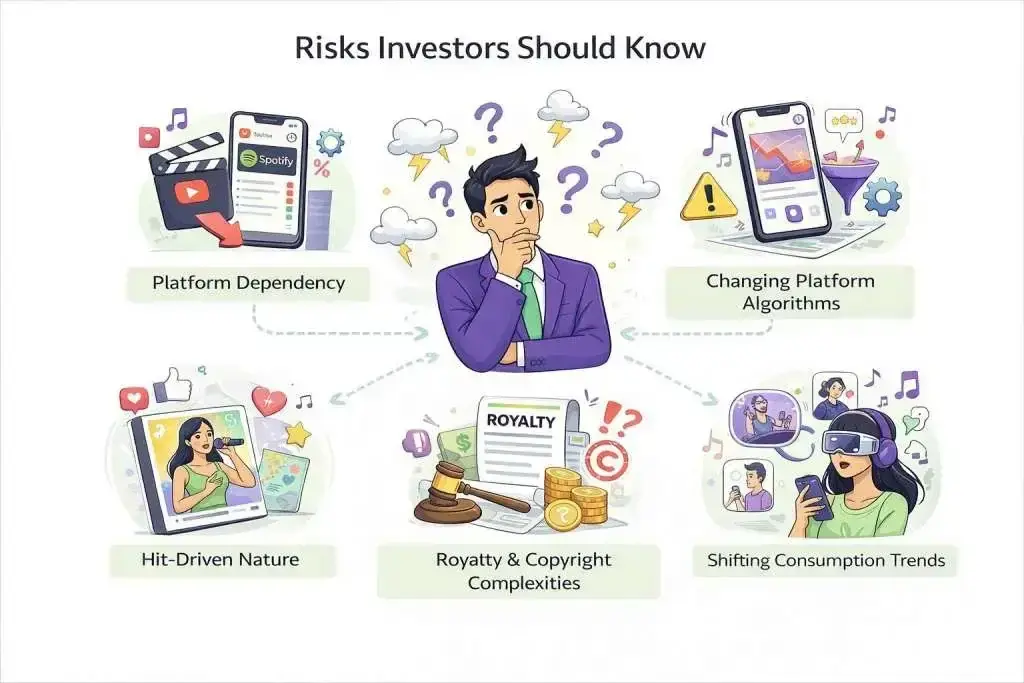
Here’s the thing: music discovery lives and dies by platform algorithms these days. YouTube, Instagram, streaming apps - they all push songs through recommendations and whatever’s trending. When those algorithms shift, the songs that were everywhere yesterday can suddenly disappear, and something totally new pops up in their place. Streaming numbers jump around, and ad money goes up and down. It’s not exactly stable.
This whole business is obsessed with hits. Sure, having a solid back catalogue brings in steady money, but new songs? No one really knows which ones will blow up. Sometimes a track takes off because it’s in the right movie or goes viral on TikTok, but there’s no magic formula. It’s a bit of a gamble every time.
Then there’s the royalty maze. Music rights get split between composers, lyricists, performers, publishers, record labels - you name it. Everyone wants their cut. Copyright rules, royalty payments, licensing agreement. Any fight or new regulation can mess with the bottom line.
And let’s not forget how fast things change. As digital platforms keep evolving, new tech and fresh competition keep shaking up how people listen to and pay for music. That means new ways to make money, but also a lot of questions about what’s next.
If you’re thinking about investing in this space, you have to keep these risks in mind. There’s a ton of potential, but it’s never simple. The industry’s always a bit unpredictable.
Explore our Products
Research Framework

Emerging Titans
Combination of quantitative analysis, industry tailwinds, and management assessment - SPRINT investment philosophy

Tiny Titans
Heavy emphasis on scuttlebutt research, plant visits, and early on-ground signals
Management and Promoter Background
Tips Music has always been a family affair for the Tauranis. They’ve been part of India’s music and film scene for decades, with Kumar Taurani at the helm as Chairman and Managing Director, backed by other family members. Their story goes way back to the days when cassettes ruled the market, back when selling physical tapes was how you made it in music. They built their reputation the old-fashioned way - slowly, through connections in Bollywood and by steadily taking on more music production and rights.
The big break came in the ‘90s and early 2000s. Tips produced hit after hit for some of the era’s most popular Hindi films. Many of those songs are still earning streams and royalties today, forming the backbone of their catalogue.
But they didn’t just stick to old-school methods. Over time, Tips shifted gears, moving from a traditional music label to a full-on digital music rights business. The focus now is all about building a catalogue that keeps earning - whether that’s through streaming, social media, or all sorts of licensing deals.
The Tauranis didn’t stop at music, either. They’ve also produced films through related companies, which just adds another layer to their deep roots in Bollywood. All those years in the business, all that hands-on experience - it’s shaped how they build their catalogue and the partnerships they form in India’s entertainment world.
The Future of Music Rights in a Digital Economy
In the last ten years, the music business has changed in ways most people didn’t see coming. Songs don’t fade away when an album cycle ends or a movie leaves theatres. Now, they stick around. They pop up on streaming services, social media, short videos pretty much everywhere you look online.
Music catalogues aren’t just collections of old tunes anymore. They’ve turned into valuable digital assets. Quincy Jones nailed it when he said, “Music is the one thing that connects people across generations.” He’s right. A single track can pull in money for years through streams, ads, licensing deals, and royalties from public performances.
The reach of platforms like YouTube, Spotify, and Instagram keeps growing, and with it, the ways people discover and pay for music keep multiplying. If you own a big library of music rights, you’re in a sweet spot right now. More streaming subscribers, more viral video clips, more digital ads, and more people worldwide listening to all these all add up. Music keeps finding new audiences and generating revenue over and over.
Take Tips Music, for example. They show what’s possible when you build a business around a carefully chosen catalogue. With digital distribution and licensing, owning the right songs can turn into a high-margin, scalable business.
So, for investors, the real question isn’t just about the latest hit or this quarter’s streaming numbers. Seasoned investors look at the bigger picture; they want a clear philosophy about what makes a business worth betting on. If you want a deeper dive into how they think, check out “What Is an Investment Philosophy? Why Every Serious Investor Needs One".
The big thing to ask is: Are music rights turning into one of the most reliable, long-lasting digital assets in entertainment? That’s where the industry’s heading.
Enjoyed this breakdown?
If you found this analysis useful, comment "music" below for more deep-dives on businesses shaping India’s digital economy.
FAQs
What is the share of music streaming in India?
+Music streaming now dominates music consumption in India, accounting for more than 80–90% of listening activity across digital platforms. Unlike many global markets, a large portion of this consumption is still ad-supported rather than subscription-based, which means revenue growth is closely tied to digital advertising and future subscription adoption.
How has streaming changed the music industry?
+Streaming has shifted music from a one-time product sale to a recurring usage-based model. Instead of earning money only when an album is sold, songs now generate revenue every time they are streamed, used in videos, or licensed across platforms. This allows music catalogues to earn income for many years after release.
Is AI a threat to the music industry?
+Artificial intelligence presents both risks and opportunities. While AI-generated music raises copyright concerns, it may also lead to new licensing models where AI platforms pay royalties for using music data. Much will depend on how copyright regulations evolve.
Why do older songs suddenly become popular again?
+Social media and short-form video platforms have changed how music is discovered. A song released years ago can go viral if it becomes part of a reel trend, meme, or influencer video, bringing the track back into streaming playlists and generating fresh royalties.
How can investors identify valuable music catalogues?
+Strong catalogues typically show consistent streaming growth, high social media usage, and long-term listener engagement. Songs that continue to appear in reels, playlists, and licensed media often indicate lasting cultural relevance and durable monetisation potential.

High growth stock specialist, Value Educator
Shashank Mahajan is an equity research professional with over 12 years of experience in identifying high-potential SME and micro-cap stocks at an early stage. He follows a rigorous scuttlebutt research–driven approach, combining on-ground insights with deep financial analysis. Shashank specializes in uncovering under-researched and under-owned companies with strong management quality and long-term growth potential. Through disciplined research and early identification, he focuses on spotting tomorrow’s market leaders before they enter the mainstream investor radar.

Zen Technologies: Revenue Fell After a Big Win




PNG Jewellers: A 194-Year-Old Name Goes National

Explore our Products
Research Framework
Emerging Titans
Combination of quantitative analysis, industry tailwinds, and management assessment - SPRINT investment philosophy
Tiny Titans
Heavy emphasis on scuttlebutt research, plant visits, and early on-ground signals


 Orders
 Subscription
 Share with friends


Required Details
₹23999.00
(12 month subscription)
As per SEBI regulations, all users are mandated to complete the KYC that is validated for 1 year. Post payment, you will be redirected to the KYC screen


No comments yet. Be the first to comment!