
FII Selling in Power Stocks: Risk or Chance?

The same investors who drove the rally… are now exiting.
And most investors are reading it completely wrong.
Just weeks ago, foreign investors were aggressively accumulating India’s power stocks, positioning for what many saw as a multi-year structural opportunity. In February 2026 alone, FIIs invested nearly $497 million into the power sector, backed by rising electricity demand, energy transition, and a strong capex cycle.
But the trend has shifted sharply.
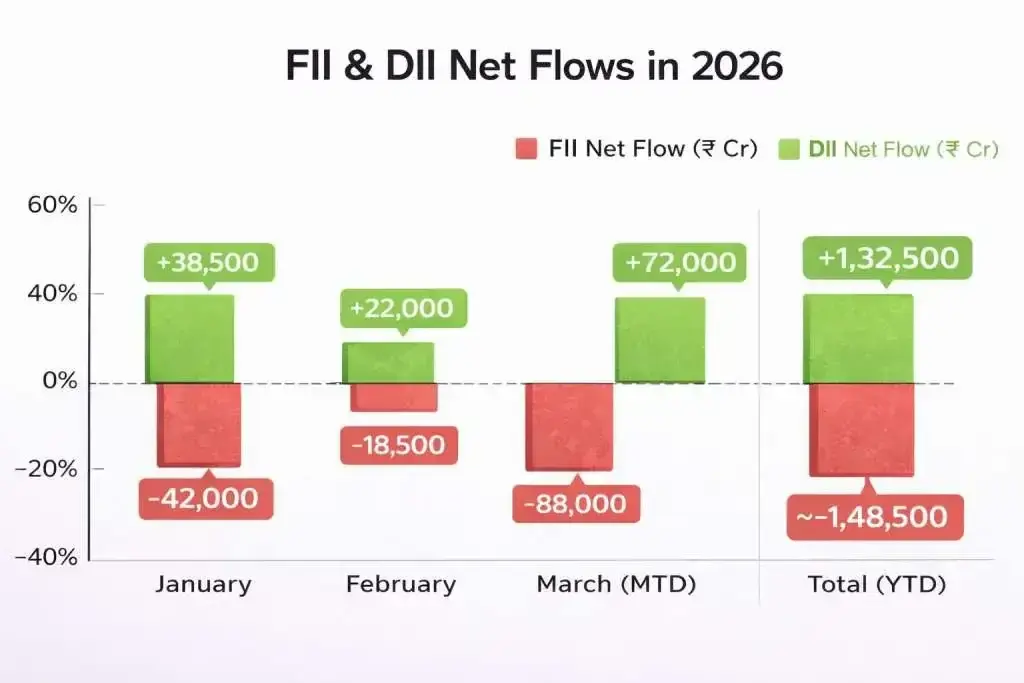
In March 2026, FIIs pulled out over ₹88,000 crore in a single month, taking total outflows to ₹1 lakh crore+ for the year so far. In just the first half of the month, selling crossed ₹52,700 crore, marking one of the most aggressive phases of foreign outflows in recent times.
This is not routine volatility.
This is a large-scale capital movement.
Yet, the market hasn’t cracked the way it typically would under such pressure.
Because beneath the surface, something equally powerful is happening. While FIIs are selling, domestic institutional investors (DIIs) are stepping in aggressively, absorbing the supply and stabilising the market.
This sets up a rare dynamic:
- Global capital is exiting
- Domestic capital is taking control
This shift is one of the biggest structural changes in Indian markets in recent years → What is DII Buying? How Mutual Funds Impact Share Prices
And right in the middle of this shift sits the power sector a sector that was, until recently, one of the largest beneficiaries of foreign inflows.
This creates a contradiction every serious investor must understand:
The same smart money that entered early…
is now reducing exposure.
Not because the story disappeared.
But because something else changed.
Smart money entered… and then started leaving.
So what changed?
“The stock market is a device for transferring money from the impatient to the patient.” — Warren Buffett
If you’re new to how foreign and domestic money drives markets, understanding this shift is critical → FIIs vs DIIs: How Indian Markets Quietly Changed
What’s Happening Specifically in Power Stocks
Now, let’s zoom in on the power sector itself because this is where most investors get confused.
In the short term, the impact of FII selling is clearly visible. There is increased volatility across power stocks, with prices reacting more to flows and sentiment than fundamentals. Along with this, we are seeing profit booking, especially in stocks that had rallied sharply over the last 12–18 months. This has led to a slight change in sentiment to the cautious. Even positive news is not resulting into good price moves, as the market is more focused on flows than fundamentals.
Yet this is not all the side of the coin.
When you look back at the long-term, the basics are not that much different.
The demand of power is increasing constantly due to the industrial development, urbanisation, and internet infrastructure. The government priorities on energy security, expansion of renewable and transmission infrastructure are robust. Meanwhile, capex cycle within the power sector remains in its early or mid-range and there are large amounts of investments planned in the generation, transmission, and storage sectors.
So while prices are reacting in the short term, the underlying business dynamics have not weakened.
And that leads to a very important contrast:
Price is correcting… but the business is still improving.
Why the Power Sector Became a Favourite for FIIs
Before understanding why FIIs are selling, you need to understand why they entered the power sector so aggressively in the first place.
This wasn’t a random trade. It was a structural bet on India’s future.
To understand why this sector is gaining so much attention, you can explore deeper here → Why Power Sector Stocks are Booming – Data & Trend Analysis
The power demand in India is no longer increasing at a slow rate; it is increasing at a high pace. Electricity demand has already reached a record high of over 245 GW, and all this is projected to increase further with the growth of the economy. This is a demand unlike that of previous cycles since households or industries cannot provide all the demand; at the same time, it is being driven by various structural changes.

The emergence of data centres and AI infrastructure is one of the largest impetuses. They are very energy-consuming. With India going digital and the influx of global technology firms into the country, this segment of the population will soon be placing great demands on electricity, making it one of the most significant demands in the forthcoming decade.
Meanwhile, India is experiencing a huge energy transition. The trend towards the use of renewables, solar, wind, and energy storage is a choice, not only an eco-friendly choice but also a capital investment cycle. This implies that it will have to keep investing in power infrastructure, transmission and grid upgrades.
To this story, add now the urgency.
India is entering into an extreme demand of summer cycles, whereby electricity demand is escalating sharply because of the increase in temperature. To control this, the government has already begun clamouring to increase the production of coal and power supply to make sure that there are no deficits at peak times.
So what FIIs saw was not just a sector…
They saw a multi-decade demand story backed by policy support, capex visibility, and rising consumption.
And this leads to the most important insight:
Power is no longer a cyclical sector dependent on short-term demand.
It is slowly becoming a structural growth story driven by India’s long-term needs.
“The best investments are made when things look uncertain.” — John Templeton
Why FIIs Are Selling Now
To understand the current selling, you need to avoid the biggest mistake most investors make, assuming that FII selling automatically means something is wrong with the sector. In reality, the reasons are more nuanced. The selling is not driven by one factor, but by a combination of global macro shifts, valuation resets, and capital rotation. Let’s break it down clearly.
1. Global Risk-Off (Not an India Problem)
The most significant and the first reason is not much about India or the power industry as such.
Internal uncertainty has risen globally, especially in the geopolitical instability in the Middle East, which has heightened oil prices and brought inflation issues to the fore. Central banks, particularly in the US, would maintain interest rates longer when there is an increase in inflation risks in the world.
This directly impacts global capital flows.
US bond yields have remained elevated in 2026, with 10-year Treasury yields hovering in the ~4%–4.3% range, making risk-free returns in developed markets more attractive. As a result, global funds are incentivised to move capital away from emerging markets and into safer, yield-generating assets.
At the same time, a stronger US dollar further reduces the appeal of emerging markets, as currency risk increases.
So when risk rises globally, FIIs don’t selectively analyse sectors; they reduce exposure across markets.
That’s exactly what we are seeing now.
FIIs are not selling India; they are reducing global risk.
Rising US yields are making emerging markets like India relatively less attractive in the short term.
“Risk comes from not knowing what you’re doing.” — Warren Buffett
2. Valuation + Profit Booking
The second reason is much more market-specific.
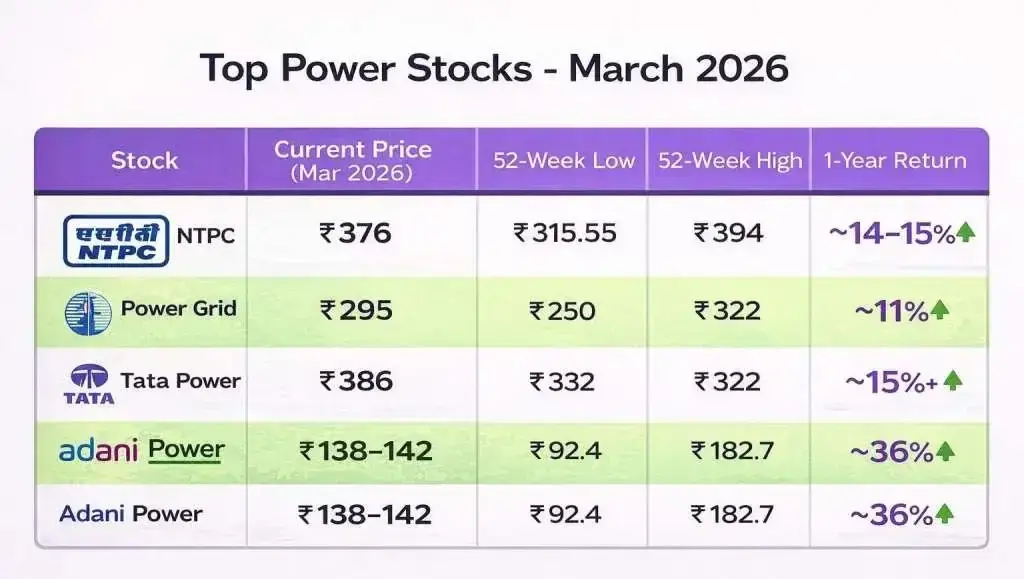
Over the last 12–18 months, power stocks have seen a strong rally, driven by improving earnings visibility, policy support, and rising investor interest in the sector. Companies like NTPC and Adani Green Energy witnessed significant price appreciation as the structural story gained traction.
FIIs were early participants in this trend. They entered when valuations were reasonable and the narrative was still building.
But markets work in cycles.
As the narrative becomes widely accepted and prices move up, future returns start getting priced in. This is also what happens when a sector becomes a crowded trade. As more investors enter the same theme, expectations rise, positioning becomes heavy, and a large part of future upside gets reflected in current valuations.
At that point, early investors don’t wait; they start booking profits.
This is not panic selling. It is disciplined capital rotation.
Smart money buys early… and sells when the narrative becomes consensus.
“Be fearful when others are greedy and greedy when others are fearful.” — Warren Buffett
If you want to understand how early signals of big moves form, this framework will help → 7 Early Signals That a Stock Can Turn Multibagger
3. Relative Attractiveness (Global Capital Rotation)
The third reason is often ignored, but extremely important.
Global capital is always comparing opportunities across markets. It doesn’t just ask, “Is India a good story?” It asks, “Where can I get better risk-adjusted returns right now?”
Currently, markets like Korea and Taiwan are benefiting from the AI and semiconductor cycle, attracting strong global inflows due to higher near-term earnings growth visibility. This makes them relatively more attractive in the short term compared to other emerging markets.
So even if India’s long-term story remains intact, capital can still move out temporarily if other markets offer better near-term opportunities.
This is not a rejection of India.
It is simply a reallocation of capital.
And that leads to a key insight:
Capital flows where returns look better, not where stories sound better.
The Key Insight Most Investors Miss
Here’s where most investors go wrong.
They see FII selling…
and immediately assume something is wrong.
But in reality:
FII selling is NOT always bearish.
It is often macro-driven, not sector-driven.
This distinction is critical.
FIIs operate based on global risk, liquidity, and relative returns not just company fundamentals. So when they sell, it doesn’t always mean the business is weakening. Sometimes, it simply means capital is being reallocated across geographies.
To understand this clearly, look at it like a framework:

In the current market, we are largely seeing the first situation, FIIs selling, but DIIs actively buying.
That’s not fear.
That’s a change in who is driving the market.
And this is where smart investors separate themselves from the crowd.
They don’t react to flows blindly.
They ask a better question:
Is the business weakening… or is the capital simply moving?
What’s Happening Specifically in Power Stocks
At this point, it will be better to have a closer look at the power sector itself, since this is where most investors are seen to get lost.
In the short run, the effect of FII sales is quite evident. It is more volatile in power stocks and the prices are more sensitive to flows and sentiment rather than fundamentals. Through this, we are also witnessing profit booking, particularly with stocks that have soared in the past 12-18 months. This has resulted in a general mood of reservation, and even good news is not converting into good price behaviour.
One should also realise that the power sector is not evolving in one step. Various segments are responding differently to this stage. The energy companies that are renewable are more highly volatile as they are highly valued and are expected to grow, whereas PSU utilities are relatively stable because they have predictable cash flows and are regulated by nature. Transmission and grid businesses, in turn, are more of a defensive operation due to the predictable returns and long-run visibility.
And yet there is only one side of the story.
When you take a long-term view, the fundamentals are not going to change much. The demand of power keeps increasing regularly owing to augmented industrialisation, urbanisation, and digital infrastructure. The attention of the government to energy security, renewable development, and upgrades of the transmission system is close. Simultaneously, the power sector capex was just at its early to mid phases and a lot of investments into generation, transmission and storage is scheduled.
In such a way, prices are being responsive in the short run, but the fundamental business processes are not compromised.
And that leads to a very important contrast:
Price is correcting… but the business is still improving.
Opportunity vs Red Flag: How to Read FII Selling in Power Stocks
This is the most important part of the discussion because the same FII selling can either be a great opportunity… or a serious warning sign.
The difference lies in fundamentals, not price movement.
When It Is an Opportunity
FII selling becomes an opportunity when the core business remains strong, but sentiment turns weak temporarily.
Look for these signals:
- Structural demand for power continues to rise
- Earnings visibility remains strong and improving
- FII selling is driven by global macro, not company-specific issues
- DIIs are actively buying and supporting the market
In this situation, what you are witnessing is not fear; it is capital rotation.
Stocks may correct, but the business continues to compound underneath.
The key mindset here is:
“Smart money exiting in the short term does NOT mean the business is weakening.”
In fact, this phase often creates the best entry points when prices adjust, but fundamentals remain intact.
When It Is a Red Flag
FII selling becomes a red flag when it is supported by weakening fundamentals.
Watch out for these signs:
- Earnings growth starts slowing down or becomes inconsistent
- Debt levels rise without a corresponding cash flow improvement
- Policy or regulatory uncertainty increases in the sector
- Both FIIs and DIIs start selling together
This is where the problem shifts from “flows” to “fundamentals”.
Because when both global and domestic investors lose confidence, it usually reflects real underlying issues in the business or sector.
And this leads to the most important rule:
If fundamentals weaken, then selling matters.
Investor Psychology Where Most Investors Misread FII Selling
FII selling rarely creates losses on its own misinterpretation of that selling does. The moment foreign investors turn net sellers, retail behaviour tends to follow a predictable pattern: flows are equated with information. If FIIs are selling, it is assumed they “know something.” This triggers a second-order reaction, media amplification, negative narratives, and eventually price-led panic.
What makes this dangerous is how quickly price gets mistaken for reality. A 10–15% correction in power stocks is often interpreted as a deterioration in fundamentals, even when underlying drivers like demand growth, capex visibility, and policy support remain unchanged. In reality, markets frequently adjust due to liquidity shifts, not business deterioration.
This is where behavioural gaps emerge. Retail investors tend to anchor decisions around recent price action and headlines, while institutional investors differentiate between flow-driven corrections and fundamental change. When FIIs reduce exposure due to global risk or asset reallocation, it creates temporary dislocations but not necessarily long-term damage.
The key insight is this: markets are forward-looking, but behaviour is reactive. By the time selling becomes visible, the underlying reason is often already priced in or unrelated to the business itself. Acting purely on flows means reacting late, often exiting when risk is already reduced.
The uncomfortable reality is that the best phases for long-term positioning rarely feel comfortable. When sentiment weakens, but fundamentals remain intact, prices adjust faster than business value. That gap is where opportunity is created, but only for those who can separate noise from signal.
Most wealth is not created when confidence is high.
It is created when conviction exists despite discomfort.
“The big money is not in the buying and selling, but in the waiting.” — Charlie Munger
A Practical Framework to Decode FII Selling
FII selling becomes dangerous only when you react to it blindly. The smarter approach is to slow down and ask the right questions before making any decision. This simple framework helps you separate noise from signal.
Before reacting to any selling pressure, ask:
1. Is the business actually deteriorating?
Are revenues slowing, margins compressing, or order books weakening? If the underlying business remains stable or improving, price correction alone is not a red flag.
2. Or is this driven by global macro factors?
Look at the bigger picture: interest rates, oil prices, geopolitical tensions, dollar strength. If FIIs are selling across markets, it’s likely a global risk-off move, not a sector-specific issue.
3. Are DIIs stepping in as buyers?
If domestic institutions continue to accumulate while FIIs sell, it signals local conviction remains strong. This often indicates rotation rather than panic.
4. Are earnings still growing?
Ultimately, stock prices follow earnings over time. If earnings visibility and growth trajectory remain intact, short-term selling pressure becomes less relevant.
Put together, this creates a simple but powerful lens:
- If fundamentals are weakening → be cautious
- If only flows are changing → be patient
If you want a step-by-step approach to evaluating any stock before reacting, this checklist will help → A Fundamental Checklist: How to Research a Stock in 1 Hour
This is not about predicting markets.
It’s about avoiding negative reactions at the wrong time.
And over the long run, that discipline matters far more than any single stock pick.
Explore our Products
Research Framework

Emerging Titans
Combination of quantitative analysis, industry tailwinds, and management assessment - SPRINT investment philosophy

Tiny Titans
Heavy emphasis on scuttlebutt research, plant visits, and early on-ground signals
Conclusion
FII selling in the power sector looks uncomfortable on the surface, but discomfort and risk are not always the same. What we are seeing today is largely a shift in global capital flows, not a breakdown of the underlying business. Power demand continues to rise, capex visibility remains strong, and the long-term story is still intact.
The real mistake investors make is reacting to who is selling, instead of understanding why they are selling. Markets move on liquidity in the short term, but over time, they follow earnings, execution, and structural demand. If those remain intact, temporary selling pressure often becomes an opportunity rather than a threat.
The difference between an opportunity and a red flag is not in the price; it is in the fundamentals behind the price.
Markets react to flows.
Wealth is created from fundamentals.
“In the short run, the market is a voting machine, but in the long run, it is a weighing machine.” — Benjamin Graham
If this perspective changed how you look at FII selling, comment “FII” and I’ll share a deeper breakdown of where smart money is moving next and which sectors are seeing early accumulation. Follow for more research-driven, no-noise insights that help you think like an investor, not react like the market.
FAQs
What is the reason for FII selling?
+FII selling in 2026 is largely driven by global macro factors, not India-specific weakness. Rising US bond yields (~4–4.3%), a stronger dollar, and geopolitical tensions have made developed markets more attractive in the short term. As a result, global funds are reallocating capital away from emerging markets like India. Along with this, profit booking in sectors like power, which saw strong rallies, has also contributed to selling. In simple terms, FIIs are reducing global risk and rotating capital, not necessarily exiting because fundamentals are weak.
Is it good to invest in the power sector?
+The power sector currently has a strong structural growth story, driven by rising electricity demand, energy transition (renewables), and a multi-year capex cycle. However, in the short term, prices may remain volatile due to FII selling and profit booking.
So the answer is:
- Long-term → Positive (strong fundamentals)
- Short-term → Volatile (flow-driven movements)
Investors should focus on earnings growth, demand visibility, and balance sheet strength, rather than short-term price corrections.
Is high FII holding good or bad?
+High FII holding is generally seen as a positive signal, as it reflects global investor confidence in a company or sector. However, it also comes with a risk — FIIs can exit quickly during global uncertainty, leading to sharp price corrections.
So:
- High FII holding = confidence + liquidity
- But also = higher volatility during global risk-off phases
The key is not just FII holding, but whether fundamentals remain strong when FIIs sell.
What is the total FII selling in 2026?
+In 2026 so far, FIIs have sold over ₹1 lakh crore worth of Indian equities, with ₹88,000+ crore outflow in March alone. In just the first half of March, selling crossed ₹52,700 crore, making it one of the sharpest selling phases in recent times.
This reflects a broad global capital shift, rather than a sector-specific exit.

High growth stock specialist, Value Educator
Shashank Mahajan is an equity research professional with over 12 years of experience in identifying high-potential SME and micro-cap stocks at an early stage. He follows a rigorous scuttlebutt research–driven approach, combining on-ground insights with deep financial analysis. Shashank specializes in uncovering under-researched and under-owned companies with strong management quality and long-term growth potential. Through disciplined research and early identification, he focuses on spotting tomorrow’s market leaders before they enter the mainstream investor radar.

Zen Technologies: Why Revenue Fell After Its Biggest Win

Data Patterns: India's Radar Designer and Its Waiting Orders
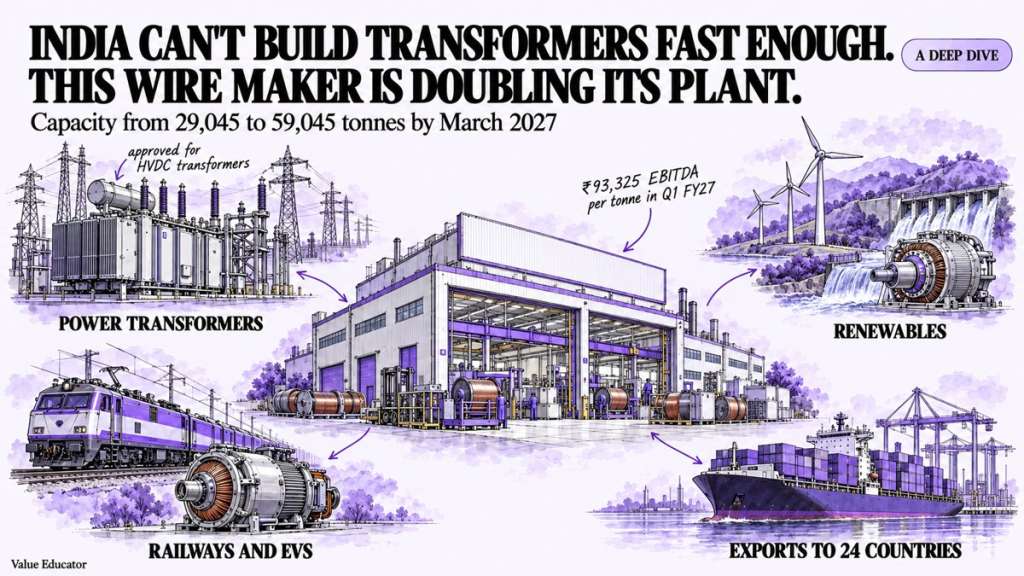
KSH International: The Wire Inside India's Transformers

Krishna Defence: The Steel Behind India's Warship Hulls

PNG Jewellers: A 194-Year-Old Name Goes National

Axiscades: From Services to Missile and Radar Electronics
Explore our Products
Research Framework
Emerging Titans
Combination of quantitative analysis, industry tailwinds, and management assessment - SPRINT investment philosophy
Tiny Titans
Heavy emphasis on scuttlebutt research, plant visits, and early on-ground signals


 Orders
 Subscription
 Share with friends
 Logout


Required Details
₹23999.00
(12 month subscription)
As per SEBI regulations, all users are mandated to complete the KYC that is validated for 1 year. Post payment, you will be redirected to the KYC screen


No comments yet. Be the first to comment!