
Why Power Sector Stocks Are Booming

The Perfect Storm Nobody's Talking About
India’s economy is starting to feel the strain of rising electricity demand. The gap is already there if you look closely, and it is quietly setting up an investment opportunity that many investors are still missing.
Anyone who follows the markets has probably seen brief mentions of power stocks doing better than expected, often tucked away in the news and quickly forgotten. What often gets missed is the reason behind it. This is not a short-lived rally driven by sentiment or speculation. A powerful combination of government policy, large-scale infrastructure spending, and steady economic expansion is reshaping how electricity is generated, transmitted, and distributed across the country. For investors who take the time to understand this shift, power sector stocks offer a rare and underappreciated wealth-building opportunity over the next three to five years.
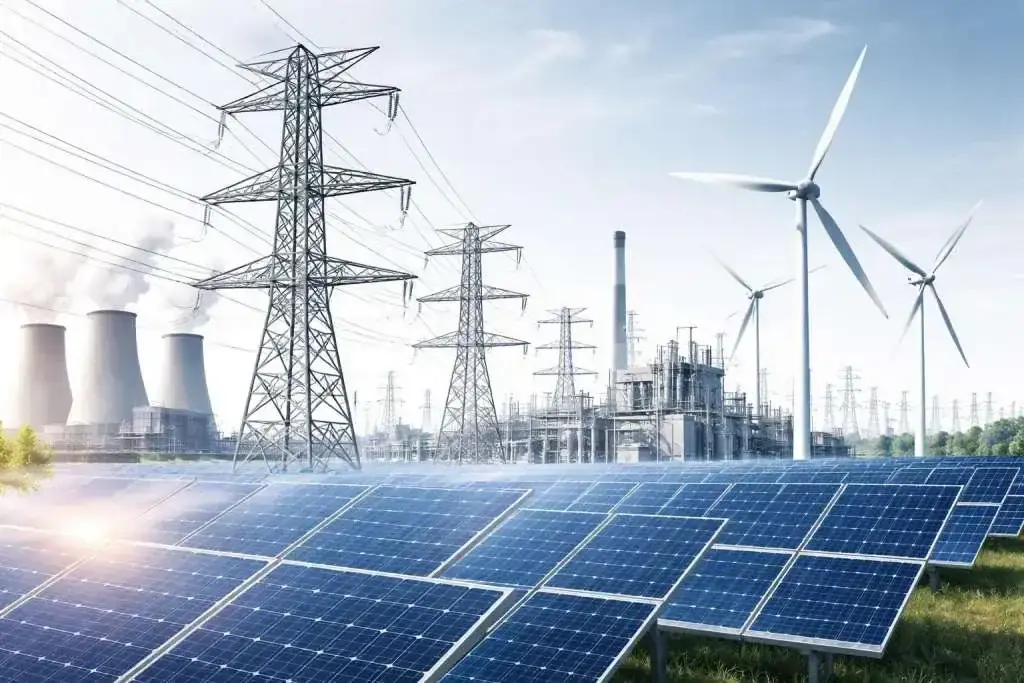
The data makes this clear. For FY 2025 to 26 alone, the Indian government has committed ₹11.21 lakh crores in capital expenditure. This is not an estimate or a policy promise. That's your tax money and government bonds being deployed to build the backbone of India's economic future. The real opportunity, however, goes beyond traditional power generation. It lies in the convergence of economic recovery, the renewable energy transition, distribution sector reforms, and a new demand driver that has emerged over the last two years in the form of data centres and AI infrastructure.
Whether you are a seasoned investor looking to diversify beyond IT stocks or a beginner trying to identify sectors that can deliver steady returns over the next five years, understanding the power sector’s growth story is critical to building a well-structured investment portfolio.
The Economic Context: Why Now Is Different
“Electric power is the foundation of all economic development.”- Sam PitrodaIndia’s real GDP growth slowed to 6.5% in FY 2024 25 from 8.2% earlier. Many investors immediately read this as a warning sign. That interpretation ignores what was happening elsewhere in the economy. Electricity demand did not slow at all. In fact, it moved to new highs.
Peak power demand hit 250 GW in March 2025, the highest level ever recorded. Power generation during the month reached 160.23 billion units, also a record. What stands out is the disconnect. Electricity usage is no longer tracking short-term GDP movements. It is being shaped by structural shifts that play out over years, not quarters.
For FY 2025 26, GDP growth is expected to hold at around 6.5%. Monetary conditions are also turning supportive. The Reserve Bank of India has indicated that interest rate cuts are likely, easing funding costs for infrastructure-heavy sectors like power. With inflation projected near 4% and fiscal policy focused on growth, the overall environment is favourable for companies that require long term capital investment.
The Four Engines of Power Sector Growth
India’s power sector is often talked about as if it were one single thing. It isn’t. It has four moving parts, all linked to each other, and each behaves very differently when it comes to risk and returns. If you are serious about investing in the sector, you have to understand those differences. Knowing that electricity flows is not enough. What matters is knowing where it flows, how it is priced, and who controls it. That is where real investment decisions are made.Generation: The Fuel Behind Everything
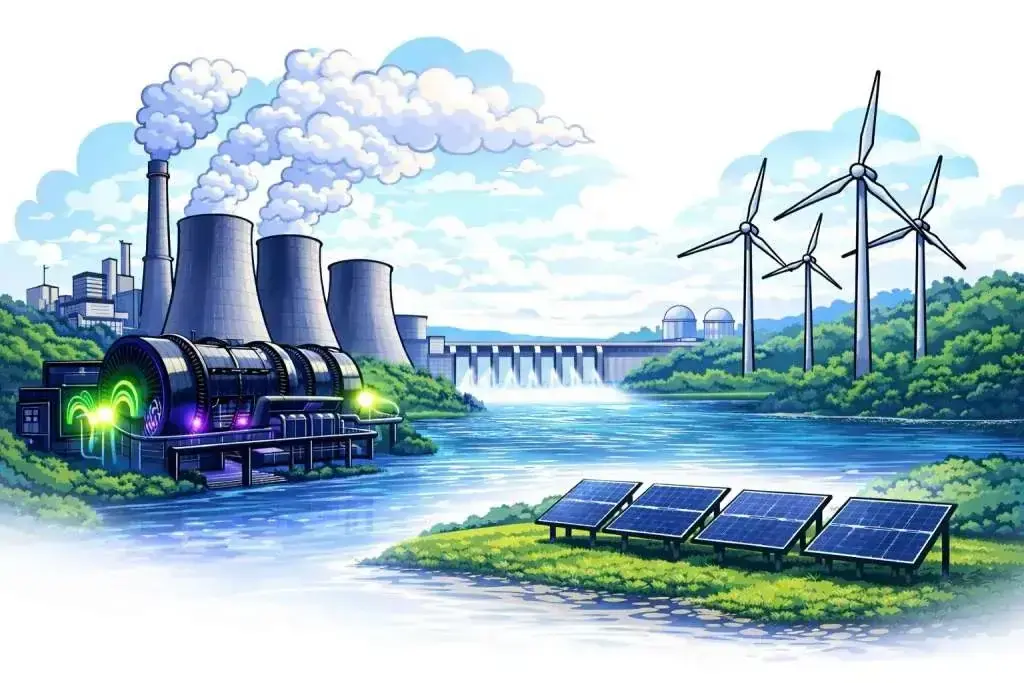
Generation is where the whole thing starts. Without power, nothing else in the sector works. In FY 2024 25, India produced 1,824 billion units of electricity. The year before it was 1,738.10 billion units. That is roughly 5% growth. It looks ordinary written down like this. It is not ordinary when you think about what the system is already carrying.
Demand is already pressing hard. Peak requirement hit 250 GW, the highest India has seen so far. March 2025 makes the point even clearer. Generation that month came in at 160.23 billion units. That has never happened before. This is not a future story. It is already playing out. This peak month demonstrates that when demand spikes, India's generation capacity can deliver, which is exactly what power investors want to see.
But the real story in generation isn't about coal anymore, though coal still provides the baseload. The transformation is in renewables. Solar generation jumped 23% in FY 2024 25. Nuclear output was up 18%, and large hydro rose 11%. These are not just neat percentages in a report. Behind them is real activity on the ground, billions of dollars being spent and thousands of projects already moving through construction and commissioning.
Here's why this matters for investors: by 2030, the government has committed to renewable energy forming 64% of India's total energy mix. That's an extraordinary target, and reaching it requires transformative capital investment. This is not about environmental optics or optional goals. It sits at the center of government policy. And every rupee spent on renewable energy infrastructure does not benefit just one company. That spending flows through many parts of the system. Panel and turbine manufacturers see orders first. Installation firms follow. Engineering companies design and integrate the systems. Transmission players move the power across the grid. Distribution companies finally deliver it to consumers. The spending does not stop at generation. It spreads through the entire power value chain.
Looking ahead to FY 2025 26, generation is expected to climb to 2,000 billion units from 1,824 billion units. That works out to a 9.3% increase, noticeably higher than the 5% growth seen in the previous year. In simple terms, demand is not just growing. It is starting to accelerate.
This acceleration is being driven by multiple factors. Renewable capacity additions will continue accelerating. Coal supply remains stable through consistent government allocation to power plants. Grid expansion through advanced technologies like STATCOM, VSC, and HVDC systems is enabling better integration of distributed renewable energy.
For investors, the generation segment offers straightforward value creation. As capacity utilization improves and electricity tariffs rise due to increased demand, generation companies see improved profitability. This is particularly true for companies with diversified portfolios combining thermal baseload (coal and gas) with renewable capacity. The companies executing best on this portfolio transition will deliver outsized returns.
Transmission: Building the Backbone Nobody Sees
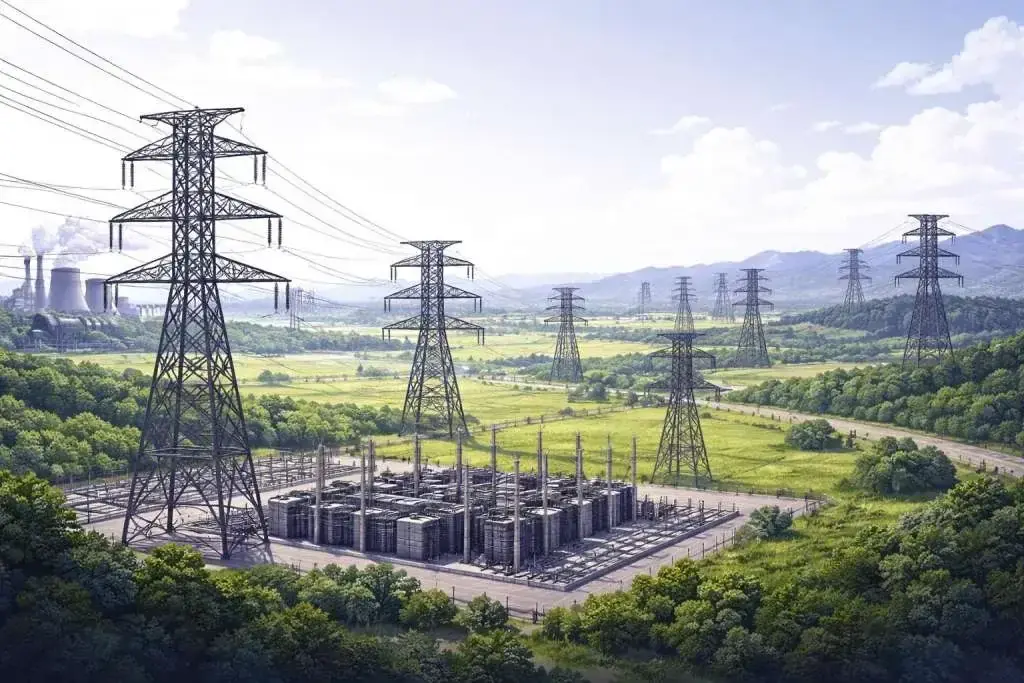
If generation is the engine of the power sector, transmission is the system that quietly makes everything work. It carries electricity across states and regions, day after day, without much attention. Most investors tend to lose interest here, and that is exactly why transmission companies are often overlooked despite being among the highest quality businesses in the sector.
India’s transmission network has grown into one of the largest synchronized power grids in the world. The scale is easy to underestimate. By FY 2025, transmission lines had expanded to about 4,94,374 kilometers, up from 4,41,821 km in FY 2021. Put another way, the network is long enough to circle the Earth roughly 123 times. Transformer capacity has grown just as steadily, reaching 12,51,080 MVA from 9,67,893 MVA over the same period. That is close to 29% growth in four years, achieved without compromising grid stability or reliability.
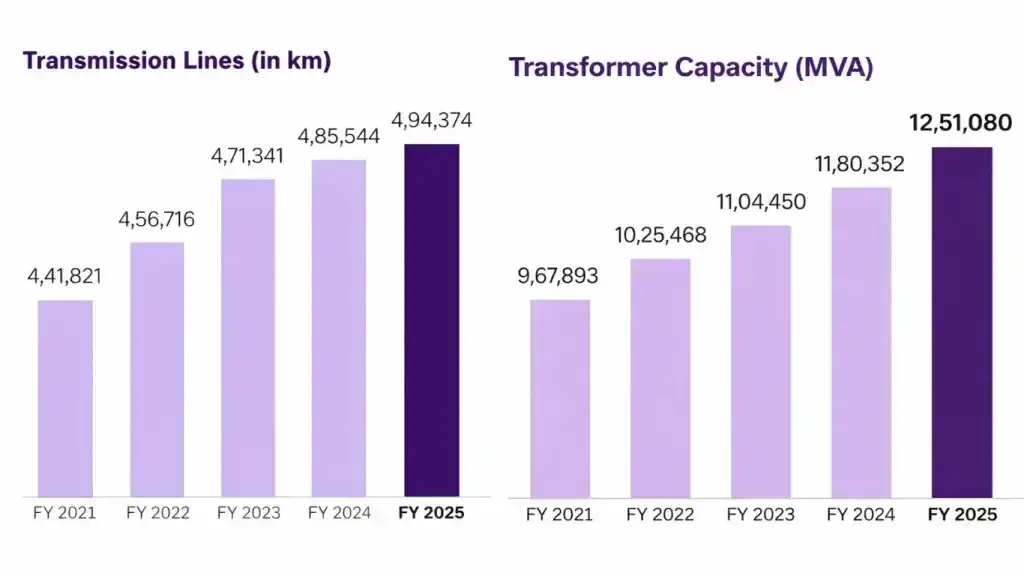 This matters because transmission is a very different kind of business. It requires heavy upfront capital, operates under tight regulation, and earns returns that are largely fixed and predictable. Cash flows are backed by government frameworks rather than market prices. Unlike generation companies, transmission players are insulated from fuel price swings and demand volatility. What they offer instead is consistency, visibility, and steady compounding, which is often undervalued until much later.
They receive regulated returns on their capital investments, similar to utility monopolies in developed markets. This makes transmission stocks attractive for conservative investors seeking stable, predictable returns with lower volatility.
Transmission demand isn’t a short-term story. It’s structural and set to last for decades. As renewables scale up, the grid has to expand alongside them. India’s push toward 500 GW of renewable capacity by 2030 means power will be generated across many locations — and all of it needs to be carried efficiently to where it’s used. It will be scattered across the country. Solar capacity will sit largely in Gujarat. Wind will keep coming from Tamil Nadu. Hydro will continue to come from the Northeast. Generation will be spread out, not concentrated.
Moving this power to consumption centers in urban areas and industrial zones requires a fundamentally rebuilt transmission network. Inter-regional transfer capacity is expected to rise to 150 GW to accommodate this distributed generation, requiring hundreds of billions of rupees in transmission infrastructure.
On top of renewable integration, there's industrial growth driving transmission expansion. Rising electricity demand from manufacturing sectors, driven by the government's Make in India push and PLI schemes, requires grid strengthening. But the most exciting development is the emergence of data centres as a transmission-intensive infrastructure.
Large hyperscale data centre facilities can consume 50-100 MW of continuous power, equivalent to the electricity consumption of a mid-sized city. As these facilities multiply across India, they require dedicated transmission infrastructure, often with redundant connections for reliability. This creates massive opportunities for transmission companies to build specialized infrastructure, earning premium returns for reliability-focused infrastructure.
Power Grid Corporation of India, the dominant transmission company, has planned a multi-year growth pipeline that's already committed and funded. For investors, transmission stocks provide a combination of growth (expanding capacity and tariffs) with stability (regulated returns and government backing).
To understand how to identify stable dividend-paying stocks, explore our article: What are Dividend Stocks? Are They Good for Passive Income? to build a steady income stream from power infrastructure.
Distribution: The Turnaround Story With Real Momentum
For years, DISCOMs have been treated as the problem child of the electricity ecosystem—loss-making, inefficient, and perpetually dependent on government support. Investors learned to avoid them. And on the surface, that skepticism made sense. In many states, more than 20% of the electricity fed into the system was never paid for, lost to technical inefficiencies, theft, and faulty billing. Selling power while giving away a fifth of it for free is not a business model—it’s a leak.But that very dysfunction is what’s now creating the turnaround opportunity.
The inflection point is smart metering. What used to be a messy, almost unmanageable problem is now being fixed using technology at scale. By March 2025, more than 20 million smart meters were already installed. The rollout is running at roughly 80,000 meters a day and is moving toward 100,000. This is no longer a pilot. It is full scale execution.
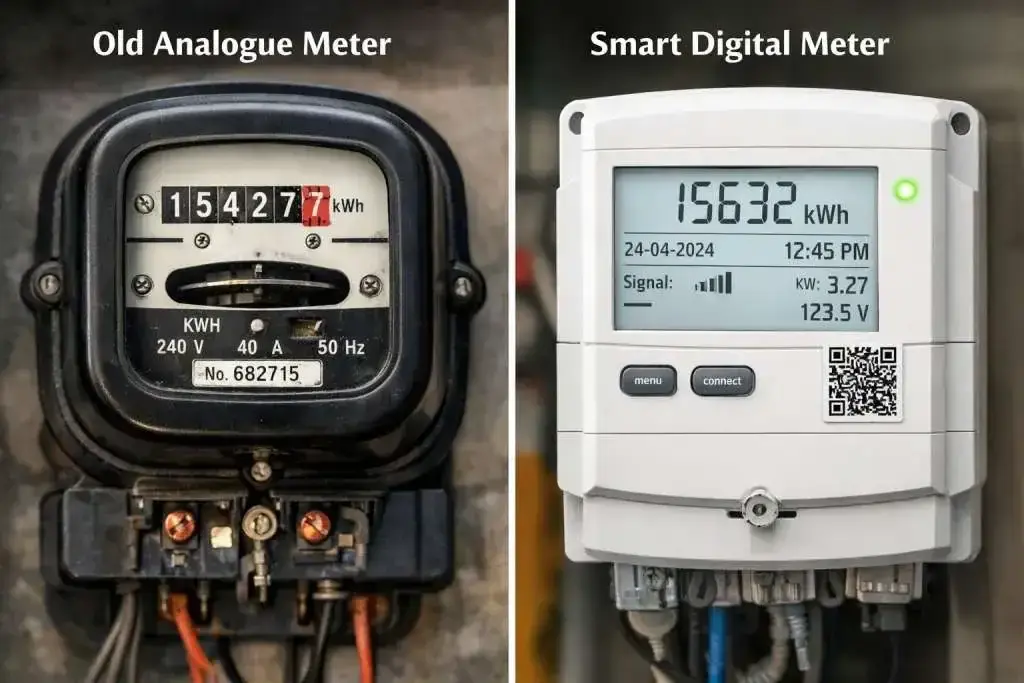
Smart meters quietly fix what price hikes never could. They stop theft through tamper resistance, eliminate billing errors with accurate measurement, and expose technical losses in real time. Utilities can now see exactly where power is leaking and fix it. Even conservative outcomes show 12–15% loss reduction. In some states, the improvement is even sharper.
Think about what that means economically. A DISCOM losing 20% of its power is effectively supplying electricity to millions of customers for free. Reducing those losses to just 5% is like adding over a million new paying customers overnight—without laying a single new wire or raising tariffs. Margins expand not because of demand growth, but because waste disappears.
And this isn’t happening in isolation. Policy is reinforcing the shift. Distribution reforms and rising competition are changing how utilities operate. They can no longer function like administrative offices. They have to run like businesses. Digital tools are playing a big role in this shift. Sensors across the network, better load forecasting, and consumer facing apps are giving utilities tighter control over the grid and day to day operations. Efficiency is no longer a nice improvement. It has become a requirement for survival.
For investors, this is what early-stage turnarounds look like. Losses are narrowing before profits surge. Cash flows improve before balance sheets clean up. Valuations are still low largely because investors are focused on what went wrong in the past. That old picture continues to shape perception, even though the business itself is quietly changing underneath and being rebuilt piece by piece.
Distribution may not look glamorous today. But this is exactly how powerful investment stories begin—not with headlines, but with systems being fixed, leak by leak.
Data Centres: The Emerging Powerhouse That Changes Everything

“Data is the new oil — but unlike oil, data needs electricity every second.”- Satya Nadella
Five years ago, data centres barely mattered to India’s power story. Today, they are becoming one of the most powerful—and most misunderstood—drivers of electricity demand in the country.
At first glance, the numbers look small. India accounts for only about 3–4% of global data centre capacity. To many investors, that sounds insignificant. In reality, it’s the starting line. What really stands out is the location. Almost all of that capacity is packed into just two cities, Mumbai and Chennai. When you see that, the implication is obvious. There is a lot of expansion still left to happen. The next phase of growth doesn’t require new demand to be invented; it simply requires expansion into the rest of India. Every new city is a fresh market.
The demand engine behind this expansion is already roaring. India has about 850 million broadband connections now. Mobile data use per person is already higher than the global average. In just five years, more than 300 million new users have come online. All of that activity creates data. Videos, payments, cloud work, AI tools. None of it floats in the air. It has to sit somewhere, on real infrastructure. And “somewhere” means power-hungry data centres.
Then comes the real accelerant: cloud computing and AI. Cloud services in India crossed $6 billion and are growing at 20% annually as banks, retailers, manufacturers, and enterprises move workloads off their own servers and into centralized infrastructure. That shift converts digital growth directly into electricity demand. Add hyperscalers into the mix—global giants and Indian players now accounting for over half of all domestic data centre demand—and the scale becomes obvious. These are not small facilities. Single hyperscale data centres consume as much power as a mid-sized town.
What truly sets data centres apart is the quality of demand they bring. They don’t tolerate outages. They want power that does not fail. Backups on top of backups. No excuses. And they are willing to pay for that level of reliability. Contracts usually run ten years or more. Many of them lock in payment even if consumption dips. For a power company, this kind of arrangement is rare. Revenue is visible. Pricing is better. Capacity stays used.
Policy is adding another layer of certainty. Data localization rules, digital governance laws, and national data centre policies are effectively anchoring data inside India. At the same time, AI adoption is pushing computing requirements sharply higher, with power demand from AI workloads alone expected to grow 15–20% annually.
By 2030, India’s data centre capacity is projected to triple or even quadruple. For power companies, this isn’t just incremental demand—it’s a structural upgrade in revenue quality. Data centres are turning electricity from a commodity into a premium service. And for investors looking ahead three to five years, this is where the power sector’s most aggressive growth is likely to emerge—quietly, contract by contract, long before the market fully wakes up.
To understand how to identify high-growth companies at early stages, read our article: 7 Early Signals That a Stock Can Turn Multibagger to spot emerging opportunities in evolving sectors.
The Electricity Demand Story: Why Numbers Matter
Let's zoom out and look at the aggregate demand picture, because this is where the investment thesis really crystallizes. Electricity demand isn't growing randomly or speculatively. It's growing along a clear, measurable trajectory that reflects improving living standards and structural economic development.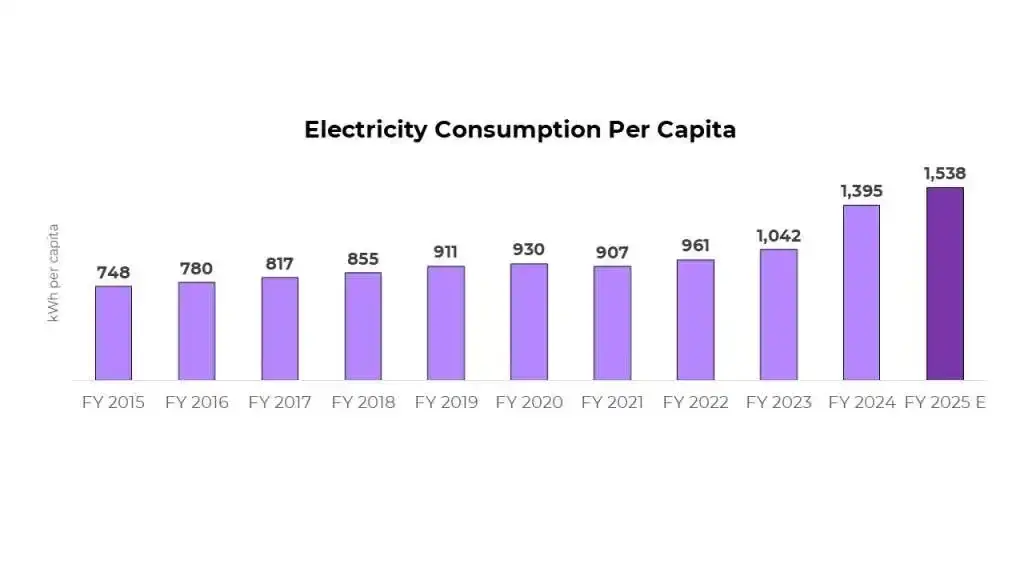
Per capita electricity consumption is the fundamental metric that reveals how an economy is developing. In FY 2015, Indians consumed an average of 748 kWh per capita. By FY 2020, that had grown to 930 kWh per capita. In FY 2024, it reached 1395 kWh per capita. The government projects 1538 kWh per capita by FY 2025. This consistent upward trend reflects rising living standards, more household electrification (especially in rural areas), expanding industrial activity, and growing commercial infrastructure.
These aren't marginal improvements. This is systematic, predictable growth driven by development factors that will persist for decades. As India's per capita income increases, the consumption of electricity increases. As rural areas urbanize, they require more electricity. As manufacturing expands, electricity demand grows. As digital infrastructure spreads, data centre electricity demand accelerates. None of these factors are cyclical—they're secular trends lasting for decades.
Monthly electricity generation data provides another powerful lens. Looking at monthly generation patterns, March 2025 generated 160.23 billion units—the all-time highest monthly generation. This peak represents electricity generation capacity actually being deployed to meet peak demand. January 2025 through February 2025 saw slightly lower generation (126.28 and 121.52 billion units, respectively), which is seasonally normal. But the key insight is that when demand peaks (March), India's generation capacity responds and delivers record output.
This generation pattern is significant for investors because it demonstrates that generation capacity is meeting demand. There's no chronic shortage requiring massive deficit reduction. Instead, there's growing demand being met by growing capacity—the healthiest market condition possible.
The Clear Investment Case: Why Now
Now let's synthesize everything into the actual investment thesis. Why is now the right time?Structural Demand Growth That Can't Be Stopped
First, the demand fundamentals are non-negotiable. Per capita electricity consumption is growing 3-5% annually, driven by development rather than cyclical factors. Industrial expansion requires 5-7% electricity supply growth annually just to avoid shortages. Data centre growth is adding an incremental 2-3% annual demand growth in addition to traditional demand. This isn't speculation about future growth—this is demand being generated right now and continuing predictably.
Government Commitment Is Tangible, Not Aspirational
Second, the government’s ₹11.21 lakh crore capex for FY 2025–26 is economy-wide, not power-specific, but because power underpins every infrastructure project, it guarantees sustained, structural growth in electricity demand. Smart meter deployment at 80,000+ units daily. Transmission capex of ₹1.75 lakh crores through 2030. These are real expenditure programs with budgets, timelines, and accountability mechanisms.“Infrastructure is not a cost. It is an investment in productivity.”- Narendra Modi
Operational Improvements Are Already Visible
Third, the operational improvement story isn't future potential—it's already happening. Smart meters are reducing AT&C losses. Distribution companies are improving profitability. Companies executing well are already showing margin expansion and improved cash flow.Renewable Energy Transition Creates a Multi-Decade Growth Runway
Fourth, the renewable energy transition from 26% renewable energy today to 64% by 2030 represents a massive capital deployment requirement. Every renewable energy project requires transmission infrastructure, distribution upgrades, storage solutions, and backup capacity. This is essentially a multi-decade infrastructure reconstruction project worth hundreds of billions of dollars.Emerging Data Centre Demand Provides Premium Revenue Opportunities
Fifth, data centre demand provides the highest-quality revenue growth. Long-term contracts, premium tariffs, and take-or-pay clauses create revenue quality that traditional consumers can't match. This is the fastest-growing consumer segment in the power sector.Valuations Remain Reasonable Relative to Growth
Finally, while power sector stocks have attracted attention, valuations remain reasonable relative to the growth potential. Dividend yields remain attractive, and cash flow generation is strong. For investors comparing power stocks to technology stocks or consumer discretionary stocks, valuations appear attractive on a risk-adjusted basis.To learn how to research stocks systematically, explore our article: A Fundamental Checklist: How to Research a Stock in 1 Hour to evaluate power companies efficiently before investing.
The Risk Reality: What Can Actually Go Wrong
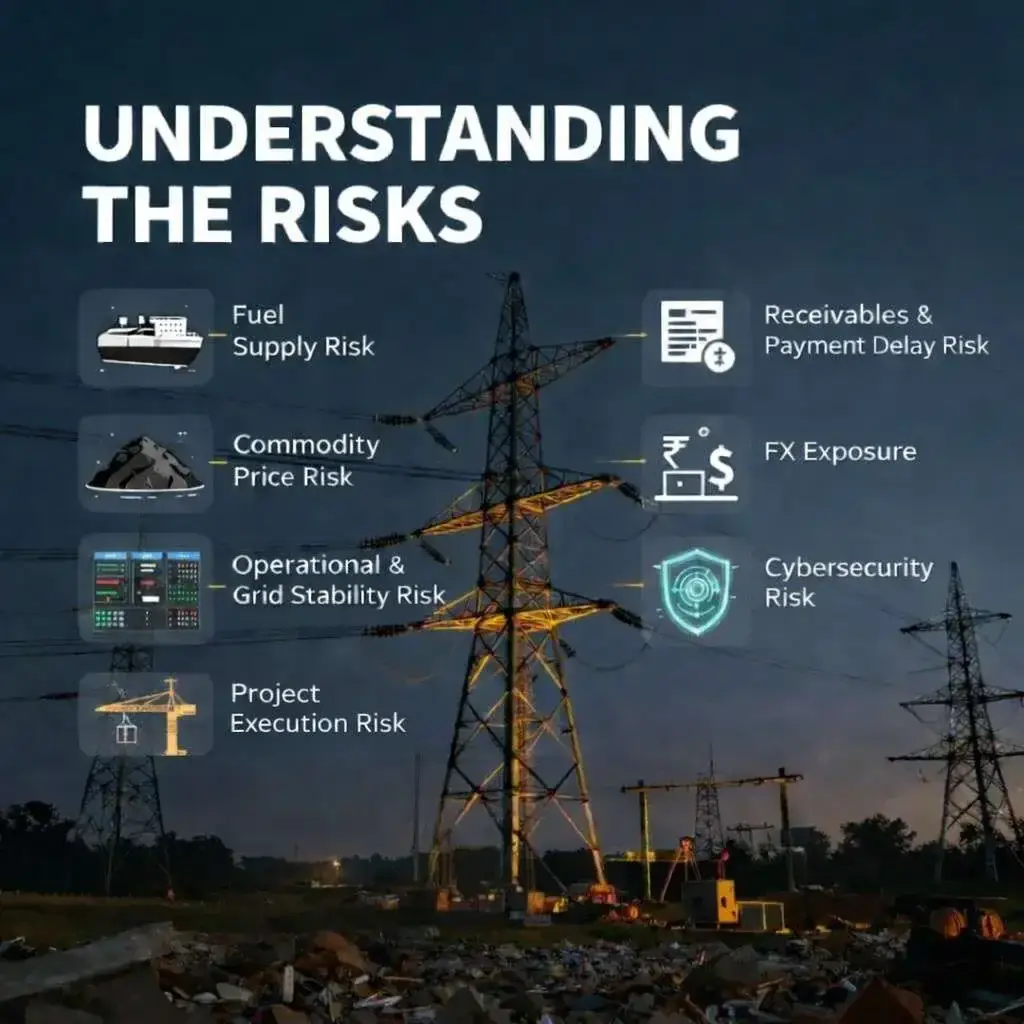
Smart investors don't just see upside—they understand and actively manage risks. Power sector stocks have real, material risks that require active management. Understanding these risks actually makes you a better investor because it shows you've thought through the full scenario.
Financial risks exist in the form of payment delays and commodity volatility. Government utilities sometimes delay payments to power generators, creating cash flow friction even when businesses are profitable. Commodity costs, particularly coal and natural gas, can spike, pressuring margins. The mitigation here is straightforward: companies managing receivables aggressively, including escalation clauses in contracts, and using commodity hedging strategies will outperform. As an investor, you can identify these companies by examining their cash conversion cycles and hedging disclosures.
Operational risks are real for large-scale infrastructure projects. Construction projects in difficult terrain face delays from site readiness issues, resource constraints, and skilled labour shortages. Project execution risk is highest for engineering procurement and construction (EPC) companies. The mitigation is active project management, experienced contractors, and contingency planning. You can assess this by examining a company's historical project execution track record and schedule performance.
Foreign exchange volatility is a legitimate concern for companies importing equipment or borrowing in foreign currencies. The rupee-dollar exchange rate fluctuates, which impacts import costs and debt servicing obligations. Companies with significant imported equipment exposure should be hedging their FX risk. You can identify this by examining their financial statements for FX hedging disclosures.
Digital infrastructure risks are emerging as the sector modernizes. Smart grids, data centre operations, and IT systems face cybersecurity threats. Data breaches, system outages, or cyber-attacks could disrupt operations or compromise data privacy. Forward-thinking companies are implementing robust cybersecurity measures, redundant systems, multi-factor authentication, and 24/7 monitoring. You can assess this by reviewing ESG disclosures and management commentary on cybersecurity investments.
Environmental, Social, and Governance (ESG) risks span climate compliance, safety incidents, and community relations. The coal industry faces long-term structural risks as the world transitions away from fossil fuels. Large infrastructure projects risk community pushback and environmental challenges. Companies with strong ESG records—excellent safety performance, strong community relations, clear renewable energy strategies—will outperform over the long term.
The important insight here is that understanding risks doesn't mean avoiding the sector. It means becoming selective about which companies you invest in. The best power sector stocks will be the ones that actively manage these risks.
To understand how debt impacts company stability, read our article: What is Debt to Equity Ratio? Why it Matters for Small Cap Investing to Assess Financial Health Before Allocating Capital
.
What’s Coming Next: The Catalysts to Watch
The power sector’s next leg won’t be driven by surprises—it will be driven by execution. Over the next 6–12 months, smart meter installations are set to accelerate, directly improving DISCOM's profitability. Renewable projects already commissioned will begin contributing to revenues, transmission corridors will move visibly into construction mode, and fresh data centre expansion announcements by hyperscalers will strengthen high-quality power demand.
Explore our Products
Research Framework

Emerging Titans
Combination of quantitative analysis, industry tailwinds, and management assessment - SPRINT investment philosophy

Tiny Titans
Heavy emphasis on scuttlebutt research, plant visits, and early on-ground signals
The Bottom Line: Is This the Right Time?
For investors with a 3–5 year horizon, the evidence is compelling. Electricity demand continues to rise structurally, government infrastructure spending is translating into real execution, distribution reforms are delivering measurable improvements, renewables are entering a multi-decade build-out, and data centres are emerging as a premium, long-duration demand source. While short-term price volatility may persist, the long-term trajectory remains firmly intact.If you want a deeper breakdown of which power-sector segments and companies are best placed to benefit, comment “POWER” below. I’ll share the detailed analysis and key investment themes from the full article.
FAQs
Why Are Power Sector Stocks Rising Now?
+Power stocks are rising due to structural electricity demand growth, visible government capex execution, improving distribution efficiency, and emerging premium demand from data centres. Unlike past rallies, this upcycle is driven by earnings visibility and cash-flow improvement, not speculation.
What Structural Trends Will Shape the Power Sector’s Future?
+The sector is being reshaped by renewable energy expansion, large-scale transmission buildout, smart metering–led distribution reform, rising data centre and AI power demand, and increasing grid digitization. These trends create long-term demand visibility rather than short-term cycles.
Will Renewables Overtake Coal in the Near Term?
+No. While renewable capacity will expand rapidly, coal will remain essential for base-load power beyond 2026. India’s energy transition will be additive, not substitutive, with coal, renewables, and storage operating together for grid stability.
What Is the Next Big Power Source After Renewables?
+The next phase is a hybrid energy system—renewables supported by battery storage, flexible thermal generation, and green hydrogen over time. Reliability, not ideology, will determine the winning energy mix.
Who Will Supply Power to AI and Data Centres?
+
High growth stock specialist, Value Educator
Shashank Mahajan is an equity research professional with over 12 years of experience in identifying high-potential SME and micro-cap stocks at an early stage. He follows a rigorous scuttlebutt research–driven approach, combining on-ground insights with deep financial analysis. Shashank specializes in uncovering under-researched and under-owned companies with strong management quality and long-term growth potential. Through disciplined research and early identification, he focuses on spotting tomorrow’s market leaders before they enter the mainstream investor radar.
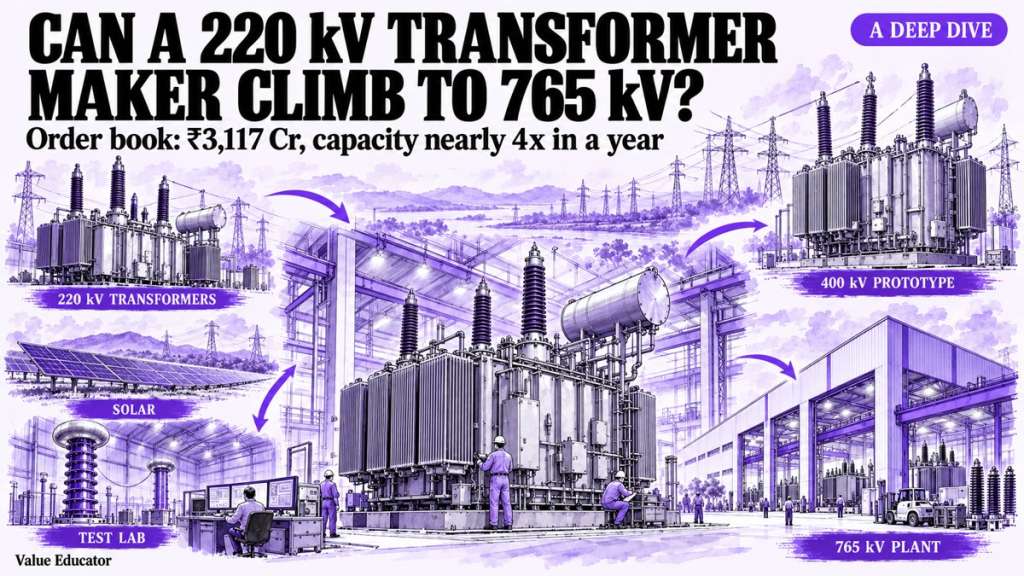
Atlanta Electricals: Capacity Nearly Quadrupled in a Year
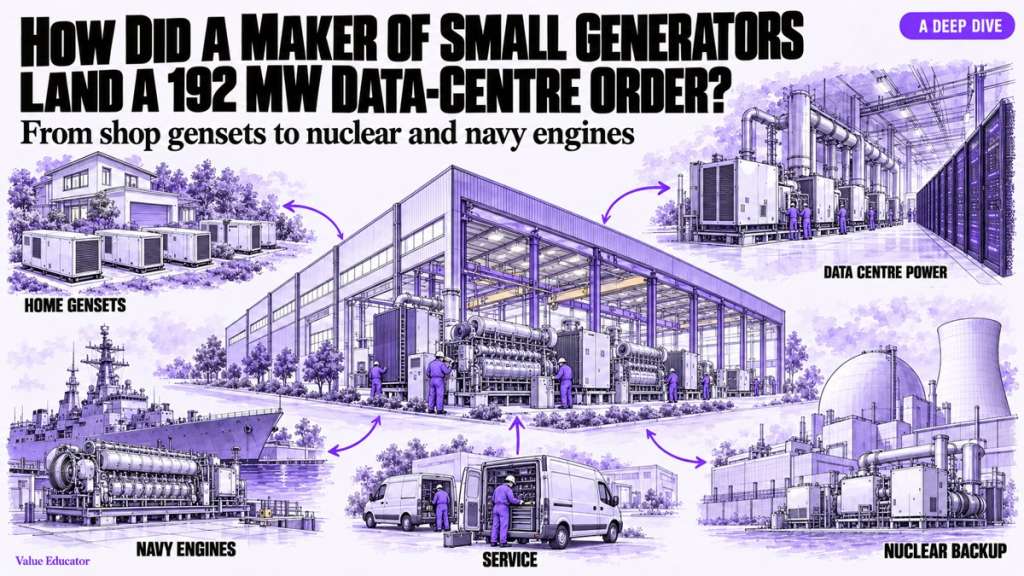
Kirloskar Oil Engines: Data Centres, Nuclear and the Navy
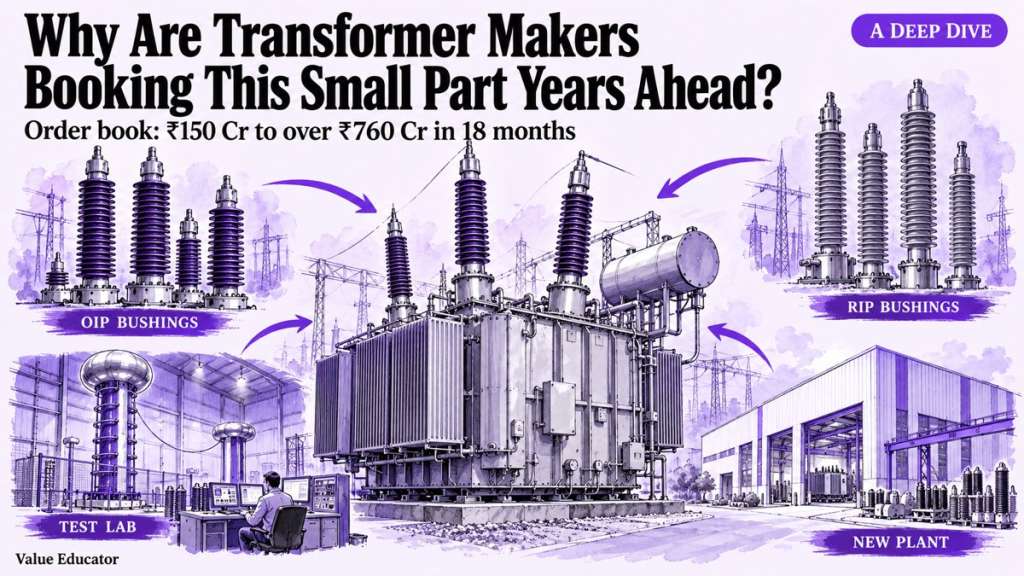
Yash Highvoltage: Bushing Maker With ₹760 Cr of Orders
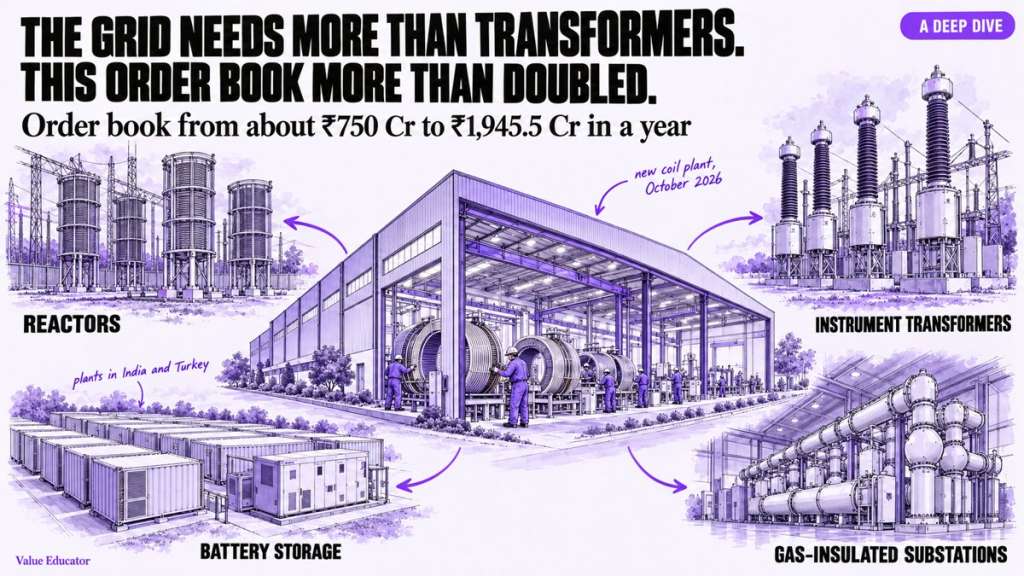
Quality Power: Reactor Maker With a ₹1,945.5 Cr Order Book
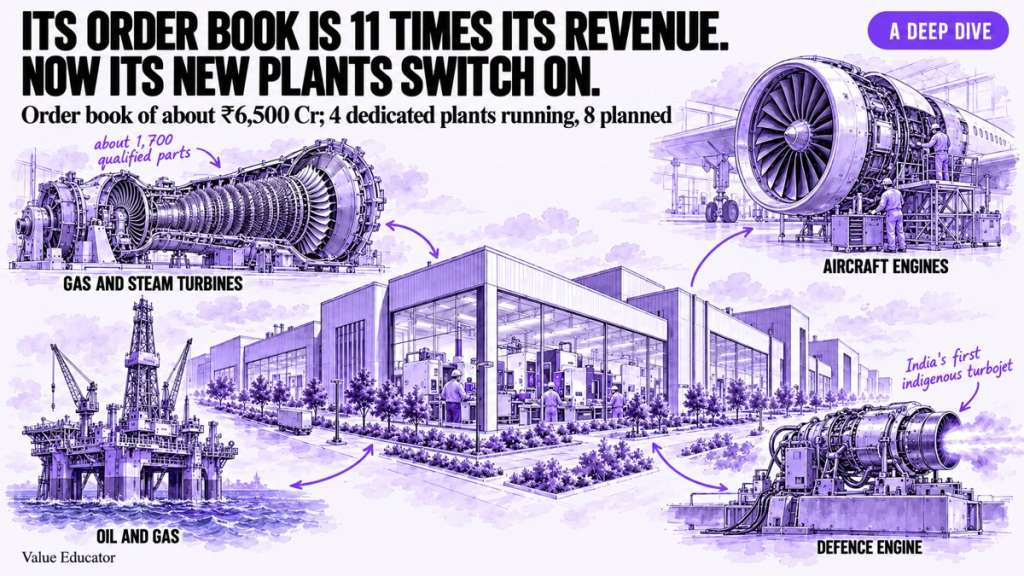
Azad Engineering: Turbine Blades, Jet Engines and Orders

Cyient DLM: Aircraft Electronics and a Record Order Book
Explore our Products
Research Framework
Emerging Titans
Combination of quantitative analysis, industry tailwinds, and management assessment - SPRINT investment philosophy
Tiny Titans
Heavy emphasis on scuttlebutt research, plant visits, and early on-ground signals



Modern Warfare to Multibaggers
Key Trends. Strategic Shifts. Opportunities Ahead.
Don't Miss This Exclusive Webinar!
Join Value Educator to decode the key trends shaping India's defence sector and learn how to identify tomorrow's potential leaders in the space.
- In-depth research on India's defence sector
- Live Q&A session
- Actionable takeaways for long-term investors

 Orders
 Subscription
 Share with friends


Required Details
₹23999.00
(12 month subscription)
As per SEBI regulations, all users are mandated to complete the KYC that is validated for 1 year. Post payment, you will be redirected to the KYC screen


No comments yet. Be the first to comment!