
PNGS Reva: Organised Diamond Jewellery Play

The Quiet Premiumisation of India's Jewellery

India's relationship with jewellery has always been dual-natured. For generations, gold served not merely as adornment but as stored wealth, passed down through families as both heirloom and hedge. But something fundamental is shifting in how urban India thinks about what sits in the jewellery box. The younger consumer no longer buys solely for the vault. She buys for Friday night. For the office presentation. For the Instagram grid. And increasingly, she's bypassing plain gold entirely, reaching instead for diamond-studded pieces that signal taste, brand affinity, and personal identity rather than ancestral wealth.
This shift of investment grade gold to lifestyle based studded jewellery is one of the more interesting consumption changes in the Indian story of premiumisation. The numbers bear this out: India's diamond-studded jewellery market has grown from ₹186 billion in calendar year 2020 to an estimated ₹736 billion by 2029, which is a structural rerating of a whole category. Studded jewellery is not valued in the same way as gold as a commodity because it has a transparent global price, a razor-thin retail margin, and the rest of its market value is created by design, or craft, or certification, and above all, the brand it was bought at. That brand is not only a status, but a more mundane and strong thing, the promise of buyback. A diamond necklace holds resale value primarily with the jeweller who sold it, making trust and longevity essential, not optional.
We’ve explored this broader evolution in how Indians think about gold ownership in What are Sovereign Gold Bonds (SGBs)? A Smarter Way to Own Gold, where the idea of gold itself is being redefined for modern investors.
Enter the Pure-Play Listed Diamond Retailer
The Strategic Carve-Out
PNGS Reva Diamond Jewellery Limited enters into this structurally attractive market with an offering to investors that is truly rare in the listed spectrum in India pure-play exposure to branded diamond retail, not diluted with gold. In February 2025, Reva was cut out of its parent, P.N. Gadgil and Sons Limited, a jeweller, the family of which can be traced back to 1832. The breaking away was tactical. Studded jewellery has its own economics, talent, and customer occasions, as opposed to plain gold. Putting them together in a package waters down the margins and obscures the brand positioning. The promotion of Reva by its promoters through the ring-fencing of the diamond business ensured that the promoters had established a vehicle that was best optimized in the unit economics of the higher-margin, brand-driven end of the category whilst inheriting almost two centuries of built trust of the parent.
Inherited Trust as a Moat
As of March 2026, Reva operates 36 locations: two company-owned-company-operated (COCO) stores and 34 shop-in-shop (SIS) counters embedded within P.N. Gadgil & Sons showrooms across Maharashtra. The SIS model provides stable cash flow with minimal incremental capital, piggybacking on the parent's established footfall. The COCO format, by contrast, represents the growth engine, a bet that Reva's brand can stand alone, capture consumer data directly, and expand beyond its Maharashtra heartland into Tier 1 cities where the P.N. Gadgil name carries less inherited equity.
Early Scale and Footprint
The company was floated by IPO that raised capital specifically aimed at financing 15 additional COCO stores within a span of 24 months, a construction that will challenge not only the execution capacity but also the transportability of the brand. To investors, the thesis is whether Reva can use its trust moat based on legacy to enjoy a disproportionate share of the transition to the organised, branded diamond consumption in India, but all without facing the near-term margin compression that the aggressive expansion of stores inevitably entails.A Business Model Built on Three Pillars
Reva's current architecture rests on three distinct channel formats, each with different ownership structures and strategic purposes. Understanding how these channels interact is essential to modeling the company's evolution from a Maharashtra-centric, parent-dependent operation to a nationally scaled, standalone brand.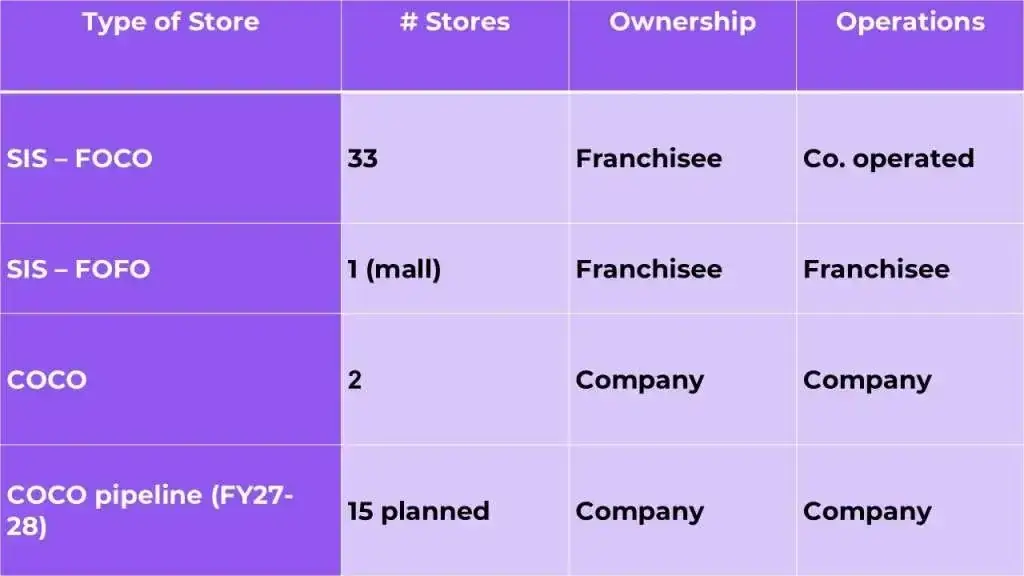
FOCO SIS: Capital-Light Revenue Engine
The first format, and the one generating the bulk of revenues today, is the FOCO (Franchise Owned, Company Operated) SIS model. Here, Reva operates 33 dedicated counters inside P.N. Gadgil & Sons stores. The real estate is owned or leased by the parent; Reva staffs the counter, curates inventory, and bears the inventory risk. This arrangement requires almost no upfront capital from Reva while delivering built-in foot traffic from customers already in the store to buy gold. It's a capital-light revenue stream that effectively monetises the parent's retail footprint. As P.N. Gadgil opens new stores, Reva gains passive expansion, each new parent location automatically adding an incremental SIS counter with negligible setup cost.FOFO: Regulatory Exception
The second format is a structural accommodation rather than a strategic choice: one FOFO (Franchise Owned, Franchise Operated) SIS counter located in a mall-based P.N. Gadgil store. This exists purely because GST regulations prohibit two separately registered entities from operating under one roof within a mall. The parent operates this counter on Reva's behalf, an exception driven by regulatory constraint rather than business preference.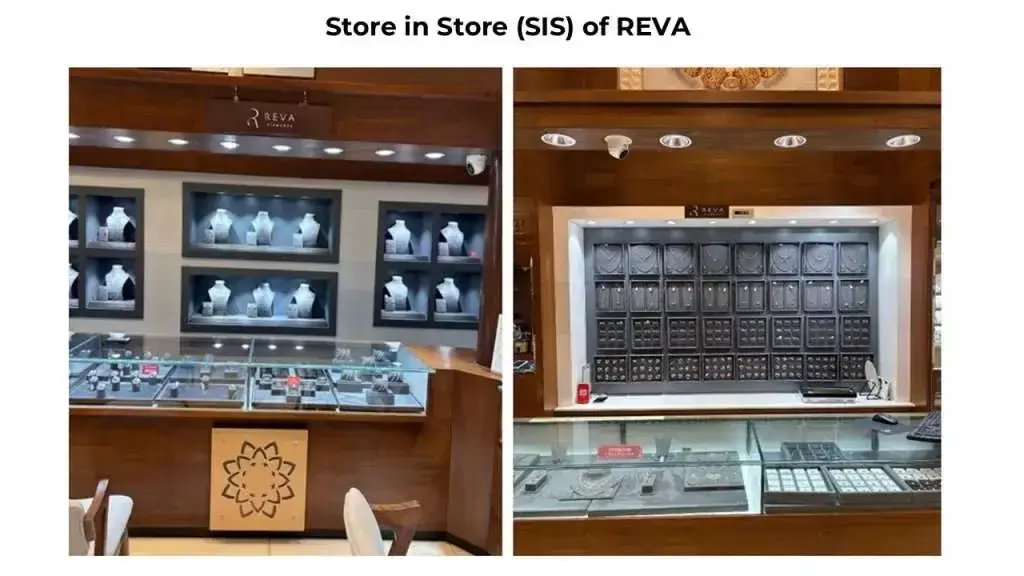
COCO: The Core Growth Lever
The third format is where the company's future is being built: standalone COCO stores. Reva currently operates one such store, opened in September 2025 at Phoenix Mall in Wakad, Pune.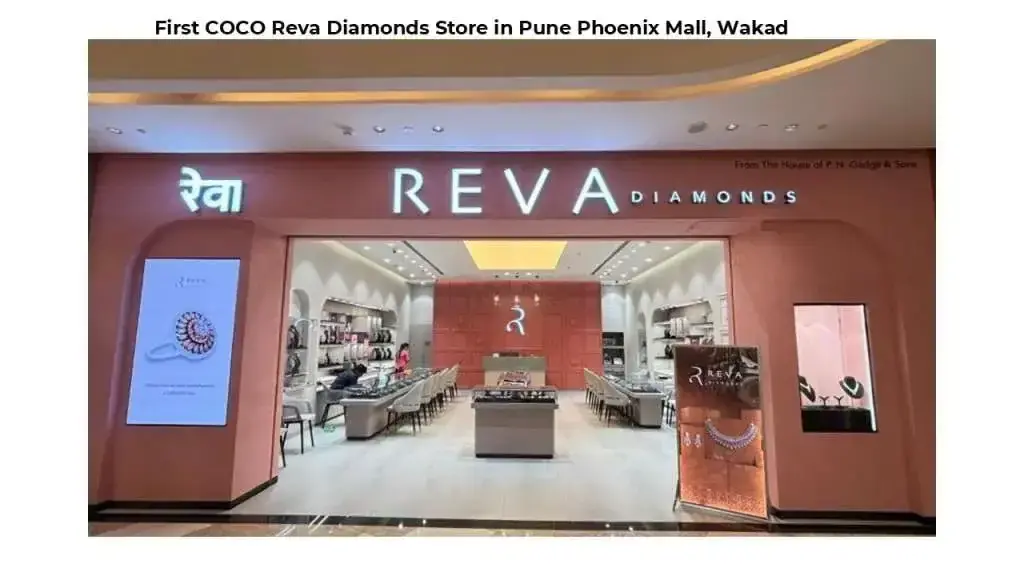
This is a full format, exclusive Reva-branded diamond boutique with the entire product offering and the entire brand experience without the shadow of the parent. This single store earned it a revenue of around 2.5 crores in the first full quarter of its operation (Q3 FY26) which is a good beginning but the management rightly warns against linear extrapolation. By March 2028, the company aims to have 15 additional COCO outlets, with a 55-60% distribution of them in Maharashtra and 40-45% in the rest of the country, operating mainly in the mall formats of Tier 1 North Indian cities. In the month company opened one new COCO store and one new SIS store in March 2026, which provides total stores of 36 (2 COCO stores and 34 SIS stores as of 31-March-2026) compared to 33 SIS Stores as of 31-March-2025.
Why malls to expand out of state? Since malls create footfall regardless of brand equity. A shopper in a mall in Delhi or Bengaluru does not need to have heard of Reva to enter the store, the mall itself offers discovery. In comparison, a high-street store alone in a new market would entail destination awareness that would have to be built first thus requiring greater marketing expenditure. Standalone locations can be considered in the case of more Maharashtra penetration where the brand recollection already exists. But for geographic expansion into markets where the P.N. Gadgil legacy carries no weight, malls offer a lower-risk, faster-ramp entry strategy.
The SIS network will continue growing passively alongside the parent's expansion, providing stable baseline cash flow. The COCO portfolio, however, represents the active growth lever, the part of the business that will determine whether Reva can transition from a regional operation embedded within a parent ecosystem to a nationally recognised, independent diamond brand. The tension between these two models, between stability and scale, between inherited equity and self-made brand, defines the company's strategic inflection point.
Flow of Business Operations

The journey of a jewellery piece begins quietly in the system, where an ERP report highlights what the store needs before a purchase order is placed with the vendor. Soon after, the products arrive, are checked for quality, invoiced, and carefully labeled so every piece is accounted for. The system then guides where each item should go, and stock is sent to the right branch where it is received, arranged, and displayed for customers to see. Finally, the story comes full circle at the counter, where a customer chooses a piece, completes the purchase, and what started as a data point in a report becomes part of someone’s personal collection.
The Product Portfolio: Small Diamonds, Wide Spectrum

Star Melee at the Core
Reva's product strategy defies the solitaire-centric model that dominates Western diamond retail. Over 95% of its portfolio features star melee, the industry term for small, clustered diamonds used extensively in traditional Indian jewellery design. These are not the single-stone engagement rings that anchor Tiffany's business model; they are intricate, layered pieces where dozens or even hundreds of small diamonds create visual density and cultural resonance. A typical Reva necklace might incorporate 200 diamonds totalling 5 carats, priced at ₹3 lakh, rather than a single 1-carat solitaire commanding similar value.
Broad Price Ladder, Sticky Buyback
This melee-heavy orientation carries both aesthetic and commercial significance. Aesthetically, it aligns with Indian design sensibilities that prioritize ornamentation density and craftsmanship complexity over the minimalist elegance of Western jewellery. Commercially, it creates accessible entry points across a deliberately wide price spectrum. The portfolio spans from ₹10,000 to ₹15,000 nose pins marketed to Gen Z consumers seeking pocket-friendly fashion accessories, to elaborate bridal necklaces priced at ₹12 to ₹15 lakh for milestone occasions. This breadth differentiates Reva from digital-native competitors like CaratLane or BlueStone, which typically occupy narrower price bands.This rise of affordable, design-led jewellery is not isolated. We’ve explored a similar consumption trend in This SME Company Is Riding India’s Imitation Jewellery Boom, where accessibility is driving repeat purchase behaviour.
The pricing ladder enables a repeat-purchase flywheel that plain gold jewellery struggles to replicate. A customer might enter the brand ecosystem with a ₹12,000 nose pin for daily wear, return for a ₹40,000 bracelet as a Valentine's Day self-purchase, and eventually commission a ₹3 lakh mangalsutra for her wedding. Each transaction builds brand familiarity and trust, assets that matter profoundly in a category where buyback depends on the original seller. Unlike gold, where any jeweller will repurchase at spot rates, diamond buyback and exchange programs require customers to return to the retailer who issued the certification. This structural lock-in makes brand recall not merely a marketing advantage but a functional necessity.
Two Core Customer Archetypes
Management has identified two primary customer archetypes. The first is Gen Z, the demographic cohort drawn to colourful, design-forward, affordable jewellery that functions as fashion rather than investment. For this segment, a ₹15,000 diamond nose pin represents aesthetic self-expression and social signalling, not wealth preservation. The second segment comprises corporate working women seeking branded jewellery to complement professional identities and aspirational lifestyles. For both groups, the ability to name the brand from which they purchased carries social currency that unbranded family jewellers cannot provide. This brand signalling effect operates as both customer acquisition tool and retention mechanism.
Industry Tailwinds: The Premiumisation of Indian Jewellery
Premiumisation and Category Growth
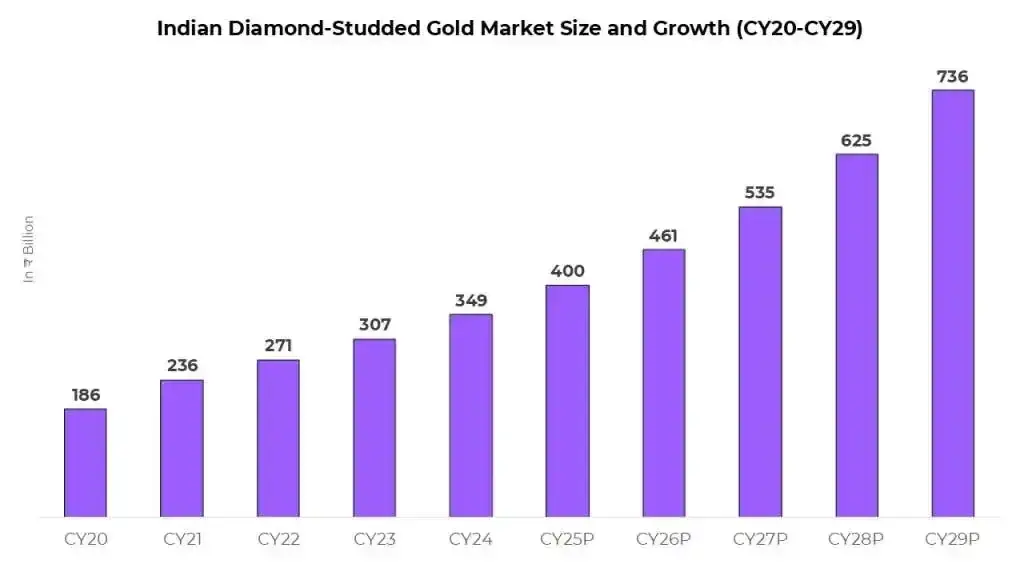
The macroeconomic context in which Reva operates is undergoing structural transformation. India's diamond-studded gold jewellery market has grown from ₹186 billion in calendar year 2020 to ₹400 billion in CY24, with projections reaching ₹736 billion by CY29, implying a compound annual growth rate exceeding 13%. This expansion reflects not merely inflation or gold price appreciation but a genuine shift in consumption behaviour.
What’s increasingly standing out in this shift is the growing importance of design and visual appeal in purchase decisions. We’ve seen a similar pattern play out in The Decorative Automotive Components Manufacturer Benefiting from Premium Auto Demand, where aesthetics are becoming a key differentiator even in categories once driven purely by function.
Traditionally, Indian jewellery purchases clustered around weddings and auspicious occasions, driven by cultural obligation and wealth storage considerations. Plain gold dominated because its value proposition was transparent: buy 100 grams, own 100 grams, liquidate when needed. Studded jewellery introduced opacity, making charges, design premiums, and stone quality difficult for consumers to verify. This opacity historically favoured unorganised players who could exploit information asymmetry, but regulatory shifts have begun tilting the landscape. Mandatory hallmarking requirements and GST formalization are pushing consumers toward organized, certified retailers who provide transparency and reliable buyback practices.
This premiumisation trend is not limited to jewellery alone. We’ve explored it in a different context in The Luxury Watch Retail Platform Riding India’s Premium Consumption Boom, where rising aspiration is driving category expansion.
Formalisation and Organised Share Gains
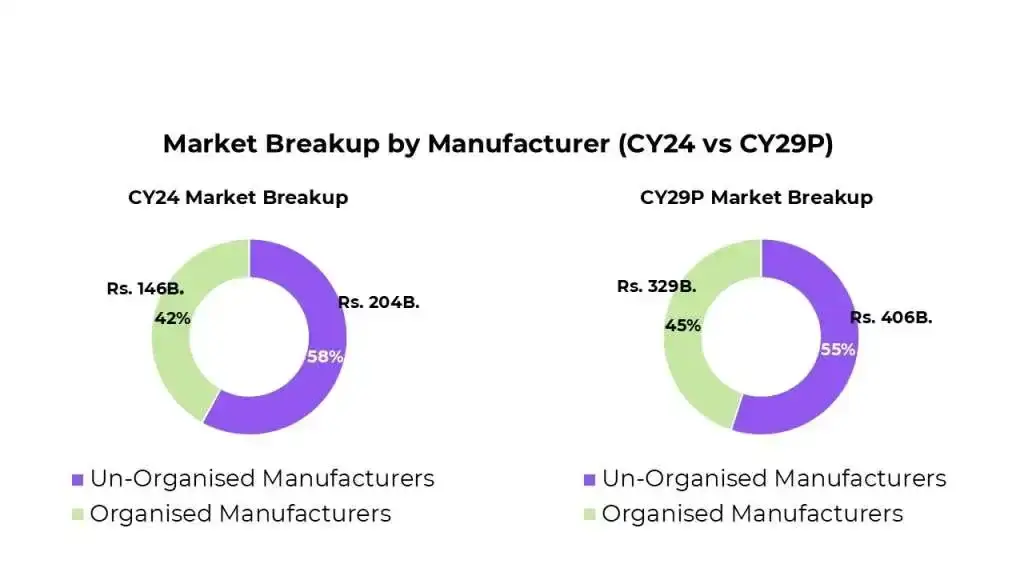
In Maharashtra, organized market penetration is expected to be 37 to 38%, with substantial headroom remaining as consumers increasingly prioritize certification and trust over price. This organized market shift plays directly into Reva's hands. The P.N. Gadgil name, established in 1832 and operating continuously without ever closing a store, functions as a trust asset that newer entrants like CaratLane or BlueStone must spend heavily to replicate. When a customer walks into a Reva counter, she is not merely buying diamonds; she is buying the assurance that the retailer will exist in 2040 when she returns to exchange or upgrade. This credibility moat lowers customer acquisition costs structurally relative to digitally native brands building trust from scratch.
To understand how regional players are quietly benefiting from this formalisation trend, you can read The Regional Jewellery Brand Quietly Becoming a High-Growth SME Stock, which reflects a parallel transition underway in another part of the market.
Brand and Margin Moat
The margin dynamics further differentiate studded jewellery from plain gold. Gold retailers operate on thin margins because the bulk of ticket value resides in the commodity itself, which trades at globally determined prices. Making charges and wastage fees, typically the only margin sources, face constant pricing pressure. Studded jewellery, by contrast, derives margin from design premiums, craftsmanship, brand equity, and the relatively opaque retail pricing of small diamonds. Reva sustains gross margins of 30 to 32% on studded jewellery sales, structurally higher and more defensible than the compressed margins gold retailers endure. This is why carving out a pure-play diamond entity makes fundamental financial sense: it prevents the margin dilution that occurs when high-margin studded pieces subsidize low-margin gold sales within a bundled retail operation.Financial Performance: Strong Fundamentals, Seasonal Volatility
FY23-FY25 Profitability Base
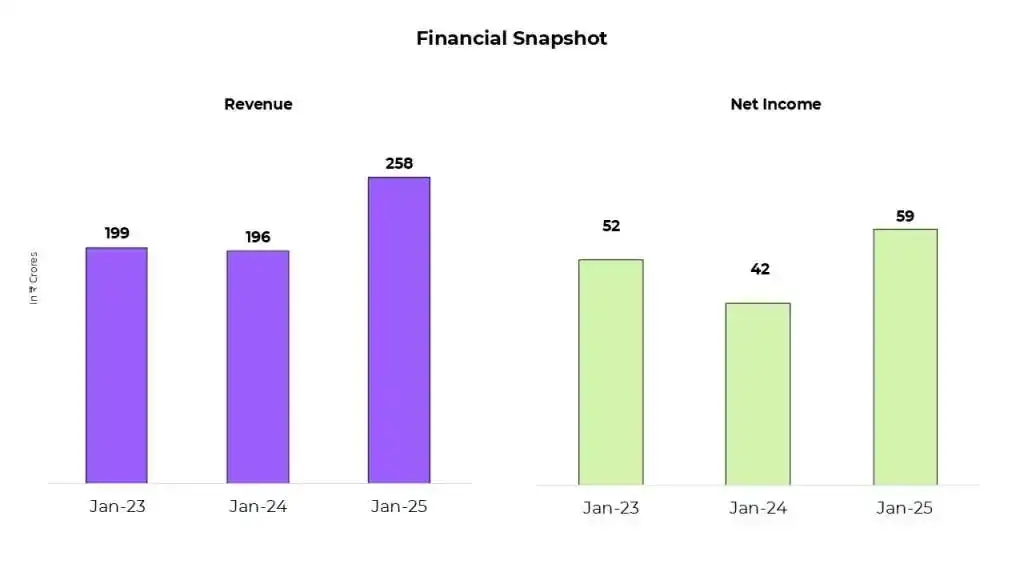
Understanding Reva's financial trajectory requires separating underlying profitability from the noise introduced by seasonality and accounting treatment. The company's fiscal performance from FY23 through FY25 establishes the baseline. Revenue declined marginally from ₹199 crore in FY23 to ₹196 crore in FY24, before rebounding sharply to ₹258 crore in FY25, representing 32% year-on-year growth. Profitability followed a similar pattern: net profit of ₹52 crore in FY23 compressed to ₹42 crore in FY24, then recovered to ₹59 crore in FY25. EBITDA margins fluctuated between 29% and 35% across this period, reflecting both operational adjustments and the seasonality inherent to the festive jewellery consumption cycle.
FY26 Momentum
The nine-month FY26 period ending December 2025 provides a more current snapshot, with revenue reaching ₹300.90 crore, EBITDA margins of 21.6%, and net profit of ₹43.23 crore. These figures, while solid, reflect the structural seasonality that defines studded jewellery demand. Approximately 65% of annual revenue concentrates in the second half of the fiscal year, driven by festive occasions clustered between October and March: Diwali, Christmas, New Year, Valentine's Day, and Gudi Padwa. The first half remains structurally weaker, making quarterly comparisons inherently noisy and potentially misleading.The fourth quarter of FY26 illustrates both the strength of the business model and the analytical care required to interpret reported numbers. Total revenue from operations reached ₹138.21 crore, representing 139% year-on-year growth. However, this headline figure includes ₹24.38 crore in gold sales, a line item requiring careful unpacking. Unlike pure gold retailers, Reva does not engage in commodity trading. The gold sales reflected in its financials arise entirely from customer exchange transactions. When a buyer purchases diamond jewellery and offers old gold as part payment, Reva adjusts the jewellery price by the gold's value and uses the metal primarily for manufacturing new pieces. Only excess gold remaining after production consumption gets sold externally. Excluding these incidental gold sales, core diamond jewellery revenue in Q4 FY26 totalled ₹113.83 crore, still representing robust 97% year-on-year growth and underscoring genuine demand strength.
Festive Season Demand
Festive performance metrics reinforce this momentum. During Gudi Padwa, a culturally significant occasion in Maharashtra marking the traditional new year, Reva generated approximately ₹7 crore in revenue compared to ₹2 crore the previous year, reflecting 2.5-fold growth. Valentine's Day similarly delivered strong sales, contributing meaningfully to quarterly performance. These occasion-driven spikes validate management's thesis that studded jewellery consumption is migrating from pure investment behaviour toward lifestyle-driven, celebration-linked purchases.
Seasonality and Cash Flow
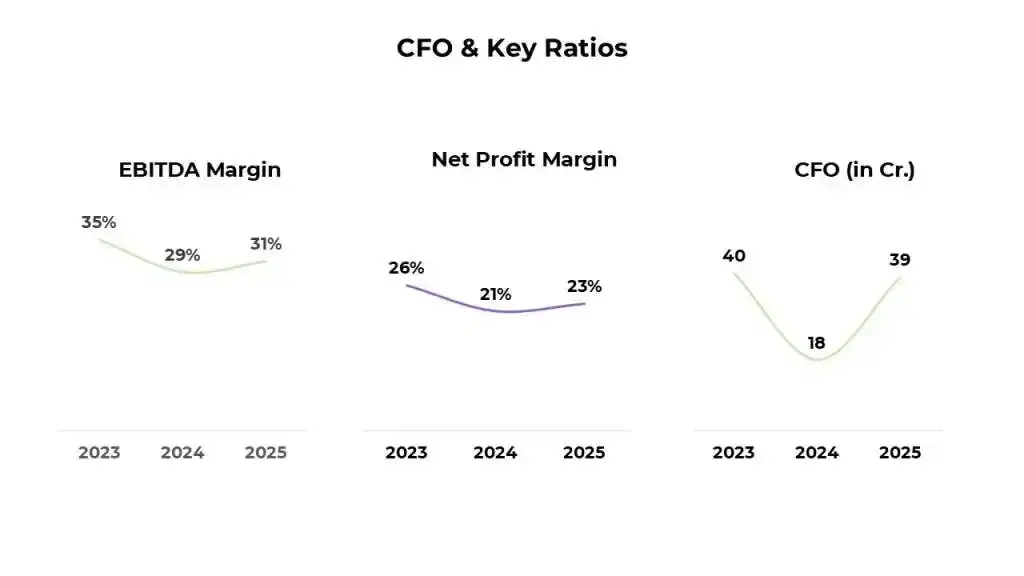
Cash flow dynamics merit attention given the inventory-intensive nature of the business. Operating cash flow totalled ₹40 crore in FY23, compressed sharply to ₹18 crore in FY24 as inventory buildout consumed working capital, then recovered to ₹39 crore in FY25. This volatility reflects the working capital cycles inherent to retail expansion and assortment deepening. As the COCO store rollout accelerates, investors should anticipate periods where inventory accumulation for new locations temporarily constrains cash generation before those stores mature and begin contributing positive cash flow.
The COCO Expansion Blueprint: Economics and Execution Risks
The map below highlights the location of the Stores
Inventory-Led Capital Intensity
The strategic pivot toward COCO stores represents Reva's most significant growth driver and its most substantial execution challenge. The company has earmarked ₹287 crore from IPO proceeds to fund the rollout of 15 standalone stores over a 24-month window, with one store already operational as of March 2026, eight targeted for FY27, and six for FY28. This expansion pace, while ambitious for a company operating just two COCO stores today, remains calibrated relative to the aggressive store-opening schedules pursued by some listed jewellery peers.The unit economics of a Reva COCO store are driven overwhelmingly by inventory investment. For a medium-sized outlet spanning 600 to 800 square feet and requiring ₹18 to ₹25 crore in total capital, approximately 70% of capex, or ₹13 to ₹18 crore, commits to inventory. This reflects the breadth-of-assortment imperative in diamond jewellery retail. Unlike gold, where a customer can specify a custom design and wait for manufacturing, diamond purchases typically close in-store. Buyers expect to see a wide range of designs, price points, and stone qualities before committing to high-ticket purchases. Insufficient inventory depth directly undermines conversion rates, forcing stores to carry substantial stock across categories, occasions, and price bands.
Marketing Spend and Margin Headwind
Beyond inventory, the capex model includes a distinctive element that profoundly affects near-term financial optics: brand-building marketing expenditure. Management has allocated ₹35 crore across the 15 planned stores, approximately ₹2 crore per location, to be deployed over an 8 to 18-month window from opening. This spending funds local market awareness campaigns, catchment-area consumer education, and trial-driving initiatives in geographies where the Reva brand carries limited recognition. Critically, under Ind AS accounting standards, this expenditure cannot be capitalized; it must flow directly through the profit and loss statement, creating immediate EBITDA margin headwinds.Management estimates this accounting treatment will compress EBITDA margins by 200 to 300 basis points during the primary buildout phase, a period expected to span approximately 30 months before dissipating as stores mature and marketing intensity normalizes. The margin trajectory thus resembles a J-curve: near-term compression as marketing expenses hit the P&L while newly opened stores have not yet reached full revenue potential, followed by operating leverage recovery as the COCO portfolio matures and per-store marketing intensity declines. Importantly, management expects absolute EBITDA and profit after tax figures to remain higher than current levels even during this compressed-margin phase, as incremental revenue from new stores more than offsets the margin percentage decline.
Breakeven by Geography
Store-level breakeven timelines vary by geography. In Maharashtra, where the PNGS brand carries 192 years of legacy and broad consumer recognition, management expects COCO stores to reach breakeven within 12 to 18 months. Outside the state, where Reva must build brand awareness from scratch, breakeven extends to 18 to 24 months. The Wakad COCO store, operating in familiar Maharashtra territory, generated ₹2.5 crore in its first full quarter, an encouraging data point albeit too nascent for meaningful extrapolation given the store opened during the seasonally weak period and had not yet experienced a full festive cycle.
Non-Maharashtra Expansion Risk
Geographic diversification introduces both opportunity and risk. The planned 40 to 45% allocation to non-Maharashtra markets, particularly Tier 1 North Indian cities, expands the addressable market substantially but exposes Reva to unfamiliar consumer behaviour, longer trust-building cycles, and higher marketing intensity. The strategic preference for mall-based formats in these new markets reflects a deliberate risk mitigation approach: malls provide generic footfall without requiring Reva to establish destination appeal, reducing the upfront marketing burden relative to standalone high-street stores.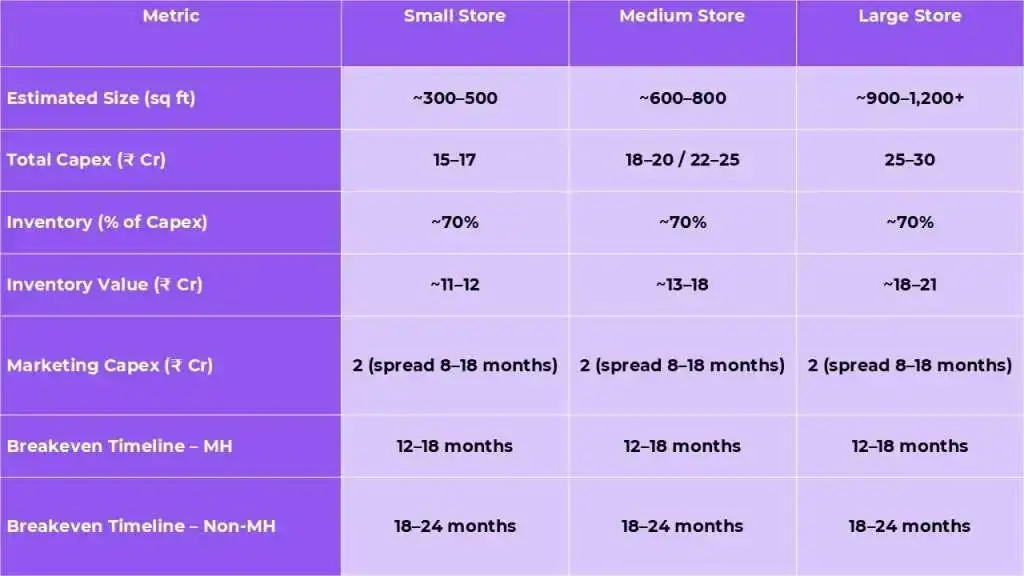
The Trust Moat and the Lab-Grown Diamond Question
Legacy as a Trust Asset
Two structural competitive advantages warrant deeper examination: the legacy-derived trust moat and the limited exposure to lab-grown diamond disruption.
The P.N. Gadgil group's uninterrupted operation since 1832, spanning British colonial rule, independence, multiple economic crises, and pandemic lockdowns without ever closing a store, creates a credibility asset that cannot be replicated through marketing spend. In diamond jewellery retail, where buyback and exchange programs require customers to return to the original seller years or even decades after purchase, institutional longevity functions as a fundamental business advantage. When a 30-year-old woman buys a ₹1 lakh mangalsutra in 2026, she is implicitly betting that the retailer will exist in 2040 when she wants to upgrade or exchange it. For Reva, backed by the Gadgil name, this bet feels safer than for digitally native competitors operating for a decade or less.
This trust differential directly impacts customer acquisition economics. While CaratLane, BlueStone, and other new-age brands must invest heavily in marketing, celebrity endorsements, and promotions to overcome consumer skepticism, Reva benefits from inherited credibility, particularly in Maharashtra. A customer walking into a PNGS store already trusts the parent brand; extending that trust to the Reva diamond counter requires far less persuasion than convincing the same customer to try an unfamiliar online brand.
“Your brand is what other people say about you when you’re not in the room.” — Jeff Bezos
Why Lab-Grown Diamonds Are a Limited Threat
The lab-grown diamond disruption narrative, which has rattled global diamond markets and compressed prices for certain categories, poses limited near-term threat to Reva's business model. Lab-grown diamonds have gained significant traction in solitaire-heavy markets, particularly engagement rings and statement pieces built around single large stones. However, Reva's portfolio is over 95% star melee focused on small diamonds clustered into intricate traditional designs. These small natural diamonds, ranging from a few points to a quarter-carat each, remain largely insulated from lab-grown substitution for several reasons.First, the price differential between natural and lab-grown small diamonds is less dramatic than for solitaires, reducing the economic incentive for substitution. Second, traditional Indian jewellery design prioritizes intricate craftsmanship and cultural motifs over stone size, making the natural-versus-lab distinction less salient to the target customer. Third, the resale and exchange value propositions that matter for long-term jewellery purchases remain unclear for lab-grown pieces, creating consumer hesitation around future liquidity. While lab-grown diamonds will undoubtedly capture market share in certain segments, Reva's melee-heavy, occasion-driven portfolio positions it outside the primary disruption zone.
Key Risks: What Could Go Wrong
No investment thesis is complete without confronting the factors that could derail execution or compress returns.
Promoter Dependency
The most immediate risk stems from promoter dependency. With approximately 95% of current revenue flowing through SIS counters embedded in PNGS stores, any slowdown in the parent company's expansion or deterioration in the commercial relationship would directly constrain Reva's growth. While the COCO buildout aims to reduce this dependency, the SIS network will remain the revenue backbone for several years. The relationship between the two entities has been formalized through commercial agreements governing counter operations, revenue sharing, and inventory management, but the concentration risk persists until the COCO portfolio reaches scale.
Inventory and Working Capital Risk
The inventory-heavy capital model presents both working capital and execution risks. With approximately 70% of per-store capex locked in inventory and diamond jewellery experiencing slower stock turns than mass-market retail categories, errors in assortment planning or demand forecasting can tie up capital unproductively. A store stocked with ₹15 crore of inventory that misreads local consumer preferences may struggle to convert that stock into revenue efficiently, compressing returns on invested capital. Additionally, the 15-store rollout over 24 months, while calibrated, remains ambitious for a company with limited COCO operating history. Delays in site acquisition, lease negotiations, fit-outs, or talent hiring could defer revenue recognition and extend the period of marketing-driven margin compression.
Geographic Expansion Risk
Geographic expansion into North India introduces consumer behaviour uncertainty. Maharashtra contributes 95% of revenue today, providing management with deep familiarity regarding local preferences, occasion-driven demand cycles, and competitive dynamics. Tier 1 North Indian markets may exhibit different jewellery consumption patterns, price sensitivities, and brand loyalty behaviours. The 18 to 24-month breakeven timeline for non-Maharashtra stores reflects this uncertainty, but actual ramp curves remain unproven until several stores outside the home market reach maturity.
Margin Compression and Seasonality
Margin compression in the near term, while expected and communicated by management, could test investor patience. The 200 to 300 basis point EBITDA margin headwind from marketing expenses under Ind AS accounting will compress percentage profitability precisely as the growth narrative gains momentum, creating potential tension between reported margins and underlying business health. Investors conditioned to view margin expansion as a quality signal may misinterpret the J-curve trajectory as operational weakness rather than strategic investment.Finally, the business remains structurally seasonal, with approximately 65% of revenue clustering in the second half of the fiscal year. This seasonality creates quarterly volatility that can obscure trend assessment and challenge investor communication. A weak Q1 result may trigger concern even if entirely expected, while a strong Q3 may invite unsustainable extrapolation. Management's ability to educate investors regarding normalized performance expectations will prove critical to managing market perception.
Explore our Products
Research Framework

Emerging Titans
Combination of quantitative analysis, industry tailwinds, and management assessment - SPRINT investment philosophy

Tiny Titans
Heavy emphasis on scuttlebutt research, plant visits, and early on-ground signals
Conclusion: High-Potential Play with Execution as the Key Catalyst
PNGS Reva Diamond Jewellery Limited offers investors a rare pure-play exposure to India’s fast-formalizing and premiumizing diamond jewellery market. Backed by an inherited trust moat, resilient gross margins, and limited disruption from lab-grown alternatives, the company is well-positioned to benefit from the structural shift in consumer behaviour from gold as a store of value to studded jewellery as a lifestyle purchase.The growth narrative, however, is tightly linked to execution. The success of the COCO-led expansion strategy will be critical. If management delivers on store rollout timelines, achieves breakeven as guided, and maintains consistent unit economics across geographies, the business can scale into a high-teens to low-twenties revenue compounder. The existing SIS network provides a stable revenue base, helping cushion near-term volatility during this expansion phase.
That said, the investment case is not without dependencies. Sustained marketing efficiency, disciplined inventory management, and steady discretionary demand will be essential to ensure that growth does not come at the cost of margins or capital efficiency.
For investors, Reva presents a structurally attractive opportunity, but one that is firmly execution-driven. The next 18 to 24 months will be decisive in determining whether its differentiated positioning can translate into scalable growth and durable competitive advantage .As Peter Drucker famously noted, “Strategy is a commodity, execution is an art.”
If you believe India’s shift toward branded diamond jewellery is just beginning, comment "DIAMOND" below.
FAQs
What is Reva Diamond PNGS?
+PNGS Reva Diamond Jewellery Limited is a pure-play diamond jewellery retailer, focused primarily on studded jewellery and operating under the Reva brand.
Who is the promoter of Reva PNGS?
+The company is promoted by P. N. Gadgil & Sons Limited, along with Govind Vishwanath Gadgil and Renu Govind Gadgil.
What is the price of Reva Diamond PNGS shares?
+At the time of this article, the share price is approximately ₹380.
What is driving the shift toward organized diamond retail in India?
+The shift is driven by premiumisation, rising incomes, and changing consumer behaviour, along with trust, certification, and buyback assurance offered by branded players, plus regulatory factors like GST and hallmarking pushing consumers toward organised retailers.
What was the IPO price of Reva PNGS?
+The IPO price band was ₹367 to ₹386 per share.

High growth stock specialist, Value Educator
Shashank Mahajan is an equity research professional with over 12 years of experience in identifying high-potential SME and micro-cap stocks at an early stage. He follows a rigorous scuttlebutt research–driven approach, combining on-ground insights with deep financial analysis. Shashank specializes in uncovering under-researched and under-owned companies with strong management quality and long-term growth potential. Through disciplined research and early identification, he focuses on spotting tomorrow’s market leaders before they enter the mainstream investor radar.

Glenmark: The USD 700 Mn Cancer Deal and Its Brands

Pharma Stocks in India 2026: Generics, APIs and CDMOs

Granules India: From Paracetamol to a 65% Gross Margin

Natco Pharma: After Revlimid, 29 Patent Challenges

Shilpa Medicare: Cancer APIs, Films and Biosimilars

Alembic Pharma: US Plants Pay Back, Margin Hits 22.2%
Explore our Products
Research Framework
Emerging Titans
Combination of quantitative analysis, industry tailwinds, and management assessment - SPRINT investment philosophy
Tiny Titans
Heavy emphasis on scuttlebutt research, plant visits, and early on-ground signals



Modern Warfare to Multibaggers
Key Trends. Strategic Shifts. Opportunities Ahead.
Don't Miss This Exclusive Webinar!
Join Value Educator to decode the key trends shaping India's defence sector and learn how to identify tomorrow's potential leaders in the space.
- In-depth research on India's defence sector
- Live Q&A session
- Actionable takeaways for long-term investors

 Orders
 Subscription
 Share with friends


Required Details
₹23999.00
(12 month subscription)
As per SEBI regulations, all users are mandated to complete the KYC that is validated for 1 year. Post payment, you will be redirected to the KYC screen


No comments yet. Be the first to comment!