
PNGS Gargi: Riding the Fashion Jewellery Boom

The Quiet Shift in How India Wears Jewellery
For decades, jewellery in India meant one thing: gold.
It was bought during weddings, stored for years, and passed down across generations. Jewellery was less about fashion and more about wealth preservation.
But that tradition is quietly evolving.
India today is one of the youngest major economies in the world, and consumer behaviour is evolving alongside it. A rising urban youth population, increasing disposable incomes, and a growing number of working women are gradually changing the way jewellery is bought and worn.
Instead of purchasing a single expensive piece meant to last for decades, younger consumers are increasingly choosing affordable, design-focused accessories that they can wear today and easily switch tomorrow.
In that sense, jewellery is gradually starting to behave more like fashion rather than a long-term asset.
Social media trends, fast-fashion cycles, and the growing demand for everyday styling have quietly given rise to a new segment within the industry: fashion and imitation jewellery. Unlike traditional gold jewellery—where purchases are relatively infrequent and often driven by investment motives—fashion jewellery relies on repeat purchases, constantly evolving designs, and affordable price points.
This shift is increasingly visible in industry data. India’s fashion and imitation jewellery segment is estimated to be growing at around 20–25% annually, largely driven by younger consumers and working professionals who view jewellery more as a style statement than a long-term asset.
Even so, most investor attention continues to remain focused on traditional gold jewellery companies.
Within this fast-growing segment, a relatively lesser-known SME company has been steadily building its presence through a capital-light retail strategy that relies on franchise stores, shop-in-shop counters, and digital platforms.
The brand focuses on design-driven accessories, usually priced between ₹500 and ₹2,000, catering to urban consumers who look for affordable pieces that stay relevant to fashion trends and are easy to wear every day.
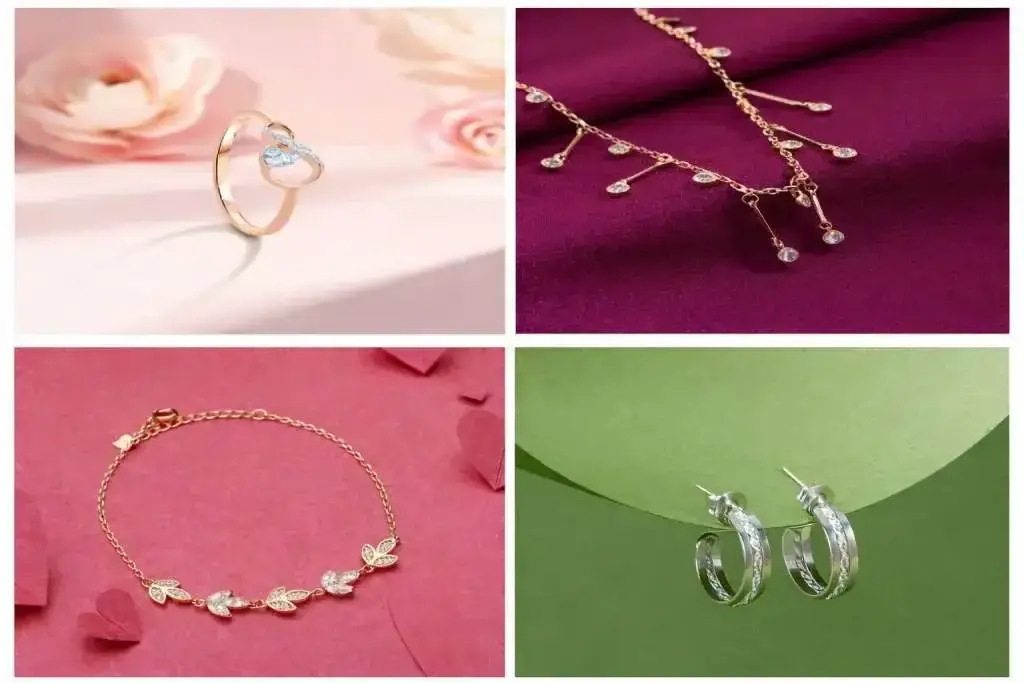
The brand’s core audience largely falls in the 20–25 age group, where jewellery is viewed more as a way to express personal style rather than as a long-term investment. In metro cities especially, young professionals and working women tend to prefer branded accessories, as they often feel more reliable and trustworthy compared to unbranded options.

Although women continue to be the main buyers, the affordable pricing also makes these products popular for gifting. Because of this, many male consumers also participate in the category, especially during occasions and celebrations.
In many ways, the brand functions less like a traditional jewellery company and more like a lifestyle brand offering affordable, fashion-driven accessories that fit well within India’s growing fast-fashion jewellery market.
Over the past few years, this positioning has translated into rapid early growth.
But the real question for investors isn’t whether the stock has already performed.
The real question is far more important:
Can a fast-fashion jewellery brand scale into a durable national retail platform?
Because in fashion-led businesses, growth can appear quickly.
Durability takes much longer to prove.
“The big money is not in the buying and selling, but in the waiting.”
— Charlie Munger
Understanding whether this early momentum represents temporary excitement or the foundation of a scalable retail model is what makes the company worth examining.
That company is PNGS Gargi.
The core audience sits in the 20–25 age bracket, with additional relevance among senior school and college-going consumers entering early fashion cycles.
Understanding Gargi’s Revenue Engine
How Revenue Is Generated (Channels That Actually Drive Sales)
Gargi’s revenue engine is structured around a multi-format retail architecture designed to maximise reach while limiting capital intensity. Instead of depending purely on company-owned stores, the brand distributes sales generation across complementary channels, each carrying distinct economic characteristics.
- Exclusive Brand Outlets (EBOs)
Operated through a mix of company-driven formats and franchise structures such as FOCO and FOFO. This allows physical expansion without requiring uniform capital deployment across locations. Franchise-led formats shift portions of inventory and operating risk to partners while preserving brand visibility.
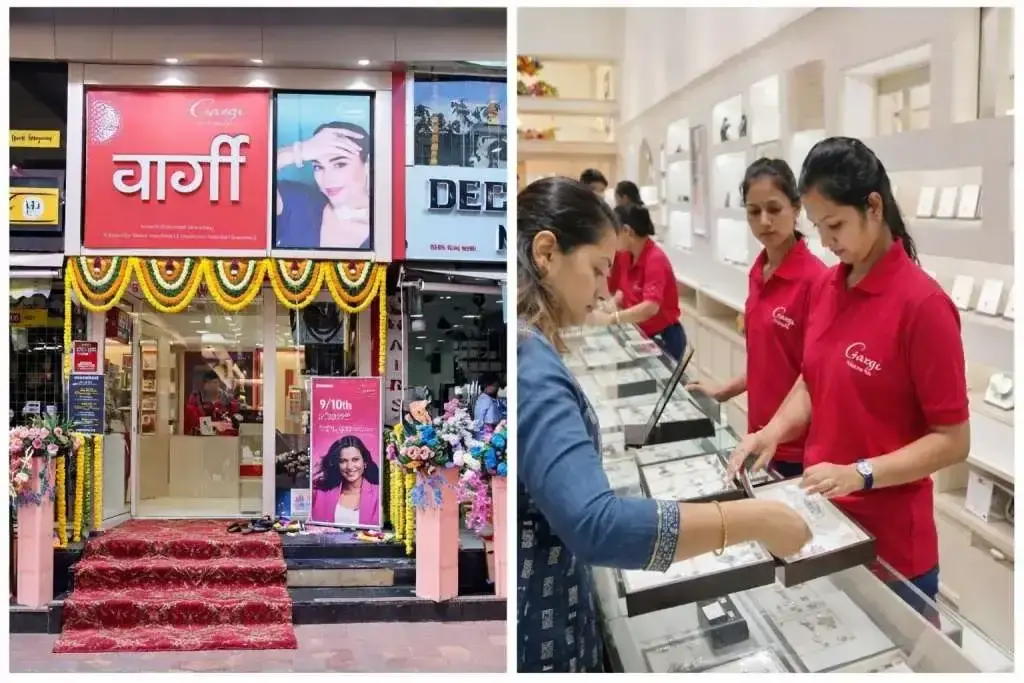
- Shop-in-Shop (SIS) Counters
These counters are typically placed inside organised retail spaces such as Shoppers Stop, other multi-brand stores, and the PNG & Sons network. Being inside these locations means the brand can use the existing customer footfall and infrastructure instead of carrying the full cost of running standalone outlets.
In some shop-in-shop setups, the arrangement involves a fixed facility fee along with a share of revenue. This changes how margins work, but it also keeps the initial investment much lower.
Shop in shop counter in PNG & Sons
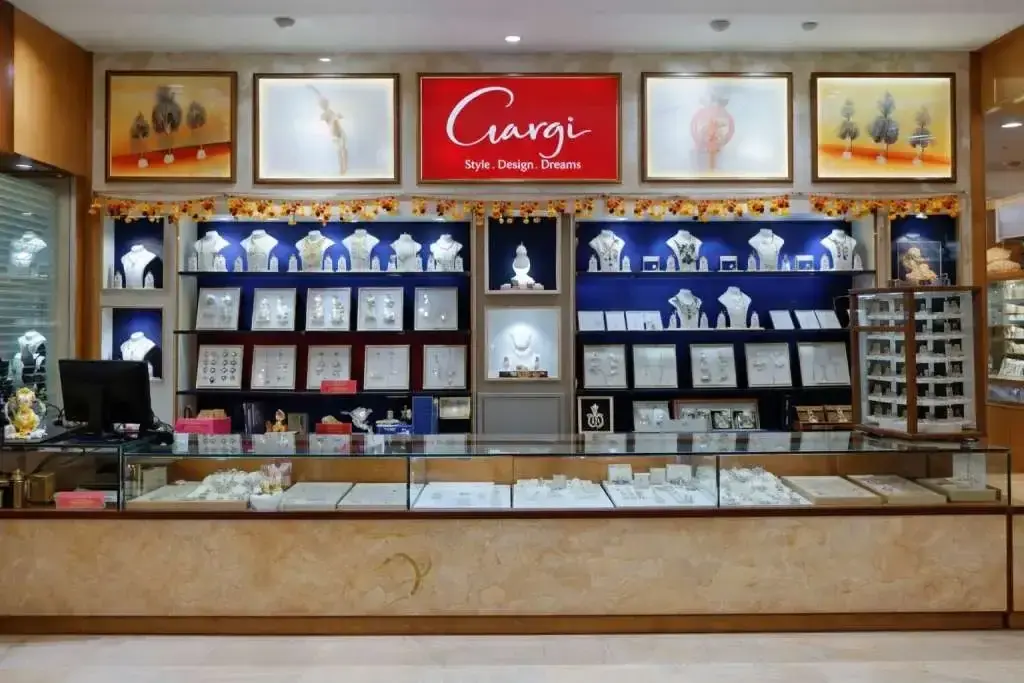
Gargi in shopper stop bengaluru
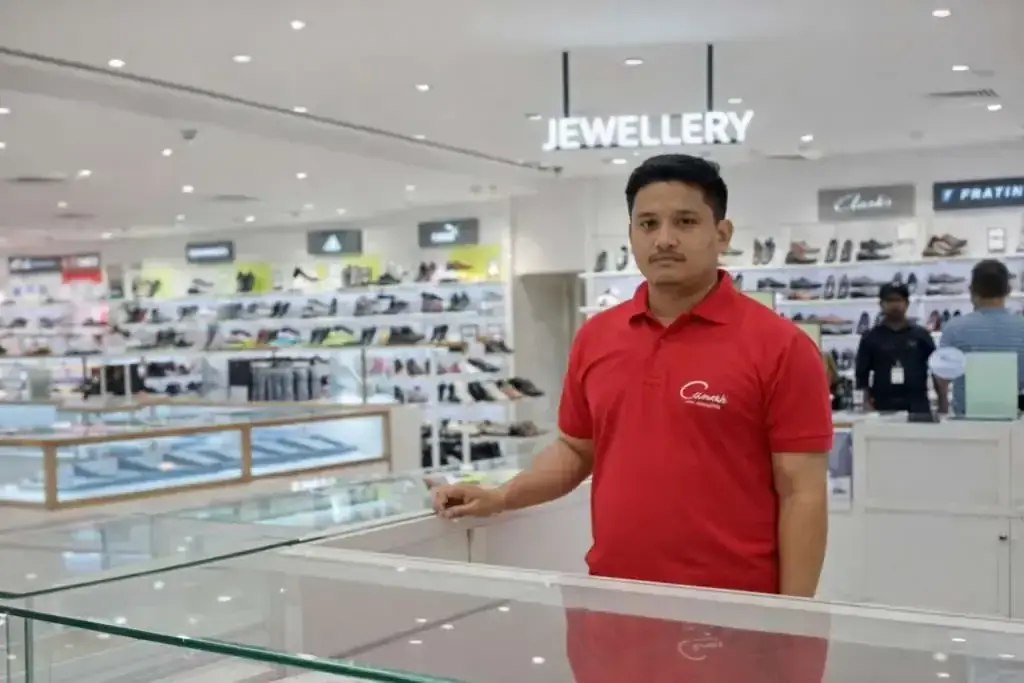
- Third-Party Franchise Network
Helps the brand expand quickly into smaller cities and emerging consumption hubs. Capital requirements are distributed across partners, improving scalability while introducing execution-dependence on franchisee quality and local demand calibration. For instance, franchise-led presence in Tier-2 Maharashtra markets such as Nashik illustrates how the model enables regional expansion without balance sheet strain.
- Online & Digital Channels
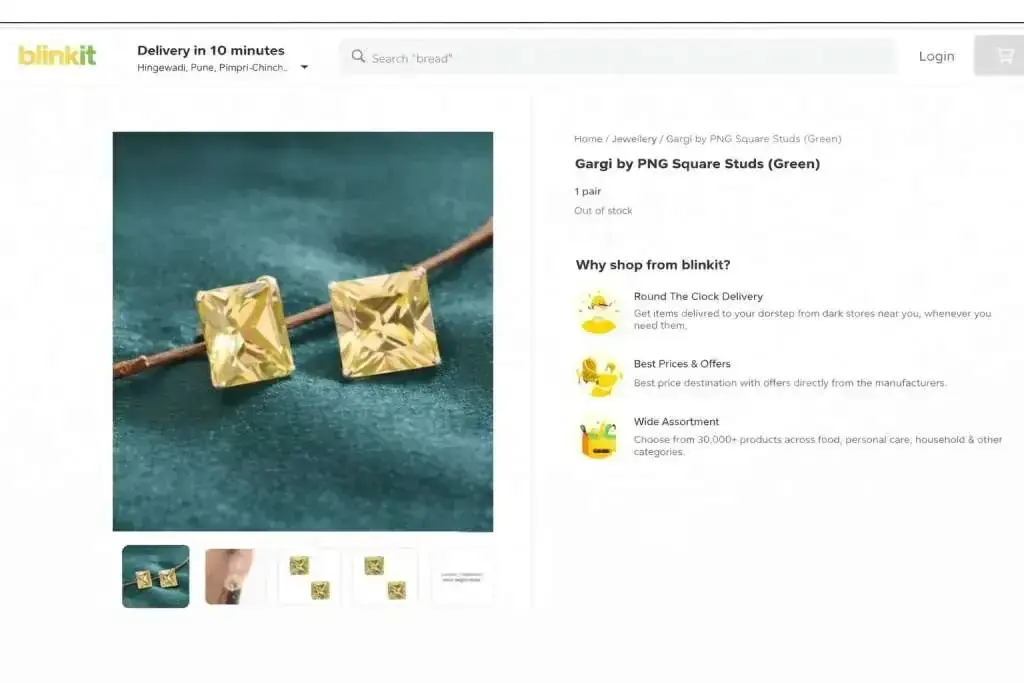
Digital channels play an increasingly important role in Gargi’s distribution strategy, particularly for capturing impulse-driven and digitally native consumption among younger consumers. The company’s online presence extends beyond conventional e-commerce platforms to include quick-commerce integrations such as Blinkit, enabling sub-₹1,000 jewellery purchases to be delivered within minutes. This repositioning effectively turns certain SKUs into convenience-led lifestyle accessories rather than planned retail purchases.
To support this behaviour, the company has introduced a quick-commerce oriented product range under the “Utsaav” label, specifically designed for lower-ticket, high-frequency purchases suited to rapid delivery platforms.
Alongside marketplace integrations, Gargi is also working toward launching its own dedicated mobile application across iOS and Android, which would allow consumers to purchase directly from the brand ecosystem and strengthen its direct-to-consumer digital channel.
While digital sales currently represent a relatively small portion of revenue, the contribution has been gradually increasing. Website-led sales accounted for approximately 4.5% of total revenue in FY25, up from around 2% in earlier periods. Management has indicated a medium-term objective of increasing online contribution to ~10% of total sales over the next 2–3 years, reflecting the growing role of digital discovery and purchase behaviour in fashion-led consumer categories.
This channel mix reflects a deliberate bias toward capital-efficient distribution rather than asset-heavy expansion, a structure well aligned with affordable fashion jewellery categories where purchase decisions are frequent, and ticket sizes remain moderate.
As of the recent operating footprint, Gargi’s network consists of a growing base of exclusive outlets complemented by a materially larger SIS presence, signalling preference for visibility leverage over fixed-asset accumulation.
Understanding Gargi’s Retail Model: How Channel Mix Shapes Revenue Quality
Revenue contribution and profitability vary materially across Gargi’s retail formats, making channel mix critical for interpreting margins correctly.
SIS counters within the PNG & Sons network operate on a hybrid structure: ~₹3 lakh fixed monthly facility charges plus ~10% revenue-linked commissions. Inventory is often supplied without upfront deposit. While this compresses reported EBITDA margins, it materially lowers capital employed and break-even risk. Margin percentage may fall but return on capital can improve.
Franchise-led FOCO stores require roughly ~₹50 lakh investment versus ₹1–2 crore for typical competitor-owned outlets. Inventory and operating risk are partially shifted to partners, enhancing scalability and balance sheet efficiency, though increasing reliance on execution quality.
Department-store formats such as Shoppers Stop follow pre-discounted billing models, prioritising sell-through velocity over pricing flexibility.
EBITDA optics alone can mislead. Channel-driven margin compression may coexist with improving capital efficiency. Expansion in Gargi’s case is format-led, not asset-heavy which alters how revenue quality should be evaluated.
Scaling an Asset-Light Model: The Execution Challenge for Gargi
Gargi’s operating model is structurally asset-light and inventory-driven. Unlike traditional bullion-heavy jewellers, where large amounts of capital remain tied to gold inventories and showroom infrastructure, Gargi’s economics depend far more on SKU velocity, design relevance, and retail throughput.
This model creates a different set of execution requirements. The business works only if:
- Inventory rotates quickly
- Designs remain trend-relevant
- Retail counters absorb fixed costs efficiently
- Network expansion does not dilute outlet productivity
Because in fashion retail, slow inventory is not a minor operational issue — it is the beginning of margin compression.
Management guidance for FY26 indicates continued network expansion. The company plans to open 10–15 additional stores across India, with a minimum target of around 12 outlets, largely concentrated in metro markets and outside Maharashtra.
During the first half of FY26 alone, management expects 6–7 store additions. Over the longer term, Maharashtra itself could potentially support around 20 stores across Tier-2 and Tier-3 cities, reflecting management’s view that the brand still has meaningful whitespace within its core geography.
The asset-light structure also alters how profitability should be interpreted. In Gargi’s case, depreciation and interest costs remain minimal due to limited fixed assets and near-zero leverage. As a result, the difference between EBITDA, PBT and PAT becomes relatively narrow compared to asset-heavy retail models.
Management commentary has reinforced this interpretation. In earlier concalls, leadership explicitly emphasised PAT as the primary profitability indicator, noting that the business structure allows a greater portion of operating earnings to flow through to net profit.
In simple terms, the absence of heavy depreciation and financing costs allows operating performance to translate more directly into bottom-line profitability. This also explains why management guidance and investor discussions frequently reference PAT margins rather than EBITDA margins.
“The single most important decision in evaluating a business is pricing power.”
— Warren Buffett
For Gargi, pricing power is not expressed through high ticket sizes, but through design relevance, brand trust, and inventory turnover — variables that ultimately determine whether the asset-light model continues to scale efficiently.
Reading Early-Stage Retail Numbers the Right Way
Early-stage retail growth often appears impressive due to low-base effects. More reliable indicators of durability include:
• Gross margin stability
• Inventory days and stock ageing behaviour
• Cash conversion patterns
• Store-level contribution trends
• Channel mix evolution
FY25 revenue expansion from earlier years reflects strong scaling. However, long-term value creation depends on whether margin discipline, capital efficiency, and inventory behaviour remain resilient as expansion normalises.
Simple Interpretation
Gargi operates under a capital-light, distribution-leveraged retail model intentionally designed to minimise fixed-asset strain while supporting rapid assortment cycles.
The model’s strengths lie in:
• Lower capital intensity
• Faster potential payback dynamics
• Flexibility across retail formats
Its vulnerabilities lie in:
• Execution consistency
• Inventory discipline dependence
• Consumer preference volatility
Growth attracts attention.
Revenue quality and unit economics determine survival.
From Legacy Jeweller to Fashion Retail Platform: The Evolution of PNGS Gargi
The origins of PNGS Gargi date back to 1832, when Ganesh Gadgil began a jewellery business. In those days, the jewellery trade was built largely on personal reputation, trust, and the quality of craftsmanship. Over time, the Gadgil name became widely known in the industry.
As the family business moved from one generation to the next, different members took the business in different directions. This led to the emergence of three separate companies — PNG Jewellers, P. N. Gadgil & Sons, and PNG & Sons. Although they share the same family background, each company operates on its own and follows a different business approach in the market.
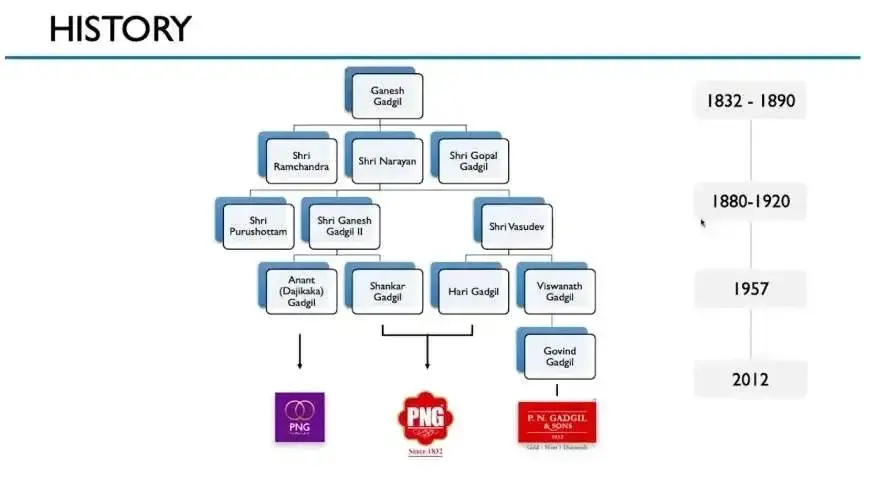
PNG Jewellers and P. N. Gadgil & Sons continued to focus mainly on traditional gold and precious jewellery. PNG & Sons, on the other hand, gradually started exploring newer directions in the business. The company showed more willingness to try different product categories and adopt modern retail formats. This approach later played a role in the creation and growth of Gargi.The family’s migration toward Pune further reinforced this adaptive trajectory, embedding the business within a more urbanised and design-sensitive consumption environment.
Against this backdrop, Gargi was launched in December 2021 under PNGS Gargi Fashion Jewellery Ltd as a deliberate category expansion rather than a legacy extension. The brand marked a structural shift away from bullion-driven retail economics toward fashion and affordable jewellery segments defined by design cycles, purchase frequency, and lifestyle-led demand. This repositioning fundamentally altered the company’s strategic orientation, aligning it with evolving consumer preferences and modern retail behaviour.
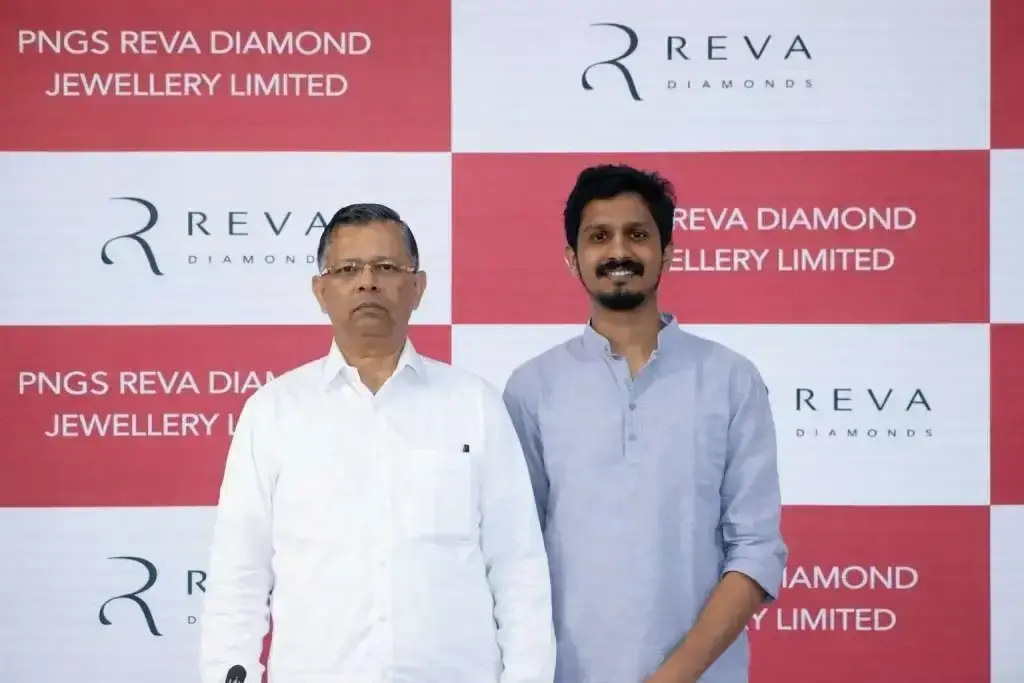
The involvement of the Modak family added a complementary dimension to this transition. Director Amit Modak’s capital markets and governance exposure introduced financial and strategic depth, while Aditya Modak’s background in marketing and advertising aligned closely with the requirements of brand-led consumer businesses. Together, these elements framed Gargi not as a continuation of historical operations, but as a purpose-built platform designed for a distinct category logic.
Viewed in continuity, Gargi represents an evolutionary outcome of generational adaptation -combining legacy credibility with modern consumption dynamics rather than merely replicating traditional jewellery models.
The broader promoter ecosystem has also seen expansion beyond Gargi’s fashion jewellery segment. A related entity, Reva Diamond Jewellery Ltd, has recently pursued a public listing through an IPO, reflecting continued strategic activity within the PNG-linked business network.
While Gargi operates primarily in the affordable fashion jewellery category, Reva focuses on diamond jewellery retail, indicating a multi-segment approach across the jewellery value chain. Notably, certain retail environments, such as shop-in-shop placements within PNG & Sons stores, may host counters for both brands, suggesting operational overlap in distribution infrastructure.
Although the two businesses operate in different product categories and price segments, the parallel expansion signals broader ambition within the promoter ecosystem to scale organised jewellery retail platforms across multiple consumer segments.
India’s Expanding Jewellery Market and the Opportunity in Fashion Accessories
While the total Indian jewellery market was valued at ~USD 85 billion (~₹7.3 lakh crore) in 2023, fast-fashion and imitation jewellery represent a distinct, high-growth sub-segment focused on affordable, design-led accessories rather than precious metals.
India’s broader consumption structure is also shifting in favour of discretionary categories as income levels rise. As urban affluence deepens, categories such as travel, leisure, healthcare, and jewellery are expected to see structurally higher spending penetration.
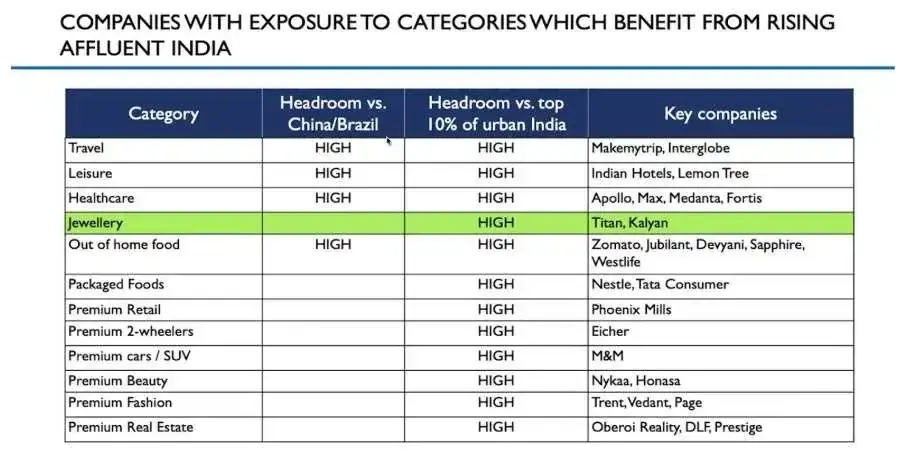
The table above highlights that jewellery falls within the high-headroom discretionary basket in India, both relative to peer emerging economies and within the top 10% of urban consumption cohorts. In simple terms, as disposable incomes rise, jewellery spending tends to increase disproportionately compared to essential categories.
This is important for two reasons:
- Jewellery consumption in India is not purely cultural — it is income-elastic.
- Organised players stand to benefit as rising affluence shifts demand toward branded, visible, and aspirational formats.
According to multiple industry research sources:
- The Indian fashion/costume jewellery market was estimated at ~₹34,000 crore (≈USD 4–4.5 billion) in 2023, with expected continued growth.
- Broader artificial jewellery (imitation + fashion) is valued at USD 4.98 billion in 2025 and projected to expand at ~10%+ CAGR in the coming decade.
This segment is typically lower ticket, trend-sensitive, and higher purchase frequency compared with gold or diamond jewellery. As income rises, frequency increases before ticket size does — which benefits fashion-led categories disproportionately.
While the broader fashion jewellery segment in India is estimated to grow at roughly 20–25% annually, PNGS Gargi has expanded materially faster.
Over the last three years, the company’s B2C revenue has grown at ~69.7% CAGR, significantly outpacing the underlying industry growth rate.
In FY25 alone, B2C revenues increased by ~67% (excluding a one-off B2B transaction), suggesting that the company’s growth has been driven primarily by expanding consumer adoption rather than isolated bulk sales.
This divergence between industry growth and company-level expansion indicates early product–market fit and distribution traction, although sustaining such outperformance will depend on continued retail execution and brand visibility.
Understanding the Organised–Unorganised Divide in Fashion Jewellery
The Indian costume and fashion jewellery market remains structurally fragmented, with the unorganised segment continuing to account for a dominant share. Local wholesalers, regional traders, street retailers, and small independent stores prevail across price-sensitive and Tier-2/Tier-3 markets. Their advantages lie in low operating costs, rapid trend imitation, and aggressive pricing flexibility.

However, as reflected in the chart above, organised penetration has expanded materially over the past decade -rising from single-digit levels in FY16 to approximately 20%+ by FY25E. The visual trajectory indicates a steady and structural transition rather than a short-term spike. This shift signals increasing consumer acceptance of formal retail formats in a category historically dominated by informal trade.
The organised segment includes branded fashion jewellery chains, corporate retail formats, omni-channel players, and online-first platforms. Its growth has been supported by:
- GST-led formalisation of the supply chain
- Consumer preference for quality assurance and standardised pricing
- Brand visibility driven by social media
- Expansion of mall retail and digital commerce
Despite the visible rise shown in the chart, nearly four-fifths of the market remains unorganised, highlighting substantial runway for further penetration gains.
Importantly, even within the organised segment, market concentration remains low. Management commentary suggests that the largest branded player, mainly Titan, holds roughly ~5% market share, while the next significant player operates near ~1.5%. Such limited concentration reinforces the fragmented structure and implies that meaningful share gains remain available for emerging scalable brands without confronting entrenched dominance.
For Gargi, this structural transition is strategically relevant. In fashion jewellery, purchasing decisions are driven more by design relevance, brand signalling, merchandising control, and retail experience than intrinsic metal value. Organised retail formats offer tighter control over these variables, positioning branded players to benefit disproportionately as formalisation deepens.
Profit pools in this category are driven less by metal value and more by operational variables SKU velocity, inventory rotation, store productivity, and brand recall. Seasonality remains structural, with stronger festive and wedding quarters influencing demand cycles. As a result, long-term value creation depends more on execution consistency and capital efficiency than on industry growth alone.
Comparing Retail Productivity Across Jewellery Formats
The jewellery industry exhibits significant variation in revenue density depending on format structure, ticket size, brand positioning, and geographic concentration. Revenue per square foot serves as a proxy for retail productivity, capturing the combined effect of footfall, conversion efficiency, and average transaction value.
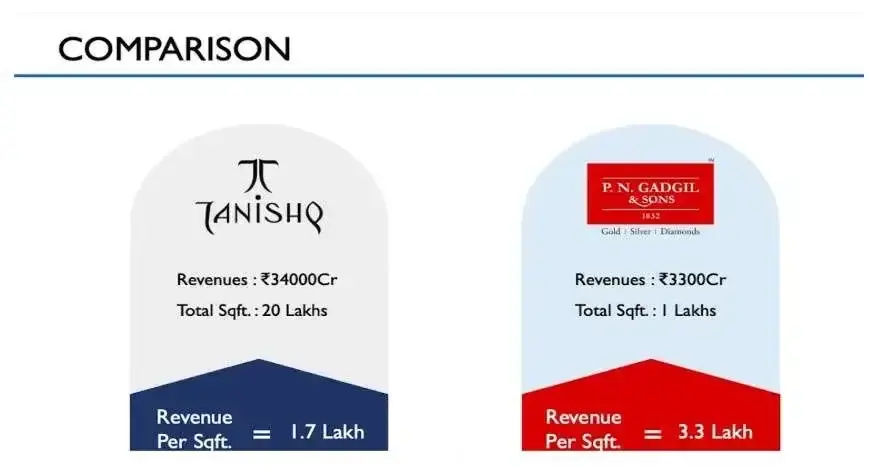
As illustrated above, established jewellery formats demonstrate materially different throughput characteristics. Larger national chains such as Tanishq operate at scale with extensive showroom footprints, while legacy regional players such as PNG & Sons generate comparatively higher revenue density within concentrated geographies. These differences are influenced by brand trust, local dominance, product mix, and customer loyalty depth.
However, absolute revenue density must be interpreted within the context of format structure. Gargi’s retail architecture differs structurally from bullion-heavy standalone formats. The company relies meaningfully on Shop-in-Shop counters and franchise-led expansion, where capital intensity per location is materially lower and productivity is measured differently.
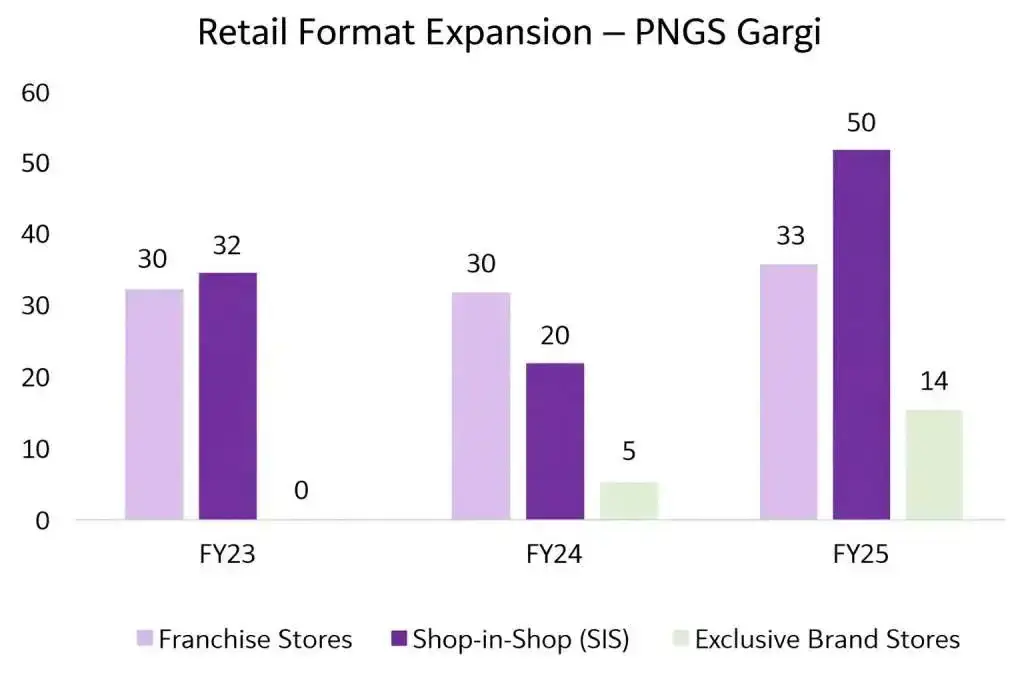
The format mix evolution highlights this distinction. Rather than building large, asset-heavy showrooms, Gargi has expanded through embedded counters and controlled franchise rollouts, enabling faster scale with lower fixed asset commitment. In such models, counter-level throughput and return on incremental capital deployed become more relevant than headline showroom revenue per square foot.
Accordingly, the analytical lens for Gargi should prioritise:
- Revenue per outlet / per counter growth trajectory
- Contribution margin stability across retail formats
- Inventory rotation and SKU velocity discipline
- Return on incremental capital employed
Scale alone does not define competitive strength in jewellery retail. Format, economics, capital efficiency, and execution consistency ultimately determine the durability of returns.
Early Moat Signals: Can Gargi Build a Sustainable Advantage?
At Gargi’s present stage of evolution, competitive advantage cannot be assessed using traditional mature-brand frameworks. The company operates within a fashion-driven category where structural moats are inherently weak at inception. The more analytically relevant question is whether the business exhibits mechanisms that can repeatedly regenerate advantage as scale increases.
Design Velocity & Inventory Discipline: The Engine of Gargi’s Capital Efficiency
Gargi operates a design-led, asset-light production model that combines in-house designers with a karagir-driven contract manufacturing network. This hybrid structure enables rapid product refresh across studded and casting jewellery -critical in a fashion-sensitive category where consumer preferences evolve quickly.
Production is executed in relatively small batches, typically 500–1,000 pieces per design. Management commentary indicates these batches are often absorbed within 5–7 weeks, implying short sell-through cycles relative to traditional jewellery retail. This discipline limits capital concentration at the SKU level while enabling continuous assortment reshuffling based on live demand.
In affordable fashion jewellery, inventory velocity becomes the primary economic driver. Inventory management is not operational hygiene -it is the engine of capital efficiency.
For investors trying to interpret this metric properly, understanding inventory turnover becomes critical. A deeper explanation of how this ratio signals operational efficiency is covered in Inventory Turnover Explained: A Powerful Efficiency Signal Investors Ignore.
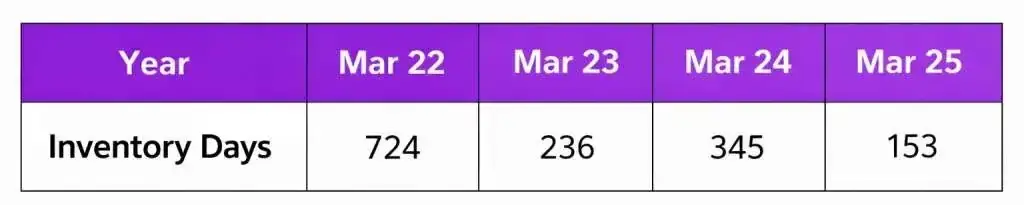
The compression from elevated early-stage levels to 153 days in Mar 25 reflects improving rotation discipline. Sustained stability or further compression in this metric would signal structural strengthening of the operating model.
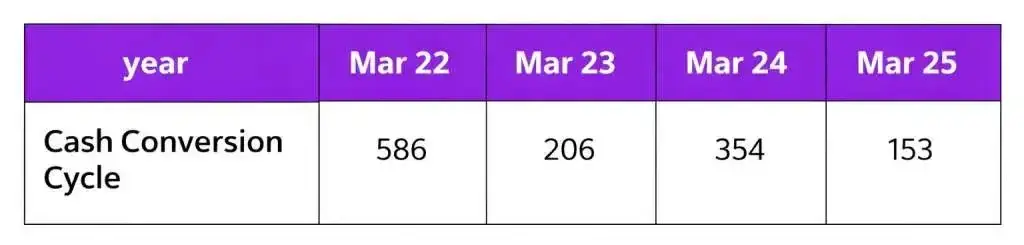
Beyond inventory rotation, the cash conversion cycle (CCC) provides a more complete view of capital efficiency. In retail models, CCC captures how quickly inventory converts into cash after accounting for receivables and payables.
If CCC shows compression alongside falling inventory days, it indicates that growth is not being funded through extended working capital stress. In asset-light formats such as Gargi’s, sustained CCC discipline strengthens return on incremental capital and reduces expansion risk.
A structurally improving CCC, if maintained, would signal that scale is being built on capital efficiency rather than balance sheet stretch.
Short sell-through cycles and SKU rotation support:
- Lower inventory obsolescence risk
- Faster capital recycling per retail point
- Reduced working capital drag during expansion
- Greater resistance to forced discounting
In this category, production agility and inventory responsiveness matter more than manufacturing scale.
Retail Format Strategy: Scaling Through Counters and Franchises
Gargi’s reliance on Shop-in-Shop placements within established retail ecosystems introduces embedded distribution leverage. Rather than relying solely on standalone footfall, the brand benefits from pre-existing consumer traffic and infrastructure.
This structure offers:
- Demand visibility without full store-level fixed cost exposure
- Capital-light geographic expansion
- Lower customer acquisition friction
However, profitability dynamics vary across formats. SIS counters operating under fixed facility charges and commission layers structurally compress reported margins, while franchise-led stores alter working capital exposure through inventory deposits.
Therefore, outlet count alone is not a performance indicator. Contribution margin after format-level cost layers and inventory productivity ultimately determines scalability.
Brand Recall and Consumer Trust: Building Demand in Affordable Fashion Jewellery
Gargi’s positioning is not luxury-led; it is trusted, wearable affordability. The legacy of PNG & Sons in Maharashtra, particularly Pune, provides inherited brand credibility. In categories where purchase tickets are small but trust still matters, familiarity reduces hesitation and shortens decision cycles. This embedded goodwill functions as an intangible entry accelerator, especially in early geographic expansion.
Brand reinforcement efforts extend beyond passive legacy advantage. Gargi has consciously invested in recall-building through celebrity associations. Actress Mithila Palkar, whose visibility among younger urban audiences stems from her widely followed web-series career, has served as a brand ambassador. Management commentary has indicated that her resonance is not limited to Maharashtra; anecdotal feedback from northern markets suggests familiarity and acceptance among emerging urban consumers as well. Such cross-regional relatability helps compress brand-building timelines in newer territories.

Additionally, promotional campaigns featuring Ajay Devgn during the movie BHOLA across both PNG and Gargi platforms, structured within defined contractual arrangements, signal coordinated branding between the parent legacy identity and the newer fashion extension. This dual-brand visibility reinforces continuity rather than fragmentation ,positioning Gargi as an evolution of trust rather than an unrelated startup label.
 Importantly, these initiatives are economically relevant only if they translate into repeat purchase behaviour and stable sell-through, not merely awareness spikes. In affordable fashion categories, recall without rotation does not sustain margins.
From a balance sheet perspective, lower leverage and a lighter fixed-asset structure reduce structural fragility during demand volatility. Lower fixed commitments allow greater tolerance for consumption fluctuations, reduced break-even pressure per outlet, and flexibility during trend shifts.
Financial resilience does not create a moat, but when combined with layered brand reinforcement, it increases the probability that consumer pull can persist under competitive stress.
Advantage Formation Reality
At this stage, Gargi’s positioning is execution-dependent rather than structurally protected. The real drivers are:
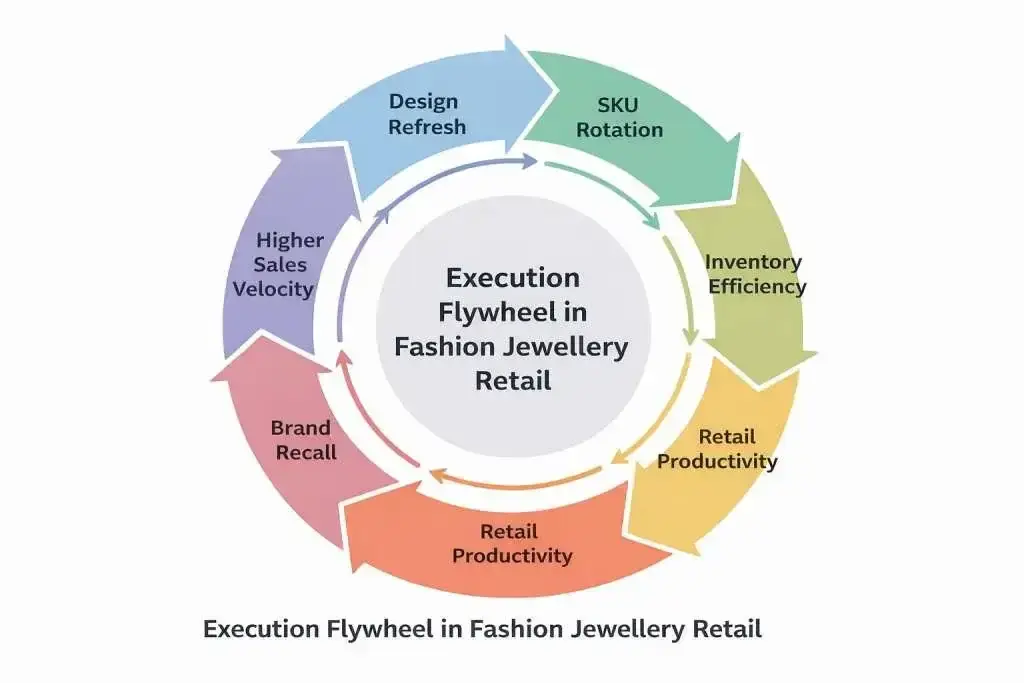
These are dynamic advantages.
Their durability depends on sustained discipline, merchandising accuracy, and demand calibration not industry barriers.
In fashion-linked retail, advantages are rarely owned.
They are continuously earned.
Understanding Gargi’s Financial Performance Through a Behavioural Lens
Most investors read financial statements as isolated scorecards — a strong quarter, an impressive growth year, an attractive margin figure. But businesses rarely reveal their character through single-period numbers. Durable signals emerge from behavioural consistency: how management frames expectations, how performance evolves relative to those expectations, and whether operating outcomes repeatedly align with communicated strategy.
For readers new to analysing company numbers, learning how revenue, margins and profitability interact in the income statement is essential. A practical walkthrough can be found in How to Read a Profit & Loss Statement (P&L) in 10 Minutes: A Practical Investor’s Guide.
“In the short run the market is a voting machine, but in the long run it is a weighing machine.”— Benjamin Graham
Gargi’s financial profile becomes more meaningful when viewed through this behavioural lens rather than through raw growth alone.
Expectation Framing & Management Philosophy
In earlier concalls (FY23 / early FY24), management articulated scale ambitions while emphasising sustainability over valuation narratives. Instead of focusing on re-rating themes or short-term multiple expansion, communication centred on operational economics and controlled scaling.
The self-description of operating with a “vyapari mindset” — practical, cash-focused, survival-oriented — is not cosmetic language. In early-stage retail businesses, expectation discipline often precedes financial discipline.
Execution Credibility & Delivered Scale
Management had previously indicated a pathway toward the ₹100 crore revenue zone. Subsequent financial performance broadly tracked this directional ambition.
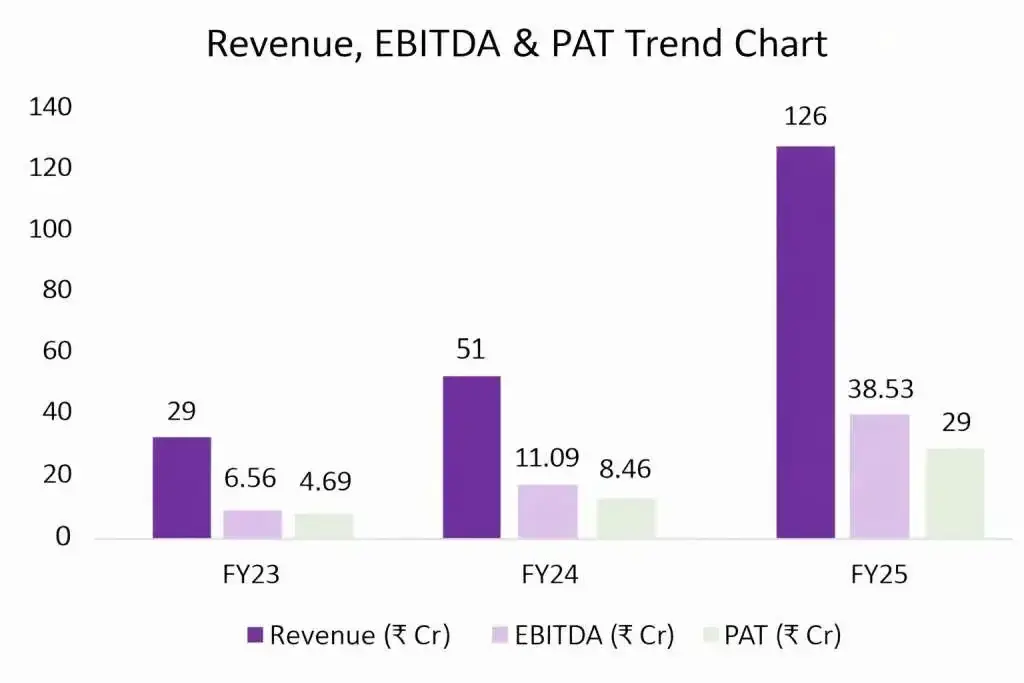
The chart above illustrates the trajectory of revenue, EBITDA, and PAT over recent financial years. The progression reflects scale expansion without visible earnings instability. While low-base effects amplified growth percentages, absolute profit expansion indicates that scaling was not purely optical.
In smaller companies, divergence between narrative and numbers typically appears early when execution falters. The absence of such divergence strengthens credibility.
Growth Quality vs Margin Stability
Rapid top-line growth alone is insufficient to signal quality. More important is whether margins remain stable during expansion phases.

The margin trajectory suggests that scaling has not been accompanied by structural erosion. In expansion-at-any-cost models, margins typically compress under discounting pressure or cost leakage. The relative stability here implies disciplined cost control and format economics alignment.
Growth quality is defined less by acceleration and more by resilience.
Capital Efficiency & Structural Financial Logic
Gargi’s asset-light retail architecture shifts analytical focus away from showroom scale toward capital rotation. Working capital discipline and return behaviour therefore become more relevant than absolute revenue size.
Inventory compression and CCC stability (discussed earlier) reinforce that expansion has not been funded through balance sheet stretch. In capital-light models, financial quality emerges from rotation discipline rather than asset accumulation.
Financial quality must also be interpreted alongside market expectations.
At a current P/E of ~26.5x, Gargi is not being priced as a distressed micro-cap nor as a fully matured dominant franchise. Understanding how earnings multiples reflect market expectations is crucial, as discussed in The P/E Ratio Decoded: Trailing vs Forward, and What is a "Good" P/E?
A 26–27x earnings multiple in a small-cap retail business typically implies:
- Continued earnings growth visibility
- Margin stability at current elevated levels
- No structural deterioration in store-level economics
- Sustained working capital discipline
In other words, the current valuation embeds confidence in execution continuity.
However, it does not appear to price in aggressive hyper-growth assumptions comparable to premium category leaders. This creates a narrower expectation band: the market is pricing durability, not perfection.
Importantly, valuation volatility should not be confused with operating instability. A stock can re-rate or de-rate based on shifts in sentiment, liquidity, or small deviations from expectations — even when the underlying business remains stable.
The real question is not whether the multiple fluctuates.
It is whether earnings durability continues to justify the confidence currently embedded in that multiple.
Retail Network Stability as a Behavioural Signal
Retail businesses typically exhibit stress through outlet churn or silent contraction following aggressive expansion. Management commentary across multiple concalls does not indicate retrenchment or corrective network pullbacks.
While this alone does not establish structural advantage, network continuity during scaling suggests measured rollout discipline.
In consumer retail, survival behaviour itself is a quality signal.
Strategic Interpretation
Gargi’s financial quality emerges not from isolated ratios but from behavioural alignment:
- Expectation framing anchored in business economics
- Delivery broadly tracking communicated milestones
- Margin stability during scale expansion
- Capital-light structure supporting working capital discipline
- No visible stress signals in network expansion
These characteristics do not eliminate industry risk. However, they reduce the probability of adverse execution outcomes relative to businesses where narrative and numbers diverge.
Growth attracts attention.
Consistency underwrites financial quality.
Scaling with Caution: Gargi’s Approach to Capital Deployment
Capital Deployment Philosophy - Conservative Growth with Cash Discipline
Gargi’s management has shown a noticeably cautious deployment of capital, favouring expansion formats that limit balance sheet stress. Shop-in-shop partnerships and franchise-led outlets enable retail footprint growth without proportionate increases in owned assets or leverage. This allows the company to scale visibility while preserving financial flexibility a particularly important advantage in discretionary, fashion-driven categories. The near-zero debt position reinforces this strategy, reducing vulnerability to demand volatility and protecting downside resilience.
Management commentary has consistently highlighted cash discipline across operating segments. Rather than pursuing growth through heavy capex or aggressive promotional spending, the expansion architecture appears designed around capital efficiency and controlled risk absorption. This approach contrasts with many early-stage retail peers where rapid outlet addition often precedes economic stability.
IPO as Capital Signalling Rather Than Funding Necessity
An interesting dimension of Gargi’s capital allocation history is the relatively modest IPO size (≈ ₹7 crore) despite the presence of a financially capable promoter ecosystem. From a purely funding perspective, internal resources could likely have supported early expansion. The decision to list therefore carries strategic interpretation beyond capital raising. Public listing enhances governance visibility, improves brand legitimacy within organised retail environments, and provides an acquisition currency for future strategic flexibility. In emerging consumer brands, market presence itself can function as an economic asset, influencing partner confidence, vendor relationships, and consumer perception.
Brand & Related-Party Economics — Alignment Indicator
A review of related-party disclosures and cost schedules does not indicate material recurring charges such as brand usage fees or royalty streams from Gargi to other group entities. While the absence of explicit fees is not definitive proof of perpetual alignment, it suggests that the promoter ecosystem has not prioritised fee extraction via related-party charges. This implicitly allows the company to retain capital within the operating entity rather than upstreaming it, which can improve reinvestment capacity and align minority shareholder economics with growth outcomes. Investors should, however, verify this interpretation against the annual report’s related-party transaction note for confirmation.
Profitability vs Growth Behaviour - Margin Awareness Over Volume Optics
Profitability trends indicate that Gargi has not prioritised sales expansion at the expense of margins. PAT margin improvement across periods suggests that growth has been filtered through economic viability rather than discount-driven acceleration. Even during periods of revenue fluctuation, profitability behaviour has not exhibited the typical stress patterns seen in fragile retail expansions.
This signals managerial preference for sustainability over short-term topline optics -a subtle but important distinction. Growth achieved through margin erosion rarely compounds shareholder value.
Fixed Asset Intensity - Preserving Flexibility Through a Lighter Asset Stack
Gargi’s relatively low fixed asset intensity differentiates it structurally from traditional jewellery retailers. The business model avoids heavy showroom investments and bullion-linked capital lock-ins, allowing revenue generation to remain more dependent on inventory rotation and retail productivity than asset accumulation. Lower fixed commitments reduce break-even pressures and improve adaptive capacity during demand variability.
Incentive Alignment & Governance Clues - Low Leverage, High Return Behaviour
Management decisions reflect alignment between growth ambitions and financial prudence. Minimal leverage reduces financial fragility, while strong return ratios suggest efficient deployment of incremental capital. Importantly, sustained profitability combined with balance sheet conservatism often indicates that management incentives remain oriented toward long-term value creation rather than expansion theatrics.
Integrity & Signalling Patterns - Stability Between Narrative and Outcomes
A recurring indicator of disciplined leadership is coherence between managerial communication and operating results. Gargi’s strategic messaging emphasising capital-light expansion, margin awareness, and operational discipline has broadly aligned with observable financial behaviour. Such consistency is non-trivial in smaller, rapidly scaling companies where narrative drift frequently precedes performance instability.Strategic Interpretation - The Under-Appreciated Variable
Most investment discussions overemphasise growth rates while underweighting capital allocation behaviour. Gargi’s expansion without material leverage, combined with margin resilience and controlled asset intensity, suggests a managerial orientation favouring survivability and capital efficiency. In retail, these traits frequently determine long-term durability more than early growth speed.
Growth attracts attention.
Capital discipline preserves optionality.
What Management Communication Reveals About Gargi’s Strategy
When you step back and read Gargi’s concalls over multiple years, what stands out first is not excitement, but consistency. The management has not been changing its story every few quarters, which is extremely common in smaller companies. There are no sudden grand visions, no dramatic shifts in direction, no attempts to reinvent the narrative depending on short-term performance. The core message has remained largely intact from the early calls to the most recent ones.
That matters more than most investors realise.
In young retail businesses, instability usually shows up first in communication -shifting priorities, new buzzwords, changing explanations. Gargi’s management has largely avoided that pattern. The strategic pillars discussed in earlier calls -brand building, capital-light expansion, margin awareness -continue to dominate recent discussions. The repetition does not feel rehearsed; it feels like a management team anchored to a defined operating logic.
A useful way to judge concalls is simple: compare what was said earlier with what actually unfolded later. In Gargi’s case, management had repeatedly emphasised expansion through shop-in-shop counters and franchise-led growth instead of locking capital into heavy owned infrastructure. Over time, the company’s retail footprint and distribution structure evolved in exactly that direction. The execution broadly followed the stated plan rather than contradicting it.
That alignment is not trivial.
Another revealing aspect is how management speaks about growth. In many SME concalls, revenue becomes the central obsession -aggressive targets, constant emphasis on topline momentum, frequent celebratory language. Gargi’s calls carry a noticeably different flavour. Discussions tend to gravitate toward margins, inventory discipline, store formats, and sustainability rather than raw sales excitement. The absence of excessive chest-thumping is subtle but telling.
It suggests an operator’s mindset rather than a promoter’s mindset.
Perhaps the strongest behavioural signal comes from profitability conversations. Retail and fashion-driven businesses often drift into discount-heavy growth, especially during expansion phases. Gargi’s management repeatedly highlighted margin awareness and inventory control. Importantly, subsequent financial behaviour did not show the typical symptoms of stress -margins did not visibly collapse as scale increased. This does not prove invincibility, but it does lend credibility to their stated discipline.
Words and outcomes have not been at odds so far.
The confidence of management also feels grounded rather than theatrical. There is little of the exaggerated optimism that often accompanies early-stage growth stories. Instead, responses across calls reflect comfort with business mechanics -where they are expanding, why certain formats are preferred, how they view demand cycles. Even when discussing slower quarters or industry seasonality, the tone remains stable rather than defensive or erratic.
Experienced investors recognise this pattern.
Equally important is what management chooses not to do. There is no visible attempt to anchor discussions around stock price movements or market reactions. The conversation stays focused on operations. That restraint, while easy to overlook, often separates durable business builders from short-term narrative managers.
Recent calls reinforce this behavioural continuity. The emphasis remains on structured retail expansion, strengthening distribution channels, and scaling the brand within the affordable jewellery space. There is no sign of speculative diversification or sudden strategic experimentation. The path appears evolutionary, not reactionary.
For investors, this creates a specific interpretation.
Gargi’s concall history does not read like a company chasing momentum or reinventing its story. It reads like a management team executing a relatively stable plan and gradually scaling its operating model. The key risks therefore, do not arise from narrative instability, but from execution durability -whether margins, inventory efficiency, and outlet productivity can remain intact as the business matures.
Because retail failures rarely begin with dramatic warnings.
They begin with small cracks in discipline.
“Risk comes from not knowing what you are doing.”— Warren Buffett
The Mosaic Layer: Brand Behaviour and Operational Observations
Brand-building behaviour appears deliberate rather than reactive. Observations tied to Aditya Modak’s background in advertising and narrative design suggest a conscious effort to build identity beyond transactional selling. In fashion-driven categories, perception architecture often compounds faster than product differentiation. Gargi’s positioning behaviour indicates awareness that brand psychology can function as an economic lever over time.
An additional operational layer emerges from Gargi’s presence within PNG & Sons retail environments. Integration within established jewellery showrooms may allow alignment of service standards, staff training practices, and customer engagement processes with an already institutionalised retail culture. While not a formal structural moat, such operating inheritance can reduce onboarding friction, shorten learning curves, and potentially support smoother counter-level execution compared to entirely standalone formats.
The broader Gadgil ecosystem, including visible cultural and community engagement initiatives around regions such as Zapurza, adds a softer reputational dimension. In consumer-facing discretionary categories, embedded goodwill and regional familiarity can subtly reinforce trust formation and repeat behaviour.
These elements do not independently validate a thesis.
They adjust probabilities.
Where the Model Could Fail: Key Risks in Gargi’s Expansion
Even when a retail business shows strong growth, the real discipline lies in understanding how it can fail. Retail failures rarely occur suddenly; they usually emerge gradually through weakening unit economics, inventory stress, or demand volatility. In Gargi’s case, while profitability and leverage currently appear healthy, several structural, industry and execution risks remain embedded in the model.
Category Structure Risk
The organised fashion jewellery market in India remains extremely small relative to the unorganised segment. Industry estimates suggest that only ~2–3% of the fashion jewellery market is organised, with the remaining ~97% dominated by informal players as of 2023.
This means Gargi is operating in a nascent organised segment, where demand still depends heavily on informal retail ecosystems and local traders. While formalisation creates long-term opportunity, it also introduces uncertainty around how quickly consumers migrate to branded formats.
Demand Elasticity & Consumer Sensitivity
Industry projections indicate that organised jewellery retail could expand toward 40–50% share by 2026, but this transition is unlikely to occur uniformly across geographies.
Consumer demand in fashion jewellery remains highly income-sensitive and discretionary, particularly in Tier-2 and semi-urban markets. Because Gargi targets younger, price-sensitive consumers, economic slowdowns or shifts in discretionary spending could disproportionately affect purchase frequency.
In discretionary retail categories, frequency declines before ticket size declines, which can directly affect sales velocity.
Scale & Competitive Position
Despite its growth trajectory, Gargi’s current market share remains extremely small — estimated at around ~0.15% of the fashion jewellery market.
This highlights the early stage of the company’s scaling journey. While fragmentation leaves room for growth, sustaining profitable expansion against both organised brands and a vast unorganised ecosystem will require continued execution discipline.
Competition is also intensifying. Organised fashion jewellery brands such as GIVA have raised capital to accelerate retail expansion, while traditional jeweller networks increasingly participate in silver and fashion categories.
Working Capital & Cash Conversion Risk
Although Gargi currently operates with near-zero debt, working capital dynamics require close monitoring.
For example, debtor days increased from ~18 days to approximately ~40 days, indicating that receivable cycles are lengthening as the business expands.
In retail businesses, rising receivables or inventory ageing often precede margin pressure, particularly when seasonal demand fluctuates. A mild sequential dip in Q3 FY26 sales, despite YoY growth, also suggests that demand cycles may introduce periodic volatility.

Macro & Industry Sensitivity
The broader Indian jewellery ecosystem is closely linked to gold price movements, currency fluctuations and global demand cycles.
Sharp changes in gold prices can influence consumer behaviour even in fashion jewellery categories by affecting sentiment across the jewellery sector. Additionally, external industry pressures such as declining Indian gem and jewellery exports to the U.S. or rising tariffs may indirectly impact domestic industry sentiment and retailer confidence.
Valuation & Narrative Risk
Small retail stocks are particularly sensitive to shifts in market expectations.
This volatility is common across smaller listed companies where liquidity, sentiment and execution expectations interact strongly — a dynamic explored in Small Cap & Micro Cap Stocks in India: Opportunity vs Risk.
Gargi’s share price experienced strong gains between 2023 and 2026, followed by ~12–18% volatility over the past year. When investor expectations embed sustained high growth, even modest operational deviations can lead to disproportionate price corrections.
In such situations, valuation risk often arises not from declining earnings but from changing expectations.
Competitive Intensity & Trend Risk
Fashion jewellery is a trend-sensitive category where product cycles evolve rapidly and pricing power remains limited.
Competition from organised brands, digitally native platforms, and legacy jewellers entering silver and fashion segments can compress margins and increase marketing intensity. Maintaining relevance therefore requires continuous design refresh, inventory discipline and strong merchandising execution.
Risk Summary
Gargi’s risks do not stem from financial distress — leverage is low and profitability remains intact. Instead, they emerge from structural factors:
- Fragmented industry structure
- Early-stage market share
- Working capital dynamics
- Consumer demand sensitivity
- Competitive intensity
- Valuation expectation volatility
A durable investment thesis therefore depends less on industry growth and more on consistent execution, inventory discipline, and outlet productivity as the business scales.
Explore our Products
Research Framework

Emerging Titans
Combination of quantitative analysis, industry tailwinds, and management assessment - SPRINT investment philosophy

Tiny Titans
Heavy emphasis on scuttlebutt research, plant visits, and early on-ground signals
Valuation Through Expectations Lens
A stock price is, in essence, a market consensus forecast -a collective prediction of how the business will perform in the future, discounted to today. To understand what Gargi’s valuation implies, we must decipher the assumptions embedded in its current price and examine whether those assumptions are fragile or robust in the face of economic and industry realities.
“The stock market is a device for transferring money from the impatient to the patient.”— Warren Buffett
Decoding the Market’s Expectations for Gargi
Gargi’s valuation expansion post-listing was driven primarily by rapid revenue scaling from a low base: from ~₹28.8 crore in FY23 to ~₹51.1 crore in FY24 and ~₹126.4 crore+ in FY25. Such acceleration naturally attracted multiple expansions, as markets tend to price forward growth more aggressively in early-stage consumer businesses.
However, valuation is not a reward for past growth — it is a pricing of expected future performance.
One way to interpret embedded expectations is by comparing EV/EBITDA multiples to those of listed jewellery peers.
The chart above compares Gargi’s EV/EBITDA multiple against established jewellery retailers. Several observations emerge:
- Titan trades at structurally premium multiples, reflecting brand dominance, scale, and long operating history.
- Mid-tier organised players such as Kalyan and Thangamayil trade at moderate-to-high multiples based on growth visibility.
- Traditional bullion-heavy or structurally stressed players trade at lower valuation bands.
- Gargi, at ~17.5x EV/EBITDA, sits in the mid-range of the peer set.
This positioning suggests that the market is not pricing Gargi as a speculative micro-cap, nor as a mature dominant brand. Instead, it appears to be pricing it as a credible growth player whose scalability and margin durability remain under evaluation.
To justify the current multiple, the market must be assuming:
- Sustained double-digit revenue growth over the next 3–5 years
- Margin stability near recent levels (particularly given the asset-light format)
- Store expansion that maintains unit economics rather than dilutes contribution
- Continued inventory and CCC discipline supporting capital efficiency
The multiple therefore embeds execution continuity.
Importantly, valuation compression need not require an earnings decline. In growth-oriented small caps, multiple contraction often occurs when growth moderates or margin momentum plateaus — even if absolute earnings continue to rise.
In that sense, the current price reflects belief in operating consistency, not just recent performance.
The key risk is not volatility in one quarter — it is sustained deviation from the efficiency and growth assumptions that justify mid-range peer multiples.
Fragility of Embedded Expectations -Seasonality and Consumer Behaviour
The organised jewellery market in India is still relatively small compared to the unorganised segment -organised share is around 36–38% of total jewellery retail, and fashion jewellery is a fraction of that. Gargi’s valuation implies it will capture a meaningful slice of this organised fashion jewellery demand, continuously, even as competition intensifies from both legacy and new entrants.
This is fragile for two reasons:
- Demand for fashion jewellery is highly seasonal, with most sales concentrated in Q3/Q4 (festivals and weddings). A weaker Q1/Q2 pace can cause quarterly volatility that markets may interpret negatively, even if the annual trend remains positive.
- Unlike investment-oriented gold jewellery, fashion jewellery is preference-driven and subject to rapidly shifting tastes, discount-led competition, online substitutes, and trend cycles.
If growth falls below the expectations embedded in the price, even modestly, valuation compression could be sharp.
Historical Regime Comparison -Valuation Behaviour in Retail
Retail and consumer discretionary stocks often follow a familiar pattern: early in the growth phase, valuations expand significantly as markets price in future potential. Later, if execution proves consistent, valuations stabilise at more moderate levels, but if execution falters, multiples contract quickly.
For example, organised jewellery peers such as Titan’s Tanishq segment historically traded at EV/EBITDA multiples around 20×–25× during strong growth phases, but when growth moderates, multiples tend to compress below historical peaks -sometimes by 40–60% from peak levels.
Gargi’s valuation history shows similar behaviour: sharp initial expansion followed by multiple contractions during periods of mixed news and slower volume absorption. This suggests that the market is highly sensitive to execution signals -not just earnings.
Upside vs Disappointment Asymmetry -Market Psychology at Play
Two broad psychological patterns dominate retail valuation:
Upside surprise is slow to reward. Markets tend to give incremental valuation upside when growth slightly exceeds expectations.
Disappointment is quickly punished. Even small earnings misses, margin pressure, or weak guidance often lead to disproportionate valuation sell-offs.
Gargi’s recent price volatility reflects this asymmetry. Investors who bought on early growth narratives have seen valuation fall more than the underlying earnings deterioration, illustrating how valuation risk is often higher on the downside than the upside, especially in high-expectation small caps.
This asymmetric risk profile implies that staying optimistic is far more dangerous than being cautious -because markets tend to price correction faster than they price compounding success.
Valuation Conclusion: Market Is Pricing Execution, Not Just Growth
In simple terms, the current valuation does not merely price Gargi’s reported performance; it prices expected future execution.
That means the key risks to valuation are not:
- A single bad quarter, but
- A shift in trend -such as slowing same-store sales, rising inventory days, or disappointing store economics.
Even if business fundamentals remain solid, softer than expected execution in any one of these areas can trigger a valuation contraction because the price is tied to optimism continuity, not just current earnings.
Valuation, therefore, is a psychology mirror, not a pure arithmetic outcome.
Price = market expectations × belief in execution
If that belief falters -even slightly -valuation compresses swiftly. That is the central risk for investors.
Why This Matters to You as an Investor
Understanding valuation through the expectations lens helps you avoid two common traps:
- Thinking valuation reflects past performance. It doesn’t; it reflects future expectations.
- Believing a high price equals quality. It may simply reflect high belief in continued execution.
A smart investor does not wait for bad quarters to surface. They anticipate which expectation gaps would most shake valuations and monitor those indicators closely.
Catalyst & Risk Dashboard
Markets re-price when trend expectations change. For Gargi, valuation will move not on headline growth, but on whether unit economics strengthen or soften as scale increases. The same variables that protect the thesis also determine re-rating potential.
What Creates Upside (Expectation Upgrade)
Re-rating requires visible strengthening of productivity not just footprint expansion.
Key upside signals:
- Sustained same-store sales acceleration across formats
- Rising revenue per outlet without margin dilution
- Operating leverage improving EBITDA without higher discount intensity
- Stable inventory days despite network expansion
- Successful expansion beyond core geography with consistent contribution
- SME-to-main-board migration improving liquidity and institutional participation
Upside comes from proving scalability of economics, not just scalability of presence.
What Creates Downside (Expectation Slippage)
Valuation compression begins when efficiency weakens before growth visibly slows.
Key risk signals:
- Revenue growth increasingly supported by promotions
- Persistent margin compression across multiple quarters
- Inventory days rising during expansion
- Store-level productivity declining as network expands
- Cash flow diverging from reported earnings
- Change in management tone from confident to defensive
The break condition is not volatility.
It is multi-quarter deterioration in economic productivity.
Decision Framework
Retail re-prices on trend shifts, not single data points.
If productivity per outlet improves → probability of multiple expansion increases.
If productivity drifts while expansion continues → probability of valuation compression rises.
This is not a momentum story.
It is an execution-sensitivity story.
Monitor economics, not excitement.
The Road Ahead: Execution Will Decide Gargi’s Future
PNGS Gargi stands at an interesting transition point — no longer an early concept-stage SME, yet not fully established as a national jewellery brand.
India’s SME market has already produced several remarkable wealth creators for investors willing to study early-stage businesses carefully. One such example is explored in Top SME Stocks That Created Millionaires in the Last 3 Years – Krishna Defence.
The business model has already demonstrated that it can scale. The real test ahead is whether outlet productivity, repeat demand, and capital efficiency remain intact as the network expands. From this stage onward, performance will matter far more than narrative.
This is not a leverage story.
It is not simply a valuation re-rating story.
It is fundamentally an execution-at-scale story.
If operational discipline holds, the growth runway remains meaningful.
If unit economics begin to weaken, expansion alone will not sustain investor returns.
At this stage, the investment thesis rests on one variable: Consistency.
What do you think about Gargi’s long-term scalability?
Comment your view below — always interesting to hear different investor perspectives.
FAQs ( Frequently Asked Questions )
What is driving the growing demand for imitation and fashion jewellery in India?
+Demand for imitation and fashion jewellery is rising due to changing consumer behaviour, especially among younger buyers. Affordable price points, rapid design cycles, and the ability to match jewellery with different outfits make fashion jewellery a frequent purchase rather than a long-term investment. Social media trends and increasing organised retail presence have also accelerated adoption.
How are Gen Z consumers influencing jewellery buying trends?
+Gen Z buyers tend to treat jewellery as a fashion accessory rather than a store of value. Their preferences prioritise design variety, affordability, and quick trend adoption. This has increased demand for lightweight, contemporary pieces that can be worn daily and replaced frequently as styles change.
Is gold or silver jewellery expected to dominate fashion trends in 2026?
+While gold jewellery continues to hold cultural and investment value in India, silver and silver-plated fashion jewellery are expected to remain highly popular in the fashion segment. Silver offers a modern aesthetic and lower price points, making it more accessible for younger consumers who prioritise style over metal value.
Why are affordable jewellery brands gaining popularity among young urban consumers?
+Affordable jewellery brands offer design-driven collections at accessible prices, enabling frequent purchases without significant financial commitment. Urban consumers increasingly view jewellery as part of their everyday style, and organised brands provide better quality assurance, consistent pricing, and stronger brand identity compared to unorganised sellers.
How do fast-changing fashion trends influence jewellery retail businesses?
+Fashion-driven categories require rapid product refresh and efficient inventory management. Retailers must constantly introduce new designs while ensuring that older inventory sells quickly. Businesses that manage SKU rotation and demand forecasting effectively are better positioned to maintain margins and avoid excess inventory.

High growth stock specialist, Value Educator
Shashank Mahajan is an equity research professional with over 12 years of experience in identifying high-potential SME and micro-cap stocks at an early stage. He follows a rigorous scuttlebutt research–driven approach, combining on-ground insights with deep financial analysis. Shashank specializes in uncovering under-researched and under-owned companies with strong management quality and long-term growth potential. Through disciplined research and early identification, he focuses on spotting tomorrow’s market leaders before they enter the mainstream investor radar.

Zen Technologies: Why Revenue Fell After Its Biggest Win

Data Patterns: India's Radar Designer and Its Waiting Orders

KSH International: The Wire Inside India's Transformers

Krishna Defence: The Steel Behind India's Warship Hulls

PNG Jewellers: A 194-Year-Old Name Goes National

Axiscades: From Services to Missile and Radar Electronics
Explore our Products
Research Framework
Emerging Titans
Combination of quantitative analysis, industry tailwinds, and management assessment - SPRINT investment philosophy
Tiny Titans
Heavy emphasis on scuttlebutt research, plant visits, and early on-ground signals


 Orders
 Subscription
 Share with friends
 Logout


Required Details
₹23999.00
(12 month subscription)
As per SEBI regulations, all users are mandated to complete the KYC that is validated for 1 year. Post payment, you will be redirected to the KYC screen


No comments yet. Be the first to comment!