
Indo Tech Transformers: AI and Solar Power

Now think of waking up tomorrow and seeing that all your light switches, charging stations, factories, hospitals, data centres, etc. have electricity available instantly, when required. For most of us, it's just a normal experience and we don't think about how it's allowed. One of the most challenging engineering problems in modern infrastructure is the safe and reliable delivery of electricity.
As India's demand for power continues to rise, the businesses that make this possible are quietly becoming some of the country's most important industrial companies. Indo Tech Transformers is one of them.
All good investment endeavors start with a simple question – why now? Indeed, Transformers are years old, and why is the industry finally garnering attention? It's not in the transformer product itself, it's in the huge shift that's going on in India's economy. There are a number of trends in the market for transformers that are increasingly driving demand, but these trends are not only more subtle, they are also more likely to persist rather than be cyclical in nature.
"The big money is not in the buying and selling, but in the waiting." — Charlie Munger
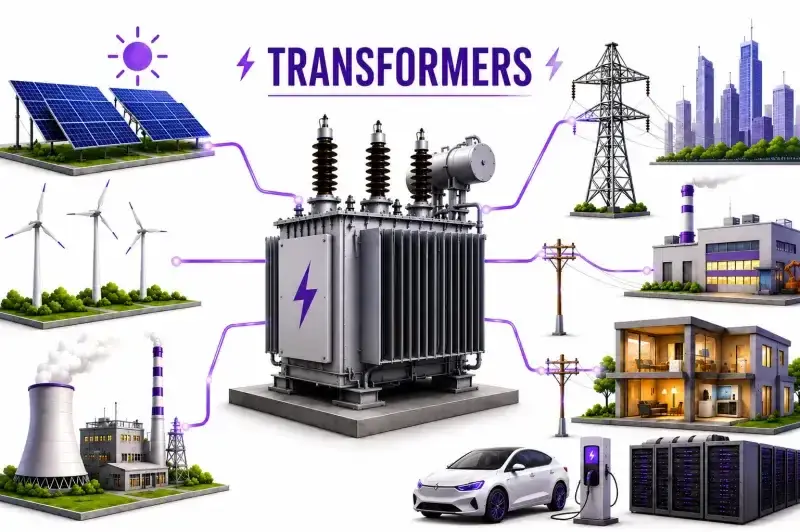
Transformer Industry Growth Drivers
It might seem like an unrelated trio, but Artificial Intelligence, renewable energy, EVs, and fast urbanisation all need one thing in common: reliable electricity. Whether it's uninterrupted power for AI data centres, renewable energy projects with substations and transmission lines, or EV charging stations with safe voltage delivery, or a new factory, metro, hospital or residential township, reliable power infrastructure is essential. Transformers play a crucial role in these applications, ensuring the efficient distribution and regulation of electricity throughout the network.
India's continued investments in renewable energy, urban development and manufacturing will lead to an increase in electricity demand necessitating more robust transmission and distribution infrastructure. So the Company we will analyze today is Indo Tech Transformers which may benefit from these long-term structural trends, not as they are most obviously involved in the picture, but as they provide the power infrastructure that enables them.
But a positive industry outlook is not a good enough argument to make an investment case. The next step would be to analyze how well the business of Indo Tech is being able to support this long-term growth opportunity.
"It's far better to buy a wonderful company at a fair price than a fair company at a wonderful price."— Warren Buffett
India's power demand is rising rapidly, creating a massive opportunity for companies across the sector. To understand the bigger picture, read our detailed analysis on Why Power Sector Stocks are Booming – Data & Trend Analysis.
Indo Tech Transformers: Company Overview
Indo Tech Transformers Limited is one of the well-established power transformer manufacturers in India, who plays a significant role in the country's power infrastructure. The company has been designing, manufacturing, testing and supplying power and distribution transformers since its incorporation in 1992 to facilitate the transmission of electricity from generating sources to industries, business and domestic consumers. With over 33 years of experience, Indo Tech has established a strong reputation for providing high quality and reliable transformer solutions to utilities, industrial customers, EPC contractors, renewable energy developers from its head office in Kancheepuram, Tamil Nadu, which is listed on NSE and BSE.Today, Indo Tech is a unit of one of India's top power equipment manufacturers, Shirdi Sai Electricals Limited (SSEL). By joining the SSEL group, the company is better equipped to handle procurement, gain market access and take on bigger and complex projects. It is headed by Mr. N. Visweswara Reddy, Chairman and Mr. Purushothaman M., CEO and Whole-Time Director who are committed to growth of the company with engineering and operational excellence.
The core business of Indo Tech is to manufacture all types of transformers such as Power Transformers, Distribution Transformers, Large Power Transformers, Inverter Transformers, Converter Transformers and Skid Mounted Substations. They are applied to a variety of industries including electricity transmission and distribution, renewable energy, steel, cement, textiles and other heavy industries. India is fast moving towards the renewable energy market and the company has also increased its footing in solar, wind and hydro power projects with dedicated transformer solutions.
Indo Tech's most notable asset is its sophisticated manufacturing plant in Kancheepuram, Tamilnadu. The company has modern production machinery and an in-house testing laboratory which is NABL accredited (ISO 17025), which means the company can carry out all routine and special testing of transformers as per Indian and International standards. The integrated manufacturing and testing capability will help ensure consistency of product quality, increase reliability, and solidify the company's reputation as a trusted supplier of mission-critical electrical equipment.
Indo Tech is not just about the bottom line; it's about delivering value through engineering excellence, product efficiency and customer value. The company's emphasis is on high value renewable energy and industrial EPC projects as margins are better and payment cycles healthier than with regular state utility projects. It also highlights low-loss, energy efficient transformers, customised engineering solutions, service over the life of the equipment (lifecycle services), and operation and maintenance (O&M) support, thereby lowering the total cost of ownership over the lifespan of the equipment.
The company also invests in technological innovation: the introduction of digital monitoring and predictive maintenance functions in its products to meet the changing requirements in smart grid and modern power networks. In response to price volatility of critical raw materials like copper and transformer oil, Indo Tech has implemented a partial backward integration as well as long-term procurement deals. Moreover, its compliance with the BIS and BEE standards will help it stay competitive in the transformer market, where stricter regulations will continue to push for further consolidation.
A good investment narrative can grab an investor's attention, but numbers will ultimately make or break the investment narrative. There are some companies who do well in good business areas, but few who are able to make it to yield regular income. Once the growth drivers of the transformer industry are understood, it's crucial to look at whether Indo Tech Transformers is poised to reap the benefits of these growth drivers.
Indo Tech Key Financials That Should Not Be Ignored
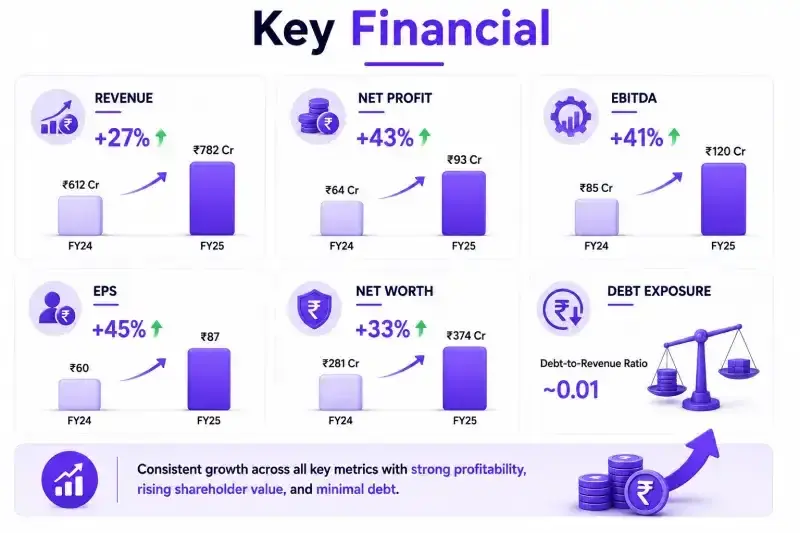
But the opportunity is not only theoretical: the company's recent performance shows this. With the demand for power infrastructure increasing, Indo Tech has achieved decent revenue growth and also enhanced its profitability. More significantly, this growth has not been only due to higher sales volume. The company has also worked towards improving its operational efficiency, leading to improved margins and earnings. This is a favorable sign, since if the revenue is increasing quickly without the profit, then it could either be due to having weak pricing power or experiencing a rise in costs. However, if both revenue and profits are going in the same direction, it is likely a more positive and sustainable model for the business.
But seasoned investors are aware that they should never have a look at a single or two-year set of financial results. Investors will not only support a company that performs exceptionally well one year but can do so for long durations. This obviously brings up the crucial question of whether Indo Tech is going to have future demand sufficient to support the growth?
Order Book
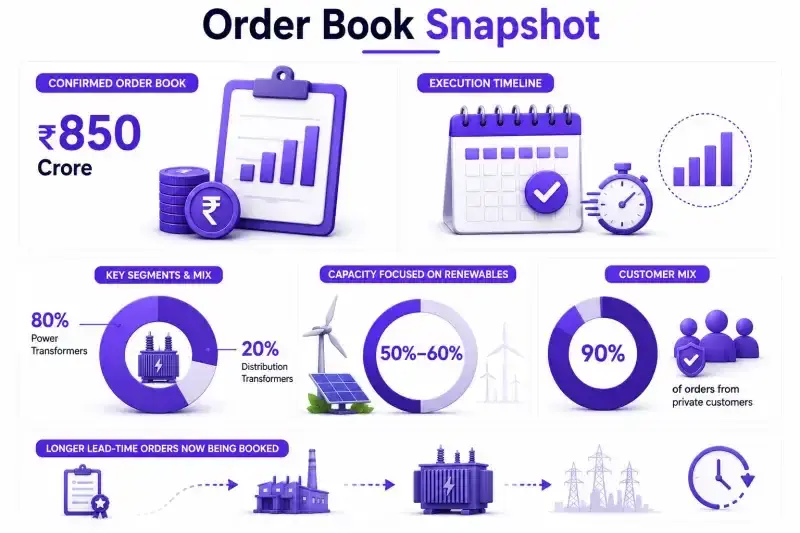
A good way to find the answer to that question is to check the company's order book. Imagine that you're making a list of reservations for a restaurant: that's an order book! A full restaurant for the next several months has a much better chance to have visibility into future business as opposed to an empty restaurant waiting for customers to show up on a daily basis. Infrastructure companies work in much the same way. They don't rely on the day's transactions, but instead they enter into large contracts that are completed over several months or even years. A healthy order book gives confidence that production facilities will be kept busy and future revenues are likely to be backed by confirmed customer demand. It is not a guarantee for profits, but it minimises uncertainty and helps management to organise the production more efficiently. What's more, the company is expanding its manufacturing capacity is another positive aspect. It is hard to believe that hundreds of crores will be invested in new facilities unless the business thinks that the demand will warrant such an investment. Indo Tech has made an announcement of phased capacity expansion, which will be designed to give a significant boost to the manufacturing volumes of Indo Tech over the next few years. This development is not just the number of transformers. It's also an enterprise in making bigger and more complex products that can enable high-voltage transmission, renewable energy, and big industrial customers. The company has entered these higher-value segments, which could improve the scale and profitability if execution remains strong.
Capex
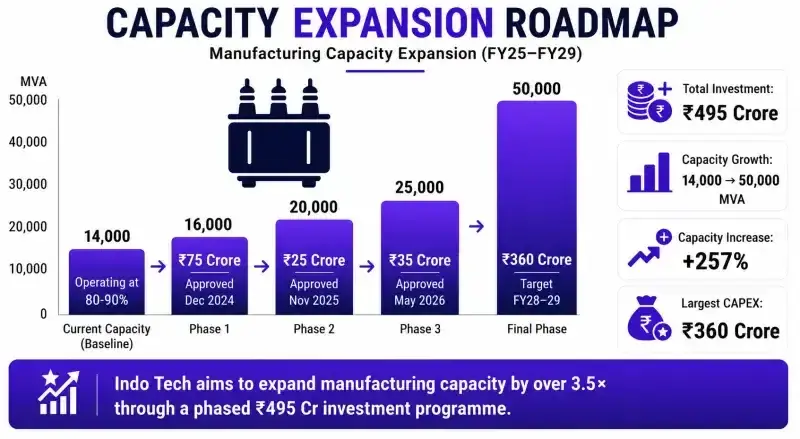 Capacity expansion is also indicative of management's confidence in the long-term prospects of the industry. If sales are projected to drop off significantly, it may be more important to save cash. Rather, India's management has decided to invest heavily in future infrastructure production capacity, suggesting that they believe India's infrastructure cycle will continue to be robust. But of course, investors should keep an eye out to see if the expansion projects are finished on time, and if the extra capacity is used. Expansion is opportunity, but what matters is good execution - and in the end whether opportunity becomes shareholder value.
The signs of demand and bold expansion plans certainly give a positive picture. Growth stories, however, only run as deep as the financial bedrock that underlies them. It is important to look at the company's balance sheet and cash flow statement before realizing why it is different from its competitors than Indo Tech.
If you're not comfortable analyzing financial statements yet, our guide on How to Read a Balance Sheet Like a Professional Investor will help you evaluate companies with greater confidence.
These numbers can often indicate if the growth is being achieved by solid fundamentals or simply optimism.
Beyond Profit: What does the Balance Sheet and Cash Flow tell us?
It's a saying among experienced investors that the income statement shows you “how good the company appears” while the balance sheet and cash flow statement reveal “how healthy the company really is.”
So a company can make great profits for a year or two and then if it has an awful lot of debt or it's not making any money at all it may not be sustainable. This is why smart investors always try to think outside the box before forming an opinion.
Luckily, Indo Tech's fortunes seem to have vastly improved over the past several years.
The first thing that comes to mind is the company's improving balance sheet. Profitability has improved and reserves have gradually been building up which has benefited the company's net worth. Meanwhile, however, loan debt has not been excessive in relation to the size of the enterprise and the company has been able to expand its operations from a sound financial base without undue pressure from the loan debt. A healthier balance sheet means they'll have more financial room to play with when it comes to investing in new growth opportunities, but it also allows for a lower risk of financial issues.
A positive development is that return ratios have improved too. The company has earned more returns from the assets used in the business as its profitability has improved. A higher ROCE is a sign of better use of capital by management rather than just growth for growth's sake.
ROCE is most meaningful when viewed alongside other profitability metrics. Learn how investors interpret one of the most important ratios in Return on Equity (ROE) Explained: A Step-by-Step Guide for Investors.
Indo Tech's return on ratios in the last couple of years has improved tremendously, indicating that they are beginning to create more economic value from their investments.
Another layer of confidence comes from the cash flow statement.
While many investors worry only about the profits reported, they can be only on paper. A company can turn a profit now and collect the payments several months after. This is one of the primary reasons that the amount of cash generated from operations is one of the most important measures of business quality.
For Indo Tech, cash flow from operations has significantly improved over the past few years. The positive cash flow from the core business suggests that the company is increasingly generating real cash as opposed to merely reporting cash. The company's ability to self-fund a portion of its expansion.
What is interesting, however, is that the cash flow statement also provides a clue to another important aspect of the company's strategy. The investing activities expenses have risen, mainly due to investments in manufacturing capacity and enhancing production capacity. This decreases the amount of free cash flow in the short term, but is generally considered a good thing if the investments are made for the purpose of generating future earning power and not simply to support current operations.
However, working capital is an area that should be closely watched by investors. Transformer manufacturing is a project-based enterprise, with stock levels being high, and money from customers sometimes not being collected right away. Even though debtor days have improved greatly over the last several years, inventory needs are high because of the business. How much of the company's accounting profit, then, will be converted into free cash flow will, therefore, depend on the management of working capital.
The cash flow statement and the balance sheet work hand in hand to reinforce the investment story. Not only is the company posting higher earnings, but it is also improving its financial standing and cash flows, and also buying back capital to fund the next level of expansion. Investors will still want to watch the debt position, cash conversion cycle and working capital as the expansion goes on, but the overall financial situation looks much better now than it did a few years back.
Put them all together, it starts to make sense. The company's business is being conducted in a market with several positive structural growth factors, its financial performance has been positively impacted, demand for its product is fairly strong and management is planning for the next stage of growth by expansion of its capacity. Though no investment can be free of risk, these are signs that recent performance by Indo Tech may be fuelled by genuine business fundamentals as opposed to market sentiment. What sets Indo Tech apart from the competition is that distinction is what makes a good story become a good investment, at least for long-term investors.
There is a growing demand – one thing.
It's another to take advantage of that demand.
All industries have losers as well as winners. Being in a fast-growing sector doesn't automatically mean that you will be profitable. Usually, those companies that can be expected to consistently build long-term wealth are the ones that have something going for them that other companies simply cannot replicate. So what could set Indo Tech Transformers apart in this increasingly competitive market?
The first benefit is experience. Making a transformer is far from assembling a consumer appliance. Each transformer is designed to meet the needs of the specific application in which it is used, such as providing power to a neighborhood, a manufacturing plant, or a power transmission grid. Strict technical specifications must be satisfied for each product as failure of any one component can result in a failure in the electricity supply, damage valuable equipment, or financial losses. When reliability is a must in a field such as this, experience is a valuable asset.
Over the years, a company can also gather manufacturing experience, enhance the manufacturing system and quality control, and create long-term ties with customers. For utilities and industrial clients, it's more important to have suppliers with a history of success, otherwise they will be better off paying a bit extra for the promise of a reliable supplier when they need to replace a failed transformer. This obviously makes it more difficult for new manufacturers trying to compete just on price.
Yet another benefit is its capability to create a large selection of transformers. The demand for electricity in India is becoming more and more diversified. A residential township does not require the same size transformer as a solar power plant. Likewise, an AI data centre has very different power requirements compared to a metro rail project. With specialization of industries, customers are seeking special solutions rather than standard products. Firms with the ability to create and fabricate transformers for various purposes are likely to be better equipped to meet this growing demand.
Investors seldom consider quality assurance. Rigorous testing is necessary before delivery to customers, as infrastructure equipment has a long life, working under severe conditions. A robust testing framework not only helps mitigate risks of failures, it also boosts customer trust. A reputation for quality can prove to be a competitive edge that can be hard to replicate for smaller companies over time.
The transformer industry itself is also getting transformed as well, interestingly. During these several years customers' requirements get higher, the quality and technical specs are tightened. In addition to the lowest price, utilities and industrial customers are seeking the highest quality supplier. They are seeking partners who are dependable and can provide consistent service quality, technical support, and timely delivery. The changing requirements for compliance could make it harder for smaller manufacturers to compete, which may give established manufacturers such as Indo Tech a competitive advantage over time.
A positive trend is the slow movement towards more valuable products. India's shift to renewable energy, digital infrastructure, and high-tech manufacturing is driving the need for more powerful, complex transformers.As India moves toward renewable energy, digital infrastructure, and the production of state-of-the-art goods, the demand for larger and more sophisticated transformers is growing. They are usually more complex in terms of engineering than conventional transformers, but have higher profitability. The company's foray into these high-margin segments could enhance its revenue mix and operating margins in the long run if the company continues to grow its share of these segments.
No matter, the competitive advantages should not be considered as permanent. Technologies change, client expectations evolve, and new companies keep entering into lucrative market segments. Companies that prosper in the long term are the ones that invest in innovation, manufacturing capacity and customer relationships continuously and not just on what they have achieved in the past. Indo Tech seems to realize this. It continues to invest in capacity expansion and advanced manufacturing capabilities – indicating management is looking ahead to meet current and future demands from a power infrastructure that is constantly evolving.
That's the best news for long-term investors. It is not counting on overall industry growth to move its business. It is making concerted investments to stay relevant in India's growing electrical infrastructure, which is becoming increasingly complex and reliant on transformers of high quality.
Each Great Opportunity is accompanied by some risks.
"Risk comes from not knowing what you're doing." — Warren Buffett
By now, the investment thesis may sound quite compelling.
The demand for electricity in India is increasing. Renewable energy is rapidly growing. AI data centers are being constructed throughout the country. Adoption of EVs is gaining pace. In order to seize this opportunity, Indo Tech is looking to expand its manufacturing capacity. But before getting carried away, it's important to remember one fundamental principle of investing. There are no perfect businesses. Even the very best businesses exist in volatile surroundings, and the market knows how to make sure that investors understand that growth is often a non-linear process.
"The only thing that is dangerous is ignorance"— Warren Buffett
Key Risks
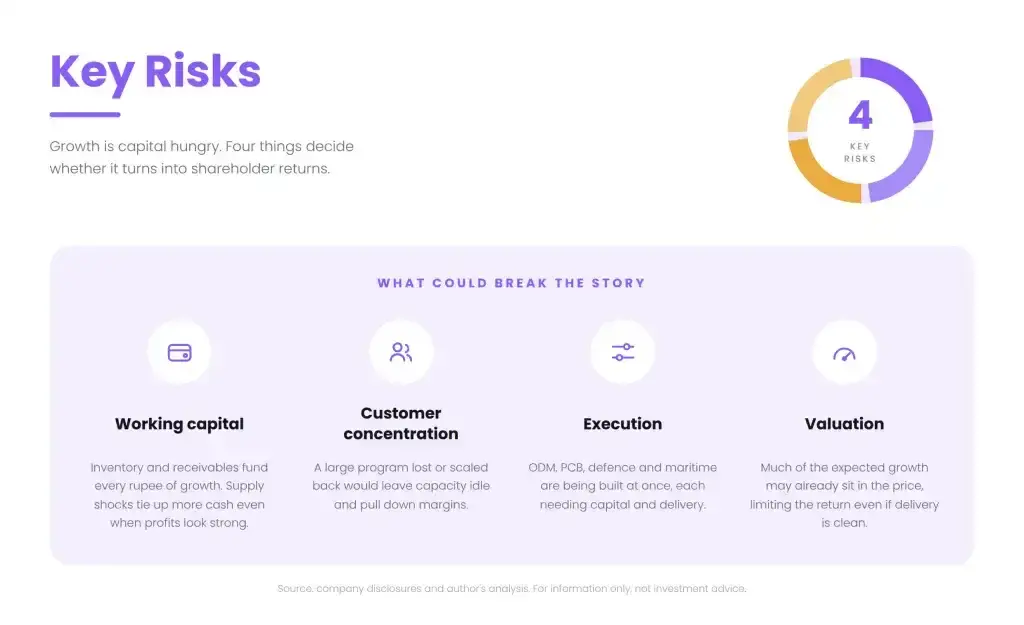
Knowledge does not prove that there is not a good investment case. Rather it assists investors in making proper decisions and in establishing a realistic expectation.
The fluctuating price of raw materials is one of the major challenges for the transformer manufacturers. The basic materials required for making a transformer: Copper, CRGO steel, transformer oil, insulation materials and various industrial components. The commodities are affected by world demand and supply, geopolitical tensions, currency fluctuations, etc. Manufacturers may not be able to shift increases in raw materials costs to customers fast enough if the price increases quickly over a short time. The result is that, despite high demand, profit margins may experience a temporary strain.
Investors also need to take a look at execution risk. Indo Tech has announced an ambitious capacity expansion plan, indicating the management's confidence in the future of the industry. But it's simpler to increase production capacity on paper than in practice. New facilities must be built on time, machines must be installed successfully, employees must be trained and production must be smoothly accelerated. A delay, no matter how minor, can end up costing the project more money, or delay future income. There are numerous examples of companies that failed to meet demand, rather than demand ceasing to exist.
The company operates in a competitive industry, too. The power infrastructure industry in India is expanding fast, but it has seen some well-known companies vying for government and private infrastructure projects. Winning contracts may rely on pricing, technical ability, delivery dates, product quality, etc. As competition increases, businesses may need to lower prices in order to attract new clients, leading to potentially lower profits. Hence, investors must keep an eye on the revenue growth as well as operating margins, so that they can verify whether the growth is adding value or just driving sales.
Revenue growth alone rarely tells the full story. Here's why Operating Profit Margin vs Net Profit Margin: Which Tells the True Story? is an essential concept for every investor.
Another important factor about infrastructure businesses that is overlooked by fresh investors is working capital. Transformer manufacturing is usually a big project, and payments are accepted in phases, unlike consumer companies which get cash once a product is sold. While the business might be healthy, it's common for the business to experience temporary increases in receivables and impacts on cash flow due to slow customer payments. This is especially important if working on a large-scale utility project or government contract, where payments may be delayed.
Last but not least, investors must keep in mind that businesses are not run in a vacuum. Transformers are directly associated with the government's infrastructure spending, private investment spending, industrial activities, and electric power consumption. An unexpected, sharp contraction in economic activity or a delay in investments in infrastructure may lead to a brief respite for the new orders, if economic growth takes a hit. These times are a natural part of every business cycle and should not be interpreted as a long-term decline in the company's prospects.
They are not meant to be a source of fear! Rather, it is to acquire a well-rounded outlook. All winning investments are a mix of opportunity and risk. The companies which succeed in building long term value are typically the ones that are able to deal with these difficulties and maintain their competitive edge.
Explore our Products
Research Framework

Emerging Titans
Combination of quantitative analysis, industry tailwinds, and management assessment - SPRINT investment philosophy

Tiny Titans
Heavy emphasis on scuttlebutt research, plant visits, and early on-ground signals
Should Indo Tech Transformer Be On a Long-Term Investor's Watchlist?
One question that will be very much on Indo Tech's mind over the next few years will be.
Will the company be able to translate the current favourable tailwinds seen in the industry into enduring growth?
More than that, it's a question investors of all time horizons should be asking, and not just on this day, but on a regular basis when new financial results and business updates are released.
Once we grasp the right opportunities and the dangers, we can then take a step back and take a broader look. Is the rally in Indo Tech Transformers warranted, or should it be on a long-term investor's watchlist? Let's tie all of this up.
Are you thinking about buying some Indo Tech Transformers in the long term?
Once you understand the industry, the company's business model, competitive strengths, financial performance, growth potential and risks, the next big question is..
"The stock market is a device for transferring money from the impatient to the patient." — Warren Buffett
When you have an understanding of the industry, the company's business model, competitive strengths, financial performance, growth potential and risks, you come to the icing on the cake.
Should Indo Tech Transformers be placed on a long-term investor's watchlist?
It's not a yes or no matter.
Business is seldom a winner for the man who is certain. Rather, it attracts investors who can recognize businesses that will see long-term change that may not be obvious to others.
That is why Indo Tech is an interesting company to consider studying.
The company doesn't rely on one product or one customer. Rather it is associated closely with the overall economic growth of India. A higher capacity and more resilient electricity network is needed for every new transmission line, renewable energy project, industrial corridor, metro rail network, data centre, manufacturing plant or commercial township. As the nation's infrastructure continues to grow, the demand for transformers is expected to be a key component of that growth.
The interesting thing about this is that these aren't temporary government changes or market hype. Themes to address over a decade are urbanization, electrification, industrial growth, renewable energy and digital infrastructure. They are structural changes, not cycles. Companies at the heart of these changes tend to have much longer growth horizons than companies that rely on consumer tastes and preferences.
Meanwhile, investors should not be tempted into a common mistake: believing that a good industry is a sure bet as an investment. There are many examples of businesses that have excelled in a high growth market, suffered from poor performance by shareholders and yet not been due to the lack of a new product or service, but rather to poor execution, too much borrowed money or simply allocating capital poorly. That's why it's important not to go solely from the industry point of view. It should still apply to the company's execution capabilities, its ability to boost profits, its level of cash flow and its capital allocation.
What is promising about Indo Tech is that management does not seem to be reacting to the demand, but anticipating it. The continued investments in capacity reflect the industry's optimism in its future growth, and the financial results show that the company already has seen the positive developments of the market. Management's ability to execute its expansion plans successfully and to continue to win quality orders without compromising profitability could make the business a stronger player over the next few years.
But it's not just about being optimistic when investing. Valuation is also a key factor that needs to be analyzed prior to any investment decision. The highest-rated business is a poor buy if it is bought at an inappropriate price. Investors should therefore use such measures as valuation, their expected earnings growth, return on capital and return on equity, other companies in their sector, and long term business prospects to compare the company. The ideal business can only attract the right business when the market is right.
This leads to a perhaps most important lesson in the study of companies such as Indo Tech Transformers.
The largest wealth generators are not businesses that have sprung up overnight. Most often, they are small firms that quietly work in areas that are slowly gaining importance in the growing economy. Long before the general public has heard about them, they're already creating factories, expanding capacity, innovating their products and deepening customer relationships.
When the rest of the market is finally awaking to their significance, much of the value creation has already been completed.
This doesn't mean that Indo Tech will make it as the next multibagger. Nobody can say for sure. It does, however, signify that the company is going to be in what is almost a sector with longer-term tailwinds than it's had in many years.
That is all it takes for patient investors to pay attention to it.
Final Thoughts
When it comes to investing, there's a quote that perfectly sums up what makes businesses like Indo Tech Transformers great:
> Invest in new growth, not investment in the herd.
There will undoubtedly be a need for more electricity in India in the future. But above all, it will call for a more robust, brainier and trusty power system. From elevating an AI data centre to powering renewable energy projects interconnecting states to accelerate EV adoption, to providing electricity for millions of new homes and factories, transformers will continue to be the backbone of the nation's progress. But Indo Tech Transformers will probably never be a company as talked about as. It might not be a household name as the tech giants or the consumer brands are. But, businesses don't generate wealth because they are popular. They add value by providing solutions to critical problems continuously over extended time. Especially in a nation that is about to embark on one of its biggest infrastructure projects in history, with the aim of bringing electricity to all industries, businesses and homes. The most thrilling investment opportunities can be found within the most simple businesses. Perhaps Indo Tech Transformers is one of them.
If you'd like to discover similar high-potential businesses before they become widely recognized, explore our complete investing framework in The Multibagger Framework: A Step-by-Step Guide to Finding 10x Stocks.
.
FAQs
Why is the transformer industry expected to grow in India?
+The transformer industry is expected to benefit from several long-term structural trends, including the expansion of AI data centres, renewable energy projects, electric vehicle (EV) charging infrastructure, urbanisation, and industrial manufacturing. All of these sectors require reliable electricity transmission and distribution, making transformers an essential part of India's growing power infrastructure.
What does Indo Tech Transformers manufacture?
+Indo Tech Transformers manufactures a wide range of transformer solutions, including power transformers, distribution transformers, large power transformers, inverter transformers, converter transformers, and skid-mounted substations. These products are supplied to power utilities, renewable energy projects, industrial customers, EPC contractors, and various heavy industries across India.
Why is the order book important when analysing Indo Tech Transformers?
+An order book provides visibility into future business because it represents confirmed customer orders that will be executed over the coming months or years. A healthy order book suggests sustained demand, helps improve production planning, and increases confidence that future revenues will be supported by existing contracts, although it does not guarantee future profits.
What are the biggest risks for Indo Tech Transformers?
+Some of the key risks include fluctuations in raw material prices such as copper and CRGO steel, delays in executing capacity expansion projects, increasing competition within the transformer industry, working capital requirements due to project-based operations, and any slowdown in government infrastructure spending or overall economic activity that could affect new order inflows.
Is Indo Tech Transformers a suitable long-term investment?
+The article does not make a direct investment recommendation. Instead, it suggests that Indo Tech Transformers is a company worth studying because it operates in an industry supported by long-term structural growth drivers, has improved its financial performance, and is expanding its manufacturing capacity. However, investors should also evaluate valuation, execution capability, financial health, cash flows, and business risks before making any investment decision.

High growth stock specialist, Value Educator
Shashank Mahajan is an equity research professional with over 12 years of experience in identifying high-potential SME and micro-cap stocks at an early stage. He follows a rigorous scuttlebutt research–driven approach, combining on-ground insights with deep financial analysis. Shashank specializes in uncovering under-researched and under-owned companies with strong management quality and long-term growth potential. Through disciplined research and early identification, he focuses on spotting tomorrow’s market leaders before they enter the mainstream investor radar.

Glenmark: The USD 700 Mn Cancer Deal and Its Brands
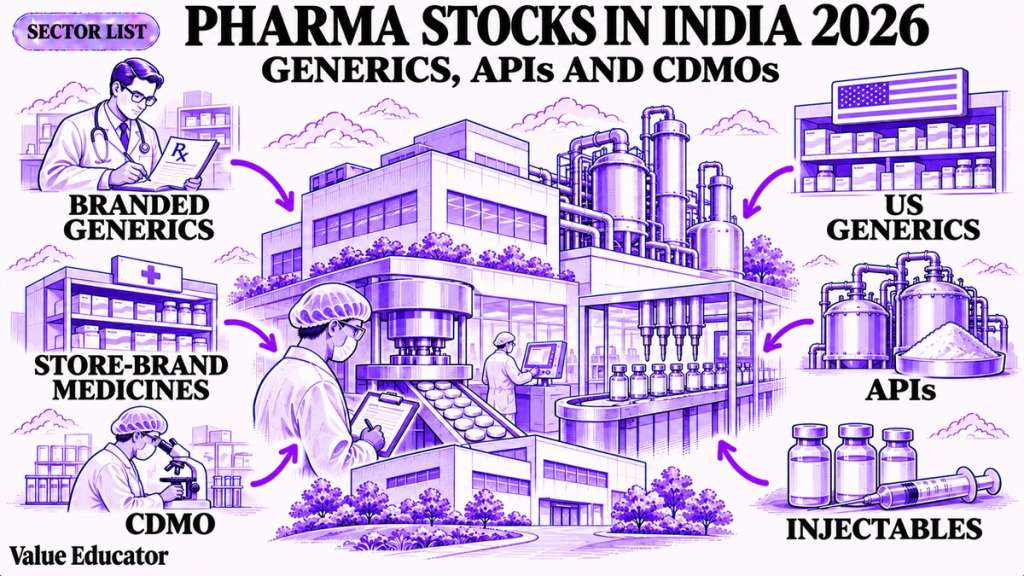
Pharma Stocks in India 2026: Generics, APIs and CDMOs
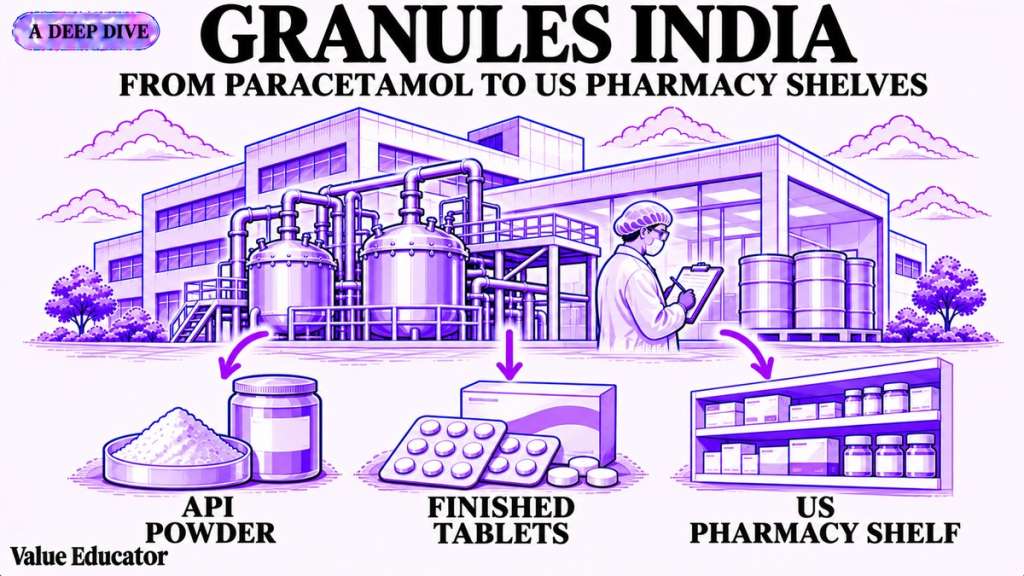
Granules India: From Paracetamol to a 65% Gross Margin
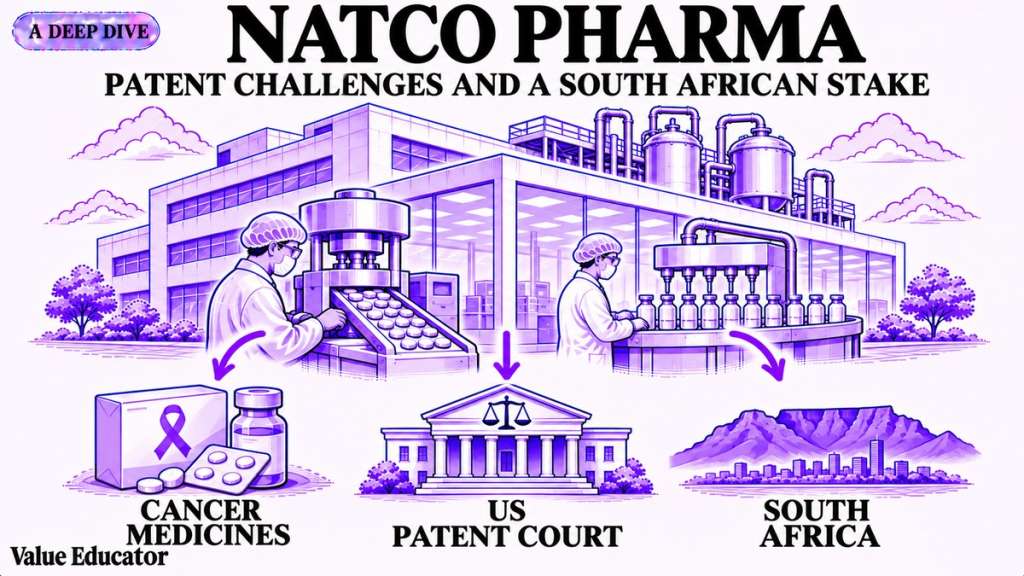
Natco Pharma: After Revlimid, 29 Patent Challenges

Shilpa Medicare: Cancer APIs, Films and Biosimilars

Alembic Pharma: US Plants Pay Back, Margin Hits 22.2%
Explore our Products
Research Framework
Emerging Titans
Combination of quantitative analysis, industry tailwinds, and management assessment - SPRINT investment philosophy
Tiny Titans
Heavy emphasis on scuttlebutt research, plant visits, and early on-ground signals



India's Aerospace Opportunity
Global Demand. Supply Bottlenecks. Opportunities Ahead.
Don't Miss This Exclusive Webinar!
Join Value Educator to decode the key trends shaping India's aerospace sector and learn how to identify tomorrow's potential leaders in the space.
- How the aircraft value chain works, layer by layer
- Indian companies supplying global aircraft makers
- A framework to judge any aerospace company

 Orders
 Subscription
 Share with friends


Required Details
₹23999.00
(12 month subscription)
As per SEBI regulations, all users are mandated to complete the KYC that is validated for 1 year. Post payment, you will be redirected to the KYC screen


No comments yet. Be the first to comment!