
Interarch: Building India's Factory Backbone
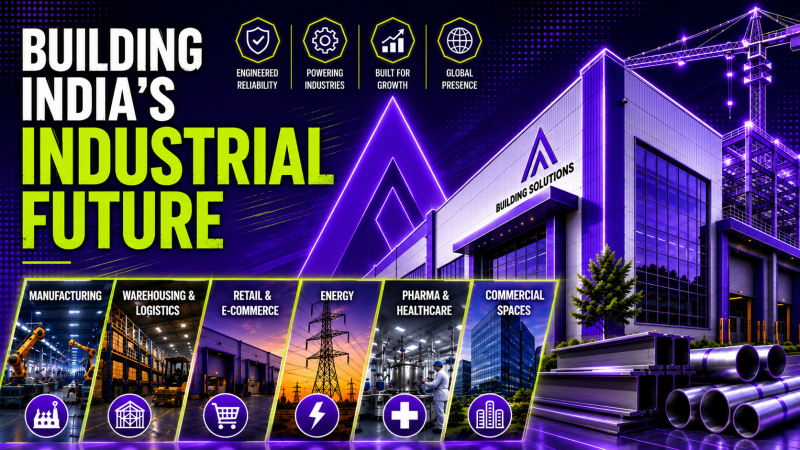
For decades, India's growth story was driven by consumption.
More people entered the middle class, incomes rose, cities expanded, and demand for everything—from motorcycles and televisions to packaged food and smartphones—grew steadily. Businesses competed to serve a market of over a billion people, while investors searched for companies that could benefit from rising domestic consumption.
Today, the narrative is beginning to shift.
Consumption remains important, but another engine of growth is gathering momentum in the background.
It is Manufacturing! And one company quietly building the factories behind it is Interarch Building Solutions.
India's manufacturing push is creating opportunities across several sectors. If you want to understand the bigger picture, read A SME Company Riding the Make in India Manufacturing Wave.
Across the country, industrial corridors are taking shape. Global companies are diversifying their supply chains. Electronics manufacturers are expanding production lines. Automobile companies are investing in electric vehicle capacity. Defence production is becoming increasingly localised. Warehousing has evolved from basic storage sheds into sophisticated logistics hubs, while data centres are emerging as critical infrastructure for an increasingly digital economy.
Although these developments span different industries, they all share a common requirement.
Before a single product is manufactured, before a single machine is switched on and before a single employee walks into the factory, the physical infrastructure must already exist.
Every industrial revolution begins with a building.
Behind every successful manufacturing story is an industry that rarely attracts headlines. It doesn't manufacture automobiles, electronics or defence equipment. Instead, it builds the factories, warehouses and industrial facilities that make those industries possible.
At the centre of that opportunity stands Interarch Building Solutions Limited.
Rather than manufacturing automobiles, electronics or renewable energy equipment, Interarch operates one level deeper in the industrial value chain. It builds the factories, warehouses, logistics parks and industrial facilities that enable manufacturing itself. As India's capital expenditure cycle gathers pace, businesses like Interarch stand to benefit regardless of which manufacturing segment ultimately grows the fastest.
Why Industrial Construction Is Changing
Understanding this opportunity, however, requires appreciating how industrial construction itself has evolved.
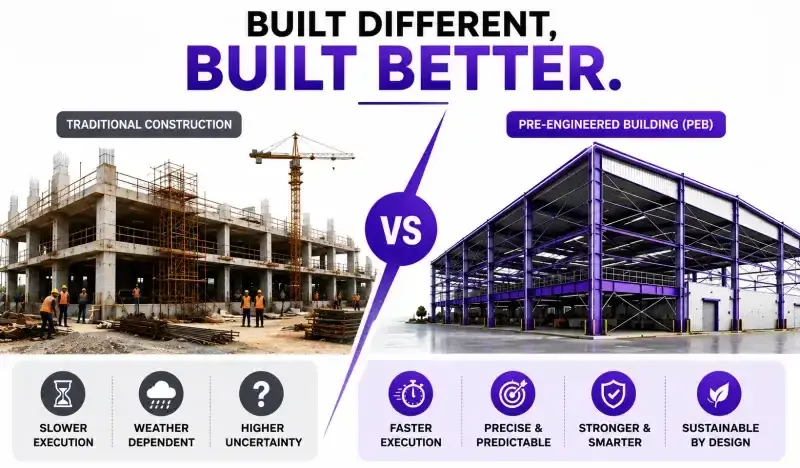
Traditional construction methods were designed for an era when project timelines were relatively flexible. Concrete structures were built almost entirely on-site, requiring extensive labour, longer execution periods and greater exposure to weather-related delays. While these methods continue to be relevant for many applications, they are increasingly ill-suited to the demands of modern manufacturing.
A company investing ₹2,000 crore in a new production facility is not simply building a factory. It is making a strategic decision that depends on time.
For businesses operating in highly competitive global markets, time has become as valuable as capital itself.
When analysing companies like Interarch, it's important to know how each business segment contributes to growth. Our guide on Segment-Wise Revenue Analysis: How to Find a Company's True Growth Engine explains how professional investors approach this.
For an industrial customer, predictability often matters more than saving a few percentage points on construction cost. Delays can be far more expensive than the building itself.
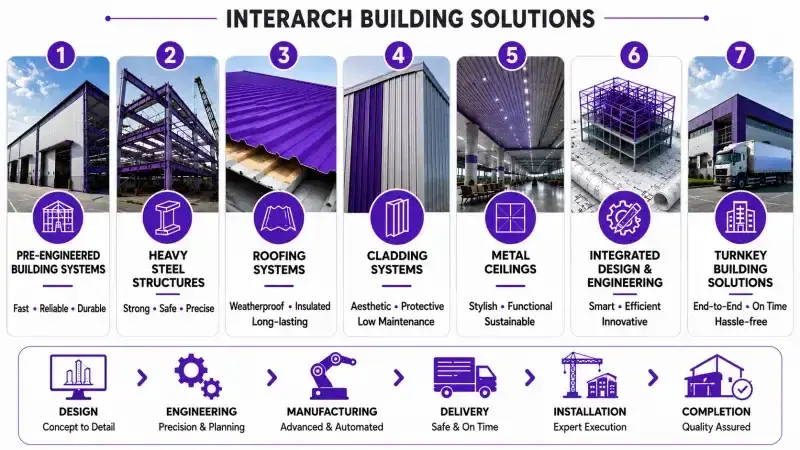
This transformation has given rise to one of the most important yet least understood segments within India's industrial ecosystem—the pre-engineered building (PEB) industry. It is within this structural shift that Interarch Building Solutions has established its leadership, positioning itself as a key beneficiary of India's long-term manufacturing and infrastructure expansion.
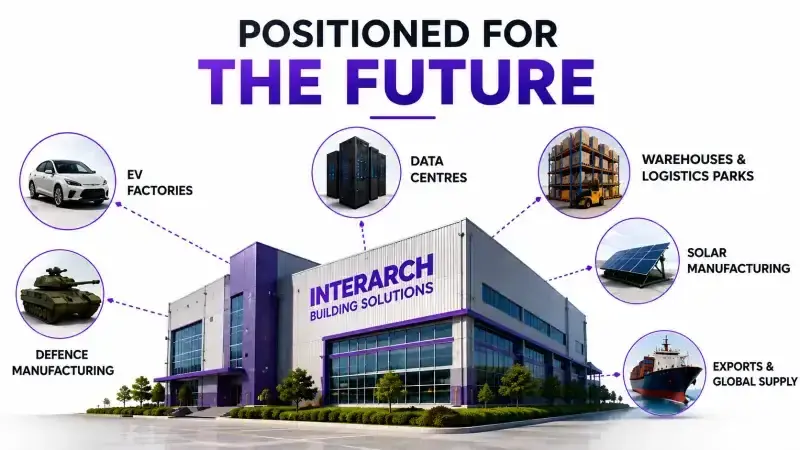
Today, with data centres, defence manufacturing and electronics production becoming increasingly important, the addressable market continues to widen.
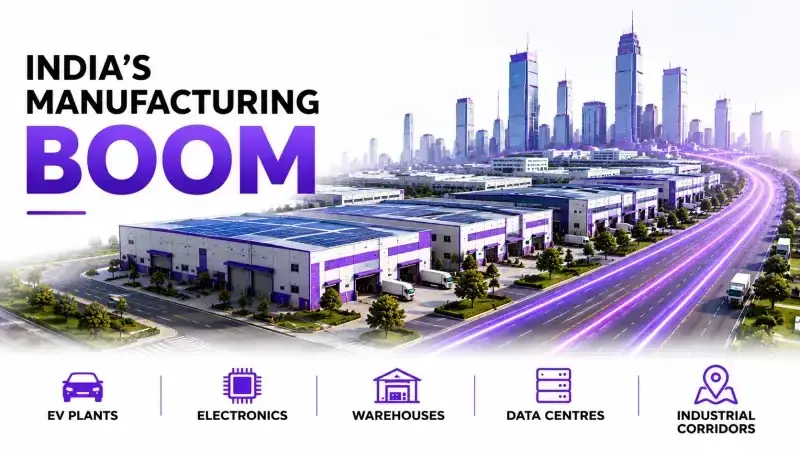
Rather than depending on the success of any single industry, Interarch participates in the physical infrastructure required by all of them.
That positioning is perhaps the company's greatest strength. Because regardless of whether India's next decade is led by electric vehicles, electronics exports, defence production or advanced manufacturing, they all begin with the same first step.
Someone has to build the building.
"The big money is not in the buying or the selling, but in the waiting." — Charlie Munger
Interarch: Building a Business, Not Just Buildings
On the surface, Interarch Building Solutions seems to have a relatively low barrier to entry business. Steel is a commodity, fabrication technology is widely available and construction companies are there throughout the country. It might seem like it's simple to establish a fabrication facility and bid on industrial work.
But the industry is evolving otherwise.
Although the pre-engineered buildings (PEB) market is growing at a high rate, the market remains dominated by a few established companies. When it comes to large industrial customers, they are not just purchasing steel structures, they are purchasing mission-critical infrastructure where engineering precision, execution capability, and delivery timelines are key factors and are more important than the lowest bid.
This is the basis of Interarch's competitive edge.
The company is not a fabricator; it has created an integrated platform that takes the company from design to engineering to manufacturing to project execution. Each project starts with a knowledge of the customer's operating needs, including whether overhead cranes are required, future expansion, seismic resistance or special ventilation, before being digitally engineered to maximise the structural performance and material efficiency of the project.
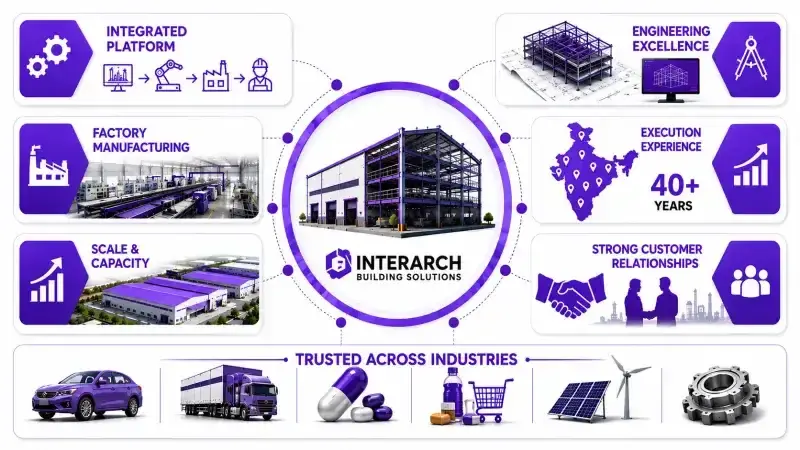
This engineering approach is more beneficial than it sounds. Steel is a major part of project costs, and a small reduction in material usage can have a significant impact on project economics, without compromising structural integrity. In this business, engineering efficiency is as crucial as manufacturing efficiency.
After the design is completed, the production is moved to Interarch's automated manufacturing plant rather than using on-site manufacturing. Manufacturing in the factory ensures the consistency of quality, increases accuracy, allows multiple projects to be executed at the same time and substantially decreases the amount of time required to execute the project on-site. When industrial customers have strict commissioning deadlines, the benefit of a quicker and more predictable delivery may be more important than the cost savings of construction.
The company's accumulated execution experience is also of paramount importance. The complexity of industrial buildings is growing and each sector requires specific engineering solutions. Automotive plants need large column-free spans, warehouses need to optimise their height, data centres need to have a high structural reliability and food processing facilities need to maintain a controlled environment. Interarch has completed thousands of projects in a wide variety of industries over the past 40 years, gaining institutional knowledge that is hard to come by. Each project completed enhances the engineering skills, customer base, and competitiveness for more complex and larger projects.
This is further enhanced by the scale. Fabrication of PEBs involves high investment in automated fabrication lines, special machines and engineering skills. Interarch's long-term opportunity has been the constant expansion of manufacturing capacity ahead of demand, enabling it to complete multiple large projects at a time and also being poised to benefit from India's fast-paced industrial capex cycle.
Last, but not least, relationships are important. Successful executions lead to a lack of execution risk, so that customers do not want to switch suppliers after the first time. Interarch has established long-term partnerships in the automotive and logistics sectors, as well as in the pharmaceutical, consumer goods, renewable energy and heavy engineering industries over the course of the years. These connections can lead to repeat business as well as insight into customers' future expansion plans.
As a whole, engineering knowledge, manufacturing volume, project execution and customer relationships have evolved Interarch into much more than a steel fabricator. But the key question remains as to whether these competitive advantages are being reflected in improved financial results. The answer is in the numbers.
"The key to investing is determining the competitive advantage of any given company and, above all, the durability of that advantage." — Warren Buffett
Interarch Financials: When the Numbers Begin to Tell the Story
The past few years have been just such a time for Interarch Building Solutions. The company's expansion has been aided by a more general resurgence in private sector capital expenditure, rather than a one-off project or cyclical windfall. The demand for pre-engineered buildings has grown with the accelerated investment in manufacturing, warehousing, logistics and industrial infrastructure.
The government's push for Make in India and Production Linked Incentive (PLI) schemes has attracted investments in various industries, including electronics, pharmaceuticals, advanced chemistry cells, and renewable energy equipment. Global manufacturers have diversified their supply chains outside of traditional manufacturing hubs. Meanwhile, the development of organised retail, e-commerce and third-party logistics has stimulated demand for modern warehousing facilities.
Another major contributor to industrial construction demand is data centres. Cloud computing, AI and digital services are growing and operators need highly specialised facilities to accommodate thousands of servers, with strict environmental and structural requirements. Defence manufacturing is also changing and localisation is accelerating. Even in the food processing and pharmaceuticals industries, larger and more automated plants are being built to enhance efficiency and quality to global standards. All of these developments seem independent of one another.
Collectively, they point towards one conclusion.
India is on a long journey of building industrial infrastructure.
The results are reflected in the figures. Despite the investments in expanding manufacturing capacity, Interarch's FY26 revenue stood at nearly ₹1,900 crore, the highest ever, and profitability improved. More significantly, this growth was driven by increased project execution and operating efficiencies, not by too much leverage or inorganic growth. But revenue doesn't always tell the whole story. In order to expand sales, construction companies must be aggressive in bidding for projects, but in order to build sustainable value, they must also increase profitability in the process of bidding and project execution.
This is where Interarch's integrated business model comes into play.
The company enjoys operating leverage as a result of engineering, manufacturing and project execution being done under one umbrella. Optimisation of steel use, increased plant utilisation, and standardisation of manufacturing increase efficiency. The higher the utilisation, the more the incremental revenue will add to operating profit. EBITDA grew from ₹136 crore to ₹176 crore in FY26, marking a robust 29.5% YoY rise, driven by increased project execution, improved factory utilisation and better operating efficiency. Operating profitability has thus not been compromised by the company's growth but has remained in line with it. It's even more significant at the bottom line. Profit After Tax (PAT) increased from ₹108 crore in FY25 to ₹135 crore in FY26, registering a healthy 24% year-on-year growth. The net profit reported was ₹134.52 crore, which is a 24.75% rise from the previous year's figure. The company's ability to generate better execution to drive higher shareholder returns in an industry with volatile steel prices and competitive pricing is highlighted.
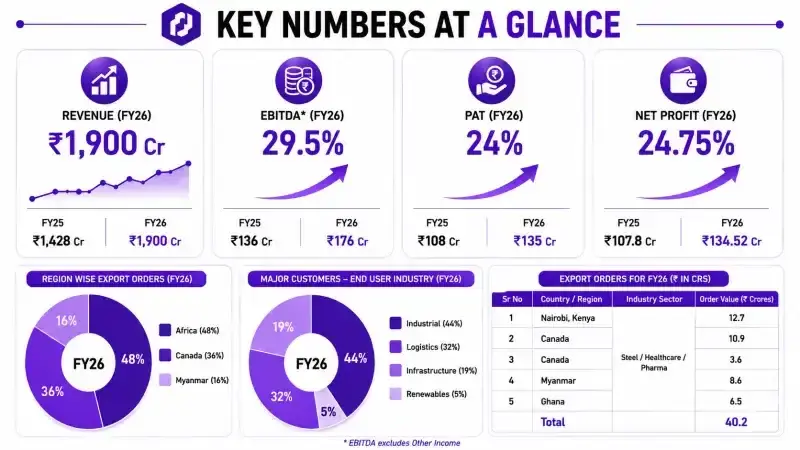
Future visibility is supported by a healthy order book. As of the end of FY26, Interarch had an executable order book of around ₹1,703 crores spread across industrial, infrastructure, logistics and renewables. This pipeline is diversified and helps minimize reliance on a single industry's investment cycle, while also offering a solid foundation for future implementation. Also has successfully obtained export certification for Canada & USA and received export orders worth of more than INR 40 crores in the past 12 months.
The balance sheet also supports the investment thesis. A strong balance sheet often separates durable businesses from cyclical ones. Learn how investors evaluate financial strength in How to Read a Balance Sheet Like a Professional Investor. Growth comes at a high cost and Interarch has grown without sacrificing financial discipline. Management's confidence in the long-term demand is evidenced by the recent investment in new manufacturing facilities, which also gave them the flexibility to deal with a naturally cyclical industry. All businesses have risks. The company's biggest input cost is steel, which puts margins at risk of commodity price fluctuations, and project execution may be delayed due to customer approvals, land acquisition or financing. These are not weaknesses of the companies, but rather structural weaknesses of the industry. Ultimately, the long term prospects of Interarch are not dependent on the quarterly swings and are more dependent on the structural trends that are driving India's economy.
Interarch signed a strategic MoU with ER Steel for manufacturing and export based opportunities in North America. Modern industrial infrastructure is needed for manufacturing expansion, organised warehousing, data centres, renewable energy, electronics and defence production. Spent INR 127.8 crores on capacity expansion in Andhra Pradesh, Kiccha and Gujarat to cater to future growth opportunities. As long as these investment themes play out as they're expected to, the opportunity for Interarch should grow with them. The issue now is not, if India will build more factories, but how?
It's whether Interarch can continue to turn that structural opportunity into sustainable growth while keeping the execution standards and financial discipline that has been their hallmark.
"Price is what you pay. Value is what you get." — Warren Buffett
The Opportunity Ahead Is Larger Than the Company Itself
Some businesses grow because they introduce a disruptive product. Others expand because consumer preferences change. Interarch Building Solutions belongs to a different category altogether. Its future is closely tied to the direction of India's industrial economy. The company does not create demand for factories, warehouses or logistics parks; it responds to it. If India succeeds in becoming a global manufacturing hub, businesses like Interarch become natural beneficiaries. If industrial investment slows, growth inevitably moderates. Understanding Interarch, therefore, requires understanding the forces shaping India's manufacturing landscape over the next decade.
The recovery of private sector capital expenditure is one of the most powerful factors. Indian corporate balance sheets for the past decade or so had been geared towards a process of de-leveraging, not growth. There was a preference by many companies to improve utilisation rather than invest in new facilities. This cycle is slowly evolving. With improved corporate balance sheets, banking systems and government policies, businesses are again considering capacity expansion. Investments in manufacturing are becoming more and more evident in the automotive, electronic, chemical, pharmaceutical, and food processing and engineering sectors. Every new production unit is a potential demand for the specialised industrial infrastructure.
This trend has been further reinforced by the government's focus on manufacturing. Make in India, Production Linked Incentive (PLI) Scheme, dedicated freight corridors and industrial corridors are aimed at making India more competitive as a manufacturing hub. Policy announcements cannot generate sustainable growth but they can affect long-term investment decisions by lowering uncertainty. In the long run, these programs have helped to incentivize local and foreign businesses to invest in local manufacturing.
Perhaps the most significant structural opportunity comes from the gradual reorganisation of global supply chains. Over the past few years, companies across industries have sought to diversify manufacturing beyond a single geography. This "China Plus One" strategy is not about replacing China overnight; rather, it reflects a desire to build more resilient supply chains. India has emerged as one of the beneficiaries of this transition, particularly in sectors such as electronics, engineering goods and specialised manufacturing. Every new manufacturing facility established under this strategy ultimately translates into demand for industrial buildings.
A new space that may grow in significance is modern warehousing. Organised retail, e-commerce and third party logistics have transformed the nature of warehouse infrastructure. Simple storage sheds are no longer a requirement for businesses. They require integrated logistics parks with greater clear heights, automated handling systems, improved fire protection and the ability to expand in the future. Pre-engineered buildings are especially suited to these requirements due to their ability to provide large column-free spaces and a quicker installation process. The logistics sector in India is also evolving and Interarch is expected to continue to see significant demand from warehousing businesses.
"Invest in companies that are beneficiaries of powerful long-term trends." — Peter Lynch
Data centres represent an even newer opportunity.
Although data is intangible, the infrastructure supporting it is intensely physical. Modern data centres require highly engineered buildings capable of supporting heavy equipment, complex cooling systems and uninterrupted operations. With cloud computing, artificial intelligence and digital services expanding rapidly, India is witnessing significant investments in digital infrastructure. While the market remains relatively small compared to traditional manufacturing, it offers attractive long-term potential due to its specialised engineering requirements and the premium placed on execution quality.
Renewable energy manufacturing provides another avenue for growth. India's ambitions in solar modules, battery manufacturing and clean energy equipment require large industrial facilities equipped with specialised production lines. These facilities differ significantly from conventional factories in terms of design and operational requirements, creating opportunities for companies with strong engineering capabilities. As investments in renewable energy manufacturing gather pace, demand for industrial buildings is likely to increase alongside them.
Defence manufacturing also deserves attention. India's emphasis on indigenisation has encouraged private sector participation in areas previously dominated by public sector enterprises. Defence facilities often involve stringent engineering specifications, larger spans and higher quality standards. While this segment may not contribute a significant share of revenue today, it illustrates how the company's addressable market continues to expand beyond traditional manufacturing sectors.
An equally important, though less discussed, opportunity lies outside India.
Many Indian engineering companies initially focused on domestic demand before gradually establishing export businesses. Interarch has already undertaken projects in international markets, particularly in neighbouring regions and selected overseas geographies. As manufacturing capabilities strengthen and execution standards continue to improve, exports could emerge as an additional growth avenue. While the domestic market alone remains substantial, international projects offer diversification and the possibility of participating in larger industrial developments.
Key Risks for Interarch
However, long-term opportunities should never be viewed without acknowledging the accompanying risks.
The most obvious risk is the cyclical nature of industrial capital expenditure. Unlike consumer businesses that generate recurring demand, industrial construction depends on investment decisions made by corporations. During periods of economic uncertainty, companies often postpone or scale back expansion plans. Such decisions can affect order inflows even if the long-term outlook remains positive.
Commodity price volatility represents another challenge. Steel is the primary raw material used in pre-engineered buildings, and fluctuations in steel prices can influence project profitability. Although contractual arrangements may allow partial pass-through of cost changes, rapid movements in commodity prices can still create short-term pressure on margins.
Competition is equally relevant. The growing attractiveness of the PEB industry has encouraged capacity expansion across several organised players, while regional fabricators continue to compete aggressively for smaller projects. Sustaining leadership will require continued investment in engineering capabilities, manufacturing efficiency and customer relationships rather than relying solely on existing market position.
Execution risk is perhaps the most underestimated factor. Industrial projects involve coordination across design, fabrication, logistics and on-site erection. Delays arising from customer approvals, land availability, regulatory clearances or labour shortages can affect project timelines even when the company executes its responsibilities efficiently. Maintaining operational discipline as the business scales will therefore remain one of management's most important responsibilities.
These risks, however, should be viewed in context.
The investment case for Interarch is not built on the assumption that every quarter will deliver record earnings or that industrial demand will grow uninterrupted. Rather, it rests on a simpler observation.
India appears to be entering a prolonged phase of manufacturing-led investment, and industrial buildings are indispensable to that process. Whether the factory produces automobiles, batteries, semiconductors, pharmaceuticals or engineering goods, it cannot operate without physical infrastructure. Companies capable of designing and delivering that infrastructure efficiently occupy a unique position within the broader industrial ecosystem.
Interarch has spent more than four decades building expertise in precisely this area. Its integrated business model, engineering capabilities, manufacturing footprint and diversified customer base provide a foundation that has strengthened over time. Recent financial performance suggests that these capabilities are beginning to translate into improved operating results, while ongoing capacity expansion reflects management's confidence in future demand.
None of this ensures outstanding returns for shareholders. The company's long term performance will be determined by its valuation, execution and competitive intensity as well as the investment cycle. Execution quality is important, but long-term returns also depend on buying at the right valuation. Our article Comparable Company Analysis (Comps): A Relative Valuation Method explains one of the most widely used valuation techniques.
Even if capital allocation and operational discipline are not strong, businesses with positive industry tailwinds can fail.
Yet it is equally true that some of the most enduring wealth creators have emerged not by serving fashionable industries, but by enabling them.
Interarch does not manufacture electric vehicles, produce semiconductors or operate data centres.
It builds the infrastructure that allows all of them to exist.
And sometimes, the businesses that make progress possible create as much value as the businesses that capture the headlines.
"Time is the friend of the wonderful business, the enemy of the mediocre." — Warren Buffett
Explore our Products
Research Framework

Emerging Titans
Combination of quantitative analysis, industry tailwinds, and management assessment - SPRINT investment philosophy

Tiny Titans
Heavy emphasis on scuttlebutt research, plant visits, and early on-ground signals
Conclusion
India's next phase of economic growth is unlikely to be driven by a single industry. It will be supported by thousands of factories, warehouses, logistics parks and industrial facilities spread across the country. Behind each of these projects lies an engineering challenge that demands precision, speed and reliability.
Interarch Building Solutions has quietly positioned itself at the centre of this opportunity. It is not a conventional construction company, nor is it simply a steel fabricator. It is an engineering-led manufacturing business participating in one of the earliest stages of industrial value creation.
For investors, the takeaway is straightforward. Interarch is not a high-margin business, nor does it need to be. Its investment case rests on consistent execution, disciplined capital allocation and the ability to compound earnings through scale. If India's industrial capex cycle continues to strengthen and the company maintains its operational discipline, sustainable growth in profits is likely to be a far more important driver of shareholder value than chasing exceptionally high margins.
If India's manufacturing ambitions continue translating into real capital expenditure, companies like Interarch are likely to remain important beneficiaries. The company's future will depend on its ability to execute consistently, allocate capital prudently and maintain its engineering edge in an increasingly competitive industry.
The story, therefore, is not merely about one company.
It is about the physical infrastructure that underpins an industrial economy.
And in that story, Interarch Building Solutions has quietly built a role that is far more significant than most investors realise.
Want to analyse companies like Interarch using a structured investment process? Start with A Fundamental Checklist: How to Research a Stock in 1 Hour before making any investment decision.
FAQs
What does Interarch Building Solutions Limited do?
+Interarch Building Solutions Limited is one of India's leading manufacturers of pre-engineered buildings (PEBs). The company designs, engineers, manufactures, and installs industrial infrastructure such as factories, warehouses, logistics parks, data centres, and commercial buildings. Unlike traditional construction companies, Interarch follows an integrated business model that combines engineering expertise, automated manufacturing, and project execution under one platform, enabling faster project delivery and greater efficiency.
Why is Interarch Building Solutions considered a beneficiary of India's manufacturing growth?
+Interarch is positioned to benefit from India's manufacturing-led growth because every new factory, warehouse, logistics park, or industrial facility requires physical infrastructure before production can begin. Government initiatives such as Make in India, the Production Linked Incentive (PLI) Scheme, industrial corridors, and the China Plus One strategy are driving investments across sectors including electronics, defence, automotive, renewable energy, and data centres, creating long-term demand for pre-engineered buildings.
What are Interarch Building Solutions' key competitive advantages?
+Interarch's competitive strength lies in its integrated engineering-to-execution model. The company combines digital design, structural engineering, automated manufacturing, and on-site project execution, allowing faster delivery, improved quality, and efficient steel utilisation. With over four decades of experience, large manufacturing capacity, and long-term relationships across multiple industries, Interarch has built significant execution expertise that is difficult for new entrants to replicate.
What are the major growth drivers for Interarch Building Solutions?
+Interarch's growth is supported by several long-term structural trends, including increasing private sector capital expenditure, expansion of organised warehousing, rising investments in data centres, renewable energy manufacturing, defence production, and India's emergence as a global manufacturing hub. The company is also expanding manufacturing capacity and exploring export opportunities, providing additional avenues for future growth.
What are the key risks investors should consider before investing in Interarch Building Solutions?
+Although Interarch benefits from favourable industry trends, investors should be aware of several risks. These include cyclical industrial capital expenditure, fluctuations in steel prices, intense competition within the pre-engineered building industry, and project execution delays arising from regulatory approvals, land availability, or customer-related issues. The company's long-term performance will depend on maintaining operational discipline, efficient capital allocation, and engineering leadership while managing these risks effectively.

High growth stock specialist, Value Educator
Shashank Mahajan is an equity research professional with over 12 years of experience in identifying high-potential SME and micro-cap stocks at an early stage. He follows a rigorous scuttlebutt research–driven approach, combining on-ground insights with deep financial analysis. Shashank specializes in uncovering under-researched and under-owned companies with strong management quality and long-term growth potential. Through disciplined research and early identification, he focuses on spotting tomorrow’s market leaders before they enter the mainstream investor radar.

Zen Technologies: Why Revenue Fell After Its Biggest Win

Data Patterns: India's Radar Designer and Its Waiting Orders
KSH International: The Wire Inside India's Transformers

Krishna Defence: The Steel Behind India's Warship Hulls

PNG Jewellers: A 194-Year-Old Name Goes National
Axiscades: From Services to Missile and Radar Electronics
Explore our Products
Research Framework
Emerging Titans
Combination of quantitative analysis, industry tailwinds, and management assessment - SPRINT investment philosophy
Tiny Titans
Heavy emphasis on scuttlebutt research, plant visits, and early on-ground signals


 Orders
 Subscription
 Share with friends
 Logout


Required Details
₹23999.00
(12 month subscription)
As per SEBI regulations, all users are mandated to complete the KYC that is validated for 1 year. Post payment, you will be redirected to the KYC screen


No comments yet. Be the first to comment!