
Airfloa: Railway and Defence Growth Story
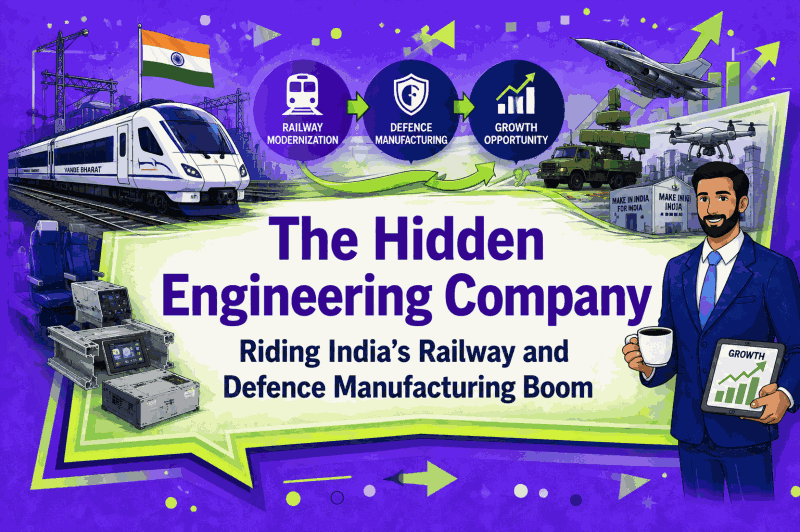
Think about the last time you travelled by train. Maybe you would be travelling almost daily for a workplace. Maybe it was a short trip to a nearby city. Maybe it was an overnight journey with your family. Or maybe it was one of the newer trains that India has been proudly introducing over the last few years.
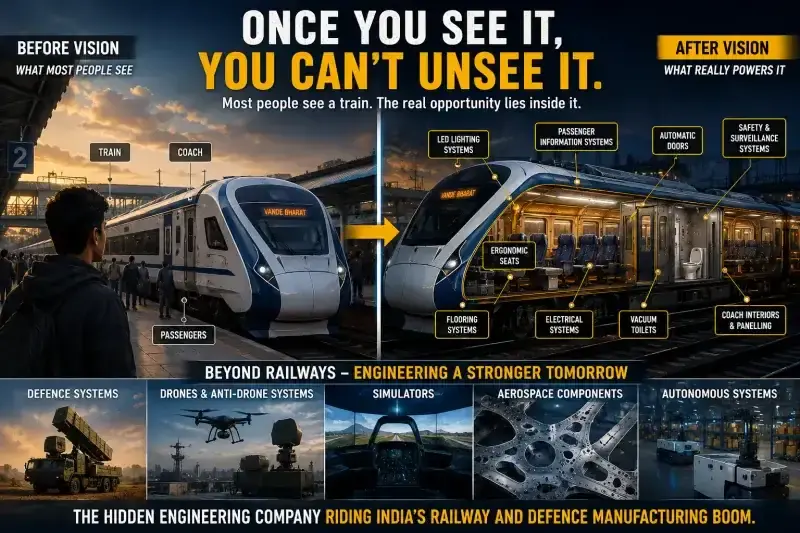
You probably remember the experience. The seat you sat on. The walls around you. The doors opening and closing. The flooring beneath your feet. The lighting above your head. The washrooms. The luggage racks. The information displays. The countless small things that quietly shape your journey.
But have you ever stopped to think about who actually makes all of that?
Most of us don't. We see the train. We see the railway station. We see the locomotive pulling the coaches. And naturally, we assume that is the entire story.
But the reality is very different.
A modern railway coach is not one product. It is hundreds of products working together. Seats, Panels, Doors, Flooring, Safety systems, Electrical systems, Passenger information systems, Interior furnishings. Every coach is an engineering ecosystem in itself. And behind every railway coach is a network of companies that design, manufacture, assemble, and install these systems. Most passengers will never hear their names. Yet without them, modern trains simply would not exist.
And today, as India invests billions into Vande Bharat trains, metro rail networks, railway modernization, safety upgrades, and urban mobility infrastructure, these companies are quietly finding themselves at the center of one of the country's biggest manufacturing opportunities.
This is where Airfloa Rail Technology begins to get interesting.
For years, the company operated in a specialized corner of India's railway ecosystem. It wasn't a company that grabbed headlines. It wasn't a stock that dominated investor discussions. And it certainly wasn't seen as a defence or aerospace player.
But while most people were looking at the trains, Airfloa was steadily positioning itself behind them. Expanding from components into complete coach interiors. Moving into integrated railway systems. Building relationships with major railway production units and global OEMs. And expanding its steps into defence, aerospace, drones, simulators, and autonomous systems.
The result is a company that increasingly looks very different from the railway supplier it once was. Because this is no longer just a story about railway components. It is a story about a company attempting to transform itself into a broader engineering platform at the intersection of India's railway modernization and defence manufacturing ambitions.
“The stock market is a device for transferring money from the impatient to the patient.” - Warren Buffett
India's Railway Modernisation Is Bigger Than Most People Realise
When most people think about Indian Railways, they usually think about trains, the locomotives, the coaches, the stations, the tracks. But the railway industry is much larger than what passengers see on the surface.
India operates one of the largest railway networks in the world, transporting millions of passengers every day and moving enormous volumes of freight across the country. As the economy grows, cities expand, and mobility needs increase, the railway ecosystem is undergoing one of the biggest transformations in its history.
For readers interested in understanding the broader investment opportunity emerging from railway modernization, our article on The Railway Components Manufacturer Riding India’s Rail Infrastructure Expansion explores how suppliers across the railway value chain are benefiting from this long-term trend.
This transformation is visible everywhere. Vande Bharat trains are being rolled out across multiple routes. Metro rail networks are expanding into new cities. Railway stations are being modernised. Safety systems are being upgraded. Older coaches are being refurbished. And new manufacturing programs are being launched under the broader vision of building a more modern, efficient, and self-reliant railway network.
But there is something interesting about all these projects.
Every time a new coach is manufactured, every time a metro train is commissioned, every time a railway system is upgraded, a large ecosystem of engineering companies participates behind the scenes. Some manufacture components. Some manufacture systems. Some provide interiors. Some integrate multiple subsystems into a single solution.
And over time, the companies that can move from supplying individual products to delivering complete solutions often create the most value. This is exactly the transition Airfloa appears to be making.
For years, the company built its presence as a supplier of precision components and railway interiors. Today, management is increasingly positioning the business as an integrated engineering and manufacturing platform serving railways, metro systems, and eventually defence and aerospace markets as well.
To understand why this transition matters, we first need to understand how Airfloa actually makes money. Because the company is no longer operating as a simple component supplier.
How Airfloa Makes Money
At first glance, Airfloa may appear to be a railway interiors company. But that description only tells part of the story. In reality, the business operates across multiple layers of the railway manufacturing ecosystem.
The first layer is precision engineering and fabrication. The company manufactures a wide range of engineered components used in railway rolling stock platforms such as Vande Bharat Express, LHB coaches, Vistadome trains, Rapid Rail Transit Systems, and export projects. Think of these as the building blocks of a railway coach. Passengers rarely notice them. But without these components, the coach cannot function.
The second layer is where things become more interesting. Rather than merely supplying components, Airfloa increasingly provides turnkey interior furnishing solutions. This includes design, engineering, manufacturing, installation, and commissioning of complete coach interiors. This may sound like a small difference. In reality, it changes the economics of the business.
Imagine two companies. One supplies seats worth a few lakhs. The other delivers an entire interior package for a coach. Both participate in the same project. But one captures a much larger share of the value. This is often how engineering companies move up the value chain. They stop selling products. They start selling solutions. And Airfloa appears to be moving in exactly that direction.
“The big money is not in the buying or the selling, but in the waiting.” - Charlie Munger
The third layer is rail systems and subsystems. The company is developing advanced door systems, vacuum toilet systems, and integrated railway safety solutions targeted at next-generation railway platforms. Again, this is important because systems typically create deeper customer relationships than standalone products. Once a company becomes part of the operating architecture of a railway coach, replacing it becomes far more difficult. This naturally increases both revenue opportunities and customer stickiness.
But while these railway businesses remain important, they are no longer the only story. Because management is now building something that could potentially become the company's next growth engine. Defence and aerospace.
This shift is occurring alongside a broader transformation within India's defence ecosystem.
If you want a sector-level perspective, read our detailed analysis on the Future of Defence Sector in India – 2025 and Beyond.
Why Defence May Change The Entire Narrative
At first glance, railway manufacturing and defence manufacturing seem completely unrelated. One transports passengers. The other protects borders. Different customers. Different regulations. Different end markets. But if you look deeper, there are surprisingly strong similarities. Both require precision engineering. Both require fabrication capabilities. Both require system integration. Both require strict quality standards. And both reward companies that can manufacture complex products reliably at scale.
This is why many industrial companies eventually look at defence as a natural extension of their existing capabilities. Airfloa appears to be following a similar path. The company is gradually expanding into defence and aerospace manufacturing, with opportunities spanning drones, anti-drone systems, defence electronics, radar systems, electronic warfare solutions, unmanned ground platforms, simulator programs, and aerospace subassemblies.
What makes this particularly interesting is that management does not appear to be treating defence as a side business. Instead, it is investing in capabilities, partnerships, and research that suggest a long-term commitment to the sector.
And perhaps the clearest example of that commitment is the company's partnership with Big Bang Boom Solutions. Because this partnership tells us something important about how management plans to enter defence.
The Big Bang Boom Bet
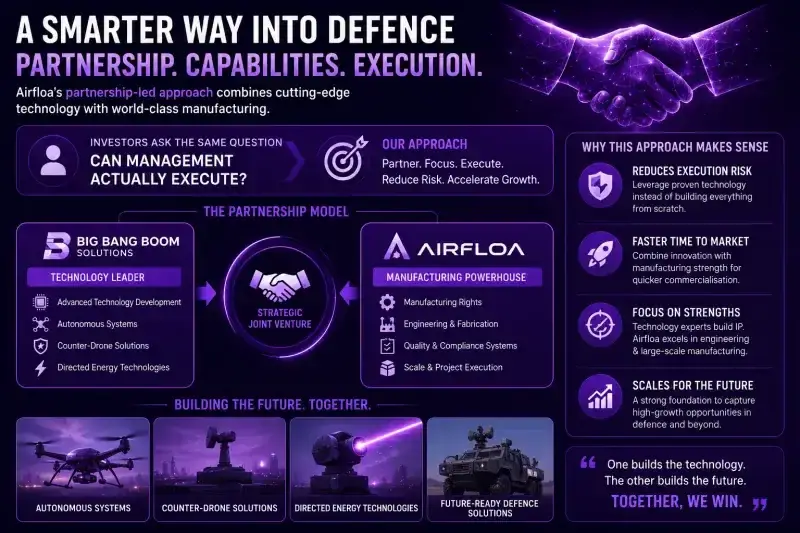
Whenever a company enters a new industry, investors usually ask the same question. Can management actually execute? It's a fair question. After all, corporate history is full of examples where companies ventured outside their core expertise only to destroy shareholder value in the process.That is why Airfloa's defence strategy is particularly interesting. The company is not attempting to build every technology internally from scratch. Instead, it appears to be following a partnership-led approach. A strategy that could potentially reduce execution risk while accelerating entry into high-growth defence segments.
The centerpiece of this approach is Airfloa's proposed joint venture with Big Bang Boom Solutions. For those unfamiliar with the company, Big Bang Boom Solutions has built capabilities in advanced defence technologies including autonomous systems, counter-drone solutions, and directed energy technologies. Under the proposed structure, Big Bang Boom Solutions will primarily focus on technology development, while Airfloa will hold manufacturing rights and leverage its engineering and production capabilities.
At first glance, this may appear to be just another corporate partnership announcement. But strategically, it reveals something important about management's thinking. Airfloa understands where its strengths lie. The company has spent decades building expertise in manufacturing, fabrication, engineering execution, quality systems, and project delivery. Those capabilities can often be transferred across industries.
Building cutting-edge defence technology, however, is an entirely different challenge. By partnering with a technology-focused company rather than attempting to reinvent the wheel, Airfloa may be able to focus on what it already does well. Manufacturing at scale. This model has been used successfully across multiple industries. One company develops intellectual property. Another commercialises and manufactures it. Together, they create a faster path to market.
“Risk comes from not knowing what you are doing.” - Warren Buffett
Management has committed approximately ₹25 crore toward the joint venture and expects initial revenue contributions to begin during FY27, with more meaningful contributions likely from FY28 onwards. The timeline is important. Investors should not expect defence revenues to suddenly transform the company overnight. This is still an early-stage initiative. But the significance lies elsewhere.
The partnership signals that Airfloa is actively laying the foundation for a future beyond railways. And this future extends beyond drones alone. The company is also pursuing opportunities in simulators, defence electronics, autonomous systems, and aerospace programs. Which brings us to another opportunity that could quietly become important over the coming years.
The HAL Opportunity
One of the most common mistakes investors make is focusing only on large contracts while ignoring the relationships that often lead to those contracts. In many industries, getting approved is far more difficult than getting the first order. Once approvals are secured, future opportunities become significantly easier to access. This is particularly true in aerospace and defence.
Airfloa has already secured initial approvals for simulator-related opportunities with Hindustan Aeronautics Limited (HAL). Management highlighted opportunities linked to AMCA simulators and G22 simulator programs, with expectations of larger opportunities over time. The current revenue contribution may still be modest. But that is not necessarily the point. The larger significance is strategic.
Simulator systems sit within a specialised niche of the aerospace ecosystem. They require engineering capability, integration expertise, manufacturing precision, and long development cycles. Successfully participating in such projects can enhance credibility and create pathways into adjacent aerospace opportunities. This is why many investors often underestimate small initial defence contracts. They tend to focus on current revenue. Management tends to focus on future positioning. And sometimes, those two perspectives are very different.
While defence remains a long-term opportunity, railways continue to be the company's primary growth engine today. And based on the order book, that engine remains very active.
The Visibility Behind The Growth Story
Growth stories are exciting. Order books are boring. At least that's what many investors think. Yet in project-driven businesses, order books often tell us far more about future revenue than quarterly earnings.
Think about it this way. A restaurant can only estimate how many customers may walk in next month. A project company already knows a significant portion of future revenue because contracts have already been awarded. That visibility can be incredibly valuable.
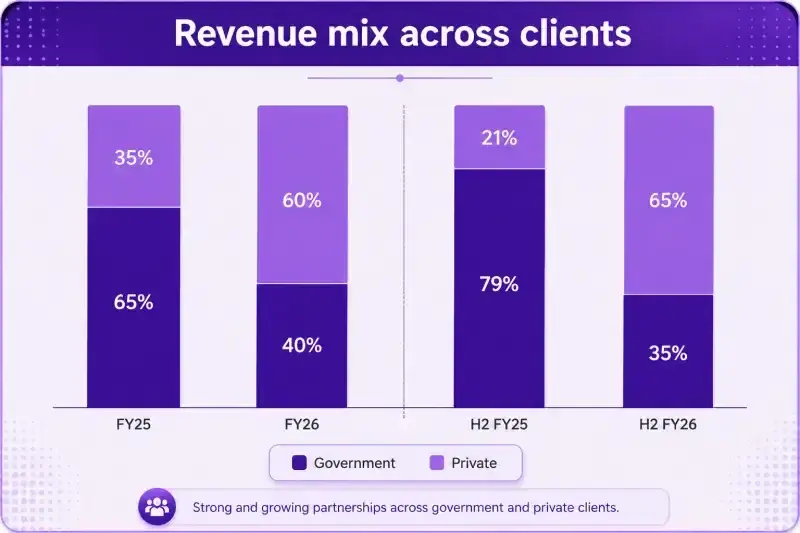
Today, Airfloa's order book stands at approximately ₹469 crore. Of this, roughly ₹415-420 crore comes from government orders, while ₹50-55 crore comes from non-government projects. More importantly, the active bid pipeline stands at approximately ₹1,200 crore.
This pipeline spans multiple opportunities including:
• Vande Bharat Sleeper Coaches
• Amrit Bharat Coaches
• Atmanirbhar Bharat Coach Programs
• Kavach-related opportunities
• Metro Rail Projects
• Aerospace and Defence Programs
Management has historically maintained a bid conversion ratio of approximately 20-25%. While not every bid will translate into revenue, the pipeline provides a useful indication of the addressable opportunity ahead.
But perhaps the most interesting aspect is not the size of the order book itself. It is what the composition of that order book may look like a few years from now. Because management is targeting something far more ambitious than simple revenue growth. It wants to fundamentally change the mix of the business.
Order books often provide valuable clues about future revenue visibility. We explain how investors can use such indicators while evaluating businesses in our guide on How to Analyze a Mid-Cap Company – A Complete, Practical Framework.
The Shift From Railways To A Dual-Engine Business
Today, railways remain the dominant contributor to Airfloa's business. That makes sense. The company was built within the railway ecosystem. Its customer relationships were developed there. Its manufacturing capabilities were refined there. Its reputation was established there.
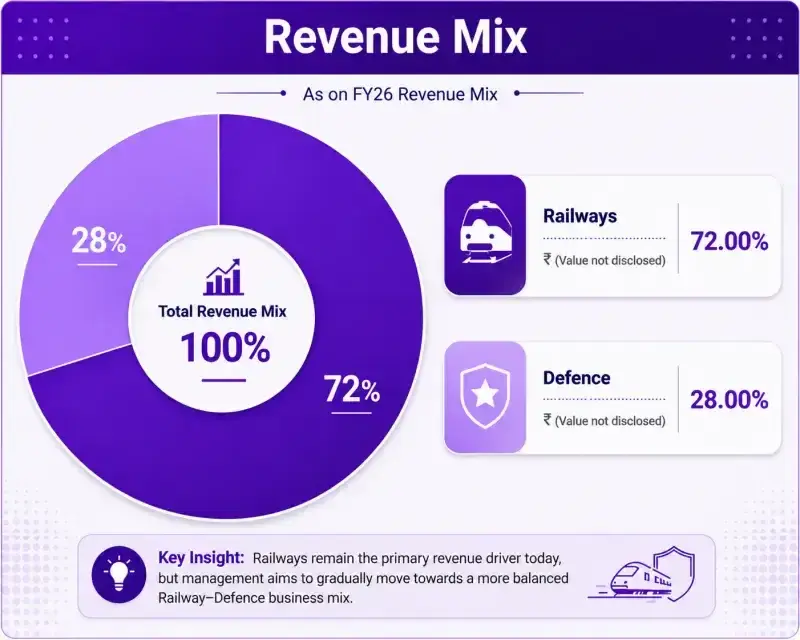
But management's medium-term vision suggests a different future. Currently, the revenue mix stands at roughly 72% railways and 28% defence. Management expects this to evolve toward a 50:50 mix over the next two years. That target is significant. Not because railways are becoming less attractive. But because management appears to be creating a second engine of growth.
Many successful industrial companies eventually reach a point where growth becomes constrained by a single end market. The solution is often diversification into adjacent industries where existing capabilities remain relevant. This is precisely what Airfloa appears to be attempting. Railways continue to provide scale, execution experience, and cash flows. Defence and aerospace may provide higher growth opportunities and exposure to some of India's most strategic sectors.
“The future belongs to those who see possibilities before they become obvious.” - John Sculley
If management executes successfully, investors may eventually stop viewing Airfloa as purely a railway company. Instead, they may begin viewing it as an engineering platform serving multiple industrial ecosystems. And that distinction could become very important over the coming years. Because the opportunity ahead may be larger than many investors currently realise.
Do Numbers Support The Story?
A compelling story can attract attention. But eventually, every business has to prove itself through numbers. Because no matter how exciting the opportunity may be, investors ultimately get rewarded only when execution translates into financial performance.
For Airfloa, FY26 was an important year. Not because it entered defence. Not because it announced a new partnership. But because the core business continued to grow strongly even while management was investing for the future.
Revenue from operations grew 66% year-on-year to ₹319.6 crore. EBITDA increased 33% year-on-year to ₹64.2 crore. Profit after tax grew 52% year-on-year to ₹39.1 crore. These are strong numbers by any standard. Especially for a company operating in project-driven industries where execution quality often determines profitability.
However, there was one area where investors noticed some pressure. Margins. EBITDA margin declined from approximately 25% in FY25 to around 20.1% in FY26. At first glance, that might appear concerning. But understanding why margins declined is important. The pressure was largely driven by factors outside management's direct control.
Aluminium prices increased sharply. Stainless steel prices remained elevated. Global geopolitical tensions created supply chain disruptions and commodity inflation. While many railway contracts include price variation clauses, these mechanisms only compensate suppliers up to a certain threshold. Beyond that level, the burden often falls on the manufacturer.
In other words, Airfloa was operating in a more difficult cost environment. Yet despite these headwinds, the company still delivered strong revenue and profit growth. That suggests the underlying demand environment remains healthy. And perhaps more importantly, it suggests management has been able to protect profitability through execution and cost optimization initiatives.
Preparing For The Next Phase Of Growth
Winning orders is one thing. Executing them is another. And scaling a business from a few hundred crore in revenue to a thousand crore is an entirely different challenge. Management appears well aware of this.
While investors often focus on order books and future opportunities, management is spending considerable time preparing the organisation for a much larger scale of operations. The reason is simple. Growth eventually creates its own challenges. More orders require more manufacturing capacity. More complex projects require stronger engineering capabilities. And new industries such as defence and aerospace demand investments long before meaningful revenues arrive.
This is why Airfloa's recent investments may be more important than they initially appear. Management has guided for approximately ₹500 crore in revenue during FY27. Beyond that, it is targeting ₹1,000 crore in revenue by FY28. Those are ambitious targets.
However, management also highlighted that nearly 70-75% of FY27 revenue visibility already exists within the current order book. That provides a degree of confidence rarely available in many other industries.
Revenue targets can be exciting, but long-term wealth creation usually depends on execution quality rather than projections. This idea is explored further in The Multibagger Framework: A Step-by-Step Guide to Finding 10x Stocks.
Reaching those targets will require significantly higher production capabilities. And that brings us to the company's next major investment — capacity expansion.
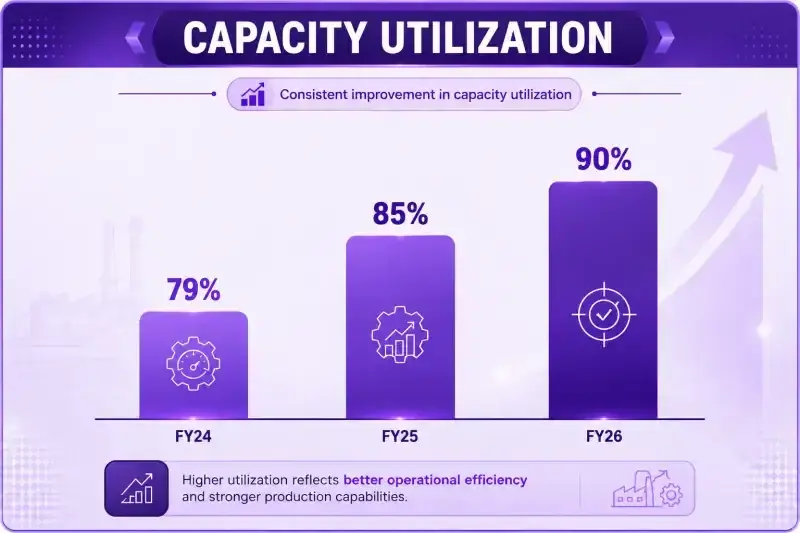
Today, capacity utilisation is already operating at around 90%. For most manufacturing businesses, that is usually a signal that additional capacity needs to be created. To address this, Airfloa plans to begin development of a new manufacturing facility spread across 14 acres during FY27.
The first phase will include a manufacturing shed of approximately 50,000 to 100,000 square feet. Over the longer term, management envisions developing between 3 lakh and 4 lakh square feet of manufacturing infrastructure.
Importantly, this facility is not being built only for railways. It is being designed to support railway manufacturing, defence production, and aerospace opportunities.
In many ways, the facility represents a physical reflection of management's broader strategy. The company is no longer preparing for the business it has today. It is preparing for the business it hopes to become over the next decade.
Why Airfloa Is Increasing R&D Spending
Most manufacturing companies increase capacity when they expect growth. Fewer companies significantly increase research and development spending before that growth becomes visible. That is what makes Airfloa's recent R&D strategy particularly interesting.
Historically, the company spent roughly 4% of its revenue on research and development. Going forward, management intends to increase that figure to around 8-9% of revenue. At first glance, this may simply appear to be another line item in the financial statements. But in reality, it tells us something important about management's priorities.
Companies typically increase R&D spending when they are preparing for more sophisticated products, entering new markets, or developing technologies that may generate future revenue streams. Airfloa appears to be doing all three. The focus areas include defence electronics, electronic warfare systems, advanced mobility solutions, and other technology-driven opportunities that sit beyond the company's traditional railway business.
These are not markets where success comes purely from manufacturing scale. They require engineering capabilities, product development expertise, intellectual property, and continuous innovation. Management has also indicated that a significant portion of this expenditure will be capitalised on the balance sheet.
While the commercial benefits may take time to emerge, the spending itself provides an important signal. Airfloa is not merely trying to execute existing orders. It is investing in capabilities that could shape the company's future business mix over the coming years.
And that becomes particularly relevant when viewed alongside its ambitions in defence and aerospace. Because entering these sectors is not simply about winning contracts. It is about building the technical foundation necessary to compete over the long term.
What Could Go Wrong?
Every investment story has risks. And the best investment decisions are often made by understanding what could go wrong rather than focusing only on what could go right.
For Airfloa, the first risk remains execution. Management has outlined an ambitious roadmap involving railways, defence, aerospace, new manufacturing facilities, higher R&D spending, and significant revenue growth targets.
Ambitious plans create opportunities. But they also create execution challenges.
The second risk relates to defence commercialisation. While defence opportunities are exciting, most of them remain early-stage. Partnerships, approvals, product development, and customer adoption can often take longer than investors expect.
The third risk is commodity inflation. The company has already experienced margin pressure from higher aluminium and stainless steel prices. If raw material inflation remains elevated, profitability could face periodic pressure despite healthy revenue growth.
Another important risk is working capital. Project-driven businesses often experience delays in receivables and milestone-based payments. As revenue scales, managing cash flows becomes increasingly important.
There is also the risk that some of the large opportunities currently present in the bid pipeline may not convert into actual orders. Order pipelines represent opportunities. They do not represent guaranteed revenue.
Finally, investors should recognise that Airfloa is still in the middle of its transformation. The company management wants to build over the next five years is not necessarily the same company that exists today. And every transformation carries uncertainty.
The Big Question
For most of its history, Airfloa operated within a relatively specialised segment of India's railway ecosystem. It built expertise in components. Then interiors. Then systems.
Today, management is attempting something much larger. It is trying to leverage those capabilities across railways, defence, aerospace, autonomous systems, and advanced engineering applications.
The opportunity is certainly large. The ambition is clear. The initial building blocks are already being put in place.
But the ultimate question remains unanswered.
Can Airfloa successfully evolve from a railway supplier into a diversified engineering platform serving multiple high-growth industries?
Or will railways continue to remain the dominant driver of the business for years to come?
That is the question investors need to answer. And the answer may determine how the market values the company over the next decade.
“We are what we repeatedly do. Excellence, then, is not an act but a habit.” - Aristotle
Ultimately, stories like these remind investors that some of the biggest winners are often discovered long before they become obvious. If you're interested in finding similar opportunities, you may enjoy reading Micro-Cap Investing – Where Extraordinary Wealth Is Built (and Tested).
Explore our Products
Research Framework

Emerging Titans
Combination of quantitative analysis, industry tailwinds, and management assessment - SPRINT investment philosophy

Tiny Titans
Heavy emphasis on scuttlebutt research, plant visits, and early on-ground signals
Conclusion
Most investors will look at Airfloa and see a railway company. And they would not be wrong. Railways remain the foundation of the business. The order book is heavily linked to railway opportunities. And much of the company's expertise has been built within that ecosystem.
But the more interesting story may be unfolding beyond the railway coach. In defence electronics. In simulators. In autonomous systems. In aerospace manufacturing. In advanced engineering solutions.
The future of Airfloa may not be defined solely by the components it manufactures or the interiors it installs. It may be defined by how successfully it transforms itself into a broader engineering platform serving some of India's most important growth sectors.
And that transformation is only just beginning.
If you enjoyed this deep dive and would like us to analyze more such interesting companies, feel free to like this article and comment "Rail" below. Your feedback helps us understand which sectors, industries, and businesses you would like us to explore in future deep dives.
FAQs
Why are railway component and interior suppliers becoming more important today?
+India is undergoing one of the largest railway modernization programs in its history. The rollout of Vande Bharat trains, metro rail expansion, railway station upgrades, safety improvements, and coach refurbishment programs are creating opportunities not just for train manufacturers but also for companies that supply components, systems, and complete interior solutions. These businesses operate behind the scenes but are essential to the functioning of modern railway networks.
Why would a railway engineering company consider entering the defence sector?
+At first glance, railways and defence appear unrelated. However, both industries require precision engineering, fabrication, system integration, quality control, and large-scale manufacturing capabilities. Companies that have already built these competencies in one industry can often leverage them to enter adjacent sectors such as defence and aerospace.
Why do investors pay so much attention to order books?
+In project-based industries, an order book provides visibility into future revenue. Unlike businesses that rely on daily customer demand, engineering and manufacturing companies often secure contracts months or years in advance. A strong order book does not guarantee revenue, but it gives investors a clearer understanding of future business activity and growth potential.
Why is increasing research and development spending considered a positive sign?
+Higher R&D spending often indicates that a company is preparing for more advanced products, new markets, or future technologies. While these investments may not generate immediate revenue, they can help build technical capabilities, intellectual property, and competitive advantages that support long-term growth, especially in industries such as defence, aerospace, and advanced engineering.
What is the biggest challenge for companies trying to diversify beyond their core business?
+The biggest challenge is execution. Entering new industries requires new technologies, customer relationships, certifications, manufacturing capabilities, and often years of investment before meaningful revenue arrives. While diversification can create new growth opportunities, success ultimately depends on management's ability to execute its strategy and convert opportunities into profitable business.

High growth stock specialist, Value Educator
Shashank Mahajan is an equity research professional with over 12 years of experience in identifying high-potential SME and micro-cap stocks at an early stage. He follows a rigorous scuttlebutt research–driven approach, combining on-ground insights with deep financial analysis. Shashank specializes in uncovering under-researched and under-owned companies with strong management quality and long-term growth potential. Through disciplined research and early identification, he focuses on spotting tomorrow’s market leaders before they enter the mainstream investor radar.

Zen Technologies: Revenue Fell After a Big Win



PNG Jewellers: A 194-Year-Old Name Goes National
Explore our Products
Research Framework
Emerging Titans
Combination of quantitative analysis, industry tailwinds, and management assessment - SPRINT investment philosophy
Tiny Titans
Heavy emphasis on scuttlebutt research, plant visits, and early on-ground signals


 Orders
 Subscription
 Share with friends


Required Details
₹23999.00
(12 month subscription)
As per SEBI regulations, all users are mandated to complete the KYC that is validated for 1 year. Post payment, you will be redirected to the KYC screen


No comments yet. Be the first to comment!