
Narayana Hrudayalaya: Affordable Healthcare
A Doctor's Impossible Ambition
In 2000, a cardiac surgeon in Bengaluru put forward an idea that much of the medical community dismissed as naïve — even reckless. He set out to perform open-heart surgeries at prices affordable to a farmer in rural Karnataka, without relying on subsidies, without charity, and without compromising on quality.
A notion that he shared was that, in case you could manufacture a car in a production line and sell it profitably, then you could also manufacture complex surgery operations. He was of the opinion that sustainable healthcare lay on volume and not premium pricing.
His Colleagues did not believe him. The economic calculations just did not work out. The best cardiac surgery needed the best equipment, the best surgeons, and the best facilities. All those things were not cheap. It was the cost base that required hospitals in developed countries to charge lakhs and crores for the same procedures. How can anybody establish a profitable chain of hospitals and charge a fraction of what others were charging?
The answer to this question is found in the financial statements twenty-five years later. This hospital chain now undertakes approximately 15 percent of all heart operations carried out in India.
It has one of the largest paediatric cardiac programmes in the world - over 40,000 consultations, and 13,000 paediatric cardiac surgical operations in a year. Its haematology-oncology programme has been undertaking more than 2,700 bone marrow transplants since its inception.
It has done over 7,000 renal transplants. And even though its average revenue per patient is among the lowest in the industry, it has been able to develop operating margins, return-on-equity numbers, and cash flows that its much costlier competitors can only envy.
This is what happened to Narayana Hrudayalaya Limited - and why it can be among the most interesting healthcare investments in India today.

The India Healthcare Opportunity Is Not Hype
Before examining what makes Narayana Hrudayalaya distinctive, it is important to first understand the scale of the opportunity it operates in—especially since the term “opportunity” is often used loosely in investment circles and risks losing its significance.
The healthcare market in India is estimated to be worth about Rs. 31.8 lakh crores in 2023, compared to Rs. 6.06 lakh crores in 2012 - a 16 percent growth per annum in a decade. The share of healthcare spending is 3.3 percent of the GDP of India in 2022 and is projected to grow to 5 percent by 2030, which indicates the growing importance of the sector in the economy.
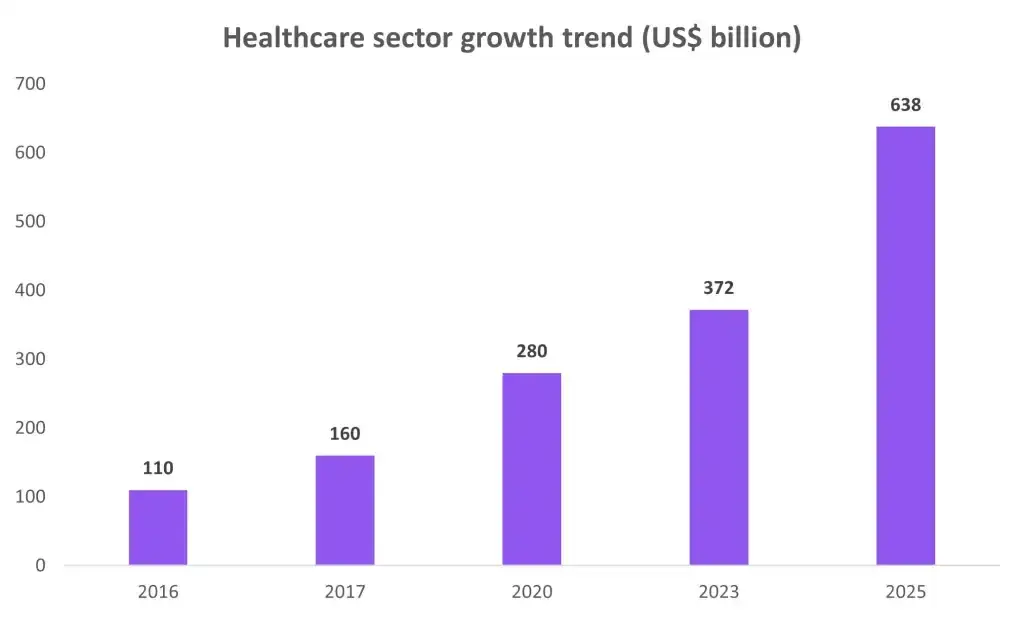
Approximately 80% of that market is comprised of hospitals. The private segment is the largest with 63 percent of all hospitals, and this is bound to increase.
The structural and compounding demand drivers are structural and compounding, respectively. The proportion of non-communicable diseases (heart disease, cancer, chronic respiratory disease, diabetes, etc.) in the total deaths in India has risen to 65 percent in 2025, compared with 30 percent in 1990. By 2030, the percentage of deaths that are NCD-related will be estimated to 28%. World Economic Forum projects that the cost of NCD treatment to the whole world will reach about Rs. 2,490 lakh crore by the year 2030, with India contributing around Rs. 448 lakh crore. It is not a cycle and is a structural change in how the people of India fall ill and how they must be treated.


In the meantime, the healthcare infrastructure in India is disastrously unfurnished. The nation has the worst bed-to-population ratio of 16 beds to 10000 compared to a recommended 30 to 10000 by the WHO. The ratio of doctors to population is getting better, albeit at a very low point. Although the penetration of health insurance has been increasing at a significant rate, the industry has expanded its annual premium by more than three times its yearly premium at Rs. 31,706 crore in FY16 to Rs. 1,09,000 crore in FY24, yet it has not sufficiently covered the large middle population segment.
The Ayushman Bharat initiative by the government is the bottom of the pyramid; employer insurance is the top, and an apparent missing middle of middle-income Indians is also left with much to pay out in healthcare expenses.
Another tailwind is medical tourism. The cost advantage of India is extraordinary: 144,000 USD to have a heart bypass in the United States costs USD 5,200 in India. In the US, a knee replacement at USD 50,000 will cost USD 6,200 here. By 2023, medical tourism revenues were estimated to be Rs. 64,000 crore, and are expected to increase almost twice by 2029
In its rating reaffirmation of the company in January 2026, ICRA said that the future of the healthcare services in India is still favourable and is likely to have positive impacts on the industry overall.
This all adds up to a lengthy snowballing of growth for any hospital operator who is well-run. The question is which operator is well placed to exploit it.
To truly appreciate opportunities like this, it helps to first understand how broader markets function — something covered well in A Beginner’s Guide to the Indian Stock Market (2026 edition)
Why Narayana Hrudayalaya Is Different
Most hospital chains, when they succeed, succeed by charging more. They build premium facilities in affluent neighbourhoods, attract high-income patients, and earn their margins through high average revenue per occupied bed. This is a perfectly defensible business model. But it is not Narayana Hrudayalaya's model.
Narayana's founding insight was the opposite: that in a country where the vast majority of patients are price-sensitive, the hospital that can serve the greatest volume at the lowest cost — while maintaining clinical excellence — will ultimately win. This is a manufacturing mindset applied to medicine.
The founder, Dr. Devi Prasad Shetty, often compared it to the airline industry or the car industry: as volume scales, fixed costs spread, unit economics improve, and quality can actually rise alongside affordability.
The model has worked, and the financial evidence is striking.
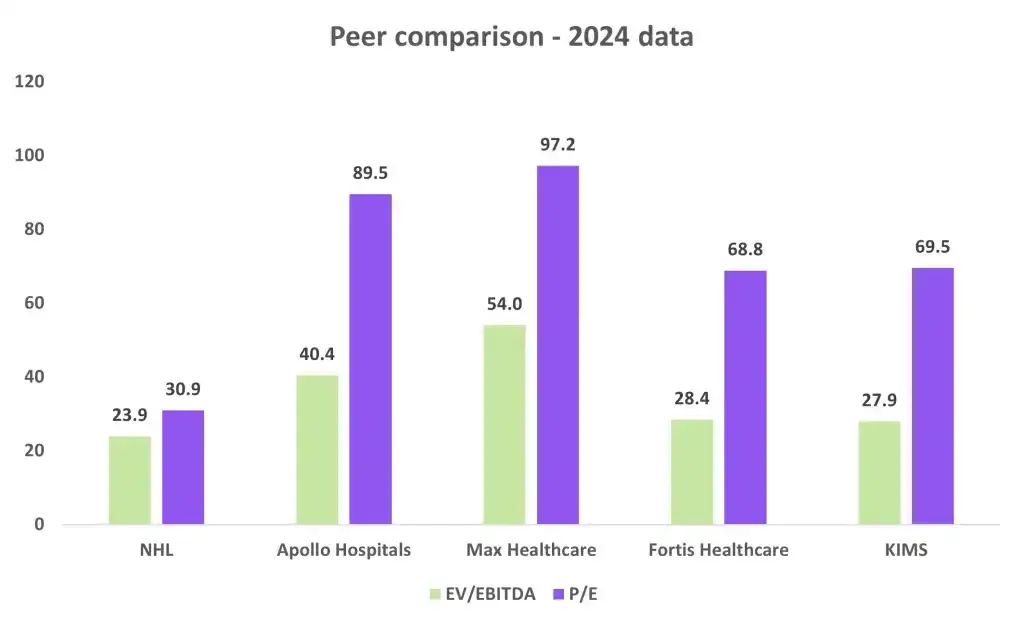
In FY24, Narayana Hrudayalaya reported a return on equity of 31.5%, against an average of approximately 13.2% for its listed peers. It was trading at a trailing price-to-earnings multiple of roughly 31 times, against peer averages of 69 to 97 times.
Its EV/EBITDA was approximately 24 times, against a peer average of 37 times. Its cost per bed of Rs. 0.65 crore is roughly half the industry average of Rs. 1.32 crore. And its payback period per bed — approximately 5.1 years — is the shortest of any major listed hospital chain.
To understand how these numbers are possible, you need to understand a key operating metric that Narayana thinks about differently from its peers.
The ARPOB Trap and What Really Matters
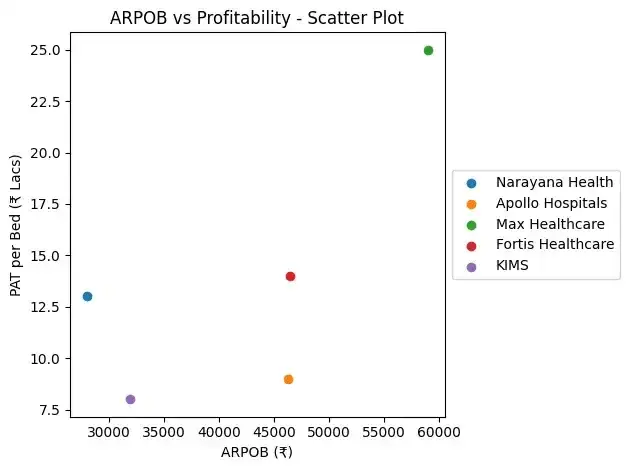
A commonly used metric in the hospital sector is ARPOB — Average Revenue Per Occupied Bed. On this metric, Narayana looks underwhelming. Its ARPOB is approximately Rs. 28,023, well below Max Healthcare's Rs. 58,957 or Apollo's Rs. 46,276.
But the Chola Securities research team that initiated coverage on this stock in September 2024 made a compelling argument: ARPOB is a misleading yardstick. What actually matters is not how much revenue you earn per occupied bed, but how efficiently you convert that bed into profit, and how quickly you recover your investment in building it.
On these metrics — PAT per bed, EV per bed, and payback period — Narayana competes on entirely different terms. It generates Rs. 13 lakh of profit per bed per year, comparable to or better than most peers despite far lower revenue per bed. This is because its cost base is dramatically leaner: lower land costs (its early hospitals were built before real estate became prohibitively expensive), a culture of cost discipline embedded from the founding, and an average length of stay for inpatients of approximately 4.3 to 4.5 days — among the lowest in the sector.
That last point deserves special attention. The company's management has noted that a one-day reduction in average length of stay would add roughly 20% to existing facility capacity without a single additional brick being laid. Faster discharge means more patients can be treated in the same physical space. More patients mean greater operating leverage. Greater operating leverage means margins expand even as prices stay low. The technology investments Narayana is making — including AI-driven decision support tools that have reportedly reduced discharge times by nearly 50% — are directly aimed at accelerating this flywheel.
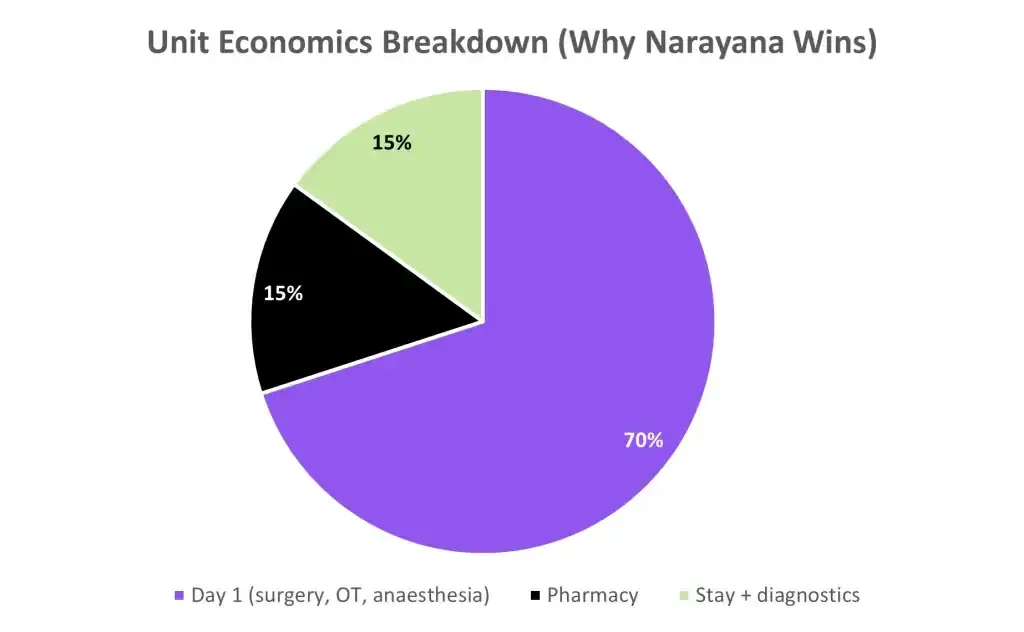
The cost structure of a surgical patient further supports this logic. Approximately 70% of a surgical patient's cost is incurred on Day 1 — surgery fees, anaesthesia, and operating theatre charges. Pharmacy accounts for roughly 15%, and the balance is the stay plus diagnostics. Releasing a patient on Day 2 instead of keeping them on Day 3 does not help much to reduce the costs incurred by Narayana but opens up a bed to a new Day-1 case with high values. Shorter lengths of stay are not a quality trade-off; however, they are indicative of clinical efficiency and cost optimization, which generates value to both the hospital and the patient.
Understanding which metrics actually matter is a key part of stock analysis — something you can learn through A fundamental checklist: How to research a stock in 1 hour.
The Financial Story: From Survival to Compounding
It is only worthwhile to take a moment to find out the extent to which Narayana Hrudayalaya has thrived financially, since the path is educative.
In the disrupted period of FY21, when the main source of work, elective surgery, had been postponed or cancelled, the company earned a revenue of Rs. 2,582 crore and an EBITDA of only 7 percent, which is just Rs. 182 crore. It incurred a loss after tax amounting to Rs. 14 crore.
In FY24, revenue increased to Rs. 5,018 crore, and EBITDA increased to Rs. 1,152 crore, which is a margin of 23 percent. PAT reached Rs. 790 crore. Its EBITDA CAGR of FY21-24 was about 85 percent and ranked among the most successful stocks of the hospital in terms of operations in the same period.
The company continued this positive trend in FY25, as shown in its Annual Report. Revenue grew by 12.1% year-on-year to ₹5,483 crore, while EBITDA stood at ₹1,368 crore with a 24% margin.

Such sharp recoveries are often seen in high-quality businesses that later become outsized winners — a pattern explored in Top Multibagger Stocks of the Last 10 Years – What We Can Learn.
What’s important is that even though India Hospital's EBITDA margins improved to 20.7% (from 19.9% in FY24), the company faced a challenging year. The new Cayman Islands facility at Camana Bay started operations in October 2024 and incurred initial start-up costs. At the same time, the integrated care and insurance businesses were still in their early stages and making losses, and geopolitical issues affected the flow of international patients to Indian hospitals.
Despite all these challenges, the company managed to maintain stable margins.
There is also the balance sheet that has changed. Borrowings are also being tamed despite the company entering into the most ambitious phase of expansion. Generation of free cash flow has grown to more than Rs. 1,000 crore per year due to operations, and the company has accumulated cash reserves to meet a large percentage of the intended capital spending using accruing internal cash flows.
In January 2026, ICRA, a credit rating agency that assigned Narayana Hrudayalaya a rating of AA (Stable), the highest credit rating that an Indian corporate can have, reiterated the same rating. The agency observed the healthy growth of revenues, strong margins, geographically diversified operations, and strong brand equity of the company, with the weaknesses of the increasing debt measures as a result of expansion financing. It tested the liquidity position as satisfactory.
Cayman Islands Wildcard: Posting its model outside India
It is one of the more unconventional strategic actions by Narayana Health – and is also one of the more rewarding. The company was established in 2014 in Health City, Cayman Islands, to provide patients in the Americas and the Caribbean who require more complicated procedures but are unable to pay the price of such treatment in the US or Canada.
The rationale is straightforward, but strong: Cayman is sufficiently near the United States to be easily reachable, but sufficiently distant to be able to conduct business without needing to conform to its costly regulatory regime, yet produce results comparable to India.

Such positioning brings a separate advantage to Narayana. It does not have to be the cheapest in the world; it merely must be significantly lower than the US healthcare, and yet maintain the same quality. This is sufficient to have a powerful pricing power.
This is at least evident in the financial impact:
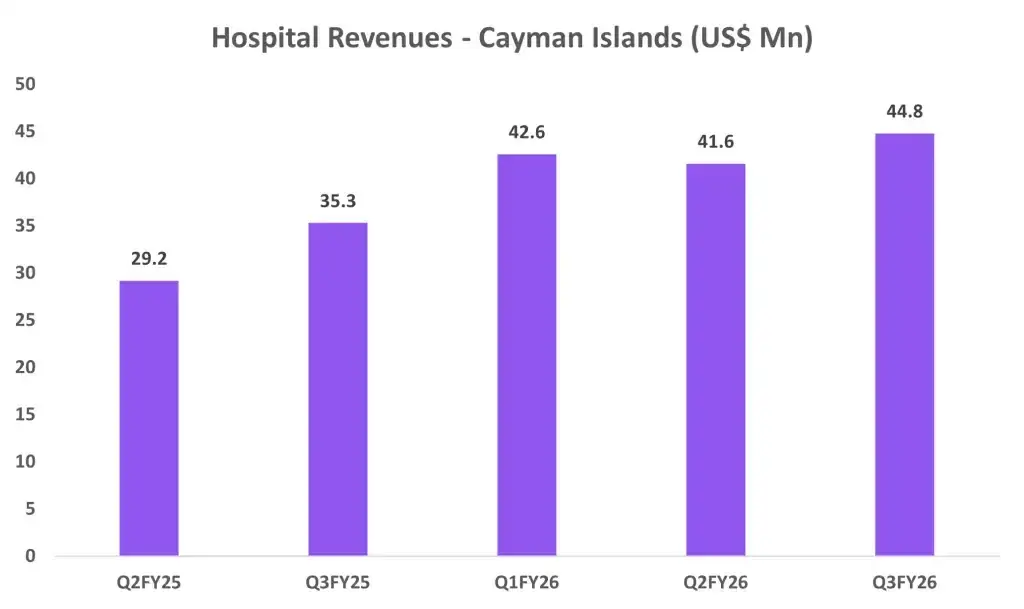
By FY24, the Cayman business had been making a contribution of about 20% of the total revenues, though it comprised a significantly smaller portion of the overall network. Revenues increased by 12.9 percent in FY25 from USD 123.9 to USD 139.9million, with the second hospital in Camana Bay in October 2024, a USD 100 million investment in oncology, and a prime location in the centre of the city.
The wave has just started gaining traction. During the first half of FY26, Cayman revenues increased by almost 38 percent year-on-year, which demonstrates the speed with which the new facility is being ramped.
The interesting aspect of this expansion is the change of the target market.
The Cayman business is appealing to the more lucrative international patients, unlike in India, where the Narayana model is premised on affordability and volume, where many of the patients are out-of-pocket or through travel insurance. These patients continue to save Narayana a lot of money as compared to the US treatment costs; however, they have a much higher average revenue per occupied bed (ARPOB).
Consequently, Cayman is not merely a growth engine – it is an accretionary vertical. Increased pricing, coupled with a particular operational structure and tax consideration (no direct taxes in Cayman), enables it to provide a disproportionately high profitability.
Simply put, as India scales, Cayman propels value, and it is the most significant wildcard in the company as it goes global.
This ability to command pricing without being the cheapest reflects a strong underlying moat — a concept explained in: Economic Moat Explained: Why Some Companies Stay Dominant for Decades
The New Ventures: Long Bets on the Future of Indian Healthcare
Narayana Hrudayalaya is not content to be simply a hospital operator. In the last few years, it has made several bold moves into adjacent businesses that reflect a specific thesis about where Indian healthcare is heading.

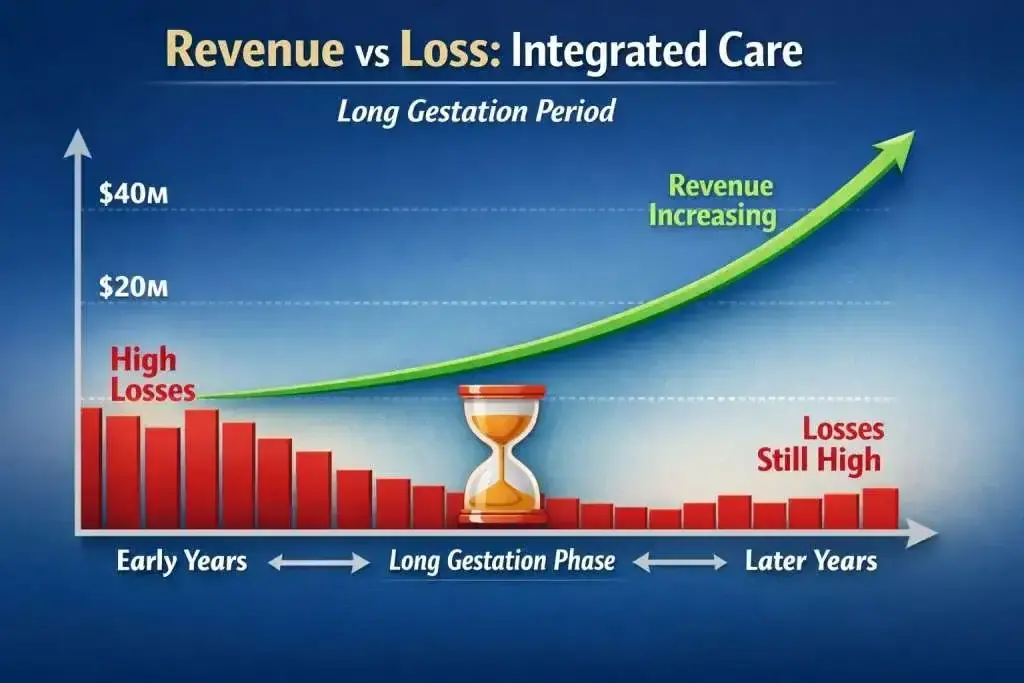
The first is integrated care. The company has established Narayana Health Integrated Care Private Limited (NHIC), operating under the brand "One Health" and subsequently "Narayana Aarogyam." This is a subscription-based preventive healthcare service, currently available at multiple clinics in Bengaluru. For approximately Rs. 2,000 per year per family, subscribers receive unlimited general physician consultations, discounts on specialist visits, discounts on diagnostics and pharmacy, and doorstep healthcare services. The idea is to keep patients healthier, catch diseases earlier, and build a relationship with the patient across the full continuum of care rather than only at the point of acute illness. Integrated care revenues grew from Rs. 22 crore in FY24 to Rs. 42 crore in FY25, and the segment had 10 clinics operational as of FY25.
The segment is currently loss-making — it reported a burn of approximately Rs. 64.5 crore in FY25 — and management is transparent about the fact that integrated care is a long-gestation business that needs to be built patiently. But the strategic logic is compelling: if Narayana can become the primary care touchpoint for a large subscriber base, it effectively creates a captive feeder population for its hospital business when those subscribers need more serious care.
The second new venture is health insurance. Narayana Health Insurance Limited (NHIL) launched its first product, "Narayana Aditi," in June 2024. This product offers a family of four coverage of up to Rs. 1 crore for surgical treatments and up to Rs. 5 lakh for non-surgical hospitalisation at an annual premium of Rs. 10,000 — a fraction of what conventional insurers charge for comparable coverage. The trade-off for the policyholder is that hospitalisation must be at Narayana's network, except in emergencies. But for a growing cohort of middle-income Indians who are underinsured and price-sensitive, this is an extremely attractive proposition.
The insurance vertical covered approximately 4,000 lives by March 2025. It is clearly nascent. But it addresses precisely the "missing middle" problem in Indian health insurance — the large segment of the population for whom government schemes do not apply and conventional private insurance is too expensive. If Narayana can scale this model, the insurance segment becomes both a standalone profitable business and a powerful driver of hospital footfall.
The third thrust is technology. Narayana operates its own proprietary hospital management software, Athma, through a wholly-owned subsidiary. Athma integrates clinical, operational, and administrative workflows across the hospital network and has been deployed to over 80 external healthcare institutions as a SaaS product. More interestingly, the company has invested in Medha AI, which builds predictive analytics and risk scoring tools to enable personalised care pathways and proactive interventions. The company's Annual Report for FY25 notes that technology has reduced discharge times by nearly 50% and freed up more than 100 nursing hours per nurse annually. Over 50% of consultations are now booked directly by patients through digital channels, reducing friction and administrative costs.
The Expansion Phase: Putting the Cash to Work
Having spent the last decade building profitability across its existing hospital network, Narayana Hrudayalaya is now entering its most aggressive expansion phase. The company has announced plans to add 2,000 beds over the next four years, with a total capital expenditure commitment that is expanding.
Greenfield projects are underway in Rajarhat (Kolkata, 350 beds, Rs. 900 crore), HSR Layout (Bengaluru, 215 beds, Rs. 490 crore), South Bengaluru (350 beds, Rs. 800 crore), and Raipur (expansion of 300 beds, Rs. 540 crore). A leased facility in Central Bengaluru (220 beds) is planned for FY28 completion. A smaller leased facility in South-West Bengaluru (100 beds) is scheduled for FY27.
Crucially, this expansion is focused on cities and regions where Narayana already has significant brand recognition and patient relationships — Bengaluru, Kolkata, and now Raipur. Management has articulated that they view infrastructure as a means to an end, not a metric of success. The goal is to strengthen the company's position as an integrated care provider across the full patient journey — from preventive care through clinics, to acute care in hospitals, to post-acute recovery — in markets where the brand is already trusted.
The capex is being funded through a combination of internal accruals and debt. Borrowings have increased, as one would expect during an investment cycle. ICRA expects the company to maintain credit metrics commensurate with its current rating despite the expanded capex plans, citing the Group's strong earnings capability.
In November 2025, the company also completed the acquisition of Practice Plus Group Hospitals Limited (PPGHL) in the United Kingdom, a network of 10 hospitals and surgical centres with 330 beds, at a total consideration of approximately Rs. 2,200 crore. This acquisition significantly widens Narayana's international footprint, gives it a presence in the large UK private healthcare market, and provides a potential platform for further international expansion. The UK acquisition is an event that was still being digested as of the ICRA review in January 2026; margins in the UK business are expected to be lower than the consolidated average in the near term, but the long-term strategic rationale of geographic revenue diversification is clear.

The Bear Case: What Could Go Wrong
No investment case is complete without an honest assessment of the risks.
The first and most significant risk is concentration. A substantial portion of Narayana Hrudayalaya's revenue and profitability comes from three flagship hospitals: Narayana Institute of Cardiac Sciences and Mazumdar Shaw Medical Centre in Bengaluru, and Rabindranath Tagore International Institute of Cardiac Sciences in Kolkata. Any disruption to these facilities — whether from regulatory action, key physician attrition, infrastructure challenges, or anything else — would have an outsized impact on group financials. ICRA notes that this dependence has been reducing over time as other hospitals in the network mature, but it remains a genuine concentration risk.
The second risk is that new ventures consume capital and management bandwidth without delivering returns at the pace expected. Integrated care and health insurance are both long-gestation businesses in which Narayana has no prior competitive advantage. They are adjacent to healthcare delivery, but the skill sets required — actuarial pricing, subscriber acquisition, primary care clinic management at scale — are genuinely different from running tertiary care hospitals. The cash burn from these ventures was manageable in FY25 (approximately Rs. 64.5 crore for integrated care; insurance was too early-stage to have meaningful financials), but if the ramp-up is slower than expected, the drag on returns could extend for several years.
The third risk is regulatory. The healthcare industry in India is subject to pricing regulations by both the central and state governments. Any expansion in price controls could compress margins for the industry broadly, though Narayana's already-low pricing gives it somewhat more protection than premium-priced competitors. The risk exists nonetheless.
The fourth risk is the complexity of the UK acquisition. Integrating a UK hospital network — with different regulatory frameworks, different workforce dynamics, different payer relationships, and a different competitive environment — is a material operational challenge. If integration proves difficult or the UK business continues to underperform over an extended period, it could weigh on consolidated margins and management attention.
Finally, the company's debt has increased meaningfully as it has funded Cayman expansion and the UK acquisition. While the leverage remains manageable relative to EBITDA, any significant deterioration in operating performance would reduce the cushion.
Managing such risks is also why portfolio construction matters — something discussed in Portfolio Diversification – How Many Stocks Should You Hold?.
The Bull Case: Why the Numbers Still Compel
Against those risks, the positive case rests on several durable strengths.
Narayana Hrudayalaya's brand in cardiac and renal care is not easily replicable. It has taken two and a half decades to build the clinical reputation, physician relationships, and patient trust that underpin its volume. The Paediatric Cardiac Programme alone — the largest in India — is a competitive moat that no new entrant can replicate quickly. The same is true of its bone marrow transplant capability, its pulmonary thromboendarterectomy volumes, and its robotic surgery programmes.
The operating model — high volume, disciplined costs, technology-driven throughput — has been proven across multiple economic cycles and through the severe disruption of COVID. The FY25 EBITDA margin of 25% at the consolidated level, maintained despite a new hospital opening in Cayman, losses in integrated care, and geopolitical headwinds on international patient volumes, is evidence of underlying business resilience.
The demographic and epidemiological tailwinds are simply not going away. India will have 20 crore people above the age of 60 by 2030. Non-communicable diseases are rising. Health insurance penetration is growing at double-digit rates. Medical tourism from the Americas and Caribbean is expanding. All of these trends point in one direction for a hospital operator with Narayana's positioning.
The valuation, while not the bargain it was when the Chola Securities report was written in September 2024 (at Rs. 1,254 per share with a 3-year target of Rs. 2,145), continues to reflect a meaningful discount to peers on most operating metrics despite delivering superior returns. The forward earnings multiple on FY27 estimates was approximately 18 times at the time of that coverage initiation, implying significant room for re-rating as the earnings trajectory becomes clearer and the new ventures mature.
And the management team — led by Dr Devi Prasad Shetty as founder and executive chairman, Mr. Viren Prasad Shetty as group COO, and Dr. Emmanuel Rupert as MD and Group CEO — has demonstrated over two decades that it understands how to build and sustain a complex, multi-location healthcare operation at scale. Under Dr. Rupert's tenure, Narayana Health became the first large organisation in the Asia-Pacific region to receive JCI Enterprise-level accreditation across its entire network — a quality certification that few hospital groups anywhere in the world have achieved.

These characteristics — scale, efficiency, and moat — are often common across great businesses, much like the patterns identified in 7 Powerful Traits of Every Multibagger Stock – Data-Based Study.
Explore our Products
Research Framework

Emerging Titans
Combination of quantitative analysis, industry tailwinds, and management assessment - SPRINT investment philosophy

Tiny Titans
Heavy emphasis on scuttlebutt research, plant visits, and early on-ground signals
Conclusion: The Bigger Picture
There is something worth appreciating in the Narayana Hrudayalaya story that goes beyond the investment case.
In a sector where the instinct is always to charge more, to build in premium locations, to serve the most profitable patients, this company chose a different path. It chose to build volume by being accessible. It chose to prove that world-class cardiac surgery could be delivered profitably at prices ordinary people could pay. And in doing so, it built a business that is, by most financial measures, more efficient and more profitable than most of the competitors who took the conventional route.
The thesis that Dr. Shetty articulated in 2000 — that healthcare economics look like manufacturing economics if you think about them correctly — has not been widely adopted. Most hospital operators still think about revenue per bed rather than profit per bed, about ARPOB rather than RONA, about premium positioning rather than operating leverage. Narayana thinks differently.
As India's healthcare market continues to expand, as health insurance penetration increases, as the burden of non-communicable disease grows, and as medical tourism from the Americas scales, the hospital chain built on the belief that affordability and profitability are not mutually exclusive is positioned to be one of the defining beneficiaries of the country's healthcare demand boom.
Comment “THROUGHPUT” if this changed how you think about hospital economics — I’ll know you understood the real insight behind Narayana’s model.
Frequently Asked Questions (FAQs)
Why hasn’t Narayana’s model been widely replicated?
+Because it’s not just a pricing strategy — it’s a deeply embedded operating system. It requires volume, process standardisation, and cultural alignment across doctors and management, which most hospital chains are not built for.
Does lower pricing hurt profitability in the long run?
+Not in this case. Narayana demonstrates that volume-led growth can offset lower pricing, allowing profitability to scale through higher asset utilisation and operating leverage.
How scalable is this model beyond India?
+Scalability depends on regulation and cost structures. Narayana’s approach suggests that entering adjacent, flexible markets (like Cayman) is more viable than directly competing in heavily regulated, high-cost systems.
What are the key variables investors should track going forward?
+Rather than traditional metrics alone, focus on:
- Expansion ROI (payback per bed)
- Throughput efficiency (bed utilisation, discharge cycles)
- Performance of new ventures
Can the company sustain its margins during expansion?
+In the short term, expansion and new ventures may create pressure. But over time, maturing assets and operating leverage can stabilise or gradually improve margins.
What is the single most important insight from this story?
+That in healthcare, efficiency can be a stronger moat than pricing power — and the companies that optimise systems, not just services, are likely to win over time.

High growth stock specialist, Value Educator
Shashank Mahajan is an equity research professional with over 12 years of experience in identifying high-potential SME and micro-cap stocks at an early stage. He follows a rigorous scuttlebutt research–driven approach, combining on-ground insights with deep financial analysis. Shashank specializes in uncovering under-researched and under-owned companies with strong management quality and long-term growth potential. Through disciplined research and early identification, he focuses on spotting tomorrow’s market leaders before they enter the mainstream investor radar.

Zen Technologies: Why Revenue Fell After Its Biggest Win

Data Patterns: India's Radar Designer and Its Waiting Orders

KSH International: The Wire Inside India's Transformers

Krishna Defence: The Steel Behind India's Warship Hulls

PNG Jewellers: A 194-Year-Old Name Goes National

Axiscades: From Services to Missile and Radar Electronics
Explore our Products
Research Framework
Emerging Titans
Combination of quantitative analysis, industry tailwinds, and management assessment - SPRINT investment philosophy
Tiny Titans
Heavy emphasis on scuttlebutt research, plant visits, and early on-ground signals


 Orders
 Subscription
 Share with friends
 Logout


Required Details
₹23999.00
(12 month subscription)
As per SEBI regulations, all users are mandated to complete the KYC that is validated for 1 year. Post payment, you will be redirected to the KYC screen


No comments yet. Be the first to comment!