
Capital Goods Stocks in India 2026: The Capex Cycle
The central government plans to spend about ₹12.2 lakh Cr on capital assets in FY27, against about ₹11.0 lakh Cr in FY26. Much of that money ends up as orders for machines. In the July to September quarter of 2026, India's largest crane maker sold 2,812 cranes and other machines, about 20% more than a year earlier. India's largest industrial gear maker ended September 2026 with ₹1,635 Cr of open orders, up about 33% in a year.
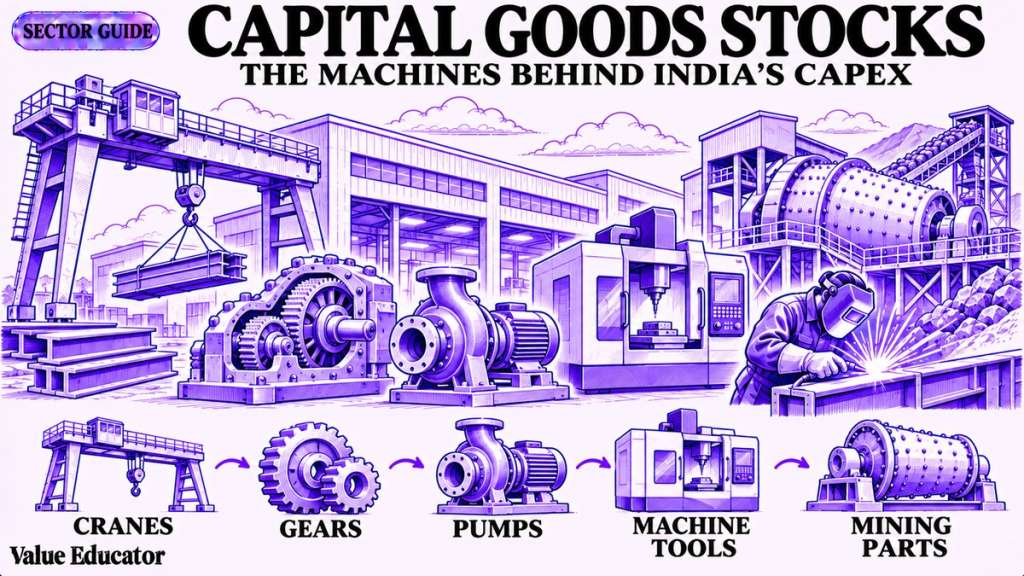
Those are capital goods: the cranes, gearboxes, pumps, machine tools, welding products, process equipment and precision parts that other companies buy to build and run their plants. This page lists the capital goods companies we have studied in depth, with each one's latest figure, explains what each segment makes and what drives its orders, and then lists other listed names. Each linked row leads to our full research on that company.
Figures as of 20 November 2026. This page is research, not a recommendation to buy or sell any stock.
Capital Goods Stocks in India at a Glance
| Company | Segment | What it does | Latest figure (date) |
|---|---|---|---|
| Action Construction Equipment | Construction and material-handling equipment | Pick-and-carry cranes, tower cranes, backhoe loaders, forklifts and tractors | Q2 FY27 revenue of ₹886.1 Cr, up about 19.1% (Jul-Sep 2026); says it holds over 63% of India's mobile crane market |
| Elecon Engineering | Power transmission (gears) | Industrial gearboxes, plus conveyors, wagon tipplers and stacker reclaimers | Open order book of ₹1,635 Cr (Sep 2026), about 0.7x FY26 revenue; Q2 FY27 EBITDA margin of 23.1% |
| Kirloskar Brothers | Pumps and valves | Centrifugal pumps from 0.3 kW to 30 MW, and valves, for water, irrigation, power and buildings | Pending order book of ₹4,062.2 Cr (Jun 2026), about 0.9x FY26 revenue; Q2 FY27 revenue up 24.2% to ₹1,276.7 Cr |
| KSB | Pumps and valves | Pumps for nuclear, thermal, water and industry, and valves | Orders on hand of ₹2,744.5 Cr, including ₹1,235 Cr nuclear (Jun 2026), about 1.0x calendar 2025 revenue |
| Jyoti CNC | Machine tools | CNC lathes and machining centres, up to 5-axis machines for aerospace and defence | Order book of ₹5,082 Cr (Sep 2026), about 2.4x FY26 revenue |
| Macpower CNC | Machine tools | Turning centres, machining centres and large double column machines, made near Rajkot | Order book of ₹476 Cr (Sep 2026), about 1.4x FY26 revenue |
| Ador Welding | Welding | Welding electrodes, wires and fluxes, welding machines, and repair services | Q2 FY27 revenue of ₹344.7 Cr, up 22.6%; yearly capacity of 90,000 MT of consumables |
| Tega Industries | Mining consumables | Mill liners, and since 1 June 2026, Molycop's steel grinding media | Q2 FY27 group revenue of ₹4,254.0 Cr, about 89% from Molycop; net debt of about ₹10,461.2 Cr (Sep 2026) |
| Kilburn Engineering | Process equipment | Industrial dryers, heavy-water plant equipment and waste heat recovery | Order book of ₹470 Cr (Sep 2026), about 0.7x FY26 revenue |
| INOX India | Process equipment | Cryogenic tanks for LNG, hydrogen and industrial gases | Order backlog of ₹2,268 Cr (Sep 2026), about 1.4x FY26 revenue |
| Anup Engineering | Process equipment | Heat exchangers and pressure vessels for refineries and chemical plants | Order book of ₹941 Cr including letters of intent (6 Nov 2026), about 1.1x FY26 revenue |
| KRN Heat Exchanger | Process equipment (cooling) | Fin-and-tube coils for air-conditioning and data-centre chiller makers | Data-centre revenue of ₹116 Cr in Jul-Sep 2026, about 36% of revenue |
| TD Power Systems | Electrical machines | Generators for steam, gas and hydro turbines and for gas engines | Order book of ₹2,207.3 Cr (Jun 2026), about 1.2x FY26 total income; 93% of Apr-Jun 2026 orders came from abroad |
| Kirloskar Oil Engines | Engines and gensets | Diesel engines and gensets for industry, data centres, nuclear plants and the navy | First hyperscale data-centre order, for about 192 MW of backup power (Apr-Jun 2026 quarter) |
| Craftsman Automation | Castings and precision parts | Engine blocks and heads, aluminium die-castings, and storage racks | Q2 FY27 revenue of ₹2,945 Cr, up 47%; engine-part orders for data-centre generators of about $100 million at peak |
| Unimech Aerospace | Castings and precision parts | Tooling to build and service aero engines, and precision parts that fly | Order book of ₹855 Cr (30 Sep 2026), about 3.6x FY26 revenue |
These companies all sell to other businesses, but in very different ways. Some sell one big machine and wait years for the next order. Others sell parts and consumables that wear out and must be bought again and again.
Capital Goods in India, Segment by Segment
Capital goods are machines and equipment that a company buys to make other goods or to build things, not to resell. Here are the main segments listed above.
- Construction and material-handling equipment. Cranes, backhoe loaders, road rollers and forklifts lift, dig and move things on building sites, factories and warehouses. A pick-and-carry crane can lift a load and drive with it. Action Construction Equipment is the main listed maker.
- Power transmission and gears. A gearbox turns a motor's fast, light spin into the slow, heavy turning force a mill or a conveyor needs. Elecon makes gearboxes for power, steel and cement plants, which it says are its three largest customer industries. It also builds material handling equipment such as wagon tipplers, which empty coal wagons into a pit.
- Pumps and valves. A centrifugal pump uses a spinning wheel to push water up a pipe or across a field. Pumps move water for cities and farms, cool power plants and move fuel. Kirloskar Brothers and KSB both make pumps for nuclear plants too.
- Machine tools. A CNC machine is a computer-controlled machine that cuts metal into exact shapes. Every factory that makes engine parts, moulds or aircraft parts needs them. Jyoti CNC and Macpower CNC make them in India.
- Welding. A welding consumable, such as an electrode or a wire, supplies the filler metal that joins two pieces of steel and is used up as the welder works. Ador Welding says demand follows how much steel the country uses.
- Process equipment. Heat exchangers, pressure vessels, dryers and cryogenic tanks sit inside refineries, chemical plants and gas plants. Most are designed for one plant. Anup Engineering, Kilburn, INOX India and KRN Heat Exchanger make them.
- Mining consumables. A mill liner protects the inside of a grinding mill, and grinding media are the steel balls that crush the ore. Both wear out, so mines buy them again for as long as the mill runs. Tega says that over a mill's life, a miner spends about 3 times as much on such items as on the mill itself.
- Castings and precision parts. A casting is a part made by pouring molten metal into a mould, then machining it to size. Craftsman makes engine blocks and aluminium parts; Unimech makes tooling and parts for aero engines.
What Drives Orders for Capital Goods
Public capex. Capex means capital expenditure, money spent on long-lived assets. The central government's capital spending budget rose to about ₹12.2 lakh Cr for FY27. Roads, water, railways and defence all buy machines. At Kirloskar Brothers, irrigation and water projects made up ₹1,012.7 Cr of pending orders in June 2026. At Action Construction Equipment, defence orders still to be delivered were a little over ₹500 Cr in November 2026. The catch is timing: Elecon's CFO has said a large part of its business goes through government companies, which depend on budgets and fund releases.
Private capex. When steel, cement, chemical and power companies build new plants, they buy gearboxes, pumps, process equipment and welding machines. Ador Welding has said welding equipment sales spike when a capex cycle picks up, and that capex in the economy was slightly weaker than it expected in FY26. New areas such as nuclear power and data centres are adding orders: KSB held ₹1,235 Cr of nuclear orders in June 2026, and Kirloskar Oil Engines won about 192 MW of data-centre backup power.
Exports. Many Indian capital goods makers now sell abroad. Elecon serves more than 95 countries, and about 37.9% of Kirloskar Brothers' FY26 revenue came from outside India. At TD Power Systems, 93% of new orders in Apr-Jun 2026 came from abroad, and Craftsman expects about $100 million a year at peak from engine parts for data-centre generators.
Other Listed Companies in Capital Goods
These companies also make capital goods but are not yet covered in our in-depth research. The details come from their own websites.
| Company | Segment | What it does |
|---|---|---|
| BEML | Construction and mining equipment | Government-owned maker with three businesses: defence and aerospace, mining and construction, and rail and metro |
| Thermax | Process equipment | Boilers and heating, cooling, pollution control and water treatment equipment for industry |
| Triveni Turbine | Electrical machines | Industrial steam turbines of up to 100 MW |
| Cummins India | Engines and gensets | Engines and gensets; data centres were 23% of its power-generation revenue in Apr-Jun 2026 |
| Kirloskar Pneumatic | Compressors and gears | Air and gas compressors, chillers and industrial gearboxes |
| Shanthi Gears | Power transmission (gears) | Gears, gearboxes and geared motors; part of the Murugappa Group since 2013 |
| Roto Pumps | Pumps and valves | Positive displacement pumps, made mainly at Greater Noida |
| ESAB India | Welding | Welding and cutting equipment and consumables |
| LMW | Machine tools | Textile machinery, CNC machine tools, precision castings and aerospace parts |
How to Read a Capital Goods Stock
- One-time machine or repeat consumable? A crane or a heat exchanger is sold once. Welding wire, mill liners and spare parts are bought again and again, which makes revenue steadier.
- How long is the order book? Compare it with yearly revenue. Jyoti CNC's order book was about 2.4x its FY26 revenue, while Elecon's was about 0.7x, because its gearboxes take only a few months to make.
- Standard or engineered? A standard product is picked from a price list and sold in large numbers. An engineered product is designed for one plant; it takes longer but usually earns a better margin.
- Can it pass on steel costs? Steel is the main raw material for most of these companies. Check whether price rises keep pace with steel.
- Is profit turning into cash? From FY22 to FY26, Action Construction Equipment's operating cash flow was about 115% of its profit, Elecon's about 110% and Ador Welding's about 106%.
- How much comes from abroad? Exports widen the market but bring currency and tariff risk.
Key Risks for Capital Goods Stocks
- Steel prices: Action Construction Equipment said steel rose from about ₹48 to ₹50 a kg early in the year to ₹66 to ₹67 a kg by October 2026. Ador Welding's gross margin fell to 34.2% in Q2 FY27, from 38.6% a year earlier.
- Chinese competition: Action Construction Equipment's management said Chinese makers had taken about 25% of India's excavator market.
- Budget timing: orders that depend on government budgets and fund releases can slow down or move from one year to the next.
- Debt from deals: large acquisitions raise borrowings. After buying Molycop, Tega's net debt stood at about ₹10,461.2 Cr in September 2026.
- Cash tied up in stock: long orders and new products need inventory. Action Construction Equipment's inventory rose to ₹832.2 Cr in September 2026, from ₹605.4 Cr in March.
Explore our Products
Research Framework

Emerging Titans
Combination of quantitative analysis, industry tailwinds, and management assessment - SPRINT investment philosophy

Tiny Titans
Heavy emphasis on scuttlebutt research, plant visits, and early on-ground signals
Companies Compared Side by Side
For a closer look at companies on this list, these pages set them against each other on order books, margins, cash flow and balance sheets:
- Jyoti CNC vs Macpower CNC: Machine Tool Makers Compared
- Kalpataru Projects vs KEC International: T&D EPC Compared
Conclusion
India's capex cycle reaches listed makers of cranes, gearboxes, pumps, machine tools, welding products, process equipment, mining consumables and precision parts. Public spending, new private plants and exports all feed their order books. But the segments behave differently: some sell big machines with long order books, others sell parts that wear out and are bought again, and many depend on steel prices and on government budgets. Use the tables above to see where each company sits, then read our research on each one for its orders, margins and risks.
FAQs
Which are the capital goods stocks in India?
+Listed capital goods companies include Action Construction Equipment, Elecon Engineering, Kirloskar Brothers, KSB, Jyoti CNC, Macpower CNC, Ador Welding, Tega Industries, Kilburn Engineering, INOX India, Anup Engineering, KRN Heat Exchanger, TD Power Systems, Kirloskar Oil Engines, Craftsman Automation and Unimech Aerospace, along with BEML, Thermax, Triveni Turbine and Cummins India. The tables on this page show what each one does.
What are capital goods?
+Capital goods are machines and equipment that companies buy to make other goods or to build things, such as cranes, gearboxes, pumps, machine tools, welding machines and process equipment. They are not resold; they are used for many years.
What drives orders for capital goods companies?
+Three things: public capex on roads, water, railways and defence; private capex when steel, cement, chemical and power companies build plants; and exports. The central government's capital spending budget is about ₹12.2 lakh Cr for FY27.
Which Indian companies make pumps and valves?
+Kirloskar Brothers and KSB make pumps and valves for water, irrigation, power and nuclear plants. Roto Pumps makes positive displacement pumps.
Which companies make machine tools in India?
+Jyoti CNC and Macpower CNC make CNC machines, and LMW makes CNC machine tools alongside textile machinery.
What are the risks in capital goods stocks?
+Steel prices can squeeze margins, Chinese competition is rising in some machines, government orders depend on budget timing, and large acquisitions or long orders can tie up cash or add debt.

High growth stock specialist, Value Educator
Shashank Mahajan is an equity research professional with over 12 years of experience in identifying high-potential SME and micro-cap stocks at an early stage. He follows a rigorous scuttlebutt research–driven approach, combining on-ground insights with deep financial analysis. Shashank specializes in uncovering under-researched and under-owned companies with strong management quality and long-term growth potential. Through disciplined research and early identification, he focuses on spotting tomorrow’s market leaders before they enter the mainstream investor radar.
More about Shashank Mahajan →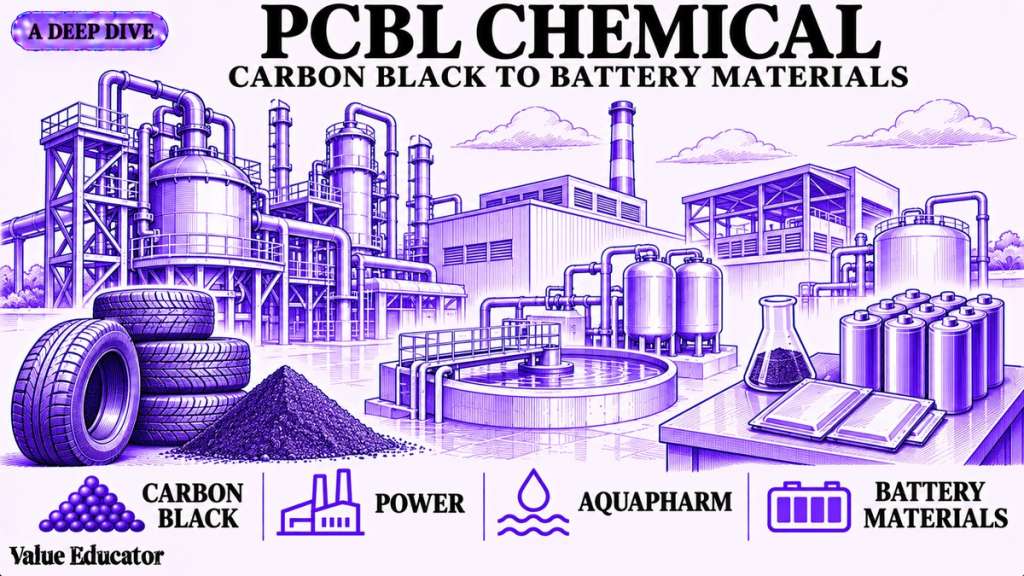
PCBL Chemical: Carbon Black Margins and Battery Materials
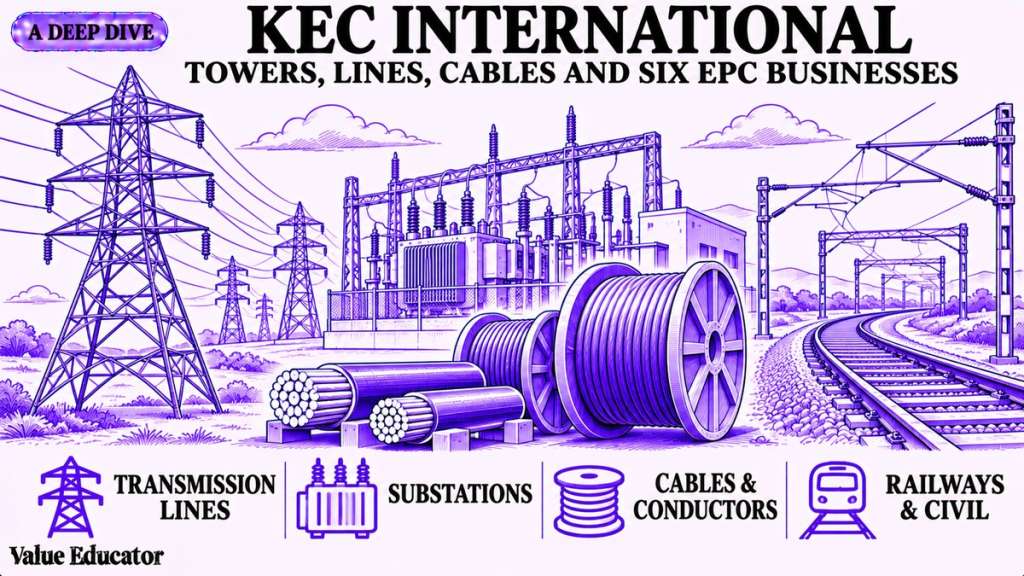
KEC International: Record Orders, Weak Margin, High Debt
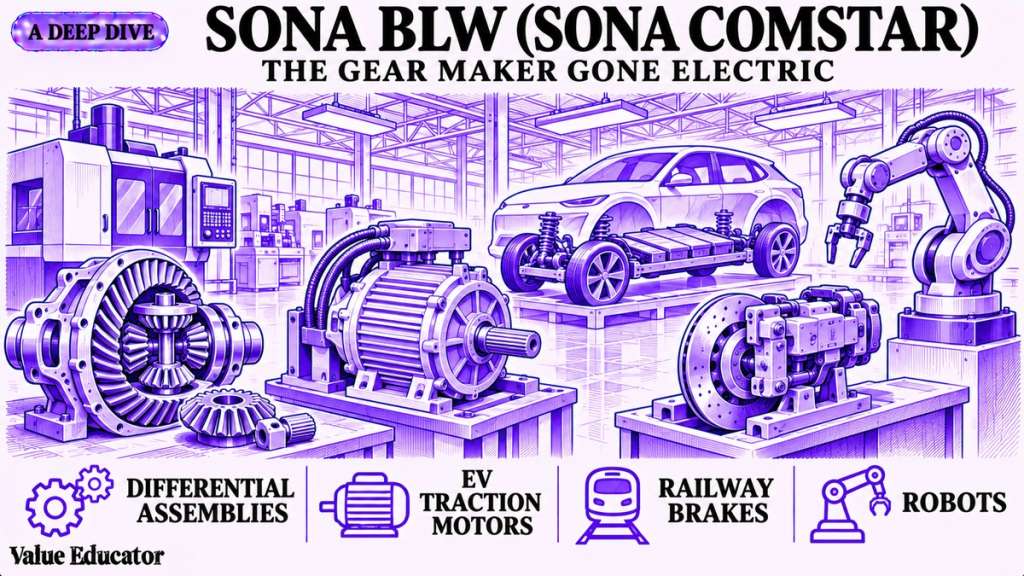
Sona BLW: EV Revenue Now Tops Half of Its Auto Sales
HPL Electric & Power: Smart Meters, Wires and Two Engines
Kaynes Technology: EMS, Chip Plants and ₹10,563.5 Cr Orders
Sterlite Technologies: Glass Rods to Hyperscaler Deals
Explore our Products
Research Framework
Emerging Titans
Combination of quantitative analysis, industry tailwinds, and management assessment - SPRINT investment philosophy
Tiny Titans
Heavy emphasis on scuttlebutt research, plant visits, and early on-ground signals



India's Aerospace Opportunity
Global Demand. Supply Bottlenecks. Opportunities Ahead.
Don't Miss This Exclusive Webinar!
Join Value Educator to decode the key trends shaping India's aerospace sector and learn how to identify tomorrow's potential leaders in the space.
- How the aircraft value chain works, layer by layer
- Indian companies supplying global aircraft makers
- A framework to judge any aerospace company

 Orders
 Subscription
 Share with friends


Required Details
₹23999.00
(12 month subscription)
As per SEBI regulations, all users are mandated to complete the KYC that is validated for 1 year. Post payment, you will be redirected to the KYC screen


No comments yet. Be the first to comment!