
Top 5 Defence Stocks to Watch

When India Chose to Build, Not Borrow: The Quiet Rise of a Defence Power
When India became independent, a small group of scientists were already looking past the celebration. Their concern was survival. Two of them were Homi J. Bhabha and Vikram Sarabhai. They worked in different fields, but they were aligned on one point: without scientific capability, political freedom would always be weak.
Bhabha felt India needed nuclear capability — not as a threat, but as protection. In a world where power influenced diplomacy, nuclear strength meant deterrence and the freedom to make independent choices. Sarabhai thought further ahead. He believed lasting strength would come from technology and engineering, from building advanced systems within the country rather than relying on others.

You see this mindset clearly in Rocket Boys. It’s not about dramatic victories. It’s about years of things failing, people waiting, trying again, and continuing even when progress feels invisible. That’s how national capability is built — quietly, patiently, long before results show up.
“The best investment decisions are made when they don’t yet look obvious.”
— Howard Marks
That thinking eventually turned into action in 1998. When Atal Bihari Vajpayee authorised the Pokhran-II nuclear tests, there was no room for error. The mission had to be executed in secrecy, under global scrutiny, knowing sanctions would follow. As shown in Parmanu, Pokhran wasn’t just a scientific achievement — it was execution under pressure, with no backup plan.
Pokhran mattered because it changed how India understood vulnerability. Nuclear capability was never about war. It was about preventing coercion. But its aftermath exposed a deeper weakness. Sanctions cut off access to technology and components. It became clear that dependence — not talent — was India’s real risk.
“Risk comes from not knowing what you’re dependent on.”
— Warren Buffett
This is where A. P. J. Abdul Kalam became central. Through the late 1980s and 1990s, he kept pushing a simple idea inside India’s defence system: the country had to build its own capabilities. Missiles, propulsion, guidance, avionics — the technologies that actually decide outcomes — had to be designed, tested, and manufactured at home.
That mindset quietly created an ecosystem. What began in government labs spread to public-sector units and eventually to private companies capable of executing complex defence programmes.
This is the India we see today. Not borrowing security, but manufacturing it. The companies discussed in this article are not riding a temporary theme — they are the result of decades of intent finally turning into industry. Pokhran didn’t just change India’s geopolitical posture. It changed how defence capability was built — from ideology to execution, from dependence to production.
Why 2025–26 Is a Tipping Point for Indian Defence
The change in 2025–26 isn’t just about bigger defence budgets. Defence itself is being treated differently. It has moved from something governments worried about occasionally to something they plan around constantly. The world is not in a peacetime phase anymore. Conflicts are live, alliances are under stress, and supply chains are now part of the battlefield. Countries are no longer asking if defence capability is needed, but how fast they can secure it and who they can rely on.
For India, this moment matters because urgency from outside has met readiness at home. Budgets have visibility, indigenisation is being enforced, and import dependence is finally seen as a strategic risk. The technologies that now decide wars — radars, electronics, drones, simulators, secure communication — are exactly where Indian companies have been building quietly for years. That is why this phase is different. It is not just spending. It is timing.
Orders are real. Exports matter. Private players are part of the system. The shift is from preparation to production. In such cycles, the real risk isn’t missing the theme — it’s backing the wrong businesses. Defence investing rewards patience far more than excitement.

“The big money is not in the buying or selling, but in the waiting.” — Charlie Munger
How to Analyse Defence Stocks
Defence is not a fast-growth story. It doesn’t reward hype, momentum, or clever narratives. It rewards companies that can survive long cycles, earn trust, and execute year after year. Because of that, defence businesses need to be judged very differently from consumer, IT, or regular manufacturing firms.The first thing to understand is where a company sits in the value chain. Some suppliers make mission-critical systems like radars, electronic warfare equipment, missile subsystems, simulators, or control electronics. Others supply basic fabrication or commoditised parts. Once a critical system is inducted, it is hard to replace. Commodity suppliers are far easier to switch. In defence, importance matters more than size.
Next is the length of the programme. A large one-time order doesn’t build a lasting business. Defence wealth is created through programmes that run for many years. Companies that get embedded early benefit from repeat orders, upgrades, spares, and long support cycles.
Then comes stickiness. Defence customers rarely change vendors. Certifications, security clearances, testing, and field validation create high barriers. A company that has already crossed these hurdles is very different from one still trying to get approved. Repeat orders usually matter more than flashy contract announcements.
Exports are another layer. Domestic orders bring stability. Exports create upside. Companies that meet global standards and are not constrained by transfer restrictions have far more room to grow.
Finally, the balance sheet. Payments are slow, approvals take time, and execution stretches out. Weak balance sheets don’t survive these gaps. Strong ones do. In defence, survival always comes before growth.
This approach isn’t meant to find quick winners. It is meant to filter out fragile stories.
“A good process produces good outcomes, even when individual results vary.” — Ray Dalio
Using this lens, we now look at five defence companies that are not stories, but suppliers deeply embedded in India’s long-term defence build-out.
If you want a practical way to apply this thinking quickly, read: A Fundamental Checklist: How to Research a Stock in 1 Hour
Stock 1: Astra Microwave – The Radar & RF Backbone of India’s Defence Stack
Why Radars, RF & Electronic Warfare Decide Modern Wars ?
Modern warfare is no longer decided by how many tanks or aircraft a country owns. It is decided by who sees first, who communicates securely, and who can disrupt the enemy’s sensors. Radars, RF (radio frequency) systems, and electronic warfare sit at the heart of this shift. Every missile interception, air-defence operation, and secure battlefield link depends on microwave subsystems, radar electronics, signal processors, and encrypted communication modules. These systems are invisible on the battlefield, but without them, nothing else works.
This is exactly where Astra Microwave operates.
Astra is neither a defence PSU nor a company that builds full platforms. Its position is deeper in the value chain, supplying specialised electronic and radio-frequency components that sit inside some of India’s most critical defence programmes. These include radar systems used for surveillance and fire control, air-defence and battlefield monitoring systems, missile guidance and tracking equipment, electronic warfare setups, secure software-defined radios, and communication payloads used in space and satellite applications. Once Astra’s components are designed into a programme, they tend to stay there for many years, continuing through upgrades, spares, and maintenance cycles. This makes the company difficult to replace over the life of the system.
More importantly, management has laid out a clear change in direction. Astra is moving away from selling standalone modules and subsystems and toward delivering complete systems and integrated solutions. This shift improves the quality of revenues, supports better margins, and allows the company to stay involved in programmes for much longer.
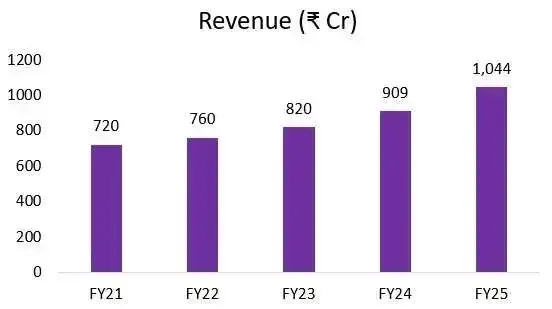
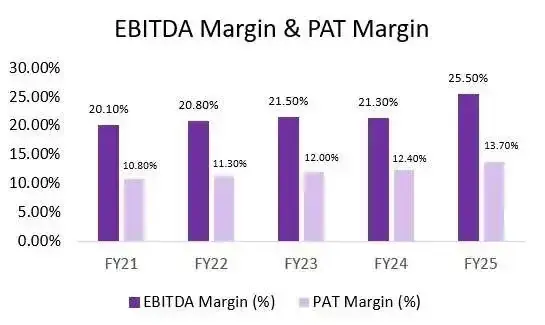
Deliveries during the period included modules for Ashlesha and Rohini radars, 3D-CAR, MPR, HMR, FLR, SDRs, and multiple electronic warfare programs , indicating breadth across radar and EW platforms rather than dependence on a single project.
Astra is not a commodity supplier for three structural reasons.
- First, defence RF and radar systems require years of qualification, testing, and field validation, creating high entry barriers.
- Second, defence programs typically run for 10–20 years, generating repeat orders, upgrades, and lifecycle support once inducted.
- Third, the shift toward system-level integration expands Astra’s wallet share per program and embeds it deeper into customer platforms.
This positioning aligns closely with India’s defence roadmap to 2040, which prioritises indigenisation, integrated multi-domain warfare, and advanced radars, EW, space, and secure communication systems. Astra’s involvement in India’s space program, including RF and microwave subsystems supplied for ISRO’s CMS-03, the country’s heaviest communication satellite, further strengthens its strategic relevance beyond pure defence exposure.
The defence sector always carries its own set of risks. Project schedules can slip, payments from the government do not come in smoothly, and execution becomes more challenging as Astra moves into larger, system-level contracts. That said, these are industry-wide issues rather than company-specific problems. What really stands out is that Astra has a strong order pipeline, healthy margins, cash flows that are getting better over time, and a clear shift toward higher-value and more complex systems.
Bottom line: Astra is a mission-critical systems supplier embedded deep inside India’s long-term defence build-out.
Stock 2: Krishna Defence – Materials Behind Military Hardware
Why Defence Indigenisation Starts With Materials ?
People usually imagine defence manufacturing as missiles, ships, or fighter jets. That’s the visible part. What doesn’t get talked about much is what comes before all of that. Nothing gets built unless the basic materials are available first. Steel sections, armour-grade pieces, welding materials, and underwater components are used at the very start, long before anything looks like a finished weapon or vehicle.
For many years, India depended on imports for these inputs, so even equipment assembled locally was tied to foreign suppliers. Real self-reliance was never about the final weapon alone. It depended on whether the materials behind it were made at home.
This is exactly where Krishna Defence operates.
Krishna Defence does not manufacture ships, submarines, or tanks. Instead, it supplies the basic materials that go into building them. The company makes products like bulb bars used in naval ship hulls, welding wires and consumables required for defence-grade fabrication, and steel sections used in armoured vehicle bodies. It also provides ballast bricks and other components used in naval and underwater platforms. These are essential inputs, not add-ons. Every ship or armoured vehicle needs them, regardless of which company is assembling the final platform. As a result, Krishna operates deep within the defence supply chain, supplying the foundations rather than the finished platforms.
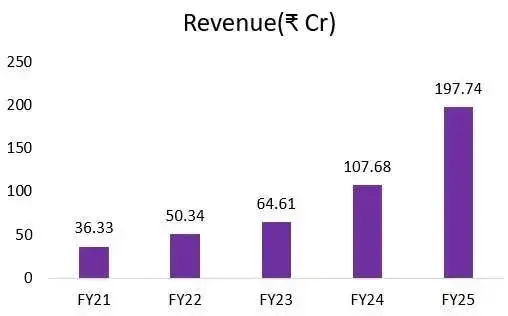
More importantly, Krishna is already on the approved vendor lists of the Indian Navy and Indian Army, and supplies to shipyards such as Mazagon Dock, Cochin Shipyard, and GRSE. In defence manufacturing, getting these approvals matters far more than size or capacity. Once a supplier is certified and accepted, it becomes very hard for a new entrant to break in.
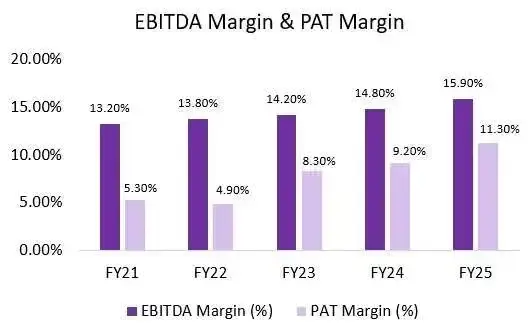
Material suppliers scale quietly, and that is their advantage. Once approved, they receive repeat orders across multiple platforms, volumes rise as shipyards and vehicle programs scale, margins improve with utilisation, and revenue visibility strengthens without aggressive bidding or marketing.
Krishna is already moving beyond basic material supply into large castings for critical defence programs, Autonomous Underwater Vehicle (AUV) construction, aerospace components, and advanced underwater platforms. Certifications such as Bureau Veritas approval are further expanding its addressable market. Management has explicitly indicated that advanced underwater platforms and AUV-related work could become a key inflexion point, signalling a shift from pure material supply to systems-adjacent capabilities.
Risks remain. Defence material businesses face lumpy execution, working-capital pressure due to milestone-based payments, customer concentration among a few shipyards, and execution challenges as complexity increases. Management has acknowledged past delivery delays and liquidated damages openly, which adds credibility rather than concern.
Bottom line: Krishna Defence is a materials backbone business embedded deep inside India’s defence manufacturing ecosystem.
Read More : 7 Powerful Traits of Multibagger Stocks: India’s Data-Backed Wealth Creators Blueprint
Stock 3: Zen Technologies – Training Before Combat
Today’s wars are not won by counting how many tanks or aircraft a country has. They are won by those who can detect threats early, communicate without being intercepted, and interfere with the other side’s sensors. This is where radars, radio-frequency systems, and electronic warfare come in. Whether it is stopping a missile, running an air-defence operation, or maintaining a secure link on the battlefield, everything depends on electronics working in the background, microwave components, radar hardware, signal processing units, and encrypted communication systems. You don’t see these systems on the battlefield, but if they fail, nothing else can function.Live training in the military is expensive and hard to run. Firing real rounds, deploying armoured vehicles, or organising large exercises quickly drains time, money, and resources. Simulation solves this problem. It allows armies to train more frequently, more safely, and with greater realism, across infantry marksmanship, tank gunnery, missile firing, air defence, and joint-force operations. Once inducted, simulators become part of standard training doctrine, creating long replacement cycles and repeat orders. This makes training infrastructure a structural, not discretionary, defence spend.
Zen Technologies does not make weapons. Its work sits on the training side of defence, helping armed forces prepare for real-world operations. The company develops simulation-based systems that are used by the army, air force, and navy for practice and readiness. These range from infantry and armoured vehicle simulators to artillery, missile training setups, and full-scale combat training facilities. In recent years, Zen has also added counter-drone and robotic solutions to its offerings. The company does not operate by selling one product at a time. Instead, it installs complete training systems where hardware, software, and data are closely linked, and once these systems are in place, replacing the supplier is not easy.
This positioning is already reflected in the numbers. In FY25, Zen delivered its highest-ever revenue and profitability, supported by a strong order book of ~₹692 crore as of March 2025, providing multi-year visibility.
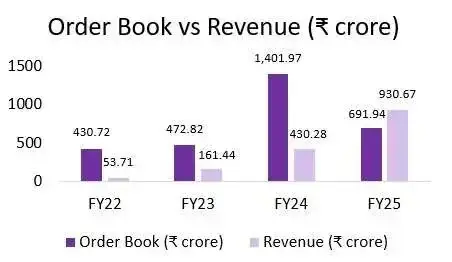
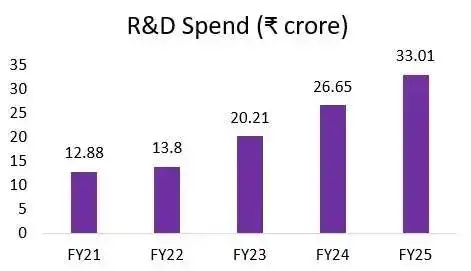
Training systems also generate high returns on capital. They are IP-heavy rather than asset-heavy, require continuous upgrades and maintenance, and benefit from long program life cycles. Zen has consistently reinvested in R&D, over ₹10,600 lakh in the last five years, to stay ahead of evolving threats such as drones, AI-led warfare, and autonomous systems, ensuring relevance as military doctrines change.
Risks remain. Technology obsolescence is a real threat if innovation slows. Competition is rising globally as simulation gains importance. Order execution can be lumpy, with large contracts shifting between quarters. However, Zen’s long-standing customer relationships, IP depth, and expanding product scope mitigate these risks better than most defence peers.
This is also why price charts alone often miss businesses like this.
Read more: Technical vs Fundamental Analysis – Which One Should You Follow?
Bottom line: Zen Technologies is a preparedness business, not a weapons play, operating in a high-ROCE, defensible niche within India’s defence ecosystem.
Stock 4: Data Patterns – Electronics Inside the Weapon
Modern defence platforms are no longer defined by metal and propulsion alone. The real capability lies in electronics, radars that detect first, avionics that guide accurately, electronic warfare systems that jam or deceive, and communication systems that remain secure under stress. Once an electronic system is designed into a missile, aircraft, radar station, or space asset, it is effectively locked in for the life of that platform. Replacing it requires years of redesign, testing, certification, and requalification, making defence electronics one of the stickiest layers in the entire value chain. This is the layer where failure is not an option, and where long-term suppliers quietly compound.Data Patterns operates precisely here. It is not a low-end electronics vendor or assembler, but a full-spectrum design-to-delivery defence electronics company. Its systems span radars (ground-based, airborne, maritime, and space surveillance), electronic warfare systems, avionics and fire-control electronics, communication and SDR systems, and space surveillance radars. These systems are embedded across missiles (including BrahMos), fighter aircraft such as Su-30 and MiG-29, helicopters, naval platforms, air-defence systems, and space applications , making Data Patterns a true cross-platform electronics supplier.
What differentiates the company is end-to-end ownership: design, development, manufacturing, testing, integration, and lifecycle support. This is exactly the capability the government wants to localise, and why Data Patterns is repeatedly selected for high-complexity defence and aerospace programs.
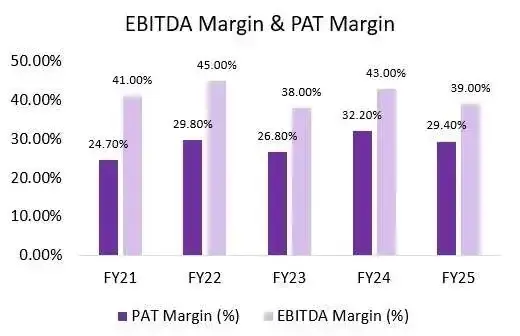
Defence electronics is a classic operating-leverage business. High upfront R&D and engineering costs are followed by long development cycles, but once systems enter production, incremental margins are very high. Data Patterns is now entering that phase, with multiple programs running in parallel, development contracts converting into production revenue, and manufacturing scale absorbing fixed costs. Management has guided for 20–25% revenue growth in FY26 while sustaining 35–40% EBITDA margins, a rare combination in defence.
While most revenue is currently domestic, Data Patterns’ systems are designed to global military standards. Products such as radars, SDRs, and EW modules are inherently exportable once approvals are secured. As India pushes defence exports beyond symbolic levels, companies with indigenous IP and full-stack capability are the natural beneficiaries, and Data Patterns fits that profile.
This is not a commodity business. The moat comes from deep engineering talent (1,000+ engineers), two decades of program execution with DRDO and the armed forces, certifications and security clearances, and platform-level integration. Defence customers rarely change electronics vendors once systems are proven.
Risks remain. Program delays can shift revenue between years, scaling multiple high-complexity programs requires execution discipline, and customer concentration is high. But these are structural risks of defence electronics, and Data Patterns has already demonstrated the ability to manage them through consistent execution.
Bottom line: Data Patterns is a systems business at the core of India’s defence platforms, built on certification, trust, and long-cycle compounding, not narrative.
Read More : The Multibagger Framework: A Step-by-Step Guide to Finding 10x Stocks.
Stock 5: CFF Fluid Control – The Unseen Engineering Layer
Modern naval warfare is not decided only by missiles or radars. It is decided by what keeps a warship silent, stable, and operational underwater for decades. That layer is fluid control, unseen, uncelebrated, but mission-critical.Submarines, aircraft carriers, destroyers, and nuclear platforms rely on thousands of fluid control points to manage cooling, hydraulics, fuel flow, pressure balance, stealth, and safety. These systems must work flawlessly under extreme pressure, corrosion, vibration, and combat conditions. Failure is not an option, and replacement is rarely possible once deployed. This is exactly where CFF Fluid Control operates.
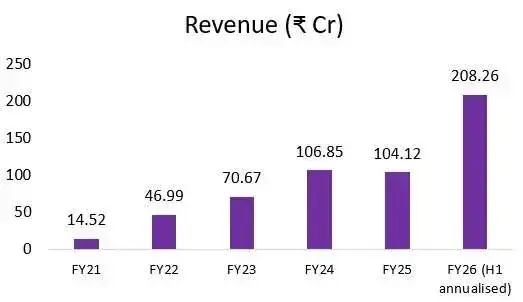
Naval platforms are fundamentally long-cycle assets. A submarine or warship has a life span of 25–40 years. Once a vendor is qualified and integrated at the design stage, switching suppliers mid-program is extremely difficult due to certification, safety, and interoperability risks. This creates long program visibility, repeat orders, and high customer stickiness.
CFF’s systems are embedded inside Indian Navy ships and submarines during construction, not added later. Once installed, they remain part of the platform for its entire operational life.
CFF has evolved from a component supplier into a full-system provider for naval and submarine platforms. Its portfolio supports sonar and stealth systems, integrated platform management systems, weapon and auxiliary systems, and submarine-specific fluid control assemblies. Over the years, the company has built in-house engineering depth and collaborated with global defence OEMs such as Naval Group (France) and Atlas Elektronik (Germany), enabling it to meet global military standards while manufacturing locally.
This is not explosive, narrative-driven growth. It is execution-led compounding, where certifications create entry barriers, scale improves margins, and long naval programs smooth volatility over time. As India expands its submarine fleet, aircraft carriers, and next-generation naval platforms, suppliers like CFF scale automatically with the ecosystem.
The risks are execution-related, not demand-related. Scaling manufacturing capacity, managing working capital under milestone-based payments, and concentrating across phased naval programs are the key variables to track. These risks explain why CFF still trades as a micro-cap, and why successful execution can materially change its scale.
Bottom line: CFF Fluid Control is embedded in long-duration naval platforms where suppliers are rarely replaced. Invisible products, sticky customers, and execution-led compounding define the business.
Read More : Top Multibagger Stocks of the Last 10 Years – What We Can Learn
From Pokhran to Profits: Why These Aren’t “Defence Lottery Stocks”
When India conducted the Pokhran nuclear tests, it wasn’t chasing headlines or short-term validation. It was making a long-term commitment , to build, test, fail, improve, and ultimately control its own strategic destiny. That mindset took decades to translate into reality, but today it shows up not in speeches or symbolism , it shows up in balance sheets.India’s defence self-reliance is no longer an idea. It is an operating system. It is visible in order books, certifications, export contracts, margins, and cash flows. The companies discussed in this article are not lucky beneficiaries of a trend , they are the industrial outcomes of a 20-year strategic journey that began with the decision to stop borrowing capability and start building it at home.
For investors, this changes the lens completely. Defence investing is not about excitement, timing, or reacting to news. It is about judgment , understanding where a company sits in the value chain, tracking execution across long programs, and having the patience to let capability compound into earnings.
At Value Educator Research, we study defence businesses using a fundamentals-first Sprint Methodology, focused on capability depth, execution quality, and long-cycle compounding. We are SEBI-registered research analysts, and our work is built around identifying real businesses before they become obvious.
Comment “DEFENCE” if you want deeper research in this space.
Explore our Products
Research Framework

Emerging Titans
Combination of quantitative analysis, industry tailwinds, and management assessment - SPRINT investment philosophy

Tiny Titans
Heavy emphasis on scuttlebutt research, plant visits, and early on-ground signals
FAQs
Are there stocks that can do well in 2025?
+Some sectors benefit when cycles turn. In defence, companies already executing long-term programmes usually gain more than those chasing headlines.
Is there one defence stock that clearly stands out?
+Not really. It comes down to what the company actually does, how difficult it is to replace, and whether it has shown over time that it can deliver without cutting corners.
Will any stock suddenly take off in 2026?
+Defence rarely works that way. Returns usually come from steady execution and compounding, not sudden spikes.
Which stock will boom in 2026?
+Defence doesn’t boom overnight. Returns tend to come from steady execution and patience, not from guessing the year.

High growth stock specialist, Value Educator
Shashank Mahajan is an equity research professional with over 12 years of experience in identifying high-potential SME and micro-cap stocks at an early stage. He follows a rigorous scuttlebutt research–driven approach, combining on-ground insights with deep financial analysis. Shashank specializes in uncovering under-researched and under-owned companies with strong management quality and long-term growth potential. Through disciplined research and early identification, he focuses on spotting tomorrow’s market leaders before they enter the mainstream investor radar.

Atlanta Electricals: Capacity Nearly Quadrupled in a Year
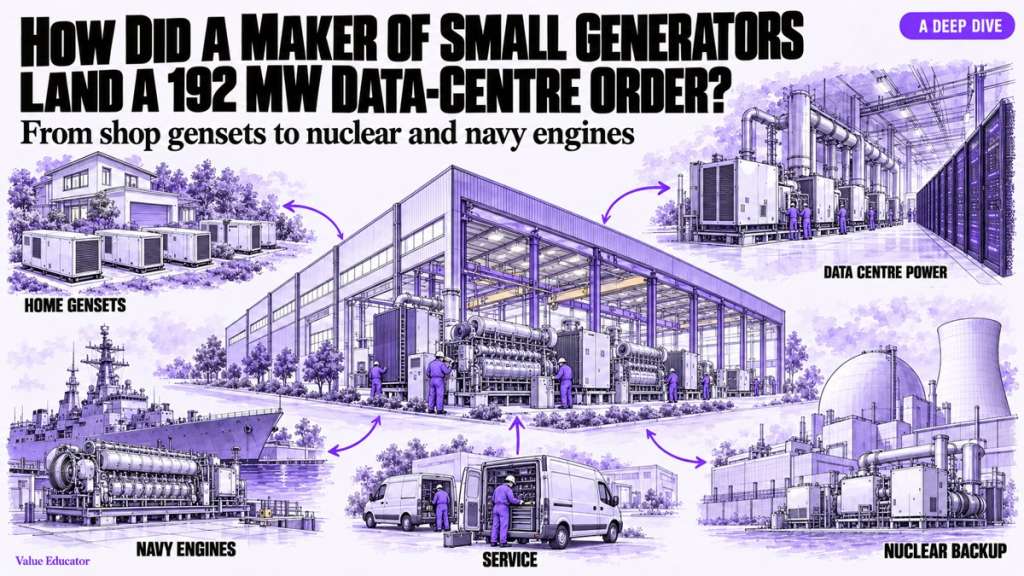
Kirloskar Oil Engines: Data Centres, Nuclear and the Navy
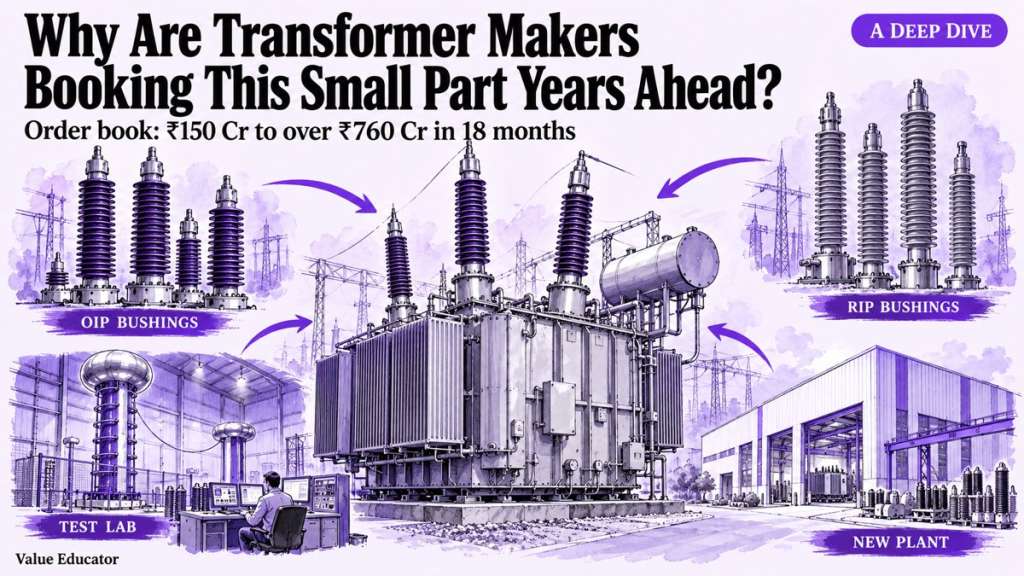
Yash Highvoltage: Bushing Maker With ₹760 Cr of Orders
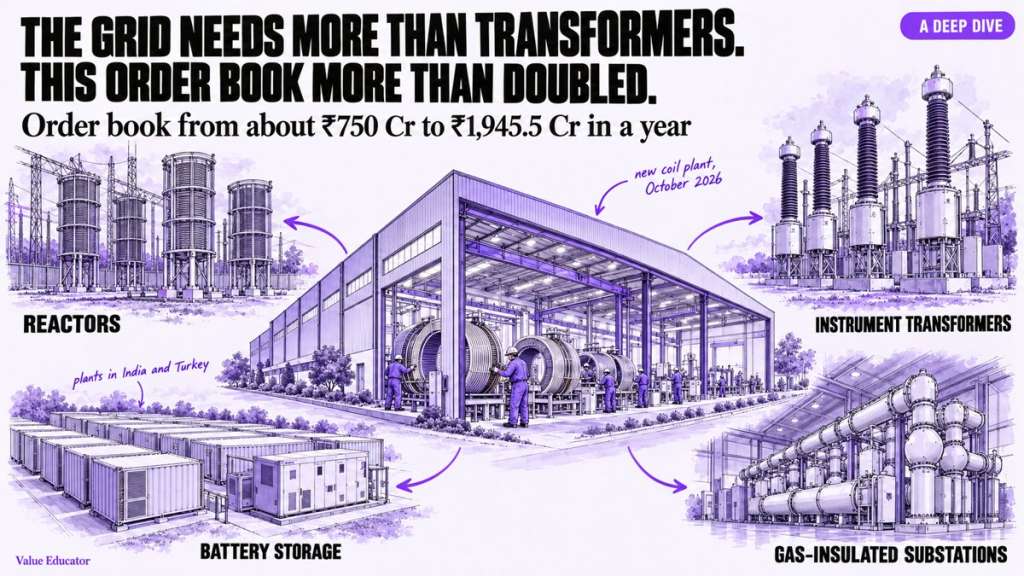
Quality Power: Reactor Maker With a ₹1,945.5 Cr Order Book

Azad Engineering: Turbine Blades, Jet Engines and Orders
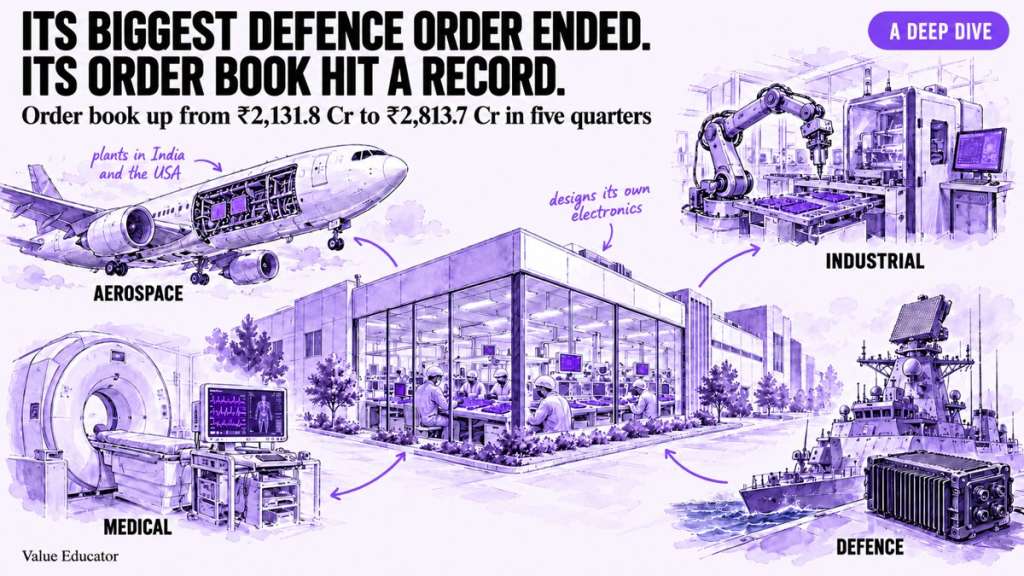
Cyient DLM: Aircraft Electronics and a Record Order Book
Explore our Products
Research Framework
Emerging Titans
Combination of quantitative analysis, industry tailwinds, and management assessment - SPRINT investment philosophy
Tiny Titans
Heavy emphasis on scuttlebutt research, plant visits, and early on-ground signals



Modern Warfare to Multibaggers
Key Trends. Strategic Shifts. Opportunities Ahead.
Don't Miss This Exclusive Webinar!
Join Value Educator to decode the key trends shaping India's defence sector and learn how to identify tomorrow's potential leaders in the space.
- In-depth research on India's defence sector
- Live Q&A session
- Actionable takeaways for long-term investors

 Orders
 Subscription
 Share with friends


Required Details
₹23999.00
(12 month subscription)
As per SEBI regulations, all users are mandated to complete the KYC that is validated for 1 year. Post payment, you will be redirected to the KYC screen


No comments yet. Be the first to comment!