
Highest Order Book Stocks in India 2026: Ranked List
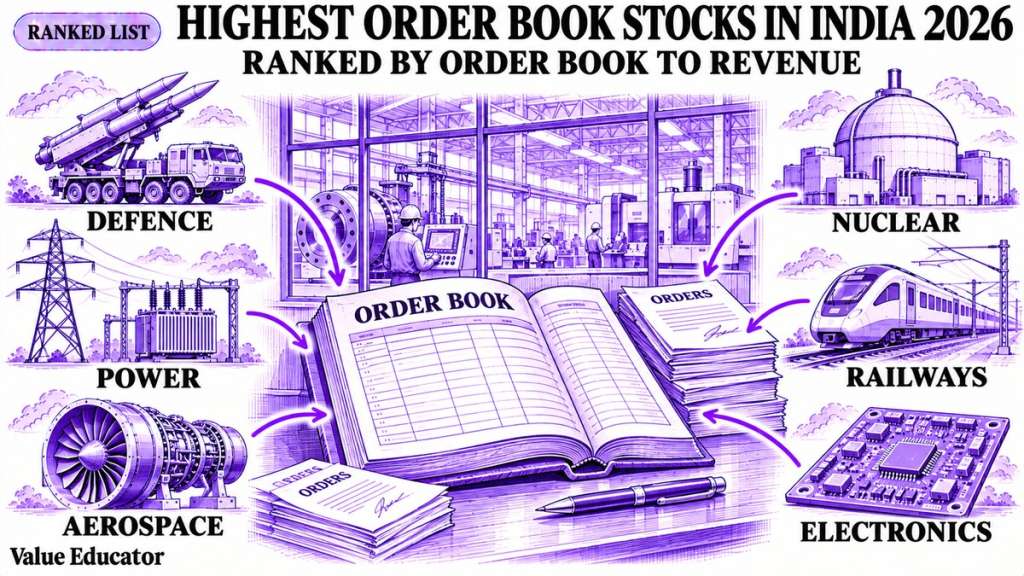
On 31 March 2026, Bharat Dynamics had ₹26,176 Cr of orders waiting to be delivered, while its FY26 revenue had fallen 27%. On 30 June 2026, MTAR Technologies had ₹5,143 Cr of orders, about 5.9 times its FY26 revenue of ₹876 Cr. Numbers like these are why investors search for order book stocks: they show how much work a company has already signed.
This page ranks every company we have studied in depth that reports an order book, from defence and aerospace to power equipment and transmission. We rank them by order book divided by FY26 revenue, which shows how many years of sales are already in hand. Each name links to our full research on that company.
Figures as of 13 November 2026. This page is research, not a recommendation to buy or sell any stock.
Order Book Stocks in India at a Glance
The order book is the latest one each company has reported. Revenue is for FY26 (April 2025 to March 2026) unless the note below says otherwise.
| Rank | Company | Sector | Order book (₹ Cr, date) | FY26 revenue (₹ Cr) | Order book ÷ revenue |
|---|---|---|---|---|---|
| 1 | Azad Engineering | Aerospace and energy | about 6,500 (Mar 2026) | 603.0 | about 11x |
| 2 | Bharat Dynamics | Defence | 26,176 (31 Mar 2026) | 2,441.8 | about 10.7x |
| 3 | MTAR Technologies | Clean energy, nuclear, space | 5,143 (30 Jun 2026) | 876 | about 5.9x |
| 4 | Premier Explosives | Defence | 1,642 (Oct 2026) | 388.3 | about 4.2x |
| 5 | Astra Microwave | Defence electronics | about 4,300 (Aug 2026) | 1,156 | about 3.7x |
| 6 | Unimech Aerospace | Aerospace | 855, incl. 589 of long-term agreements (30 Sep 2026) | 240.5 | about 3.6x |
| 7 | Techno Electric | Power transmission EPC | 11,000 (Aug 2026) | 3,252 | about 3.4x |
| 8 | Yash Highvoltage | Transformer parts | over 760 (30 Sep 2026) | 235.1 | about 3.2x |
| 9 | TARIL | Transformers | 6,630 unexecuted (Jun 2026) | 2,508.8 | about 2.6x |
| 10 | Jyoti CNC | Machine tools | 5,082 (Sep 2026) | 2,093.1 | about 2.4x |
| 11 | Cyient DLM | Electronics manufacturing | 2,813.7 (30 Sep 2026) | 1,261.5 | about 2.2x |
| 12 | Transrail Lighting | Power transmission EPC | 14,218 (Sep 2026) | 6,880 | about 2.1x |
| 13 | Apollo Micro Systems | Defence electronics | 1,765 (30 Sep 2026) | 904.3 | about 2.0x |
| 14 | Quality Power | Grid equipment | 1,945.5 (30 Jun 2026) | 1,007 | about 1.9x |
| 15 | Rossell Techsys | Aerospace | 900 confirmed (30 Sep 2026) | 485.2 | about 1.9x |
| 16 | HBL Engineering | Rail and defence electronics | about 5,902 (Sep 2026) | 3,252 | about 1.8x |
| 17 | Skipper | Transmission towers | 10,066 (Sep 2026) | 5,552.8 | about 1.8x |
| 18 | Zen Technologies | Defence training | 1,239 (30 Jun 2026) | 688 | about 1.8x |
| 19 | MIDHANI | Special metals | 2,164 (1 Oct 2026) | 1,208.6 | about 1.8x |
| 20 | Atlanta Electricals | Transformers | 3,116.63 (Jun 2026) | 1,851.5 | about 1.7x |
| 21 | Macpower CNC | Machine tools | 476 (Sep 2026) | 333.2 | about 1.4x |
| 22 | INOX India | Cryogenic equipment | 2,268 (Sep 2026) | 1,632 | about 1.4x |
| 23 | TD Power Systems | Generators | 2,207.3 (Jun 2026) | 1,869.5 | about 1.2x |
| 24 | KSB | Pumps and valves | 2,744.5, incl. 1,235 nuclear (Jun 2026) | 2,695.7 (calendar 2025) | about 1.0x |
| 25 | Data Patterns | Defence electronics | 927.7 firm (30 Jun 2026) | 924.8 | about 1.0x |
| 26 | Kilburn Engineering | Process equipment | 470 (Sep 2026) | 628.8 | about 0.7x |
| 27 | Shilchar Technologies | Transformers | about 452 (start of FY27) | 652 | about 0.7x |
| 28 | APAR Industries | Conductors and cables | 15,037: conductors 12,025 + cables 3,012 (Sep 2026) | 22,902 | about 0.7x |
| 29 | Krishna Defence | Naval steel | 117 (Jun 2026) | 244.8 | about 0.5x |
Notes on the table. KSB follows a January to December year, so its revenue is for calendar 2025, not FY26. For Quality Power and TD Power Systems, the revenue figure is total income; for INOX India it includes other income. Techno Electric's revenue is standalone; TARIL's is consolidated. APAR's order book counts only its conductor and cable businesses. Where the ratio ties at one decimal, the rank follows the unrounded ratio.
What Is an Order Book?
An order book is the value of contracts a company has signed but not yet delivered. It is sometimes called the backlog or the unexecuted order book. When a company ships the goods or finishes the work, that part of the order book turns into revenue, and new orders refill it.
A large order book in rupees is not the same as a large order book for the company. Bharat Dynamics has by far the largest order book on this list. But APAR's ₹15,037 Cr sits against a much bigger business, so it covers less than a year of APAR's sales.
Why Order Book ÷ Revenue Matters
Dividing the order book by a year's revenue puts companies of different sizes on the same scale. A ratio of 2 means about two years of revenue is already contracted, if the company delivers on time. A high ratio means a company knows much of its future sales; a low ratio means it must keep winning new orders every few months.
The ratio also shows how fast a business turns orders into sales. Transrail Lighting's projects run on a 24-30 month cycle, so about two years of orders is normal for it. TARIL says most of its book can be executed over 18-24 months. Rossell Techsys expects its confirmed book to be executed over the next 2.5 years.
The Limits of the Ratio
Execution decides everything. An order adds nothing until it is delivered. Bharat Dynamics' ratio is high partly because its FY26 revenue fell 27% while its order book grew. A rising ratio can mean strong orders, or it can mean slow deliveries.
Orders can shrink or be cancelled. Customers can delay, change or cancel orders, and some books include orders not yet fully signed. Data Patterns' firm book was ₹927.7 Cr in June 2026, but ₹2,654 Cr once July and agreed orders are counted. We rank on the firm figure.
Long-term agreements are not the same as firm orders. Azad's book is mostly long-term supply contracts for energy turbines that run for many years, so its high ratio partly reflects their length. Unimech's ₹855 Cr includes ₹589 Cr of long-term agreements, and Rossell has over ₹3,100 Cr of long-term agreements on top of its confirmed book, which we leave out.
The book says nothing about margins. Two companies with the same ratio can earn very different profits on their orders. Check each company's margin and its record of delivering in our research.
EPC orders and product orders are different. An EPC (engineering, procurement and construction) company such as Techno Electric or Transrail builds whole projects, so its orders are large and include bought-in material with thin margins. A product maker such as Yash Highvoltage or Data Patterns sells its own equipment, so the same ratio usually means smaller orders that are delivered faster.
Companies We Cover Without a Comparable Order Book
These companies are part of our research but are not ranked, because they do not report a total order book or report one that cannot be compared with revenue.
| Company | Why it is not ranked |
|---|---|
| Sansera Engineering | Reports a backlog of ₹5,869.7 Cr (30 Sep 2026) only for its aerospace, defence and semiconductor business |
| Axiscades | Reports assured revenue visibility of ₹4,557 Cr to FY30, which is not an order book |
| Kirloskar Oil Engines | Does not report a total order book; it disclosed a ₹768 Cr NPCIL order for nuclear gensets |
| KRN Heat Exchanger | Works on a rolling order book: customers share a forecast for about six months |
| Dynamatic Technologies, PTC Industries | Do not publish an order book |
| KSH International, Sedemac Mechatronics, RACL Geartech | Sell against supply schedules or do not report an order book |
Sector Lists
For each sector's companies, what they make and how their orders are moving, see our sector pages:
- Defence stocks in India 2026
- Power sector stocks in India 2026
- Transformer stocks in India 2026
- BESS (battery storage) stocks in India 2026
- Nuclear power stocks in India 2026
- Data centre stocks in India 2026
- Aerospace stocks in India 2026
- EMS stocks in India 2026
How to Read an Order Book
- Check the date. Order books are reported at different dates. A June figure and a September figure are not quite comparable.
- Check what is counted. Some companies count only firm orders, others add orders that are agreed but not signed, or long-term agreements.
- Compare with the execution period. A three-year book is strong for a company that delivers within a year, and normal for one whose projects take three years.
- Watch the trend. A book that grows faster than revenue gives more visibility; a book that shrinks while revenue grows is being used up.
- Look at the customers. A book that depends on one customer or one large order can change quickly.
- Read it with margins and cash. Orders turn into value only if they are delivered at a profit and the customer pays on time.
Key Risks for Order Book Stocks
- Delays: government projects, defence trials and site work often slip, pushing revenue into later years.
- Cancellations and changes: customers can cut, delay or re-scope orders, especially in export markets.
- Fixed-price orders: if metal or component costs rise after an order is signed, margins can fall.
- Concentration: many companies on this list depend on a few large customers, such as the armed forces or state power utilities.
- Capacity limits: a company may have the orders but not the factory space or people to deliver them on time.
- Working capital: large orders often tie up cash in inventory and receivables before the customer pays.
Explore our Products
Research Framework

Emerging Titans
Combination of quantitative analysis, industry tailwinds, and management assessment - SPRINT investment philosophy

Tiny Titans
Heavy emphasis on scuttlebutt research, plant visits, and early on-ground signals
Conclusion
Among the companies we cover, Azad Engineering, Bharat Dynamics and MTAR Technologies have the largest order books relative to revenue, while Bharat Dynamics, APAR, Transrail, Techno Electric and Skipper hold the largest in rupees. A high ratio gives visibility, but it is only as good as the company's ability to deliver on time and at a profit. Use the table to compare, then read our research on each company for its orders, margins and risks.
FAQs
Which companies have the highest order book in India?
+Among the companies we cover, Bharat Dynamics has the largest order book at ₹26,176 Cr (March 2026), followed by APAR Industries, Transrail Lighting, Techno Electric and Skipper, each above ₹10,000 Cr.
What is an order book?
+An order book is the value of contracts a company has signed but not yet delivered. As the company delivers, the order book turns into revenue, and new orders refill it.
What does order book to revenue mean?
+It is the order book divided by a year's revenue. A ratio of 2 means about two years of revenue is already contracted, if the company delivers on time.
Which order book stocks have the highest order book to revenue ratio?
+Among the companies we cover, Azad Engineering (about 11 times FY26 revenue), Bharat Dynamics (about 10.7 times) and MTAR Technologies (about 5.9 times) had the highest ratios in our latest data.
Is a high order book always good?
+No. A high ratio can also mean slow deliveries, and orders can be delayed, changed or cancelled. Margins on the orders and the company's delivery record matter as much as the size of the book.
Why do EPC companies have large order books?
+EPC companies build whole projects, such as transmission lines and substations, so each order includes material and work spread over a long period; Transrail's projects, for example, run on a 24-30 month cycle. Their order books are large, but margins on them are usually thinner than for product makers.

High growth stock specialist, Value Educator
Shashank Mahajan is an equity research professional with over 12 years of experience in identifying high-potential SME and micro-cap stocks at an early stage. He follows a rigorous scuttlebutt research–driven approach, combining on-ground insights with deep financial analysis. Shashank specializes in uncovering under-researched and under-owned companies with strong management quality and long-term growth potential. Through disciplined research and early identification, he focuses on spotting tomorrow’s market leaders before they enter the mainstream investor radar.
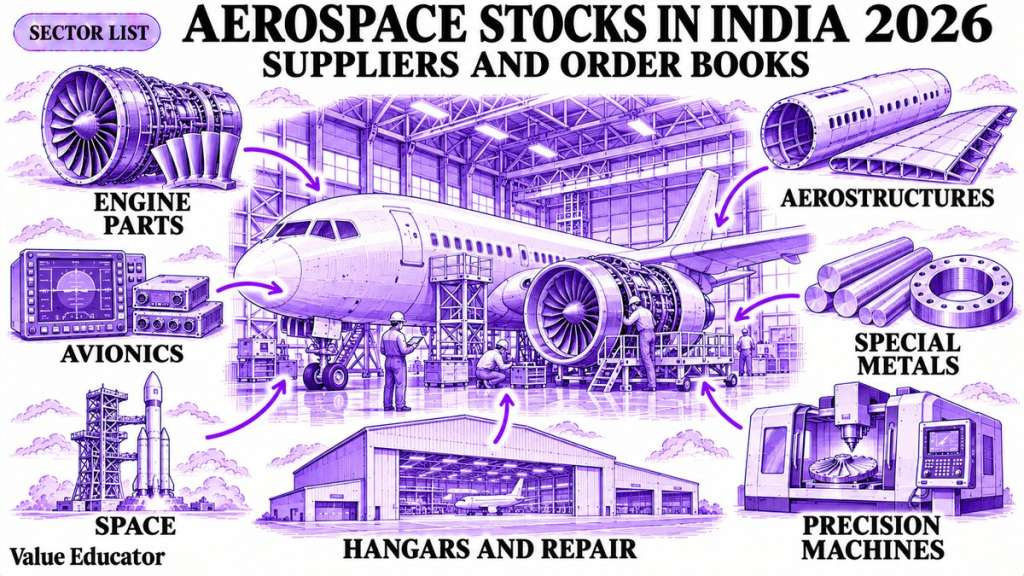
Aerospace Stocks in India 2026: Suppliers and Order Books
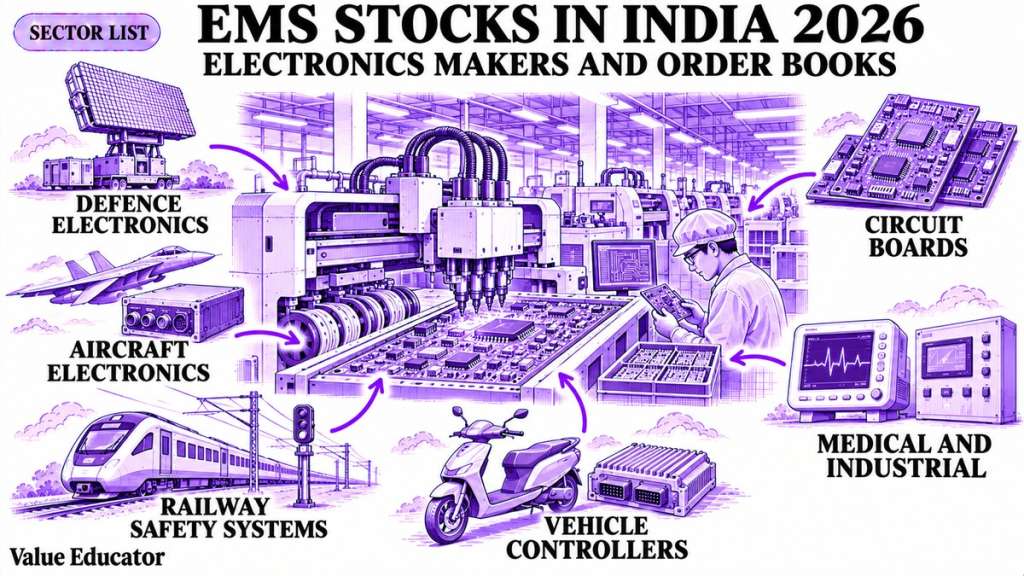
EMS Stocks in India 2026: Electronics Makers and Order Books
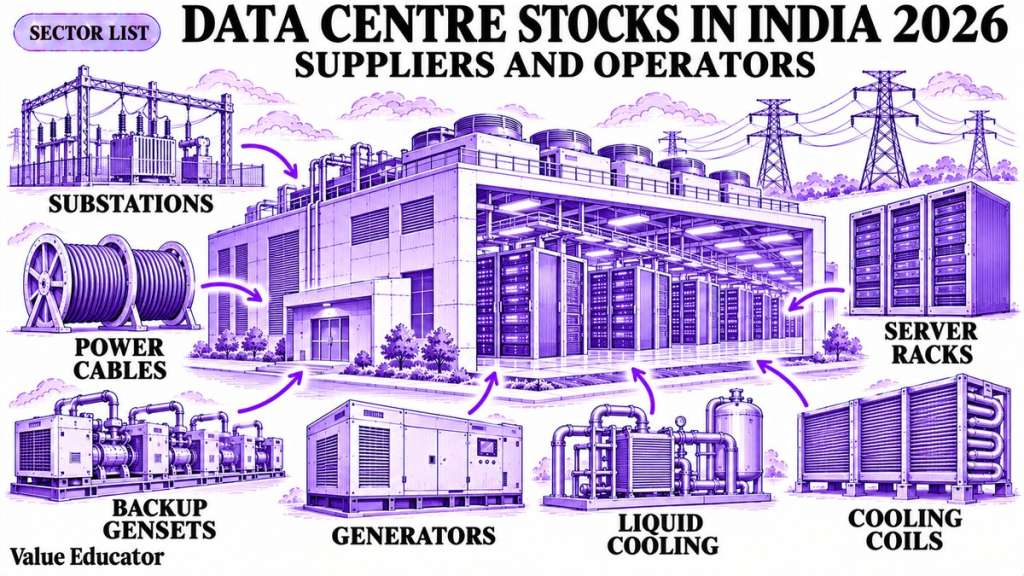
Data Centre Stocks in India 2026: Suppliers and Operators
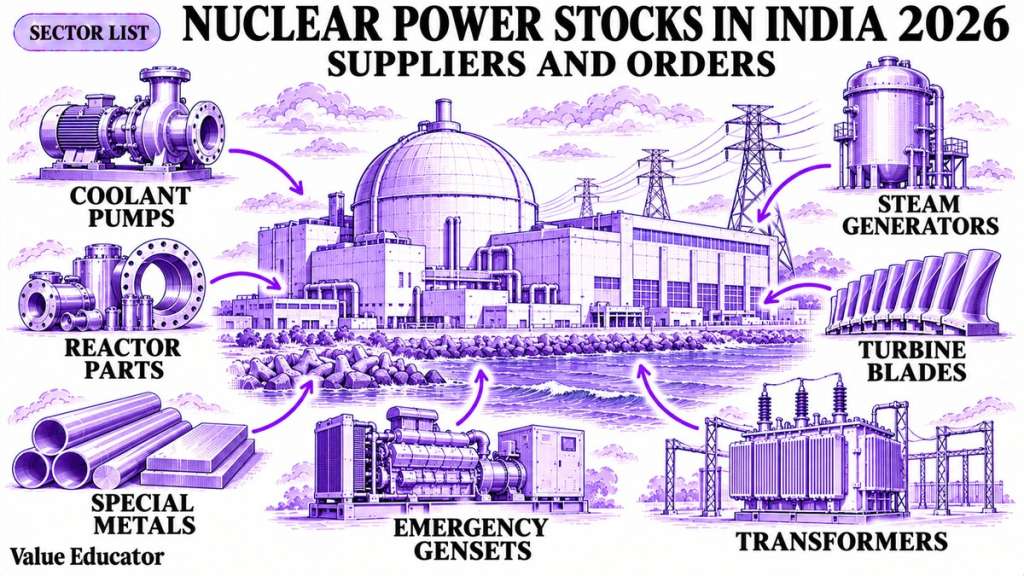
Nuclear Power Stocks in India 2026: Suppliers and Orders
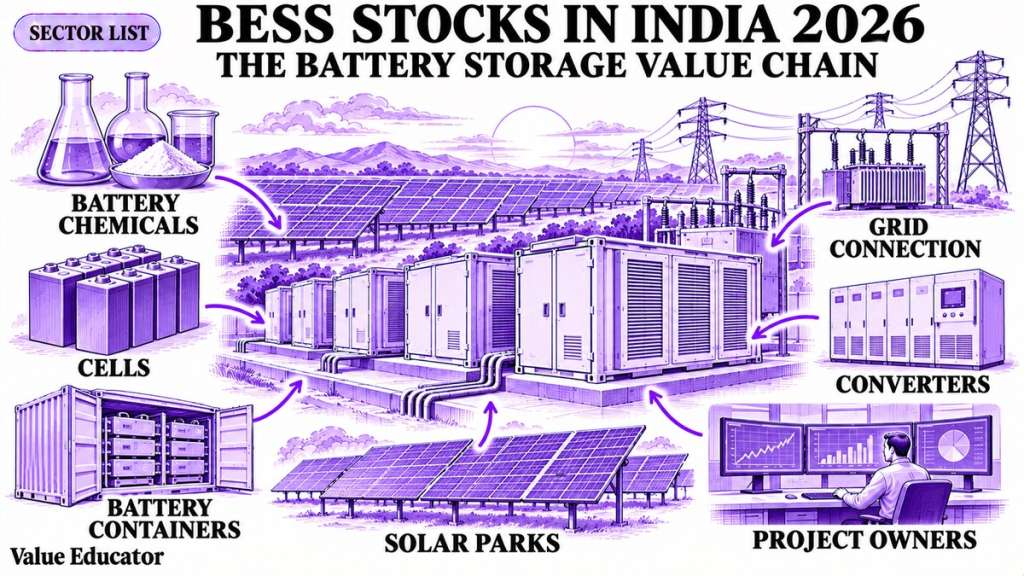
BESS Stocks in India 2026: Battery Storage Value Chain
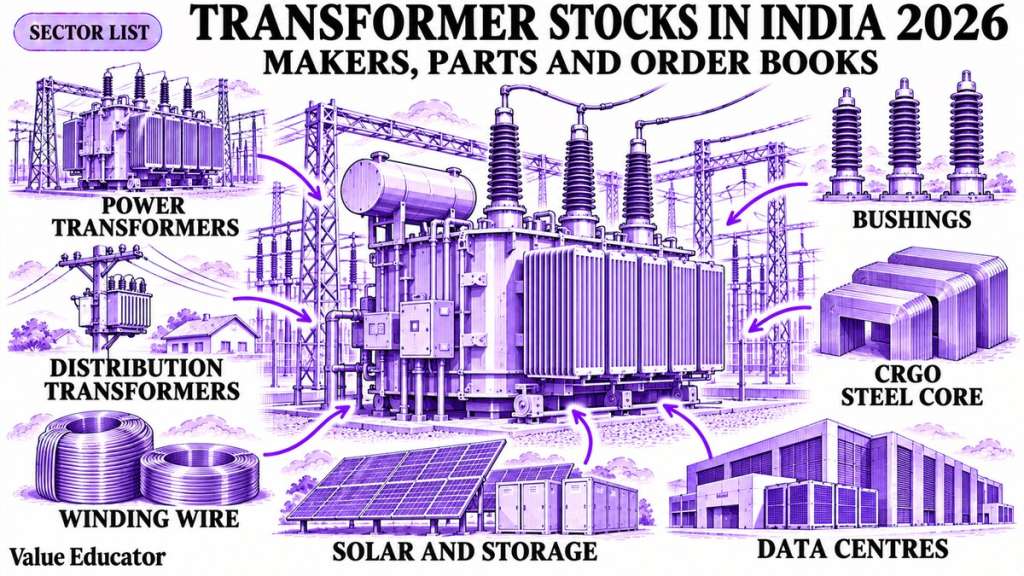
Transformer Stocks in India 2026: Makers and Order Books
Explore our Products
Research Framework
Emerging Titans
Combination of quantitative analysis, industry tailwinds, and management assessment - SPRINT investment philosophy
Tiny Titans
Heavy emphasis on scuttlebutt research, plant visits, and early on-ground signals



Modern Warfare to Multibaggers
Key Trends. Strategic Shifts. Opportunities Ahead.
Don't Miss This Exclusive Webinar!
Join Value Educator to decode the key trends shaping India's defence sector and learn how to identify tomorrow's potential leaders in the space.
- In-depth research on India's defence sector
- Live Q&A session
- Actionable takeaways for long-term investors

 Orders
 Subscription
 Share with friends


Required Details
₹23999.00
(12 month subscription)
As per SEBI regulations, all users are mandated to complete the KYC that is validated for 1 year. Post payment, you will be redirected to the KYC screen


No comments yet. Be the first to comment!