
The Future of India's Defence Sector

No More Permission: The End of India’s Era of Borrowed Power.
For years, India lived with a contradiction it didn’t like to talk about. On paper, it had one of the world’s largest armed forces. In reality, many of the tools that force relied on came with conditions attached.
Weapons were imported. Systems were licensed. Even routine things like spare parts or software updates were controlled from outside. None of this mattered much during calm periods. But the moment tensions rose, those dependencies became visible. Deliveries slowed. Clearances took time. In some cases, access itself became uncertain.
This is where the phrase “military giant with clay feet” comes from. It was not about manpower or intent. It was about control. And for a long time, India did not fully have it.
That began to change seriously around 2025.
What made 2025 different was not just policy language or budget numbers. It was used. Indigenous systems were no longer being introduced cautiously or showcased at exhibitions. They were being deployed where it actually mattered.
During Operation Sindoor, a counter-terror operation carried out that year, Indian-built platforms played a central role. Systems like the LCH Prachand helicopter and Akash missile were used not as backups, but as primary assets. There was no waiting for external approvals. No concern about who controlled the software. Decisions stayed within the chain of command.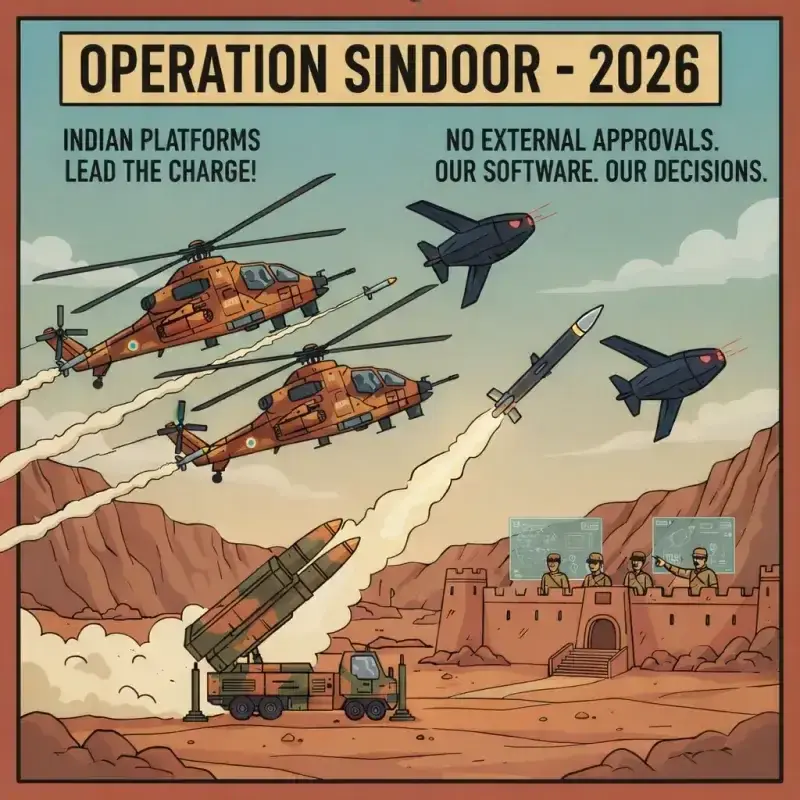
That experience changed perceptions inside the system.
Later in the year, the Ministry of Defence referred to 2025 as the “Year of Reforms.” But the real shift had already happened on the ground. The defence supply chain had expanded quietly. What once revolved around a few large public sector companies now consist of various small companies. The real heavy manufacturing and specialised services are provided by 16,000 different MSMEs all across India. Historically, such ecosystem-led growth phases tend to create long-term winners beyond the obvious large names, especially among well-managed mid-sized companies.This was not about symbolism. It was about resilience.
Why Mid Cap Stocks are the Sweet Spot for Long-Term Investors. Do Read this article to know more about how new and mid sized players are entering the defence market gradually.
Another change became visible outside India’s borders. Ironically, India is now offering other countries what it once lacked itself. Freedom from external dependence.
If you want to see the real proof, just follow the money. We’re not just talking about a slight bump in numbers; we’re looking at a total explosion. In the 2024-25 stretch, India’s own factories churned out over ₹1.50 lakh crore worth of gear. That’s a massive 90% jump from where we stood just five years ago in 2019. It’s the difference between a country that’s just "window shopping" for defence and one that’s actually rolled up its sleeves to build its own future.
For readers new to equities, understanding how these shifts translate into market opportunities starts with a basic grasp of how the Indian stock market works here is an article you should check out: A Beginner's Guide to the Indian Stock Market
By late 2025, over 65% of India’s defence equipment was domestically produced. And this was not just assembly work. A growing share came under IDDM: Indigenously Designed, Developed, and Manufactured. That means Indian engineers, Indian design control, and Indian ownership of upgrades and modifications.
India’s defence story after 2025 is not about becoming aggressive or dominant. It is about removing uncertainty. About knowing that when decisions are taken, execution will not depend on someone else’s approval.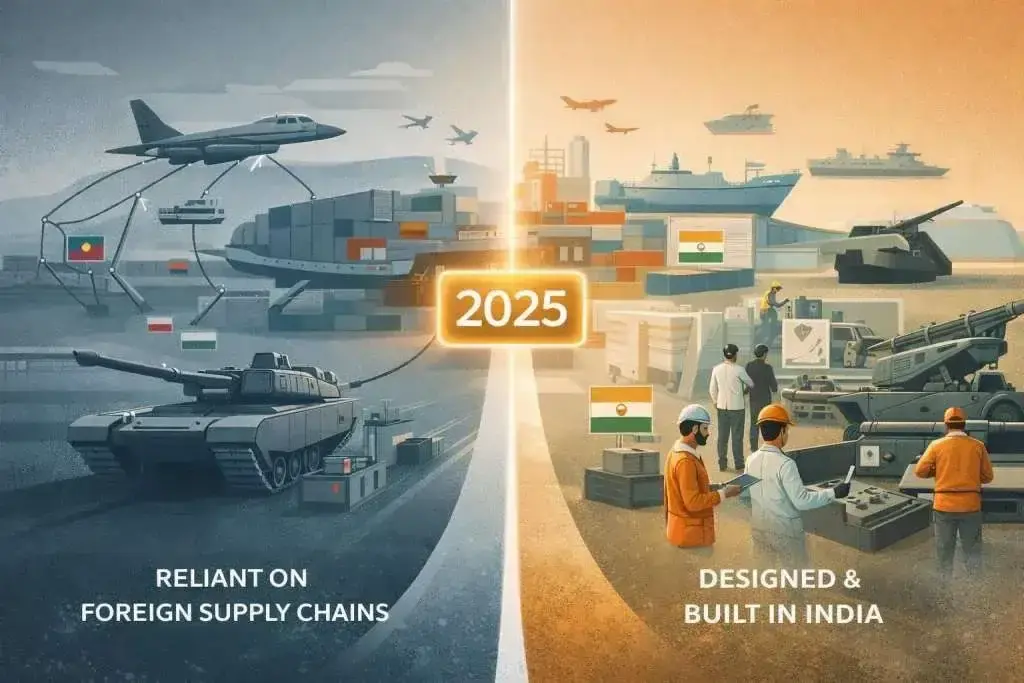
“A nation that depends on others for its defence cannot call itself sovereign.” — A. P. J. Abdul Kalam.
This quote very well aligns with the Indian defence scenario since Independence. Our preamble clearly states that India is a sovereign country, but in today’s world, sovereignty comes with power as they correctly say “Might is Right”. Years of being dependent on countries like Russia, Israel, etc., for our own defence mechanism says a lot about how “sovereign” we really were. Today after the revolution of the Indian defence Industry, surging exports, large-scale domestic manufacturing of artillery, warfare ships and aircraft, and of course the largest army by size, tells us that India is self-sufficient and has all the ability to protect the sovereignty of its borders.
What Is Changing in India’s Defence Sector?
For most of India’s recent history, defence spending was never something people were comfortable talking about. It was necessary, yes, but it always came with unease. Defence was treated less like a choice and more like an obligation, and once the money was spent, that was it.What’s happening now feels different. We’ve basically stopped treating the defence budget like a massive, annoying utility bill that we just have to pay and forget. Now, it’s more like we're finally putting a down payment on our own house instead of throwing rent at someone else's. There's this huge, quiet change in the air: we're no longer just "buying stuff" to get by; we're actually building the muscle to stand on our own.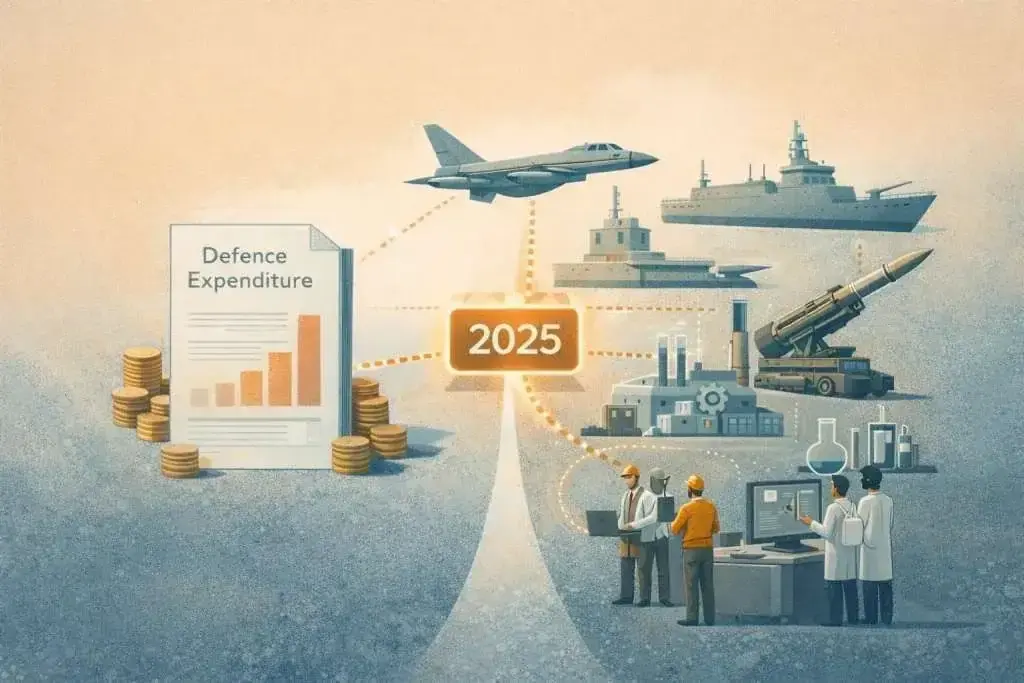
Why the Defence Sector Matters After 2025?
India’s defence priorities after 2025 are not coming from textbooks or ideal scenarios. They are coming from the ground reality around us. Anyone looking at India’s neighbourhood can see that this is not a calm or predictable environment. Security challenges don’t arrive one at a time, and they don’t give advance notice. Because of that, defence planning can’t be reactive anymore. It has to assume pressure as the default condition.Tensions with Pakistan haven’t disappeared, and they probably won’t anytime soon. At the same time, developments on the eastern side have started drawing attention. Recent statements and shifts in tone from Bangladesh have raised eyebrows, even if they don’t make headlines every day. Taken together, these signals send a clear message: India cannot afford to relax. Strengthening military systems is not something to be done after a warning sign. It has to continue quietly, consistently.
Two-front threat environment
One uncomfortable truth is that India doesn’t face pressure from only one direction. Planning has to assume more than one front being active at the same time. That puts a different kind of strain on the system. Forces have to stay ready longer. Logistics have to work without disruption. Movement and deployment have to be fast, not perfect.
In this kind of situation, relying heavily on foreign suppliers becomes risky. Even small delays can create problems. Preparedness today is not about reacting to a single incident and then standing down. It is about staying functional across land, air, sea, cyber, and space all at once, and for longer periods than before.
Supply-chain vulnerability during conflicts
Modern conflict isn’t only about what happens on the battlefield. It’s also about whether equipment keeps arriving on time. When tensions rise, global supply chains are usually the first thing to feel the impact. Routes get disrupted. Deliveries slow down. Priorities change.
And when that happens, countries look after themselves first. Defence exports get delayed. Spare parts become difficult to source. Promises made during stable periods suddenly don’t matter as much. For a country that depends on imports, this creates stress very quickly.
This is where overdependence shows its weakness. When operations stretch on and equipment is used more intensely, even a small shortage can snowball into a bigger issue. The reality is uncomfortable but simple: in a crisis, no country puts another country’s defence needs ahead of its own. This is something the policy makers had to agree to, even if reluctantly.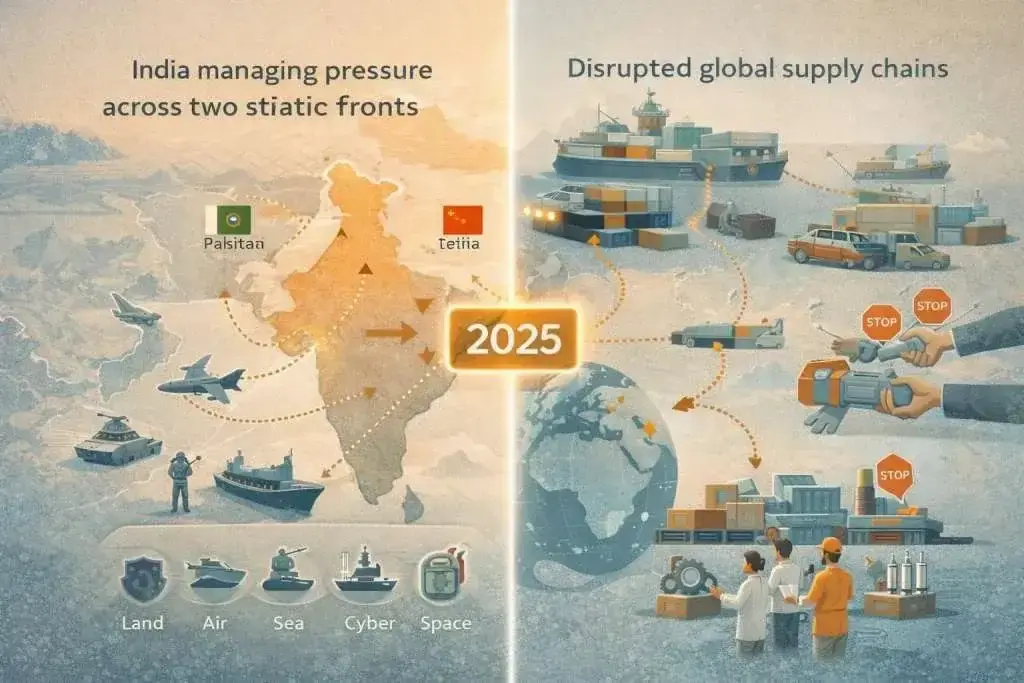
“The price of freedom is eternal vigilance.” — Thomas Jefferson
This idea fits closely with where India’s defence landscape stands today. In the current geopolitical climate, staying alert is not really optional anymore. It’s simply part of the reality India operates in. The country sits in a neighbourhood where security challenges can surface from more than one direction, sometimes at the same time.
Atmanirbhar Bharat; 2025 and beyond.
While the term "Atmanirbhar Bharat" gets thrown around in every press release, the stakes in the defence sector are uniquely high.If you look at a map, India’s defence requirements are staggering. You have a massive coastline to secure, some of the most unforgiving mountainous borders in the world, and a strategic footprint that has to cover the entire Indian Ocean. In a perfect world, buying equipment from global partners works fine. But in the real world, "calm" is a temporary state. Relying on foreign supply chains for spare parts or software updates during a crisis is a massive strategic gamble that India is no longer willing to take.At its heart, this shift is about sovereignty over systems. It’s one thing to own a fighter jet; it’s another thing entirely to own the source code and the supply line that keeps it in the air.
The "Atmanirbhar", moving us away from just "shopping" for gear and toward actually owning the blueprints.
Core Vision of Atmanirbhar Bharat in the Defence Sector
Forget the slogans for a second. The real heart of this push is about making sure India isn’t left stranded when the world gets messy. For decades, we were the world’s favorite customer, essentially paying to keep foreign factories running while our own capacity gathered dust. That’s a dangerous way to run a country. If a border goes hot and you’re still waiting on a shipment of parts from a "partner" who suddenly decides to play neutral, you’re stuck.The whole "Atmanirbhar" thing is just a way to say we’re finally cutting that dependency. We’re tired of buying equipment designed for the flatlands of Europe and trying to make it work in the tough terrains of the Himalayas. We need stuff built for our own playground, designed by people who actually have to use it.
It’s also about the "brain drain." Why should our best engineers go off to build tech for foreign firms? By putting the money into Indian startups and local labs, we’re finally building our own muscle memory for innovation.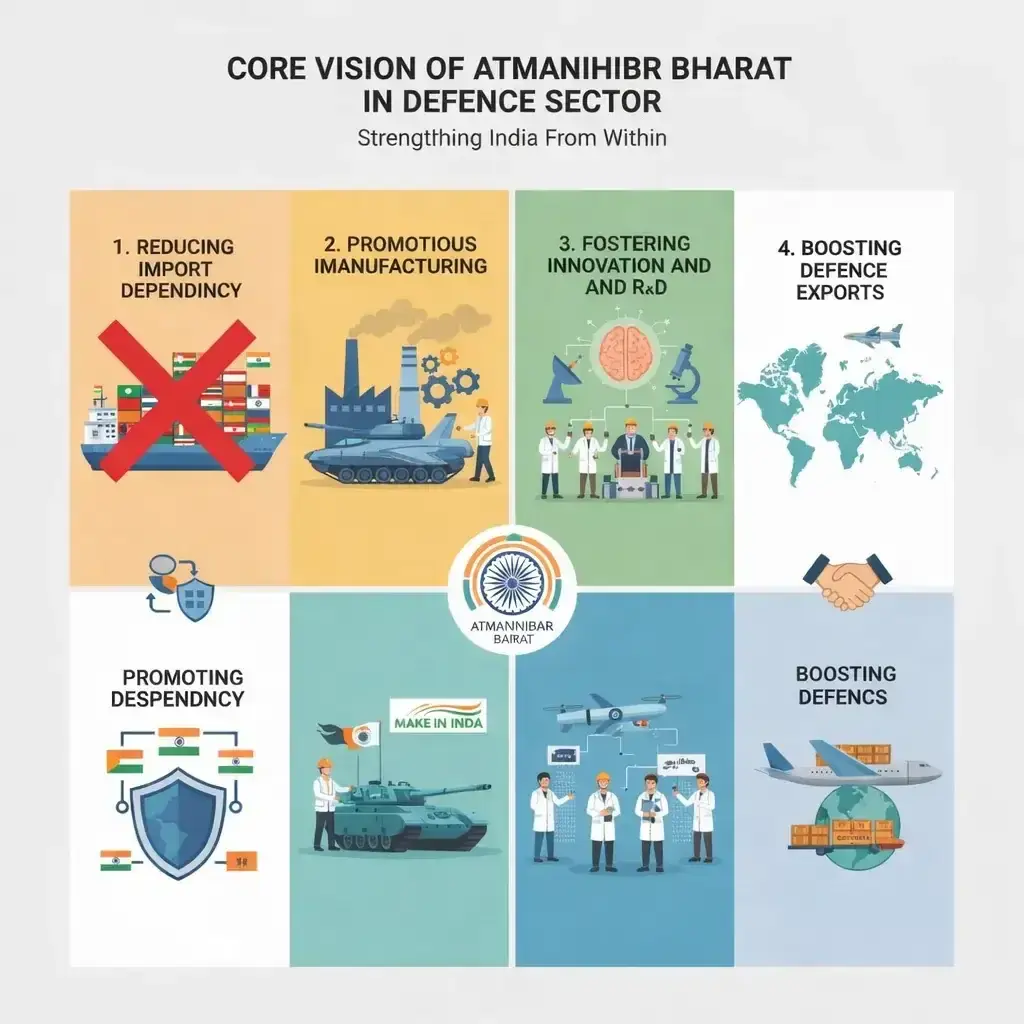
We’re finally moving past the "vision" stage and into actual results. It’s not just talk anymore, the money is actually hitting the ground. By carving out a massive chunk of the budget specifically for Indian vendors, the government has given local industry the predictable oxygen it was gasping for.
This is triggering a bit of a gold rush. With a solid, multi-year order book, domestic firms can finally afford to hire top-tier talent and take real risks on new tech. We’re seeing the old-school giants team up with scrappy startups to build everything from drones to engines right here. 2047 isn't just a random deadline; it’s a total reboot of our industrial DNA. We’re watching a country go from a "top buyer" to a "top builder" in real-time.
India’s Defence Leap: From Indigenous Production to Global Exports, Redefining National Security.
The End of the "Shopping List" Era
For the longest time, India’s defence story was basically just a giant international shopping list. We had the ambition, but the execution was stuck in slow-motion. That’s finally changed. Over the last decade, we’ve stopped just talking about "strategic vision" and started actually building a backbone. It’s been a massive shift from being a customer to being a creator, driven by a simple realisation: you can’t be a global power if you’re waiting for someone else to ship you spare parts.The Numbers Don't Lie
If you want to see the results, look at the books. In the last financial year (FY 2024–25), India hit a record-breaking ₹1.54 lakh crore in domestic defence production. To put that in perspective, we were at less than a third of that a decade ago. It’s a 174% jump that isn't just a fluke, it’s the result of finally opening up the doors to private companies and scrappy startups. We’ve gone from under ₹1,000 crore in exports in 2014 to over ₹23,600 crore today. We aren't just buying the world's tech anymore; we’re starting to sell ours.
Beyond the Factory Floor
This isn't just about assembly lines. It’s about owning the "brain power." Whether it’s the Tejas fighter jets, advanced missile systems, or the swarm drones that were recently validated in real-world scenarios like Operation Sindoor, the focus has shifted to indigenous design. This makes stock selection critical, because not every defence company benefits equally from indigenisation. Fundamental analysis becomes the real filter.Check out A fundamental checklist: How to research a stock in 1 hour
We’re seeing a new ecosystem where big public firms are actually collaborating with the private sector companies like Tata, L&T, and Bharat Forge to build gear that actually fits our unique terrain, from the desert heat to the Himalayan chill.
The goal for 2047 isn’t just a target on a wall; it’s about ensuring that India’s military strength and its industrial muscle move at the same speed. We’re watching a "buyer" nation turn into a "builder" nation in real-time, and for the first time, the momentum actually feels permanent. For those looking to translate this structural shift into specific opportunities, a fundamentals-led approach to identifying defence leaders becomes essential.
Top 5 Defence Stocks to Watch in 2025-26: A Fundamental Analysis

India’s Defence Vision 2047.
Let’s be blunt: The 2047 goal isn't just an anniversary target or a glossy brochure. It’s a survival tactic. The whole point is to ensure that when India hits its 100th year of independence, we aren't still looking over our shoulder to see if someone else will sell us the gear we need to stay safe. It’s about shifting our DNA from being the world’s biggest customer to a global builder. But getting there? That’s going to be a massive, messy fight.The Real Roadblocks: If we’re being honest, "Self-reliance" is easy to say but really hard to do. We’re facing three massive hurdles that a fancy roadmap can’t just wish away:
The Money Gap: You can’t build a world-class military on a shoestring budget. Modernising while trying to invent your own jet engines or semiconductor chips is a financial nightmare. As we head into the 2026 budget, the pressure is on to see if we can actually fund these "next-gen" ambitions without breaking the bank.
The Red Tape Trap: Our own systems are often our biggest enemy. Slow-motion bureaucracy and old-school procurement rules can kill a startup’s momentum before they even get a prototype off the ground. We need to stop treating the private sector like an outsider and start treating it like the engine of growth.
The Brain Drain: We’ve got the talent, but for decades, our best engineers have been heading abroad to build tech for other countries. If we don’t create a high-stakes, high-reward environment at home—and fix the infrastructure gaps in our tech hubs—the "2047 vision" will just be a hollow shell.
Cutting the Strings: We also have to stop the "black box" dependency. Buying a missile is one thing; owning the source code and the engine tech is another. Until we own the intellectual property (IP), we don't truly own our defence. That’s why the push for things like the Bharat-TALENT framework and the iDEX ADITI scheme matters—it's about keeping the "brain power" here and giving local builders a real seat at the table.
In the end, 2047 is about one thing: Strategic Autonomy. It’s about making sure that no matter which way the global political wind blows, India can stand its ground. We’re moving toward a future where "Made in India" isn't just a label on a crate—it’s the backbone of our survival.
“True independence lies in the ability to protect and provide for oneself.” — Sardar Vallabhbhai Patel.
India is finally on its way to being in the race competing with all the developed countries. We aim towards becoming a developed nation by 2047, 100 years after our independence.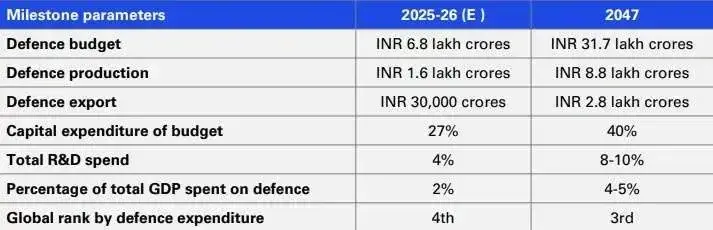
Here is a table which shows the current and future parameters that could directly affect the Defence industry. As we can see here, the prospects of the investments and growth in the sector are projected to trend upwards, which is a positive sign for all the players in the defence industry.
Explore our Products
Research Framework

Emerging Titans
Combination of quantitative analysis, industry tailwinds, and management assessment - SPRINT investment philosophy

Tiny Titans
Heavy emphasis on scuttlebutt research, plant visits, and early on-ground signals
Conclusion
India’s defence journey after 2025 isn’t really about one big reform or a flashy announcement. It’s about a shift in attitude. For a long time, we managed around our dependence. Now, we’re slowly replacing it with control. Indigenous systems are no longer just things we display or talk about — they’re actually being used, trusted, and relied upon. That change matters because it reduces uncertainty and lets decisions stay where they should: within the country, especially when pressure is high.The numbers tell part of the story, but not the most important part. What truly stands out is the ecosystem taking shape behind them. With public sector firms, private companies, startups, and MSMEs all involved, the system is no longer fragile. Repairs don’t stall as easily. Upgrades don’t have to wait. Readiness can be sustained, even when challenges come from more than one direction at once. That kind of depth doesn’t happen overnight, but once it exists, it changes everything.
Looking toward 2047, the road ahead is still demanding. Funding constraints, technology gaps, and execution risks haven’t disappeared. But the difference now is intent. India is no longer searching for quick fixes or external lifelines. The focus is on building capability that lasts. In the end, this defence transformation isn’t just about security — it’s about confidence. The confidence to act, adapt, and decide independently when it matters most.
At Value Educator Research, we analyse defence-sector companies through a fundamentals-first Sprint Methodology, focusing on capability depth, execution quality, and long-term compounding. As SEBI-registered research analysts, our work is centred on identifying genuinely strong businesses early before they become obvious to the market.
Comment “FUTURE OF DEFENCE” if you want deeper research in this space.
FAQs
What is the future of the defence industry in India?
+India’s defence sector is entering a structural growth phase. Defence spending is expected to reach US$415.9 billion between 2025 and 2029, but the real shift is not just higher budgets. It is the composition of spending. Imports are gradually declining, domestic manufacturing is expanding, and a growing share of procurement is moving under indigenous design and production. This transition improves supply security, execution speed, and long-term sustainability of the industry.
What is India’s defence ranking in 2025–26?
+India is ranked as the fourth-largest military power globally, after the United States, Russia, and China. The ranking reflects not just manpower size, but expanding indigenous capability across land, air, naval, missile, and electronic warfare systems.
Is the defence sector in India good for long-term investing?
+The defence sector offers long-term structural opportunity, but not uniform returns. Government initiatives such as Make in India, rising export orders, and sustained geopolitical pressure have improved earnings visibility for select companies. However, returns will depend on execution quality, order book strength, and capital discipline, not on sector momentum alone.
Which is India’s No. 1 defence stock?
+There is no single “number one” defence stock. The sector spans aircraft manufacturing, shipbuilding, electronics, missiles, and ammunition. That said, Hindustan Aeronautics Limited (HAL) is often considered a sector leader due to its dominant position in military aircraft, long-term order visibility, and strategic importance to India’s air force. Leadership within defence is best evaluated by segment, not by a single name.

High growth stock specialist, Value Educator
Shashank Mahajan is an equity research professional with over 12 years of experience in identifying high-potential SME and micro-cap stocks at an early stage. He follows a rigorous scuttlebutt research–driven approach, combining on-ground insights with deep financial analysis. Shashank specializes in uncovering under-researched and under-owned companies with strong management quality and long-term growth potential. Through disciplined research and early identification, he focuses on spotting tomorrow’s market leaders before they enter the mainstream investor radar.

Zen Technologies: Why Revenue Fell After Its Biggest Win

Data Patterns: India's Radar Designer and Its Waiting Orders
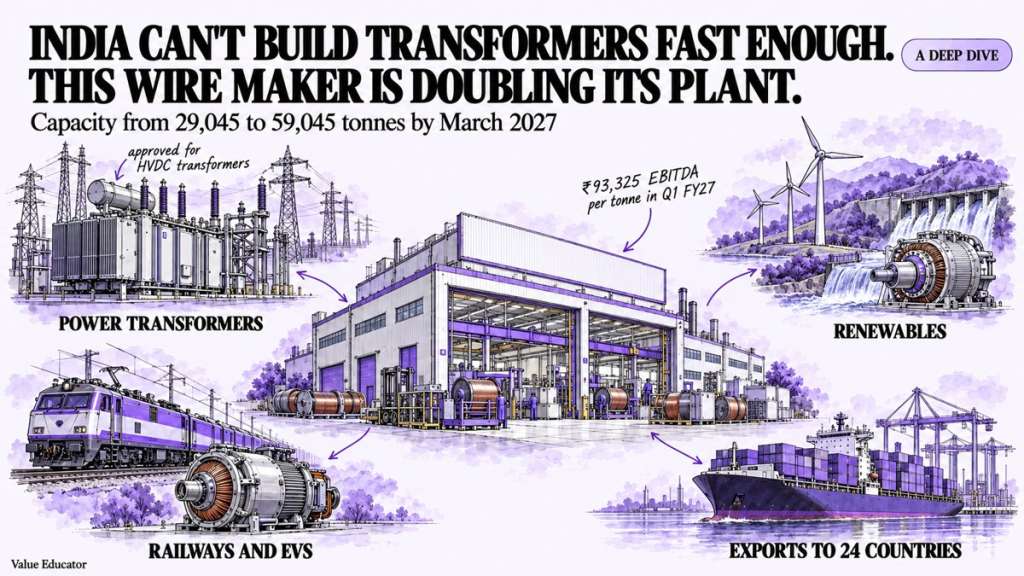
KSH International: The Wire Inside India's Transformers

Krishna Defence: The Steel Behind India's Warship Hulls

PNG Jewellers: A 194-Year-Old Name Goes National
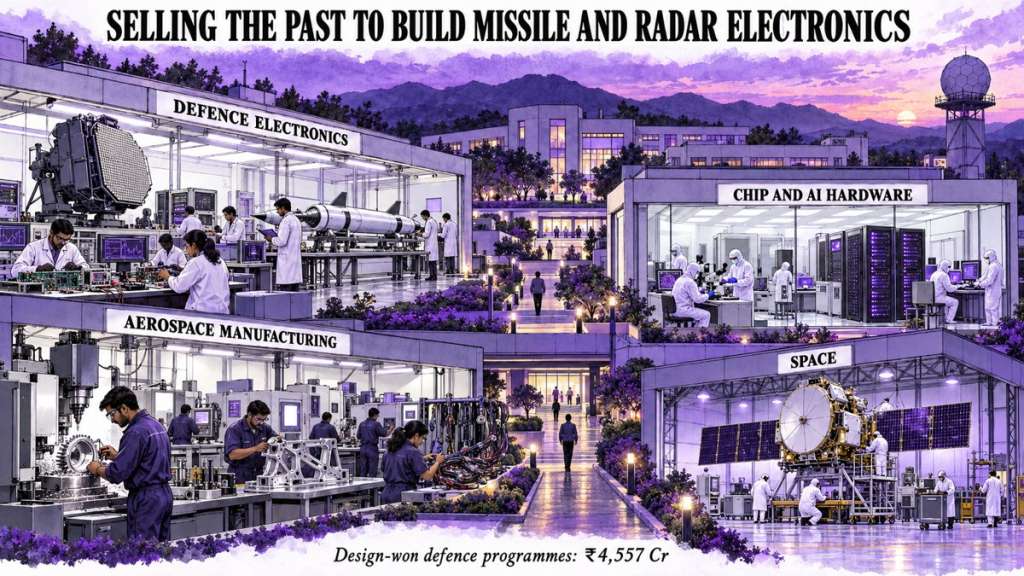
Axiscades: From Services to Missile and Radar Electronics
Explore our Products
Research Framework
Emerging Titans
Combination of quantitative analysis, industry tailwinds, and management assessment - SPRINT investment philosophy
Tiny Titans
Heavy emphasis on scuttlebutt research, plant visits, and early on-ground signals


 Orders
 Subscription
 Share with friends
 Logout


Required Details
₹23999.00
(12 month subscription)
As per SEBI regulations, all users are mandated to complete the KYC that is validated for 1 year. Post payment, you will be redirected to the KYC screen


Future of defence!!